A Daily History of Holes, Dots, Lines, Science, History, Math, Physics, Art, the Unintentional Absurd, Architecture, Maps, Data Visualization, Blank and Missing Things, and so on. |1.6 million words, 7500 images, 4.9 million hits| Press & appearances in The Times, Le Figaro, Mensa, The Economist, The Guardian, Discovery News, Slate, Le Monde, Sci American Blogs, Le Pont, and many other places… 5000+ total posts since 2008.

Category: Zoomology

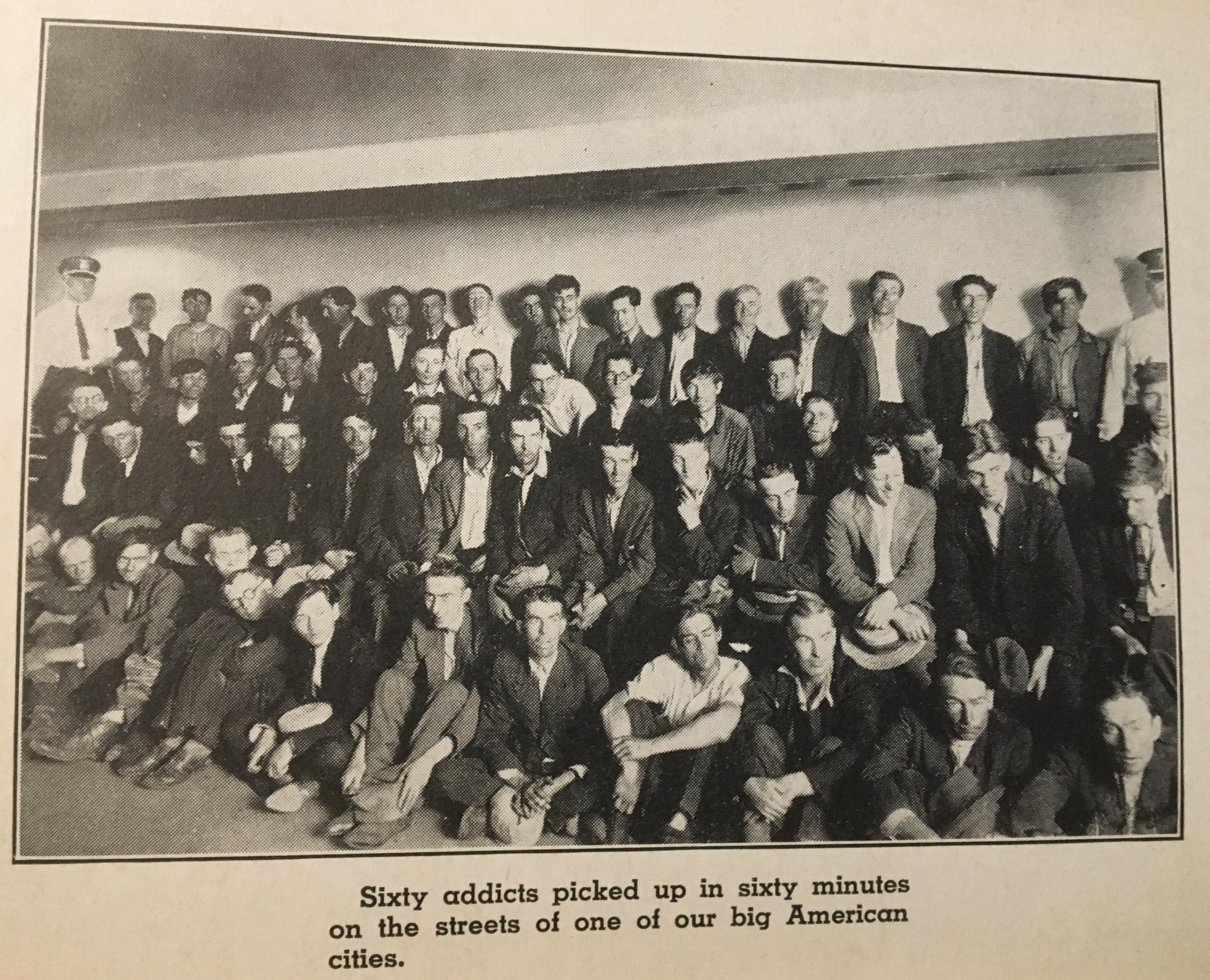
  • A Group Photo of “Dope Fiends”, 1939.

    JF Ptak Science Books   Post 2892

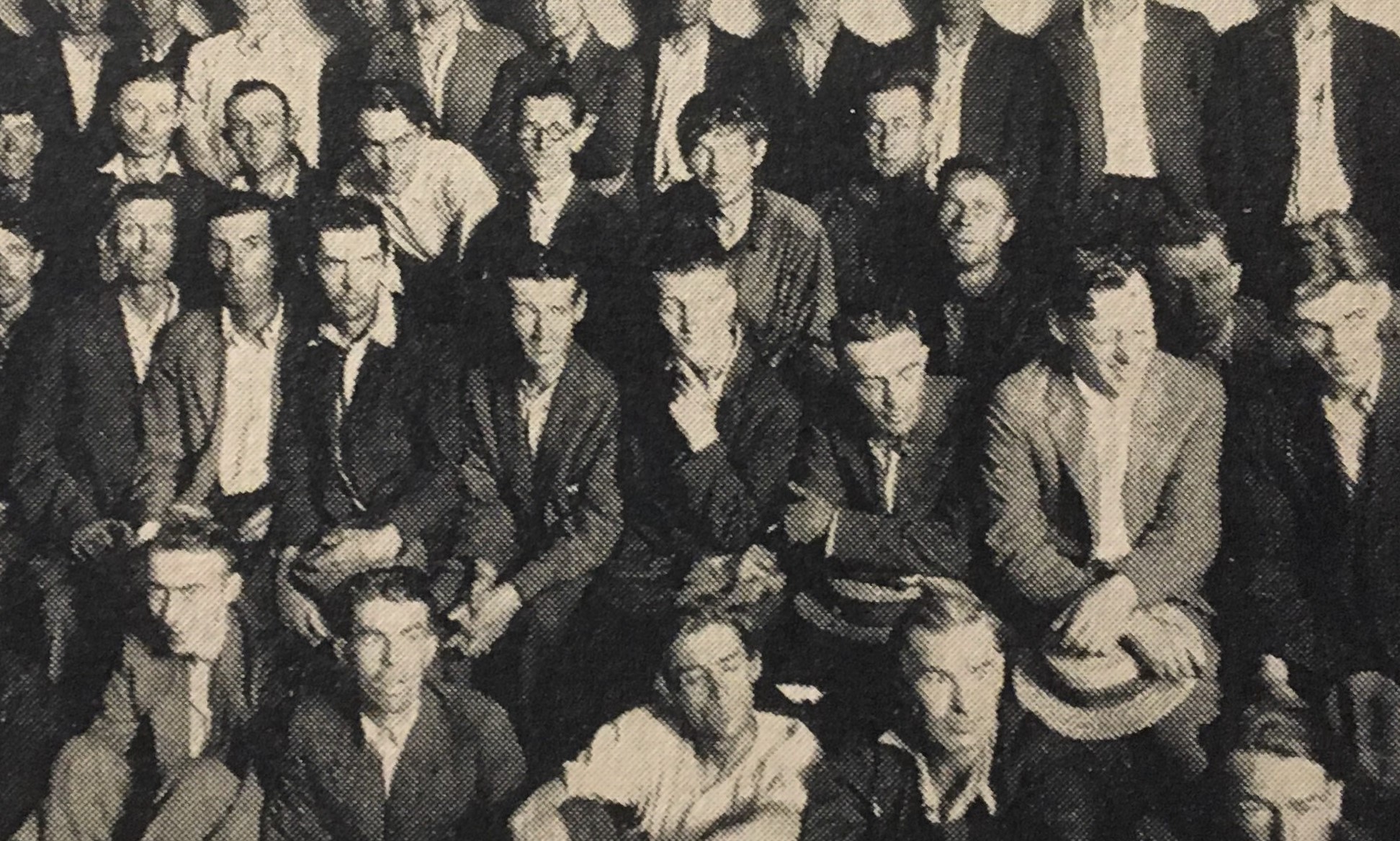
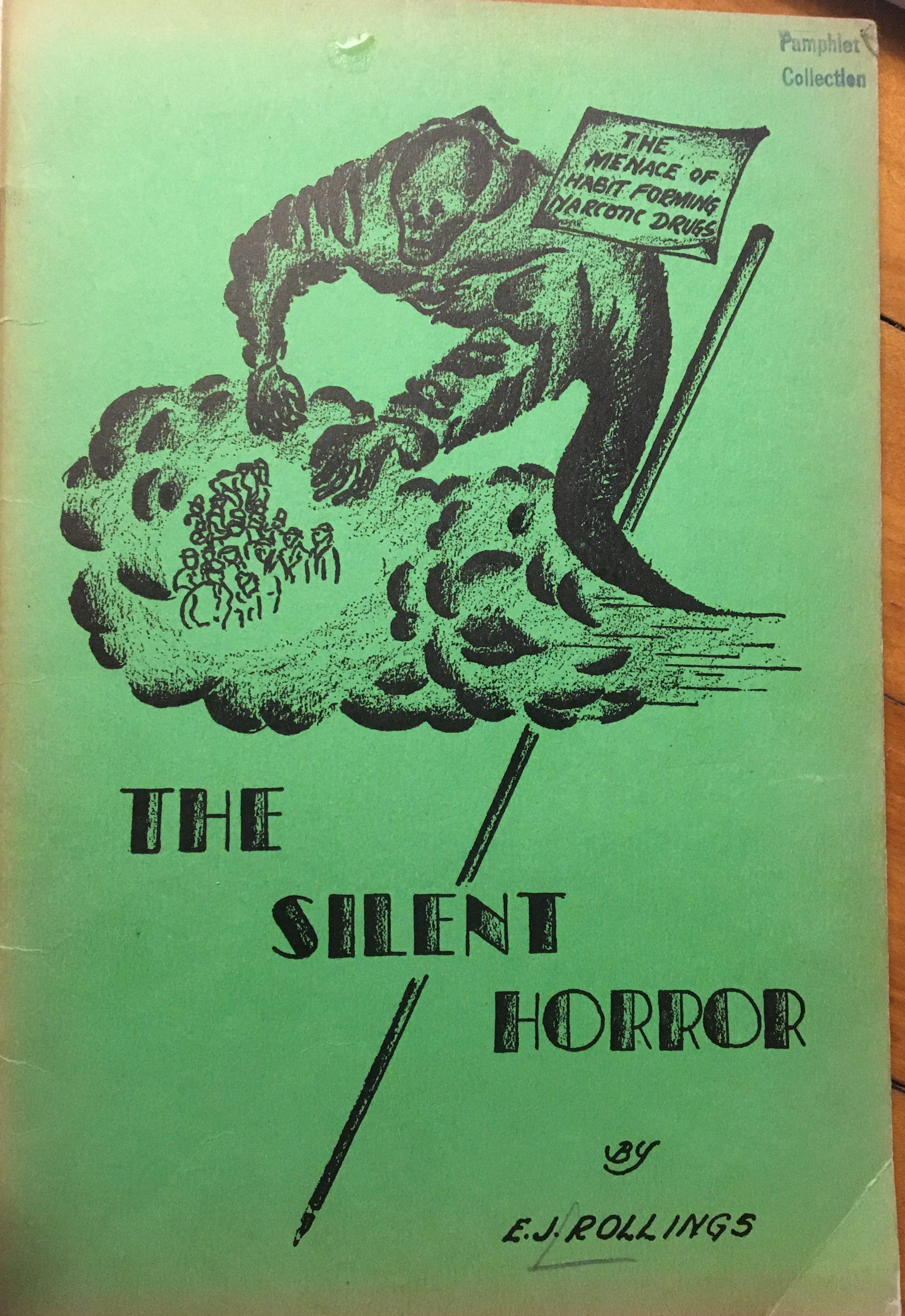
    This Ken-Burns-Moment is brought to you by an interesting and unusual photo of Big City drug addicts. “60 addicts picked up in 60 minutes” bloats the caption in Elmer James Rolling screechy pamphlet called  The Silent Horror.1 There’s a wide variety of emotion going on here in this group of 60 men, and not much of that seems to sense trouble or jail. Some of the folks look to be downright jovial, making the best of a difficult situation (assuming they knew what was going on):
    IMG_2036

    IMG_2038It turns out that as loud and unreferenced and populist this work was, or is, there are very few copies of it that made it into its future from 1939. (As a matter of record I couldn’t find another copy of the thing in the stupendous WorldCat.) It was published by the Defender Press in Wichita, Kansas, which at the time had over 100,000 residents, some of whom you would have expected to buy this pamphlet–since it has some amount of scream-preaching going on in its pages, I’d figure that it had some street appeal, though none of that interest meant enough to anyone to put a copy in a library, somewhere. 

    Rollings contributed at least four other narcotics-related works (“Your Girl or My Boy May be Next”, “Marijuana—the Weed of Woe”, “Junk, Junk Peddler and Junkers”, “Perils of the Poppy” and “I Saw Him Die”. There were a few other short works non-drug-related, including something on cowboy songs and also a book on bible prophesy.  

    Rollings’ major headings deal with the shades and players of narcotics: “Opium, the King of Dope”; “Crown Prince, Morphine”; “Cocaine, the Princess of Perdition”; “Marijuana, the Dutchess of Despair”; and the “Dope Peddlers and Addicts” round out this polemic.

    Here’s an excerpt from the book to give you an idea of what was going on in its pages:
    IMG_2037 (1)“An eighteen-year-old boy in a Midwestern city smoked two “reefers” and an hour later choked his sweetheart to death because she refused his shocking, lustful advances, born in a marijuana-crazed brain… A sixteen-year-old boy shot his mother and father to death with his father’s shotgun after smoking several “Mary Anns” given to him by a new friend whose acquaintance he made by chance. He could neither explain nor remember the killing when the effects of the drug had worn off and sobbed himself into hysterical grief when told of his crime. And so, on and on, runs the record of thievery, forgery, banditry, kidnapping, brutal murder, degeneracy, and rape, all chargeable to this paralyzer of conscience and inflamer of depravity — Marijuana! “

    And so, there’s the deal on this pamphlet–still the most interesting aspect of it to me is that one addict photo…

    Notes.

    1. Published in Wichita, Kansas by the Defender Press, 1939. 8.5”x 5.5”, 45pp. Cover art plus four photos. Green wrappers. Provenance: Library of Congress, with their surplus stamp on rear wrapper and a tiny “Pamphlet Collection” on front cover.
    ·Posted by :

    ·in:

    —

  • The Return of the Tall, Skinny Ladder (1885)

    JF Ptak Science Books  Quick Post 

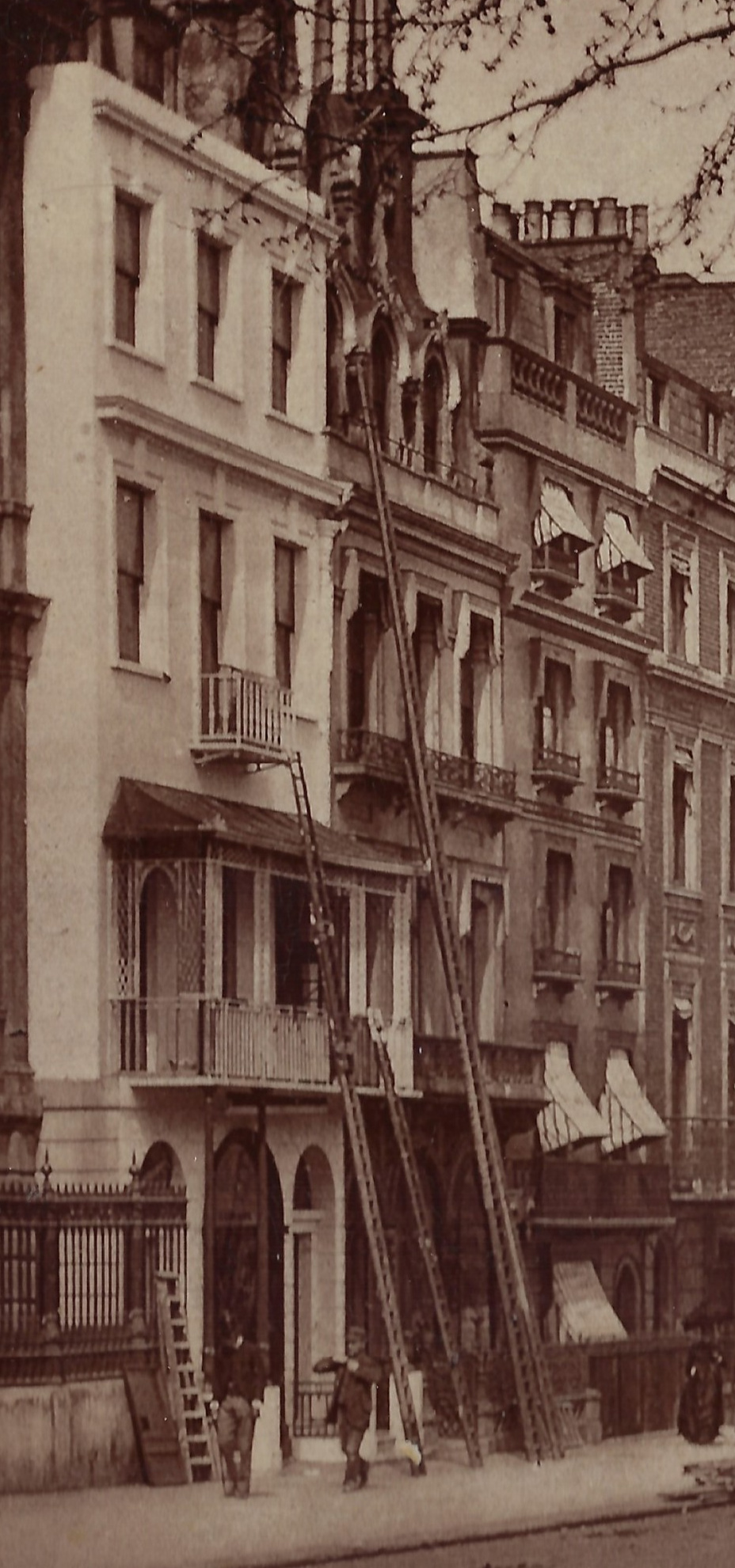
    Here’s an unexpected and fine detail, found in the 19th century photograph described below: 

    Picadilly

    There’s a seldom-used category on this blog concentrating on the concentrated viewing of antique images–that is, using your paper microscope to find the bits and bobs within complex imagery. Sometimes the found landscapes and portraits are purely serendipitous, and other times–mainly in engravings and woodcuts–there are details manufactured by an amused and perhaps bored artist, looking for a little entertainment and fun by burying an unusual vignette or detail in the mass of a large image. Today’s example is simply a photograph of the busy Westminster road, Piccadilly, made around 1880-1885–the image is fine enough to withstand some relatively deep probing, even with a  3200 dpi scan.  The image as it stands is very attractive, but once you start a strong look at it there’s a lot more going on.  (This works out even better under a microscope, but I don’t have an optical attachment for it for my camera.)

    Picadilly

    For example, its easy to overlook the street sweepers (at lower right), the pair of them working side-by-side in the midst of the bustling road traffic:

    ·Posted by :

    ·in:

    —

  • Fistfights and Beggars: Found Street Life in Old Prints (1757)

    JF Ptak Science Books   Post 2570    Zoomology Series

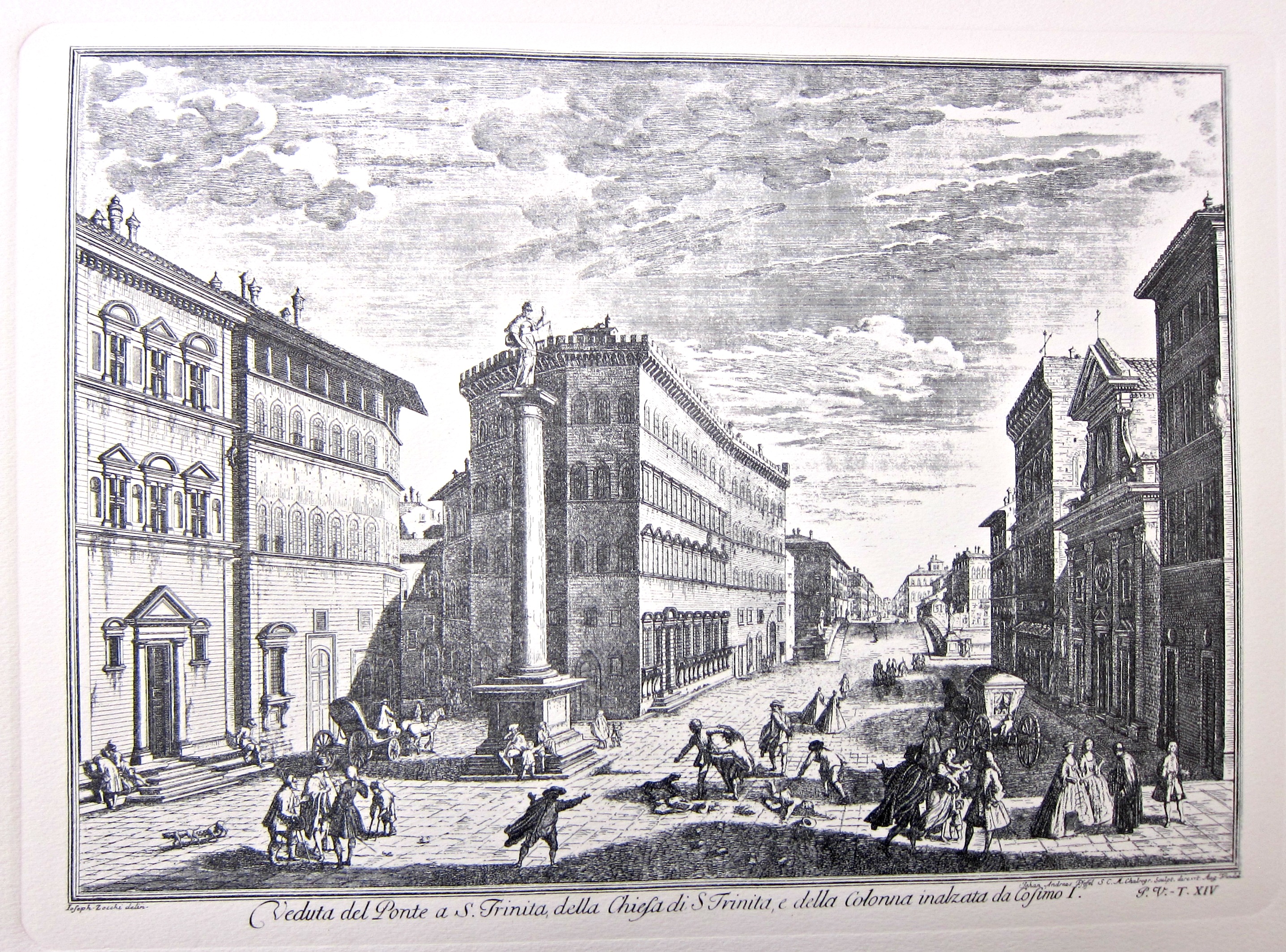
    I’ve written a number of times on this blog on using the “paper microscope” on finding small images hidden in plain sight within larger images in antiquarian prints. The image below is by Giuseppe Zocchi (1711-1767) (commissioned by the Marchise Andre Gerini at mid century to record the greatest of Florentine landmarks) and is entitled  “Veduta del Ponte a S. Trinita, della Chiesa di S. Trinita e della colonna inalzata da Cosimo I..” and appears in his Scelta di XXIV Vedute delle principali contrade, piazze, chiese, e palazzi della Città di Firenze in 1757.  The print displays the buildings and obelisk just down the way from the bridge whose name occupies the beginning of the image’s description, the ponte Santa Trinita, a fabulous renaissance structure built a hundred years earlier.  All we see of teh bridge though is is decking, though we do see a huge rise, which gives us a hint of teh bridge’s nature–it turns out that this is the oldest elliptic arch bridge in the world.  While the architecture is beautiful and teh perspective intersting, teh characters populzting the foreground are sometimes even more interesting. In general figures like this were used to take up empty bits of space and to provide perspective, and were depicted in the standard ways in which walking/riding humans are represented. In this case, however, there is a lot of social drama going on amidst the simple space fillers. 

    Zocchi d

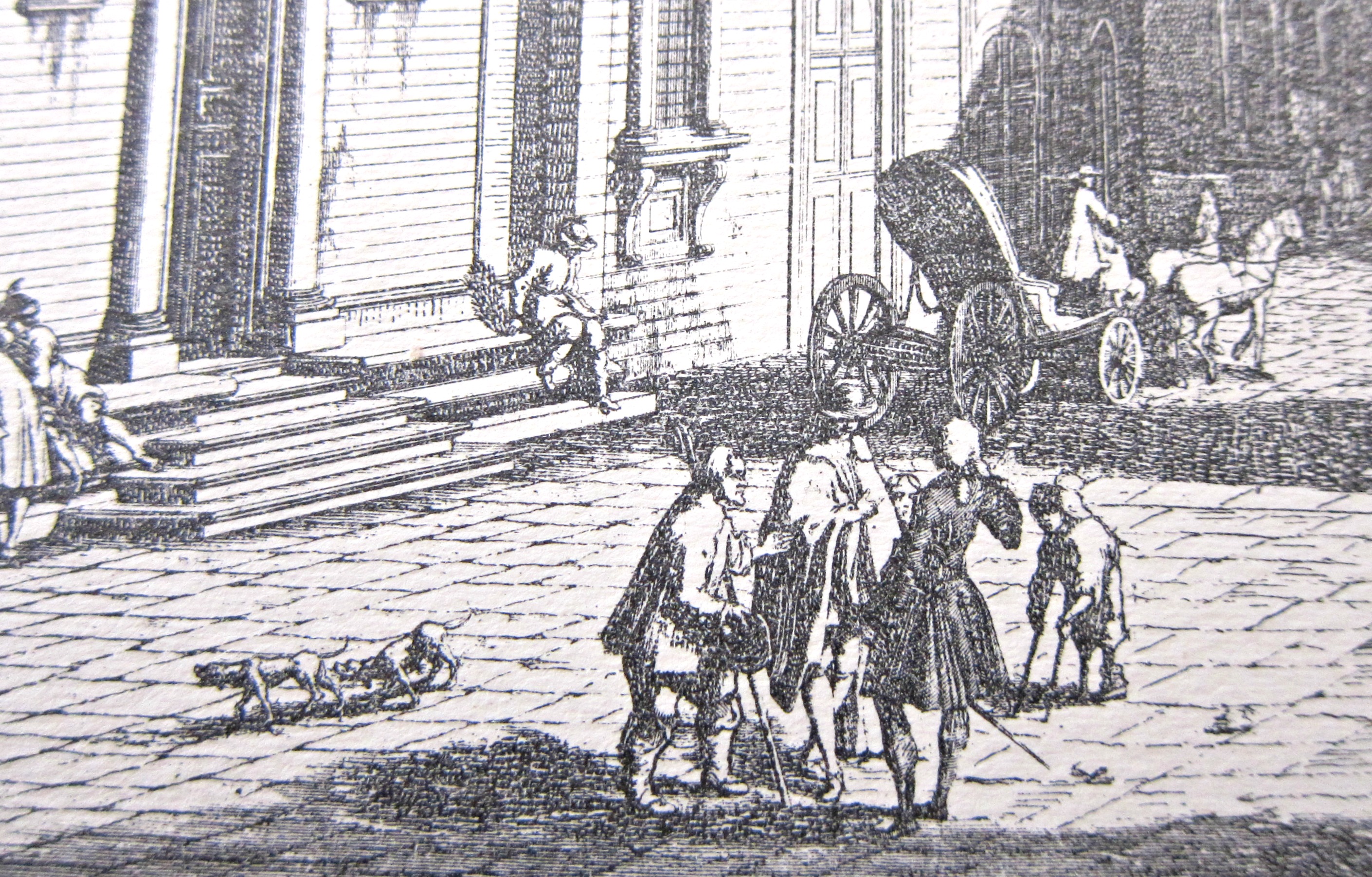
     For example, in the bottom-left corner, we see doggies doing what doggies do, and also a disabled short person approaching a group of gentlemen in conversation:

    Zocchi c

    ·Posted by :

    ·in:

    —

  • Running Man (1914-1918)

    JF Ptak Science Books   Quick Post

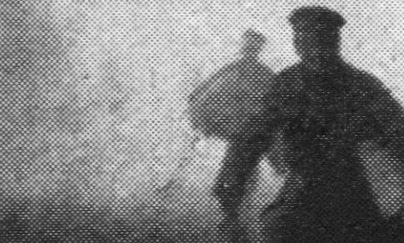
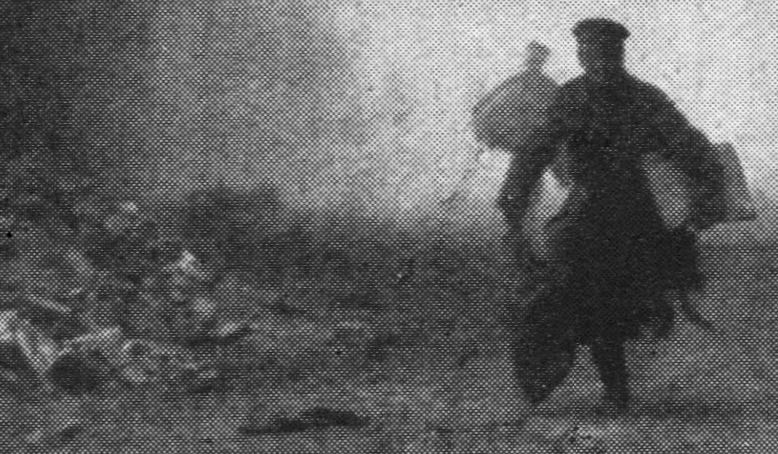
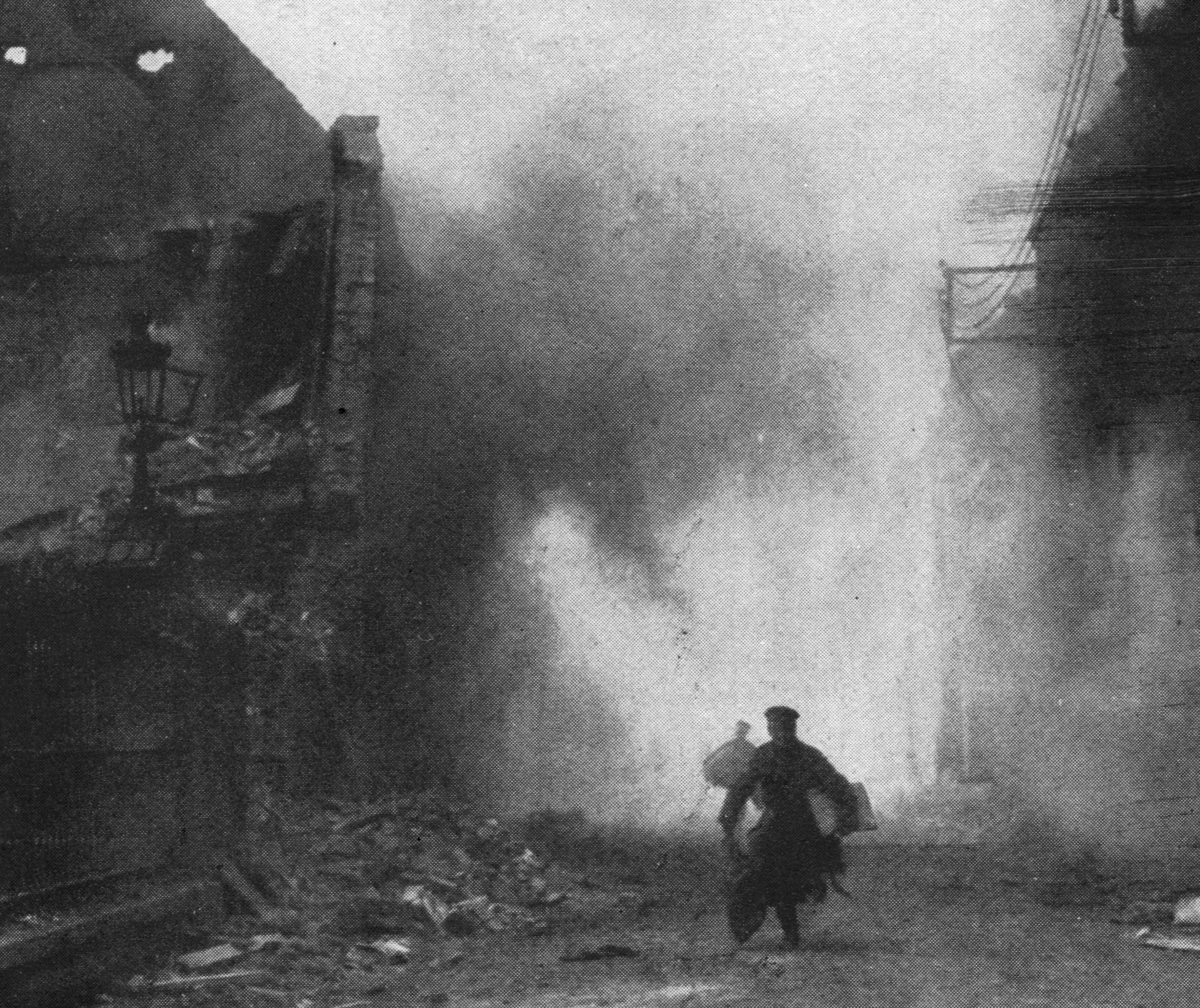
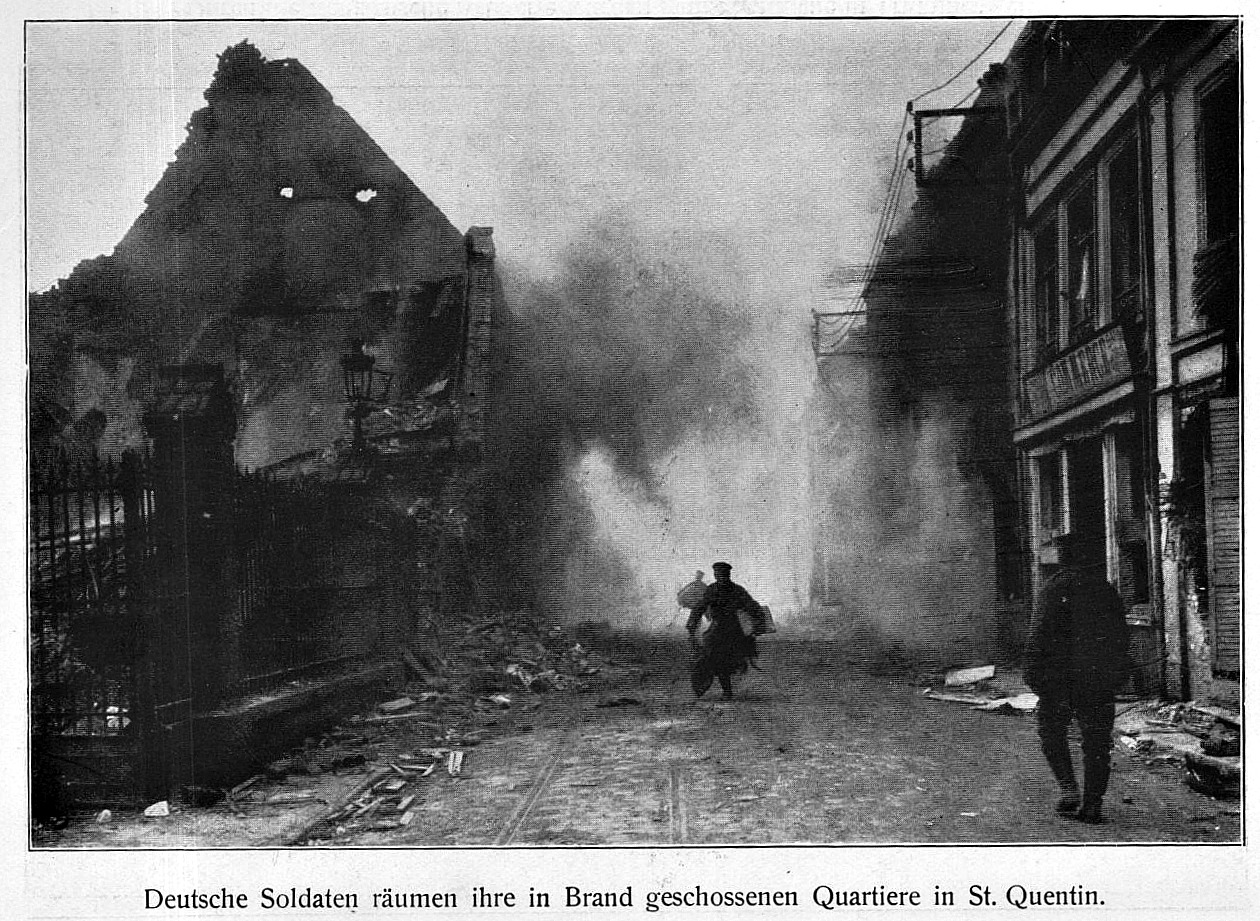
    The caption for this photograph describes it as action at St. Quentin, though I can find no evidence as to what particular battle at St. Quentin it refers to, which means it can be from 1914 to 1918.  The photograph was taken by the German photographic journalist Hermann Rex, and was published in Der Weltkrieg in seiner Rauhen Wirklichkeit…in 1926.  I’ve written a little about Rex elsewhere on this blog, and how his work seems to have been subjected less to censorship of “difficult” images than many.  Certainly his book is grittier than many I have seen, though I cannot identify his work as it was published during the war. (It is my impression, in general, that after having looked at all of the issues of Illustrated London News and Illusrirte Zeitung for 1914-1918, that the German illustrations/photos seem to have been less restrictive in displaying death and destruction.)

    The image below made a very strong impression, stronger still as I looked more closely.  

    WWI project spectre running 252


    WWI project spectre running 251

    WWI project spectre running 250

    WWI project spectre running 249

    ·Posted by :

    ·in:

    —

  • Phases of Saturn, Big and Small (1851)

    JF Ptak Science Books   Quick Post   Part of the Zoomology series

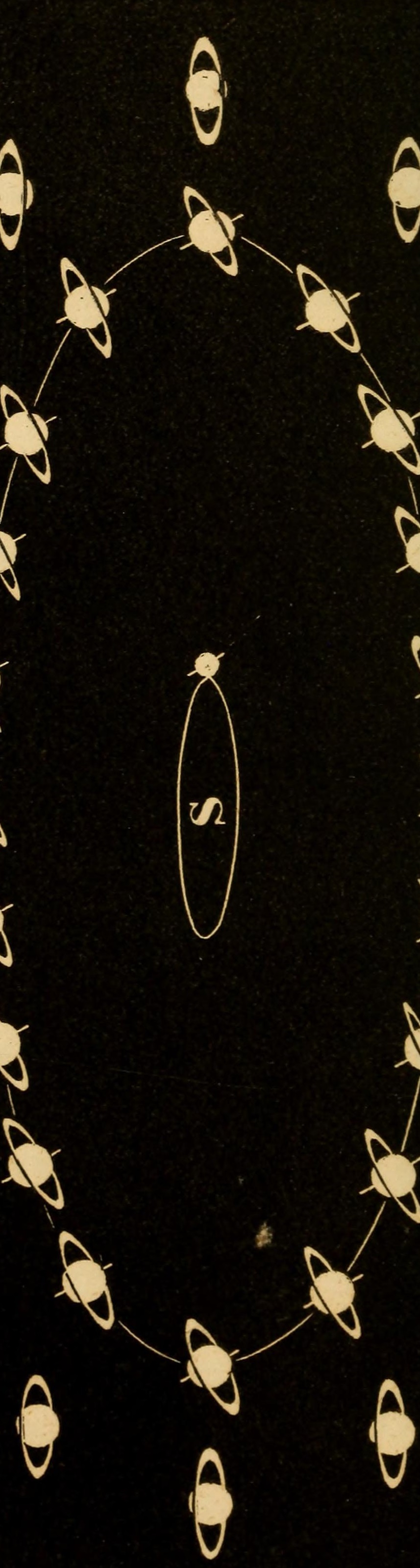
    Saturn BIG multiples_sun saturn

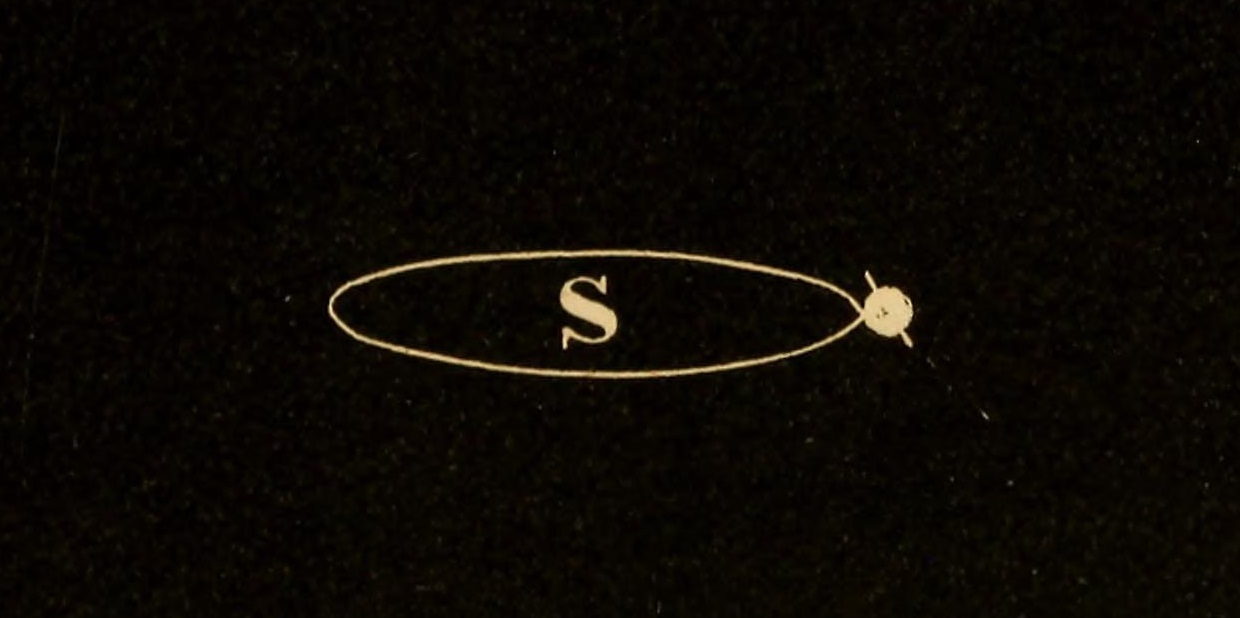
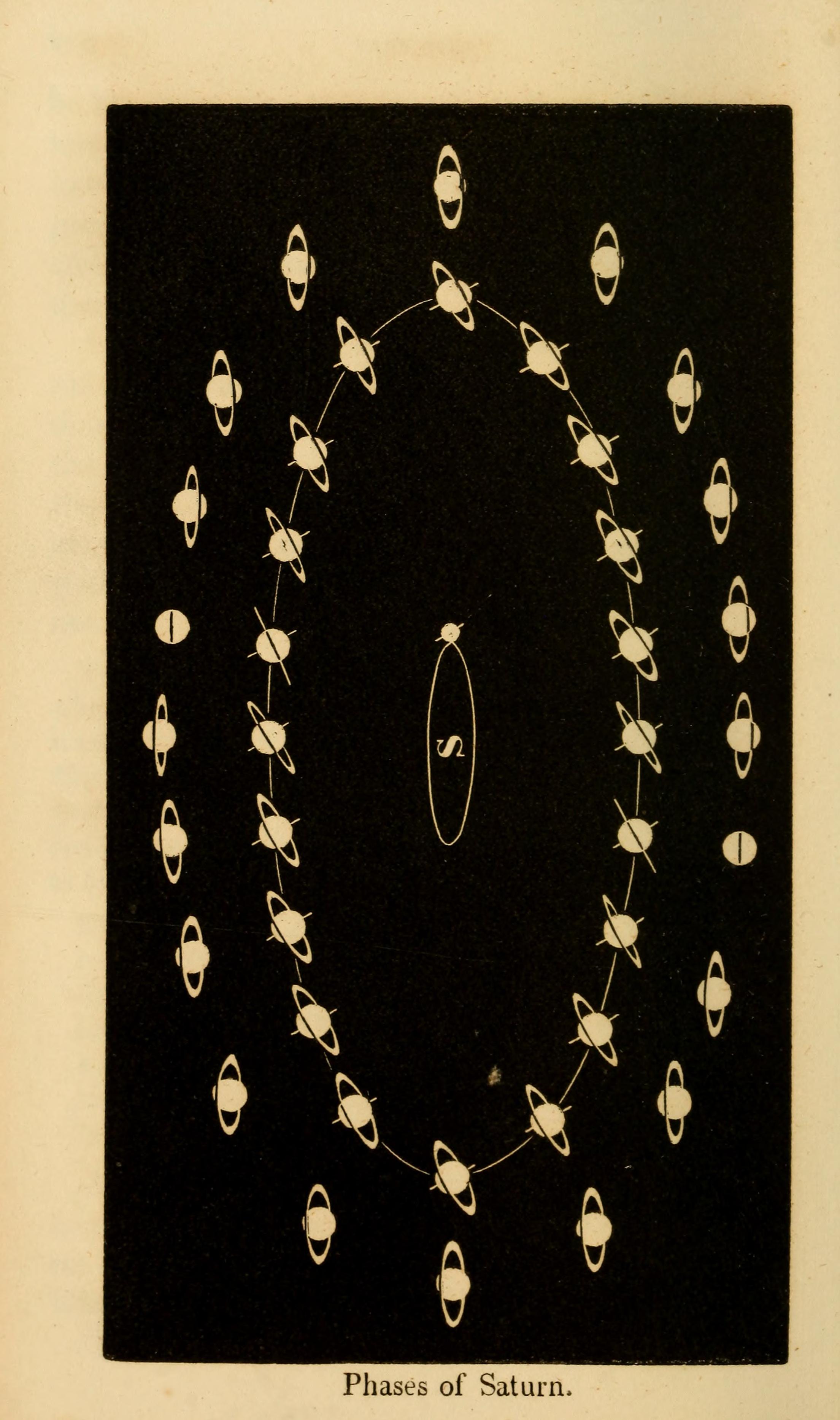
    I’ve had a bit of fun with my “paper microscope” on this beautiful engraving of the phases of Saturn.  It is enormously captivating in it full glory, but there’s so much more in it, a huge variety of single and multiple images of captivating energy–almost everywhere within the image is another image, and so on, turtles all the way down.  

    The full image:

    Saturn BIG multiples

    The engraving is from E.O. Kendall Uranography, published in 1850, and an excellent high-def deeply zoomable copy is located at the Internet Archive, here. 

    And another selection:

    Saturn BIG multiples_long vert

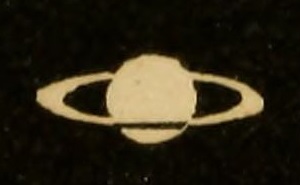
    There’s much that can be done with this piece of art–in this example we just have a close-up of the original image which is only a few millimeters wide…

    Saturn BIG multiples_tiny Saturn


  • The Four Seasons in Beautiful Astronomical Detail, 1851

    JF Ptak Science Books  Post 2449  

    • The original print is available from the blog’s bookstore, here.

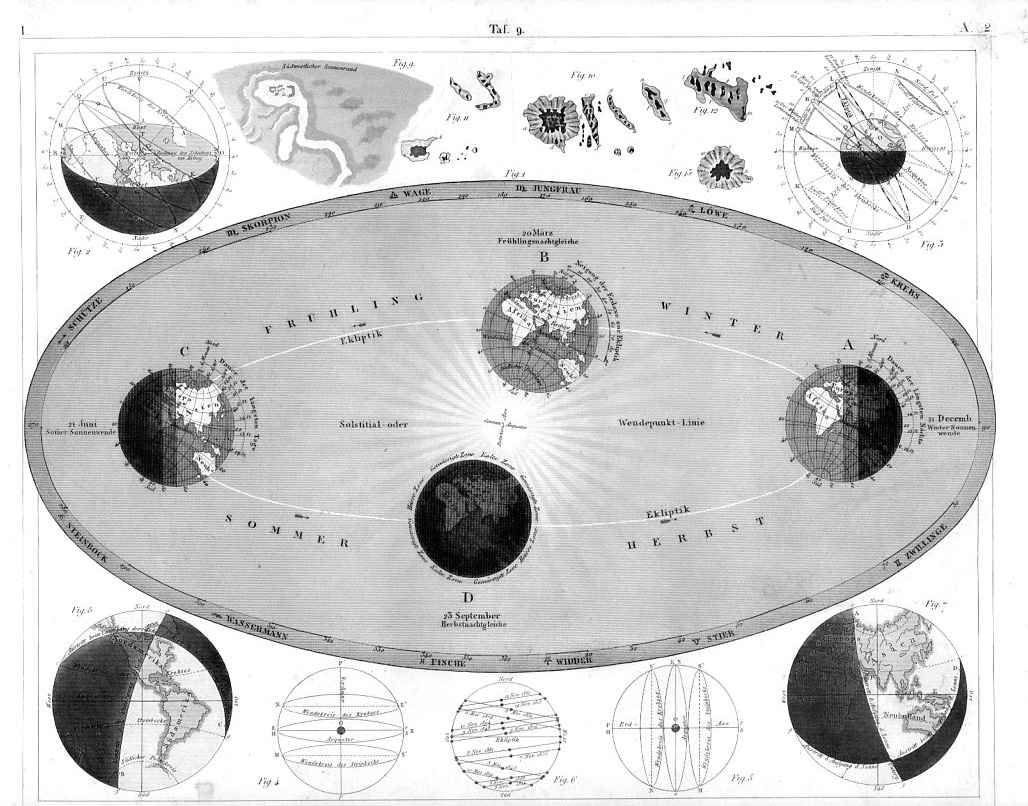
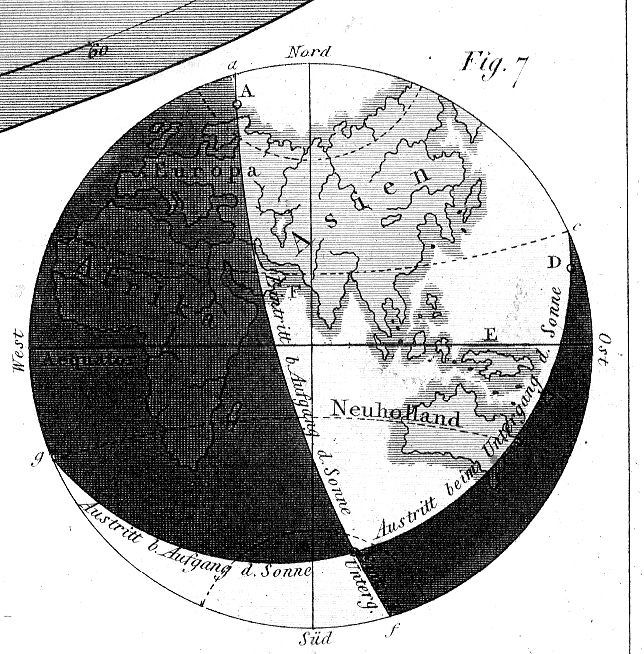
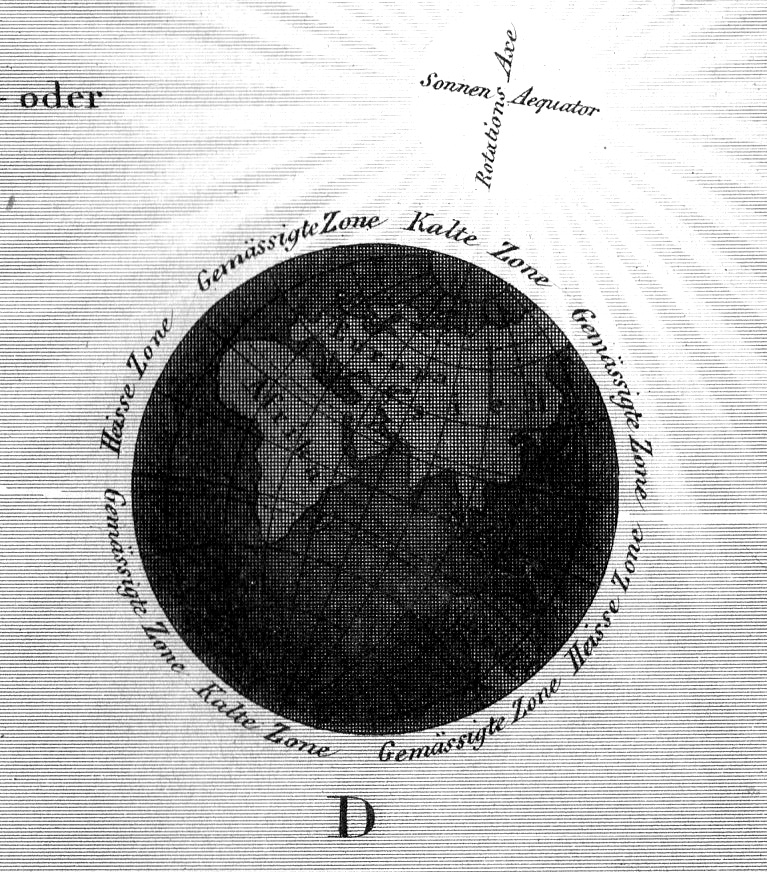
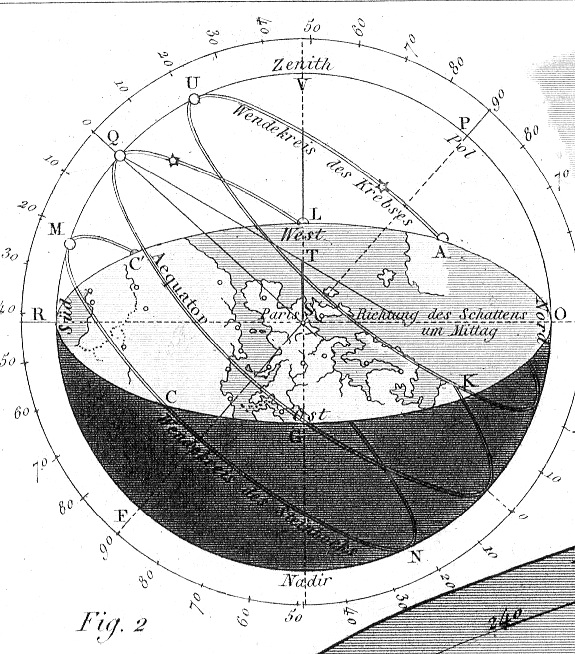
    J.G. Heck wrote and compiled a fascinating and complex work entitled The Iconographic Encyclopedia of Science, Literature and Art, which was published in the United States for the first time in 1851 following Spencer Baird’s translation from its original German. The artwork is detailed, and deep, fantastically controlled, and very instructive

    Eclipses heck941

    The key to his work is the amount of data displayed on each of the 500 engraved plates illustrating this work and the way in which it is arranged.  The design and layout of the 30,000 items on these 500 plates was a work of genius, and for my money it is easily the best-presented complex means of the display of data and objects that was published in the 19th century.  

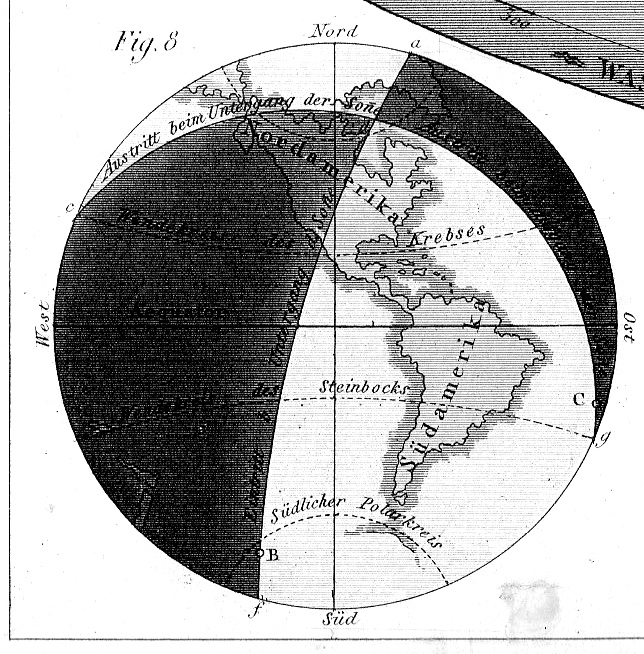
    For example, in the plate above is displayed the progression of the seasons. It is a beautiful work–the original measuring about 12×9″–with great detail in the inset globes, which measure in the original only about 1.5:” in diameter.  It is an excellent work of exactness and shading.  

    The details:


    Eclipses heck942

    Eclipses heck943

    Eclipses heck944

    Eclipses heck945


  • A History of Blank, Empty & Missing Things: Lipless Kissing in the Golden Age of Comics (Part 2)

    JF Ptak Science Books   Post 1077 (from 2010, expanded)

    [A History of Blank, Empty & Missing Things, #78]

    Kiss 185
    The indefatigable team of Joe Simon and Jack Kirby (Joseph H. Simon, born 1913 and still going and Jacob Kurtzberg,1917-1994, respectively) produced some of the enduring heroes and ideas of the Golden Age of Comics. In capacities as comic book writers, artists, editors and publishers they knocked the bottom out of the creativity bin, affecting all manner and aspects of that industry, as well as  introducing the genres of horror and modern romance comics.

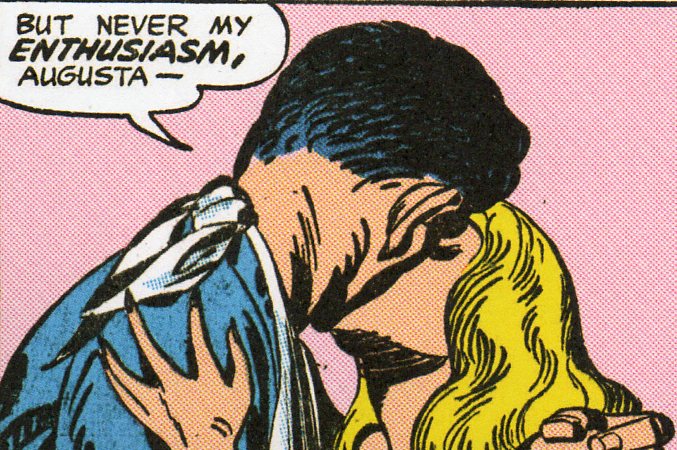
    And as necessary as it is scary, the nearly unrecognizable forensic pathology of the kiss in pink (above):

    Kiss--pink kiss det

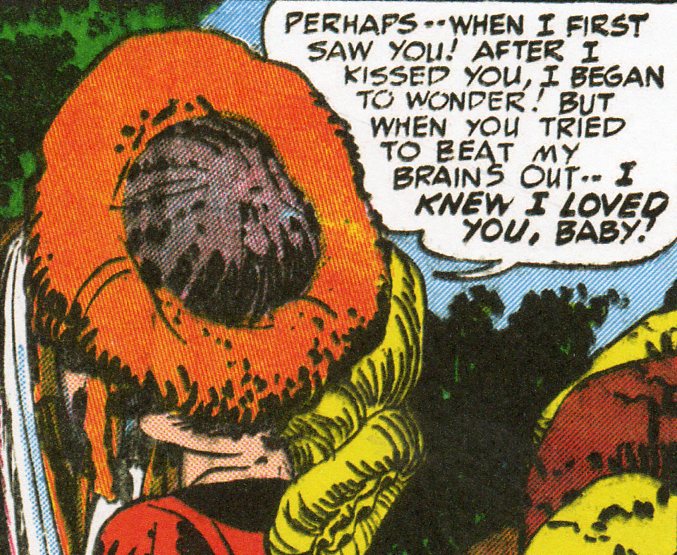
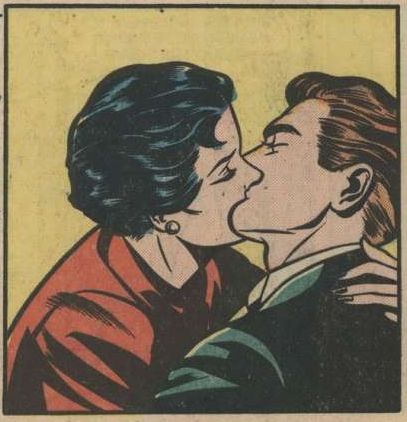
    I was initially drawn to their harsh colors,  blocky characters and un-magnificent dialog looking for wonderbits of non sequitor images and thought/word balloons populated with broken english.  They’re marvelous and easy to find, though I did get distracted by the unexpected part that I’m posting about right now–the missing, blank kiss.  Since they started the romance comics angles there’s plenty of 1940’s kisses to be found, but what I found was that although the kissing aspect wasn’t missing, the act of kissing was.  There’s plenty of heads smashed together that don’t leave a lot of room for faces, and in general it might be the sensitivities of the Golden Age’s age that cast away the kiss itself, their characters rushing face first into bad screen kisses. 

    Kiss 186

    There’s nothing wrong with this, and perhaps the kids never really noticed this, rushing to get ahead to the end of the confusing romantic interests.

    Kiss 187


    Kissing--comic book kiss

    Kissing--what else could I do

    Kissing--begining of forever

    There is a hint of a lip in this one, below, though it wasn’t supposed to be a passionate cheek kiss.

    Kissing in teal

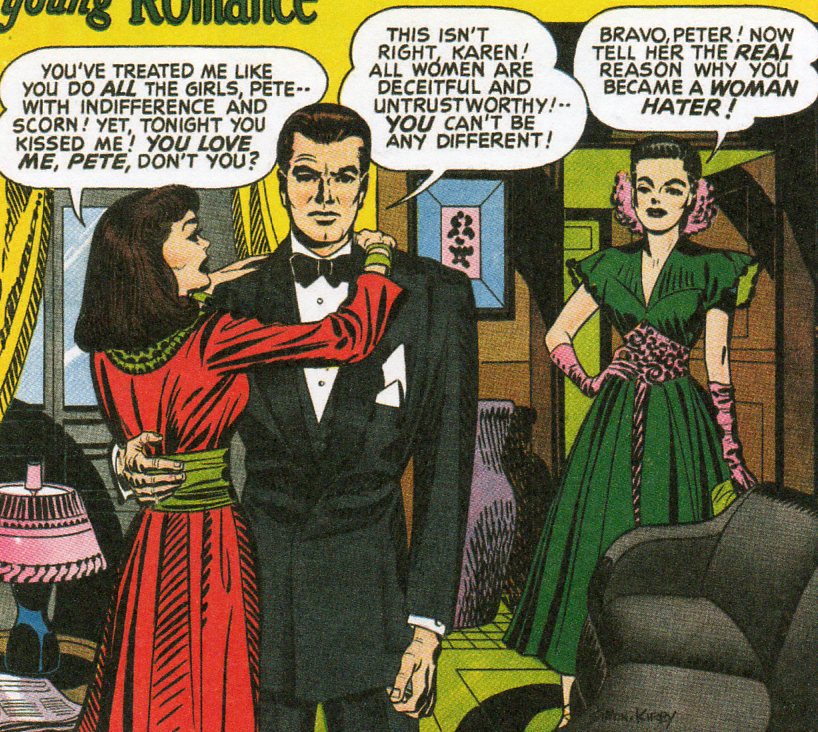
    This one has more to do with anti-kissing than anything else; I’m sorry that I don’t know what the “real reason” was….

    Kiss 189
      

    ·Posted by :

    ·in:

    —

  • Chuck Close Convict Optics, 1936

    JF Ptak Science Books   Quick Post    An Episode in the History of Dots

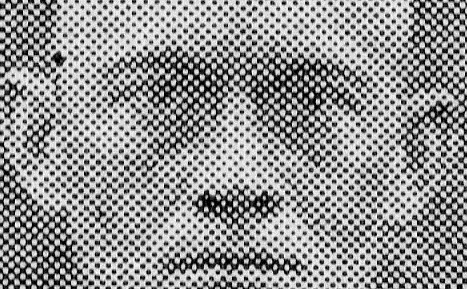
    There is no telling, sometimes, where an interesting/odd bit might occur. I guess you could make the case that they occur everywhere and that it is just our inability to see them that limits their appearance.  This may be the case with the following, a magnified part of a small part of a chart, where dots turn into squares:

    Convict farm909 detail

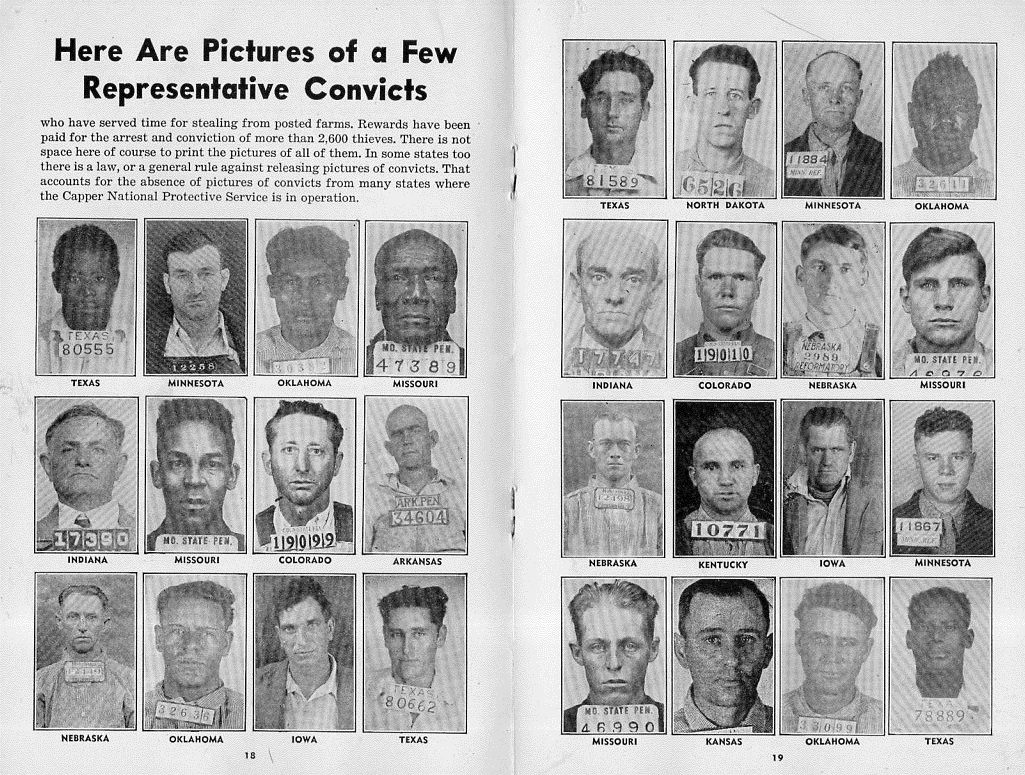
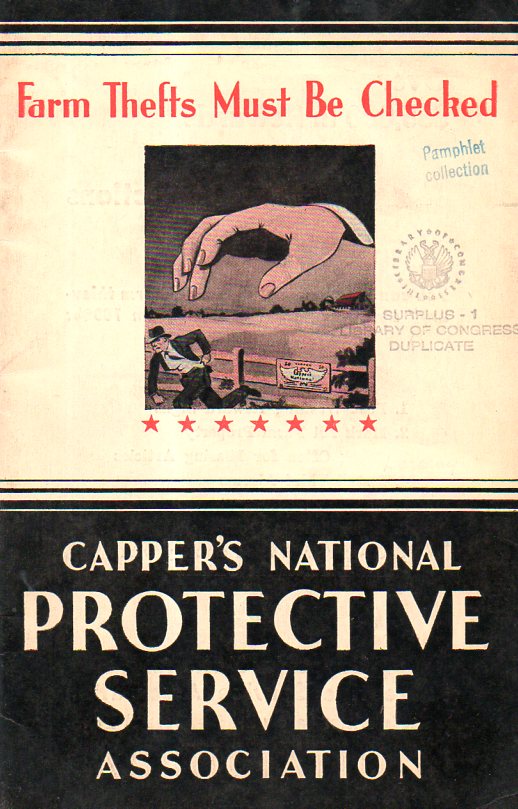
    The pamphlet topic is certainly a modest vanilla flavoring–prevention of farm theft (1936). However the cover is striking, so it is an easy thing to pick up.  There’s a bunch of anti-crime/catch-’em stuff and help on how to do that inside–there is also a two-page spread of mug shots of examples of people caught and convicted utilizing the services offered in the pamphlet. That’s where Mr. Close comes in.

    Convict farm samp-ler910

    One interesting thing about the enlargement is that you can make the image go from near-negative to positive by tightly squinting your eyes–which is something I think you cannot do with the pre-pixelated Mr. Close.  

    In any event, it was a very nice find, found in an unusual and serendipitous place. 

    And the cover:

    Convict farm cover911


  • A Beautiful Naval Cross-Section of Superb Detail, 1851

    JF Ptak Science Books   Quick Post

    Ship cross section 1810906

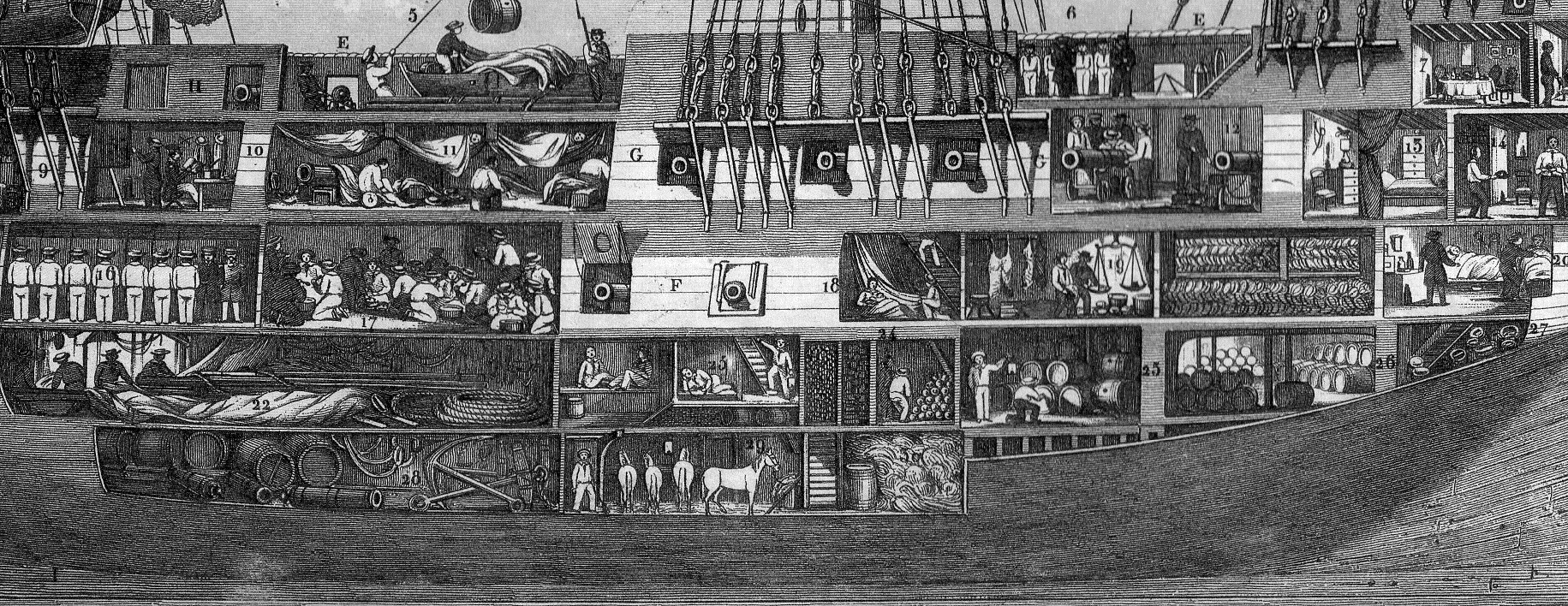
    J.G. Heck wrote and compiled a fascinating, complex, and magisterial work called The Iconographic Encyclopedia of Science, Literature and Art, which was published in America for the first time in 1851 following Spencer Baird’s translation from its original German (Bilder atlas zum conversations lexicon…)

    The key to his work is the amount of data displayed on each of the 500 engraved plates illustrating this work and the way in which it is arranged.  The design and layout of the 30,000 items on these 500 plates was a work of genius, and for my money it is easily the best-presented complex means of the display of data and objects that was published in the 19th century.   

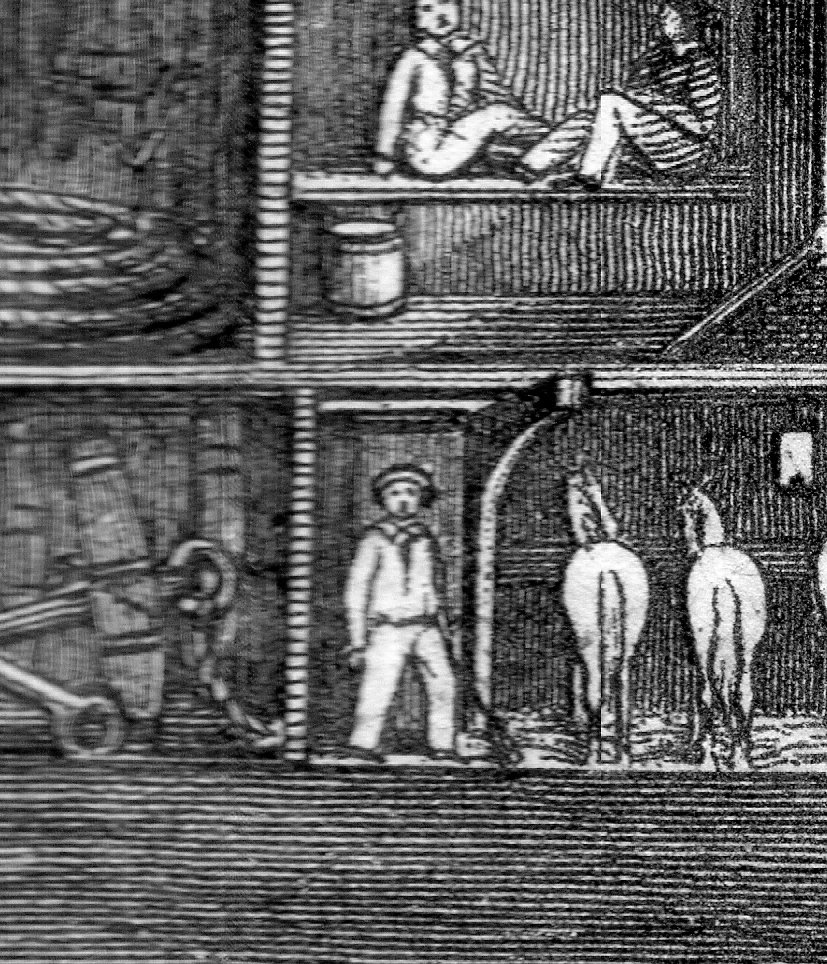
    In this sample (on one sheet of paper) we see three views of a naval war ship (of at least 24 guns) showing above-deck fore and aft, and then a fantastic cutaway/cross-section showing the four decks below deck.  To my experience the technical cut-away is not a common thing to encounter in the 19th century 9or before), and this one happens to be tight, very compact, very detailed, and for all of that quite small.  The entire print measures 12×9″, with the cross section being only about 2.5″ tall.  

    I’ve concentrated on one figure at the center-bottom of the engraving, a man four decks down who seems to be shoveling out the horse stalls.  In the print he’s about 1/4″ tall, but as you can see scanned in high resolution it turns out that the artist/engraver gave some fair amount of effort to this tiny figure, which is an impressive act of craftsmanship. He even has a collar:

    Ship cross section 1810907


  • Zoomology–Germany, 1945

    JF Ptak Science Books  Quick Post  Follow Me on Pinterest


    I’ve seen figures supporting 20 million people being “displaced” in the month following the end of WWII.  That figure has always seemed very low to me, considering the destruction and ravage–I thought that there might be half that number in the USSR alone.  In any event, “displaced” seems like such a polite word for something that is anything but that.  In browsing a volume for the second half of 1945 I found a photograph with a picture within it of something that might characterize what being “displaced” might actually be–and this is a more “civilized” displacement of a man on a train, not one of the hundreds of thousands of concentration camp survivors, who were considered to be “displaced persons” as well.  That “DP” tag has always rung wrong with me. 

    DP train782

    Which is a detail of the following detail:

    ·Posted by :

    ·in: