A Daily History of Holes, Dots, Lines, Science, History, Math, Physics, Art, the Unintentional Absurd, Architecture, Maps, Data Visualization, Blank and Missing Things, and so on. |1.6 million words, 7500 images, 4.9 million hits| Press & appearances in The Times, Le Figaro, Mensa, The Economist, The Guardian, Discovery News, Slate, Le Monde, Sci American Blogs, Le Pont, and many other places… 5000+ total posts since 2008.

Category: Zoomology

  • A Word Book on a Book of Words: Counting Crows (and Everything Else) in Ulysses

    JF Ptak Science Books    Post 2132  
    Follow Me on Pinterest

    We’re talking about JJ’s Ulysses, not the older one. 
    Joyce774

    Miles L. Hanley performed an enormous and exacting (!) task of providing a word census for this first-among-the-Modernists novel.  Joyce used 250,000-odd words to take Mr. Bloom around Dublin that day, 30,000 or so of them different1.

    Hanley’s very precise pre-spreadsheet undertaking was done in a year, somehow, and published in 1937.

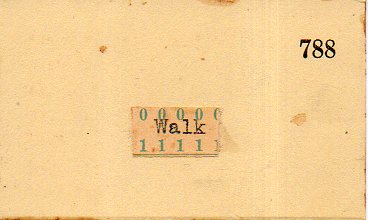
    Joyce 2775What he and his team of 20 or so did was this:  working from the Randomn House edition (the most democratic of the editions at that time and the most accessible to the largest reading audience), he/they typed out each word on a miniature index card (above) and recorded the page and line in the text in which the word occurred.  The cards were specially designed and pre-pasted so that they could be linked together inb long lines and then stored afterwards in six long wooden trays.  At the end of the day there were some 220,000 of these little cards, each of which was checked and double-checked and edited and re-edited and then everything proof-read and then so again.  There was a LOT of small work in this procedure, but it is in the small work that the greatest of this undertaking happened. 

    Among many other things that Hanley recorded was the equipment and production expense, which totaled $148 for the project, most of which was spent of 250,000 1.5×2.5″ cards (which cost $100).  There are two dozen pages of introduction and explanation of process, as well as about the same number in the appendix (which is interesting and useful)–there is basically nothing that is contributed for interpretation, or what any of the word usage/occurrence/frequeJoyce 3776ncy/rarity and so on might mean. That was certainly another project. 

    I must say that this was an extremely sharp operation, well-planned and directed, and done in sort of no time at all. Simply impressive.

    The first edition of the work is relatively rare (it went through a number of editions and iterations and reprintings), and the one I have in front of me now is from the Library of Congress via the Copyright Office.  It is always troubling to say that something is “rare” and then have two of them, which is the case here–not only that, but both are from the Copyright Office, and (excitingly!) they have their original carbon cards of their LC card catalog cards tucked in.  Pretty cool. 

     Notes:

    1.  Word count is complicated, and inlcudes plurals and other variations of the same word. Suffice to say that it is around 30,000. Or 33,000. 
    ·Posted by :

    ·in:


  • History of Holes–the First Images of Holes Made by Insects?

    JF Ptak Science Books   Post 1995   Part of a series on The History of Holes #45Follow Me on Pinterest

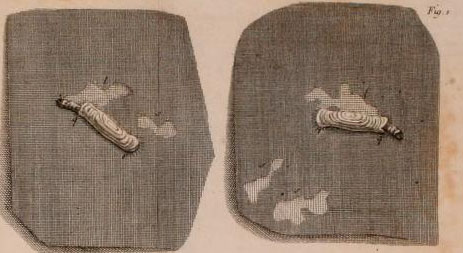
    Reaumur close-up det
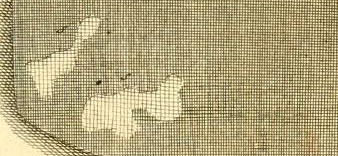
    [Detail from one of the earliest images of holes made by insects? From Reaumur, citation following.]

    There are many different ways of looking at antique (or any other) scientific images.  Sometimes you see exactly what they’re supposed to be showing, and other times the viewer sees something more. Sometimes this “something more” is useful, and sometimes it is simply a side bit, not adding to the understanding of the image content, but curious nonetheless, useful in other ways.

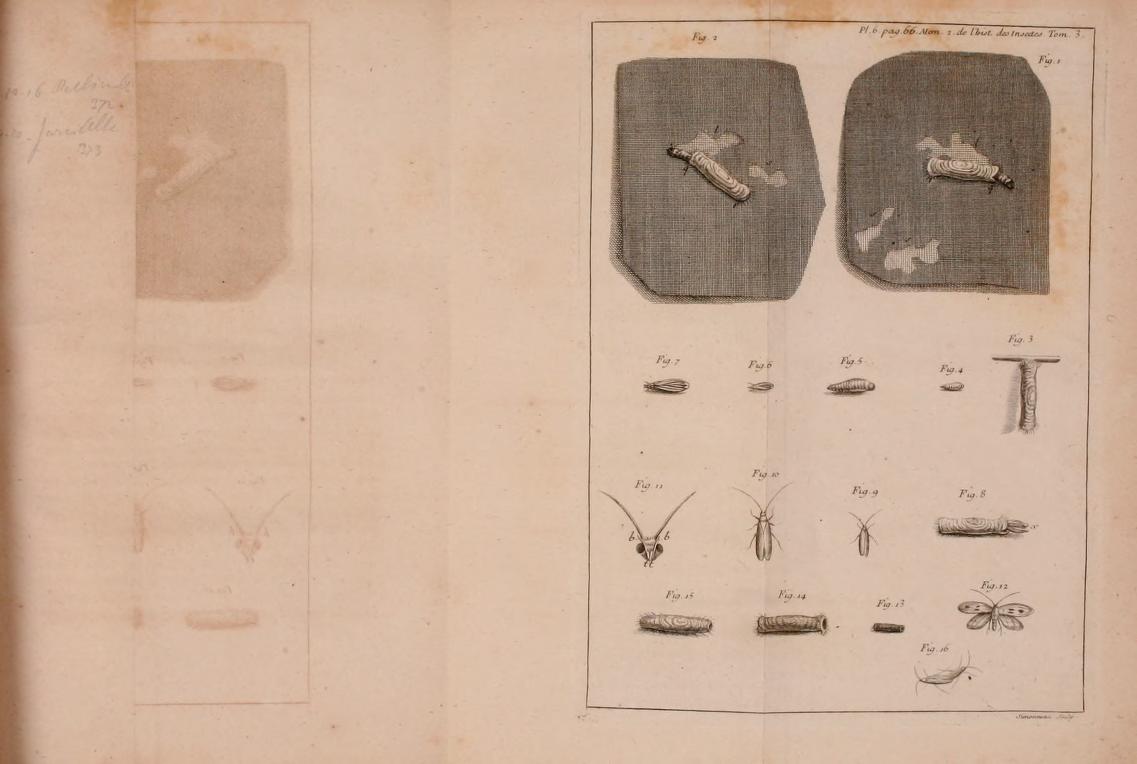
    And so is the case with this miniature/micro observation of this engraving which appears in the great work on the lives of insects by  René-Antoine Ferchault de Réaumur:  Memoires pour servir a l’histoire des insectes, which was printed in six impressive volumes (some 26cm tall) in Paris from 1734 through at least 1742,  illustrated throughout with 269 engraved plates, many depicting more than one subject. This was the masterwork of its time on insects, a great effort made and achieved on insect architecture, biology, and behavior–it was a careful and exacting work, magisterial.  Reaumur (1683-1757) was an exceptional talent and observer, writing for the Academie des Sciences on a really wide variety of subjects for over fifty years–and even with this large output, most of his work was delivered posthumously to the Academy.   

    My attention was drawn to him from an illustration in Barbara Maria Stafford’s Good Looking, Essays on the Virtue of Images (MIT, 1996, palte 93), which depicted the holes made by moths in cloth in volume 3 of the Memoires.  The first image, above, is a detail from the Reaumur engraving, with the full plate, following:

    Reaumur holes detail
    [Reaumur, Memoires pour servir a l’histoire des insectes… volume III,  from the Internet Archive, here.]

    And more:

    Reaumur holes
    The series on this blog concentrating on the history of holes may or may not make any contribution to anything at all, save for perhaps serving as an outpost on looking at images from a different perspective. 

    And just for good measure, here’s an image of the ghost of the image of the mothy hole, an image imprinted on the page opposite the page on which the original image was printed, the ghosted mirror image of the hole captured in an ink/iron impression on paper. 

    Reaumur holes ghost

     Here are the links for the six volumes of Reamur’s Memoires:

    Mémoires pour servir à l’histoire des insectes (1734-1742)

    • Tome I : Sur les Chenilles et les Papillons, Imprimerie royale, Paris, 1734, 654 p., 50 pl. ;
    • Tome II : Suite de l’Histoire des Chenilles et des Papillons et l’Histoire des Insectes ennemis des Chenilles, Imprimerie royale, Paris, 1736, 514 p., 38 pl. ;
    • Tome III : Histoire des Vers mineurs des feuilles, des Teignes, des fausses Teignes, des Pucerons, des ennemis des Pucerons, des faux Pucerons et l’Histoire des Galles des Plantes et de leurs Insectes, Imprimerie royale, Paris, 1737, 532 p., 478 pl. ;
    • Tome IV : Histoire des Gallinsectes, des Progallinsectes et des Mouches à deux ailes, Imprimerie royale, Paris, 1738, 636 p., 44 pl. ;
    • Tome V : Suite de l’Histoire des Mouches à deux ailes et Histoire de plusieurs Mouches à quatre ailes, savoir des Mouches à Scies, des Cigales et des Abeilles, Imprimerie royale, Paris, 1740, 728 p., 44 pl. ;
    • Tome VI : Suite de l’Histoire des Mouches à quatre ailes avec un supplément des Mouches à deux ailes, Imprimerie royale, Paris, 1742, 608 p., 48 pl. ;
    • Tome VII : Histoire des fourmis, Paul Lechevalier éditeur, Paris, 1928, 116 p. & Histoire des scarabées, Paul Le Chevalier éditeur, Paris, 1955, 340 p., 21 pl.

    ·Posted by :

    ·in:

    — — —

  • WWI Photograph: Amusement and Relief, October 1918

    JF Ptak Science Books  Quick Post     Part of Zoomology Series 
    Follow Me on Pinterest


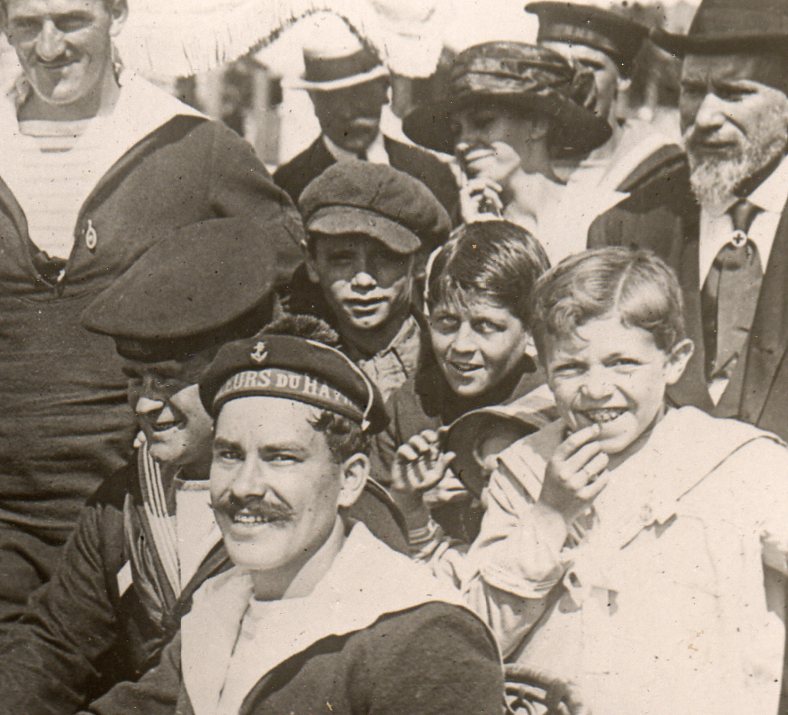
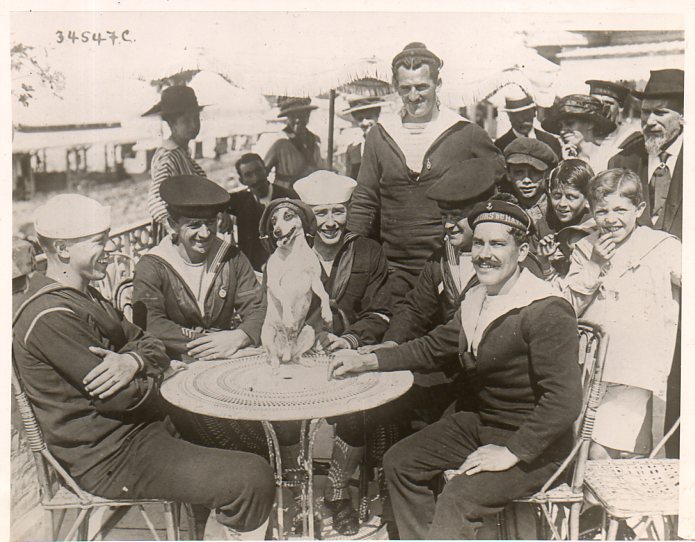
    In a moment of levity at the end of WWI, these sailors from America and the U.K. and France got together for a bit, and turned their little doggie mascot into a small attraction of sorts, entertaining themselves and the small curious crowd surrounding tthem.  The photograph was made anonymously by the Western Newspaper Union and is stamped “British Official Photograph”, and published on 10 October 1918. 

    WWI--Doggie photo detail026
    Which is a delightful detail from this:

    WWI--Doggie photo025

    And this intriguing woman, who appears in the upper right corner:


    WWI--Doggie photo detail028

    ·Posted by :

    ·in:

    —

  • Note on a Sumo Toe–Nice New Tool at the Wellcome Collection

    JF Ptak Science Books   Quick Post    Part of the Zoomology series

    Follow Me on Pinterest

    There’s a ew digital player at the Wellcome Library, the home of a renowned collection in the history of medicine,  though it covers more than that, being “one of the world’s richest and most unique collections, with themes
    ranging from medical and social history to contemporary healthcare and
    biomedical science” (from their site). 

    Using their new zoom tool I was able to get great detail from this 19th century sumo wrestling woodblock, and save it easily:

    Summo toe

    ·Posted by :

    ·in:


  • Zoomology: Girls in the Island of Legs

    JF Ptak Science Books   Quick Post       Part of the Zoomology series.

    Follow Me on Pinterest

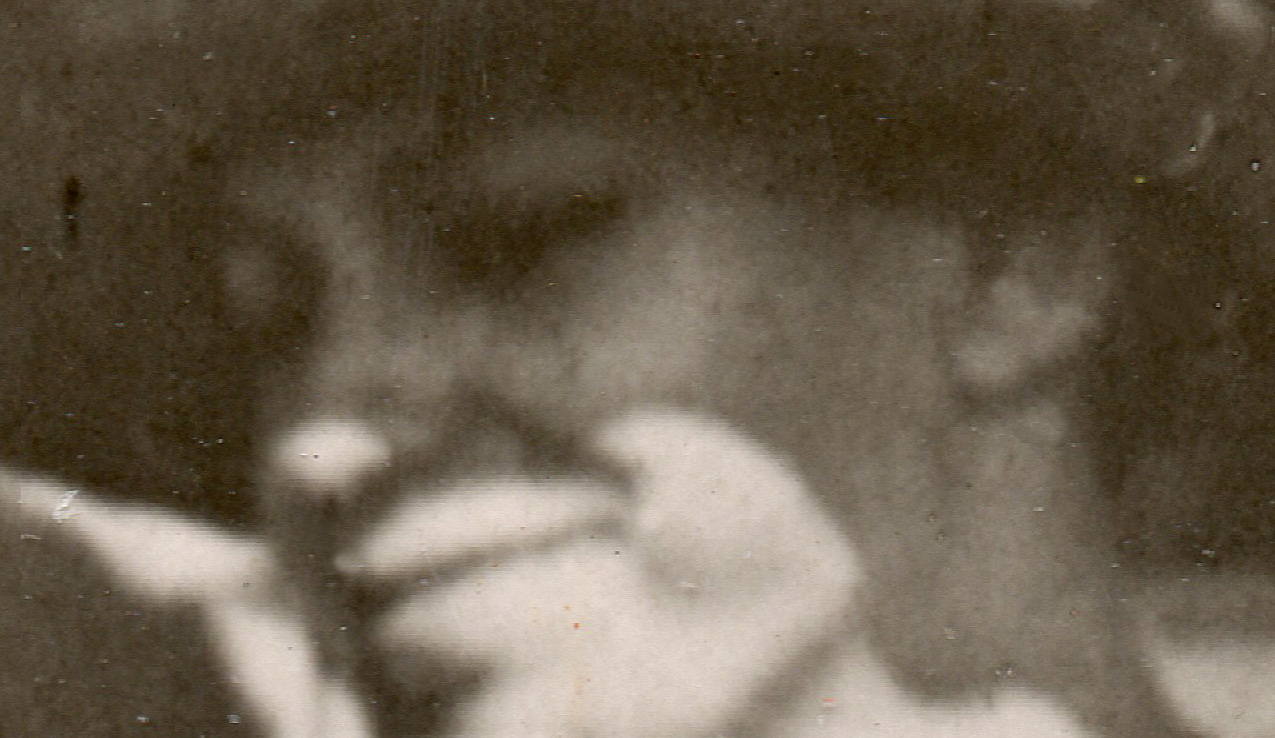
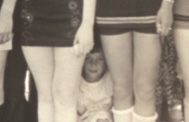
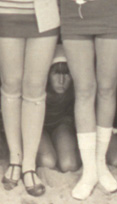
    Bath beauties huntington detail girl


    It would be easy to rhapsodize on the “quieter” or “simpler” lifestyles and demands of society from 90 years ago, especially when you compare this bathing beauty image (below) to the pupal-pulsating extravaganzas of the modern image-formulating beauty fairs.  For people who were alive in this photo in 1925 I have no doubt that their life was just as complexified as any life situations as they exist today.  One thing that has changed are the speeds at which societal inputs can be responded to–we can certainly achieve more-or-less instant satisfaction addressing a problem today than could have ever been dreampt of in 1925. The fluidity of thought and communication that are a given in 2012 were not even a scientific fiction possibility in 1925–as a matter of lexicograph record, the term “science fiction” didn’t even exist in 1925, much less be a bucket for collecting rumblings of future possibilities. There were certainly fewer levels of things to deal with in 1925, but the time it took to deal with the dealables would  have been far greater than today’s timetables of answers, so perhaps the issue of the simple vs. the complex would be a wash/trade off so far as the actual amount of time was concerned in the global addressing of combined complexities.  Anyway, that horrible sentence out of the way, the idea of the “simpler life” is highly relative, and relational.

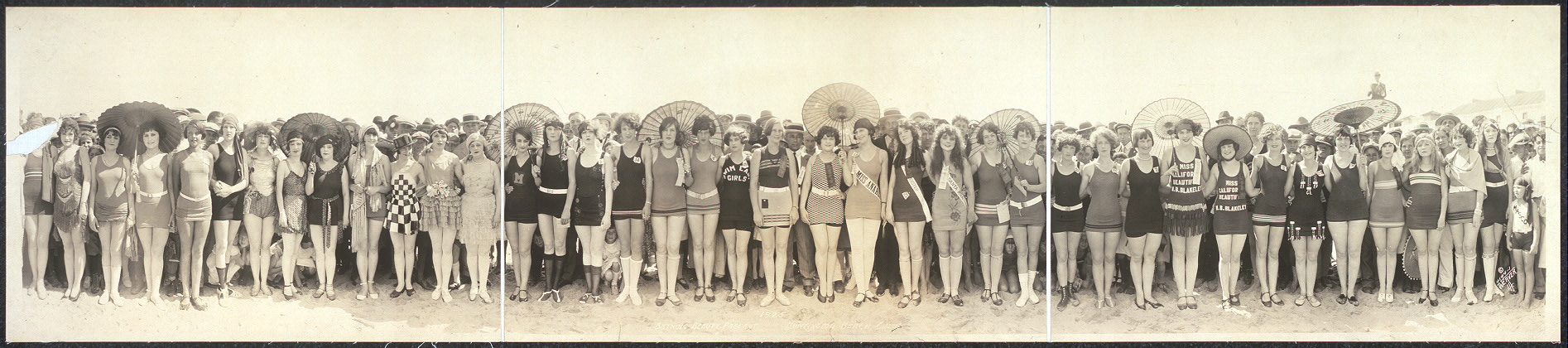
    That said, here is the line-up of contestants for a beauty contest at Huntington Beach, California, in 1925.

    Everything seems interesting in this photo–the women themselves, their bathing attire, the men standing behind them, the footwear on the beach, and of course the girls peeking out through the legs of the contestants.

    All images are found at the Library of Congress, here. All image are also greatly expandable.

    Bathing beauty huntington beach

    Bath beauties huntington detail girl 2

    Library of Congress, here.

    ·Posted by :

    ·in:

    —

  • Zoomology: Looking into the Heart of 40th St & 6th Ave, 1940.

    JF Ptak Science Books  Quick Post

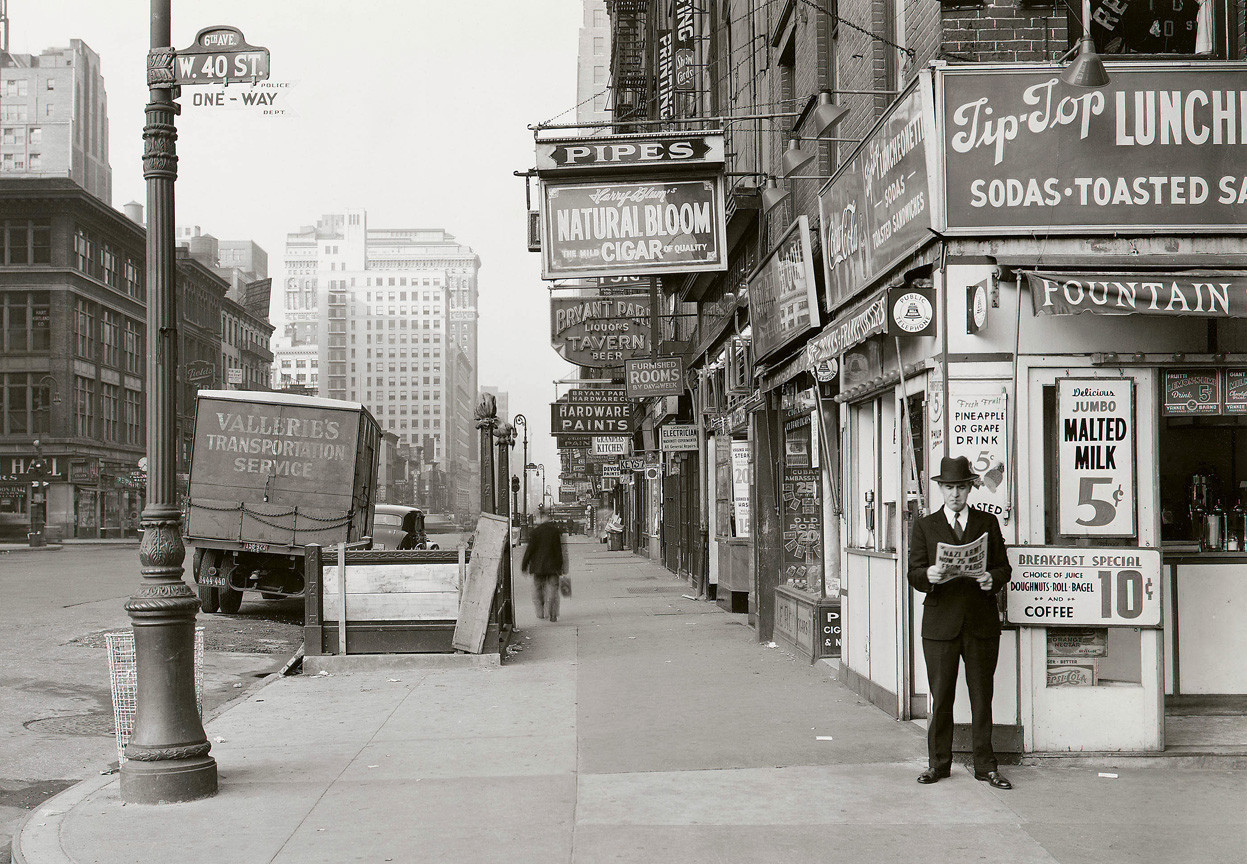
    I feel that this is an extraordinary photo, full of deep detail with many stories.  The narrative take place on the corner of 40th Street and 6th Avenue, Manhattan, in 1940.

    Historical-photos-pt3-new-york-ww2-nazi
    [Source: iliketowastemytime.com, here]

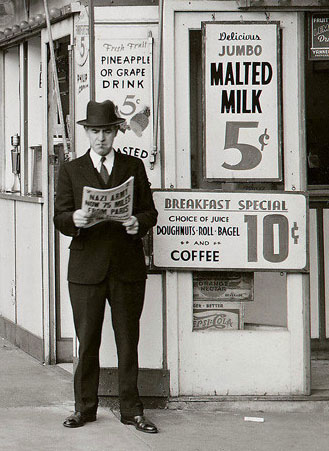
    In the image above the man reading the paper is just some guy reading a paper–with Zoomology he becomes what he was on that after in 1940: pissed off.  The news was not good (“Nazi Army Now 75 Miles from Paris”) and probably not all that imaginable, following the German victories in the rest of Europe its assault on the U.K. Though since he is reading the New York Daily News and he’s on the back page, that means he is reading the sports, which is where his pissed-offedness might come from.  

    Historical-photos-pt3-new-york-ww2-nazi 1


  • Solomon Butcher, Part III: Creating the Landscape and Giving Form to the Imagination

    JF Ptak Science Books  Quick Post   Part of the Zoomology series

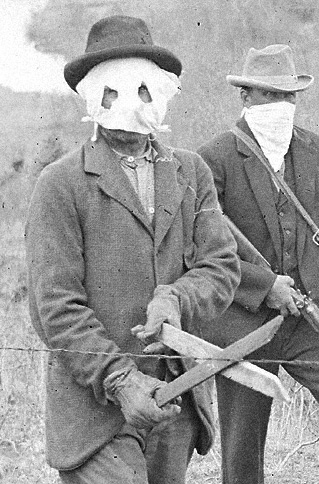
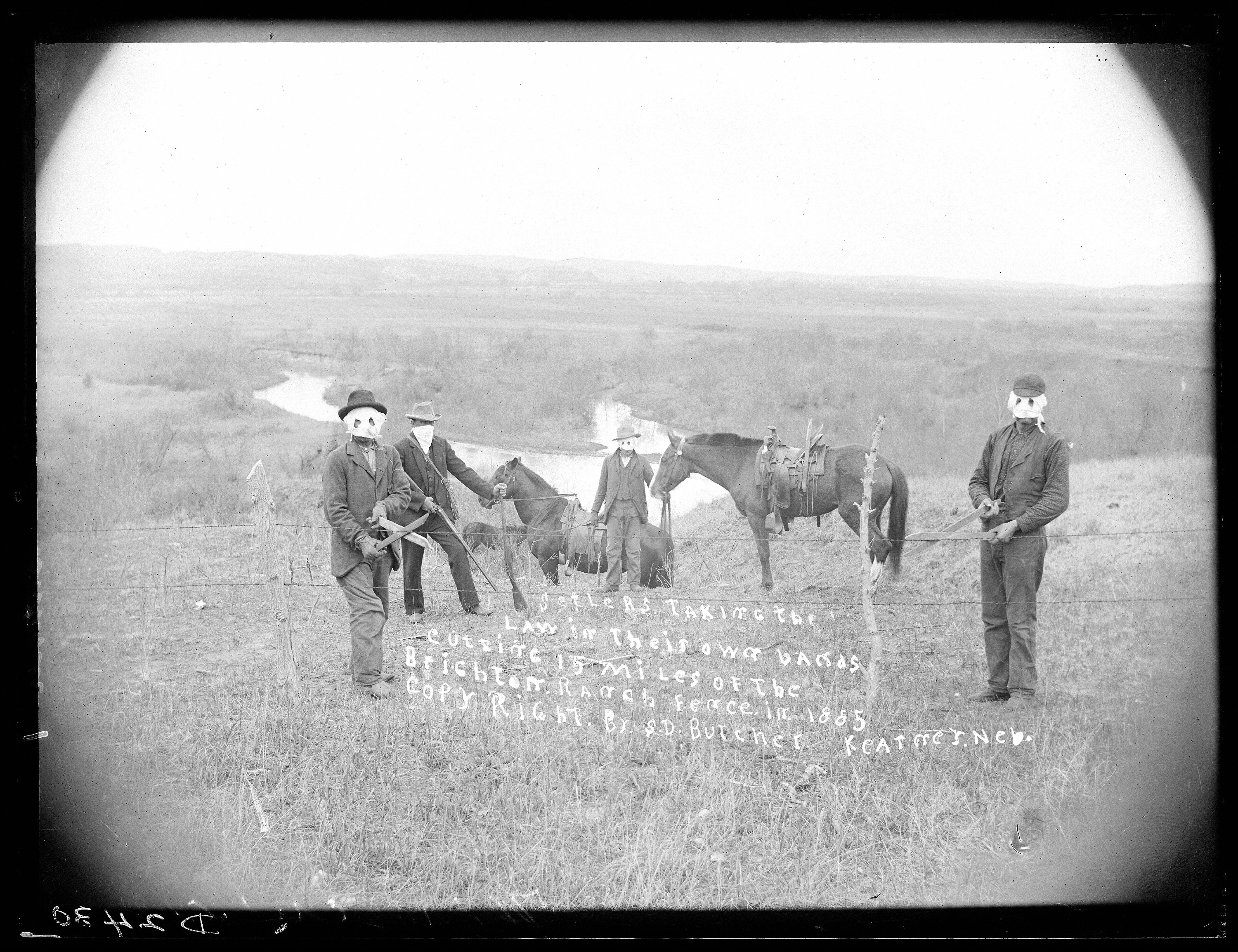
    This is a quick follow-up to an earlier post on Solomon Butcher in which there two two photographic images that are clearly “manufactured”–one is created in the darkroom (simply adding trees in a tress-less landscape), while the other (below) is an unlabelled recreation of an event.  This is in the lines of Timothy O’Sullivan and Matthew Brady dressing up their images a bit by posing the dead or giving them added bits (like muskets and so on) to enliven the picture.  This one though is entirely theatre–as it happens there are very few 19th century photographs depicting a crime-in-progress.  Butcher just decided to show his audience what the crime probably looked like.  In any event if not for a little Zoomology the scene could’ve perhaps passed for real. 

    Butcher vigilantes two det one
    This is a detail from the full-plate glass negative, printed out so:

    Butcher vigilantes two

    Without the enlargement it is difficult to tell what sort of instruments the ranchers were holding.  But up close the wire cutters are simply suggestions of that too, being made of wood and all. 


  • The Sunburn in the 19th Century

    JF Ptak Science Books  Post 1912

    Butcher new settlers on prairie det

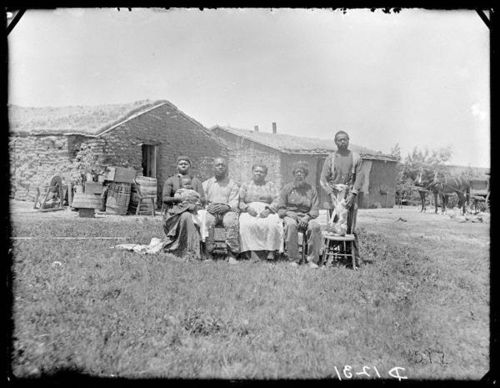
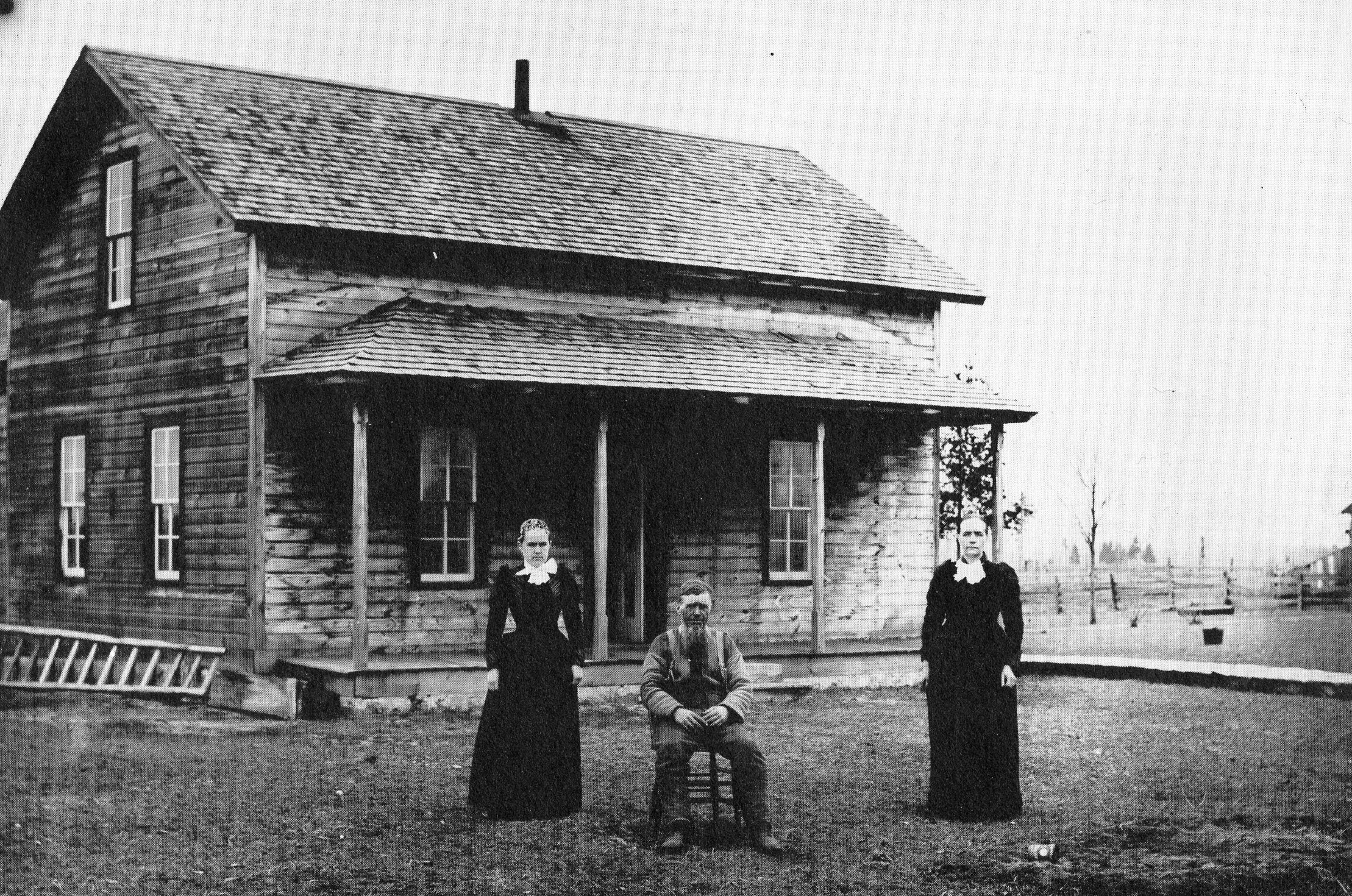
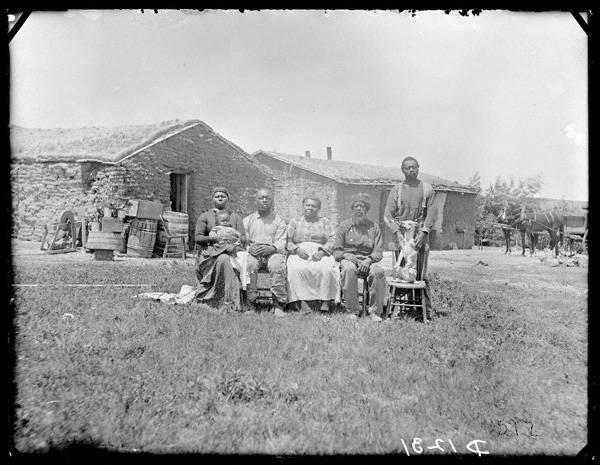
    When Solomon Butcher laid his head down on his final pillow he evidently thought of himself as a half-failure.  His work as a photographer in a life full of travel through the Great Plains lead to not-much-“success” save for one book1, and his work wasn’t recognized for the impact that it would have in the decades to come. Perhaps he wondered if his ways were all worth it, hauling his family and his enormously heavy collection of full-plate glass negatives from one house to the next.  Of course that would change in death–not the money part, but certainly the recognition.  His photographs are outstanding glimpses into late 19th century American frontier life, and especially so for the work he did making images of families and their belongings in the long rolling landscape of pioneer Nebraska.

    I’m
    not sure exactly what Solomon Butcher told his subjects when he photographed them
    outside of their frontier houses out there in the Great
    Plains in the 1880’s.  His spectacular
    portraits included not only the family of the house, but in many cases, everything
    that the family owned.  Possessions were

    Butcher

    (Image via the Nebraska State Historical Society, with caption2 below.)

    encumbrance making your way across the country in the mid/19th century,
    especially if you didn’t have very many to begin with.  These families—the first generation in their
    mostly sod-built houses—would’ve been farmers scratching out a minimum trade
    and decent subsistence.   City/town goods
    would’ve been not-usual in these circumstances, and evidently whatever it was
    they had of these things wound up outside, displayed around the house and on
    the roof, when Mr. Butcher arrived in his photographer’s wagon. 
    Butcher death trip859

    (Who
    was it, I wonder, who came up with the initial idea of displaying the
    family’s possessions:  did Butcher set
    out with that idea, or did it happen spontaneously?  I wonder what it was the families thought as
    Butcher was packing up his equipment, his horse fed, his cameras stowed away,
    climbing up onto the driver’s bench.  Did
    they wait until he was a spot on the horizon to put away their things?  Did they gather everything up as Butcher
    gathered up his own material, or did they just wait for the stranger to
    disappear before pulling the family back together? Sitting their surrounded by
    the things that they owned, did these families feel a quiet pride, or were they
    embarrassed have their pictures made together with their frontier opulence?)

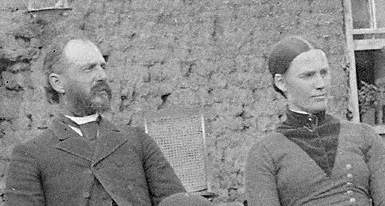
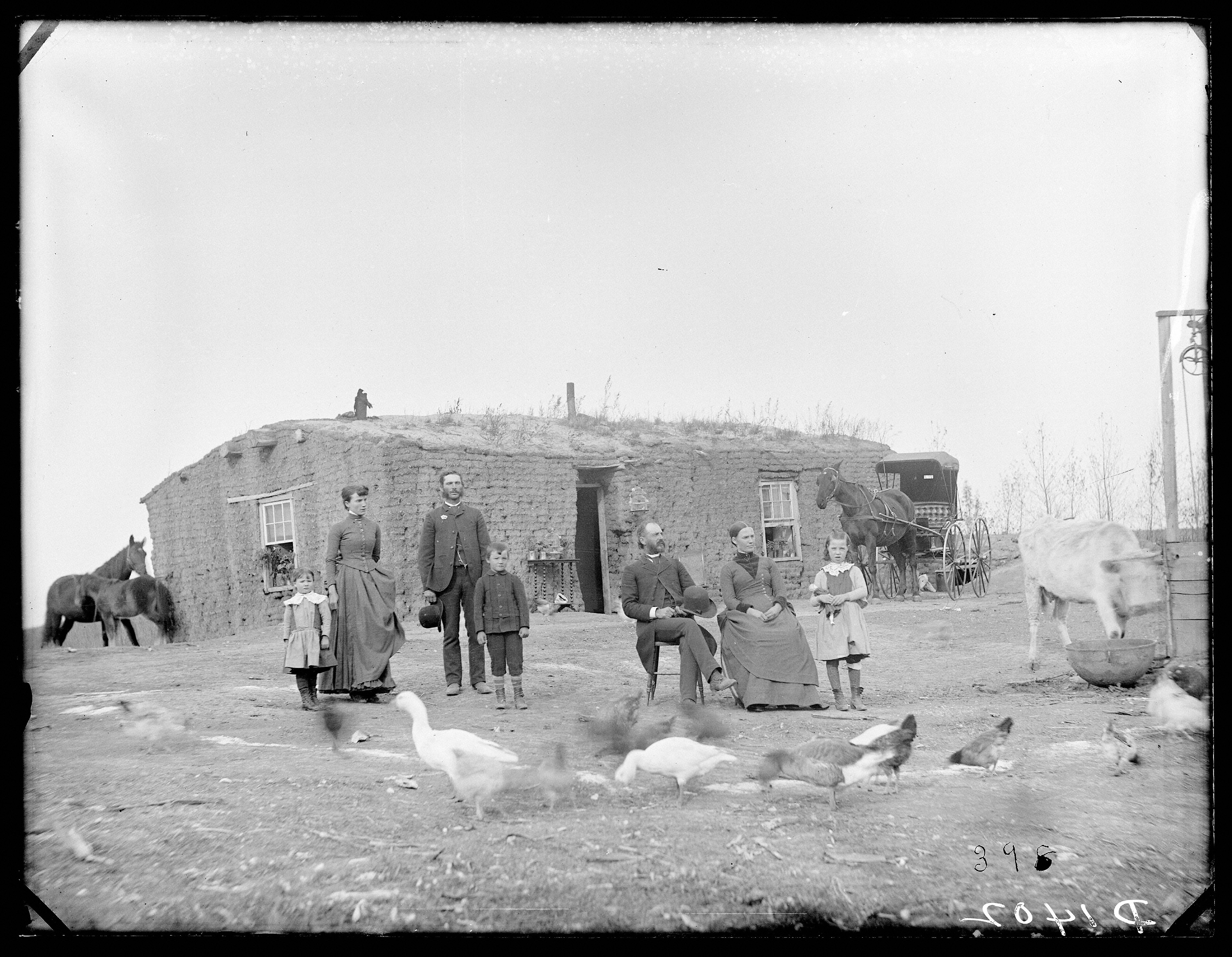
    There’s much to look at in these images, and the Nebraska Historical Society does a very good job at it here, espcially when they work at some digital magic, making some of the disappeared stuff that lurks in the shadows of the interiors of the cabins appear. What is of interest to me today are the sunburns–this issue was brought up yesterday in another post on the invention of the satirical photograph, where the self-portrait shows a man with heavily sunned face and hands, the marks of a working man with dark settling on light becomes a little remarkable.

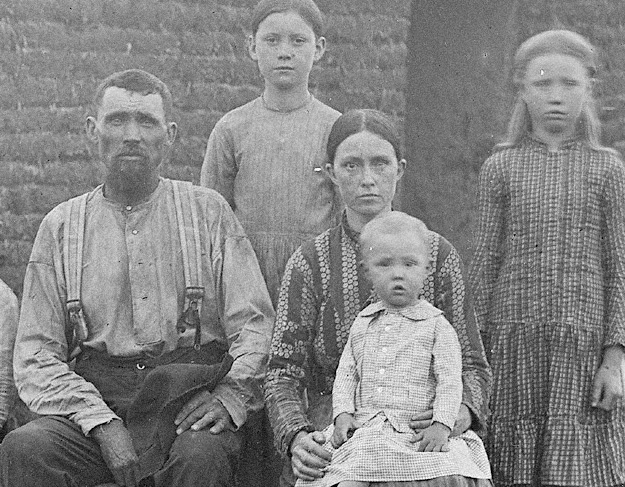
    This is seen in Butcher’s photographs from time-to-time. In the series of photographs of homesteads, he often captured images of men without hats–seldom the case, I guess, in the normal routine of a day.  The men’s faces are deeply tanned except for where the hat is pulled down to the middle of their forehead, where we see a much lighter complexion: 

    Harve Andrews and family by the grave of "Willie," photographed by Solomon Butcher, Victoria Creek Canyon, Custer County, 1887. NSHS RG2608-2360

    Which makes sense, of course, since these were pioneers and farmers, and working pretty much all of the time outdoors.

    I remember being surprised the first few times I noticed this, and then not so. This is much like seeing all of those non-smiling photographic portraits of the 19th century and wondering about the sombreness, when the general explanation for the seriousness was far simpler: given the length of time for an exposure, it was took simply too much effort to hold the same smile for a minute or three, and so the rigid face became a necessity. The brands of the faces of these men was there simply because they wore hats outdoors doing hard work in the High Plains sun. 

    There’s a world going on in these photographs, but for right now I’m just looking at faces.The Library of Congress site has an excellent collection of this images online, and there’s a lot of micro-photo inspection to be done. 

    Another example, here:

    Butcher sun det
    Which is a detail from: Butcher sun
    (Source: The Library of Congress, “Rev. and Mrs. E.D. Eubank on Clear Creek west of Lee Park, Custer County, Nebraska”.)


  • Zoomology: Chain Gang, Pitt County, North Carolina, 1910

    JF Ptak Science Books   Quick Post   Part of the Zoomology series

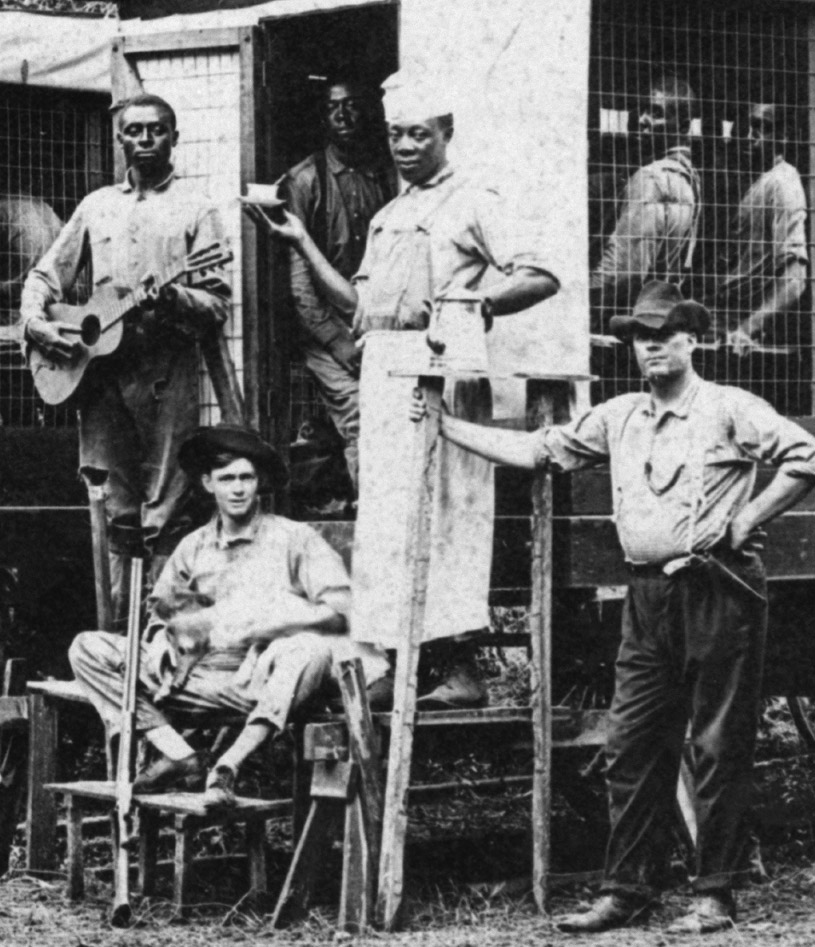
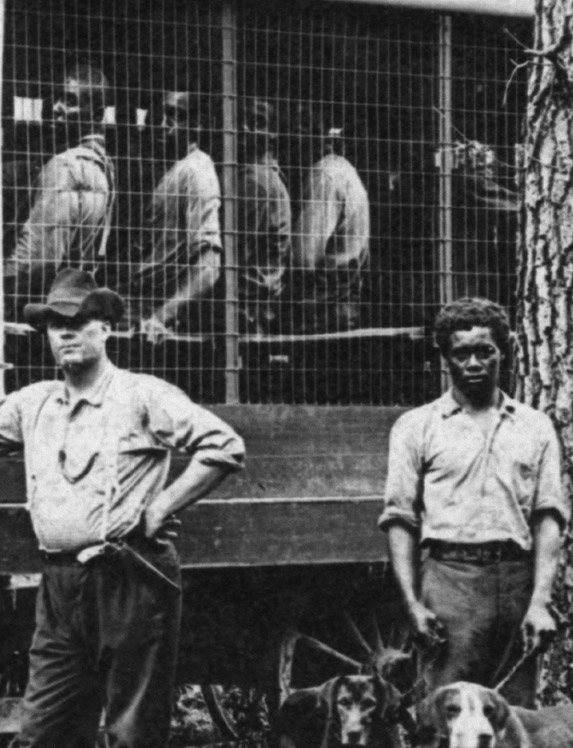
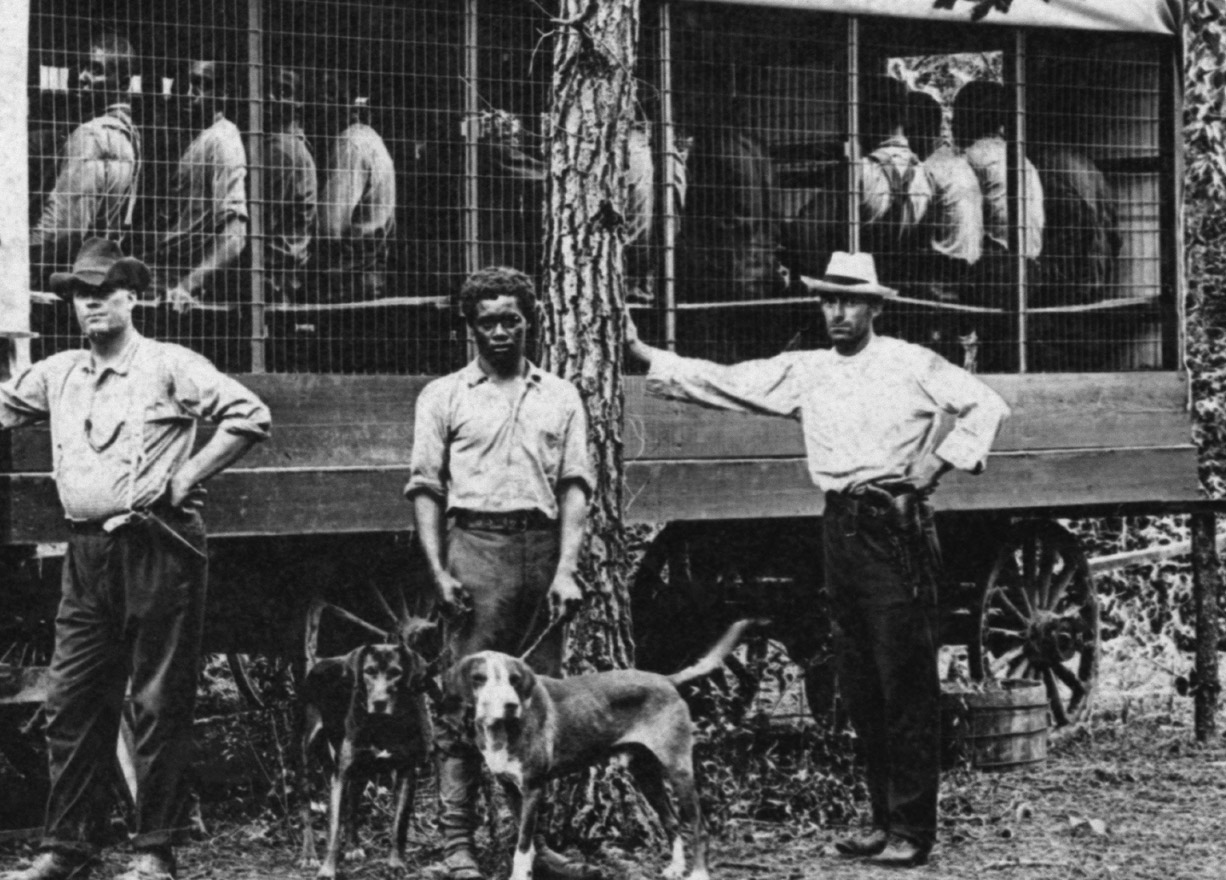
    From the photography collection at the Library of Congress, offering deep and big graphic files. The file photograph looked interesting, but on closer inspection the magnificent central figure is revealed:

    Negro chain gang detail middleedited-1
    “Chain gang of convicts engaged in road work. Pitt County, North
    Carolina. Autumn 1910. The inmates were quartered in the wagons shown in
    the picture. Wagons were equipped with bunks and move from place to
    place as labor is utilized. The central figure in the picture is J.Z.
    McLawhon, who was at that time county superintendent of chain gangs. The
    dogs are bloodhounds used for running down any attempted escapes.”

    The full image:

    http://lcweb2.loc.gov/service/pnp/fsa/8e04000/8e04000/8e04044v.jpg

    [Source: http://www.loc.gov/pictures/resource/fsa.8e04044/?co=fsa]

    Negro chain gang detail middle right

    Negro chain gang detail far right dited-1

    ·Posted by :

    ·in:

    — —

  • Zoomology: Dorothea Lange and the Rex Theatre for Colored People, 1939

    JF Ptak Science Books   Quick Post   Zoomology Series

    This is a short visit with one of Dorothea Lange’s (who I’ve written about several times on this blog, as in this case) interesting FSA photographs. 

    Leland, Miss., in the Delta area. The Rex theatre for Negro people