JF Ptak Science Books Quick Post
Continuing this blog’s occasional thread on the great, idiosyncratic, and troublesome Fr. Athanasius Kircher, I report on this spectacular image. It is supposed to be an engraving of a found-image in a piece of agate or some such, showing the Virgin Mary and baby Jesus, surrounded by s curiously radiating display of “light”. According to one reference the image first appears with Ulisse Aldrovandi (1522-1605) who must have included it with one of the natural histories before it founds its way into Kircher’s Mundus1.
The partial description above the print references the Church Grottes Vald (in Lucerne), where this relic was to be found.
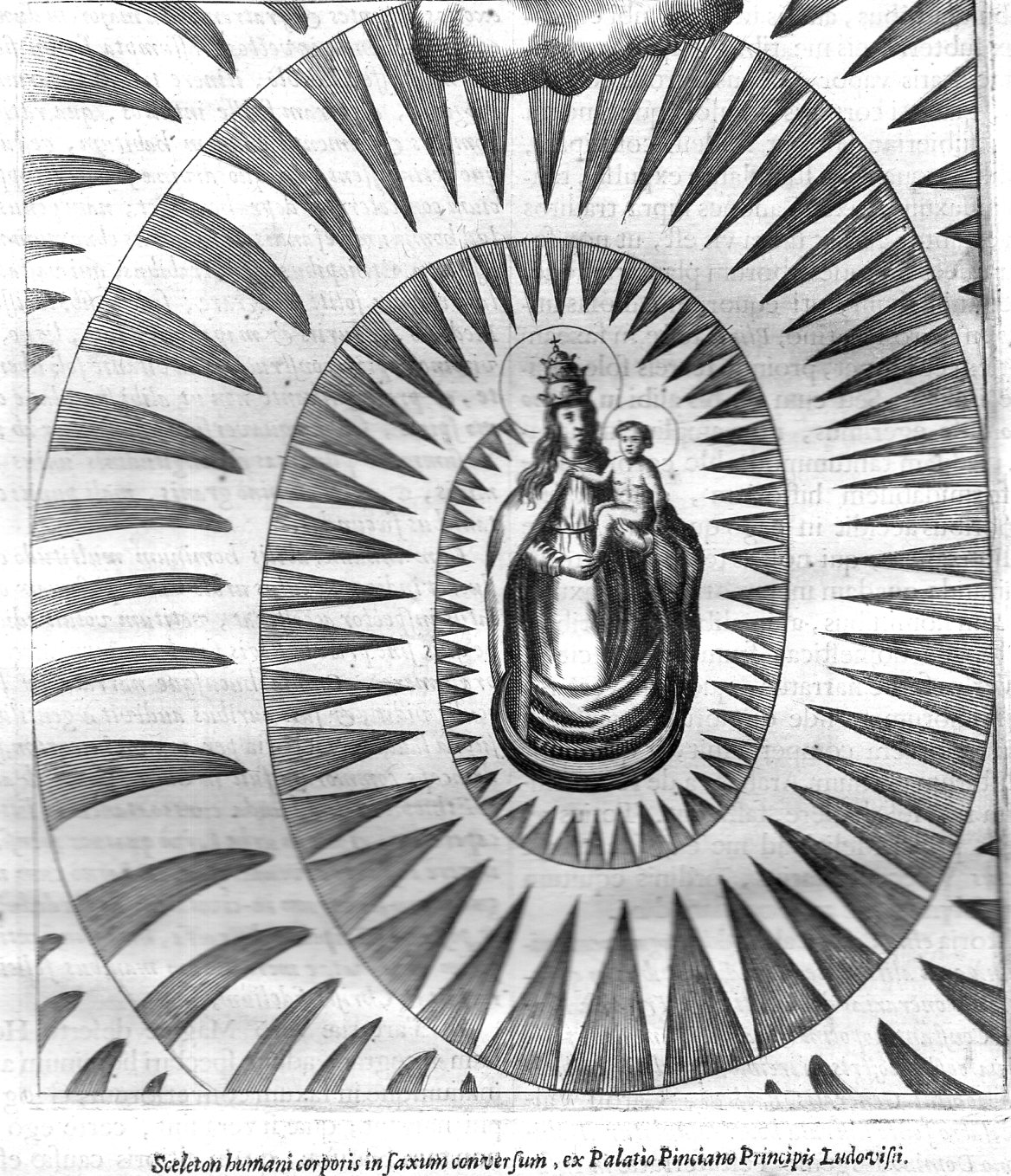
And the full sheet, in two parts:
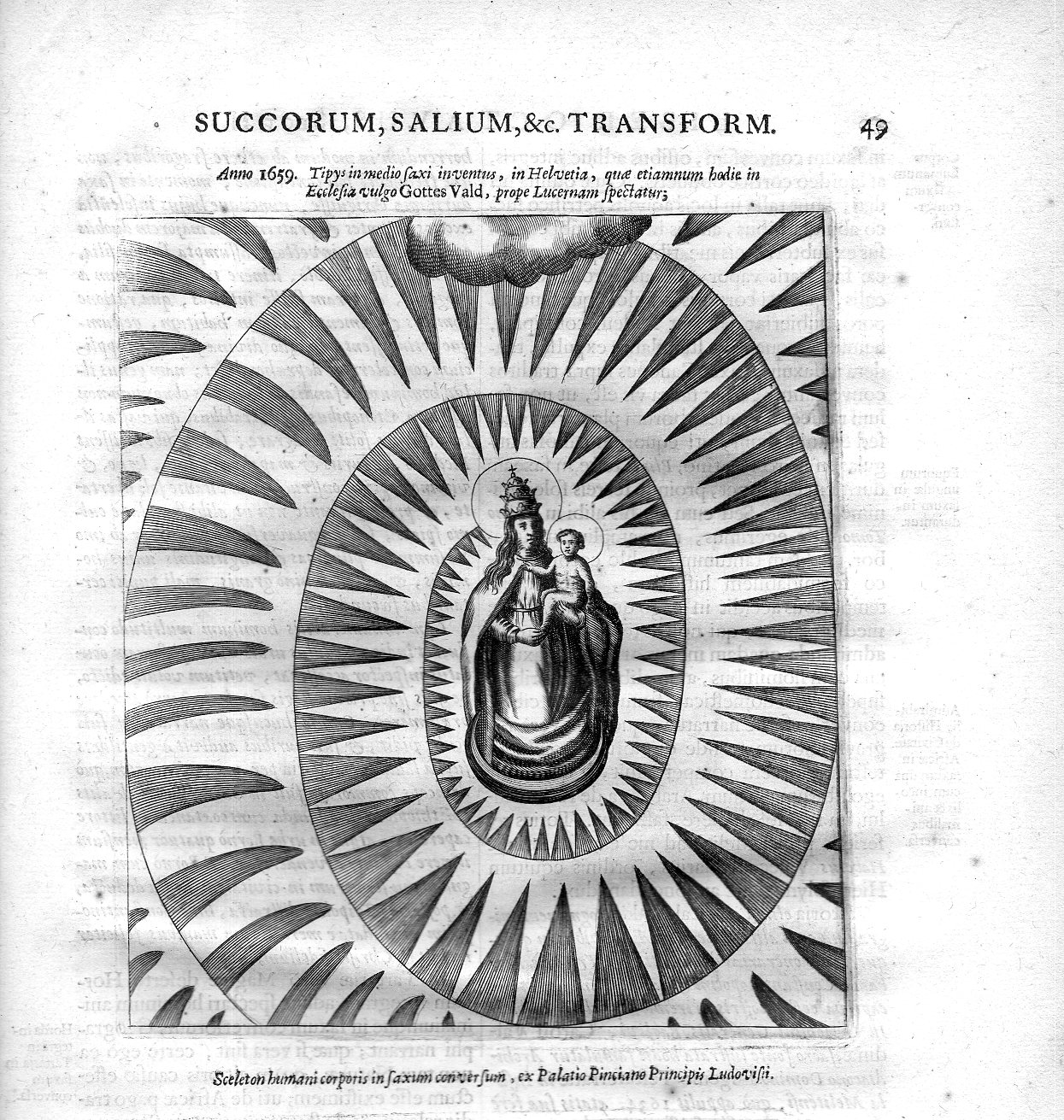 And the bottom half that wouldn’t fit on the scanner:
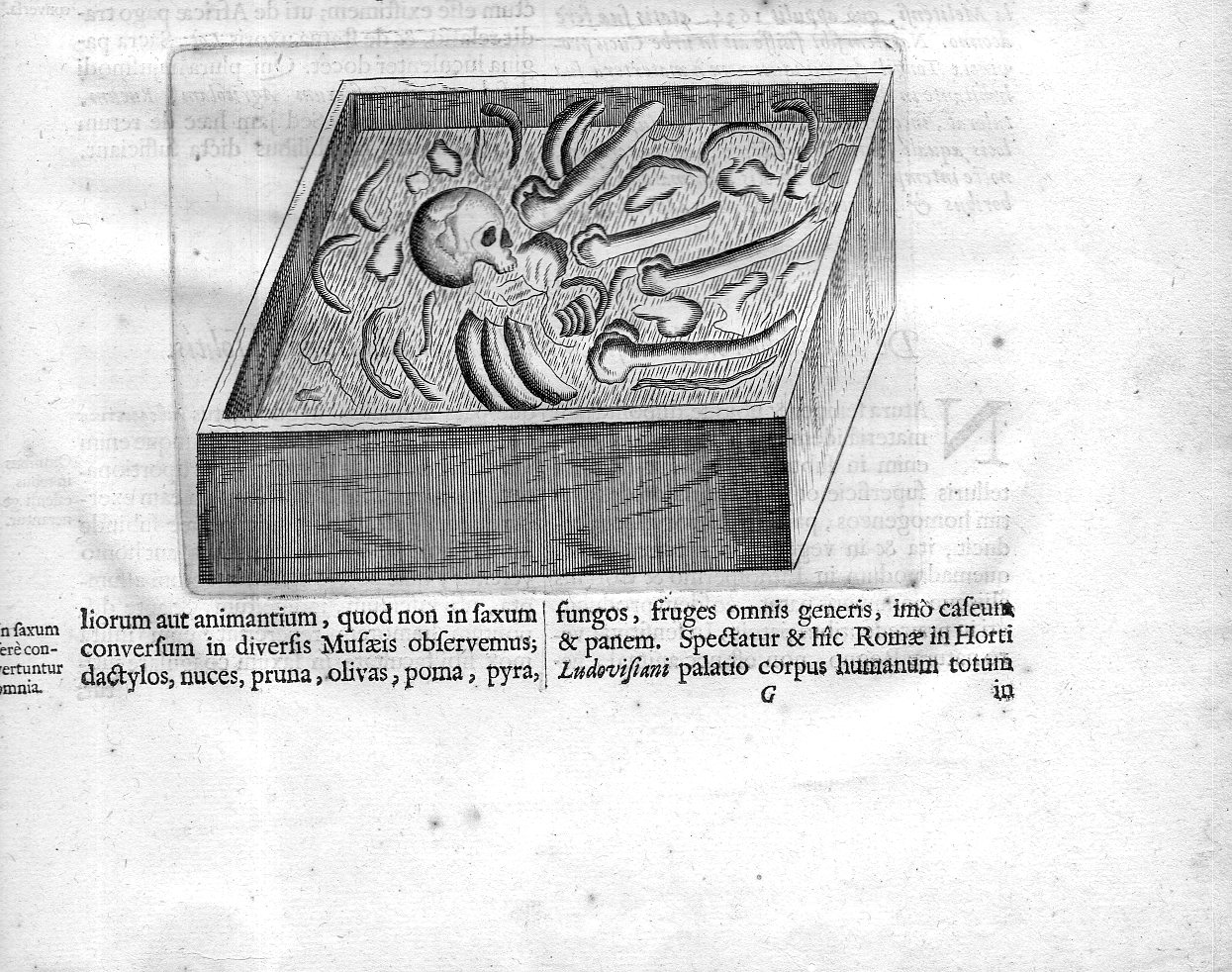
The second image is identified so: “Sceleton humani corporis in saxum conversum…”2, and refers to what was supposed to be fossilized human remains covered by some sort of fossil -something. The remains weren’t fossilized, of course, but in 1657, that was the difficult leap that was make.
Notes:
1. The full title by Kircher (1602-1680): Mundus subterraneus, in XII libros digestus : qvo divinum subterrestris mundi opificium, mira ergasteriorum naturae in eo distributio, verbo [pantamorphon] Protei regnum, universae denique naturae majestas & divitiae summa rerum varietate exponuntur, abditorum effectuum causae acri indagine inquistae demonstrantur, cognitae per artis & naturae conjugium ad humanae vitae necessarium usum vario experimentorum apparata, necnon novo modo & ratione applicantur. Ad Alexandrum VII. pont. opt. max, 1665.
2. This image can be seen in full text in a somewhat later edition of the Mundus of 1678 at Heidelburg http://digi.ub.uni-heidelberg.de/diglit/kircher1678bd2/0062 and another series of images at University of Oklahoma, http://hos.ou.edu/galleries//17thCentury/Kircher/1665-det-composites/.