A Daily History of Holes, Dots, Lines, Science, History, Math, Physics, Art, the Unintentional Absurd, Architecture, Maps, Data Visualization, Blank and Missing Things, and so on. |1.6 million words, 7500 images, 4.9 million hits| Press & appearances in The Times, Le Figaro, Mensa, The Economist, The Guardian, Discovery News, Slate, Le Monde, Sci American Blogs, Le Pont, and many other places… 5000+ total posts since 2008.

Category: Blank and Empty Things; A History of

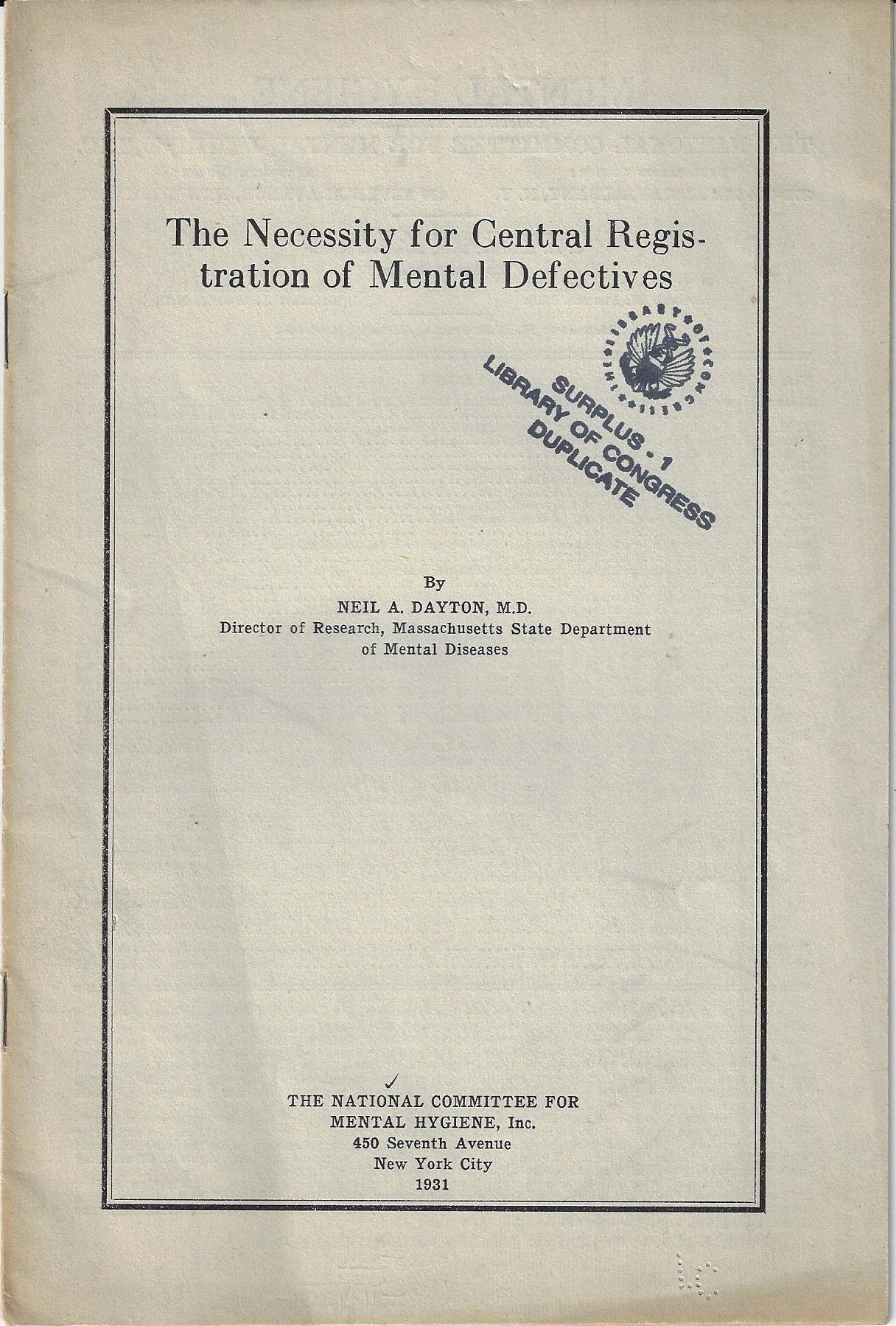
  • On the Registration of All “Mental Defectives” (1931)

    JF Ptak Science Books   Post 2702

    Here’s a title that should stop you: 

    Mental defectives

    How very special.

    Of course, it was 1931, and the Eugenicists were running free and easy, the stiff wind of their convictions running freely through their imaginary hair…and what would we all do with this gathering of information on mental defectives1 once that was done? And what was the definition of mental defective, anyway? thirdly of course–what do we do with the mental defectives once this energy of definition and collection had been done?  well, a new group would come to power in two years’ time from the publication of this article, and in their own right they did these things and then decided to kill many of the people that they cataloged. That’s one example. I’m not saying that the well-meaning people like the author of this paper would be anywhere near this horrible, not at all; I just don’t know why they would want to gather this information.  There wasn’t a discussion of collection of treatment of these people, just their registration in one large database. Every time I see in this pamphlet the statement on the need for such a registry, I expect to see why–but that never comes, only the repetition of a phrase like “that a central registry for mental defectives is desirable, and that it should be organized and operated by an established state department” and its variations.

    Finally, at the end of the short 14-page pamphlet, in the final paragraph, something appears close to explaining the “why” issue–but it winds up being a little tautological, stating that the need for gathering the names of all mental defectives is “to make available authorized agencies and individuals definite information on known mental defectives”

    Basically–at least so far as this pamphlet explains–the reason for gathering all of these names into a system of state-wide databases is to have the names in state-wide databases. 

    Notes:

    1. Mental defective seems to make its first appearance in English in 1899, according to the Oxford English Dictionary: 

  • A Detail of the Something in the Nothing (“Concerning the Deluge, and the Dissolution of the Earth.”)

    JF Ptak Science Books   Quick Post

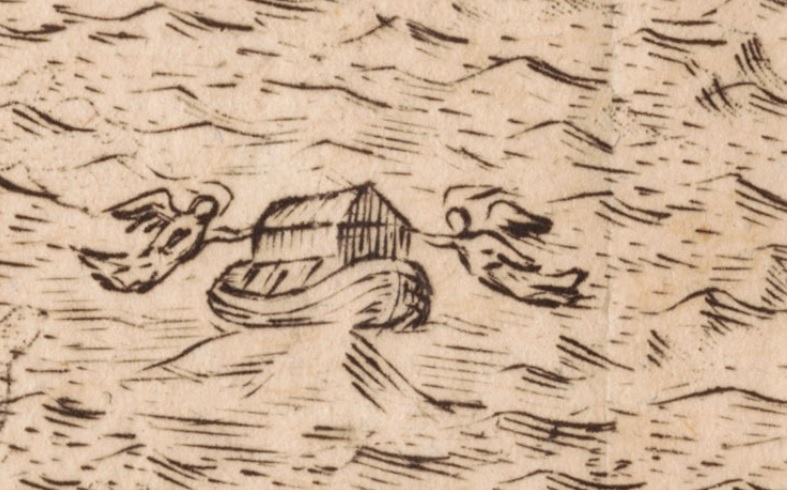
    There is a great and powerful image of nothing in Thomas Burnet’s The Sacred Theory of the Earth: Containing an Account of its Original Creation, And of all the General Changes which it hath undergone, or is to undergo, until the Consumption of all Things…printed in London ca. 1759, a hundred years after its first printing, in the glory and the magnificence of some very wide and biblical Bible thinking that was still in demand. I’m visiting the “dissolution of the Earth” section, here, showing the results of a very judgmental Creator taking aim at the whole of the Earth for its foul play, drowning everything and everyone for a lesson that could be learned only by the dead–save for a small group of related people and a bunch of animals in a wooden boat the size of which could not possibly have been built during this time period. I have pulled out this image of the ark, guided or protected or righted by a pair of faceless angels, keeping the ship steady on the top of Mt. Ararat. All around this boat are the peaks of other mountains, which for some reason are depleted of all living things, unless of course the image shows the waters receding, which is the route I would take if it were up to me to explain this. Noah ark ararat detail

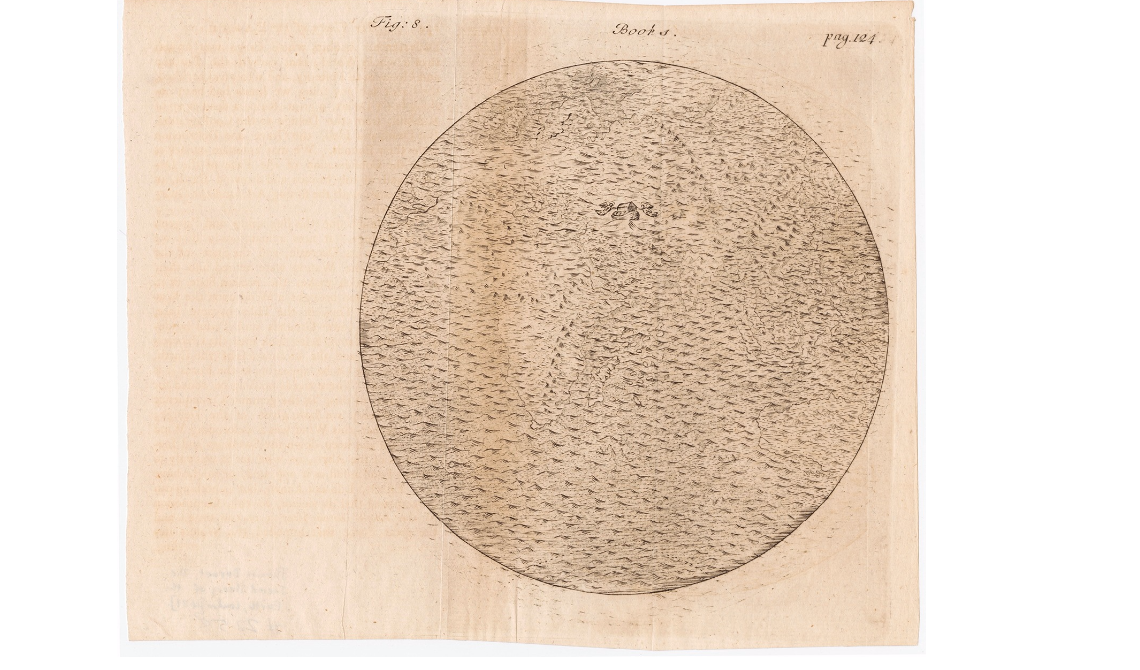
    This is a detail from the full engraving, below, which show the Earth completely covered by water–it would be an interesting thing to imagine as an actual physical process and what exactly would have to happen in order for such a thing to occur (and when you start to think of how, outside belief, this could come to happen, you have the makings of an interesting class):

    Noah ark ararat

    If you expand the image the nearly-invisible continents shine through ever so slightly. I imagine that this would be a pretty scary image to show a kid, or to a believer who had doubts about the possibilities of a wrathful creator. In any event, this fits beautifully as a short post into this blog’s “History of Nothing” series, as we see a big image of near-nothing–just water.  (Did the fish drown?) Anyway, nothing was left except the boat. And landforms. And water, which evidently went somewhere. 

    This image was found at the wonderful and extraordinary P.J. Mode Collection “Persuasive Maps” hosted by Cornell University, here: https://digital.library.cornell.edu/catalog/ss:19343661   There are 800+ maps like this there–do not hesitate to visit and visit often–it is a fantastic place.  


  • Definitely Not Your (Modern) Weekly “People Magazine”

    JF Ptak Science Books  

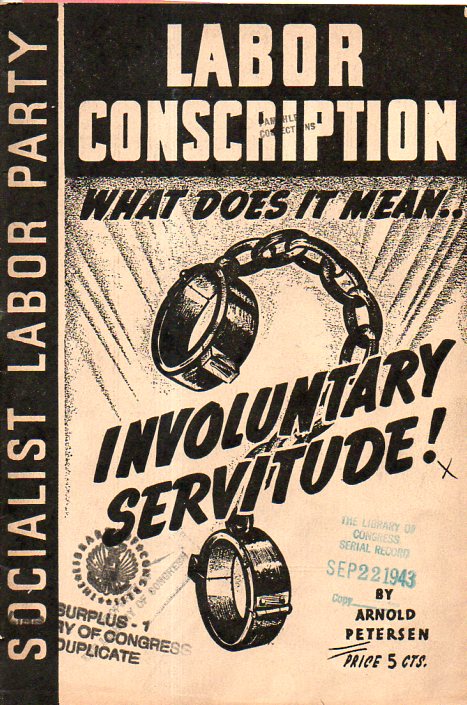
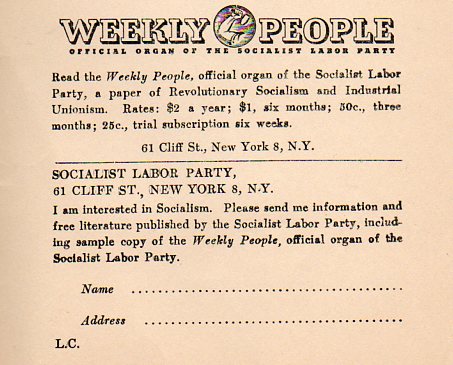
    I have developed a sort-of  collection in the History of Blank and Empty Things series of not-filled-in applications and diaries and questionnaires and such, from Hitler Jugend diaries to notebooks for Nazi Warsaw telephone directories to applications for membership in the Women’s KKK, and so on.  This small installment comes on the back inside cover of Labor Conscription, What Does it Mean…Involuntary Servitude!, a hopeful ad for the reader who might be interested in Socialism and receive the magazine People Weekly, as this far Left pamphlet was after all published by the New York Labor News Company on behalf of the Socialist Labor Party U.S.A. This of course in no way bears any resemblance to the modern People Magazine, the fruits and labor of that periodical being sweets and fats.

    Labor Conscription761  Labor Conscription762


  • Some Blank and Empty Baroque Design Bits, ca. 1700

    JF Ptak Science Books   Quick Post

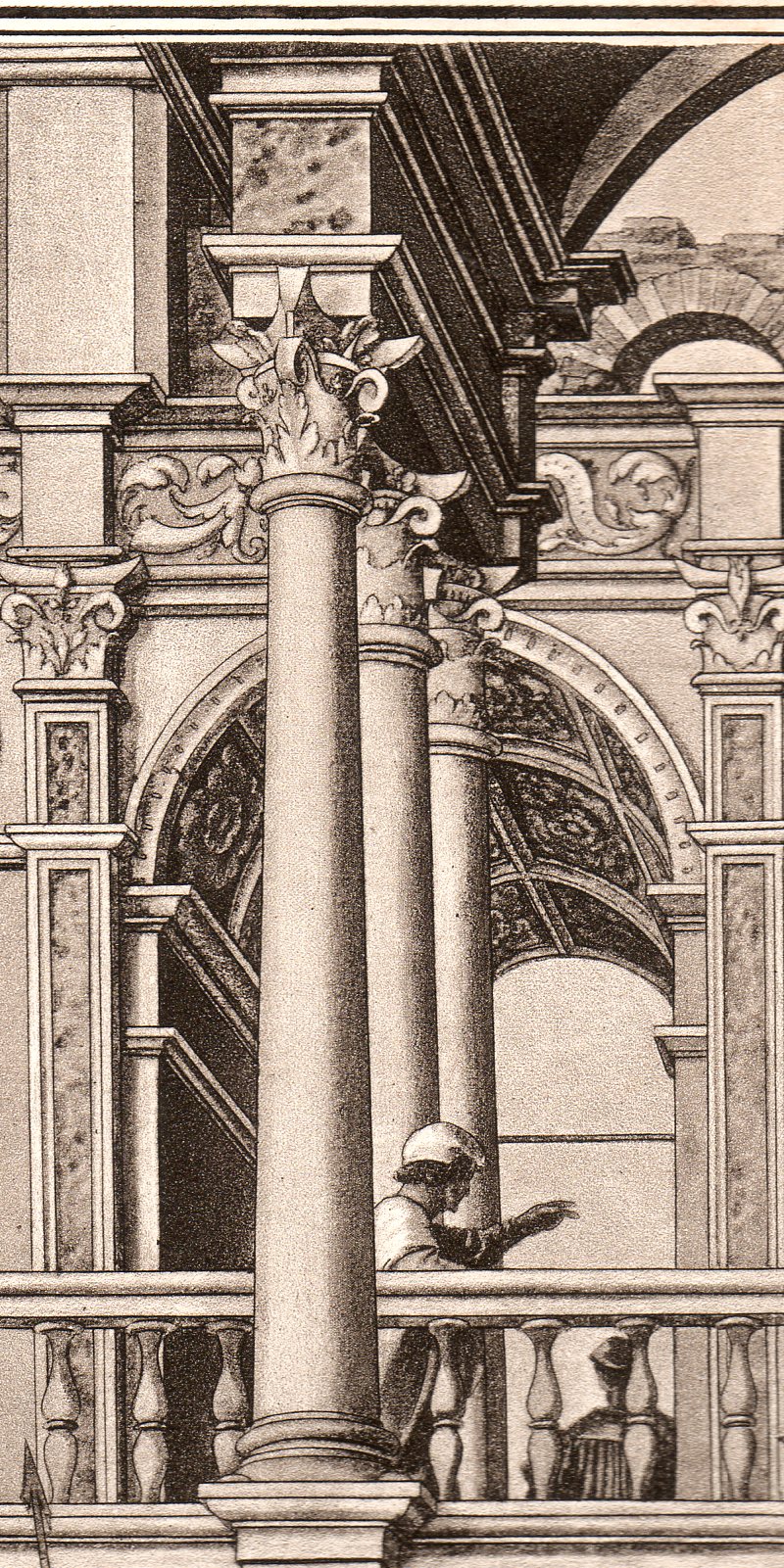
    I saved this image many years ago, and unfortunately I do not have a year/location/maker, nothing at all, just the print. I reckon that the print is in a Baroque style, I think, highly manner and ornate and detailed, and quite empty where there should be obvious detail, as these are the spaces that the eye is directed to by the other elements of the design, except that there is nothing there.  No doubt this was designed for an identifying purpose, though that perhaps had not yet been determined. 

    It is a little curious that the frieze shows a merry peasant party; curiouser still are the three people and a dog on the upper balcony–the middle person seems otherwise engaged in who-knows-what. 

    As it stands, this is a good candidate for the Blank, Empty, and Missing Things series.  


    Empty spaces baroque731

    [Detail from the full image, below.]


  • An Empty Notebook for Hitler Youth, with Map (1941)

    JF Ptak Science Books  Quick Post   A History of Blank, Empty, and Missing Things series 

    Hans Trzebiatowsky & Karl Spaethe–two engineers turned propagandists–wrote the study/notebook for “students” working through modern German history, Merk- und Arbeitsblatter fuer Reichskunde, which was published in Magdeburg in 1941. It was very successful, as the title page states that this edition (“18…23 Auflage”) was the “1058 ,,, 1035, Thausend” which seems to put the print run over one million. Given that there were 66 million people in Germany in 1940, and that 6.6 million were soldiers, this may mean that just about every child between the ages of 12-17 had one of these–in any event, if those publication numbers were accurate, then the publication must have been ubiquitous. 

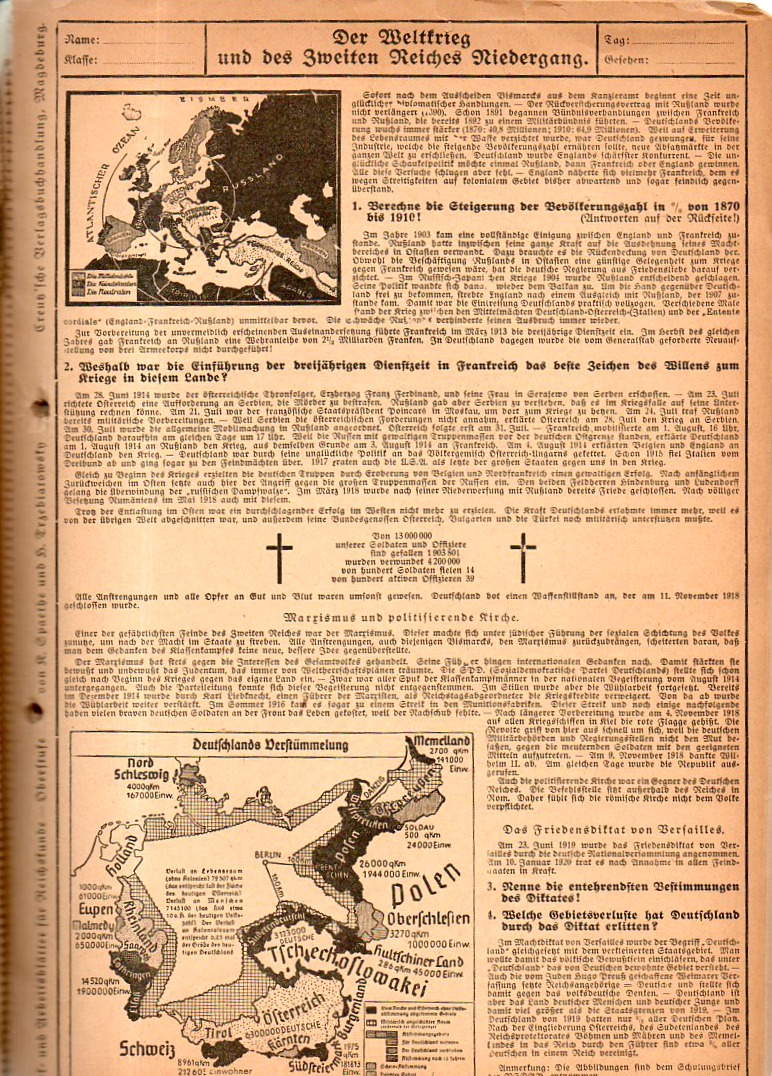
    The paperback publication is tall (about 12″) and densely written, and for all of that is only 24 pages long.  It is designed with perforation along the left-hand edge of the sheets so that the page could be removed and gathered in a two-ring binder. After dealing with the first and second Reichs in pages 1 and 2, the rest of the issue is a history and philosophy lesson on the Third Reich, presented for the Hitler Jugend in the best interests of the Nationalsozialistche Deutsche Arbeiter-Partei. 

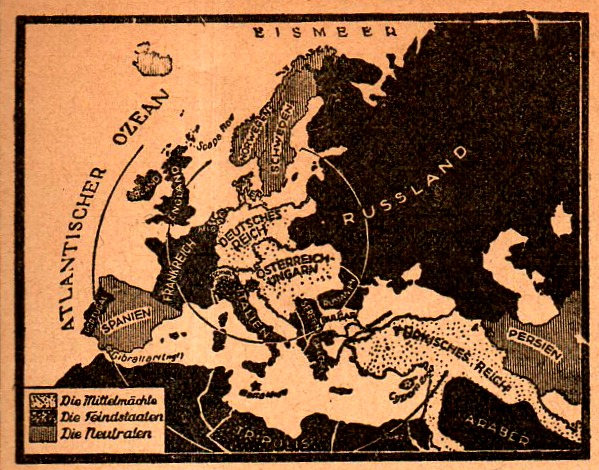
    The images in the publication were striking, and even for a bored general student or Hitler Youth could have lazily flipped through these pages without noticing them and having soem sort of message delivered. For example, this map that shows the state of the alliances in WWI and how the rest of the world outside of these allies stood against Germany:

    Spaethe652

    (Map is about 100% larger than the original)

    It should be understood though that the booklet was most definitely not a picture book for kids, as it was detail-heavy and brimming with Nazi needs:

    Spaethe651

    The book was definitely intended for instruction, as the back of every sheet of text is a 40-line ruled notebook page, ready for note–my copy hasn’t a word in it.  

    Blank empty


  • A Superior Musical Review Hidden inside a Superior and Obscure Journal, 1923

    JF Ptak  Science Books  Post 2630

    Manuscripts (MSS), edited by Paul Rosenfeld in New  York, 1922-23, was a Small Magazine, a wonderful Dadaist publication with contributions from the leading artisitc/intellectual community including Georgia O’Keefe, Alfred Stieglitz, Paul Strand, John Marin, Charles Demuth, and many others. What I’m writing about right now is issue #5–appearing in March 1923–of the six (total) issues that were printed of this short-lived and very highly spirited magazine–the issue shockingly emerged from a box in the studio last night. The striking cover was designed by Georgia O’Keefe, and underneath the cover for issue #5 “one of the most remarkable issues” (according to the Dada Once and For All catalog by Ex Libris in 1983), was the work of the critic and Stieglitz-supporter Herbert Seligmann. 

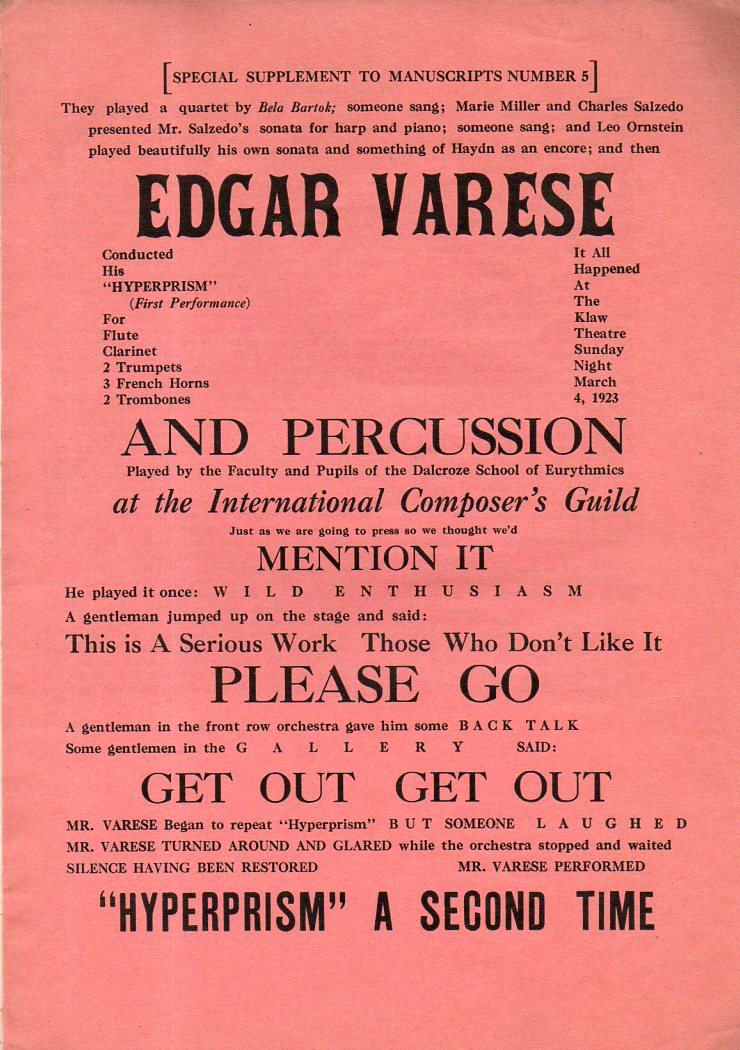
    All this aside, what really struck me was the broadside “review” tucked into the twelve-page publication–a very segmented, highly typefaced and fonted (sorry!), very creative look at the composer Edgard Varese’s Hyperprism, a very adventurous work for wind, brass, and percussion instruments was completed in 1922 and revised in 1923, and then obviously reviewed by Seligmann in this issue of MSS in 1923.  Varese (1887-1965) was a very-modern modernist whose reference to his music as “sound-mass” (among many other things of course) that was in a way similar to the process of crystallization/chemical crystallography gives an insight into the name of the piece to be performed. The review admonished “This is a Serious Work, Those Who Don’t Like It PLEASE GO” among other such tidy phraselets.  I reproduce this fantastic little gem below:

    Varese615

    Also if you’d like to listen to it:


    By the way Music and Modern Art by James Leggio  reproduces (on page 141) the Varese review as a full-page illustration. 

    See also Herbert  Seligmann, Alfred Stieglitz Talking: Notes on Some of his Conversation, 1925- 1931, New Haven: Yale University Library 1966, for more on MSS. 

    For more on MSS:


    • All six issues reproduced at Monoskop, here: https://monoskop.org/MSS
    • Full text of the MSS Number 5 https://monoskop.org/images/3/3d/MSS_5_Mar_1923.pdf

    And this from issue #5 on the previous issue of the magazine:  “MSS. Number One contained writings by Sherwood Anderson, Kenneth Burke, Waldo Frank, Paul Rosenfeld, Herbert J. Seligmann, William Carlos Williams. MSS. Number 2 contained writings by John Marin, Alfred Stieglitz, Paul Strand, Charles Duncan. MSS. Number 3 was entitled “What Is True Art?” by J. B. Kerfoot and W. Rhea Moreau. MSS. Number 4 was entitled “Can A Photograph Have The Significance Of Art?” by Sherwood Anderson, Thomas H. Benton, Ernest Bloch, Oscar Bluemner, Stephan Bourgeois, Gilbert Cannan, Charles Chaplin, Thomas J. Craven, Elizabeth Davidson, Charles Demuth, Marius De Zayas, Arthur G. Dove, Marcel Duchamp, Alfeo Faggi, Waldo Frank, Hutchins Hapgood, J. B. Kerfoot, Gaston Lachaise, Walter Lippmann, John Marin, Kenneth Hayes Miller, George F. Of, Georgia O’Keeffe, Leo Ornstein, Joseph Pennell, Carl Sandburg, Evelyn Scott, Charles Sheeler, Leo Stein, S. Macdonald Wright, Carl Zigrosser, Bibliography. The price of MSS. Number 5 is 15 cents. Subscription to 10 numbers one dollar. The entire cost of this MSS. Number 5 is the printing bill of $130.00 for the present edition of 1,000 copies, presented by Clarence S. Nathan, Inc., and paid by the Tin Whistle Fund. Each author is solely responsible for what appears over his signature. Complaints should be sent to individual authors. Subscriptions will be received by Herbert J. Seligmann, 129 East 10th Street, New York City. Donations of money will be received with thanks by the same. For the cover design: apologies to “Dada” (American), Marcel Duchamp, Man Ray, and acknowledgment to “Anonymous.” Copyright, 1923, by Herbert J. Seligmann.”–from page 2 of MSS Number 5. 


  • “Why Must the Agony of the Jewish People be Prolonged?” (1944) Another Episode in the Abandonment of the Jews in WWII

    JF Ptak Science Books  Post 2627

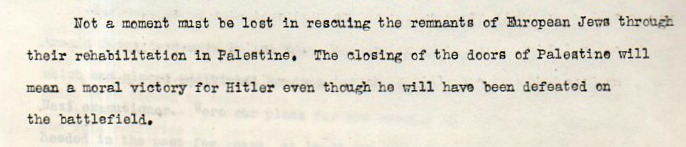
    Goldstein _1_543 detail

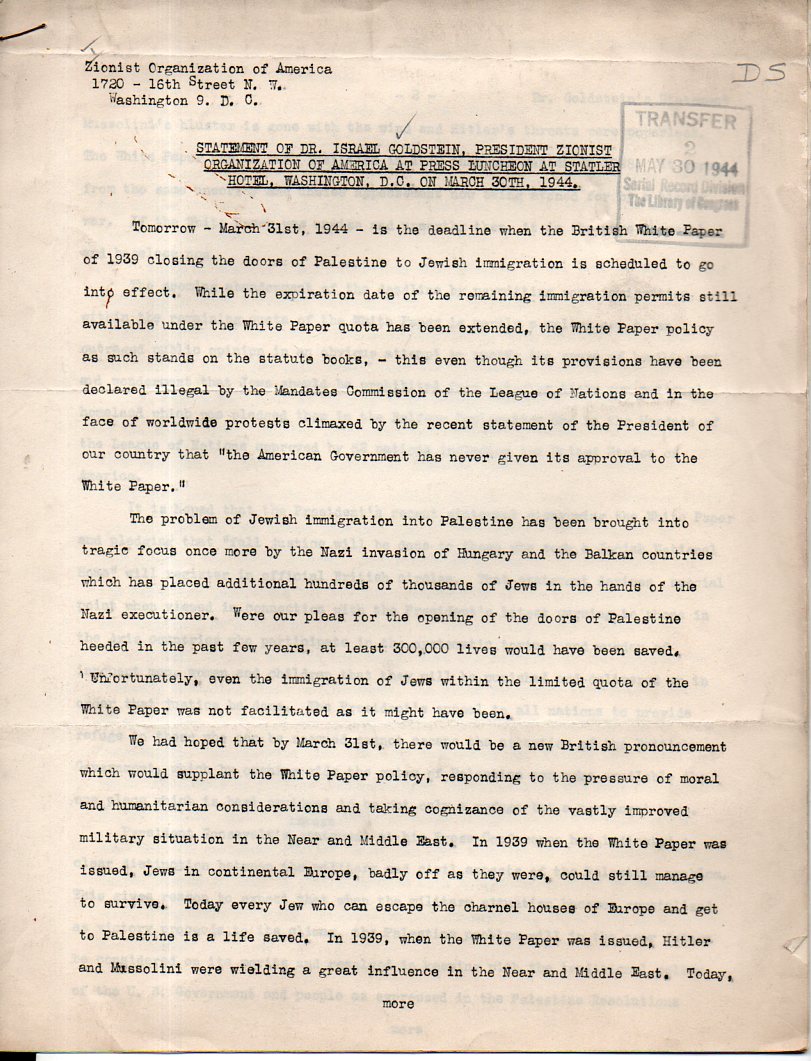
    This quote is from (Rabi) Israel Goldstein as head of the Zionist Organization of America appeal and addresses the British White Paper of 1939 on Palestine and allowing Jews to immigrate to escape “the hands of the Nazi executioner” in Europe, which amongst many other things  limited Jewish immigration to 75,000 for 5 years (1939-1944) with limits of further immigration to be determined by the Arab majority. “Were our pleas for the opening of the doors of Palestine headed in the past few years, at least 300,000 lives would have been saved. Unfortunately, even the immigration of Jews within the limited quota of the White Paper was not facilitated as it might have been” wrote Goldstein in this address.  

    There is a long and complicated history to the White Paper but suffice to say that while millions of Jews were being slaughtered in Europe the restrictive White Paper remained in place, which meant that the haven for escape to Palestine was largely closed relative to the numbers of people needing to be saved, and that at the end of the war there were still 3000+ visas that hadn’t yet been granted. Goldstein makes the case for the extreme peripheral usefulness of the Paper in 1939, but in 1944 when the Axis influence in the Middle East was  extremely minor adhering to the white Paper was a tragedy: “if the White Paper was unwise and unworthy then, it is more shameful and baseless now” he wrote.1 (“The Provisional Council of Israel’s first constitutional act [in 1948] was a Proclamation that “All legislation resulting from the British Government’s White Paper of May, 1939, will at midnight tonight become null and void.”–Wiki on the White Paper of 1939.) 

    Goldstein hoped for a change in the policy–there would be none.

    • Israel Goldstein (June 18, 1896 – 1986) was an influential Jewish leader in the U.S. and worldwide as a Rabi (and head of the New York Board of Rabis), head of the Jewish National Fund (elected in 1933), head of the Zionist Organization of America (elected 1943), and one of the founders of Brandeis University.  The full text of the publication–which was printed sometime between March 30, 1944 and May 30, 1944–is included below.  I can find no mention of the communication online.  

    Notes

    1. Goldstein wrote in his memoirs that the rules and restrictions of the White Paper on Jewish immigration were being “rigidly and brutally enforced”. —My World as a Jew: The Memoirs of Israel Goldstein, Volume 2, pg 47.

    [“Like another black curtain about to be rolled down upon the last hope of escape, the White Paper of 1939 ominously threatens to close all further migration to Palestine,”–Judge Morris Rothenburg, Jewish Telegraphic Agency, http://www.jta.org/1943/09/13/archive/dr-israel-goldstein-elected-president-of-zionist-organization-of-america]

    Goldstein _1_540


  • Mustachioed Number People in the History of Blank and Missing Things

    JF Ptak Science Books

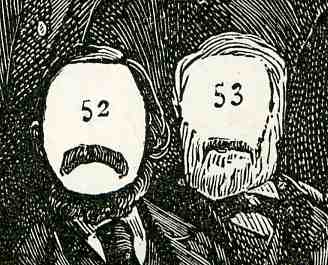
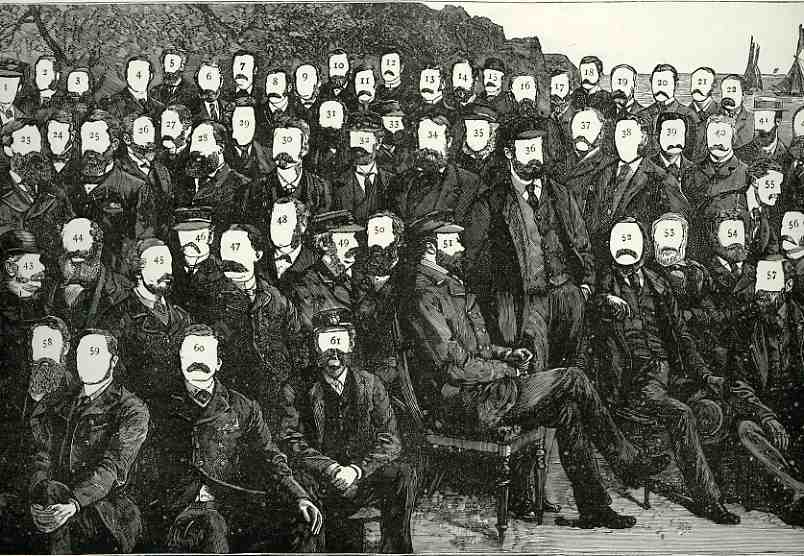
    0 blog dec 29missing men326

    I have been surprised by the strength and endurance of this series on blank and missing people–astonished, really, that there would be so much that would present itself in such incidental ways.  I do not go out of my way to find these things, they just come to me in the course of daily living; perhaps if I looked for them I would see them less frequently.

    Mr. 52 and Mr. 53 are part of a group picture of Esteemed British Yachtsmen in the 24 August 1884 issue of The Graphic magazine–it is actually a smartly-conceived thumbnail image index of a double-page photo, an easily-readable key to a complex photo.  The effect of taking it out of context, though, is remarkable, turning the index into a wood engraving of number-only-blank-faced people with facial hair attributes. 

    0 blog dec 29missing men325


  • When There is More Text on the Cover Than in the Text–and the End Result is Nothing (1877)

    JF Ptak Science Books   Quick Post

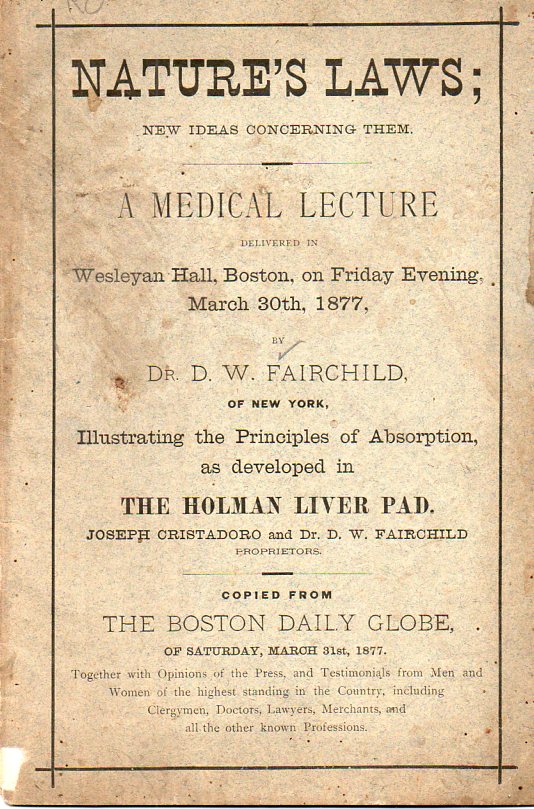
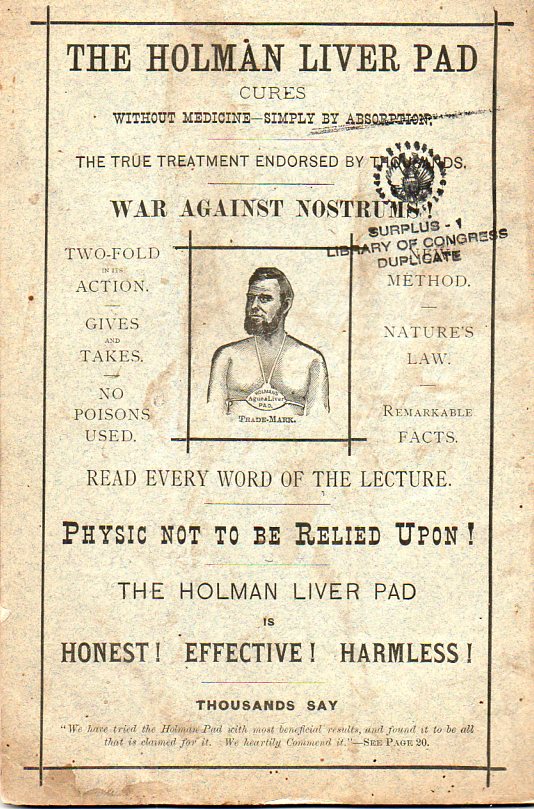
    It happens now and then that I unearth interesting bits from the pamphlet collection here that instantly create their own categorization–this in spite of already having a hundred sculpted categories. Works like this demand a deeper inspection to sustain their uncommon non-bond with other similar but not-so works. On the face of it, Fairchild’s Nature’s Laws… looks like just another quack medical remedy/cure/belief system (or suspension thereof), except that on closer inspection there is more text regarding the product on the pamphlet’s covers than in the work itself.  The thing does wind up being 36pp long, but it is most testimonial and promise–after all, you can’t say all that much abut secret ingredients for the “liver patch” that you were supposed to wear, and you couldn’t say much about the medical inventiveness and foundation behind it because there wasn’t any. So I guess you fill space with words that aren’t necessarily connected to anything and that collectively had no value, much like a year’s worth of Trumpian nothingness. Anyway, there’s a lot going on on teh covers of this pamphlet, and much like what is going on inside of it, it all adds up to chicken scratches. 

    Liver Pad508

    Liver Pad509

    D.W. Fairchild. Nature’s Laws; New Ideas Concerning Them. A Medical Lecture Delivered in Wesleyan Hall, Boston, on Friday Evening, March 30, 1877…Illustrating the Principles of Absorption, as Developed in the Holman Liver Pad…copied from the Boston Daily Globe of Saturday, March 31st, 1877. 22×14.5cm, 36pp. Printed by the Holman Liver Pad Company, 1877.  WorldCat/OCLC locates only two print copies and many others in microform.  


  • Punctuation and its Elimination: Spongebobian Sentence-Enhancers and a Pickle for the Knowing Ones (1847)

    JF Ptak Science Books 

    (This is an expanded version of an earlier post from 2008, more than 4000 posts ago. I’m reposting it here on the top of the heap today because no doubt the only person who would see the revised version left under the burden of a million other words would be me, so here it is, new-ish and fresh.)

    I’ve made several posts about Blank and Missing People which seem to me—having had long exposure to images over the last 30 years—to be quite unusual in the history of popular-published prints.  This may actually be a simple corollary to a wider category of Blank Things, or Missing Things.  Like Dark Matter.  Or white, open, blank spaces on early, honest, maps. (And this may be part of another larger story on The  Spaces in Between, (a concept in German known as Zwischenraum), but that’s another story, identifying where the missing stuff might actually “be”. 

    Right now though I’d like to address blank spaces in literature.  It is surprising to me that in Google searches that “blank books” and “blank literature” and “books without words” (once you remove all of the hits for new diaries and new artists’ notepads and such) direct you to graphic novels.  This category hardly strikes me as being “blank” as the art and action more than accommodate the absence of written words.  (And by the way the graphic novel seems to be a fairly new invention—perhaps the work of Frans Masereel and Rockwell Kent in producing sequential, worldess books were among the first of their genre when they were published in the mid-1920’s?)

    Blank literature doesn’t mean hollow literature.  In one skinny example James Fenimore Cooper’s writings may be a little translucent and a little empty, but they aren’t blank. (Twain ripped Cooper on this point, cursing Cooper for using a bagful of woodsy woodsmen tricks to drive his story when he should’ve been writing, and not waiting for them to fill up the spaces of his missing narrative: “in his little box of stage properties he kept six or eight cunning devices, tricks, artifices for his savages and woodsmen to deceive and circumvent each other with, and he was never so happy as when he was working these innocent things and seeing them go…(another) favorite stage property that he pulled out of his box pretty frequently was his broken twig.  He prized his broken twig above all the rest of hi effects, and worked it hardest…”

    An excruciatingly direct example of the worldess book  is a remarkable, hoaxing or perhaps just simply demented set (!) of books by Timothy Dexter (Newburyport, Massachusetts).   Dexter wrote a semi-incompressible work called A Pickle for the Knowing Ones, which followed his own logic, sentence structure, vocabulary and spelling. It was also printed and published without punctuation.  In one sentence. (A sample is found below in the continued reading section.)  I think that it is interesting in that someone did it and that it exists and that it was printed in 1802, but aside from that I find little comfort or twisty inspiration from it.  His second edition of that work though is much more interesting, not so much in that it continued ((?), I use that word loosely) the shredded intellectual threads laid out in the first edition; it also contains one page of what I think of as a blank book:  the missing punctuation marks from the first edition.   

    Well, not ALL of the missing punctuation, but enough, in the mind of Dexter, to silence some of the complaints of the more faint-hearted readers of his one-sentence, non-punctuated, made-up vocabulary of the first edition.  He at least provides the punctuation–separately–in case a weak reader needed some: 
    Pickle for knowing ones

    [Image from a good treatment of Dexter at http://northofboston.org/north-of-boston-historical-figures-a-pickle-for-your-thoughts/]

    He writes “Fourder mister printer the Nowing ones complane of my book the fust edition had no stops I put A nuf here and that may peper and solt as they please.”

    That’s much in the spirit of Spongebob Squarepants and Patrick Star when they “discovered” the use of swear words and curses, which they figured had no meaning except as a sort of comfrot food to be sprinkled in conversation for flavoring–“sentence enhancers” they called them, without knowing (of course!) that their sounds were more than simple garnishes and intellectual punctuation.  

    As follows (please consult http://www.lordtimothydexter.com/the_holl_pickle.htm for a full transcription of the Dexter work–the author of the site also transcribes the Dexterian-speak into plain English, which was no doubt a labor of love): 


    ,,,,,,,,,,,,,,,, ,,,,,,,,,,,,,,,,, ,,,,,,,,,,,,,,,,, ,,,,,,,,,,,,,,,,,,, ,,,,,,,,,,,,,,,,,

    ,,,,,,,,,,,,,,,, ,,,,,,,,,,,,,,,,, ,,,,,,,,,,,,,,,,, ,,,,,,,,,,,,,,,,,,, ,,,,,,,,,,,,,,,,,

    ……………. ……………. …………….. ………………. ……………..

    ,,,,,,,,,,,,,,,, ,,,,,,,,,,,,,,,,, ,,,,,,,,,,,,,,,,, ,,,,,,,,,,,,,,,,,,, ,,,,,,,,,,,,,,,,,

    . . . . . . . . . . . . . . . . . . . . . . . . . . . . . . . . . . . . . . . . . . . . . . . . . . . . . . . . . . . .

    . . . . . . . . . . . . . . . . . . . . . . . . . . . . . . . . . . . . . . . . . . . . . . . . . . . . . . . . . . . .

    …………………………! ! ! ! ! ! ! ! ! ! ! ! ! ! ! !………………………..

    …………………………….. ! ! ! ! ! ! ! ! ! ! ! …………………………..

    …………………………………. ! ! ! ! ! ! ……………………………….

    ………………………………………!……………………………………..

    . . . . . . . . . . . . . . . . . . . . . . . . . . . . . . . . . . . . . . . . . . . . . . . . . . . . . . . . . . . .

    , , , , , , , , , , , , , , , , , , , , , , , , , , , , , , , , , , , , , , , , , , , , , , , , , , , , , , , , , , , ,

    ……………????????????????????????……………

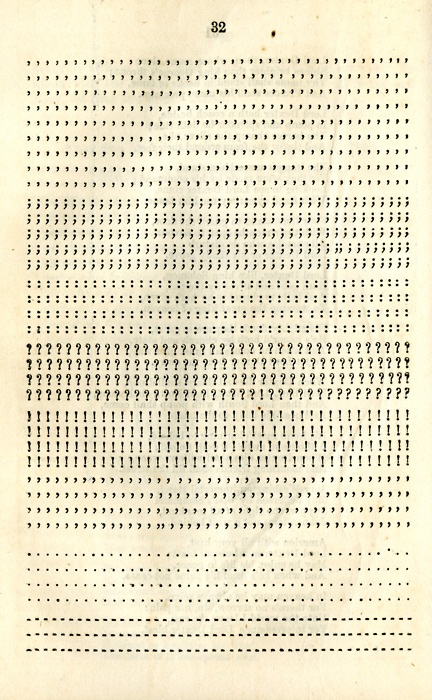
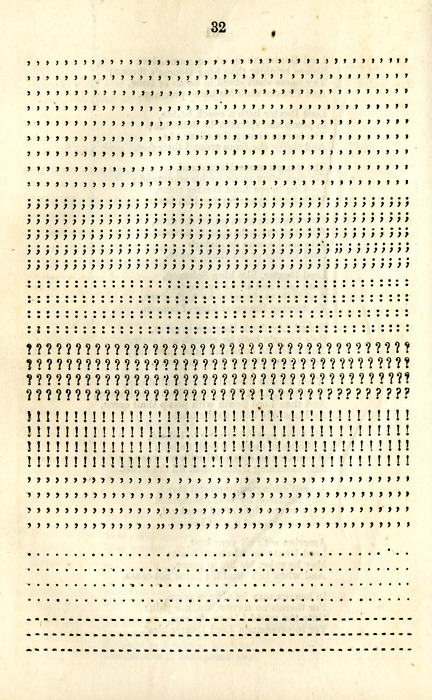
    And on page 32 more of the “missing” punctuation is provided:

    ,,,,,,,,,,,,,,,,,,,,,,,,,,,,,,,,,,,,,, ,,,,,,,,,,,,,,,,,,,,,,,,,,,,,,,,,,,,,, ,,,,,,,,,,,,,,,,,,,,,,,,,,,,,,,,,,,,,, ,,,,,,,,,,,,,,,,,,,,,,,,,,,,,,,,,,,,,, ,,,,,,,,,,,,,,,,,,,,,,,,,,,,,,,,,,,,,, ,,,,,,,,,,,,,,,,,,,,,,,,,,,,,,,,,,,,,, ,,,,,,,,,,,,,,,,,,,,,,,,,,,,,,,,,,,,,, ,,,,,,,,,,,,,,,,,,,,,,,,,,,,,,,,,,,,,, ,,,,,,,,,,,,,,,,,,,,,,,,,,,,,,,,,,,,,, ;;;;;;;;;;;;;;;;;;;;;;;;;;;;;;;;;;;;;; ;;;;;;;;;;;;;;;;;;;;;;;;;;;;;;;;;;;;;; ;;;;;;;;;;;;;;;;;;;;;;;;;;;;;;;;;;;;;; ;;;;;;;;;;;;;;;;;;;;;;;;;;;;;;;;;;;;;; ;;;;;;;;;;;;;;;;;;;;;;;;;;;;;;;;;;;;;; :::::::::::::::::::::::::::::::::::::: :::::::::::::::::::::::::::::::::::::: :::::::::::::::::::::::::::::::::::::: :::::::::::::::::::::::::::::::::::::: ?????????????????????????????????????? ?????????????????????????????????????? ?????????????????????????????????????? ??????????????????????!??????????????? !!!!!!!!!!!!!!!!!!!!!!!!!!!!!!!!!!!!!! !!!!!!!!!!!!!!!!!!!!!!!!!!!!!!!!!!!!!! !!!!!!!!!!!!!!!!!!!!!!!!!!!!!!!!!!!!!! !!!!!!!!!!!!!!!!!!!!!!!!!!!!!!!!!!!!!! ””””””””””””””””””” ””””””””””””””””””” ””””””””””””””””””” ””””””””””””””””””” ……………………………….. ……………………………….. ……………………………….. ……………………………….. ————————————– ————————————– ————————————–


    It is a brilliantly empty book, all of the characterization present and waiting for the last bit that would make this a book:  the words.

    The depths or shallownesses of Dexter’s private insight is a mystery to me, if that mystery extended beyond an elaborate and peculiar (and deep) sense of humor.  The man was a successful if not very odd businessman, after all, so he did have some sort of regulating principle in his life–its just that this sort of dark, removed humor is so incredibly pre-modern that I’ve gotten stuck thinking about Dexter being a little deranged rather than be prescient.