A Daily History of Holes, Dots, Lines, Science, History, Math, Physics, Art, the Unintentional Absurd, Architecture, Maps, Data Visualization, Blank and Missing Things, and so on. |1.6 million words, 7500 images, 4.9 million hits| Press & appearances in The Times, Le Figaro, Mensa, The Economist, The Guardian, Discovery News, Slate, Le Monde, Sci American Blogs, Le Pont, and many other places… 5000+ total posts since 2008.

Category: Blank and Empty Things; A History of

  • On the History of Tenderness to Children

    JF Ptak Science Books   Post 712 (from 2011, extended, with a full text scan of  Children Who Work in the Nation’s Crops by Gertrude Folks Zimand, National Child Labor Committee,  1939.)

    “The history of childhood is a nightmare from which we have only recently begun to awaken…” Lloyd Demause

    “Give me other mothers and I will give you a better world.” St. Augustine, (who does not mention fathers in this context). 


    The history of kindness to children is a wicked road to tread—I’m not sure why I’m even thinking about it had I the subject not been awakened by bumping into the map seen below.  Without any real directed reading on the topic  I’ve intuitively felt that “childhood” as an idea, as a part of human development in the Western world, was a young, newish innovation.  The simplest way to perhaps measure this is looking for representations of children as children in Medieval and Renaissance art—that is to say children drawn not as little/miniature adults, but drawn as children actually appear.  This does not happen very much at all in the early Renaissance, and virtually never happens in the Medieval.  Even when looking for images of Christ as a baby in early art it is far more likely to find him depicted as a little man than it is to see him as a child.  Children certainly seem to make more appearances as themselves in book illustration (excepting the obvious works on anatomy and childbirth) beginning in the early 16th century, and I’ve a number of reproductions here of children with learning-to-walk walkers and toys from this period. So at the very least the recognition of  the concept of difference in very very young adults as “children” in art took a much longer (and unexpected at least to me) time to develop as a concept.   And this is only the barest concept, at least recognizing childhood as a stage of development, which doesn’t necessarily say anything about the aspect of kindnesses expressed to them simply because of this stature.  That’s an entirely different story.

    One way  to measure this aspect of childhood–the history of kindness towards children–is in terms of how much work society allowed them to perform in the adult world—and again, it would be shown that it was discovered only recently.  As an issue of moral and responsibility, child labor was regulated first in England in a long series of Factory Acts  (13 separate acts from 1819 to 1961, including 1819, 1831, 1833, 1844, 1847, 1850, 1874, 1878, 1891, 1901, 1937, 1959, 1961) .  That first breathe of morality and responsibility towards happiness (where happiness means not being exploited) codified that children younger than nine were not allowed to work,  and that kids between the ages of 9 and 18 could only work up to 72 hours in a six-day week1.  Children were used freely and copiously for work in fields, in chimneys, in mines, and in tough bugger places that couldn’t be reached by full-grown adults, as well as in places that could use little hands, or suspended in places where a lightweight helper could be slung, and so on.

    Historically speaking, controlling children seems to have been the major part of dealing with a child:  from controlling its body function (with enemas and such), to movement (swaddling to completely restrict motion), to crying (dunking a crying infant in a pail of ice cold water to stop it from crying),and to mood (feeding fussy children liquor and opiates to make it docile. ) The severe beating of children was the great “other” option in dealing with all manner of childhood issues, the thorny crown of behavior modification. On this point Lloyd Demause in his “The Evolution of Childhood” examines 2000 statements of advice on child rearing prior to the 18th century and found that most  advocated severe beatings.  He noted that the severity of the beatings was common and “a regular part of the child’s life.” The instruments of behavior advocacy here included “whips of all kinds, the cat o’nine tails, shovels, iron and wooden rods, bundles of sticks, the discipline—a whip made of small chains–, and special school instruments like the flapper, made to induce raising blisters.” (Demause, page 41.) Rousseau—hardly alone among the great philosophers—advocated whippings and beatings from infancy; plenty of the great social thinkers from this period and earlier had little use or accommodation for children, even their own. 

    There’s also the controlling of the mind via images and fear and promise of retribution of hell, as well as the introduction of spooks, ghosts, goblins and other sorts of child-stealers and –eaters.  You’d think that the rough and tough and pretty scary stories of Brothers Grimm would be enough, but it doesn’t come close to the really scary guys:  Mormo, Canida, Poine, Sybaris, Acco, Empuss, Gorgon, Ephiatles and others were brought in to do the job of control that spanking and beating and hell couldn’t modify. 

    Then there’s the sexual misconduct and abuse, which was evidently deep and well practiced for thousands of years, with older Roman men and Athenian rent-a-boy being famous examples of something wider and established.  Just from reading a bit through some of the standard histories of childhood it is very easy to see the vast amount of sanctioned abuse that seems to constitute one of society’s many sorely soft and cancerous underbellies.
    ===blog==augu 12==hine

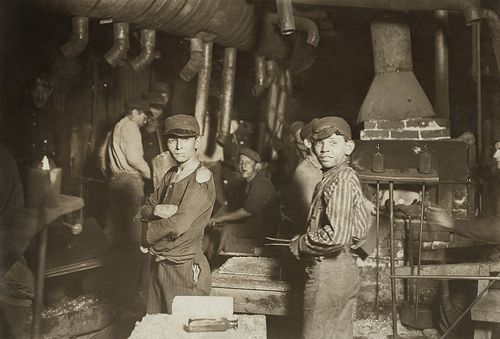
    Returning to child labor, for most people in the United States the grotesque nature of this activity was finally revealed to the great masses through the work of the legendary photographer Lewis Hine, whose documentary images of the conditions of children and the laboring classes was an extraordinary dose of reality.  It took the unimpeachable foundation of the photograph to hammer home to people that children were being subjected to rigorous labor abuse. (The photo above shows children working in a glass factory at midnight.)
    ===blog==aug 12--child work

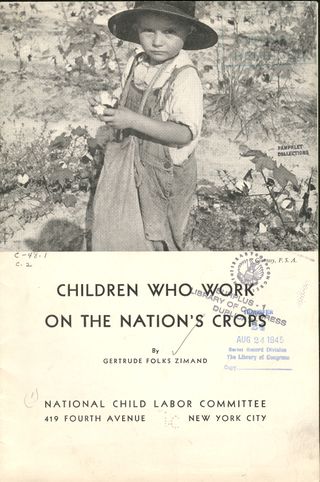
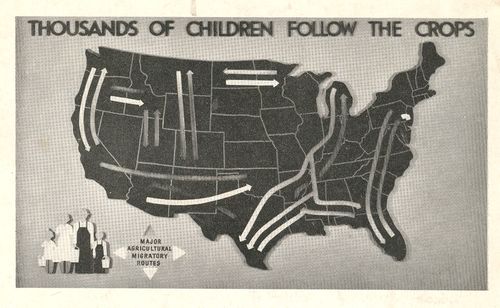
    But Factory Acts and Lewis Hine et alia made only incremental change in the exploitation of the very young–evidently economies large and small were addicted to the idea.  Which brings us to the map that started this thought: it appeared on the back cover of Children Who Work in the Nation’s Crops,  written by Gertrude Folks Zimand, and published by the National Child Labor Committee (NCLC) in 1940.  The map on the back cover shows the migration routes of the young workers:
    ===blog==aug 12--child work map
     

    There’s no surprise to what the map showed, though it was a surprise to see the map itself.  The NCLC is still around, and so are the children working in the fields.  The map has stayed pretty much the same. 

    The rest of the pamphlet does not pamper the brittle semi-hidden world of the child laborer.  I’ve included the entire work, below.  

    UNICEF states that there are still hundreds of millions of children being worked illegally throughout the world, and I can’t help but wonder who it is that assembles those free Happy Meals toys (watch that copyright!) which are purchased in the millions for a penny or so apiece.  When things like that are as cheap as they are, as impossibly cheap as they are, there must be someone, somewhere, paying the price.


    NOTES:

    1. The high points (taken from Wiki) of the Factory Act of 1833 stated:

    • Children (ages 14–18) must not work more than 12 hours a day with an hour lunch break. Note that this enabled employers to run two ‘shifts’ of child labour each working day in order to employ their adult male workers for longer.
    • Children (ages 9–13) must not work more than 8 hours with an hour lunch break.
    • Children (ages 9–13) must have two hours of education per day.
    • Outlawed the employment of children under 9 in the textile industry.
    • Children under 18 must not work at night.
    • provided for routine inspections of factories.

    Also, good reads on the history of childhood:

    G. Rattray Taylor, The Angel Makers
    David Hunt, Parents and Children in History
    George Payne, The Child in Human Progress
    Philippe Aries, Centuries of Childhood

    and

    Lloyd Demause,editor,  The History of Childhood.


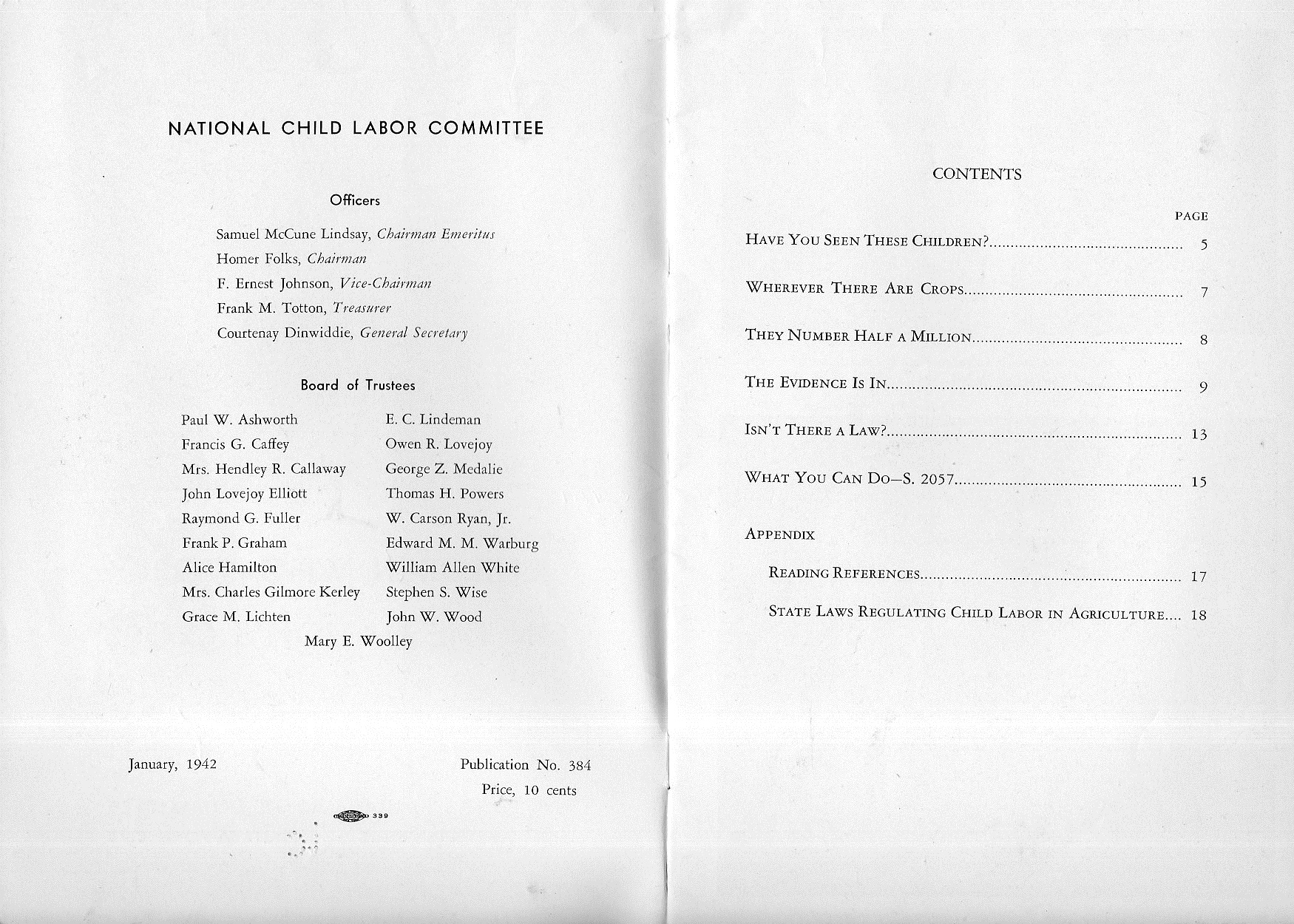
    Children Who Work in the Nation’s Crops 

    by Gertrude Folks Zimand, National Child Labor Committee, New York City  January 1942
     

    ===blog==aug 12--child work

    Children who work 1349


  • The Sum of All Dreams–(The Caloric Capacity of Every Dream That Has Ever Been Dreamt)

    JF Ptak Science Books  Quick Post   An entry in the series A History of Blank, Empty, and Missing Things

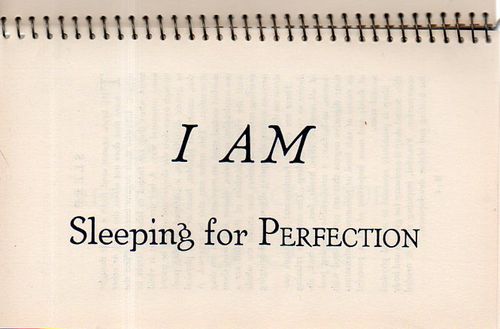
      Sleeping for perfection

    [From Rex Knight’s odd aether-waves work, Wake Up and Sleep!, 1938]

    The good estimate of the number of people who have lived on the Earth is about 100 billion. 

    I wonder about the resting results in their lives, of their sleeping adventures, of their dreams.

    If the average age of all people who have ever lived is, say, 30 years, that makes 3 trillion years of living, or about 1 quadrillion hours.  

    Let’s say that everybody got six hours of sleep for about 165 trillion hours; and let’s say that people dream, say, five times per not, that makes, again, about a quadrillion dreams.

    If we in general burn 50 calories a dream, that translates to about 50 quadrillion calories holding up the dreams of mankind. 

    I wonder where all those dreams have gone?  


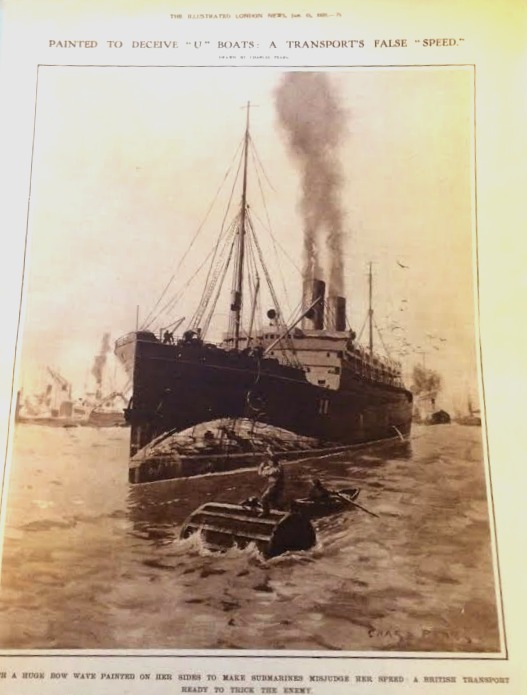
  • Not Razzle Dazzle, but a Sort of Camouflage Nonetheless: False Speed (1916)

    JF Ptak Science Books  Quick Post

    • A Note on “Hiding” in Plain Site: Razzle Dazzle Camouflage, 1917-1918   https://historyofideasblog.com/thesciencebookstore/2015/02/a-note-on-hiding-in-plain-site-razzle-dazzle-camouflage-1917-1918.html

    This is just a short note on an unexpected piece of wartime development that I stumbled up leafing through the Illustrated London News for 1916.  It seems offhand that this sort of deception wouldn’t be very deceiving for very long–this painted bow wave  was intended to create the illusion of speed to a watching U-boat and thus throw off the calculations for the launch of a torpedo. I haven’t seen images like this very often at all–especially compared to other sorts of camouflage for ships–so I’m guessing that it was not a reliable way of fooling the hunting sub.  That said I have seen it more on U.S. ships leading up to WWII, but not very much…

    WWI ship camo a

    And the detail: 


  • A Non-Imaginary Post about Imaginary Books in Real Books

    JF Ptak Science Books  Post 2685

    Eco Library

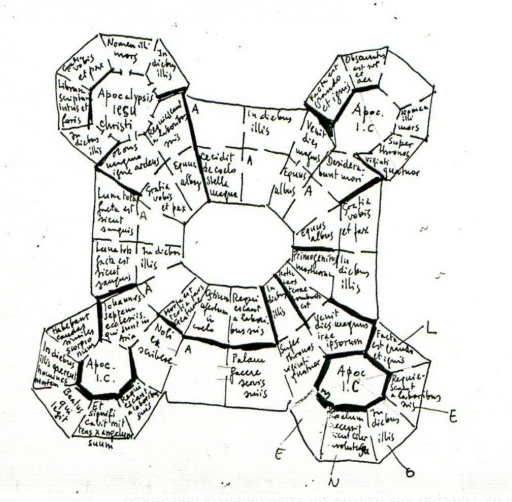
    [Umberto Eco’s sketch for the imaginary library in his The Name of the Rose, from Digital Architectural Papers, here]

    “To write vast books is a laborious nonsense, much better is to offer a summary as if those books actually existed.”  — Jorge Luis Borges

    I imagined to be reading about the imaginary illustrations of a non-existent book when I wondered about the extent of (intentionally) imaginary books in the history of real books.  It was a quick realization of how deep and how old this genre is–and as a matter of fact one excellent single-stop website that displays this depth is the Librarian of Babel by Emi Hastings  (Catalogues of Imaginary Libraries https://librarianofbabel.wordpress.com/2014/04/25/bibliographies-of-imaginary-libraries/).

    At the outset I thought to write some sort of overview or a little history of the imaginary book, starting of course with Rabelais and then Borges, but there is just so much more than can be accommodated by a simple evening’s work that I decided to simply make a few lists of representative creations by a selection of some favorite biblio-creativists. So, help yourself to some interesting and humorous suggestions by Charles Dickens, John Donne, Francois Rabelais, Marcus de Fable, Douglas Adams, Jorges Luis Borges, Umberto Eco, Vladimir Nabokov, Haited Pleat,  and J.K. Rowling.

    Works invented by Charles Dickens [findable in numerous forms with this list found at http://flavorwire.com/329815/charles-dickens-library-of-fake-books]:

    Five Minutes in China. 3 vols.
    Forty Winks at the Pyramids. 2 vols.
    Abernethy on the Constitution. 2 vols.
    Mr. Green’s Overland Mail. 2 vols.
    Captain Cook’s Life of Savage. 2 vols.
    A Carpenter’s Bench of Bishops. 2 vols.
    Toot’s Universal Letter-Writer. 2 vols.
    Orson’s Art of Etiquette.
    Downeaster’s Complete Calculator.
    History of the Middling Ages. 6 vols.
    Jonah’s Account of the Whale.
    Captain Parry’s Virtues of Cold Tar.
    Kant’s Ancient Humbugs. 10 vols.
    Bowwowdom. A Poem.
    The Quarrelly Review. 4 vols.
    The Gunpowder Magazine. 4 vols.
    Steele. By the Author of “Ion.”

    Works invented by John Donne, Catalogus librorum aulicorum incomparabilium et non vendibilium, or The Courtier’s Library of Rare Books Not for Sale, was written between 16-7-1611, and published in 1650: [http://libraryofinvisible.blogspot.com/2014/03/anonymous.html]

    Edward Hoby’s Afternoon Belchings
    On Distinguishing the Sex and Hermaphroditism of Atoms
    On the art of decyphering and finding some treason in any intercepted letter
    Concerning the method of emptying the dung from Noah’s Ark
    Martin Luther, On Shortening the Lord’s Prayer
    The Princely Ocean, or The Pyramid, or The Colossus, or The Abyss of Wits: where by means of 60,000 letters to the Nobles of all nations … are related everything that is able to be related concerning toothpicks and hangnails
    On the Navigability of the Waters above the heavens, and whether Ships in the Firmament will land there or on our shores on the Day of Judgment, by John Dee
    What not? or a confutation of all errors in Theology as well as in the other sciences, and the mechanical arts, by all men, dead, living, and to be born, put together one night after supper

    The Art of Cutting the Teeth.
    Matthew’s Nursery Songs.
    Paxton’s Bloomers.
    5 vols.
    On the Use of Mercury by the Ancient Poets.
    Drowsy’s Recollections of Nothing.
    3 vols.
    Heavyside’s Conversations with Nobody.
    3 vols.
    Commonplace Book of the Oldest Inhabitant.
    2 vols.
    Growler’s Gruffiology, with Appendix.
    4 vols.
    The Books of Moses and Sons.
    2 vols.
    Burke (of Edinburgh) on the Sublime and Beautiful.
    2 vols.
    Teazer’s Commentaries.
    King Henry the Eighth’s Evidences of Christianity.
    5 vols.
    Miss Biffin on Deportment.
    Morrison’s Pills Progress.
    2 vols.
    Lady Godiva on the Horse.
    Munchausen’s Modern Miracles.
    4 vols.
    Richardson’s Show of Dramatic Literature.
    12 vols.
    Hansard’s Guide to Refreshing Sleep

    Works invented by Francois Rabelais, a selection from  Catalogue of the Choice Books Found by Pantagruel in the Abbey of Saint Victor: Devised by François Rabelais: Translated and Annotated by Walter Klinefelter, a Student of Catalogues (printed in Pantagruel, c. 1532; translated and printed separately, 1952):

    The Spur of Cheese

    The Codpiece of the Law
    The Testes of Theology
    On the Art of Discreetly Farting in Company
    Three Books on How to Chew Bacon
    Martingale Breeches with Back-flaps for Turd-droppers


  • Forts of Nothing

    JF Ptak Science Books   Quick Post

    Part of the series on the History of Blank, Empty, and Missing Things

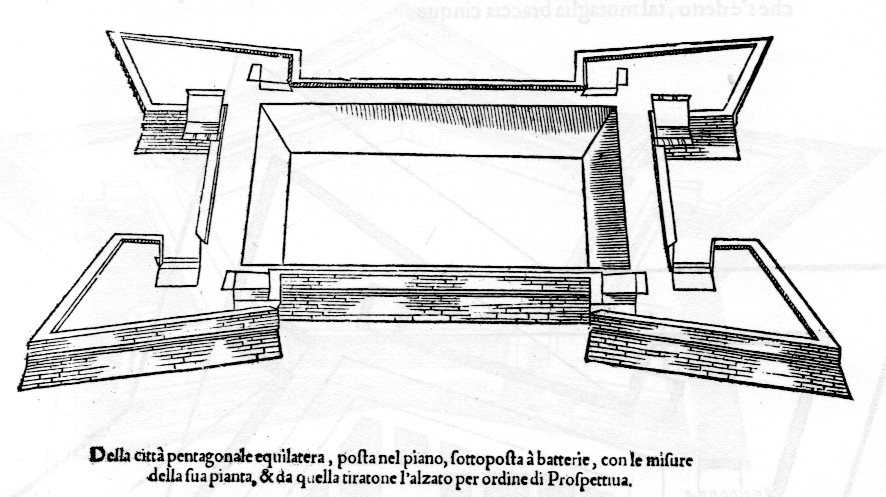
     These interesting images of fortifications–protective of nothing, staffed by no one, generally in no landscape–are very lonely design representations found in Pietro Cataneo’s I Quattro Primi Libris di Architettura, and printed in 1654.  They are forts that protect and capture nothing, at least in this book–they are simply perspectives for fortification design.  They float beautifully in the text, lifted somewhat from the pages unencumbered by any human detail. 

    Cataneo fort 265


  • “If Anything Else is Added the Post Card Will be Destroyed”, WWI

    JF Ptak Science Books   Quick Post

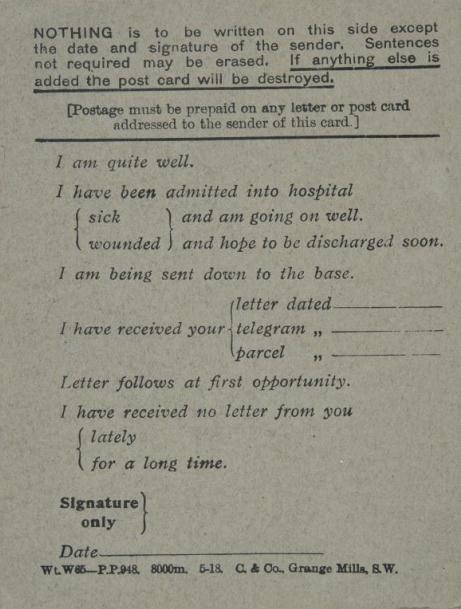
    This postcard was provided to British servicemen during WWI for a brief, highly abbreviated, communication with folks at home.  The writer could choose between being well, or being in the hospital (via illness or being wounded), or being sent “down to the base”.  There’s a following bit about whether the soldier had received mail and what kind, and then a memory note, telling the receiver that they had “received no letter” from them “lately” or for a heartbreaking “long time”.  

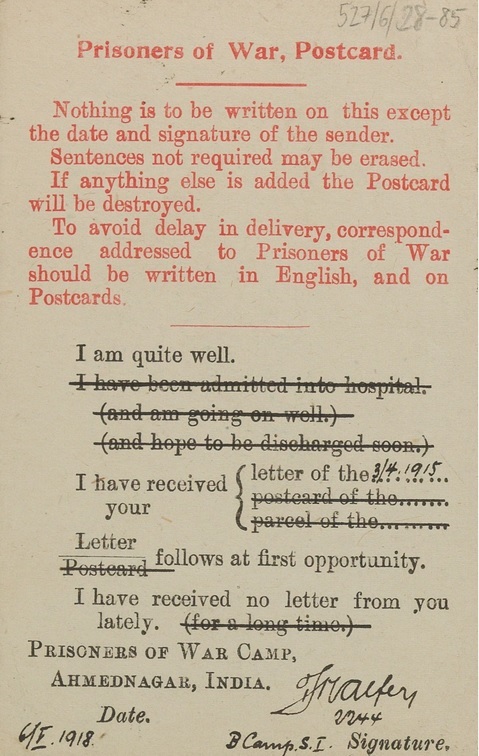
    There’s room for a signature–the only writing not a circle–and then room for nothing else. (Another version of this postcard below has been utilized with the “writer” placing a line through the text that was not applicable. In this case the postcard was identified as being for use by British POWs.)

    As the card states very explicitly, any other writing would lead to the card being destroyed. 

    It wasn’t much, but for the recipient, it might have been enough. Pity those who received this card with only “for a long time” circled.  

    WWI Project Blank and Missing Field Postcard

    • “The reverse of a field service postcard showing entries, such as ‘I am quite well’, to be deleted by the sender as appropriate.” MH 34058″ Source:  Imperial War Museum  http://www.iwm.org.uk/history/podcasts/voices-of-the-first-world-war/podcast-21-news-from-the-front

    See also this post with another example of a WWI “form letter” : “An Extraordinary POW Postcard 1918”  [https://historyofideasblog.com/thesciencebookstore/2014/09/an-extraordinary-censorable-pow-postcard-1918.html]

    WWI POW Postcard


  • Blank and Missing Things: a Map of Missing People of Europe and Russia, 1881

    JF Ptak Science Books  Expanded Post 636 (from 2009)  Blog Bookstore

    The History of Blank, Missing and Empty Things (Thread, #45)

    “Heaven and earth were one form…. (then they were separated from one another…)”

    “The mind is its own place, and in itself can make a heaven of hell, a hell of heaven..” 
    –John Milton, Paradise Lost

    In ancient times the representation of the gods and beliefs was handed from one writer or storyteller to the next, on and on, changes here and deletions there, for many generations.  This practice was possible (necessary?) because there really wasn’t a solitary scripture to follow (as in the Koran or the Bible) and no priestly class to guard and cherish a particular strong story line in all of its barbed details.

    Juden_1881  [Image source: wikicommons, https://commons.wikimedia.org/wiki/File:Juden_1881.JPG  The image is greatly expandable.]

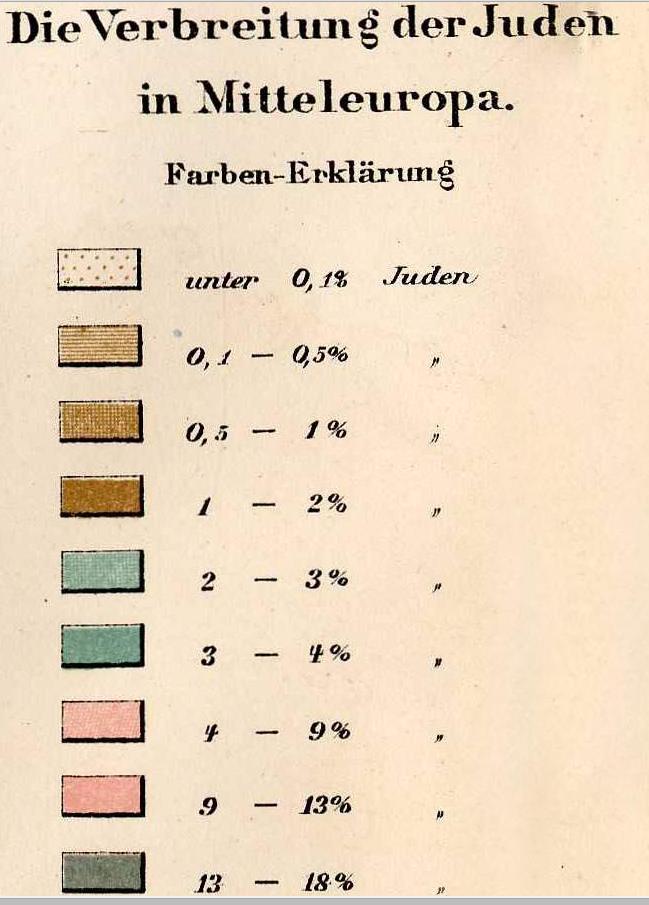
    And the key to the map:

    Maps Jewish populations in Europe

    There are of course bits that have survived intact for millennia.  One of these is this fragment from one of Euripides’ lost plays (only 20% or so are complete), The Wise Melanippe, and begins a statement of cosmogony that states the creation of all things.  The separation of heaven and earth has always stuck with me, because this separation begins with Euripides with the creation of the world seems to continue on its way with mini-separations of all things over the course of time—like the cosmological world-bearing turtles—all the way down. 

    I’m not sure how or who exactly did this heaven-rending, or to what force it owed its being:  evidently the Presocratics tended to depersonalize the actions of the gods and grant their actions to natural forces, so the issue with the heaven-separation business may well have been a motive force rather than a god.  Anyway it’s the tearing apart, the removal, the separation phenomena that got my attention to begin with, and one which has stayed with me, though I’m sure that Euripides didn’t have that sort of violent rending in mind while describing the birth of the earth.

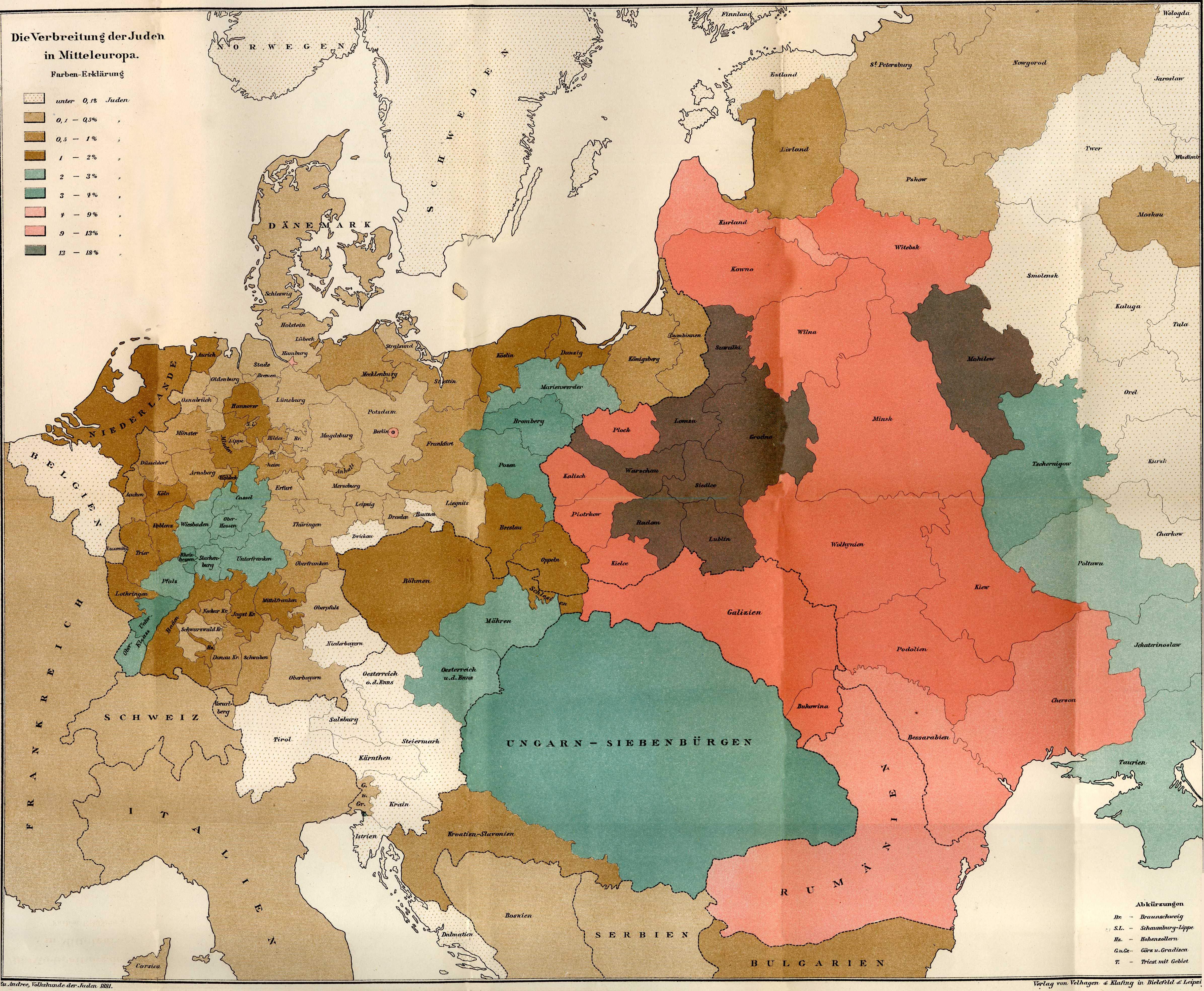
    And so it is with this map1 showing the concentrations of the Jewish people in Europe  in the late 19th century. Between the time of the publication of this map—1881—and the beginning of the Nazi regime in  Germany in 1933, there were many persecutions and Pogroms and deportations of the Jewish people.  Nothing prepared anyone for the concentration camps and the systematic extermination of that people between 1935 and 1945.  What this map shows is the distribution of the Jewish people (by percentage of the total population) before they were eviscerated:  the difference between this map in 1881 and the map of 1945 would be completely different.  The Jews were gone:  killed.  Some deported.  Others escaped.  But they were basically torn from Europe  in the cruelest manner so that in almost every case the only indicators of their existence were shadows. 

    There are large-scale maps of this sort of evidence for other groups of people in their pre-Euripidean tearing from their home:  maps showing the locations of Indian tribes in North America (pre-Columbian, 17th century, 19th century, they’re all telling pretty much the same devastating story) is one good example of a slender category.  There aren’t maps for the mass extermination by starvation created by Joe Stalin, or the millions murdered by Pol Pot or Mao.  There are of course more small-scale, localized maps depicting the results of forced relocations or devastating war or drought or hunger or floods.  But few, I think, take such a compelling x-ray of a people’s past on a continental scales such as this. 

    Notes:

    1. “Die Verbreitung der Juden in Mitteleurope”  found in  Richard Andree’s , Volkskunde der Juden…,  Verlag von Velhagen & Klefirg in Bielfeld und Leipzig:  1881. 


  • Roosevelt as a Proto-Fascist, 1933 (Indictment by a Far-Left Organization)

    JF Ptak Science Books   Quick Post

    Roosevelt Fascist164

    In the pamphlet collection here there are hundreds if not thousands of odd publications printed int eh 1850-1945 period that have little bits and pieces of design elements–apart from their content–that make them irresistible.

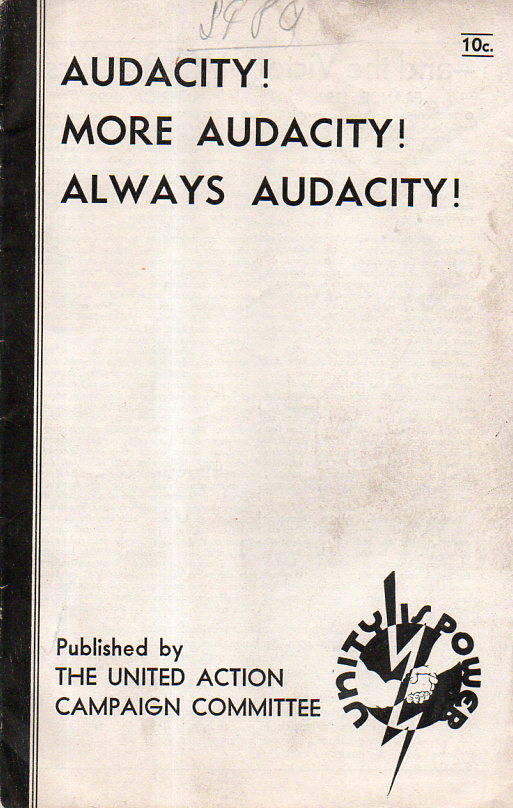
    The logo may be recognized by some of you–it belonged to the League for Independent Action  (LIPA), which was a far-left organization that last for about eight years from 1928-1936 (the last two or three being moribund). LIPA had a number of pretty heavy hitters–or at least the United Action Campaign Committee of LIPA did. The chair of this and LIPA was John Dewy, and among the others involved with the group (it seems as though there were never more than 5,000 dues-paying members) were Charles Beard, Heywood Broun, Stewart Chase, Henry Pratt Fairchild, Fiorello LaGuardia (!), Reinold Niebuhr, and dozens of others.  

    The election of FDR in 1932 seems to have sunk their boat, though in reading this pamphlet a little Roosevelt really wasn’t liberal enough for them–he did though attract a lot of their membership to the Democratic Party, and LIPA in short order shrank and drowned.

    In fact, according to the pamphlet in which this logo was found, Roosevelt was more “a threat than a promise” to American life. And, then this: that the New Deal “if carried to its logical conclusion…will introduce Fascism into the United States”. One part of this was the continued entitlements of the upper classes, “withholding the people from the blessing of security, leisure, and high living standards”. 

    And: “In truth, what President Roosevelt has been doing in Washington…will [transform the old, individualistic laissez-faire] capitalism of yesterday into the controlled capitalism of Mussolini and Hitler”.

    I’ve seen these attacks on FDR before, but  think not this early, not in the first year of his presidency.  

    I guess–given to the limited space given to this post–that it would be mostly fair to say that LIPA was a Socialist organization, at least, and the politics of the Roosevelt administration was not nearly Socialistic for them. There’s much more in this pamphlet, but it will have to wait for another time. 

    Roosevelt Fascist163


  • A Nearly-Blank Outline Map of the World

    JF Ptak Science Books   Quick Post

    Part of the series of The History of Blank, Empty, and Missing Things

    “Other maps are such shapes, with their islands and capes!
    But we’ve got our brave Captain to thank”
    (So the crew would protest) “that he’s bought us the best-
    A perfect and absolute blank!”

    So goes the fourth fit of the Bellman’s tale in The Hunting of the Snark, featuring a map that I wrote about here, wondering about its absolute beauty of near total blankness.  

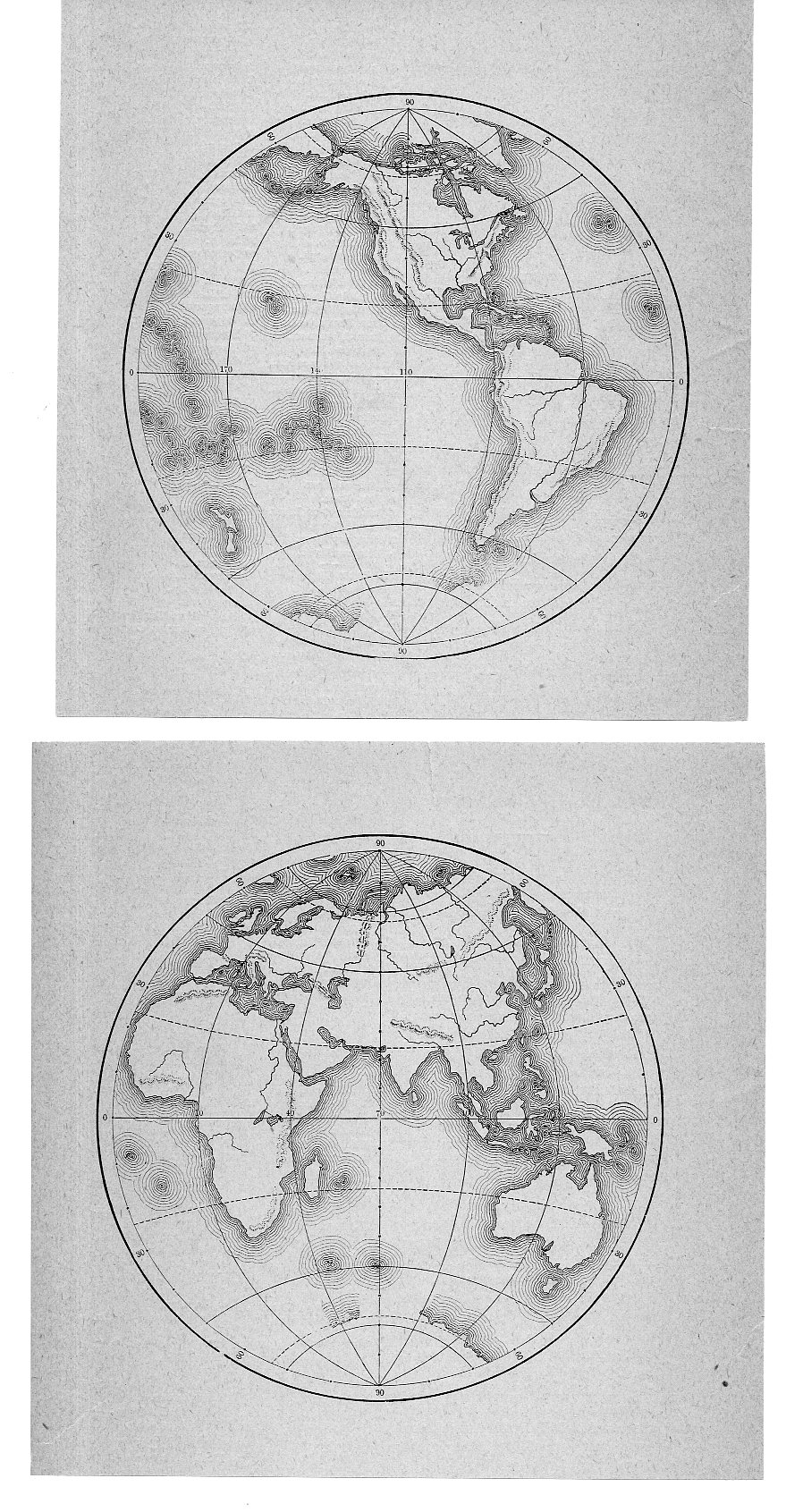
    No doubt this pair of hemispheric maps of the world–printed probably in the 1880’s–were intended as instructionals, or primers, or to be used as outline maps to be filled-in and elaborated by students. Still, standing there out of context as Blank Maps, the have a certain appeal.  They don’t have the vigour and the energetic nothingness of the Lewis Carroll Bellman map, but they will have to do for now.  

    Map Worldf blank953


  • Quiet Images of Great Loss and Heroism–British Navy Losses, 1945

    JF Ptak Science Books  Post 2443

    (This post appeared in the Blog Bookstore in 2010 but evidently not in the blog itself.  Here it is, somewhat modified.)
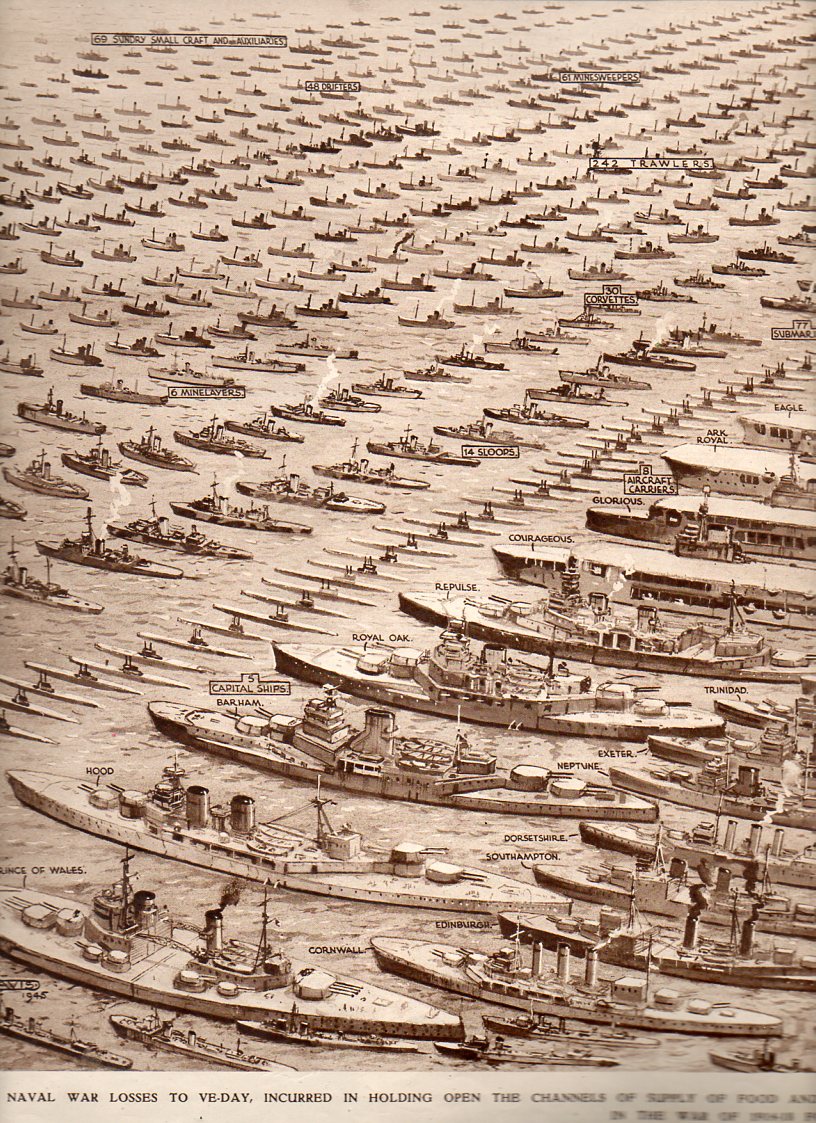
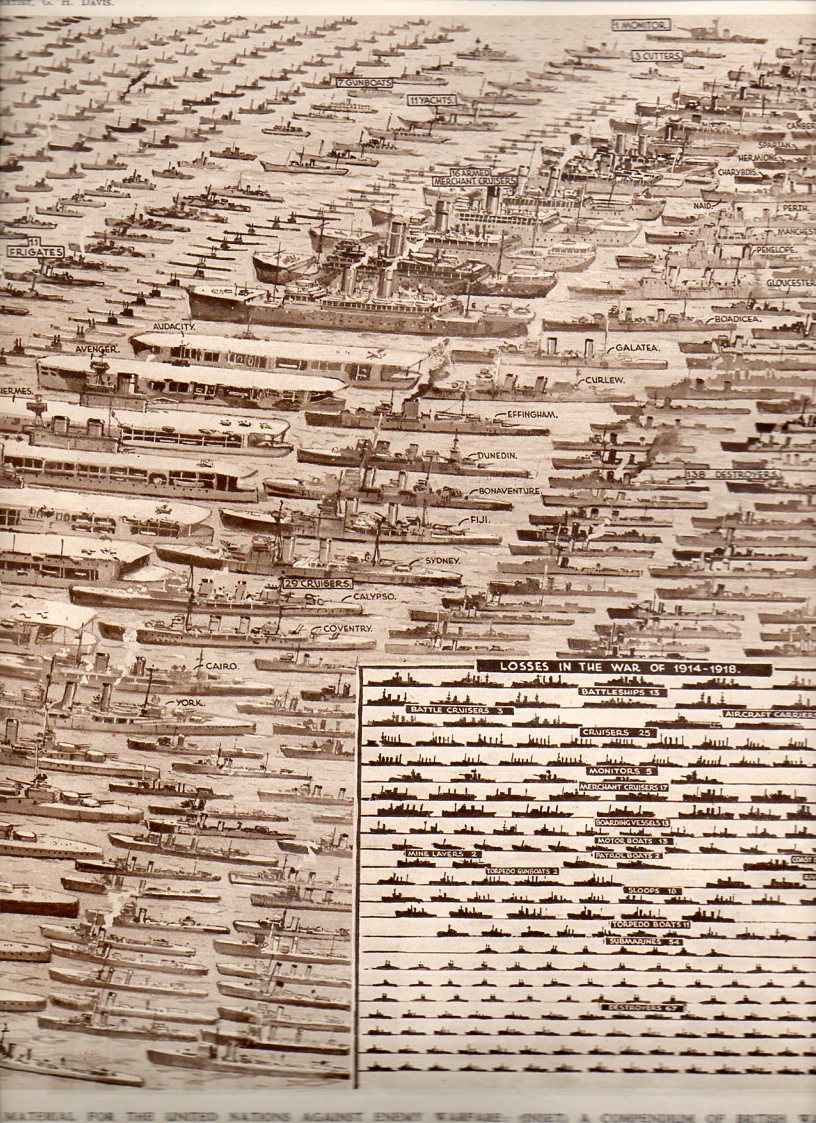
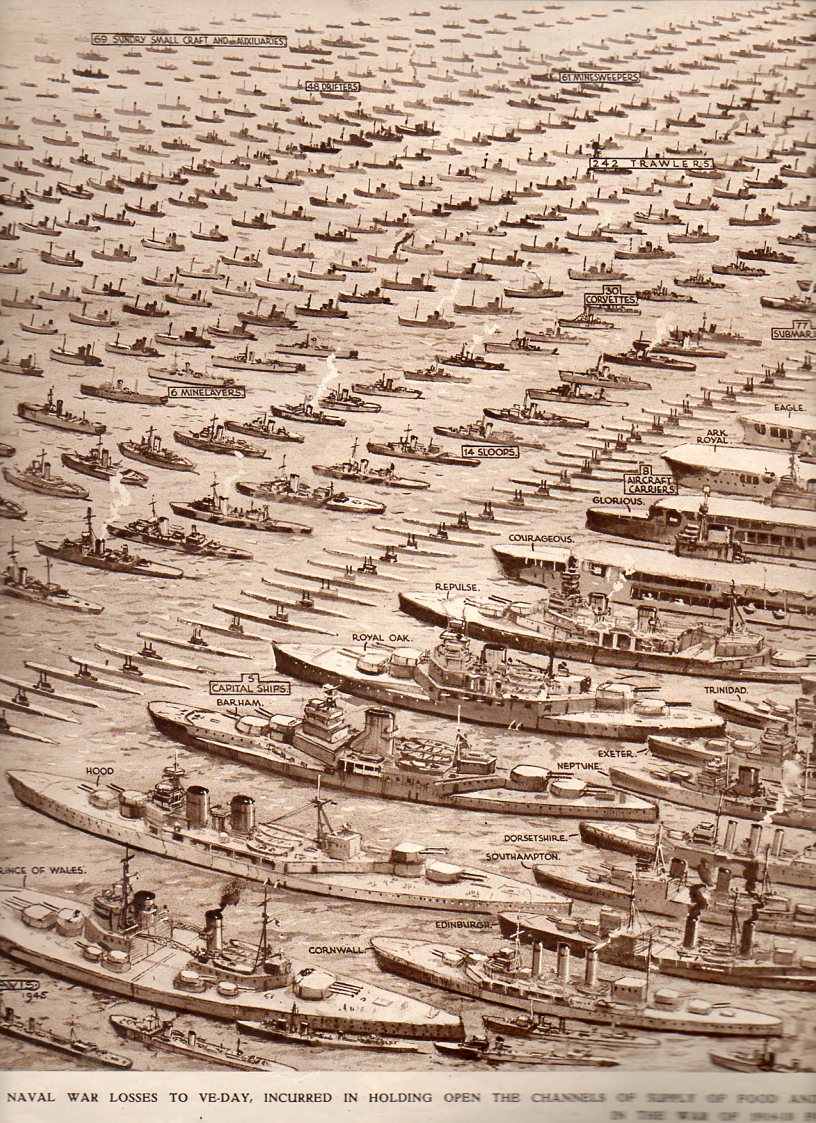
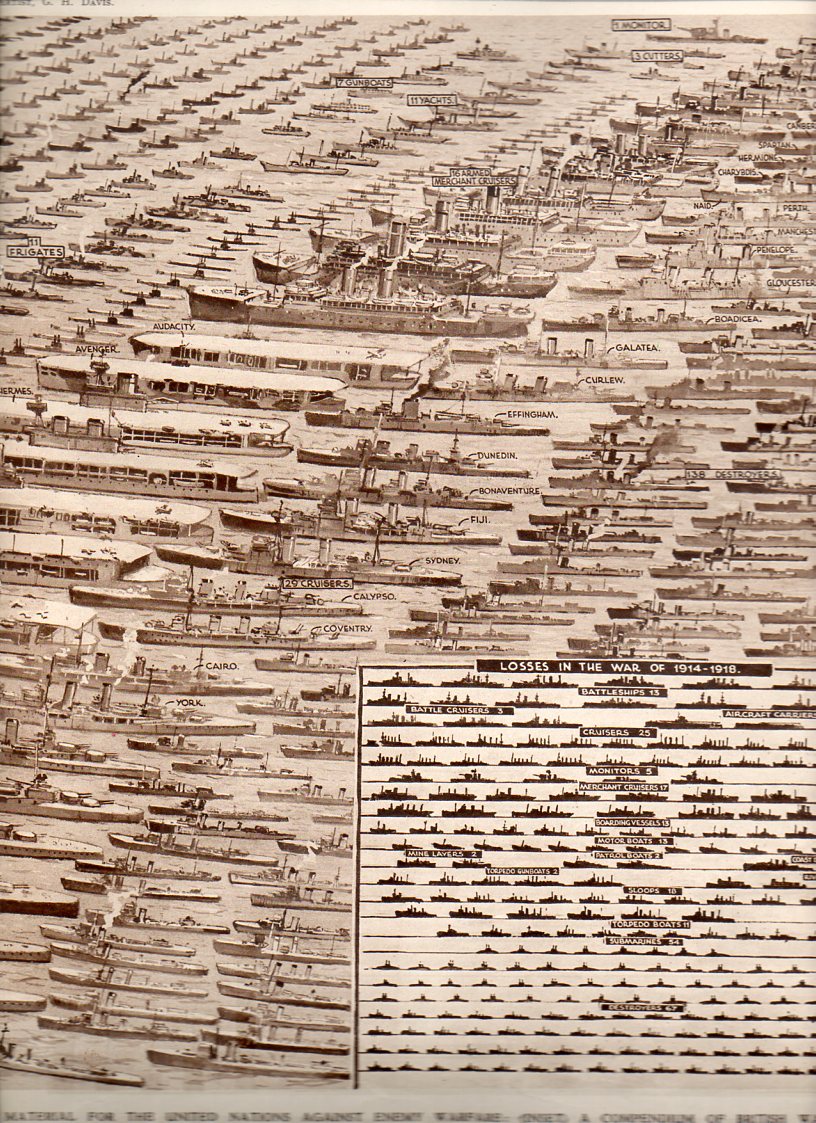
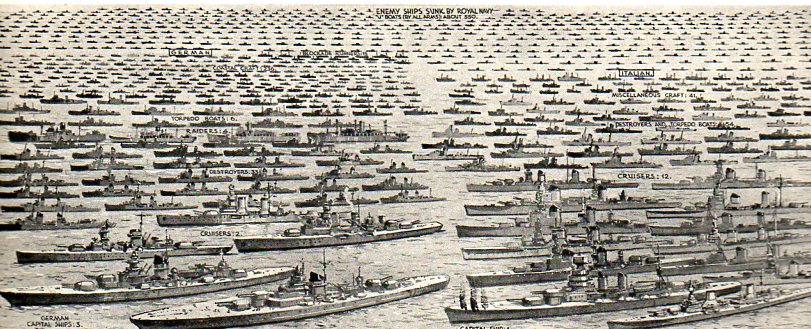
    This enormous, quiet image appeared in The Illustrated London News on 23 June 1945, just weeks after the termination of WWII in Europe.
    Navy Losses--left796Navy Losses--right795

    It graphically presents every ship lost by Great Britain in the defense of “holding the seas against the Axis Powers…holding open the channels of supply and food and war material” from the outbreak of the war to VE day. The inset narrative states that there were on average nearly 3000 British and Allied ships at sea at any given moment, with the Royal Navy patrolling an aggregate  of 80,000 miles of trading routes, day in and day out


    Navy Losses--left796

    It is a symbol of loss, of heroism, of lives not lived, of lives saved, of valor, of greatness, of will, of the cold black sea, of burning oil, of red waves, and above all, of sacrifice. Of splendid behavior. 

    It is a terrible picture of what victory demanded of bravery.        

    It is as much an image of a military graveyard as anything else, a Remembrancer, especially for  those who were never recovered.  It is a grid, a finding aid, a visualizer, for all of those sailors lost in a sea that is indifferent to particular memory.

    Navy Losses--right795
    I can’t imagine how this image was received by the Illustrated London News reader on that day.  Did they suck their breath in at the scope of it, of the gigantic reminder of what all of those ships represented?  Was it the sort of image-reading that was forced, a white-knuckle, vacant-chested feeling of sweeping loss?  Of loss and gratitude?  Of gratitude and finding purpose for all of those sacrifices to the island nation?  I suspect that all of those words were in the minds of those readers in 1945–and also for emotions that have no words.  
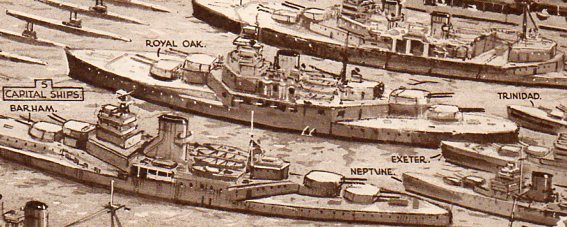
    Navy Losses--left detail797

    Notes:
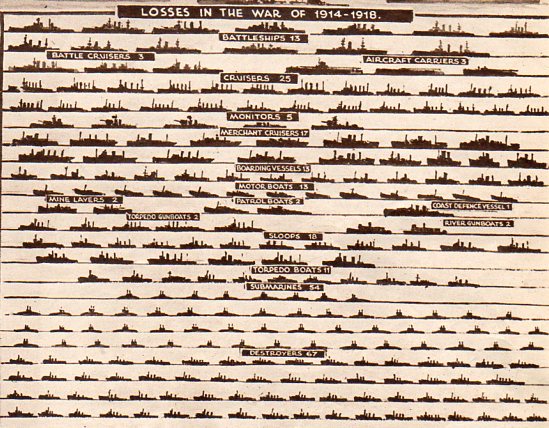
    There is also a small inset that shows in comparison the Royal Navy losses for WWI, 1914-1918. 

    Navy Losses--wwi798

    There is also this, an incredible single-page display of British merchant-marine war losses of 2570 ships. 
               Navy Losses--merchant marine799

    Both images are the work of the incredible G.H. Davis, who provided cut-aways, cross-sections, maps, diagrams an all manner of information to the ILN readers throughout the war.  HE was an inexhaustible man of excellent design sense.