A Daily History of Holes, Dots, Lines, Science, History, Math, Physics, Art, the Unintentional Absurd, Architecture, Maps, Data Visualization, Blank and Missing Things, and so on. |1.6 million words, 7500 images, 4.9 million hits| Press & appearances in The Times, Le Figaro, Mensa, The Economist, The Guardian, Discovery News, Slate, Le Monde, Sci American Blogs, Le Pont, and many other places… 5000+ total posts since 2008.

Category: Blank and Empty Things; A History of

  • Admission Form to Institutions for the “Feebleminded” (1920)

    JF Ptak Science Books  Quick Post  (Part of the series on Blank, Empty, and Missing Things)

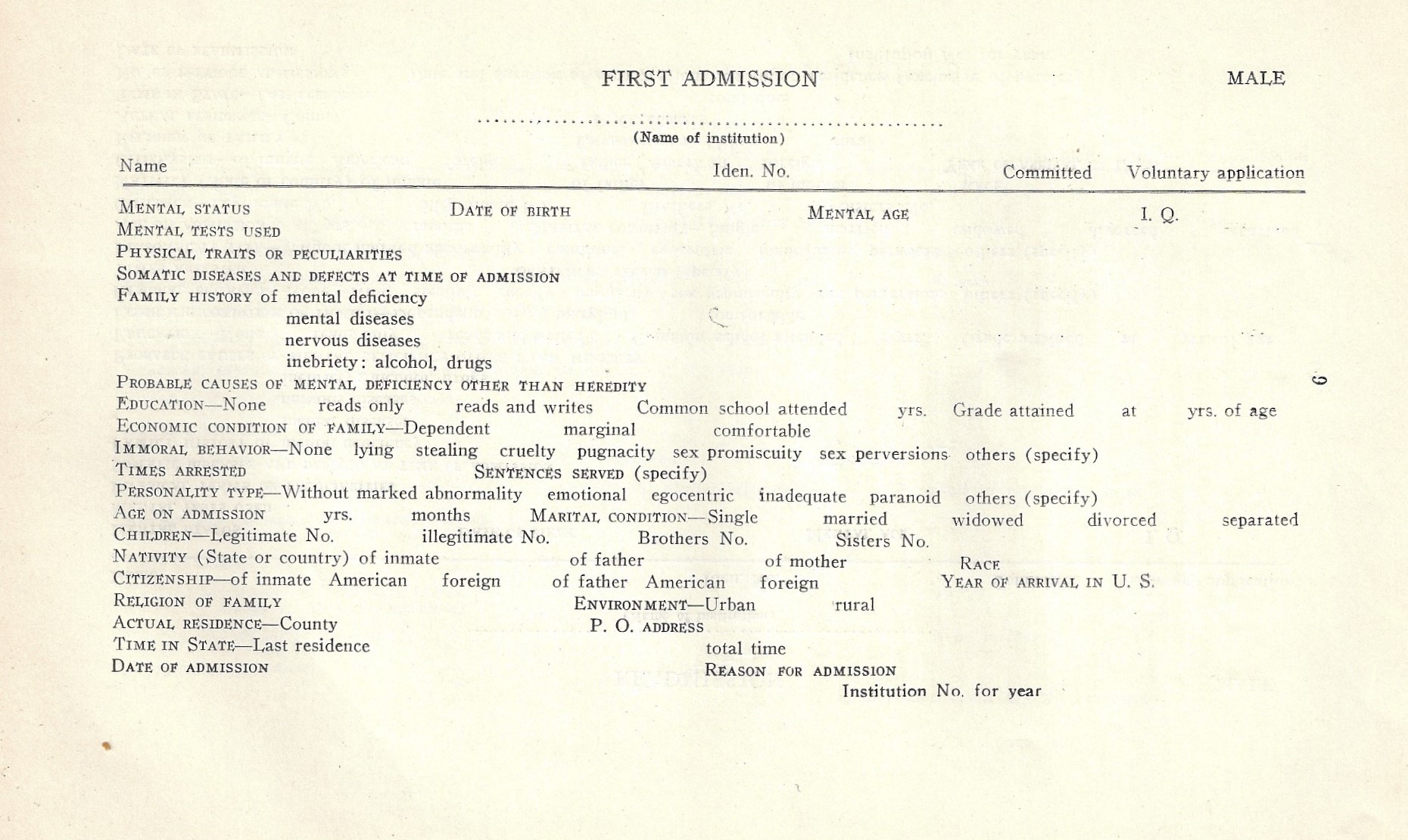
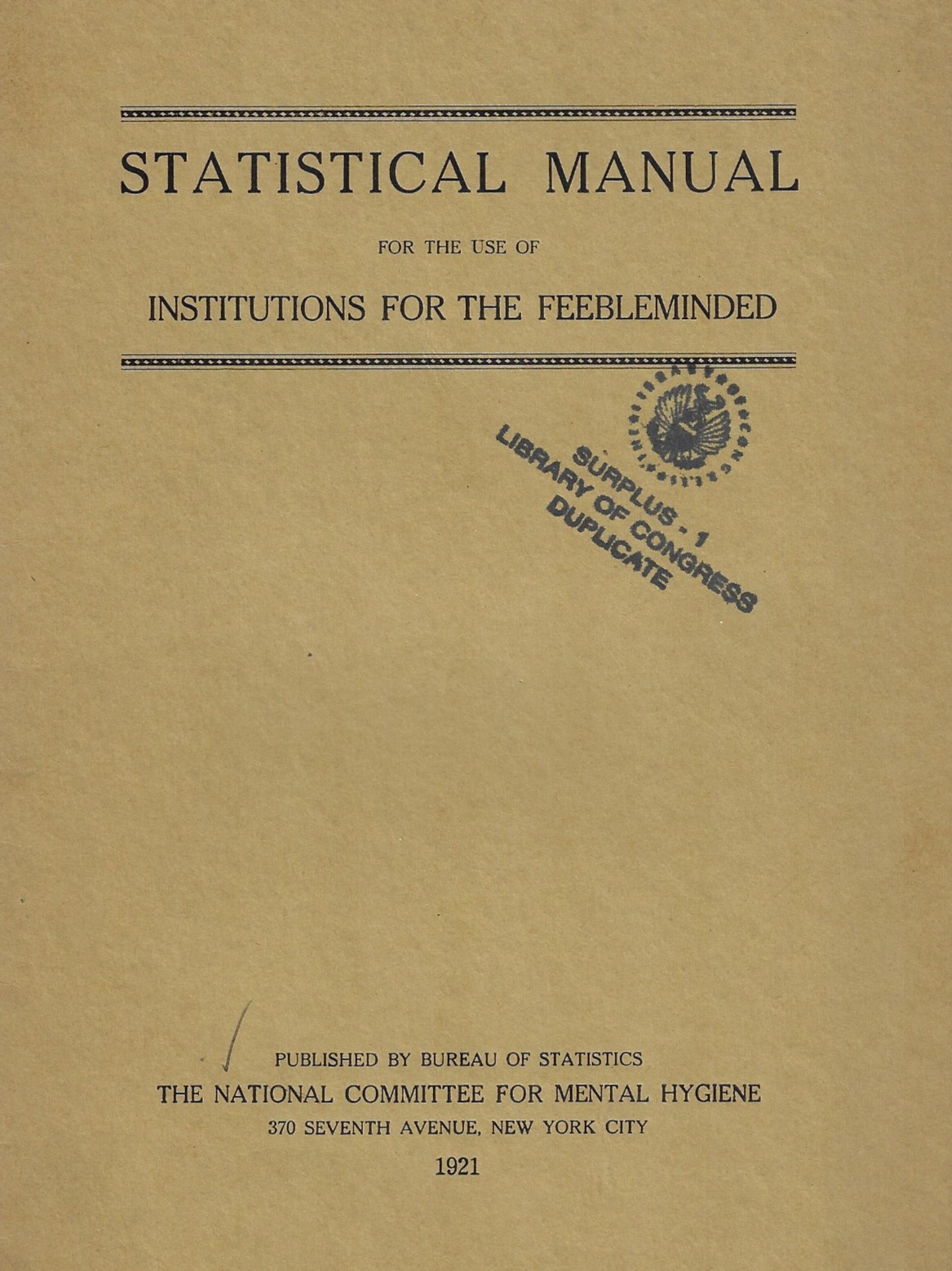
    The following form is one of six1 presented in a 1921 publication2 on institutions for the “feebleminded3“.  It was published by the National Committee for Mental Hygiene (370 Seventh Ave, NYC) and states that the forms represent a marked improvement in collecting and standardizing mental health data. Many of the terms are narrowly defined (or as narrowly as could be in a 40-page document), though when you consider the time in which it was accomplished this does seem to represent step forward in the creation of uniform statistics for people being treated for various sorts of mental diseases. 

    The “mental status” criteria to choose from includes “idiot, imbecile, or moron” while personality type classification included “emotional”, egocentric”, “inadequate”, “paranoid”, and “others to be specified”.  It is interesting to note that “egocentric” “includes those who are “egotistic, selfish, individualistic, superficial, and shallow in their moral feelings, inconsiderate of others, unappreciative, etc.” which could have included a lot of people, then as now. 

    Admission form mental hospital


    I should point out that the most discriminatory remarks for identifying the nationalities is in regards to Jewish people. For example, this guideline (based on the U.S. 1920 census guidelines) is offered to the admissions people:

    • “ENGLISH. Care must be given to exclude Hebrew who are born in England…”

    And this for “Hebrew”:

    • “HEBREW. No difficulty will be experienced in identifying Hebrews and they should be so classified without regard to the country from which they come.”

    Notes:

    1. The other forms are for readmission, parole, death, discharge, and transfer. 
    2.  The cover for this work:

    Admission form mental hospital

    3.  “Feebleminded” appears as a compound word in the OED, making an appearance as far back as 1534 in the Tyndale Bible, ” Comforte the feble mynded.”. The other uses of feeble-____ seem to all appear after that, including Feeble-bodied, -eyed, -framed, -hearted, and -winged. 


  • Martians on Venus, Unknown-but-Known Math, and Other Blow-Uppy Things (1930)

    JF Ptak Science Books    Post 2773

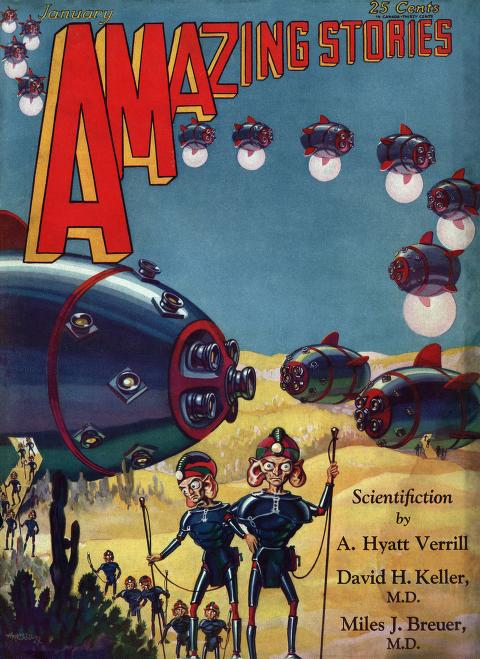
    Here’s a story1 from 1930 that seems to have it all in a series of interesting and reaching ideas: the destruction of all matter, an all-powerful equation on atomic energy, a mention of Einstein, the integraph, an invasion of Martians, disintegrating rays, and some other stuff, not the least of which was a newly-created computer’s identification of unknown fields of mathematics. Too bad the article is so badly written.

    Oh yes: there’s a nice, adroit twist here, right at the beginning—the story is written in the future of 1957 relating the story from a decade earlier, so its an historical piece from the future.

    Amazing Stories 1930 Martians EinsteinThe story goes like this: humanoid-ish Martians (from a green Mars) arrive on Earth in a threatening convoy of unknowingly-sophisticated spacecraft, who may or may not be up to no good. The protagonist/narrator is ready for an invasion if there was one, even though the visitors possess weapons of enormous power; he assumes an assertive, offensive position, and seemingly with the question in the wind of what in the world these Martians were doing here, engages them. He had the tools for the fight, having invented a supercomputing super-intelligent computer that had unearthed (so to speak) unknown fields of mathematics which led to the creation of “the ultimate, definitive equation of all matter” that told us how to completely destroy matter by “releasing energy from atoms”. It also led to the creation of anti-gravity, “total-matter” energy, distintegrating rays, and of course atomic power, among other punchy sci-fi things.

    There’s also a short mention of Einstein2 thrown in, as well as a tip of the hat to the Vannevar Bush’s great integraph (as the author of the piece was a 20-year-old sophomore at MIT when the machine was still pretty new).

    The defense of the Earth was complete, the future was maintained for at least another 27 years, and the Martians were carted off and dropped onto Venus.

    [Image Source: Internet Archive https://archive.org/details/amazingstoriesmagazine?&sort=-downloads&page=2]

    Notes:

    1.   John W. Campbell, “When the Atoms Failed”, in Amazing Stories, vol 4 #10, 1930. Published by Hugo Gernsback.     
    2. According to what seems to be an excellent work on the sci fi genre, Everett Franklin Bleiler and Richard Bleiler’s Science-fiction: The Gernsback Years : a Complete Coverage of the Genre …there are only two mentions of Einstein in relation to “atom Smashing” in their 1840+ article reviews.

  • Filling Stuff In, Part VII: MIT Computer Summer School and Junior G-Men

    JF Ptak Science Books   Quick Post  [Part of a series on the History of Blank, Empty and Missing Things.]

    Compsci MIT Summer Program MIT _1_

    There’s something captivating about found bits of ephemera that ask you to fill something out–it can be a questionnaire, or an application for being a floor salesperson or a radio technician, or a form for a watchman on a destroyer, or a sign-up for joining the Hitler Youth or the Women’s section of the K.K.K. They can be amusing, benign, and even potentially deadly. The one I found today is much more mundane and in that way offers more subtle challenges and provocations–it is a simple form for attending a MIT 1953 computer conference on the applications of the digital computer. 

    Of course 1953 is pretty early in the history of modern digital computers, sort of like post-incunabula to the opening years of the 1940s–till, there’s not much to fill out on the form.

     There’s actually more to be filled out (and with more exacting  questions) to join the “Junior G-Men of America” (“a Juvenile Police Organization”) club. This  1936 document was meant for kids, or advanced kids, and asked some pretty creepy and too-detail questions of its potential members, including whether or not the applicant would expect to be paid if injured in the line of duty.  (The Junior G-Men organization became very popular, with all manner of toys and badges and guns and so on, with radio series and movie spin-offs, though it seems not have made it much into the 1950s.)


  • Blank and Missing Things: Astronomers

    JF Ptak Science Books  Quick Post   

    • Part of a long series on Blank, Empty, and Missing Things

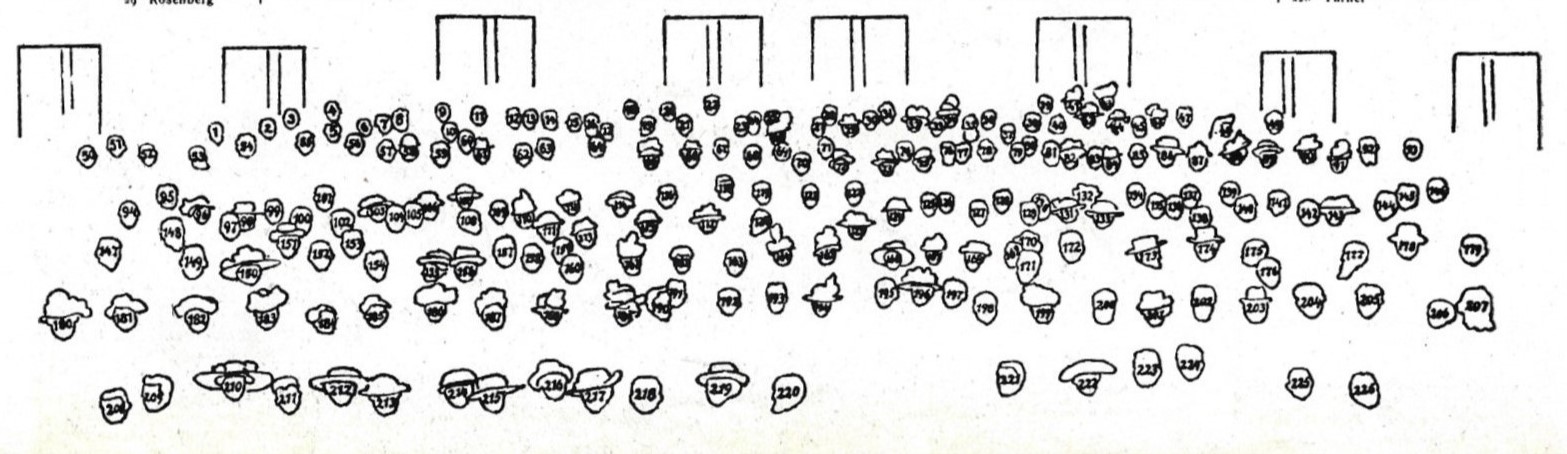
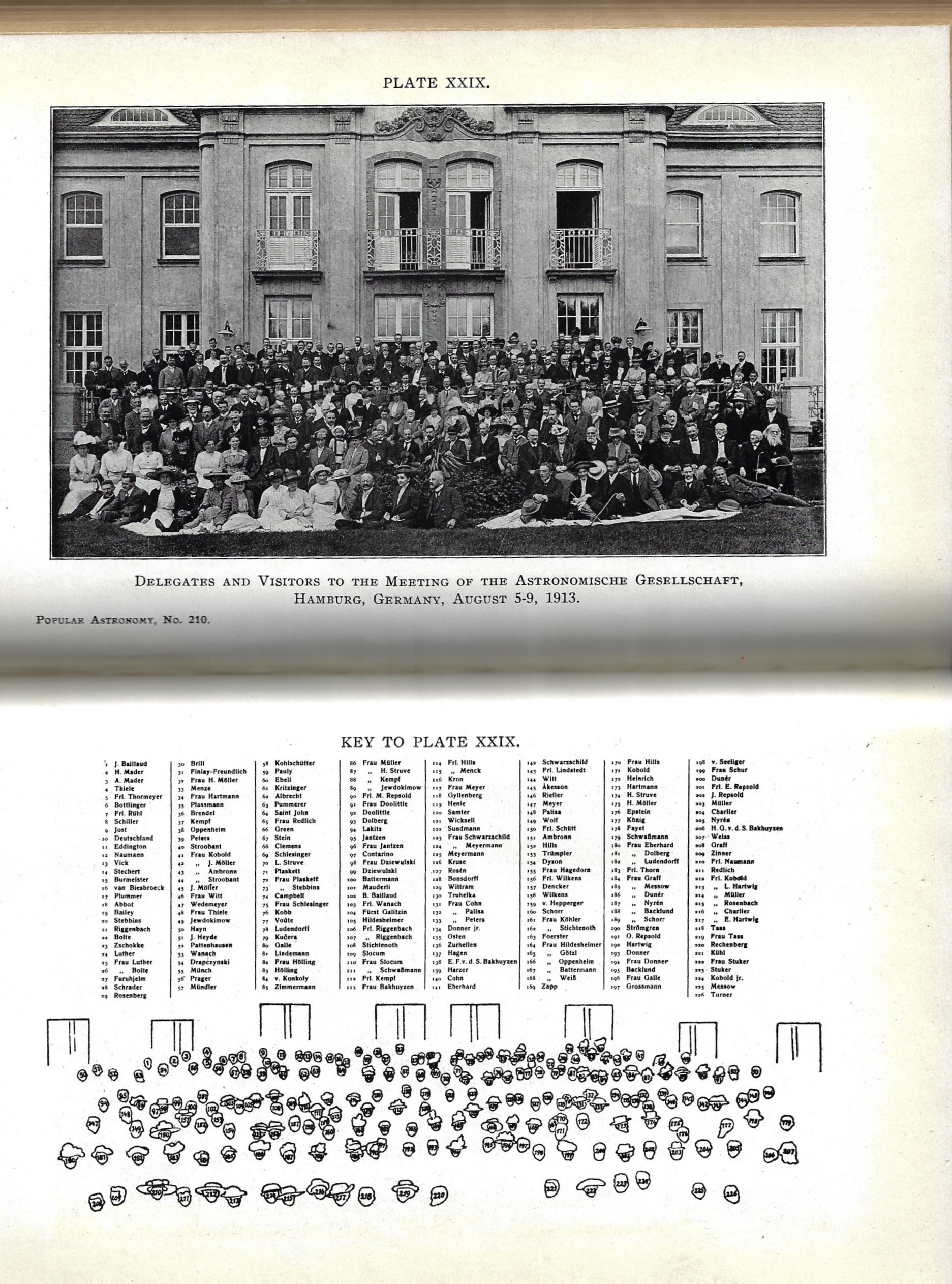
    I found this fantastic photograph of the attendees of the meeting of the Astronomische Gesellschaft at Hamburg, August 1913 in the December issue 1913 issue of Popular Astronomy. This is an august group, and of course they’re not “blank” or “missing”–its just a function of some out-of-context observations on the opaque overlay that serves to identify all of the folks in the massive group photo. (I’ve encountered these numerous times over the years and always have found the Found-Art aspect of them interesting and amusing.) The fact of the matter, though, is that there were some very high-powered people at this meeting.  Offhand I identify Mader, Eddington, Abbott, Mueller, Plassman, Struve, Plaskett, Campbell, Repsold(s), Jansen, Schwarzchild, Backlund, Seeliger, and numerous others. 

    Pop Astro 1913 group photo overlay detail _2_

    And the full presentation:

    Pop Astro 1913 group photo with overlay _1_


  • Quiet, the Quietists, and Not Finding a Missing “Principia Mathematica” (1687)

    JF Ptak Science Books  Post 2747
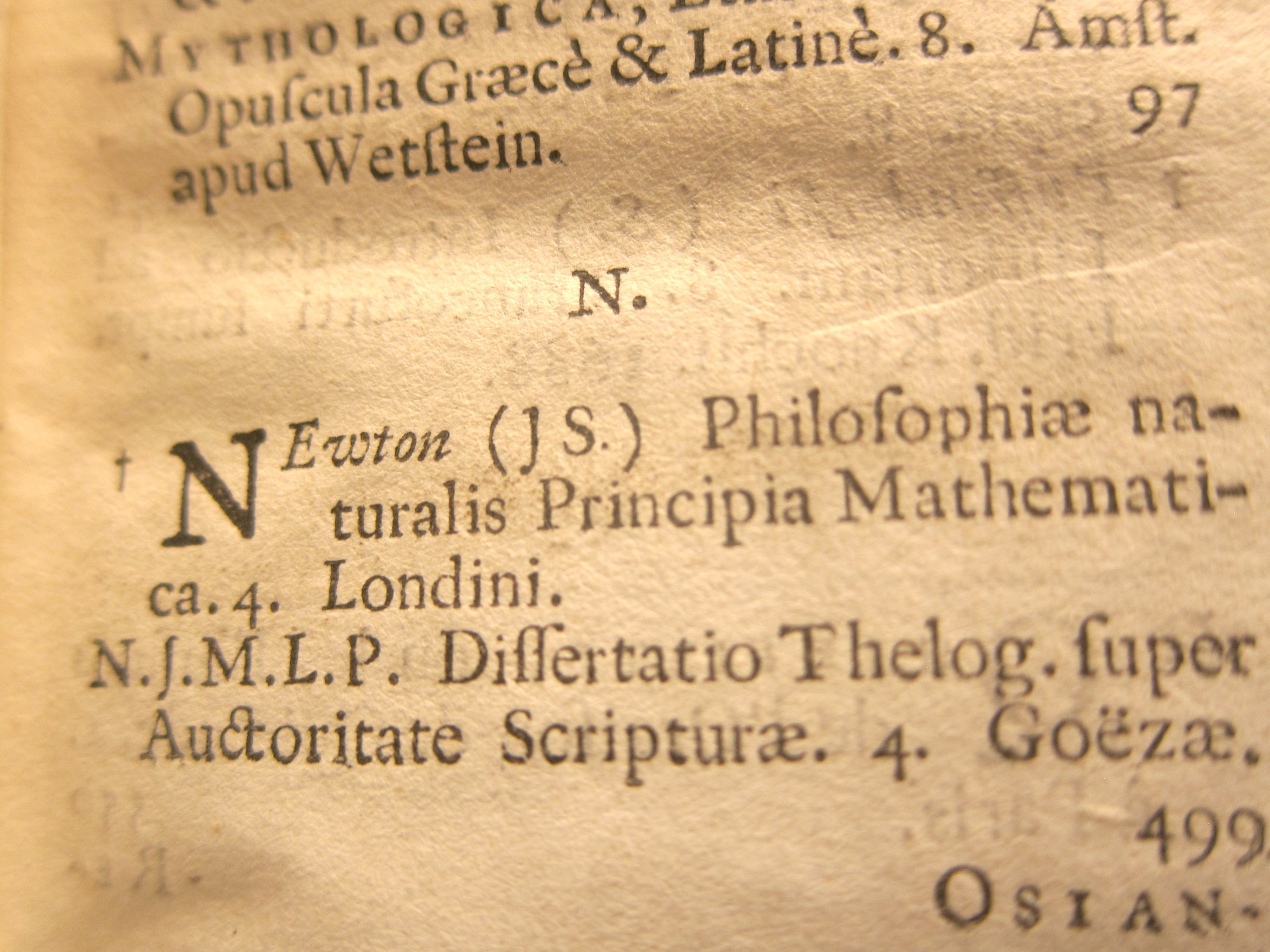
    Newton Principia

    Grazing through old scholarly journals is never a completed task—the more you have to bring to the adventure, the more you will take away from it. This is probably a general truth, though it is particularly so with journals that cut a broad path in the communication of ideas, and this is certainly the story with the late-17th century journal/magazine, Bibliotheque Universelle. It ran from 1672 to 1726, and the intellectually-thirsty editors ran a kind of review/abstract service for their readers—they found (mostly) newly published books in a wide variety of areas, and wrote summaries and statements on them, with background history, and the occasional editorial comment. Some of the articles were on significant works by John Locke and Antoine van Leeuwenhoek, but many and probably most were on obscure topics in nitty theological history and mostly-invisible philosophical issues, or at at least that is how the latter seems to me today. The Bibliotheque brought new ideas to the continent, and brought them in the Lingua Franca, which also happened to be French.

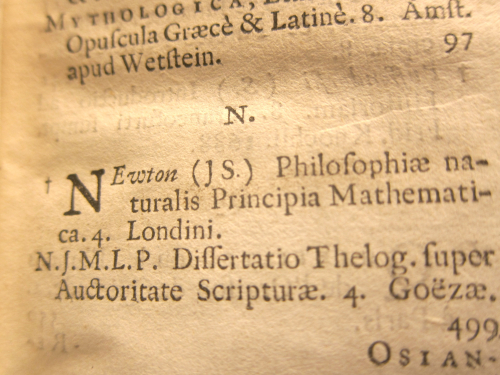
    This is the background as I thumbed my way through volume seven, one of several volumes for this year, finding few things that fired any nodule of memory or investigation in my head. 1687 is a big year in the history of science, seeing the publication in July of that year of what may one of them most important books ever published, Isaac Newton’s Pricnipa Mathematica.

    And then, suddenly, it was there. I knew from a previous experience that an interesting and uncommon review of the Principia by John Locke (of all people) in the next volume (8), which was the third statement on the book outside of Britain. But I hadn’t know about this appearance, which would have been published just a couple of months after the Principia appeared.

    There were just a few lines announcing the book in the table of contents, but no page reference. I consulted an online version of the journal and did a search on Newton, with no results. That of course made me go through the book—twice–page by page to make sure that the article wasn’t there. It wasn’t. I imagine that the mention of one of the world’s greatest books was, well, a mistake.

    The Principia was quiet.

    The funny thing was that there was another article on exactly that—quiet. And this was a dangerous quiet, at least for the originator of the theological movement, who would be cast into the flames of the Inquisition and die in prison for the temerity of quietude.

    In the next page of the table there was this fine find: “Le Quietiste, ou les Illusions de l’oration de Quietude”, (p 550-554) and “Receuil de diverse pieces concernant le quietisme et les quietistes”(pp 554-559).

    These two articles are statements/reviews of two books addressing the Quietism and Quiesiste movement as embodied by its founder, Miguel de Molino (1626-1696). Very long story short, Molino was seen as a threat to the pope and to the Jesuits, preaching a Christianity that seems quite personal and benevolent from where I sit, but at the time was seen as heretical, and for which Molino would be tried by the Holy Offices and condemned to life in prison, and as a matter of fact, Molino died in the (outwardly) beautiful Castel St. Angelo serving out his sentence.

    It seems to have a bit forward and backwards for Molino. Charges were brought against him chiefly through the work of pieces like the first presented above, by the Jesuit Paolo Segneri (1624-1697), whose first efforts were unsuccessful in dislodging Molino, with his own work finding its way to the Index. However, by 1685 he was again sent to the Inquisition, and just months before this book was published, he was already tried and imprisoned.

    William James (in his The Varieties of Religious Experience, 1902) found Molino to be a “spiritual genius” (p. 130) and his Quietism to be a ”transcendental idealism”, with “a healthy-minded opinion of repentance” (p. 130). He seems to have found nothing threatening in the man, and his imprisonment an “abomination”. The issues were longer and deeper than this, with 250+ points brought up before the Inquisition, including “moral deformity”), but on the whole Quietisme seems as destructive as George Fox’s Quakerism, which seems to have shared many spiritual practices with Quietism.

    So it seems that the established order in Rome found the message of the Quietists too loud, and the voice of the Principia was to be found in the next volume.
  • A History of Blank, Missing, and Empty Things, Part 48: Numbers Numbering Nothing

    JF Ptak Science Books  Quick Post

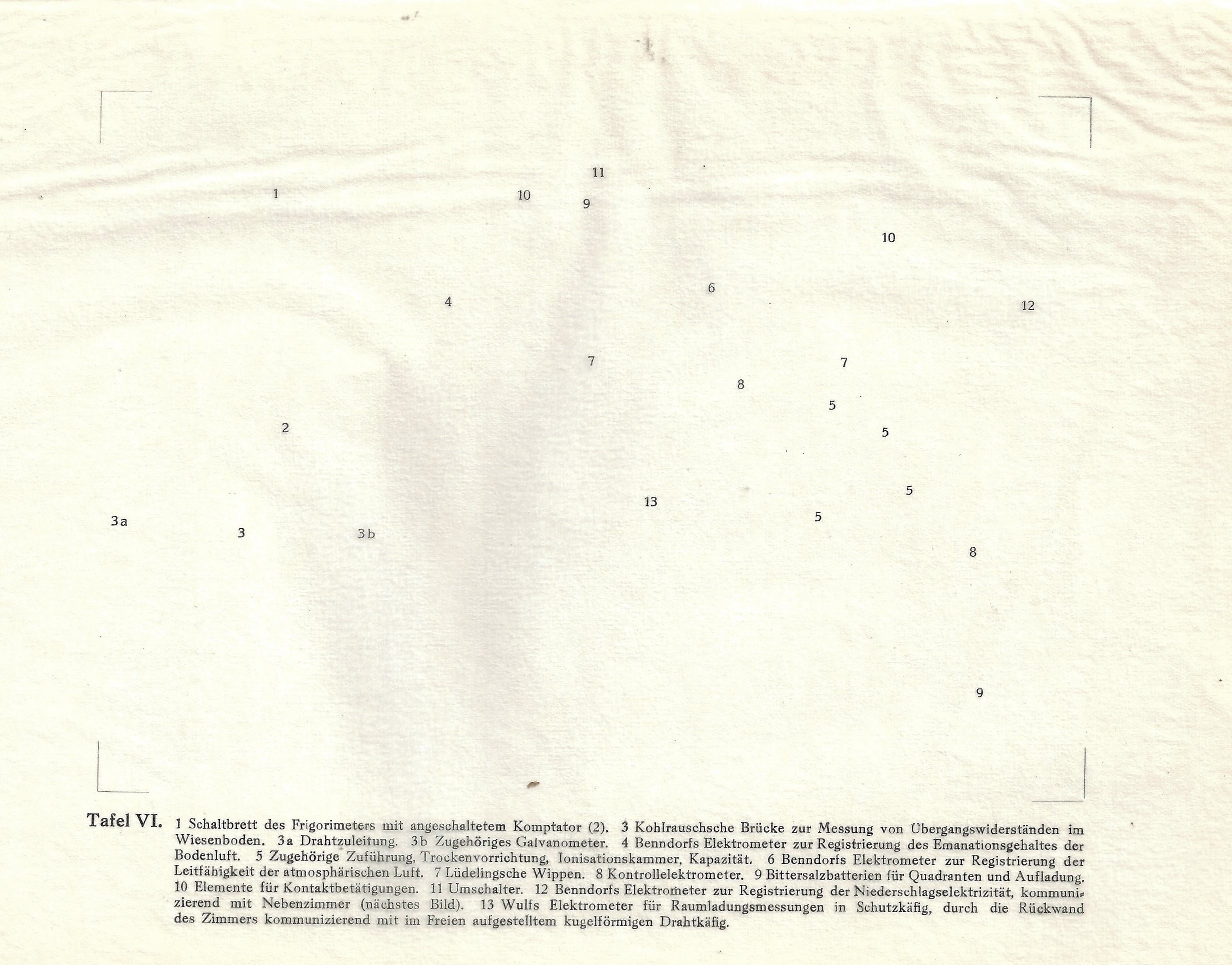
    It has been some months since the last post in the Blank/Missing Things category, and today I happily add the following, a nominalistically numerated note of nothing:


    DocFile (4)

    There is an “underneath” for this “overneath”, as this is simply a glassine key for a relatively complicated photo showing a group of meteorological instruments1. Taken out of context, though, the overlay without the reference image takes on quite a different and appealingly Dada-like complexion, an artful canvas of enumerated blankness…that, or a rendering of unregulated numbers in the wild, a capture of herding physical numbers. Do numbers exist? Are there points in space, and lines, and planes, floating out there just beyond our knowledge like Arthur C. Clarke-like monoliths or Abbott’s Flatland objects? Well, no. But it is enjoyable to find these printed forms that, if we look at them in a certain way and allow for a bit of fancy, take on a life of their own.  (What a funny thing it would be if numbers had names other than their number– for example,  “3” is the form only but its name is a taste or smell, or “Borges”, or the bubble 44,332 in the head of a pint of Guinness, or a particular wavelength…that could spice things up.)

     NOTES:

    1. Dorno, C. Ausstattung moderner Strahlungsobservatorien, Braunschweig, Vieweg u. Sohn, 1926. 10×7”, 13pp+ an interesting illustrated section, “Bilder aus dem Physikalisch_Meteorlogischen Obervatorium, Davos”, which has 9 photo illustrations of the instruments, 6 of which have numbered glassine overlays to help with the identifying legend for the plate. 


  • A History of Blank, Missing, and Empty Things, Part 42: the Dirt-Filled Tunnel (1895)

    JF Ptak Science Books   Quick Post

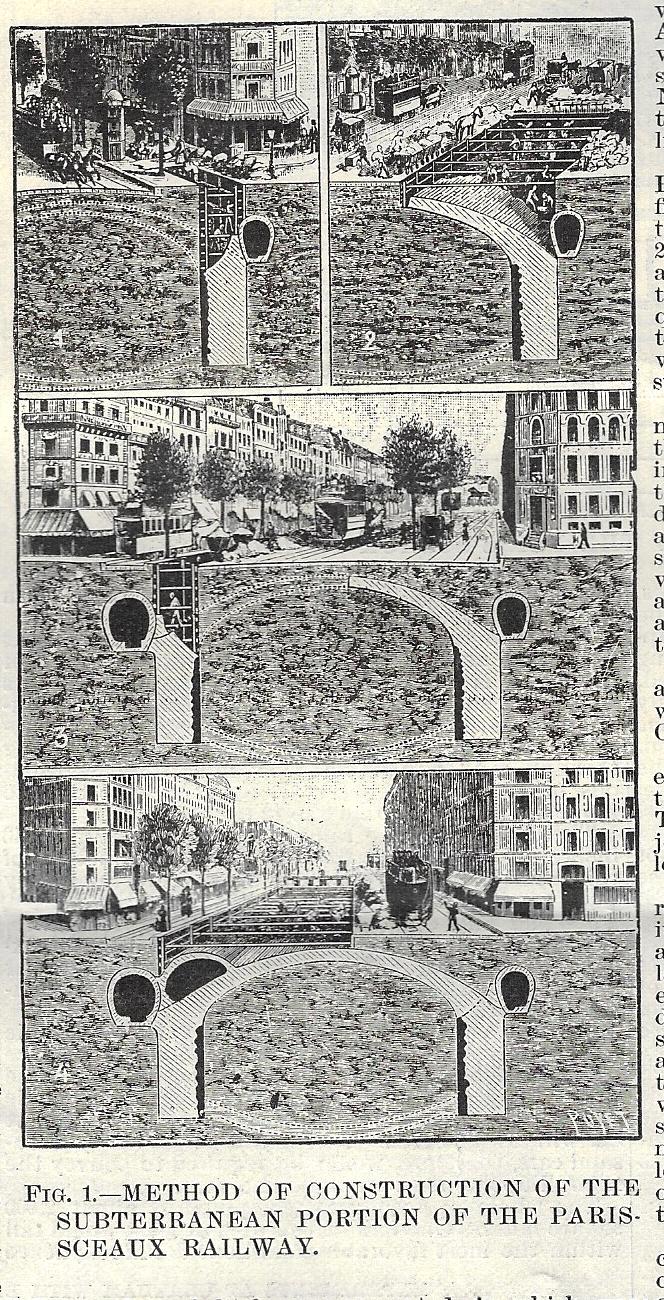
    Sometimes things are very obvious–so obvious that they hide in themselves, in plain sight. That was sort of what happened here, with these cutaways of subway tunnel construction in France in 1895. When I’m reading something to figure out what it is in order to place it in the Books for Sale section of this blog, trying to determine what it was beyond the thing that looked so obvious, it only takes one short sentence or fragment to wrap the whole thing up, and to validate the achingly obvious thing to be exactly what it seemed to be. Such is the case here, with the construction of the extension of the Paris-Sceaux railway (as reported in the Scientific American Supplement for May 11, 1895). Now it seems that in the four-section cutaway showing the progress of work that the workers first dig a deep trench and then construct a masonry “archbutment”, taking most of the sidewalk but not the street during the construction process. Once this is finished, part of the street is closed and the construction of the tunnel ceiling is built for the arch. That done, the work gets flipped to the other side of the street and repeated, though from this end the arch of the tunnel is joined, and the whole of it covered by earth and roadway, again.

    Sci Am SUpp 1895 tunnel detail

    [This small 2×4″ image is a detail from the front page of Scientific American Supplement, May 11, 1895.]

    Then the magic sentence appears:

    • “(F)inally a tunnel filled with earth was obtained”.

    How lovely! And of course, how obvious it is, in spite of looking at the procedure and thinking it somehow ‘backwards”.  Then:

    • “It was only necessary to clear this and establish a floor, and then the thing was finished.”

    There was still track and stations and electricity and ventilation and all of the rest to be installed, but once there was a place to put those things that was not simply dirt, it would be much easier.

    As they say here in the South, “It is what it is”. 


  • The Beauty of Contour Lines and on Missing Importance (1893)

    JF Ptak Science Books   Quick Post

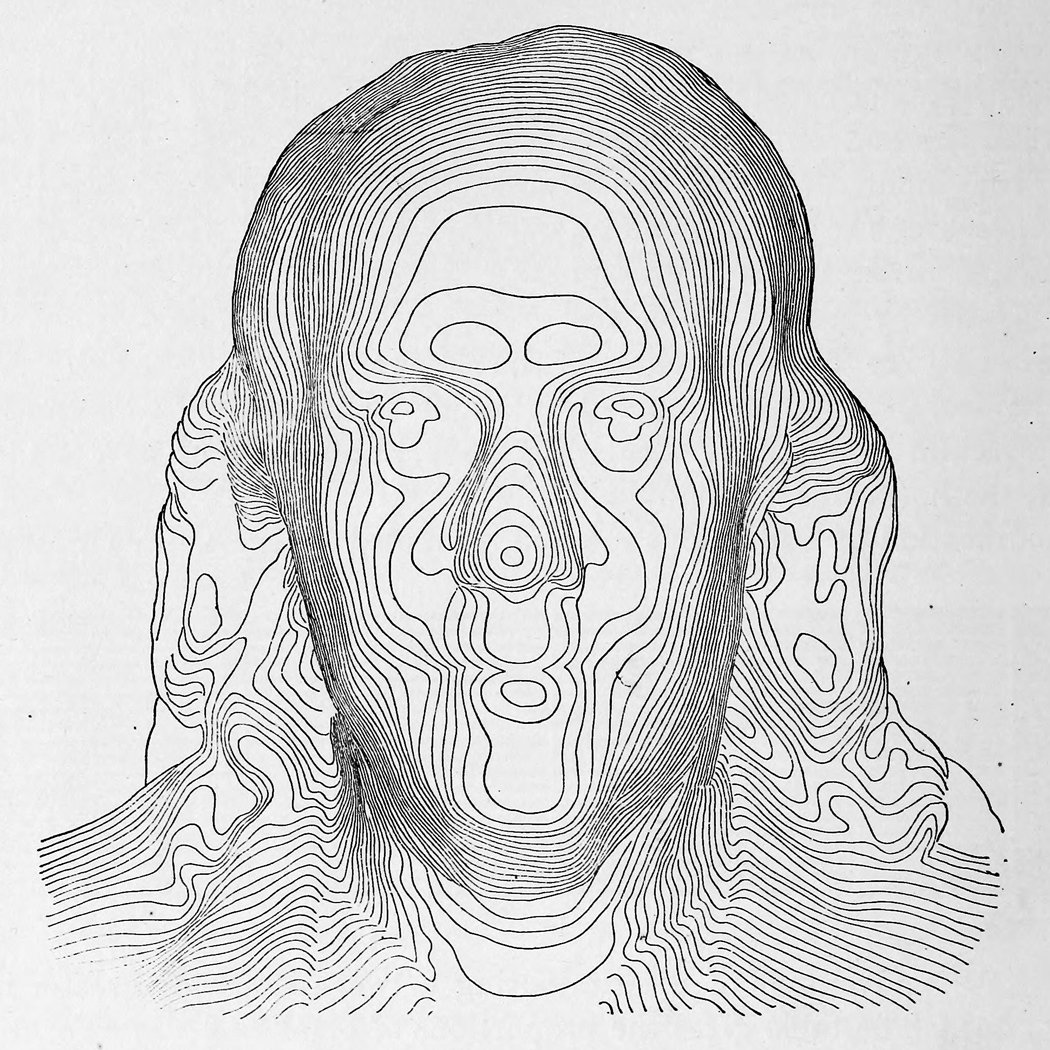
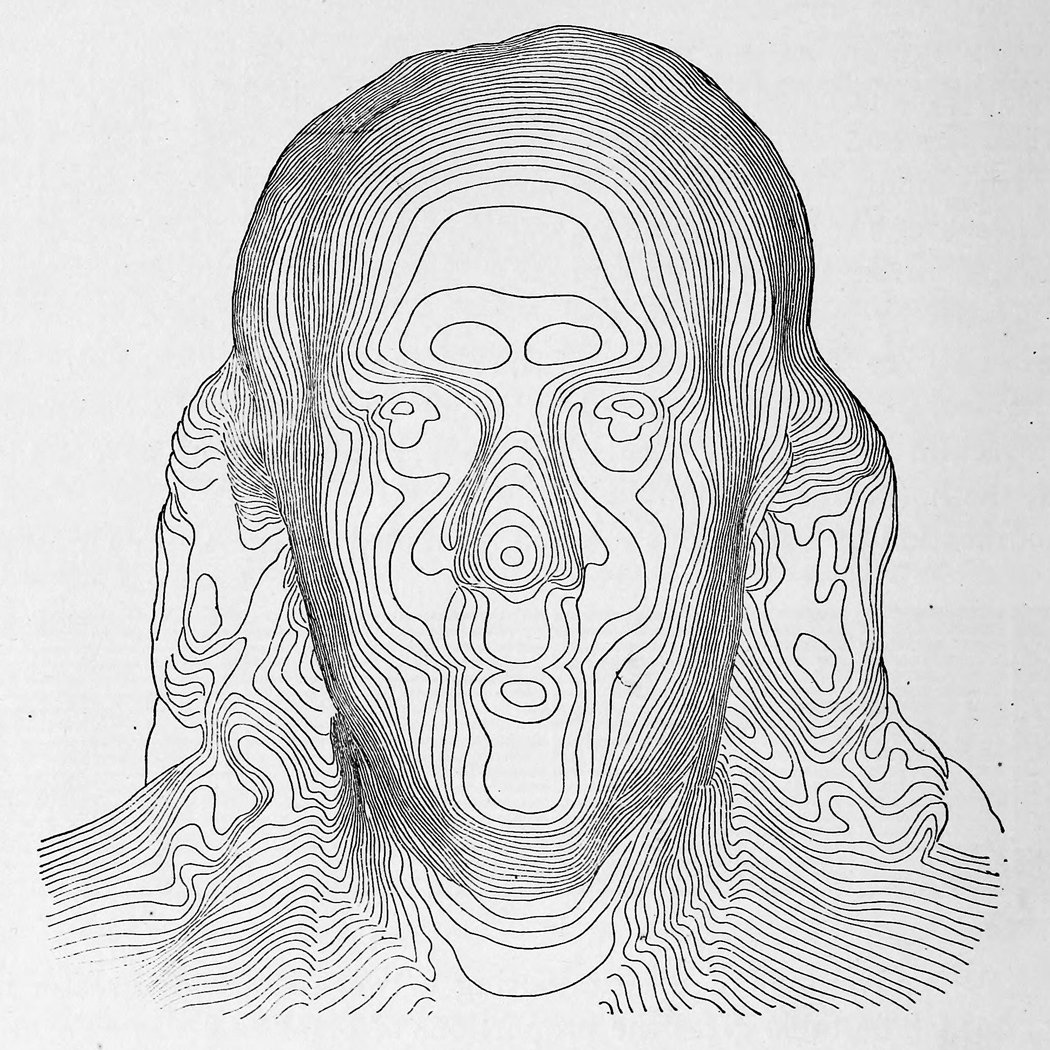
    Contour franklinI found magnificent and early contour image of Ben Franklin in a tweet from Tim Wallace (@wallaectim) who found it in Appleton’s Cyclopedia of Technical Drawing (1893). (The full text of Appleton’s is here: https://archive.org/stream/appletonscyclopd01wort#page/100/mode/2up/search/franklin and a larger image of Franklin is located below.)

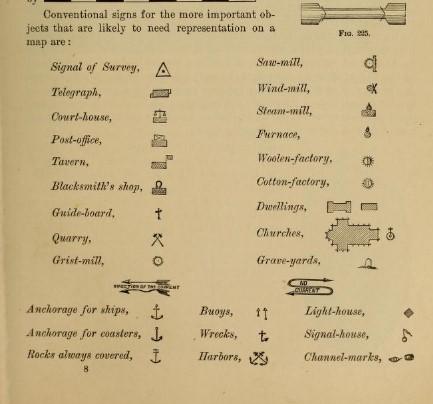
    While checking out the fascinating Franklin in the text, I found an interesting graphic that locates a certain History of Importance in one tidy display. The graphic is in the section on topological drawing, and contains “conventional signs for the more important objects that are likely to be represented on a map”, at least for 1893:


    Contour important objects

    All of this makes sense, of course, except perhaps for the surprise of locating taverns, which I think I’ve not noticed before in 19th map legends–it does make sense though, especially for more regional maps, as the tavern would be a central force for a small town, as well as operating as a possible hotel.  Many of the rest of the important things for a late 19th century map have slipped into obstructed memory, if not further. 

    Contour franklin


  • A Not-Very-Ornamental Notice for the First Lecture Given by the First Female Professor at the Sorbonne–Mme. Curie, 1906

    JF Ptak Science Books     Post 2705 (slightly expanded)

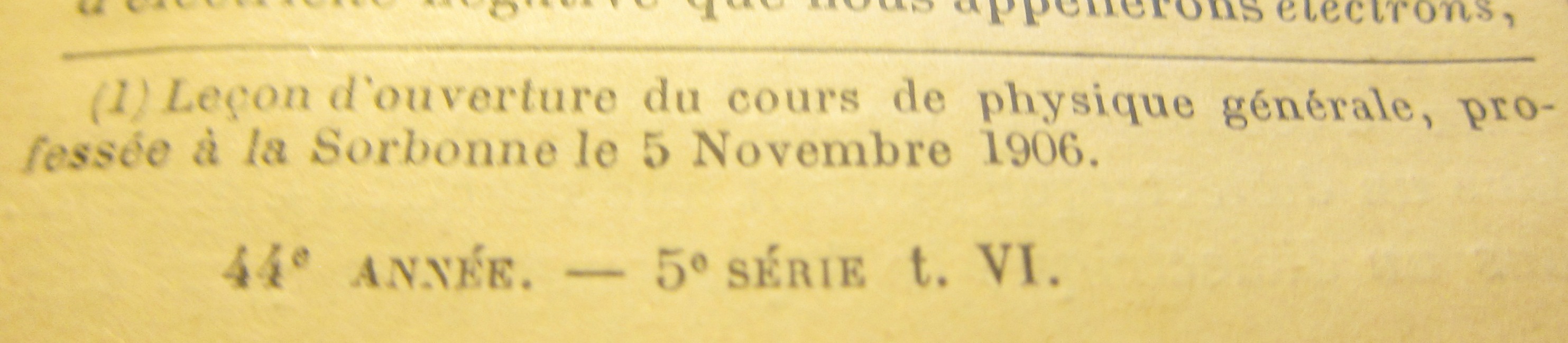
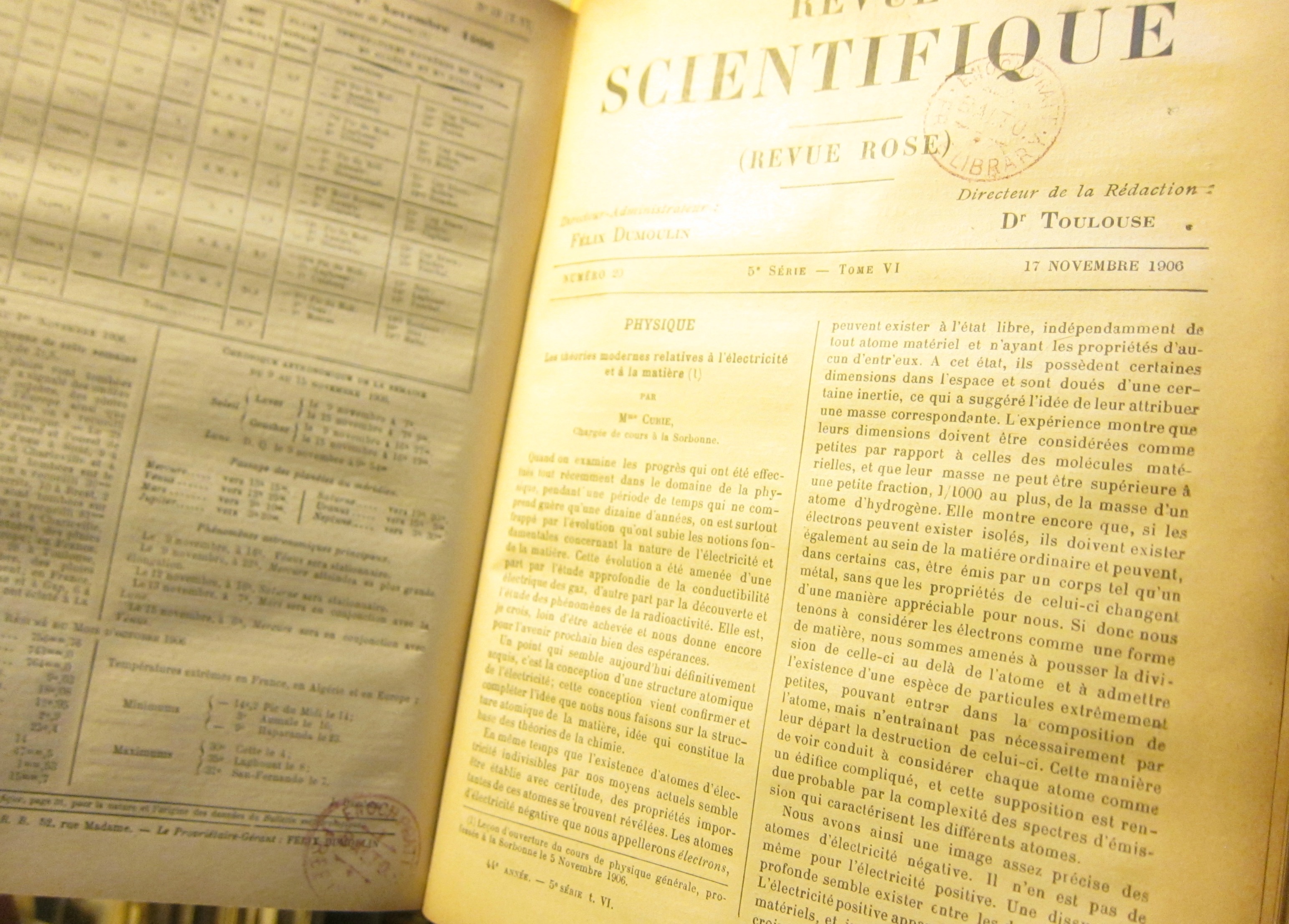
    The poetry and moment of the auspicious occasion of Marie Curie’s first lecture1 at the Sorbonne passed without notice in the page of the Revue Scientifique, which published the lecture a week later. Curie was the lead paper in the 15 November issue of the journal, though there was nothing to mark its historic nature–only a footnote at the bottom of the page referring to the Sorbonne lecture a week earlier. 

    Curie 1906

    This was the first lecture Curie delivered as the first woman to have a teaching position (the first lecturer and first professor) at the Sorbonne  She took the chair in May 1906, just a month after her husband Pierre was accidentally and tragically killed in a freak accident, being crushed by a street carriage. All of this came only a year after the Curies received their Nobel Prize (delayed due to their illnesses from the award year of 1903 to 1905, Curie being the first woman to receive the award).  The teaching chair Curie occupied was that of her late husband, who had only recently (and finally) been appointed to it. With such a history, Curie in her new position began the lecture with the final words that her husband used teaching in that same room.

    I’ve read that the impact may have been loosened somewhat given Curie’s methodical, removed, and monotonic delivery, which left many in the large crowd (attendance thrown open for the occasion) feeling underwhelmed. The Dictionary of Scientific Biography carries a contemporary description of the event so: “Mme. Curie compelled recognition from her first lecture (5 November 1906), despite her timidity, the emotion she was concealing, her weak voice, and her monotone delivery. She made no introductory remarks, took no notice of the sightseers mingling with the students, and began her lecture with the last sentence that Pierre had spoken in that very place. In every demonstration experiment she watched the result with as much interest as if she did not already know it…”2

    Curie 1906_2_

    And Dirac and many others wound up being not-engaged lecturers. So be it. But starting her lecture with the last words her dead husband spoke from the same spot is very powerful stuff, but evidently not powerful enough to move many people. 

    Notes:

    1. Curie, Marie. “Les Theories Modernes Relatives a l’electricite et a la matiere”, in Revue Scientifique (Revue Rose), 5th series, volume VI, #29, 17 November 1906, pp 606-612, and in the next issue, #21, 24 November 1906, pp 650-654. Offered in the full volume for the second half of 1906. Bound in a very stout red buckram with reinforced hinges. The volume contains 26 weekly issues, each title page having the former owner’s round rubber stamp

    2.  Dictionary of Scientific Biography, vol 3, p 501. 

    Also see Nobel Laureates in Chemistry, 1901-1992, by James K. Laylin, pg 92./

    Here’s a contemporary and congratulatory review of the event: 

    “MME. PIERRE CURIE THE FIRST WOMAN PROFESSOR IN THE SORBONNE. The academic year of the University of France may be said to have opened to day November 5 with the lecture by Madame Curie on electricity. The occasion was entirely unique in the history of the Sorbonne and was one of great interest. Never before has a woman had such an appointment at the Sorbonne and no other woman or man living has such a claim as Madame Curie to be heard on her special subject. The rector of the university and other prominent officials were present. The minister of public instruction M Briand who appointed Madame Curie to this professorship made vacant a few months ago by the accidental death of her husband had promised to be present but his presence was required at the opening of the parliament at the same hour. Madame Curie’s course of lectures is one of the so called open courses to which admission may be gained without fees or formal matriculation long before the lecture began the outer gates were closed against those seeking admission. Several hundred of those who filled the corridors were unable to get into the hall of physics in which the lecture was to be given. I almost despaired of getting in and was one of the last who succeeded I was well rewarded for my patience in waiting. Standing behind the last and highest tier of seats in the hall I looked down on three or four hundred people of both sexes and of all ages above twenty. Back of the long table at the opposite end of the room stood the modest self possessed woman who has made the civilized world her debtor by her discoveries…”–Journal of Education, December 6, 1906, p 611. 


  • A Visionary and Somewhat Contradictory Peace Plan for Humanity (1927)

    JF Ptak Science Books   Quick Post

    “All [people] dream, but not equally.”–T.E. Lawrence

    Although this tall (13″)0 pamphlet is rather short, it is a potential toothache to read. To that end I am not reporting on the contents, just the cover, which tells its own story.  This was printed in 1927, and was once owned by H.L. Mencken.  

    Human Trust Fund