A Daily History of Holes, Dots, Lines, Science, History, Math, Physics, Art, the Unintentional Absurd, Architecture, Maps, Data Visualization, Blank and Missing Things, and so on. |1.6 million words, 7500 images, 4.9 million hits| Press & appearances in The Times, Le Figaro, Mensa, The Economist, The Guardian, Discovery News, Slate, Le Monde, Sci American Blogs, Le Pont, and many other places… 5000+ total posts since 2008.

Category: Blank and Empty Things; A History of

  • Quiet Images of Great Loss and Heroism–British Navy Losses, 1945

    JF Ptak Science Books  Post 2443

    (This post appeared in the Blog Bookstore in 2010 but evidently not in the blog itself.  Here it is, somewhat modified.)
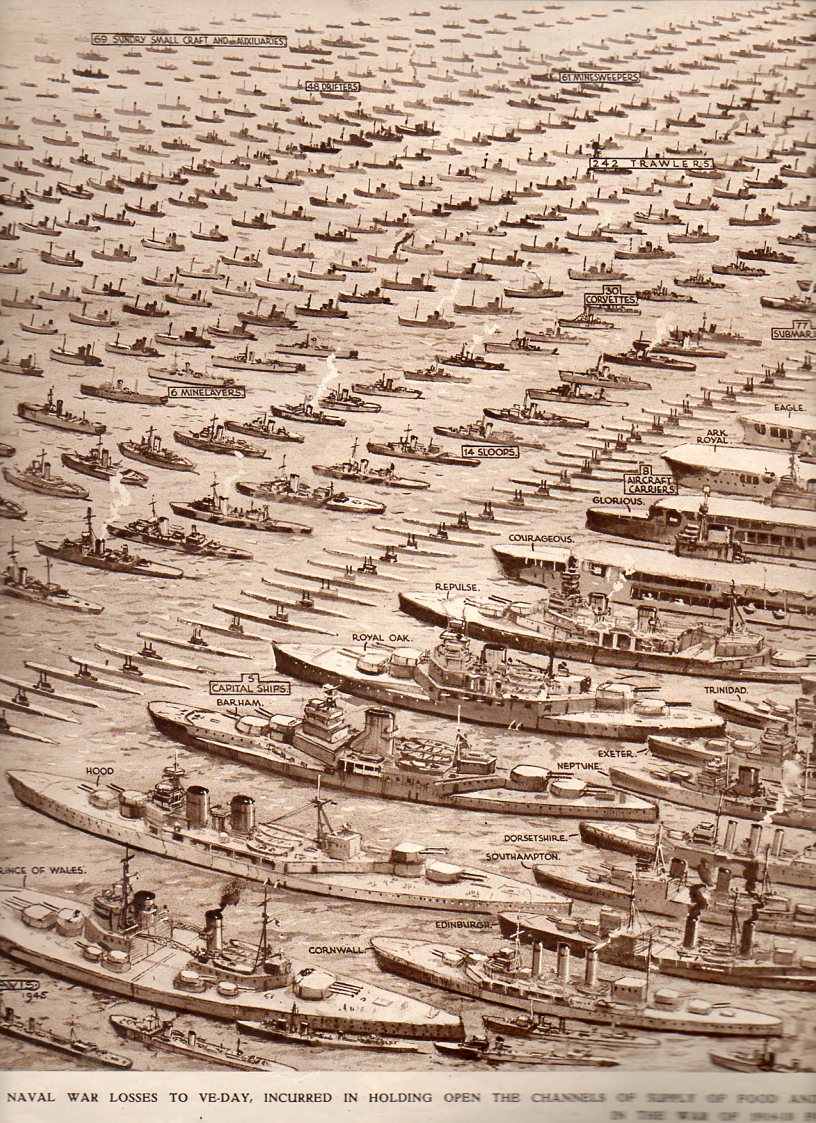
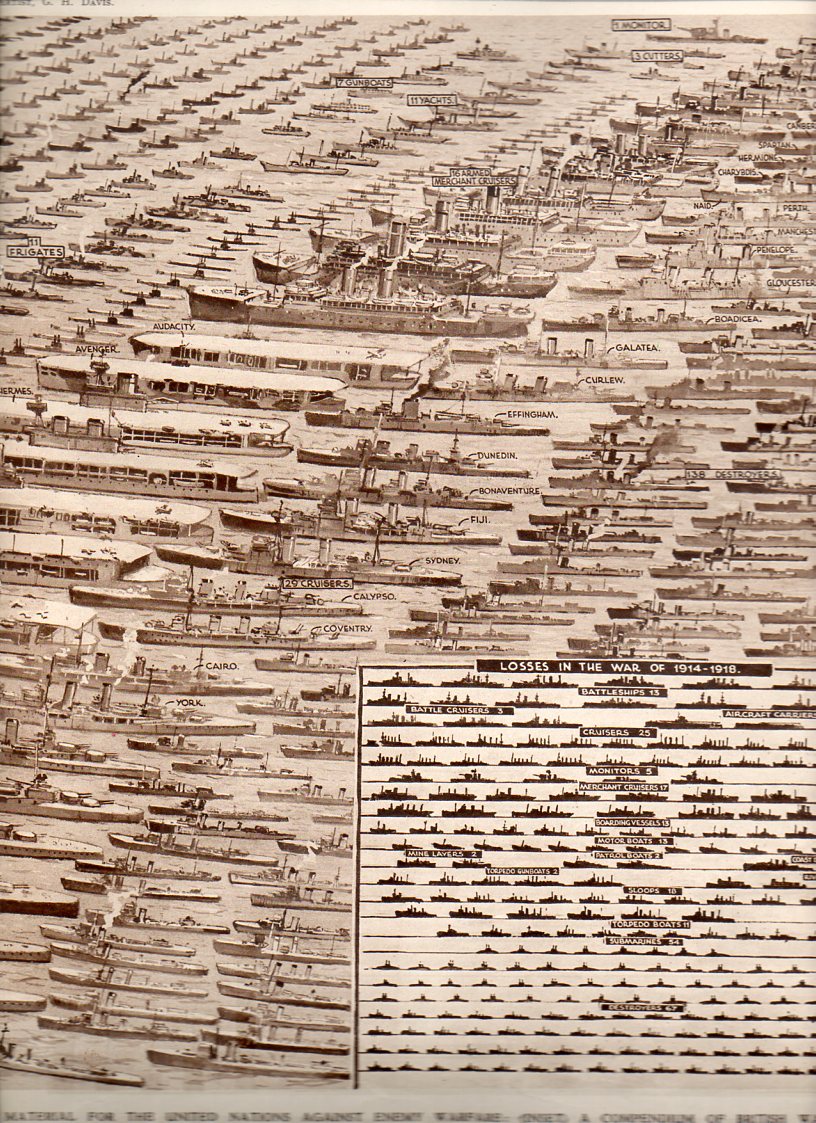
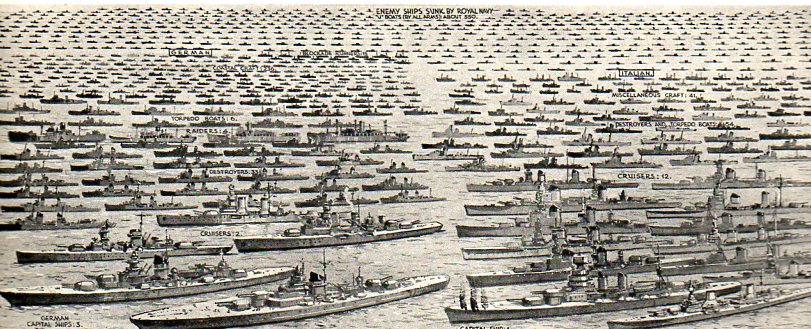
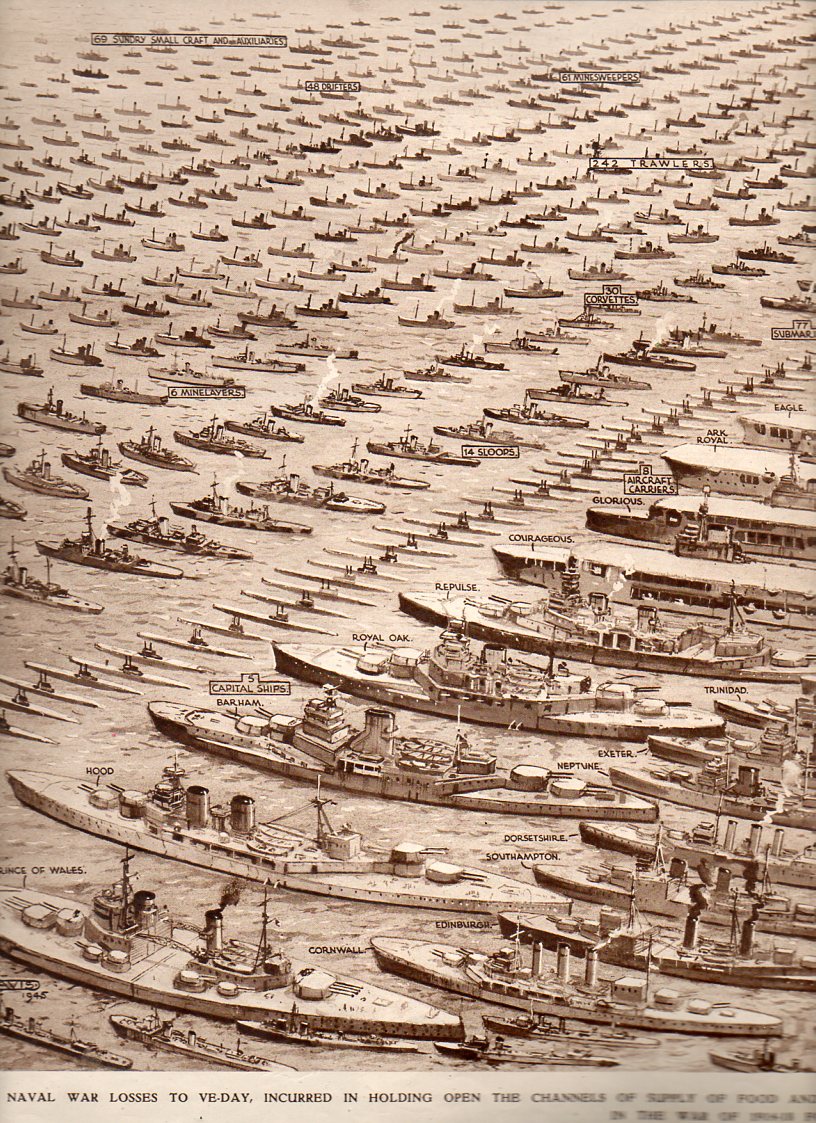
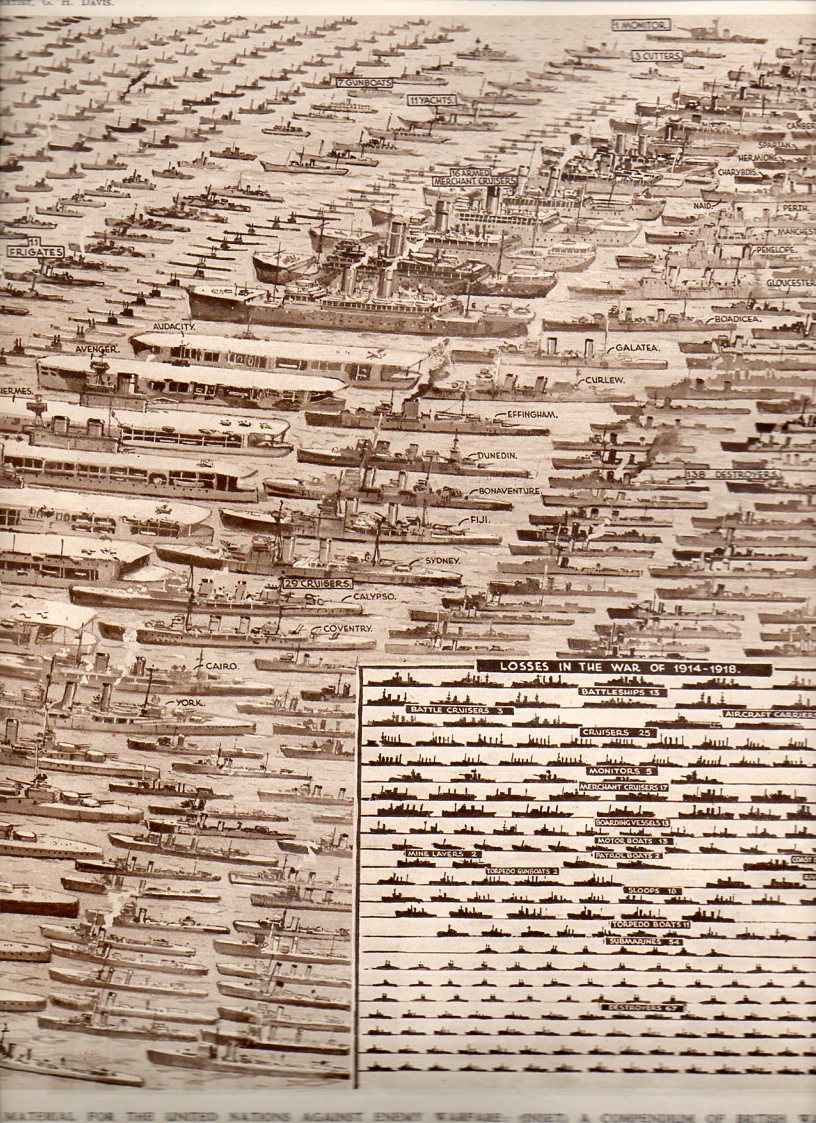
    This enormous, quiet image appeared in The Illustrated London News on 23 June 1945, just weeks after the termination of WWII in Europe.
    Navy Losses--left796Navy Losses--right795

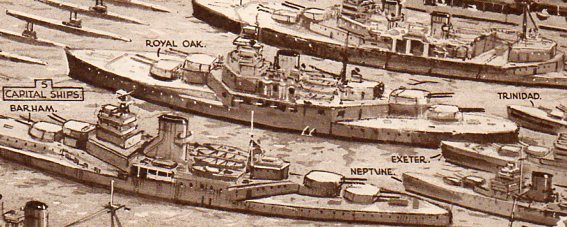
    It graphically presents every ship lost by Great Britain in the defense of “holding the seas against the Axis Powers…holding open the channels of supply and food and war material” from the outbreak of the war to VE day. The inset narrative states that there were on average nearly 3000 British and Allied ships at sea at any given moment, with the Royal Navy patrolling an aggregate  of 80,000 miles of trading routes, day in and day out


    Navy Losses--left796

    It is a symbol of loss, of heroism, of lives not lived, of lives saved, of valor, of greatness, of will, of the cold black sea, of burning oil, of red waves, and above all, of sacrifice. Of splendid behavior. 

    It is a terrible picture of what victory demanded of bravery.        

    It is as much an image of a military graveyard as anything else, a Remembrancer, especially for  those who were never recovered.  It is a grid, a finding aid, a visualizer, for all of those sailors lost in a sea that is indifferent to particular memory.

    Navy Losses--right795
    I can’t imagine how this image was received by the Illustrated London News reader on that day.  Did they suck their breath in at the scope of it, of the gigantic reminder of what all of those ships represented?  Was it the sort of image-reading that was forced, a white-knuckle, vacant-chested feeling of sweeping loss?  Of loss and gratitude?  Of gratitude and finding purpose for all of those sacrifices to the island nation?  I suspect that all of those words were in the minds of those readers in 1945–and also for emotions that have no words.  
    Navy Losses--left detail797

    Notes:
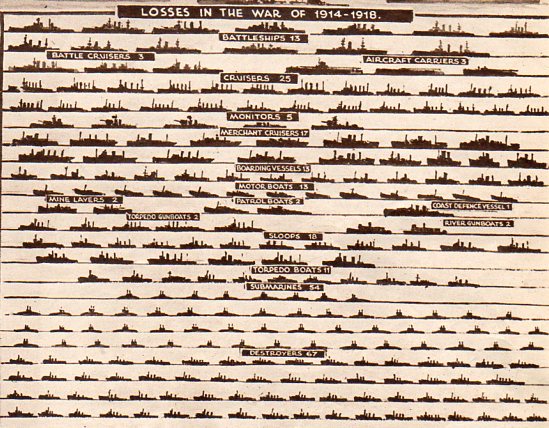
    There is also a small inset that shows in comparison the Royal Navy losses for WWI, 1914-1918. 

    Navy Losses--wwi798

    There is also this, an incredible single-page display of British merchant-marine war losses of 2570 ships. 
               Navy Losses--merchant marine799

    Both images are the work of the incredible G.H. Davis, who provided cut-aways, cross-sections, maps, diagrams an all manner of information to the ILN readers throughout the war.  HE was an inexhaustible man of excellent design sense.


  • Albert Einstein: Part Time Civil Servant.

    JF Ptak Science Books   Quick Post   The History of Blank and Empty Things series

    Archives--Einstein payroll detail

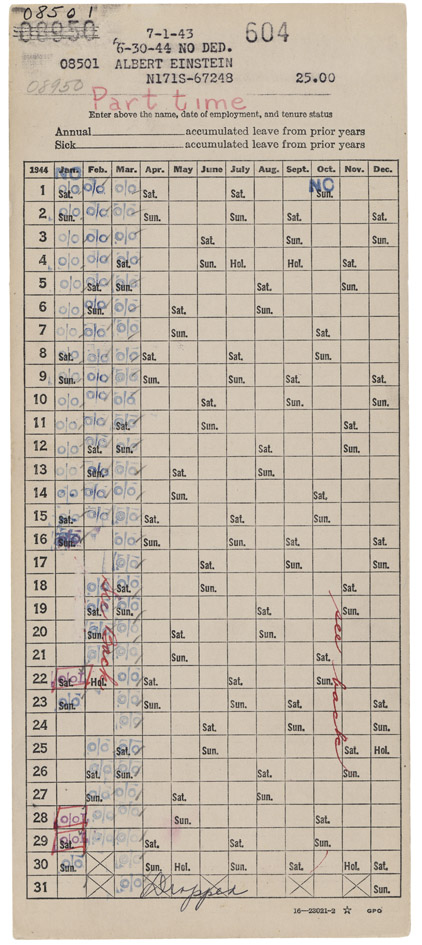
    “Albert Einstein, Part Time Civil Servant.”

    I can almost see this title as a eggshell-white comic strip in a Sunday Featureette with everything else in color– it just sounds so, well, wrong, and colorless.  Fact is though that at this time Einstein was working on weapons projects for the U.S. Navy, and evidently he needed to account for his work time just like everyone else.  

    The “part time” was what interested in this. What was he doing not being part time? 

    It was actually a little more than that, the “part time” part.  Because until he was hired by the Navy on 2 May 1943, Einstein worked “no time” on the war effort.  Not full time, not part time: no time.  The FBI thought him not trustworthy, and he was rejected by Army G2 in July 1940 as not clearable..  Einstein was out–in spite of the fact that he wanted desperately to work on something to help defeat the Nazis, and he would have made a pretty good go-to guy.  In May ’43 though he was cleared by the Office of Naval Intelligence and he went to work–at $25/day– on sub warfare and HE projects, much to his high happiness.

    Einstein did so without the Navy haircut, as he liked to tell.

    I have this post in my Blank, Empty and Missing Things series for the missing/absence/emptiness of trust and judgment extended to Einstein in wartime.  

    Archives--Einstein payroll

    In addition to this there are three other images, all hiosted  by the U.S. National Archives, here: http://research.archives.gov/description/597840


  • Art as a Political Weapon: the German Unmensch, 1930

    JF Ptak Science Books   Post 2420

    Nazii, anti805

    [Private collection via the Library of Congress]

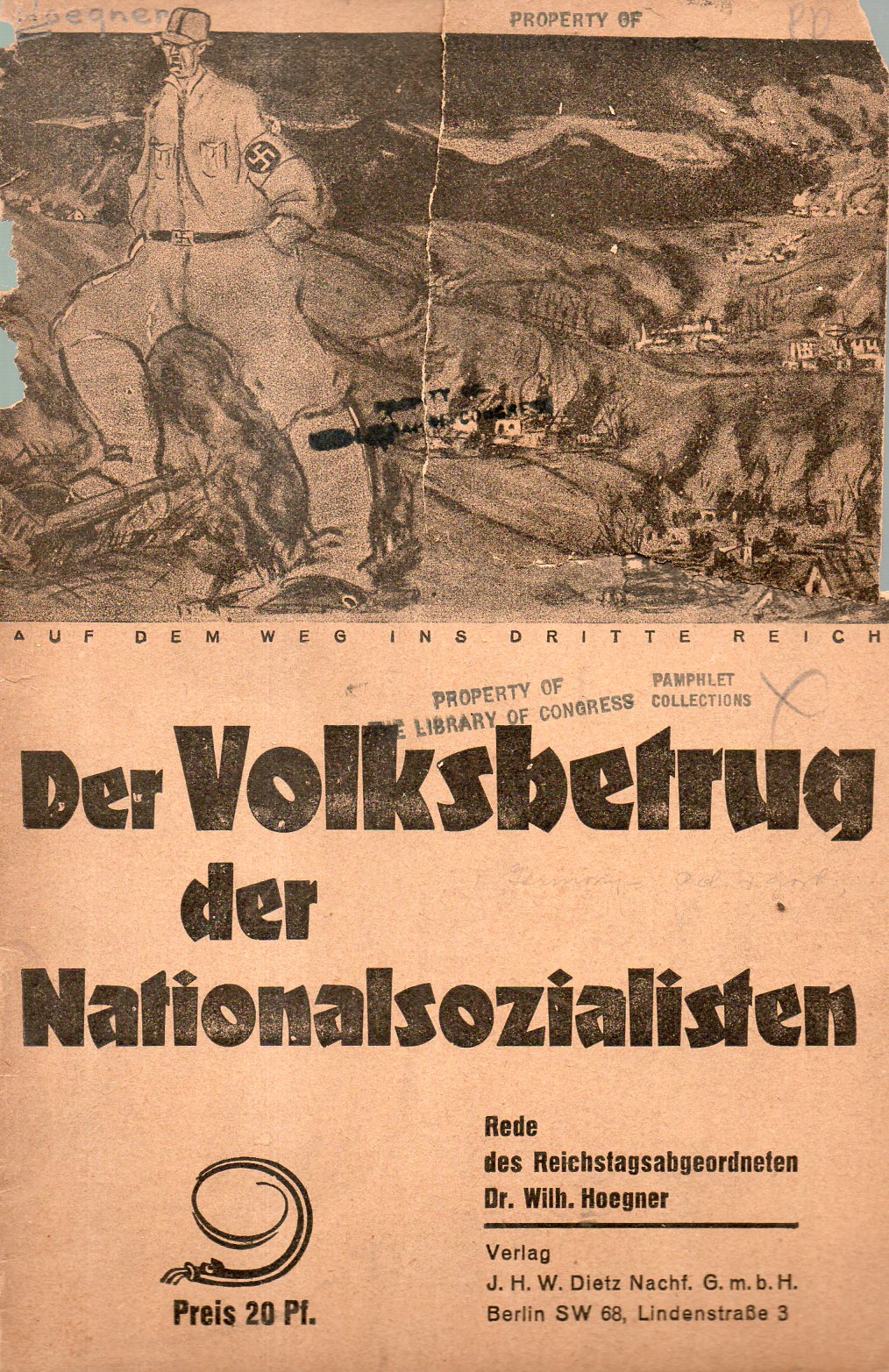
    Wilhelm Hoegner was SPD and anti-Nazi from the earliest days of Hitler’s political party.  In a developing chorus of other anti-Nazi Germans, he delivered this screed against the NSDAP while he was a member of the Reichstag in 1930.  Der Volksbetrug der Nationalsozialisten also features one of the most effective and tried pieces of social demonstration–artwork, and in this case a biting satire of the “progress” of the Nazi Party. The image features a hideous, rank-and-final brownshirt monster/Unmensch/Unhold, trampling his way across the land, with burning villages in his wake–the path of the Third Reich (“Auf dem Wege ins Dritte Reich”). Hoegner’s sympathies are instantly seen here, and there is no chance for mistake in how he depicts Hitler’s political party. 

    This is a very good example of social protest against the rising Verwünschung/plague that was just three years away from the total domination of the German political scene, and only 15 from total destruction. The artwork is anonymous, and it is dark, and gruesome in a very subtle and gritty–and effective–way. It is also good neighbors with other protest art/literature heroic figures like George Grosz, John Hearfield, Hannah Hoch, Kathe Kollwitz, Otto Dix, and many others.  There just weren’t enough of them. Or their followers.  

    Hoegner would last in Germany only another three or so years, but survivied–his surrepticiously published account of the Beer All Putsch (published in 1933) was a major inconvenience to the Nazis, though that was settled out once Hitler came to power in 1933 and as many copies of Hoegner’s work were found and destroyed.  Hoegner himself made it out to Austria and then to Switzerlqand by 1934.  He would return to Germany immediately after the war and assume advanced political office in the new Germany.  

    Full rext here http://library.fes.de/library/netzquelle/rechtsextremismus/pdf/hoegner.pdf


  • X-Rays and the Art of Seeing Things That Aren’t There

    JF Ptak Science Books    Post 2419

    In the History of Seeing Things That Aren’t There there are three main staples of disruption of reality: the introduction of the telescope by Galileo and the expansion of the night sky by an order of magnitude and the unsettling of what had been a pretty-much unbroken knowledge of the visible sky for thousands of years; the introduction of investigations with the microscope by van Leeuwenhoek and Hooke and so on, revealing an extraordinary new and unimaginably fine and tiny world, multiple worlds within our world; and the Rontgen discovery of the x-ray, the visualizing agent for stuff that could be seen but not without mess and fuss. 

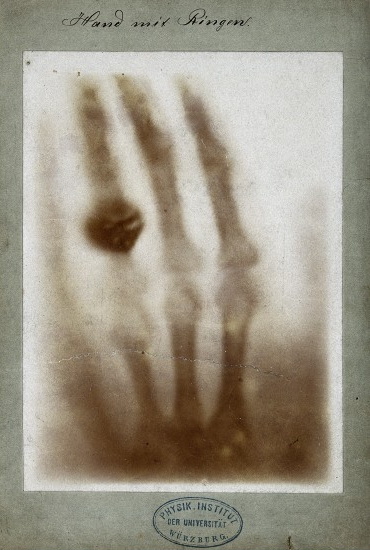
    It is hard to overstate the significance of Wilhelm Roentgen’s discovery of x-rays, as well as the public reaction to it.  (Well, the enthusiasm of the popular response waned dramatically after the first few months, which–given the historic significance of the discovery–was not long at all.)

    Rontgen  bertha

    [Source: Wikicommons.   This is Roentgen’s wife’s hand,  the first image ever made via the new X-Ray, and one of the most iconic images in the recent history of science.]

    Scientific/technical journals as well as the popular press were flooded with articles published about the astonishing discovery of 50-year-old physics professor from Wurzburg.. The English-language popular science journal Nature’s announcement of his December 28, 1895  “Ueber eine neue Art von Strahlen” (“On a New Type of Ray”), appearing 16 January 1896, began the introduction of a new state of human experience.  His experiments—built upon the work of J. Pluecker (1801-1868), J.W. Hittorf (1824-1914), C. F. Varley (1828-1883), E. Goldstein (1850-1931), Sir William Crookes (1832-1919), H. Hertz (1857-1894) and Phil Lenard (1862-1947)—revealed as much to humans as did the experiments and inventions of Hooke and Leeuwenhoek on the invisible worlds revealed by the microscope.  There are more than 150 articles on the Roentgen (and soon to be “X-“) Ray, all published within 12 months of the original announcement, almost all excitedly, trying to comprehend, elucidate, expand, verify, this new world1. 

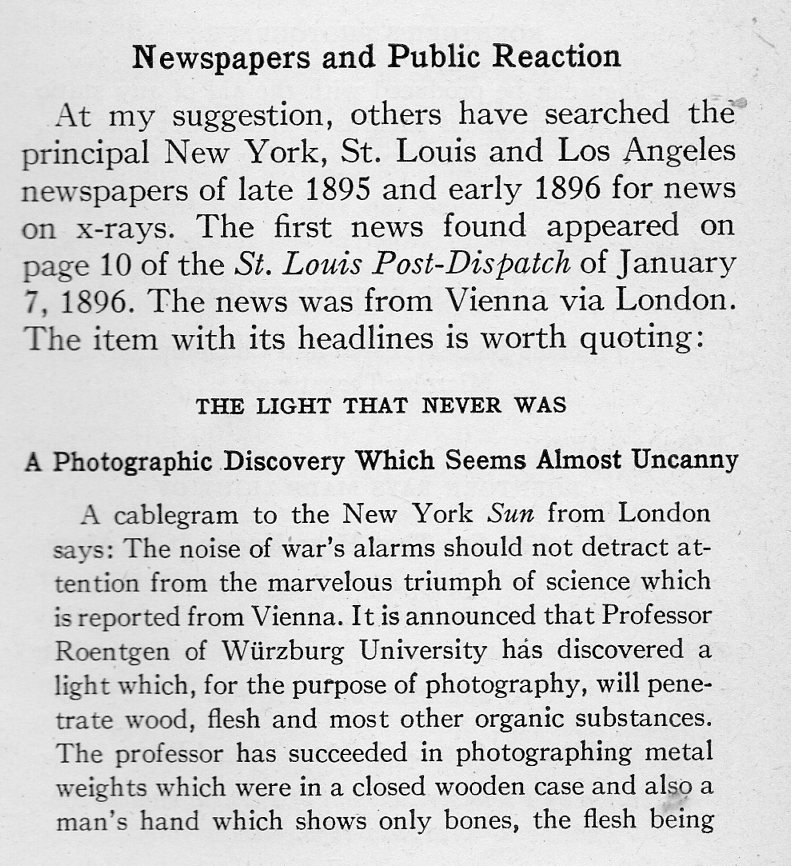
    So what brought me to this tonight was an article in the American Journal of Physics for 1945 (volume 13) which has a great article on the history of the discovery (by G.E.M. Jauncey) and which also has a number of samples reporting on the discovery in the popular press, none of which I had seen before.  And so I thought I’d share them here: 

    Rontgen800


  • A Note on “Hiding” in Plain Site: Razzle Dazzle Camouflage, 1917-1918

    JF Ptak Science Books  (Fixing an earlier post from 2011)     Part of a series on the History of Blank, Empty and Missing Things.

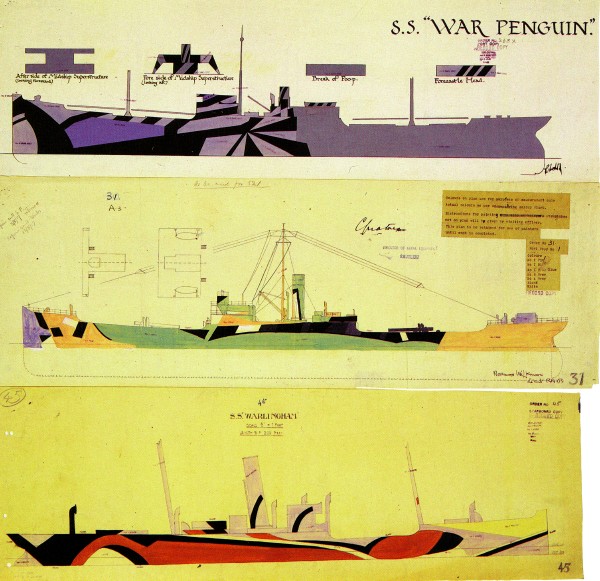
    In the history of defensive warfare it was a revolutionary idea that painting the entirety of large ocean-going  ship in sharp geometric shapes and in dazzling colors would make the ship in essence–disappear, a sort of camouflage-without -camouflage (sorry Flannery O’Connor).  It wasn’t like biological camouflage where all sorts of bits come into play to make an animal blend into its surrounding environment to protect it from predators, or conversely to make it a better predator by allowing the animal to stay completely hidden until their prey could do nothing but become their prize.  Nor was it really like thermoregulation, or sexual or warning signals (again drawing from the bio world)–it was simpler than that, though are there many relational examples in the biological world as well. Nor was it similar to the camouflage schemes used by the air corps, with different and usually sky/ground-blended colors used for the top and bottom of SPADS and Nieuports and Albatrosses.

    The effect of using the geometrical shapes on the whole of a 600′-long vessel was to make the speed and direction  of the ship more difficult for offensive pursuit vessels like submarines to figure out and calculate so that the point-to-target launch of their torpedo would be far more complicated. 
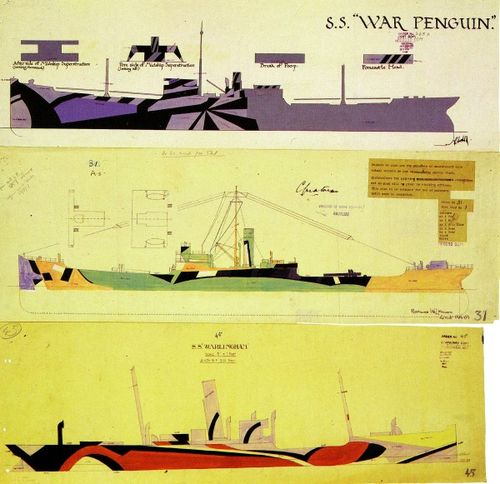
    Razzle dazzle via gotouring

    [Examples of razzle dazzle camouflage from the GoTouring website, here.]  [A very nice selection of images can also be found at iO9.com, here; also, an even larger one, here, from Public Domain Review]

    When the prolific maritime painter Norman Wilkinson (1878-1971) came to this realization for disguising the intentions of ships (around 1917) he instantly recognized its applicability in anti-submarine warfare:  not only would it be difficult to distinguish bow/stern properties of a ship, but also how long it was, and whether it was coming or going, and how big it was–all major factors in determining the launch of a torpedo.  Basically, dazzle camouflage made it difficult to produce a trajectory for the ship.

    This must have been an extraordinary experience, seeing these things for the first time by military commanders, who not but a few years earlier were sending troops into combat with white gloves and red pantaloons. 

    In a “Letter to the Editor” (“Camouflage of Ships at War”) in Nature (19 June 1919), Wilkinson explains his dazzle approach, saying that the whole point of this sort of camouflage was not necessarily “obliterative” as in biological camouflage, but rather was intended to “upset a submariner commander’s estimate of a vessel’s course, when carrying out an attack with torpedo”, and stating further that it was not intended for “ships of the line” or to help deceive topside gunnery from another ship, especially at greater distances where the paint would simply not come into play.   [An often-used but never-cited quote from a Wilkinson “lecture”  runs as follows:  “The primary object of this scheme was not so much to cause the enemy to miss his shot when actually in firing position, but to mislead him, when the ship was first sighted, as to the correct position to take up. [Dazzle was a] method to produce an effect by paint in such a way that all accepted forms of a ship are broken up by masses of strongly contrasted colour, consequently making it a matter of difficulty for a submarine to decide on the exact course of the vessel to be attacked…. The colours mostly in use were black, white, blue and green…. When making a design for a vessel, vertical lines were largely avoided. Sloping lines, curves and stripes are by far the best and give greater distortion.”]

     http://upload.wikimedia.org/wikipedia/commons/3/3d/SS_Empress_of_Russia_1918_cropped.jpg

    [ Another example of razzle dazzle at work: RMS Empress of Russia, from the University of British Columbia, here]

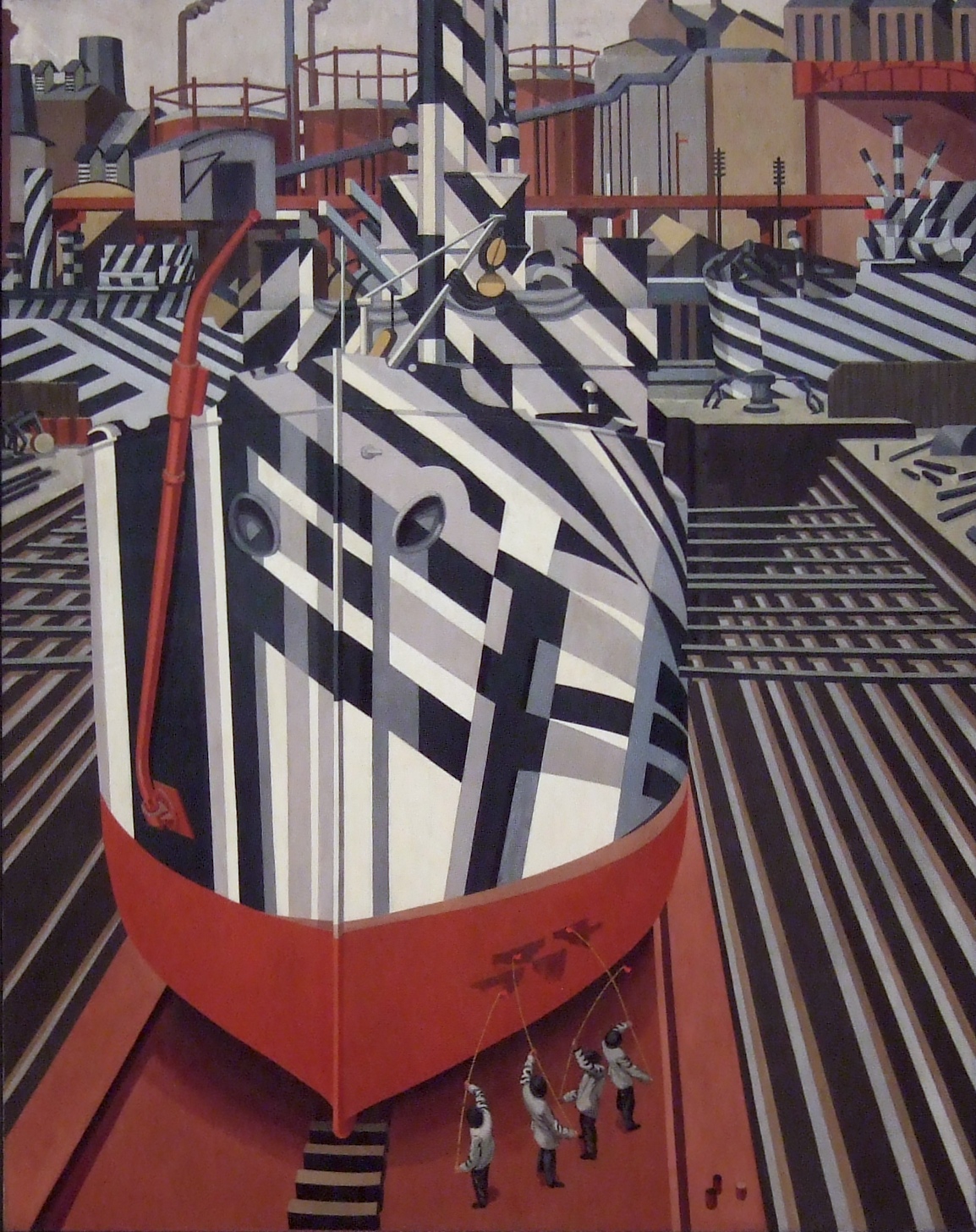
    File:Dazzle-ships in Drydock at Liverpool.jpg[Image source: Wikipedia, here.]

    Edward Wadsworth (1889-1949)  produced razzle dazzle designs during the war and also painted about it afterwards–something one really doesn’t see much of–in his fine  Painting of Dazzle-ships in Drydock, completed in 1919. (More of Wadsworth’s works, as prints, here.) There are well-known stories of great artists–like Villard among many others as well as the questionable Picasso, who claims to have originated the idea, along with Cubism itself–who made contributions in this effort, from making designs to doing the actual painting.  But it was the estimable Wilkinson who made the major contribution and invention of dazzle-at-sea.  

    The concept is still used, with more advanced applications, and appears on one of the world’s stealthiest ships, Sweden’s Visby Corvette.  Apart from having an exceptionally low magnetic signature, it also has geometric low-radar reflective gray dazzle paint. (It also has applications for land warfare use in the camouflage of armored vehicles against RPGs.).


  • Color in Black & White (#4): Stained Glass Designs, 1937

    JF Ptak Science Books  Post 2396    

    Part of the series on the History of Blank, Empty, and Missing Things

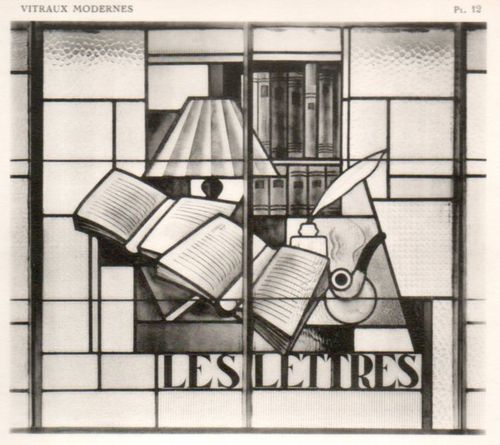
    Sometimes the suggestion of color is color enough, though I had never really thought about it in terms of stained glass windows before.  They do have an elegance, even in photographs (never having seen anything extensive in person, just bits and pieces). These designs weren’t in black and white in real life–they were just printed so, for unknown reasons, even though the portfolio in which they appeared was half-luxurious. (I have a book depicting the windows at Chartres that is also done in black and white.)  This makes a good and appropriate entry in a long series on this blog called Blank, Empty, and Missing Things, the “missing” part here being color outside of black and white.

    The following images are of modernist stained glass designs collected and curated by Robert Mallet-Stevens (1866-1945)–one of the leading between-the-wars French architects–for the International Exposition of 1937.  

    Stained glass414

    “L’Exposition de 1937, qui nous montre la ‘généralisation’ de l’architecture moderne, nous offre quelques vitraux de tout premier plan… Quand l’architecte voit dans l’espace des volumes bien ordonnés, le peintre verrier trace des lignes et oppose des couleurs heureuses… Je n’oserai dire que l’architecture moderne est en plein progrès, mais je puis affirmer que le vitrail ‘va très bien’!”   From he introduction, by Mallet-Stevens. (Basically, Mallet-Stevens is saying that the Expo is presenting the newest form of modernist architecture, and that the stained glass work in particular was powering ahead (“‘va très bien’!”)). 


  • SECRET (When Filled In)

    JF Ptak Science Books   Quick Post

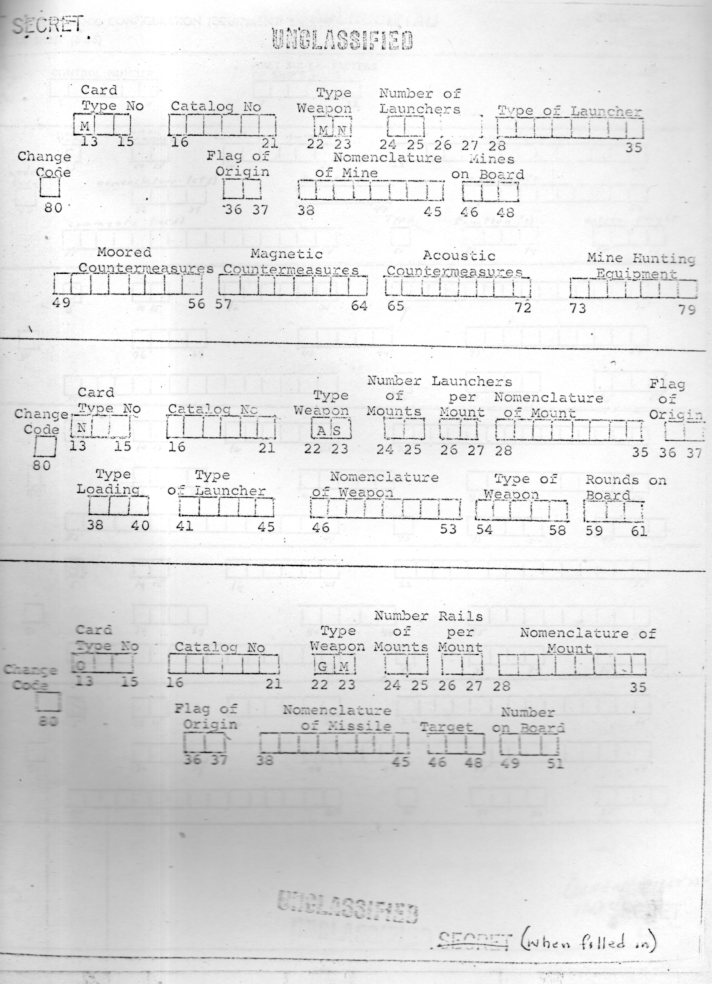
    Naval secret doc616

    I came upon the following document (ca. 1968-72) in a collection of ASW material–it seems to be a coding form for military ships, both for the United States and for the Soviet Union, and runs about 20 pages, the section titled “Structuring and Colelction of Ship Characteristics Files SCF). It must be a preliminary study for something, because even though there are hundreds of data points, it doesn’t seem like, well, enough.  The doc is titled “ADP FORMAT, Scientific and Technical Intelligence Center, Naval Intelligence Command” which is the Navy Scientific and Technical Intelligence Center (NAVSTIC), which was “established in 1968 and merged with the Navy Reconnaissance and Technical Support Center (NRTSC) in 1972” (Office of Naval Intelligence).  

    The document is unclassified now, and I know I’m missing what it must really be, but what struck me was the “Secret (When Filled In)” on one of the pages…

    Naval secret doc615


  • Captives of Capitalism–the Red Streak in the Sky that Isn’t Santa

    JF Ptak Science Books  Post 2370

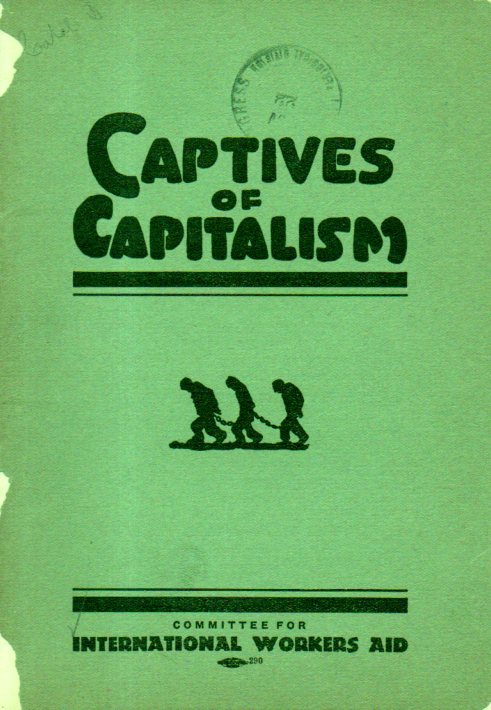
    Captives of Capitalism (printed ca. 1925) is a small pamphlet with a big reach. It was published by the Committee for International Workers Aid, a Communist organization created in Berlin in 1921 (as the International Arbeiter-Hilfe) to help raise money for famine and drought victims in Russia. It was evidently expanded to include collecting money to help victims and prisoner of Fascism, which seems to be the major target in this pamphlet. 

    Captives of Capitalism508


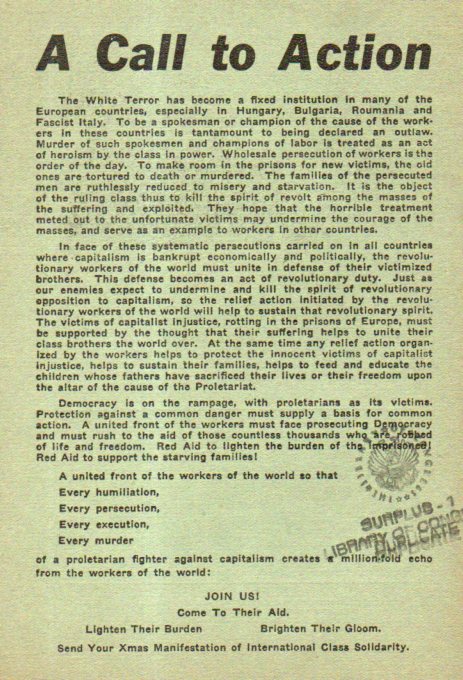
    Although pretty slight the pamphlet looses no time in getting to the heart of the matter, detailing atrocities and unjust imprisonments by fascists and capitalists in Germany, Roumania, Bulgaria, Hungary, Lithuania, Finland, Lithuania, and Italy.  Although not mentioning the United States the “Call to Action” states that “Democracy is on the rampage, with proletarians as its victims” with calls for unity of workers and donations to the International Workers Aid as well as to Red Aid–money to help “lighten the burden of the imprisoned” and to “support starving families”.  


    Captives of Capitalism513

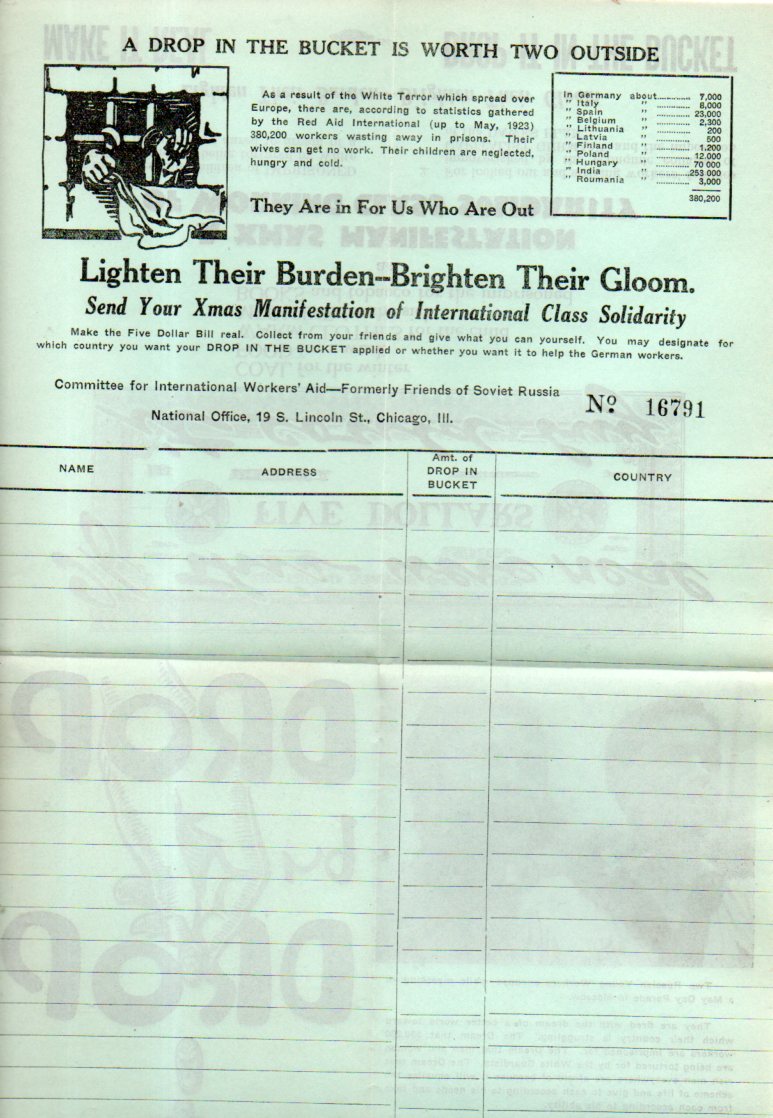
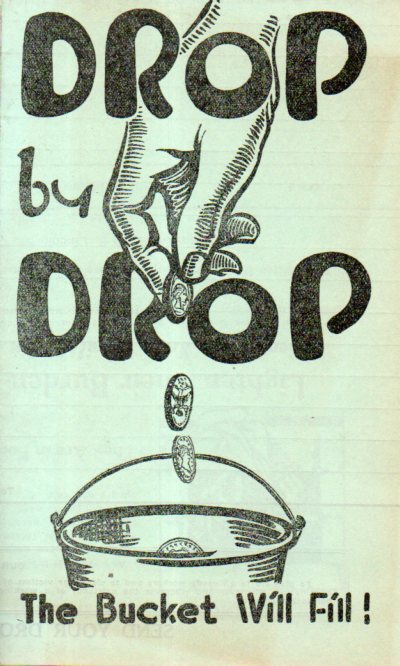
    Inside of my copy of the pamphlet was a small handout, a long sheet folded into quarters with the working “title” of “Drop by Drop the Bucket Will Fill”, and on opening the sheet the entire reverse is a form to fill in with the names of donors and amounts of the “drops” they send into the bucket.  This request series in particular was aimed at “Xmas Relief”

    Captives of Capitalism507

    The “Call to Action” ends very strongly: “A united front of the workers of the world so that

    Every humiliation

    Every persecution

    Every Eexecution

    Every murder

    of a proletarian fighter against capitalism creates a millionfold echo from the workers of the world.”

    Captives of Capitalism509


    Unfortunately the Soviet Union would become its own home-made disaster following the turmoil and famine(s) of the early ‘twenties.  Lenin’s death in 1924 led to Stalin, and Stalin went down a terrifically bad path, beginning his Five Year Plans in 1928 which would displace 25 million families to create the collective farm state; smashmouth industrialization lead to great gloom and the development of Stalin’s cult-of-state created the Great Famine in ’32-’33 and the rest of the hideousness that would cover the Soviet Union through the rest of Stalin’s existence. 

    Captives of Capitalism510


    Captives of Capitalism511

    Captives of Capitalism512


  • An Obscure Reference to the Enigma Machine (1942)

    JF Ptak Science Books  Quick Post
     
     
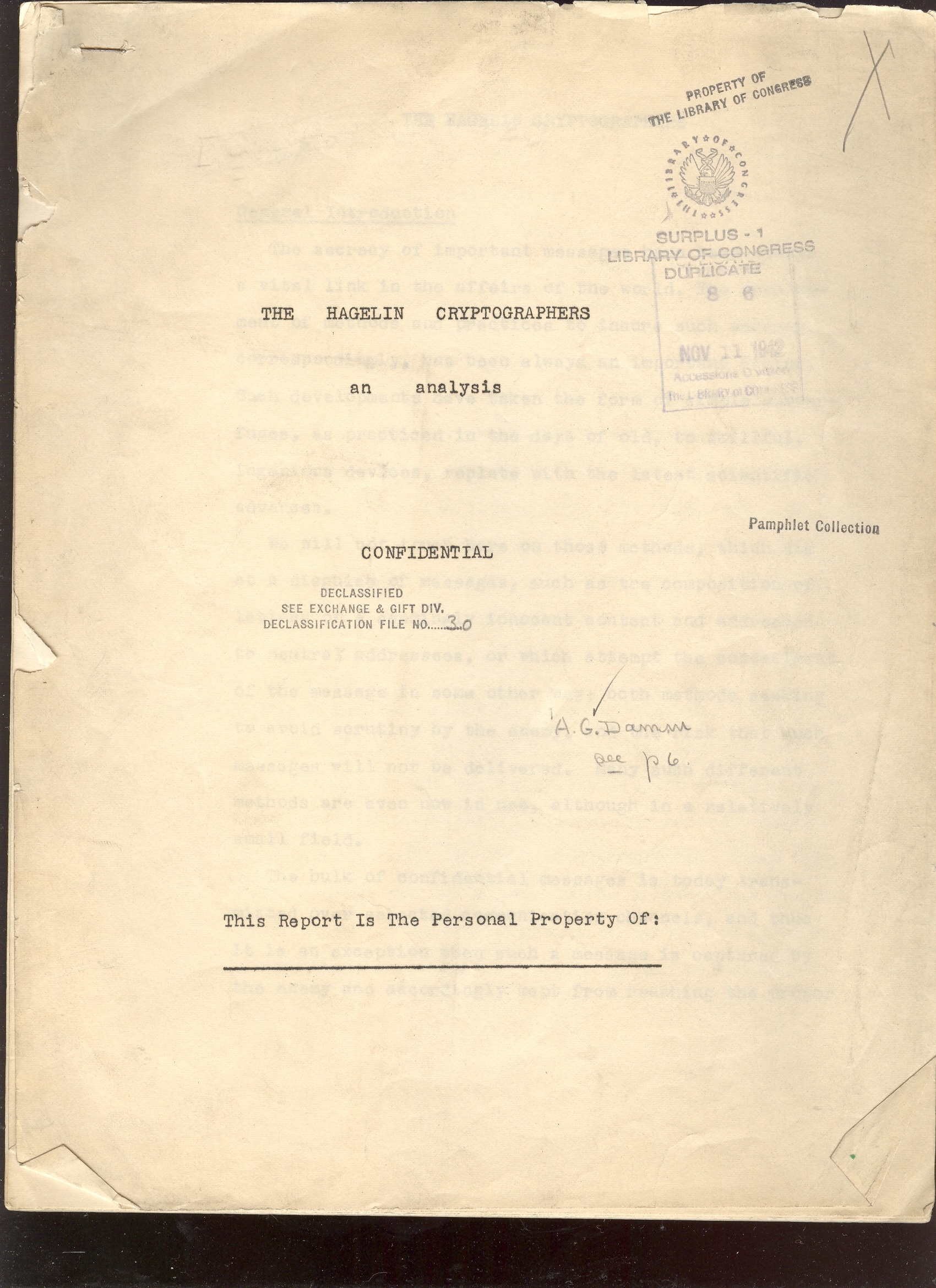
    Books--hagelin


    This is a general report on the origin, development and status of the Hagelin “cryptographers”-a word used here to describe the physical machines used in encoding messages (rather than the people working on codes). It is an internal and “confidential”  report, slender and to the point. Its sections include “Models Built at Express Demand of the French Authorities”, “Evolution of Hand Cryptographer Type C-362”, “Hagelin Cryptographer Models” (BC-38 and C-362), “Methods of Operation”, “Superiority of Hagelin Cryptographers over Competing Makes”, and others, including “How to Sell Cryptographers”. Of particular interest to this post is the mention on page 14 of the “Enigma”, which is really just a very lonely statement, limited to mentioning that the machine is not sold outside of Germany. Of course we well know that the Enigma (which is one of a family of related electro-mechanical rotor cipher machines) was being used very heavily inside of Germany–and France, and the Soviet Union, and several other countries, though it was in fact being used by the Nazi military. It just feels odd and uncomfortable to see this ordinary commercial mention of the machine whose working and transmission was known to the Allies, a knowledge that may well have been one of the great turning elements of the war. And there it is, on page 14, in a restrictive distribution announcement.  


  • An Extraordinary POW Postcard 1918

    JF Ptak Science Books   Post 2316

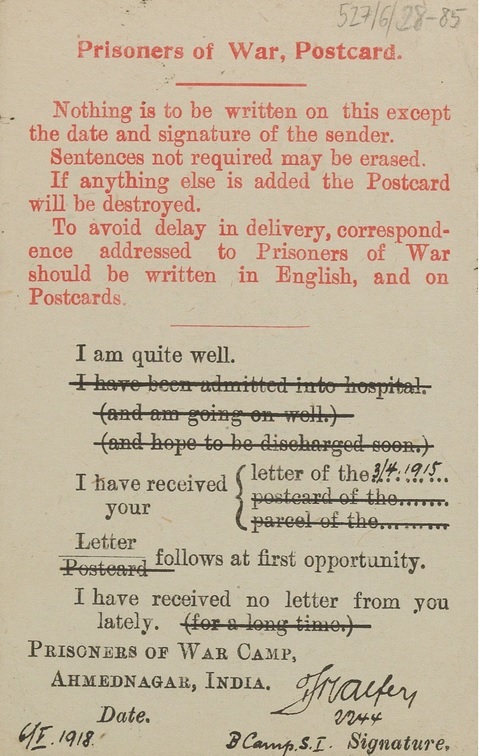
    There is a small collection of WWII propaganda here, mostly Allied-based surrender leaflets and battlefront newspapers. One that I am trying to identify is something simply called “Volksstimme” (“voice of the people”) a very home-made-looking production published in 1944 and which has the feel of being Soviet-produced for German soldiers but which is also extremely anti-Semitic.  As an offshoot of looking for “Volksstimme-ery” things (“Volksstimme” not being a very small handle for a very wide search) I came across a website for the German National Library’s World War I collection, and in one section it displayed this extraordinary postcard:

    WWI POW Postcard

    The German POWs (here based in India) were allowed very limited contact with anyone who had somehow found and written to them.  The instructions were explicit and took up almost as much space on the postcard as the allowed response.  And the response was limited to the POW being well or in hospital, or the status of letters received or not.  It was all attested by an administrative signature, and signed and dated.  And that was it.  

    But, it was at least something.

    “Ahmednagar, a city and fort in India, was the site of one of Great Britain’s prisoner of war camps during World War I. This camp held both prisoners of war and German and Austrian civilians from 1914 and 1918. In contrast, German officers were first sent to Tabora and later usually conveyed to a transitional camp inEgypt or India. The biggest camp was located in Ahmednagar, India, and could accommodate more than 2,000 German prisoners. According to reports from the Red Cross, there were few reasons for complaint. The food was plentiful and housing was acceptable. There were even tennis courts,soccer fields, and billiard tables for the amusement of officers…”–Source

    “Postcard from a British prisoner-of-war camp in India to Gustav Wahl, the Director of the Deutsche Bücherei in Leipzig, 1918”–German National Library, First World War Collection

    [Source: here (http://erster-weltkrieg.dnb.de/WKI/Content/EN/Topics/Kriegsalltag/alltag-kriegsgefangenschaft-en.html)]