A Daily History of Holes, Dots, Lines, Science, History, Math, Physics, Art, the Unintentional Absurd, Architecture, Maps, Data Visualization, Blank and Missing Things, and so on. |1.6 million words, 7500 images, 4.9 million hits| Press & appearances in The Times, Le Figaro, Mensa, The Economist, The Guardian, Discovery News, Slate, Le Monde, Sci American Blogs, Le Pont, and many other places… 5000+ total posts since 2008.

Category: Impossible Books

  • Naive Combat and the Romance of Secret Death Holds: Utopiaic pre-Gore Imagery of Intentional Violence

    JF Ptak Science Books    Post 487

    0 blog jan 26 roy rogers443


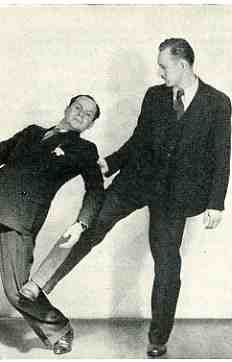
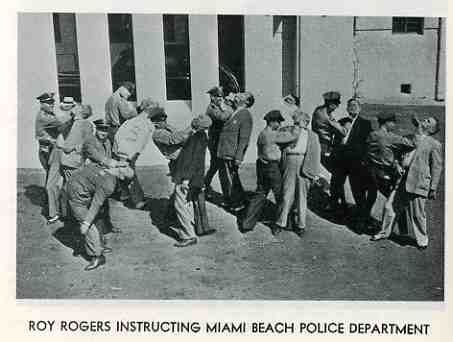
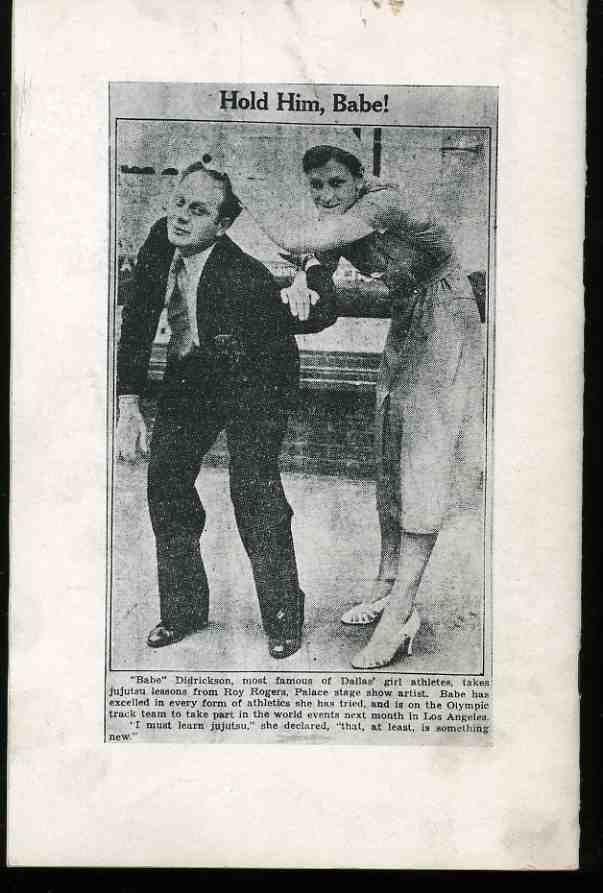
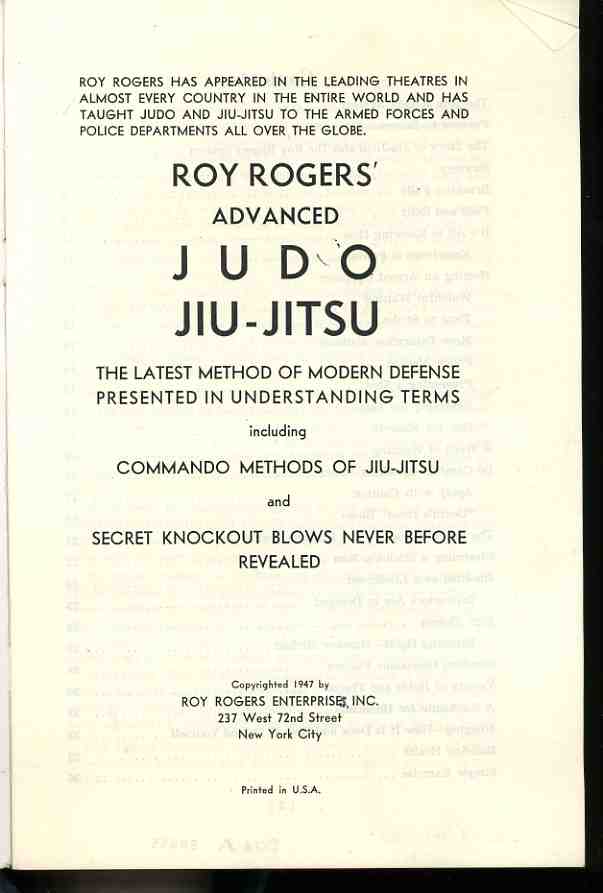
    Roy Rogers–not the singing cowboy but a black-shirted, black-suited, white-bow-tied private slickee cop–shows us here all of the secret and impossible moves from those fast-fighting sequences in those hundreds of 1930’s movies in which men would fight furiously and not lose their hats.  Or, the same guys would have no hats but would have wildly whipping grease-hair and would be knocked down with an open-fisted shot the chest, collapsing on conveniently-placed collapsing-couches.  But Mr. Rogers, who claims to have taught these methods “in leading theatres in in almost every country in the entire world” was serious about his craft, even though the images used to illustrate his serousness look naive and sweetly quaint to our 2009 eyes.  In a series of images that almost never show anyone with an open or grimacing mouth, Mr. Rogers tried to show his grasping audience the tricks of his trade, or the trade of his tricks,

    0 blog jan 26 roy rogers444


    with various methods of restraint, and head butts, and finger holds, and balance-upsetters, and, yes, even the “death” blow.  It is remarkable, really, how far things have progressed in the way of savage fighting in the last 62 years–things have gotten so ultra-modern, so (in the words of the lovely Anthony Burgess) ultra-violent, that these secret combat doings from 1947 look like baby-room wallpaper compared to the nastiness of today.  And yet teaching this stuff kept Mr. Rogers in white ties and jet-black clothing.

    0 blog jan 26 roy rogers445

    If only this sort of combat packed the modern nightmare with dread, what a better place we would wake to–for me, these are pre-gore images of violence which look strangely removed when viewing them from our post-gore world.  Blood as a result of violence in the movies of the 1930’s and 1940’s (and even into the ’50’s) was a rare commodity; blood after the late 1960’s was delivered by the buckets-full, and then by torrent. The delivery of the visual birth of administered violence is relatively new in the history of “entertainment”, and we might’ve moved a little beyond that, as well, as almost nothing is shocking anymore in our pictures of advanced and sometimes impossibly-violent violence.  I imagine that the thought of depicting violence in the movies via 2009 standards to Mr. Rogers back there in 1947 would’ve seemed as remote to him then as the possibility of a computer smaller than an automobile.  

    In any event, I find this to be a remarkable and quiet piece of Americana, capturing some of the stuff of life not normally captured. 

    0 blog jan 26 roy rogers441 0 blog jan 26 roy rogers442

    ·Posted by :

    ·in:

    —

  • The “Huh?” Department: Pig Graphs, Pig Checkers and Other Small Confusions. Naive Surreal Advertising Art

    JF Ptak Science Books   Post 485


    “Always remember, a cat looks down on man, a dog looks up to man, but a pig will look man right in the eye and see his equal.”–W.S. Churchill

    0 blog jan 24purina425

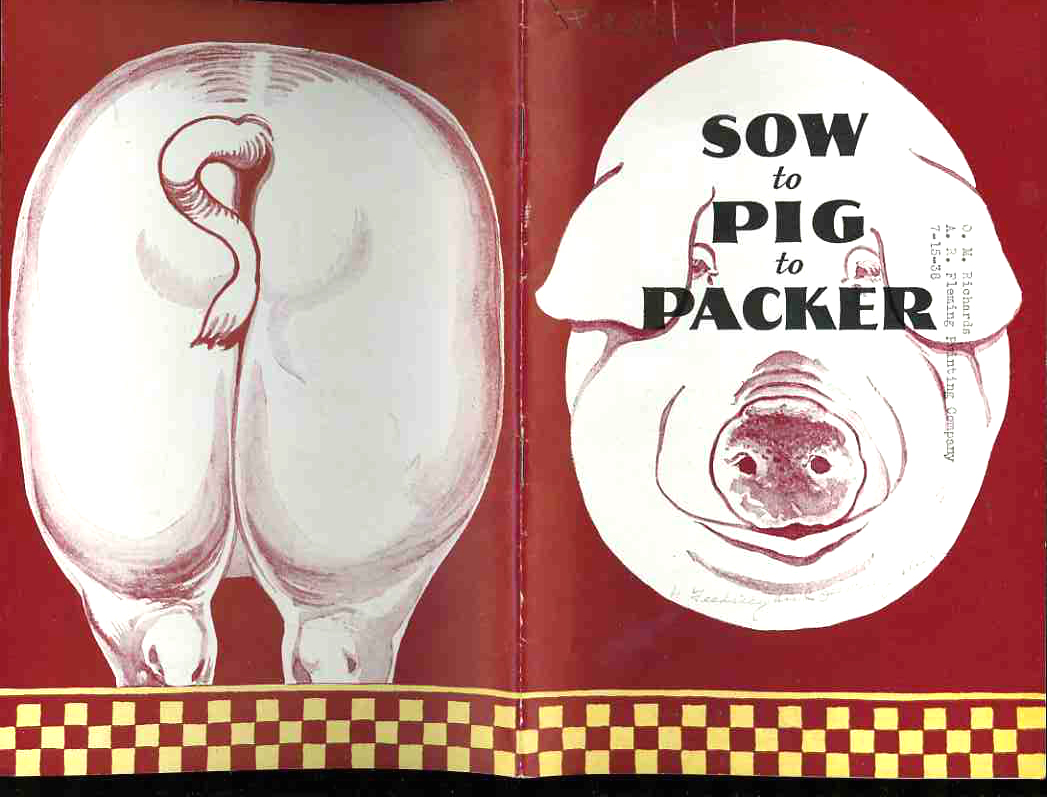
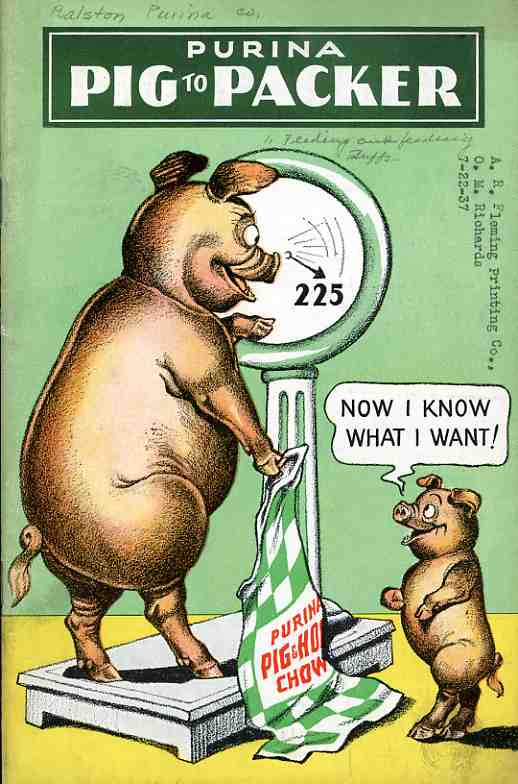
    Well.  Some things can just speak for themselves, as in the case(s) of these curious images brought to you by the graphic design folks working to push feed for Purina Company.  There were still tens of millions of farmers in the U.S. when this pamphlet was printed in 1935, and most of these farms were quite small, and so the Purina Company was reaching out with a broad stroke, right down to the neighborhood guy with 6 pigs on a half acre.  Of course what makes these images so appealing now is that they seem other-worldly, from a time that we have very little connection to even though it existed in the lifetimes of my parents.  The images are discordant, off-centre, not-quite-right–which places them perfectly into my Naive Surreal category.  The images are in their own accidental way quite surreal in that they look to be intentionally bizarre, when the opposite is true.
    0 blog jan 24purina graph426


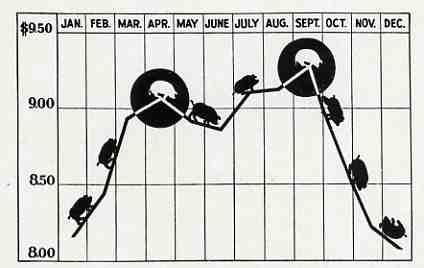
    Nestled snuggly away though is this remarkable graph of pig value versus time–its interest has nothing to do with the data which I suspect was accurate and universally known to be so (at the time), but for the PIG MARKERS at the X/Y interface.  That is something I’m sure I’ve never seen before, and I pay very close attention to the history of the display of quantitative data.  It is a small jewel.  a pearl among, well you know.


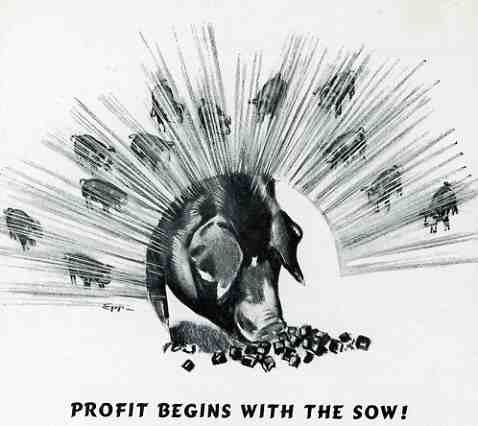
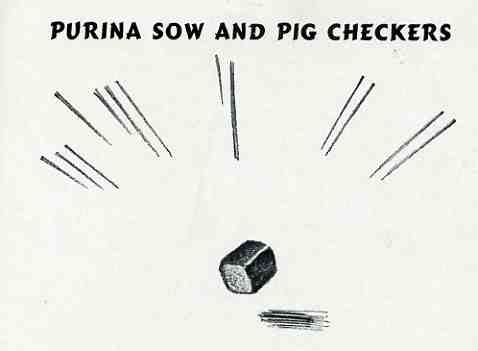
    As for some of the other images and their pig-centeredness, I can only speculate.  “Profit begins with the sow” is a solar porcine sunrise with little pig radiances.  “Purina Sow and Pig Checkers” I thought at first and continue to wrongly think that the cube in the middle was a loaf of bread (complete with shadow!), beautifully confounding the image-heading dichotomy; but it isn’t.  It is still a small magnificance of confusion, thank goodness.

    0 blog jan 24purina profits 428 0 blog jan 24purina graph427

    0 blog jan 24purina profits 429

    ·Posted by :

    ·in:

    — —

  • Elves, Fairies, Wanton Spirits, Genius, Spectres and Ghosts: Tremendous Titles in the History of Witchcraft.

    JF Ptak Science Books LLC  Post 447

    Scot
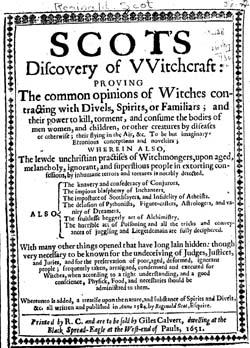
    Below are 31 titles relating to witches and witchcraft, printed in the 16th through 18th century–they all share some absolutely fabulous title constructions, elements and phrases. For example, the great work by Reginald Scot (listed first, below) contains the following phrasing IN ITS TITLE:

    “lewde dealing of witches and witchmongers 

    knaverie of conjurors
    impietie of inchanters
    follie of soothsaiers
    impudent falsehood of cousenors
    infidelitie of atheiststs
    pestilent practises of Pythonists
    curiositie of figurecasters
    vanitie of dreamers
    beggerlie art of Alcumystrie
    abomination of idolatrie, the
    horrible art of poisoning
    vertue and power of naturall magicke,
    conveiances of legierdemaine and juggling are deciphered…”

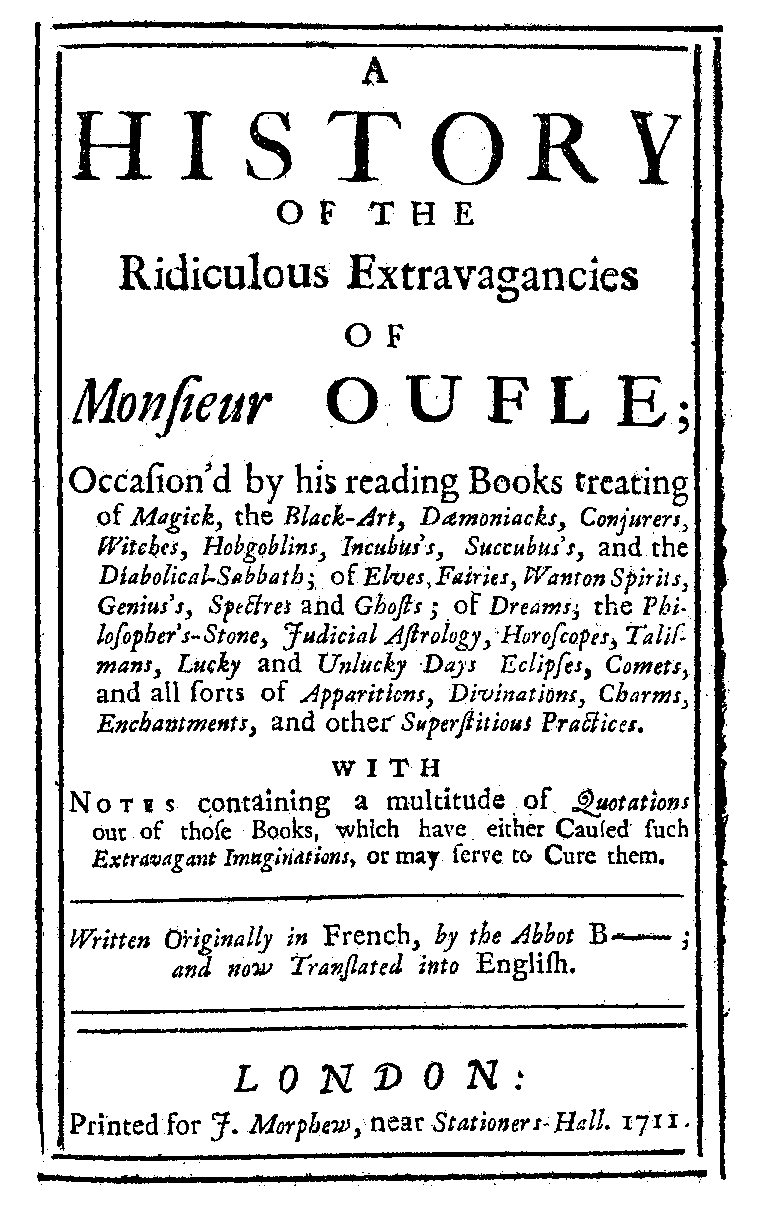
    Laurent.Bordelon’s title includes the following spectacular efforts:  “Ridiculous Extravagancies of…Magick, the Black-Art, Daemoniacks, Conjurers, Witches, Hobgoblins, Incubus’s, Succubus’s and the Diabolical-Sabbath,Elves, Fairies, Wanton Spirits, Genius’s, Spectres and Ghosts, Dreams, the Philosopher’s-Stone, Judicial Astrology, Horoscopes,Talismans, Lucky and Unlucky Days, Eclipses, Comets, and all sorts of Apparitions, Divinations, Charms, Enchantments…”

    Bordelon

    And on and on.  In my experience the titles of books on witchcraft and demonology are among the most creative and imaginatively flouncy.
    Enjoy.

    Scot, Reginald. The Discoverie of Witchcraft, Wherein the lewd dealing of witches and witchmongers is notablie detected, the knaverie of conjurors, the impietie of inchanters, the follie of soothsaiers, the impudent falsehood of cousenors, the infidelity of atheists, the pestilent practises of Pythonists, the curiositie of figurecasters, the vanitie of dreamers, the beggerlie art of Alcumystrie, The abomination of idolatrie, the horrible art of poisoning, the vertue and power of naturall magicke, and all the conveiances of legierdemaine and juggling
     are deciphered: and many other things opened, which have long been hidden, howbeit verie necessarie to be known
    , 1584. Imprinted at London, by William Brome.

    Bordelon, L. A History of the Ridiculous Extravagancies of Monsieur Oufle; Occasion’d by his reading Books treating of Magick, the Black-Art, Daemoniacks, Conjurers, Witches,  Hobgoblins, Incubus’s, Succubus’s and the Diabolical-Sabbath; of Elves, Fairies, Wanton Spirits, Genius’s, Spectres and Ghosts; of  Dreams, the Philosopher’s-Stone, Judicial Astrology, Horoscopes,
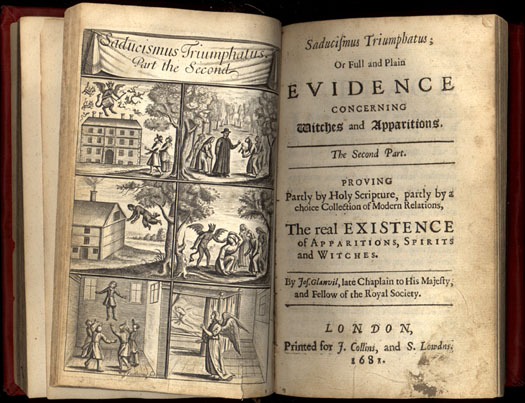
      Talismans, Lucky and Unlucky Days, Eclipses, Comets,sorts of Apparitions, Divinations, Charms, Enchantments and otherGlanvil2sm

           Superstitious Practices. With Notes containing a multitude of
           Quotations out of those Books, which have either Caused such
           Extravagant Imaginations, or may serve to Cure them. Written
           originally in French, by the Abbot B–; and now translated into
           English.
    London, Printed for J. Morphew near Stationer’s Hill,
           1711.

    ·Posted by :

    ·in:

    —

  • God’s Odds: the (Very) Fine Arithmetic of Heaven and the Infinite Population of Hell

    JF Ptak Science Books LLC  Post 436
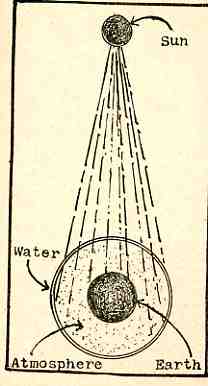
    0 blog dec 20303

    Some years ago I purchased a rather large collection from the Library of Congress unimaginatively called “The Pamphlet Collection”.  It was not very distinguished, and for the most part, not terribly interesting on the face of it–but it was LARGE and, as it turns out, most of the material in the collection just isn’t anywhere else (for good or for ill).  After trying to make sense of the purchase–which was categorized and boxed but I couldn’t really figure out what the principle of division was–there was one pile that refused identification because the subject matter was so inescapably unusual, so unexpected, so logic-challenging, that they formed their own genre: they became the Outsider Logic collection.  There are at least 500 of them, maybe more.  They are differentiated from the Naive Surreal collection, which is associated but just happen to look incredibly odd because they are not only way out of context but also their context largely doesn’t exist anymore.  

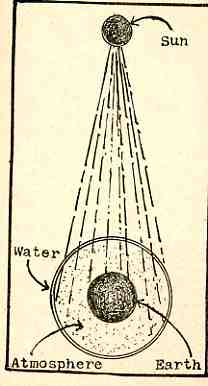
    The sample today is a religious tract of some sort–very scream-y, lots of quotation marks, exclamation points, and is thick and stubbily printed, and which really doesn’t have a title per se, the front cover simply starting  “Behold I Make All Things New. This work by  V.T. Houteff.It is too long to get an idea of what is really going on, but I happened upon this diagram, which, shall we say, is a little on the outsider side, as the author explains that the Earth “lives” in an atmosphere surrounded by a bubble wall of water.  I like the arrow pointing to “water”. 

    On the next page to this attractive image was a longish rant on the number 144,000.  It turns out that 144,000 represents the total  number of people allowed into heaven. 

    If this is so, where is everyone else?  That doesn’t leave much room for pets, or other animals, or insects.  DO plants go to heaven?  What about amoebic life?  When a person “goes” to heaven, what goes with them?  Are all life forms—microscopic and not—that are always present on a person/body given a free ride?  There’s a lot of life going on oh the surface of the skin and of course inside the body…I guess that would be a “no”, as I imagine Heaven would be ultimately clean. 

    I assume that people still have bodies because of the belief—exhibited in this pamphlet of outsider logic and by perhaps millions of other people who are adherents of other faiths and belief systems—that there are 144,000 people allowed into heaven. Wouldn’t there be infinite room for your spirit, which I would imagine to be infinitely small?  Something that has no mass and is not calculable on any level couldn’t ever fill anything up.   

    The 144,000 figure is something like 7/100’s of one percent of all people who have lived and are living, which is something like having a one-in-five million chance of getting into heaven right now—that is IF we allowed that heaven could be filled up right this instant.  If there was wiggle room involved—say if g wanted to include the possibilities that there might be a ultimate human population of 1 trillion or something like that, then, well, there are two more zeroes that would go in front of the percentage number (.0007%), to provide for the prospect of heaven not getting filled up until some point in the next 100,000 years. 

    What if there were 124,000 people already in heaven?  Suddenly competition gets gigantically fierce, allowing 20,000 places for the current 6 billion, which means that .001% of everyone living gets into heaven and then fill it up.  What would it be like to be the last person in?  Do you shut the door?  Are there people behind you on line? 

    And then how good do you have to be to get in?  Better than a baby who dies in childbirth?  That happens about 50 times an hour, worldwide, so far as I can tell.  I’d expect a person like that could get into heaven as they certainly didn’t have much of a chance to do anything to interfere with g_d or its plan.  Once you start throwing in children who die who are under the age where they could commit a foul act, say 5, and then toss in aborted fetuses (which for these cases I’m sure would be called “babies”), that figure of 50-an-hour would jump, probably, two orders of magnitude.  500 deserving babies an hour for thousands of years adds up to a heck of a lot more than 144,000.  Actually the 144,000 total would be hit in less than three weeks.  Which in the course of tens of thousands of years of human civilization and 10,000’s of thousands more to come, that would mean that 99%++++ of all babies and children who die before the age of 5 would go to not-heaven.  It is also hugely
    problematic because humans may be around on earth for another million
    years, which cuts the chances of slipping into heaven to seven (or
    twelve) places to the right of the decimal point.  Those are not good
    odds.

    That, friends, doesn’t sound very fair.

    I guess that means that hell doesn’t have a bottom line.  Hell never gets full.

    I don’t mean to stomp on any belief systems here, but, well, the numbers sorta speak for themselves.  They also mean that for all of the Jehovah’s Witnesses alive right now—a religion that distinctly shares this 144k belief—that basically none of them alive right now stand any sort of chance of going to heaven.  That is a hard sell.

    A statement in fairness to the ancients:

    Historically, speaking for the folks thinking about this 2000 or whatever years ago, 144,000 does loom larger than it looks today, of course.  Not only was the population of the world much smaller (by almost two orders of magnitude) but there was also almost no way for anyone living then to accurately guess the global population.  Given a population of 100 million, if everyone alive in the year 1 were to be considered for a filled-up heaven, then about one-tenth of one percent would make it.   Now, if you were an ancient and thinking about the population of the world in general, my best guess is that you’d be thinking in terms of maybe tens of millions. Maybe.  That means the 144k figure would be something believable, sort of, being 1% of the population.  Say we grant the 1% as a given; and that it was a given that the ancients thought in “low” numbers for populations; it is also a given, I think, that they did think in long terms of time, in the thousands of years, at least.  That means if they gave room for heaven to be :”filled up” in a thousand years, and the population of the world didn’t change, it would mean that of everyone on earth as known to the ancients that 144 people a year for a thousand years would go to heaven.  And frankly, those figures don’t look very promising either.   

  • Hieroglyphics of Leaves: the Scrutable and Inscrutable Exuda of Tea and of Language, in General

    JF Ptak Science Books LLC   Post 434  (Dedicated to Jeff Donlan)

    0 blog dec 19 tea294--detail

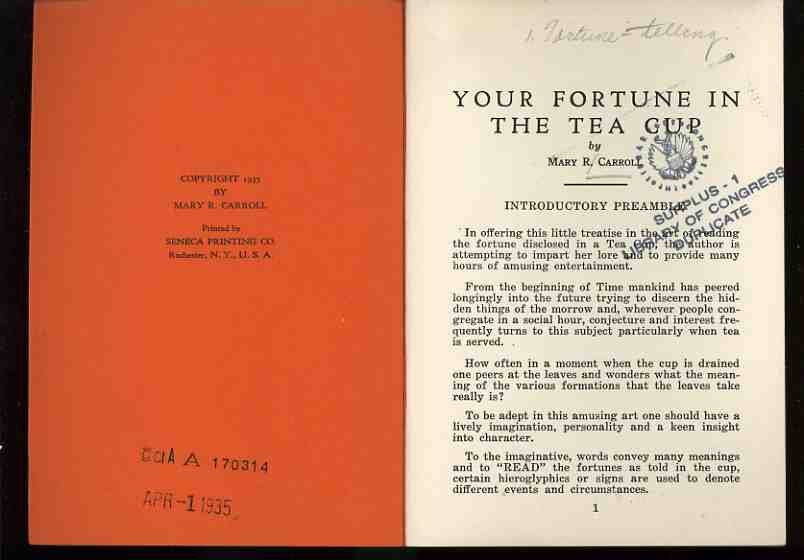
    “Words are prophetic in themselves and the tea leaves open the avenues of imaginative thought.” Your Fortune in the Tea Cup

    “This was our paradox: no course of action could be determined by a
    rule, because every course of action can be made out to accord with the
    rule. The answer was: if everything can be made out to accord with the
    rule, then it can also be made out to conflict with it. And so there
    would be neither accord nor conflict here.”–Ludwig Wittgenstein, Philosophical Investigations §201

    “Are you certain that you understand my language?” J.L. Borges, The Library of Babel, (the final query)

    “The always wandering meaning of all literary representation, according to which meaning wanders, like human tribulations, like error, from text to text,
    and within the text, from figure to figure.”  Harold Bloom,  Kabbalah and Criticism.

    **

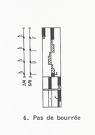
    Written, incised and  drawn messages come to us in many forms, presented in clay, chipped into stone, painted on rock, drawn on paper, tied into chords, all to be appreciated by our sweaty eye.  These varied elements have many different uses, from telling us what is going on, to what is happening now, and also about what might happen in the future.  Sometimes the future is a tale written in letters, and sometimes in numbers, prediction rates of success varying sorta by the ratio of letters to numbers.  Or not.  Sometimes it takes the forms of sticks and lines, telling us how to move in dance (as with labanotation, below-right).

    Labanotation
    Messages can be quite clear, as in the presentation of an arithmetic progression, and can also be made to seem like nothing but gibberish.  The final bit of a lettered segment in Jules Verne’s Eight Hundred Leagues on the Amazon, for example, looks like this: “…KSPPSUVJHD”, and is preceded by 264 other letters, looking much like a page from one of the books in our friend Borges’ library at Babel.  A cryptogram whose message could determine whether the main character lives or dies.  (Even assuming a monoalphabetic substitution, its a tough little bugger to figure out–even when you start counting the appearances of the nonsense letters to try and figure what might stand for “E” and “A”, you still have to work it against whatever language the cryptogram might’ve been done for. Once you toss in the polyalphabetic possibilities in, the room gets a little spinny.)

    Sequencing
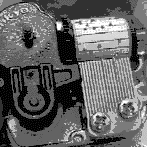
    There is of course a identification of the source code for DNA, and then further to the sequencing of those elusive bits to determine and make sense of the order of the nucleotide basis, producing what on first blush looks like a laborious repetition of four basic letters interspersed with lots of other junk. With the key to this cypher, the letters and raw glyphs look less like an automated music box cylinder and more like the music of life that it represents. 

    Music box
    Once you throw naturally-occurring glyphs into the fray the information pool becomes terrifically wide.  Geological strata, the course of a lightning strike, the height of a cloud, the depth of a cave, all tell us enormous, almost incomprehensible stories, while things like stellar spectra hold the key to what stuff in the universe is made of, how old it is and where it is going. 

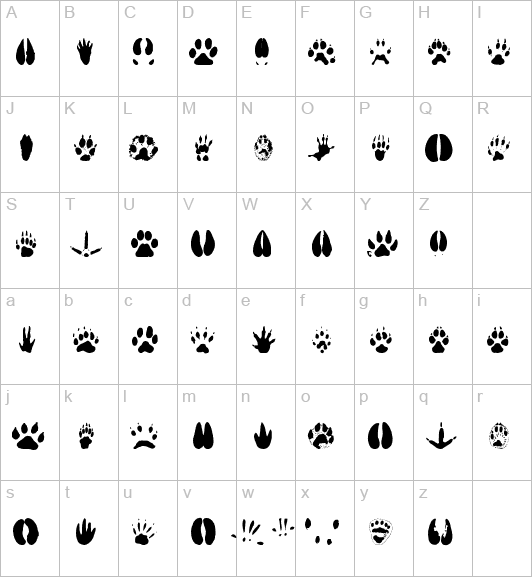
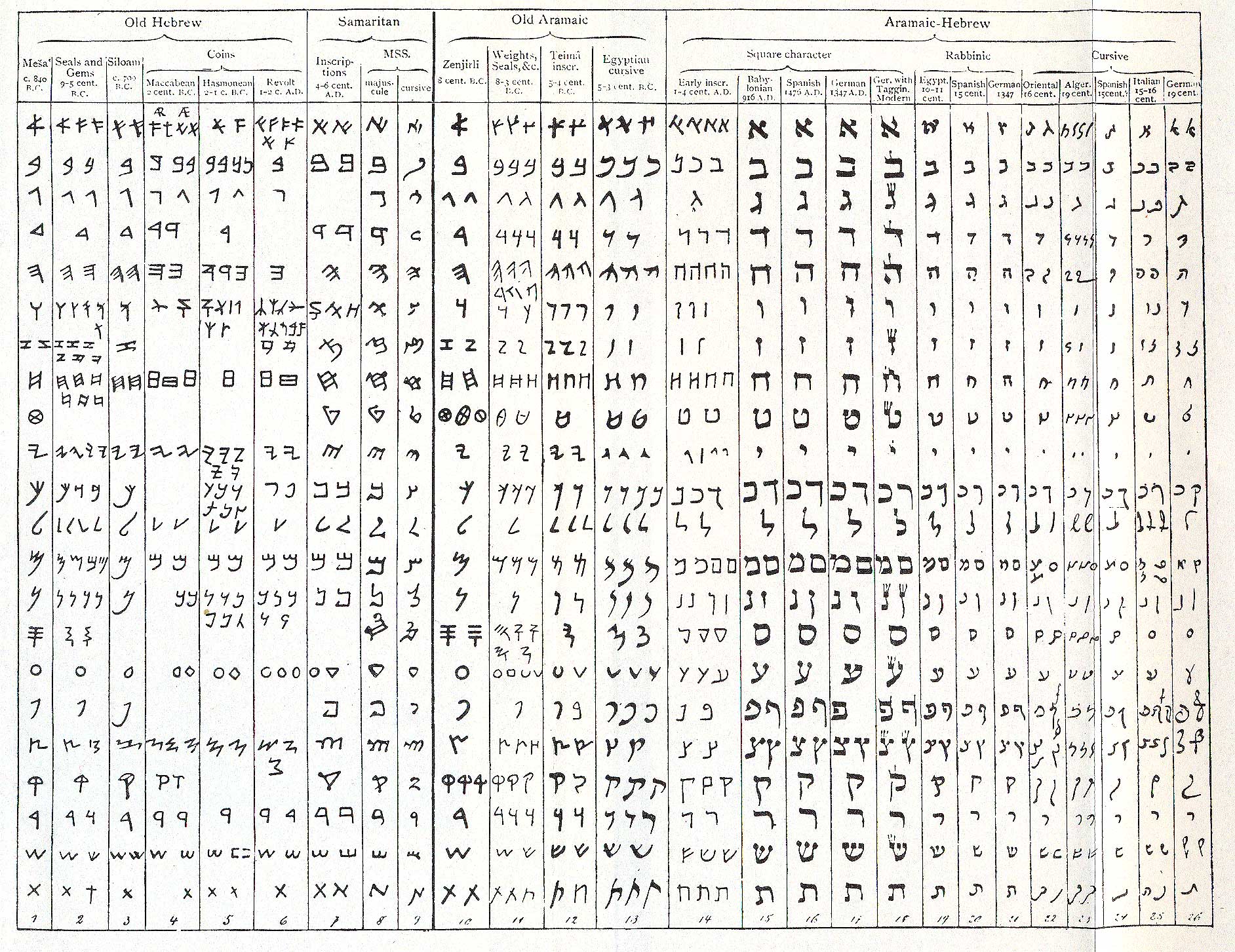
    The world is nothing but a collection of what has been written-on, and I would be terrifically remiss if I didn’t mention the stories of animals left by their tracks, as full and interesting in their ticks and glyphs telling as striking a story as the geometrical marks scene on your monitor.

    Trqcks--animal

    Tracks--hebrew

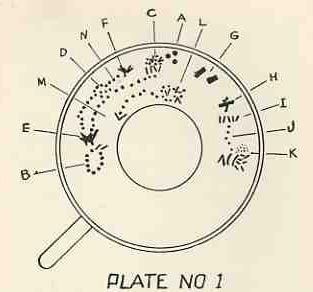
    All of this leads us to the delightful pamphlet that provided us with the semi-secret image at the top of this post.  The work engages the shadows of an ancient rite in an amused, amusing manner, not taking itself too terribly seriously, though does not abandon the possibility that fortune telling via the leavings in a tea cup is not impossible.  The image at top left, which might look like one of those Eric van Daniken drunken “alien findings”scooped out of a Mayan lintel, is the bottom of an empty teacup, the bits representing the varied exuda freed from the drunken tea. And according to this pamphlet and another 2000 years or whatever of Asian history, these bits are as much a representation of reality as the English alphabet; and according to my very quick reading of the thing, it is also open as much to interpretation as it is to creative misinterpretation, which I guess is where the poetry must be. The geography of the items of the teacup are as important it seems as the things left behind:  stalks, leaf bits, grounds are appraised for their wetness or dryness, their mobility or not, their position on the cup and their positions relative to one another, and on and on, dancing betwixt themselves in a changeable choreography of meaning and non-meaning, a closely gathered world of indefinite possibility.

    In a world filled with religions and superstitions and mythologies and hopes and dreams and fears, I have no problem at all with elevating tea-leaf-reading to a marble altar..  None whatsoever– so long as the ultimately satisfactory  Mr. Claus is received as well, or at least not bothered.

    I’ve reprinted the entire pamphlet below.  Somehow it is a very satisfying read.

    If you enjoyed this, check out the following earlier posts:

    Different Forms of Writing 2: Recording Movement. Dance Notation

    Different Forms of Writing 1: Big Writing With Light—Nollet, Citroen, Barnum and Packard

    Books
    of Shadows—Trithemius, Bacon, Porta, & Falconer vs. a Make-Believe
    Derrida on
    How to Make Something Unintelligible. Secret Writing and
    Ciphers.

    0 blog dec 19 tea291


  • The Magnetic Sleep Doctor and the Shelf-Life of Dream Images

    JF Ptak Science Books LLC  Post 382

    0-blog---Nov 19 sleep082

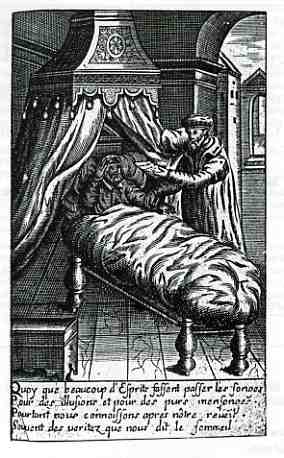
    This interesting and semi-bizarre image shows a doctor of magnetism (and necrologer and astrologer and several other things) conspiring at the edge of science and the heart of all things dark to adjust the dreams of the formerly sleeping man.  The patient is awakening and the doctor is doing, well, things that I don’t understand:  suffice to say that he was trying to assuage good dreams for the other man via the secrets of magnetism.

    The mysteries of sleep and the dreamworld were hotbeds of investigation from all sides, and there is a fairly deep publication record on the subject for the 1550-1700 period. This image comes from Le Palais du Prince du Sommeil, ou est enseignee l’Onriomancie autrement l’Art de Deviner par les Songes, printed in Lyon by Jean Pavhlhe in 1670, and written by the spectre-like M. Mirbel, whose history and biography are just about non-existent. 

    The idea of approaching sleep and dreams via magnetism is unusual even in the very unusual history of unusual ways of adjusting dreams–the interpretation of dreams is evidently closely related in mysterious and bendy ways, almost as convoluted and soft as the physical means used to induce them. 

    The history of big dreams and dreaming in general is far bigger than the issue of fixing them, and much paler, considering the vast range of imagery.  Jung (Memories, Dreams, Reflections), Havelock Ellis (World of Dreams), Freud (oy vey), Shakespeare (“we are such stuff…”), Leonardo, Joseph (and the Pharohs), William Blake, Solomon and of course Daniel, and then on and on into the night.

    Daniel’s
    dreams (as in The Book of Daniel) were gigantic and full, and there
    have been many others who have recorded their dreams in the history of
    literature and religion.  I must say though that the dream of King
    Prasenajit (the ruler of Kosala,  located on the northeast of modern
    Uttar Pradesh, India), a disciple of Buddha, had a dream in ten parts
    which troubled him greatly, and when you look at its elements you can
    see why:

    -Three jugs set in a row, one put against the other.
    The first and the last of the jugs are mutually exchanging the vapours
    of the liquids that are contained in them, vapours which never descend
    in the empty jug situated in the midst.
    -A horse that swallows the food concomitantly through the mouth and through the anus.
    -A tree full of flowers.
    -A tree full of fruits.
    -A man who is knitting a rope. Behind the man there is a sheep. The owner of the sheep eats the rope knitted by the first man.
    -A fox lying down on a bed made of gold, and eating out of golden vessels.
    -A cow suckling her own calf, against the law of nature.
    -Four
    oxen that arrive, bellowing, from the four corners of the horizon. They
    are rushing upon each other, in order to start fighting, but all of a
    sudden they vanish, right before clashing their horns together.
    -A pond surrounded by slopes. Its water is turbid in the offing, but clear near the shore.
    -A huge torrent, entirely red.

    This would give anyone pause, even more so if you were a disciple of the Buddha.  None of these images fit into my dream dictionary (especially the horse one), but perhaps they are deeply related to the times and not transferable over the centuries.  Which is an interesting way of looking at a particular time and understanding a bit of it that doesn’t normally sink into the public record–the expression of dreams might tell a little more about the time and place than about the person.  This sort of made-up historiographic (?) approach reminds me a little of snooping around old Domesday books and business/city directories, looking at the sorts of jobs that were common once upon a time and now slipped away into the tar pit.  So to with dream imagery?  Perhaps like just about everything else, dream images may well have a shelf life.  (I was going to reference Twinkies as an example contrary to this, but I understand that a new something-or-other has been added to it/them to make it so that these fine products will actually go bad after a while, rather than like before, when it could be counted on the cockroaches nibbling on them into eternity following the death of Dr. Strangelove.  Perhaps a former-chemist/librarian out there knows what this ingredient is and will share the knowledge?)

                                                                                             :

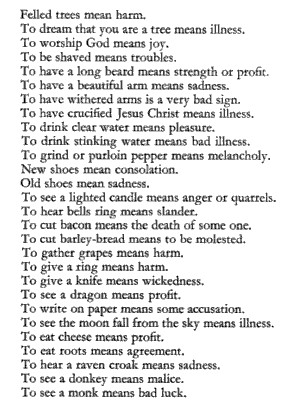
    Blog--magnetic dreamsFor example, this 18th century directory for what dream images may
    “mean” are mostly foreign to the general experience, I would say.  On the other hand, to attach meaning to the importance of dreaming about stealing pepper may be a little quixotic, but much less so than interpreting it as a harbinger f melancholy.  I know that to even mention the business of pepper theft in 1650 tells us a lot about its importance and why it would’ve been stealable and can tell us something about the foods of the time, trade, commodities and such.  Thinking about it in terms of a predictive element may not be as fruitful…


  • Where are the Dead? When is a pit a hell, a hell a grave, a grave a pit, and Hades not Hell?

    JF Ptak Science Books  Post Post 271

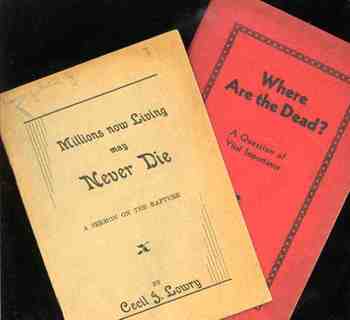
    Blogsept20_where_are_th_dead612 Oscar Lowry attempts to answer the question in the subject line of this post in a very red book of 46 shouty pages.  What he’s really concerned with, in Where are the Dead (1930), and what he maintains is of “universal interest to the saved and unsaved, the hearers and nonhearers”, is what happens to people after they die; more particularly though, Mr. Lowry is interested in differentiations in eternal damnations versus eternal doom.  And there is evidently a very wide difference here, as people in Hades are just in “prison”, waiting for their final judgment which will fling them into Mr. Cash’s ring of fire (well,”lake” of fire, actually).  There’s also little chance that the snakey charms of Orpheus’ poetry will ever change anyone’s mind at the gates of Sheol-Hades, leading anyone away from the firey pit.  The discussion of Hades and Hell and Sheol is interesting if not scary in Mr. Lowry’s hands, describing “Sheol-Hades” as a “prison”, its occupants waiting for final disposition to Hell.  Strong’s Hebrew opens the possibilities of definition with a number of translations for Sheol: the underworld, the abode of the dead, place of no return; without praise of God; wicked sent there for punishment; righteous not abandoned to it; of the place of exile; of extreme degradation in sin.  The most troubling of these in my book is the definition of what it is not, as in “when the righteous are not abandoned to it”, which seems both reassuring and really terrifying.. 
    Millions now Living May Never Die (1939)  is  a great title which leads ultimately to a not terribly interesting pamphlet about The Rapture.  Its also very badly timed for such a title–1939–as 20 or 30 million extra people would die who shouldn’t’ve by 1945.  I’m not sure why capitalization is required for the rapture, as it will probably not be confused with Another Rapture, or the Pseudo Rapture or even the Pre-Rapture–I must admit though that the mechanics of the rapture are not obvious to me, coming as it does after the Advent and Second Advent (which comes after seven years of Tribulation, or something like that).  The author, another Lowry , this one a Cecil from the Southwestern Bible School of Enid, Oklahoma,  writes with an abundance of capitalization about the impending “return of Jesus for His Bride”, and how the rapture will take you where you are, leaving the righteous to live on the earth, and others, well, not. The word “doom” appears more often than a semi-colon.  “Because the world is round, it will be night on one side of the earth and day on the other.  So many will be translated [i.e. “terminated”] that the great newspapers of the earth will carry in their headlines words similar to these:  ‘Millions have mysteriously disappeared from the earth’.  I am told that a certain large newspaper already have their type for for that event.”  The rapture will take you from “Satan’s slime pits” wherever they are, “at beach bathing and beer parlors ” to name a few, though I think that one can stop reading at being sucked into oblivion for sitting in the sand at Tybee Island, particularly if you’re five years old.  Be that as it may, probably everyone who read these the works when they were first published are now probably dead, enraptured or not.

    ·Posted by :

    ·in:

    — —

  • A Map of a Fortune in Frogs (1936)

    JF Ptak Science Books Post 263

    Blog1sept_16_frogs_detail555

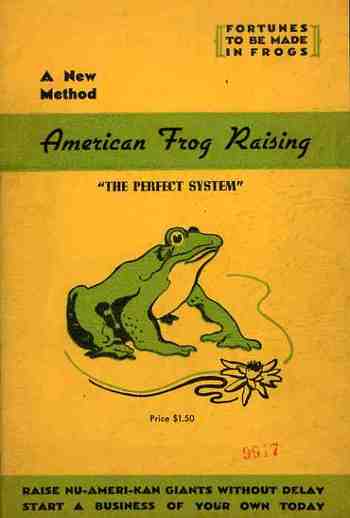
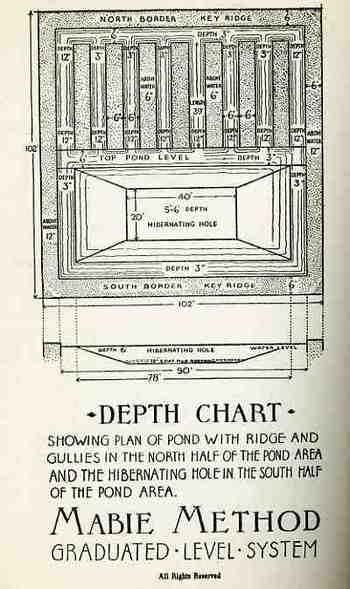
    This is the great promise of this remarkably mundane and contemporarily-wholly-removed pamphlet, which promises rewards and riches to be made in even the simplest backyard frog ranch, and all done with water, cement and no secret decoder ring. I mean, good night! I really had no idea whatsoever about such frog-goings-on in the depths of our country, even if the “depths” was Ridgewood, New Jersey, and it was the Depression (this pamphlet published in 1936).  I don’t have too much else to say about this remark effort except that–for all I know and I am not going to research it–this may well be the earliest Frog Ranch Plan published in the U.S.  There.  I said it (though my “key words” section says it all: “Frog farm, frog ranch, frog raising, frog map”).

    Blog1sept_16_frogs554_2

    Blog1sept_16_frogs_map556

    Blog1sept_16_frogs_contents557


  • God’s Atomic Bomb: the Divine, the Infinite, and its “Gift” of the Bomb, 1946

    JF Ptak Science Books  Post 234

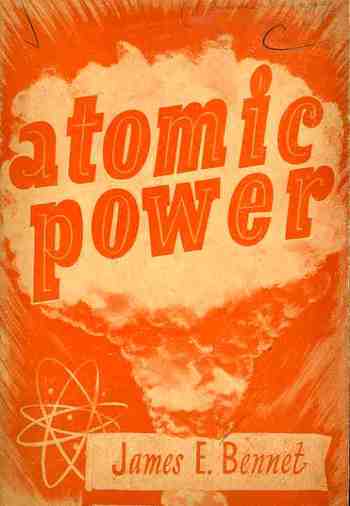
    Blogsept_2_atomic_bomb_god481

    I’d like to say that this was a class-of-its-own sort of work, but as it  goes this is hardly the case.  If I cared a little I guess I could establish a collecting sub-category in the nuclear fission–atomic–nuclear weapon collection for the popular belief that god ordained and transmitted the atomic bomb.  There are at least five other pamphlets like this floating around in the store, and I am certain that there must’ve been dozens of other grabby little publications like this proclaiming Almighty Influence in the creation of the atomic bomb.  I can understand the reasoning behind the power grab:  the bomb ended the war a week after its second use, sparing the lives, perhaps, of a million soldiers (American and Japanese) and years of societal/infrastructure rehabilitation by eliminating the need of an American invasion of the Empire.  So the denominator was simply the “saved (American) lives” part. 

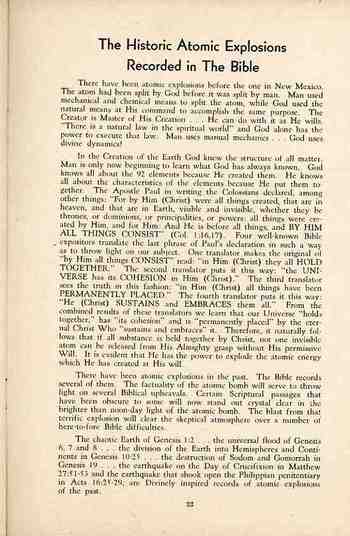
    Blogsept_2_atomic_bomb_god_2482

    Again, I can understand how this felt in 1945/6, but I still feel that getting the suspected creator of the universe involved in the making and use of the bomb was ill-advised.  The author of the first pamphlet reached back into history and credited god with simple solutions to complex situations:  employing the more modern political technique of controlling language in the Tower of Babel case (wher he also said that since Babel was only 105 years after the flood that Noah was still alive, and that certainly Noah “would’ve voted ‘No’” for the building of the tower); and using “Johnny Snowflake” to stop the “non-satanic” Napoleon from reaching “Britain’s doorstep (and obviousy not the Soviet Reds).  Bennet also  credits god with giving “Dr. Currie” (sic) the genius to “split atoms” in 1896. 

    The second pamphlet uses the atomic weapon a little more figuratively.  The author, Mel Morris, published this in 1945, which means he must’ve worked a little feverishly to pump up his bible prophesy and history to include the new atomic weapon to replace whatever else he had been using as a prophecy for end of times.  (As it turns out, “God’s Atomic Bomb” was more tempest and disaster in the bible, and not (whew!) the bomb itself.  Though as we’ve learned from scientologists and the sort-of creative mind of Ron Hubbard, a civilization came to the earth thousands of years ago and pummeled it with “atomic bombs” and other nastiness, polluting humans for milennia to come.  But that’s another story–suffice to say that Morris found many dozens of examples of “God’s Atomic Bomb” being used in the deep biblical past, and that the use of the real atomic bomb in 1945 was pre-ordained, and not without its figurative historical counterparts.  I’m not sure why any of this was necessary outside of proving to some small minority that these preachers could at least be contemporary and topical. 

    Blogsept_2_atomic_bomb_god_2txt483


  • Outsider Logic: Breathtakingly Impossible Plan for Reorganizing Life in the U.S, 1936.

    JF Ptak Science Books LLC  Post 212
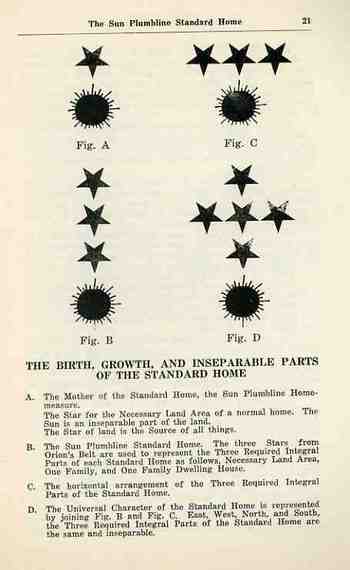
    Blogaugust_23_impossible_books_plum

    This pamphlet comes from our extensive Naïve Surreal collection, which is composed of (a) pamphlets that were concerned with commonplace ephemera in the past that today looks implausible or impossible, and (b) pamphlets that addressed issues of, shall we, a mostly-internal, very personal, High Imagination that may or may not have been part of the visual world.   

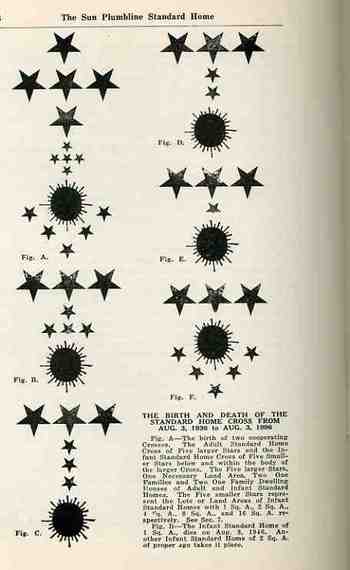
    This pamphlet, written in 1936 by Arthur Russell Groves, calls for nothing short of the reorganization of the social structure of the United States via systematic adherence to the “Coming Sun Plumbline Standard Hone via the National Constitution”–an idea which came in several parts to Mr. Groves through dreams.  The philosophy of the Sun Plumbline etc. is so spectacularly odd that it nearly defies description.  (For example, “sun plumbline” is “the absolute perfection of the Standard Home Measure  Sunspascc (not misspelled) Trip”, where “Sunspascc” was “the second name of the Tentative Standard Home Amendment, a two-fold meaning of unquestionable perfection and of the journey of life in perpetual sunlight, and consists of the first letter of the following eight words—standard, universal, normal, perpetual, abundant, self-supporting, cooperating, and creating…”  Oh dear.

    Blogaugust_23_impossible_books_pl_2

    As irresistible as this document seems, its unconnectedness is just far too demanding to allow understanding.  One good measure of this:  it defies memorization.  The pieces and bits that form this work are so logically fractured that quoting from memory would be exceptionally difficult, or hopefully so. 

    Another interesting bit about this pamphlet is that no matter where you may lose your place when reading it (and which happens often as your eyes easily slide off of the page) you have no idea of where you are, and you can pick up the reading anywhere at all.  It is a perfect example of a very interesting sub-set of books:  books whose words disappear while being read.  You can also read it backwards with little observable difference. 

    Mr. Groves was definitely, deeply engrossed in this philosophy–my guess is that he was pretty well consumed by it.  In his defense I’ve got to point out that he lovingly dedicated his work to his daughters.  He undoubtedly had little doubt in his own doubtful visions (one of which was about the letter “S”), and was certainly proud enough and sure enough to honor his daughters with the publication of his work.  So, as far out and as deeply removed as his ideas were, the bottom  line was that he was still someone’s daddy.
    Blogaugust_23_impossible_books_pl_3

    ·Posted by :

    ·in: