A Daily History of Holes, Dots, Lines, Science, History, Math, Physics, Art, the Unintentional Absurd, Architecture, Maps, Data Visualization, Blank and Missing Things, and so on. |1.6 million words, 7500 images, 4.9 million hits| Press & appearances in The Times, Le Figaro, Mensa, The Economist, The Guardian, Discovery News, Slate, Le Monde, Sci American Blogs, Le Pont, and many other places… 5000+ total posts since 2008.

Category: Books–Great Cover Art

  • Mud, Abstract Expressionism, and the Brick Color Field

    JF Ptak Science Books   Post 2342
    Mud abstract


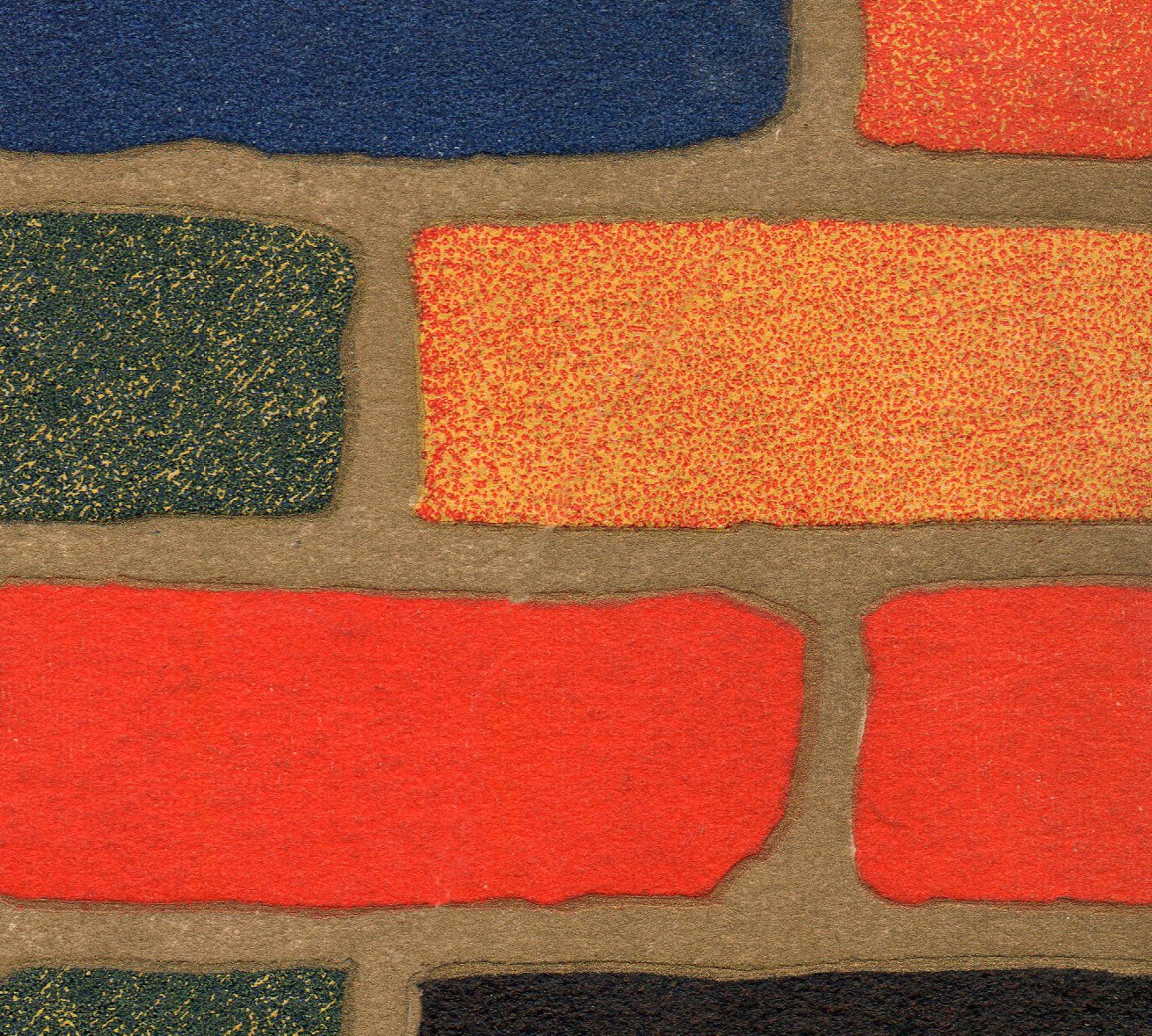
    Okay, so, this may only be a detail of a cover of a quietly-uncommon and proto-bizarre pamphlet on bricks, but when you look at it in a certain way, it may suggest a bit of found abstract expressionist art. Or even a Cubist-something.  I can see it as a color field–a very, very hard-edged Rothko detail comes to mind.  Perhaps if Pollock arranged entire bricks as his medium rather than dripped paint, he may have come upon an expression such as this. Or not.  
    Poster---MUD 364[This image is available as a 13″x19″ 600 dpi poster, here.]

    The pamphlet comes from my collection of fantastically-titled and creatively naive pamphlets and books.  After considering their reaching, speculative, bizarre, and surreal titles, they fall into a number of sub-categories, including:

    • titles with question marks “?” (like the two wonderful pamphlets simply entitled “What ?” and of course the two that have no titles but question marks);
    • titles with exclamation points “!” (these two marks actually don’t occur very often at all in titles, especially when the title itself already has a built in question/exclamation mark); 
    • titles that include the phrase “the history of…” or “the story of….” so long as that history/story is (very) unusual; 
    • titles that demand something or other of  “America”  (i.e., “Will America be Invaded?” or “America, Mussolini or Moscow” or “Sandbags, Worms and America”);
    • title pages with American flags.

    This excludes a lot of the general naïve-surreal and historical pamphlet collection, but these, I think, would make a great exhibition of book of books, simply because so many of them have an unquestionable “what in the _” reaction capacity to them.

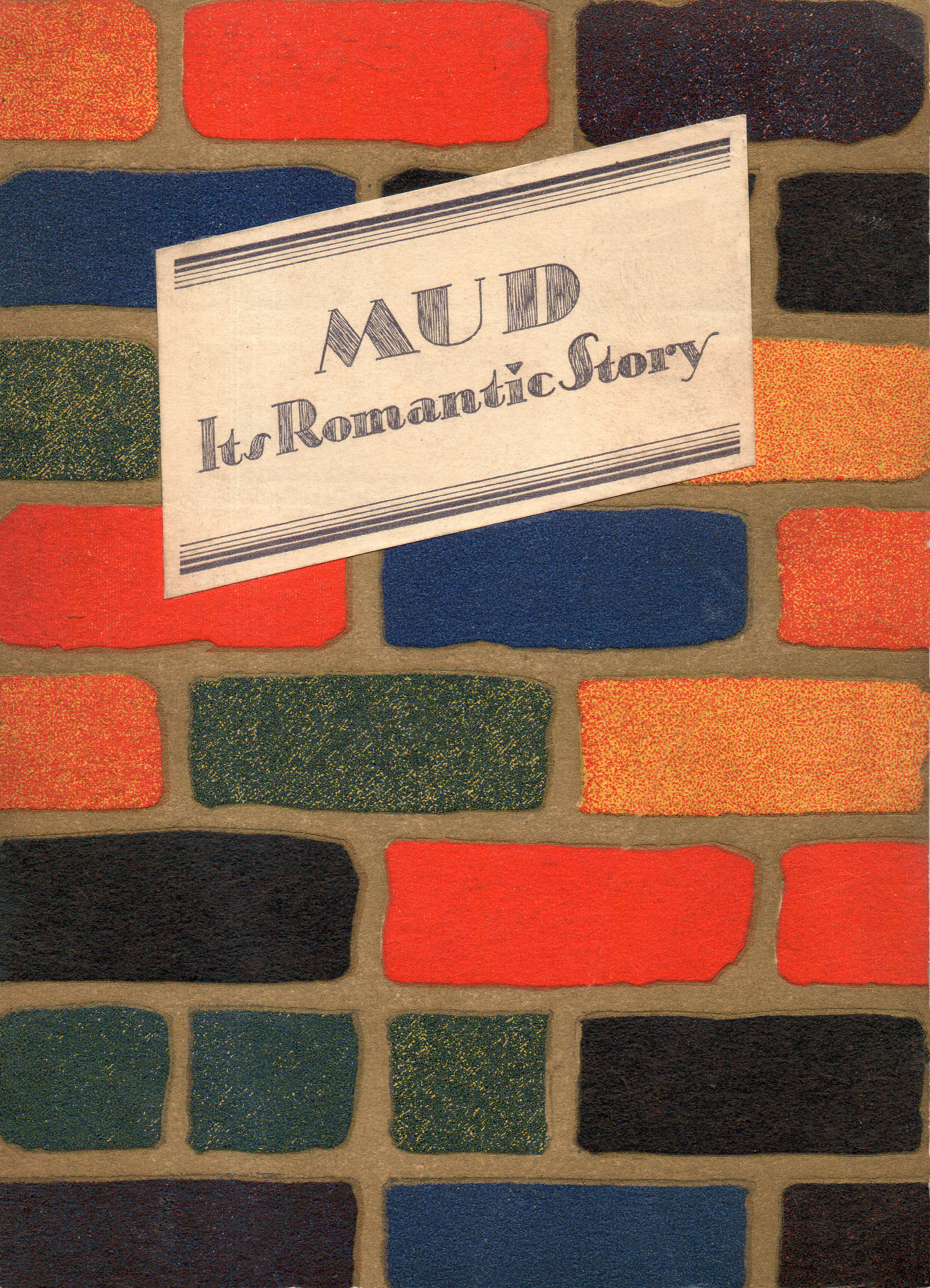
    The found-abstract detail comes from Mud, its Romantic Story, (by Richard G. Collier, for the Common Brick Manufacturer Association of America, Cleveland, Ohio) and is a prime example for the collection:  a terrific title and a beautiful design that offers a lot more than a simple story about bricks (even though it does contain a lively little history of brick making in America–the good content almost takes away from the fantastic title, but so it goes).



  • Books with Titles that Cannot Be Ignored

    JF Ptak Science Books  Quick Post

    “‘Any book that is worth reading once, is worth reading twice”--B. Franklin.

     “Read much, but do not read many books”–Pliny

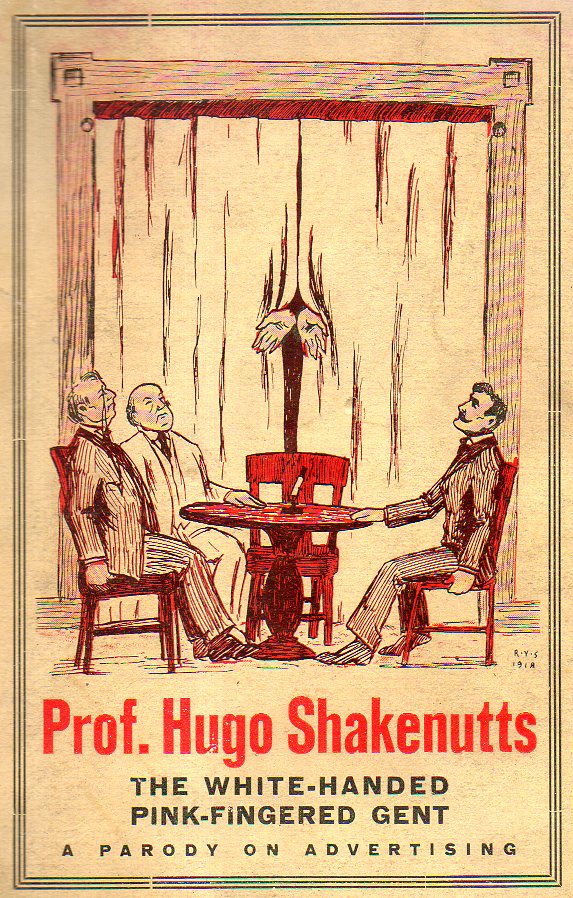
    SHakenuts360

    In my recent history there are many works whose titles I cannot help to ignore because they are, frankly, impenetrable for me–Nature has partially become that way for me, particularly with the biological sciences. In an extreme show of what I do not know, there is an entire legion of them that are published every day whose titles are so distant from my knowledge base that they might as well be invisible.  There many others titles that almost call out for unknown infamy, like John Jeb, of Calhoun County and My Search for Truth by any number of people, and on into the immobile night, widened by an entire new galaxy of the self-published.  Of course, if there were slight changes in those titles, like, say John Jeb, of Calhoun County, Me or My–My!–Search for Truth they become instantly interesting.

    On the other hand there are those books whose titles simply cannot be ignored because they are weirdly inflammatory, or coyly hyperbolic, or halfway unintentionally and trippingly absurdist, and the like.  The Story of a Ripe Banana is one such title for me, and is a fine example for the category of books whose titles are far more interesting than the work they describe.


    ·Posted by :

    ·in:


  • Superior Cover Design: Battery Catalog, 1940

    JF Ptak Science Books   Quick Post 

    This is another quick stop to appreciate a job-well-done, a wonderful illustration for a largish catalog (12×9 inches) for Exide Electric Storage Battery Company (Philadelphia), which was printed in 1940. It would be simple to have a plain text cover for this sort of thing, being batteries and all, but Exide went the extra step and had designed for them this wonderful cover. It seems to transfer the reliance of their battery in the dark and cold environment via the working trains, their lights working, safe and secure. It is understated and very effective.

    Cover--batteries433

    ·Posted by :

    ·in:


  • Help (1946)

    JF Ptak Science Books   Quick Post

    Cover--Help431

    This pamphlet was written in 1946 and is indeed a plea for help–mostly for food, and medical aid, for the displaced persons and survivors of WWII. It is a striking thing, blunt, necessary. The cover of the work does its job.  

    ·Posted by :

    ·in:


  • Poster Series #1–Big Red Wobblies

    JF Ptak Science Books      Quick Post–Poster Series 1

    Poster Reprint  General Strike Public[This is a 1 meg version of the 16 meg finished version of this cover art.]

    • This is the first of the newly-reinstated Poster Production part of this blog.  I did many of these some years ago, though they were mostly technical drawings of the B-17 (G!) and such.  
    • The new service offers 5-25 meg reproductions on 13×19″ professional matte photographic paper using pigment inks, which will last a long time without fading.  

    This is the fantastic artwork for the cover of the pamphlet The General Strike for Industrial Freedom which was printed in Chicago in January 1933 by the Industrial Workers of the World (the Wobblies).  The IWW was pretty far left–okay, very far–and was founded in 1905 by Eugene V. Debs, Mary Harris “Mother” Jones, William D. (“Big Bill”) Haywood, Daniel De Leon,  Thomas Hagerty, Lucy Parsons,  and others.  By the ’30’s membership in the organization was off probably an order of magnitude, its heydey more “dey” than “hey”, its flash gone. 

    This is available on the new Poster Blog, here.  


  • Chicago Jails Reality Check, 1947

    JF Ptak Science Books  Post 231

    Chicago Lockup

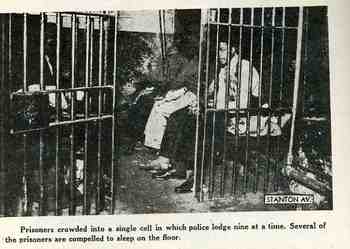
    The appearance and tenor of this pamphlet is very deceptive–my initial reaction was an eyebrow-raising surprise, followed by a humorous deception, all aroused by the incredible, screaming cover design and the somewhat bizarre stories and headlines in the text.  How can one refuse an article like this (seen below)? The “funny” part of the pamphlet was stopped dead cold when I started to actually read  the  stories accompanying  the  sub-title malaprops.

    Blogaugust_20_chciago_jails_clip4_2

    The point underlying all of these design elements which seem so much sugar to my eyes was that the prisons in Chicago were horrific–especially for African Americans, a point which is not explicitly made but alluded to.  None of this seemed particularly surprising to me, except that there were just so many reports–the shear numbers of bad prison conditions was just staggering. 


    Blogaugust_20chciago_jails_photo420


  • Blank and Missing People and Things Part 10: Fat Embarassment

    JF Ptak Science Books  Post 221

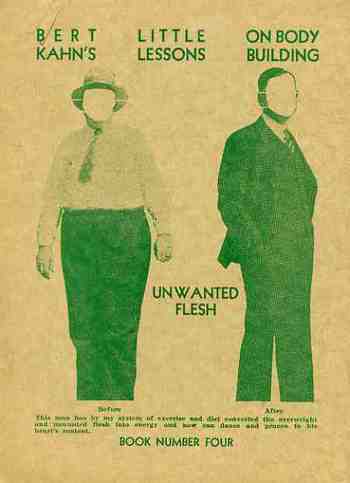
    The newest entry in the continuing series of Blank and Missing Things and People  is an odd, removed little pamphlet by a former wrestling champion on the attack on unwanted flesh.  (I’ve come across this unusual phrase a number of times now:  “unwanted flesh”, doesn’t exactly roll off the tongue…)  It was published in 1933 and tried to convince its readers that one can “never be too fat to reduce”.  It certainly singles out married women as a new and lucrative market:  “most fat women are married and of middle age and the latest and most approved method of taking flesh off the human form is by means of well regulated physical culture exercise…”   He states:  “the plump woman is out of style”.  In any event I was attracted to the pamphlet for its culture and the two faceless men waiting for an identity…
    Blogaugust_26_missing455