A Daily History of Holes, Dots, Lines, Science, History, Math, Physics, Art, the Unintentional Absurd, Architecture, Maps, Data Visualization, Blank and Missing Things, and so on. |1.6 million words, 7500 images, 4.9 million hits| Press & appearances in The Times, Le Figaro, Mensa, The Economist, The Guardian, Discovery News, Slate, Le Monde, Sci American Blogs, Le Pont, and many other places… 5000+ total posts since 2008.

Category: Books–Great Cover Art

  • The United States Invaded, 1916-1944

    JF Ptak Science Books  [Expanding an earlier post from 2013]    

    There were 75 entries to this blog in June–see archive at left to access

    • “The cheek of every American tingle with shame as he reads the silly, flat, dishwatery utterances of the man who has been pointed out to intelligent foreigners as the President of the United States”–The Chicago Times, on the Gettysburg Address, 1863

    We all know today what to expect when we hear something referenced as a Gettysburg Address–and we certainly know what something might be if it was referenced as not-the-Gettysburg-Address.

    The address as it was when Lincoln gave it didn’t even have a title, named as it was post  facto by the newspapers and periodicals covering the event (on the spot or remotely).  The speech is considered as being among the greatest ever given by an American, though at the time it its reception was very mixed—in many cases it was seen as a failure and even as an embarrassment to the solemnity of the moment and place. There were many newspapers which panned the speech (as in the case above with the Chicago Times, which at the time was considered more of a Democrat paper than anything else), while others (like the New York Times gave the speech a warm reception.   The speech’s presence in national memory was crafted over time (not unlike Mr. Leonardo), its perception formed into the polished gem that it is seen as being today. 

    The possibility of the implied actions of the titles of the pamphlets below were somewhat similar, though mostly in reverse.  I’m not saying that some of them were always seen as quacky and the works of demented seers; their titles and possible content, though, were not seen as dismissible, and their concerns were real and a possibility. The concerns over “invasion” today depend on what invasion means.  I don’t imagine that people are seriously considering the possibility of a land or air force attacking this country, though other sorts of invasions (biological, chemical, cyber, etc.) are a possibility.    
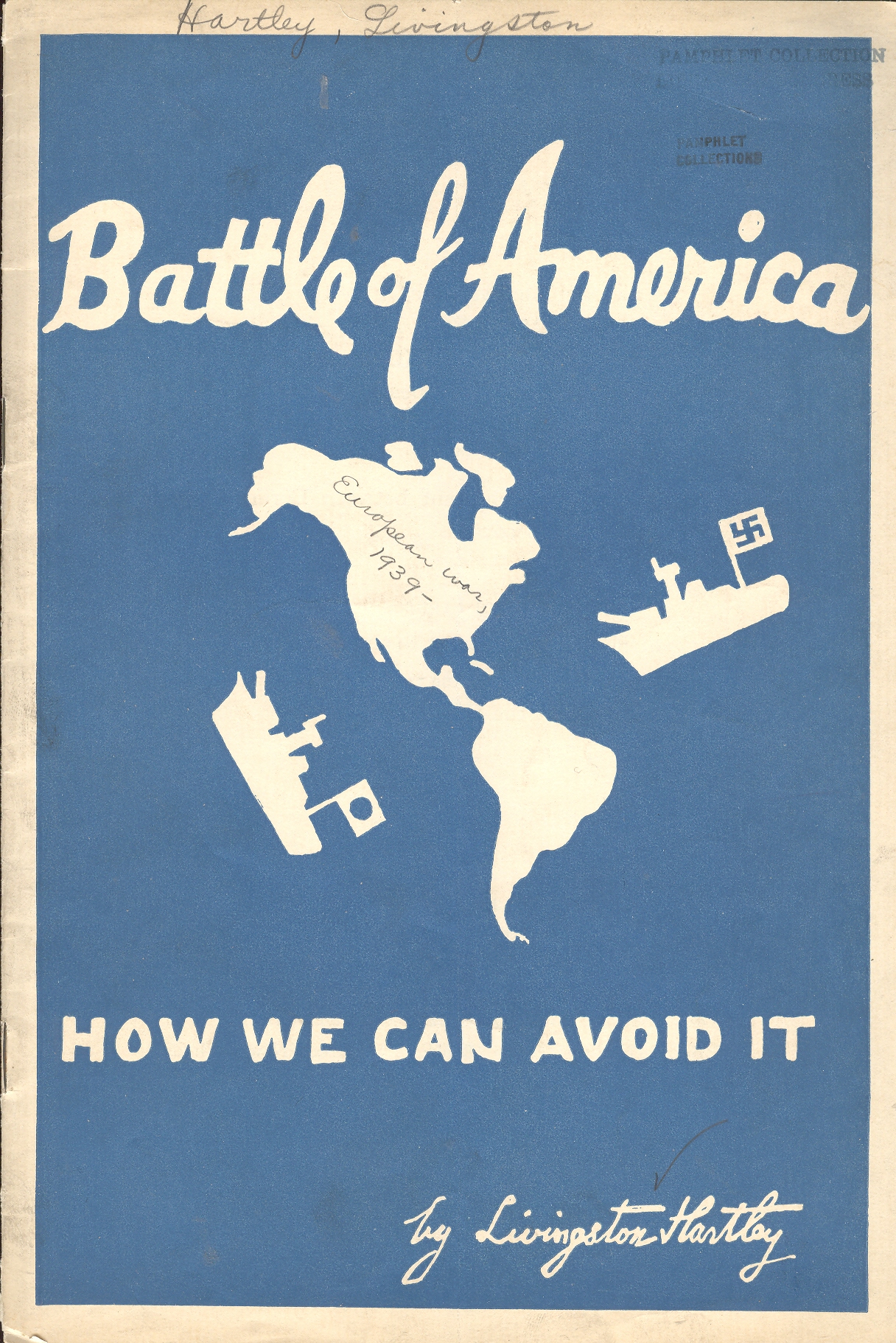
    ==Blog July 15==bsttle for amer

    The Battle for America/How We Can Avoid It (1939) was published by the Committee to Defend America by Aiding the Allies (and headed by William Allen White, iconic middle America newspaper editor and editorialist) which attacked isolationism and advocated strong support of the European effort.  The thinking here was that if America didn’t become involved now it would so later, with battle lines of a Nazi-illuminated truce drawn close to American borders.  So it was a pay-now-or-pay-more-later position from a man who supported the New Deal but whop didn’t support FDR. 
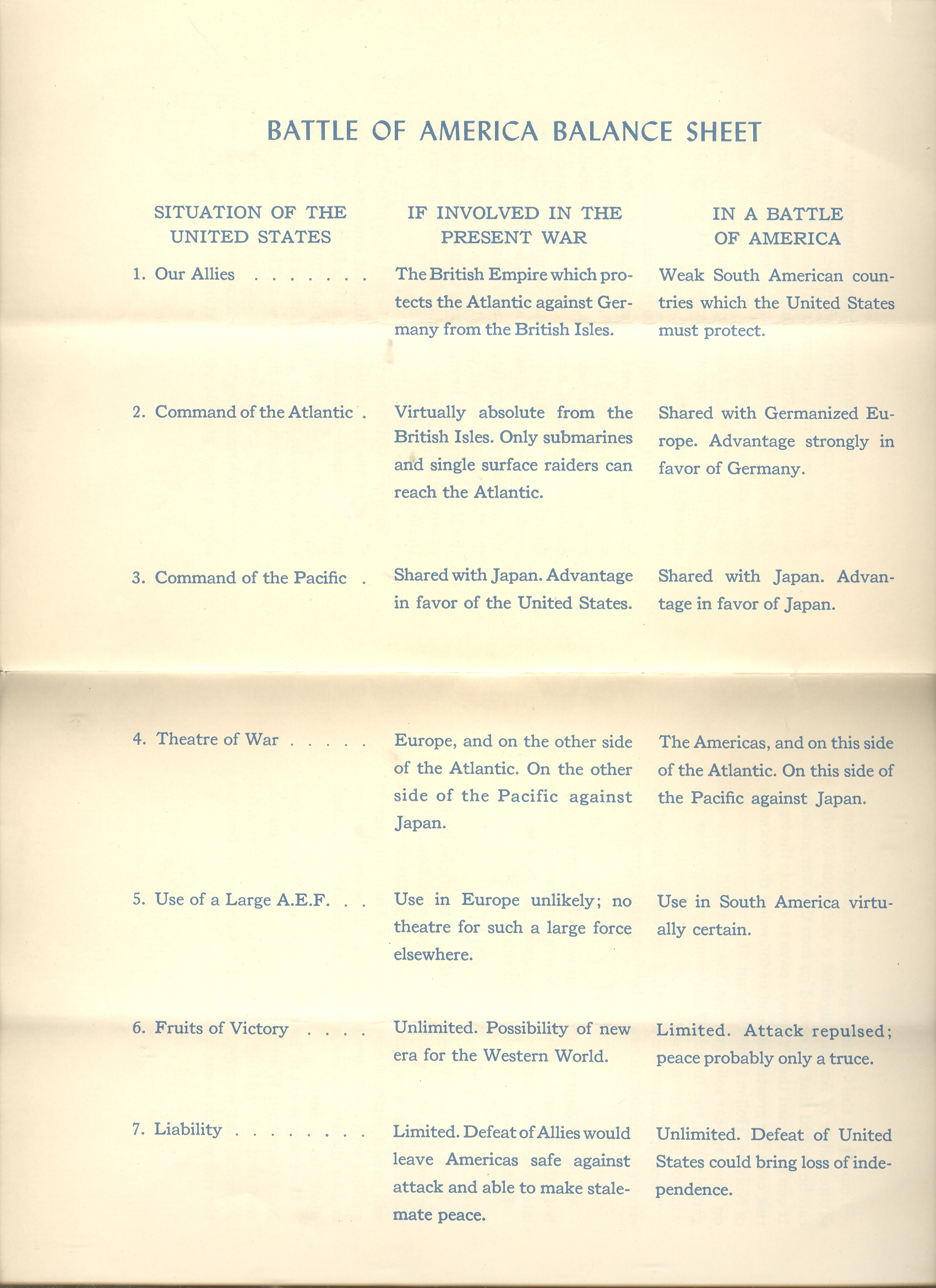
    ==Blog July 15==battle detail


    Much of this thinking looks a bit tenuous to me.  For example the position excluded the use of an American expeditionary force in Europe (“for theatre for such a large force elsewhere”), though if nothing at all were done there would be a “certain” use of the AEF in South America combating Nazism.  Also, if the U.S. backed the Allies with supplies and war materiel the “liability” to the US in the consequence of European defeat “would leave America’s fate against attack and able to make stalemate peace”.  So at the very least, doing a little bit of something would d at least allow us to make a truce with the German/Japanese alliance.   Doing nothing at all in this area would infer “unlimited” liability, and “defeat of the United States could bring loss of independence”. (“Could”?)

    The way aid ourselves in this war “(was) to aid  Britain to hold out to defeat Nazi Germany….the chance for Britain to hold out and win is a good risk for America”.
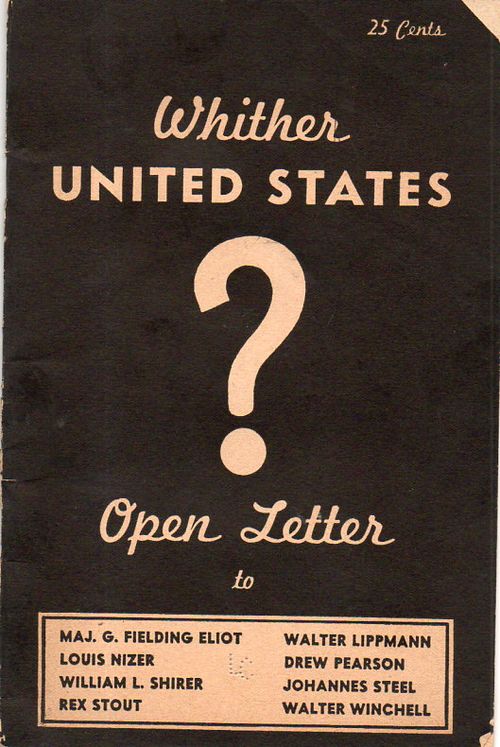
    America Invaded Tetens166

    Then there is Whither United States?, written fairly late in the war (1944) by T.H. Tetens, who was a journalist (born 1899) thrown into a concentration camp in 1933 and who subsequently escaped, making a career in the U.S. The provocative cover brings up a real issue inside, as Tetens questions how people are appointed to sensitive positions in the war-time. His major example is Hans M. Hoffmann, who was appointed to a critical post in the Office of War Information.though Tetens’ investigation shows that Hoffmann was the editor of teh Staats Zeitung, which was pro-Germany and Hitler-supportive through Hoffmann’s tenure there from 1933 to 1941. I don’t know about Hoffmann–he doesn’t show up in any of my references here and doesn’t make an appearance in this capacity on the internet, but Tetens seems to make a very strong point.  And hence, I guess, the large question mark.

    The next pamphlet, Will America Be Invaded, was published by the Christian Fellowship Press in Akron, Ohio, in 1941, and leans mightily upon scripture to state assumptions about the coming menace to America being presaged in the Bible.  That invasion also seems to be allowed by God (according to prophesies and such) in pursuit of murky results.  The conditions which will prevail “when God permits invasion” (according to this person’s reading of the bible)) include the formation of monopolies, extensive wine and music, “unbelief in God’s judgments”, conceit, “wine and bribes in high places”, and “perverted moral stanfa5rds.  All of this—it is claimed—can be remedied through one medium:  prayer; and prayer through only one mediator, Jesus Christ, who would then take the communications to god’s ear.  
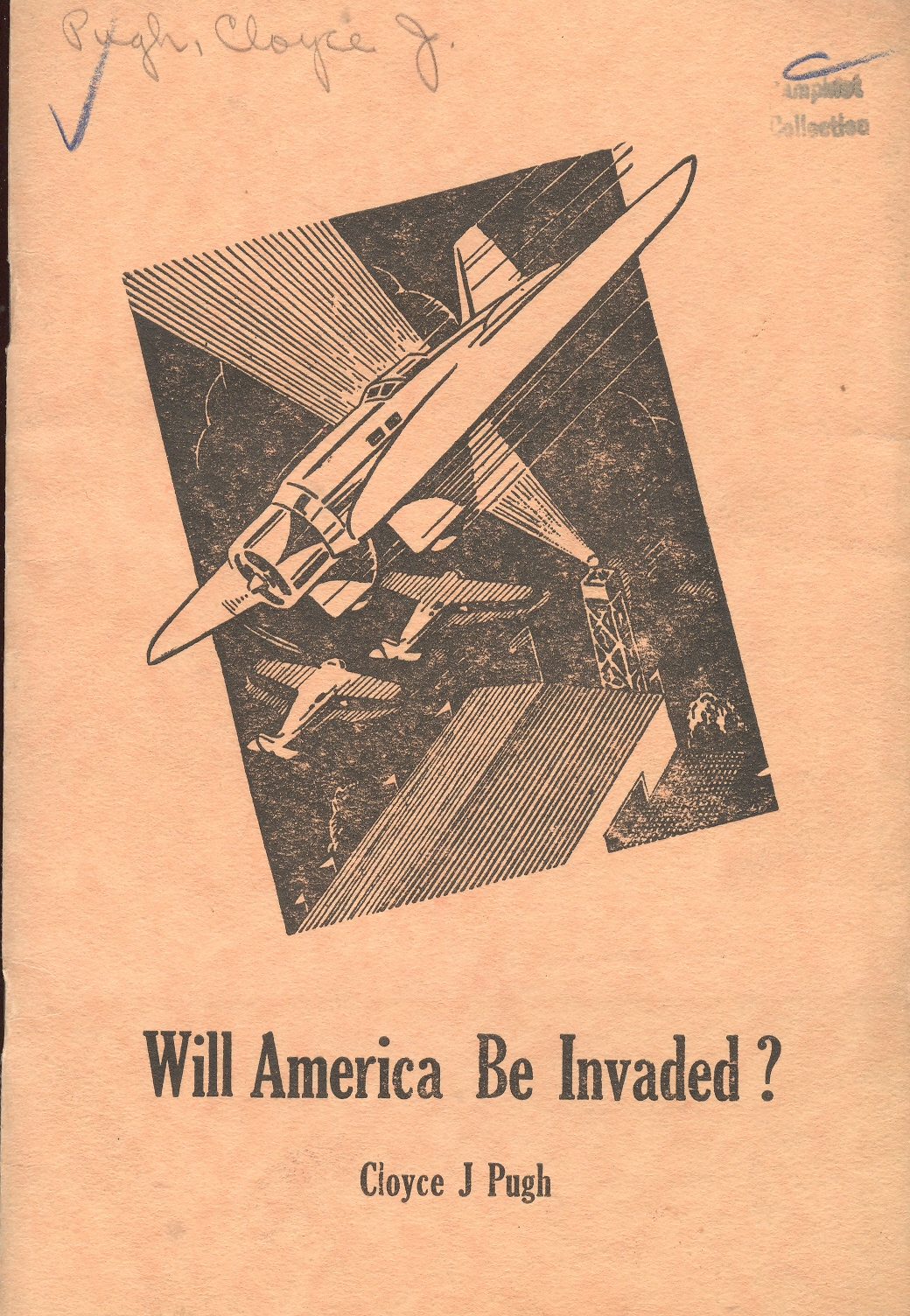
    ==Blog July 15==will america be


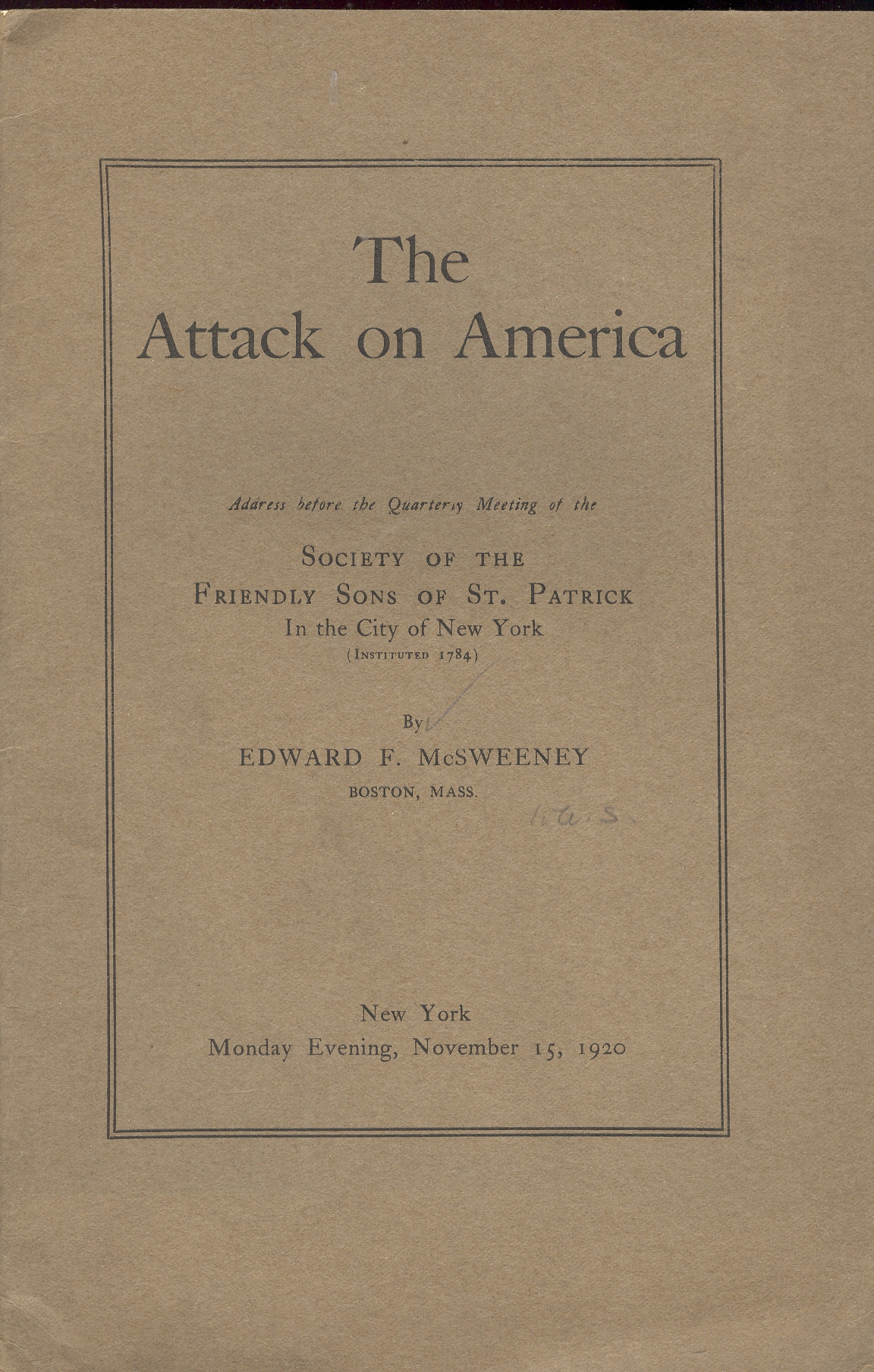
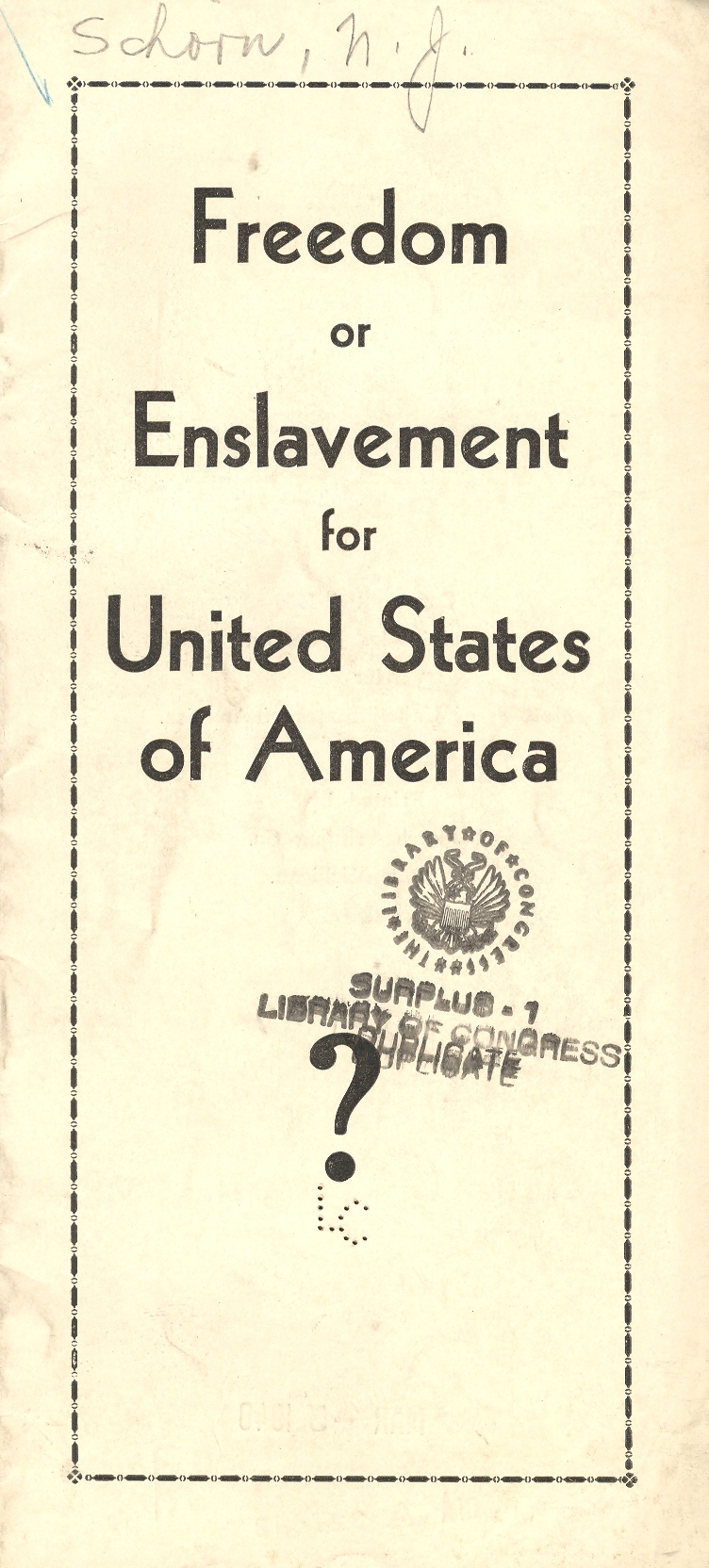
    The Attack on America, published by the Friendly Sons of St Patrick (of NYC), was a cautionary pamphlet published in 1920 warning against certain dispassionate evils of British propaganda in the United States.  Freedom or Enslavement for United States of America (sic), published in 1939 for the Mothers of United States of America (sic) advocated a freedom policy that prohibited conscription in foreign wars and would present a state of permanent neutrality. It also made some pretty vicious anti-Roosevelt attacks, finding him the Socialist root of the coming empire of American evils with a wildly power-mad and legislative-grabbing presidency.
     ==Blog July 15==attack omn amer

    Quite a grouping of pamphleteers concerned with the potential overthrow of the United States, each seeing the unfortunate possibility of national death via divergent and disparate means:  the fall of the country due to not being part of the Allies during the war and also for being in it; biblical ordination of invasion that is only combatable through prayer; British and European propaganda control of the national welfare; and of course the diabolical Socialist menace of Franklin Roosevelt and the imperial presidency as the ruination of the nation’s future.  All of this gently hidden by disturbing titles which really don’t give you a hint about what wildly unexpected ways the end was approaching.  And whatever they were, they were definitely not high-order thinking.
     ==Blog July 15==america slave


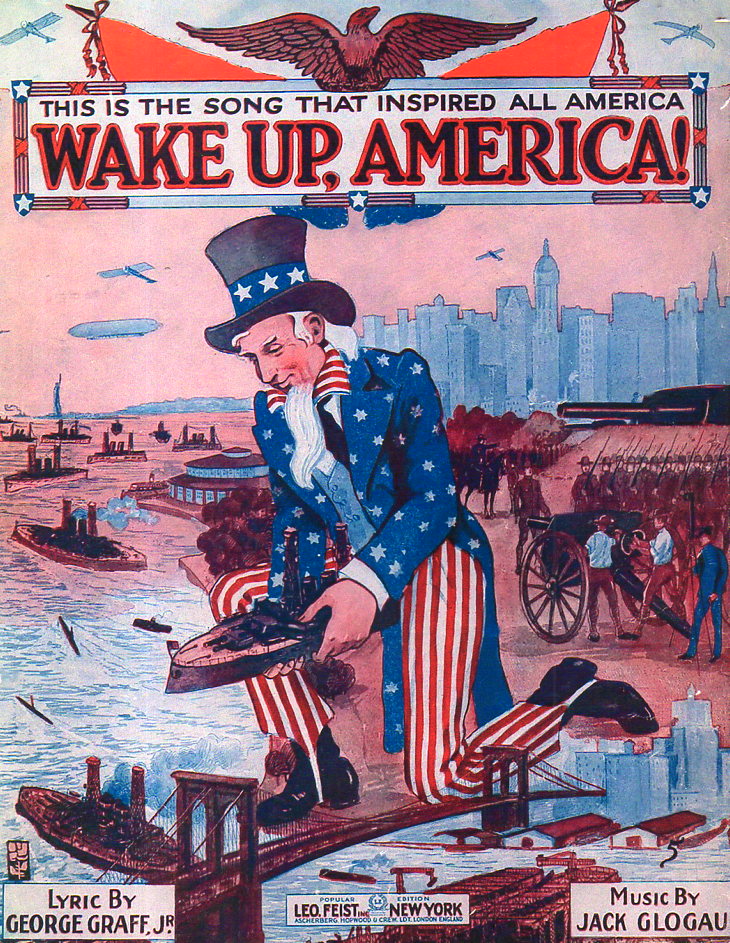
    And then there is this:

    America Invaded  Wake Up Amerrica 167

     To listen to the song, check out this link to the Library of Congress  (male solo, orchestra), 1916. 


  • Great Cover Design–Massiveness and City Profiles

    JF Ptak Science Books   Quick Post

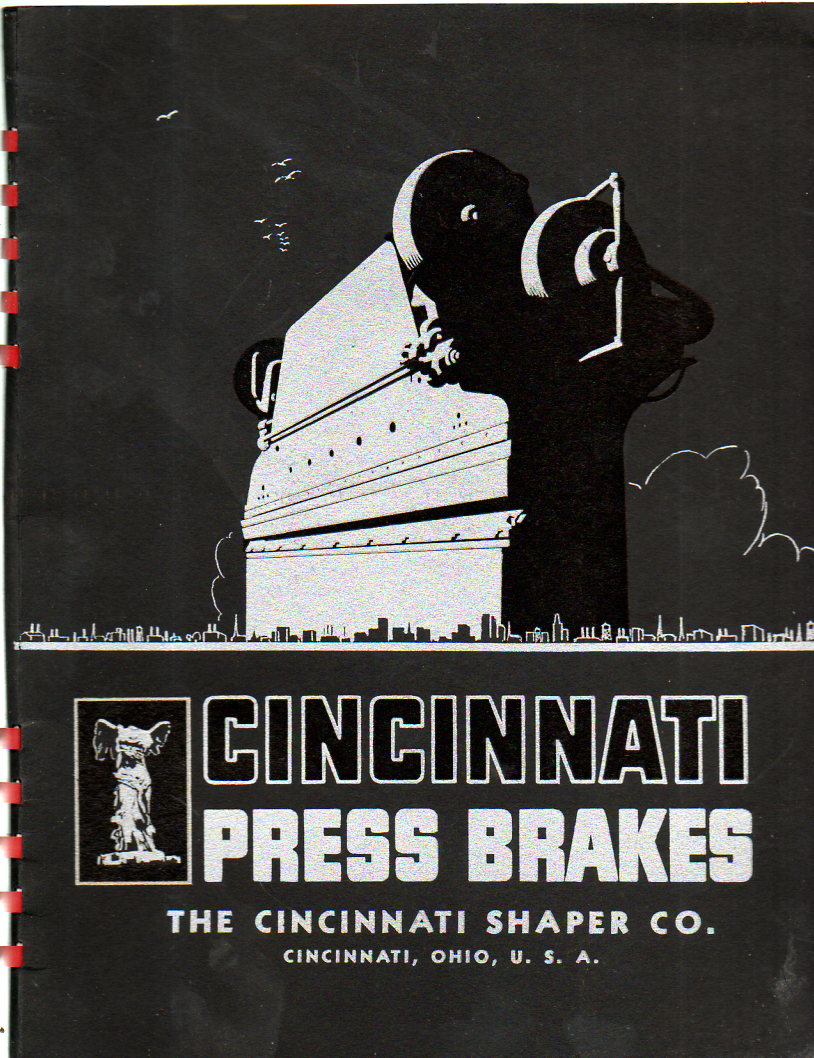
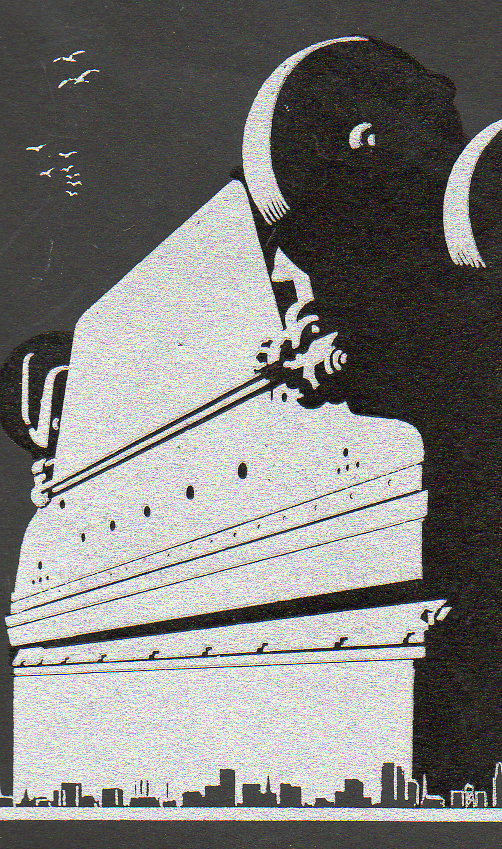
    This fine design belongs to the Cincinnati Shaper Company (Cincinnati, Ohio and “Pioneers of he Steel Press Brake”) Catalog B-1, displaying and promoting their massive and extremely powerful machines for forming shapes in metal.  These were true and beautiful beasts of machinery, ready to punch and curve and trim and notch all manner of metal.  And the cover of their catalog gets that point across very nicely:

    Design--Cincinnati Press Brakes023

    …which is a detail from:

    Design--Cincinnati Press Brakes022


  • German Police in Caricature, 1926

    JF Ptak Science Books   Quick Post

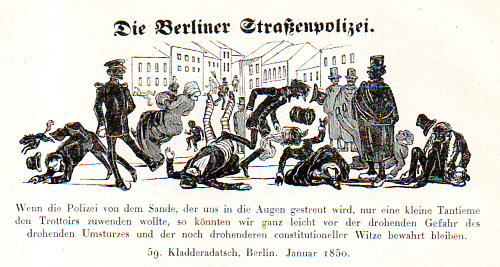
    Police caricature996

    I’ve long found this book (Die Polizei in der Karikatur, by Fritz Hellwag, published by Gersbach & Sohn, Berlin, 1926) interesting, though not interesting enough to go looking for the other nine (!) volumes in this slim series1. The images of the police are at best slightly benign, but then almost entirely mostly-negative, with a major dollop of vicious and crushing.

    Truth be told I bought it for the rear cover design/medallion:

    Police caricature994


    Police caricature995

    For a long time I’ve been meaning to begin a series on Weimar Germany, mostly through the long run of Illustrirte Zeitung (Leipzig) that I have here covering WWI and then through that 1919-1932 period that is so, well, “full”.  Perhaps that can begin soon.  The political/social crush of the 1919-1929 period was remarkable, and the decade+ as presented in the IZ is (as its name states) very illustrated…

    Notes:

    1.  The others in the series–edited by Dr. W. Abegg, a high-ranking police official–include [with notations “672 abb.” meaning “62 illustrations”, “125 S.” meaning “25pp”, and “Bd.” “meaning “volume”]; Die Polizei in Einzeldarstellungen including  Band 1: Polizei und Volk (von Ernst van den Bergh, 32 Abb., 119 S.); Bd. 2: Geschichte der Polizei (von Kurt Melcher, 43 Abb., 119 S.); Bd. 3: Polizei und Politik (von Bernhard Weiss, 140 Abb., 160 S.); Bd. 5: Polizei und Wirtschaft (von Julius Hirsch u. C. Falck, 83 Abb., 167 S.); Bd. 6: Polizei und Verkehr (von Erich Giese u. H. Paetsch, 207 Abb., 198 S.); Bd. 7: Polizei und Technik (von Franz M. Feldhaus, 80 Abb., 134 S.); Bd. 8: Polizei und Kind (von H. Degenhardt u. M. Hagemann, 65 Abb., 124 S.); Bd. 10: Polizei und Mode (von Max von Boehn, 124 Abb., 119 S.); Bd. 11: Polizei und Zensur (von H. H. Houben, 62 Abb., 141 S.); Bd. 12: Die Polizei in der Karikatur (von Fritz Hellwag, 178 Abb., 125 S.).


  • German Anti-U.S. Caricatured Propaganda, 1918

    JF Ptak Science Books  Quick Post


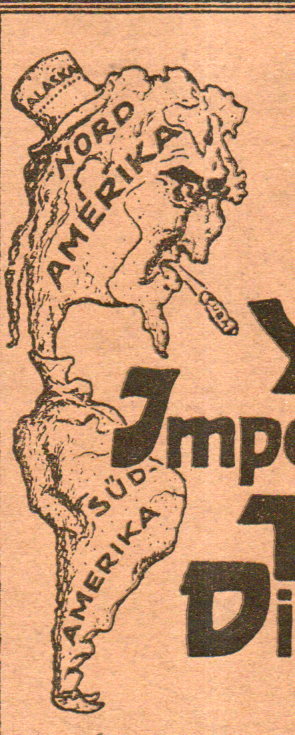
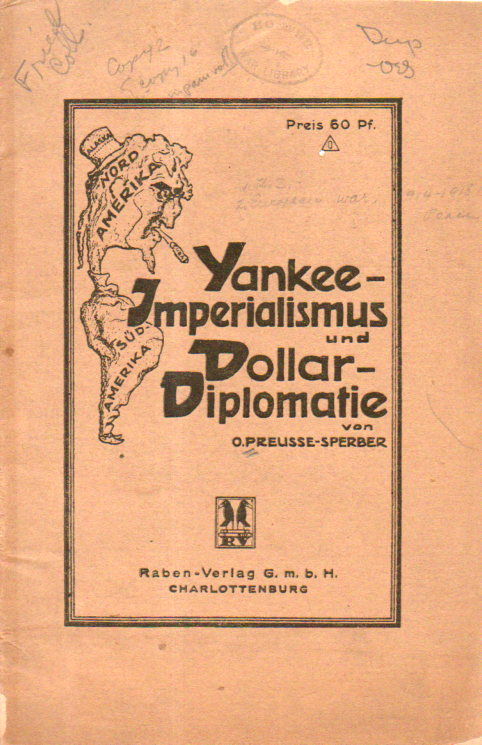
    Yankee Imperialismus und Dollar Diplomatie by O. LinkPreusse-Sperber is a rant against the United States–not so surprising as it was published in 1918, the last year of WWI.  I’ve selected this to share because of the cover art more so than the content. This is an interesting copy of a scarce little work (only four  copies are located in the OCLC including Smith College, the British Library, Bibliotheque Nationale, and BM Lyon, while Harvard and the NYPL have copies but not originals) and has a nice provenance of its own, coming to me from the Library of Congress Pamphlet Collection via the Hoover War Library at Stanford.
    WWI anti-US propaganda955

    • The original is available for purchase at our blog bookstore, here.  

    WWI anti-US propaganda954

    ·Posted by :

    ·in:

    —

  • The Weight of Humanity on Book Covers

    JF Ptak Science Books   Post 2427

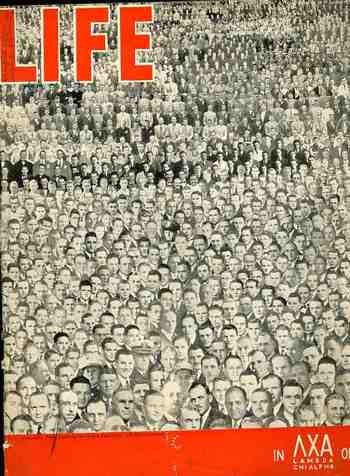
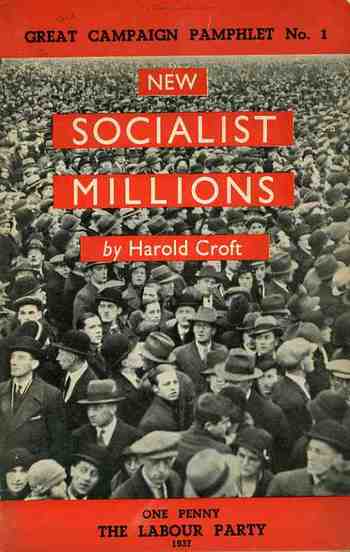
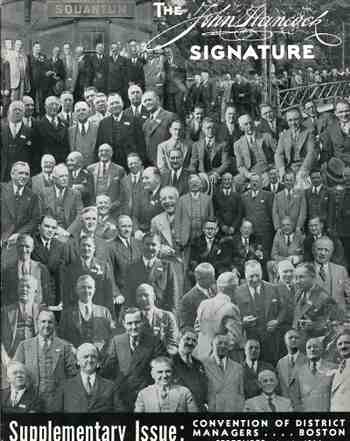
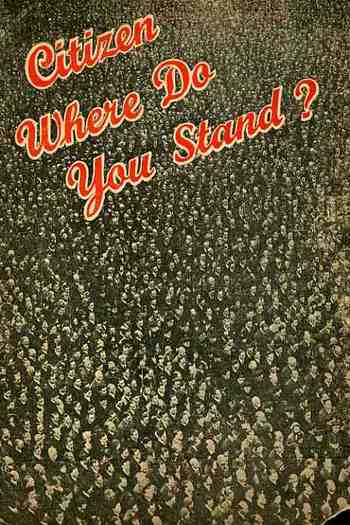
    I don’t often see covers of pamphlets or magazines featuring hundreds–or thousands–of people as a part of the design.  In my continuing role as finder and re-finder of things found I have re-surfaced four of these designs, and I feel I should post them before they’re captured in the un-finding process.  Again. Back to the design:  these are very striking, persuasive images, unavoidable in many ways, completely intriguing, beguiling.  People just have to look at these things.  Look:  I made a little experiment today placing ten  very interestingly-designed pamphlets on display, all with compelling and distinct merits, and including one with a big spread of humanity on the cover (the “Life” pamphlet). The very unscientific results is that people were generally first drawn to the complex people image, and stayed longer looking at it–by far–than any other image.  Perhaps its the same sort of reaction going on when you watch people walking in front of a mirror or reflective surface, with the vast majority of folks checking themselves out in it.  Maybe its just people looking for something familiar.  Maybe the faces are simply, strictly more interesting than just points o the page.  I’m not sure. 

    The first image is Life, the story of the fraternity lamda chi alpha, published around 1935; second, a one penny Labour Party publication coming from the National Executive Committee of the Labour Party, published in London in 1937; third, a program for the Liberal Party, published in London in c. 1938; lastly, fourth, a program for some course of semi-statistical study with the John Hancock life insurance company.  These beautiful designs were much more interesting than the very casual contents they covered.  

    Blogaugust_27_crowds_stand456

    Blogaugust_27_crowds_life459

    Blogaugust_27_crowds_socialist_mil4

    Blogaugust_27_crowds_hancock460

    ·Posted by :

    ·in:


  • “Sabotage”, the Wobblies, and the Illusion of Property (1913)

    JF Ptak Science Books  Post 2392

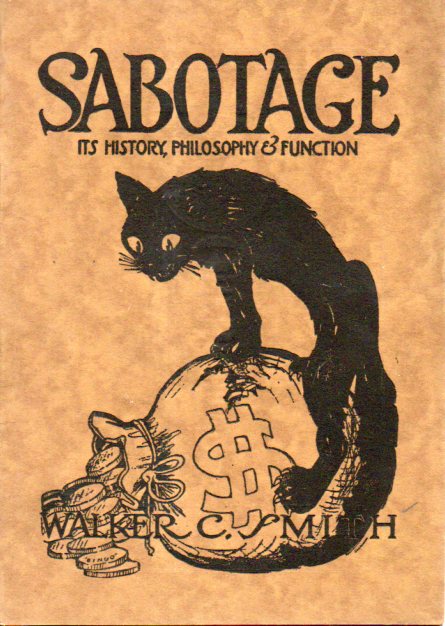
    “The object of this work is to awaken the producers  to a consciousness of their industrial power. It is dedicated, not to those who advocate but to those who use sabotage.”–Walker C. Smith, in the second of his miniature two-paragraph foreword in Sabotage (1917 edition)

    Sabotage608

    [The original pamphlet is available from this blog’s bookstore, here.]

    Walker Conger Smith (born 1885 on the same day that Babe Ruth and Elvis Pressley died in later years) was a hard line political seer, a magical agitator and writer for the Wobblies, officially known as the Industrial Workers of the World (and the I.W.W.)  He lived a busy 41 years, and in his time raised a lot of attention to the IWW’s Socialist vehemently pro-Union organizing, during a time (1910-1927 or so) when big business would respond with their won police/strikebreakers/armies to disrupt and dispel (and trounce) strikers and strikes. 

    One of Walker’s best known works was Sabotage, its History, Philosophy & Function. First published in 1913 and then widely reprinted, it made the case for poor pay for poor work, and that in the long run the wealth produced by the workers belonged to them, and so work slowdowns and then destruction of the means of production was well within the rights of the wronger worker. 

    The pamphlet certainly found a readers–on both sides of the issue. It was regularly used in legal actions against Unions as proof of their criminal syndicationism and of organized destruction of business/factory property.  

    The pamphlet ends with these very strong statements:

    “Its [Sabotage’s] advocacy and use help to destroy the property illusion”…

    “Is the machine more than its makers? Sabotage says “No!”

    “Is the product greater than the producers? Sabotage says “No!”

    “Sabotage places human life–and especially the life of the only useful class–higher than all else in the universe.”

    ….”For Sabotage or for slavery? Which?”

    The pamphlet ends with a salutation from Jack London:

    “Dear Comrade Smith:

    Just a line to tell you that I have finished reading your pamphlet SABOTAGE. I do not find a point in it on which I disagree with you. It strikes me as a straight-from-the-shoulder, clear, convincing, revolutionary statement of the meaning and significance of sabotage.

    Yours for the revolution,

    Jack London”


    Full text here.

    The IWW website identifies this printing as 1917.  http://www.iww.org/sr/history/library/WCSmith/sabotage


  • An Enormous Bookplate and Some Found Book Art (1856)

    JF Ptak Science Books   Quick Post

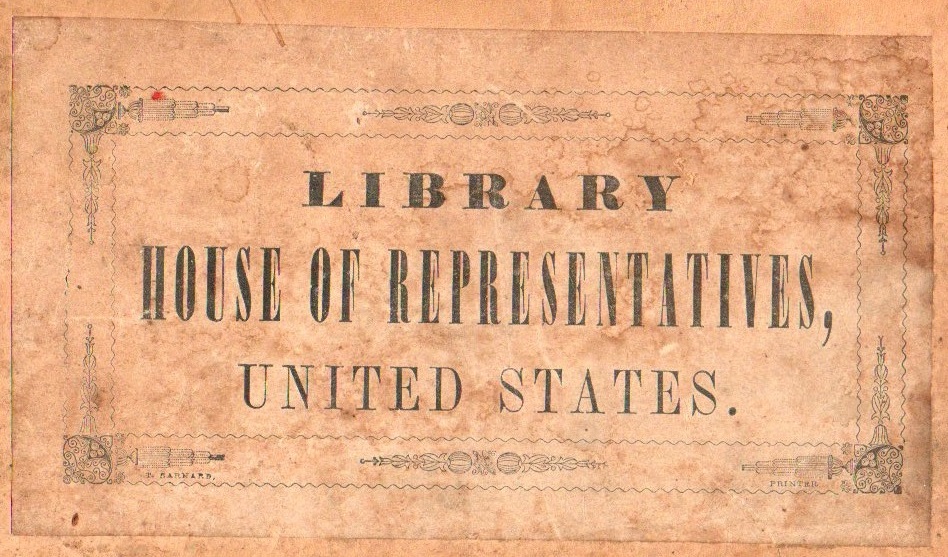
    I purchased this volume of House of Representatives reports from 1856 a number of years ago, mostly for the extraordinary bookplate that appears on the front cover of the double-brick-sized volume.  It is about as big a bookplate as I’ve bumped into or seen in 30+ years of bookselling (though admittedly the folks in the sciences seem overall to have less interest in bookplates for their library as non-science readers/collectors, so my viewpoint may be problematic).  Still, it is a big bookplate, about 5×7 inches, and as I said is on the outside of the volume rather than on the front inside cover.  There was no mistaking to whom the volume belonged, until now, when it belongs to the non-House-of-Representatives-me–anyway it is quite an object.

    Bokplates546


  • “High Finance and High Treason (are) Synonymous” (1933)

    JF Ptak Science Books     Quick Post

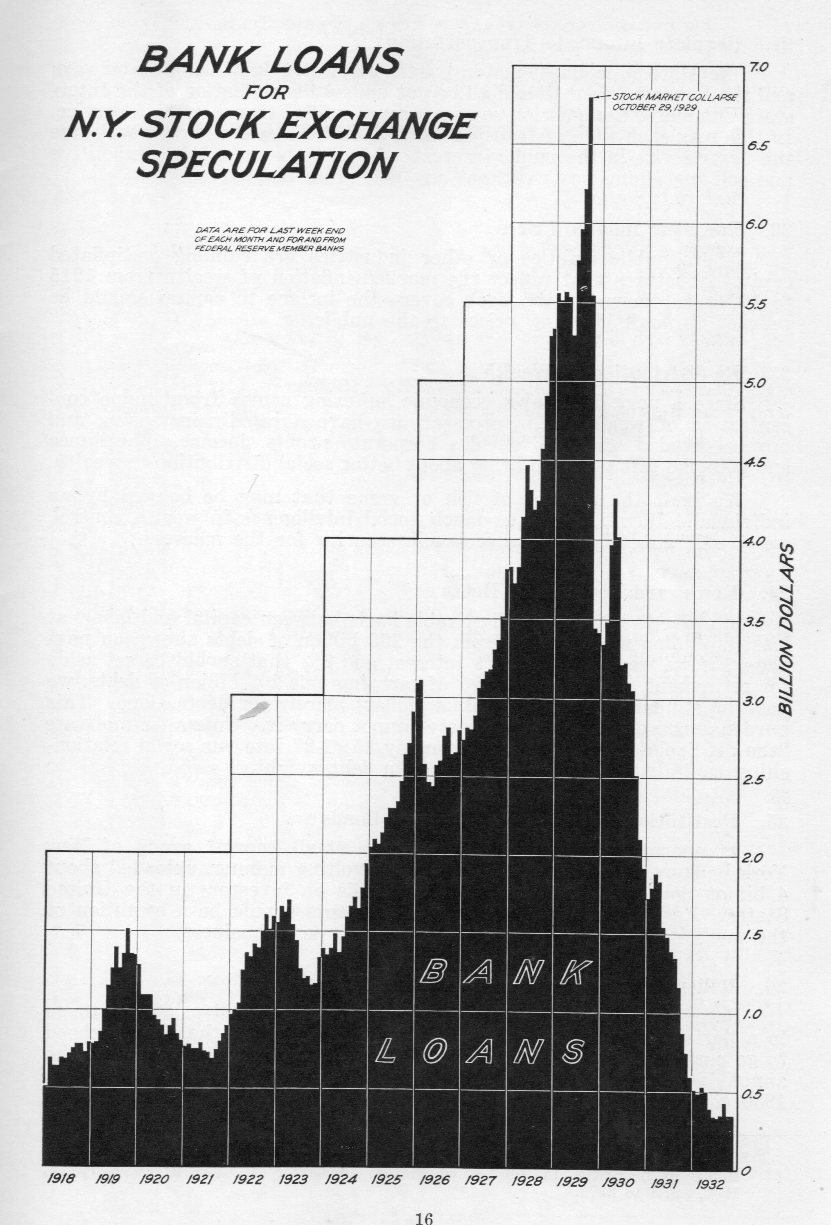
    Contributions to Way Out of Today’s Depression is a pamphlet written in a econo-engineering fashion by an engineer with some strong opinions on regulatory economics, many of which seem as far outside the normative and at the other end of the spectrum of the investing practices that necessitated such thinking. (For example, in addition to a discussion of very closely regulated federal interventions there is a statement that would make “high finace” a crime like treason, with similar punishment.) There was much flotsam amidst the jetsam and vice versa and perhaps nothing to salvage in the sinking mess, but this graph at least looked interesting: 

    Bank loans515


    And the very out-of-the-ordinary cover, which has a very definite Outsider quality to it:


  • Striking Cover Illustration–Christ on a Swastika Cross, 1943

     JF Ptak Science Books   Quick Post

    Poster--100 million catholics dead449

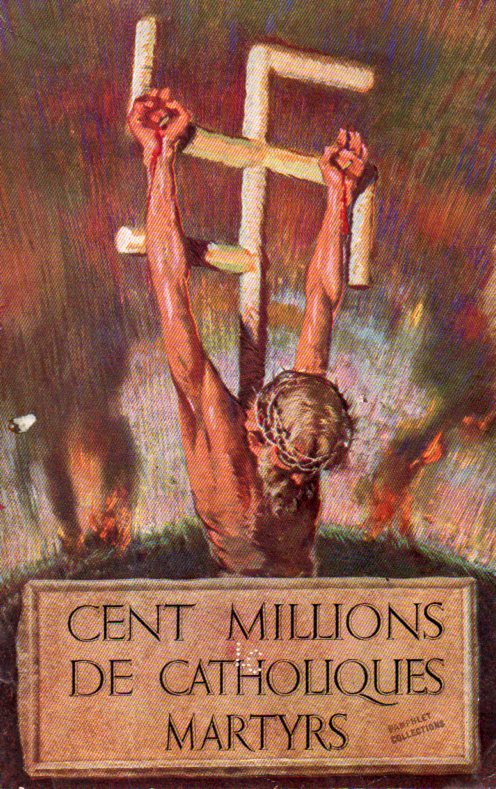
     Needless to say, the cover design for Cent Millions de Catholiques Martyrs   (published 1943) is very striking, and very unusual.  I’ve noticed the swastika/crucifix motif before, but not this bloody. Only six copies are located in WorldCat (and all quite good libraries, too, including the LC, Newberry, NYPL, Harvard, Stanford/Hoover, and WVU), so the pamphlet doesn’t seem to be very common at all.  

    ·Posted by :

    ·in:


  • “Hitler’s New Slavery”: Poland, 1941

    JF Ptak Science Books    Post 2357

    Poster--Slavery Hitler447

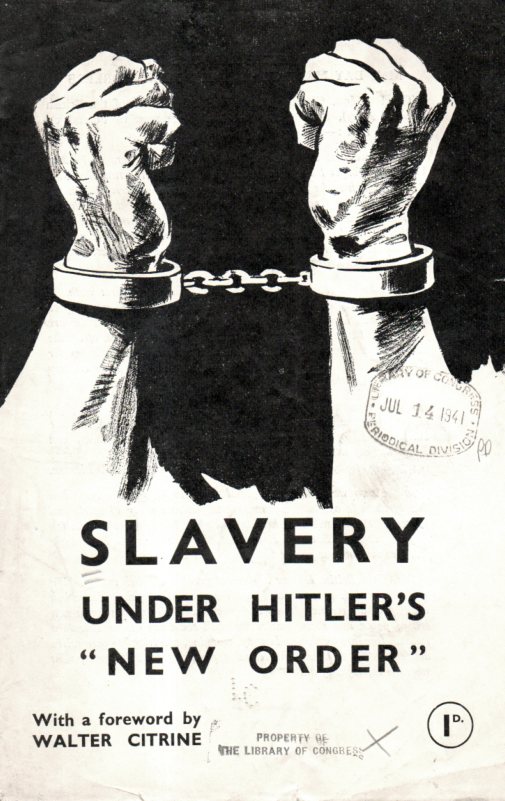
    I segregated this pamphlet long ago for its spectacular cover graphics and never read the thing–I did tonight, and as it turns out there’s a lot of info in the slim document.  First of all it was written in early 1941 by (Sir) Walter Citrine, a very long-time British trade unionist, and he took a pretty close look on the national level with the “ruthless” economic exploitation of Poland (done to “the absolute limit”) as well as what was going on in the working Polish nation in regards to the laborers and their families, writing an overview on the Polenerlasse or Polish decrees that woul dregulate the life of the nation

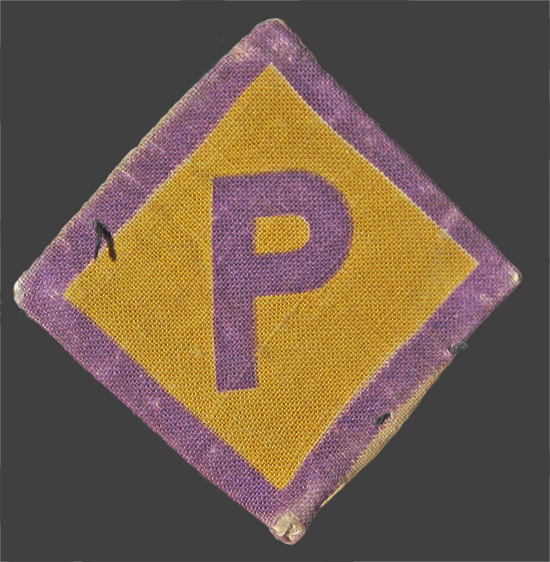
    Citrine writes about the agrarianization of Poland, the appropriation of all of Poland’s natural resources, as well as the deportation of “a million” men and women to work as slaves in Germany, where they were referred to disingenuously as Zivilarbeiter and forced to wear a  fabric patch “P” on a bright field of purple bounded in yellow on the front of their jacket/shirt.

    Polish worker[Image source: Wiki, here.]

    The lives of the workers were totally regulated, which I think is information that wasn’t yet available to Citrine. There was also a flow of propaganda aimed at separating Germans from Poles in social and especially sexual relations, the later termed a defilement of the German race (Rassenschande)  and a highly punishable offense.

    There is no mention here or anywhere else in the pamphlet how those numbers break down, and no mention whatsoever of Jewish persecution.  

    Citrine writes on the destruction of social legislation, of the complete dismemberment of unions, of the workers being forced to provide for their own highly-restricted rations of food, and the adoption of a servant/slave relationship of the country to Germany.  Bottom line for Citrine: Poland would be the model of a Nebenland, a stylus for the other European countries that would be conquered, and “used to convert all Europe onto a colony of the Great German Reich”. 


    ·Posted by :

    ·in: