A Daily History of Holes, Dots, Lines, Science, History, Math, Physics, Art, the Unintentional Absurd, Architecture, Maps, Data Visualization, Blank and Missing Things, and so on. |1.6 million words, 7500 images, 4.9 million hits| Press & appearances in The Times, Le Figaro, Mensa, The Economist, The Guardian, Discovery News, Slate, Le Monde, Sci American Blogs, Le Pont, and many other places… 5000+ total posts since 2008.

Category: Alphabets

  • Chess Shorthand

    JF Ptak Science Books Quick Post

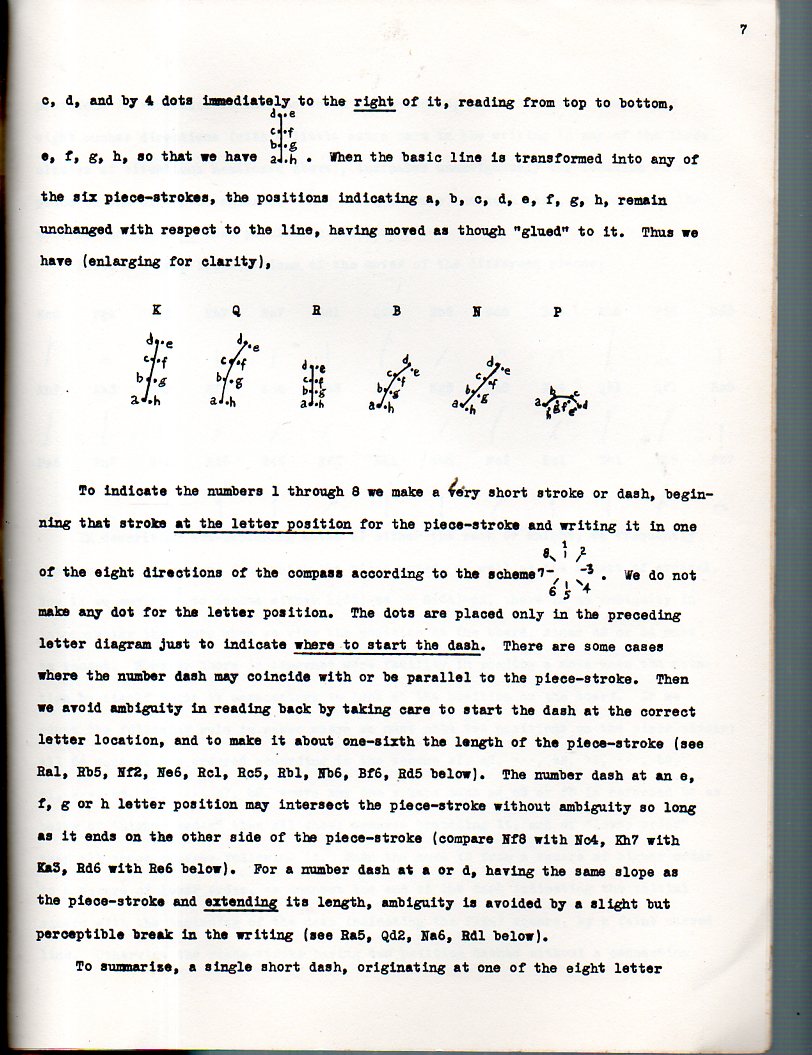
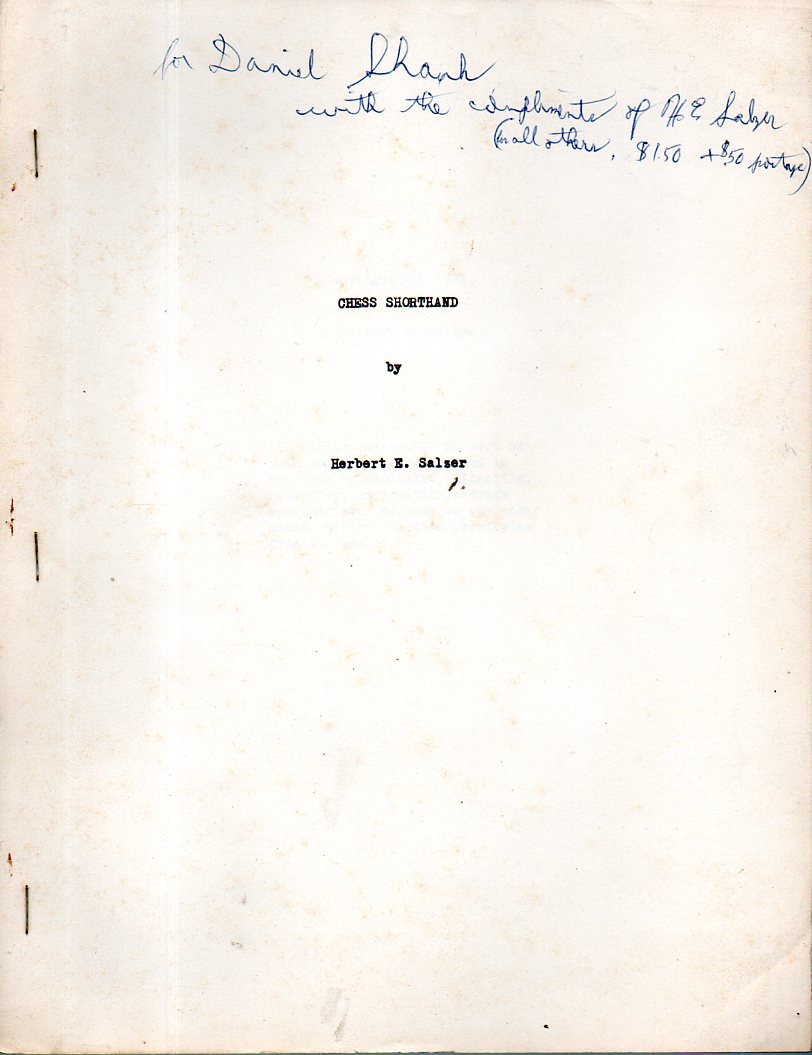
    Chess shorthand558In the occasionally speedy and occasionally not world of chess, it may sometimes be necessary to take speedy-or-not notes.  Chess notation–like algebraic notation (in different iterations), English notation, ICCF notation, and so on–=can reach back hundreds of years. Even the shorthand approach tried out here in mathematician Salzer’s short work dips back into the 19th century (‘Shorthand Notation” by M. Barnard, a short entry in  Chess Player’s Annual and Club Directory, 1893-94 by Mr and Mrs T.B. Rowland (London, 1893)). But the Salzer work is really pretty interesting, and so I thought to at least surface the work.  

    ·Posted by :

    ·in:


  • Elements for a Whiskey Alphabet Drawn from an Early Bible of Booze Names

    JF Ptak Science Books  Post 2329

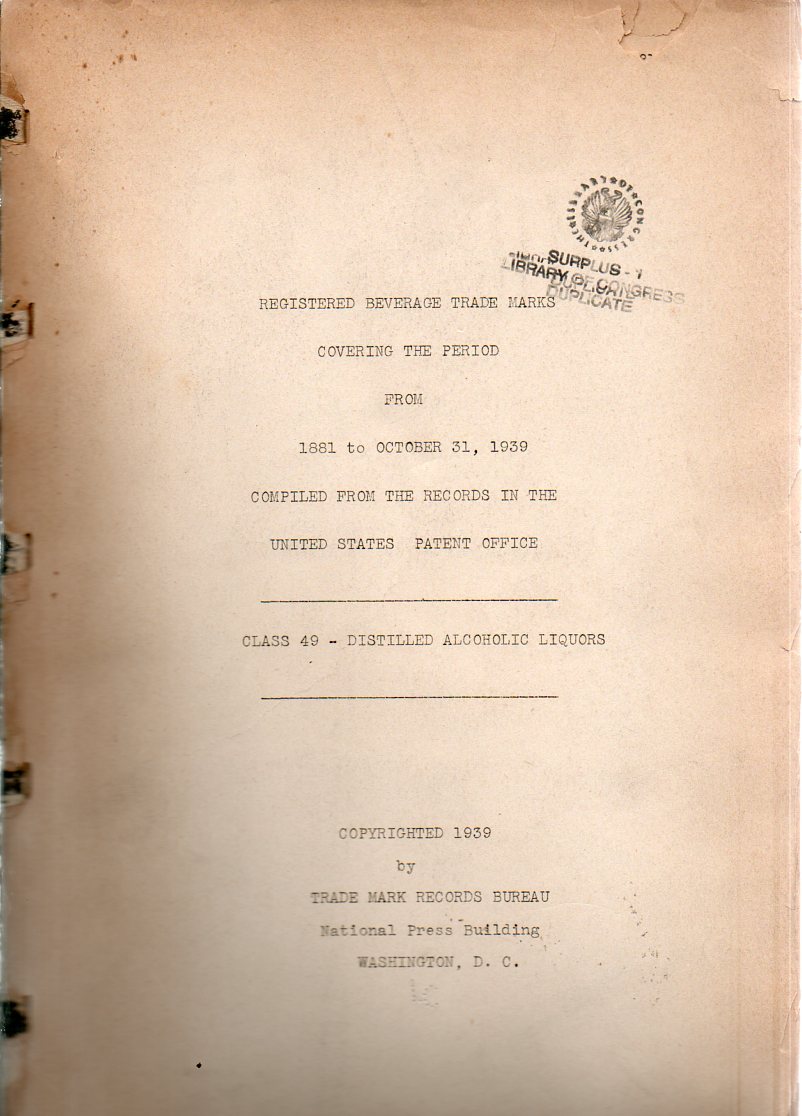
    It may or may no be the case, but this large, flaking book that is balanced on top of a petulant pile of paper, Registered Beverage Trade Marks Covering the Period from 1881 to 1939 Compiled from the records in the United States Patent Office (Distilled Alcoholic Liquors) may be the keys to the kingdom of names of booze(s) trademarked in this country.  15″ tall, and inch thick, and 296 sheets big, this work (copyrighted y the Trade Mark records Bureau (in the National Press Club Building in DC, the one with the problematic parking garage) lists some 7,500 names of whiskey, cordials, gin, rye, bourbon and who knows what else.  I cannot find the book in any online database, big or small, and I’m not sure where this info might be housed and housed in one spot.  I have no doubt that people somewhere need this data, unwieldy and unusable as it might be–you see, it is organized only according to a six/seven digit number which I guess is the trademark filing number, or something; there is nothing else useful about the thing, the data floating around without regard to year or place or liquor type.
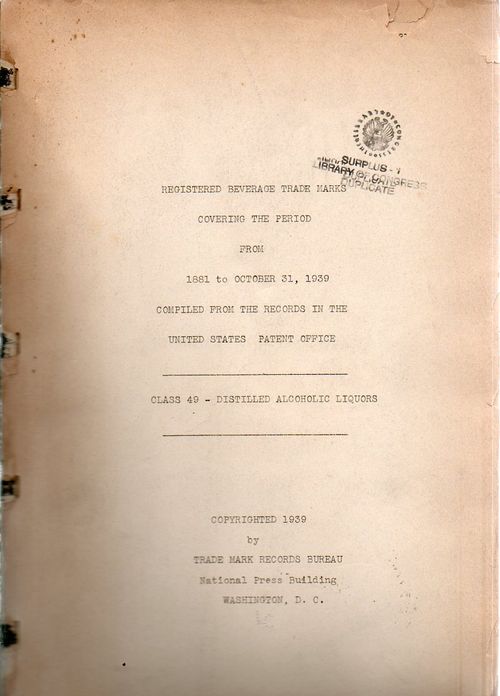
    Booze alphabet532

    So I sat down with the book for an hour pulling out interesting, odd, out-of-place, from-another time and bizarre names, inlcuding all manner of expected animal names like bull and elk, and then unicorn; and lots of sunny this-and-that, sloping/sunny/grassy hills, mountains, clubs; and of course the Old _____  category seem fairly filled up. [If you’d like to own this just visit the blog’s bookstore, here, and have a look.]

    If I spent a little more time on this entire alphabets could be produced relating to nothing but names from the animal kingdom, flora, the sciences, professions, religion, states of mind, altered states,  literature, and the labels that suggest a possible medical benefit.  One of my favorite categories is the “conversational liquor label”, the label that speaks to you, invites you, tells you what to do with the bottle of booze:  Hava Cocktail and Uneeda Whiskey are good examples of that, as are You’re Lookin Good, Uvanta and Yugeta whiskeys. Another is the liquor name ending in “o”, like the beautiful Famo, from St. Jo, MO, which unfortunately wasn’t trademarked in ’00.  The label of suggested promise and outcome is another good one:  Kentucky Courage, Pleasant Dreams, Invincible Rye, Solace Whiskey and Ready Moneyare all good examples of the implied end-of-bottle pillow-fluffer…maybe, espcially, The Old Solution whiskey.

    And then of course, there are those where the (creative) spirit has just flown away, like the lumpily-named Standard Spirits Whiskey, its hometown of New Orleans embarrassed by the lack of effort–especially in the light of some many hundreds of imaginative creations, like the fabulous Bone Factor Whiskey (1903), which like som many other great names  (Yellow Hammer Whiskey) comes from Louisville, Kentucky.

    Antediluvium Whiskey, NYC, 1898; Anti-Grippine Whiskey, Philadelphia, 1906; Ash Cake Whiskey, Lynchburg, VA. 1899, Auto Crat Whiskey (St. Louis, MO), 1905

    Bank Check Whiskey, Boston, 1900; Bone Factor, 1903;
    ·Posted by :

    ·in:

    —

  • ABC-orama–a Collection of 23 Constructed Alphabets from Alpha-Vile to Sculpted Paper Nothingness

    JF Ptak Science Books  Post 2151

    Over the course of six years (and over 2500 posts) on this blog I’ve created or re-imagined some images and data into bit-sized forms via arranging them into alphabets.  Sometimes the application is obvious and maybe-necessary; sometimes not. Sometimes the alphabetized information is factual, and sometimes the factual material gets a fictionalized interpretation (as with the anatomical alphabet of emotions and feelings).  In any event, enjoy. 

    The alphabets include:  Australian Convict Mugshots; Flower Symbolism; Action and a Touch of Evil; A Bloated Alphabet of Fat Cures: Strychnine Pills, Vibrators and Hope; Alphabet of Retro-Vision Women, ca, 1940’s/1950’s; Alphabet of Women of the Future Trading Cards, 1902; An Alphabet of Anatomical Emotions and Feelings–Installment 1; Elements for a Whisky Alphabet Drawn from a Bible of Booze Names; An Alphabet of Unintentionally Semi-Absurd Motivational Images, Business Publications, 1930’s; Found Dadaist Alphabets; Occupational Alphabet, Part II–1844; An Unkindness of Ravens, a Murder of Crows–an Alphabet of the Names of Groupings of Animals; Half-a-Hell Alphabet: U.S. Gazetteer and American “Hell” Lust, “B” to “U”; Nursey Education Report–2  The Royal Rhythmical Alphabet; The Dance of Work: Satires and Grotesques of the Professions, 1700; An Alphabet of Sculpted Paper Nothingness; Note on an Alphabet of Computer Names in Fiction; An Alphabet of Fire–Night-time Telegraphy, 1800 vs. the 1991 Pen Ashtray;  An Alphabet of Giants; An Alpha-Vile Alphabet of Lost Emotions; And ABC of Bombing.

    An Alphabet of Australian Convict Mugshots, 1900-1920, here. 

    Found Dadaist Alphabets, here

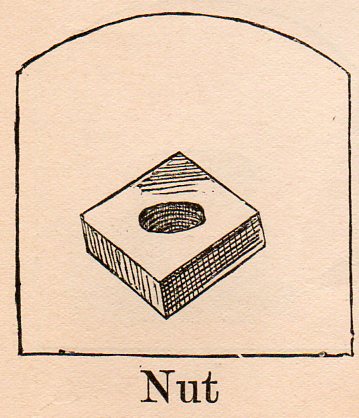
    Alephbet--nut313 

    An Alphabet of Sculpted Paper Nothingness, here.

    Bug shells black595


    ·Posted by :

    ·in:


  • An Uploading Alphabet for Sending Info to The Cloud(s), 1523

    JF Ptak Science Books  Post 2141  Part of the History of Memory series 
    Follow Me on Pinterest

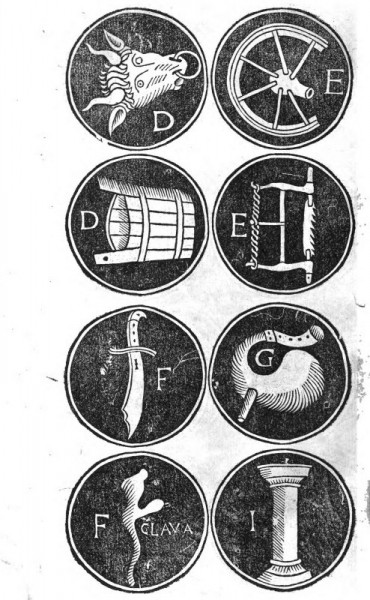
    These are some fine and early printed examples of uploading information, though it had nothing ot do of course with electromagnetic anything back in 1523.  The “Cloud” in question was the mind/brain, and the images helped to serve as placemarkers in how large amounts of memory were kept in the head, the methods available to just about anyone with a keen enough facility for organization and understanding, and the ability to develop learning mechanisms that would help to store and sort memory and info. 

    In another way, though, the process of memory was associated with the Cloud–this second attribution of the early Cloud, though–at least according to St Augustine–was God. Plato (Meno) thought along the lines of the soul learning nothing new, and that what learning was all about was recalling of the data that came to us before we were born.  Augustine–mostly in Book X of the Confessions–had  a different idea (and much more complex and elaborated than I could do justice here in a few sentences) about unconscious knowledge and memory, which was where, I think, he thought knowing God might be.  This memory (the “divine quality” in Cicero’s thought) was the storehouse of expressions in the belief that the knowledge of true things was unconscious, and that in understanding memory this knowledge becomes evident, and that at the base of it all is the knowledge of God. It is as I said much more complicated (and elegant) than this, but I think that the root of it is correct, at least so far as memory is concerned. 

    In any event, here are some of the visual clues for creating alpabetic memory palaces as found in the short (30 leaves)  1523 work by Gulielmus Leporeus, Ars Memorativa  (and available from the Bayerische Staatsbibliotek, here)


    Memoria alphabet D-I

    ·Posted by :

    ·in:

    —

  • An Alphabet of Unexpected Stems of “Un-” from 1828

    JF Ptak Science Books    Post 2139 
    Follow Me on Pinterest


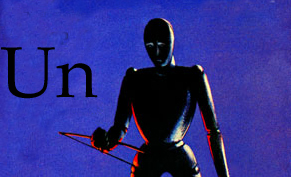
    Un detail2 copy

    Having just made a post of words using the prefix “un-” in Joyces Ulysses, I thought it would be interesting to see the unusual/unexpected un- prefixed words in Noah Webster’s classic 1828 An American Dictionary of the English Language.  It turns out that the created and unusual un-words in Joyce bear a similarity-in-strangeness and the unexpected in the Webster book.  Basically, “un-” is a negative prefix, creating (mostly in adjectives) reversal, release, removal.  It is distinct from the “non-‘” stem, and in some instances understood a little better (in some examples) than the “in-” stem. 

    There are some fantastic examples of words that become quite something else in the modern eye:  beautiful words like “unepitaphed” seem to want to mean that an epitaph would be removed, altered in some way, which is an interesting thought (!), but all it meant in Webster’s hand was to be a grave without an epitaph.  “Unbearded” too–all it means is to be without a beard,, and not to have a beard removed in some way.  “Unextinct”!  A wonderful word that brings visions of resurrection, but it means just to be not-extinct, which is still a little odd. 

    And so I have chosen a few examples of words that might as well have been chosen for their color, or musicality, or potential interpretations than anything else, though basically I like the idea of what the words could become.

    An Alphabet of Un-, 1828

    A. Unaccomplishment, unalmsed, unamazed, unappalled, unanswerableness, unartificial

    B.  Unbar, unbearded, unbeget (as a verb! found in Drden, “to deprive of existence”), unbit, unbenighted (“never being visited by dark”), unbestarred, unblameableness.

    C.  Incentrical, unchristianize, uncompact, uncounterfeit, uincommencement.

    D.  Undeaf, undefaced, undeceiver, undevout, undisappointed, undreaded.

    E.  Uneclipsed, unepitaphed, unexistent, unextinct.

    F.  Unfinisher, unfleshed.

    G.  Ungalled, ungod.

    ·Posted by :

    ·in:


  • An Alphabet of Un- Words in “Ulysses”

    JF Ptak Science Books   Quick Post

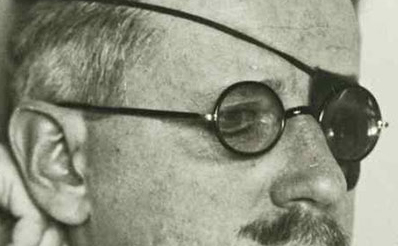
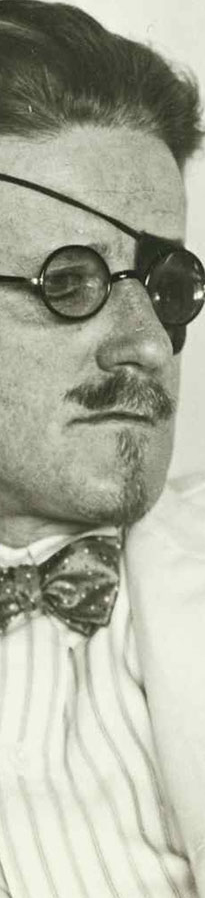
    James-joyce detailed

    James Joyce painted with words like perhaps no other–words created and words already created, thousands of them.  What struck me particularly though while looking through Miles Hanley’s Word Index to James Joyce Ulysses, winding my way somehow to the “U” section was the master’s rich un-use use of “un-” words, words prefixed with “un”.  It seems surprising to me that there were so many, but that was just a flash reaction, not compared to Shakespeare or Dickens or anyone else.

    There are about 400 entries for words beginning with “un”.  The following are some examples:

    Un Alphabet

    James-joyce detailed 2A Unaccountable, unadjustable, unaltered, unanswered, unanswering, unascertain, unassuminly, unattached, unattired

    B  Unbeheld, unbelief, unbelieve, unbiond, unblessed, unblioused, unborn, unbaced, unbridled, ubroken, unbuttoned, unbottoning

    C  Uncalledfor, unceasingly, uncertain, uncertainly, uncertainty, unclaimed, unclamping

    D   Un deathliness, underbrim, under jaw, undermines, understandlings, indespairings

    E   Uneager, unexplicated

    F  Unfallen, unfeigned, unledged, unfructified

    G  Unglanced, unguical, ungenitive, ungyved

    H  Unheaded, unhasty, unheeding

    I  Uninterruptedly, uninverted

    J  Unjust  (the only entry)

    K  Unkindly (and three pedestiran others)

    L  Unlace, unlet, unliving, unlookedfor, unlooped

    M  Unmack, unmaided, unmerciful

    N  Unneath, unnumbered

    O  Unobserved, unoffending, unostentationaly

    P  Unplumbed, unpar, unposted, unprepossessing

    Q  Unquestionably (and one other)

    R  Unreason, unremembered, unreeled

    S  Unsaluted, unskirted, unsleeved

    T  Untrammeled

    U  Unweave, unwooded, unwound.

    Unfortunately there are no entries for V, W, X, Y, or Z. 

    I do not have the un-words of Shakespeare, though it is interesting to see the list of words invented by him (from Shakespeare-online.com, here):

    academe accused addiction advertising amazement
    arouse assassination backing bandit bedroom
    beached besmirch birthplace blanket bloodstained
    barefaced blushing bet bump buzzer
    caked cater champion circumstantial cold-blooded
    compromise courtship countless critic dauntless
    dawn deafening discontent dishearten drugged
    dwindle epileptic equivocal elbow excitement
    exposure eyeball fashionable fixture flawed
    frugal generous gloomy gossip green-eyed
    gust hint hobnob hurried impede
    impartial invulnerable jaded label lackluster
    laughable lonely lower luggage lustrous
    madcap majestic marketable metamorphize mimic
    monumental moonbeam mountaineer negotiate noiseless
    obscene obsequiously ode olympian outbreak
    panders pedant premeditated puking radiance
    rant remorseless savagery scuffle secure
    skim milk submerge summit swagger torture
    tranquil undress unreal varied vaulting
    worthless zany gnarled grovel

    ·Posted by :

    ·in:


  • Towards an Alphabet of Trades–“Snapshots” from 1568

    JF Ptak Science Books    Post 2058  
     
    Follow Me on Pinterest 

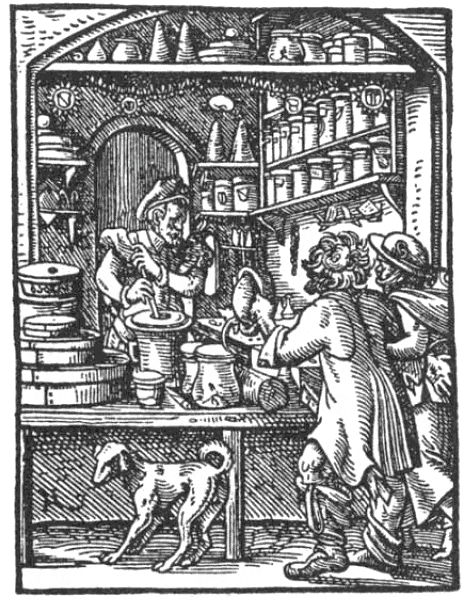
    The great Jost Amman (1533-1591, Swiss book illustrator and one of the last major production artists working with woodcuts) didn’t set out to create a simple alphabet of trades, but did  record them, and did so with great clarity, basically creating a 16th-century pre-photographic “snapshot” of the ways in which people conducted their business and livelihood.  The illustrations come from his work with Hans Sachs,  Eygentliche Beschreibung Aller Staende Auff Erden, published in  Frankfurt am Main in 1568 (the full text here from Bibliothek des Seminars für Wirtschafts- und
    Sozialgeschichte, and another useful full-text here that indexes the images and another here for an English indexing of the trades). The images are precise and sparse, and endlessly interesting, an  uncommon peep into the common past that was n

    Also useful: Dictionary of Medieval and Renaissance occupation, here.

    A.  Apothecary

    Amman apoth 

    ·Posted by :

    ·in:


  • An Alphabet Defining the Letters of the Alphabet

    JF Ptak Science Books   Post 2040

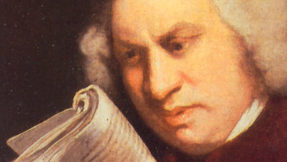
    The energy of Dr. Johnson must have been heroic–had to have been.  In addition to all of his other work, he sat down and wrote a dictionary–the first of its kind for the English language: A Dictionary of the English Language, which was printed in 1755.

    Samuel johnson2
    I’ve collected what he had to say about the letters of the alphabet, which is in itself a small and remarkable thing of sweep and brevity.  He sites the “labial” P, the “canine “R”, the unhappy hissing of S, the “note of aspiration” in H, and so on, in a forceful march to recording the language.  His book is a work of high beauty. 

    All of the material below comes from the JohnsonDictionaryOnline site, here.

    ~ A ~

    A, The first letter of the European alphabets, has, in the English language, three different sounds, which may be termed the broad, open, and slender.

    The broad sound resembling that of the German a is found, in many of our monosyllables, as all, wall, malt, falt; in which a is pronounced as au in cause, or aw in law. Many of these words were anciently written with au, as sault, waulk; which happens to be still retained in fault. This
    was probably the ancient sound of the Saxons, since it is almost uniformly preserved in the rustic pronunciation, and the Northern dialects, as maun for man, haund for hand.


    ·Posted by :

    ·in:


  • The Most Beautifully Oddly-Named Washing Machine?

    JF Ptak Science Books   Quick Post  
    Follow Me on Pinterest

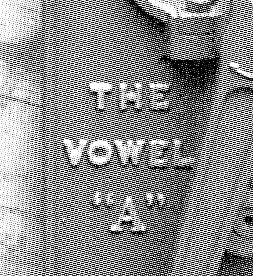
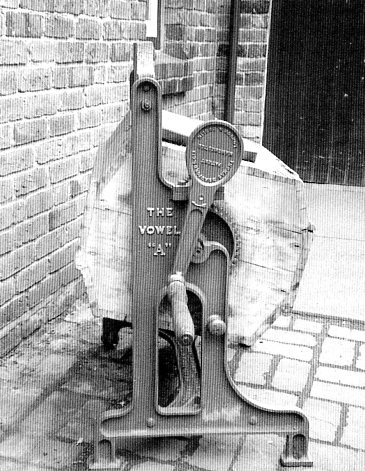
    Washing machines no doubt have been called many things, and they have been named after many great concepts and desires–but I think in the history of naming household appliances, the popular washer produced by Thomas Bradford & Co Laundry Engineers (High Holbron, London and Cathedral Steps, Manchester) in the last part of the 19th century may have had the oddest of them all.   It was the Vowel A–the “Vowel” being the washer and the “A” being the model.  But, still–that was the name of the machine, and it has a definite flavor of the Absurdist to it. Vowel A331

    Which is a detail in:

    Vowel A330
    [Source:  Una Roberston, The Illustrated History of the Housewife, 1650-1950, St. Martin’s Press, 1999, pp 86-87.]

    There was also the Vowel Large E and the Vowel Y–the “A” seems the best of the lot though, for simplicity and symmetry. 

    These washers were evidently great aids in the kitchen delights department, and provided for no disappointment. 

    ·Posted by :

    ·in:

    —

  • Ibsenity, 1891: “Not Only Should the Play be Spared Discussion, but also Performance”

    JF Ptak Science Books   Quick Post 

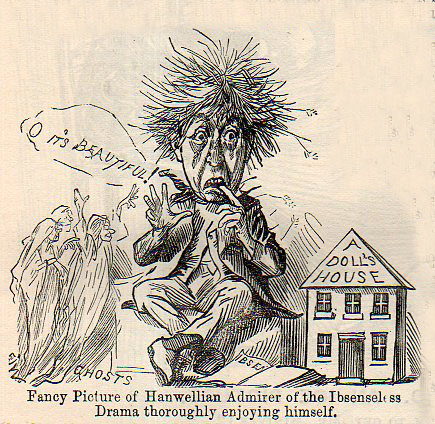
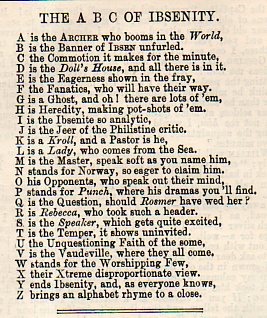
    These bits just caught my eye, found in the 1891 volume of Punch magazine, a smart and sharp-as-broken-glass humorous/satirical/social commentary popular English mag.  It takes Henrik Ibsen to a rough task: evidently, if Ibsen were a color-by-number portrait to be painted, Punch would give him the numbers “1” and “2”, and then color everything in one color.  Somestimes something can be revolutionary and essential and unlikable, even when it has become the modern world’s most-often-performed play. 

    Ibsen169I’m partial to created alphabets:

    Ibsenity166

    And the review of A Doll’s House that accompanies the satirical image above:

    ·Posted by :

    ·in: