A Daily History of Holes, Dots, Lines, Science, History, Math, Physics, Art, the Unintentional Absurd, Architecture, Maps, Data Visualization, Blank and Missing Things, and so on. |1.6 million words, 7500 images, 4.9 million hits| Press & appearances in The Times, Le Figaro, Mensa, The Economist, The Guardian, Discovery News, Slate, Le Monde, Sci American Blogs, Le Pont, and many other places… 5000+ total posts since 2008.

Category: Alphabets

  • On Being Obvious–Towards an Illustrated Alphabet of the Obvious

    JF Ptak Science Books    Post 1850

    “It is obvious that we can no more explain a passion to a person who has never experienced it than we can explain light to the blind.”–T.S. Eliot
    “We have now sunk to a depth at which restatement of the obvious is the first duty of intelligent men”.– George Orwell 
    “There is nothing more deceptive than an obvious fact.”–Arthur Conan Doyle
    The obvious thing about the full sense of obviousness is that it isn’t obvious. Sure, there are plenty of aspects and bits of obviousness that are obvious, but like reverse plasma flashes of lightning, and the great bulk of icebergs, and the tops of clouds and the interiors of mountains, there is much more to the state of Being Obvious than necessarily meets the eye, even when the clues are all visual. 

    Dutch soldier next to a sea mine
    What is it that makes something “obvious”?  There must be hundreds of reasons to label something so, yet the cause of the labeling is much fuller than the label it wears.  There can be a rich and varied life in the obvious and its different stages, as rich and varied as snow and fog and clouds, though those examples seem to have more qualifiers and descriptors than the obvious does.  “Painfully”and “woefully” obvious are certainly two qualifiers for different states of obviousness, though at this level of inspection the different levels of obviousness seem to be a little oblivious. And yet there seems to be great depth in so many different aspects of The Obvious.
    It would be nice to be able to construct a Geometry of the Obvious–of course this is entirely plausible so long as it doesn’t actually have to mean anything or be rigorous in any way.  A fantasy geometry would then be pretty easy to construct (which also is being used for the letter “G” in our alphabet):
    G   Geometrically Obvious:

    Mar 23 center of levity cvr det 2

    It would be easy to assume that the visual assumption for the Aspect of Obvious would be the center of the image, though it is not necessarily so, even in this imaginary compilation of defining the obvious aspect of the photo. The stuff that makes something obvious can be anywhere.

    And so to lay the groundwork for an Alphabet of The Obvious I’ve made a few selections, below–suggestions really for what the categories and assignments to letters might be. 

    For example,this would be a fine example of:

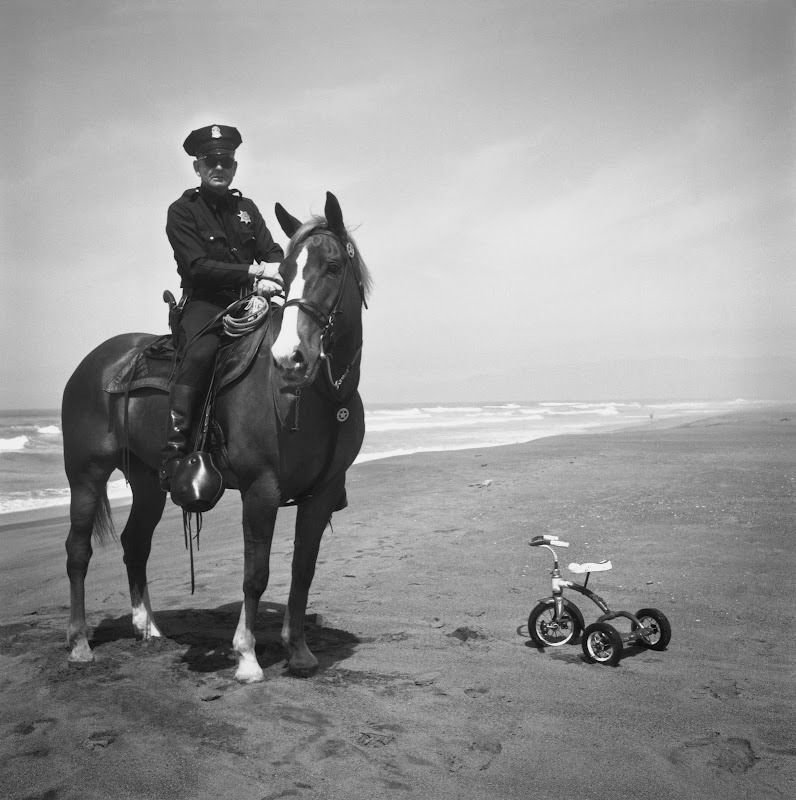
    A  The Absurd & Doubly Out of Place Obviousness–the horse seems to be the one with a sense of irony for the surroundings its quiet semi-absurdiy: 

    Arthur Tress
     
    B  Better-Him-Than-Me Obviousness:
    Absurd aug 3greggsegal7 
     

    ·Posted by :

    ·in:

    —

  • Created and Estranged Alphabets of Visionary, Creative and Boring Things

     JF Ptak Science Books  Quick Post

     So.  As it turns out there are at least 23 alphabets (of sorts) created or estranged on this blog (compared to the six that show up in my archive search under “alphabet”).   A few more and we might have an alphabetical post of alphabet posts.  Here they are, the ABCorama:

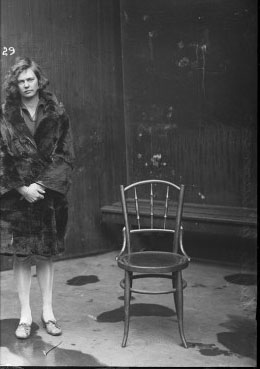
    An Alphabet of Australian Convict Mugshots, 1900-1920, here. 

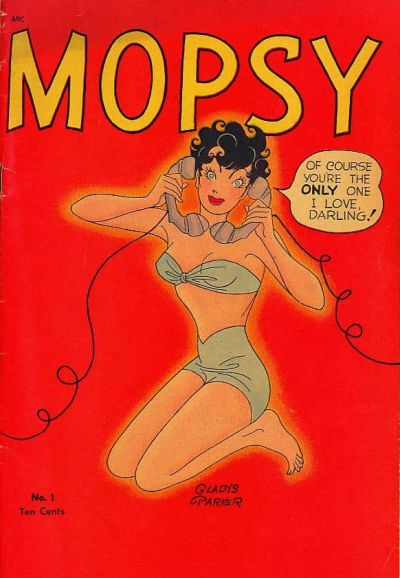
    Alphabet of Retro-Vision Women, ca, 1940’s/1950’s, here.


    Grrlz--mopsy

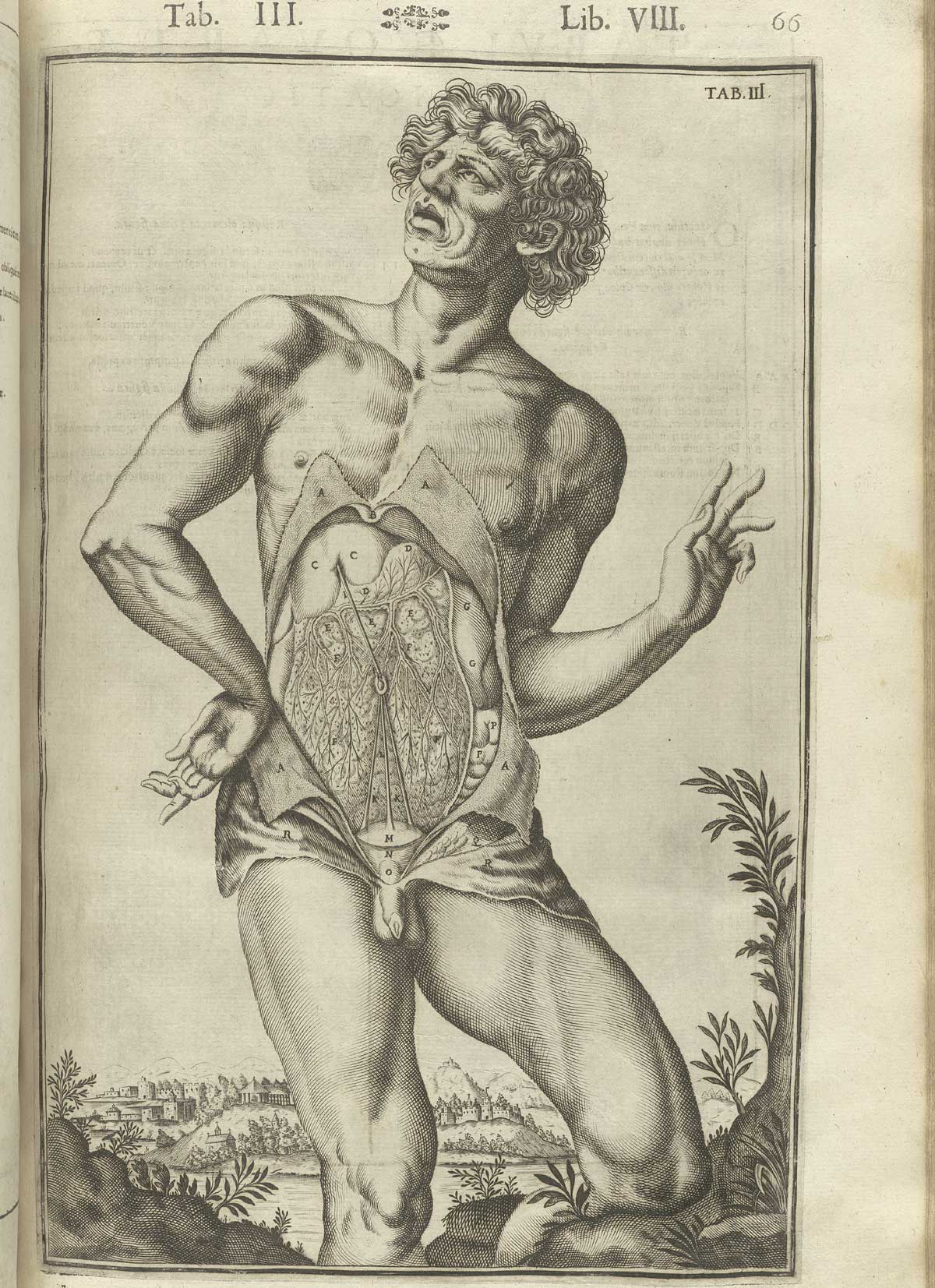
    An Alphabet of Anatomical Emotions and Feelings–Installment 1, here. 

    Contempt

    Casseri_p66  dandy

    ·Posted by :

    ·in:

    —

  • Bits Towards an Alphabet of the Language of Flowers–Some Definitions of Flower Symbols

    JF Ptak Science Books   Quick Post

    photo

    I’ve put together a quick-and-dirty list of some interpretations of what the appearance of flowers may “mean”–-say in the hands of the subject of a painting, or as a gift, or a reference in a poem or piece of literature.  This in some ways reminds me of an earlier post on this blog, “An Unkindness of Ravens and a Murder of Crows”, here.

    Here’s a short list for further reading on the language of flowers:

    • Connolly, Shane. The Secret Language of Flowers, New York: Rizzoli International, 2004.
    • Edgarton, Miss S. C. The Flower Vase: Containing The Language of Flowers and Their Poetic Sentiments, Boston: Samual M. Dickinson, 1843
    • Greenaway, Kate. Language of Flowers, London: George Routledge and Sons, 1864.
    • Hale, Sarah. Flora’s Interpreter, and Fortuna Flora, Boston: Benjamin B. Mussey and Company, 1850.
    • Latour, Charlotte de.  Le langage des fleurs, 1830.
    • Lehner, Ernst. Folklore and symbolism of flowers, plants and trees, New York: Tudor Publishing Co. 1960.
    • Miller, Thomas. The Romance of Nature; or the Poetical Language of Flowers, New York: J.C. Riker, 1860
    • Powell, Claire. The Meaning of Flowers, Boulder, Colorado: Shambhala Publications, 1979.
    • Shoberl, Frderic. The Language of Flowers: With Illustrative Poetry; to which is Now First Added, the Calendar of Flowers  1830
    • Phillips, Henry. Floral Emblems, 1825.
    • Waterman, Catherine H. Flora’s lexicon: an interpretation of the language and sentiment of flowers : with an outline of botany, and a poetical introduction. 1855
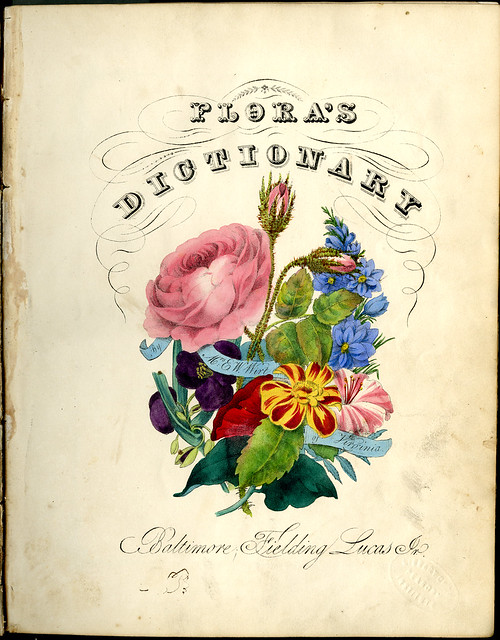
    • Wirt, E.W. Flora’s Dictionary, Baltimore, 1855.

    and an overall history

    • Beverly Smeaton, The Language of Flowers–a very interesting book where Smeaton compares the various meanings for flowers among the five early and integral 19th century flower-symbolism folks, beginning on pp 167.  A link to a free read is here.

    Some samples of the very rich descriptions of the meaning of flowers:

    Almond, flowering – Concealed love.
    Althea, Frutex – I am deeply in love.
    Amaranth – Immortality, or piety.
    Anemone – Fading hope.
    Arbor-Vitae – Unchanging friendship.
    Auricula, Scarlet – Pride. You are proud.

    ·Posted by :

    ·in:

    — —

  • An Alphabet of Australian Convict Mugshots, 1900-1920

    JF Ptak Science Books  Post 1797

    These photographs are remarkable capsules of space and time–they hold the mostly-realized fates of their subjects, taken into custody in Sydney for crimes from prostitution to stealing to loitering to bigamy to murder and around and around. The poses are interesting in that there seems to be no unified way of making them, which means that most often the detained person had the opportunity to adopt whatever posed they pleased, given the emotional constraints of their situation.  Some are defiant, some at complete ease in front of the camera; others are completely distracted and scared, and embarrassed and guilty.  There also doesn’t seem to be a segregated point for making the photographs, tough there is a common-looking wall and hallway for some of them.  It would be interested to know if the Sydney police were making an editorial statement by placing their subjects in unflattering locations, like standing near a dripping faucet, or amidst trash, or in a garden, or in front of toilets.  In any event the range of emotions is remarkable, even for looking through only a few hundred of the more than 100,000 images that are on line here and there from the good folks in Sydney.     [The images below all started out their life at Sydney Justice and Police, and then used in parts by the following websites and blogs from which I harvested my selection below,:  Retronaut , the Independent,,  Live Journal   the Daily Mail, and the Historic Houses Front (which also has full-ish records for each photograph).  An interesting interpretation of many of the images can be found at SCAN.

    Analytically  interesting, an interpretative invitation.  Apprehensive? 


     BoredAustralian-criminals-15-520x378 guinness b


  • The Dance of Work: Satires and Grotesques of the Professions, 1700.

    JF Ptak Science Books   Post 1754


    Nicolas de Larmessin (1640-1725) was an enormously creative and productive artist, and in his way created a genre similar to the great and ancient Dance of Death/.Danse Macabre/Totentanz--though his was the Dance of Life. Or perhaps it was something less political and  philosophical, simply showing itself as a Dance of Work,  A Satire of Occupation.  (In the earlier, 14 & 15th century printed version of the Dance of Death, which shows death coming to people of different professions, that the earliest meetings between death and its intended depict death done only in bones, and is relatively scary; later on, moving into the 17 and 18th centuries, death occasionally wears some elements of the profession of the person whom he seeks, giving the expedition a little share of irony or dark comedic relief.  In general, though I find the Wolgement, Holbein, Durer varieties of death-hungry Death to be fairly well off-putting; those later on less so.)

    About 100 of these images from de Larmessin were published over a period of time and in variously-titled works, appearing as Les costumes grotesques et les métiers, and Costumes grotesques and Habits des métiers et professions–maybe they were more grotesques than anything else, or satires.  Nicolas was part of a long family history of the de Larmessin (also L’Armessin) family,  a famous series of generational  engravers and  printers, who worked and functioned in the 17th and 18th centuries.

    To me the devil of his work is in fact in the details, and their accumulations. There very well may be a lot to study in the minutiae of what each profession has hanging to the ends of their clothing–or at least it seems possible that some previously overlooked widget gets a little public airing in one of these images…

    Some of the alphabet of professions treated by de Larmessin include:  Baker, (Boulanger), Basket maker (Vannier), Blacksmith (Ma Brick Mason (Masson), Butcher (Boucher), Chef (Cuisinier), Chest and Box maker (Malletier-Coffretier), Clock maker (Corlogeur), Clothes seller (Fripier), Coffee merchant (Caffetier), Comb and brush seller (Peigné), Comedian (Comédien), Dairy & cheese maker (Laitier), Farm laborer (Labourer), Fisherman (Pescheur), Furier (Foureur), Gardener (Jardinier), Hat maker (Chapellier), Hosier (Bonnetier), Knife and Sissor Sharpener (Remouleur), Locksmith (Serrurier), Leather worker (Ceinturier), Miller (Meusnier), Money changer (Monnoyer), Maker of table games (Tabletier), Perfume maker/seller (Parfumeur), Playing Card printer (Cartier), Plume and feather seller (Plumassier), Plumber (Plombier), Printer (Imprimeur), reschal), Saddle maker (Sellier), Second-hand Shoe maker (Sauetier), Tailor (Tailleur), Wheel wright (Charron), Wild Game chef/seller (Rotisseur), Wild Game chef/seller (Rotisseur),Wine merchant (Cabaretier), Wine maker (Vigneron).

    Source for all following images:  Live Journal

    But before proceeding any further, I must at least make reference to another master in this field, an earlier, perhaps revolutionary figure, Arcimboldo (1527-1593), who produced royal portraits composed entirely of fruits and vegetables, as so:

    http://www.lessing-photo.com/p2/400706/40070643.jpg

    The people and professions portrayed by de Larmessin are “people” underneath it all; with Arcimboldo its fruit and veggies all the way down, just like with the Dance of Death, there’s nothing beyond the bone but disappeared bone.  


  • 1902’s Women of the Future Trading Cards

    JF Ptak Science Books   Quick Post

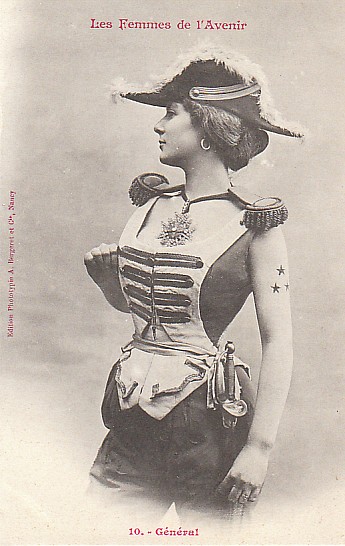
    Again from the interesting and charming La Boite Verte website I’ve found an interesting suite of French photographic postcards.  This set concentrates on the possible occupations of women in the  future (“avenir”/”future”), and printed in 1902 by A. Bergertet in Nancy, France.  The images are slightly odd, most tbeing a little on the “swimsuit issue” side, but then again not without the women exhibiting a kind of coy pride in spite of what they looked like.  In spite of the attire, the women depicted as the “general”, the firefighter (“pompier”), student (complete with a jauntily-held cigarette), and the sailor (“marin”), for example, are all taking their future positions seriously, even though their uniforms have been arranged for a 1902 man’s viewing pleasure. 

    Its interesting to see that seeing into the future of professions and callings for women didn’t habe to “see” all that far, with all of the professions being attained within the next 50-75 years. Of course the pay is largely still not same for women as it is for men, nor is women’s percentage share (for most) anywhere close to a proportional share, but it is a good start. 

    [Image Source: Le Boite Verte and Fantasies Bergeret]

    les femmes de lavenir phototypie bergeret 13 Les Femmes de lAvenir   1902


  • A Bloated Alphabet of Fat Cures: Strychnine Pills, Vibrators and Hope.

    JF Ptak Science Books     Post 1691      Part of the Series on Blank, Empty and Missing Things:  Promises.
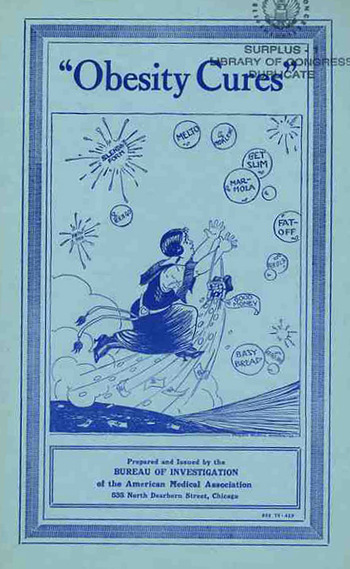
    Blogfatobesity_cures132 Quackery in general has survived in spite of itself over many fields, not the least of which is astrology and creation “science”, cults, religions, and walking-with-the-dead.  In the U.S. in the 1910-1925 period however there was a attempt at investigating the most outrageous frauds in the medical profession by the American Medical Association, and of the many sorts of quacks and frauds-liver cures, neuralgia miracles, electro-vibrator hair restorers and lump removers, anti-droopy happiness pills, cocaine nervous system remedies, and so on–what I’d like to look at right now is concerned with “flesh reduction”, or  fat cures. 


    http://media.vogue.com/files/filecheck/2012/01/12/3-Weegee_15302197753.jpg_article_gallery_slideshow_v2.jpg

    [Photograph of a neon sign, Manhattan, 1941, by Weegee from Naked City.]

    According to the AMA (in a 1934 retrospective) the chief stimulant to the obesity industry was the rise of womens’ fashions.  I think that the reasoning might wind itself around the growth of expendable money in the American rising middle class, where Americans, in general, had more money to spend on the non-essentials than any time in the history of the country.  That leads to more consumables, and that leads to more advertising, and that leads to more idealized images of what people should look like, and that leads to wanting to look like that, and that opens the door to scammers who offer a way to get to the not-actual ideal without effort and for little money.  And so in the ’20’s there was a spike in quack remedies for obesity, as there was little or no control over the content of what was being sold nor the claims about what the product did, medically speaking-there was general protection from fraud, of course, but the medical compliment for establishing what that actually was wasn’t quite yet in place. 

    There is a veritable alphabet (soup) of mondo bizarre cures that the AMA attacked and ripped apart during the 1920’s, publishing the findings of their labs on the ingredients of the cures and the possibilities of whether any of the hundreds (thousands?) of these things worked at all. 

    And what the AMA found was really pretty remarkable–lots of water, sugar, tartar,
    tinctures of useless this and that, desicated liver, seaweed, salt, lemon, and that
    sort of thing, none of which had any value for weight reduction whatsoever.  A
    major ingredient, for some reason, was focus vesiculosus, also known as
    bladderwrack, sea-wrack, kelp-ware and sea-oak–there was no indication of why this
    ingredient was so popular, especially since it was used in some farms as a pig feed
    to make the animals fat.
    Blogfat_slim_chicago133  

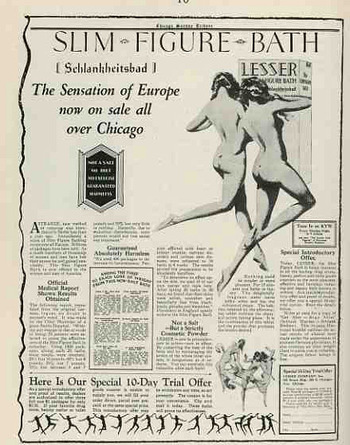
    So, aside from the pig-fattening ingredient for human “flesh reduction”, we’ll have a quick alphabetical tour of some of the outrageous (and bizarrely-named) products and their components promising hope and physical happiness to the woman of 1925. (Let’s note that the following are just locally-applied or ingested cures-there’s an entire universe of external applications and devices that were used to solve the problem of fat.  For example, the Violet Ray Machine claimed that in addition to obesity it would cure “Problems with circulation of the blood, the heart’s action, bumps of the funny-bone, germ infections, weakness, the waste of the body, congestion, impaired physical development, pains and aches, complexion and skin diseases, facial and body blemishes, hair loss, headaches, inflammation of joints, muscles, nerves, Atrophy, circulatory disorders, constipation, deafness, goitre, high blood pressure, arteriosclerosis, insomnia (sleeplessness-Brain Fag), indigestion, dyspepsia, neuritis, nervousness, hysteria, melancholia, neurasthenia, neuralgia, obesity, pain, paralysis, prostate gland problems, scalp diseases, falling hair, dandruff, asthma, anemia, bronchitis, catarrh, hay fever, rose fever, colds and other inflammations of the upper air passages, and, of course, cancer.”  This quote with thanks from the Museum of Quack Meidcal Therapy Devices

    And so to the consumable and applied quack fat cures:

    Absorbit Reducing Paste-one of my favorites.  This was a nighttime sleeping paste
    which was composed of 44% lard as well as beeswax, oil and milk.  After slathering
    yourself in this oily, waxy, milky fat cocoon (the sheets!) you were also supposed
    to ingest an accompanying night aid pill, which was 24% sulphur and 61% sugar.  So
    not only would you be oily milky waxy lardy, you’d also be stinky and, at the end of
    it all, hyper. 

    Allmans Anti Fat Anti Pon (?)).  According to its label, it was a “powerful and
    entirely harmless specific”, which the AMA revealed to be composed of citric acid,
    water and food coloring.  Sounds like Kool Aid. 

    Arbolone tablets.  These guys were made of desiccated thyroid, starch, lime and sugar.

    Basy Bread was a “anti growth” bread which turned out to be just a course wheat bread

    Clark’s Thinning Salts was almost entirely washing soda.

    Dalloff’s Time Pills were made of lavender and bearberry.

    Elfin Fat reducing Gum Drops (continuing its spectacular name by saying it was a
    product of the Pep-Giving Product Co., Inc.), was actually one of the only items
    that might have contributed to weight loss, if only for the fact that in addition to
    consuming its drops made of laxative and sugar you were supposed to adhere to a
    pretty regimented, difficult exercise routine.  Big sweat and potent laxative does
    in fact produce weight loss.  Maybe not a good weight loss, but aa weight loss
    nevertheless. 

    Elimiton (!) was a product made of caffeine and rhubarb.

    Every Woman’s Flesh Reducer promised a new figure with their mixture of Epsom salt
    and camphor.

    Fatsoff, a soap product that you washed with, was not surprisingly made of soap.
    Fayro was another soap and washing flesh reduction “package” that asserted that by
    using their secret flesh reducing salve (i.e., “soap”), you would “open your pores
    to let the blood cells sweat off fat”.  I could just about see the AMA guy who was
    writing their description of this thing slamming his pen and screaming.

    Some other F’s included Fells Reducing Tablets (which were milk), Figurroids (salty
    baking soda), Floradona (sodium thiosulphate, the photographer’s “hypo”), and Folt’s
    Reducing Soap (which was, again, soap). 

    Get Slim was a vile purgative of sugar, tartar and baking soda, plus perfumes.

    Hall’s Tablet Triturates were ginger and a big shake of chalk; Hargreaves Reducing
    Wafers (bread and liquorice).

    J.Z. Obesity tablets–were the same product as Absorbit which was the same as
    Zobeide (minus the ox mucus). 

    LaMar reducing Soap (“to wash away fat”) was soap.

    Marmola, “a thyroid-containing obesity cure” was composed of cornstalk, borax, baking
    soda and tartaric acid, with a special “constipation agent” (?), as well as a lot of
    salt. 

    Morlene would reduce goitersm neck fat, bust size and tumors, somehow, with the
    application of its cleansing elements (soap).

    Neutroid seems to have been the most lethal of the hundreds tested, contaning bad
    dollops of magnesium carbonate and iodol, and was taken internally (where external
    application could prove fatal). 

    Oil of Korein was pretty nasty stuff, containing sassafrass and about 75% petrolatum
    (a semi-solid mixture of hydrocarbons, or petroleum jelly), though it also offered
    some really good advice on foods to avoid if you didn’t want to actually gain
    weight. 

    Phy-thy-rin was a calcium and sugar coated pill of iodine and dried thyroid, with
    plenty of sugar, and liquorice. 

    Rusell’s Anti-Corpulent {reparation was a powdered added to water that would
    effectively produce orange Kool-Aid.

    Sangra Bath Salts was perhaps the most outrageously simple, being just colored bath
    salt.  Slendaform (“just gently rub it in, and watch yourself get thin”), was a
    half-pound jar of oil of turpentine, white vinegar and milk curd.  Slyphine, which
    crowded its ads with tremendous claims to be “Absolutely The Best Weight Reducer
    Ever Discovered” and other very shouty claims (by somehow “attracting surplus
    fat”), was simply borax and talc. 

    Dr. Vincent’s Anti-Stout Pills contained a pretty sounding mixture of aloes, jalap,
    cloves and bladderwrack.

    Mme. Yale’s Fertilizer Tablets-I’m not sure about the real use of “fertilizer”
    here.) was actually one of the earliest of these frauds to be attacked by the
    government, being charged with fraud by “misbranding” in 1909, as federal chemists
    could find no connection between weight loss and its sole ingredients of sugar,
    charcoal and cream of tartar. 

    Lastly, we offer Zobeude, which was just Absorbit Reducing Paste relabled for
    British consumption, though it seems to have contained an added ingredient of
    “purified ox bile”.  We are told in Bruce’s Materia Medica of 1884 that “Purified ox
    bile has the composition of fresh bile, less the mucus .”

  • Great Reads for Kids–and Adults–from the Library of Congress

    JF Ptak Science Books   Quick Post

    Here are some of my favorite (classic) books for children that I’ve culled from the lovely read.com pages at the Library of Congress.   The baseball alphabet book is fantastic (and from 1884 I believe).  The Peter Newell Rocket book is another marvelous thing (along with his Slant book, both of which sorta/kinda remind me of PEter Reynolds.)  You can follow the linkis to beautiful images of the texts and illustrations.  (All text below is from the LC site.)

    • “Baseball ABC”
      This guide to baseball literature features an illustrated paper cover and chromolithograph illustrations.
      Read This Book Now »

    • The Rocket Book “The Rocket Book,” by Peter Newell
      The upward progress of a rocket, lit in the basement by the janitor’s son, causes some strange situations as it passes through 20 floors of apartments!

      Read This Book Now »

    ·Posted by :

    ·in:


  • The Spectrum of Thought–Coloring Books for the Sciences.

    JF Ptak Science Books    Quick Post

    I posted a little joking note in one of my posts today about coloring books for the history of science, and the excellent Michael Barton pointed out that one exists for Charles Darwin.  I was very pleasantly surprised! I then went hunting to see what else was available, and found a whole heck of a lot for the sciences, and then some. 

    And so I’m trying to compile an alphabet of coloring books in the sciences.  This is the start:

    A is for Anatomy

    Coloring book anatomy

    There’s a bunch more following, all lifted from Amazon or some such source.  More to come.  

    ·Posted by :

    ·in:


  • Note on the Visual Semantics of Ideas: John WIlkins, Jorge Luis Borges, Oliver Byrne

    JF Ptak Science Books   Post 1568

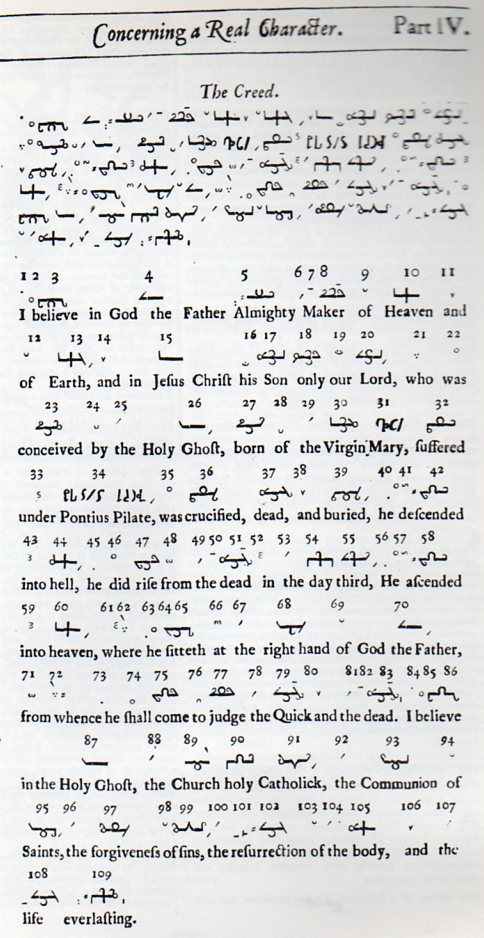
    John Wilkins’ construction of a new, theoretical language, a visual semantics of idea that was to be read and not spoken, a new international language to communicate thought, seems straight from the heart of the great Jorge Luis Borges.  And in fact, Wilkins does come from Borges, in a way–as part of a story Borges wrote in 1942, a fantastical semi-non-fictional account of Wilkins’ fabulous effort1.

    Wilkins was a 17th century figure with a sort-of 20th century idea, but even advanced to this point in time, and with actual mathematical and linguistic tools at his disposal, his work is still better as a sci-fi movie backdrop than anything else–not that there’s anything wrong with that.  The book of his in question, An Essay towards a Real Character, and a Philosophical Language, was published in London in 1668, and was an very interesting, Aristotelian non-standard approach to construct a universally understood language composed of characters which were in a way axiomatic of a developing system of genera, a taxonomy of ideas, that were somehow, fantastically, capable of expressing the foundations and flights of human thinking. 

    Borges’ presented Wilkins in a very Borgesian way in his  “The Analytical Language of John Wilkins“, mixing fact with creative fancy, exhibiting Real Character as though it was being re-discovered and studied by living academics. 

    Wilkins631

    It reminds me somewhat of other massive buit not-quite-nowhere-near-there efforts by people like Oliver Byrne and his color-coded approach to Euclid (1847), J.H. Woodger with his Axomatic Methods in Biology (1937), and Clark Hull’s Principles of Behavior (1944). Fascinating ideas, constructed with big brains, but which ultimately produce a product which more deeply confuses and obscures the subject matter it set out to explain–and which don’t really work, anyway.  But they are beautiful things int heir own right–Byrne’s work in particular also happened to be one of the most beautiful books produced in the 19th century–assemblies of bits and pieces that are occasionally magnificent but whose final destination was of course The Twilight Zone.

    They were in some way a Search for a Perfect Language (as in the work by Umberto Eco); they sought to step deeply outside themselves in an effort to grasp a higher knowledge, perhaps not much too unlike Isaac Newton and his  deep experimentation in alchemy, looking for the massive truths that were handed down to the few selected ancient ones.  They are beautiful things with a lot of very good thinking–they just weren’t right. 

    Notes:

    1.  “The Analytical Language of John Wilkins“, 1942, in which Borges presents an imaginary intellectual archaeologist assessing the work, comparing it in particular to the imaginary encyclopedia Celestial Emporium of Benevolent Knowledge.

    “He divided the universe into forty categories or genera, these being further subdivided into differences, which were subdivided into species. He assigned to each genus a monosyllable of two letters; to each difference, a consonant; to each species, a vowel. For example: de, which means an element; deb, the first of the elements, fire; deba, a part of the element fire, a flame. In a similar language invented by Letellier (1850) a means animal; ab, mammal; abo, carnivore; aboj, feline; aboje, cat; abi, herbivore; abiv, horse; etc. In the language of Bonifacio Sotos Ochando (1845) imaba means building; imaca, harem; imafe, hospital; imafo, pesthouse; imari, house; imaru, country house; imedo, post; imede, pillar; imego, floor; imela, ceiling; imogo, window; bire, bookbinder; birer, bookbinding. (This last list belongs to a book printed in Buenos Aires in 1886, the Curso de Lengua Universal, by Dr. Pedro Mata.)”–Jorge Luis Borges

    Borges described Wilkins’ taxonomy as follows, dividing it into 14 categories (compared to the original Wilkins list of 40):

    Those that belong to the emperor; Embalmed ones; Those that are trained; Suckling pigs; Mermaids; Fabulous ones; Stray dogs; Those that are included in this classification; Those that tremble as if they were mad; Innumerable ones; Those drawn with a very fine camel hair brush; Et cetera; Those that have just broken the flower vase; Those that, at a distance, resemble flies.