A Daily History of Holes, Dots, Lines, Science, History, Math, Physics, Art, the Unintentional Absurd, Architecture, Maps, Data Visualization, Blank and Missing Things, and so on. |1.6 million words, 7500 images, 4.9 million hits| Press & appearances in The Times, Le Figaro, Mensa, The Economist, The Guardian, Discovery News, Slate, Le Monde, Sci American Blogs, Le Pont, and many other places… 5000+ total posts since 2008.

Category: Medicine, History of

  • A Big Head of Nothing (1865)

    JF Ptak Science Books  Quick Post 

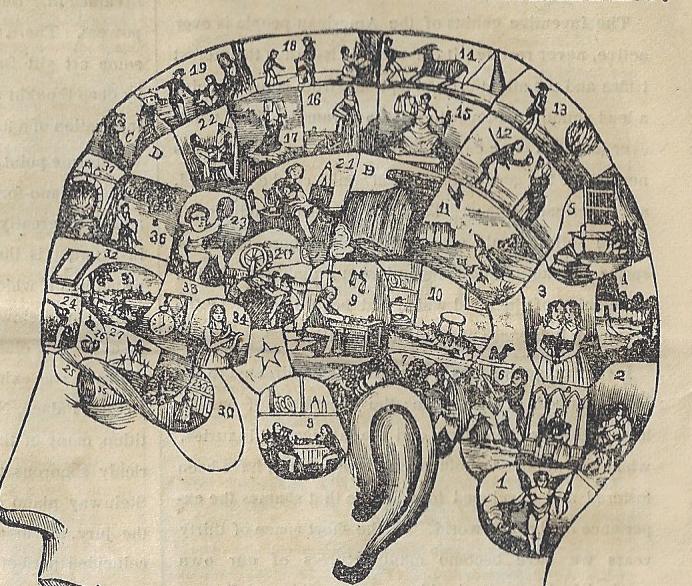
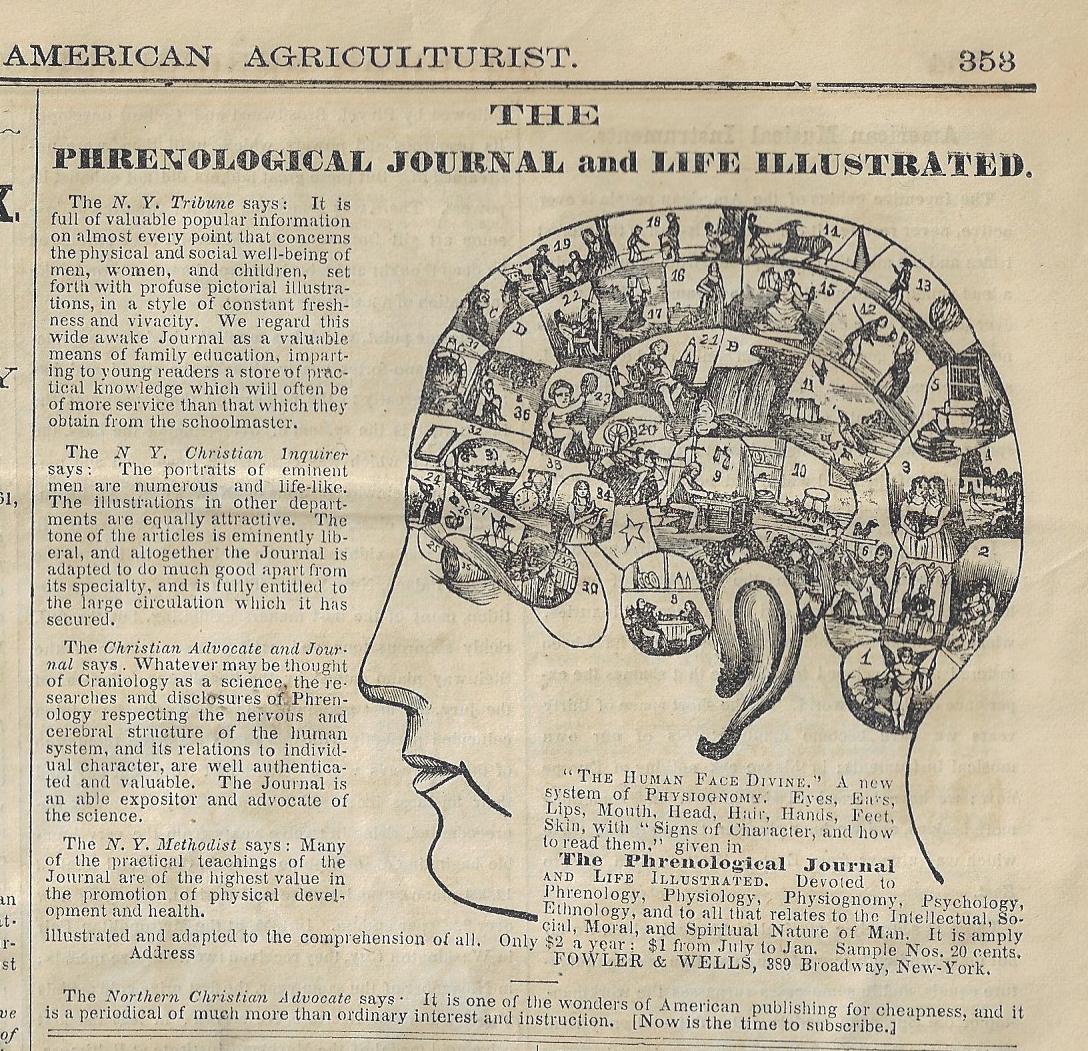
    This advertisement to subscribe to the Phrenological Journal appeared in November, 1865, with promises of profuse understanding of the connection of the nervous and mental life and its connection to, well, bumps on the head. There was also the promise of higher intellectual life by infusing the journal with devotion to psychology, ethnology, physiology, and of course physiognomy. It is interesting to note that four of the five endorsements come from religious newspapers, G_d knows why.

    American Agriculturalist 1865 phreology detail


    American Agriculturalist 1865 phreology

    ·Posted by :

    ·in:

    —

  • Recovering from Drowning via Steadfast Bleeding (1827)

    JF Ptak Science Books   Quick Post

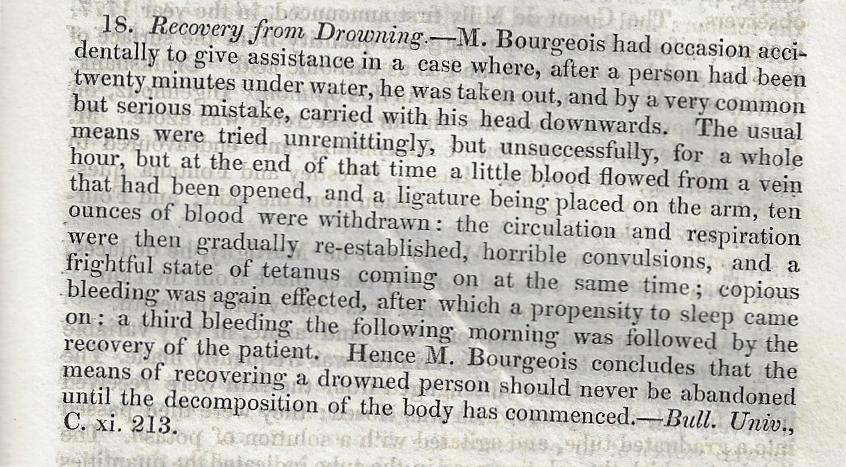
    It turns out that the great scientific periodical Quarterly Journal of Science, Literature, and Art1 (a journal that would soon become the Philosophical Magazine of the Royal Society) besides being an important medium for communicating scientific (and occasionally mathematical) work was also filled with other sorts of bits of information, an example of which follows. In this case a report on a drowning is made, the drowned man recovered, seemingly lifeless, and after the normal procedures had been performed remained null and void, at which point a little “bleeding” was performed.  “Bleeding” was “bloodletting”, an ancient practice, several thousand years old,. where a certain amount of blood is taken from the patient, the belief being that it would remove the bad elements in the body/blood. In this case, in the first application, ten ounces was removed. Ten ounces is not that much, less than a pint, which is what people donate at a blood clinic–the human body can spare that much, easily, as it contains some 180 ounces or thereabouts on average. Two further bloodlettings were administered, pulling out “copious” amounts of blood, whatever that means. (Perhaps they let 30 ounces, perhaps double that, I don’t know–that would make 3-4 or more pints, which if lost at once would be a challenge for an EMT. 

    The extraordinary thing here is that after being drowned, and three bloodlettings, and being unconscious overnight, the man woke in the morning, revived.  

    I wasn’t prepared for the author’s revelation of the big lesson learned here, which I thought was going to be about bloodletting. Rather we are told that the significant thing is to never give up on your patient–especially in the unconscious victim–until the body putrefies (“until decomposition of the body commenced”). 

    Drowning

    Notes

    1.  The Quarterly Journal of Science, Literature, and Art, July-December, 1827; London, printed by Henry Colburn, p 231.

    ·Posted by :

    ·in:


  • Darwinism for Doctors (1878)

    JF Ptak Science Books   Quick Post

    Punch darwin for doctors819

    Source: Punch, or the London Charivari, October 12, 1878

    ·Posted by :

    ·in:


  • On What Cost What–Medical Costs of the U.S. Navy 1813-1817

    JF Ptak Science Books   Post 1659 (expanded)
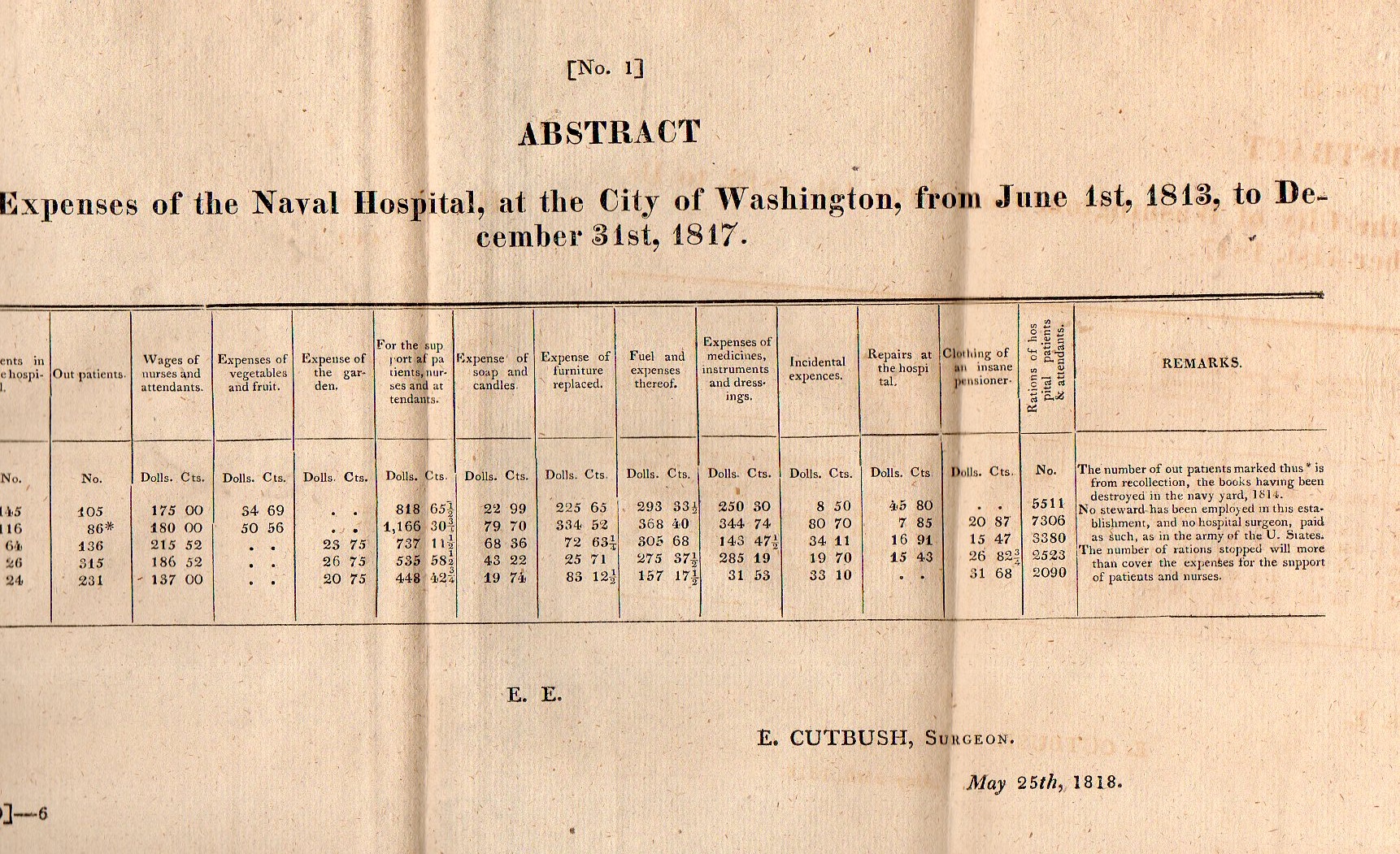
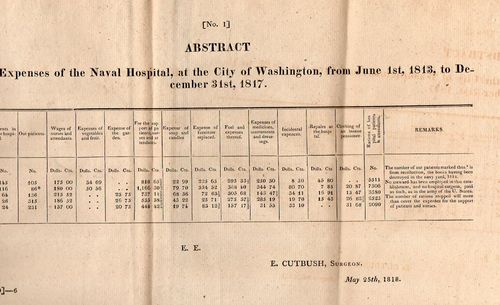
    Us navy medical 1817683

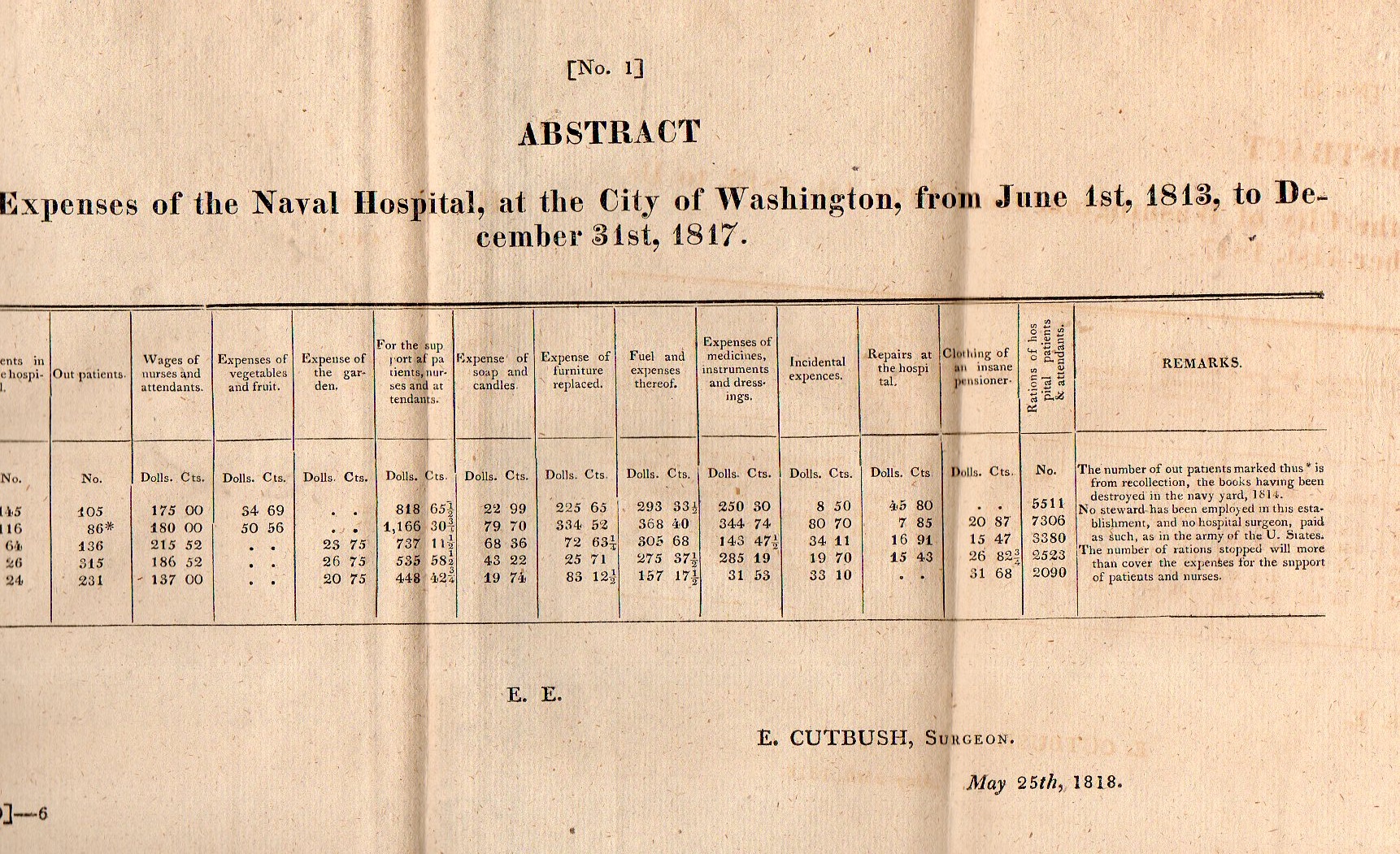
    Medical  expenses995When you think of expense and medical care, why on Earth should any of it cost so much?  Well, that question would make more sense if asked in the year 1819, because–according to the make-believe history of Medical Billing Capacity– the need for compensation for knowledge or spent stores or supplies or whatever was not very great, at all. 

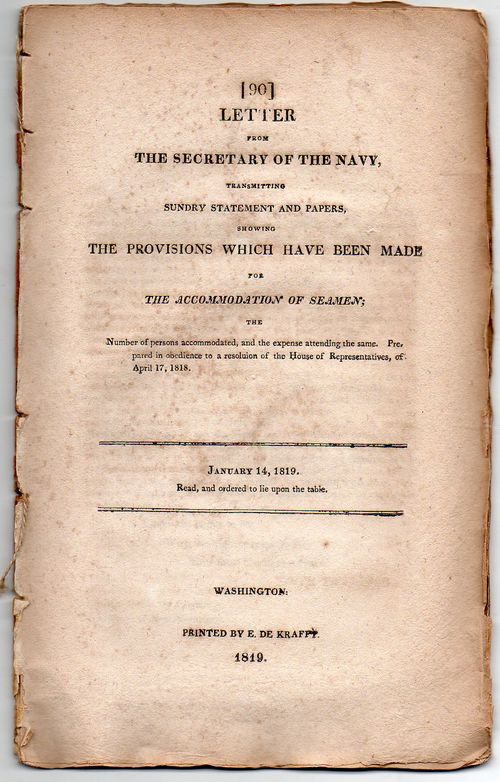
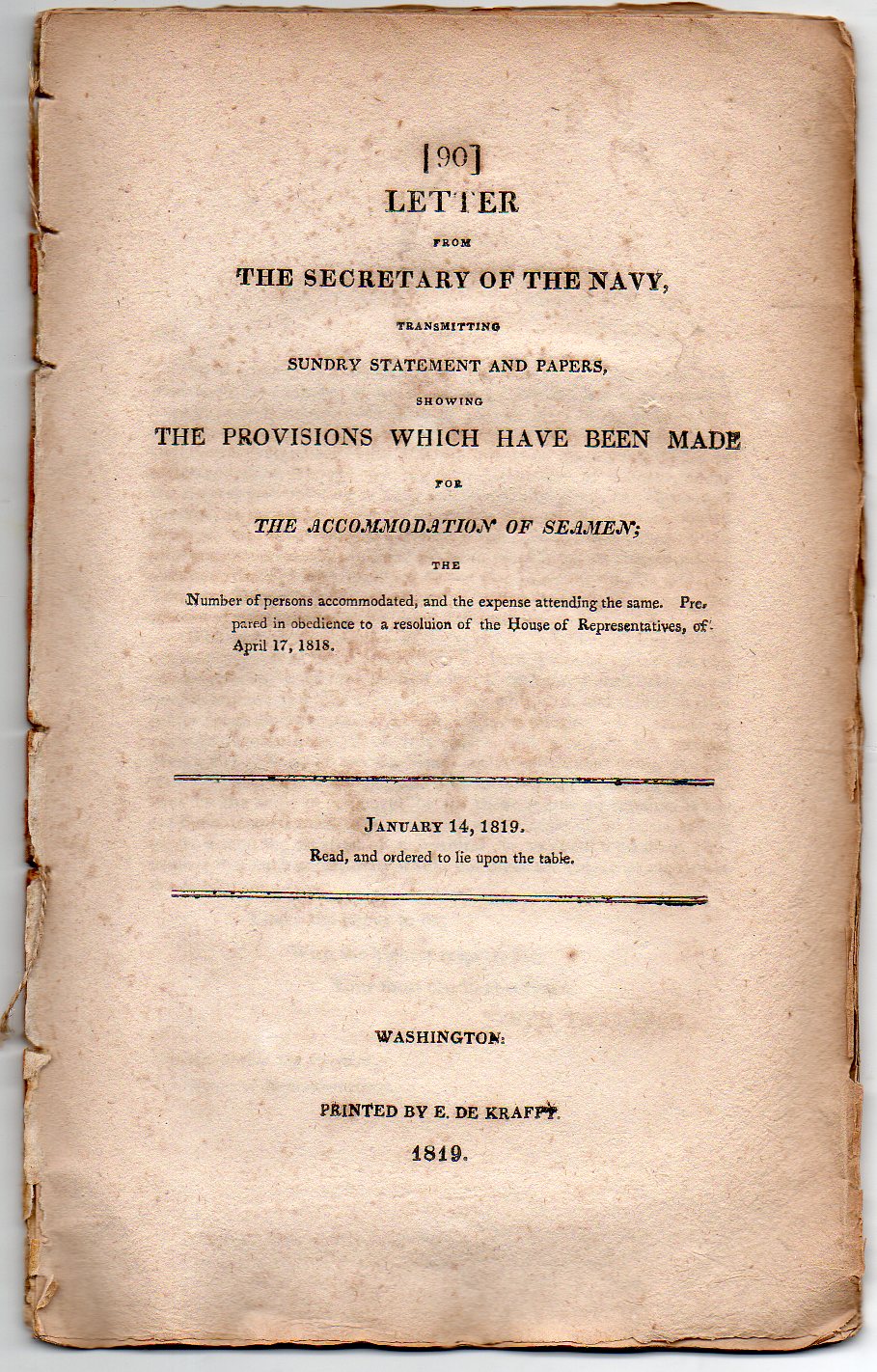
    E(ward) Cutbush, a very capable naval surgeon (and noted as the father of modern American naval medicine) attests to this, and did so in this report on the status and expense of the hospitals and medical care facilities available to the U.S. Navy (and which was published in 1819). He didn’t of course know necessarily that health care wasn’t very expensive at all–especially if relation to the price of wine–Cutbush just reported the numbers. 

    And the numbers are interesting:  in 1814, for the U.S. Naval Hospital in Washington, D.C., for the 116 inpatients and 86 outpatients seen during the year, a total of $344.74 was spent on “medicines, instruments and dressings”, $1,166.30 on “support of patients, nurses and attendants” (which really meant food and sundries),  and another $180.00 in wages for  “nurses and attendants”.  By comparison, $79.70 was spent on soap and candles, $334.52 on replacement furniture, and $368.40 on fuel. $50.56 was spent of fruits and vegetables.

    And somewhere in there, we are shown that about $30 was spent on “clothing of an insane pensioner”, which I guess must mean that some old Seamen were judged to be “insane”, and needed clothing, before they were sent off and away from the hospital. 
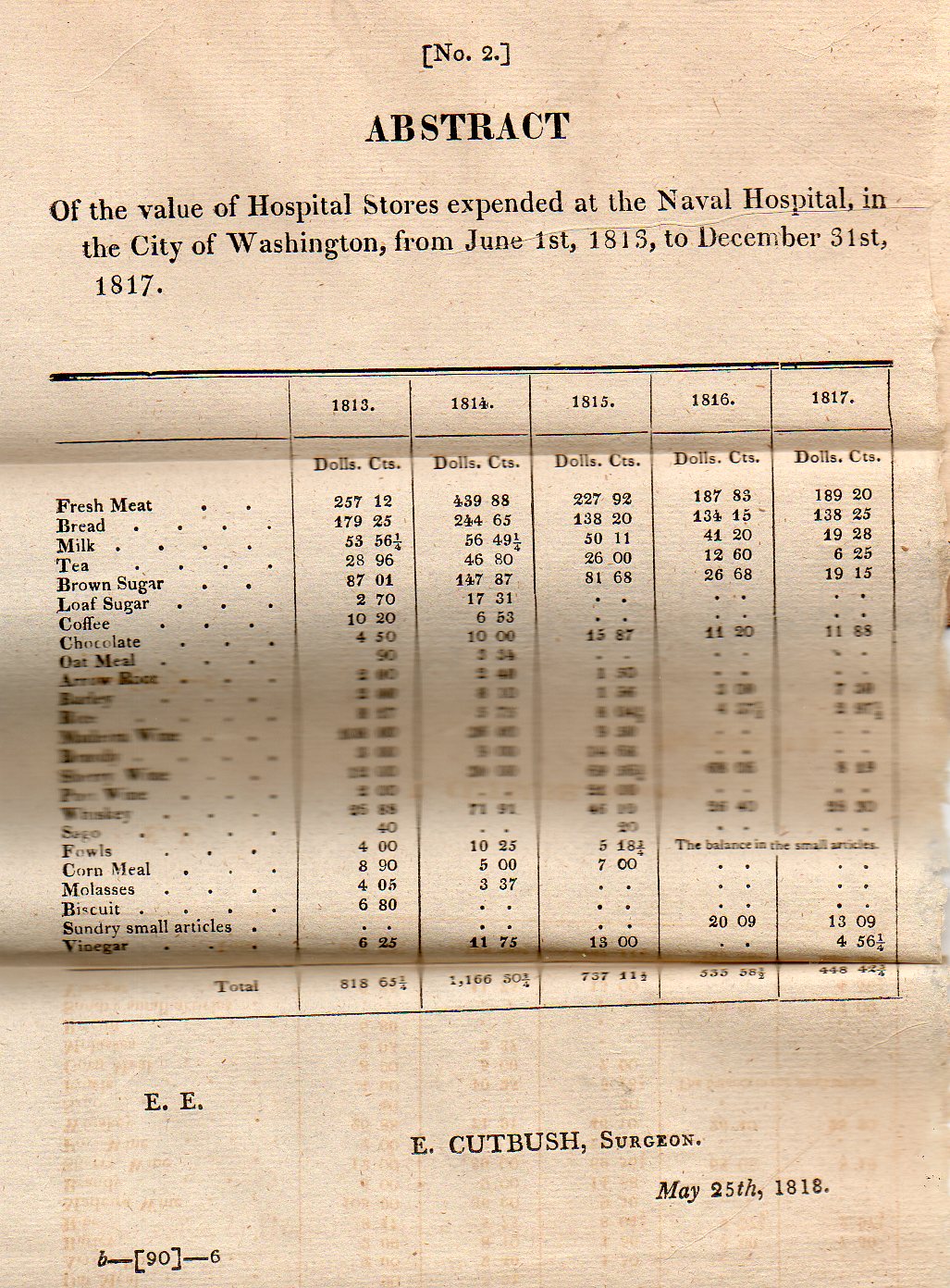
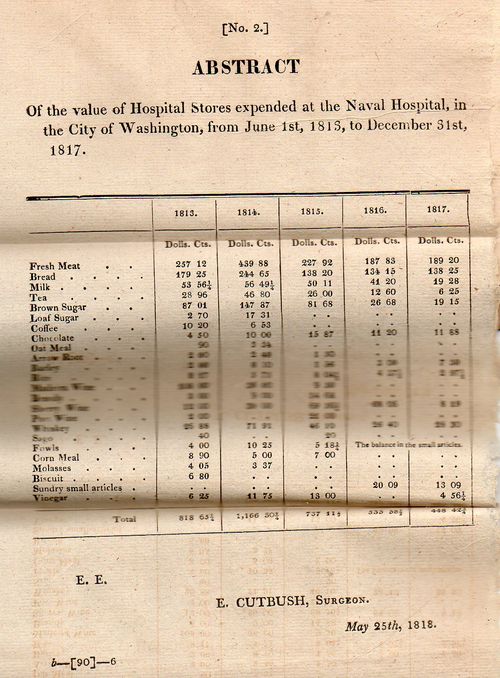
    US navy medical spreadhseet

    [This image is clear once enlarged.]

    A little bit further on, Cutbsuh tells of the more exact expenses on food/”support” for the folks at the  D.C. hospital  in 1814.  By far the leading expense (in the total of $1,166.30 3/4) was meat, meaty fresh meat, which accounted for nearly half of the total outlay ($439.88).  Bread was next ($179) followed by Madeira wine ($108).  Actually all of the alcoholic beverages–which included Madeira, brandy, sherry, port and whiskey) added up to $153.00, almost as much as bread.  Meat, bread and booze then accounted for $726, or 62% of the food budget (less the minimal cost of fresh veggies).  Milk, tea and coffee weighed in at $92, which means the drinking-goods totaled $245, or 21% of the food outlay.  Barley, rice, oat meal corn meal and “biscuit” came in at $24; vinegar, molasses and brown sugar surpassed those staples at $97.
    Medical  expenses993

    We don’t get any information on the surgeon’s pay, unless we look at the stats for the naval hospital at Baltimore.  There, for 1814, we see that $352.00 was spent on medicine, $80 on surgeon’s instruments, $231 on fuel, $1645 on provisions, $18 for nurses, $18 for cooks, and $1282 on surgeon pay.  Unfortunately, I cannot find how many surgeons were called to receive this compensation, but we can see that their pay consumed 26% of the hospital expenses while caring for a total of 244 sailors over the run of one year.  It is not impossible that there was one surgeon on hand, and one nurse.  So, each sailor getting care from Baltimore received about $1.44 worth of medicine for their stay; the nurse and cook each got about 7 cents for each of the patients receiving care there, and the doctor picked up about $5.25 per sailor.

    Of course there wasn’t much in the way of surgical tools when compared with even the late 19th century to spend money on–ditto medicine.  Stand-alone hospital machinery was virtually non-existent in 1814, and so the major factor upon which all hopes were laid was the surgeon, a sort of walking hospital–a job of superior messiness and long and lonely responsibility.

    These numbers were for the late period of the War of 1812, when more than 2,650 servicemen were killed and 4,500 wounded.I could not in a cursory effort find the number of surgeons serving or employed during 1814, nor an overall figure on total medical care cost for seamen.  But it does seem likely that more was spent on milk, bread and booze than on medicine and surgical instruments.  And certainly the doctor cost far more than any other single unit int he medical care scheme–and, given that the greatest part of all care necessary resided with the physician, it was probably worth every penny (or fourth thereof.)

    Notes:

    1.  Cutbush at this time was given the direction of the “Marine and Navy Hospital establishment and of the medical and hospital Stores, which may from time to time be required for the use of the hospitals, or for the vessels of the United States equipped at this place.”-–Dudley, William S.. The Naval War of 1812, a documentary history, Volume 3.. Naval Historical Center, 1985.
     

    ·Posted by :

    ·in:

    —

  • Medical Metal Splinter Removal, 1915

    JF Ptak Science Books

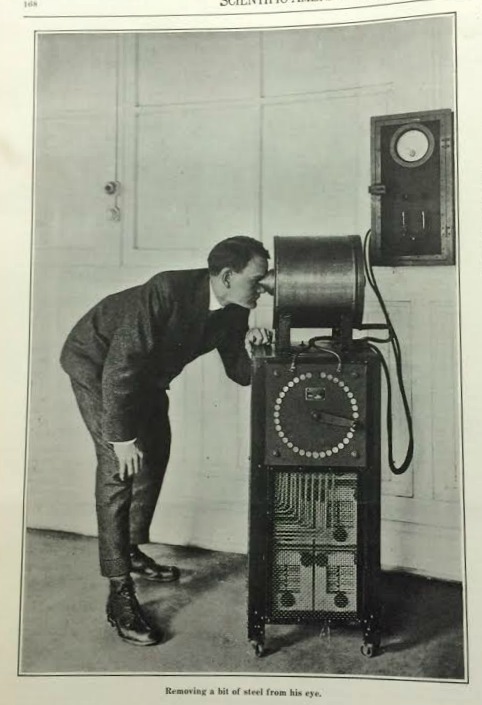
    This image was a cringeworthy expedition–the thought of being filled with metal shards and splinters and slivers in 1915 and needing them to be removed filled me with a Johnny-Got-His-Gun-Trumboian dread.  If you didn’t read the caption or know what this machine was intended to do, you might think it a humorous image–it isn’t.

    WWI project medical metal

    ·Posted by :

    ·in:

    —

  • The Only Radium Cure that You Can See in the Dark–1900

    JF Ptak Science Books  Quick Post 

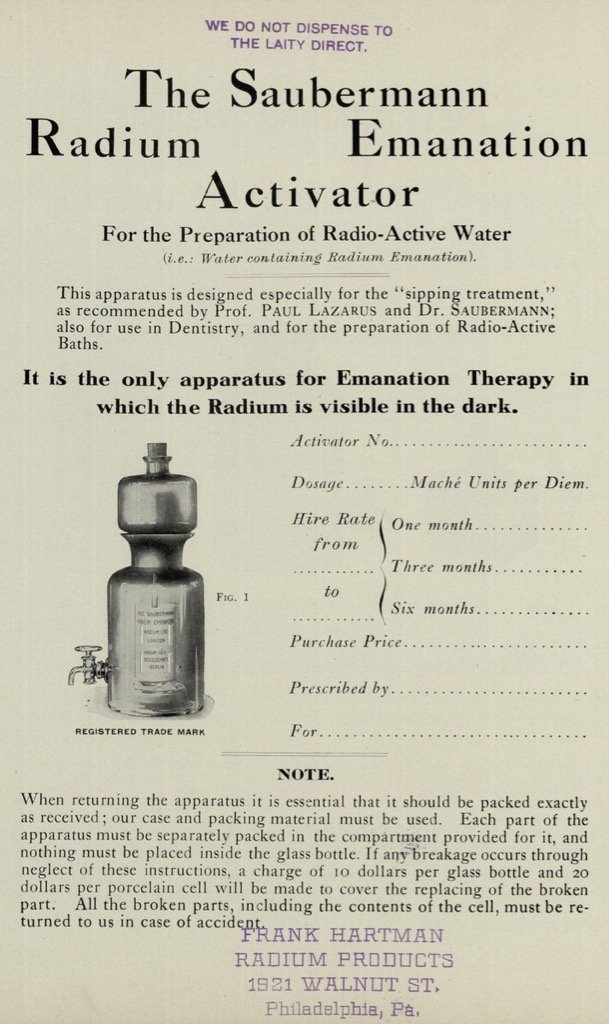
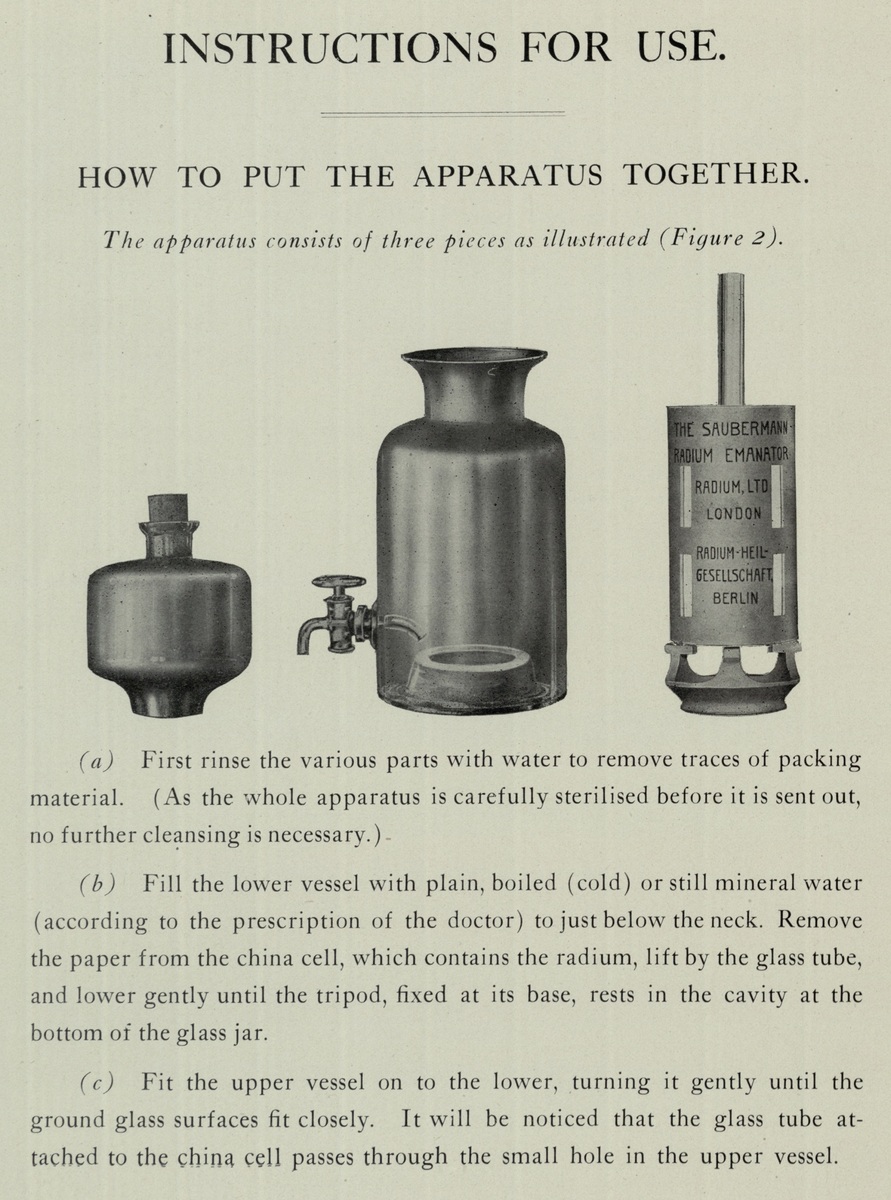
    I found this very arresting image on the wonderful Whewell’s Ghost history of science/medicine/tech roundup (https://whewellsghost.wordpress.com), edited by Thony Christie (of the excellent The Renaissance Mathematicus blog, https://thonyc.wordpress.com/ and twitter account @rmathematicus).  This cure-all was being sold by Radium Limited U.S.A. (25 West 45th St, NYC1) around  1900, which means that like many quake devices it hit the shelves for public consumption not long after a scientific discovery it sought to exploit–in this case the discovery of radium by Marie and Pierre Curie in 1898. The toxicity factors of radium at this stage was not yet known, though the new-remarkableness of radium led some to establish a for-profit belief that the stuff in all of its glorious newness should be taken internally for the treatment of whatever quack-inspired ideas came to mind. One shriveling aspect in the text is that when used in therapy the radium-infused radioluminescent elixir was the only one of its kind to be visible in the dark. Modern knowledge aside, it is probably a good thing to abide the anonymous non-soliphisms of (1) never drinking anything that you can’t lift with one hand, and (2) never drink anything that glows. 

    Radium Emanation

    The full pamphlet is reproduced by the College of Physicians of Philadelphia http://www.cppdigitallibrary.org/exhibits/show/radium/item/4351

    Notes:

    1.  The pamphlet has a hand-changed address of 22 W. 45th St, the original building now evidently gone, replaced by the Berkeley Building in 1917. Post-appropriately right across the street is the Cock and Bull Pub.) 

    Radium _2_[Source: College of Physicians of Philadelphia http://www.cppdigitallibrary.org/exhibits/show/radium/item/4351]

    ·Posted by :

    ·in:

    —

  • Beef Fat, Bones, and the Flu (1918)

    JF Ptak Science Books

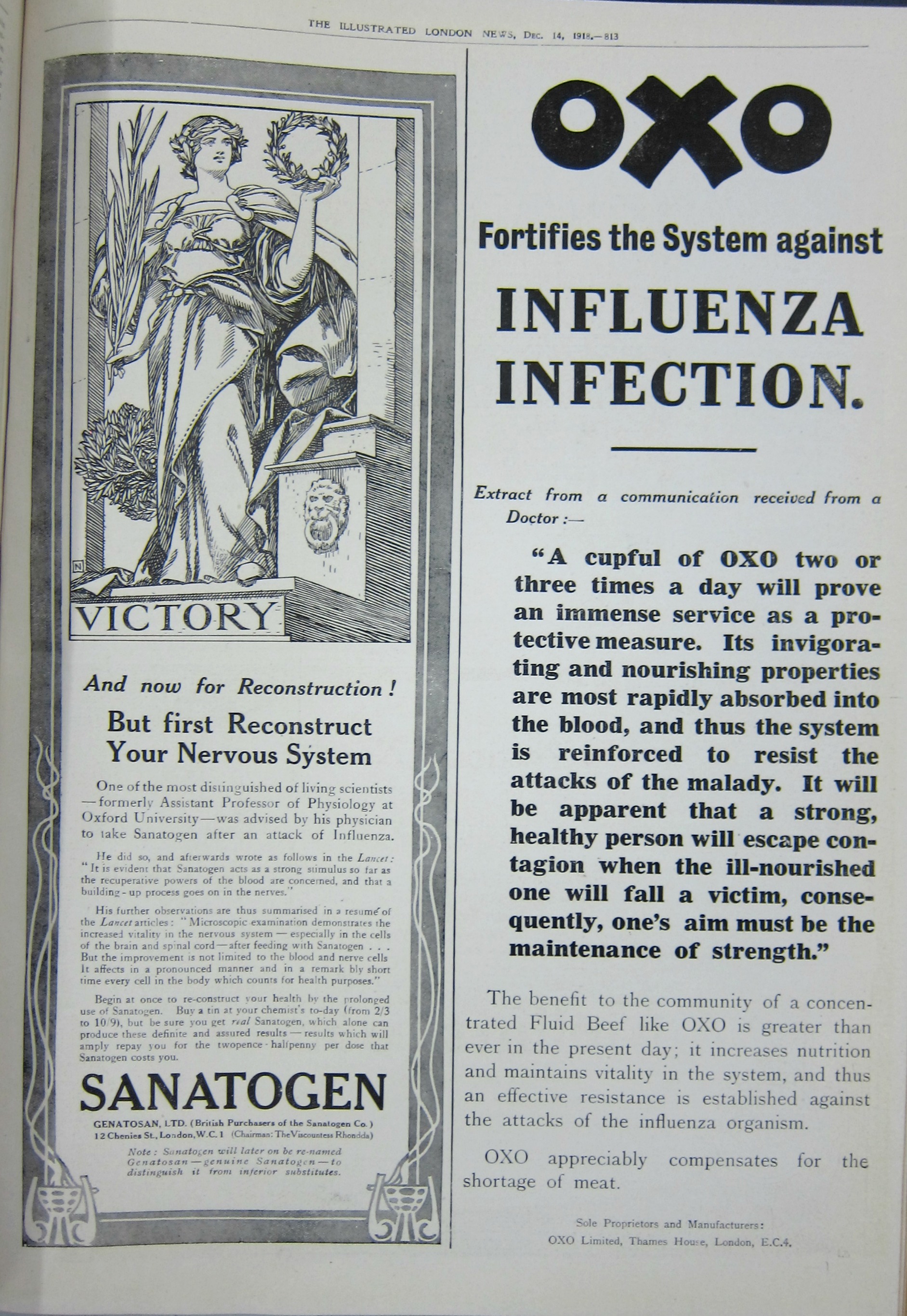
    Riding the last waves of wear into the public conscience and pocketbook come these two ads, published in a very large full-page format in the Illustrated London News in August 1918, just a few months before the end of WWI.  Yes, no doubt there was a public “nervousness” about the affairs of the self/state/world in general, and yes there was a problem at this point with the beginning of flu season (which would soon develop into a world-wide pandemic that killed millions), and I guess the makers of Sanatogen and Oxo thought that they could make a positive impact on these things.  Considering that Sanatogen was a tonic and both a relaxing and a vitalizing agent, and made of 95% milk protein, probably would not make much of an impact in anyone’s nervous system. Same deal too to Oxo–apart from water the major ingredients were flour, beef fat, and dried beef bone, and probably whatever beefy thin might have fallen to the floor at the slaughterhouse.  Certainly there was no good to come of treating a deadly influenza with beef fat–except of course that the manufacturer would do well distributing dietary supplement made of the stuff that has almost no value of any sort. 

    So, I guess I’ll need to check out Oxo for the winter of 1918/19 and see how often this ad appears–it wouldn’t be until the fall of 1918 that the pandemic would begin, killing about as many people who were killed in the just-ended war. Combating infectious disease with left-over stuff from a beef killing floor was probably not a hope-filled thing.  

    WWI Project Influenza Cured with Meat


  • On Kindness to Prostitutes (1878)

    JF Ptak Science Books   Quick Post

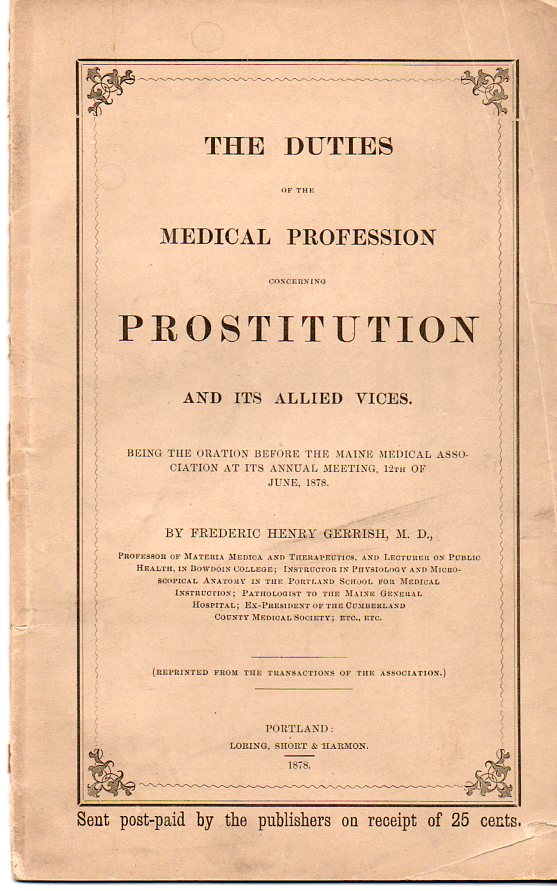
    Prostitution512


    In this pamphlet1 Dr. Gerrish writes with kindness and compassion, and conviction, on the perils of the moral/ethical/medical life of a prostitute. He believed that prostitutes should be given as great a care as any and even more so to prevent the spread of communicable disease; and that understanding and empathy be extended to them from the medical profession as a way of building their self-esteem and perhaps on this strength be able to leave the profession. He was pissed that brothel owners, Johns, and prostitutes were arraigned differently and (usually) separately, and that they should all be arraigned together, as it wasn’t just the fault of the prostitute that the law was broken. He made the case that prostitution was a fixable societal problem, and it must be addressed, in spite of what he saw was its massiveness.  He claimed that slavery wasn’t abolished –it simply went by the name of “prostitution” (“… that slavery has disappeared from European civilization. This is an error. It exists always ; but it weighs only on woman, and is called prostitution”).

    Read it in full at Hathi Trust: https://babel.hathitrust.org/cgi/pt?id=mdp.39015011655837;view=thumb;seq=6

    Notes:

    1. Frederic Henry Gerrish, The duties of the medical profession concerning prostitution and its allied vices : being the oration before the Maine Medical Association of its annual meeting, 12th of June 1878. Portland (Maine), Loring, Short & Harmon, 1878.  First edition (a second edition appeared in 1879 with the same pagination, and a third of 39pp appeared in 1886). 23×15 cm  WorldCat/OCLC–surprisingly, only three print copies of the first edition are found. 


    ·Posted by :

    ·in:


  • When There is More Text on the Cover Than in the Text–and the End Result is Nothing (1877)

    JF Ptak Science Books   Quick Post

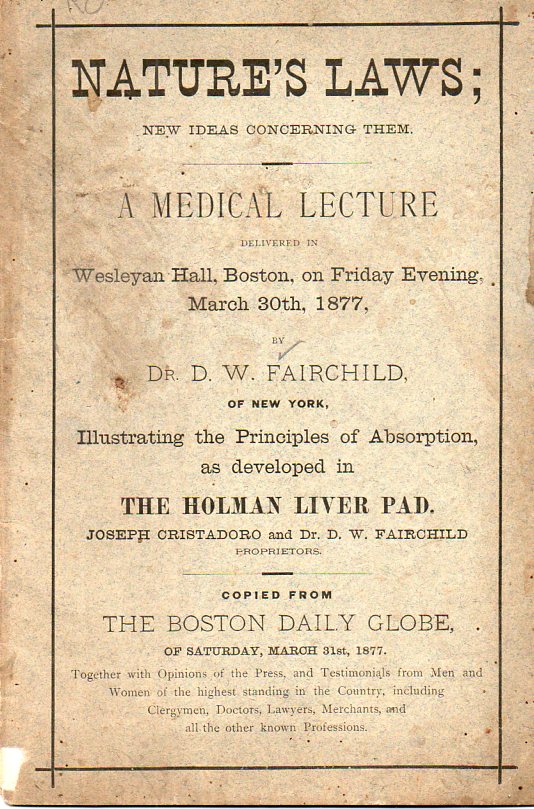
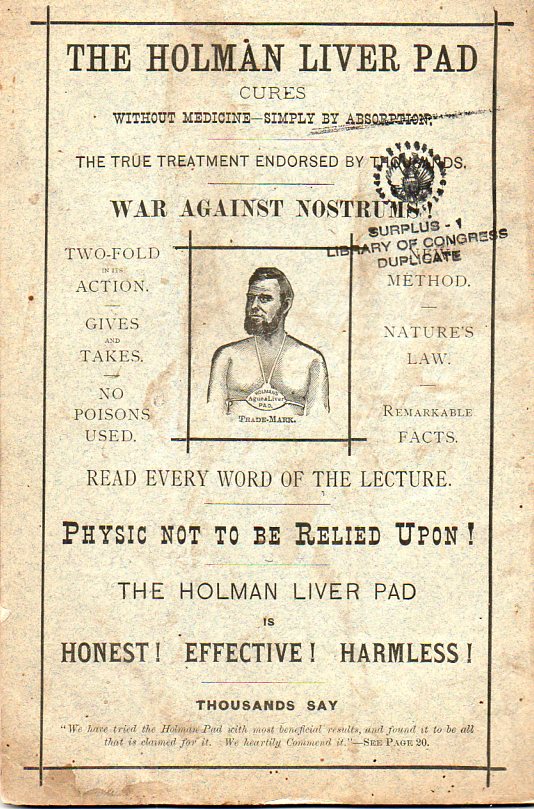
    It happens now and then that I unearth interesting bits from the pamphlet collection here that instantly create their own categorization–this in spite of already having a hundred sculpted categories. Works like this demand a deeper inspection to sustain their uncommon non-bond with other similar but not-so works. On the face of it, Fairchild’s Nature’s Laws… looks like just another quack medical remedy/cure/belief system (or suspension thereof), except that on closer inspection there is more text regarding the product on the pamphlet’s covers than in the work itself.  The thing does wind up being 36pp long, but it is most testimonial and promise–after all, you can’t say all that much abut secret ingredients for the “liver patch” that you were supposed to wear, and you couldn’t say much about the medical inventiveness and foundation behind it because there wasn’t any. So I guess you fill space with words that aren’t necessarily connected to anything and that collectively had no value, much like a year’s worth of Trumpian nothingness. Anyway, there’s a lot going on on teh covers of this pamphlet, and much like what is going on inside of it, it all adds up to chicken scratches. 

    Liver Pad508

    Liver Pad509

    D.W. Fairchild. Nature’s Laws; New Ideas Concerning Them. A Medical Lecture Delivered in Wesleyan Hall, Boston, on Friday Evening, March 30, 1877…Illustrating the Principles of Absorption, as Developed in the Holman Liver Pad…copied from the Boston Daily Globe of Saturday, March 31st, 1877. 22×14.5cm, 36pp. Printed by the Holman Liver Pad Company, 1877.  WorldCat/OCLC locates only two print copies and many others in microform.  


  • A Single-Page DSM? (1886)

    JF Ptak Science Books  Quick Post

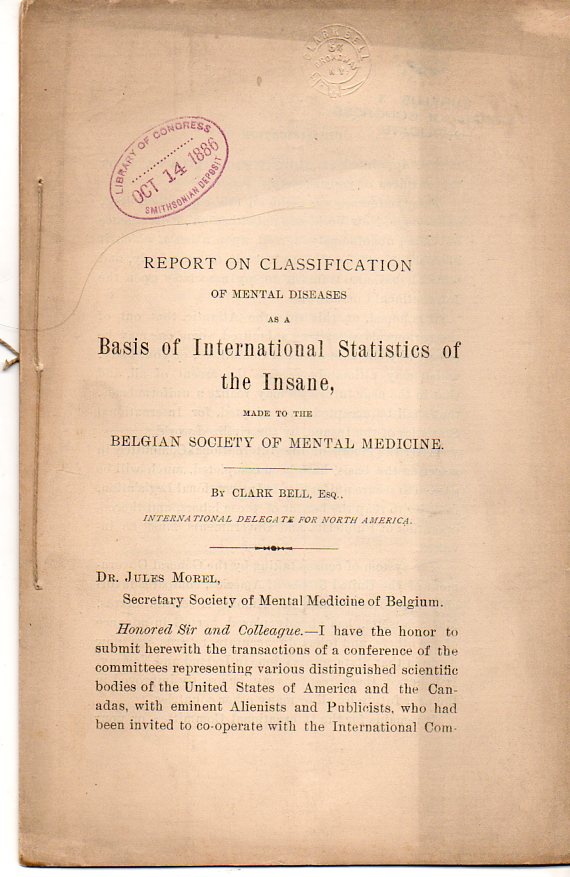
    Statistics of the insane _1_503


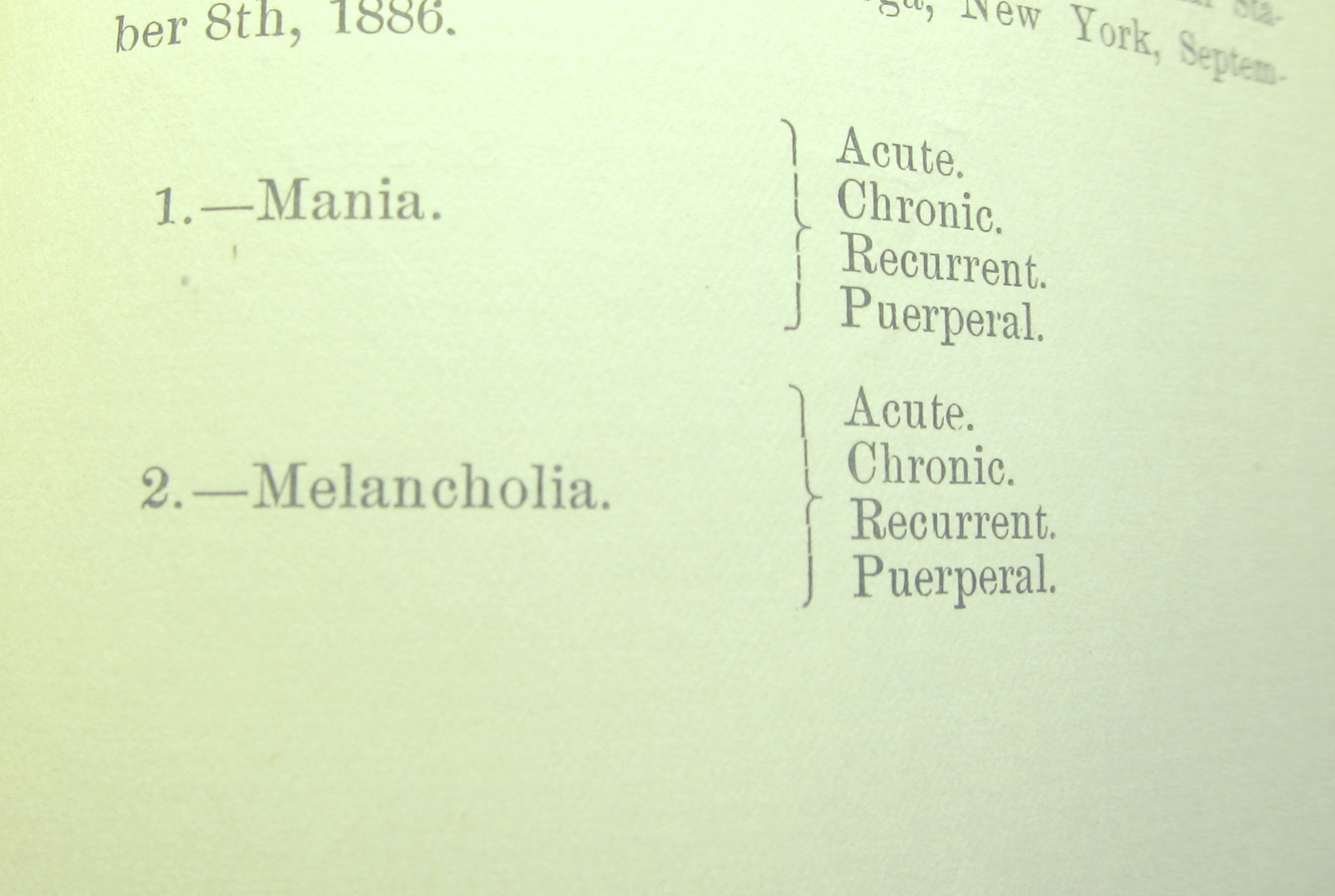
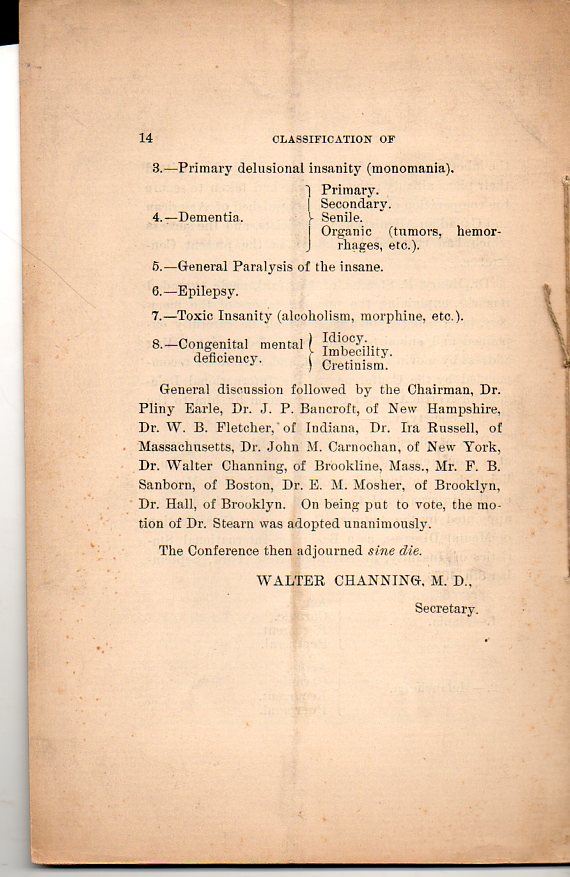
    At the end of the 19th century it was recognized that international data collected on mental illness would be highly useful. Unfortunately there was no real possibility of applying a series of great common denominators to the vast majority of  mental illnesses–the classification of mental diseases lacked general consensus and clarity for not understanding the pathology of the disease, therefore having to fall back on classification according to symptology, which is open to interpretation, and individual experience, and occasional faith, with the apparent mental conditions judged by exterior behavior and appearance. This pamphlet below is the sum of the efforts of international institutions to come up with a plan for this classification that might make disparate data more refined and so more useful to communities around the world.  It seems as though this was done with a simplicity that was also useful, as there was a common language to describe those conditions that are marked for classification.  

    Full text can be viewed of Yale’s copy, here:https://archive.org/details/39002086346195.med.yale.edu   

    Clark Bell. Report on Classification of Mental Diseases as a basis of international statistics of the insane, made to the Belgian Society of Mental Medicine. 23x15cm,  14pp. Wrappers. Provenance: Library of Congress Smithsonian Deposit (received in 1886) from Dr. Bell (with a tiny 1.5cm embossed stamp bearing his name and address at top-center front page).  I suspect that this is a separate printing of this article that appeared the Medico-Legal Journal, volume 4, 1886, as it has the same exact appearance–Bell was also the editor of that journal.  

    And the classifications, which appeared on the last two pages of the document:


    Insanity DSM


    Statistics of the insane _1_504