A Daily History of Holes, Dots, Lines, Science, History, Math, Physics, Art, the Unintentional Absurd, Architecture, Maps, Data Visualization, Blank and Missing Things, and so on. |1.6 million words, 7500 images, 4.9 million hits| Press & appearances in The Times, Le Figaro, Mensa, The Economist, The Guardian, Discovery News, Slate, Le Monde, Sci American Blogs, Le Pont, and many other places… 5000+ total posts since 2008.

Category: Medicine, History of

  • The Distance-to-Hospital Usage Law (1866)

    JF Ptak Science Books  Quick Post
     

     Dr. Edward Jarvis (1803-1884) conducted a study1 in 1866 to determine how much a factor distance from an “insane hospital” was in regards to people using the facility. It sounds like an obvious-enough question with a probably-obvious answer, but these things are really never so until someone actually looks at the data and extracts an answer. And so Dr. Jarvis performed this function, answering the question once and for all that yes, indeed, the further away you are from a facility the less likely you are going to be to use it, and thus we have Jarvis’ Law.

    “Mental health researchers have long considered the importance of distance on psychiatric service use. Systemic analyses regarding the relationship between distance and the use of mental health care can be traced back to the mid nineteenth century, when Edward Jarvis identified inverse associations between home-to-hospital distance and the rates of admission to Oneida County Hospital of New York and the Kentucky Lunatic Asylum in Fayette County. He claimed that people living near psychiatric hospitals send more patients there for admission than do those living far away (Jarvis’s law).The study also revealed urban–rural differences in the prevalence of insanity, and high admission rates to psychiatric hospitals among people residing near the city center. Jarvis’s law has been identified in numerous studies since the mid-twentieth century.”–Kuon-Chiao Tseng, et al, “Travel Distance and the Use of Inpatient Care among Patients with Schizophrenia”, Adm Policy Ment Health. 2008 Sep; 35(5): 346–356, published online 2008 May 30

    Notes:

    1. Edward Jarvis, M.D.  “Influence of Distance from and Nearness to an Insane Hospital on its Use by the People.”  Published by Separately printed from the American Journal of Insanity, XXII, January 1866, pp 361-406. This publication paginated 1-46. (1866).  

  • Elaborate Camps for Ambulance Dogs, 1917

    JF Ptak Science Books  Quick Post

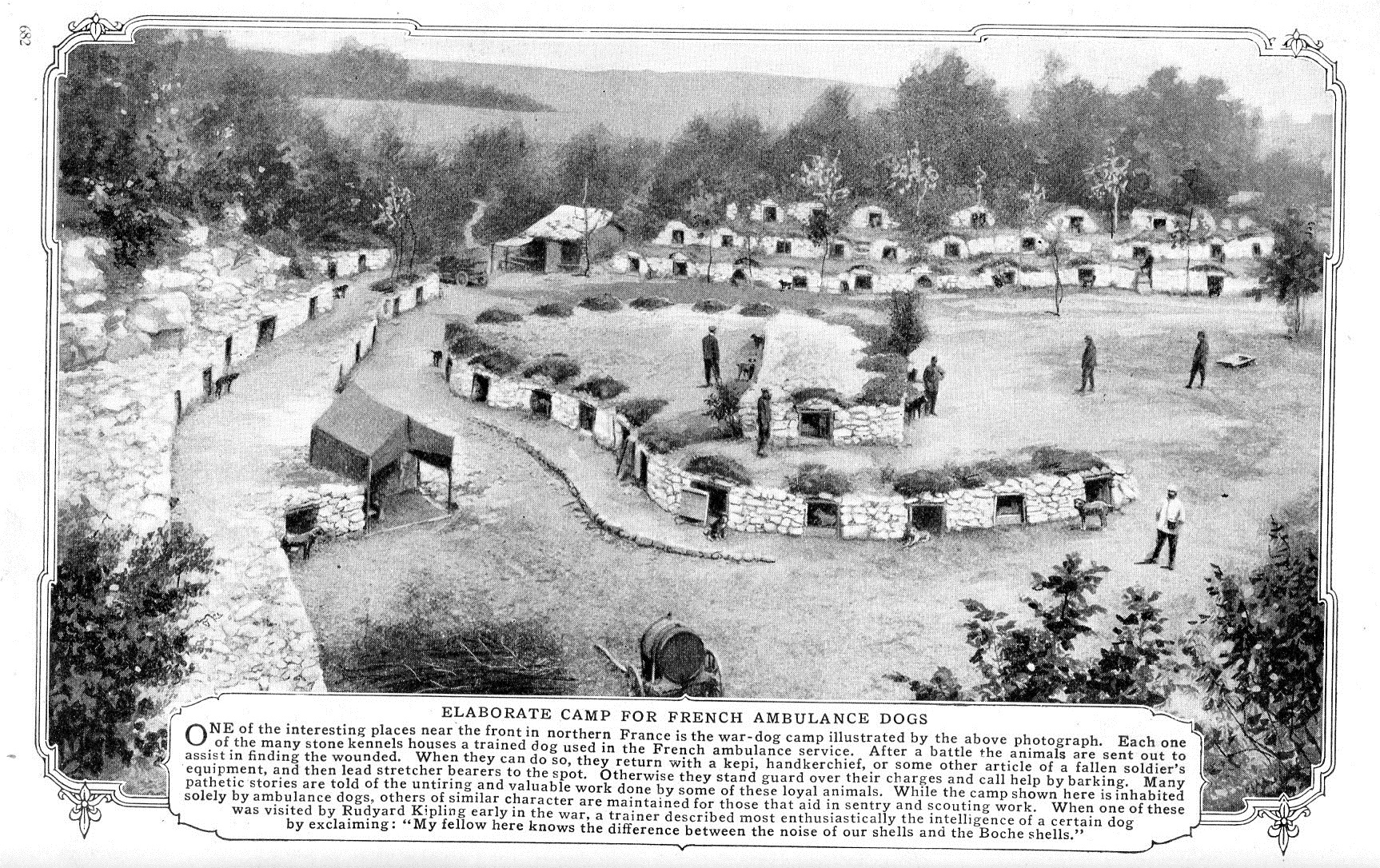
    This is a striking image of a bright and reaching idea–the use of dogs to find, identify, and alert the presence of a wounded soldier on the battlefield. The dog would be sent out onto the battlefield, where it would find wounded soldiers, after which the dog would retrieve a possession of the soldier’s and return to the trenches, and then lead a squad to retrieve the wounded man. That, or the dog would stay and stand guard, barking to alert stretcher bearers the location of the soldier.  The dog houses are of a massive construction, like fortified dugouts–I suspect that the camp was far enough front to be subject to bombardment.  I’m not sure of the breeds there, but perhaps these are Bouvier des Flandres, or Briard?  I can’t tell. 

    [Image greatly expandable.]

    Wwi project ambulance dogs432

    [Popular Mechanics, May, 1917, pg. 682.]

    ·Posted by :

    ·in:

    —

  • Money, Medical Treatment, and the Size of the Working Classes

    JF Ptak Science Books  Quick Post

    Medical costs359

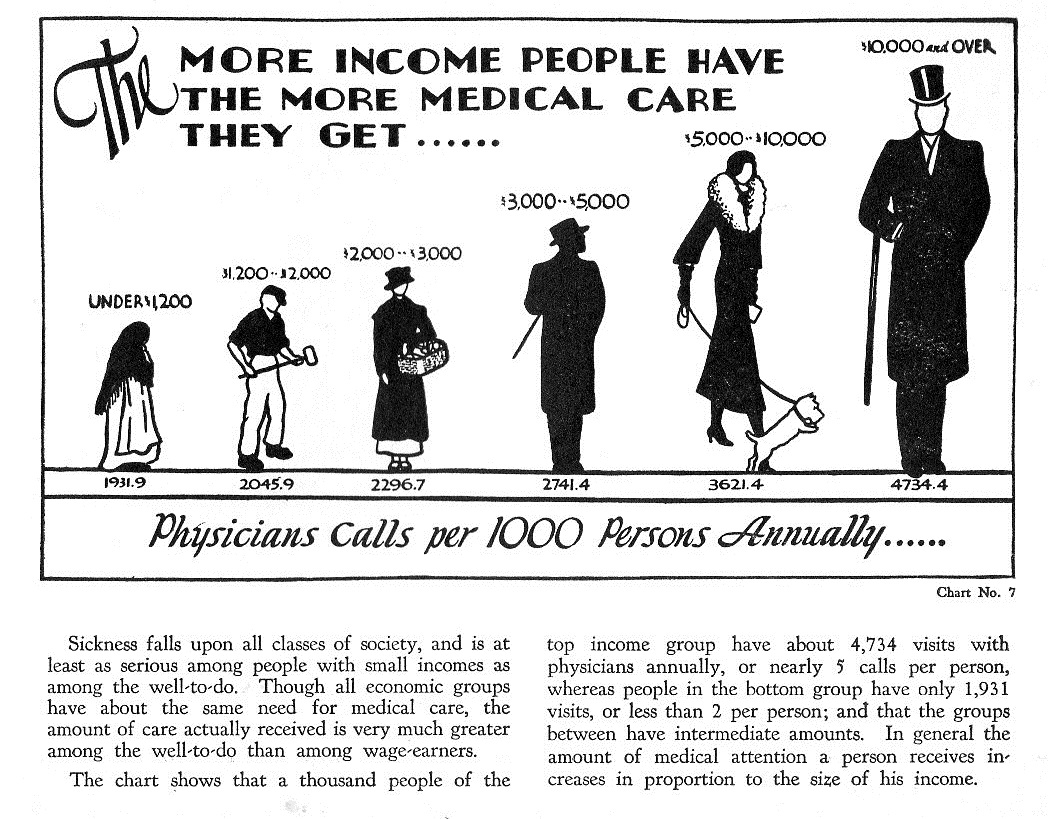
    A Picture-Book about the Costs of Medical Care was composed by the Julius Rosenwald Fund in 1932. One of the major data visualizations in the short pamphlet was the distribution of medical care according to income–and it comes as no surprise that during the Depression that the wealthiest people are enjoying more medical care than the other classes.  The stats are mostly not displayed in this pamphlet so there’s not much that I think I can say about them–except that it seems that the class distinctions/percentage in this  chart are similar to the William Thompson & Joseph Hickey (2005) class model.

    So from the Rosenwald Fund the numbers are described like so (with the addition of the bureau of Labor Statistic’s calculated figures for teh purchasing power of the 1932 dollar in 2016):

    • <$1,299, 15% of the population, ($20,957 in 2016 dollars)
    • $1,200-$2,000, 35% of the pop, ($34,938 in 2016 dollars)
    • $2,000-$3,000, 25% of the population ($52,392 in 2016 dollars)
    • $3,000-$5,000,  15% of the population, ($87,321 in 2016 dollars)
    • $5,000-$10,000, 7% of the population,  ($174,643 in 2016 dollars)
    • $10,000+, $2.9% population, (greater than $174,643 in 2016 dollars)

    The Thompson/Hickey model 

    • Upper 1% 
    • Upper middle class 15%
    • Lower Middle Class 32%
    • Working class 32%
    • Lower classes (including the working poor 20%

    The bottom two classes in the Rosenwald could constitute the poor and the working poor, making 50% which is what is most in-line with the Thompson/Hickey model. It is a little more difficult to work the numbers and try to distinguish the super rich, rich, upper middle class, and middle class in other models against the Rosenwald graphic. However when you look at two other models the poor and the working poor add up to about the same as above; the Dennis Gilbert model  (2002) finds 55% in this category and the Leonard Beeghley (2005) finds 57%. This is real smashmouth statistical surfing, I know, but it does seem as though there is a good correlation between the Rosenwald working class/working poor/poor numbers from 1932 and more recent models. 


  • Paper Dissection of the Brain, 1844–Now with a GIF

    JF Ptak Science Books   Quick Post (Revisiting an earlier post with an added GIF)


    Brain521

     
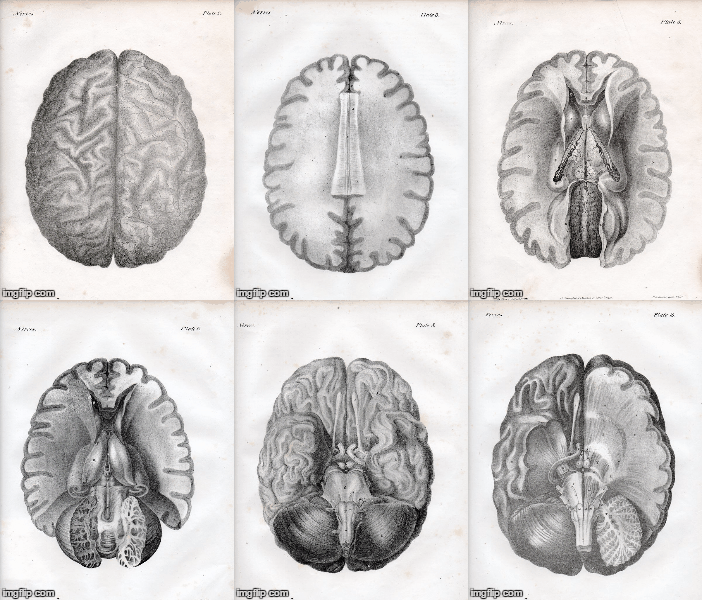
    These images are brought to us by the Irish-born Quain brothers:  Jones Quain (1796-1865),  an anatomist and professor of Anatomy and Physiology at the University of London; and Richard Quain (1800-1887), professor of anatomy in 1832 at the University of London, then surgeon at North London Hospital, and president of the Royal College of Surgeons. The illustrations are from a later (ca. 1850’s) and smaller printing of their beautiful 1844 work The Anatomy of the Arteries of the Human Body, with its Applications to Pathology and Operative Surgery, in Lithographic Drawings with Practical Commentaries.
     
     
    Brain521
     

    ·Posted by :

    ·in:


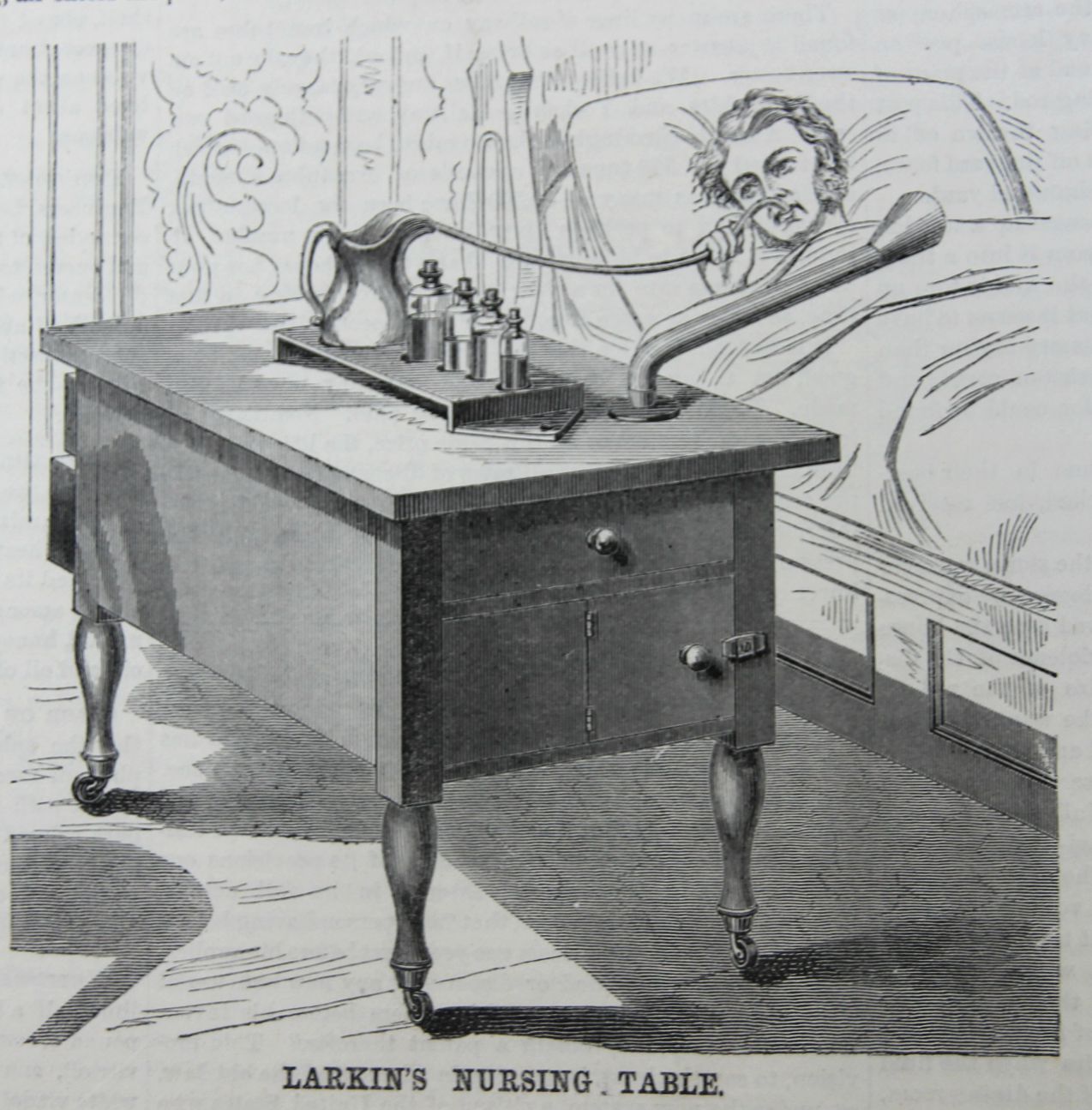
  • A Mechanical Night Nurse, 1869

    JF Ptak Science Books   Quick Post

    [This bedside nurse’s aid appeared in the July 17, 1869 issue of the Scientific American.]

    According to the article, “The inventor of this nursing table has endeavored to afford greater comfort to the sick by providing them with the means of supplying in a measure their own wants during the absence of an attendant. In large hospitals the want of something of this kind has been long felt and in many cases its use in private houses would be a great convenience…” Mostly it was a drinking-and-spit-bucket apparatus–still it would no doubt come in handy and loosen the duties of the nurse somewhat.   

    Nursing Table 1869


  • A Plate Full of Eyes (1851)

    JF Ptak Science Books  Quick Post

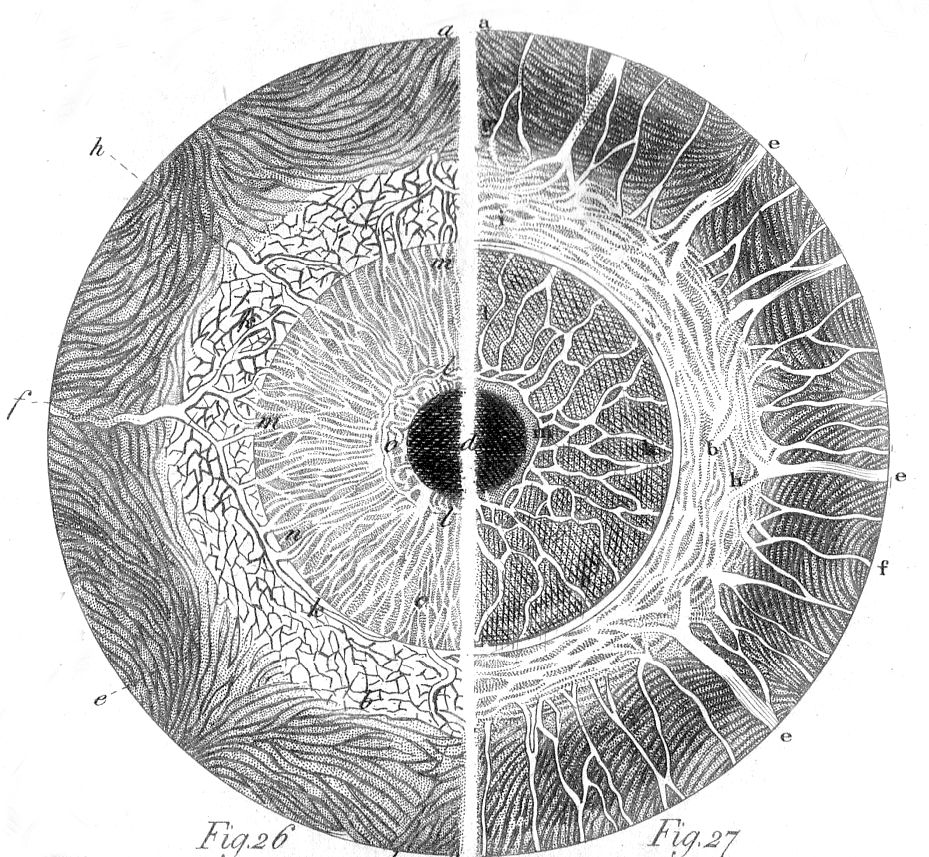
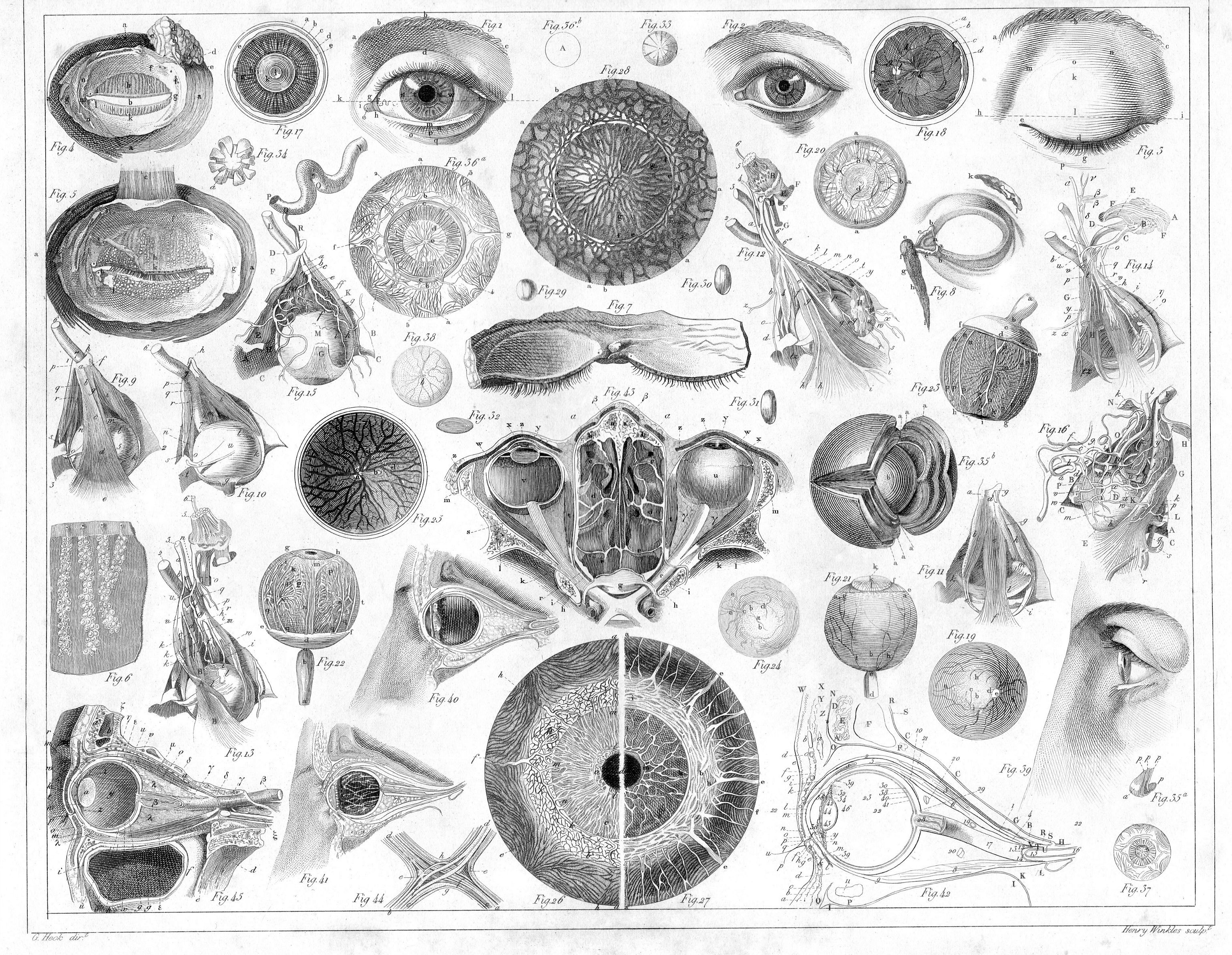
    J.G. Heck wrote and compiled a fascinating and complex work entitled The Iconographic Encyclopedia of Science, Literature and Art, and was published in America for the first time in 1851 following Spencer Baird’s translation from its original German.

    Eyeballs160

    The key to his work is the amount of data displayed on each of the 500 engraved plates illustrating this work and the way in which it is arranged.  The design and layout of the 30,000 items on these 500 plates was a work of genius, and for my money it is easily the best-presented complex means of the display of data and objects that was published in the 19th century.  

    The image above is from one engraved plate featuring 43 aspects of the human eye–beautifully arranged, and somehow fitting perfectly on the 9×11″ sheet of paper.  It is a work of real design engineering.  

    The image above is a detail from:

    Eyeballs159


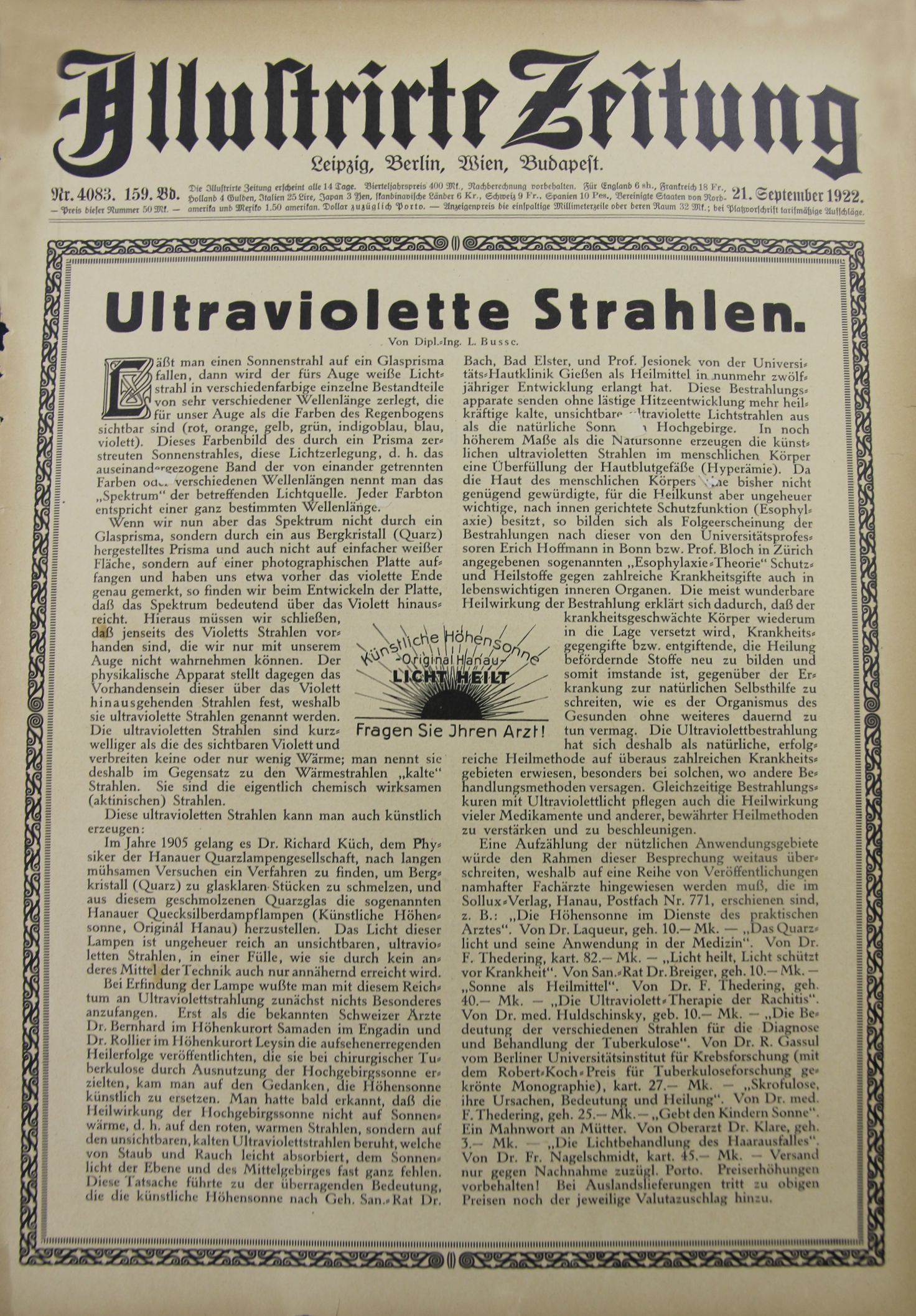
  • Ultraviolet Medical Treatment, 1922

    JF Ptak Science Books  Quick Post

    This is a large, full front page advertisement for ultraviolet therapy, and appears in the Illustrirte Zeitung (Leipzig) for September 21, 1922.  Therapy using UV lamps of various origins was of relatively recent origin (ultraviolet radiation being discovered by Johann Ritter in 1801) as stated in the text here, which gives a pretty lengthy appreciation of the history of the use of crystal lamps, and noting (in paragraph four) that the principle in the invention of such material was Richard Kuch. (Kuch was a physicist and chemist who created the first mercury vapor quartz glass lamp in 1905 and the first mercury vapor high pressure lamp in 1906.)  UV treatment does have its proper place in the history of medicine, but it certainly came to occupy a lofty perch in quack medical treatments for home use in curing everything from cancer to gout to dandruff via the “purple light rays”.  I really don’t know all that much about this subject and was reporting on the design aspect of the ad–the treatment of the subject though certainly seems academic, complete with a priced guide to related literature.  

    Ultraviolet

    ·Posted by :

    ·in:


  • The Leech Explorers of 1833

    JF Ptak Sciene Books   Post 2507

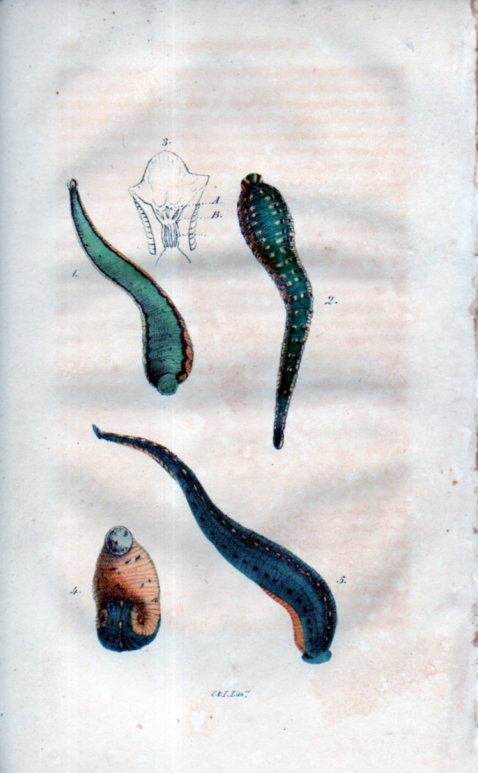
    D.B. Smith’s “On Medicinal Leeches”, which appeared in the Journal of the Philadelphia College of Pharmacy (January, 1833, pp 265-271), may or may not have the first illustration in a U.S. journal of a medical leech. Or at least that’s according to what D.B. Smith says, who claims that an image of the little critters with multiple jaws and lots of teeth “appeared here for the first time”. It seems to be a little late for that to be happening for the first time, as using leeches in medical practice to prevent disease and infection goes back a long way before this article, far beyond the earliest written mention of it goes (in a Galen manuscript, about 2,000 years ago). On the other hand the medical journal was still a pretty new idea at this point in the history of science in the U.S.A–the very first medical (and scientific) journal in general does not appear until 1797 (with the Medical Repository) so it is possible that in the 36 years of scientific/medical journal publishing history to this point it is entirely possible that this short article can claim its “firsts”.

    Leeches030The article is not without its very muted bells and whistles, but what attracted me instantly was the bit in it about the leech explorers. The Leech Explorers of 1833–it is an exploit-ish title, perhaps even needing a bit of a Busby Berkeley dance routine to support it in a Leechy Atlas sort of way. 

    We find out that at about that time, in the 1820’s and 1830’s at least, there was a bit of a European leech mania.  Of course, manias are difficult to explain in their appearance but not so much in their disappearance, and the leeches just got in line with the rest of the other manias, like the dancing mania, tulip mania, bibliomania, arithomania, fortune telling, magnetism mania, and so on. 

    What happens with the leeches at 1833 is there was a definite leech supply failure–in Paris alone 5 million leeches were used every year, emptying out 300,000 litres of Parisian blood (according to the Encyclopedia Britannica). The demand for leeches was so great that leech dealers would extend their range to Spain, Corsica, Germany, and even to the far reaches of Turkey, and finding no satisfaction, opened their hearts for new and true sources of leeches, and “explored”. 

    For some reason this struck me as enchanting and exotic–images of leech dealers and leech dealer mule trains hauling large buckets of dirt filled with leeches, bumping slowly along at very slow speeds for thousands of miles.  And since leeches are living things and need to stay that way in order to function in the medical sense, they need to make the long journey alive and well. I wonder if there were ever leech highwaymen?  Or leech saboteurs–competing leech explorer/dealers making life difficult for their competitors, like you might encounter with gold miners.  In any event, the Leech Explorers idea was a bright and confused point of light in an otherwise not terribly interesting story about American leeches of 1833. 

    Notes:

    See:  Charles McKay, Memoirs of the Extraordinary Delusions and Popular Madness of Crowds, full text: http://www.gutenberg.org/files/24518/24518-h/dvi.html

    ·Posted by :

    ·in:

    —

  • Early Medical Statistics on Treatment of the Insane, 1866

    JF Ptak Science Books    Post 2465

    Dr. Edward Jarvis (1803-1884) conducted a study1 in 1866 to determine how much a factor distance from an “insane hospital” was in regards to people using the facility. It sounds like an obvious-enough question with a probably-obvious answer, but these things are really never so until someone actually looks at the data and extracts an answer.  And so Dr. Jarvis performed this function, answering the question once and for all that yes, indeed, the further away you are from a facility the less likely you are going to be to use it.  

    Jarvis Insane989

    For example, in my own state of North Carolina, Dr. Jarvis breaks down the rather long and narrow state into five sections, and then lists the number of people per section making use of the state facility in Raleigh.  

    • This item can be purchased from the blog’s bookstore, here.  

    The findings by section and distance as follows:

    •  I, Wake county, including Raleigh; 1 in 4,875 residents used the state hospital
    • II, 50 miles distant; 1 in 6,433
    • III, 50-100 miles “from the asylum”; 1 in 9,707.
    • IV, 100-150 miles from Raleigh; 1 in 10,982
    • V, 150-250 (+) miles; 1 in 45,790.

    This is pretty much consistent with the few other states that I checked.

    Jarvis conducted another study that also conclusively stated that the closer people are to an asylum that the more they are subjected to the idea of being able to help/cure the people attending the institution.  

    Jarvis had a few pages of analysis at the end, establishing a “law of nearness” on the use of facilities. He established that just because the institution is equally available to all (white) people doesn’t mean that it will be used equally by all.  He suggested that institutions be established in different sections of the state to help make it possible for all people in a state to use the state asylum.  

    Again, something isn’t obvious and correct until it is. 

    This was some early and instructive medical statistics work conducted by Jarvis, who in addition to being an M.D. served from 1852 to 1884 as president of the American Statistical Association.  He completed this survey not long after having tabulated the national statistics of mortality for the Eight U.S. Census (of 1860).  

    Notes 

    1. JARVIS, Edward, M.D. “Influence of Distance from and Nearness to an Insane Hospital on its Use by the People.” Offprint from the American Journal of Insanity, XXII, January 1866, pp 361-406. This publication paginated 1-46. 

    ·Posted by :

    ·in:


  • Paper Dissections of the Brain I, ca. 1876

    JF Ptak Science Books  

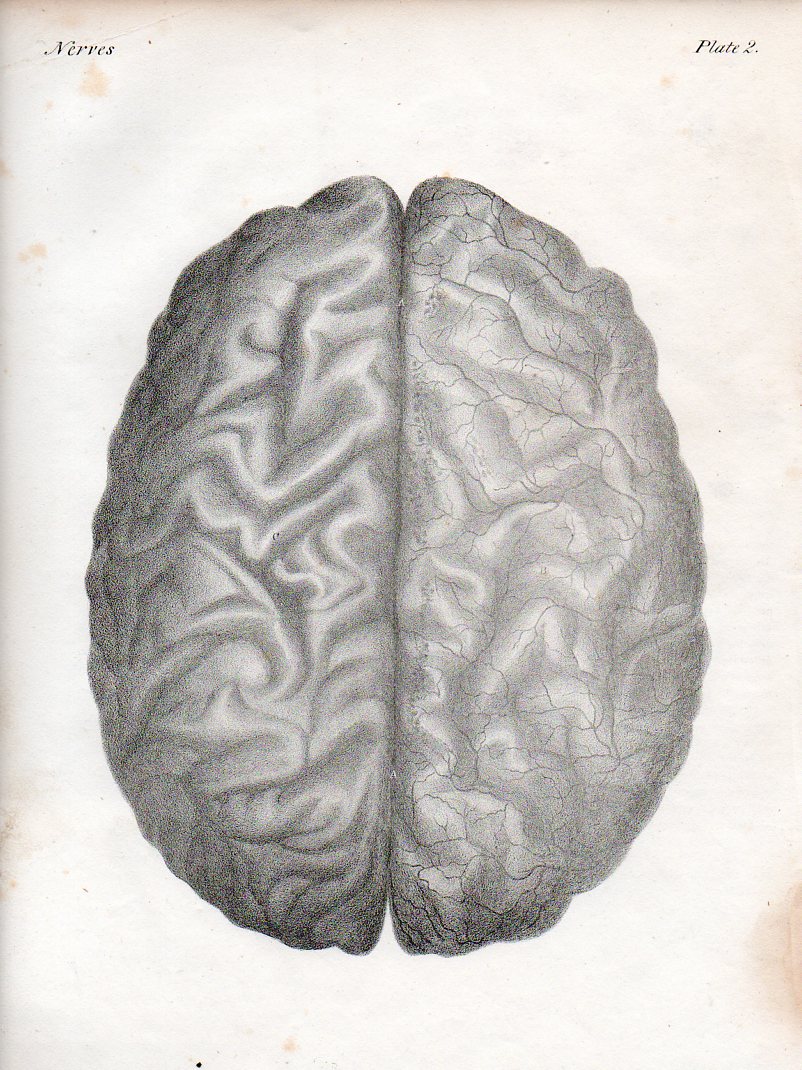
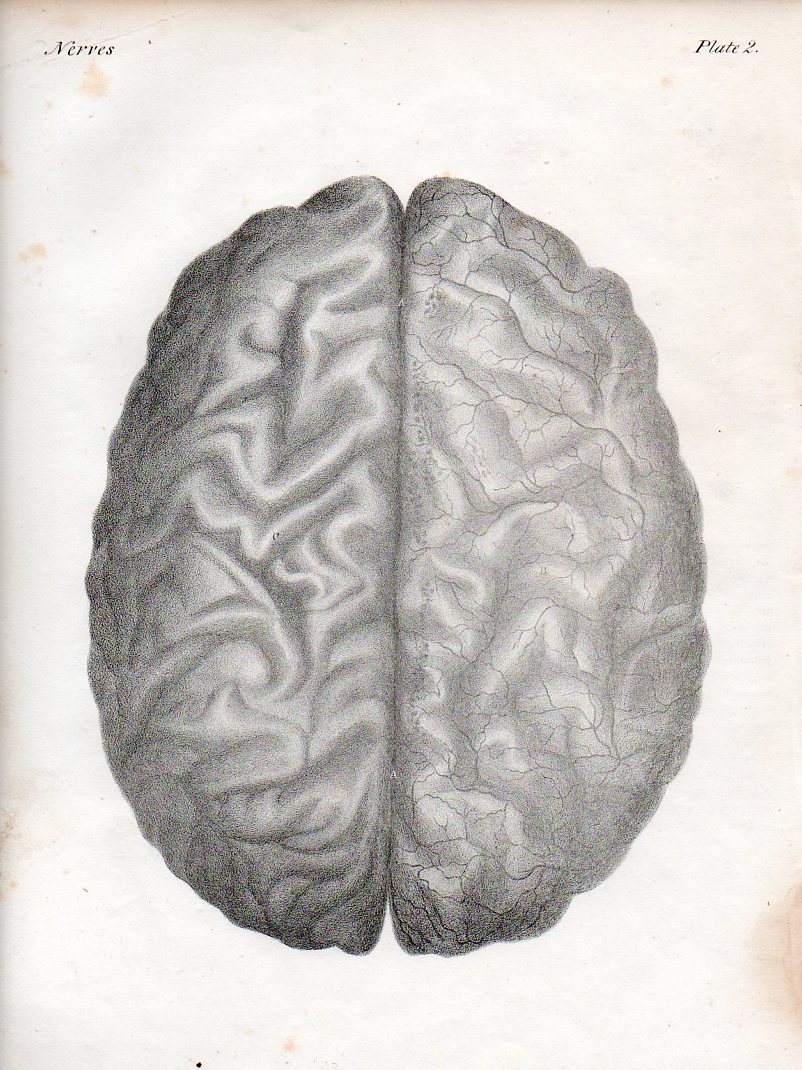
    These images are brought to us by the Irish-born Quain brothers:  Jones Quain (1796-1865) who was  an anatomist and professor of Anatomy and Physiology at the University of London; and Richard Quain (1800-1887), a professor of anatomy from 1832-on at the University of London, then surgeon at North London Hospital, and president of the Royal College of Surgeons. The illustrations are from a later (ca. 1850’s) and smaller printing of their beautiful 1844 work The Anatomy of the Arteries of the Human Body, with its Applications to Pathology and Operative Surgery, in Lithographic Drawings with Practical Commentaries.

    • The original lithographs of these images can be purchased at the blog’s bookstore. 

    Brain521