A Daily History of Holes, Dots, Lines, Science, History, Math, Physics, Art, the Unintentional Absurd, Architecture, Maps, Data Visualization, Blank and Missing Things, and so on. |1.6 million words, 7500 images, 4.9 million hits| Press & appearances in The Times, Le Figaro, Mensa, The Economist, The Guardian, Discovery News, Slate, Le Monde, Sci American Blogs, Le Pont, and many other places… 5000+ total posts since 2008.

Category: Medicine, History of

  • Creating National Monuments Made of the Ashes of the Dead (1917)

    JF Ptak Science Books  Quick Post

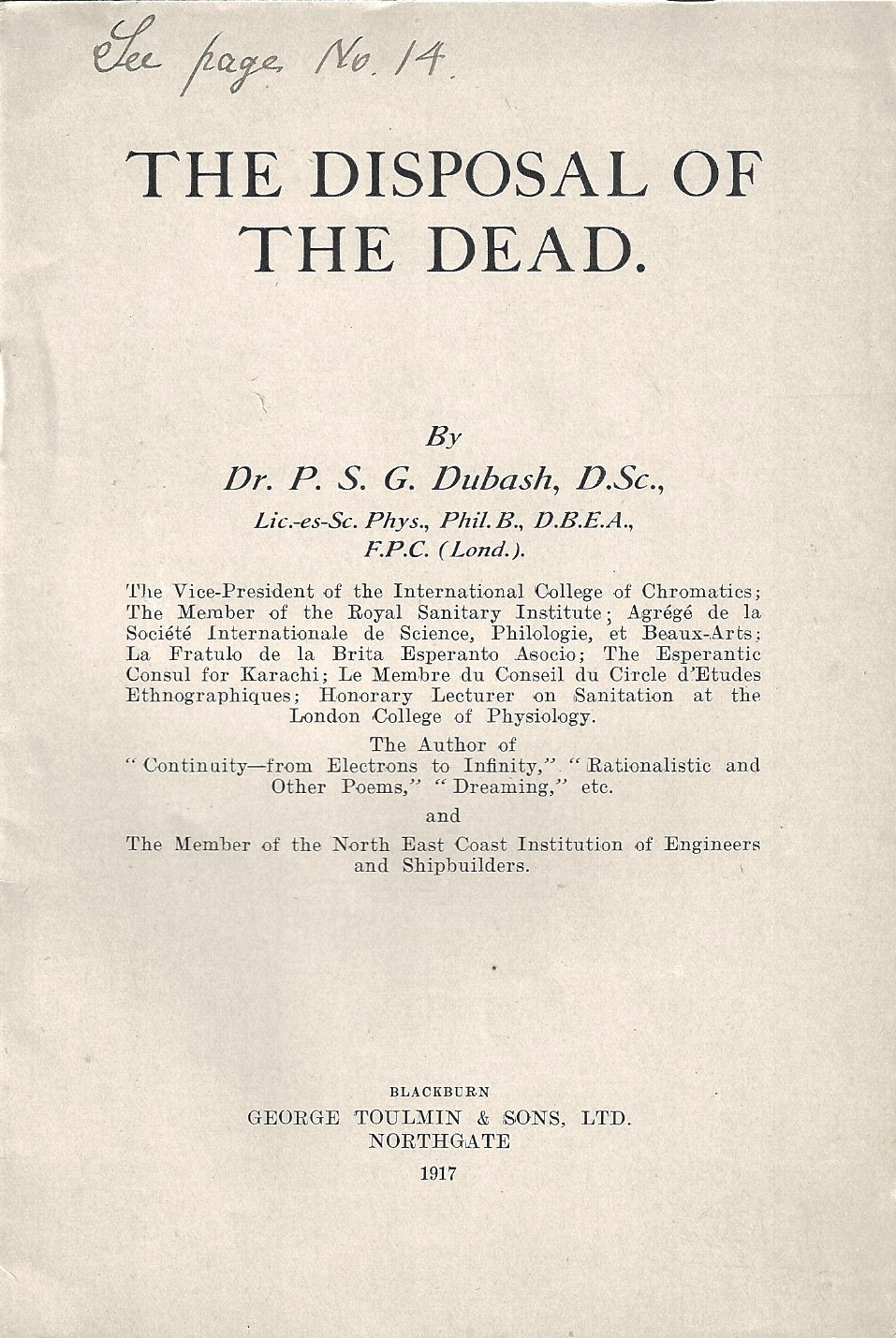
    Books covers disposal deadIn the death-drenched year of 1917, in the third year of the then Great War, P.S.G. Dubash offered to readers here and there the idea of transforming the ashes of the dead into something “useful”, using them as the material for creating statues of the “Great Departed”.  “The world today is so much the poorer for not having the ashes of such great men as Isaac Newton, Lord Kelvin, Martin Luther…”  and so, we can create statues of them using the ashes of others. This would be particularly so for people contributing their ashes to the statue of someone whom they admired. In that way, as Dubash points out, the remains of soldiers would live a more sustained post-death state by being part of a statue of, say, Lord Kitchener. “Towns can be thus adorned with the living memories of the great dead.”

    Part of this 18-page pamphlet (published by George Toulmin & Sons of Northgate) describes the four ways of disposal of the dead: internment, embalming, burning in the open, and the towers of silence (where bodies are brought to a height and displayed to be eaten by birds).  Dubash makes the case of great waste in three of the four, only finding use in the “exposure” category.  

    And so, there you have it. There’s a certain something here that makes sense, using thousands and tens of thousands of remains to create statuary. Gravestones and memorials aren’t made of ashes, but they are reminders of what sleeps underneath, and in a way they are a type of mostly-repetitive statuary sans biological remains. 

    There is an interesting part here at the end of the pamphlet, where Dubash makes the case that “there should be no colour prejudice, because after death there is no colour prejudice, because in the eyes of God the colour prejudice is a sin”. This is a provoking comment, and makes me think of the history of the skin color in Heaven…a history that I do not know.


  • Drinking, Drugs, and the Gold Cure (1891)

    JF Ptak Science Books   Post 2729

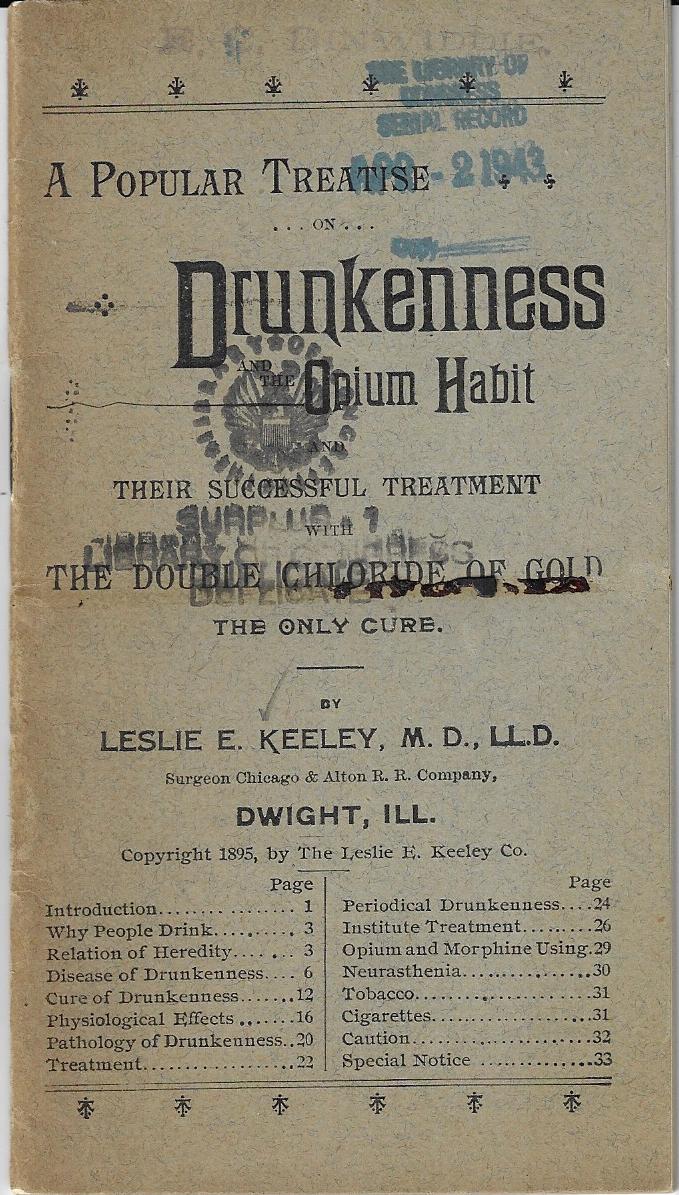
    Gold cureLeslie E. Kelley (1836-1900) was a doctor, lawyer, and a Civil War surgeon who opened his own surgical practice and stayed at it for a couple of decades before coming upon the idea of a cure for alcoholism. Seen through the lenses of his patented gold cure for alcohol addiction I think there is little room other than to see him as a quack1 (if not an uncommon one) in the history of medicine–he was however somewhat significant in this cure venture in that he was an early figure in describing alcoholism as a medical disease. People who stayed for weeks at one of the Leslie’s cure institutes were weened away from drink and given treatments including the double chloride of gold tonic, something that was shown to be “27.55% alcohol plus ammonium chloride, aloin and tincture of cinchona but no gold”. The patients also received dozens of hypodermic injections which were shown to be combination of “sulfate of strychnine, atropine and boracic acid” –(Wikipedia)   

    Dr. Kelley ran a persuasive campaign, with bulging results, with over 90 franchised Kelley institutes by 1893 and gin-blossoming to over 200 soon afterwards (data from Wikipedia).

    (Joe Nickell writes for the Center for Inquiry that “…the result of Dr Keeley’s medicines was to make patients experience fear, confusion, vomiting, and dizziness, among other ill effects” which may have induced or trained them into associating those symptoms with drinking. (See http://www.centerforinquiry.net/blogs/entry/historic_gold_cure_for_addiction/)  The remedy/cure of course did not work–and so far as how this was supposed to work to cure alcoholism, I do not know. The only thing that evidently did work was restricting and then eliminating the consumption of alcohol at the clinics. 

    Kelley claimed huge success; after some time, there was a big difference of opinion on his success rates. It was finally admitted that a large percentage of the “cured “ alcoholics going through his clinics relapsed–though there was an enormous draw-back to this admission. The brilliant and diabolical move from the Institutes’ part was to claim that those who were cured were cured even after relapse, as the return to drinking was a choice rather than the cured medical necessity.Redefining terms (and in this case, all terms) in language suitable to a specific goal is the penultimate defense before failure (the last line being simple denial).

    The last Kelley Institute to close did only in 1966, back in the small town where it all started, in Dwight, Illinois.

    The infallible, never-failing cure was said to also prove indispensable in curing tobacco and opium addiction.

    Notes:

    1. “A 1908 article in the Illinois Medical Journal stated that ‘Leslie Keeley was a common, ordinary quack with a useless remedy which made good by advertising and catching suckers’.”–Wikipedia


  • A Unique Copy of a Rorschach Test Interpretation Tool (1947)?

    JF Ptak Science Books   Post 2721

    Yesterday I wrote about a problem I was having in understanding a difficult-to-understand document on applying a computer in creating a bibliography of meteorology from 1949. Today the nature of the object is just completely outside anything I know about, and I thought if I posted something here and other palces in the Great Social Media that someone out there in Webtopia will know exactly what this thing is.

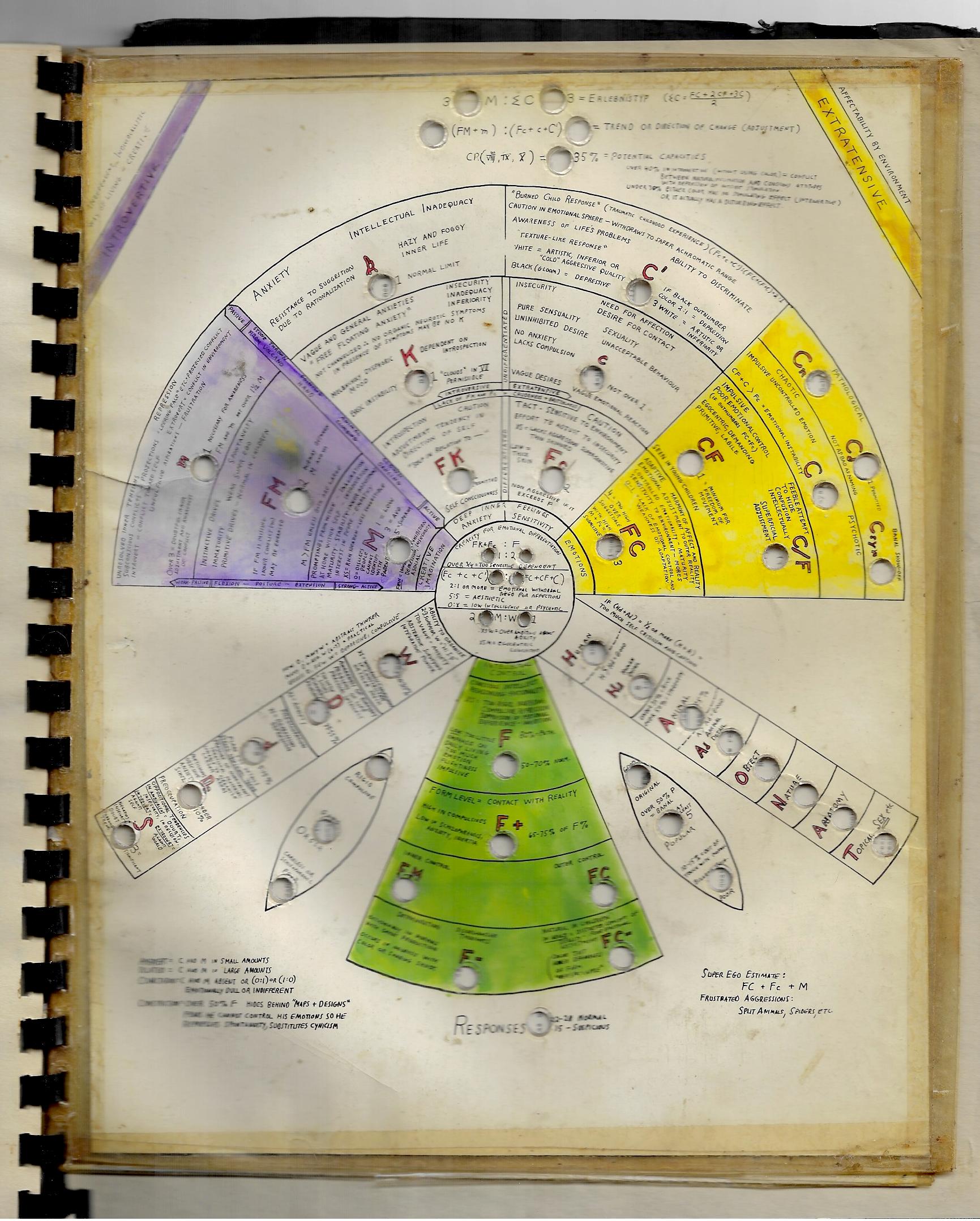
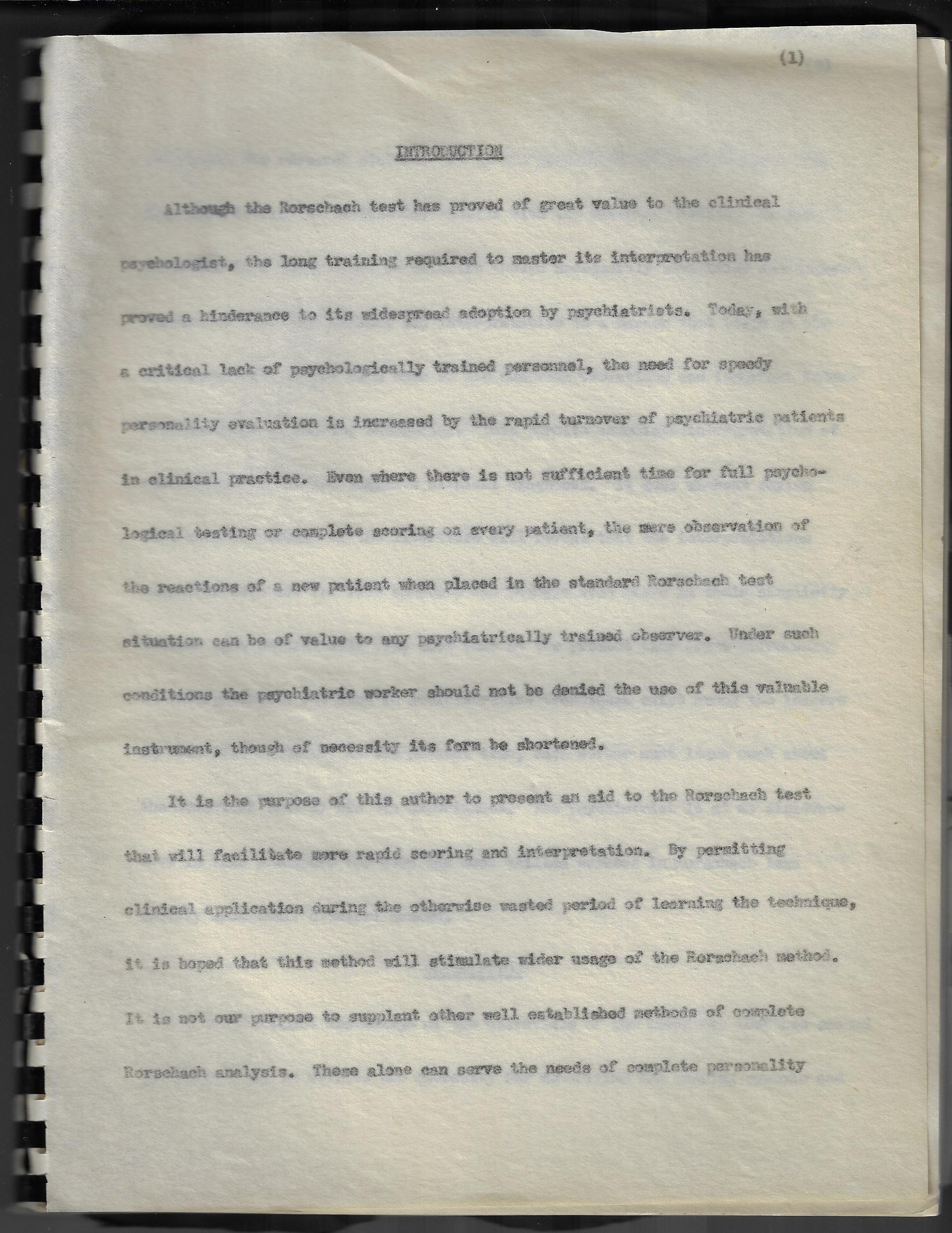
    The subject here is a paper by Dr. George Ulett called A Rapid Method of Rorschach Analysis, which was created in 1947. The whole production is obviously home-made, the text being some generation of carbon copy from the typed original, with the “calculator” or rapid-method template being hand made. I can find no evidence in WorldCat/OCLC that this work was published as it stands. I also cannot tell if it was incorporated in a later work. I also cannot tell its utility, but given Dr. Ulett’s achievements in the field, and particularly within the Rorschach specialty, he must have seen a use for this tool.


    Ulett rorschach _1_

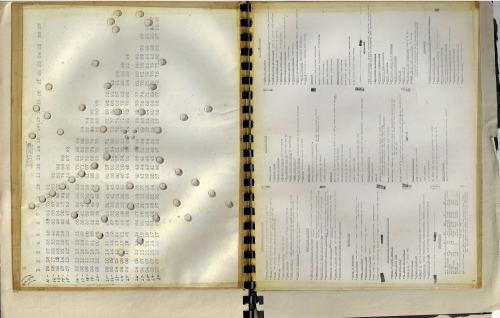
    And the notes on the reverse of the Rorschach tool:

    Ulett rorschach _2_

    Notes:

    Ulett, George A.: “…former director of the Missouri Division of Mental Diseases where, under his leadership, Missouri went from one of the worst-funded mental health programs to a national leader. He founded what is now the Missouri Institute of Mental Health. He was former medical director of St. Louis City’s Malcom Bliss Hospital. He was instrumental in setting up alcohol and drug abuse treatment programs at city and state hospitals. One of his proudest achievements was to bring racial integration to the city’s mental health system. He was a professor of psychiatry at Washington University, Directory of Psychiatry at Deaconess Hospital, and was in private practice for over three decades.”from obituary at Legacy dot com

    Dr. Ulett was also the author of books and numerous papers, including a number on the Rorschach test, including: Rorschach workbook : a primer for the psychiatrist, with interpretive diagram to permit clinical use while learning the ink-blot test, 1948, and Rorschach introductory manual : a self-teaching primer of Rorschach for the clinical psychiatric worker, 1960.

     (Provenance: Library of Congress, undoubtedly from the author, received May 1947. From the “Pamphlet Collections”, and stamped on the title page with the LC/ surplus/duplicate stamp. 11×8.5”, 18, 2, pp, plus a plastic-encased (though retrievable) cardboard hole-punched enumerator for recording Rorschach responses. GVC bound in manila wrappers, both of which are detached, though present.)


  • An Indelicate Electrical Cure for Kidney Disease, Cramp, Lost Manhood, Paralysis, Indigestion, Dyspepsia, and Much Else (1880)

    JF Ptak Science Books   Post 2717

    Sometimes all one can do is say “wow!”Or “wow?”

    ++ebay--testi belt 1

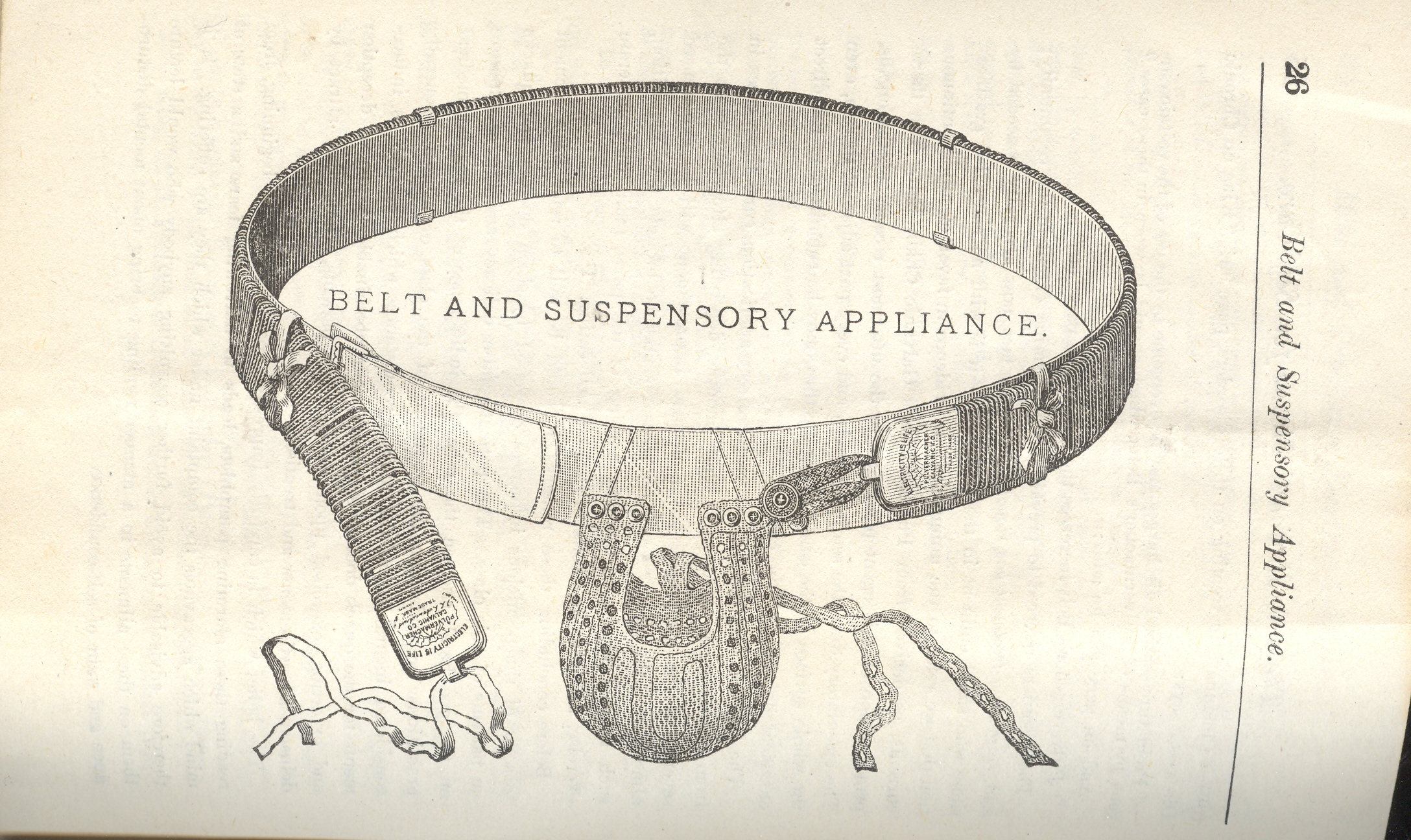
    And sometimes all that is possible is a trailing, eyebrow-arched, widening “wow…” that is somewhere between excitement/fear/curiosity/repulsion, which is the sort of response I had from reading bits of Pulvermacher’s Electric Belts &c/ Electricity Natures Chief Restorer, Self-Applicable for the Cure of Nervous and Chronic Disease without Medicine. Printed around 1880 or so, the slim pamphlet features a cure-all medical device fashioned from electric “belt” connected to a codpiece “suspensory” for a man’s vitals. It is one of many, perhaps hundreds, of electrical geegaws that climbed aboard the principles of Michael Faraday’s monumental invention of the induction coil (1831)–one can hardly imagine what Mr Faraday would’ve thought of this application of his great addition to the history of technology. This electrical stimulus was supposed to cure all manner of unspeakably lingering medical tragedies, including spermatorrhea, exhausted vital energy, female complaint, inflammation of the prostate gland, seminal weakness, kidney disease, cramp, lost manhood, paralysis, indigestion, dyspepsia, spinal complaints, nervous debility, and of course the “debilities of sexual self-pollution” (“the sexual sin (which) is the most destructive of all human vices…the greatest outrage against Nature’s sexual ordinances that man can possibly perpetrate”. 

    Isaac Pulvermacher’s (which is German for “gunpowder maker”) electrical medico-contraption was popular for several decades in the mid/late 19th century until it faded and trailed away at the turn of the century, though it was not for the lack of trying.  Pulvermacher had all manner of glowing letters of support for his product, though one wonders if they weren’t mostly cooked up on the back burner of a no-burner stove top, much in the way he invented this bizarre electrical device and pathologized aspects of male sexuality.


    ++ebay--testi belt 3


    ·Posted by :

    ·in:

    —

  • Finding Typhoid Mary in a Short Work on Street Cleaning Machines (1930)

    JF Ptak Science Books Quick Post
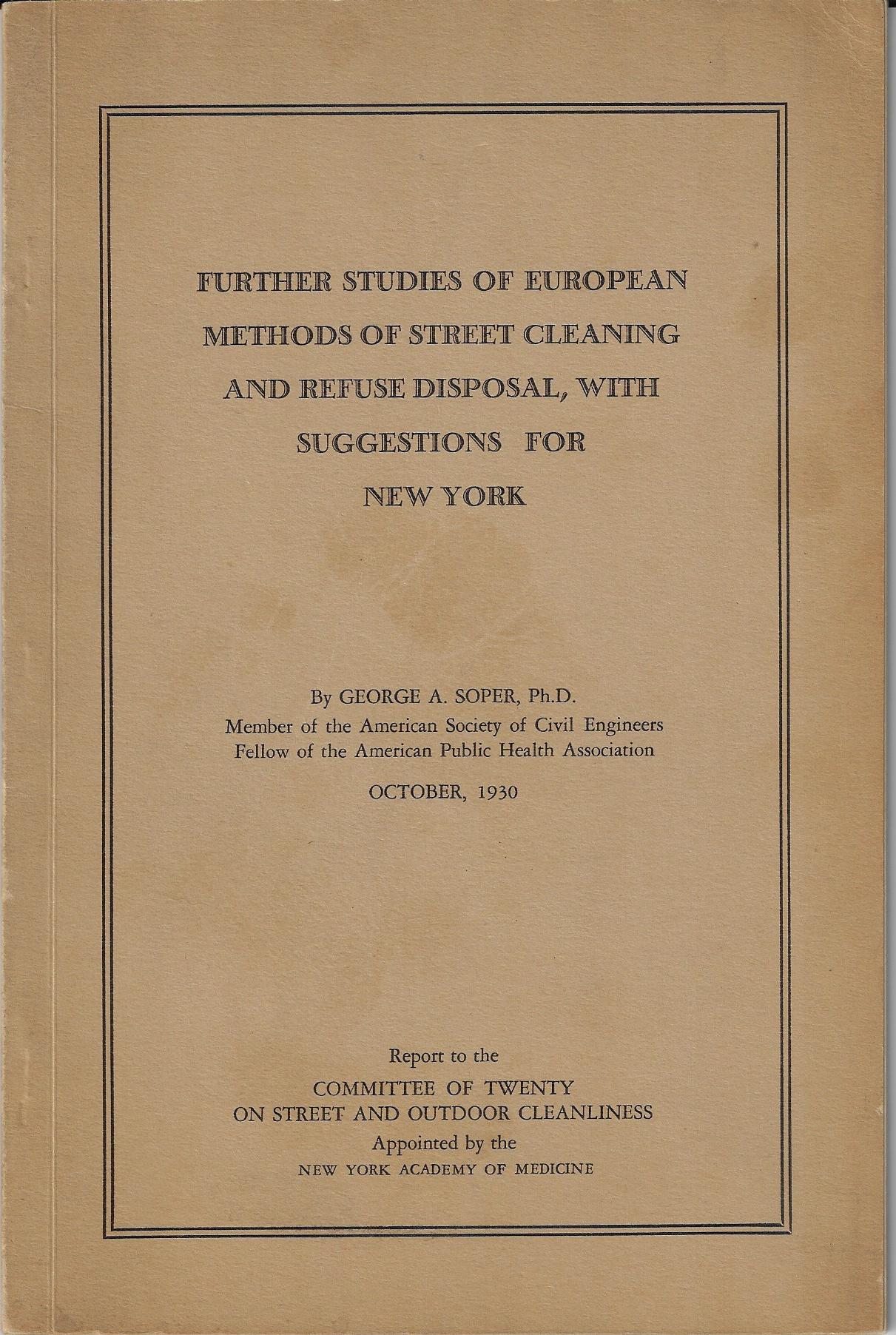
    Soper titlepageThis rather nicely-designed and withdrawingly-titled pamphlet really packs quite a few surprises in its rather simple but innovative approach to controlling disease and epidemics in urban settings.

    Mr. Soper (1870-1948) had a long career in public health service in NYC as a sanitary engineer, and was a pioneer in a number of different areas within that discipline. That said, he is probably best remembered for his work on the typhoid epidemic(s) in New York, including the infamous 1906 outbreak in which he was able to find its root cause, located in Ms. Mary Mallon. (Ms. Mallon was a very unfortunate person, and was a doomed non-affected asymptomatic carrier of the pathogen associated with typhoid fever–she is better known as “Typhoid Mary”. Over time she would be quarantined though she would leave, taking jobs as a cook/bottle washer/laundress and such, and would wind up spreading typhus on multiple occasions. Eventually she would be kept/quarantined on North Brother Island in the East River, a place she would stay, kept out of the public, from 1915 until her death in 1938.)

    In any event, Soper’s work on street cleaning was essential thinking on how to maintain health standards in tight quarters of highly-populated places. And in there, in a ghostly whisper, was the unfortunate Ms. Mallon, never far from being part of the general epidemiological conversation.  

    Notes:

    “(Soper) received his degree from Rensselaer Polytechnic Institute in 1895 and a PhD from Columbia University in 1899. He was the managing director of the American Society for the Control of Cancer, which later changed its name to the American Cancer Society, from 1923-1928.”–Wiki

    See also the full text for “The Work of a Chronic Typhoid Germ Distributor”, George A. Soper, Ph.D.
    1907 https://www.learner.org/workshops/primarysources/disease/docs/soper.html 


    ·Posted by :

    ·in:


  • Original Surgical Drawings for Pituitary Tumor Removal (1930)

    JF Ptak Science Books  Post 2711

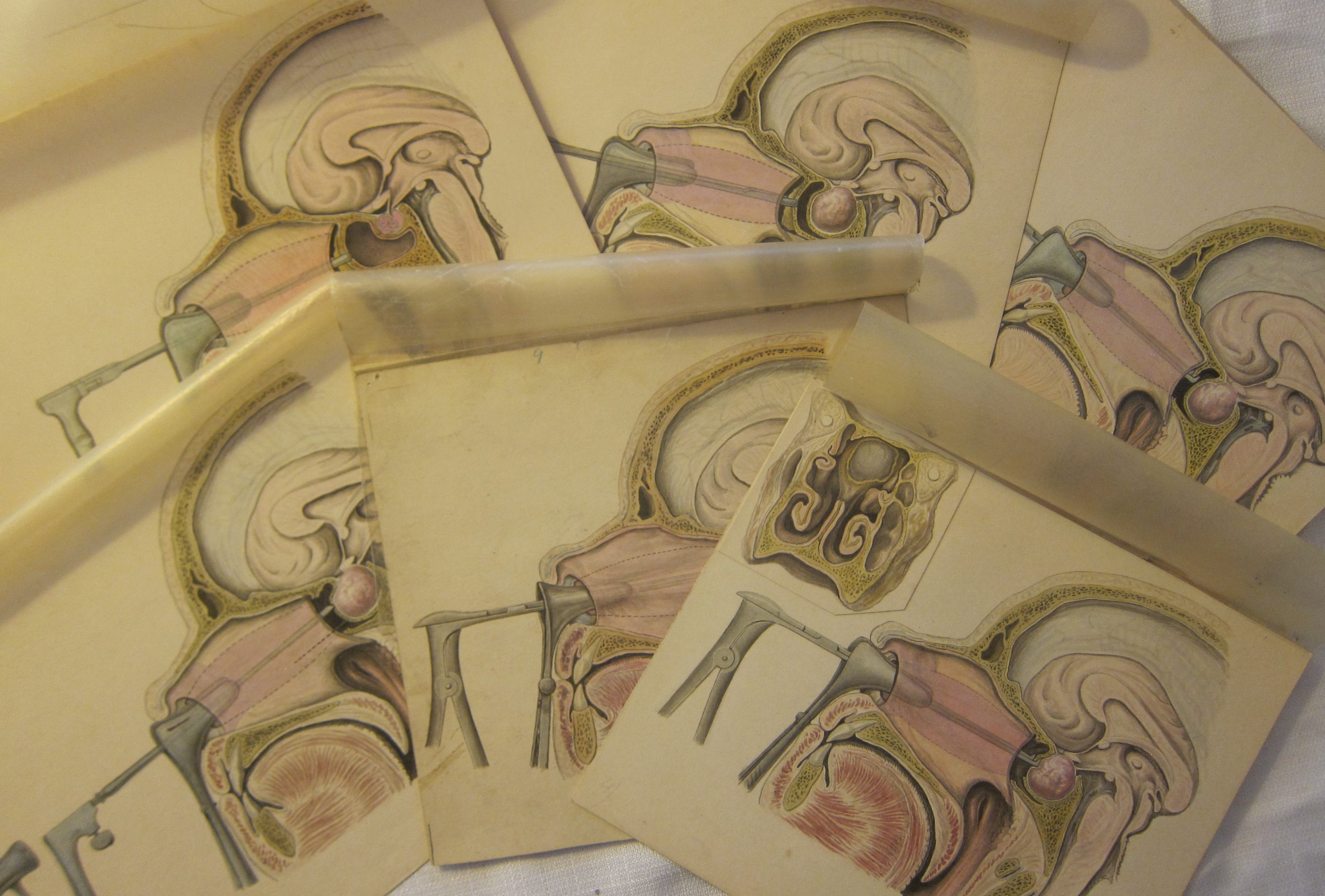
    I don’t intend to say anything at all, really, about the following drawings–I was attracted to them and purchased them a while ago, figuring them to be pituitary tumor removal of some sort and knew that for being done in 1930 that they were sort of early. The twelve fine pen and ink images were made by the prolific anatomical/medical illustrator Bruno Keilitz (b. 1898) and do indeed show some of the stages of the removal of a pituitary tumor. The illustrations seem to have been for an article written by Dr. Prof. Oscar Hirsch (1877-1965), who was an early and influential Viennese rhinologist who made major contributions to pituitary surgery, performing this transspheroidal procedure for Harvey Cushing in 1911, and who would go on to perform the procedure more than 500 times in his long career.1 Cushing of course is the Big Name, though in this area of neurology I found out that Hirsch is looms pretty large as well.  I don’t know how these stand in the history of this operation, but they certainly seem interesting enough to share online, and so I do:


    Pituitary _1_

    Details:

    • Of the 12 drawings, 9 are very closely related and show the progress and route of a transsphenoidal surgery for the removal of a pituitary tumor. I feel pretty confident that these drawings were done in 1930 (see below). These images are labeled I-VIII (including a “Ia”). These images measure about 6×8.5 inches each, drawn on a heavy stock, and done in colors. Each of these images is drawn from the same perspective and show different aspects of the surgery in progression. These drawings I-VIII are all rubbers tamped on the back with Bruno Kelitz’s name and address; two of this series are signed by Kelitz in the drawing, both of which are dated 1930. There are also some other notations in ink on the reverse that I can’t quite place, as well as some later dates, as the images seem to have been used on more than one occasion. 

    One drawing in this series has an old American Medical Association label (seemingly stamped Feb 11, 1952), identifying the publication of origin (“Arch. Otol” Archives of Otolyrngology), the author (“Hirsch”), and the type of reproduction to be used when illustrating the article.

    ·Posted by :

    ·in:


  • An Apparatus for Inhaling Thorium (1904)

    JF Ptak Science Books   Quick Post

    Thorium inhaler

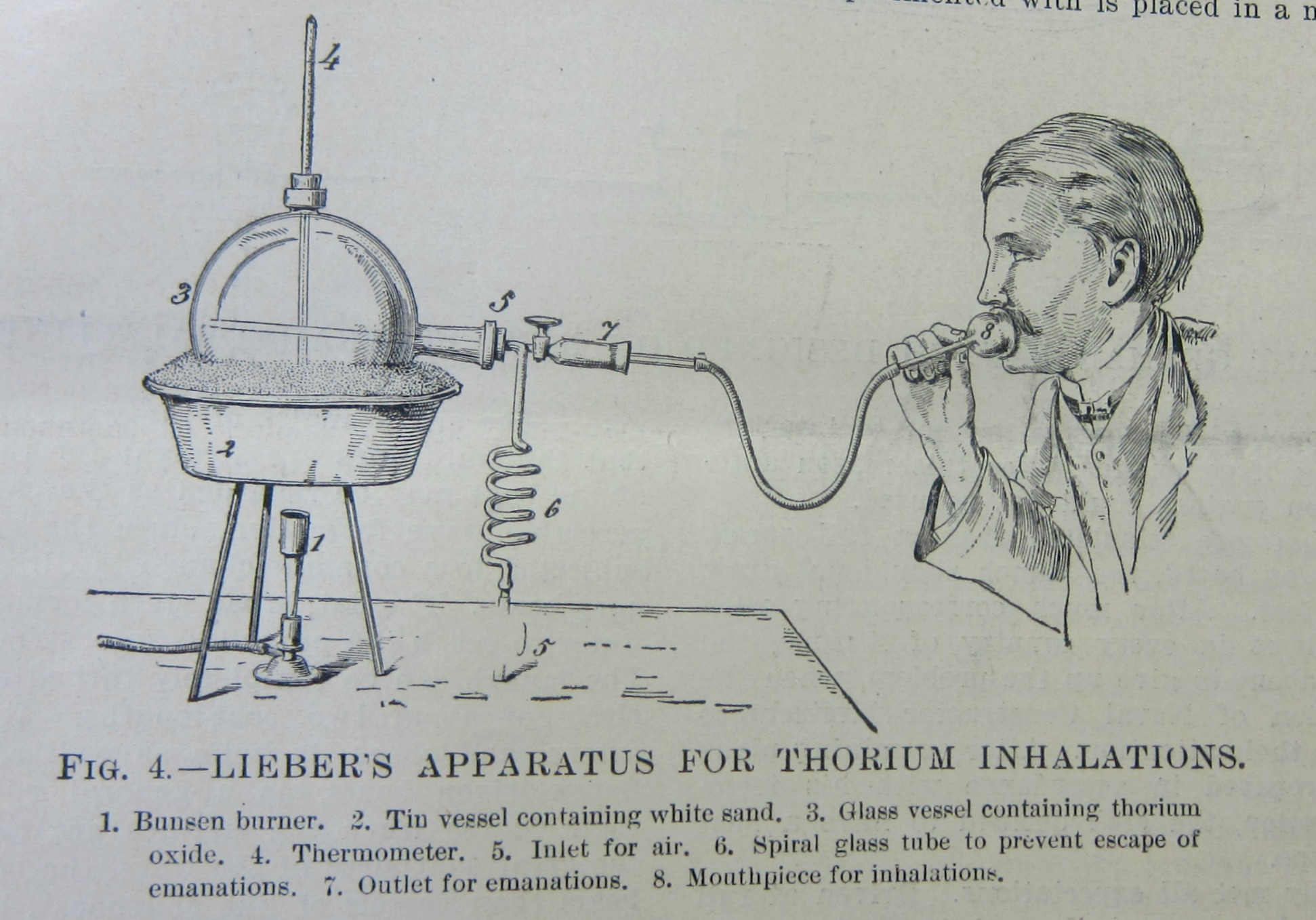
    In researching the highly-unexpected mage of a thorium inhaler found in Scientific American for 1904 and trying to find out why someone would inhale the radioactive and toxic gas (discovered by J.J. Berzelius in 1829), I found an article with three transporting sentences that lifted themselves from the page:

    “Small glass tubes containing radium bromide are placed
    within accessible mucous cavities, i.e., mouth, vagina.”

    “Radium and thorium continually emit gases, which gases
    themselves give out on their own account rays exactly
    similar to the rays from radium and thorium themselves.
    Hence a thorium inhaler is now used, by which these gases
    are inhaled.”–The Journal of the British Homoeopathic Society, vol XII, new series, London 1904.  

    Of course the scientific and medical world was trying to figure out what applications could be made with the new discoveries of Roentgen and the Curies and Becquerel and all, but even with the modern lens looking backwards it still is a bit of a wincing experience to read about these applications.

    Pressing on from the quacky homeopathy journal I found  another in the Medical Record which more fully explained the apparatus and treatment:

    “Thorium in TubercuIosis.  Dr Soddy of London and Professor Rutherford of Montreal have suggested the use of thorium inhalations for tuberculosis. Certainly from its antiseptic and antifermentative actions it would appear to be a desirable agent to apply directly to the tissues affected in the fight against the tubercle bacillus.”

    [Note: M. Curie and Gerhard Schmidt determine and demonstrate that thorium is radioactive in 1897-8; Soddy and Rutherford discovered thorium X in 1902.]

    The note continues:

    –Medical Record: A … Journal of Medicine and Surgery, edited by George Frederick Shrady, Thomas Lathrop Stedman; New York, William Wood,  1904, Volume 65, page 128. 

    Another short description of the work of the inhaler:

    “The procedure leaves in the lungs a fine film of radio active matter which in turn produces the phenomenon of induced radio activity in the same parts which may last for one or two days. This is shown by the patient after inhaling thorium emanations exhaling on a photographic plate which produces the ordinary effects on the silver salts…”–Mihran Krikor Kassabian,Röntgen Rays and Electro-therapeutics: With Chapters on Radium and Phototherapy, New York, 1907, page 508.

    That is a tough go.

    The Wiki article on thorium has this to say about more than standard/casual exposure to thorium: “Natural thorium decays very slowly compared to many other radioactive materials, and the alpha radiation emitted cannot penetrate human skin. As a result, owning and handling small amounts of thorium, such as those in a gas mantle, is considered safe, although usage of such items may pose some risks. Exposure to an aerosol of thorium, such as contaminated dust, can lead to increased risk of cancers of the lung, pancreas, and blood, as lungs and other internal organs can be penetrated by alpha radiation. Exposure to thorium internally leads to increased risk of liver diseases.”

    It is not known to me how much of a dose of thorium was intended for the user of this cure.


  • Accidentally Finding Morpheus (1818)

    JF Ptak Science Books   Post 2694

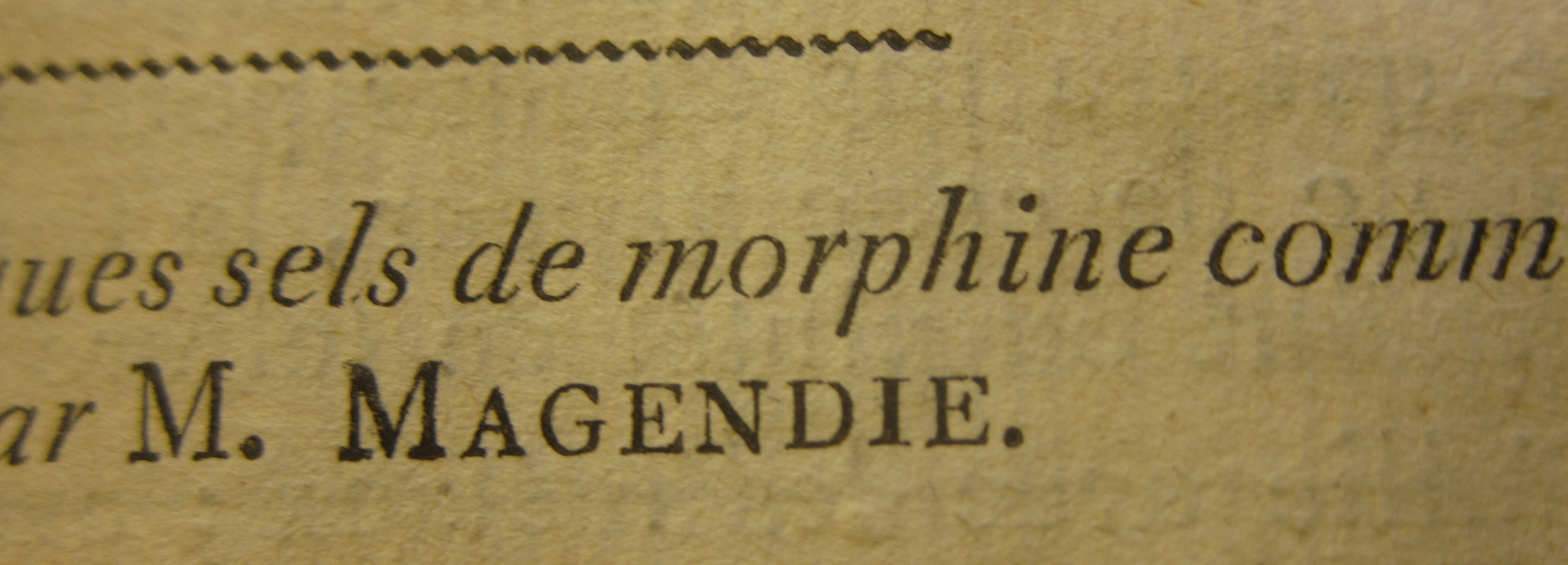
    Morphine _1_

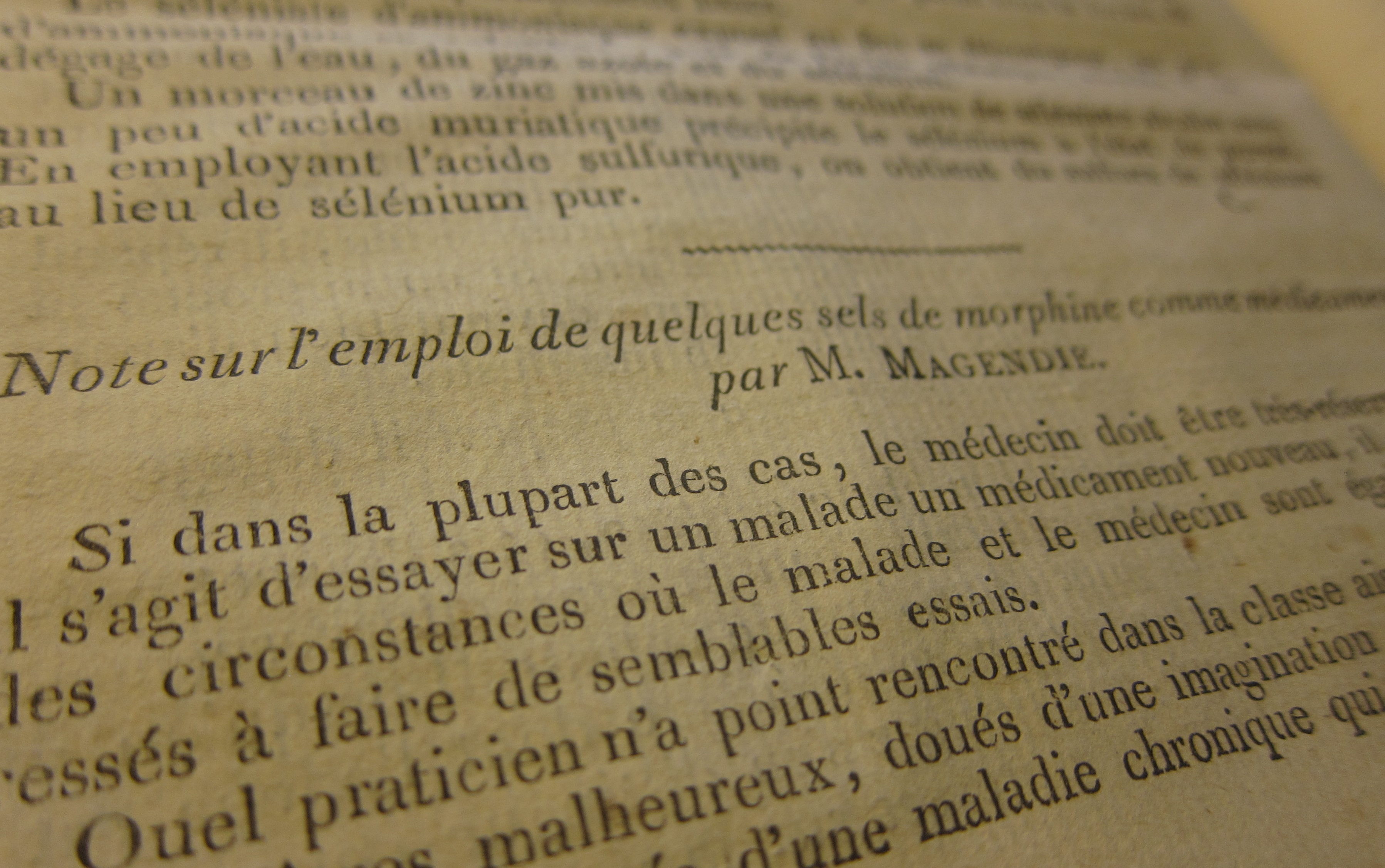
    I was strolling through a year’s issue of a somewhat obscure science journal (Bulletin des Sciences par la Societe Philomatique de Paris), grazing around looking for something significant. Quite a bit of the journal is devoted to abstracts of longer articles in the more well-known journals, though there are definitely some original articles to the Bulletin that are original. In any event I found some work by Fourier, Poisson, Biot, Laplace, and some others, but they were all abstracts of papers published weeks or months earlier (which makes it a very rapid distributor for the times), and then popped into a short piece about Berzelius’ discovery of “une nouvelle substance simple…” called Selenium, which was pretty cool, as the original announcement seems to have been just weeks earlier. And then there was a very short notice on the discovery of lithium. and then again, right in a row, was a curious-sounding thing that sounded not-quite-common: “Note sur l’emploi de quelques sels de morphine comme medicamens”. This was written by a founding father of experimental physiology and a great pharmacological agent named Francois Magendie, and I wondered why they would be devoting space like this to an application of morphine. It turns out morphine had been discovered in 1805, but that its medical application hadn’t been made until…M. Magendie, in 1818, and this was him reporting his findings on the first use of morphine to treat pain in a patient. (In this case, a young woman, in terrible pain, and desperate for sleep.)  Only about 1000 words long, but no doubt this contribution had a very wide reception.  It is interesting to go into one of these volumes without expectations, and then stumble upon something like this.

    It should be pointed out that it took only four years for the first person to be convicted of using morphine to kill someone (1822, Dr. Edne Castaing), though the drug in the decade or so after that became a popular instrument of murderers. By 1831 morphine had taken on enough of a common social role as to be included in Balac’s devil’s list of stuff that kept him to busy to think of self-amusement (“…invention of powder, the discovery of the new world, printing, Jesuits, lottery, morphine acetate, gambling houses and Cholera-morbus…”, found in his novella, La Comedia du Diable (in which the lord of the underworld invites 32,000 of the damned to a dinner party no one would soon forget).  

    Morphine _2_

    ·Posted by :

    ·in:


  • Treating Mental Illness with Narcotic Enemas, Warm Baths, and Happy Opiates (1845)

    JF Ptak Science Books  Expanding a post (#153) from 2008
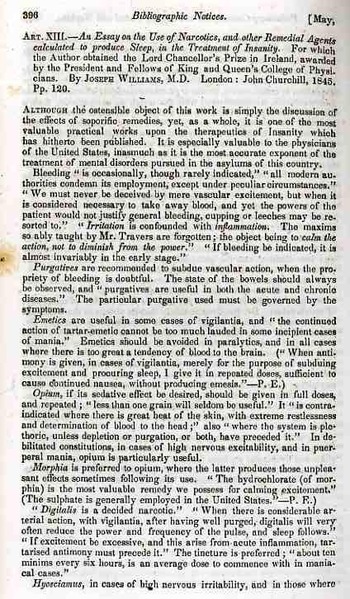
    Blogdrugs_crazy254

    This book review on the use of narcotics in treating the insane appeared in the New York Journal of Medicine for 1846.  The book, An Essay on the Use of Narcotics, and other remedial Agents calculated to produce Sleep in the Treatment of Insanity…., was by Joseph Williams, M.D., and was published in London in 1845.  The theory behind the sleep treatment was that the basic mechanism of insanity was “cerebral inflammation” or “excessive vascular action” in the brain—inducing deep sleep, evidently, was a good way to combat the over-active brain.

    The article itself comes at an odd time in the history of the treatment of the insane.  It came almost 40 years after the establishment of  McLean Hospital (first known as the “Asylum for the Insane,” a division of the Massachusetts General Hospital), which opened on Oct. 1, 1818, and was the first hospital dedicated to the treatment of the insane in the U.S.  It came 70 years after the great advances of Benjamin Rush, who elevated the “Mental Patient” from chains on the floor to the status of medical or nervous illness or disease.  The use of narcotics over this period seems to have surged and waned.  In 1879, in an article in the New York Times, the reputation of the Asylum for the Insane on Ward’s Island in NYC was considered—and one of the high points was that it had (largely) discontinued the use of narcotics. (There were still problems, of course, what with the asylum being overcrowded, housing 1100 in an institution meant to house 700, and where the chores and even nursing positions were staffed by the inmates, who were feed on 32 cents a day.)  As late as 1921, though, Jacob Alter Goldberg notes in his Social Aspects of the Treatment of the Insane, that there was a new, sharp increase in “toxic narcotic” treatments of the insane.  Of course, I guess one could replace “narcotic” with some sort of other misplaced treatment, like shock therapy, or Freudian mélanges, or something.  Each age must necessarily have their entry in the encyclopedia of embarrassments
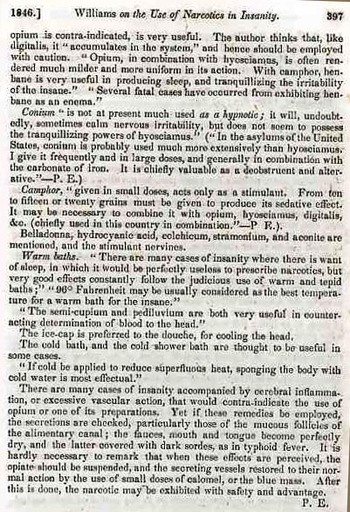
    Blogdrugs_crazy255 . 

    In this article we find sleep assaulted by the use of the following:  purgatives (“to subdue vascular action when the propriety of bleeding is doubtful’), emetics, opium (to be used “in cases of high nervous excitability and in puerperal mania”), morphia (“the most valuable remedy for calming excitement”), hyosciamus (“to produce sleep, tranquilizing the irritability of the insane”).  It is weird to see that the last sentence in the description of hyosciamus reads “some fatal cases have occurred from exhibiting henbane as an enema”.  A narcotic enema?  Still to come in the review is conium (“I have used it frequently and in large doses…it is chiefly valuable as a deobstruent and alternative”, followed by camphor, Belladonna, hydrocyanic acid, colchirum, stramonium aconite, and others.  “Warm baths’ makes an appearance (“90 degrees may be considered to be the best temperature for a warm bath for the insane”), as do cold baths, and the applications of ice caps. 

    I’m not so sure about what to make of it all, the sleep treatment of insanity I mean—after all, Joseph Lister only makes his epochal pronouncements on cleanliness in the operating theatre 15 or so years after this paper, which seems today to be the most rudimentary thing that one could do in treatment in the surgical room, so treating extra blood in the brain through drug-induced sleep doesn’t seem all that far away from the realm of possibility back there in early Victorian England.

    I don’t think I’ll forget the toxic narcotic enema any time soon, though.  Or the word “deobstruent”. 

    ·Posted by :

    ·in:


  • The First Appearance of a Monument in the History of Ambiguity (1832)

    JF Ptak Science Books   Post 2678

    “Hee beganne to stande in great ambiguitee of his saftie.”–P. Vergil Eng. Hist (1846) I. 160, ca. 1560

    “Shall I make spirits fetch me what I please, Resolue me of all ambiguities”– Marlowe Tragicall Hist. Faustus  (1604)   [Both quotations via the OED]

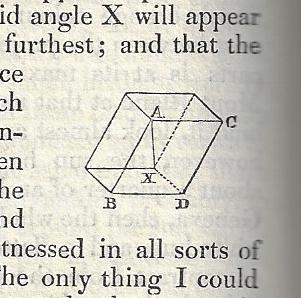
    First Appearance of a Famous Optical Illusion–the Necker Cube (Necker’s Cube), 1832

    Humans do not normally see one thing two different ways at the same time, unless they are confronted with something that Louis Necker thought up 15 decades ago. I am referring to the wide swath of humanity mostly here in the West with a mostly hard pull to binary interpretations, and not so much so for other belief systems that are more accommodating to multi-dimensional interpretations, like  say the clarity/ambiguity inherent in Taoism (though the definition of “Taoism” is usually ambiguous in itself). Also I’m speaking  more physiologically/psychologically than anything else more so than yin-yang metaphysics.  

    Buried in an interesting (and illustrated) article in this Philosophical Magazine1 of 1832 is the first appearance of one of the most famous optical illusion images of all time–the Necker Cube. this construction–named for Louis Necker–has now been used for many years in tests on human perception (and in some areas for psychological interpretation, depending on who sees what and when).   In its original appearance the cube is mostly given a textual description but it does appear once as a tiny rhomboid–tiny or not, it really does do the trick.  (“He shows that you may see the Necker cube in either perspective, but that you practically can not see it as a flat geometrical design in the plane of the paper.”–Science 8 Jan. 37/2 . “He did not experience the usual spontaneous depth-reversals of the Necker cube—which appeared to him flat.”–Oxford Companion to the Mind, 96/1, 1987. “The reason an optical illusion such as the Necker cube outline..works is that, in some deep biological sense, you are of two minds on the question of what to see.”–Scientific American, Jan. 18/1, 2001. “It is a simple wire frame drawing of a cube with no visual cues as to its orientation, so it can be interpreted to have either the lower-left or the upper-right square as its front side…”–Wiki) 

    According to the Oxford English Dictionary it turns out “Necker Cube” doesn’t make its first appearance as a phrase for another nearly 70 years, surfacing in 1901 in an article by the psychologist E. B. Titchener in  Experimental Psychology (I. ii. ix. 309):  “The Instructor should have a few prepared as large wall-diagrams:..Schröder’s stair-figure, Necker’s cube,..the Müller-Lyer figure.” In any event, so far as I can determine, this is the first appearance of that famous construction. 

    Optical illusion