JF Ptak Science Books Quick Post
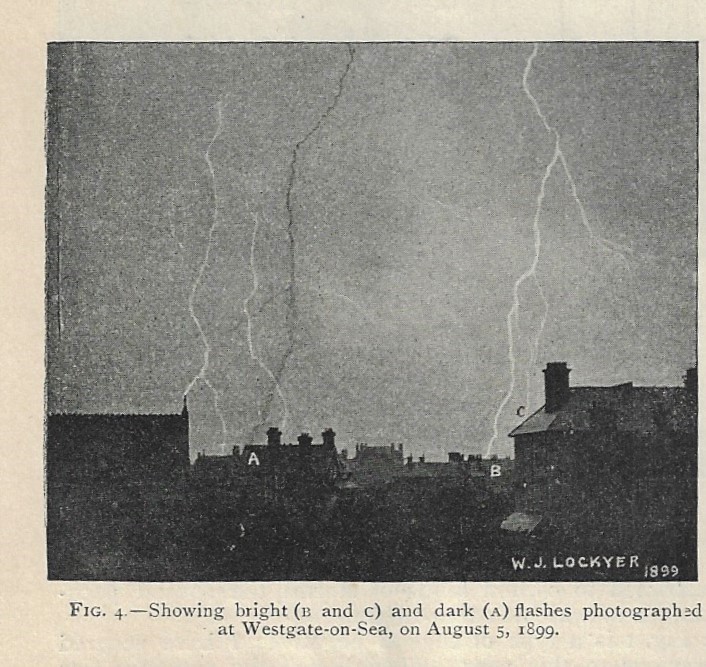
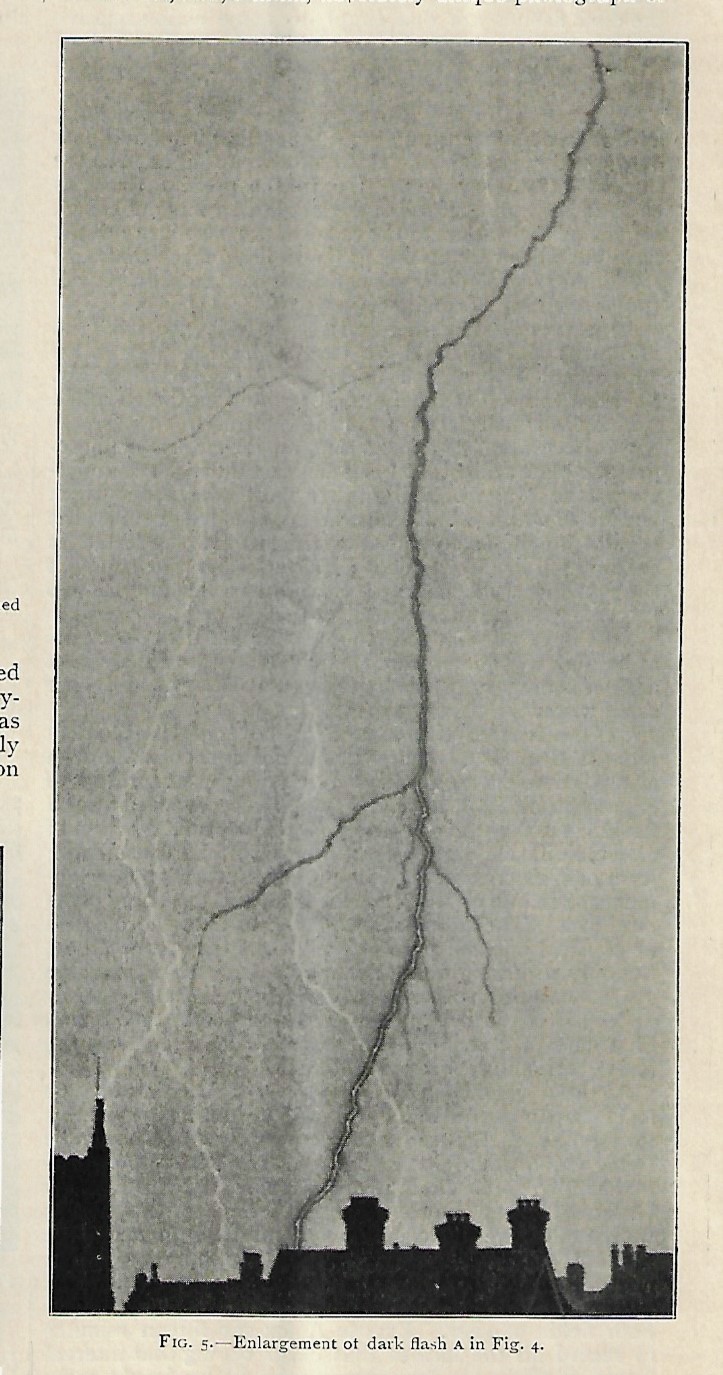
William Lockyer experimented with photography and lightning to test an explanation of the apparent appearance of “dark lightning”–it is an interesting go and a great phrase that sounds like the name of a Marvel superhero. (William J.S. Locker, Dark Lightning Flashes”, in Nature, vol 60, no. 1563, pp 570-574 in the weekly issue of pp 565-588.) His evidence supports the hypothesis that the phenomenon had a photographic/chemistry cause rather than a physical one. The images he produced back there at the turn of the century were remarkable and beautiful.
From the paper:
“IS there such a phenomenon as dark lightning? This is a question that has often been raised, and as yet no satisfactory answer has been given. If dark flashes do really occur, then they should probably be both seen and photographed, and the former, one would think, would be the more simple way of recording them.”
“If the lens of the camera be covered the moment after a flash has occurred the developed image will always come out bright, feebly or strongly, according to
circumstances. If, however, the plate be exposed after a flash has acted upon it, either to the continued action of a feeble diffused light or to the powerful glare arising from one or more subsequent flashes, then on development the image of the original flash will probably come out black. The effect is therefore not a meteorological or physical one, but purely chemical. It can be obtained, not only with a lightning flash, but also with a machine spark, or even with an ordinary flame. It is merely necessary that the plate should be exposed to the action of a certain amount of light after it has received the impression and before development.”