JF Ptak Science Books Post 1201
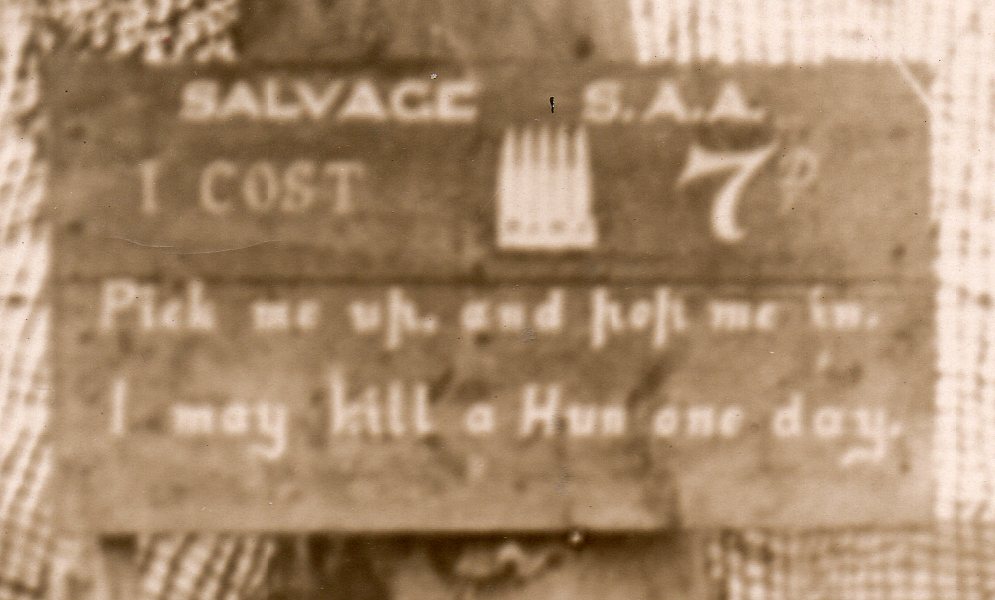
A little went a long way, sometimes, in collecting the ends and bits of a campaign or a retiring column or from the attics and basements of village houses, or in scrapyards or dustbins or abandoned yards and buildings. Scrap has sometimes contributed greatly to major war efforts; and sometimes it has contributed just a few hundred rounds of ammunition, gathered from the sick or dying or forces on the move, that have told the tale of change in battle. When you can only carry so much in a campaign where shooting can be an endless process, you can by definition never really carry enough bullets when you’re already carrying enough of everything else.
[These images may be purchased from our blog bookstore here.]
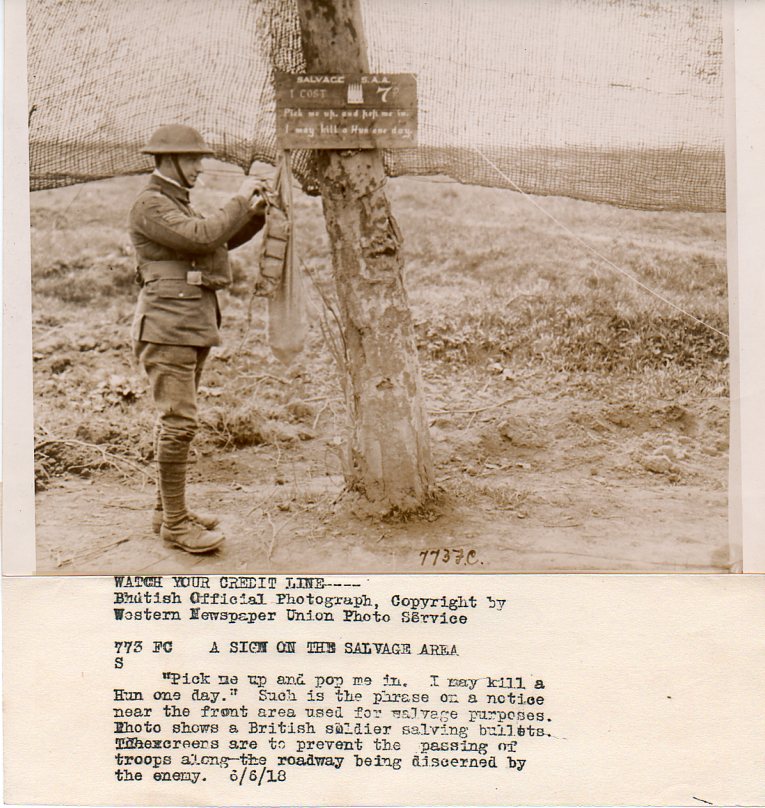
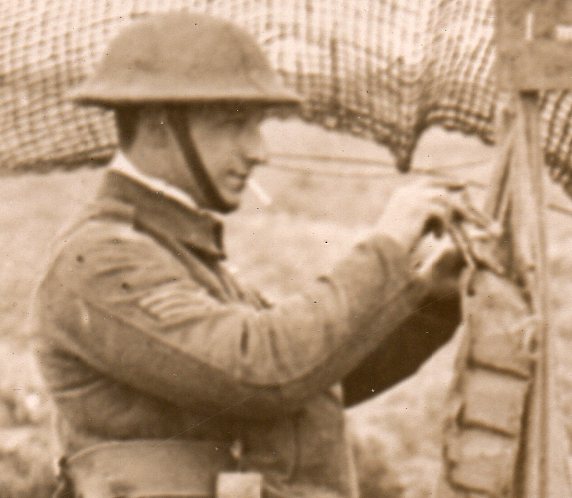
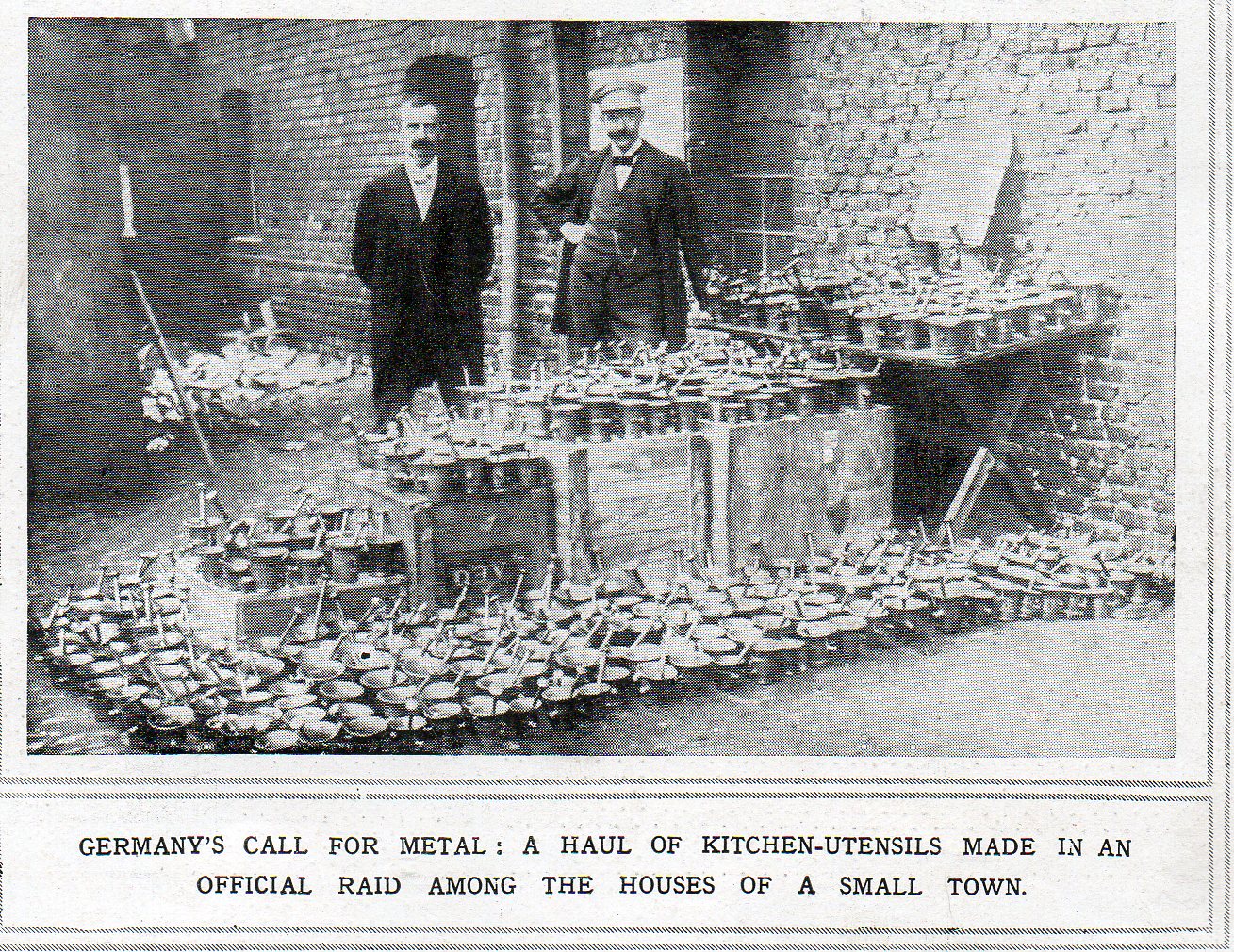
On the other side of the line, the Germans were tyrying to utilize every bit possible as well–here’s an example of a round-up of metal goods taken from the kitchens of a small town (looking ,mostlly like mortar and pestel sets). In towns throughout France, on the other hand, church bells were collected and stored away, hidden from possibel capture and melting by German troops.
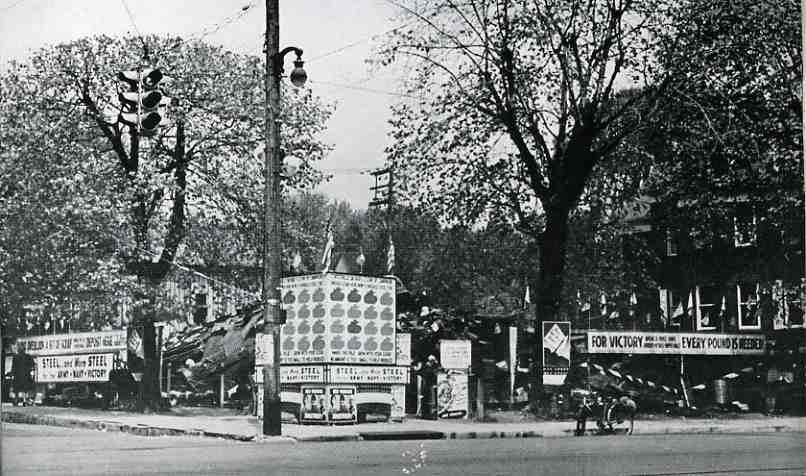
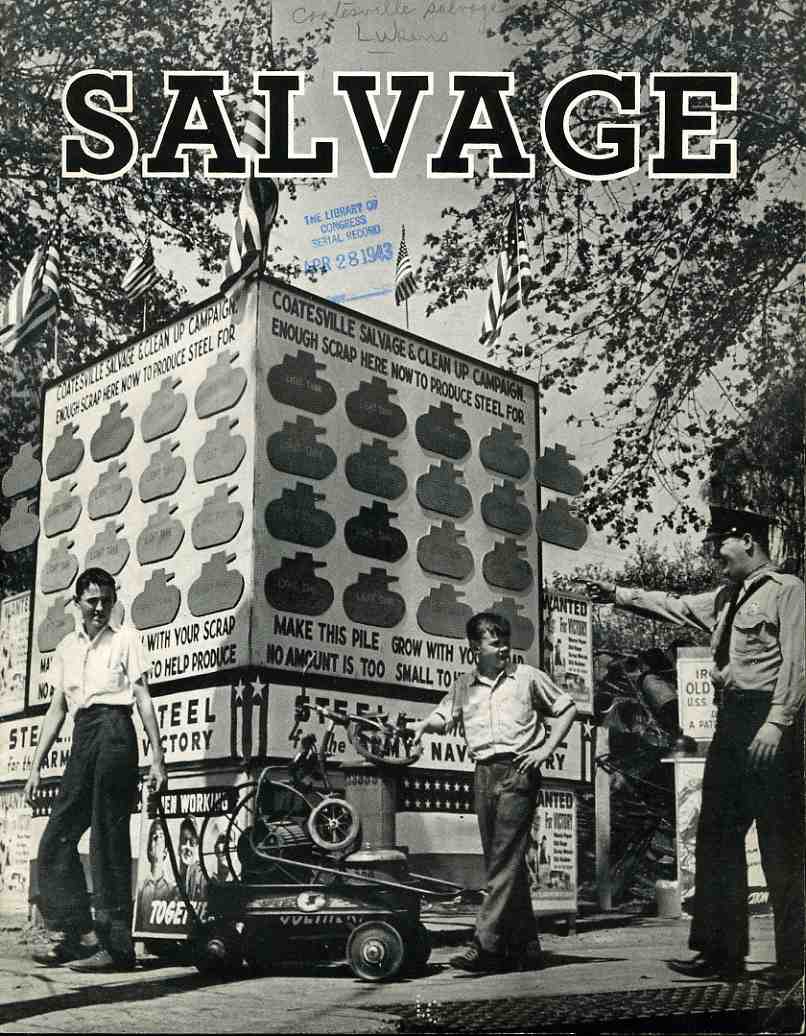 :Now for an example from WWII: Salvage (1943) is just simply brilliant! It is a superb design, getting its inelegant point elegantly across to the reader, making the collecting of junk a bona fide war effort, triumphant, superior; it delivers the message gorgeously. Who wouldn’t want to rush out and look for some metal scrap and bits and grow a neighborhood junk yard so that the community could build a tank? Certainly these two boys–under the watchful guidance of a smiling cop in a black tie–couldn’t resist, and from the looks of the progress billboard behind them, nor could anybody else in the neighborhood, as the community collected enough metal junk for 14 tanks. (Or at least pieces and chunks for fourteen tanks.)
The community was Coatesville, Pennsylvania, and they certainly did their collecting-best. The two photos below show (top) the scrap yard after two days of collecting, and (bottom) the end of the campaign two months latter.
“One pound of fat contained enough glycerin to make a pound of black powder, enough for six 75-mm shells. Twenty three hundred old nylon stockings contained enough nylon to make one parachute.
Thirty thousand razor blades contained enough steel to make fifty 30-caliber machine guns.” (Lingeman, Richard R. Don t You Know There Is a War On? The American Home Front, 1941-1945. New York: G.P. Putnam’s Sons 1970, 254-55). When you have an entire town doing this, you can build tanks; when you have millions of people throwing together to collect this “junk”, then you get part of a war effort. It is also part of a giant propaganda hearts/minds machine, especially for the U.S., which was (and I use this word with some hesitation) cushioned from the effects of the war by two oceans–it reminded people who hadn’t contributed a life to the war that there was actually something tangible going on, and that they could do something to help. It kept peoples’ minds in the game. Rubber was another big concern, as was silk (the controlling exporter of both coming largely from overseas, and in the case of silk, the exporter was Japan.) Of course there was the introduction of synthetics for both silk and rubber, but the point in fact was that there was indeed a shortage, and the donated and salvaged stuff was necessary.
Here’s a beginning picture for the burgeoning community scrapyard: 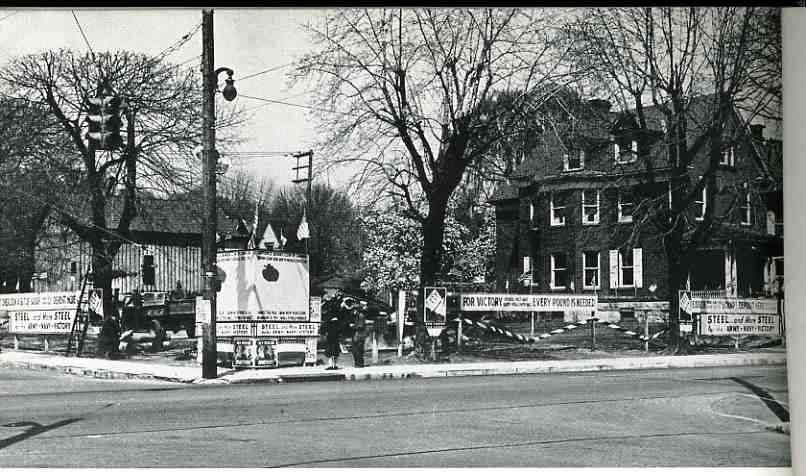
Some interesting works relating to salvage drives:
Barringer, Edwin C. The Story of Scrap. Washington D.C:Institute of Scrap Iron & Steel Inc., revised edition, 1954.
Cohen, Stan. V for Victory: America’s Home Front During World War II. Missoula Montana: Pictorial Histories Publishing Co., Inc., 1991.
And afterwards:
Hoopes, Roy. Americans Remember the Home Front: An Oral Narrative. New York: Hawthorn Books, 1977.
Lingeman, Richard R. Don t You Know There Is a War On? The American Home Front, 1941-1945. New York: G.P. Putnam’s Sons, 1970.
O’Neill, William L. A Democracy at War: America’s Fight at Home and Abroad in World War II. New York: The Free Press, 1993.
And here’s one I’d like to see (the cover of):
Wolf, Howard. The Story of Scrap Rubber. Akron, Ohio: A.
Schulman, Inc., 1943.
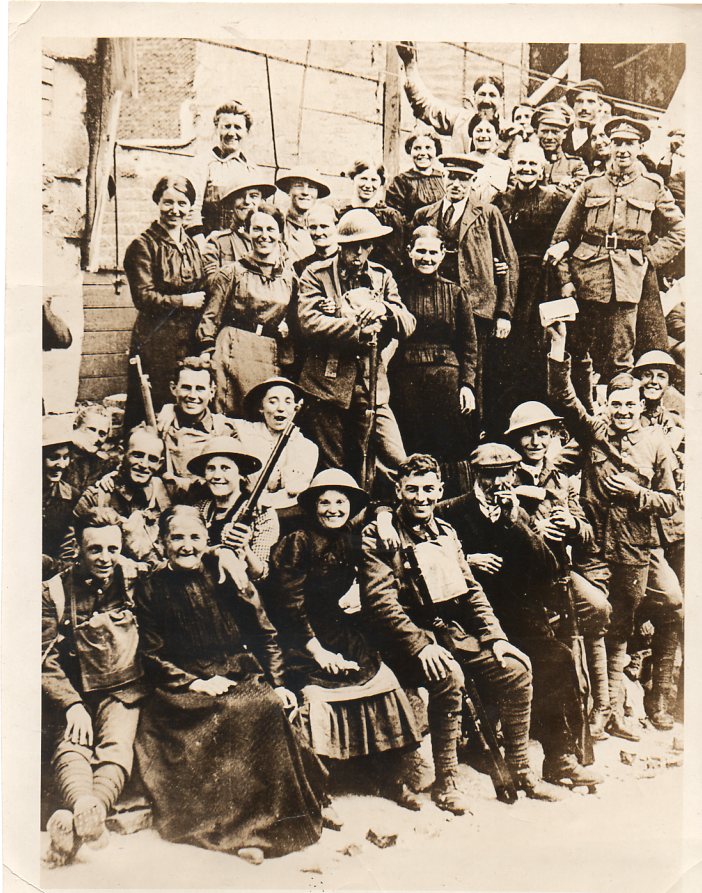
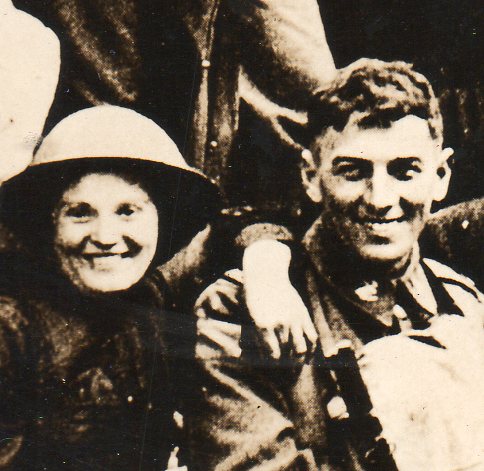
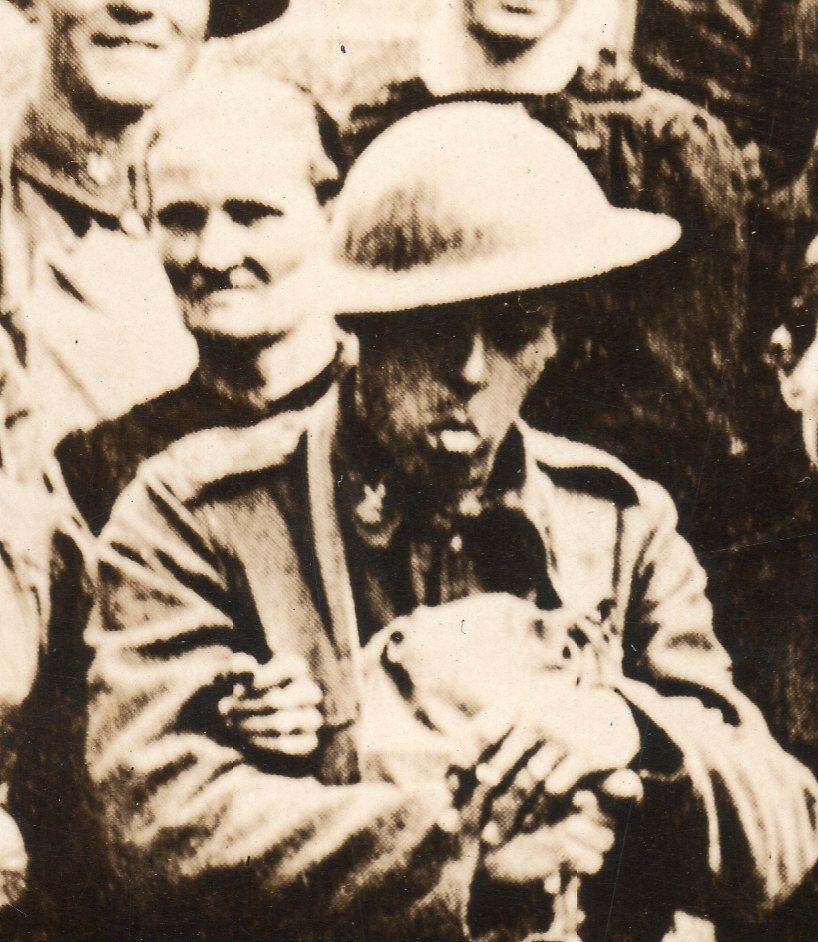
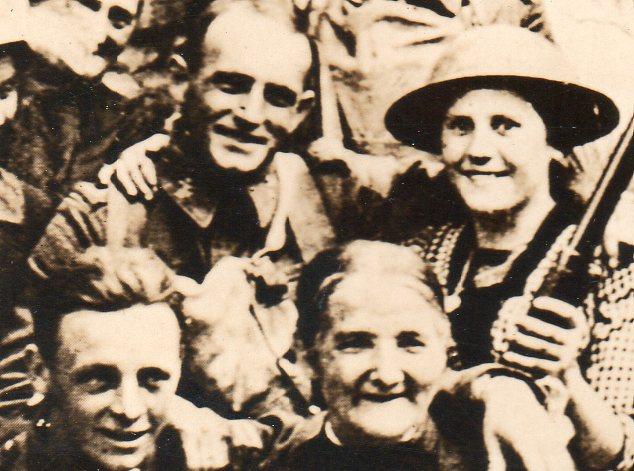
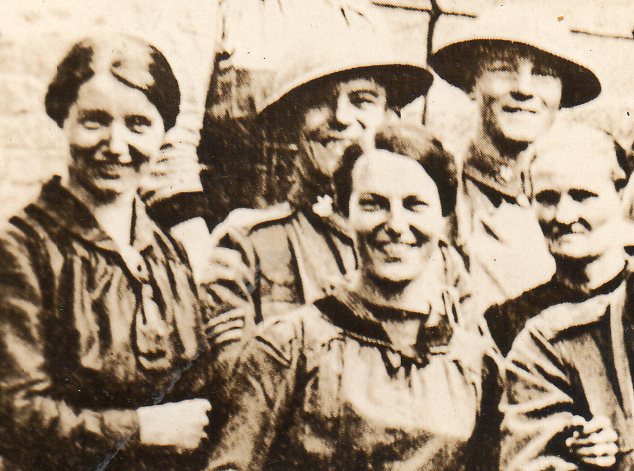
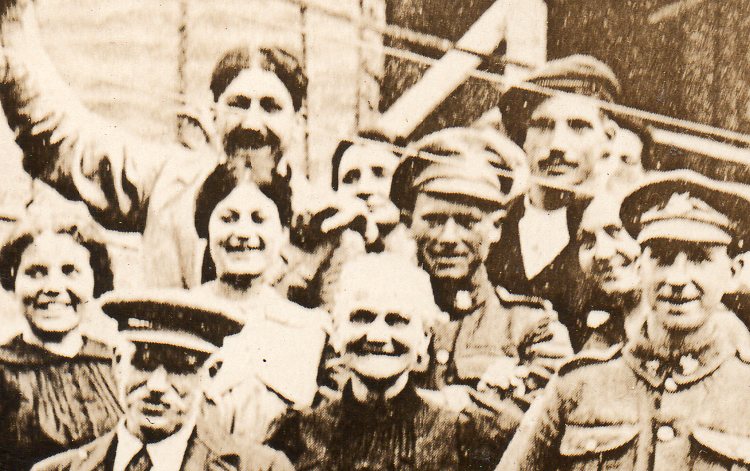
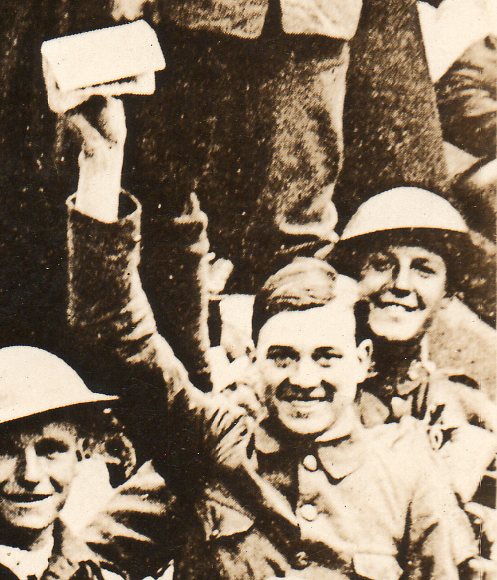
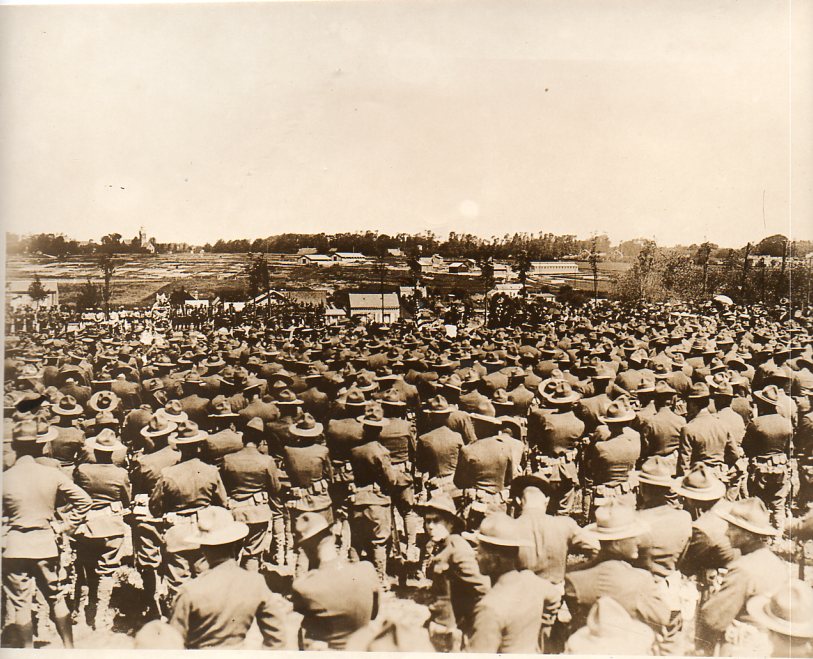
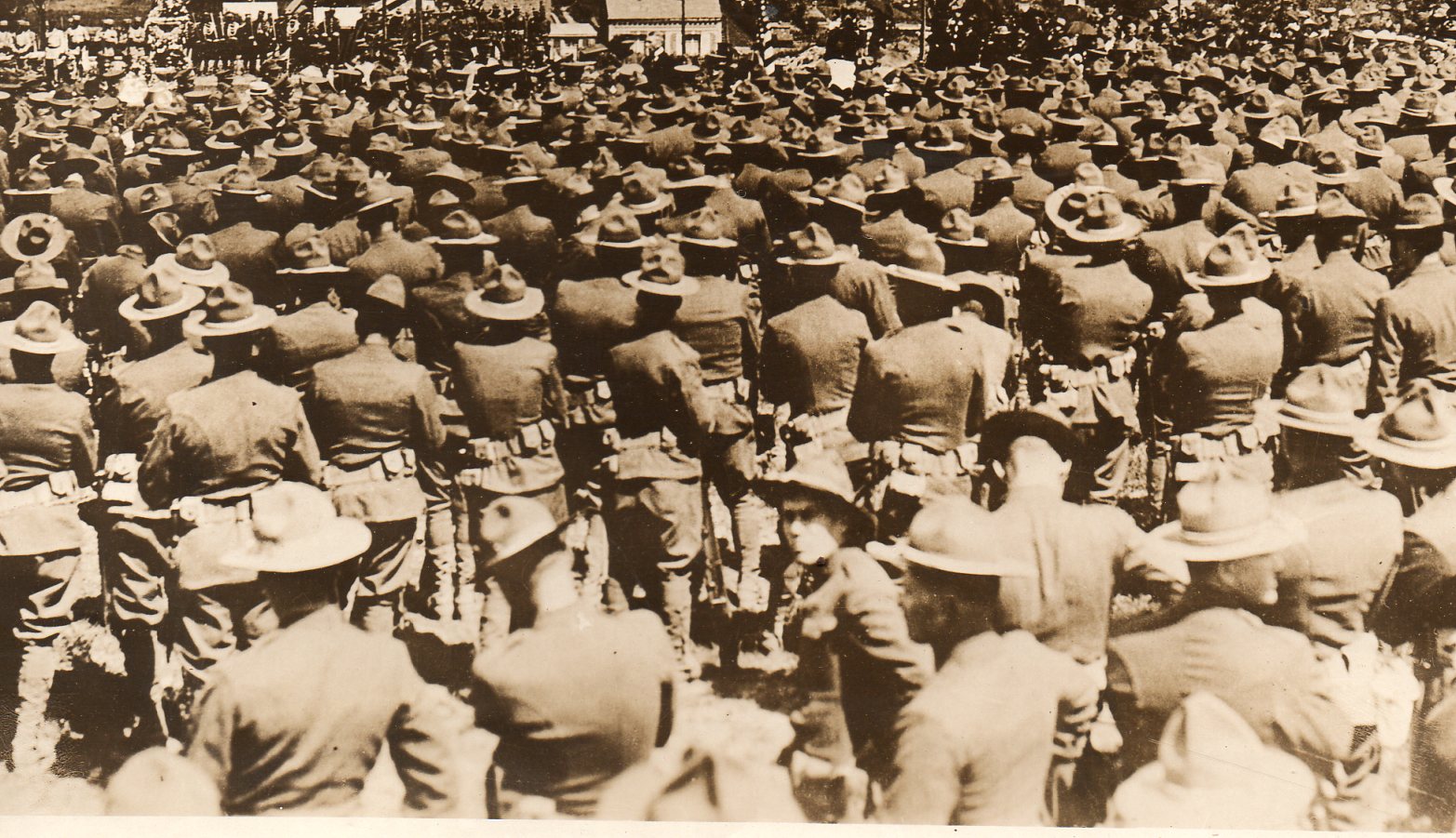
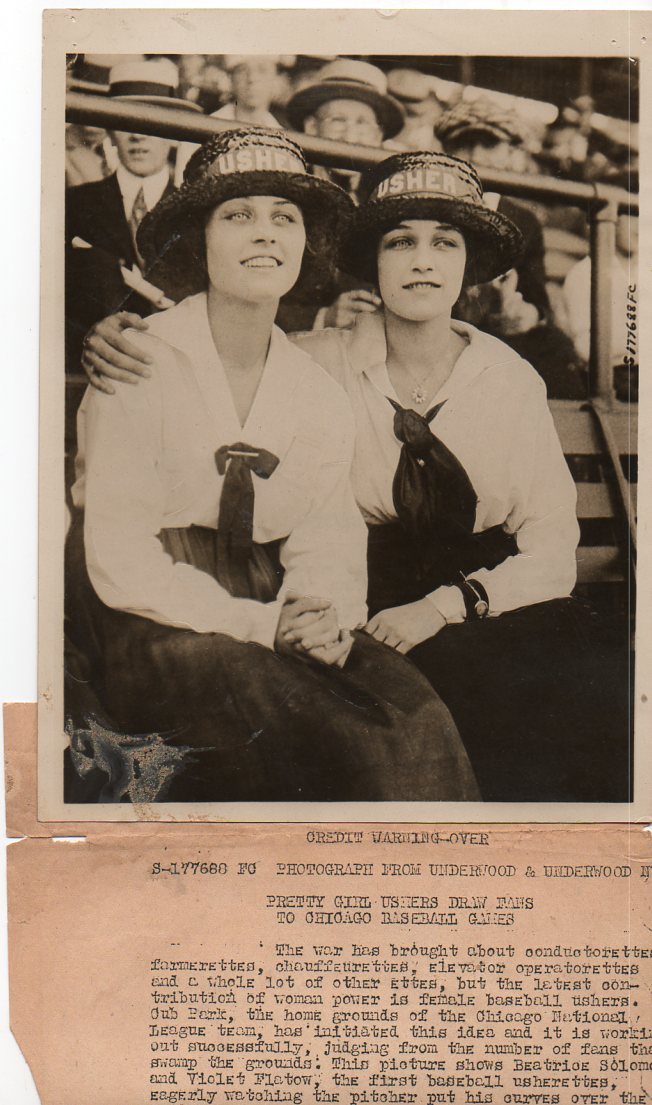
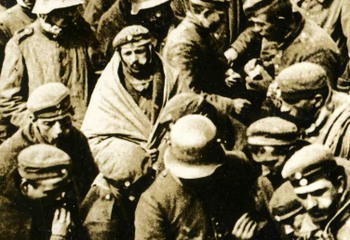
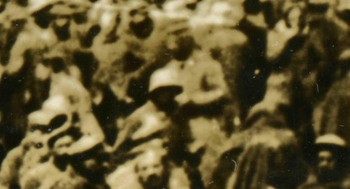
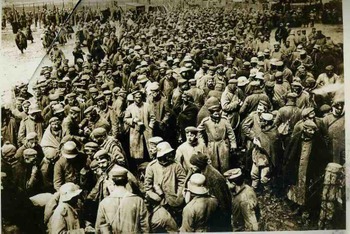 This image comes from a collection here of First World War news service photographs, showing German prisoners being readied for transport home, and dated 20 November 1918. This group had evidently surrendered just before the armistice was signed, and was sent directly and instantly to a staging area for transport back to the Fatherland. The way that many newspapers obtained the war images that they published in their papers was via a semi-centralized pool of war images. The newspaper would request, say, a photo of German prisoners, and would contact one of these photographic agencies—in this particular case, it was the Central News Photo Service of 26-28 Beaver Street, NYC—and purchase the rights for republication, and then print it in the newspaper along with the story. In almost every case the photo would be accompanied by a caption mimeographed onto an attached piece of cheap paper, and in this case it reads: “Waiting to Return Home/a photo just received showing a batch of enemy troops who surrendered just before the signing of the armistice, joyously discussing the coming of peace and the opportunity of returning home to their families.”
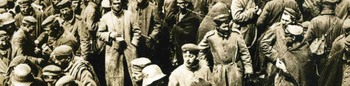 I seriously doubt that the copy editor could read the minds of either the photographer or the troops in the photo. I would imagine that they were definitely joyous about going home ALIVE to their families, but when looking really closely at the picture the thing that seems to dominate the actions of the people is food. Or cigarettes. But mostly when looking hard at the faces in the photo, the men just look tired.