A Daily History of Holes, Dots, Lines, Science, History, Math, Physics, Art, the Unintentional Absurd, Architecture, Maps, Data Visualization, Blank and Missing Things, and so on. |1.6 million words, 7500 images, 4.9 million hits| Press & appearances in The Times, Le Figaro, Mensa, The Economist, The Guardian, Discovery News, Slate, Le Monde, Sci American Blogs, Le Pont, and many other places… 5000+ total posts since 2008.

Category: Photography

  • World War I Photographs–German Prisoners, the Somme, 1916

    JF Ptak Science Books   Post 1322

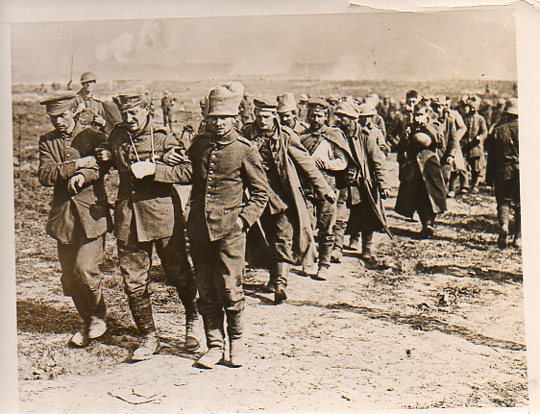
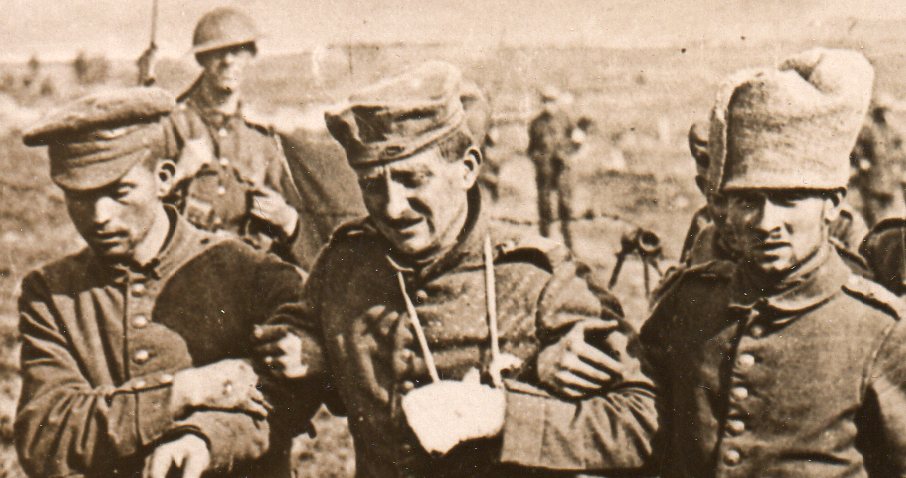
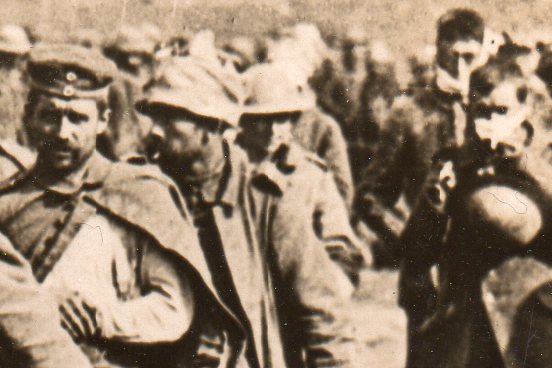
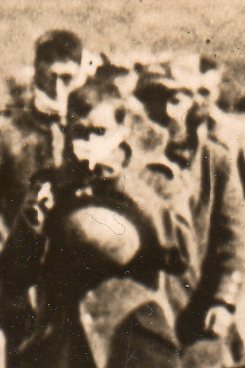
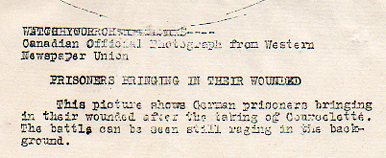
    This news service photograph (a Canadian Official Photograph from the Western Newspaper Union) shows a line of German prisoners of war in the Canadian lines at the battle of Courcelette, France. [The original is available at our blog bookstore.]

    WWI--German prisoners--marching328

    It was a battle that took place within a battle,  in the last third of the enormous 18-week series of battles and actions known as the Somme Offensive. The photograph was made between early September and mid-November 1918, which is when the Canadians joined the British offensive.

    The landscape is bleak, the soldiers worn.  I rarely see expressions of pain in this series of 1500 photographs from a collection of war images that I purchased.  This is one of a very slim minority.

    WWI--German prisoners--marching 330

    WWI--German prisoners--marching 331
    WWI--German prisoners--marching 332

    WWI--German prisoners--marching text329

    ·Posted by :

    ·in:

    —

  • World War I Photography–Soldiers at the War’s End, Germany, November 1918

     JF Ptak Science Books   Post 1321

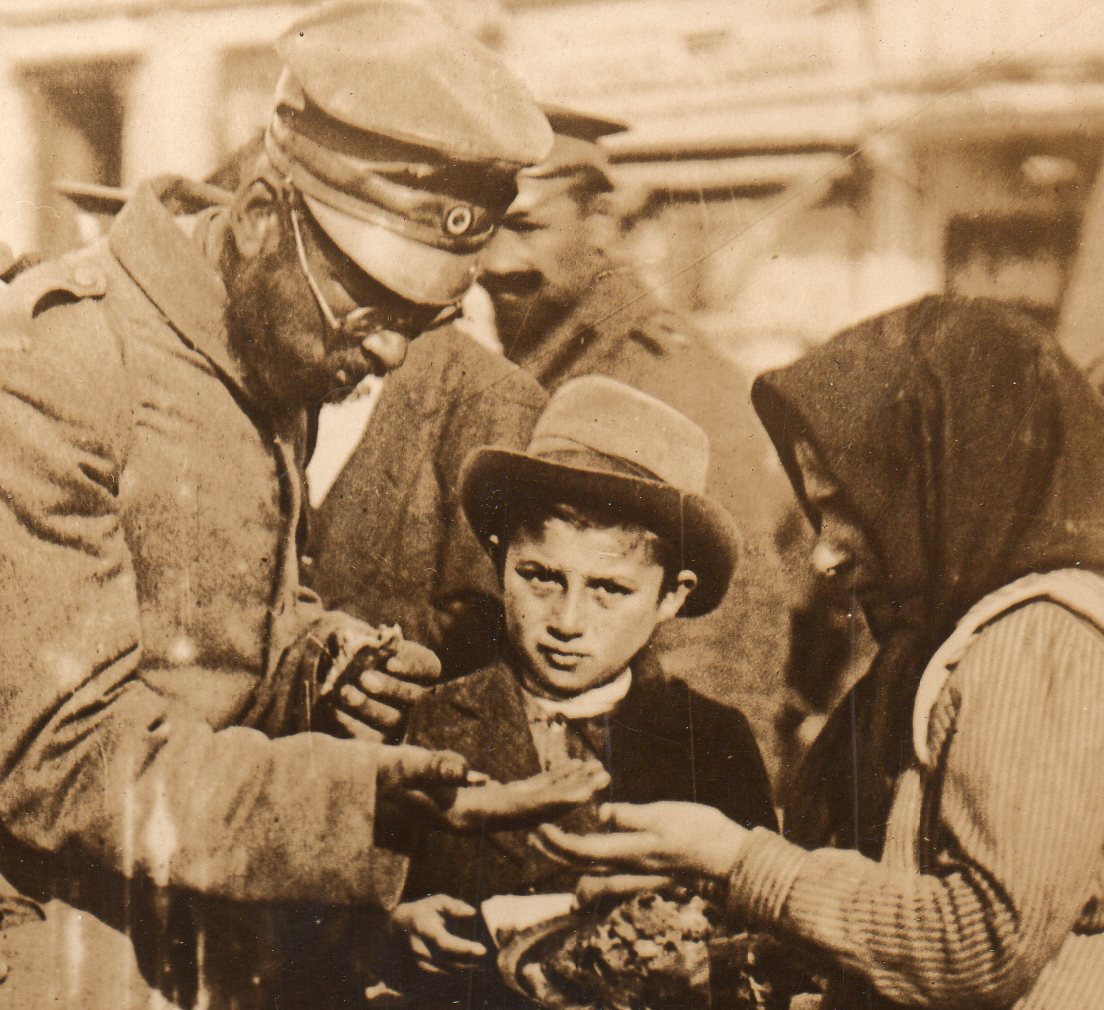
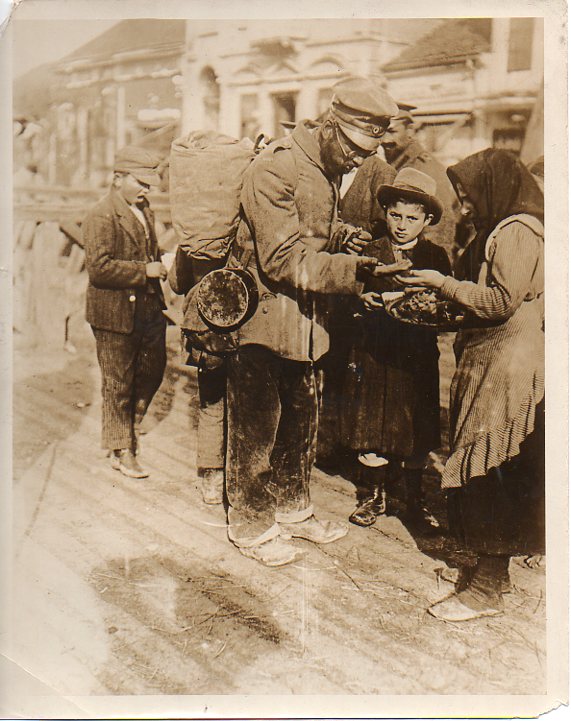
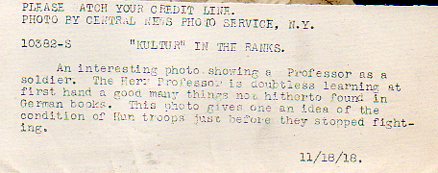
    I’m not sure what this photo depicts specifically but in general it sends an image of exhaustion and wear.  The caption for the image says that it shows “the condition of the Hun troops” and that the subject “Herr Professor” is learning “a good many things not hitheroto found in books”.  Maybe he was a teacher, maybe not.  Machts nichts. His pants looks velour-like and his boots (if that’s what his footware was) look very thin.  He is ragged, his double-fold glasses look like they’re at their limit, his face looks swollen behind his beard, and he just looks “done”, in general. 

    WWI--german--beggar det326
    [The original of this photograph is available at our blog bookstore.]

    I’m not sure what he is doing, or where he is.  He may be trying to figure out local currency to purchase whatever it is the vendor-woman has on the tray at her hip–she os holding out her hand, and looking at his.  The soldier definitely has something there, and he looks basically too weary to comprehend it.  the hand language is ambiguous to me.  He may have received something already, some sort of food, and he is staring at it now, thinking perhaps how little of it there was.  He’s eating, and already has taken a bite of whatever bread-like thing is in his left hand.  I’m not sure what attracted the attention  of the boy in the center–perhaps it is simply the camera, and he wanted to be in the shot. 

    WWI--german--beggar325

    There’s a shadow in the foreground-left of what looks like someone making a photograph of teh scene–probably not our photographer, but another, with a brownie or some such smaller camera.

    At the end of years of fighting every general soldier deserves respect and, at least, some free food–I hope this guy got his.

    And the accompanying text to the news photo service image, to be used if published:

    WWI--german--beggar text327

    ·Posted by :

    ·in:

    —

  • Blank, Missing & Empty Things: German Soldiers, November 1918

    JF Ptak Science Books   Post 1305

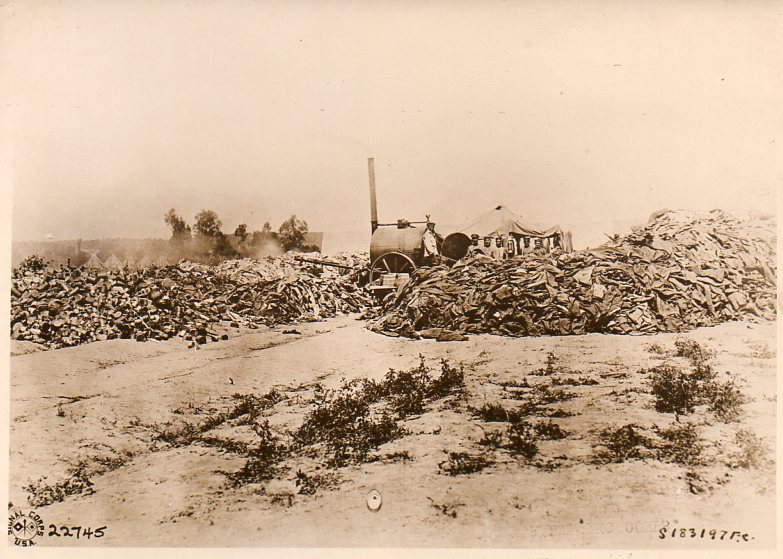
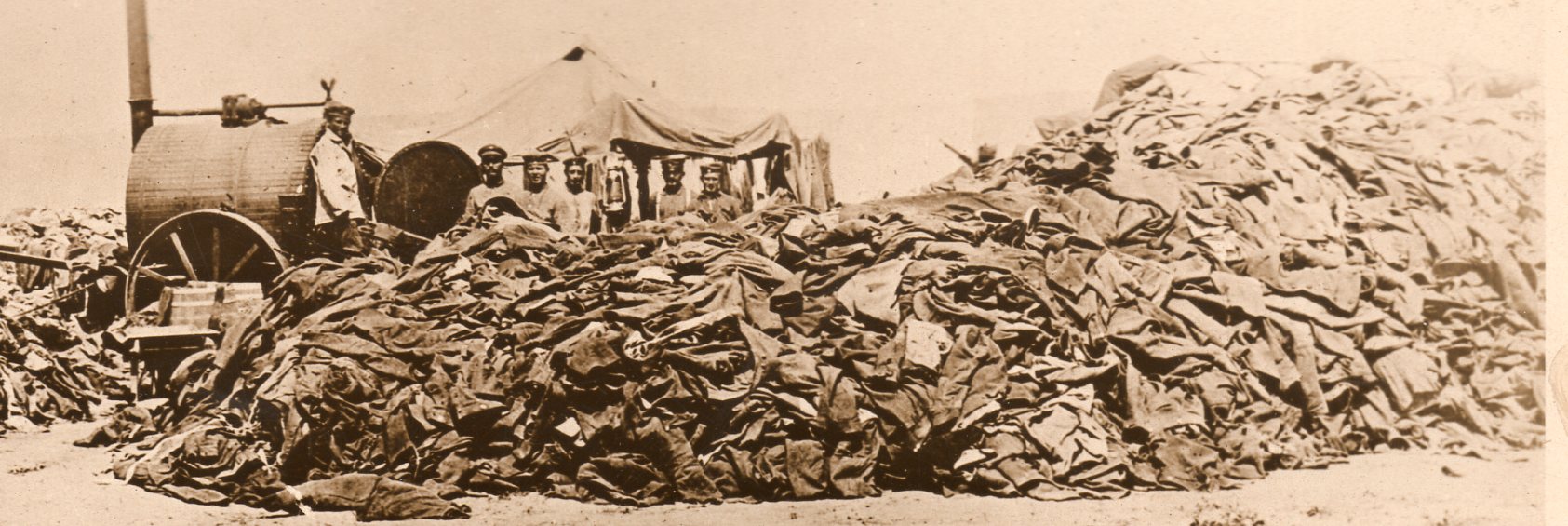
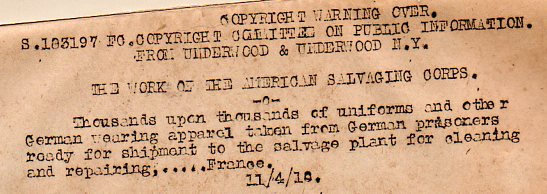
    This remarkable photograph is part of an archive of World War I Underwood & Underwood News Photo Service photographs I purchased many years ago.  It shows a pile of German soldiers’ uniforms–thousands of them–taken from German prisoners, the clothing headed for “cleaning and repair”. 

    World War I photos--empty uniforms287

    [This photo, along with mnay others, is available for purchase from our blog bookstore.]

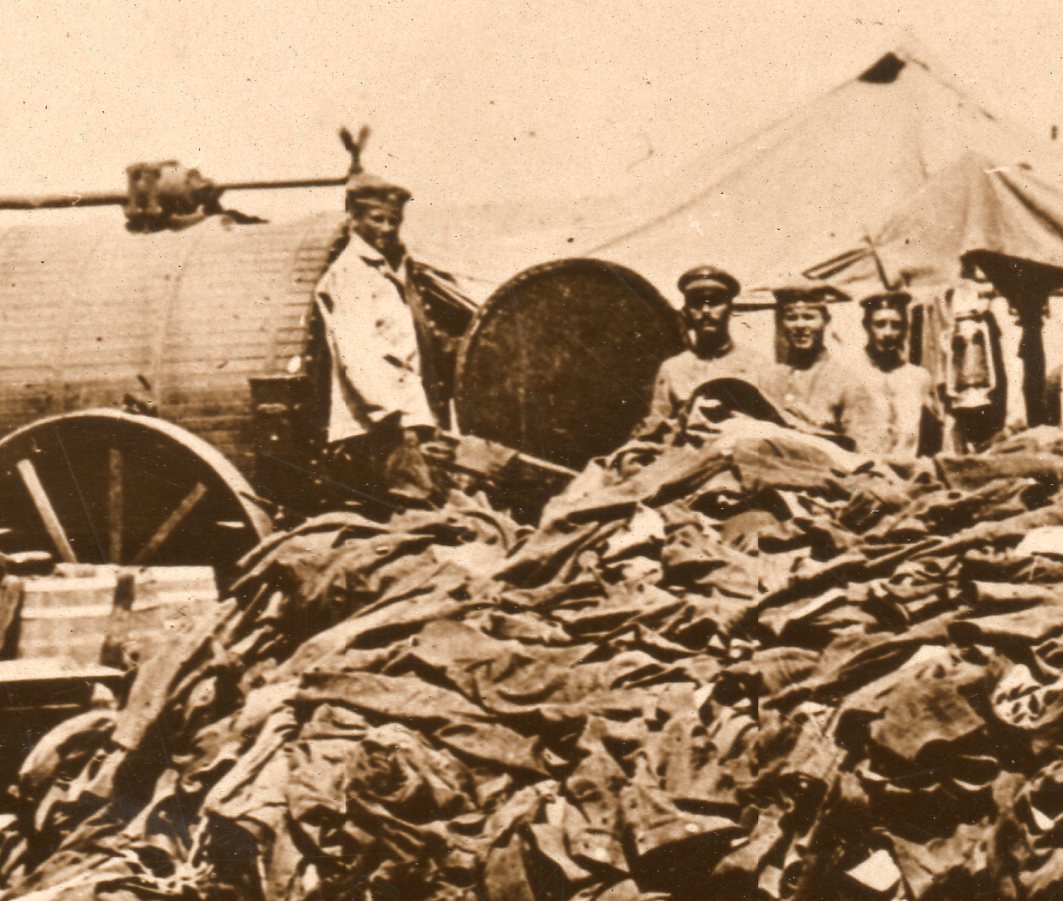
    I didn’t know before this that the uniforms were repaired–I can imagine the cleaning part, since the prisoners must wear something, and deep into the fifth year of the war it seems hardly the case that they would be given anything at all to wear except for what they were captured in. the cleaning part sounds logical too, especially as the cleaning was being done by the prisoners themselves (pictured here).  Clean clothing makes for more sanitary conditions in mass compounds for thousands of prisoners, and lowers cost for the health maintenance for the prisoners in the short and long run.  And so far as repairing goes:  attached buttons make for closed coats; closed coats allow prisoners to have a better chance at staying healthy in the coming cold months. Just ask Napoleon about the cost of thread on the buttons of his army’s overcoats in the march towards Moscow.  (The thread that wasn’t used cost very little; the cheaper thread that was used cost everything.)

    And the detail:

    World War I photos--empty uniforms det288
    And closer still:

    World War I photos--empty uniforms detb290
    And the text that was provided by the photo service company to be used along with the photo wen (or if) it was published. 

    World War I photos--empty uniforms txt289

    The cleaning and repairing went on, the prisoners kept coming in–even for those involved, the scent of the end of the war was in the air, though I doubt that the majority felt that it was only a week away. 


  • WWI Photographs–the Trenches, 1916-1918

    JF Ptak Science Books  Post 1265

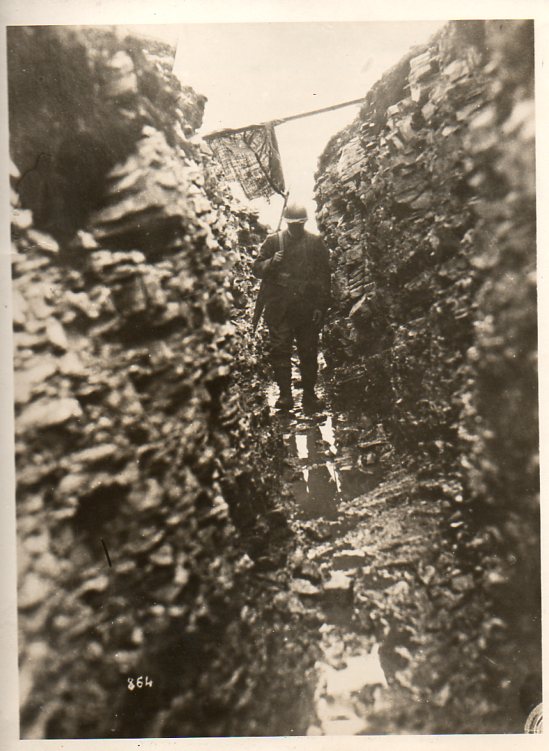
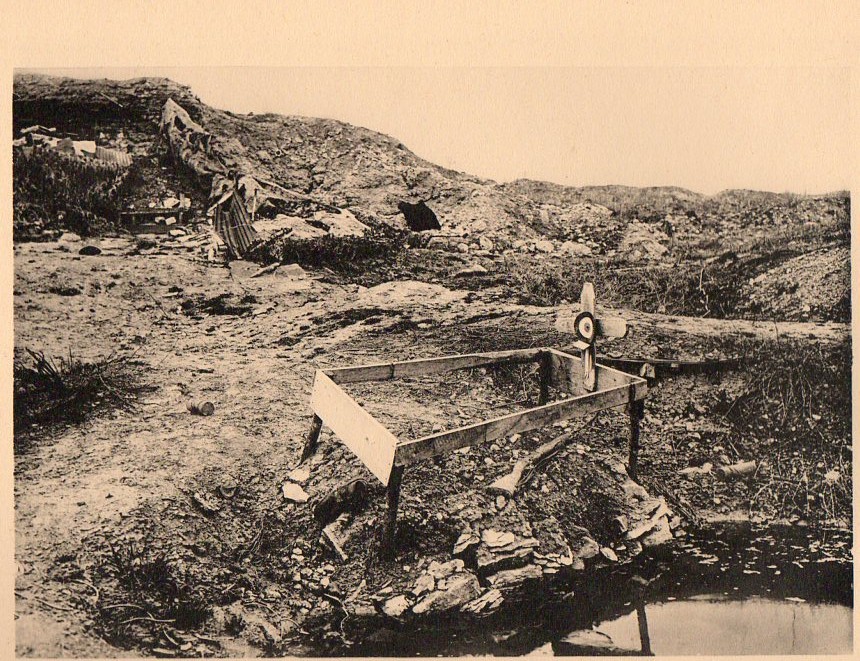
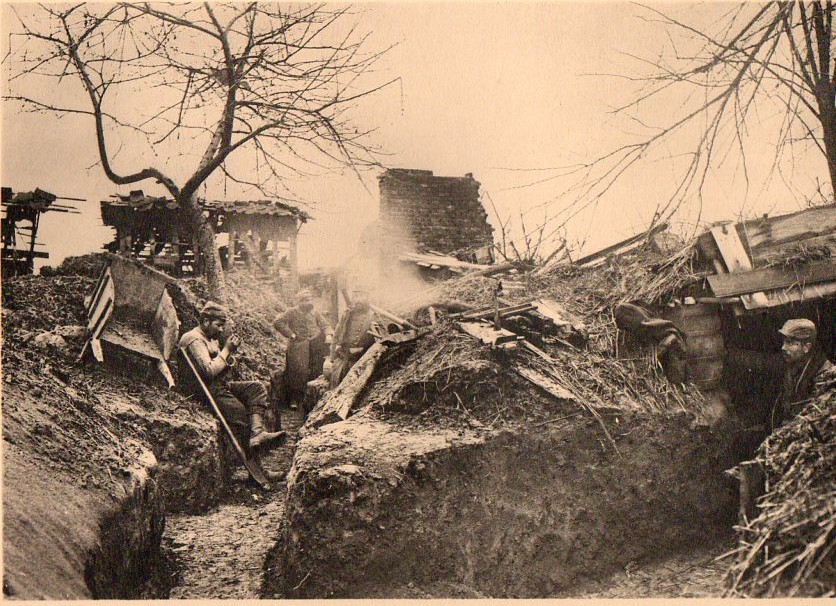
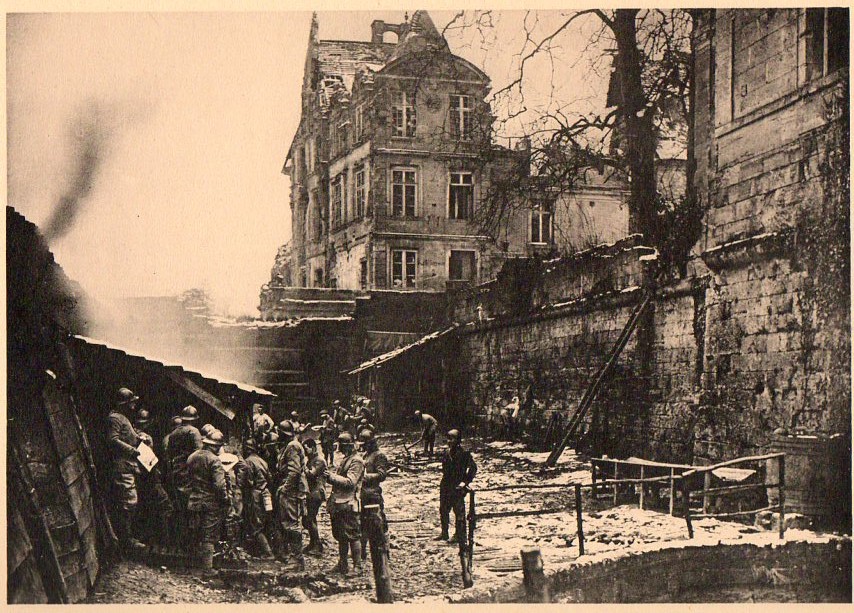
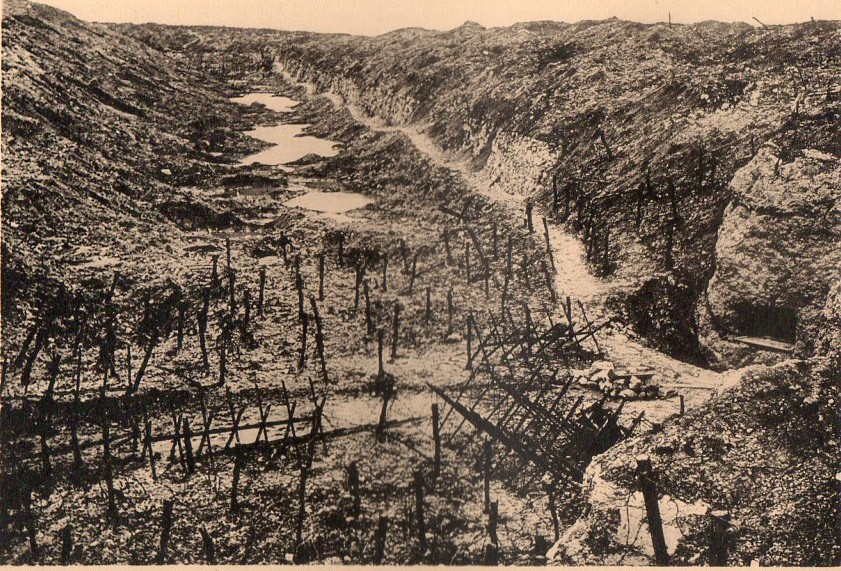
    Perhaps one of the worst inventions in the history of warfare was The Trench. Millions of men were wounded or met their ends while defending one, or attacking one, or being in-between two of them.  Hundreds of thousands of troops spent months charging back and forth between opposing lines, the ground over which they fought made uninhabitable for almost any form of life. 

    Earlier in this blog I wrote about sub-trench warfare--the story of the sappers who would mine underground, underneath the opposing force’s lines,  digging a horizontal hole the end of which would be filled with explosives and detonated, exploding up, destroying the enemy’s trenches. Bad business.  The trenches were bad enough without having to be vigilant against someone tunneling beneath, trying to make you into little pieces. Trenches were mostly cold, dark, miserable, wet, potential disease carriers, poison gas accumulators–and that’s of course before the shooting began.  There were thousands of men–tens of thousands of men, hundreds of thousands–waiting in their trenches, waiting for the other side to try and advance, attack over the well-named no-man’s land, running across open ground in a hail of millions of bullets.

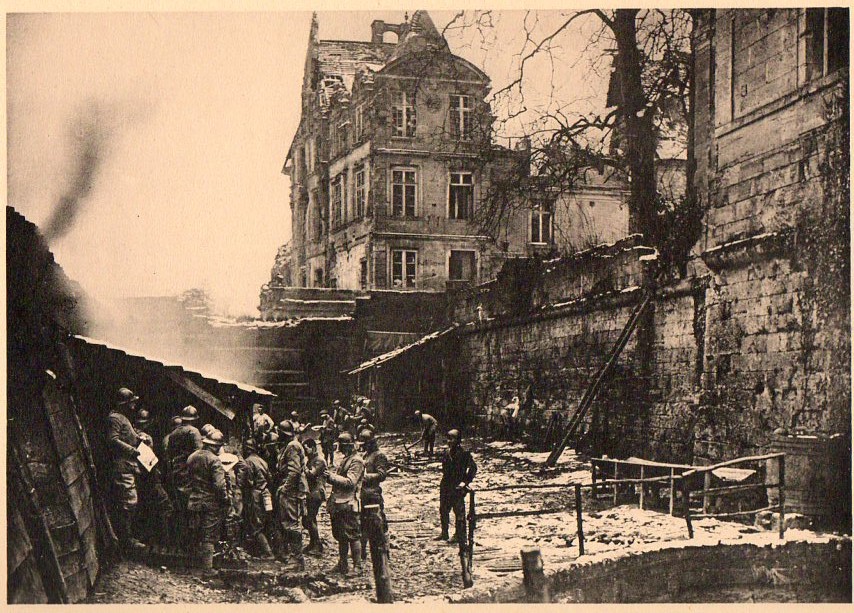
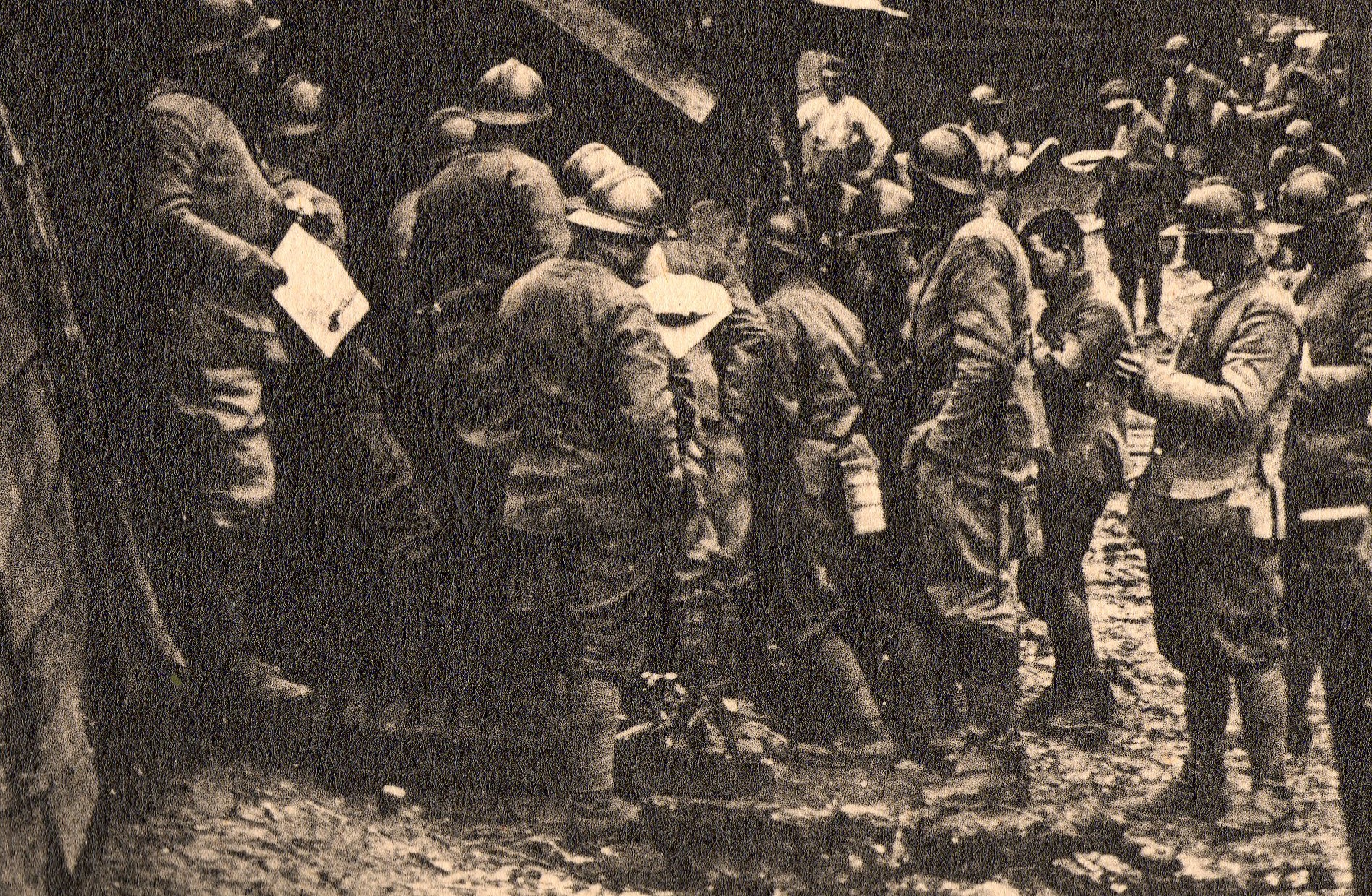
    I’ve collected a few images that are here (and available at our blog bookstore) that give a little flavor of the trenches, and the men in the trenches–though without the scent of the stale water, or the bite of the chill, or the perpetually wet feet, or the cold, or the dysentery, or death’s constant pull and struggle.

    WWI photo--trench045
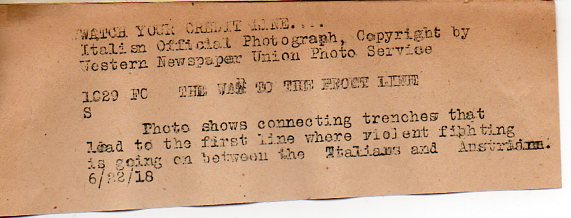
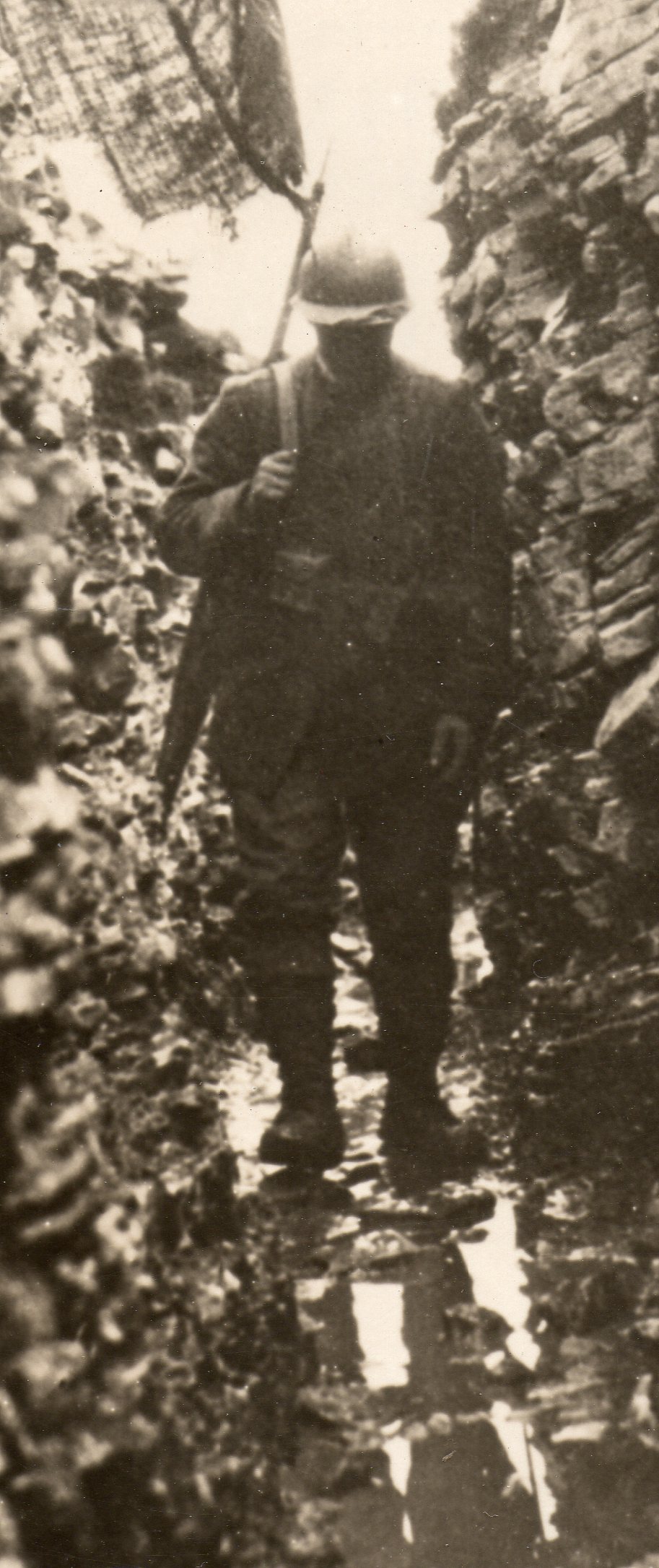
    This is an original photograph made by the Western Newspaper Union Photo Service, as a “British Official Photograph”  (with the “British” part penciled out and replaced by an unknown hand, “Italian”),  The photo agency supplied a caption for the image (that was supposed to have been used by the newspaper or magazine that published the picuture) as follows:

    WWI photo--trench note046

    And the detail:

    WWI photo--trench note detail047

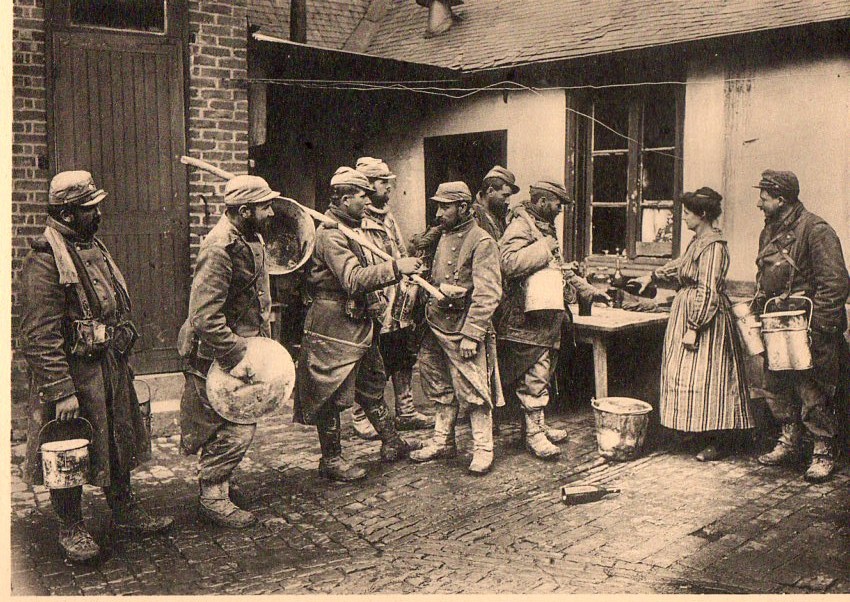
    I’ve also put together a few examples from a collection of exceptional photogravures printed in 1919:

    WWI photogravure--group gettg drnk055

    And the detail:

    WWI photogravure--group gettg drnk det056

    WWI photogravure--soldiers waiting059

    And a detail:

    WWI photogravure--soldiers waiting det060

    And another detail:

    WWI photogravure--soldiers waiting det061

    WWI photogravure--grave054

    WWI photogravure--trench life 058

    And a detail:

    WWI photogravure--trench life det057

    WWI photogravure--trench wounded050

    WWI photogravure--trench wounded det051

      WWI photogravure--trench empty062

      WWI photogravure--bunched group street048

    And the detail:

      WWI photogravure--bunched group street det049


  • WWI Photographs, July 4, 1918–Americans in London

    JF Ptak Science Books   Post 1263

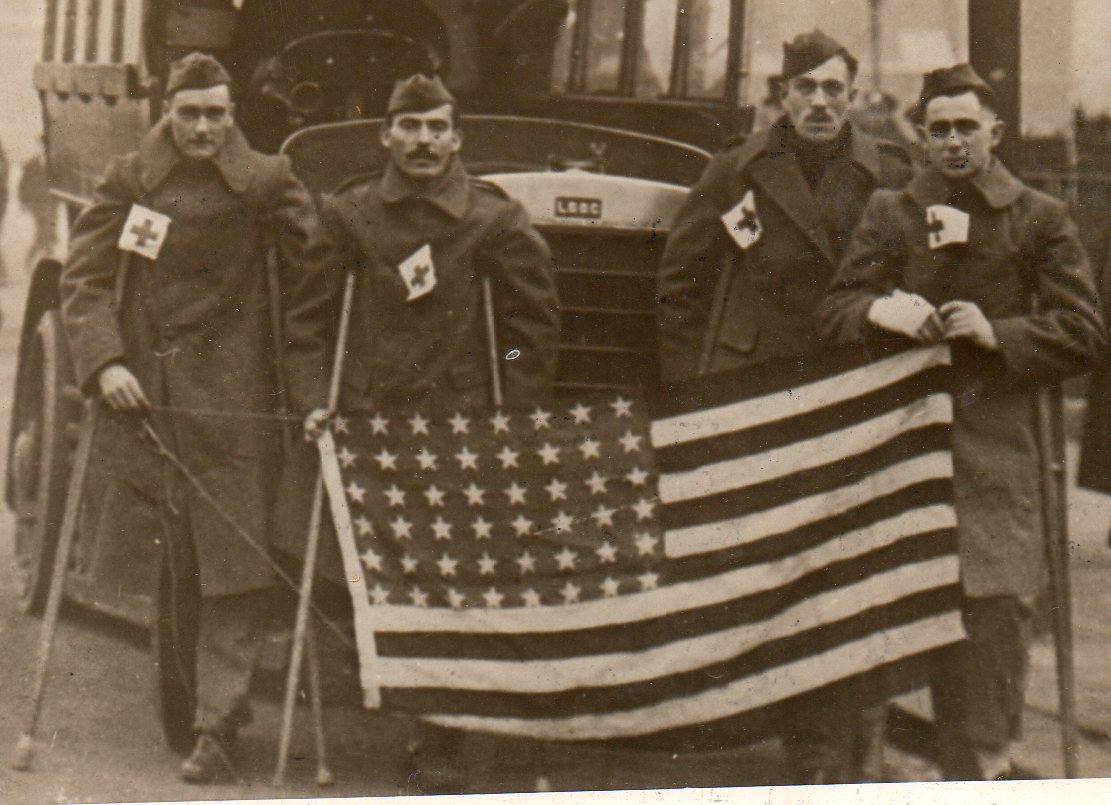
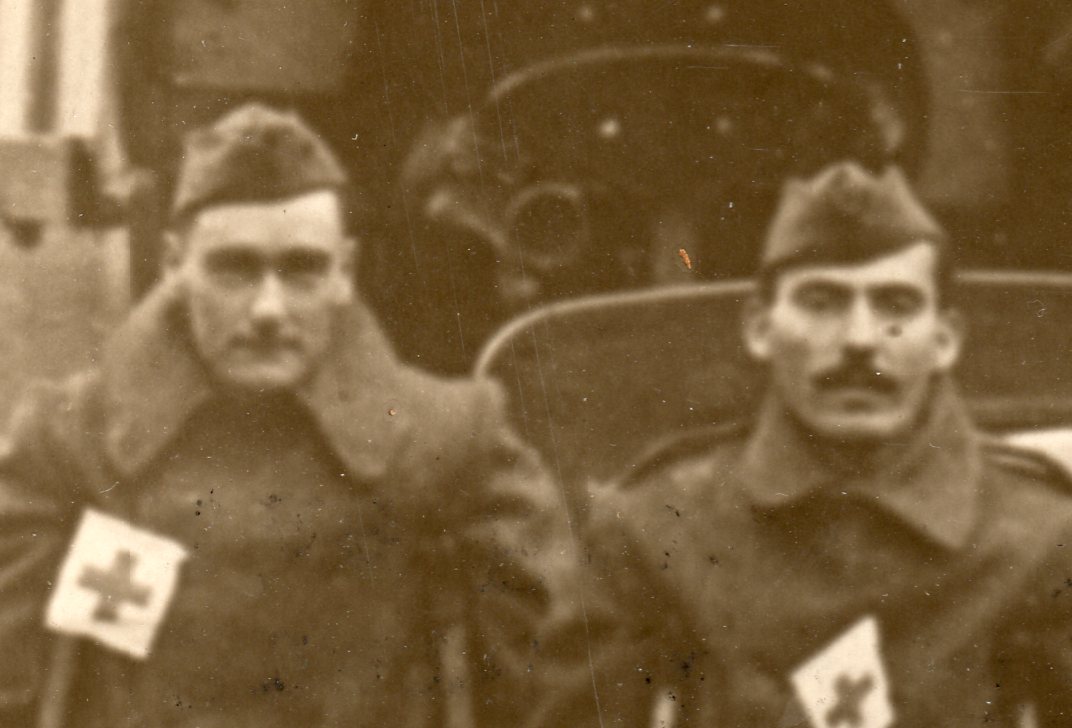
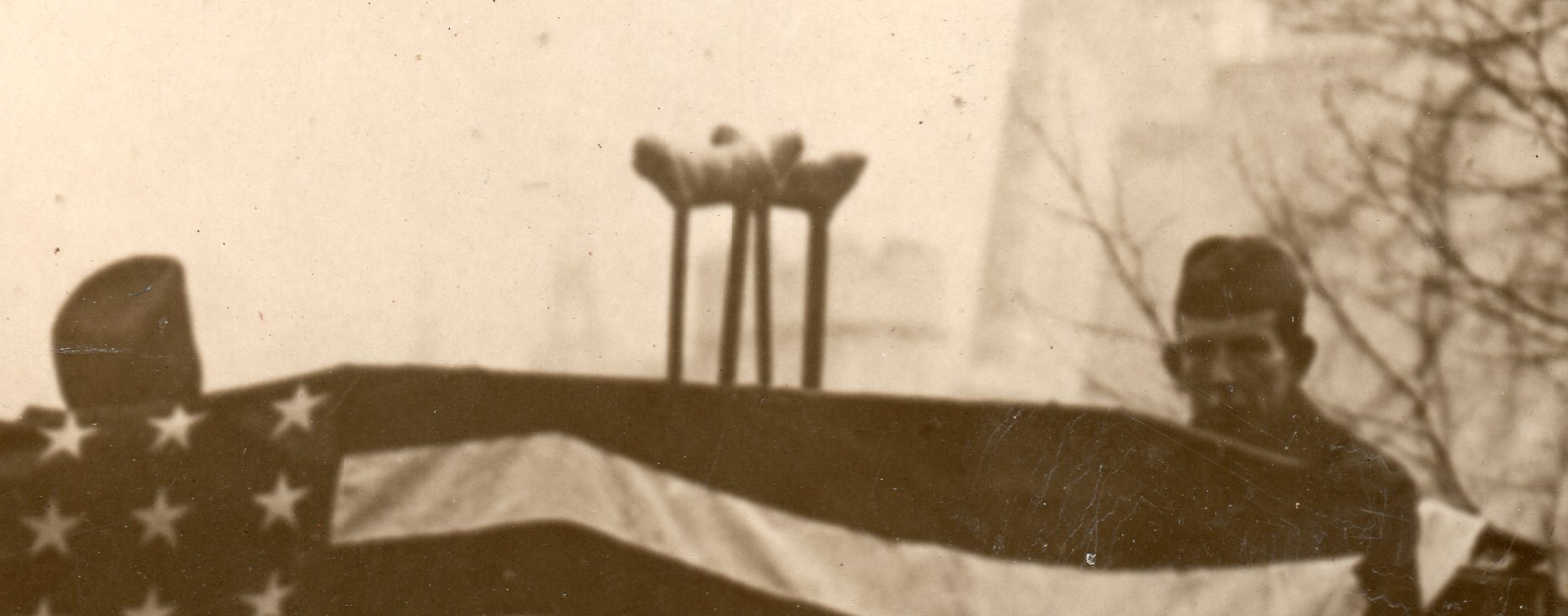
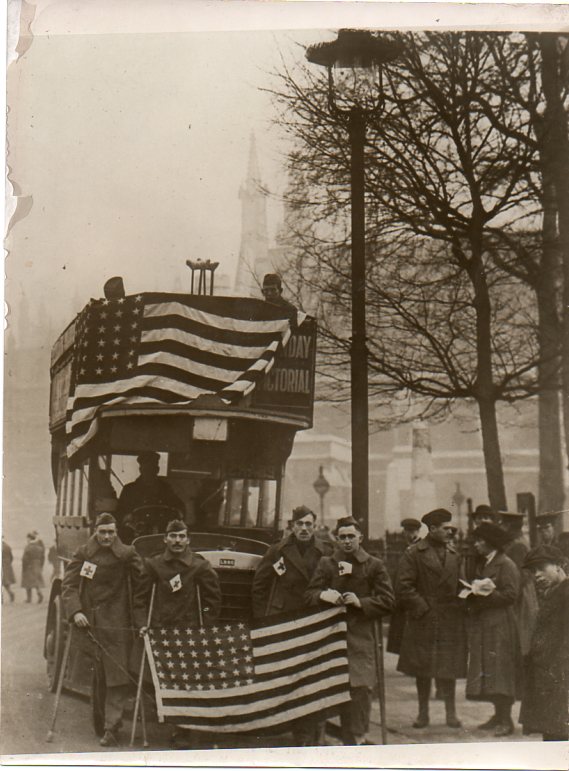
    This image–from a collection that I’ve mentioned previously on this blog–shows a group of wounded-in-action American Doughboys1 recuperating in London on 4 July 1918.  There were at least six of these soldiers aboard this bus, touring, being invited to celebrate their independence day in London, their flag–and a big one at that–draped across the bow of the upper deck of the bus. 

    There were be about 204,000 American soldiers wounded and 116,500 killed during WWI, the end of which was in sight at this point, just five months away.  These were some of the survivors of the American share of war casualties.  Almost all other nations fared far worse (see below)

    WwI--photos--flags london030

    (THe original photograph is available at our here.)

    WwI--photos--flags london b031
    WwI--photos--flags london c032
    WwI--photos--flags london e033

     The U.S. lost .13%  of its population to casualties (killed and wounded) during the war.  New Zealand 18,000/41,312 killed/wounded amounted to 1.6% of its population.  The U.K. lost 2.19% (964,000/1,663,000), Italy was 3.48% (650,000/953,000 plus 650,000 civilian casualties), while France suffered a 4.29% (1.4 million/4.27 mil) blow of its total population to war.  Things were worse on the other side:  Germany 3.82% (2 mil/2.4 mil plus 426,000 civilian deaths, and the Ottoman Empire 12% (400,000/771,000 plus 2.1 million civilian deaths.   Worst of all was the Ally  Serbia, suffering a catastrophic 16% loss of its population to war, including 275,000/725,000 plus 426,000 civilian casualties.  As gruesome as the numbers were, the Americans felt only a small percentage of the total sting of war–by 11 November, more than 21 million soldiers would have been wounded, with 9.7 million soldiers and 6.8 million civilians killed (for a total of 16.4 million).  It was an enormous price

    Notes

    1.  The origin of the term “Doughboy” is unclear, or varied, or rich, but it is at least pretty oldm beginning around the time of the Mexican American War in 1846-1848–evidently when the soldiers marched through dry, tough terrain they wound up being covered by earth with the color of dough.  Doughboy.

    ·Posted by :

    ·in:

    — —

  • Baseball in WWI–Yankees and Brits

    JF Ptak Science Books   Post 1262 (Rapid Post)

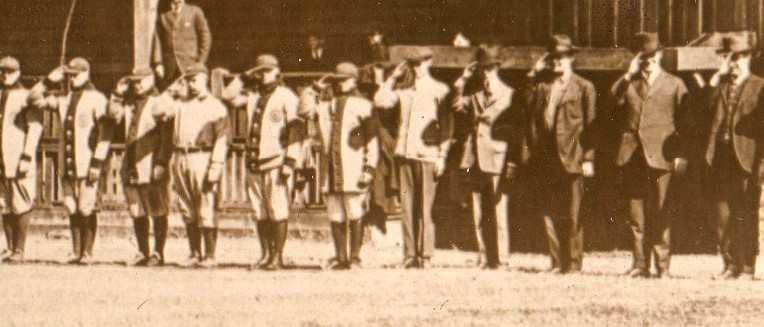
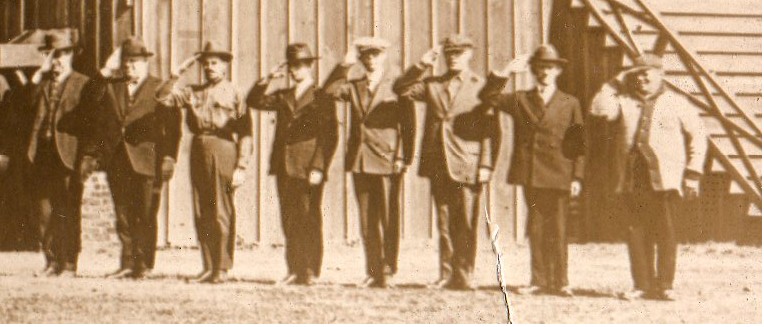
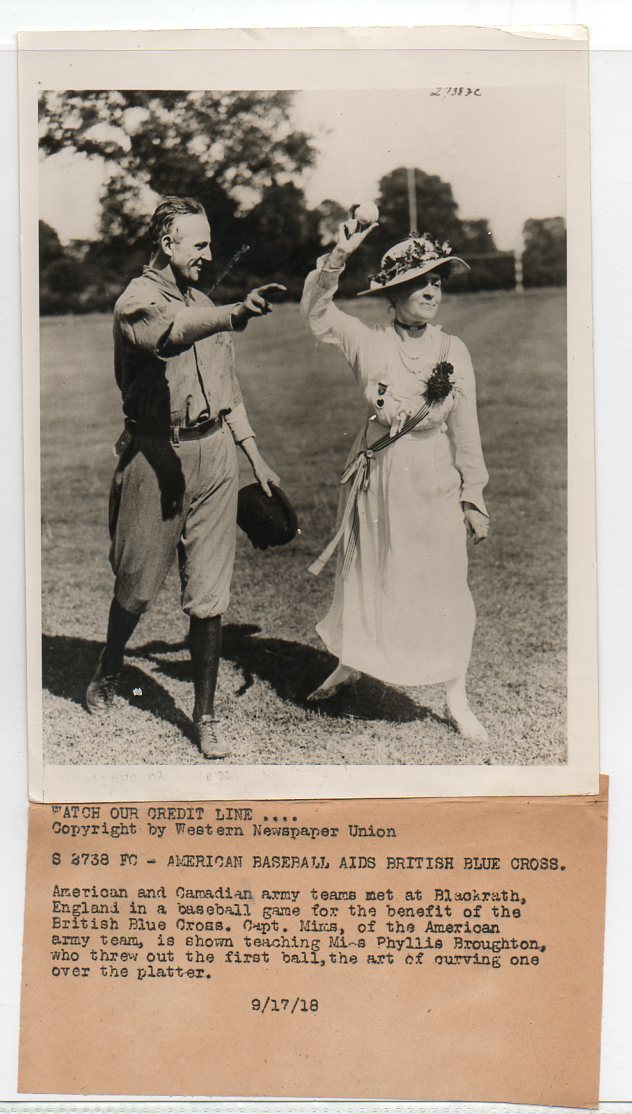
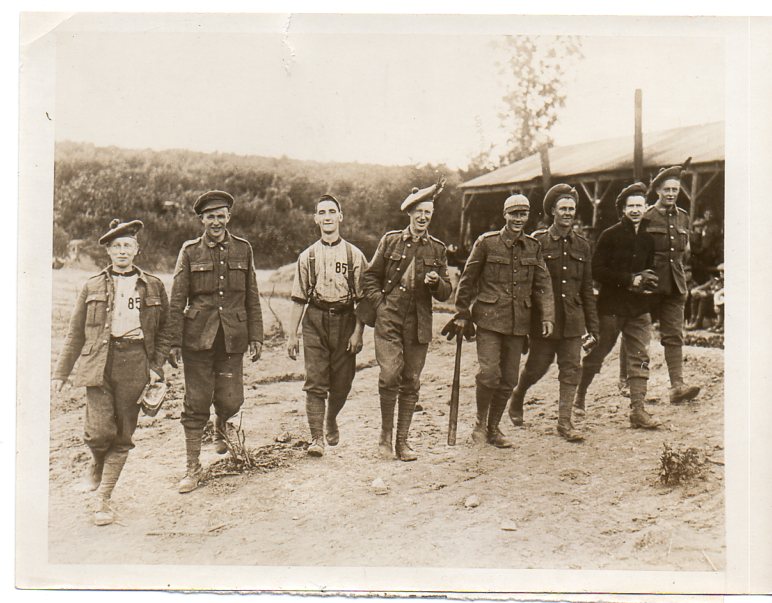
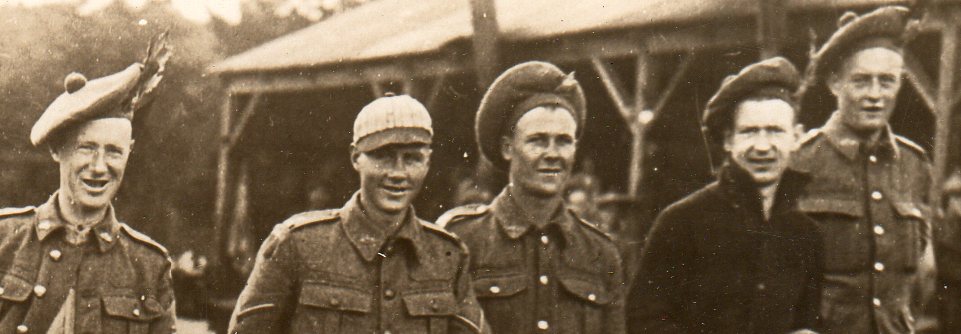
    The following photographs are part of a large-ish archive of news photo service images for the years 1917 and 1918–all are made by American firms, and almost all are related in one way or the other to WWI.  The images below are among the very few depicting wartime sports, and in all cases, these “sports” was baseball.

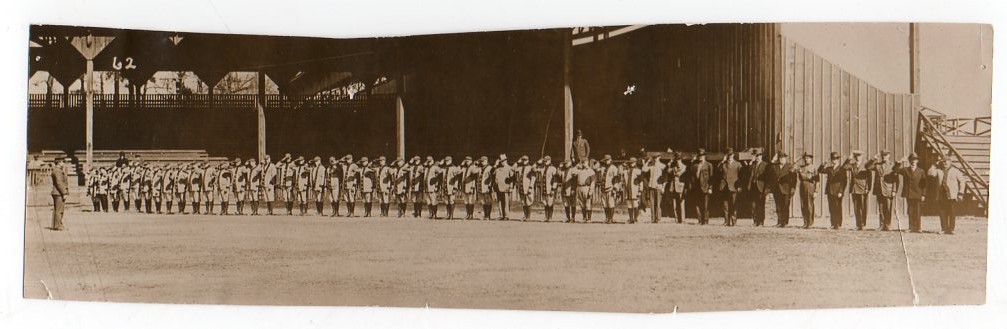
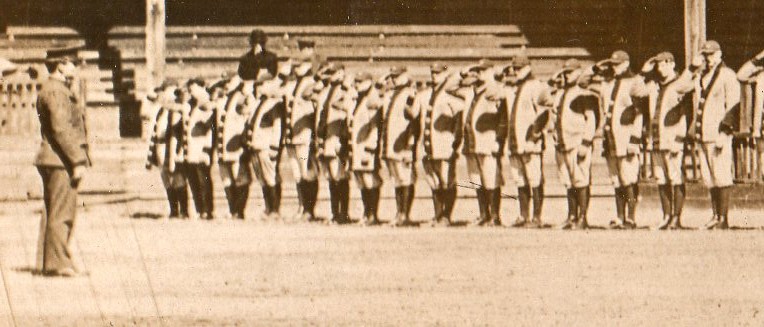
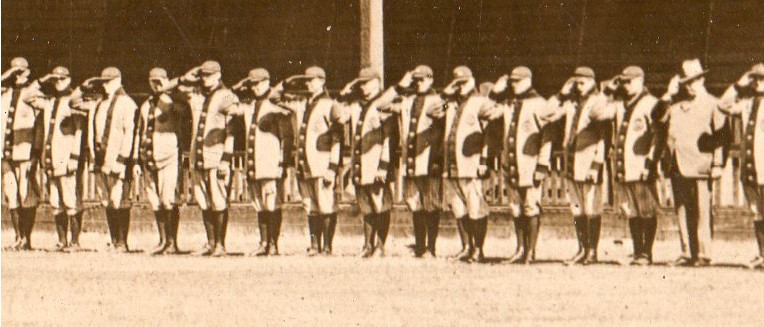
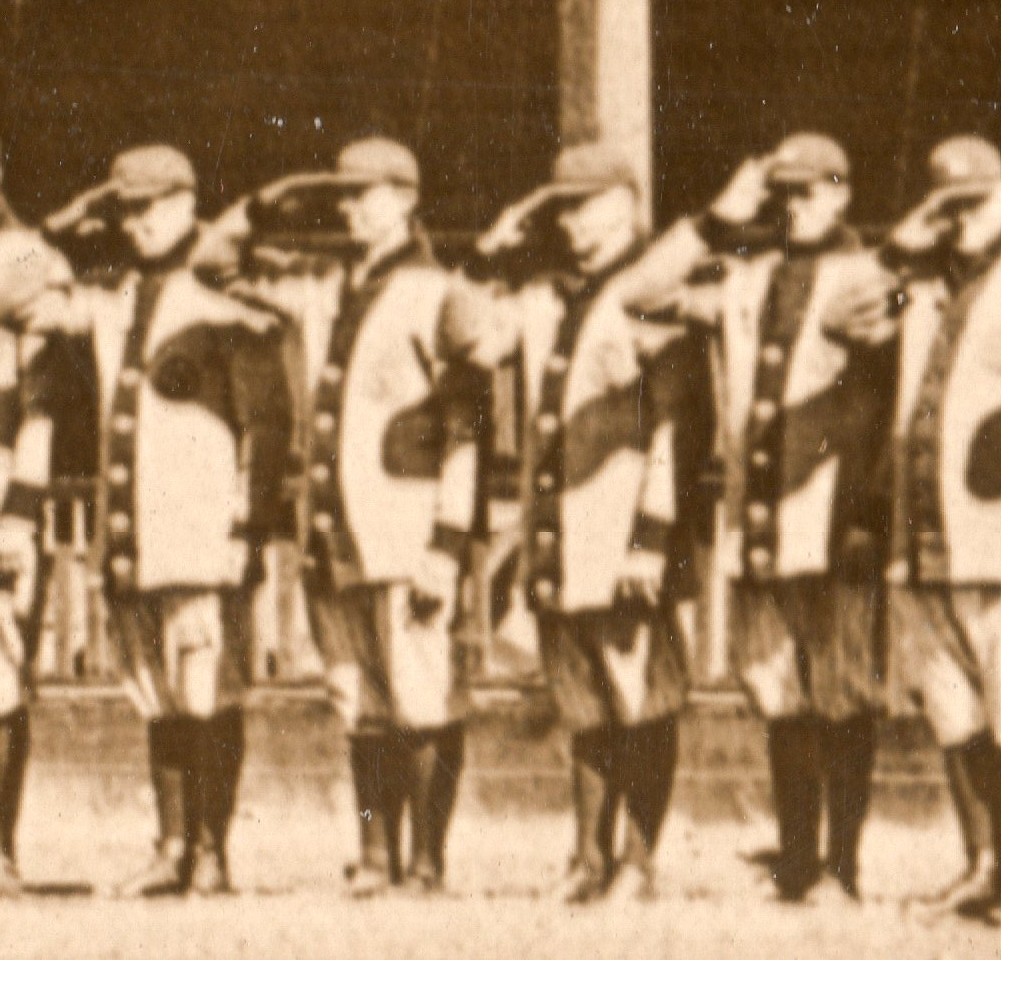
    The first photo is a rather remarkable image of summer training for (as is stamped on the back of the image) “the New York American league” baseball club, which must be the New York Yankees, then in their 17th year as themselves. 

      Baseball 1918022

    And the details:

    Baseball 1918 b023

    Baseball 1918 c024

    Baseball 1918 d025

    Baseball 1918 e026

    Baseball 1918 f massive027

    In 1918 many teams involved their players in “military training”, and this picture shows the Yankees (along with coaches and writers) doing their part to make it look as though they were making some sort of good effort having to do with the war. During the 1918 most teams mostly/sorta let the season go–not so for the Yankees or for Boston (which one its only 20th century World Series title that year).

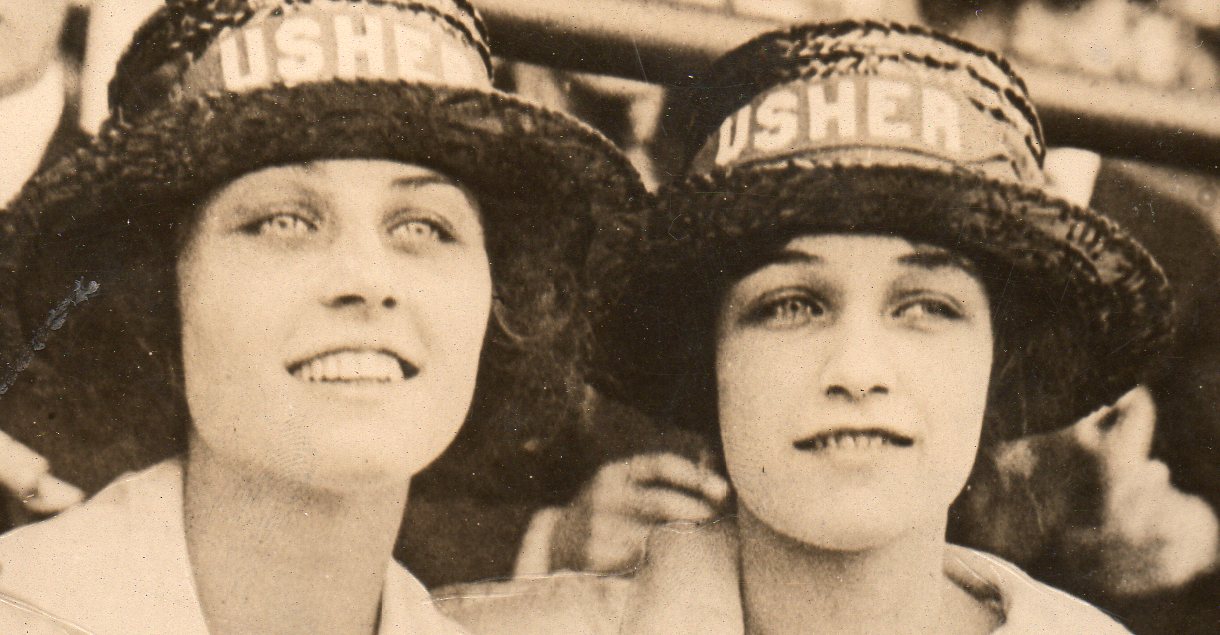
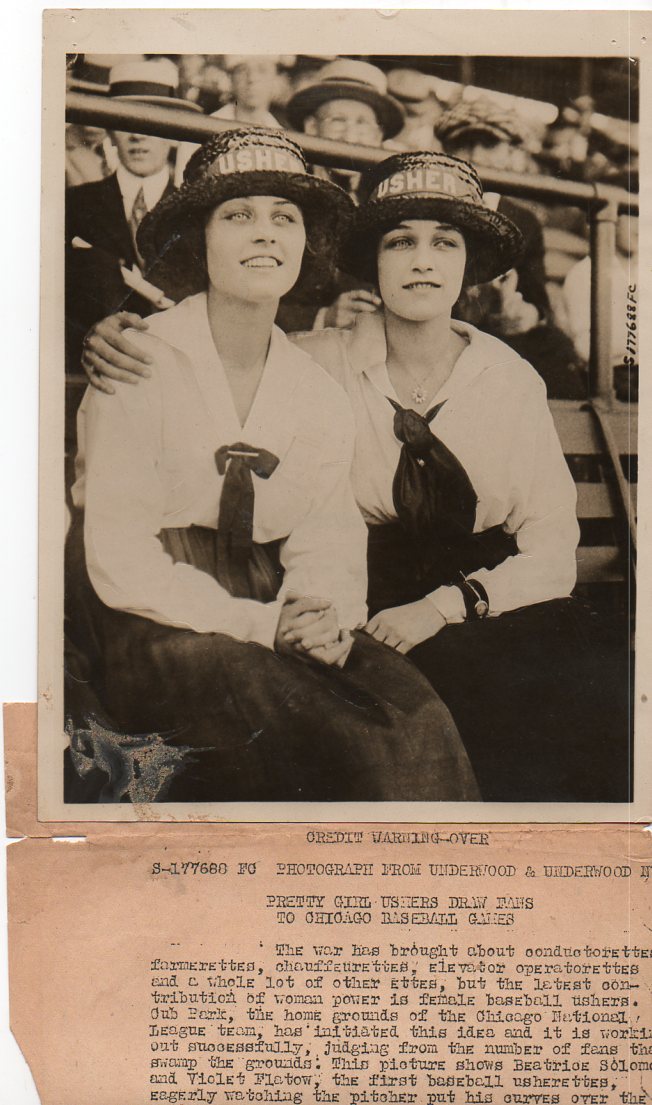
    Lovely image of two baseball ushers, 1918:

    WWI--e--women ushers684
    WWI--e--women usher dets685

    Also, this lovely picture:

    WWI--e--women-baseball672

    WWI--e--women-baseball det673


    And lastly, this:

    Baseball 1918 happy faces028
    Baseball 1918 happy faces b029

    ·Posted by :

    ·in:

    — —

  • Cold, Cramped, in a Ditch and Under Fire: France, 1918

    JF Ptak Science Books   An earlier post (#1308) expanded
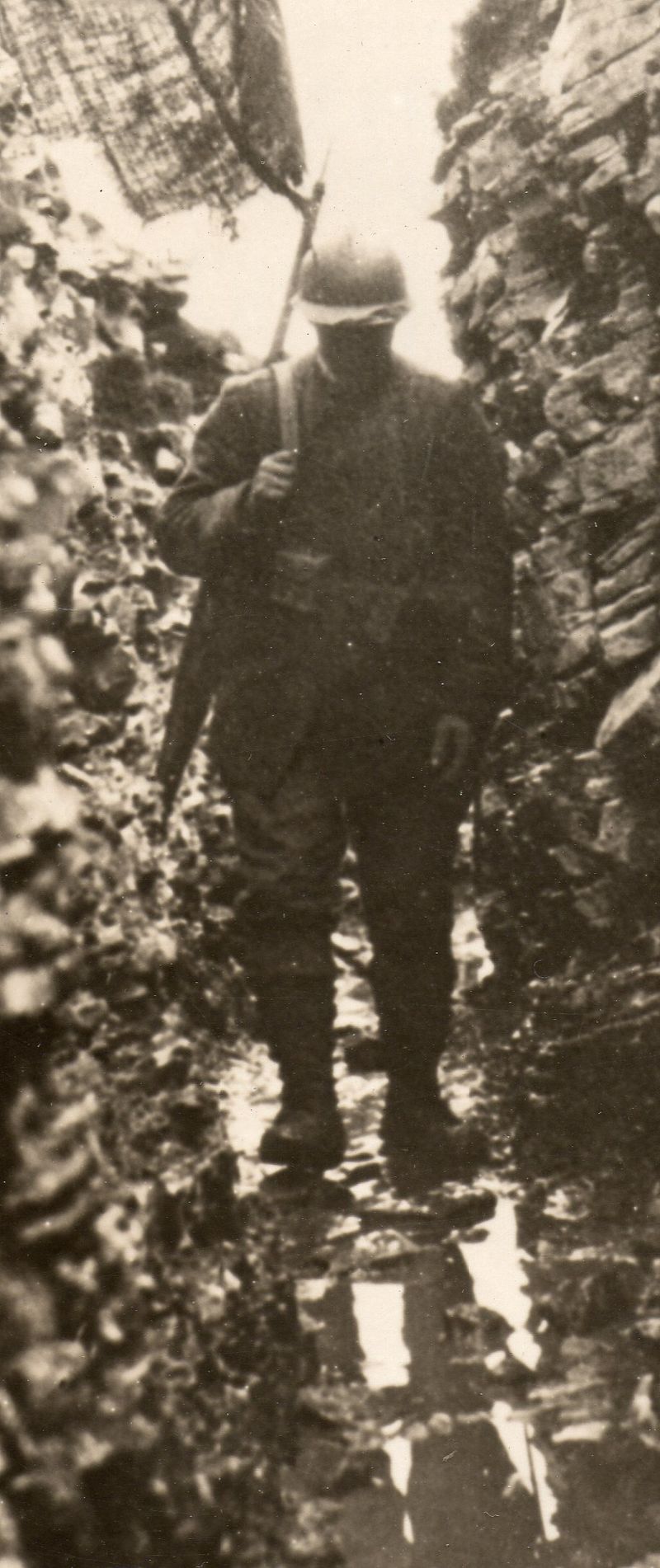
    WWI photo--trench note detail047

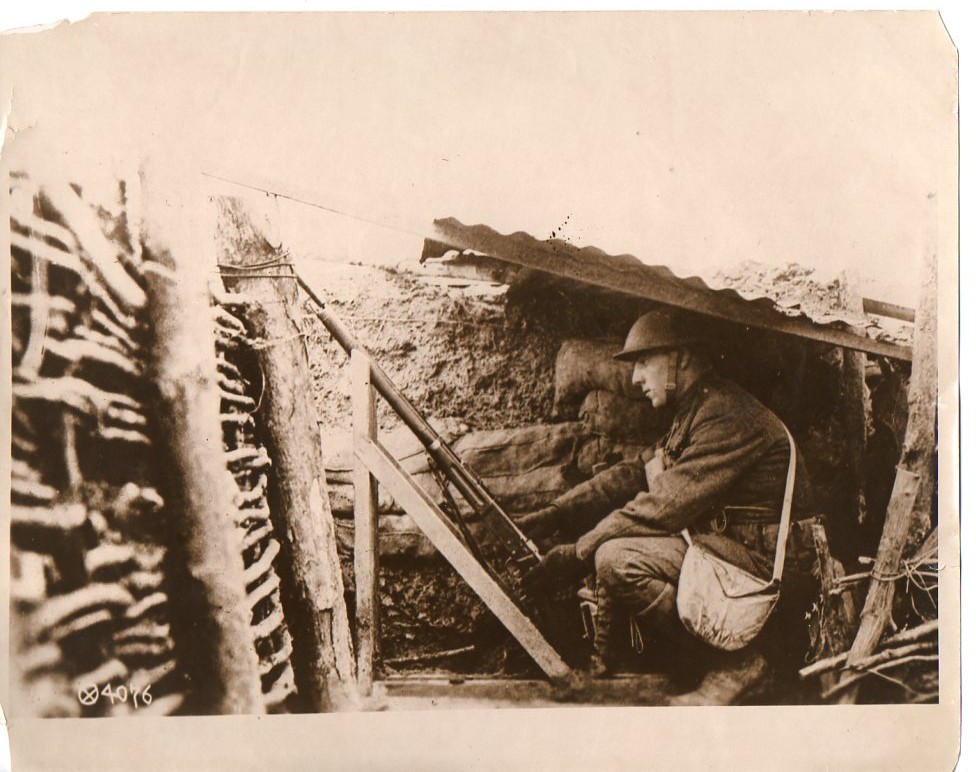
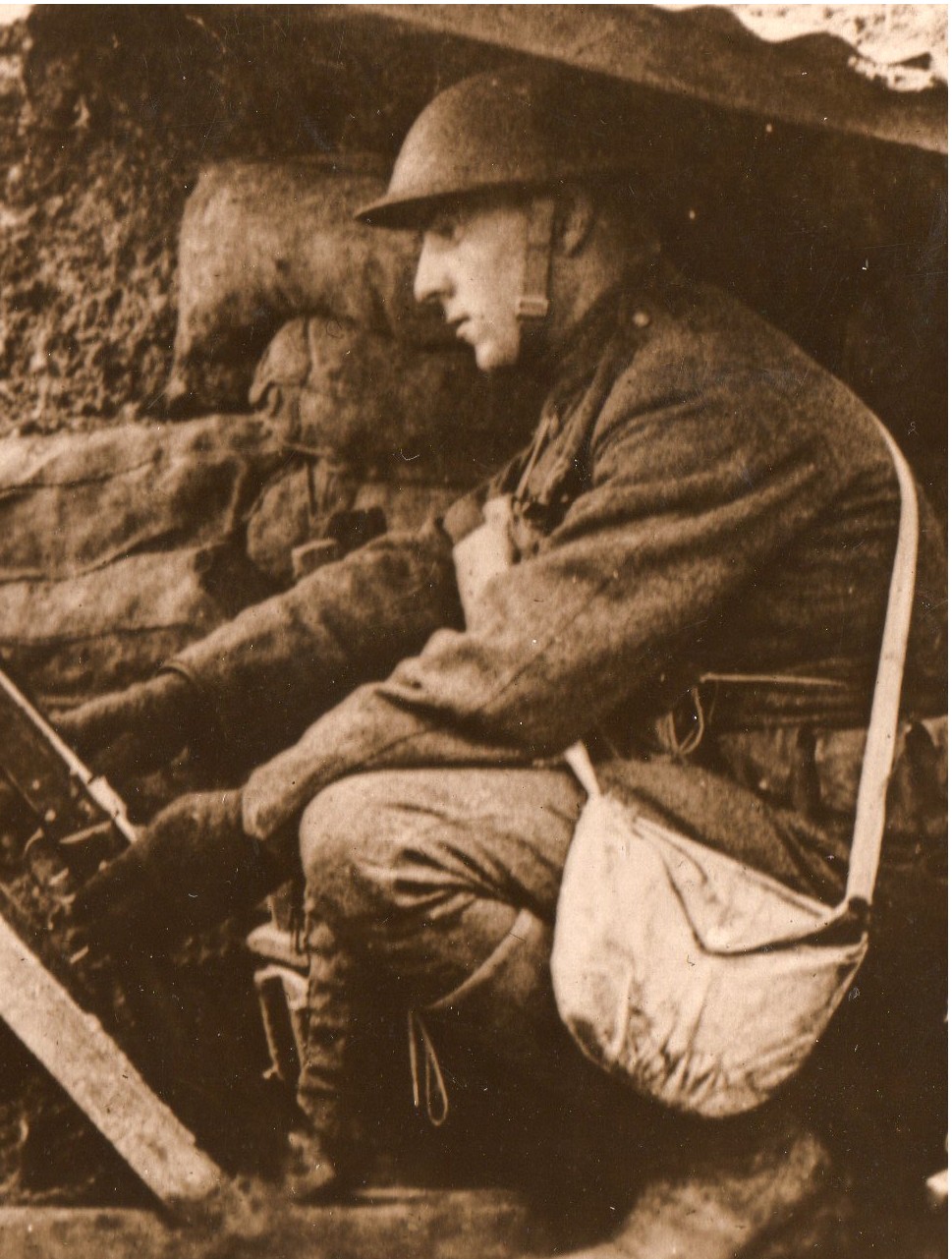
    If I was in a time machine, stepping back through a wormhole and into another segment of another reality, one of the places I’d least want to step into would be a cramped, cold, wet, dirty and dangerous place.  Like this American soldier, waiting for a German attack to begin so that he could launch a warning flare to the rest of the soldiers, hunkered down in a cold wet place in the front line along the Lorraine section in France, mid-way through 1918 and almost all-the-way-through WWI.  

    And even though this soldier looks far too clean, and his uniform far too spotless and pressed-ish, and his calf-skin gloves too calf-skinny, and his duffle too unmarred, and his helmet chinstrap too perfect for this man to actually have been fighting, the sensation of cold/bad/dangerous still gets through the whitewash.
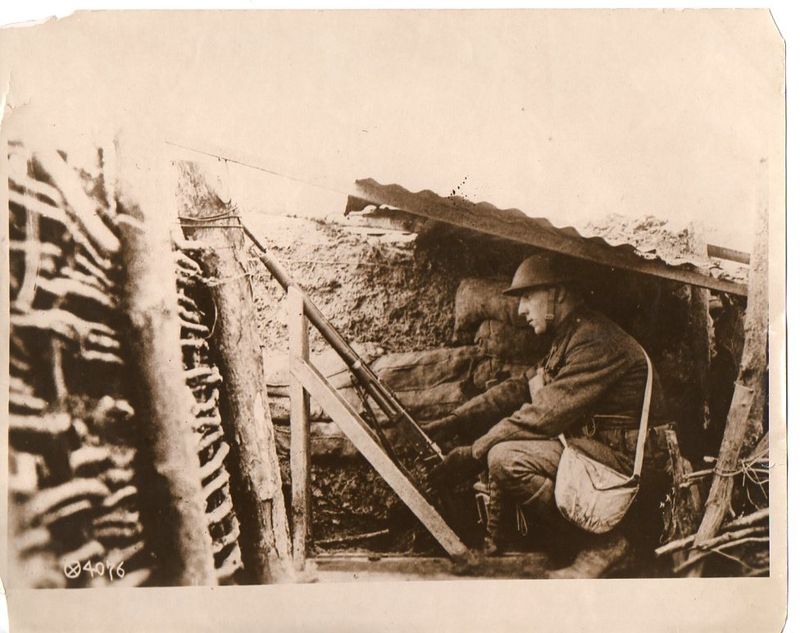
    World War I photos--Cold in trench306

    There are of course much worse places to be, but I think if I limited my time travel to include what I would be on the other end–a U.S. soldier–one of the places at te top of te list would be a generic trench in the front line of a battle late in the fighting in WWI.  Sitting there, watchful, waiting for the advance of thousands of German troops, charging over a ruined and sulfurous landscape, waiting for the ruination to begin as it churned its way through  No Man’s Land.  Of course it could be worse–one could be going “over the top”, charging across the Desolate Place towards a line of thousands of entrenched soldiers all of whom were trying to kill. you. 
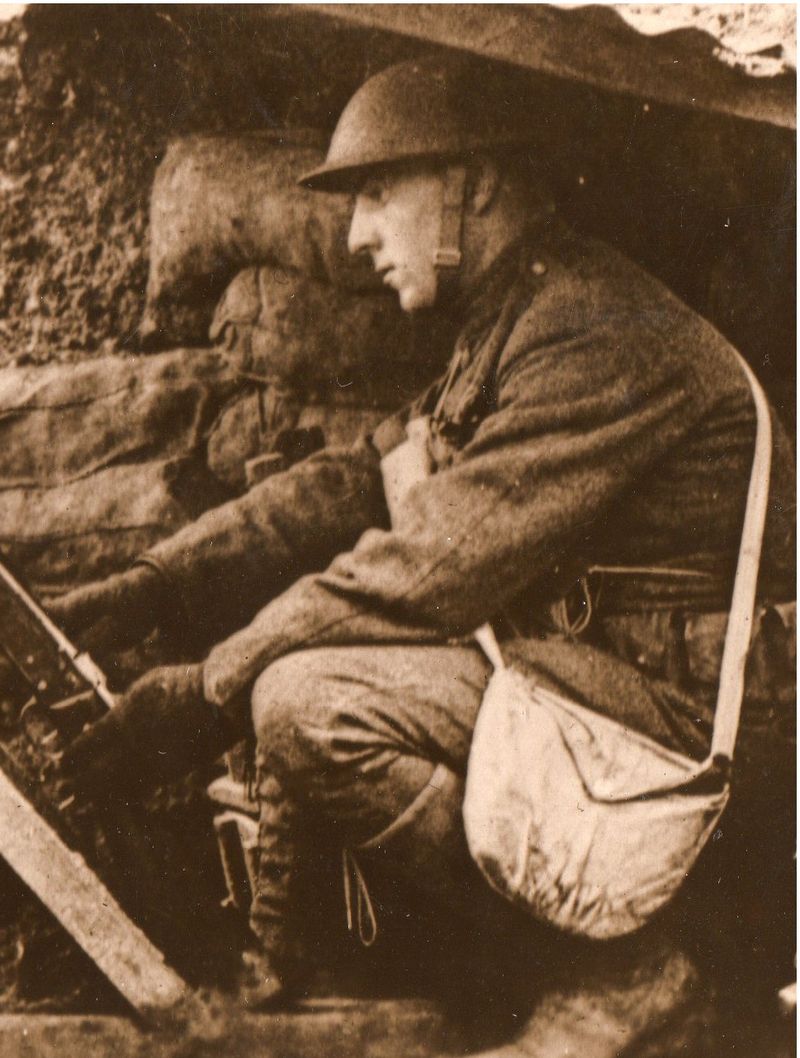
    World War I photos--Cold in trench307

    Or of course you could be in a blue coat marching in a straight line towards a series of long lines of men in red coats, everyone getting ready to get close enough to discharge an 69-calibre (or thereabouts) ball across an open plane of hundreds of feet into the ranks of the opponent.  Or being in a Marine uniform in Tarawa, in the Gilberts, in November 1943. Or being in Butternut, crossing the Emmitsburg Road on the way up Cemetery Ridge on 3 July, or being in any uniform whatsoever at Antietam.

    The places and times get worse I think once you allow yourself to be any other solider in any other uniform.  A French soldier, for example, sitting in a similar spot in the same battle along a front line as our American Doughboy, above, would’ve been worse.  A Belgian soldier virtually anywhere also would have fared worse, statistically, than just about anyone else in WWI.  Being a newly-minted soldier wearing the uniform of the Soviet Socialist Republics in the Summer of 1941 would probably have been half-a-death-sentence.  Of course the list goes on, and on. 

    Perhaps one of the worst inventions in the history of warfare was The Trench. Millions of men were wounded or met their ends while defending one, or attacking one, or being in-between two of them.  Hundreds of thousands of troops spent months charging back and forth between opposing lines, the ground over which they fought made uninhabitable for almost any form of life. Cold, wet, bad.
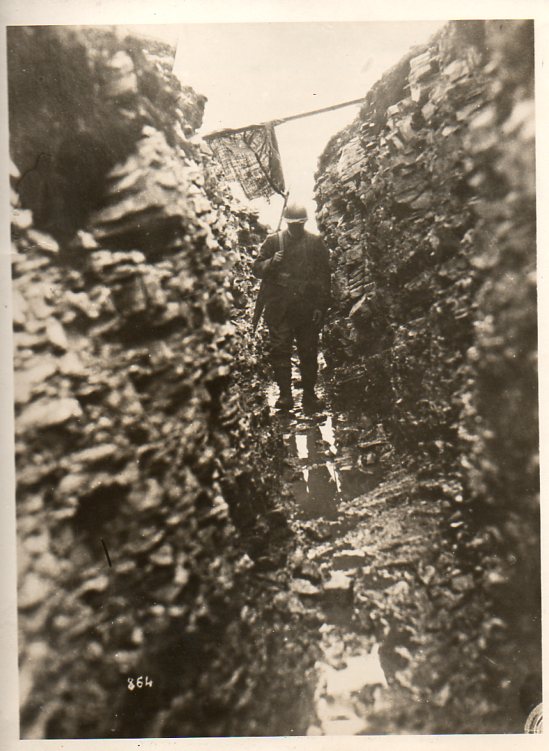
    WWI photo--trench045
    Here’s another original photograph made by the Western Newspaper Union Photo Service, as a “British Official Photograph”  (with the “British” part penciled out and replaced by an unknown hand, “Italian”),  The photo agency supplied a caption for the image (that was supposed to have been used by the newspaper or magazine that published the picture) as follows:
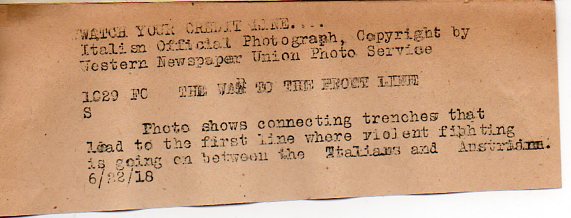
    WWI photo--trench note046

    And the detail:
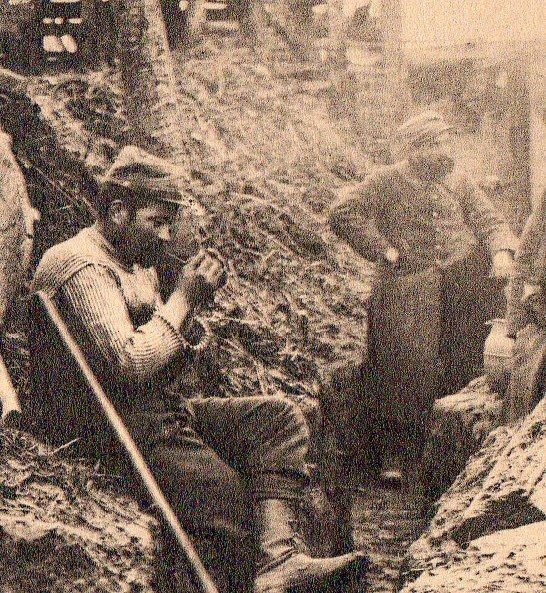
    WWI photo--trench note detail047


    ·Posted by :

    ·in:

    — —

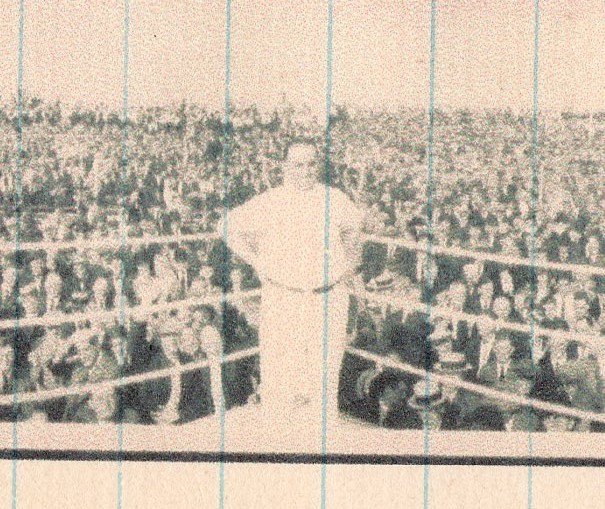
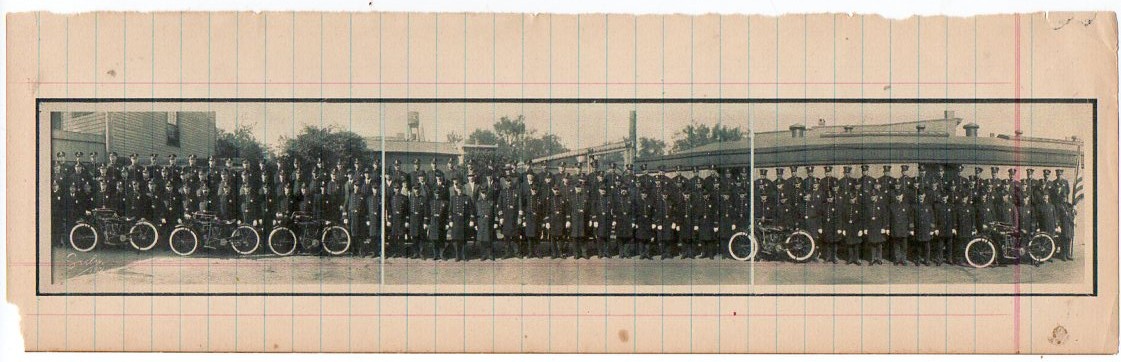
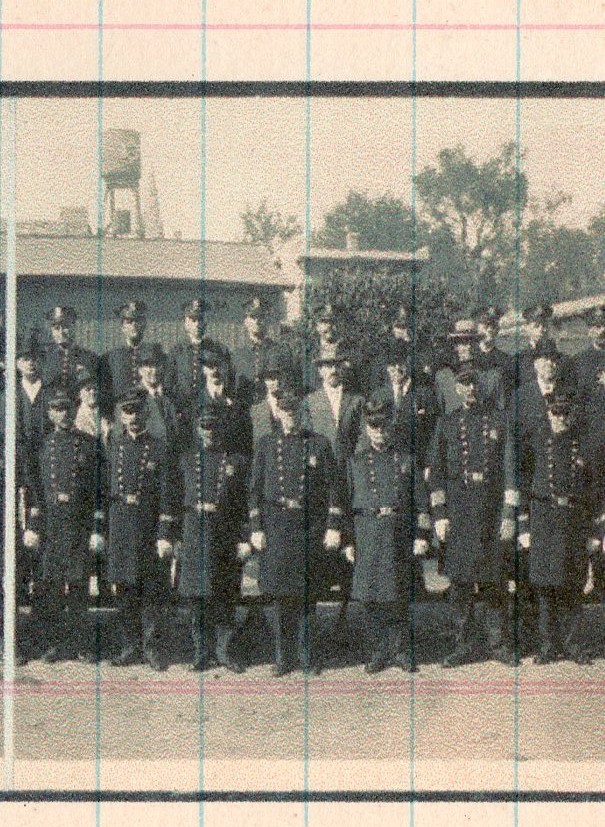
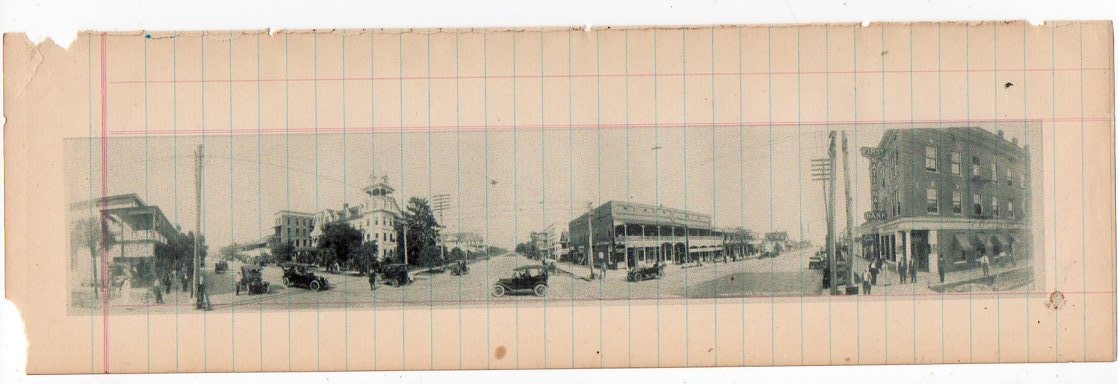
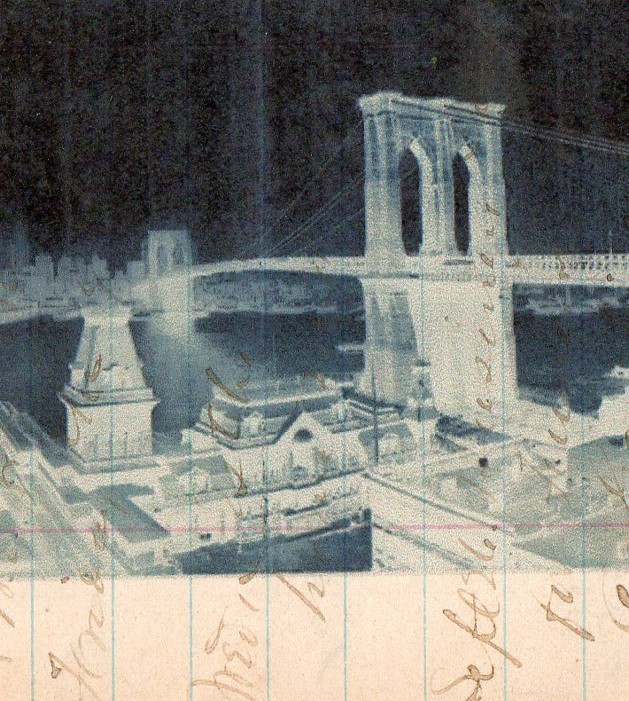
  • Manipulated Art 2–Panoramic Brooklyn Bridge, Boxing Scene and such on Accounting Paper, 1880

    JF Ptak Science Books

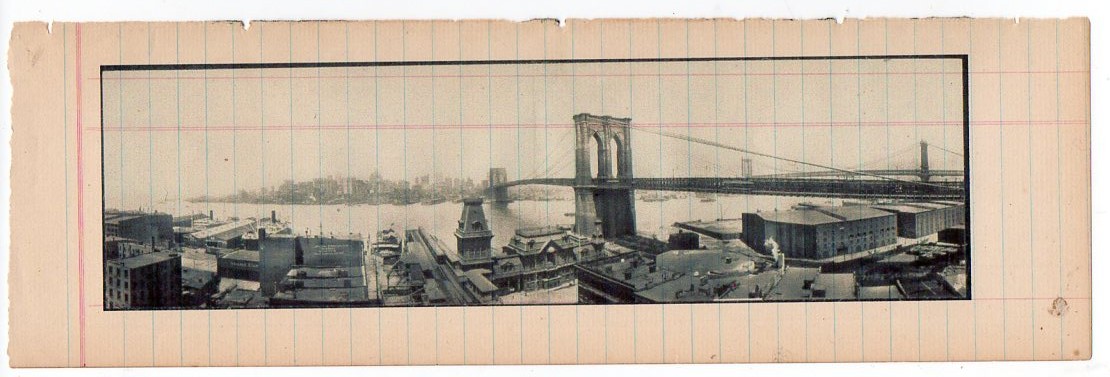
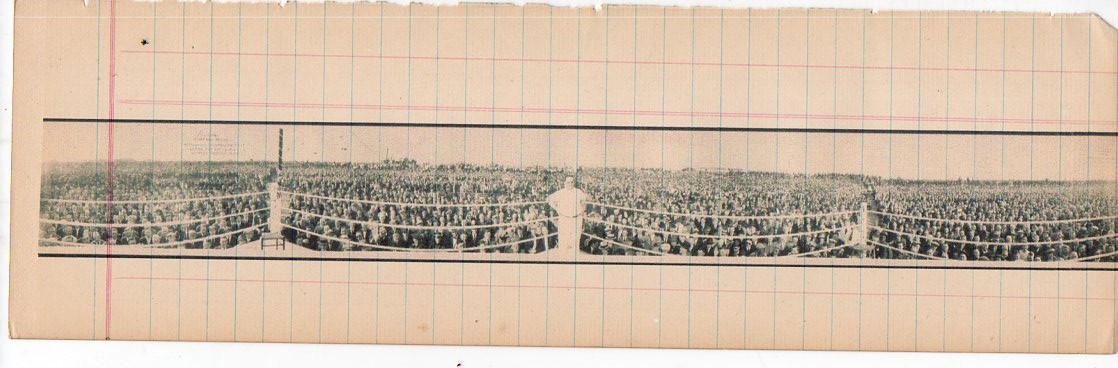
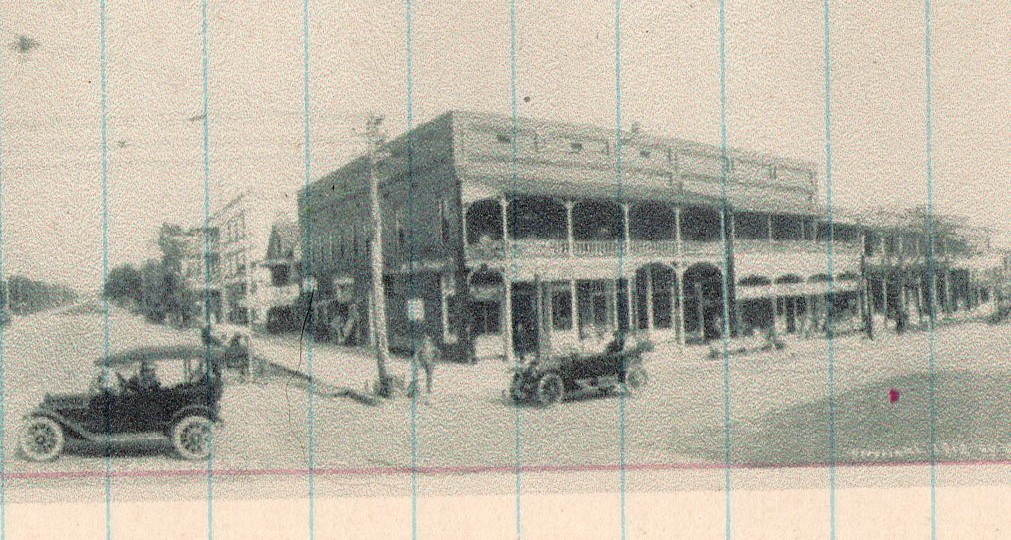
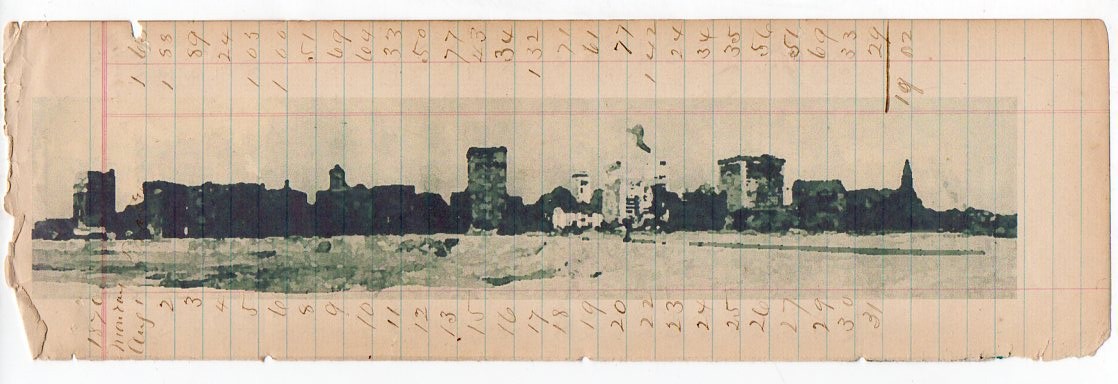
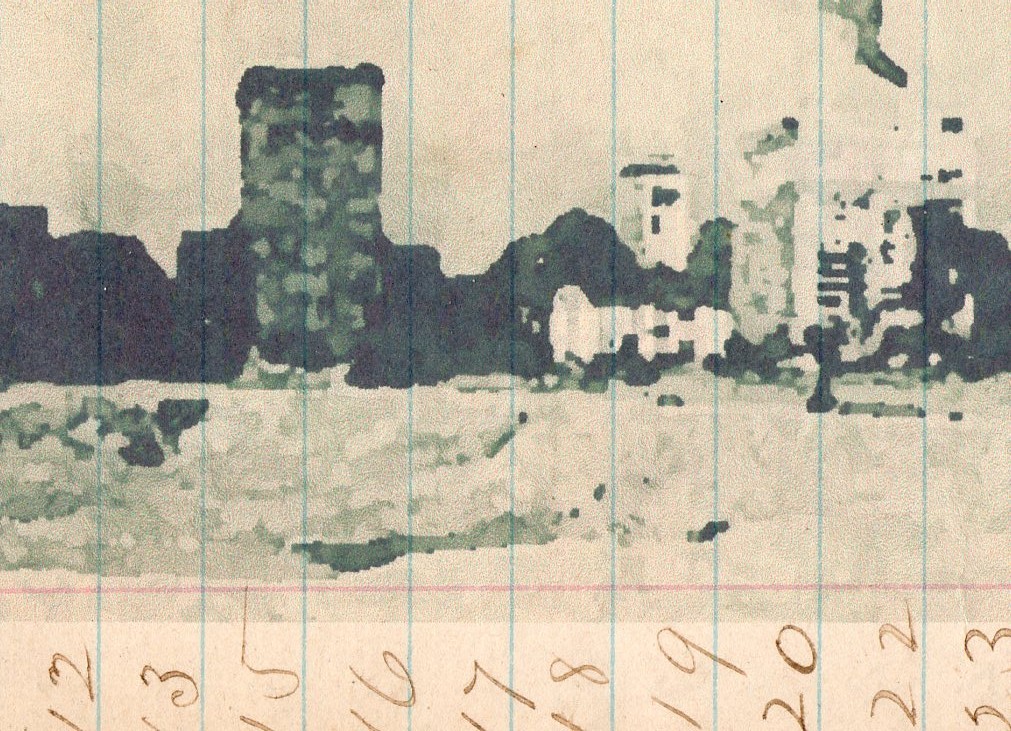
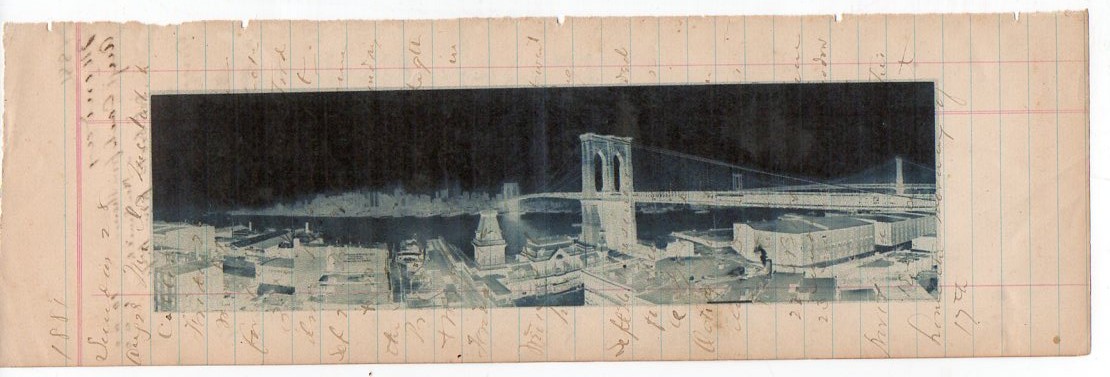
    Continuing a series of small experiments I’ve printed some classic panoramic images on some rather beautiful tabulating paper, taken from an 1880’s ledger. All are available from our blog bookstore.

    Manipulated-real bb pos895

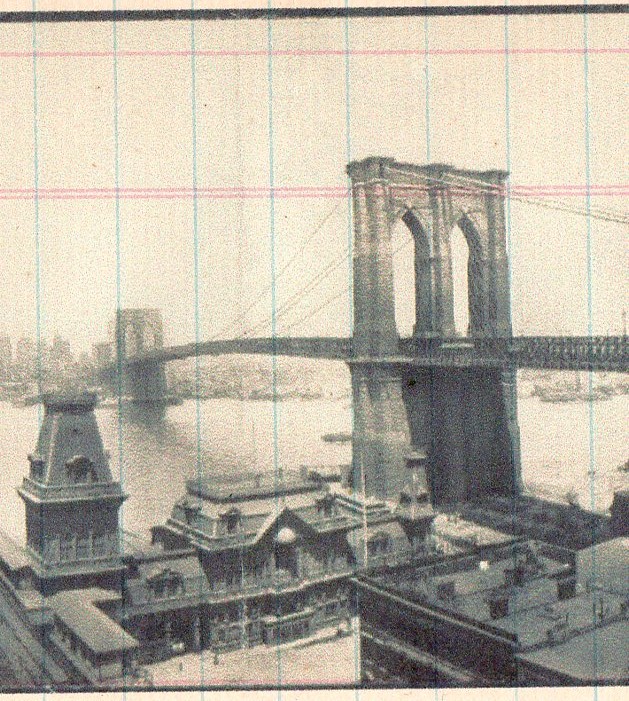
    And the detail:
    Manipulated-real bb pos det898

    Boxing scene with mamoth crowd, ca. 1910.

    Manipulated--boxing 890
    And the detail:
    Manipulated--boxing det889

    Police officers, ca. 1900:

    Manipulated--police887
    And the detail:
    Manipulated--police det888
    Spartanburg, South Carolina, 1920:

    Manipulated-spartanburg892
    And the detail:
    Manipulated-spartanburg det893
    Andthe New York City skyline, ca. 1905:

    Manipulated-brooklyn bridge891
    And the detail:
    Manipulated--brooklyn bridge det894
    The negative Brooklyn Bridge:

    Manipulated-real bb neg896

    And the detail:
    Manipulated-real bb neg det897


    ·Posted by :

    ·in:

    —

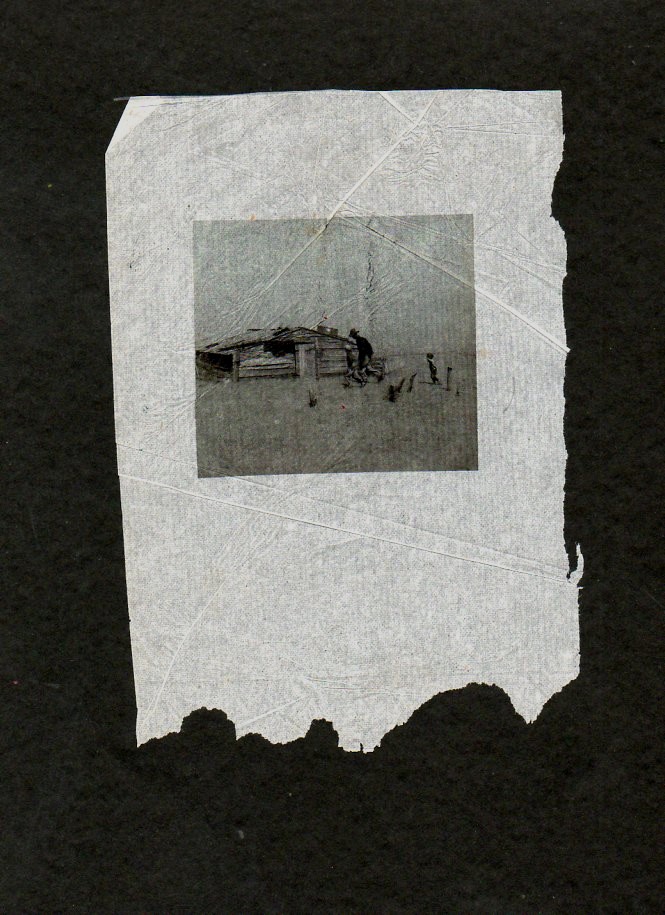
  • Manipulated Art–FSA Photography on 1830 Tissue Paper

    JF Ptak Science Books

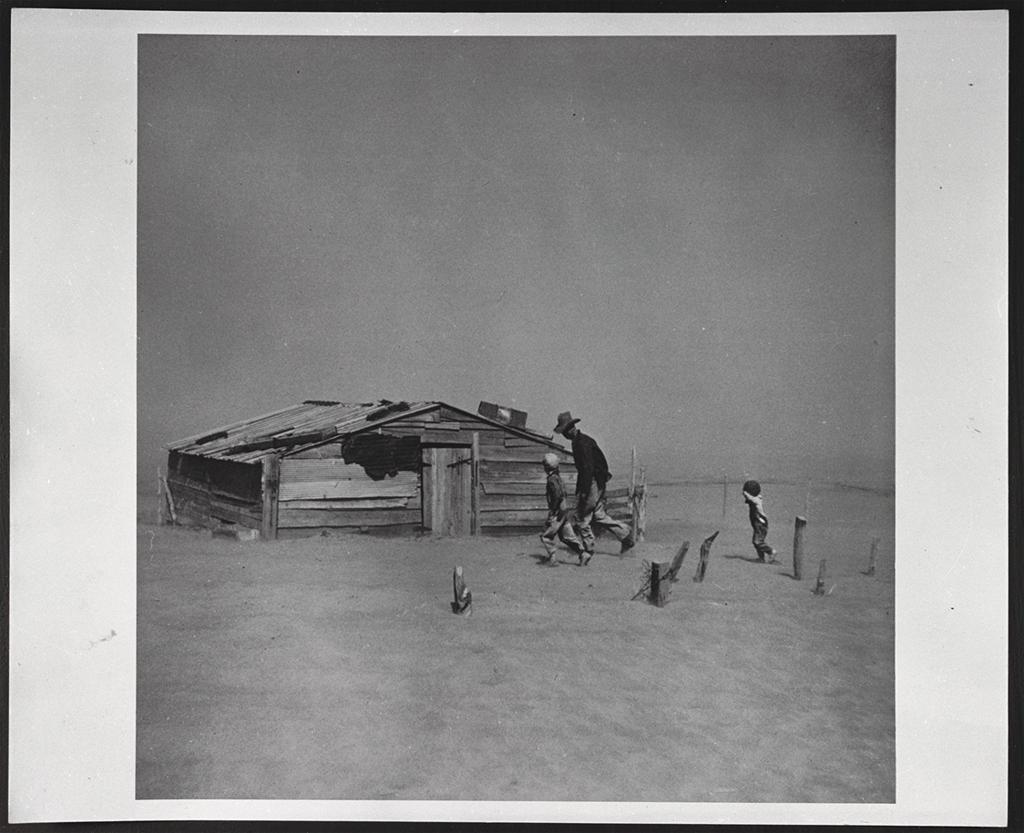
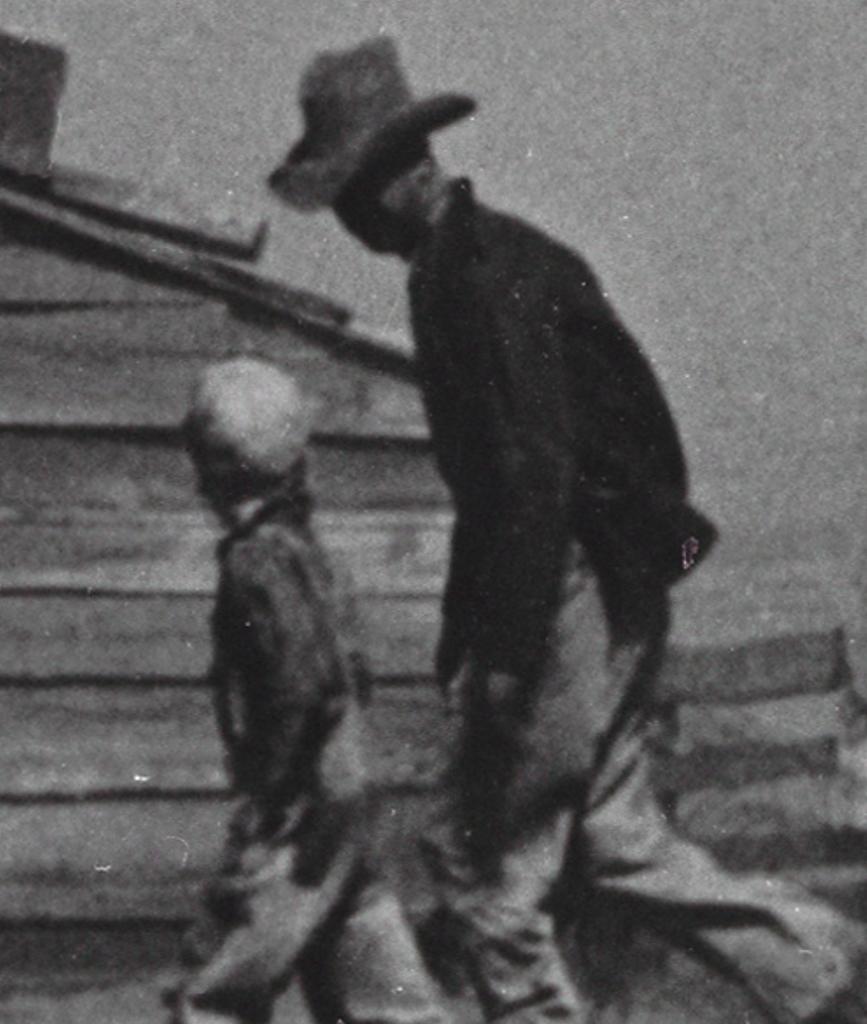
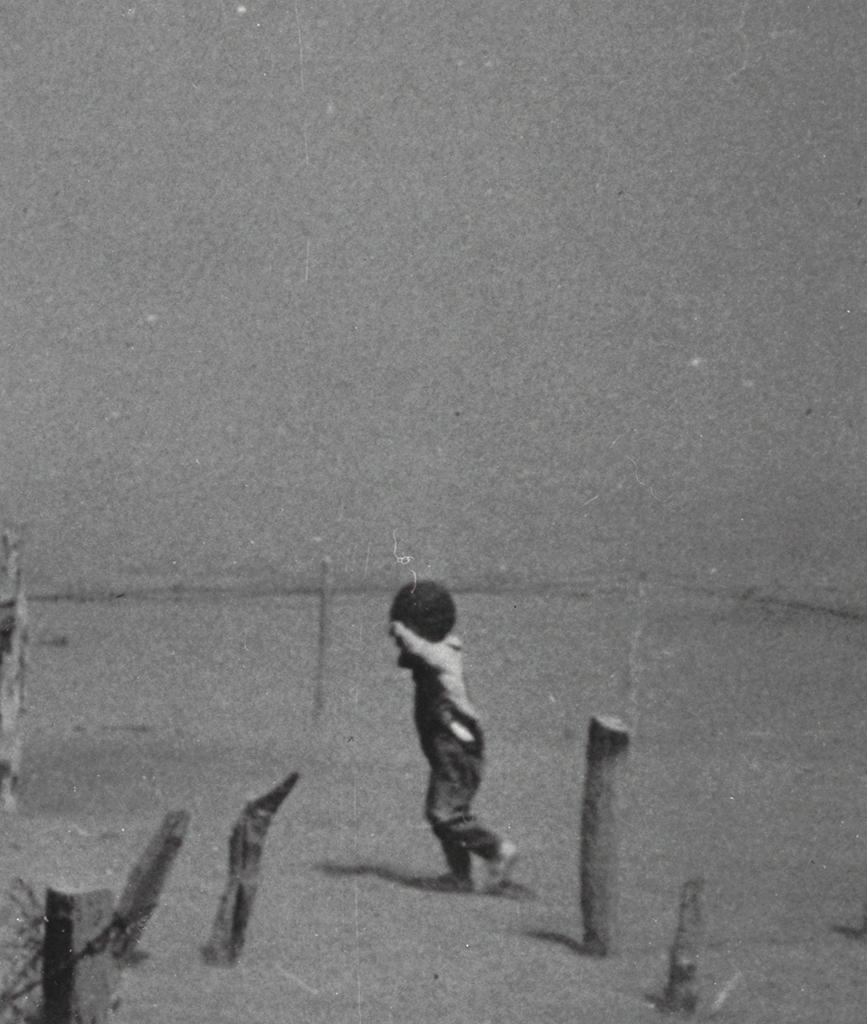
    I’ve experimented a little in presenting photographic images on a slightly different medium, and the results are interesting,  Take for example Arthur Rothstein’s classic 1936 “Father and Son” (actually, the “son” should be a plural, as there are two little kids rushing in the photo): I’ve used a 25 meg file and printed (lasered) rather small on a piece of antique tissue-guard paper–the paper, from 1830, is fantastically light, yet very strong for its remarkable thinness. The result of the modern, small Rothstein printed on the 170-year-old paper looks “believable” in its own odd way.

    My manipulated-printed effort:

    Rothstein--maniulated886
    [This image is available on my blog bookstore.]

    And the original:
    Rothstein full image

    And details in the original, small canvases in their own right:
    Rothstein father and son

    Rothstein lone kid


    ·Posted by :

    ·in:


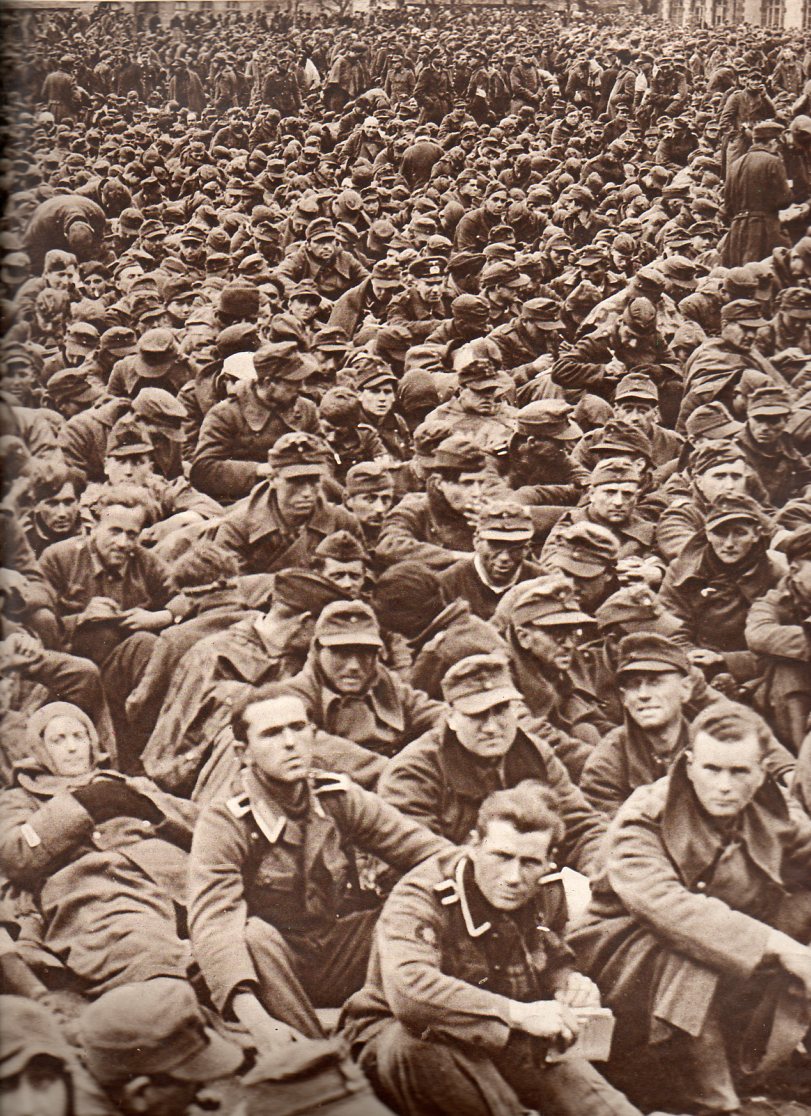
  • Defeated but Alive–German POWs, 1945. A Remarkable Photograph.

    JF Ptak Science Books   Post 1212

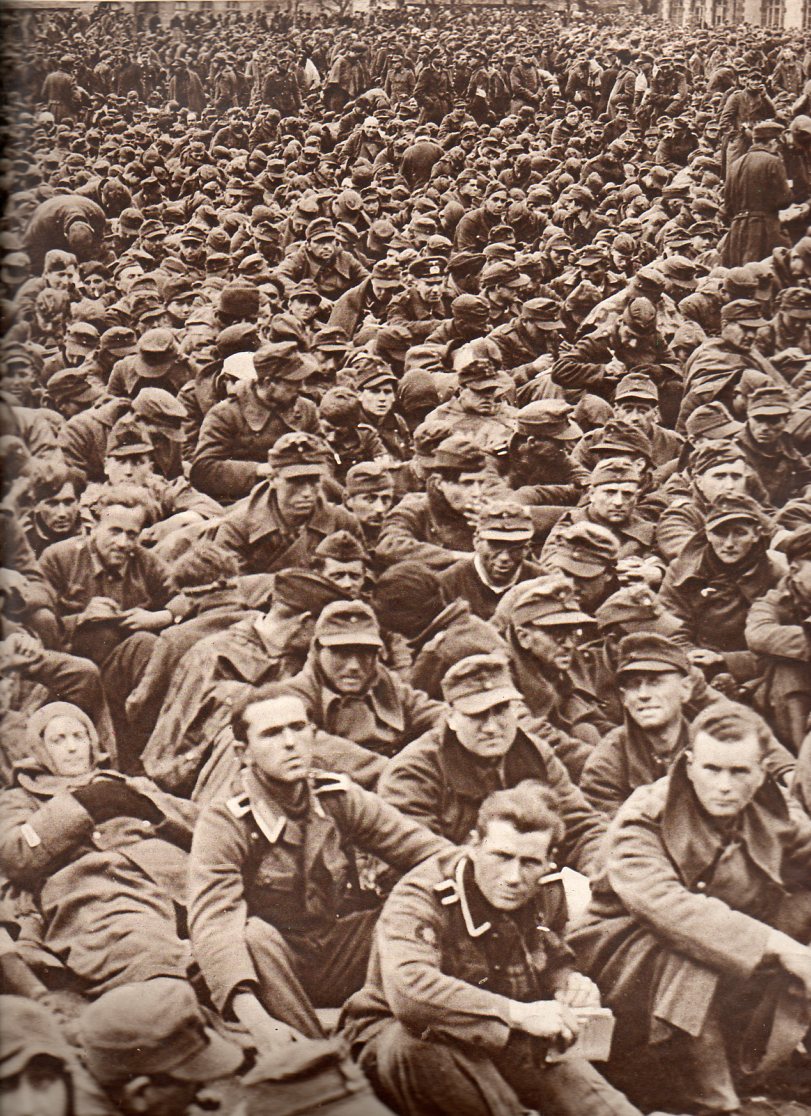
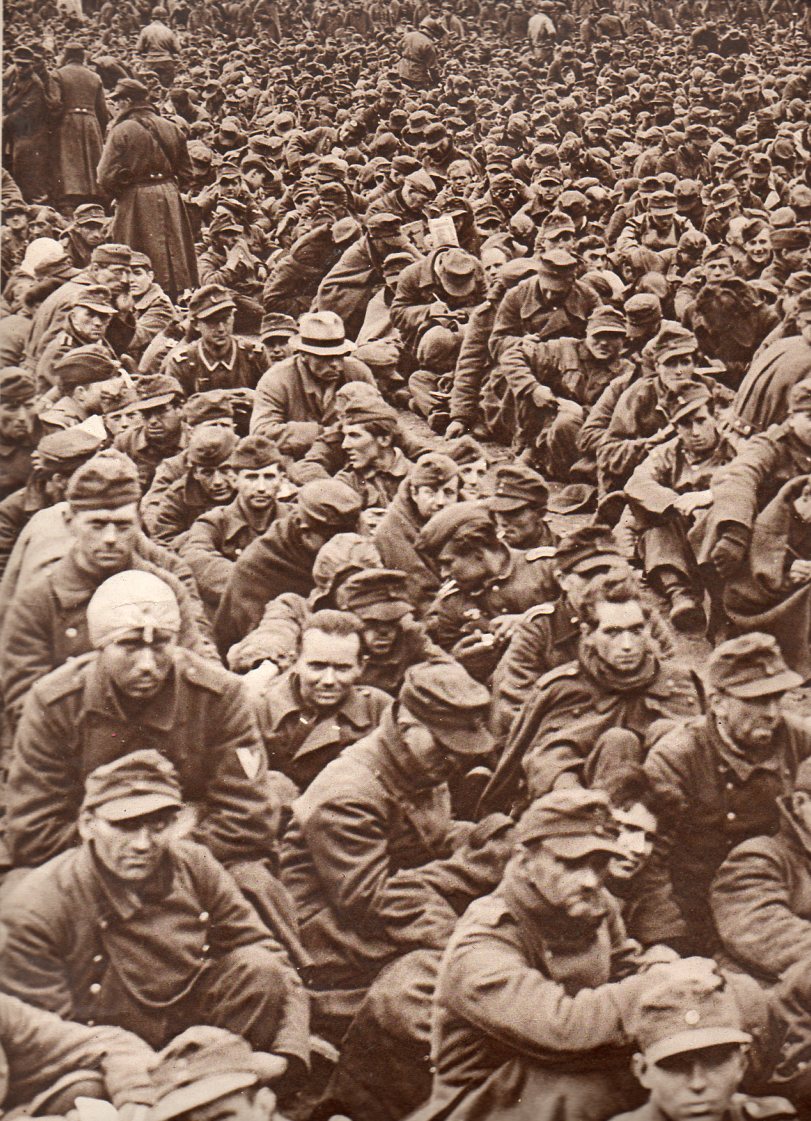
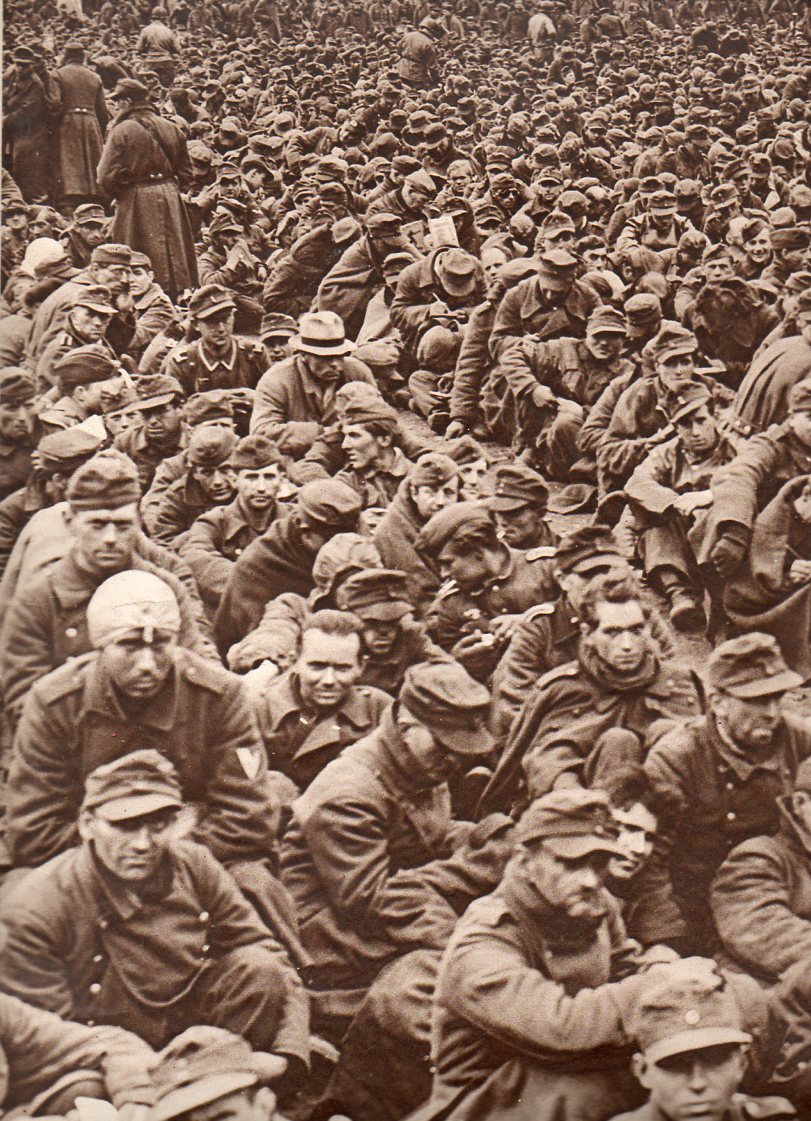
    Crowds--German prisoners-right-804 Crowds--German prisoners-left800

    By April 21, 1945–the date that this photograph was published–I should think that those left fighting in the Wehrmacht would have thought that it was time now to be taken prisoner by the British or the Americans, and to not be taken by the Soviet Army.  Thousands of German soldiers made their way west at the tail end of the war, trying to evade capture by the Russians, to find some sort of respite from the fear of being taken away by the Red Army to work and disappear somewhere inside the heart of Mother Russia.  There was a heavy dose of vengeance being unleashed on the captured German forces in the east in partial payback for the devastating assault on the Soviet Union (Operation Barbarossa) by the Nazis beginning on 22 June 1941, and which caused millions of citizens and soldiers their lives.  (Barbarossa was to have been a multi-month long campaign to secure the minerals and farm lands and forests of the Urals and Siberia and the Ukraine, but it lasted for more than three years along an 1800-mile front.  The initial operation was very successful for Germany, but the Blitzkrieg ended quickly, and a long slogging campaign began, one which would be decided not only by weather, but by massive production of Soviet materiel and overwhelming army strength.)

    Crowds--German prisoners-left800

    The caption of this Illustrated London News photograph states that this is but a small fraction of the 2,000,000 prisoners then held by the Allied Forces.  Shortly before this it was estimated that the Nazis held some 1.7 million Allied prisoners, which meant that in early 1945 more than 4 million soldiers were held as POWs in Europe.  This enormous figure is exclusive of Japanese prisoners (estimated at about 150,000 in early 1945, with this number being exclusive of any Chinese prisoners), and the number of prisoners held by the Soviet Union. 

    Crowds--German prisoners-right-804

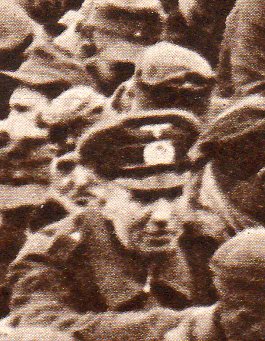
    Crowds--German prisoners-right-det802
    Te return rate of German prisoners from Allied camps was very high; that same rate for Germans in possession of the Soviets was very low, something along the lines of 20%.  The Nazi campaign through the Soviet Union showed small mercy and great cruelty; the Soviets reciprocated with the German soldiers they captured.

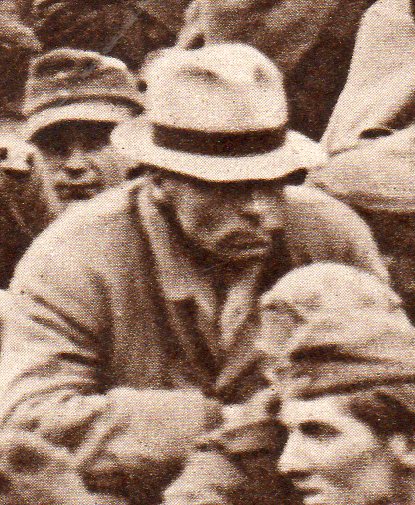
    Crowds--German prisoners-left-detaul801
    Overall, this is a tough photograph.  The soldiers were evidently awaiting delousing before being sent onto trains to deliver them to more formal detention facilities. At least when these soldiers got on those trains with what sound like hgih-tin whistles, they mainly survived their ordeal, and the showers that they were going to receive were using water, and not zyklon-B.