A Daily History of Holes, Dots, Lines, Science, History, Math, Physics, Art, the Unintentional Absurd, Architecture, Maps, Data Visualization, Blank and Missing Things, and so on. |1.6 million words, 7500 images, 4.9 million hits| Press & appearances in The Times, Le Figaro, Mensa, The Economist, The Guardian, Discovery News, Slate, Le Monde, Sci American Blogs, Le Pont, and many other places… 5000+ total posts since 2008.

Category: Photography

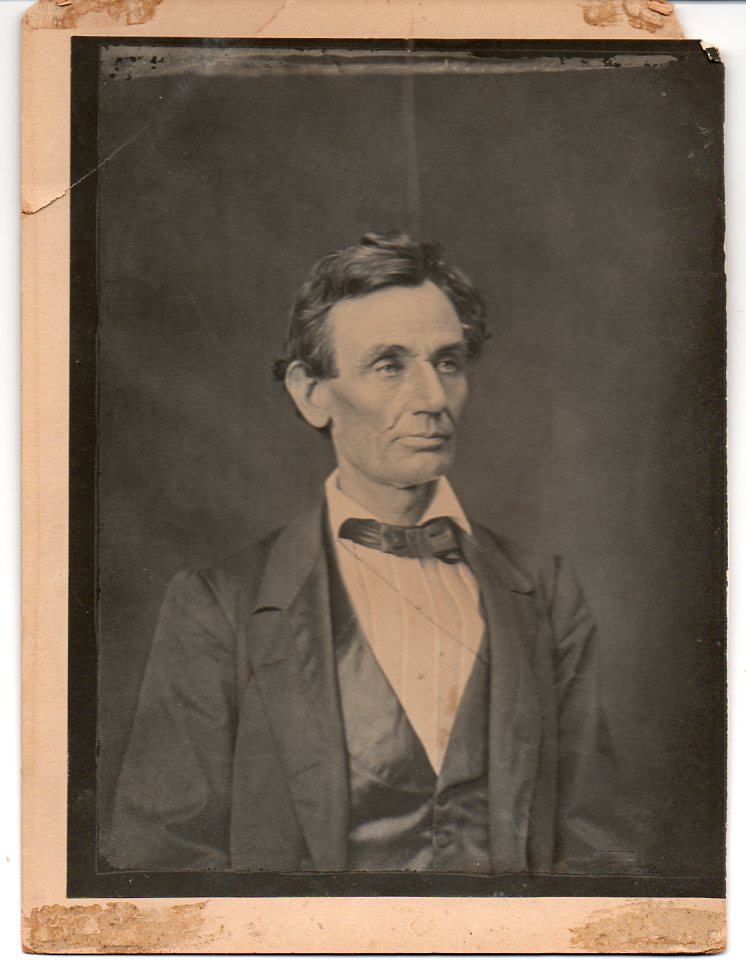
  • Abe Lincoln in June, 1860

    JF Ptak Science Books   Post  1391

    Abe Lincoln, 1860.  I don’t know how he held everything together.  He was a master tactician, held conflicting and opposing thoughts in his mind and in his cabinet, was incredibly shrewd, and had a deep insight into the future.  He was still, even into 1862, a mocked character, even by his closest associates.  And generals–G.B. McClellan, for example, the general who never should have been actually in charge of an army outside of training it, never should’ve been in the field, never should have been given the opportunity to work more for the opposition than for the Union, saw Lincoln as a buffoon, a nuisance in his own supra-egotistical path to national office.  Lincoln not only survives all of this, but conquers .  I would love to see a two-person play of Lincoln at chess, from the point of view of the chess pieces. 

    I’m posting this as I am getting ready for a Civil War-in-the-newspapers, day-by-day, as we approach the 150th anniversary of what was the great defining moment in the history of the United States. (This image is offered for sale at our blog bookstore.)
    Lincoln--ayres big308

    THis 8.5×6.5 inch image was made in 1881 by George .B Ayres from the original glass negative made by Alexander Hesler’s photograph of Lincoln at Springfield, Illinois, 3 June 1860.  (Ayres had come into possession of Hesler’s studio and negatives after Hesler’s death.)

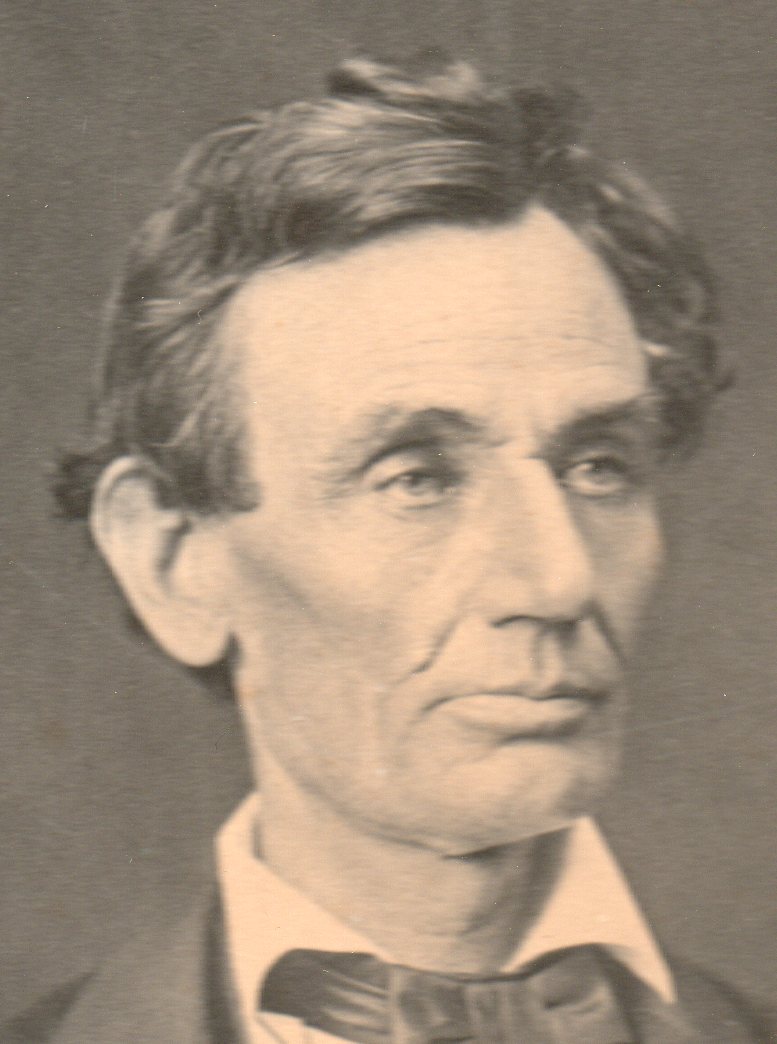
    And the detail:
    Lincoln--ayres big309

    And deeper:
    Lincoln--ayres big310


    ·Posted by :

    ·in:

    —

  • A Field of Artillery Shells–a Miniscule Sample of the 40,000,000 Shells Fired at Verdun, 1916

    JF Ptak Science Books  Post 1388 (out of order!)

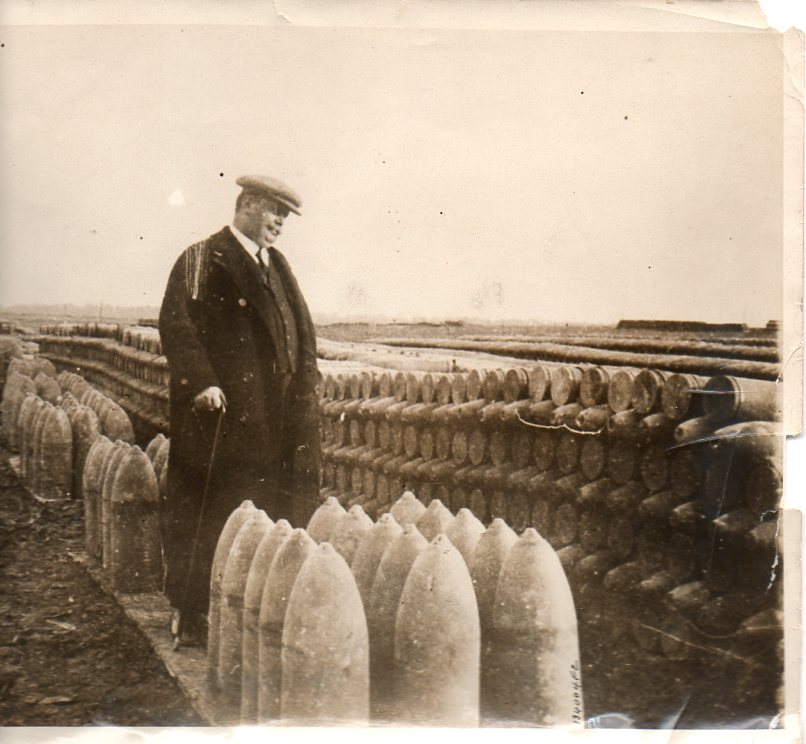
    I just finished posting this from yesterday on a sea of shells and what those explosives meant in terms of overall destructive firepower for WWI.  This explosives image is a little easier, in a way, just showing hints of the vastness of what might be an acre of large ammunition.  

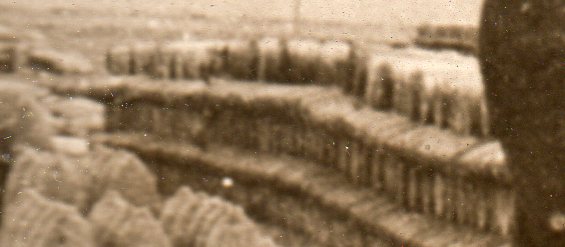
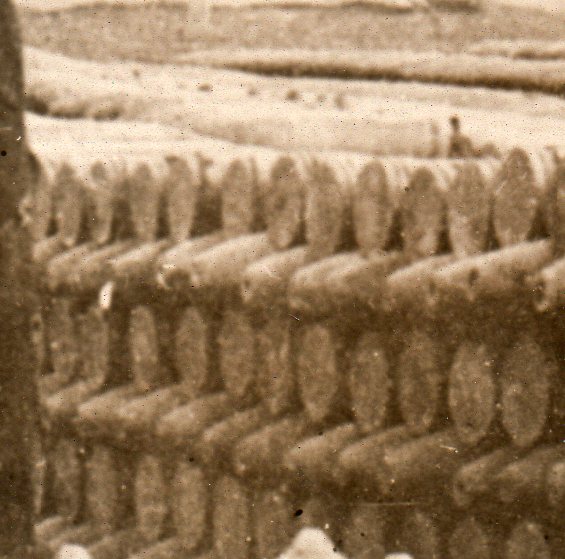
    This photo (dated 15 April 1916 by the news photo service of Underwood and Underwood) shows a French senator–H. Charles Humbert–viewing “a field literally covered with shells”,  the photo really only giving some glimpse of the extent of the palleted shells, which fade into the distance behind M. Humbert and extend deeply into the field in front of him.  (The original photo is available here at our blog bookstore.)

    WWI shells162

    M. Humbert (1866-1927) would’ve had more of an interest in this scene than most, as he represented the Meuse district, and at this point int he war the shells were headed to a part of that area, Verdun. Verdun of course was one of the major battles of WWI, fought from  21 February to 18 December 1916, in the hills and dales of north-eastern France, at Verdun-sur-Meuse. There were 306,000 battlefield deaths at Verdun, plus another 500,000 wounded, in what may have been one of the most gruesome battles of modern times. 

    Humbert was also an Army veteran and wrote on the military, and as it turns out, as the war approached he adopted a call to arms for more canons and more shells for the defense of France the inadequacy of the defenses of the French Army, and the insufficiency of officers and munitions  (“Des canons, des munitions!”).  He certainly would’ve been relieved with what he saw here.  Of course this is photo would represent a percentage well to the right of the decimal place of all those shells used at Verdun, which numbered an inconceivable 40 million.  When this photo was made in April the battle was already wicked and had been fought for two months–there were still eight months of gore to go. 

    WWI shells163
    WWI shells164

    ·Posted by :

    ·in:

    — —

  • Ephemeral Uniqueness in Large Crowds, 1917

    JF Ptak Science Books  Post 1390

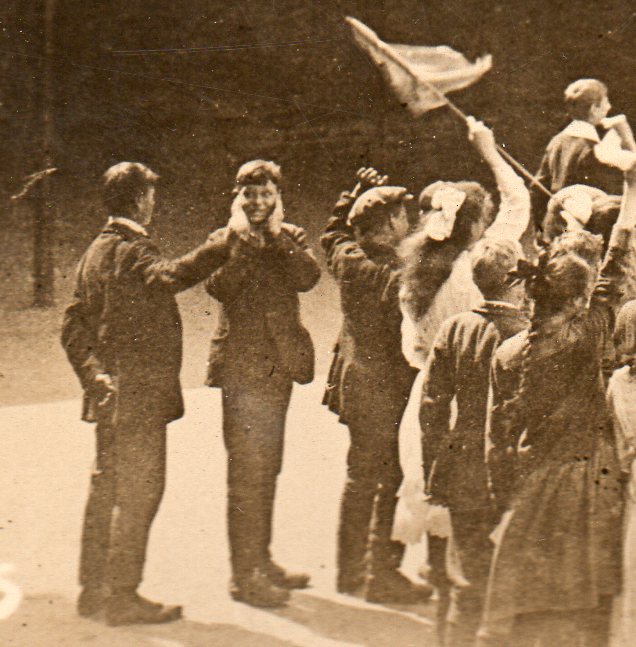
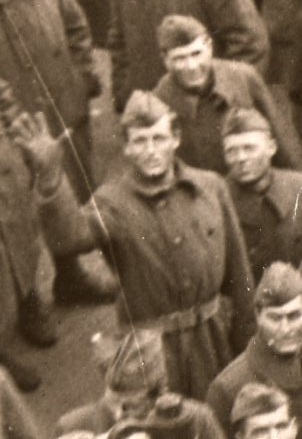
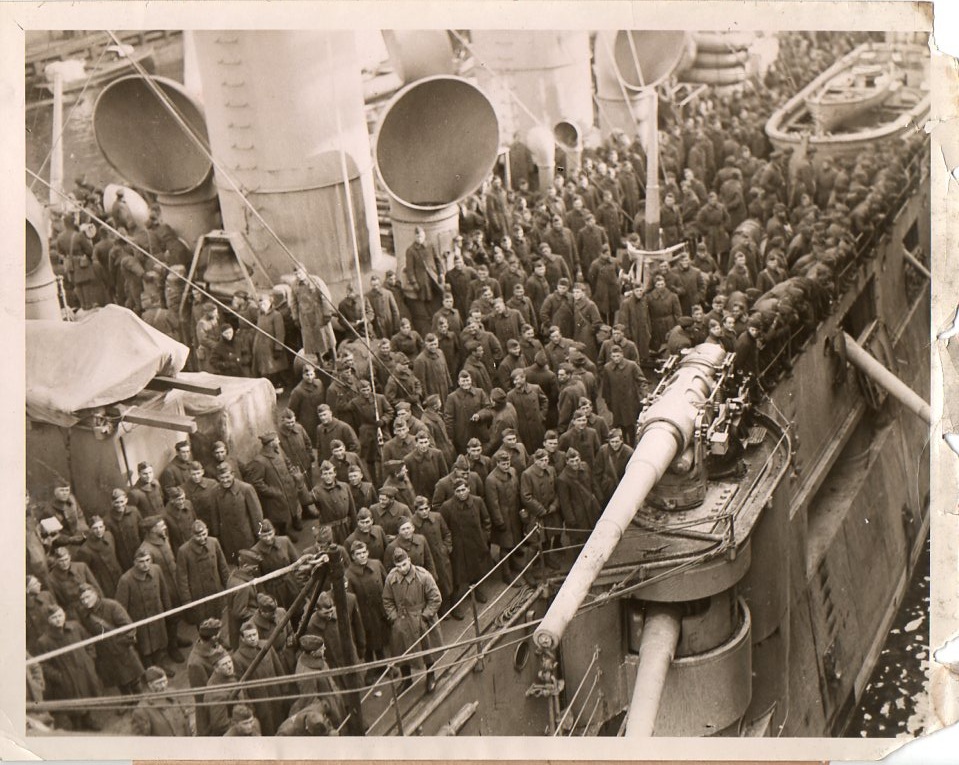
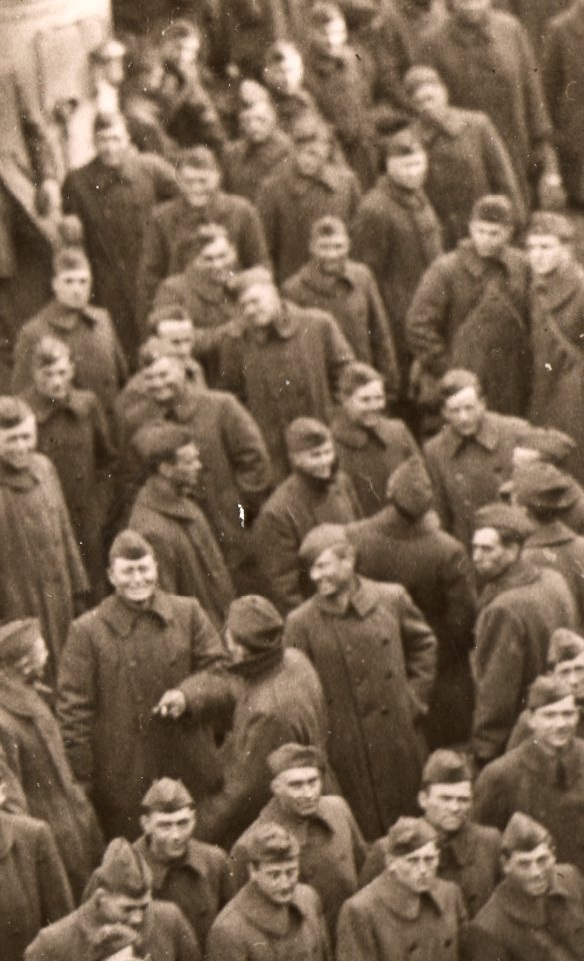
    There are 1500 or so of these news service war photographs here, and one of the remarkable things that I’ve discovered about them–trivial things to be sure compared with their overall message, ephemeral bits of semi-nothing–is that in many of the very-large-group images that there is sometimes just a single person who is doing something that no one else is doing, and it has been captured almost forever in the photo.  There are photos of thousands of troops, all facing east, with on solitary soldier facing west; there’s the solitary waver; there’s the one bare-headed man in  a sea of a thousand men with hats; there’s the one person raising his hat to the photographer in a sea of people looking at the camera but not raising their arms.  Then of course there’s the group photo of a mass of German WWI POWs, with only one soldier without a hat or helmet, and he looks just like me. 

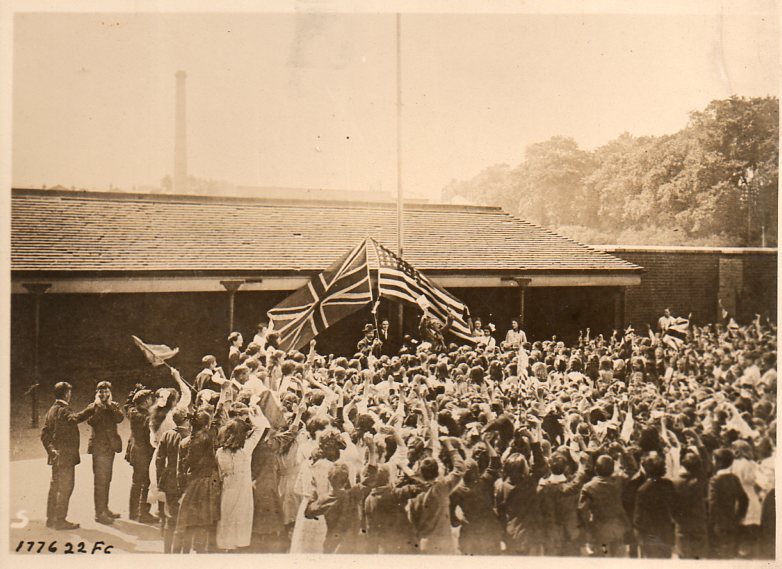
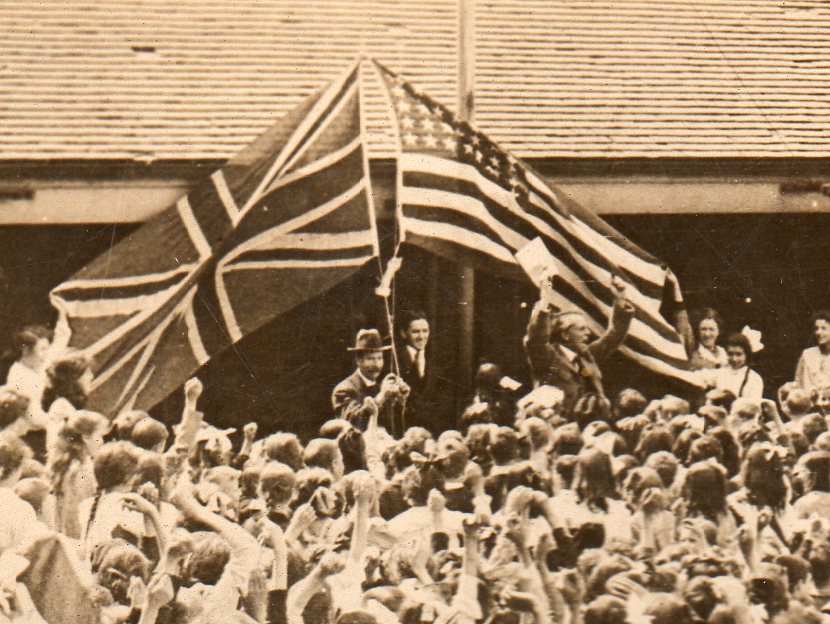
    Here are two other examples–the first is a detail from a photo showing British children cheering their American allies in 1917, showing one man clearly reacting to the hundreds of screams by covering his ears.  And is the only one doing so.  The second detail shows a large contingent of American soldiers leaving for Europe on a steamer–there is only one man  who turns to the camera and waves.

    Both original photographs are available from our blog bookstore, here.

    WWI troops ship171

    The second detail:

    WWI troops ship167
    The entire first image, showing the children cheering the raising of the two flags:

    WWI troops ship169

    And this:

    WWI troops ship170

    And the second, showing a group of hundreds of soldiers waiting to leave Hoboken, New Jersey, for the fight in Europe, 1917.  Most are pulling themselves inside their coats as much as possible; I suspect being right there on the harbor–and seeing the floating bits of ice in the water–that it was wet and very cold.  Our one adventurous Doughboy gives the camera a spread-fingered wave….he also seems to be quite tall.  He is the lone waver.  There also seem to be a lot of smiles in the crowd. 

      WWI troops ship166

    WWI troops ship168


  • World War I Photographs–Full Metal Jacket, 1917

    JF Ptak Science Books       Quick Post

    WWI Photos Blindfold077

    WWI Photos Blindfold078

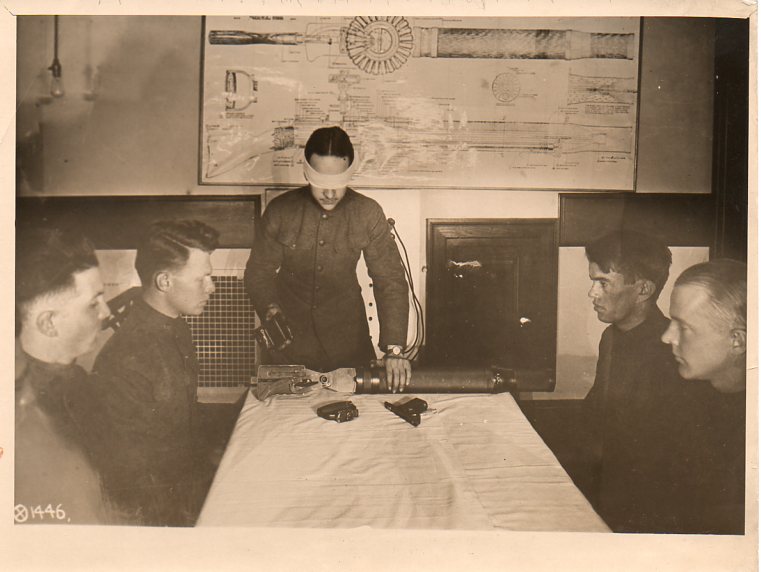
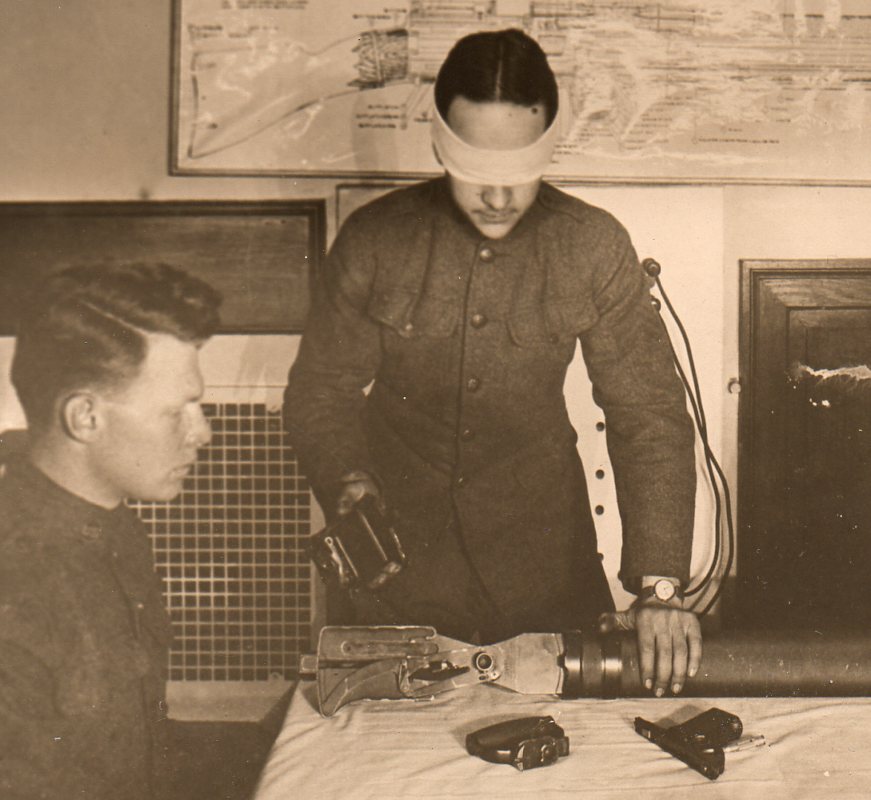
    I do believe that this is a Lewis Machine Gun, one of the most popularly-used automatic weapons by the BEF (and of American design). It was a gas-operated weapon firing a .30-06 Springfield at 500/600 rpm with an effective range of about a half-mile.  The drum magazine (not present here so far as I can see) held 47 and 97 rounds.  These soldiers were all business.

    The original is available here.


  • World War I Photographs: Panorama, 1918

    JF Ptak Science Books

    WWI Photos Big Pano075

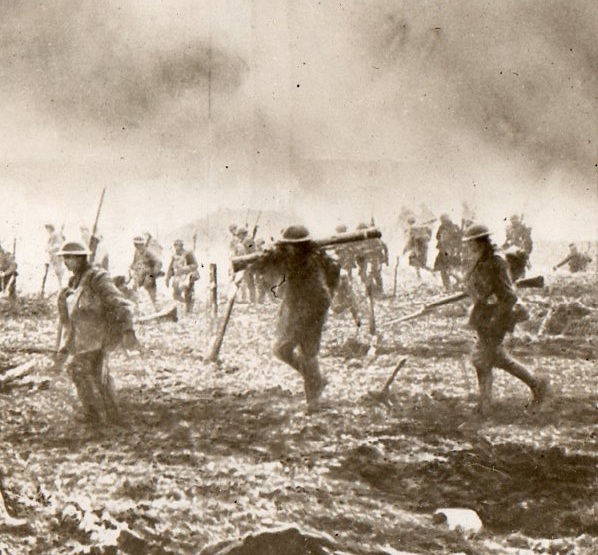
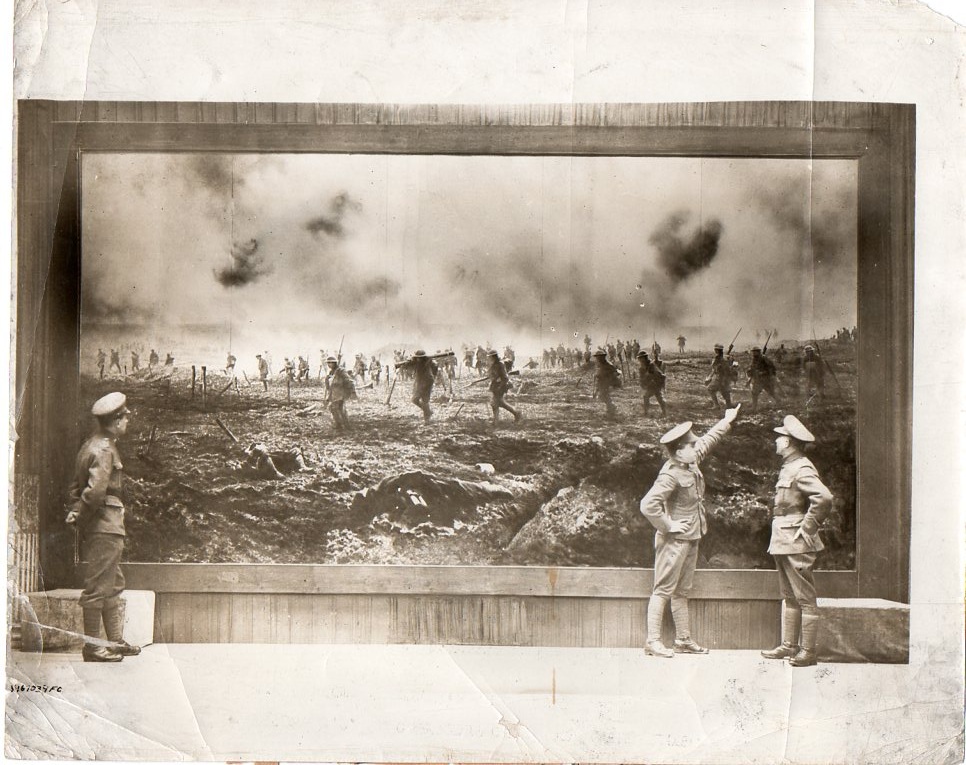
    I recall, I think, that this was the largest photograph of war printed during World War I, looking to be something on the order of 8×16 feet or so.  This photo of the photo was printed by Underwood & Underwood, and stamped “British Official Photograph”, printed sometime in 1918.  It seems that this is an actual battle scene, which was a very uncommon thing among war photographs for the Great War–more so for this group of photographs(News Photo Service)  produced by pool photographers for equal distribution among subscribing newspapers and periodicals. Actual combat photos distributed by the News Photo Service agencies were not a high priority, unless they depicted routed or retreating or being-defeated Germans–it was not a popularly-disributed subject, mainly for propagandist purposes. (The original photo is available for purchase here.)

    WWI Photos Big Pano074

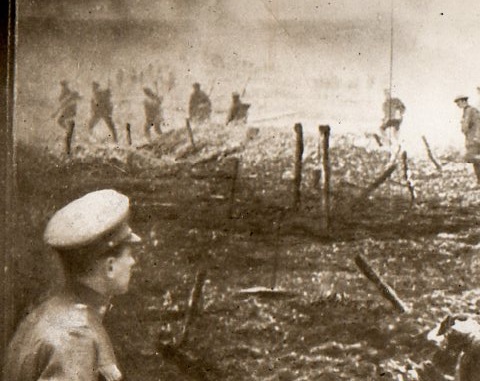
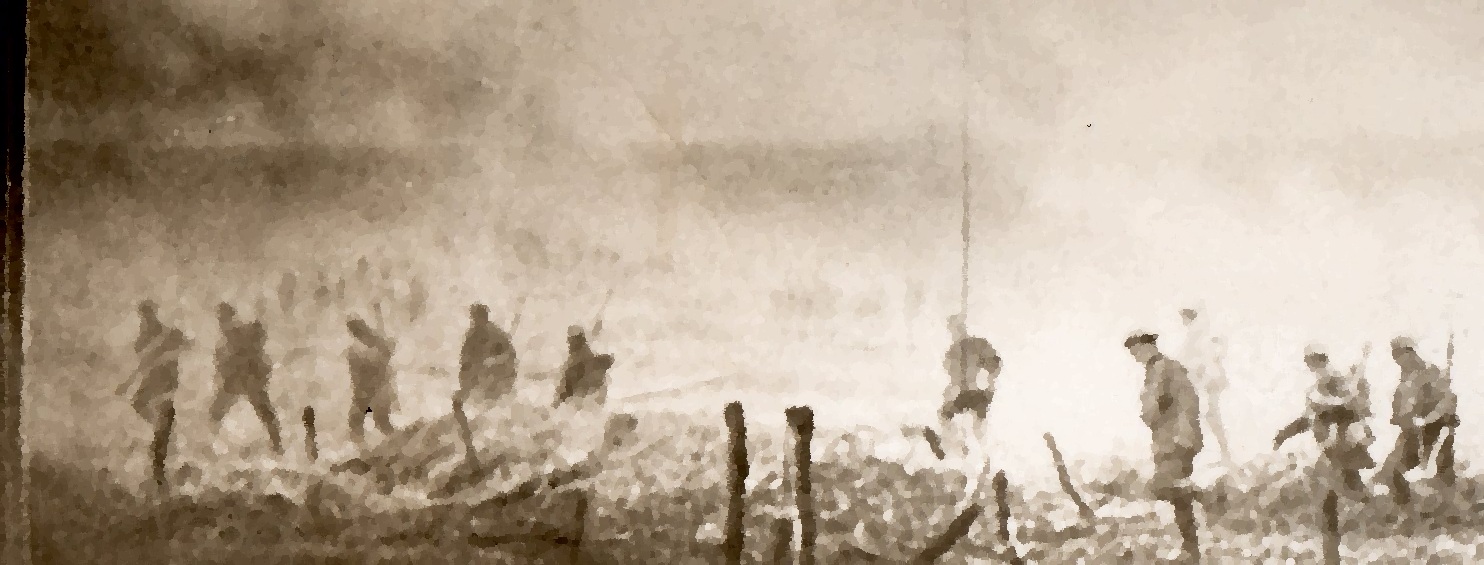
    I expect that this photo would’ve given the view a you-are-there effect, as the main characters in the composition were about life-sized–an attempt of slice-of-life experience.  There is a surprising amount of foreground in this picture, though.

    WWI Photos Big Pano076

    WWI Photos Victory Drive081artistic

    ·Posted by :

    ·in:

    —

  • World War I Photos–Fifth Avenue and Not FIfth Avenue, July, 1918

    JF Ptak Science Books  Quck Post

    WWI--great images--traffic control053
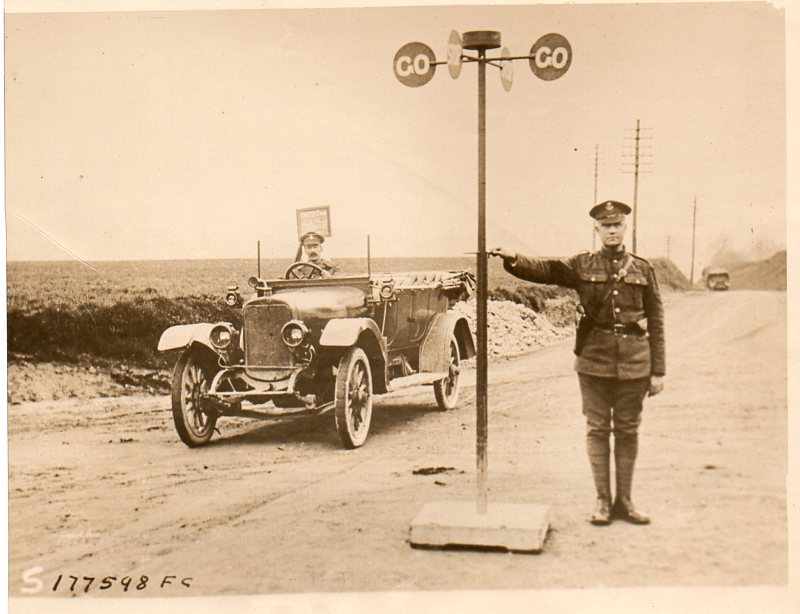
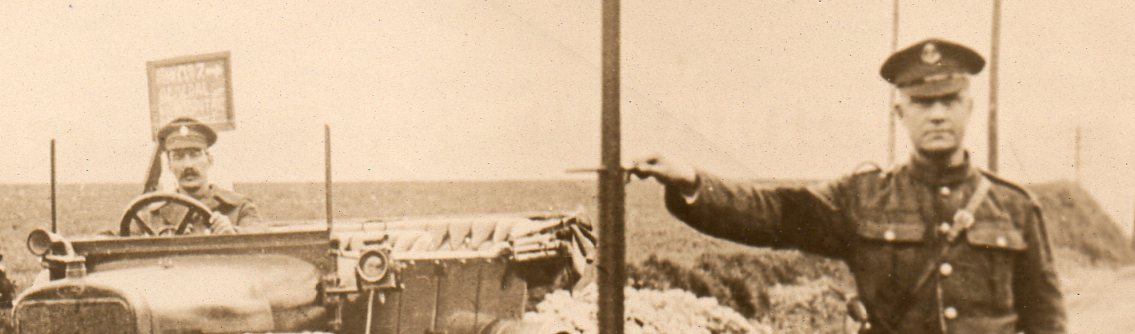
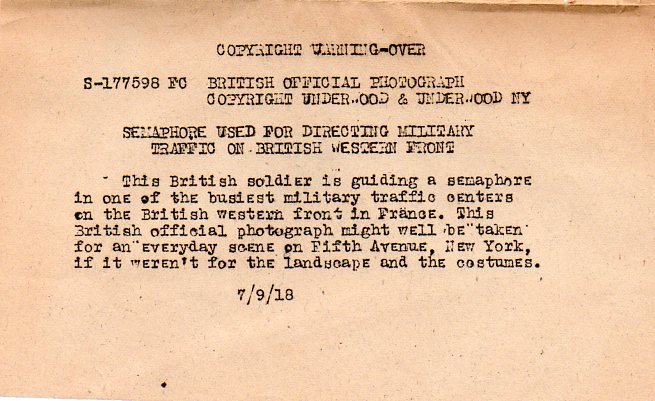
    This news photo service image (available from our blog bookstore) shows the action in “one of the busiest military centers on the British Western Front in France”, with a British soldier using a traffic semaphore to take care of the hustle and bustle.  The caption–almost always supplied with these photos as they were made by a pool of uncredited photographers covering the war for a consortium of newspapers and paid subscribers providing images and content for paying media–reads that the picture “might well be taken for an everyday scene on Fifth Avenue, New York, if it weren’t for the landscaping and the costumes”. 

    WWI--great images--traffic control054
    Indeed.  Actually, if you removed the landscaping, the vehicles, the background and the uniforms (clearly whoever wrote this copy had no feel for the fact that actors wear “costumes” and soldiers wear “uniforms”), and replaced it with paved roads, buildings on all sides, crowds of people and packed it all with automobiles and placed the scene on Fifth Avenue, then the scene would have looked like Fifth Avenue. 

    On the other hand, even if it were never to look at all like Fifth Avenue this intersection would have been exceptionally busy from time to time; I’m sure it could have seen thousands of troops per day, particularly since the Brits fielded probably a million troops in this region alone, and those troops needed to be fed and cared for, which means there would’ve been a constant flow of people, and machines, and materiel. 

    This is a fantastic photograph,though, though the captioning folks did it little justice. 

    WWI--great images--traffic control055

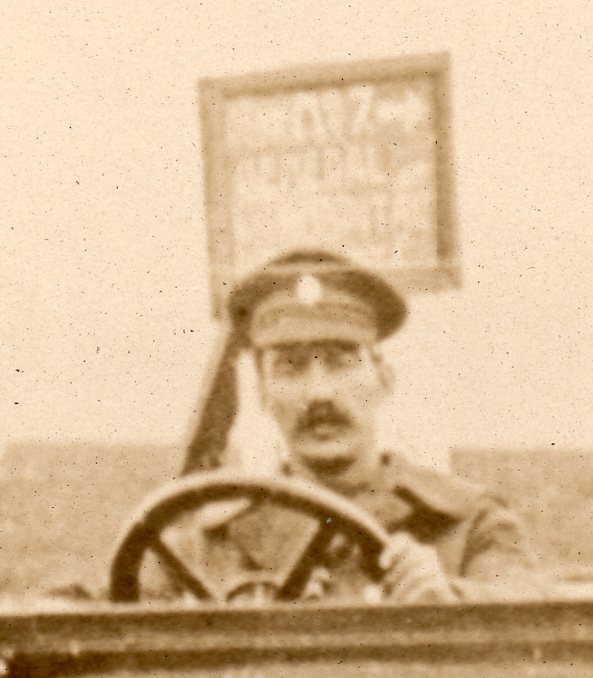
    I can’t quite make out the BEF-made sign in the background, placed for the use of the troops. 

    WWI--great images--traffic control056

    ·Posted by :

    ·in:

    — —

  • World War I Photography–Heavy and Stuck

    JF Ptak Science Books 

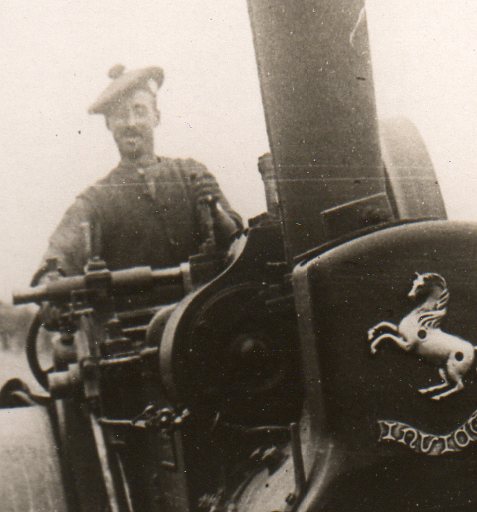
    What is this man smiling about?

    WWI--steamroller detail smile336

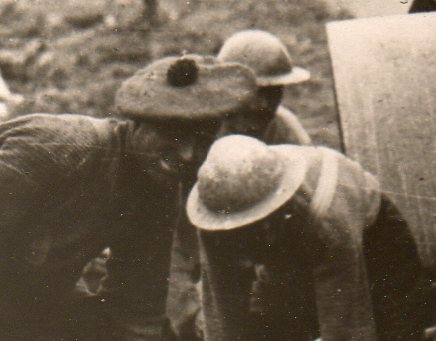
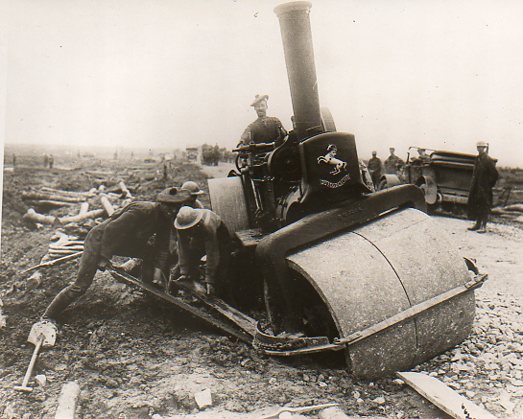
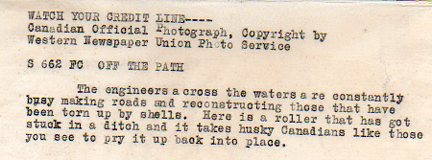
    He’s satisfied with his place there in the tractor, rather than his soldier brothers whop were trying (impossibly) to leverage the beast out of a shell-made muck hole. At least the guys on foot had a comic sense of what their task was supposed to be. [This original photograph is available for purchase at our blog bookstore.]

      WWI--steamroller detail smile338

    WWI--steamroller334

    WWI--steamroller text335

    ·Posted by :

    ·in:

    —

  • World War I Photographs–German Prisoners, the Somme, 1916

    JF Ptak Science Books   Post 1322

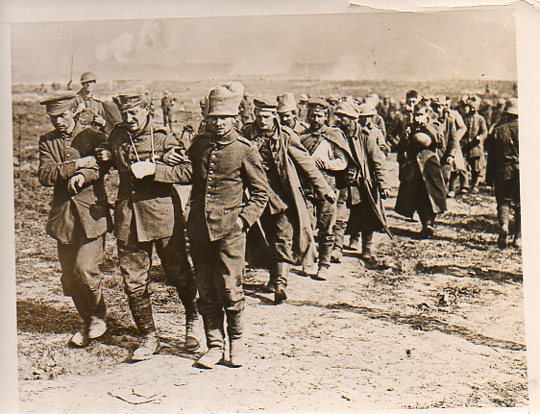
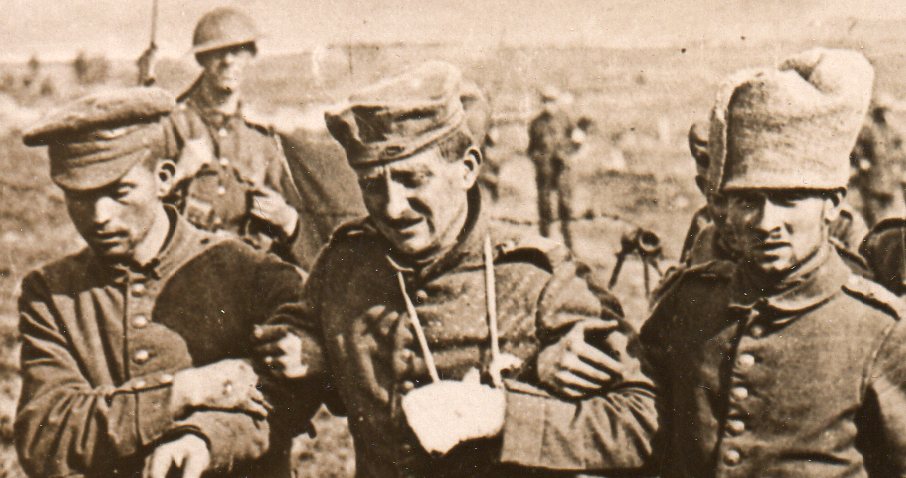
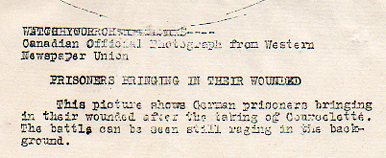
    This news service photograph (a Canadian Official Photograph from the Western Newspaper Union) shows a line of German prisoners of war in the Canadian lines at the battle of Courcelette, France. [The original is available at our blog bookstore.]

    WWI--German prisoners--marching328

    It was a battle that took place within a battle,  in the last third of the enormous 18-week series of battles and actions known as the Somme Offensive. The photograph was made between early September and mid-November 1918, which is when the Canadians joined the British offensive.

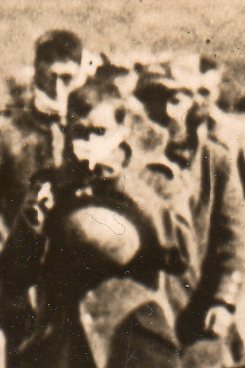
    The landscape is bleak, the soldiers worn.  I rarely see expressions of pain in this series of 1500 photographs from a collection of war images that I purchased.  This is one of a very slim minority.

    WWI--German prisoners--marching 330

    WWI--German prisoners--marching 331
    WWI--German prisoners--marching 332

    WWI--German prisoners--marching text329

    ·Posted by :

    ·in:

    —

  • World War I Photography–Soldiers at the War’s End, Germany, November 1918

     JF Ptak Science Books   Post 1321

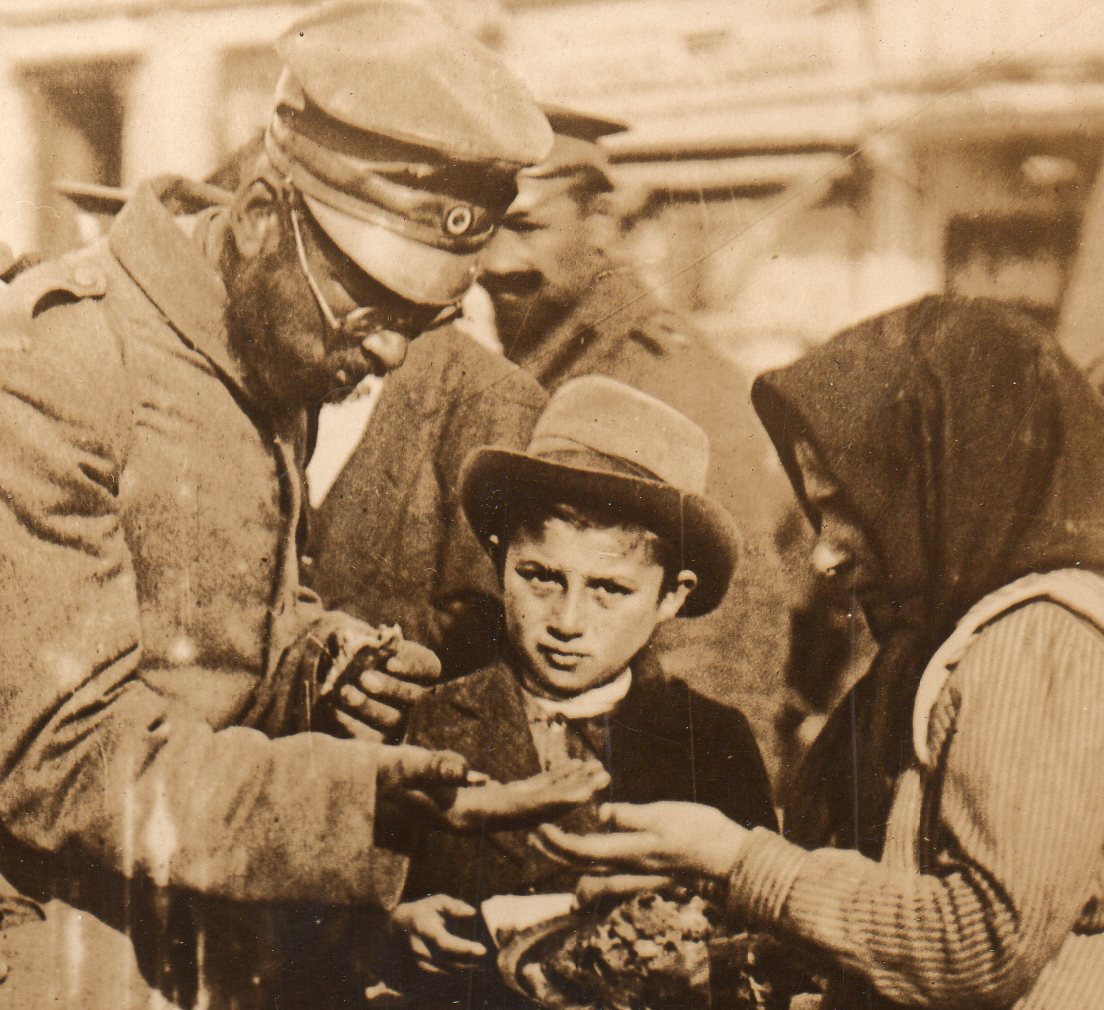
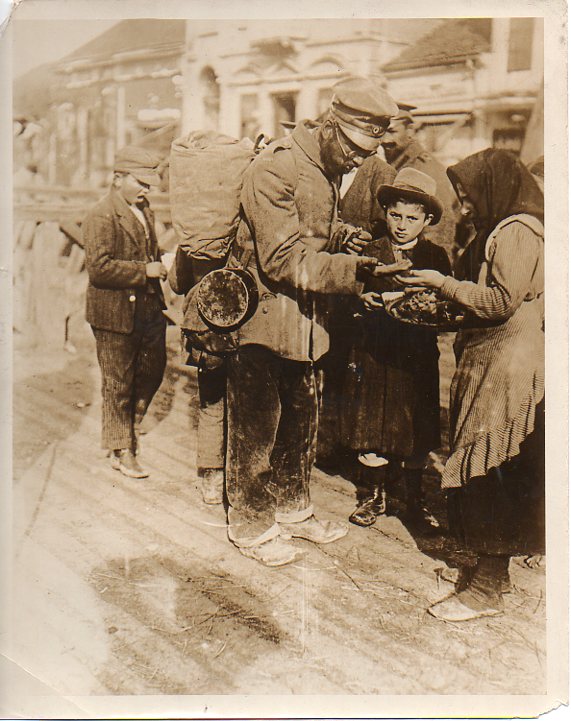
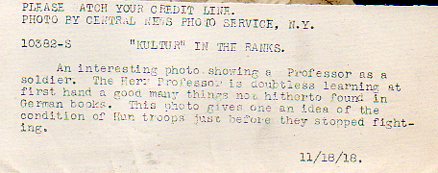
    I’m not sure what this photo depicts specifically but in general it sends an image of exhaustion and wear.  The caption for the image says that it shows “the condition of the Hun troops” and that the subject “Herr Professor” is learning “a good many things not hitheroto found in books”.  Maybe he was a teacher, maybe not.  Machts nichts. His pants looks velour-like and his boots (if that’s what his footware was) look very thin.  He is ragged, his double-fold glasses look like they’re at their limit, his face looks swollen behind his beard, and he just looks “done”, in general. 

    WWI--german--beggar det326
    [The original of this photograph is available at our blog bookstore.]

    I’m not sure what he is doing, or where he is.  He may be trying to figure out local currency to purchase whatever it is the vendor-woman has on the tray at her hip–she os holding out her hand, and looking at his.  The soldier definitely has something there, and he looks basically too weary to comprehend it.  the hand language is ambiguous to me.  He may have received something already, some sort of food, and he is staring at it now, thinking perhaps how little of it there was.  He’s eating, and already has taken a bite of whatever bread-like thing is in his left hand.  I’m not sure what attracted the attention  of the boy in the center–perhaps it is simply the camera, and he wanted to be in the shot. 

    WWI--german--beggar325

    There’s a shadow in the foreground-left of what looks like someone making a photograph of teh scene–probably not our photographer, but another, with a brownie or some such smaller camera.

    At the end of years of fighting every general soldier deserves respect and, at least, some free food–I hope this guy got his.

    And the accompanying text to the news photo service image, to be used if published:

    WWI--german--beggar text327

    ·Posted by :

    ·in:

    —

  • Inverted Iwo–Sappers and Blowing Up Trees, 1918

    JF Ptak Science Books   Post 1331

    Most of the stuff that was blown up in WWI was an end  result of explosive shells being fired from canons–only a miniscule amount of the percentage of all bombing done during WWI  was from airplanes, and another very slight percentage from tanks.  On the other hand sappers played a much larger role in WWI than in just about any other war, placing explosives by hand and then detonating them.  (I wrote earlier in this blog about the extensive underground trench fighting that went on with sappers tunneling under No Man’s Land and placing explosives underneath an enemy’s trenches.  And I guess you could tunnel under the tunnel, and so on. This sort of warfare is extremely old, though the name is not, being about 150 years old. These soldiers were forward combat engineers, and had training across a number of different areas—they were responsible for many technical chores, like building (and blowing up) bridges, laying/clearing minefields, general demolition, defense construction, and, of course, fighting.  It could be a tremendously difficult job, unimaginable.) 

    This photograph reminds me in some odd way of Arthur Rothstein’s iconic photograph of Marines raising the flag on Mount Suribachi, Iwo Jima, but only a little. (This photo is available for purchase from our blog bookstore, here.)

    WWI photos--blowing up trees364

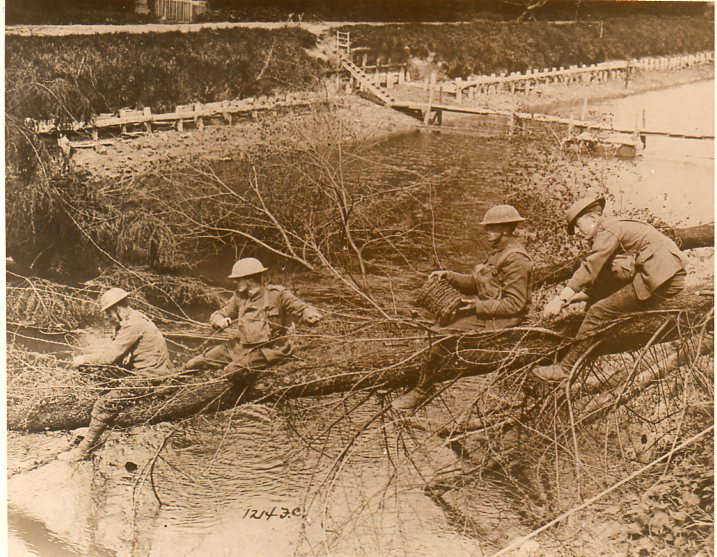
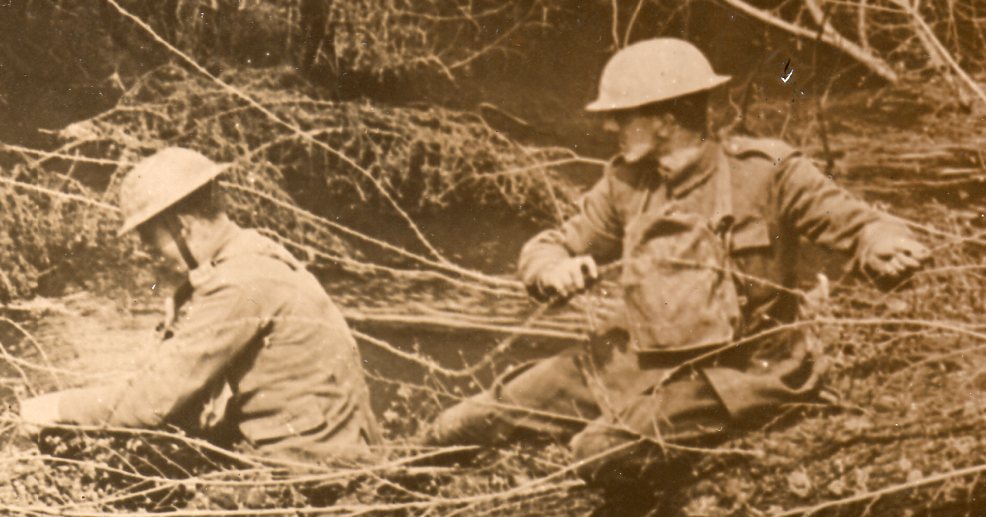
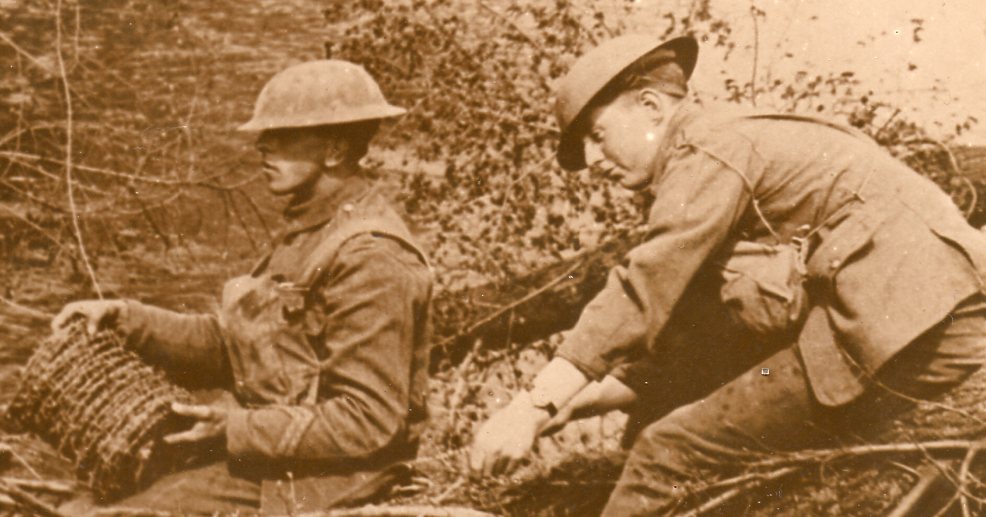
    The caption of this news photo service image identified these soldiers for blowing up trees to obstruct the canal in the background.  If you land enough trees in a canal like this you are definitely going to cause corruption and heart attacks for anyone trying to move men or ordnance down the canal. 

    WWI photos--blowing up trees365
    And this detail:

    WWI photos--blowing up trees366

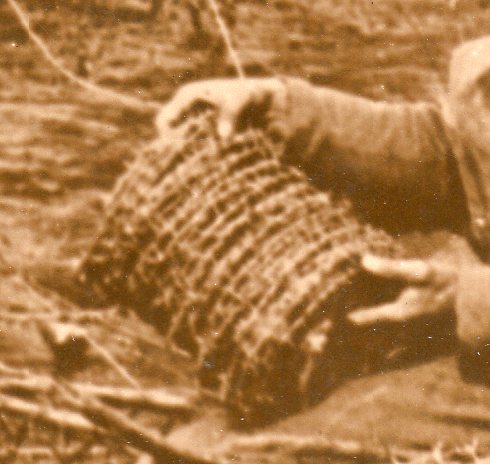
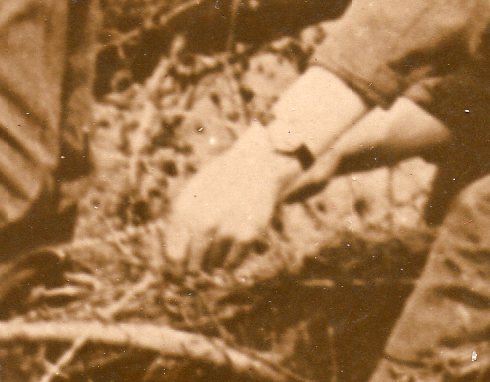
    I thought for a bit that these men might actually be threading barbed wire through the trees to make the job of removing that even more heinous.  But there’s no way that you could lay hundreds of yards of barbed wire without gloves and without slicing your hands up–maybe you could do it carefully for  a little bit, but not for long. 

    WWI photos--blowing up trees368

    But I’ve got to say that this really doesn’t look like demolition materiel….

    WWI photos--blowing up trees369

    ·Posted by :

    ·in:

    — —