A Daily History of Holes, Dots, Lines, Science, History, Math, Physics, Art, the Unintentional Absurd, Architecture, Maps, Data Visualization, Blank and Missing Things, and so on. |1.6 million words, 7500 images, 4.9 million hits| Press & appearances in The Times, Le Figaro, Mensa, The Economist, The Guardian, Discovery News, Slate, Le Monde, Sci American Blogs, Le Pont, and many other places… 5000+ total posts since 2008.

Category: Photography

  • WWI–Post-War Photographs, November/December 1918

    JF Ptak Science Books   Quick Post

    I have made numerous posts on this blog using images from my archive of American news service WWI photographs, though there are few depicting scenes just after the end of the war’s end on 11:00 a.m. on 11/11/11. These photographs below do so, and all come from the National Library of Scotland (which can be accessed here). They are all “British Official War Photographs”, which was a service similar to its American cousin–various news and photo agencies were given access to images produced by a pool of photographers, all of which passed by the eyes of a military censor. They were for the most part aimed at the “correct” version of the news, though given the subject matter there were plenty of images that were extremely powerful.  In a war that claimed 100,000,000 casualties, the photographic image was a powerful war-time propaganda tool. 

    (1) C.2450 - German trophies from Vimy Ridge and Messines

    [Original reads: ‘SCENES ON THE WESTERN FRONT. WAR TROPHIES SECTION. German trophies from Vimy Ridge and Messines. In centre is Prussian Guards drum.’]


    ·Posted by :

    ·in:

    — —

  • On the History of Blank, Missing and Empty Things: the Heart of Some Sort West

    JF Ptak Science Books  Quick Post   (Part of the series on the History of Blank, Empty and Missing Things.)
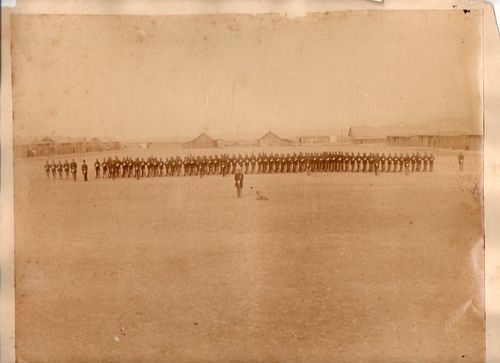
    Plains photo969

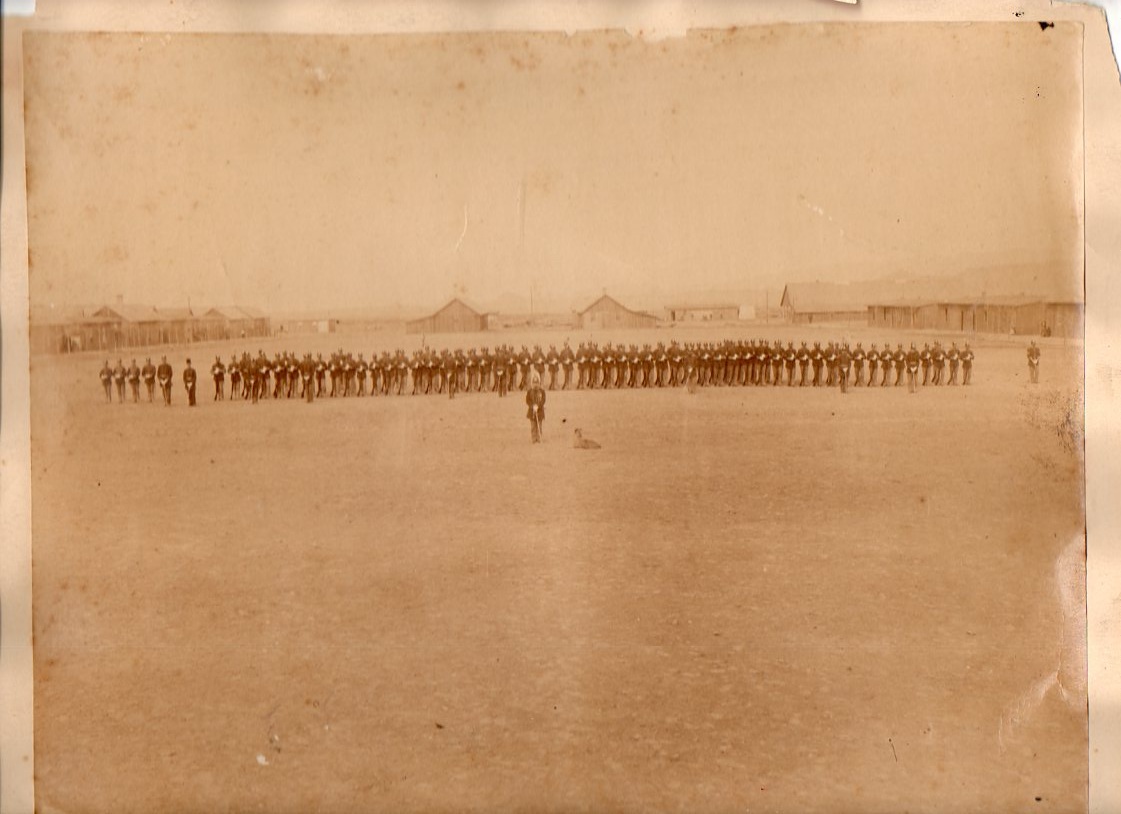
    I’ve owned this photograph for a long time.  It has been in the files for many years, waiting for something to happen to it, waiting for it to be a little understood in some slight way of identification.  I’ve still not gotten around to it.  To me, it has always seemed like a photograph of a small post out in the American Far West, 90 men in dress uniform inside their “fort”, or outpost, the commander and the camp dog addressed in front and the sergeants out on the flanks.  The enlisted men stand at ease. 
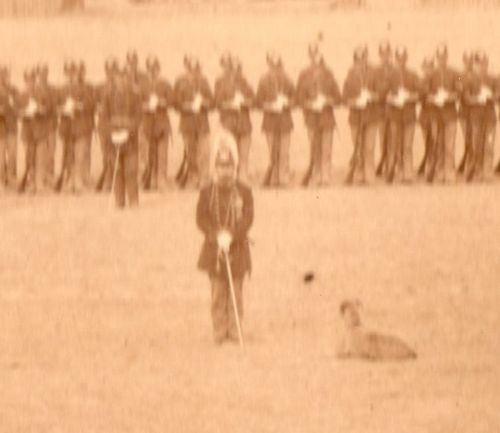
    Plains photo971

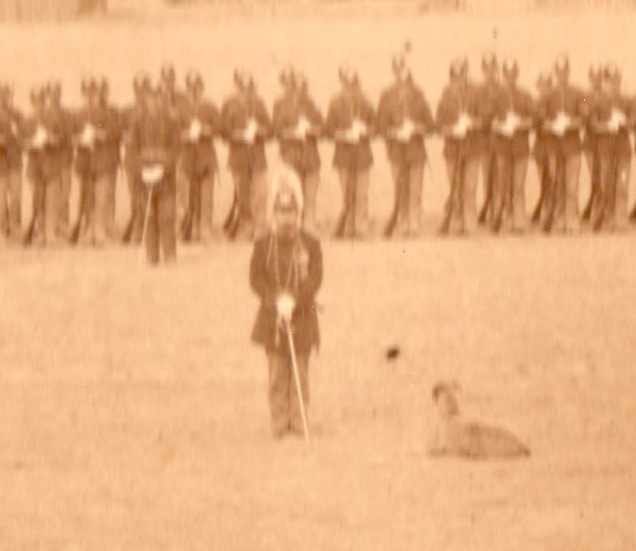
    I’m really not sure though who or where they are.  The camp is very spread out, for one thing.  And for the age (I reckon this to be made around 1885, perhaps a little earlier) I would’ve thought that boots would’ve been visible under trousers.  And their hats/helmets–they really don’t look to be made for the sun, and also seem too much of a bull’s eye/target.  That’s on first glance–nothing about their uniform seems fitted to the place:  no protection from the sun, trousers caught on low burrs and scrub, and so on.  But the uniforms–and helmets–seem to be in line with the Prussian-influenced dress of the time (or at least around 1882), including the ribbon-y materials draped around the commander’s neck.  (I really don’t know enough about U.S. Army uniforms to make a good qualified guess about who these men are.)

    But the photo as art has always intrigued me, capturing the heart of a lonely place.  I know, though, that having spent  a little time hiking in the desert that the place is hardly empty, or blank.  But it can still be lonely if you want it to be, a state which isn’t dependent on any of the conditions mentioned in the title of this post–its a created space, the loneliness.

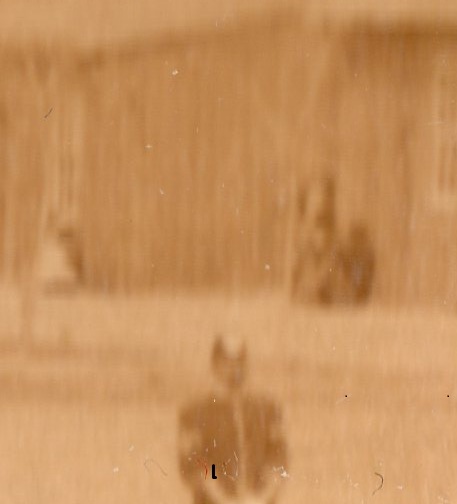
    I’ve wondered too about who those people are,  sitting together, (huddled?) at the far end of the soldiers’ barracks, a speck visible over the shoulder of the sergeant (the last figure on the right in the top photo)? I suspect they must be Native Americans, or at least indigenous people.  They’ve faded into history too with the rest of the people in the photograph, a chance at a piece of tangible memory missed because, well, no one made any notes (that survived, at least) about the image. 
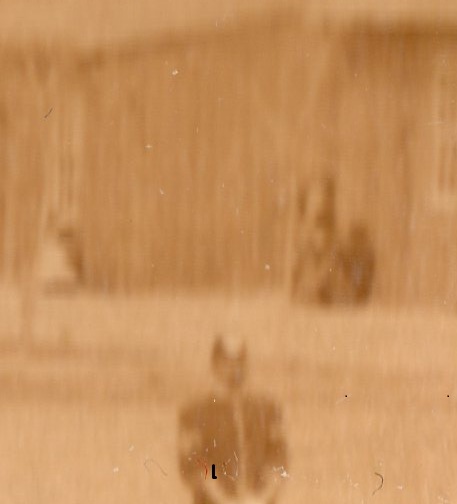
    Plains photo972
    The photograph looks hot and cold to me at the same time…

    (This image is available for purchase via our blog bookstore, here.)


  • Depression-era Photographs of Miners from the Library of Congress

    JF Ptak Science Books   Quick Post

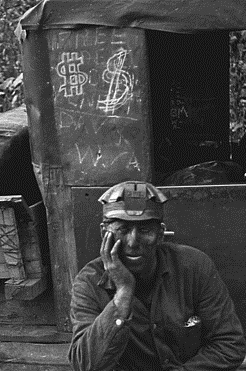
    Miner waiting for ride home.  Each miner pays twenty-five cents a week to owner of car. Capels, West Virginia.

    I doubt that it was this truck that was going to make the commuter run, but it might well be.  There’s a tool chest in the truck bed, along with what looks like an upholstered truck bench next to it–it certainly wasn’t abandoned because the truck still has its wheels.

    Miner waiting for ride home. Each miner pays twenty-five cents a week to owner of car. Capels, West Virginia

    In the detail of the picture it seems as though someone made repairs to the truck bed’s wooden racks with wire or rope rather than with nails (jsut to the left of the miner’s right shoulder). Picture source: Library of Congress Prints and Photographs, ca. 1938.)

    Mining photo waiting large det


    ·Posted by :

    ·in:

    —

  • The Great Farm Security Administration (FSA) Photography Series, in Color: Japanese Internment Camps

    JF Ptak Science Books   Quick Post

    The following images were made by Farm Security Administration/Office of War Information photographers during World War II and are part of the famous FSA photography series that I  have written about here.  The color photographs–which were made in the first decade or so of the use of this new medium–represented only about 1,600 of the collection of 160,000 images in the FSA archive, and are far less known than their black-and-white complements, many of which are new iconic symbols for this period.  The color images are beautiful works, and somehow seem to bring these historic images a little closer to the present.

    This series are some of the few color images made of daily life in the Japanese Relocation Camp at Tule Lake in 1942/3.  The internment (“relocation”) of American citizens of Japanese heritage in “reservations” is a result of Executive Order 9066, signed into power by Franklin Roosevelt on 19 February 1942.  I’ve written about this episode in several places on this blog, including here. 

    Japanese-American camp, war emergency evacuation,[Tule Lake Relocation Center, Newell, Calif.] 1942 or 1943.

    http://memory.loc.gov/service/pnp/fsac/1a35000/1a35000/1a35014v.jpg

    ·Posted by :

    ·in:

    — —

  • The Great Farm Security Administration (FSA) Photography Series, in Color: Billboards, 1940-1943.

    JF Ptak Science Books   Quick Post

    The following images were made by Farm Security Administration/Office of War Information photographers during World War II and are part of the famous FSA photography series that I  have written about here.  The color photographs–which were made in the first decade or so of the use of this new medium–represented only about 1,600 of the collection of 160,000 images in the FSA archive, and are far less known than their black-and-white complements, many of which are new iconic symbols for this period.  The color images are beautiful works, and somehow seem to bring these historic images a little closer to the present.

    A cross roads store, bar, “juke joint,” and gas station in the cotton plantation area, Melrose, La. Wolcott, Marion Post, 1910-1990, photographer, made in June 1940.

    Image, Source: digital file from original slide

    ·Posted by :

    ·in:


  • The Great Farm Security Administration (FSA) Photography Series, in Color: Grocery Stores, 1940-1943.

    JF Ptak Science Books   Quick Post

    The following images were made by Farm Security Administration/Office of War Information photographers during World War II and are part of the famous FSA photography series that I  have written about here.  The color photographs–which were made in the first decade or so of the use of this new medium–represented only about 1,600 of the collection of 160,000 images in the FSA archive, and are far less known than their black-and-white complements, many of which are now iconic symbols for this period.  The color imahes are beautiful works, and somehow seem to bring these historic images a little closer to the present.

    General store, Chacon, N[ew] Mex[ico] Collier, John, 1913-1992, photographer, 1943.

    Image, Source: digital file from original transparency

    ·Posted by :

    ·in:

    —

  • Signs of Discrimination: Photographs from the Library of Congress FSA Collections

    JF Ptak Science Books  Quick Post

    Negro drinking at "Colored" water cooler in streetcar terminal, Oklahoma City, Oklahoma

    All of the photographic material below comes from the U.S. Library of Congress website for its prints and photographs division, and is a very small sample of what is offered from its online holdings of Farm Security Administration/Office of War Information (FSA and OWI) photographs. It is not ancient history–most of the images are 75 years old or so, a part of our near-past which still shadows our near-future.

    “Photographers working for the Farm Security Administration Historical Section (later transferred to the Office of War Information) were encouraged to document continuity and change in many aspects of life in America during the years the unit was in operation. They were particularly encouraged to photograph billboards and signs as one indicator of such developments. Although no documentation has been found to indicate that photographers were explicitly encouraged to photograph racial discrimination signs, the collection includes a significant number of this type of image, which is rarely found in other Prints and Photographs Division collections.”

    Beale Street, Memphis, Tennessee

    On of the great innovations in a sea of great things accomplished during the Franklin Roosevelt administrations was the formation of the FSA, a division of the government established to help farmers through the devastating Dust Bowl and Great Depression.  A subset of the FSA was a photographic unit which was set up to document the progress made by the FSA (and provide, I am sure, for some much-needed good news, a hearts-and-minds campaign).  This division was headed by Roy Emerson Stryker, who wound up hiring a collection of dream-team photographers unlike any ever assembled for a single purpose.  Esther Bubley, Marjory Collins, Mary Post Wolcott, Arthur Rothstein, Walker Evans, Russell Lee, Jack Delano, Gordon Parks, Charlotte Brooks, John Vachon, Carl Mydans, Dorothea Lange and Ben Shahn were sent out all across the country and wound up with the greatest and most beautiful photographic history ever assembled.  There were about 77,000 images made, and I recall reading (somewhere) that the total budget for the Stryker group for the years 1936-19421 was about $100,000, meaning that each completed image cost just over a dollar apiece.

    Rex Theatre for colored people. Leland, Mississippi Delta

    1) Bethlehem-Fairield shipyards, Baltimore, Maryland.
    May 1943.
    Arthur Siegel, photographer.
    “A drinking fountain.” [Sign: “White.”]
    Location: D-90666
    Reproduction Number: LC-USW3-26442-E
    [view catalog record]


    A drinking fountain labeled with a sign 'White.'
    1
    2) Memphis, Tennessee. October 1939.
    Marion Post Wolcott, photographer.
    “Secondhand clothing stores and pawn shop on Beale Street.”
    [Sign: “Hotel Clark, The Best Service for Colored Only.”]
    Location: E-2185
    Reproduction Number: LC-USF33-30637-M3
    [view catalog record]
    Secondhand clothing stores and pawn shop on Beale Street labeled with a sign: 'Hotel Clark, The Best Service for Colored Only.'
    2

    3) Durham, North Carolina. May 1940.
    Jack Delano, photographer.
    “A street scene near the bus station.”
    Location: E-255
    Reproduction Number: LC-USF33-20522-M5
    [view catalog record]

    A street scene near the bus station.
    3
    4) Durham, North Carolina. May 1940.
    Jack Delano, photographer.
    “At the bus station.”
    Location: E-5153
    Reproduction Number: LC-USF33-20522-M2
    [view catalog record]


    At the bus station.
    4


    ·Posted by :

    ·in:

    — — —

  • The History of Blank, Empty and Missing Things–German POWs, 1918

    JF Ptak Science Books  Post 1556

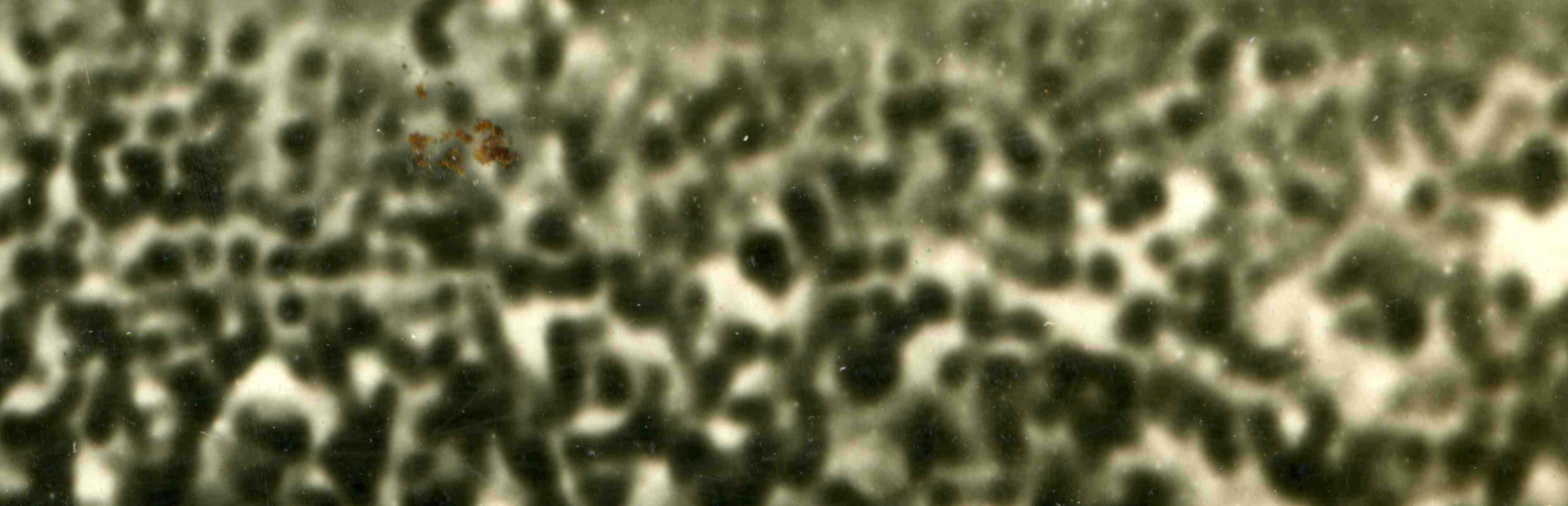
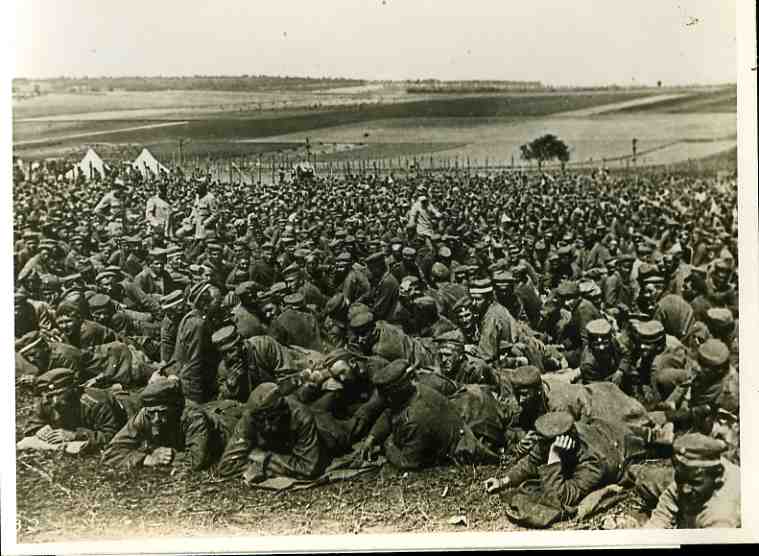
    In continuing series of posts on Blank and Empty Things is this image on fading, disappearing German prisoners of war.  The French had been pounding them in western France in the summer of 1918, and Germans were surrendering and being captured by the thousands.  This news service photograph shows one of the assembly camps with about 10,000 POWs–I made a heavy scan of the group of soldiers in the distance and was  a little taken aback to see that the men had lost their human forms,  looking like bacteria, fading into their future.  

    000-ebay--Nov 8 pows018

    000-ebay--Nov 8 pows017

    The full image is impressive, and shows just a small fraction of the men taken prisoner during 1918; and it shows even a lesser percentage of those killed.

     
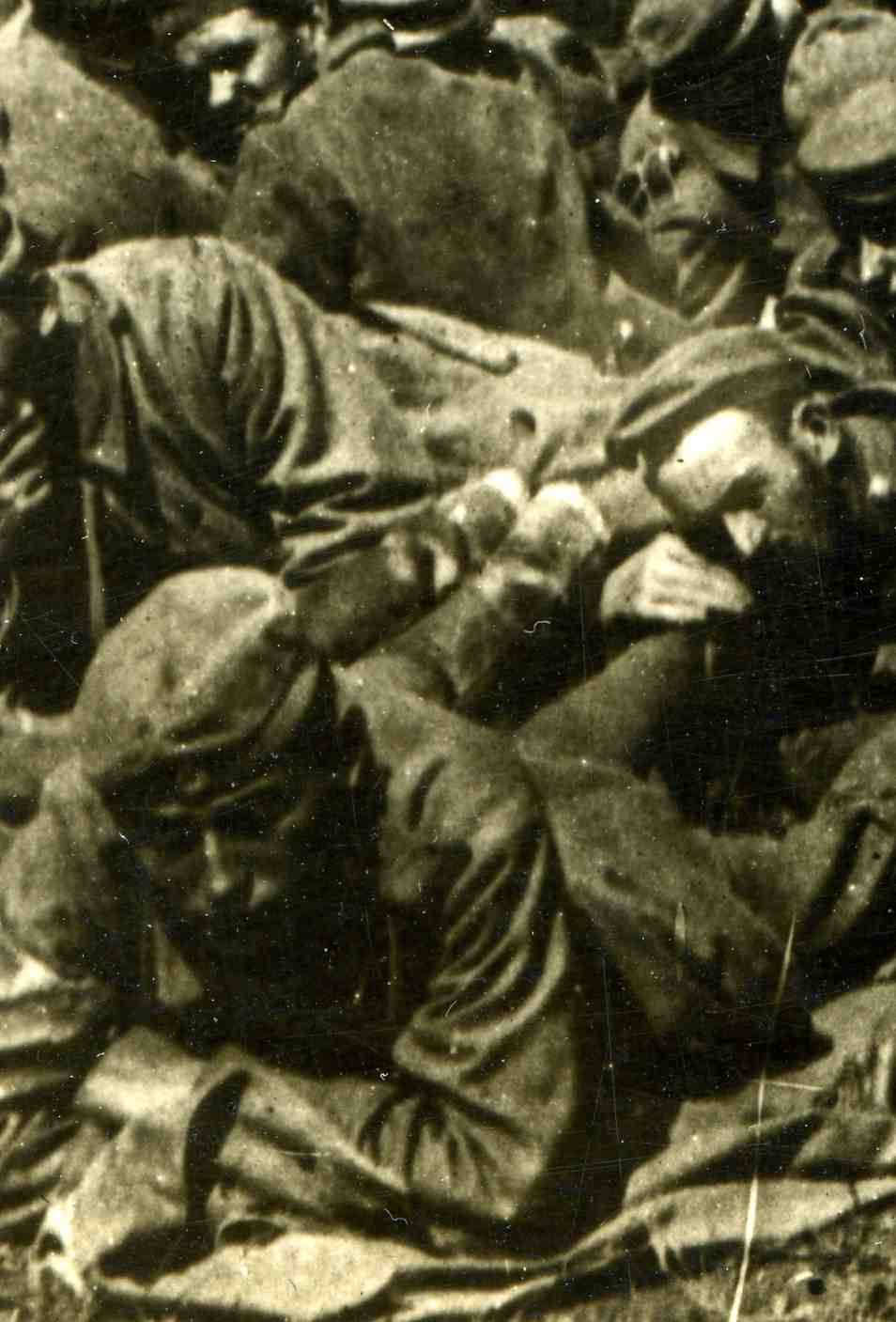
    This detail of the foreground shows the familiarity necessitated by the men being pressed so closely together–there was little free ground
    000-ebay--Nov 8 pows019.

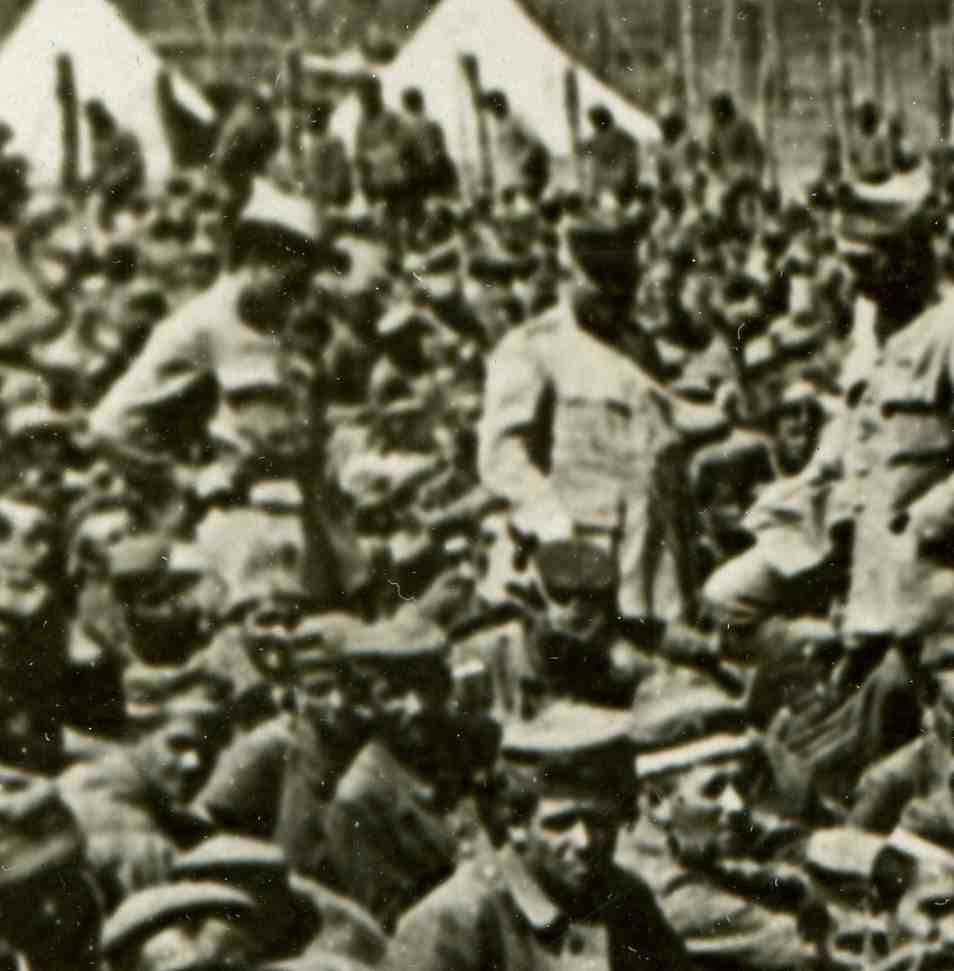
    Also, I thought that the French soldiers in the midst of the prisoner might’ve been feeding them, but it seems as though they were just walking in their midst.


    000-ebay--Nov 8 pows022


  • Barbed Wire, Trench Warfare, and the Next Lethal Step: Electric WIres

    JF Ptak Science Books  Post 1555   [Part of the History of Lines series]

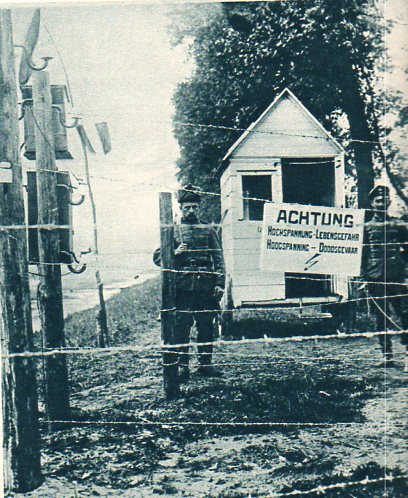
    Barbed wire was one of the most successful and horrifying defensive weapons of World War I.  In 1915 it was made more effective yet by adding high-voltage electricity to the emplacements.  In general the electrical barbed wire fence was employed as only a tiny fraction of all wire fences during the war–as the non-electrified fence was already extremely effective, very cheap to produce and very easily installed–but the possibility of finding an electrified wire somewhere along the lengthy rat’s nests of mile sand miles of this thing must’ve had some sort of weight in most soldiers’ minds. 

    The following image (and details) from The Illustrated London News for 9 October 1915:

    WWI--e---electric fenc dete extra647

    WWI--e---electric fenc dete646

    WWI--e---electric fence645

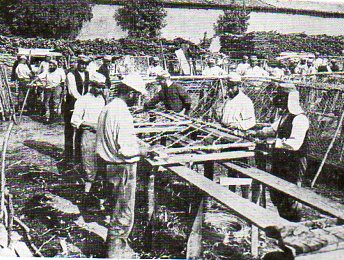
    And the places where the barbed wire was made and packaged, again from The Illustrated London News for 16 October 1915.

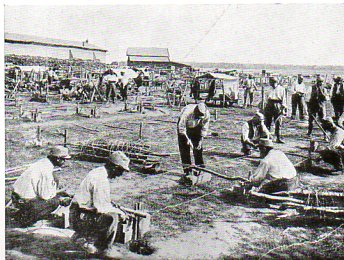
    WWI--e--barbed wire making648

    It looks as though the wire was stretched across 3.5 foot poles, with the barbed wire added diagonally, and then rolled up in long sections for easy transport and deployment.

    WWI--e--barbed wire making649

    ·Posted by :

    ·in:

    — — —

  • Crowd Series–Find the Hat, NYC, WWII

    JF Ptak  Quick Post

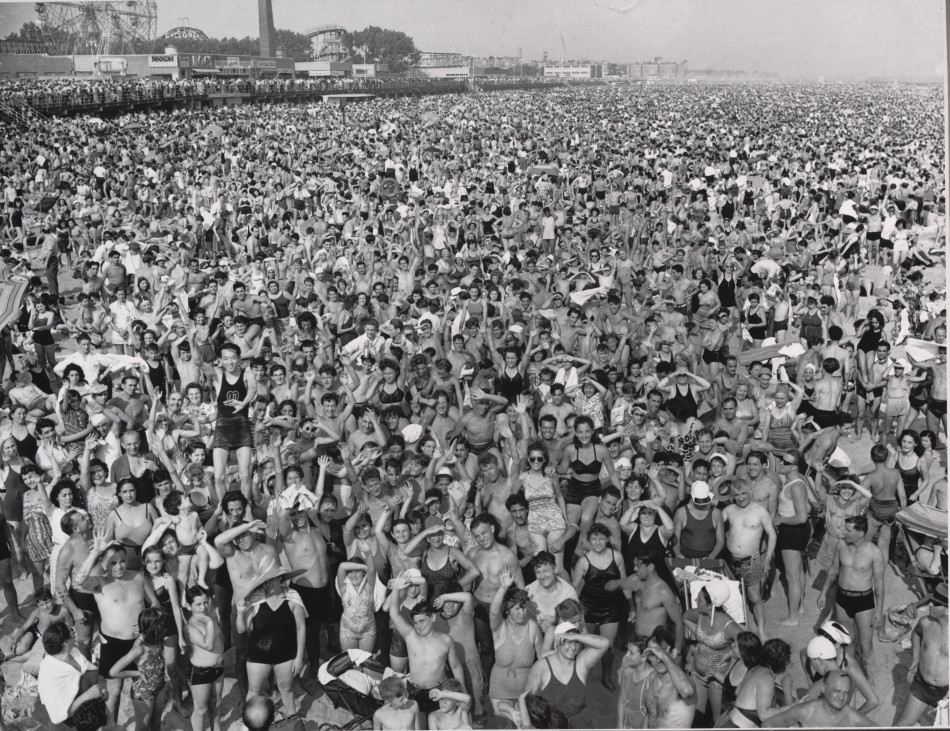
    Funny how in so many of these big crowd picture that I’ve performed surgery on that hats seem to be an issue.  For example, there’s this iconic photograph by Weegee (Arthur Felig, born Usher Felig in the Ukraine, 1898-1909, a man who lived for “the shot” and got it over and over again, evidently at the cost of just about everything else in his life) of the crowds at Coney Island. (“Weegee” was the phonetic spelling of Ouija, a moniker given to the man because he seemed be able to intuit the location of a crime or action of some sort.  It helped that he was the only journalist/photographer given a license to have a police-band radio receiver at home and in his car. 

    Weegee_-_Coney_Island-big
    Weegee_-_Coney_Island-big hat So far as I can tell there is only one man in a hat–the guy in the bottom right corner of the image, and he’s wearing a fedora at that.  The person at 10:00 from him–white-hatted with a plastic visor–may be a man, too, in which case I’ll have to amend this a little to restrict hats to fedoras.  And wearing it, too, at the time of the photo–there’s another man in there somewhere who is doffing his boater to the photographer.  And that’s about it.  Not much sand in this picture.

    It is a little unusual, this hat business–but Weegee at least has captured hats in unusual places.  Finding his bread buttered by crime photography and the gritty aspect of late-night city life, Weegee documented all manner of criminal activities in NYC during the 1930’s-1950’s, including more than his fair share of Mafia slayings.  I recall several of this photographs featuring the “hit” face-down on the pavement or on the table-clothed tabletop, hat still firmly in place. MOMA bought several of Weegee’s works in the 1940’s for an exhibit called “Action Photography”–which I guess would describe Weegee’s work, though if the action was starkly captured by a flash at night in tough surroundings, the description might be better. 

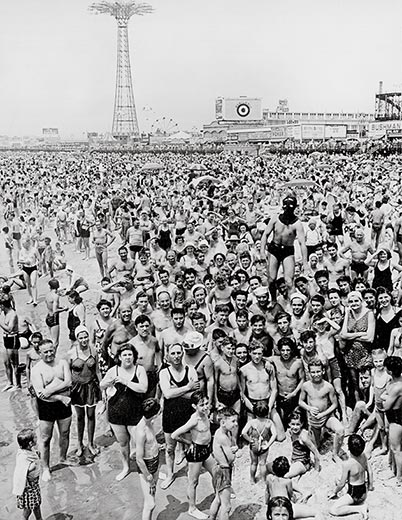
    Weegee-masked-man-Coney-Island-520
    This photograph by Weegee captures a few sailors in their caps, which I’m not sure count.  Primary in this photo though is the man in the middle, wearing a mask (for reasons unknown).