A Daily History of Holes, Dots, Lines, Science, History, Math, Physics, Art, the Unintentional Absurd, Architecture, Maps, Data Visualization, Blank and Missing Things, and so on. |1.6 million words, 7500 images, 4.9 million hits| Press & appearances in The Times, Le Figaro, Mensa, The Economist, The Guardian, Discovery News, Slate, Le Monde, Sci American Blogs, Le Pont, and many other places… 5000+ total posts since 2008.

Category: Photography

  • Daily Dose of Dr. Odd: Sierpinski Triangles & the Empire State Building

    JF Ptak Science Books   Daily Dose series   [Also part of the History of Lines series] 

    So, Nat’rists observe a flea

    hath smaller fleas that on him prey,

    And these have smaller fleas to bite ’em, and so on ad infinitum.

    –Jonathan Swift, 1733 

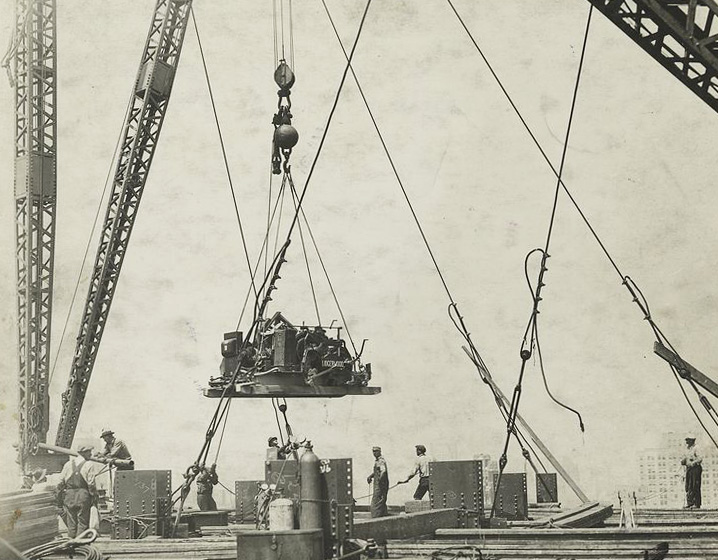
    There are a lot of triangles in this fabulous photo of the construction of the Empire State Building in 1931–a lot. At least fifty–more if you use your imagination or get your pinhole specs out. It is simply an excellent photo in which I’m seeing things of a reducible nature–not in the sense of a Sierpinski triangle/sieve/gasket, obviously–but just a simple exercise along those lines (ha!), experiencing the image by recognizing different sorts of boundaries within it.

    Lines empire state bldg

     [Source: New York Public Library Digital Collections, here.]


  • Daily Dose of Dr. Odd: On What Silent Massive Bells Sound Like

    JF Ptak Science Books   Quick Post  

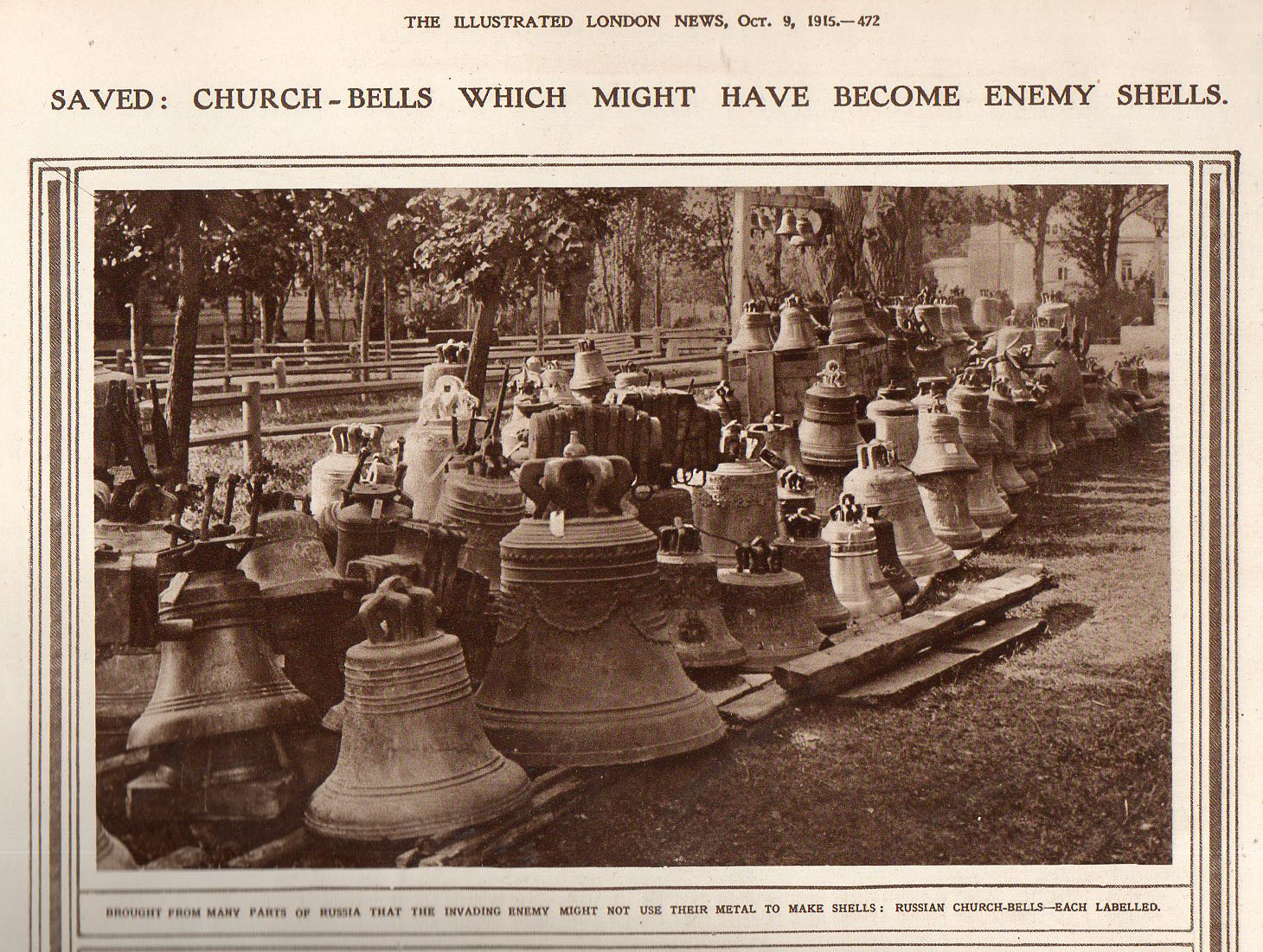
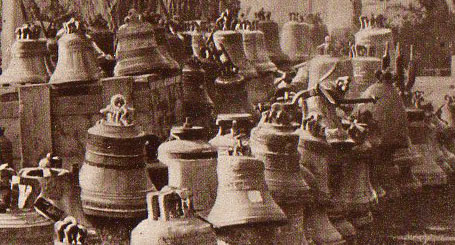
    Looking at these pictures, the first thought about what silent bells sound like is pathetic nothingness, and that apart from any secular importance or significance.  But when the Russians pulled out of Poland they took the bells of the churches with them, keeping them from the advancing German army, keeping them so that the Germans didn’t melt them down to use in munitions.  The bells disappeared too from many Russian cities, pulled back deeper inside Mother Russia, far from the advancing army.

    Bells 578[Source, above and next three images, from the Illustrated London News, 4 October 1915.]

    Bells 578_edited-1


  • Images of the Quick and the “Still”: Trouvelot’s Sparks and Stars, ca. 1890

    JF Ptak Science Books     Post 1827
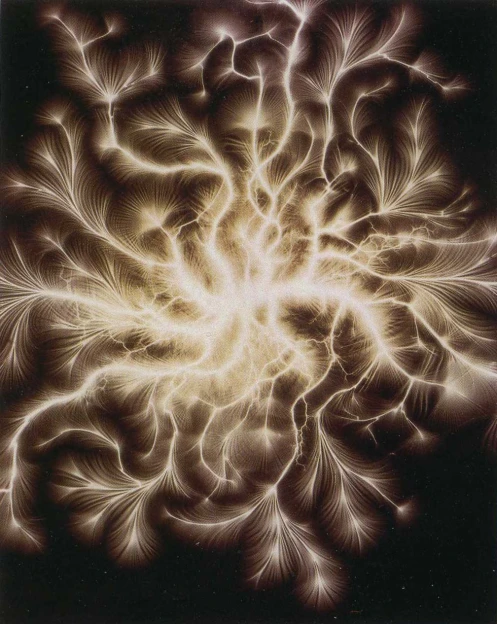
    Etienne Leopold Trouvelot. Trouvelot Figure. Photographic print, c. 1888.

    Etienne Leopold Trouvelot (1823-1895) was an ex-pat Frenchmen who settled in Medford (“Don’t Pronounce the First D”) Massachusetts, and who became a very highly accomplished and deeply skilled astronomical observer and astro-illustrator.  (I’ve included a suite of fifteen of his most accomplished works below, all found in greater detail via their links from their source at  the NY Public Library Digital Collections.)

    Trouvelot covered the spectrum in his art and photography–in addition to making photographs of the deeply settled but still open-to-mystery astronomical objects, he also was the photographer of extremely intransient things.  Among the later are some fantastic images that he made of high-voltage electrical discharges (images of which I found initially at the blog  Translinguisitic Order). 

    The image above is an example of that work, despite it looking like something rather deep-space-y, it is decidedly terrestrial–it is an image that he made of a discharge from either a Ruhmkorff coil or Wimshurst machine, and was produced ca, 1888/9.  It was a signature accomplishment, like photographing lightning or making an atlas of clouds, a watermark of sorts in a decade of photographic highpoint contributions in the sciences. (Some of these accomplishments were found in the work of Etienne Marey, who was able to isolate action in a continuous series of photographic still images, which for its time revealed shocking results.  Not only did the Marey work display the magnificence of motion, it also provided just about the first opportunity in the history of people to show the action in reverse.)
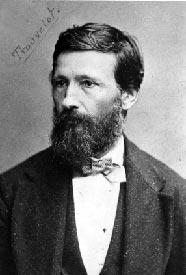
    File:Trouvelot.jpg

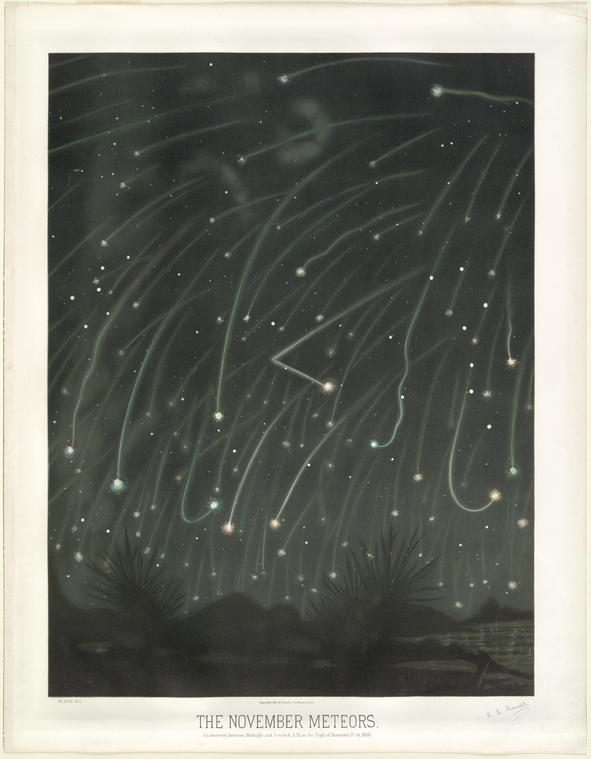
    Trouvelot’s drawing of a meteor shower, which I know has a very certain biological feel to it:

    The November meteors. As observed between midnight and 5 o'clock A.M. on the night of November 13-14 1868.

    Caption from NYPL: “Image ID: trouvelot_012. The November meteors. As observed between midnight and 5 o’clock A.M. on the night of November 13-14 1868. (1881-1882)

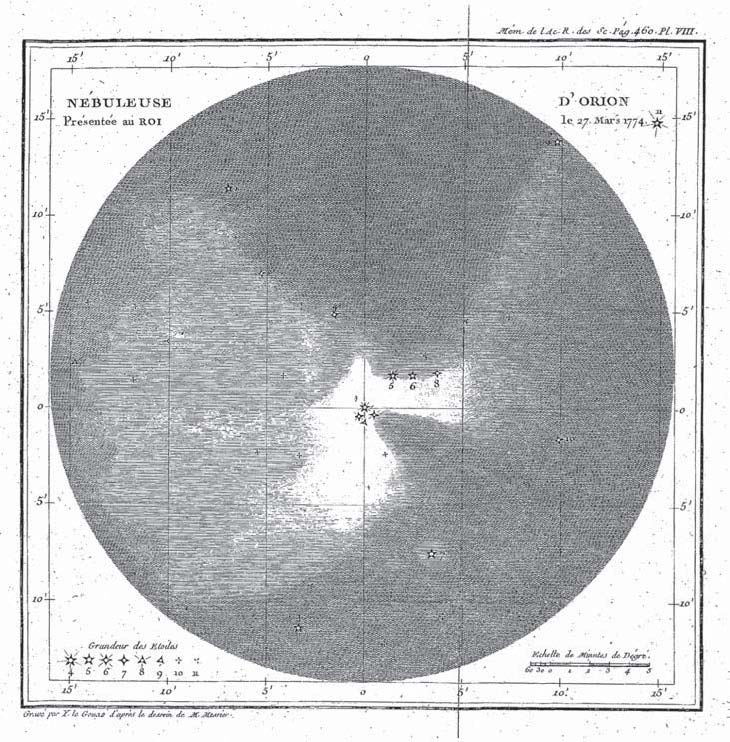
    And this spectacular image of the “Great Nebula in Orion” as it used to be called in some textbooks, now better known as Messier 42 or M42 or NCG 1976, which was and probably still may be one of the closest scrutinized things in the sky. It was recognized first perhaps by Niclas Claude F de Peirsec in 1610, with the first published account following in 1618 by Cysatus of Lucerne, though it didn’t get any real traction until it fell into the hands of Christian Huygens (1656) who also published the first image of the big bright spot in the middle of the sword of Orion in 1659.  (This is a little off-target but I like the historical end of the story.)

    The great nebula in Orion. From a study made in the years 1875-76.
    And just for the sake of it, the Messier drawing:
    File:M42m.jpg
    And Andrew Commons’ photograph of the nebula in 1883 was a great improvement over our old friend Henry Draper’s 1880 groundbreaking attempt:

    File:Orion-Nebula A A Common.jpg

    It is still a little bit of a mystery to me that it took another two decades or so for people to consider that first photo (above) as “art”–perhaps it was the classification of the work as “scientific” and therefore not-necessarily-art, but folks surely made use of this and the Marey and other scientific photography of the 1880’s in their art of the 19-teens.  Trouvelot never lived to see it, though; and perhaps it wouldn’t’ve made sense to him.  I just don’t know. 
    It is also amusing that for this great “finder” the root of the first half of his name in French is “find”.
    The full suite of fifteen images by Trouvelot, below, all thumbnails from NYPL:
  • WWI Photographs: Pigeon Trucks and Medical Dogs

    JF Ptak Science Books   Post 1822

    WWI  pigeon572
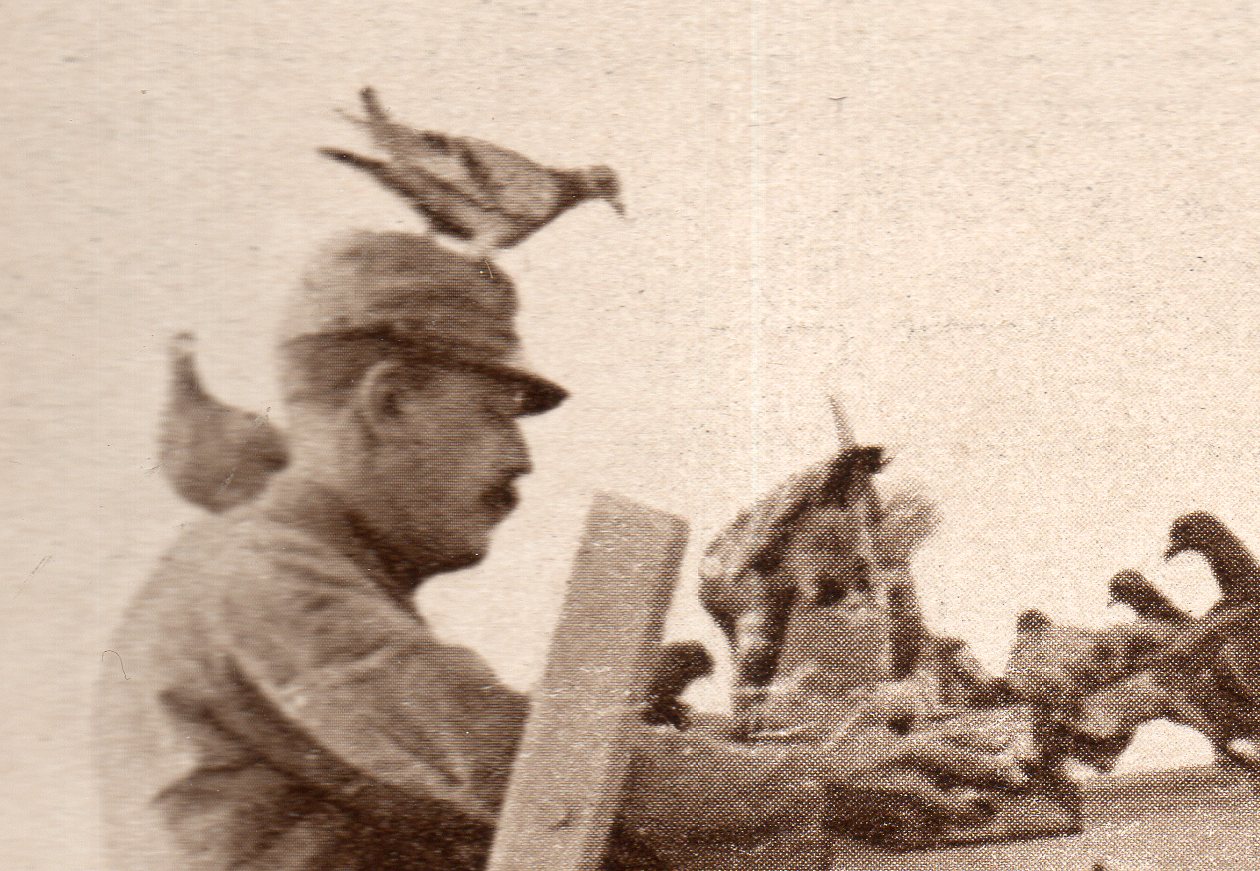
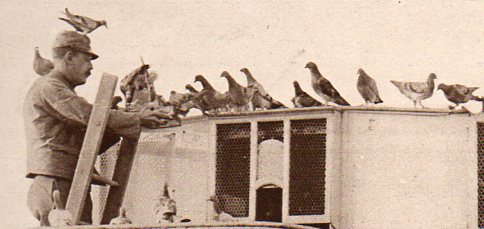
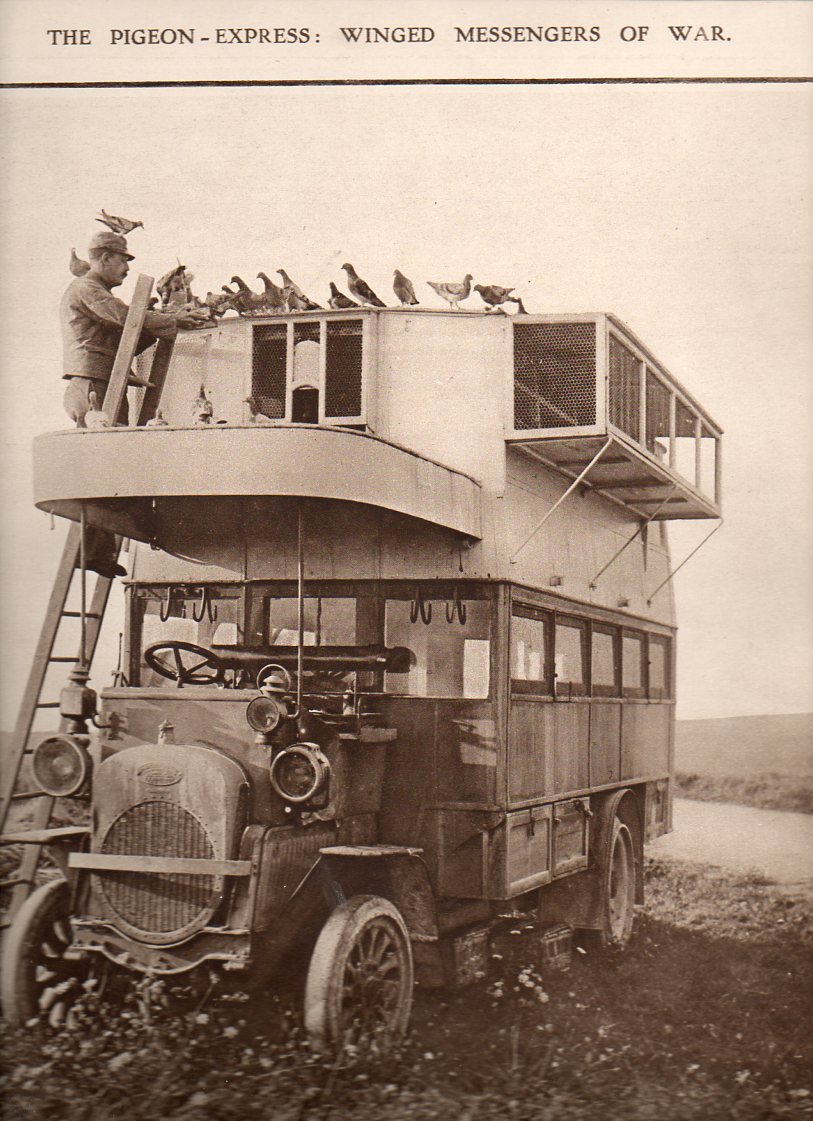
    A fascinating aspect in modern technology and warfare is the reliance upon pigeons and dogs–and their achievements–for war services.  Evidently several hundred thousand pigeons were used to relay messages between divisional headquarters and battlefield positions and such during WWI, with something like 90% of the messages being delivered successfully–a remarkable achievement, since it was not uncommon for the pigeons to fly dozens of miles to perform their task. The services worked so well in fact that the American carrier pigeon service training facility for the army was not closed until 1957.

    Dogs were used as guards and ambulance litter carriers, but it seems they were mostly used for communication purposes, taking messages back and forth through the masses and intricacies of trenches. 

    The image below comes from The Illustrated London News for 2 October 1915:

    WWI--e---pigeon truck det644

    Osman, Lt. Col. A.H., Pigeons in the Great War: A Complete History of the Carrier Pigeon Service during the Great War, 1914 to 1918 (London, 1928)  Read more at Suite101.  [All images below are available for purchase from our blog bookstore, here.]

    WWI--e---pigeon truck643

    ·Posted by :

    ·in:

    — —

  • Fabulous Bathing Beauty Panoramic Photograph, 1925.

    JF Ptak Science Books   Quick Post

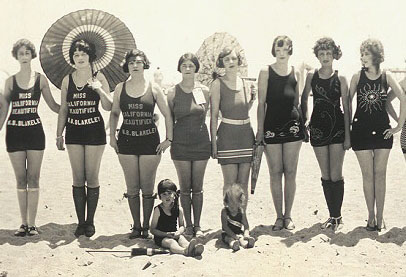
    Magnificentt.  Also I just couldn’t resist presenting this image vertically to give some aspect of its presence, which is captivating. [Source: the Library of Congress, here].

    Balboa Beach Bathing Party, 1925.

    Panaorama--bathing beauty long

    Panaorama--bathing beauty long detai;l

    Panaorama--bathing beauty long VERTICAL

    ·Posted by :

    ·in:


  • Quiet, Beautiful Bathing Beauties, 1900

    JF Ptak Science Books    Quick Post

    [Bathing beauties, Atlantic City, N.J.]

    These images are just quietly magnificent.  They were made by the Detroit Publishing Company, and published sometime between 1890 and 1900.  The original is a glass negative, and this digital copy appears on the Library of Congerss site, here. 

    [Bathing beauties horsing around, Atlantic City, N.J.]

    ·Posted by :

    ·in:

    —

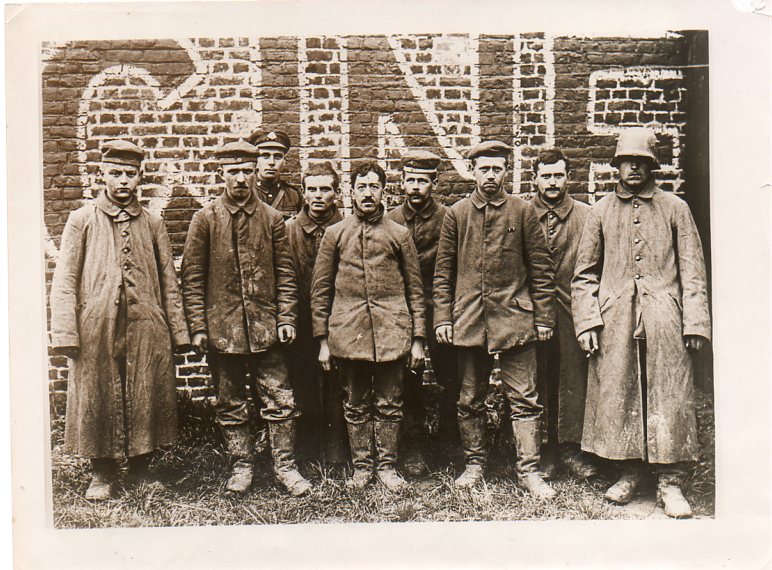
  • The Face of the Finished Foe: German POWs, 1918

    JF Ptak Science Books      Post 1809

    I’ve written a number of times on this blog about WWI images, many of which are in my own collection of News Service Photo Group images, like the one just below, which can be found here. Many of them are remarkable, astonishing even–especially those relating to soldiers whose war has ended, finding them as prisoners of war.  At least they weren’t dead, like the dozens of millions of other soldiers.


    WWI photograph--german prisoners066

    (Original photograph available at our blog bookstore here.)

    I uncovered another of these images, tonight, long misplaced.

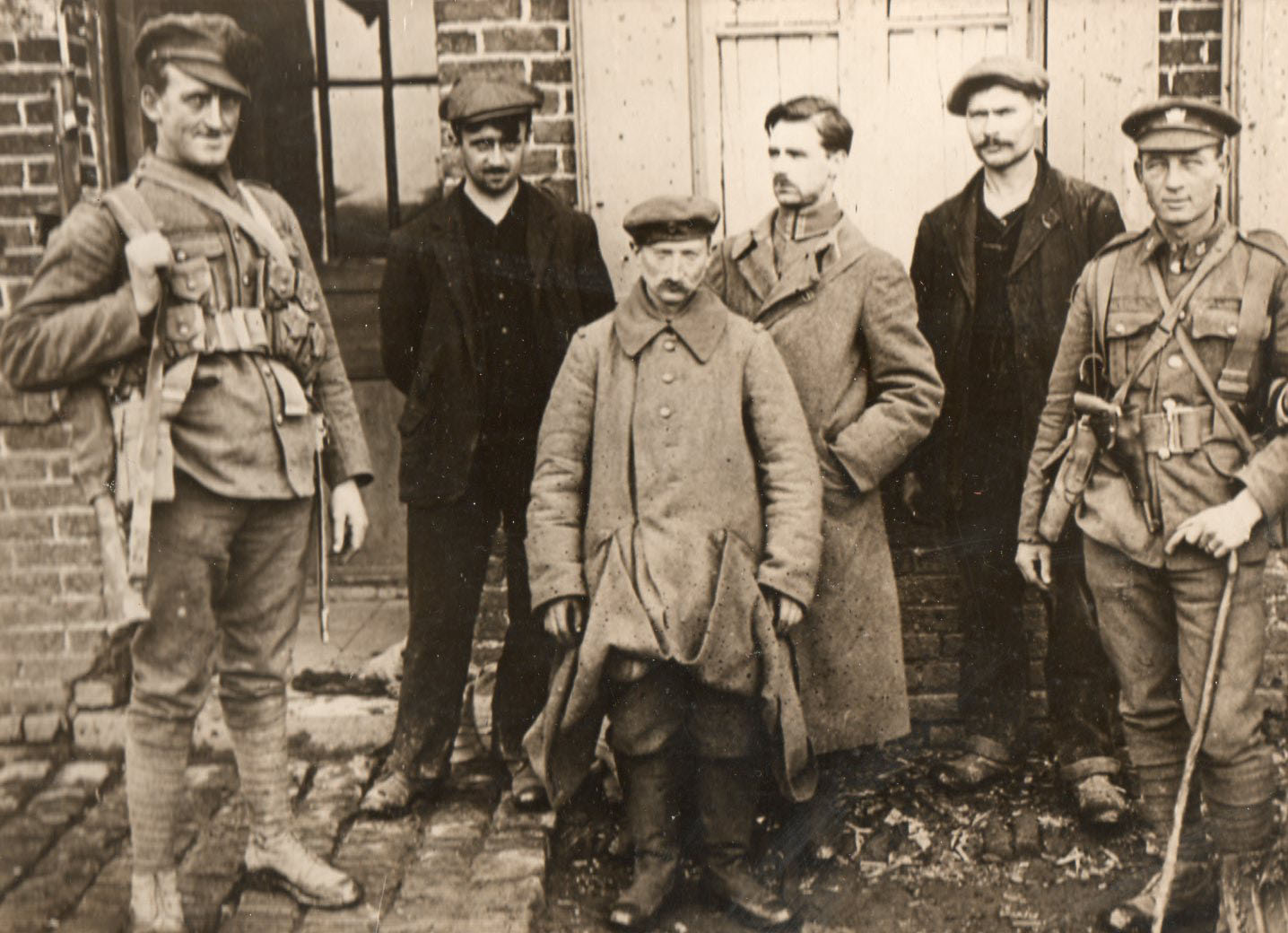
    WOrld War I Prisoners547[Image available from our blog bookstore, here.]

    There were over 8 million soldiers taken prisoner during WWI, that in addition to the 21 million who were wounded and the 9.7 million killed:  38 million.  Plus 6.8 million civilians who were killed: 45 million.  And the numbers for civilians wounded are just, well, not reliable, as they were not really collected, or collectible.  At the end of it all, there were probably between 50 to 75 million soldiers and civilians killed or wounded or taken captive during the war…not including civilians who were killed by the hardships or starvation caused by the conflict.  Big, big numbers.

    Some of these soldiers were taken in entire armies, surrenders of hundreds of thousands; and some came in pairs, or singles, as in the photo above.  There are two captured Germans here, the two men in the middle, who are flanked by a British soldier and (I think) a Canadian officer, with two locals in the background.  The short man front-and-center was paraded no doubt for his propaganda value–certainly not five feet tall, slender, with a tiny, not-average face.  The Tommy is certainly enjoying the situation, while the officer maintains composure. 

    I’m sure the photo could’ve been made by any photographer for any army at any time.

    The photograph was made in 1918, a few months before the end of the war, but there was still fighting to be done, and the value of showing the the British and Allied publics the “face” of a now-wilting enemy must have been considerable.  There was considerable control and tightness over the sort of images allowed to be produced and published coming from the front line, photographs being made by a “pool” of news photographers the contents of which were closely evaluated by military censors before being allowed to circulate to newspapers and magazines.

    ·Posted by :

    ·in:

    — —

  • Dorothea Lange–FSA Photographs at the Library of Congress Site

    JF Ptak Science Books    Post 1806  

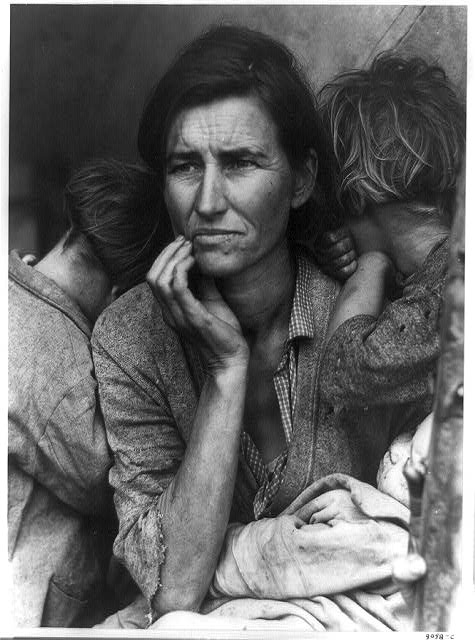
    Found below is a selection of photographic images from the Farm Security Administration collection at the Library of Congress.  Today’s photographer:  Dorothea Lange.

    On of the great innovations in a sea of great things accomplished during the Franklin Roosevelt administrations was the formation of the Farm Security Administration, a division of the government established to help farmers through the devastating Dust Bowl and Great Depression.  A subset of the FSA was a photographic unit which was set up to document the progress made by the FSA (and provide, I am sure, for some much-needed good news, a hearts-and-minds campaign).  This division was headed by Roy Emerson Stryker, who wound up hiring a collection of dream-team photographers unlike any ever assembled for a single purpose.  Esther Bubley, Marjory Collins, Mary Post Wolcott, Arthur Rothstein, Walker Evans, Russell Lee, Jack Delano, Gordon Parks, Charlotte Brooks, John Vachon, Carl Mydans, Dorothea Lange and Ben Shahn were sent out all across the country and wound up with the greatest and most beautiful photographic history ever assembled in the United States.  There were about 77,000 images made, and I recall reading (somewhere) that the total budget for the Stryker group for the years 1936-1942 was about $100,000, meaning that each completed image cost just over a dollar apiece. So far as art funding by the government is concerned, that about the best it has done.

    [Listed below are some samples of Lange’s work at the LC–there are more than 3,000 images by her in the collection, found here.  All images below are also expandable.]

    Note:  occassionally found among these images are those with a black dot in the center.  That was the editorial work of Mr. Stryker, who for some reason hole-punched images that he thought weren’t quite up to snuff, or unacceptable for some reason.  In this ruination he also decided to archive them, which means if he was keeping them anyway he might as well have not plugged them, keeping them whole and intact and in their own pile. Anyway, that is what the black dot is all about.

    Lange--migrant

    digitized item thumbnail digitized item thumbnail digitized item thumbnail digitized item thumbnail digitized item thumbnail digitized item thumbnail digitized item thumbnail digitized item thumbnail digitized item thumbnail digitized item thumbnail
    digitized item thumbnail digitized item thumbnail digitized item thumbnail digitized item thumbnail digitized item thumbnail digitized item thumbnail digitized item thumbnail digitized item thumbnail digitized item thumbnail digitized item thumbnail
    digitized item thumbnail digitized item thumbnail digitized item thumbnail digitized item thumbnail digitized item thumbnail digitized item thumbnail digitized item thumbnail digitized item thumbnail digitized item thumbnail digitized item thumbnail
    digitized item thumbnail digitized item thumbnail digitized item thumbnail digitized item thumbnail digitized item thumbnail digitized item thumbnail digitized item thumbnail digitized item thumbnail digitized item thumbnail digitized item thumbnail
    digitized item thumbnail digitized item thumbnail digitized item thumbnail digitized item thumbnail digitized item thumbnail digitized item thumbnail digitized item thumbnail digitized item thumbnail digitized item thumbnail digitized item thumbnail
    digitized item thumbnail digitized item thumbnail digitized item thumbnail digitized item thumbnail digitized item thumbnail digitized item thumbnail item not digitized thumbnail digitized item thumbnail digitized item thumbnail digitized item thumbnail
    digitized item thumbnail digitized item thumbnail digitized item thumbnail digitized item thumbnail digitized item thumbnail digitized item thumbnail digitized item thumbnail item not digitized thumbnail digitized item thumbnail digitized item thumbnail
    digitized item thumbnail digitized item thumbnail item not digitized thumbnail digitized item thumbnail digitized item thumbnail digitized item thumbnail digitized item thumbnail digitized item thumbnail digitized item thumbnail digitized item thumbnail
    digitized item thumbnail digitized item thumbnail digitized item thumbnail digitized item thumbnail digitized item thumbnail digitized item thumbnail digitized item thumbnail digitized item thumbnail digitized item thumbnail digitized item thumbnail
    digitized item thumbnail digitized item thumbnail digitized item thumbnail digitized item thumbnail digitized item thumbnail digitized item thumbnail digitized item thumbnail digitized item thumbnail digitized item thumbnail digitized item thumbnail

    ·Posted by :

    ·in:

    —

  • An Alphabet of Australian Convict Mugshots, 1900-1920

    JF Ptak Science Books  Post 1797

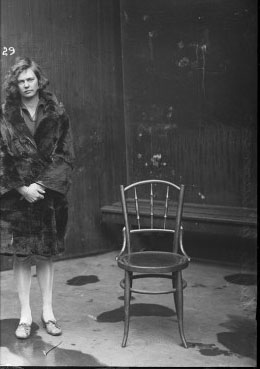
    These photographs are remarkable capsules of space and time–they hold the mostly-realized fates of their subjects, taken into custody in Sydney for crimes from prostitution to stealing to loitering to bigamy to murder and around and around. The poses are interesting in that there seems to be no unified way of making them, which means that most often the detained person had the opportunity to adopt whatever posed they pleased, given the emotional constraints of their situation.  Some are defiant, some at complete ease in front of the camera; others are completely distracted and scared, and embarrassed and guilty.  There also doesn’t seem to be a segregated point for making the photographs, tough there is a common-looking wall and hallway for some of them.  It would be interested to know if the Sydney police were making an editorial statement by placing their subjects in unflattering locations, like standing near a dripping faucet, or amidst trash, or in a garden, or in front of toilets.  In any event the range of emotions is remarkable, even for looking through only a few hundred of the more than 100,000 images that are on line here and there from the good folks in Sydney.     [The images below all started out their life at Sydney Justice and Police, and then used in parts by the following websites and blogs from which I harvested my selection below,:  Retronaut , the Independent,,  Live Journal   the Daily Mail, and the Historic Houses Front (which also has full-ish records for each photograph).  An interesting interpretation of many of the images can be found at SCAN.

    Analytically  interesting, an interpretative invitation.  Apprehensive? 


     BoredAustralian-criminals-15-520x378 guinness b


  • The Topography of Antiquarian Sisters

    JF Ptak Science Books    Quick Post

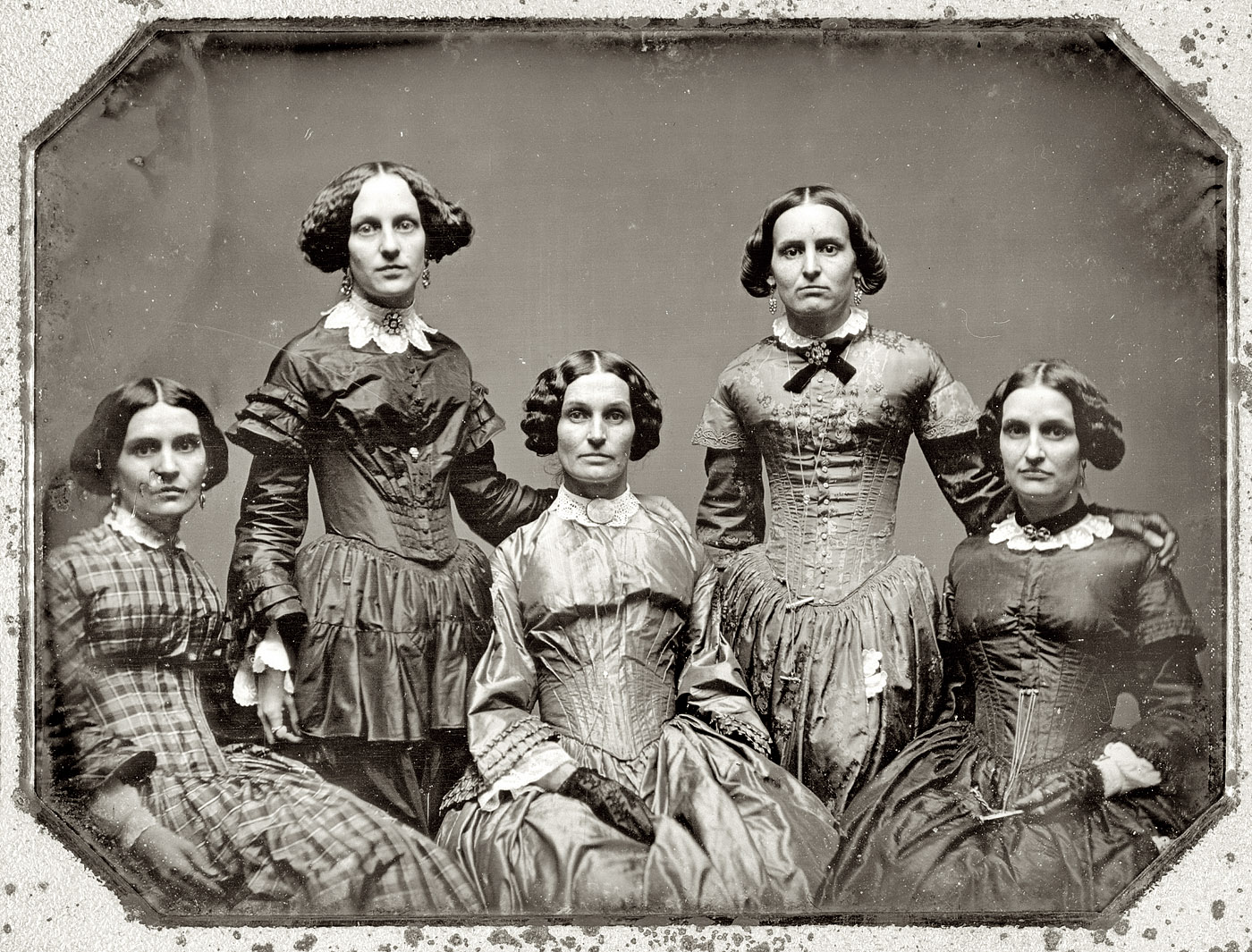
    Sisters

    Photo source: Library of Congress, via Vintage Photography, at retro-vintage-photography.blogspot.com

    This photograph–a daguerreotype, really–is both extraordinary and terribly common, at the same time, and is so in a way that is difficult to define, just that it is so.  It is the work of Frances Benjamin Johnston (whose collection resides at the Library of Congress) and was completed between 1845-1860, and shows the photographer’s aunts.  They make a formidable group.  I’d like to be able to find the data that the outline of their portraits form, because to me they look lik a graph.

    The photographer, Frances Johnston (1864-1952),  was one of America’s first successful female workers in the field of photography and photo-journalism.  She opened a studio around 1890, and went into business, no doubt helped along by her wealthy family’s social clipboard.  That it took 50 years or so and the application of a family’s small fortune to firmly establish a woman at this rank in photography, so close to the year 1900, so far into the advance of photography, is remarkable. The self-portrait, below, shows her mind:

    File:Frances Benjamin Johnston, full-length portrait, seated in front of fireplace, 1896 (altered).jpg

    she reveals herself a woman of the modern age, with her petticoats flaring and obvious, a cigarette in one hand, and a beer stein in the other, secrets no longer.

    Sisters 1