A Daily History of Holes, Dots, Lines, Science, History, Math, Physics, Art, the Unintentional Absurd, Architecture, Maps, Data Visualization, Blank and Missing Things, and so on. |1.6 million words, 7500 images, 4.9 million hits| Press & appearances in The Times, Le Figaro, Mensa, The Economist, The Guardian, Discovery News, Slate, Le Monde, Sci American Blogs, Le Pont, and many other places… 5000+ total posts since 2008.

Category: Photography

  • The Mona Lisa of British Female Swimmers Photographed in an Awkward Moment (1918)

    JF Ptak Science Books  Quick Post

    WWI Photos--female swimmer detail

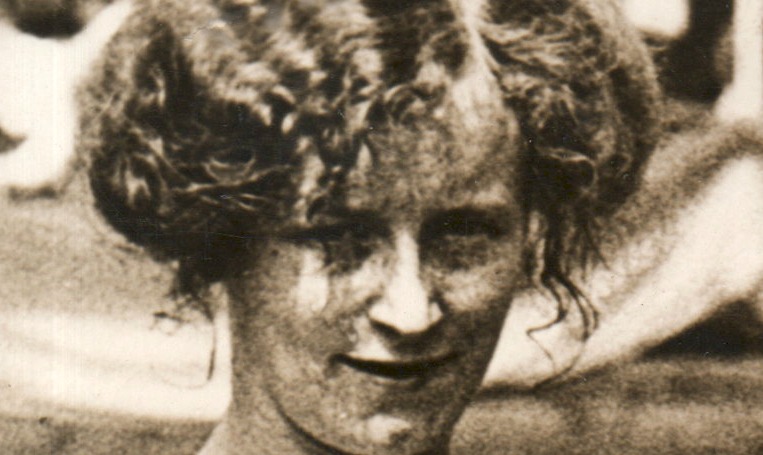
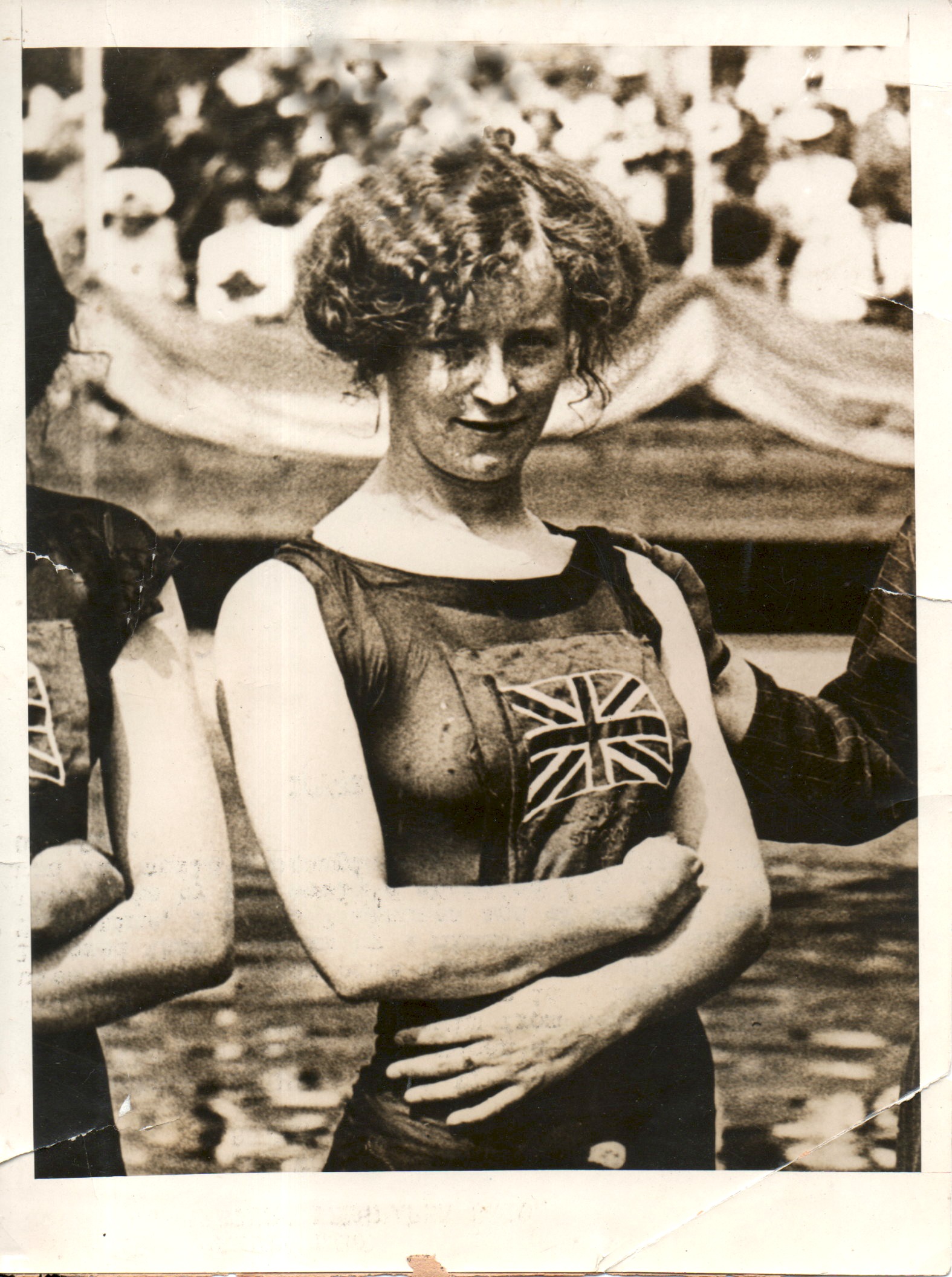
    I have made perhaps 100 posts on the images from a collection of WWI news photo service images that I have, and for quite some time this image  (below) has been one of he most captivating of the thousand or so that were in that collection.  Generally the images were accompanied by a suggested text that could appear alongside the picture when it was published (see here for the ins and outs of publishing photographs during WWI), but this one had no description at all, save for the copyright on the back belonging to Underwood and Underwood. 

    I thought that this photo was from 1918, as 1000 of its companions were, but I was corrected by on twitter about the Mona Lisa’s true name–Jennie Fletcher, (1890-1968), and the picture was at the 1912 Olympics.  It is nice to be able to put a name to the face.  (See the BBC for a good story: http://news.bbc.co.uk/2/hi/uk_news/wales/7554196.stm)

    The camera has caught her at an awkward time, especially given the sensitivities of showing skin in bathing attire. 

    What is she conveying? What is she saying with the attitude of her head and the look in her eyes?

    There have been Classic Attitudes among the photographs (like the Venus of the Tars, for example), and in all of these examples, she is the only Mona Lisa.

    WWI Photos--female swimmer185

    ·Posted by :

    ·in:

    —

  • An Image from the Big Book of Big Groups of Convicts (1911)

    JF Ptak Science Books  Quick Post

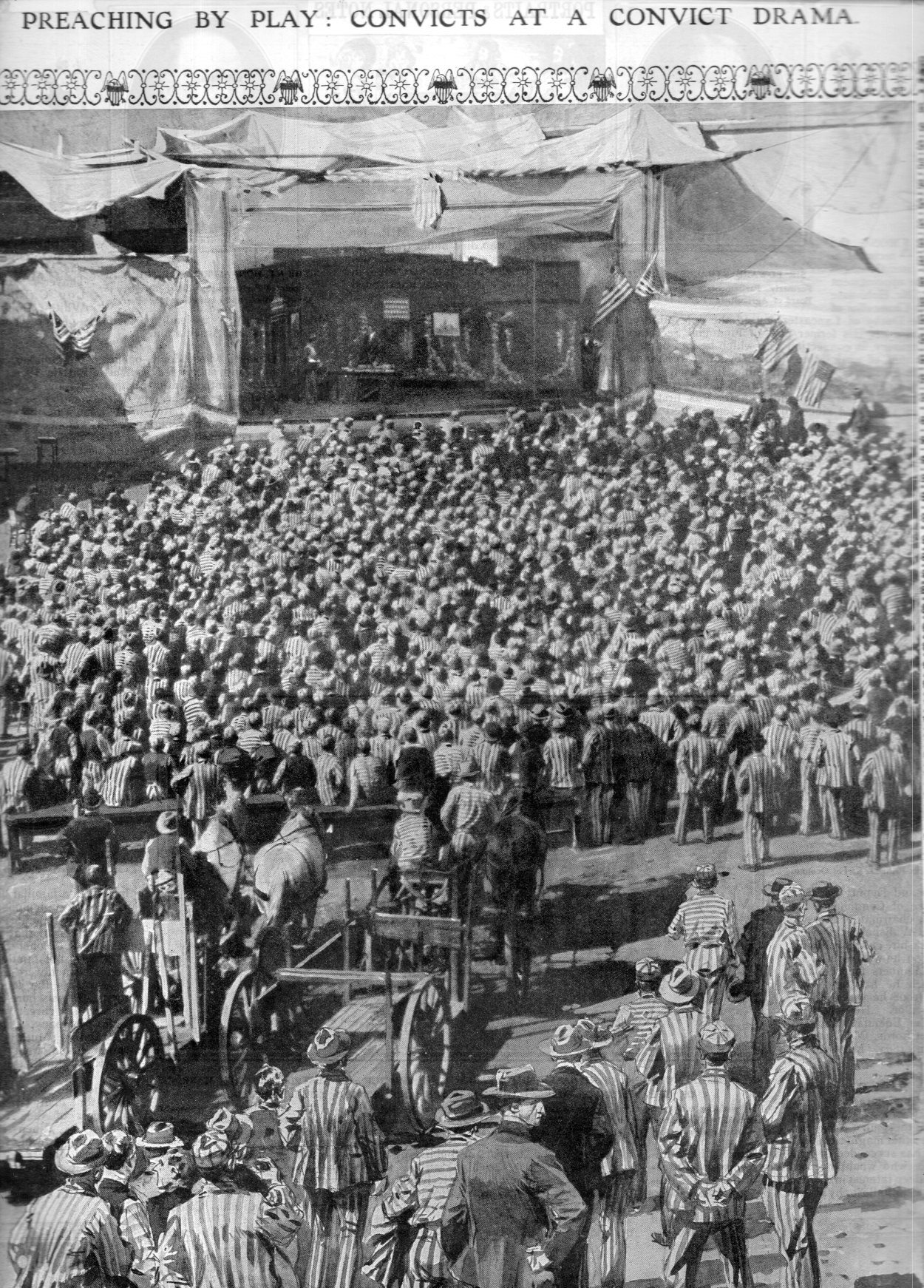
    The imaginary Big Book of Photographic Firsts is thick and brickish with data on the first times “things were done” in photography. That would include processes, papers, uses of chemicals, lenses, materials for the camera, and so on, not to mention the long lists of the first time certain sorts of images were made: the first photograph (and not necessarily the first Daguerreotype), the first photograph of a face/Moon/Sun/Sunset/full-body portrait/first outdoor image/first image from a height/first image from a balloon/first photo of a dead person/and so the list continues. This came up tonight while looking at the photo below, a mass photograph of prisoners, which caused the thought about when the first pictures of convicts were made (and then of course the first images of a prison, and the first for a mass of prisoners, etc.). As it turns out the earliest convict photos are pretty early, in the early 1840’s (Daguerre’s announcement coming in 1839 and almost immediately became an active technological meme). The individual photos of prisoners were fairly haphazard, though, with no forensic value for several decades, when Alphonse Bertillon came by in the 1870’s and created standards by which all prison portraits/mug shots were made. Unfortunately I was not able to find anything on the earliest mass photographs of prisoners by my imaginary “press time”, so I’m posting this photo and its half-story as is—hopefully I’ll come back to it with some data back-fill to make it right. In the meantime, though, all I wanted to do was to share the image, which I think is extraordinary in its own right.

    Convicts108

    [Source: The Illustrated London News, October 29, 1911, page 669.]

    [And to further complicate the story of this photo it seems to be 2/3 photo and 1/3 drawing, making it a montage–the third or so closest to the viewer is definitely a drawing; the rest of it is definitely a photograph. There’s a lot of people in this photo, and almost everyone has a hat.]

    ·Posted by :

    ·in:


  • Pause-Giving Photographs of Artillery Shell Vastness, ca. 1917

    JF Ptak Science Books   Quick Post

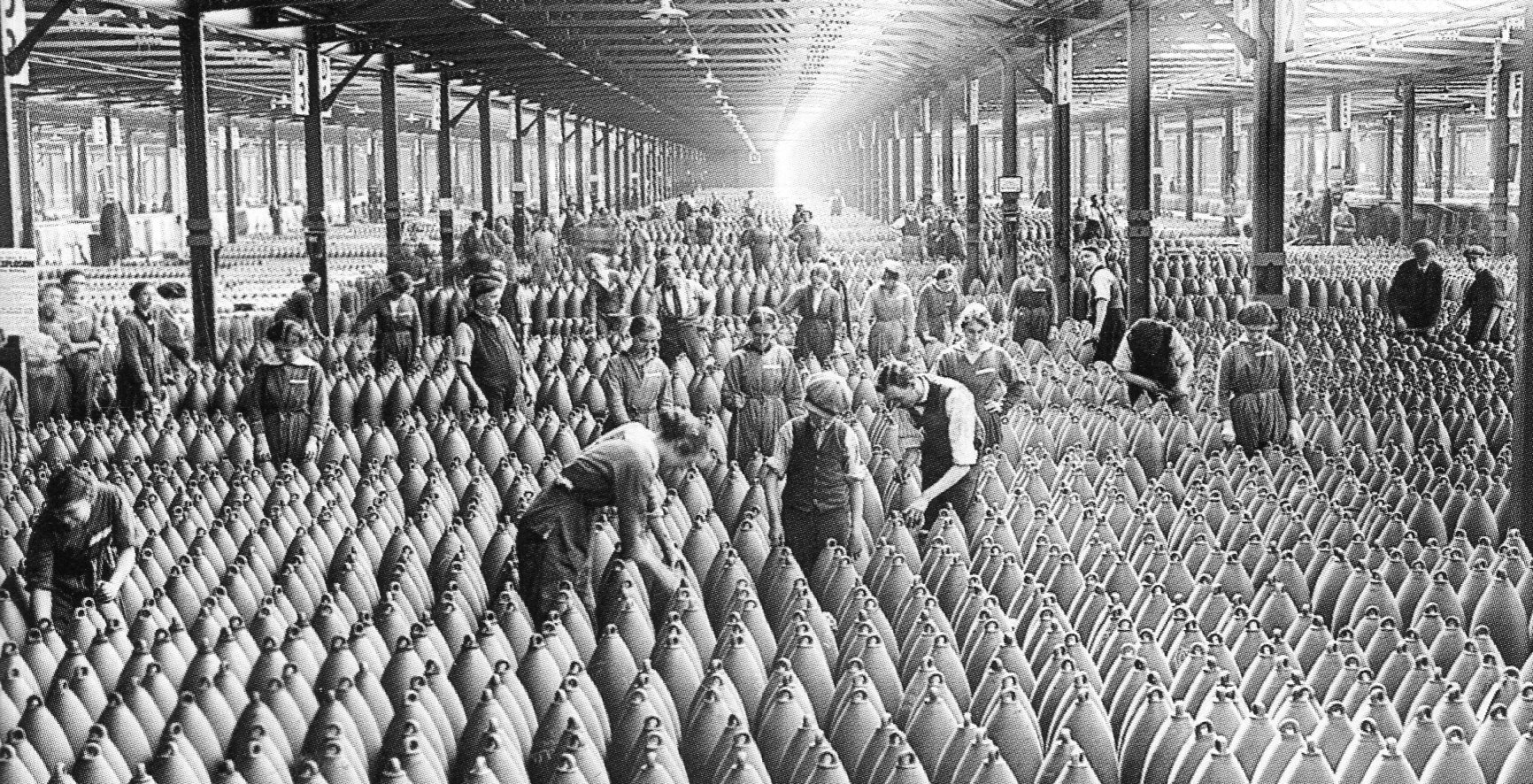
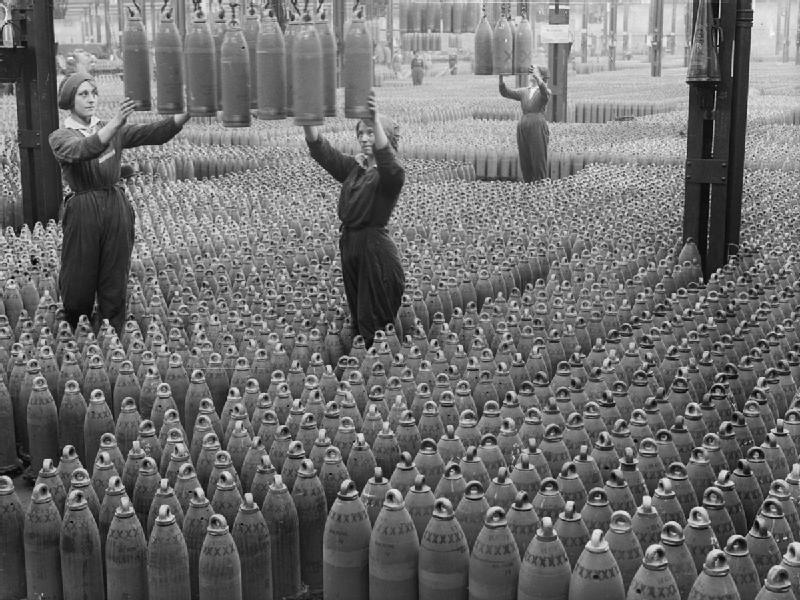
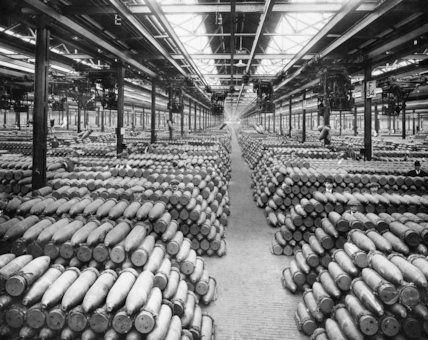
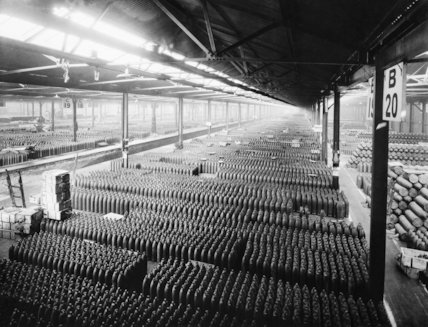
    Shells as far as the eye can see, at the National Filling factory at Chilwell, Nottinghamshire. Even though I enjoy calculating estimates at vast quantities of things (like all of the life that has existed on Earth, from multi-cellular onwards, how many Legos it would take to build a Dyson sphere around our Solar System, what distance the Enterprise has covered under the command of Capt Picard, that sort) I really can’t get a comfortable picture of the vastness of this factory to estimate the number of pounds of explosives under that roof.  

    Given that the factory produced about 19 million shells during WWI, I think it would be a safe guess that some 1 billion pounds of explosives were processed through the factory–and perhaps several billion.  But it is difficult to say what we are looking at in these photos, except to say that the number is “big”.

    WWI shells979[Source” John Hughes-Wilson, The First World War in 100 Objects, Firefly Books, 2014.  

    WWI shells canary girls[“Female munitions workers guide 6 inch howitzer shells being lowered to the floor at the Chilwell ammunition factory in Nottinghamshire, U.K.”–Source: “British official photographer : Nicholls, Horace – This is photograph Q 30040 from the collections of the Imperial War Museums.”]

    WWI shells nottinghamshire

    [Source: http://www.iwmprints.org.uk/image/1100193/milner-e-the-interior-of-the-filled-shell-store-at-the-national-shell-filling-factory-at-chilwell-nottinghamshire-15-may-1917]

    WWI shells long hall

    [Source: http://www.iwmprints.org.uk/image/1100192/milner-e-shells-awaiting-filling-with-explosives-in-a-store-of-the-national-shell-filling-factory-at-chilwell-nottinghamshire-21-november-1916]


  • An Experimental Documentary on the Soviet Union, 1929

    JF Ptak Science Books   Quick Post

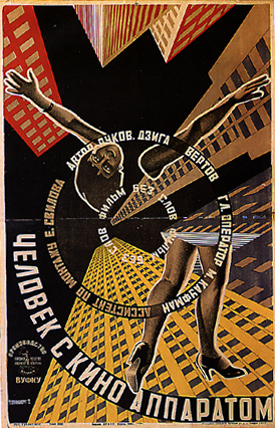
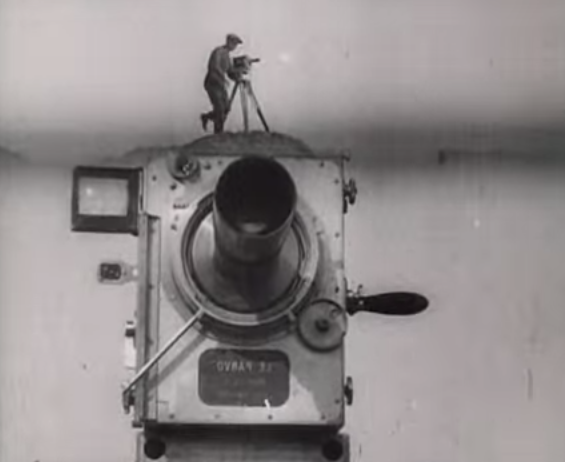
    Poster man with a camera

    The man with the camera was David Abelevich Kaufman (Vertov) (1896-1954), who made it along with his editor-wife Elizaveta Svilova (who worked on a number of films, mainly propaganda from the looks of it, though I would really like to see The Fall of Berlin, 1945, and also her film about Auschwitz). 

    The film was evidently a ground-breaker1–Roger Ebert points out one facet of the work, the average shot length, which is by far shorter here than anywhere previous works, meaning that there was more editing and selection done than normally:  “In 1929, the year it [Man…] was released, films had an average shot length (ASL) of 11.2 seconds. “Man With a Movie Camera” had an ASL of 2.3 seconds. The ASL of Michael Bay’s “Armageddon” was — also 2.3 seconds…”)  

    I’ve included a link to the film (below) but honestly what attracted me to it was its poster, created by the indomitable and prolific Stenberg Brothers. Not only does the poster seem to me to be a masterpiece and iconic, it also uses an unusual perspective–straight up.  I’ve done several posts here on the perspective of looking straight down and straight across, but there have been very few opportunities to write something about looking straight up (in the antiquarian image world).  But here it is, in all of its glory.   

    The full movie, here:

    Man with a Movie Camera


    [Source: http://en.wikipedia.org/wiki/Man_with_a_Movie_Camera]

    Notes:

    1. Studio Daily lists Man with a Movie Camera as the 8th best movie ever made.  http://www.studiodaily.com/2012/08/sight-sound-revises-best-films-ever-lists/


  • The Liberty Ball March of 1918–a Superior Photograph

    JF Ptak Science Books  Quick Post

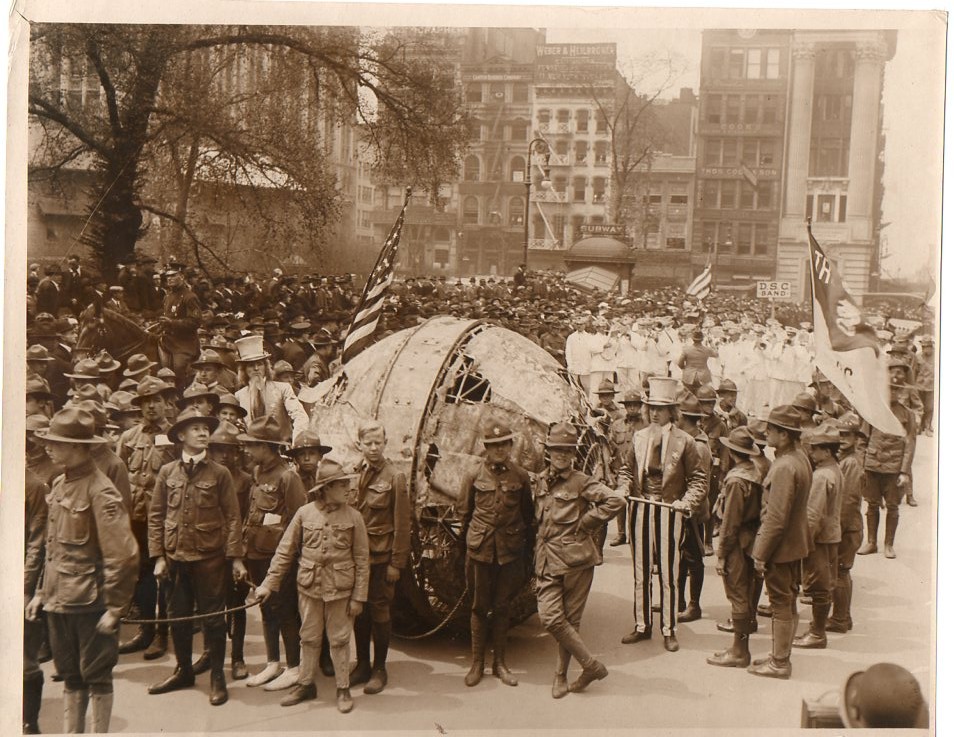
    WwI--photos--flags parade039

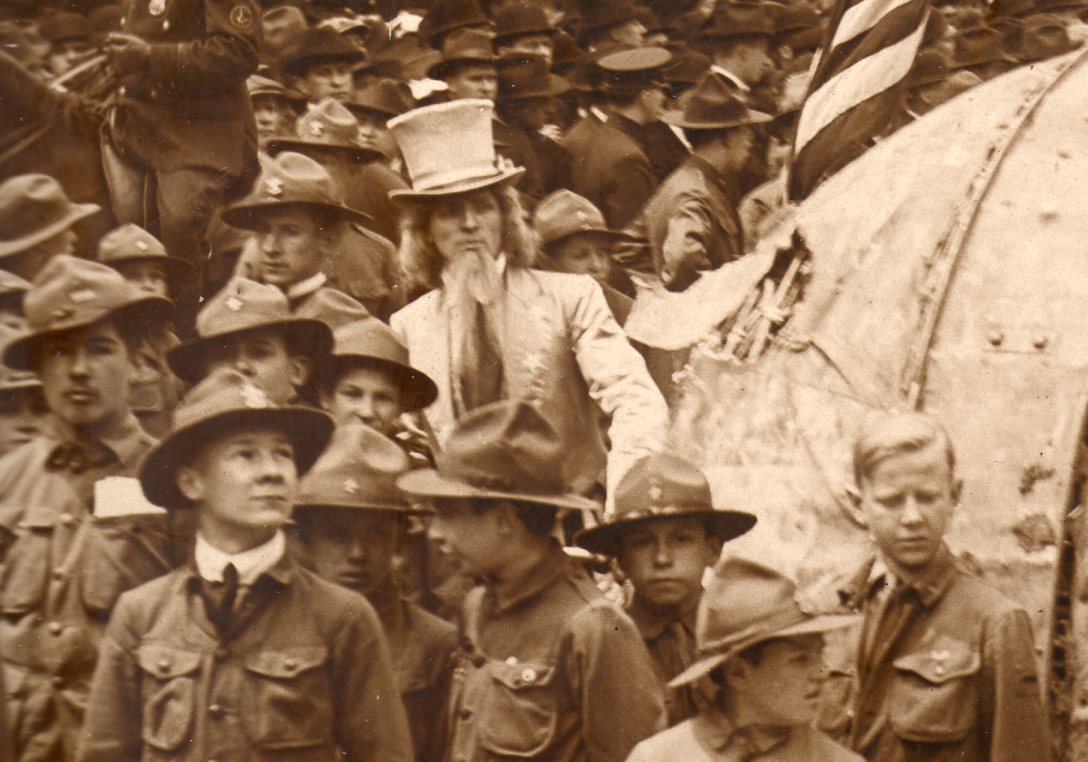
    I was looking through the 1918 volume of Popular Mechanics for an particle on an uphill walking machine that was supposed to look very much like an early bird-shaped flying machine when to my high happiness found the following picture of a WWI bond drive. Earlier in this blog I posted an image of this event without knowing what the image actually depicted, and now with the accompanying text in the Popular Mechanics volume I now now its story.  

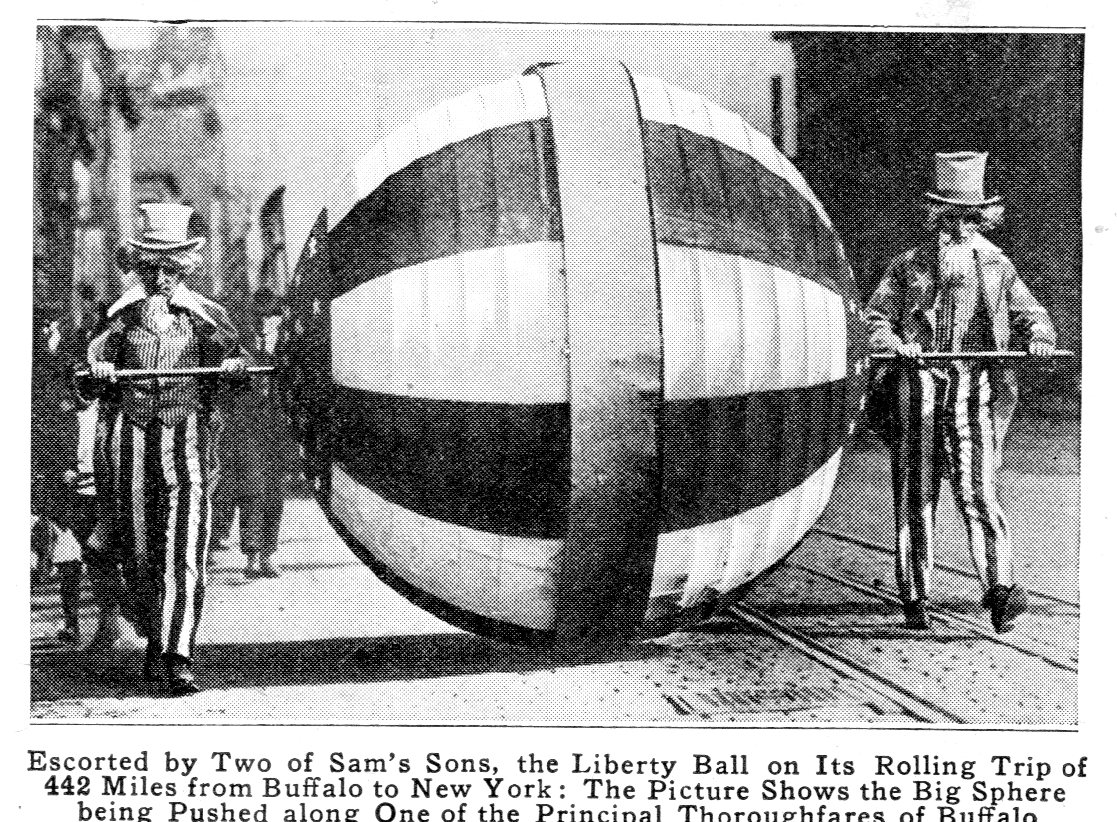
    First, the photograph from Popular Mechanics

    Wwi liberty ball964

    (The image quality is not high in this half-tone (the original is 2″ x 3″) but it serves nicely.)

    And the text with the explanation of the ball:

    “One of the features of the recent Liberty Loan drive was the liberty ball a seven foot red white and blue sphere that was rolled from Buffalo to New York by two sons of Uncle Sam dressed in traditional attire The ball started on its long trip the first day of the bond campaign and reached Gotham on the closing one Keep the ball rolling was the slogan that helped to sell many bonds.”

    And so now I can correct the original writeup:

    Like its more-famous WWII counterpart, scrap drives during The Great War were also frequently conducted.  This is an original photograph showing just such a thing, depicting two Uncle Sams surrounded by Boy Scouts pulling a large hollow metal sphere. The sphere was rolled from Buffalo NY to New York City in an effort to raise awareness for the purchase of Liberty Bonds. By the time the ball reached NYC, it showed definite signs of wear and tear.     

    And of course this is a great photo.  

    • The original is available at our blog’s bookstore, here. 

    WwI--photos--flags parade039


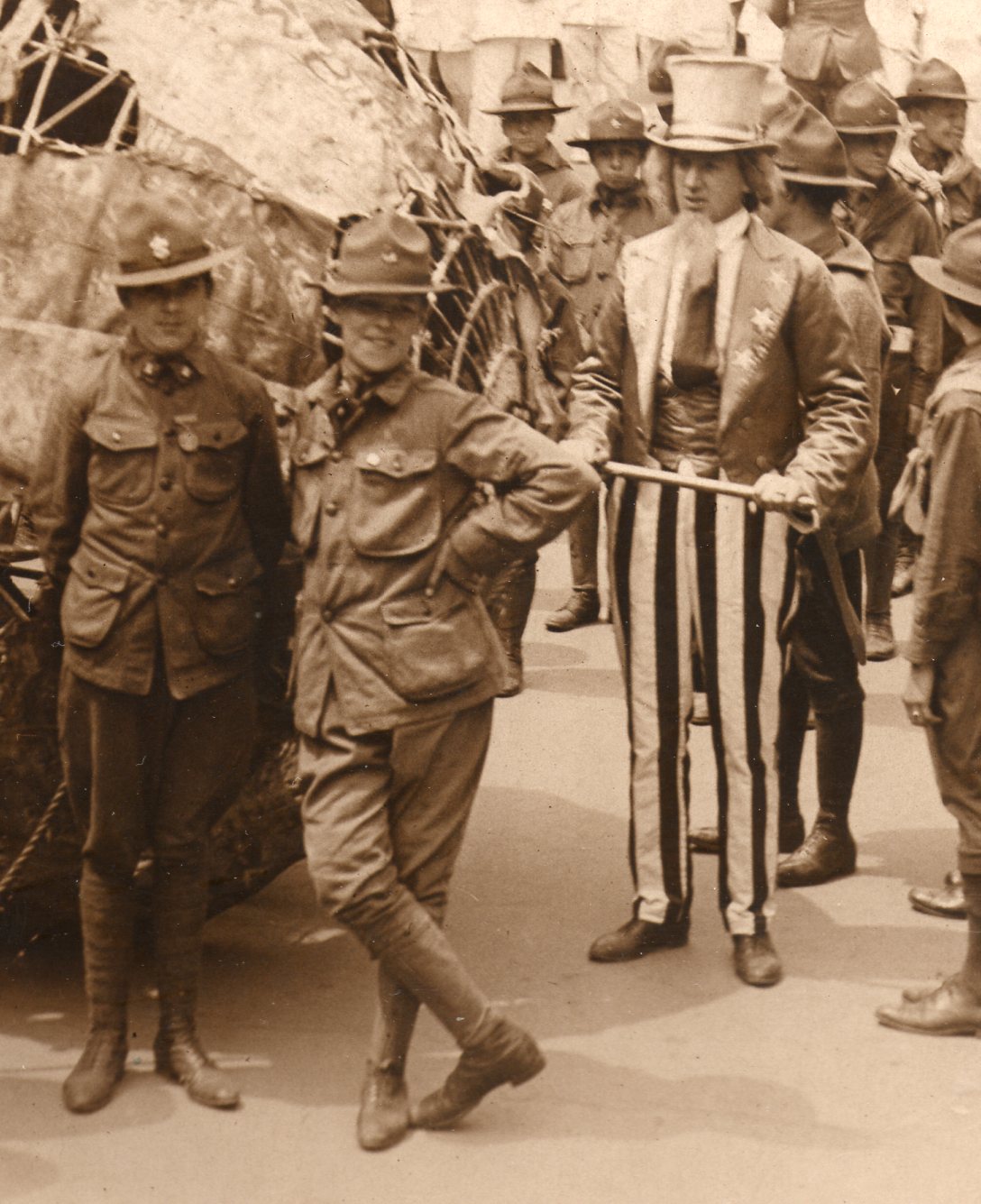
    And the detail:

    WwI--photos--flags parade b040


    WwI--photos--flags parade c041

    ·Posted by :

    ·in:

    —

  • Champion Wheelmen of 1895

    JF Ptak Science Books   Quick Post

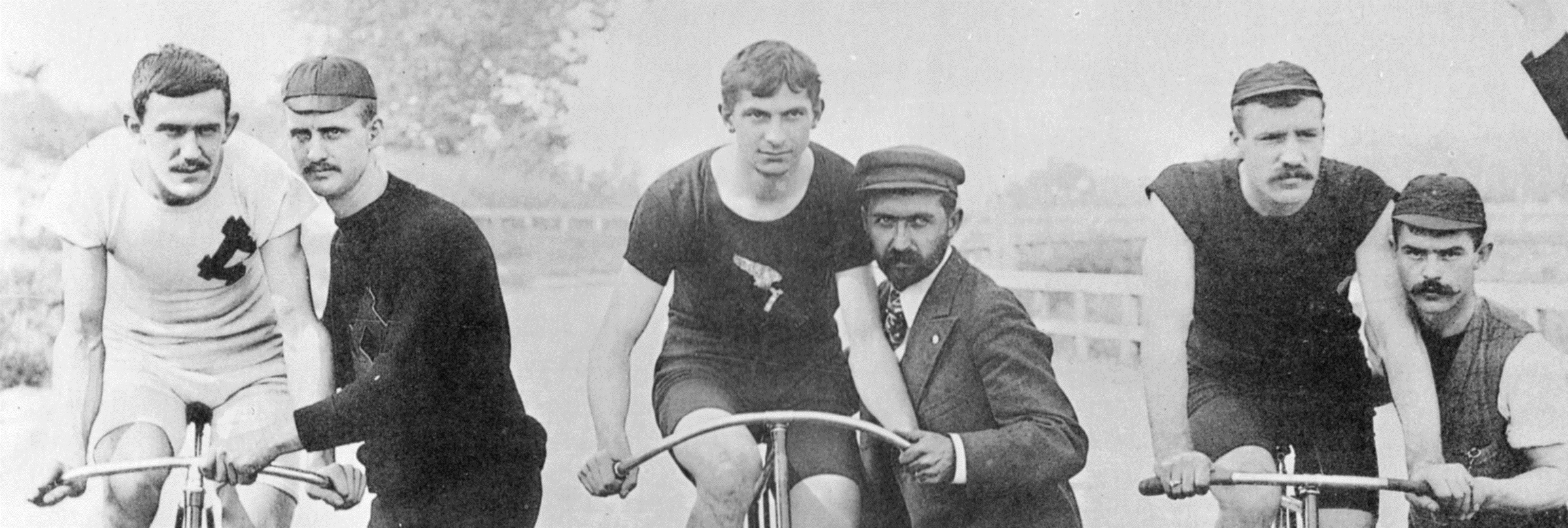
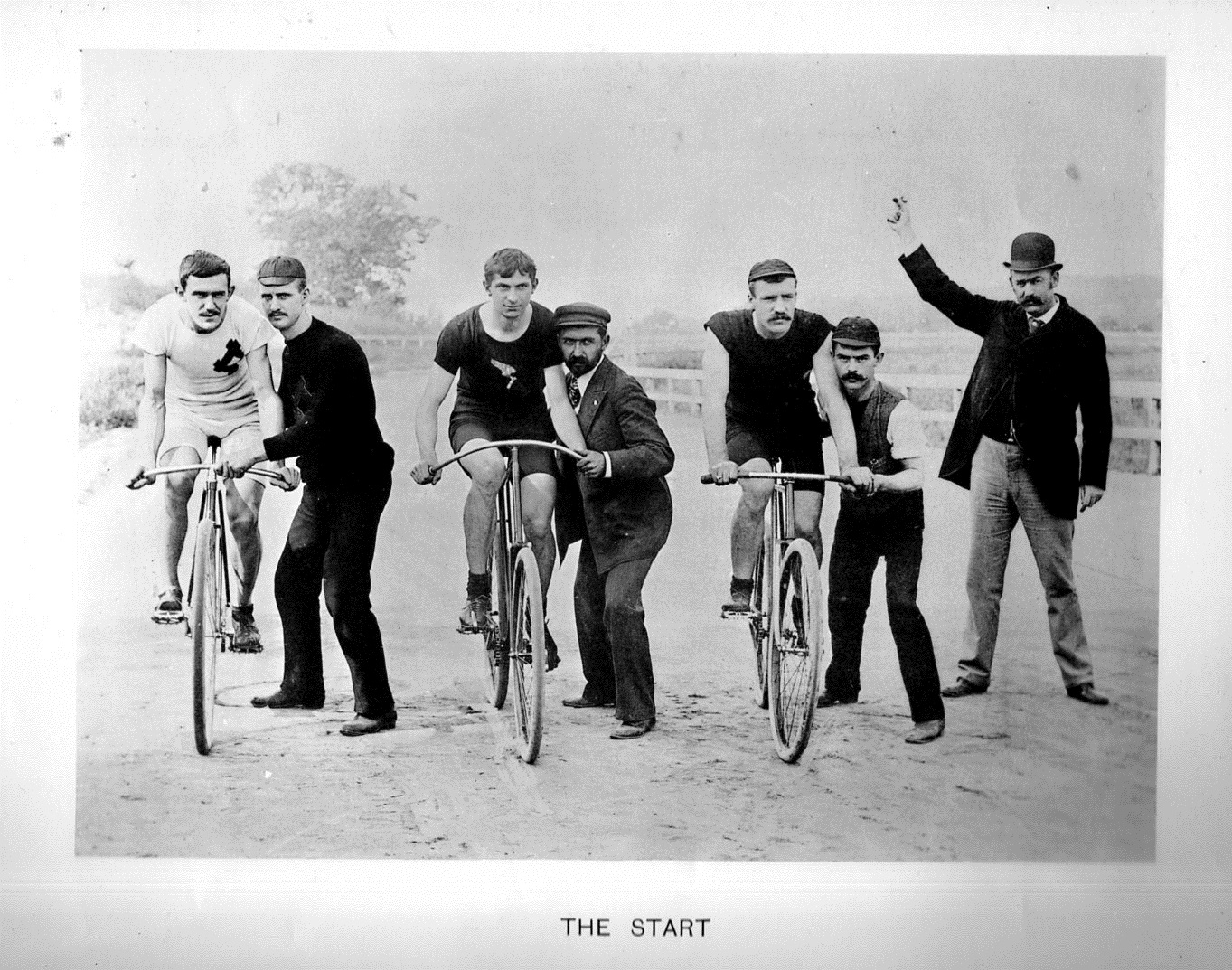
    This fine photogravure appeared in Photographic Times1 for December 2, 1895, illustrating an article called “Champion Wheelmen”. It is a dynamite image to an article profiling three of the world’s best bike racers. 

    Wheelmen det883

    And the full image:

    Wheelmen882

    And the article:

    ·Posted by :

    ·in:


  • A Black-on-Black Detail in a Sea of Hats Panorama, 1912

    JF Ptak Science Books   Quick Post

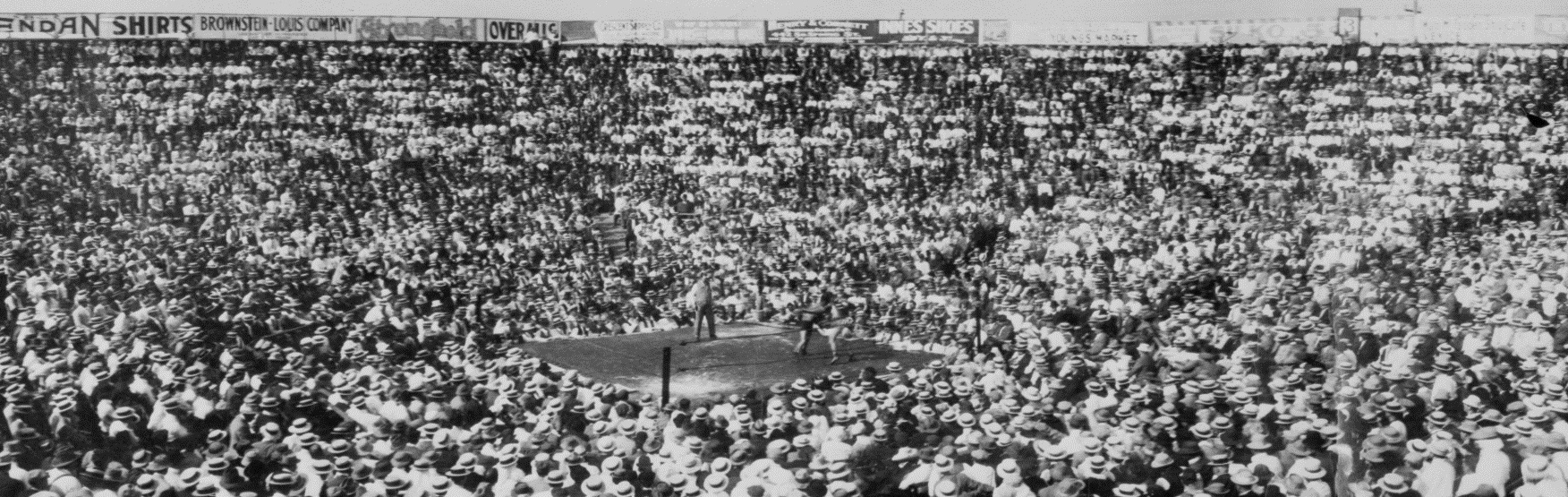
    In my long exposure to antiquarian prints I’ve long paid attention to images with a lot of black in the engraving or etching or woodcut–nighttime, caves, underwater, windlowless low-light interiors, and so on.  It is a definite challenge to accomplish these images, as well as a high use of ink–in any event, my eye is set for black details in black images in black prints. And so it came to be that I noticed this very small detail in the backdrop for the photo-copying of this fine panorama below, found at the Prints and Photographs Division of the Library of Congress (here). 

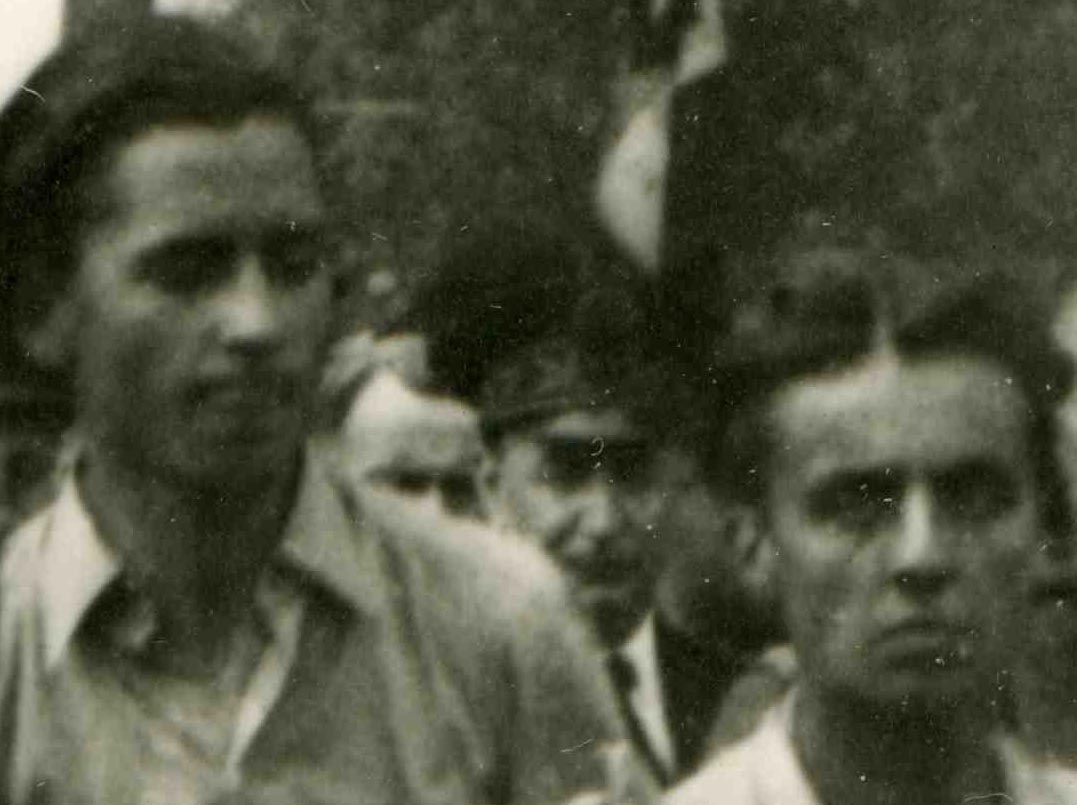
    Black on black of Boxing Day

    It is basically invisible to inspection in the version of the full print, below, but in the 80 mb examples it pops right out. (It certainly occupies less than 1% of the image space, but up-close it takes on a bit of its own life and legacy.) 

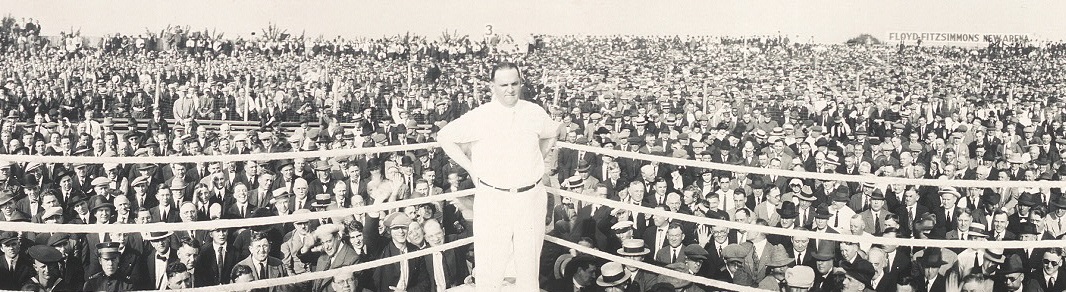
    The full photograph (45″ long)  shows a boxing match between Wolgast and Rivers at the Vernon Arena in 1912:

    Boxing sea of hats

    I was originally attracted to the photo by the hats, but the black blotch on black won out.  

    Panorama boxing vernon arena detail A

    For a wonderful essay on Black on Black art, see Public Domain review, here.  

    • Title: Vernon Arena, Wolgast – Rivers boxing match
    • Related Names: 
         Prince, Geo. (George), 1848- , copyright claimant
    • Date Created/Published: c1912.
    • Medium: 1 photographic print : gelatin silver ; 8 x 45.5 in.

  • Looking at Things: an Iconic Photograph of the U.S.A., April 12, 1945

    JF Ptak Science Books   Post 425 (from 2008) expanded
    0 ebay clark


    [Image made from a private, original photograph; the picture first appeared in Life Magazine, April 23, 1945.]

    Many years ago I went to the house of a man with books to sell.  The house was terrific, with a view of the Potomac and just outside the district line–a hard thing to accomplish in housing in Washington.  The elderly gent’s house was open, airy and basically wallpapered with large format, very big photographs.  Many of the photographs I recognized–and of those, many were iconic images.  I said something simpy/obvious like, “so I see that you collect historic photographs.”  “No, I don’t” he said.  In that moment I thought he was just being a wiseacre with me.

    He quickly said, “I took them”. 

    “Oh my God”, I thought.

    I honestly didn’t know what to say–I had seen so many of them in my life, and so often, that like a lot of things, these images were just there, part of the cultural landscape.  And here was the man who took them.  After I got over my shock and came to a sense or two, I interview hi a little.  The man behind the camera’s name was Ed Clark.

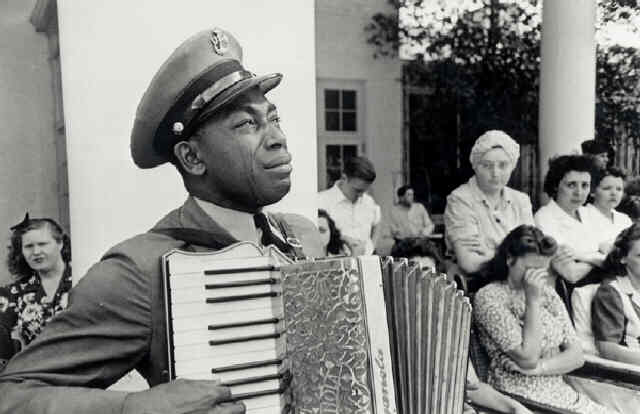
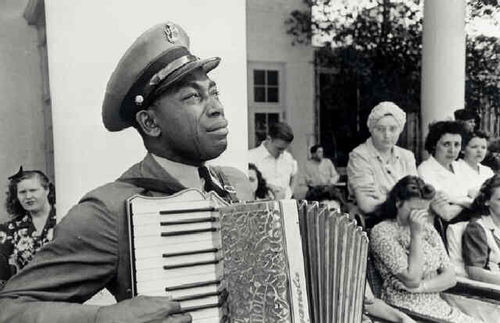
    Ed (1912-2000) was about 80 when I met him, and he was selling some books because he was getting ready to leave DC and head back home to Nashville.  He was very quick with strong recall.  I asked him about his ultra-famous photo of CPO Graham Jackson (1903-1983), preserved forever, who on the morning after Franklin Roosevelt’s death on 12 April 1945 in Warm Springs, Georgia, was playing Going Home  at the portico of Georgia Hall as the president’s casket was being taken to the train for a last ride to D.C.  Jackson was at Warm Springs to perform for Roosevelt as he had many times before when the President died on the 12th, on his 42nd visit there.

    I wondered about where the rest of the crowd was, and particularly, where the rest of the photographers were, at that moment  After all, FDR was about the most famous man in the world, and perhaps the most important, when he died in the last stretch of WWII.  Surely there must’ve been tons more photojournalist there to record the scene of FDR’s body being removed. 

    “There were” Ed said.  I asked him where they were.  He explained that they behind him, which would’ve been in front of him, actually–he was at the rear of the crowd, with every other photographer pointing their cameras forwards, recording the movement of FDR’s body.   Ed said that he turned around (“because that picture was already being made”) and found the rest of the crowd, the people who were already there at Warm Springs, watching from a respectful distance.  And it was at that point that CPO Jackson started to play his accordion, the music being one of FDR’s favorite pieces.  “They weren’t looking the wrong way”, Ed Clark said, “just not the right way”.  And Mr. Clark made the photo that everyone else missed, because they’re faced the obvious.

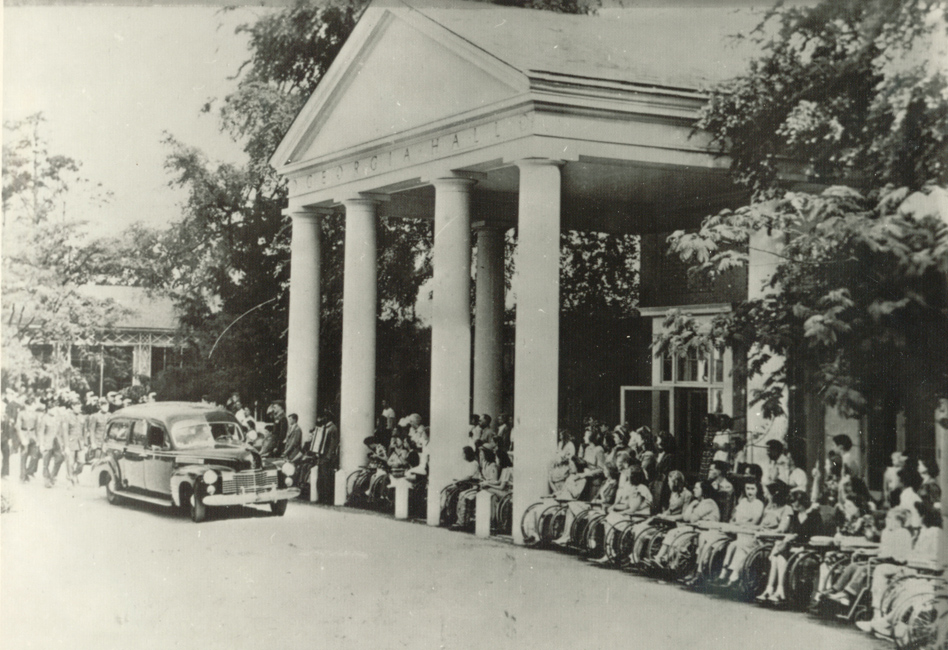
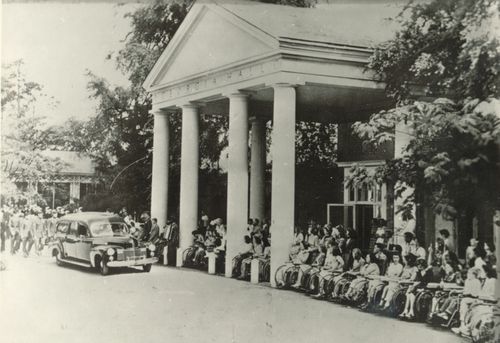
    Another view of Roosevelt’s casket being driven by Georgia Hall in Warm Springs. If you look closely you can see CPO Jackson standing just to the left of the hearse’s front left fender: [Source]:
    FDR Warm Springs


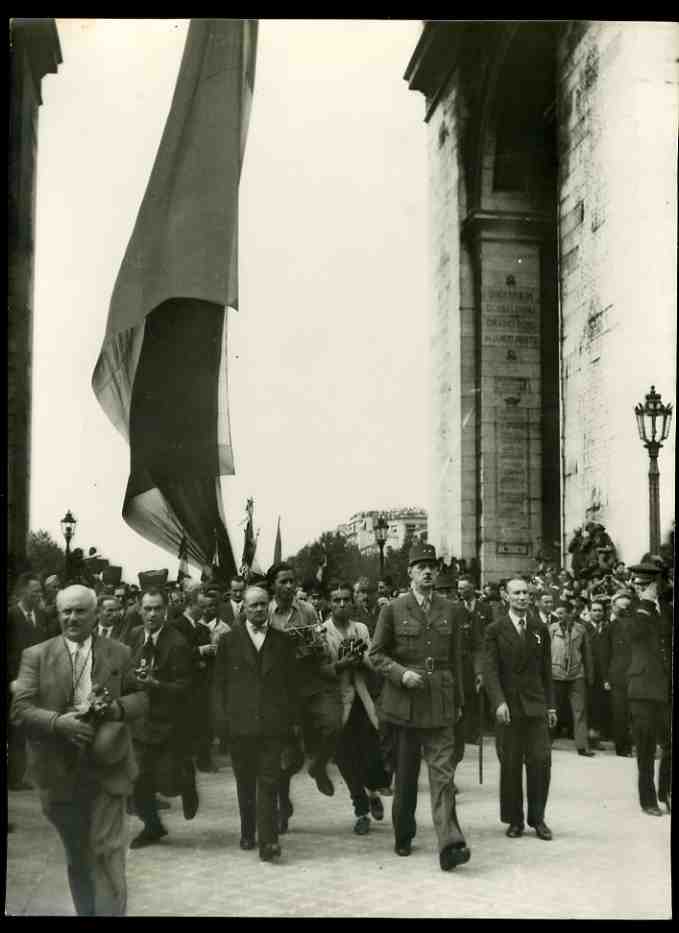
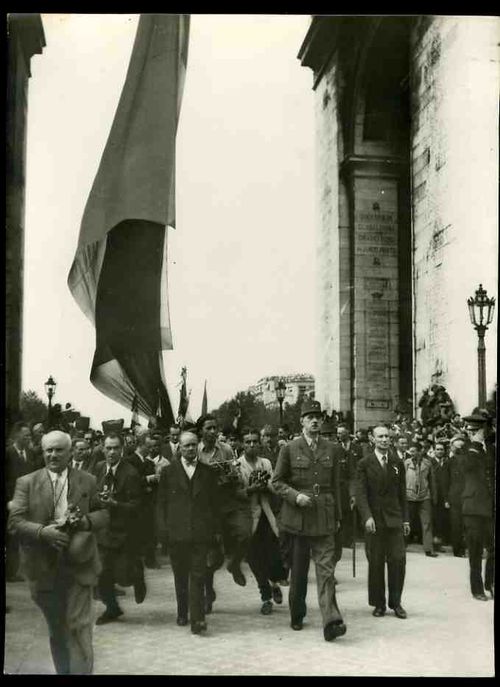
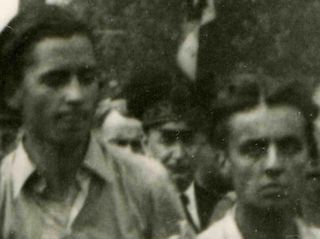
    This second picture captures both the moment and the photographers whop were missing it.  The scene is of course General De Gaulle making his triumphant return to the liberated city of Paris, walking back into the city through the Arc de Triomphe on 25 August 1944.  I am also completely certain that the picture was taken by another LIFE photographer (Ed Clark having worked their for years contributing many photo-stories and covers), Ralph Morse (my original doesn’t have any identification on the back, though it certainly looks like the others Morse made at that moment).  Morse caught De Gaulle in mid stride at the half-way point through the Arc.  And you can see the look of pain in the faces of the other scrambling photographers who must’ve been just coming to the realization that they were in the shot they had been desperately wanting to make since 1940. Their sinking feeling is pretty visceral.
    0 ebay 12 where not to belia260

    Perhaps being in the “wrong” place is just someone else’s perception until you prove them wrong.  After all, there must be some right place right time, wrong place right time, right place wrong time, wrong place wrong time hierarchy, no?–that is, until you’re smart enough to realize that there’s no such thing as “wrong”. 
    0 ebay 12 where not to belia261


  • Panorama–Boxing Day, 1920

    JF Ptak Science Books   Quick Post

    I saved this image for the real Boxing Day, and then of course promptly forgot it–I’ve missed the day, though perhaps it really doesn’t matter, because even though it isn’t ‘boxing”, it is “boxing”. 

      Panorama--boxing detail

    Panorama--Dempsey Fight[Source:  Library of Congress, here.]
    [Click to enlarge image].

    The boxing in question in this fantastic image is the Jack Dempsey-Billy Miske Heavyweight Championship Fight on 6 September 1920. Jack Dempsey retained his heavyweight crown by knocking out Billy Miske in the third round of this scheduled 10-round fight (the first to be broadcast by radio) before the crowd of 11,700–the impressiveness of the meeting hammered home with this 3600 panorama.


    ·Posted by :

    ·in:


  • German Soldier, Worn and Worked, November 18, 1918

    JF Ptak Science Books  Post 2401

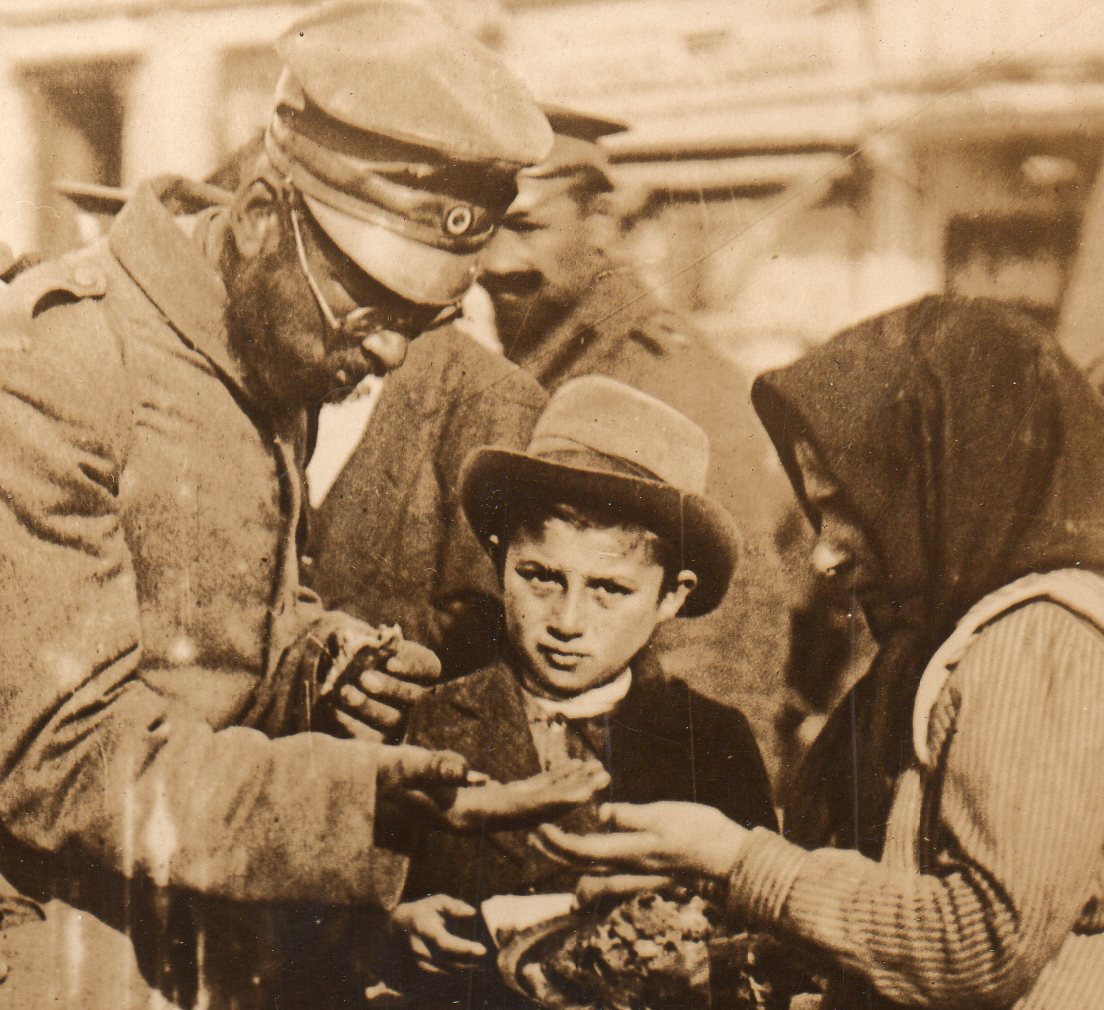
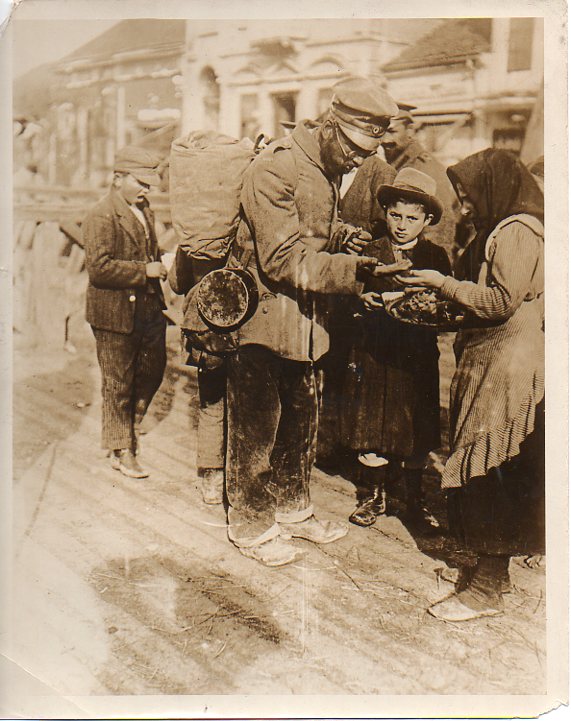
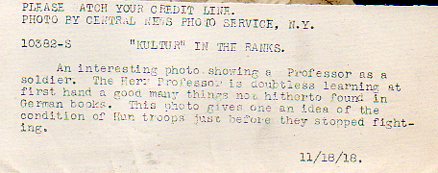
    I’m not sure what this photo depicts specifically but in general it sends an image of exhaustion and wear.  The caption for the image says that it shows “the condition of the Hun troops” and that the subject “Herr Professor” is learning “a good many things not hitheroto found in books”.  Maybe he was a teacher, maybe not.  Machts nichts. His pants looks velour-like and his boots (if that’s what his footware was) look very thin.  He is ragged, his double-fold glasses look like they’re at their limit, his face looks swollen behind his beard, and he just looks “done”, in general. 

    WWI--german--beggar det326
    [Original photograph available for purchase via the blog’s WWI Photography site]

    I’m not sure what he is doing, or where he is.  He may be trying to figure out local currency to purchase whatever it is the vendor-woman has on the tray at her hip–she os holding out her hand, and looking at his.  The soldier definitely has something there, and he looks basically too weary to comprehend it.  the hand language is ambiguous to me.  He may have received something already, some sort of food, and he is staring at it now, thinking perhaps how little of it there was.  He’s eating, and already has taken a bite of whatever bread-like thing is in his left hand.  I’m not sure what attracted the attention  of the boy in the center–perhaps it is simply the camera, and he wanted to be in the shot. 

    WWI--german--beggar325

    There’s a shadow in the foreground-left of what looks like someone making a photograph of teh scene–probably not our photographer, but another, with a brownie or some such smaller camera.

    At the end of years of fighting every general soldier deserves respect and, at least, some free food–I hope this guy got his.

    And the accompanying text to the news photo service image, to be used if published:

    WWI--german--beggar text327

    ·Posted by :

    ·in:

    —