A Daily History of Holes, Dots, Lines, Science, History, Math, Physics, Art, the Unintentional Absurd, Architecture, Maps, Data Visualization, Blank and Missing Things, and so on. |1.6 million words, 7500 images, 4.9 million hits| Press & appearances in The Times, Le Figaro, Mensa, The Economist, The Guardian, Discovery News, Slate, Le Monde, Sci American Blogs, Le Pont, and many other places… 5000+ total posts since 2008.

Category: Photography

  • Making News–a Working Newsroom, 1922

    JF Ptak Science Books  Quick Post
    Uhl photo640

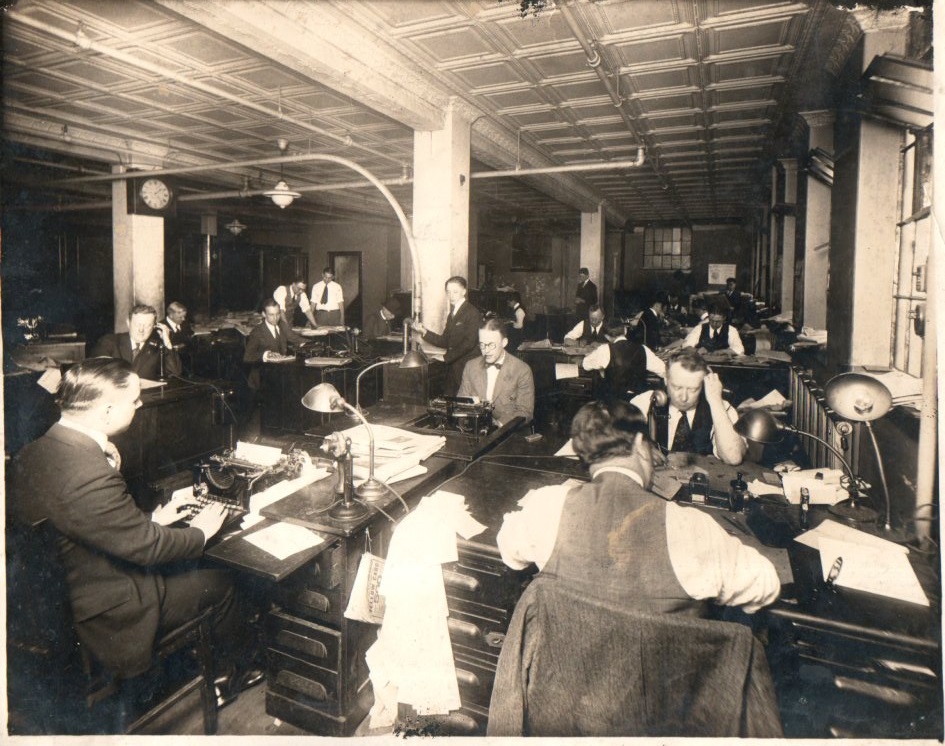
    This is a photo from a small archive that we have here that once belonged to Alexander Uhl, a New Yorker (CCNY and Columbia School of Journalism) and a Major League Old-School reporter of a high order. This photograph is not identified except for Uhl’s name and date (May 1922) on the back, but my references for Uhl start only in 1935 when he began covering Spain for the Associated Press, where he remained to cover the war until 1938. Uhl went from there to Europe where he covered the war and post-war from 1940 to 1948–this for the famous Leftie newspaper PM, which vowed never to take advertising money and to survive on subscription and daily sales.  They packed a lot of news into relatively small tabloid formats. In any event, I do not have the info of where the photograph was made, though it is Uhl in the middle with H.L. Mencken eyeglasses and cigar.  It is a great scene, and shows the folks in the newsroom at work–if they weren’t on the phone, they were writing; if not writing, then typing. At middle-left is an office boy either sending or retrieving a morsel from a pneumatic delivery system.  

    Amidst the ties and suits, there is remarkably little clutter, and very little paper. There is a fair amount of grime, though.  

    It is also worth noting that Uhl’s wife, Gladys (Beauchamp) Uhl was Jackie Kennedy’s press liason in 1960.  

    This seems like a privately-held photograph, and probably has not been published before. 

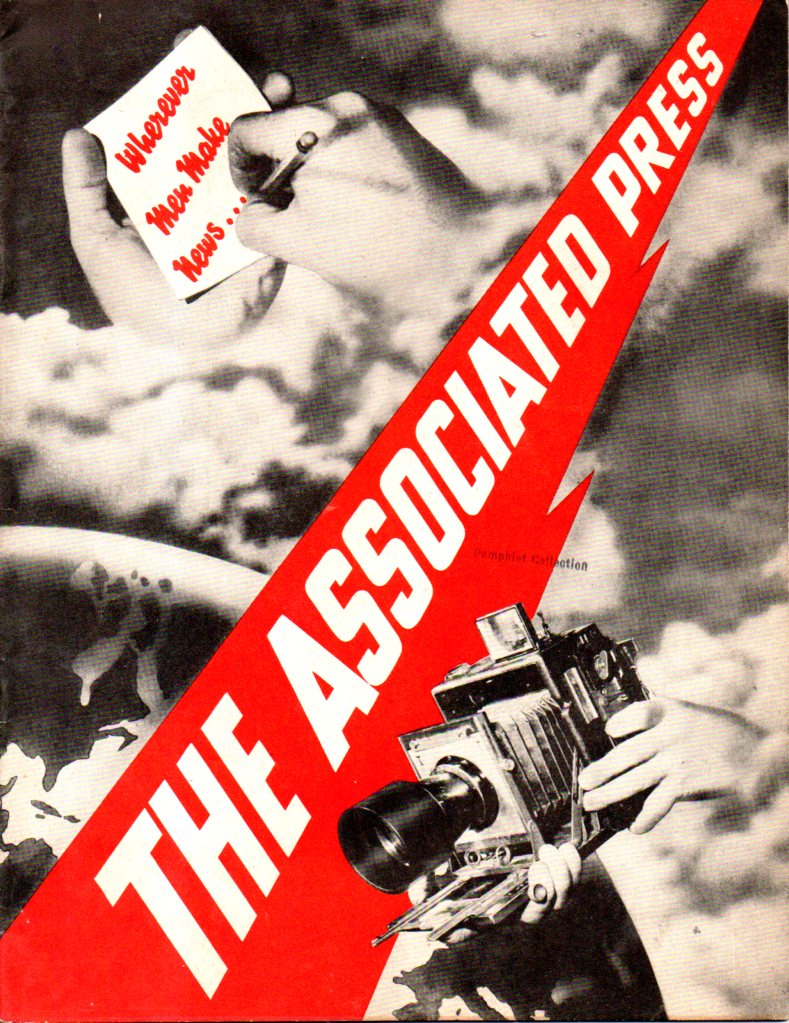
    Also, here’s another Old-School bit:  a pamphlet for the Associated Press:
    AP 641

    ·Posted by :

    ·in:


  • I’ve Never Done This Before, and I’ll Never Do It Again (1918)

    JF Ptak Science Books   Quick Post

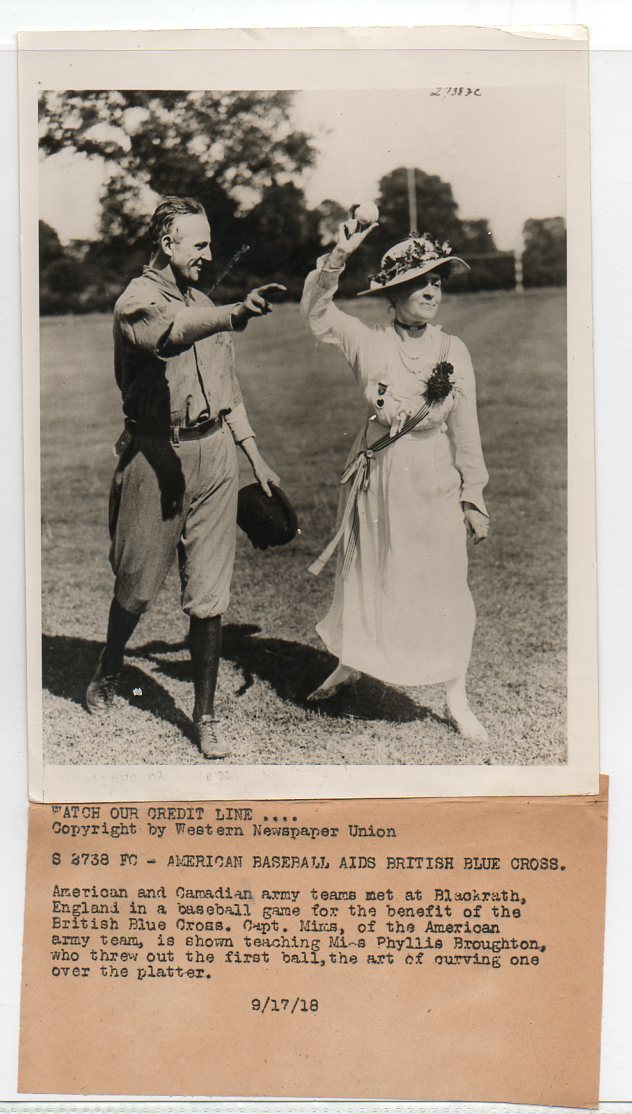
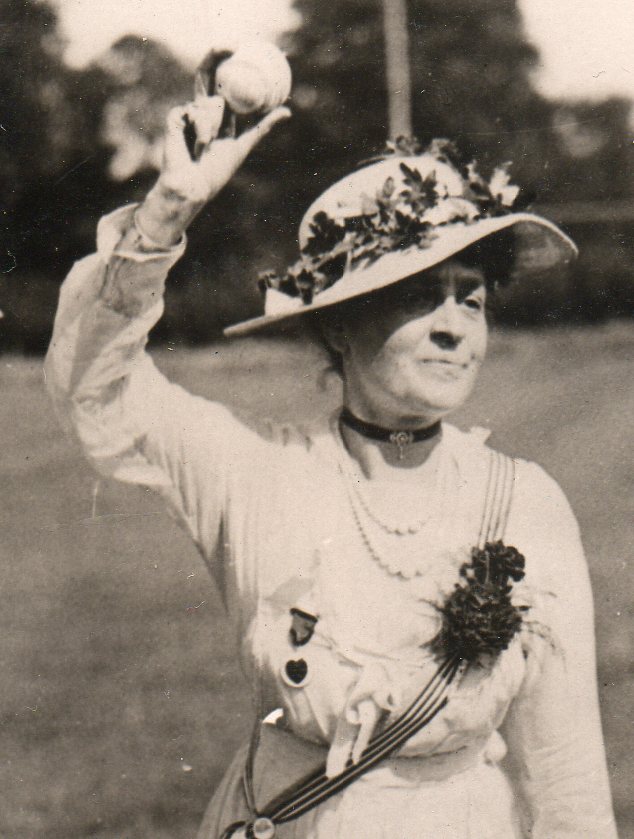
    All in fun and all for the charity of the British Blue Cross, Ms. Phylis Broughton joins the festivities, though whether see is entirely reluctant or determined, we’ll never know.  Perhaps both.  

    WWI--e--women-baseball672


    This lovely photograph is available from our blog bookstore, here.  

    WWI--e--women-baseball det673

    ·Posted by :

    ·in:

    —

  • Verticals, War, Reims

    JF Ptak Science Books  

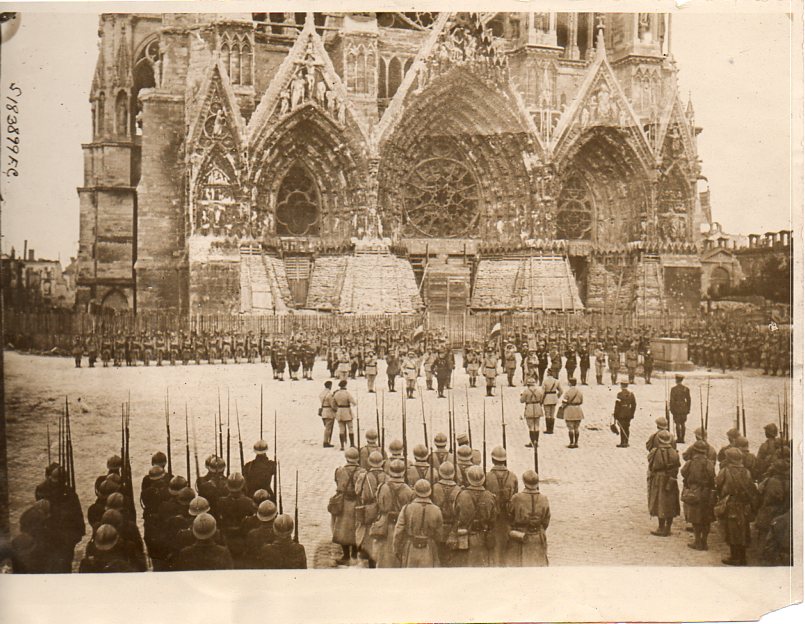
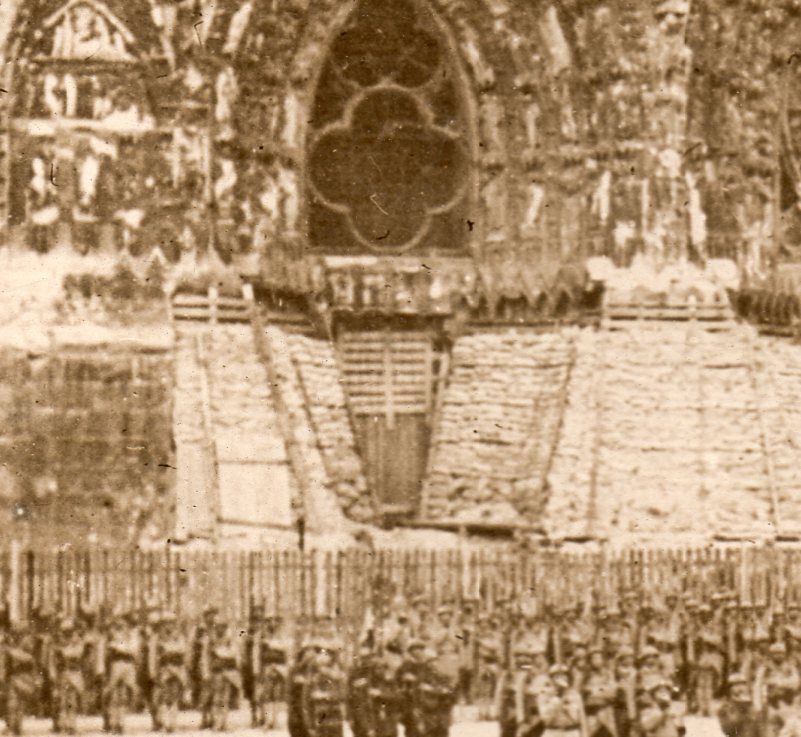
    In developing a history of vertical lines I thought that I would look at single vertical lines, but having just stumbled across this in our WWI News Photo Service archive, I just could not resist.  There is of course plenty of vertical arrangement here–just orders of magnitude more than what I was setting out to find.  So it goes.

    WWI photograph--spires071

    (The image is available from our blog bookstore, here.) And the detail:

    WWI photograph--spires det072
     And another:

    WWI photograph--spires det073

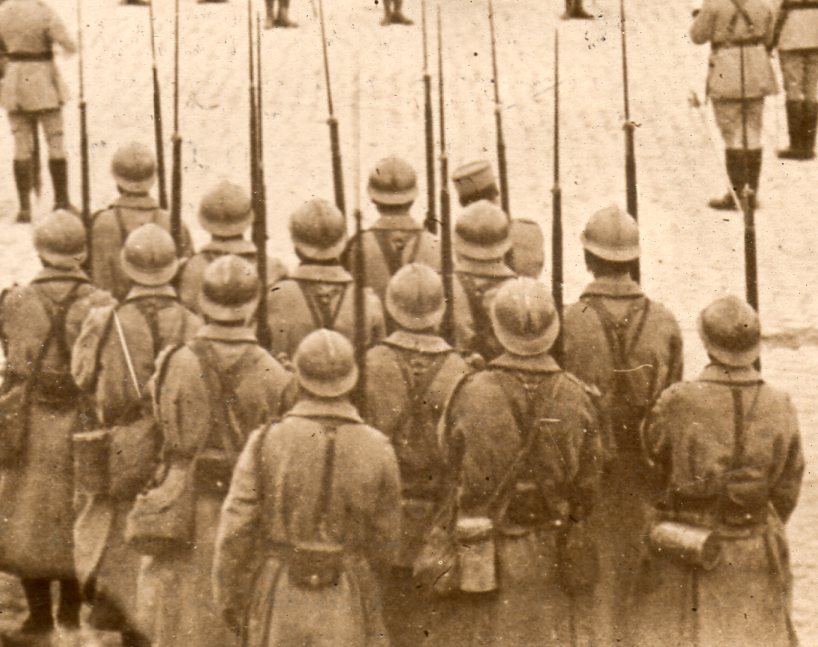
    I find this a soaring image, in its own odd way–this is a celebration scene, after,all, a decoration exercise, a military display of French forces that liberated the town of Reims, all taking place in front of the battered cathedral. Notre-Dame de Reims was the place of the coronation of French kings, and was a spectacular 13th century structure built on top of other buildings stretching back the site’s inhabitation to at least the 5th century.  

    But German artillery shelling caught the cathedral right at the beginning of the war and very nearly wrecked it.  The building was badly damaged by fire, a fire caused by the Germans, which spread along the scaffolding on the building which fed the wooden supports and superstructures, the flames finding its way throughout the building.  The fire was hot enough to melt the lead in the roof, which poured down as molten rain and out of the mouth-spouts of the building’s gargoyles. 

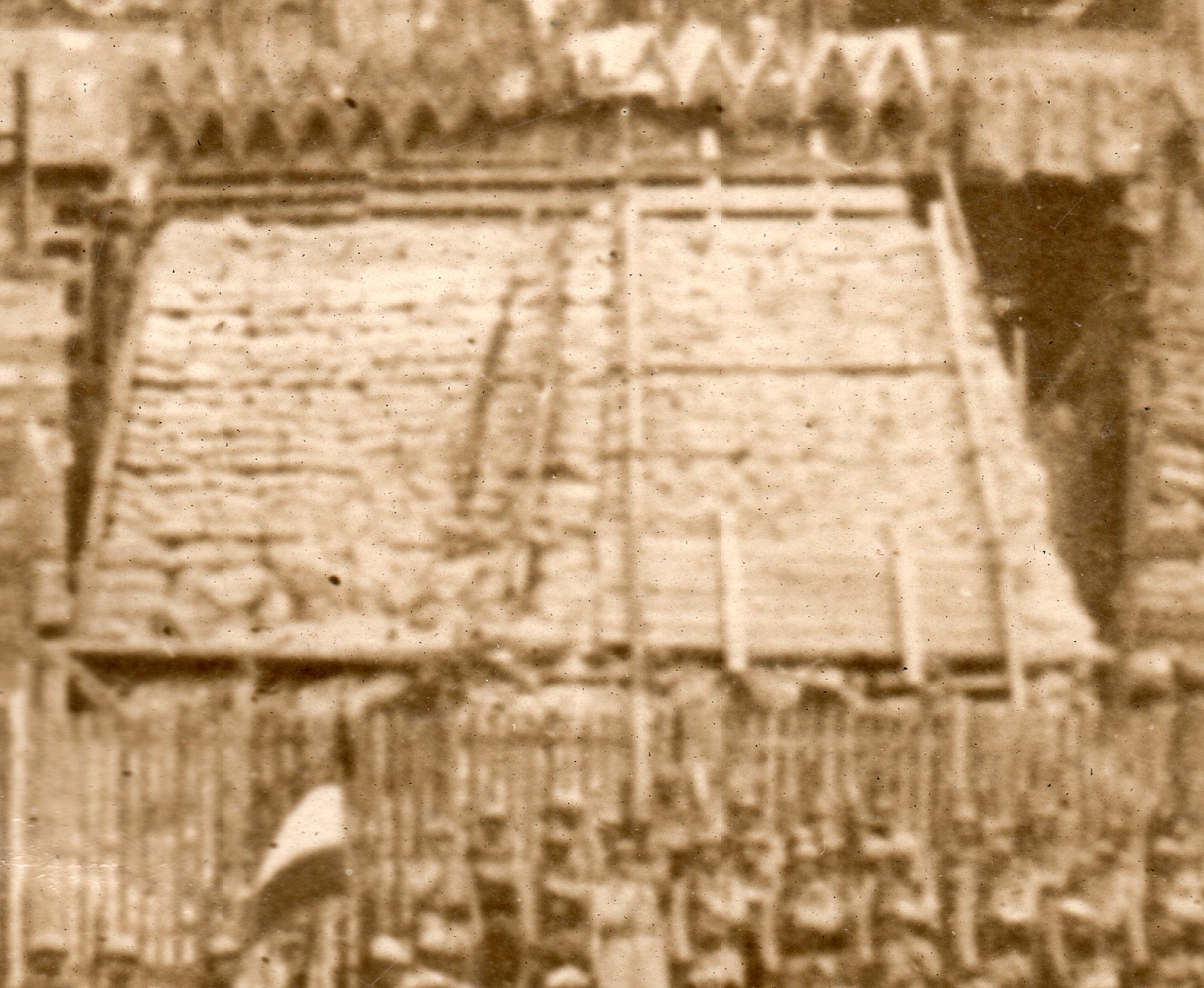
    As I brought out the further figures against the base of the cathedral one can clearly see the enormous stands of sandbags, the piles stacked up twenty feet or so behind the makeshift wooden fence.  IT was some sort of protection for the building, but not muc. 

    WWI photograph--spires det074

    This was yet another battle for the city, this one taking place 1550 years or so after the first, the Alemanni defending against the Romans; and then 104 years after the next major encounter, this between Napoleon and a Russian/Prussian force.  The liberating battle (the Battle of Reims, or the Second Battle of the Marne) took place 15 July 1918 to 6 August 1918, and it was a major failure for the German army, and spelled the collapse of the Spring Offensive, opening the door to the end of the war.  There were more than 135,000 Allies killed or wounded in this campaign (including 95,000 french troops), plus another 130,000 German troops.

    The process of victory in front of the wounded church seems exhausting and exhilarating, but not without a good sense of anticipation.

    ·Posted by :

    ·in:

    —

  • The Small Comfort of the Wounded: ElectroPhones, 1917

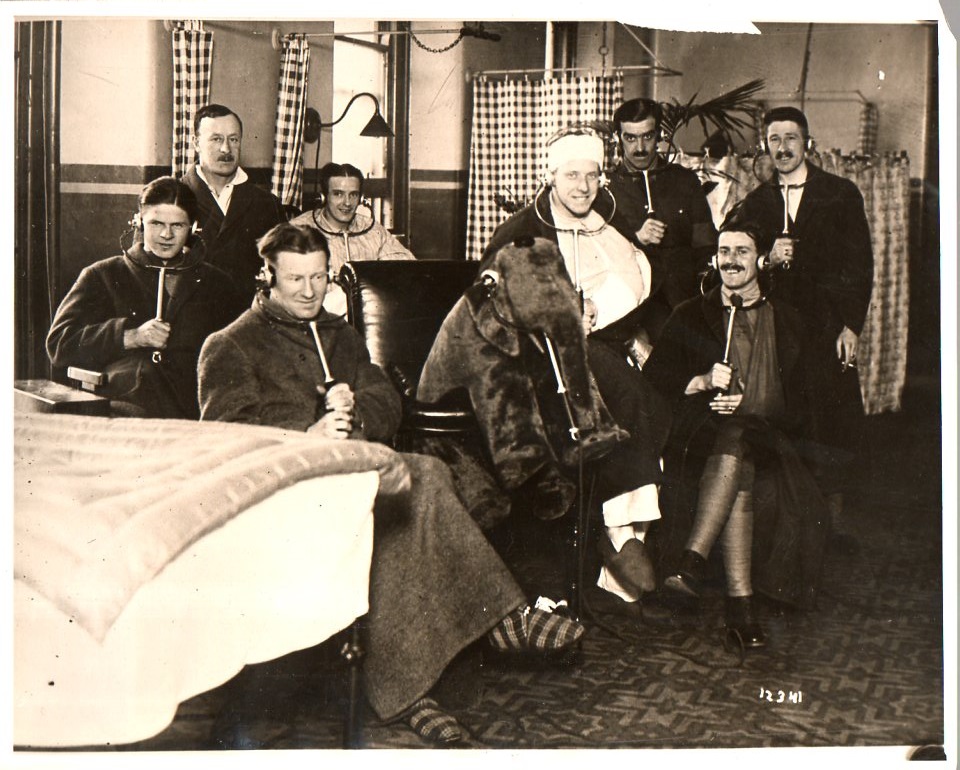
    JF Ptak Science Books    Post 2296  (WWI Photo #82)

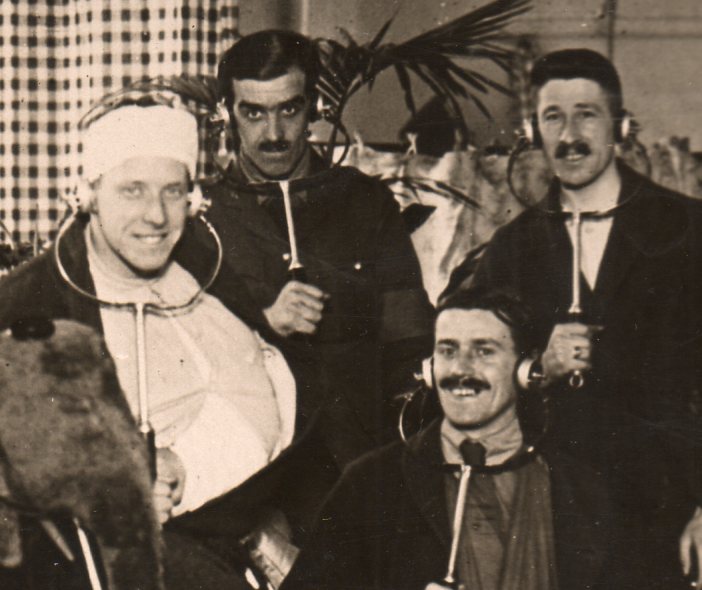
    WWI Electrophone267

    Overall, these soldiers look to be in pretty good spirits, even if they were told to be so, they still looked fairly genuine. And who wouldn’t be, at least to some degree?  They were a few of the millions of soldiers who were wounded in WWI, which means at least that they were among the millions of the dead. 

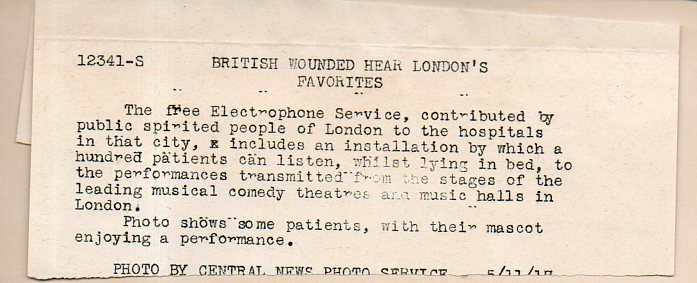
    The caption that accompanies these News Photo Service image (made by the Central News Photo Service and dated May 11, 1917, says that they were enjoying the donated headsets–Electrophones–and represented a few of the hundreds that received them.  This device was basically a telephone receiver, and years after Bell and Edison dreamed of social integration and advancement and wide-ranging culture, of delivery literature and music to people flung near and far, these soldiers were enjoying the benefit of limited concerts and other entertainments via telephone lines.  

    WWI Electrophone266

    Here’s a very good quote on the electrophone from the highly interesting The Cat’s Meat Shop, written by Lee Jackson, author of Dirty Old London, the Victorian Campaign Against Filth. (It is an interesting topic–filth and its control–because you really can’t have an Industrial Revolution without lots of workers living close to their jobs, which means that lots of people live close together, and you can’t have that unless you somehow control for good sanitary conditions, which means you’ve got to take care of filth.)  

    • The original image is available for purchase via the blog’s bookstore, here.

    WWI Electrophone265

    “The most picturesque and entertaining adjunct of Telephone London is the electrophone. There is not a leading theatre, concert-room, or music-hall but has the electrophone transmitters – in shape like cigar-boxes – installed before the footlights, out of sight of the audience. They are at the Royal Opera, Covent Garden; and in many of the principal places of worship a wooden dummy Bible in the pulpit bears the preacher’s words, by means of the N.T.C. telephone lines, to thousands of invalid or crippled listeners in bed or chair in their homes or hospitals. It was thus that Queen Victoria, seated at Windsor Castle, heard 2,000 school children in Her Majesty’s Theatre, in the Haymarket, cheer her and sing “God Save the Queen” on her last birthday. King Edward was likewise relieved from ennui at Buckingham Palace during his illness, for the brightest music, mirth, and song of London were ever on tap at his side. Queen Alexandra is also a devotee of the electrophone, more especially throughout the opera season. On the other hand, the cruel lot of certain hospital patients, of the blind, and even the deaf – for the micro-phonic capacity of the electrophone enables all but the stone-deaf to hear – is thus greatly brightened by science. The sadness of the bedridden, the incurable, or the sufferer from contagious disease is enlivened by sacred or secular song and story, and, as a much-to-be-welcomed addition to the alleviations of London’s strenuous life, the benefits of the electrophone are innumerable. It may be added that in the imposingly decorated salon in Gerrard Street from time to time fashionable parties assemble and “taste” the whole of London’s entertainments in one evening. Thus, over mammoth aerial and subterranean wire-webs does London, annihilating distance, work and play by the aid of Science.–George R. Sims (ed.), Living London, 1902

    ·Posted by :

    ·in:

    —

  • What Victory Looks Like When You Really Can’t Tell (1917)

    expanded Post 317 (2009)

    00blogoct_14somme850_2

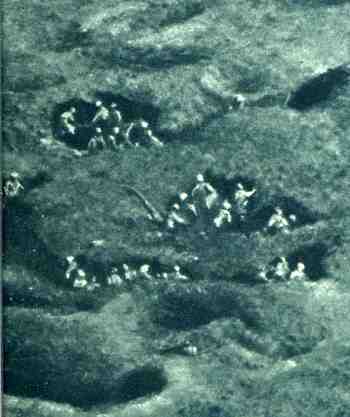
    In a play on the concept of the Powers of Ten, I had a look at a photograph depicting the French victory at the Somme; or was it a British victory?  Or German, via the lure of the others to a semi-victory?  Its hard to say who won, or if there really was a winner.  The Battle, which looks to me to be a sub-war within the war, occurred over the period of July through November 1916.  When the smoke settled, there were some 1.5 million casualties on both sides.It has long been held that the battle really was won by someone, the British, the French; but there was so little that was accomplished by the action that there probably wasn’t a winner, just losers. 

    And big losers, at that: Great Britain, Canada, Australia, New Zealand, Ireland, South Africa and Newfoundland lost 419,654 casualties, with 95,000 killed; the French lost 204,000 casualties and 50,000 killed.  That made a total of 623,000 casualties and 146,000 killed for the allies; Germany lost 465,000 casualties and 164,000 dead.  The advances made along the battle front went a few miles one way and then the other along a 12-mile stretch of battlefield, which four lives were traded for every inch gained along that porous front.

    The first image here (above)  is a very sharp detail from the overall picture published in The Illustrated London News for 6 January 1917, representing about 1% of the entire photo

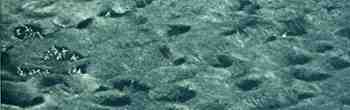
    The next image places the micro-detail in more context; this detail is itself about 5% of the main image, which is found just below this one.

    00blogoct_14somme849_2

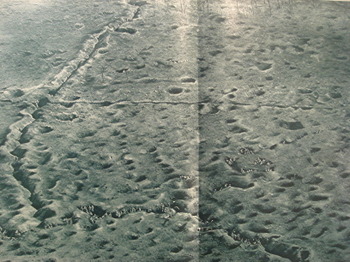
    The overall image from which these two details are removed is below. In turn, this large image is but a small detail of the greater overview of the battlefield, making up perhaps a few percent of the field of operations. 

    I’m trying to get a feel for the enormity of the battle, but I really can’t, not even via powers of ten, manipulating the idea of orders of magnitude.

    In one last try, I hypothesize that the 1.5 million casualties could not be displayed in 10 of these large images.  .

    That wouldn’t look like victory at all. 


    Ballistics_123

    (An “oh, shit” picture if there ever was one.)

    ·Posted by :

    ·in:

    — —

  • The Belgian Collector of Life, 1918

    JF Ptak Science Books  Quick Post                

    Part of the World War I  Photography series

    WWI Sniper198

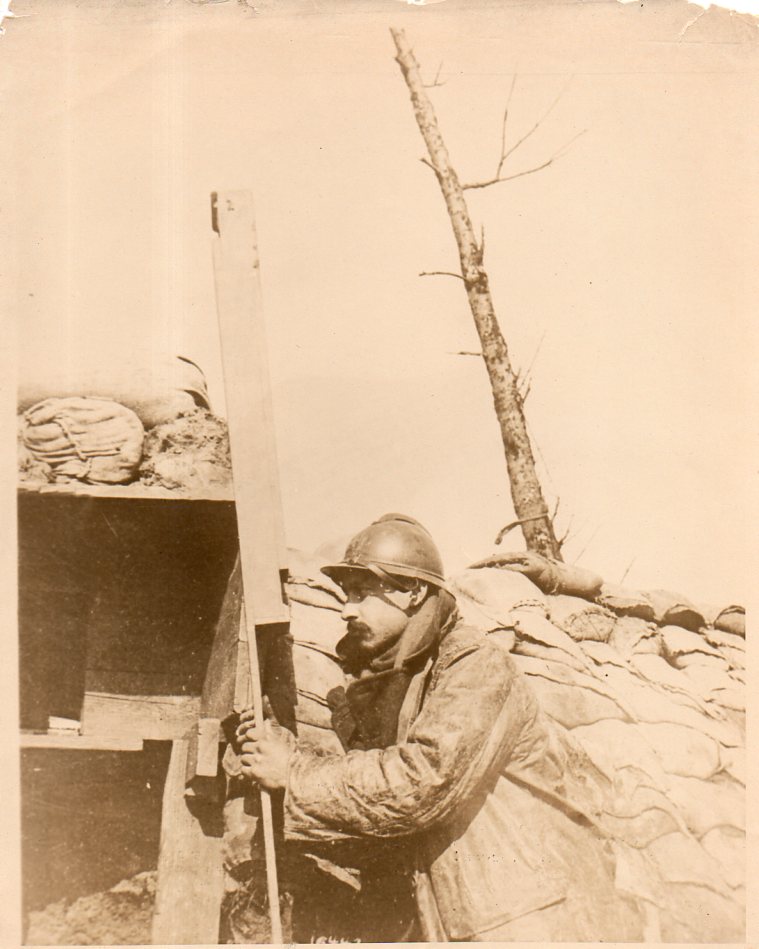
    This is an excellent example of appreciating images in context.  The photograph seemed line an ordinary image of a soldier peering through a periscope on action ahead of his trench, in some miserable battlefield, somewhere in Europe, 1918.  The image is the product of a photographic pool, the photographers working in semi-unison to produce acceptable images to be used in publications illustrating the war.  The images could not be too terribly graphic, and must not relate any useful military intelligence–they would pass through the hands of very active censors whose job it was to slightly inform the reading public and to also keep morale high, a difficult balancing act.

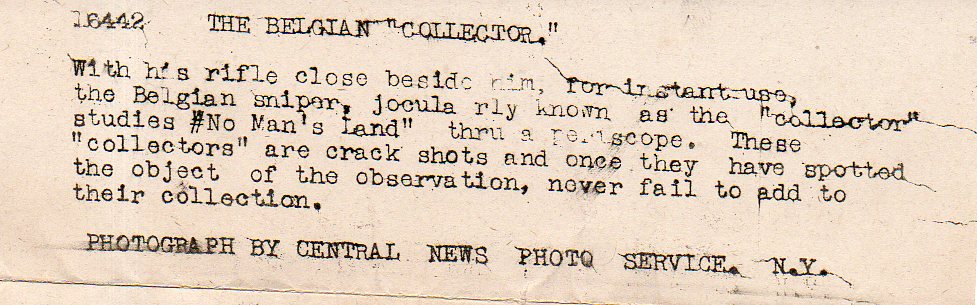
    And so I thought my thoughts. Until I turned the image over–it was stamped “Photo by Central News Photo Service”. It was also accompanied by a typed caption, the bit of text that was to be the standardized caption for this photograph when and if it was used by a magazine or newspaper.

    The title is “The Belgian Collector”. 

    The Belgian collector was a sharpshooter. He would scan the field looking for any unfortunate who might have left themselves exposed.  Then he would shoot at them. Collect them.

    In a  sense, “collect” like “John Fowles The Collector, only killing them with a rifle.

    But that was his job. And it was war. And if he was on your side, then you’d want him there.  

    I found “the collector” name to be poetical, and chilling.  

    WWI Sniper det199

    So, combining the context with the image in this case was a truly sensational thing.  

    The original photo may be purchased from this blog’s bookstore, here.

    ·Posted by :

    ·in:

    — —

  • WWI Photographs–Women, Soldiers, Hair (1918)

    JF Ptak Science Books   Quick Post

    WWI Photo  Lice197

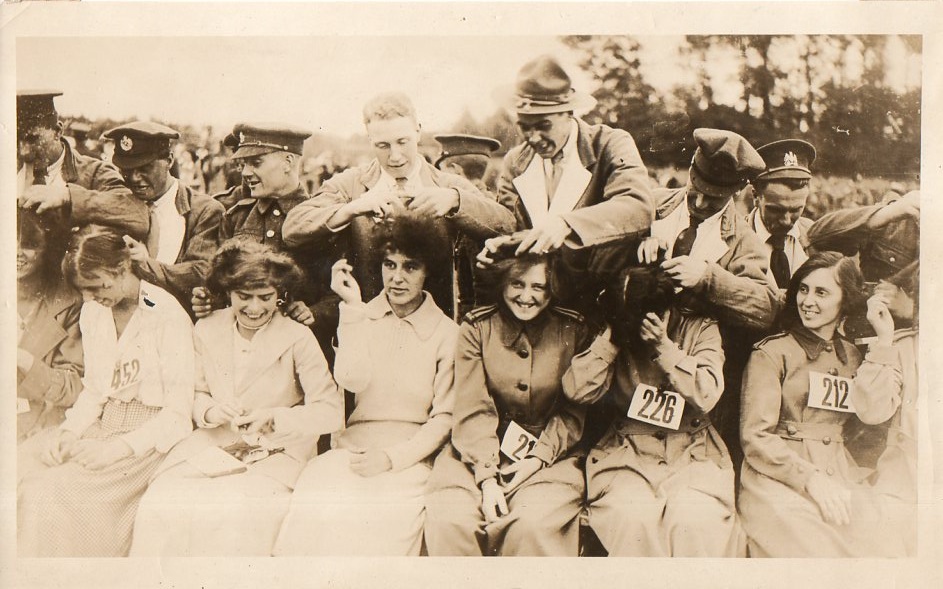
    I’m not sure that I understand this photograph and what is going on in it.  I do know that it was made in 1918, and that the back is stamped “Photo by/Central News Photo Service/26-28 Beaver St., N.Y….”, a product of not-very-discrete control of war images.  The vast majority of photographic efforts of WWI were very deeply controlled, with little left to chance and uncontrolled.  This lively image may be Doughboys inspecting female volunteers for lice–perhaps that was a job performed by these volunteers.  Or something else, though I  can’t see what–the soldiers aren’t using clippers, and they seem to be separating the hair….  So the subject matter isn’t scrumptious, but the faces are–a break in the not-routine routine business of war.  

    [Doughboy:  The origin of the term “Doughboy” is unclear, or varied, or rich, but it is at least pretty oldm beginning around the time of the Mexican American War in 1846-1848–evidently when the soldiers marched through dry, tough terrain they wound up being covered by earth with the color of dough.  Doughboy.]

    ·Posted by :

    ·in:

    —

  • An American Exodus

    JF Ptak Science Books  Post 2244

    LAnge migrant detail

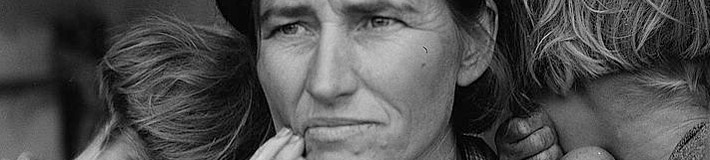
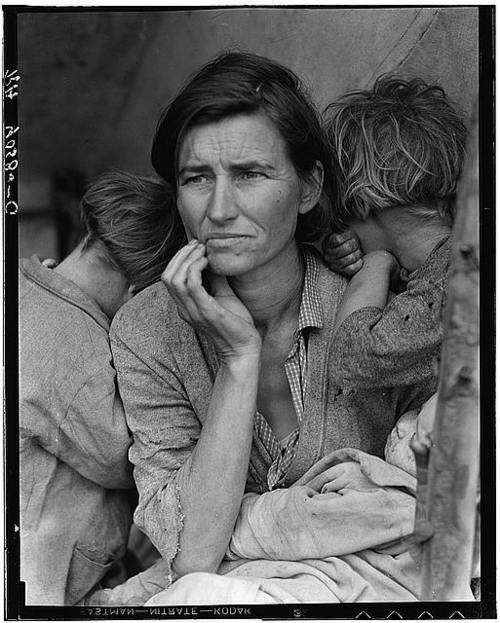
    Everyone knows this image: the Madonna of the American 1930’s, the Migrant Mother, a photograph made by Dorothea Lange, a photographer for the Federally-funded Farm Security Administration. Lange was still very new to the FSA project when she made this photograph in the spring of 1936. On the tail end of a month-long road trip she was nearing the end of her day when she spotted a hand-lettered sign “Pea-Pickers Camp” by the side of the road. Lange briefly considered stopping but went ahead, questioning her judgment continuously for the next 20 miles, when she finally turned around to find the turn-off for the camp. She drove down the dirt road and found a ramshackle assembly of tents, one of which contained “an exhausted mother sitting forlornly with her children”. Lange spent only 10 minutes with the woman, making five exposures. She learned that “the crops had frozen, and the woman and children were living on vegetables scavenged from the fields, and the few birds that the children managed to catch. The mother could not leave; she had sold the tires from her car”.  It was published almost immediately and quickly became one of the great iconic images of the Depression, as well as for the American century.  

    Lange migrant mother

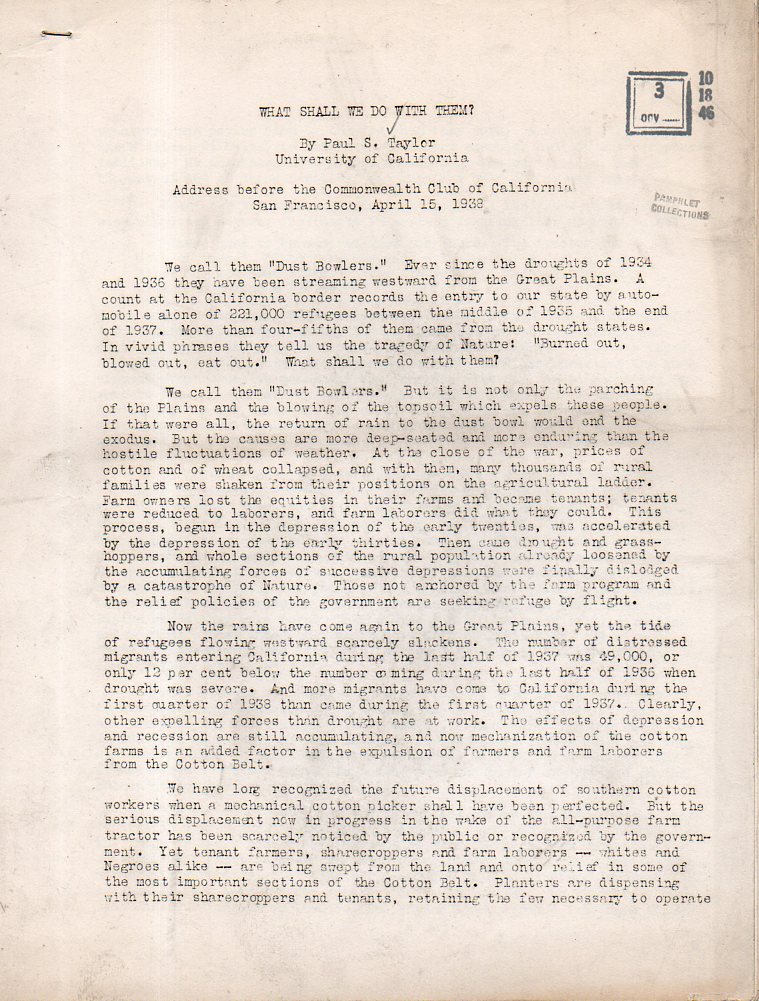
    I was thinking about this because of a typewritte, offset-printed pamphlet I bought written Paul S.Taylor, “What Shall We Do With Them” ( an address before the Commonwealth Club of California, San Francisco, April 15, 1938)–the “Them” being the dustbowler, the migrant workers, the disposed.  Paul Taylor was at this time three years into his marriage with Lange—he was a progressive thinker and a FSA operative who helped Lange land her job and was a part of an extraordinary team of very expansive ability that documented a pivotal period in American life. He was also co-creator with Lange of their great documentarian centerpiece of the 1930’s, An American Exodus, a Record of Human Erosion, which was published in 1939, the same year as the publication of The Grapes of Wrath and the release of the Wizard of Oz and Gone with the Wind. (Two years later–1941–James Agee (text) and Walker Evans (photographs saw their long-developing Let Us Now Praise Famous Men was published.)

    In this pamphlet Taylor gave testimony on migrant workers and nearly the height of the Depression—he was an expert, having traveled and lived among them and written academic papers on what he found. He outlined possible answers to the question, which had mainly to do with stability, which of course was the primary concern for the many of thousands of individuals and families who were once-stable but now very mobile, not having place to live or places to go. Taylor thought that opening dams and supplying irrigation and affordable government-owned houses would be the first of many steps to take to relieve the widespread suffering.  In all of the alphabet-soup programs uundertaken by the Roosevelt administration, none were nearly as “successful” in ending the national social erosion as the events that were to unfold less than a year later.

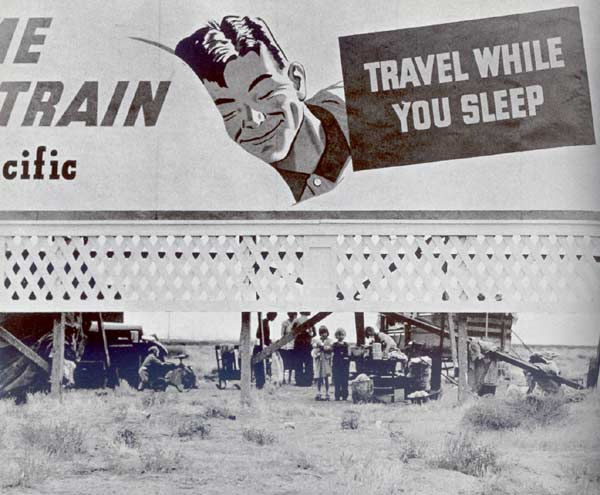
    Lange travel sleep

    Dorothea Lange “Three Families, 14 Children” US 99 San Joaquin Valley, California, November 1938. An American Exodus

    Taylor dustbowl092

    Notes:

    Lange describes her encounter with the Migrant Mother as follows:

    “I saw and approached the hungry and desperate mother, as if drawn by a magnet. I do not remember how I explained my presence or my camera to her, but I do remember she asked me no questions. I made five exposures, working closer and closer from the same direction. I did not ask her name or her history. She told me her age, that she was thirty-two. She said that they had been living on frozen vegetables from the surrounding fields, and birds that the children killed. She had just sold the tires from her car to buy food. There she sat in that lean- to tent with her children huddled around her, and seemed to know that my pictures might help her, and so she helped me. There was a sort of equality about it”. (From: Popular Photography, Feb. 1960).


  • On Obviousness–a Very Obvious and Empty Not-Magritte’s Hat

    JF Ptak Science Books  Quick Post

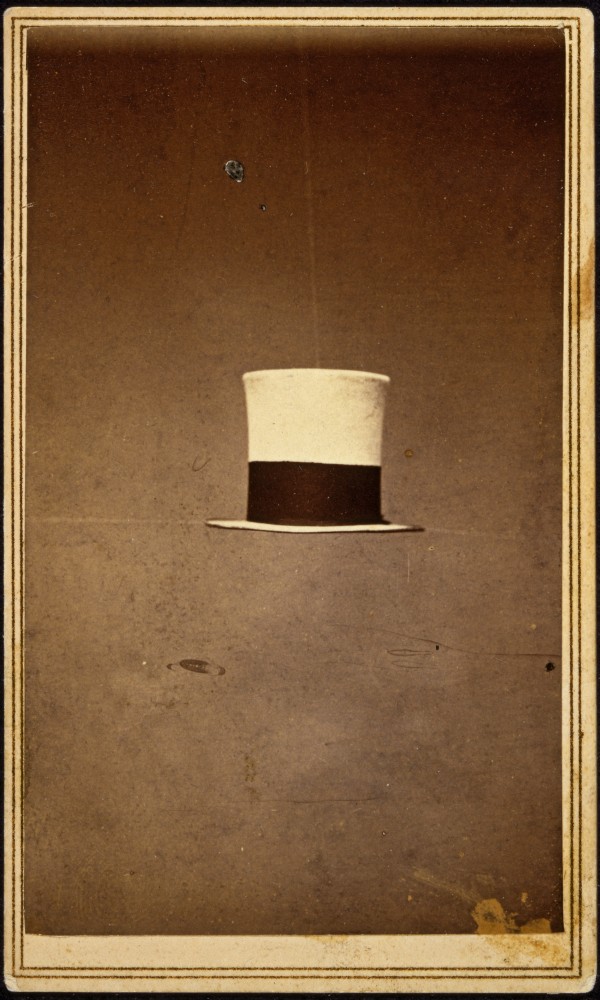
    ABsurdist HAt

    [Source: “Eli W. Buel (American, active ca. 1870) Top Hat, ca. 1870, albumen print carte-de-visite, museum purchase, George Eastman House”, here.]

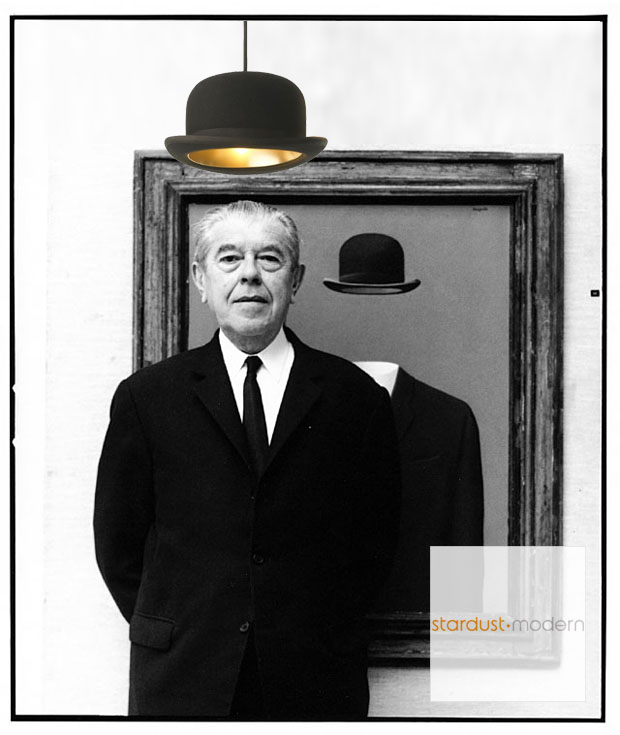
     This is a great example of “everyday objects shriek aloud” as Magritte said somewhere along the path of his life.  I thought about him right away seeing this much earlier vision of a floating hat and that it fit somehow into a Melville (“I would prefer not to”) Duchamp (“This is not a pipe”) and Magritte continuum:

    Magrittwe[Source:  Stardust Modern Design]


  • Fantastic Fish-Eye Portrait of Scientists, ca. 1855

    JF Ptak Science Books  Quick Post

    Scientist photo portrait

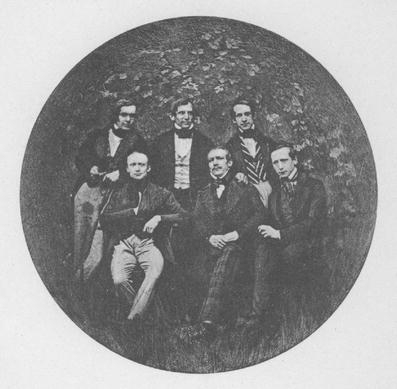
    The founders of the Physikalische Gesellschaft zu Berlin (1845, “Physical Society at Berlin”, which would become  the Deutsche Physikalische Gesellschaft (“German Physical Society”) in a lovely and very uncommon perspective, taken ca. mid-1850’s.  These founding membership pictured above included some first-class heavyweights in their fields:

    Top row: Gustav Karsten, Wilelm Heintz, Carl Hermann Knoblauch.

    Bottom row: Ernst Brücke, Emil du Bois-Reymond, Wilhelm von Beetz.

    [Source: a very interesting paper by Fritz Scholz, “From the Leiden jar to the discovery of the glass electrode by Max Cremer” published in the Journal of Solid State Electrochemistry  (Springer-Verlag, October 29, 2009, online). Apologies for not being able to link to this article behind the paywall.]


    ·Posted by :

    ·in:

    —