JF Ptak Science Books LLC Post 883 Blog Bookstore
I enjoy antiquarian window shopping, browsing photos or
engravings that depict goods for sale– especially if the prices are posted. I
came back to this deep-in-the-Depression-fantastic photo made in 1935 by Berenice
Abbott (Springfield, Ohio, 1898-1991). Blossom
Restaurant, NYC was part of Abbott’s effort funded by the WPA, this time as
a part of her Changing New York Project, and captures the restaurant and
neighboring barber shop at 103 Bowery.
The two businesses actually occupied the first floors and basement
(respectively) of the Boston Hotel, a standard flop house in a tough and
distressed part of the city that rented beds by the day, with 249 small
door-less cubicles offering a decent place to spend the night for 30 cents1.
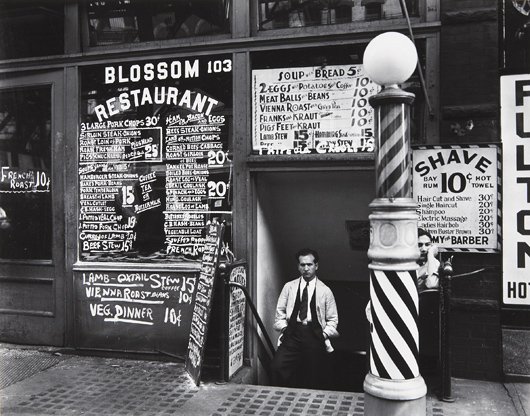
30 cents seems to be the going rate for a bunch of things
going on in this picture—30 cents for a
night in the hotel, 30 cents for the better offers of Morris Gordon’s
restaurant. 30 cents for a haircut and shave, 30 cents for a “women’s hair
bob”2 and so on. Which seems about
right—a fancy haircut and a decent better-than-average dinner for two will
probably cost about the same, today.
If you were really on a tight budget, 30 cents would buy you
three vegetarian dinners, or 6 offerings of bread and soup, or three visits to
the table of meatballs and bans, or pigs feet and kraut.
The price of a stick-to-your-ribs meal of sirloin and
potatoes and a pot of coffee also cost about the same as a gallon and a half of
gasoline (which cost about 20 cents).
The same amount of gas today would get you a serving at McDonalds, or
something on that order, and perhaps even a happy take-away for the kids.
Perhaps the two even out.
30 cents might get you a loaf of bread, and wouldn’t quite get
you a dozen eggs. Now this is
remarkable, because if you adjust all of this according to modest CPI measures,
the average cost of a dozen eggs in 1935 was 37 cents, or (according to the US
Census website generating 1935 to 2009 prices adjusting to CPI) $5.84. The bread would cost $4.74 in 2009 dollars,
which means that the staples today—milk, bread, butter, eggs, were more
expensive in 1935 than today. Ditto
gasoline, which cost 19 cents a gallon, or $3 today—actually this would be much
more expensive in 1935 as the mileage the cars were getting then (and the
octane) was much lower, so the cost of running an automobile was considerably
higher. The cost of the car itself,
though, still favors the ‘thirties for modest transportation, which came in at
about 600 dollars, or just over $9000 in 2009 dollars3.
The 3-cent first class postage stamp of 1935 was more
expensive than first class postage in 2009:
47 cents versus 44. When you look
at the increases and bitty spikes of the cost of a first class stamp over time
the whole thing looks pretty flat.
The average salary for a family of four in 1935 was about
1500/year, which oddly enough is about the same for the poverty guideline level
for 2009 established by the Department
of Health and Human Services (about $23,000).
Minimum wage legislation didn’t begin until 1938, but if you take a look
at one of my earlier posts here on the history of this idea
you’ll see that the recent history of legislating a meaningful level of acceptance for a base
living wage is mainly disgraceful, with relatively little accomplished (in
adjusted economic terms) for half a century.
(The new minimum wage brings us to about a mid-way point as the highest
minimum wages paid in the 71-year history of the program.)
And so I thank Ms
Abbott again for her beautiful social commentary, and a happy 75th birthday
to this photograph.
Notes
1.A fantastic website and resource for changing aspects of
NYC can be found here, at Frank Levere’s Changing New York site. http://www.newyorkchanging.com/
2. I wrote a little bit about the appearance of women-only
hair salons in my post “The Staggering Beauty of Barber Shops” https://historyofideasblog.com/thesciencebookstore/2009/02/the-staggering-beauty-of-barber-shops-naive-surreal-department-22.html
3. Other bits of what stuff
cost in 1935:
Flour (5 lbs) 25.3 cents
Bread (lb) 8.3
Round steak (lb) 36.0
Bacon (lb) 41.3
Butter (lb) 36.0
Eggs (doz.) 37.6
Milk (1/2 gal.) 23.4
Potatoes (10 lbs) 19.1
Coffee (lb) 25.7
Sugar (5 lbs) 28.2
Car: $580
Gasoline: 19 cents/gal
House: $6,300
Bread: 8 cents/loaf
Milk: 47 cents/gal
Postage Stamp: 3 cents