JF Ptak Science Books LLC Post 884
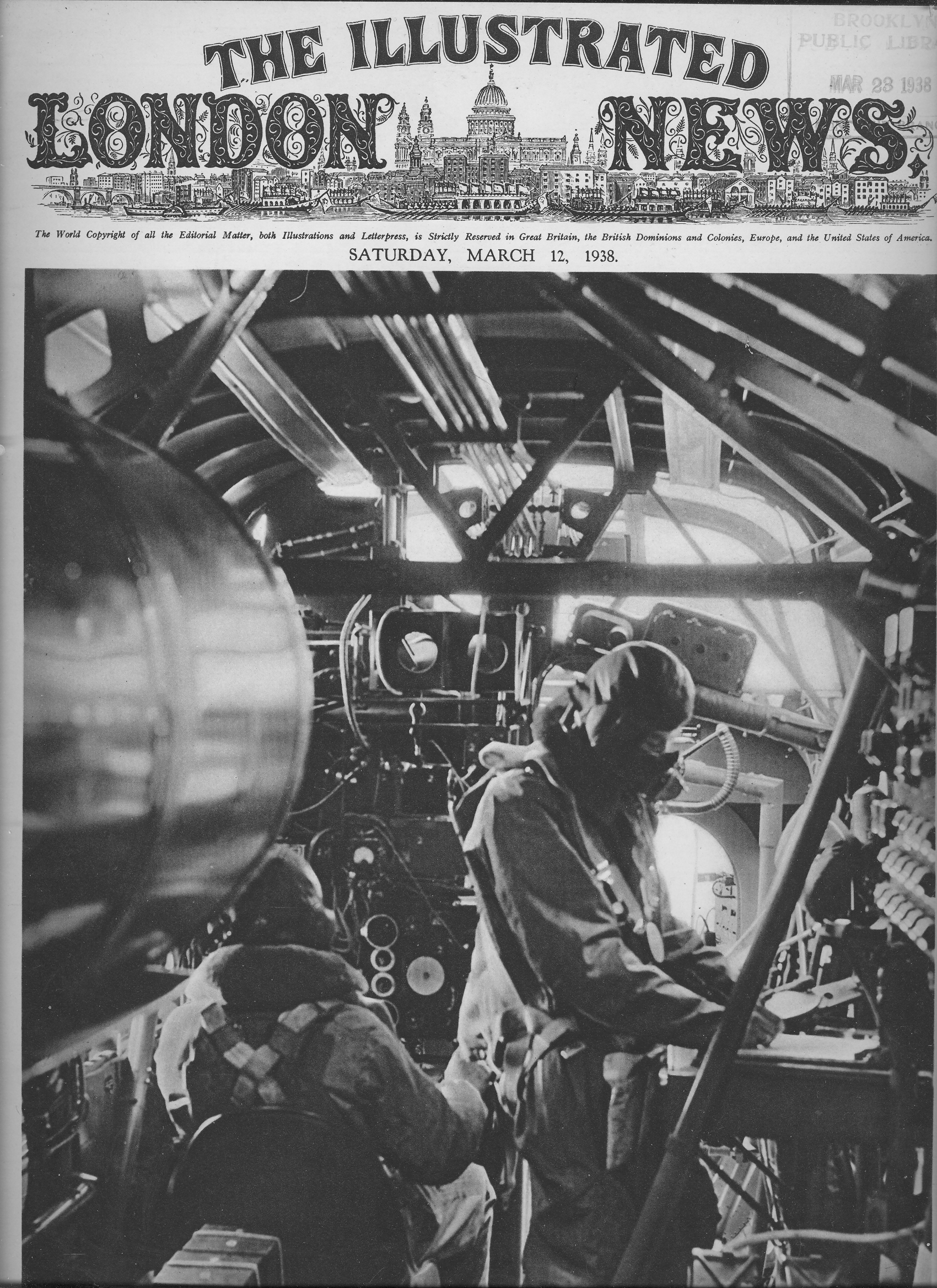
I don’t have much to connect with this image, save to say
that it is (to me) an unusual view inside one of
Handley Page Harrow. It was a beast of a
plane, 88x82x19, with two 830 hp engines, a big, slowish, wide-turning affair
with 3000 pounds of payload (which doesn’t seem like a lot to me). The co-pilot is standing straight-up in the
control area of the aircraft, with plenty of headroom to spare—something that I
couldn’t do anywhere in the B-17e, and I’m only (just shy of) 6-foot. He seems, maybe, to be calculating ground
speed (with a circular slide or ground-speed calculator?) at the navigator’s table, standing there next to the seated radioman.
It seems that it had a mixed experience during the war. It was intended to be a troop carrier when it
was design in the mid-1930’s, and by the end of the war there were only five of
them left in service, which were removed from the RAF in June of that
year. I suspect that when this image was published in The Illustrated London News on 12 March 1938, Britain was trying to quickly react the growing and desperate situation with Germany, and the Harrow was meant to plug a few gaping holes in the missing bomber bits of the RAF’s forces.
I like the plane’s design, though I think it wasn’t
intended to be a plane seen in combat, necessarily.