A Daily History of Holes, Dots, Lines, Science, History, Math, Physics, Art, the Unintentional Absurd, Architecture, Maps, Data Visualization, Blank and Missing Things, and so on. |1.6 million words, 7500 images, 4.9 million hits| Press & appearances in The Times, Le Figaro, Mensa, The Economist, The Guardian, Discovery News, Slate, Le Monde, Sci American Blogs, Le Pont, and many other places… 5000+ total posts since 2008.

Category: Photography, history

  • The Fossil Record of Duchampian Motion–an Early Image in Spatial Time (1884)

    JF Ptak Science Books   Post 2747
    MArey May 1884_2_

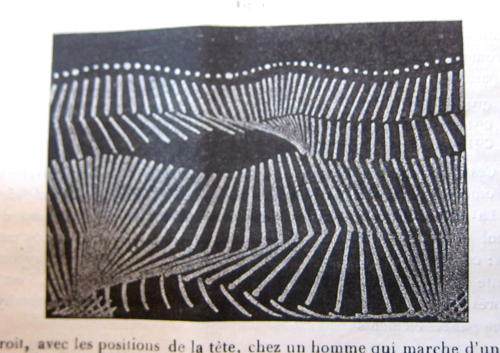
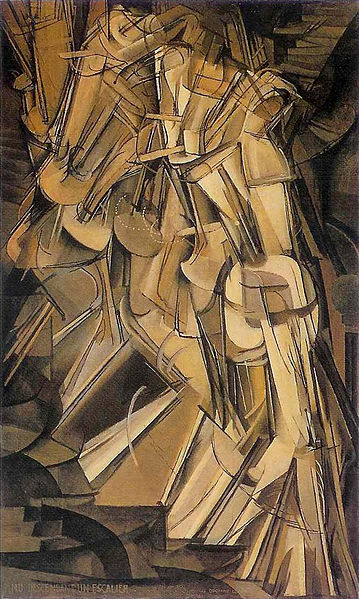
    This is one of those times where science precedes art–that’s the least significant aspect of this image, as the folks seeing it in 1884 couldn’t see into the future didn’t know that they were looking at what may pass for prehistoric fossil record of Duchamp’s 1912 Nude Descending.  The Duchamp would cause trial and occasional outrage in much of the artworld due no doubt to it challenging aesthetic–I don’t know what the readers of the Compte Rendus thought when they saw this image, but I suspect it did not involve evaluating its artistic impact.

    This is the work of Etienne Marey (who has made a number of appearances on this blog), a very smart and versatile guy who would go from physiology to cinematography to aerodynamics in the course of his life and be a leader/pioneer in each field.  Marey published this “strobophotograph” in his article “Analyse cinematique de la marche” in the Comptes Rendus on 19 May 1884–this was a brilliant effort in the analysis of human locomotion by making a dozen or two exposures on a single photo sheets of a reflective-outlined walking figure. This was different from Marey’s birthyear and deathyear buddy, the other motion picture pioneer, Eadweard Muytbridge (1830-1904 for both). Marey introduced his “chronophotography” and studied aspects of movement and motion that had been dispersed to human history because of the inability to observe and record them–with Marey, that issue necessary for the beginning of real scientific discourse was to a large extent solved. 
    Duchamp_-_Nude_Descending_a_Staircase

    Marcel Duchamp’s Nude Descending a Staircase, 1912, via Wikicommons

     There are more applicable Marey images for the Duchamp–for example his series on a single sheet of a naked woman descending a short set of stairs–but the image above has more aggregated motion in a confined space sense to it, so I’ll stay with the sense-impressions than the more-visual ones. 

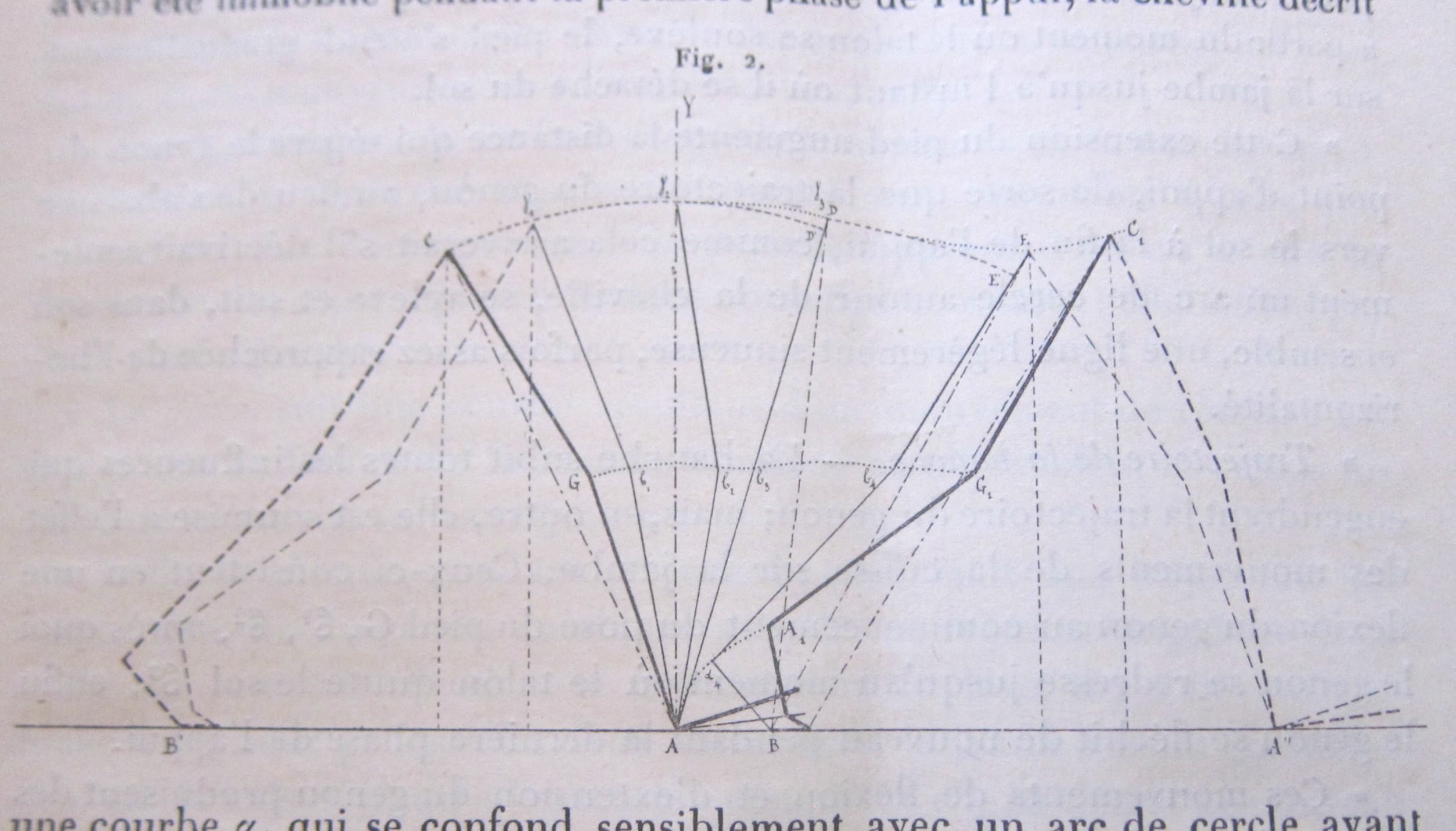
    And here’s Marey’s  modeling of the action:
    Marey May 1884

    In any event, I just wanted to pass on this quick note on some seldom-seen Marey images…

  • A Dancingly Anthropomorphic Kinematic Instrument (1912)

    JF Ptak Science Books   Quick Post

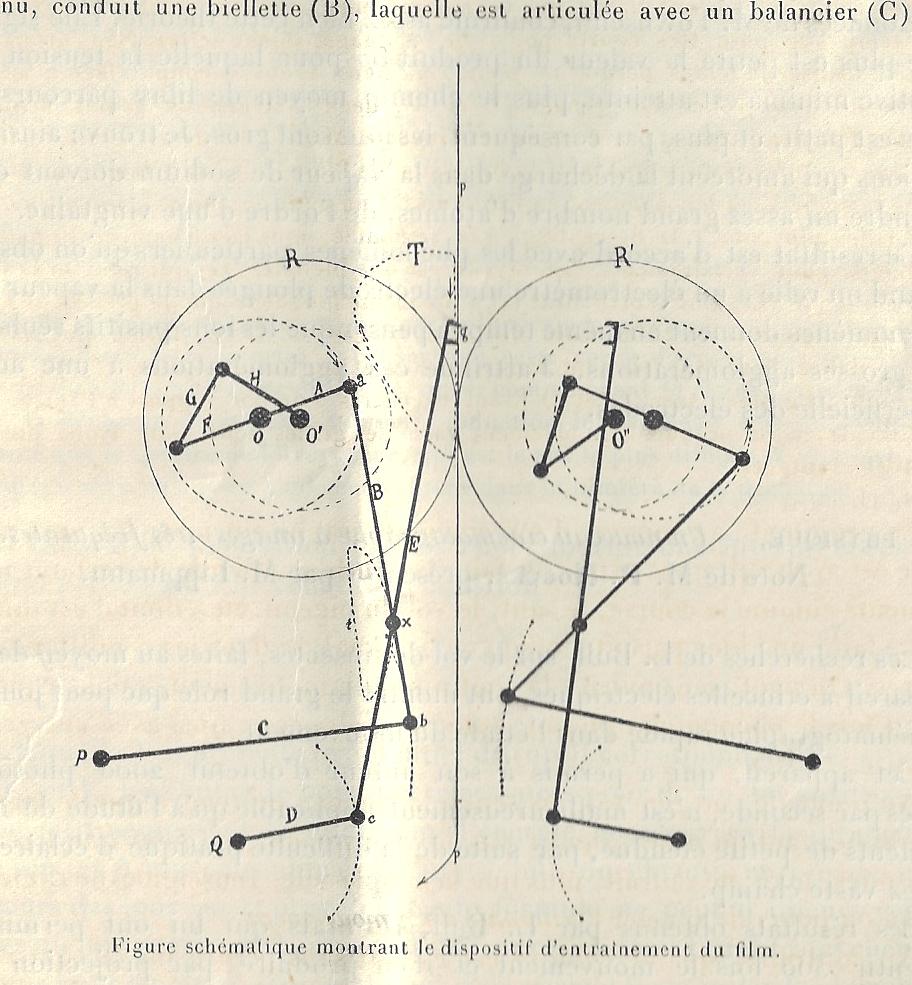
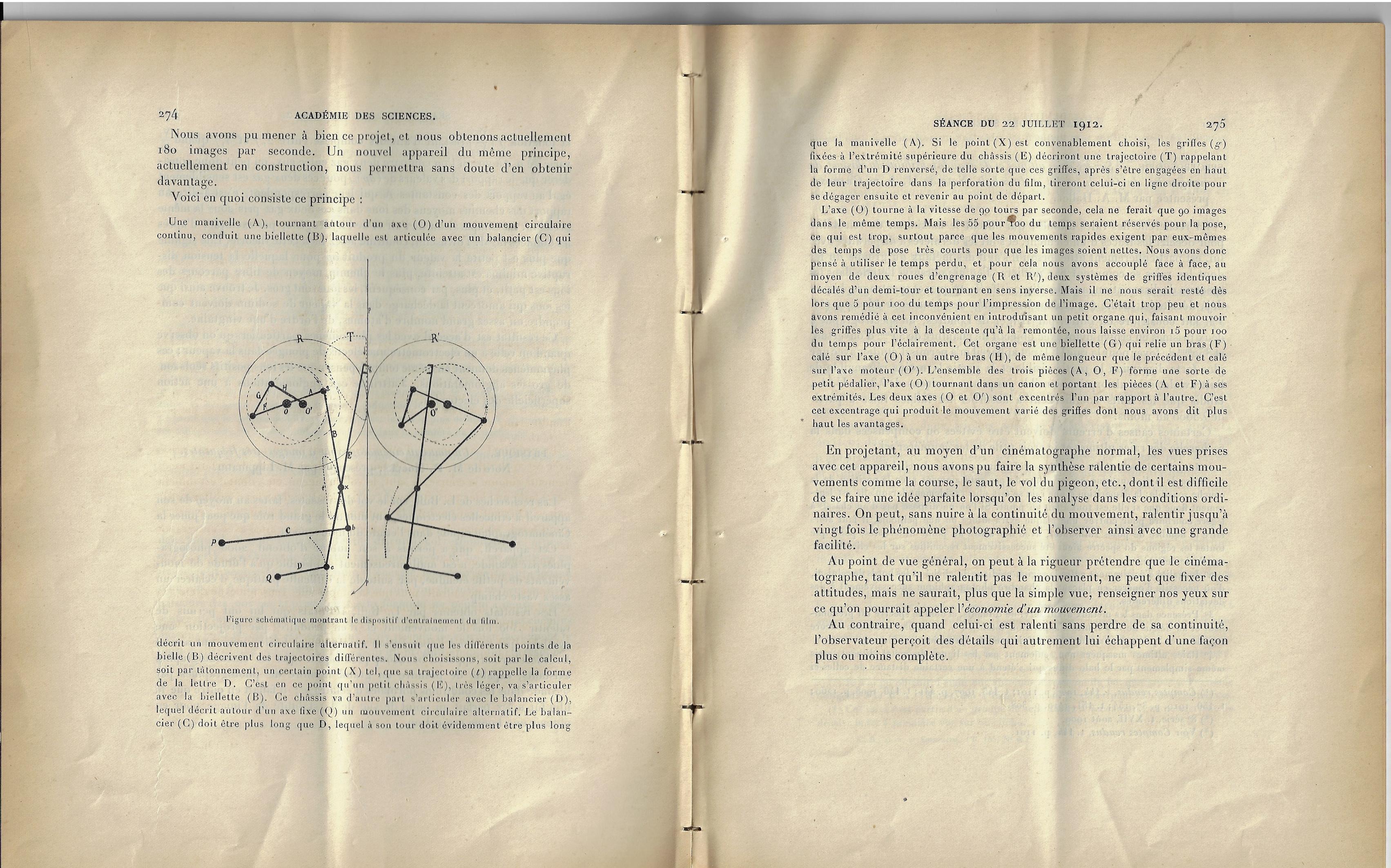
    CR 1912 Nogues kinematographThis is one of those posts where I was looking for something in the Comptes Rendus and then found something completely different. The what-it-was was something about Poincare1, at this point dead for just a week, the second titanic to disappear this year–it is really impossible to understand how he was able to do what he did in a lifespan of 58 years…of course he was a master of nearly every field, and was able to work his math problems out in his head first before writing them out, so it helped to be a multi-genius–and while not finding a notice on his death in the weekly issue I did “discover” an intriguing (and unrelated to Poincare) illustration. 

    At first I thought it would be related to an article on the depiction of motion as the drawing seemed to represent the anatomy of two dancers, and have some sort of fourth dimension/art/science relation, or whathaveyou, but then I saw it was a schematic for a part of motion picture camera–a kinematograph/cinematograph–that made 180 images per second, and would be just the sort of instrument used to study fast-moving objects in minute detail. So the schematic really did portray the essence of what the machine did, exploring the designs of motion.  

    CR 1912 Nogues _detail_

    ____________

    Notes:

    1. Poincare knew basically everything…here’s a toss-off from him that has stuck with me: “To doubt everything, or, to believe everything, are two equally convenient solutions; both dispense with the necessity of reflection.
    2. P. Nogues, “Un nouveau cinematographe a images tres frequentes”, in Comptes Rendus de l’Academie des Sciences, 22 July 1912, pp 273-275. 

  • Ghost Vision and the Coming of T.V.

    JF Ptak Quick Post

    Joseph Plateau, “On a New and Curious Application of the Permanence of Impressions on the Retina”, in Philosophical Magazine, volume 36, January-June 1850, pp 434-436; followed immediately in a much longer paper, “Second Paper on a New and Curious Application of the Permanence of Impressions on the Retina”, pp 436-452, with two plates.

    Plateau

    From: An Annotated Bibliography of Flicker Fusion Phenomena…1740-1952, by Carney Landis, p. 

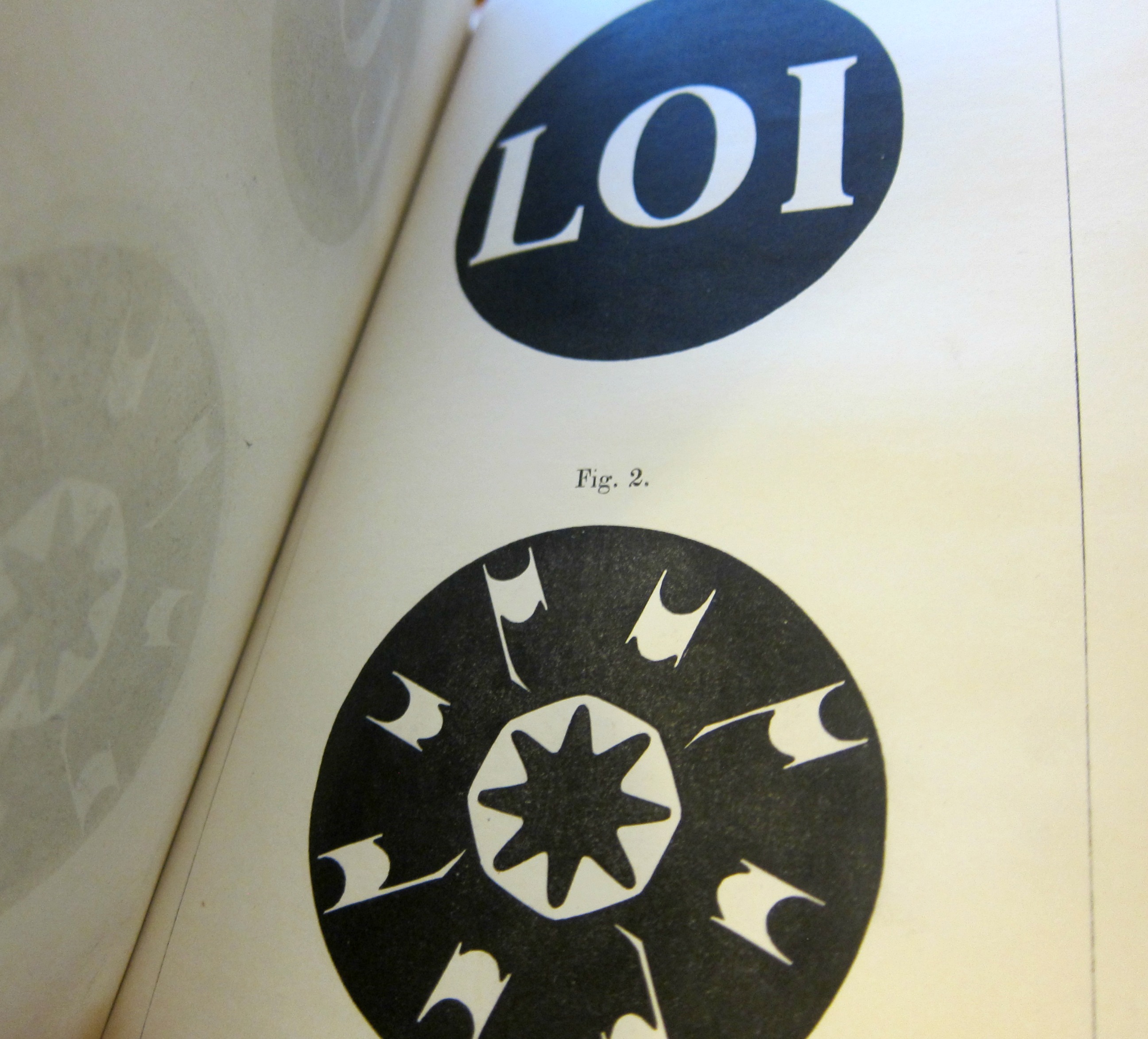
    PlateauPlateaun (1801-1883) was the inventor of the Phenakistoscope in 1829, and contributed often (especially with considerable papers in 1835 and 1836) on the issue of persistence of vision. Here he writes of that and the flicker effect, which is the optical illusion in which individual sequential units of images are viewed as a continuous motion of images, which is a trick of the visual system and makes such this as the movies and cartoons and animated shows possible.  It is a terrible irony that this great writer on physiological optics would be blind or nearly so by the 1840’s, this a result of an experiment conducted requiring him to stare at the sun for nearly half a minute.

    “Plateau studied in great detail the phenomena of accidental colors and irradiation, both of which he considered as arising from a similar cause related to the persistence of the image on the retina. Accidental colors are those that appear after staring for some time at a colored object and then at a black surface, or closing one’s eyes and pressing one’s hands over them. An image of the object appears, usually in complementary color and slightly diminished in size. Plateau’s results include his discovery that accidental colors combine both with each other and with real colors according to the usual laws of color mixture. In irradiation luminous objects on a dark background appear enlarged, a factor clearly of interest to astronomers, among whom the question of the extent of the enlargement was causing controversy. Plateau showed that enlargement occurs regardless of the distance from the object and—explaining the varied experiences of the controversialists—that the mean amount of enlargement from the same source varied considerably from one individual to another.”–Dictionary of Scientific Biography

    Also in this volume: J. Locke, “On the Phatascope”, pp 453-457, “instrument for giving single vision with two eyes” (–Living pictures; their history, photoproduction and practical working. With a digest of British patents and annotated bibliography, Henry Hopwood, 1899.)

    Among the many other articles in this volume is William Fishburn Donkin’s “On the Geometrical Interpretation of Quaternions”, pp 489-502. (See Alexander MacFarlane’s Bibliography of Quaternions..., 1904, full text here: http://ow.ly/kFRy304gfVD

    Notes:

    • See The History of Discovery of Cinematography timeline, which is especially interesting for the pre-1850 entries http://precinemahistory.net/1850.htm


  • Speaking Photographs, 1892

    JF Ptak Science Books   Quick Post

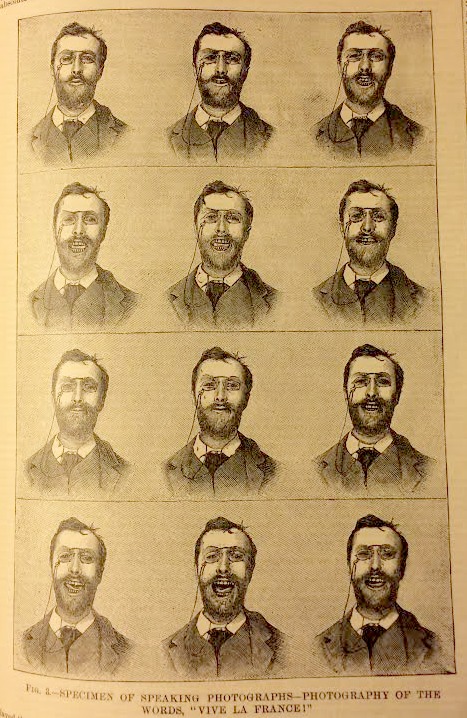
    Georges Demeny (1850-1917) was a pioneer chronophotographer and Victorian cinematographer, a visual experimentalist, an exploratory photographer, who made great contributions to the earliest history of the motion picture. He was an assistant and associate to Etienne Marey–who we have met a number of times on this blog, and who happens to be one of my favorite 19th c sci/tech figures, along with Hermann von Helmholtz, Thomas Young, and w. Stanley Jevons–before moving along on his own following a developing coolness between the two men in around 1894.  This wood engraving, which appeared in the June 18, 1892 edition of Scientific American Supplement, shows Demeny’s chronophoto work (on himself) as he studies what the face looks like when saying “vive la France”.  

    Phonophone 1892[Source: Scientific American Supplement, June 18, 1892, pp 13726-8]

    • A nice appreciation of Demeny’s contribution to the earliest cinema is found here:http://www.victorian-cinema.net/demeny


  • Talking Phonographs and Talking Photographs, 1877/8

    JF Ptak Science Books    [Reposting Post 2601 with an update]

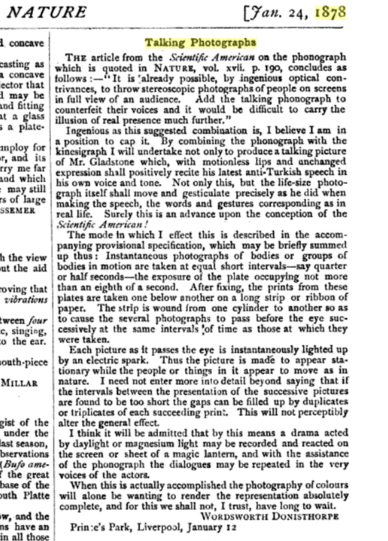
    There appeared in the wonderful pages of Nature (for 24 January 1878) a short but interesting technical communication from the probably/improbably-named Wordsworth Donisthorpe (1847-1914) about an invention that is deeply related to the early stages of motion pictures–in fact it was the first paper that coupled sound with the moving image. It appears eleven years before the first successful demonstration of a motion picture in 1889.  

    Talking photographs

     (The article is immediately preceded by another on the change of habits in toads.)

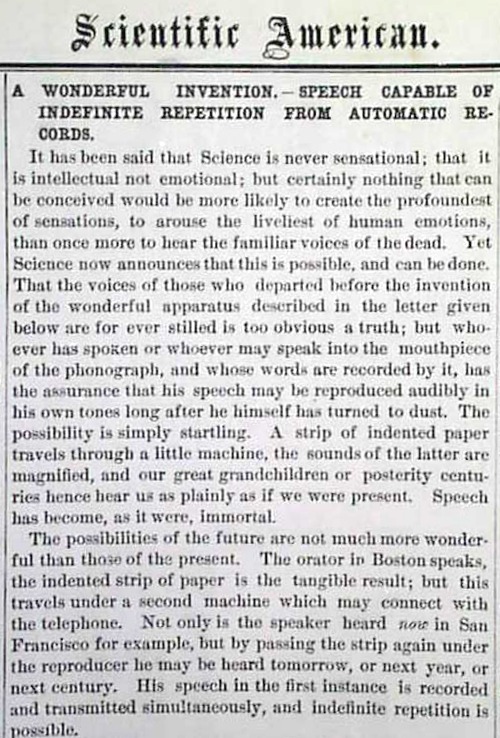
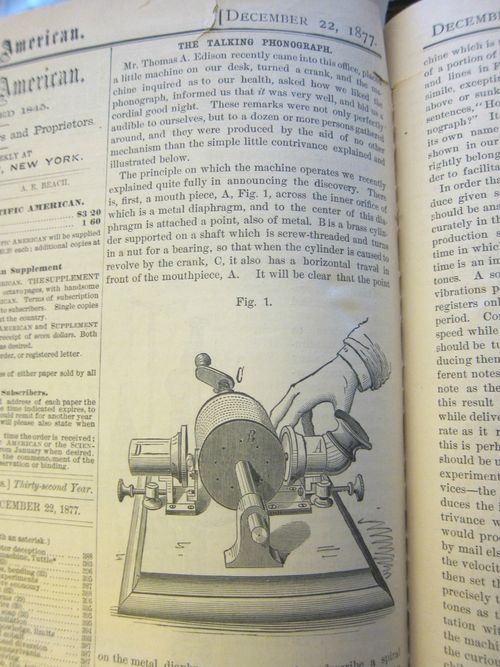
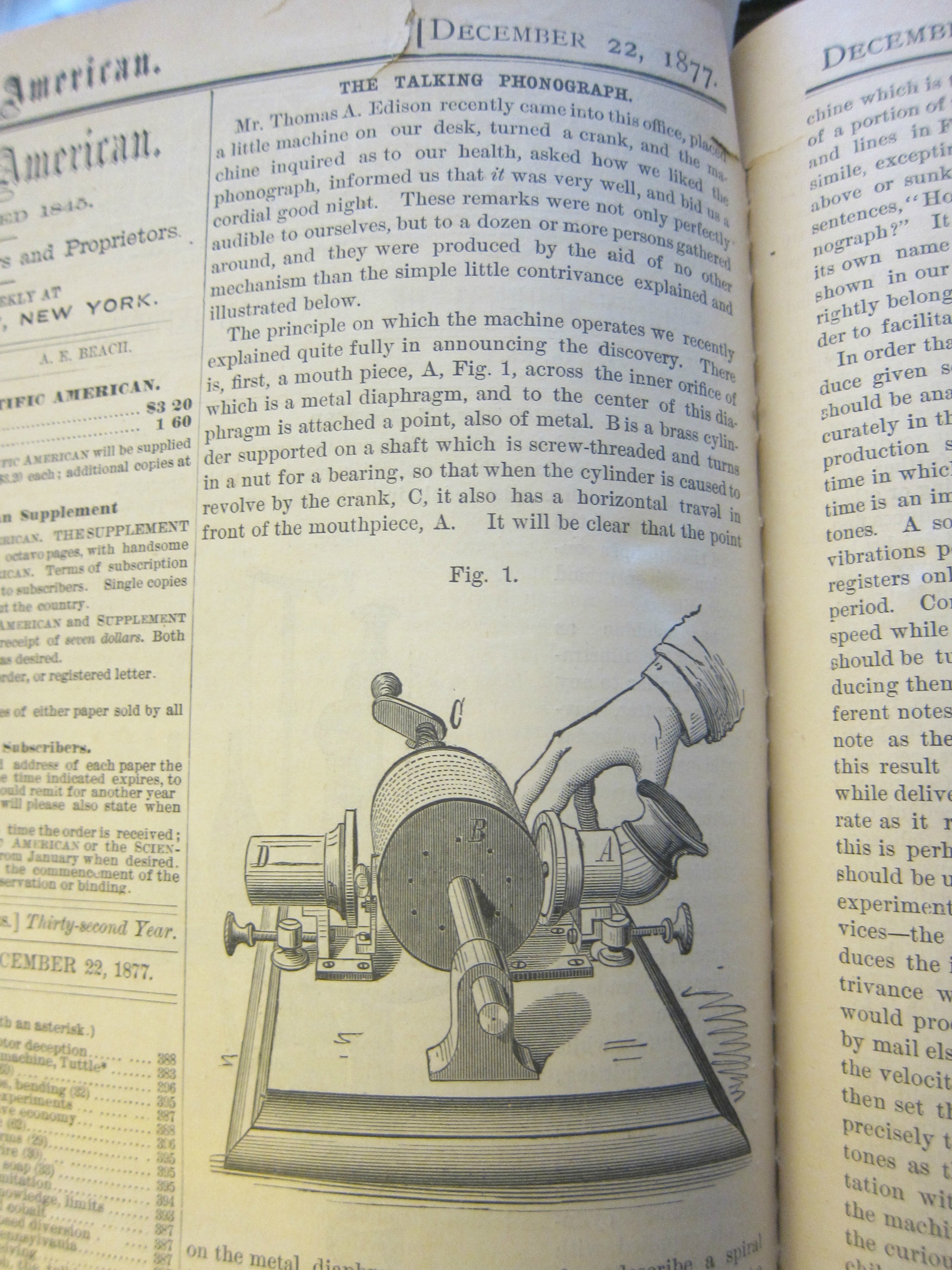
    What Mr. Donisthorpe is talking about in the pages of the Scientific American is really the back-door entry to an even bigger topic: the first announcement of Thomas Edison’s phonograph as it appeared on the back of the first  page in the last issue for the year, 29 December 1877.  “A Wonderful Invention–Speech Capable of Indefinite Repetition from Automatic records” was the aarticle by Edward Johnson on the introduction of Thomas Edison’s phonograph.It is one and a half columns long, but contains a very compact 1500 words.  

      Edison phonograph

    Edison’s name was not a popular item in the average American home before his invention of the phonograph.  It was actually some months later, after the initial announcement in 1877, that Edison became justifiably famous.  It is difficult today to place the amazement and astonishment that greeted the invention–there was nothing like it, before, ever–except for writing, of course, and then the recording telegraph.  It was a sensational piece of power, being able to record and save sound–and then play it back again.  It was the first time in human history that the auditory sense world could be audibly preserved.

    The first announcement in Scientific American appeared slightly earlier still, in the November 17 issue for 1877.  

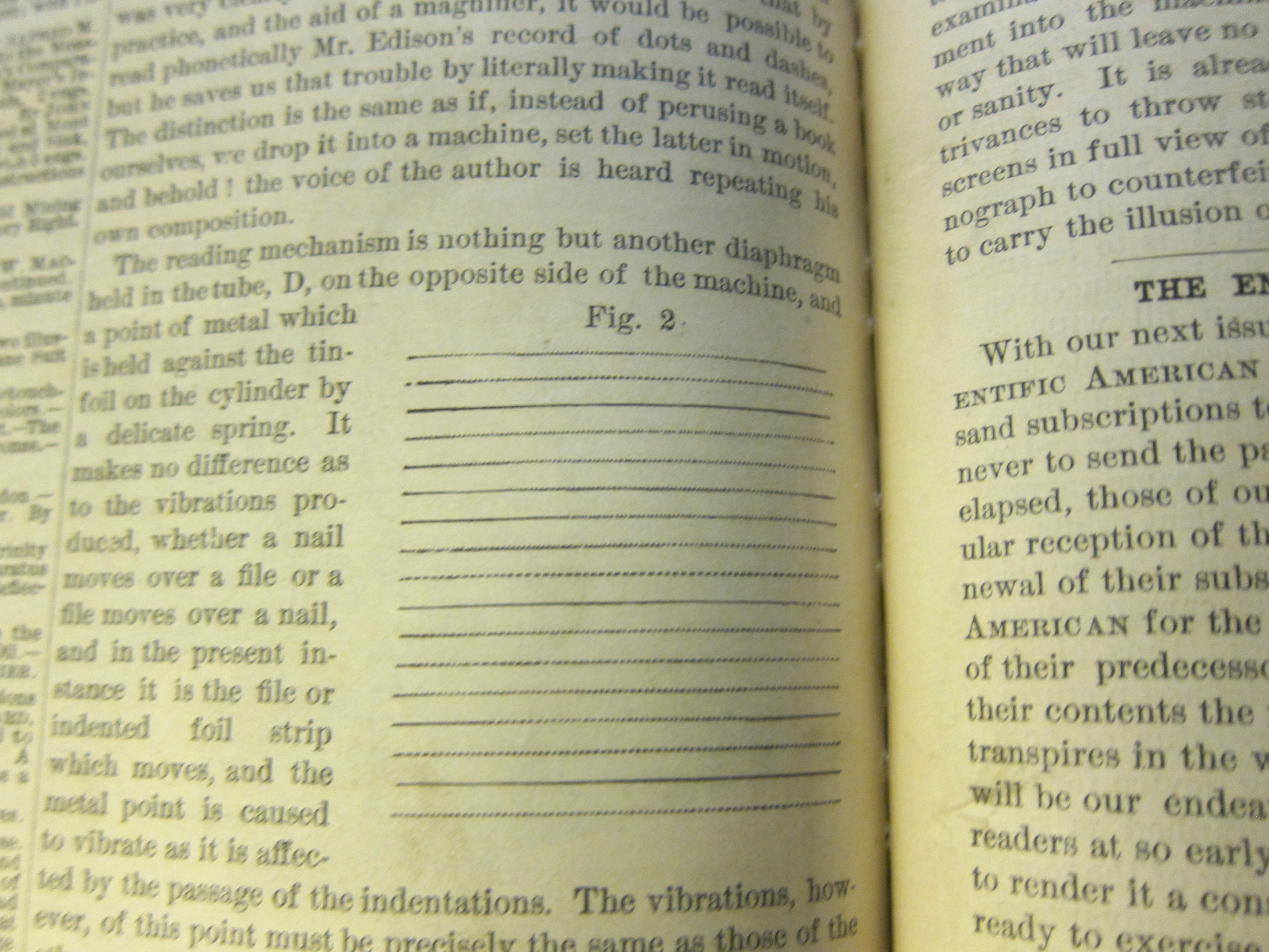
    This is a wood engraving of the impressions left on the recording cylinder–it must be the first image of a saved sound.  

    Edison 1877 phonograph


    Edison 1877 Dots

    There is also a two-page report on Edison’s visit to the offices of  Nature and his very successful demonstration of his new phonograph  machine (the patent for which is applied for December 27, 1877). The editors  record their favorable impressions of the machine and describe it in some detail–there is even a small woodcut illustration of the device. In all the  article occupies pages 190-191 of the weekly issue. (Edison,  Thomas. “The Talking Phonograph“,  London:  Nature,  January 3, 1878.)

    So it comes to pass that the idea of saving and manipulating sound and then applying that to moving images come to rest within a few dozen pages of one another in Nature–it must have been an exhilarating experience at the time.

    Notes:

    A hat tip to Cadre History http://histv2.free.fr/cadrehistory.htm a site with a LOT of material of high interest (in general) and with good references (in particular). 

    An interesting book to check out: Stephen Herbert, M. Heard.  Industry, Liberty, and a Vision: Wordsworth Donisthorpe’s Kinesigraph.


  • Early Steps in the History of Photographic Self-Interest: the Photo Booth Pre-Selfie

    JF Ptak Science Books   Post 2562

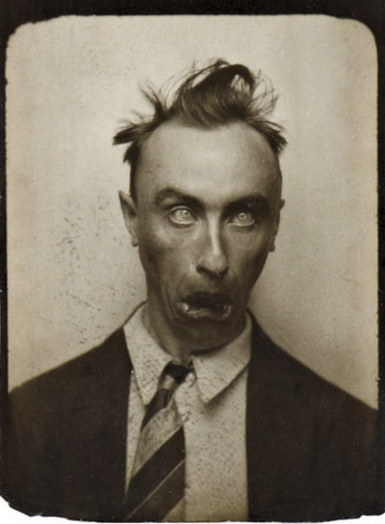
    Before $999 selfie sticks, and before cell phones, there still was life! The agitations of great need for making self portraits has existed no doubt before this semi-delusional time, except of course there wasn’t immediate and total access to the possibility of addressing the somewhat narco-curiosity to self aware recording. Nowadays you can have your own broadcasting service all about yourself all of the time and share it to yourself or to anyone else who can find your conceptual conceit–in the past, not so much so.  

    The antiquarian notation of the idea of the selfie finds itself in the invention of the photo booth. It is perhaps the first true invention that could address this notion of photographic self-allegiance, except that you can’t fit it into your pocket like a cell/sel(f) phone because you fit inside of it.  But it certainly was the only way that you could halfway address an instant need for making a photo of yourself, and do so without undue muss or fuss, and to be able to do it on your own.

    The photo booth was the early version of radical expression of photographic self-interpretation made possible by a hands-free invention.

    The results of the photo booth (around since about 1890 but not fabulously well accepted and ubiquitous until Mr. Anaotl Josepho with his Photomata in 1925) can be charming, and revealing, and be all that you wished it to be, or not.  I’ve collected some examples (below) from the 1930’s-1950”s–the results can be mixed, but almost always interesting.  

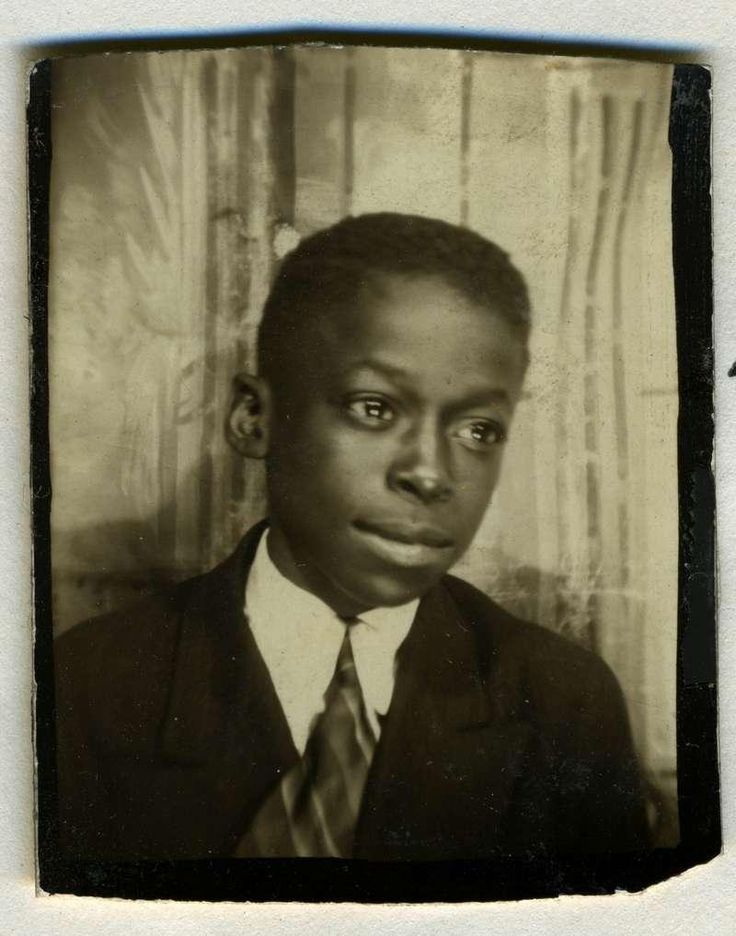
    The young Miles Davis is terrific. 

    Selfies miles davis

    Miles Davis, aged 9. [Source, Pinterest: https://www.pinterest.com/pin/31454897367684842/]

    For an interesting piece on artistic photo booth self portraits by artists, see Jonathan Jones on the Surrealists and the first photobooth in Paris, 1928, in The Guardian, here: http://www.theguardian.com/culture/2004/jun/16/1

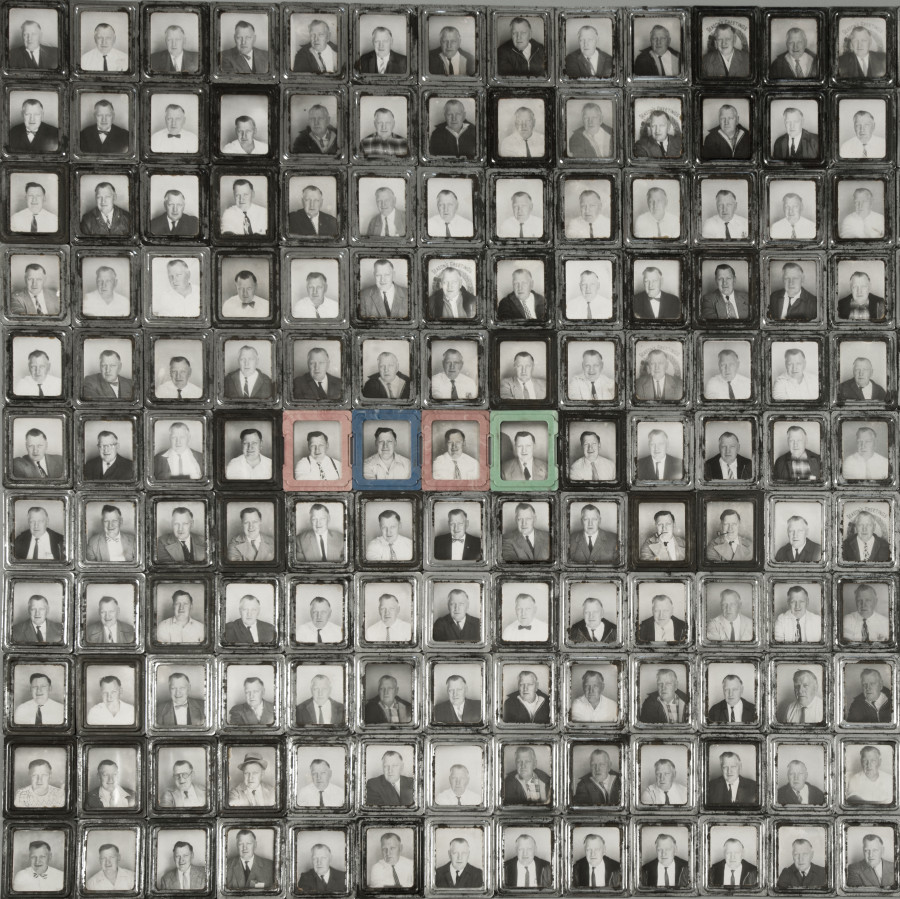
    This is fascinating: 445 photo booth images of/by one unidentified man:

    Selfies 445

    •  See the article by Pricilla Frank, “Exhibition Features 445 Vintage Photobooth Portraits From A Single Unknown Man” in the Huffington Post, here: [http://www.huffingtonpost.com/2014/04/04/445-photobooth-portraits_n_5077544.html]

    Selfies Tanguy

    Yves Tanguy [Source, PBS, here: https://pbs.twimg.com/media/CO-mBeXUEAASyM8.png]


  • Curious Hand-Illuminated Victorian Photo Album (ca. 1862)

    JF Ptak Science Books     Post 2525

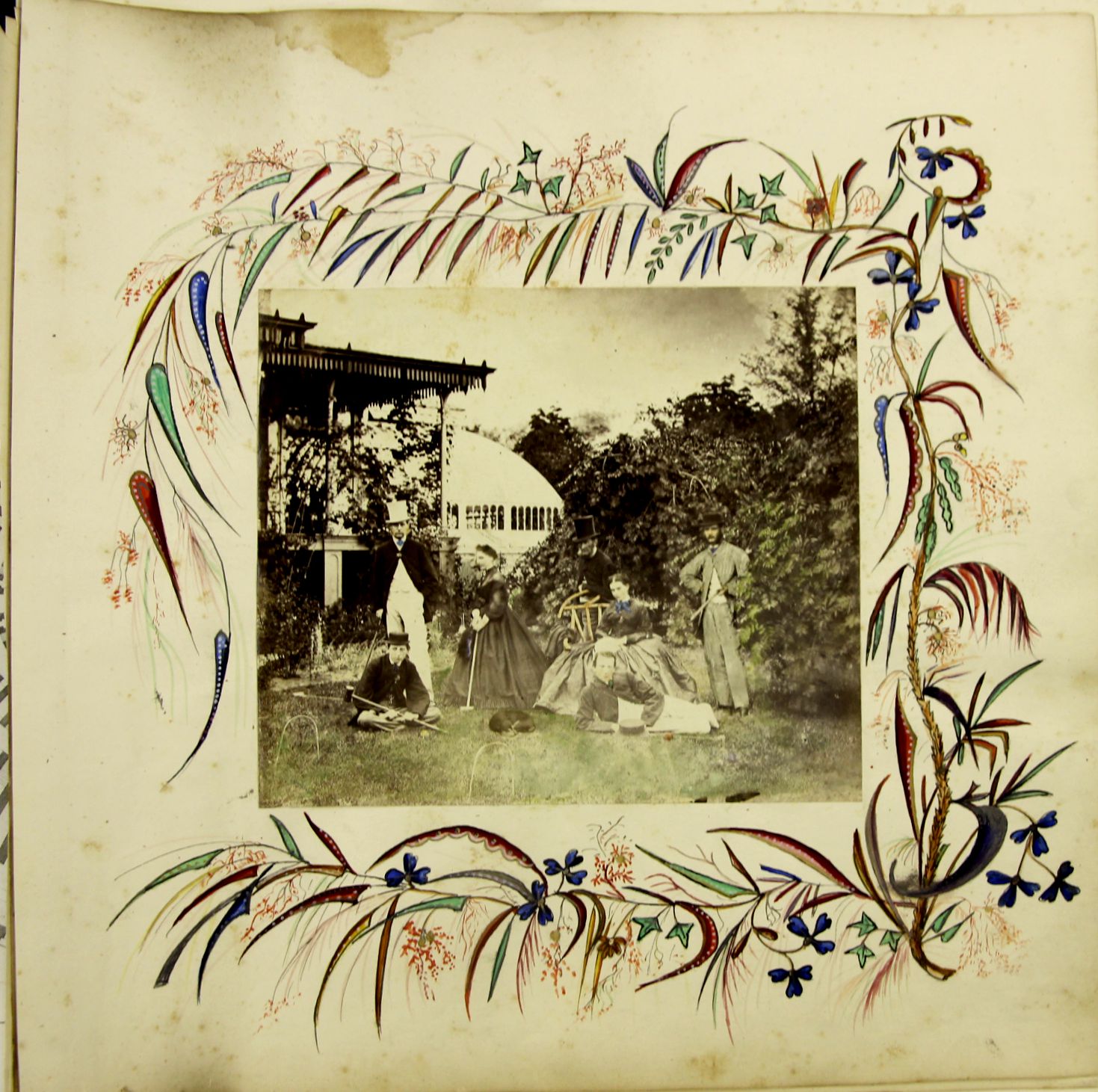
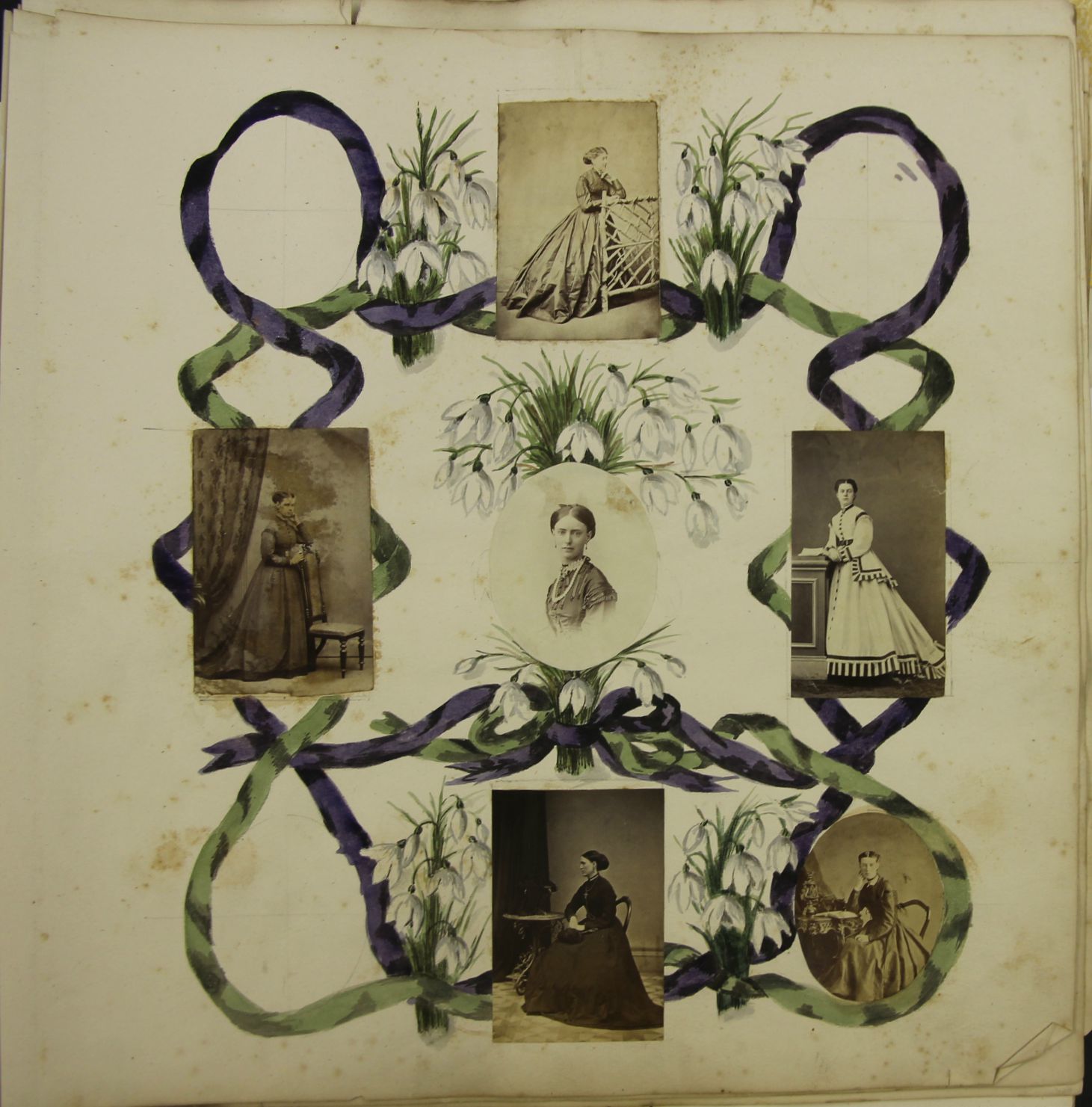
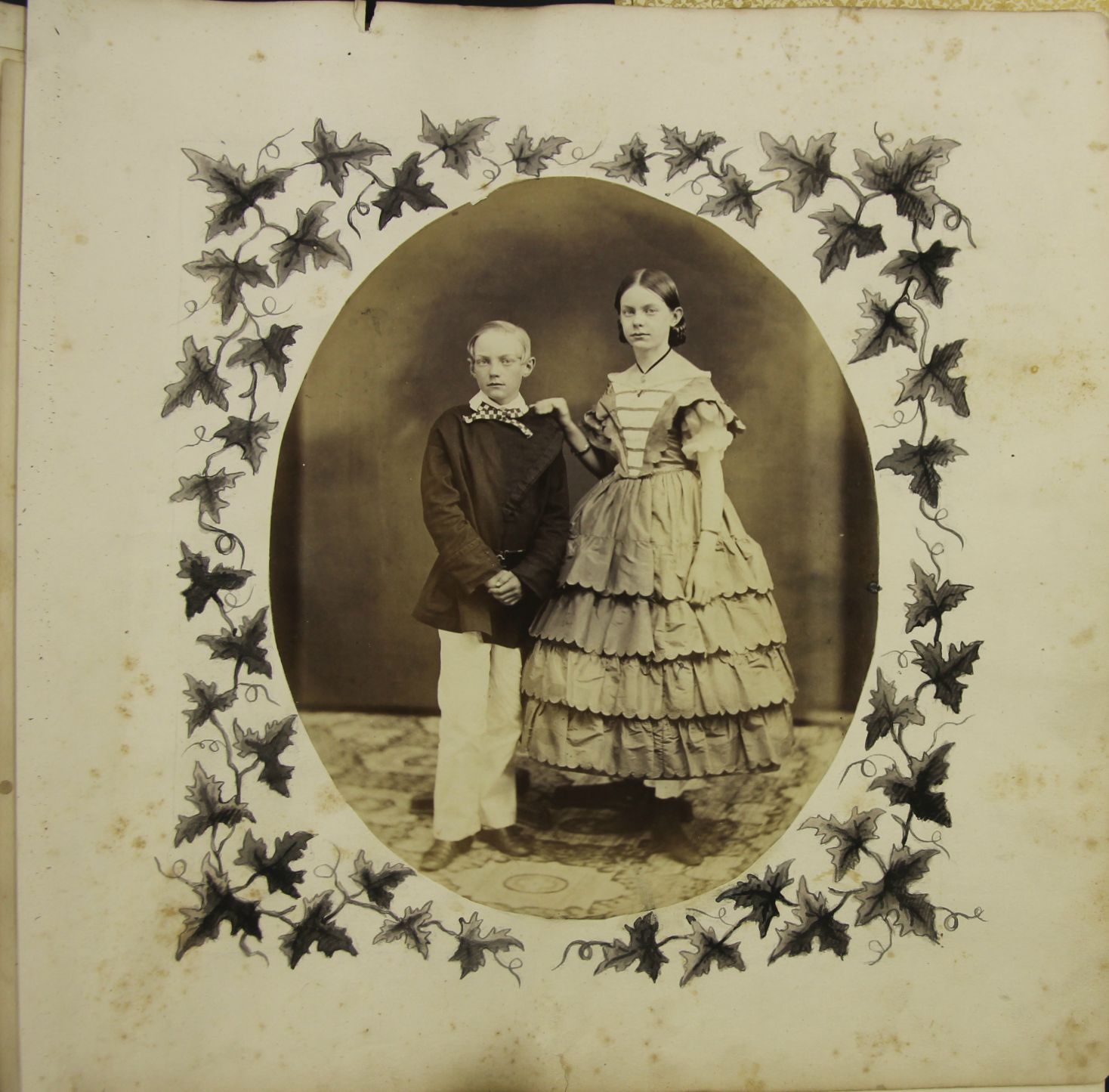
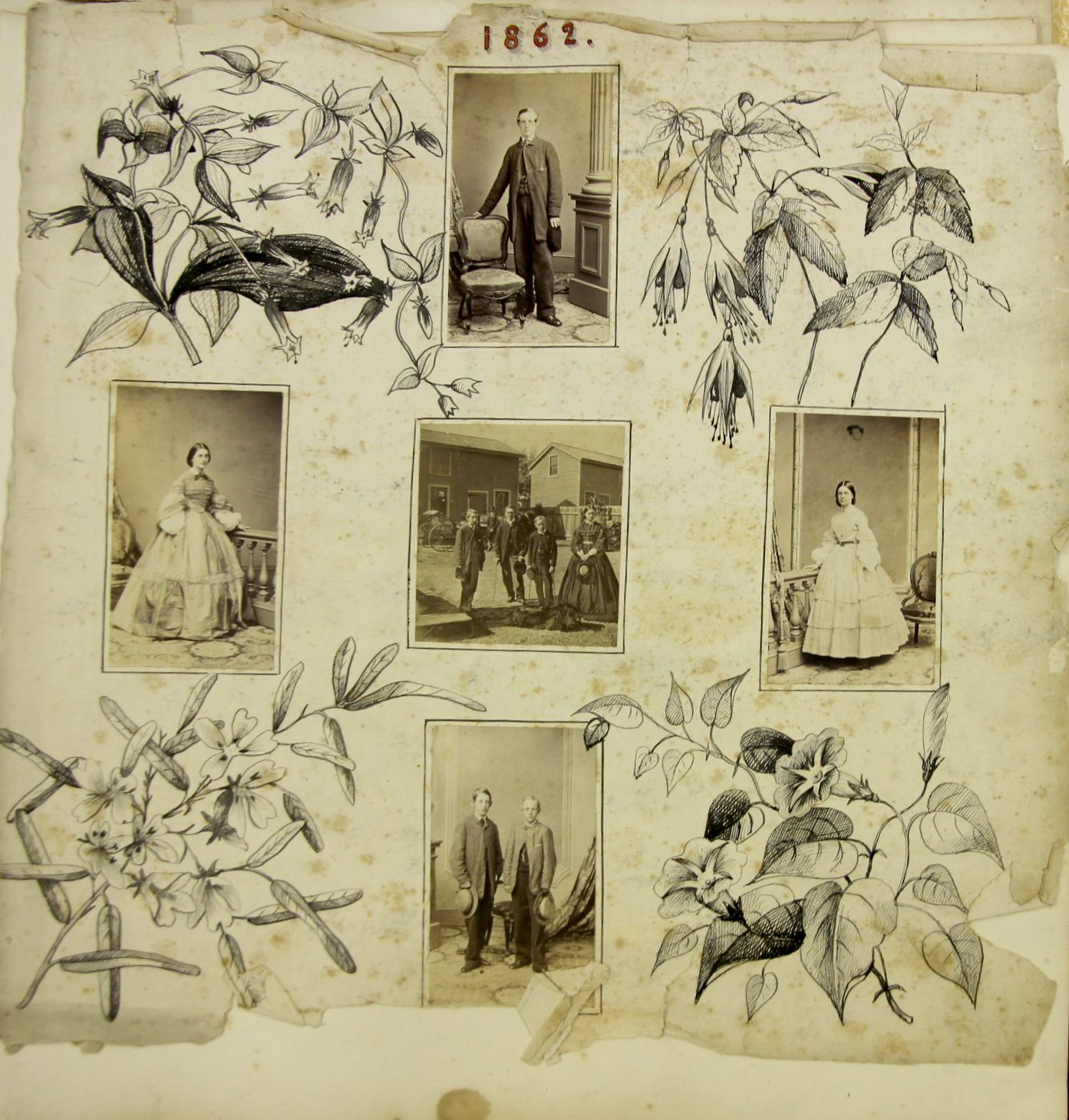
    I found this collection of photographs a number of years ago, mostly for the way that some of the decorated panels were not outfitted with photographs.  The photographs were made in the early 1860s (one is dated 1862) and the decorations I take it were made by hand at the same time or thereabouts.  

    One of the most interesting images is this family portrait–it has one of the most elaborate manuscript “frames”, and it also depicts a space ship in the background. Well, not really–but it is an interesting design for what I suspect was an (iron?) conservatory or greenhouse.  Also handling the photograph in person led me to the very minor discovery that the curled up and sleeping dog was an extra and “photoshopped”–that is, added after the photo was made, a cutout of the dog pasted onto the print. No doubt it would have been difficult to have a dog sitting there for a long period of time with the family without moving given the relatively slow exposure time in 1862.  I find that detail, that the family though enough of the dog to paste it into the final/finished project, to be very touching.  

    Each sheet measures about 16″x 16″   The originals are available on the blog’s bookstore, here.

    Victorian album _16_


    Victorian album _17_


    Victorian album _15_


    Victorian Album _14_


    ·Posted by :

    ·in:

    —

  • Camera Obscura at War, II–Zep Buster

    JF Ptak Science Books, Quick Post

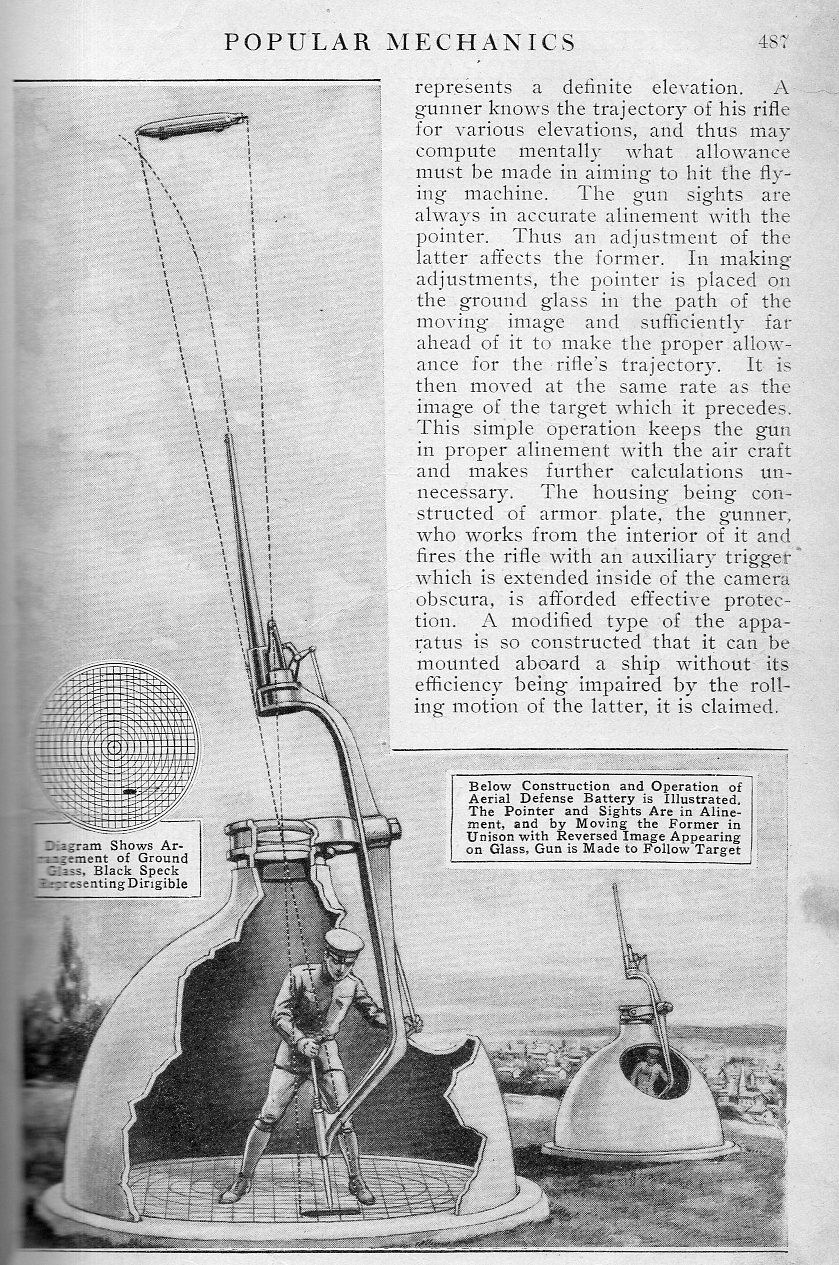
    Earlier in this blog I wrote about an unexpected military use of the camera obscura, here (“The Camera Obscura at War, 1885”).  Today I found another use, which was a guided/guiding anti-aircraft weapon.  I assume that this was mostly employed against the slower moving zeppelins (although in 1915 airplanes weren’t moving that much faster) due to its very limited range of fire.  The camera obscura itself didn’t move, and the relatively small occulus offered not that big a range of sky to work with. But that said the weapon was an ingenious and simple mechanism, an early and primitive semi-machine-directed anti-aircraft gun.  There is no mention of whether or not any of these were actually deployed, and compared to the AA guns that actually appeared in the first and second yer of the war, this attempt looks a little antiquated for the time.  The article also makes no mention of the artillery to be used, which is a major consideration.  

    Aa gun799

    The article appeared in Popular Mechanics, April 1916 (pp 486-7)


  • Dancing at the Edge: Yosemite, 1890’s

    JF Ptak Science Books   Quick Post

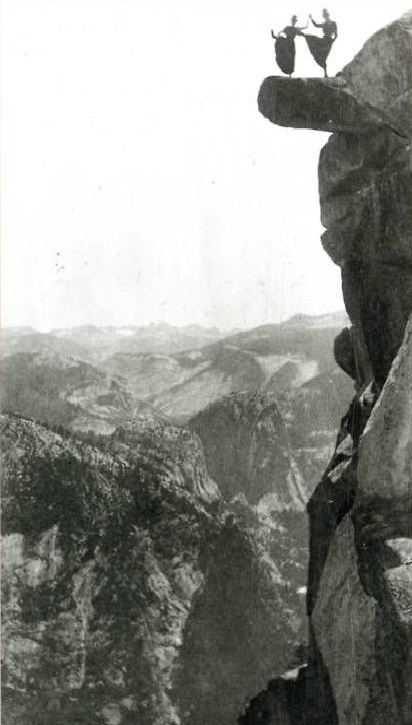
    These are remarkable photos of folks standing at the edge of the world in Yosemite National Park.  They were made by George Fiske, a New Hampshire boy who left for San Francisco and moved to Yosemite at age 44 in 1879. He worked there for decades, producing beautiful and iconic work before running out of steam after the turn of the century, and in the end committing suicide in 1918 because as he said he lost interest in being alive.  

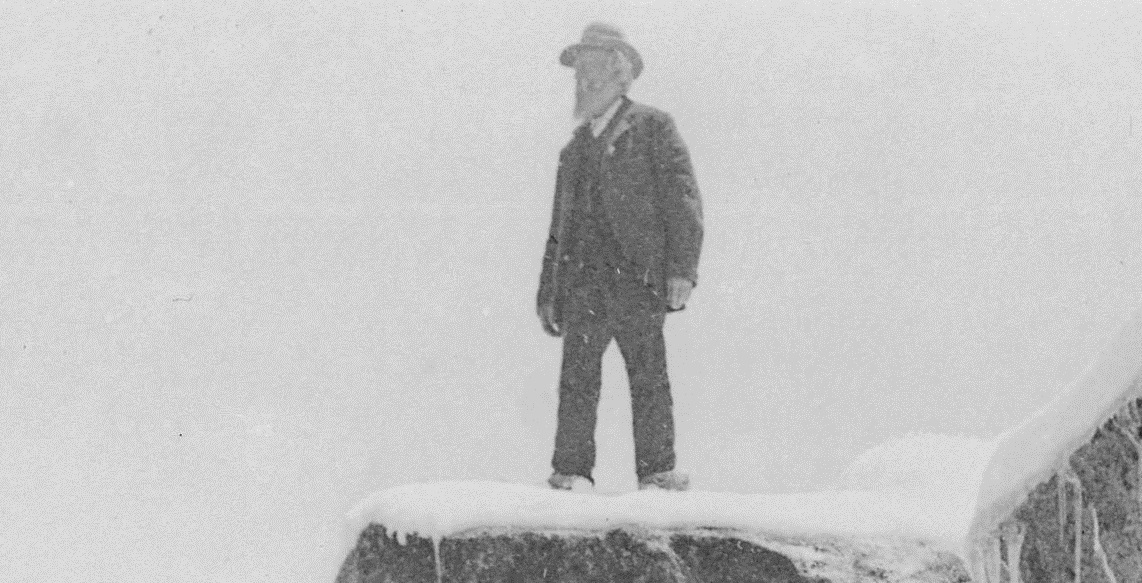
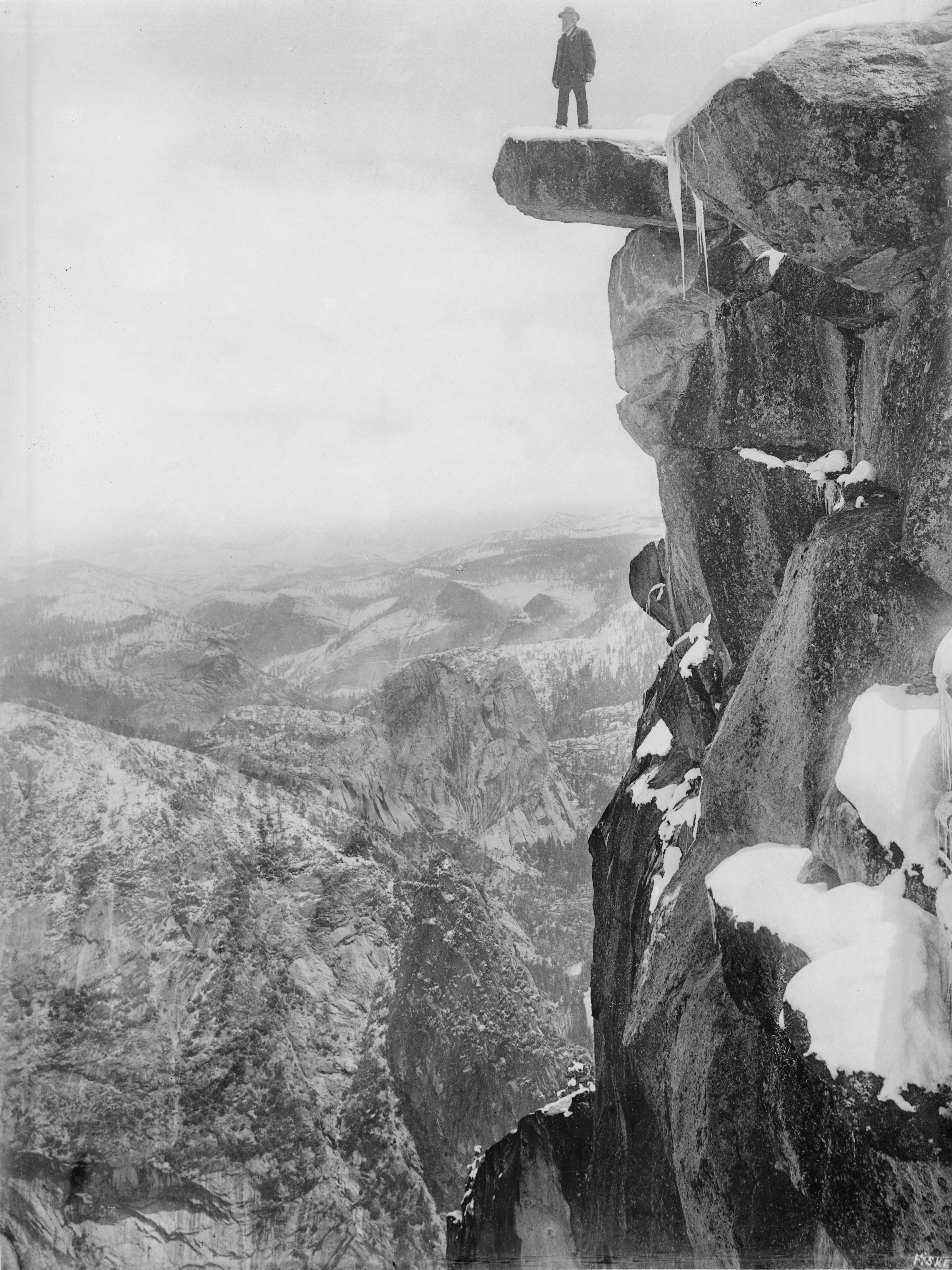
    I came to Fiske today because of the dancing ladies, hanging out at the edge of the overhanging lock, a photo made by him in the 1890’s at Glacier Point in Yosemite. That led me to another photo that Fiske made of his co-author Galen Clark, made at the same place some years later at the same famous spot, in 1910.  

    Detail of the dancing ladies, 1890’s:

    WOmen--dancing on ledge detail

    And the full image:

    WOmen--dancing on ledge

    And a clearer image Galen Clark:

    Women yosemite Galen_Clark_on_Glacier_Point_in_Yosemite_National_Park,_ca.1900_(CHS-1207) detail

    Women yosemite Galen_Clark_on_Glacier_Point_in_Yosemite_National_Park,_ca.1900_(CHS-1207)

    [Image source:  wikipedia ]

    Notes:

    James Mason Hutchings, In the Heart of the Sierras (1888), with many illustrations including a number of photos by Fiske. Great digital copy at yosemite.ca.us here. 

    Galen Clark, The Yosemite Valley (1910) with more photographs by Fiske.


  • A Composite Photo of Mistakes, 1885 (Or: Imaginativeness vs. Comb-overs?)

    JF Ptak Science Books   Post 2097  
    Follow Me on Pinterest

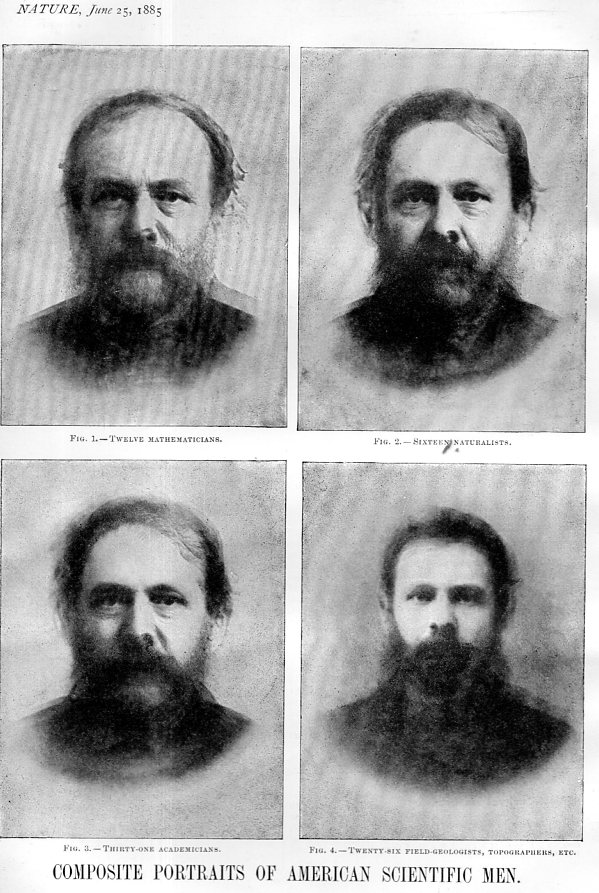
    Building on some reaching and questionable physical identification work of Sir Francis Galton, Raphael Pumpelly tried to make photographs of what scientists looked like. 

    At a scientific meeting of the National Academy of Sciences in Washington,  D.C.,  Pumpelly (along with Dr. (Thomas Mayo) Brewer and the Secretary of the Smithsonian Institution, (Spencer F.) Baird) undertook the experiment to determine whether or not there was a certain composite “type” in groups of academicians.  He employed the justly-named head of the photography department at the NAtional Museum, Mr. (Thomas Mayo) Smillie, to make a series of 2-second exposures of the scientists upon a single glass plate.  Two seconds per portrait was not long enough to make a defined portrait for a single sitter, but if there 15 or 30 such exposures on the same plate it was seen that collectively a strong impression would be produced.  The resulting portraits are interesting in their own way, but probably not so interesting without the backstory.

    Composite593
    The problem of course is the interpretation and what could come of classifying external characteristics for internal capacities, which would make this exercise as useful as cranial bump reading or body mole mapping. 

    Also it is unclear that if you didn’t identify these images as composites of leading American scientists but were told that they were pictures of murderers or meat thieves or sneak burglars, it would be as easy to believe.  Instead of identifying their characteristics of “intelligence” and “imaginativeness”, changing the grid-of-explanation to criminality would certainly change those readings to something else.

    [The original paper is available via our blog bookstore, here.]