A Daily History of Holes, Dots, Lines, Science, History, Math, Physics, Art, the Unintentional Absurd, Architecture, Maps, Data Visualization, Blank and Missing Things, and so on. |1.6 million words, 7500 images, 4.9 million hits| Press & appearances in The Times, Le Figaro, Mensa, The Economist, The Guardian, Discovery News, Slate, Le Monde, Sci American Blogs, Le Pont, and many other places… 5000+ total posts since 2008.

Category: History of Memory

  • 1 Over 1 & the “Rule for All Time Past and Future”

    JF Ptak Science Books  Post 2353

    That is a provocative title, or chapter heading, but that’s how it appears in a pamphlet I’m reading right now, a juicy thing that can lead to a memory palace of ideas…until you start reading the para below the head, when things get both more crystalline and fuzzy.

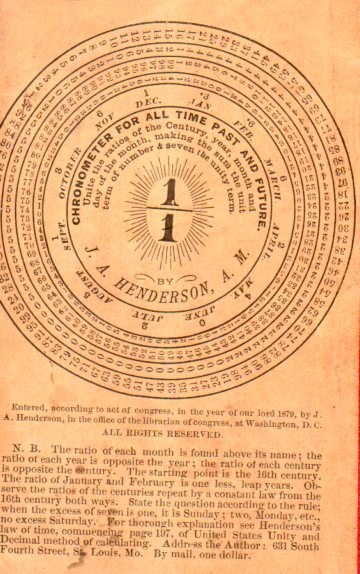
    John Alexander Henderson, a lightning calculator and professor of math at Delaware College in New York, produced this sprightly pamphlet eponymously titled Henderson’s United States Intellectual and Practical Lightning Calculator, the Unity and Decimal Method, which he published in St. Louis in 1879. (It is followed a few years later in another edition with a hundred new pages.) 

    What Mr. Henderson is getting at is a calculator for reducing a date to find out the day of the week a particular date falls on, from the 1st century to the 99th.  On the back cover of this pamphlet he provides a tickler for this enumerating device, which is explained in another publication (Henderson’s United States Unity and Decimal Method of Calculating). 

    Calculatort mental425

    And so in order to calculate the day of the week on which, say, November 26, 2014, occurs you would you the dial above as follows, but first an explanation of what is on the dial face:


  • Reverse Memory, Synesthesia, and Modern Art (1880)

    JF Ptak Science Books   Post 2330

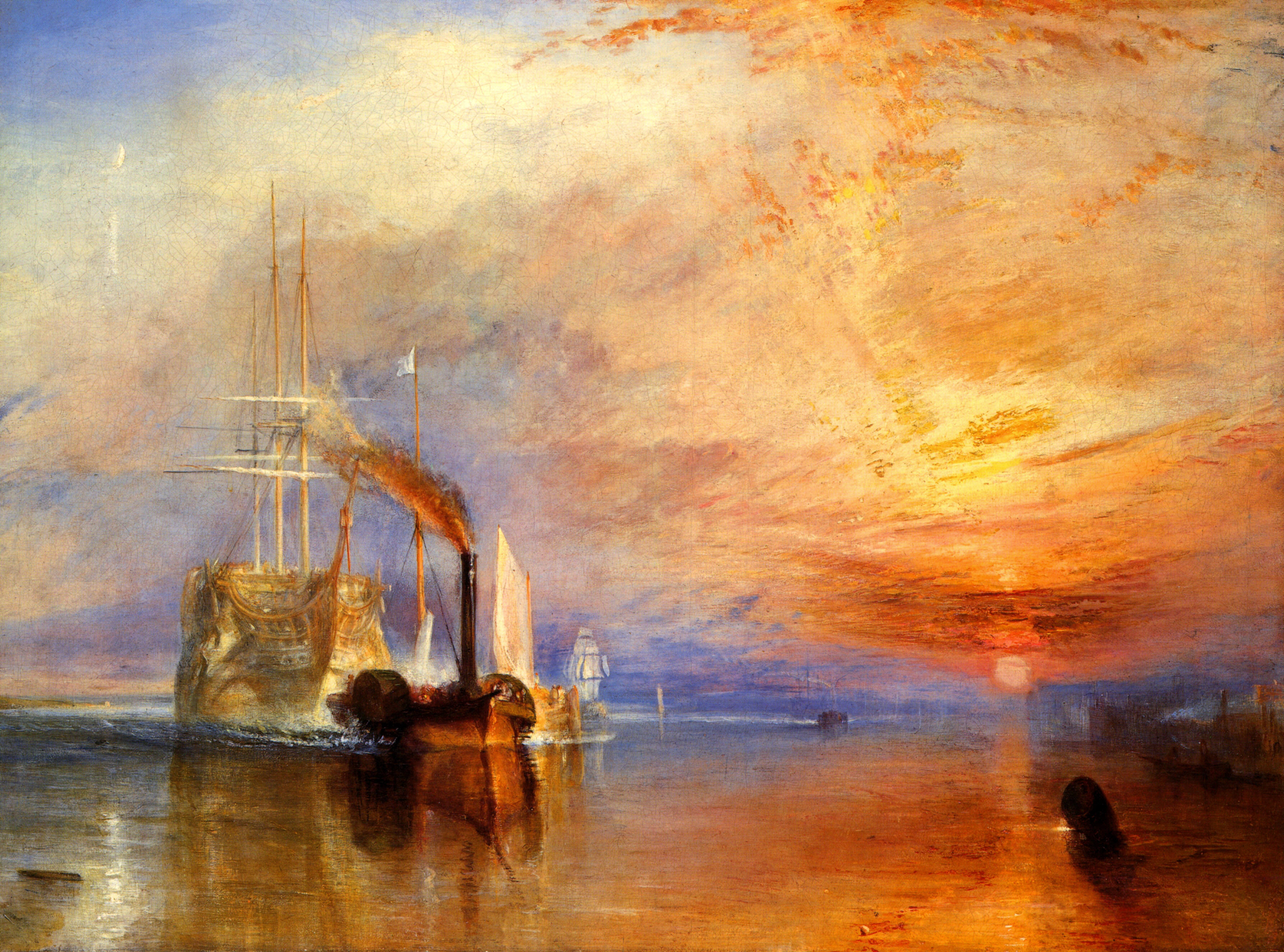
    I was very excited to bump into this article, ” reversals of Memory” in an 1880 issue of Nature magazine.1 Henslow2 (1835-1925) was an accomplished botanist, cleric, and Darwin correspondent who for years was a lecturer in botany at St. Bartholemew’s Hospital amongst much else in his long and accomplished career.  In the middle of it all he wrote this note in Nature which attracted my attention, though I think mostly for scifi aspects of the title, though the content is interesting, tending a little towards the brand new ideas of synesthesia. (Actually Francis Galton wrote about people who could “see” their process of mental arithmetic in their minds while calculating–this is seen as one of the earliest published efforts in synesthesia. I wrote about this article–which appeared in January of 1880 in the same publication–here about 3,000 posts ago.) It refers to a painter who painted J.M.W. Turner’s  The Fighting Temeraire (completed 1839) from memory, but who had very curiously reversed the positions of what sounded like all of the elements of the painting.  I’ve reproduced the article below and included the Turner:
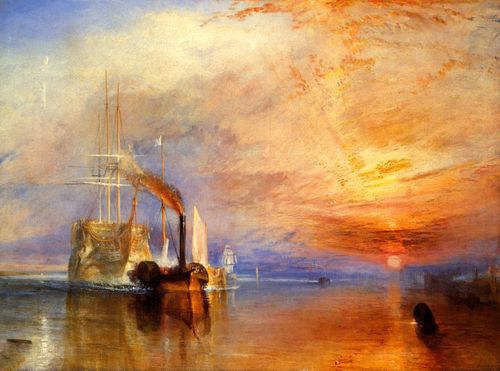
    Temerairee tner[Image source: Wikiart.org]

    This may well be more symbolic about the reversed memory here, with the Turner and all. Turner was at the forefront of the pre-Impressionists, or so it seems to me, what with so much of his work headed into symbolist and suggestive territory, impressionistically, as with the detail we see of the setting sun:

    Temeraire sunPerhaps it really can be seen as a reversal of memory…that is, the Impressionists come along soon afterwards and begin to paint things that are suggestive of hard elements, this after many centuries of human endeavor to perfect a true representation of the world around them.  Suddenly, by the half or 3/4s of the 19th century, there is a movement away from this, of losing and replacing detail with something that suggested it. And by the time Kandinsky roles around in 1911,  painting with no factual representational elements in them at all, it seems that the memory business of modern painting has been completely changed, or challenged.  So, the Turner may be very appropriate in this case after all…


    Reversals by Memory
    "I SHOULD much like to know if it be a common thing for people to reverse the positions of objects in the memory. An artist, on returning from the National Gallery, painted the Temeraire from memory. Taking his picture to compare it with Turner's, he found to his surprise that he had reversed the positions of the ship, tug, sun, &c. His daughter tells me that if she wants to refer to a passage in a book she as often looks for it on a left-hand page, while it is on a right-hand page, or vice versa. Another lady, on looking at a wood-engraving made from a sketch which she had seen some time previously, asked if the engraver had not reversed everything? These are the only cases known to me. Is the following universally true? — Let some one write with a blunt instrument the letter P on your forehead, or anywhere on the front half of the head from ear to ear, and the P must be written backwards for you to "see" it correctly. But if it be written anywhere at the back of the head, it must be written correctly both for you and the writer to read it. The change takes place abruptly in a line over each ear."

     –text of the Henslow from the Victorian Review, vol 5, “Outposts of the Most Advanced Physics”, p 667, by H. Mortimer Franklyn, editor. 

    Notes:

    1. HENSLOW, George. “Reversals of Memory” in Nature, July 15, 1880, short note on page 241. 

    2. [Henslow: “Clergyman, teacher, and botanist. BA, Cambridge (Christ’s College), 1858. Curate of Steyning, 1859–61; of St John’s Wood Chapel, 1868–70; of St James’s Marylebone, 1870–87. Headmaster at Hampton Lucy Grammar School, Warwick, 1861–4; at the Grammar School, Store Street, London, 1865–72. Lecturer in botany at St Bartholomew’s Hospital, 1866–80.”–Darwin Correspondence Project. Remembered as “the Cambridge mentor” of Charles Darwin

  • On Not Touring the Killing Fields: 1933

    JF Ptak Science Books  Post 2327

    As good as The Nation was/is, I see now there was some complicated business regarding the Soviet Union.  There was no lack of support for the Soviet Union in what I’ve read in the magazine (in my limited exposure thus far from the early 1930’s) and no lack of interest in what the Soviet experiments in social engineering were coming to.  

    Soviet tour342

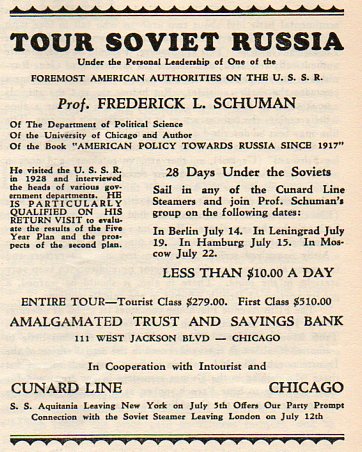
    This ad, prominently sponsored in the May 17, 1933 issue of The Nation, proclaims the Soviet expert Frederick L. Schuman leading a tour to all-comers of the Soviet Union.  “28 Days Under the Soviets” says the ad, all for $10 per day, tourist class.  Of course you could go first class at double that rate to tour the new and wondrous classless society.  

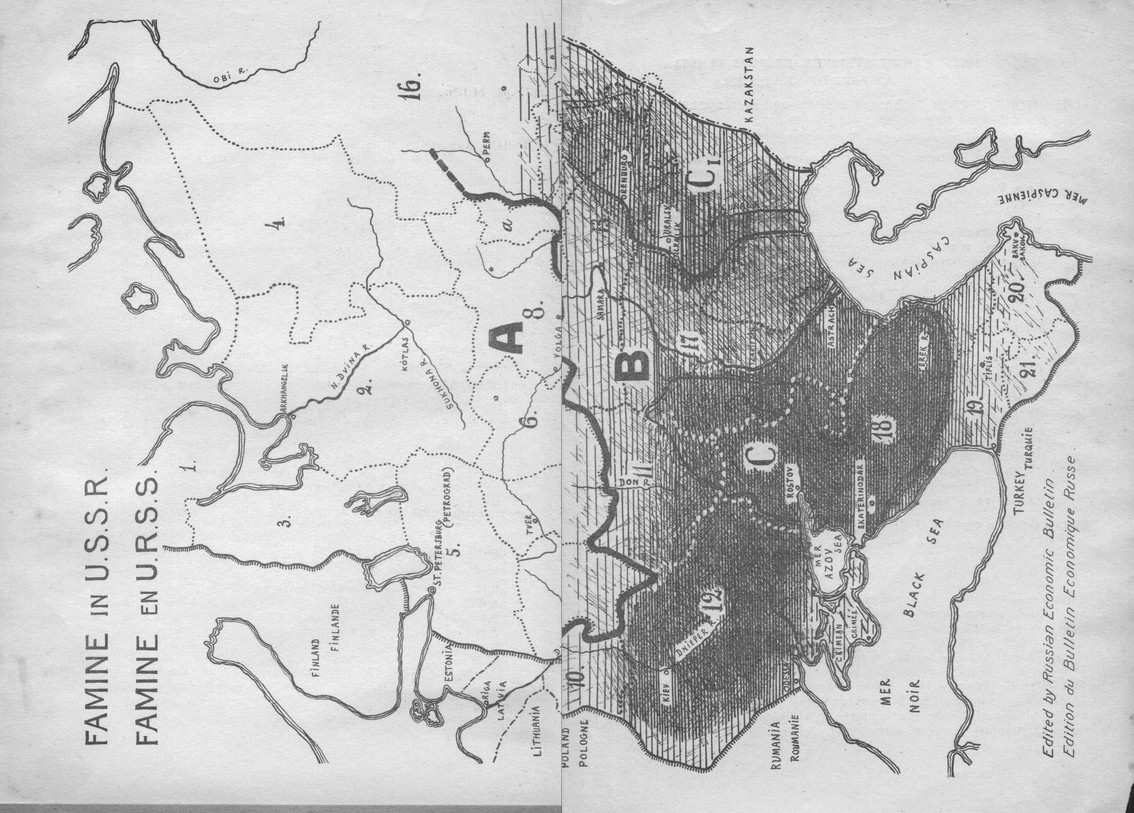
    What these tourists would not tour would be the starving millions in Stalin’s manufactured famine of 1932/3.  The areas of trouble and death were staggering, as we can see in this map published by  the Paris-based Russian Economic Bulletin in 1933 in a bulletin written by Markoff, Famine in the USSR:

    Map famine

    [Source, Internet Archive, Markoff, Famine in the USSR;    Fulltext: https://archive.org/details/FamineInUssr]

    The Famine cover a wide, huge area, and it was filled with millions of people whom Stalin did not quite trust. Far apart from the Bolshie sentimentality of these tourists, Comrade Stalin indulged political control in a very un-Bolshie fashion, him not trusting farming peasants (and Ukrainians) and all, and decided that the easiest thing to do to maintain power with this possible threat to his base would be to kill as many of those people as possible. He got quite far, killing (as some day) some 9 million people.  

    This you would not see in tourist or first class with Prof. Scuhman.  

    It seems as though Schuman’s career was a bit up and down, some of his books being very badly received and accused of pragmatic pandering to the Soviets.  

    So it goes. Sometimes what is seen is what is needed to be seen. Or not.  

     The famine was disputed for a long time and the Soviets tried to keep it as quiet as possible, but it is hard to do, with so many dead.  One can only say “nyet” so many times in the face of staggering death.  But that is what it was with Stalin, an enormous culture of death and “nyet”. And fear. 

    Of course there was the entire culture of fear, with Stalin replacing the icons of the church with himself and death, of terror, leaning heavily on the NKVDand the general distribution of human betrayal. 

    The Great Purges would follow for the rest of the ‘thirtiesStalin consolidating his power by imprisonment and extermination, winding up with some 20 million in camps and removed places by the time of the war, with half of that number dying.  

    So there was an issue of Soviet-love with The Nation. Again, this is based solely on my own reading experience in the magazine thus far, with just my nose under the tent. But this is what I have seen thus far…

    I wasn’t sure about where to classify this post–perhaps with the History of Memory, because there was such a demonstrable war waged on the forgetting aspect of these actions.  It could also go into the History of Nothing, because in Stalin’s mind there wasn’t anything there in the Purges or in the Famine, nothing at all.  And Nothing is also was what he wanted to achieve, making the people whom he thought might possibly oppose him into Nothing.  And perhaps it could be listed in the History of Goodbye, because that is what Stalin said to so many millions of people. Except he didn’t say it–he just killed.  


  • Kingdoms of Dust and Street Dirt, and What People Breathed in 1878

    JF Ptak Science Books  Post 2307

    Here’s an extraordinary find, a bump in the grazing field in the Scientific American Supplement for January 19, 1878. The article is about dust–but not the cosmic dust that some folks say is what is being seen in the Big Bang (and not a background radiation signature), nor is it like the dust equation nor the dust of Einstein’s great dust paper of 1905.  It is more like a lower-level plague dust as we see in Arthur Rothstein’s iconic dust bowl photograph made in parched Oklahoma in 1936.  It is about the residue of industry and commerce that did’t get carried of by the mysterious carry-off winds associated with the high and higher chimneys of Victorian London and other industrialized cities, and the leftover bits of the operation of daily cosmopolitan life involving say horses and trains.  It is an article about the significant particulate  matter of dust, which we know today is a high-percentage contributor to air pollution, not to mention the low-level “atmosphere” of the kicked-up business that people would breathe in every day.

    And, evidently, this dust was very heavy-metal rich in composition, which is not so good.  

    The article is “Street Dust”, and the author, Henry G. DeBrunner (who would become professor of chemistry at the Pittsburgh College of Pharmacy), decided to take a look at the dust of Pittsburgh and compare it to reports of the dust of major European cities.  He notes that Paris and London and other cities consist of 35% of “metallic iron, given by the shoes of horses to the stones, besides from 30 to 40% of good glue from the hoofs”.  Now that seems an extraordinary figure, and surprising too in many ways that it came from horse shoes. 

    Dust mask296

     [Source: an advertisment from Scientific American, volume 79, 7 January 1893, back wrapper.

    DeBrunner conducted a study at Thirtieth and Smallman Streets (Pug) and found out that 30% of the sample of dust (“a deep black color”) consisted of silic acid, 26% of “fixed carbon”, ferric oxide at 12%, sulphuric acid at about 1%, gluten 1%, Metallic iron 8.55%.  The details of how all of this was extracted can be seen below, where the entire article is reproduced. There were other samples, and it is interesting to note that in one sample near horse tracks contained 32% heavy metal and lots of glue. 

    The entire article, January 19, 1878, Scientific American Supplement, No. 107:


  • A Scribble Climate of Antique Numbers

    JF Ptak Science Books   Quick Post

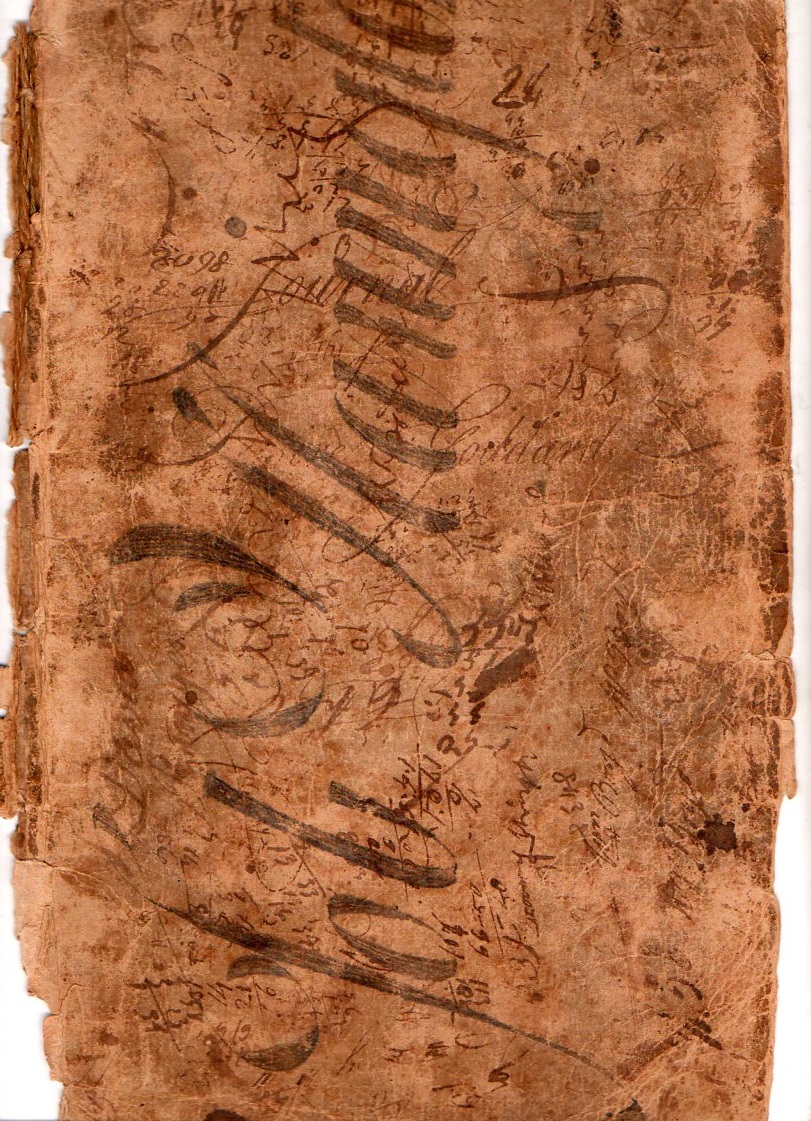
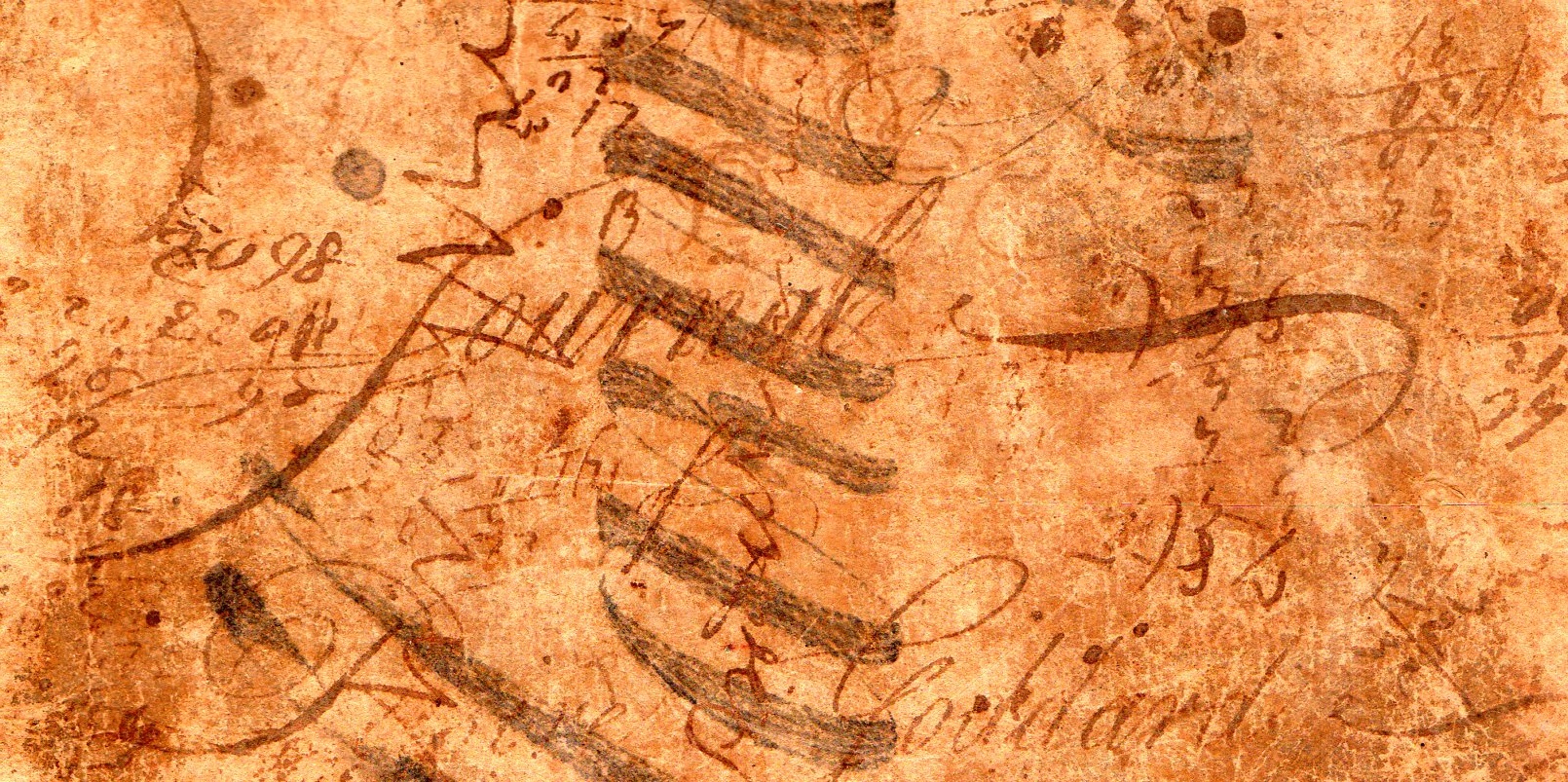
    The ScribbleVerse is a captivating place–similar to a microscope slide or the night sky, there are multiple layers of images, layers of layers, an enormous variety of found connections and contours, a poetry of found nothingnesses.  I guess if you looked hard enough this could easily be someone’s night sky, and it wouldn’t take all that much to start connecting the bits into constellations.  The more you look at images like this, the more there is to look at.  

    Found cover art 289

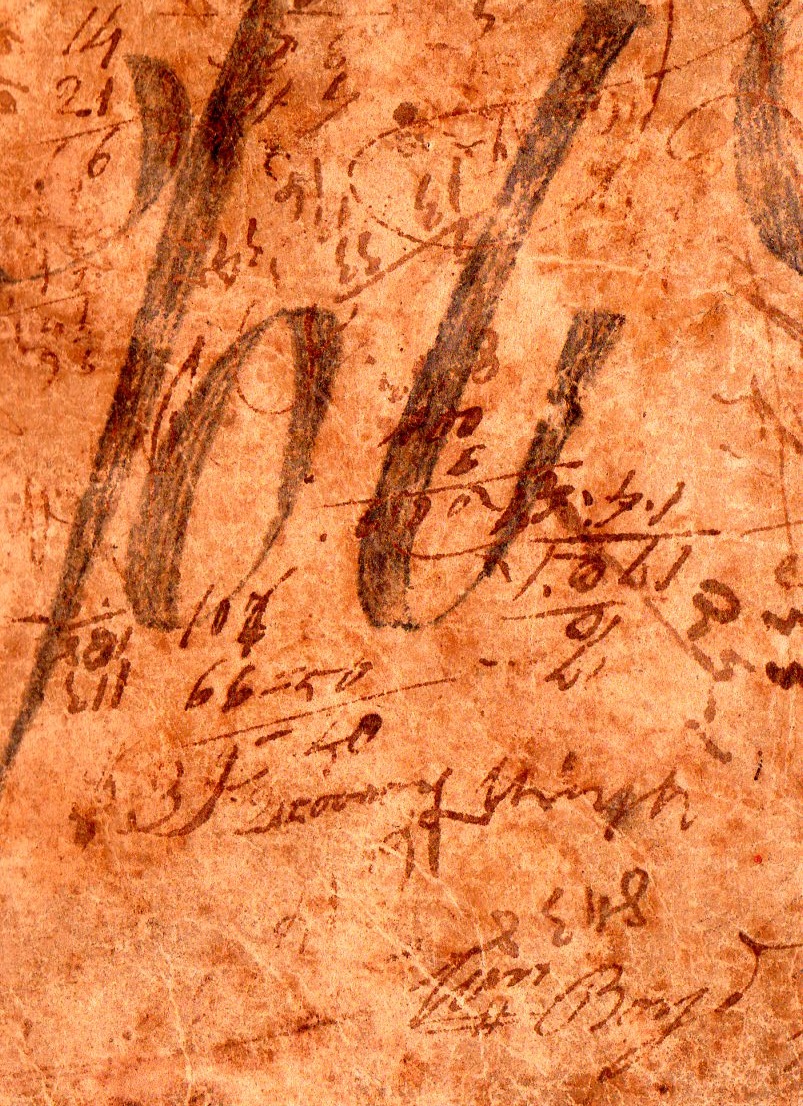
    This is the cover to a ledger/notebook that was probably first owned by someone named “Goddard’, with entries beginning in 1803, but the book itself is older than that.  Not long afterwards the book became the property of John Harrington, who writes a large and embellished signature across the length of the cover. (“John Harrington” appears elsewhere inside the work–the big ownership bit on the front is a bit off, but that is evidently what was being written.)

    And a detail:

    Found cover art  det290

    And another:

    Found cover art  detb291

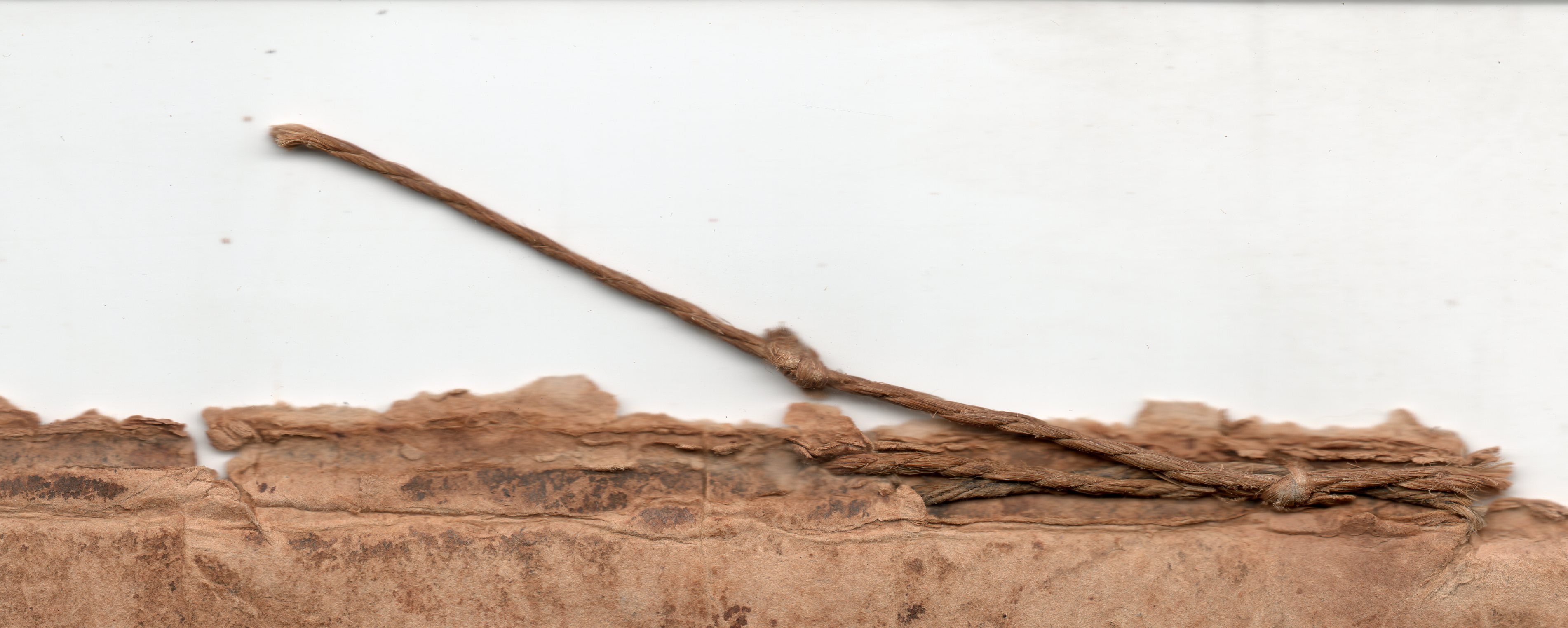
    And some glorious string:

    Found cover art  detc292

    ·Posted by :

    ·in:


  • A Beautiful Pre-Semi-Visionary Structuralization of Information (1733)

    JF Ptak Science Books   Quick Post  
    Follow Me on Pinterest


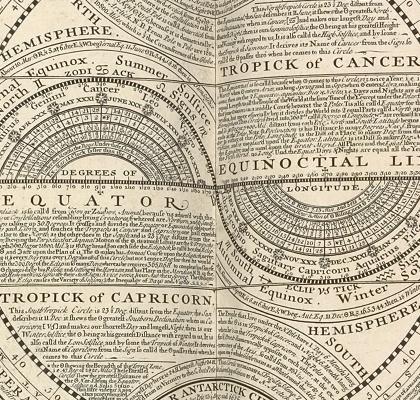
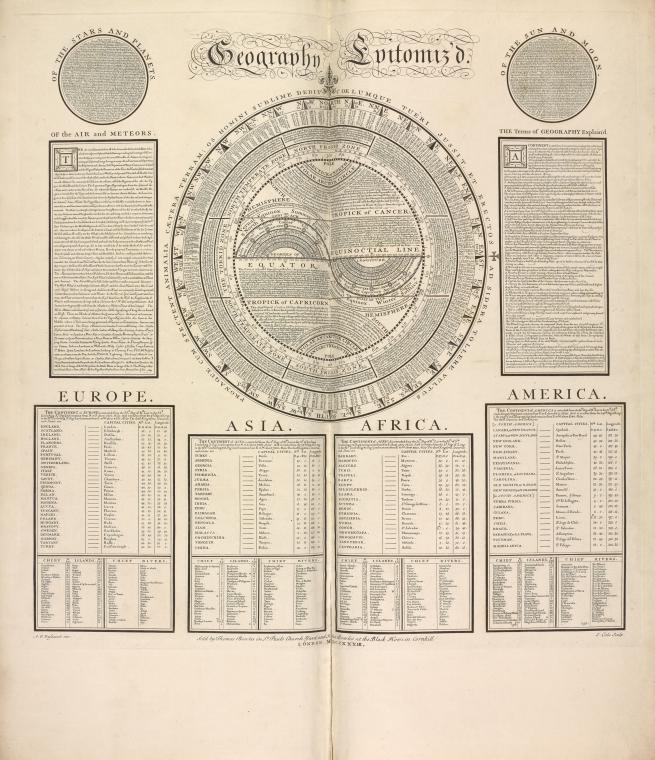
    BowlesThe central image in the opening salvo in Thomas Bowles’ Geography Epitomiz’d. Of The Stars And Planets. Of The Sun And Moon. Of the Air and Meteors. The Terms of Geography Explain’d (1733) reminds me a great deal of later visionary and outsider works.  It is a beautiful way to display and solidify vast chunks of data into a cohesive (and pretty and appealing) whole, an interesting structure that calms the dynamics of divergent information. It’s a lovely piece of design and imagination.
    [Source: New York Public Libraries Digital Collections]

    Bowles thomas


  • Ear Trumpets for the Eyes

    JF Ptak Science Books   Quick Post 
     
    Follow Me on Pinterest


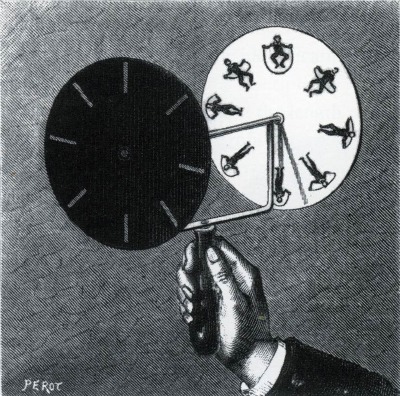
    Phenakistiscope

    This is a very quiet image of a major device in the history of the animated/moving picture:  Joseph Plateau’s phenakistoscope, a device which was based on the persistence of vision principle that would allow th emind to believe it was witnessing a continuous (though segregated) motion.  

    Oddly enough, this device brings to mind this ulatra-stable depiction of motion:

    Phenak2Which is a detail from this lovely illustration [Source: found by Eric Edelman, collage artist, in Funk & Wagnall’s Dicitonary, 1920]:

    Phenak
    Notes:

    1. “On 10 December 1830, Michael Faraday(1791-1867)
    gives a lecture at the Royal Institution. The publication appears
    in February 1831: “On a peculiar Class of Optical Illusions”. Continuing
    on what Peter Mark Roget (1779 – 1869) had published in the Philosophical
    Transactions, he describes two parallel discs, revolving on the
    same a
    xis, in opposite directions, each having 16 cogs. When viewed
    in a mirror a stationary image is seen. He does not refer to Plateau’s
    work, done before 1831 and which had been published in the Correspondance
    mathémathique et physique. Later Faraday writes that the
    honour is due to Plateau.”–source, here.
    s
    in –February 1831: “On a peculiar Class of Optical Illusions”. Faraday writes that the
    honour is due to Plateau.

    ·Posted by :

    ·in:


  • Richmond’s Libby Prison in Chicago

    JF Ptak Science Books   Post 2082
     
    Follow Me on Pinterest

    Confectionary connections to interesting bumps in history wind their ways along many unusual paths.  One such story is that of physician/scientist/collector Hans Sloane (1660-1753) and his introduction of chocolate into England (as a result of a field expedition he took to Jamaica)–his involvement with chocolate was minor compared to everything else he did in his life, but the introduction of chocolate to coffee houses in London was not.  In any event it was his massive and superior collection of natural history samples, archaeological artifacts, and much else, that became the basis for the British Museum–the collections purchased from his estate for 20,000 pounds at the time of his death. 

    Another example of a weirder candyland adventure is that of Charles Gunther (1837-1920), who was the driving force of moving the infamous Confederate Libby Prison to Chicago in 1893 to house his own collections of Civil War memorabilia and other interesting and Mondo Bizarro things. (He claimed to have–on exhibition–the original skin of the serpent from the Garden of Eden, complete in some sort of original frame decked out in Egyptian gibberishglyphics.) Here’s an ad that appeared in the Confederate Veteran‘s first year of publication in 1893:

    Libby436

    I wouldn’t use the term “great” here–and I’m pretty sure that the word is being misused here in 1893 as well.

    The prison was actually a converted tobacco factory, the buildings of which were constructed from 1845-1852, and located in central Richmond at Main and 25th Streets. Poor Luther Libby–a Mainer–came into possessions of the buildings for his business, which was subsequently seized by the Confederate government at the beginning of the war and converted into a hospital/officer’s prison before it became the symbol of mistreatment and deprivation and harshness.  (Mr. Libby had nothing to do with the prison per se–he was just the last person with his name on the buildings.  He outlived the prison-with-his-name-on-it by 15 years–12 years if you count the use of the building to house Confederate leadership after the end of the war.)

    Gunther collected big stuff, the biggest being the prison. He purchased it and had it dismantled, shipped up to Chicago, and then reassembled (with the help and advice of the prestigious architecture/design firm of Burnham and Root) where it operated as a museum from 1889-1895. Sensing a brighter future for the property, Gunther dismantled the building selling off chunks of it as souvenirs, and built a convention center on the site, filling the need for meeting space from the burning of the Chicago Coliseum in 1897.

    This post could have gone another way very easily, winding up in the Things Out of Place Department–Libby in Chicago, the Statue of Liberty in Paris, London Bridge in Arizona, a duplicate Earth in the sky above the Earth,and so on–perhaps this on another day. 

    On the Libby Prison relics from Chicagohistory.org 


  • A Census of Everything Bartleby Said (“Who Never Spoke but to Answer”)

    JF Ptak Science Books    Post 2043    
    Follow Me on Pinterest

    [This post is included in the History of Blank, Empty and Missing Things series.]

    “Bartleby the Scrivener, a Tale of Wall Street”, is a well-known, much-loved and magical/dark short story written by Herman Melville in 1853 (in two installments in Putnam’s Magazine). For a major figure in the history of American literature, Mr. Bartleby has generated a lot of scholarship, in spite of the briefness of the piece, and the very scant information we have from Bartleby himself.  He never lets us into his mind, himself, and we have just the barest glimpse into what drives him through his spoken words–we find out what we know of him through his self-appointed-friend and employer, who writes:

      “I now recalled all the
    quiet mysteries which I had noted in the man. I remembered that he
    never spoke but to answer; that though at intervals he had
    considerable time to himself, yet I had never seen him reading—no,
    not even a newspaper; that for long periods he would stand looking
    out, at his pale window behind the screen, upon the dead brick wall;
    I was quite sure he never visited any refectory or eating house;
    while his pale face clearly indicated that he never drank beer like
    Turkey, or tea and coffee even, like other men; that he never went
    any where in particular that I could learn; never went out for a
    walk, unless indeed that was the case at present; that he had
    declined telling who he was, or whence he came, or whether he had any
    relatives in the world; that though so thin and pale, he never
    complained of ill health. And more than all, I remembered a certain
    unconscious air of pallid—how shall I call it?—of pallid
    haughtiness, say, or rather an austere reserve about him, which had
    positively awed me into my tame compliance with his eccentricities,
    when I had feared to ask him to do the slightest incidental thing for
    me, even though I might know, from his long-continued motionlessness,
    that behind his screen he must be standing in one of those dead-wall
    reveries of his.”

    For all of his influence, Bartleby spoke only 32 times, and used 246 words, only 55 of them are unique carriers–the the rest are repetitions, especially in the first half of the story, and then particularly with the use of the word ‘prefer” in the famous “I would prefer not” and “I prefer not” phrases. (I looked at this earlier in this blog in the post “A Census of “Prefer” in Bartleby.)

    IT would be an interesting exercise to write in the spirit of Bartleby and use only those words that he spoke in the story. To paraphrase Mark Twain, “if I had more time I would have written a shorter letter”–it would take a bit of an effort to turn out a good story using just these words; after all, Dr. Seuss used 236 to produce A Cat in the Hat (and brilliantly so). 

    The Different Words Spoken by Bartleby:


  • Baby Raffle of Paris, 1912

    JF Ptak Science Books  Post 2039

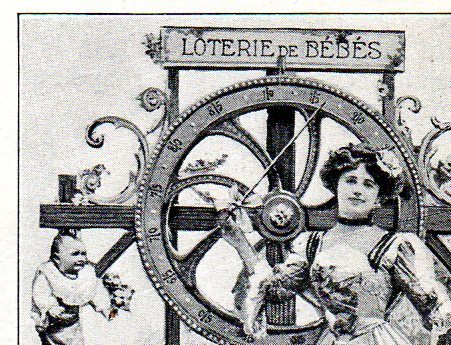
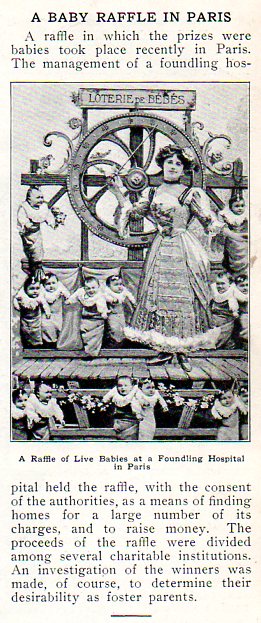
    In the history of raffles and lotteries, tontines and lottos, few would rank so high in the Department of Forbidden Weirdness as this 1912 Parisian lottery of babies.

    Baby raffle351
    This image is a detail from the following photograph that appeared in Popular Mechanics for January 1912, and in spite of how this reads and in spite of it being a real-and-true story, it is still difficult for readers in the 21st century to appreciate as a news article rather than a piece of dark fiction:

    Baby raffle350Now the story of the deep history of child abuse and abandonment and infanticide is thousands of years old, and the issue of the rightness of abandoning newborns to the street as a condoned and necessary social activity to ensure the plasticity and survival of a society has been argued by Aristotle and Quintilian  and Pliny the Elder. The movements to provide public institutions to help save the exposed and deserted children really didn’t begin in earnest until the 17th and 18th centuries–that is with Louis XIII and Louis XIV in France and with the creation of the Foundling Hospital in London in 1741.  It is with the creation of these early orphanages that abandoned babies are saved as babies, and although these children would be trained early on to be mechanics’-helpers and domestics at relatively young ages (early ‘teens), they were not subjected to being sent to workhouses as very young children as in the older practices–or being left to die lying in the streets by exposure to the cold or hunger or being trampled underfoot. 

    So.  In comparison with some bitter early histories of the want of tenderness int he care of children, and keeping in mind the great leap forward in the creation of the foundling hospitals and what they represented in the face of not having anywhere for unwanted and impossible babies to go, the idea of the lottery for cute babies in 1912 doesn’t look so bad when placed in its historical context. 

    It is still a very uncomfortable idea and idea, this sort of placement of babies–but with the terrible history of infanticide and exposure not too dimly removed from this time, the lottery seems far less horrible than its antiquarian components.