JF Ptak Science Books Quick Post

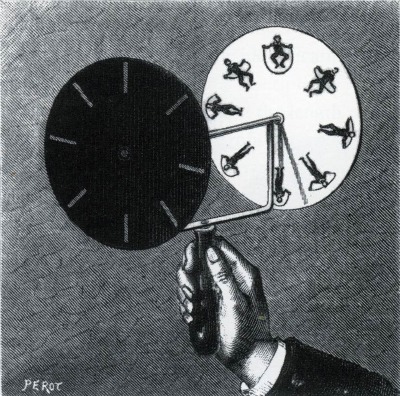
This is a very quiet image of a major device in the history of the animated/moving picture: Joseph Plateau’s phenakistoscope, a device which was based on the persistence of vision principle that would allow th emind to believe it was witnessing a continuous (though segregated) motion.
Oddly enough, this device brings to mind this ulatra-stable depiction of motion:
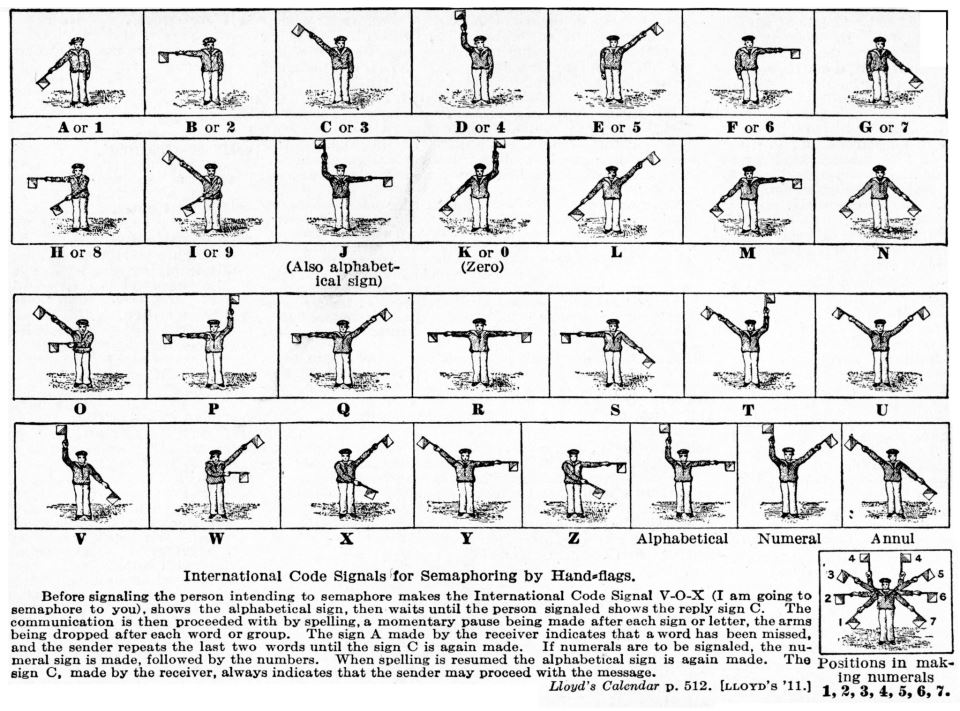
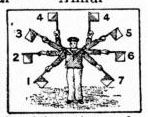 Which is a detail from this lovely illustration [Source: found by Eric Edelman, collage artist, in Funk & Wagnall’s Dicitonary, 1920]:
Notes:
1. “On 10 December 1830, Michael Faraday(1791-1867)
gives a lecture at the Royal Institution. The publication appears
in February 1831: “On a peculiar Class of Optical Illusions”. Continuing
on what Peter Mark Roget (1779 – 1869) had published in the Philosophical
Transactions, he describes two parallel discs, revolving on the
same axis, in opposite directions, each having 16 cogs. When viewed
in a mirror a stationary image is seen. He does not refer to Plateau’s
work, done before 1831 and which had been published in the Correspondance
mathémathique et physique. Later Faraday writes that the
honour is due to Plateau.”–source, here. s
in –February 1831: “On a peculiar Class of Optical Illusions”. Faraday writes that the
honour is due to Plateau.