A Daily History of Holes, Dots, Lines, Science, History, Math, Physics, Art, the Unintentional Absurd, Architecture, Maps, Data Visualization, Blank and Missing Things, and so on. |1.6 million words, 7500 images, 4.9 million hits| Press & appearances in The Times, Le Figaro, Mensa, The Economist, The Guardian, Discovery News, Slate, Le Monde, Sci American Blogs, Le Pont, and many other places… 5000+ total posts since 2008.

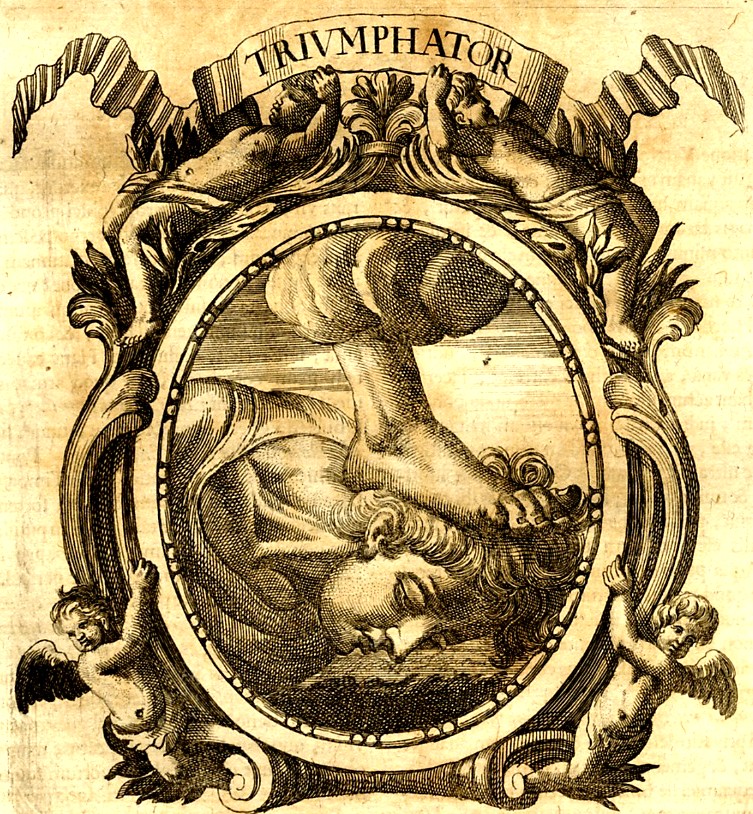
  • Emerging from Clouds: Artificial Legs and the Foot of God

    JF Ptak Science Books LLC  Post 830

    ++ blog ++ nov 12 pare leg


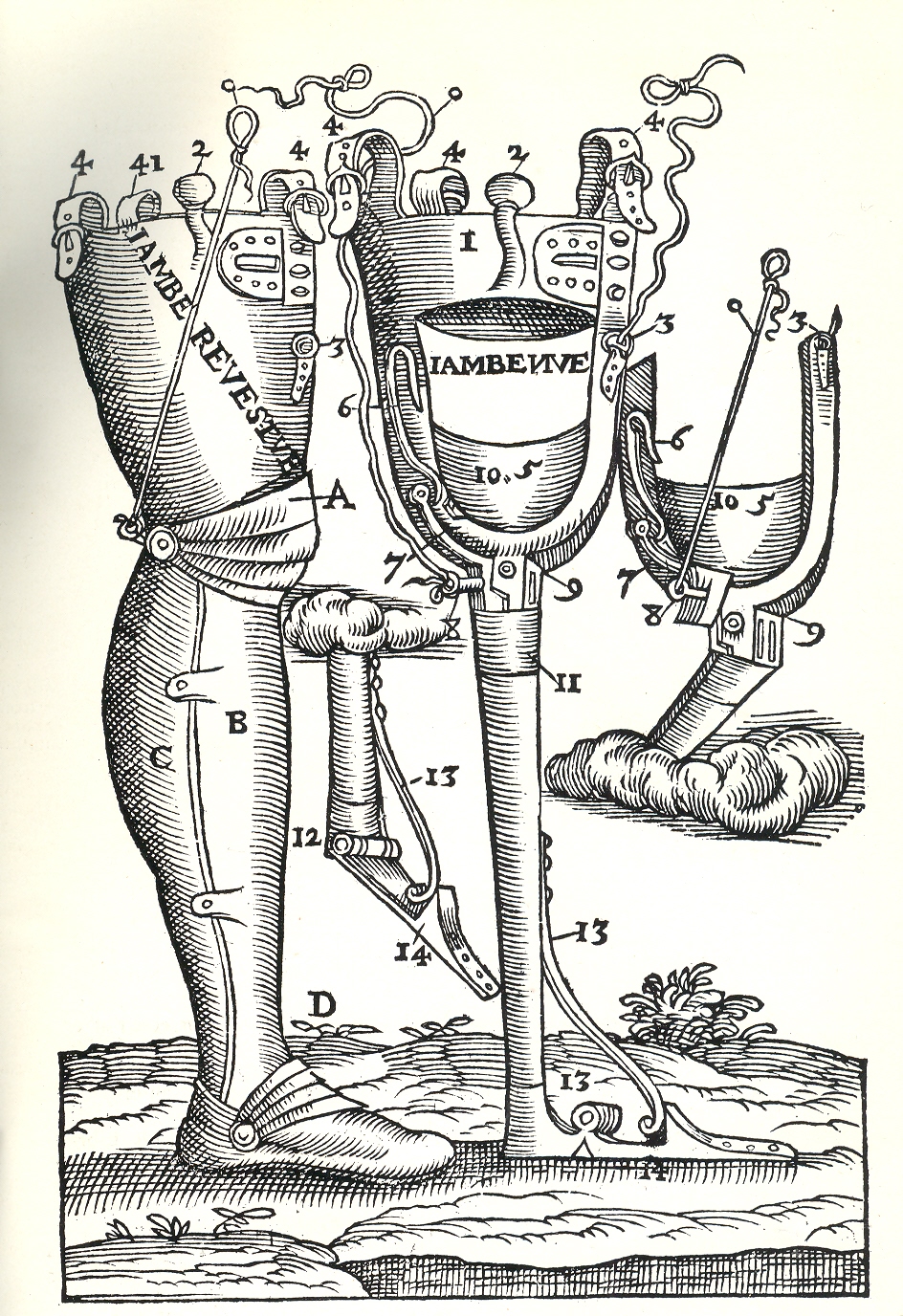
    This busy and still beautifully designed woodcut from
    Amrbose Pare’s Opera Chirurgica… was
    printed in 1594 and holds special fascinations for me.  First of all it is a pioneering work on
    artificial limbs, and secondly, and tritely, I like the floating ribbons and
    ties (some of which seem to come from clouds). 
    First on Pare (1510-1590):  this
    was a revolutionary work of an extraordinary figure (even though there are some
    who suspected that not all of this book was his own work) and was the greatest
    surgeon of his era and the doctor to four kings. He was responsible for the
    invention of numerous surgical instruments; he also re-introduced the ligature 
    into surgical procedures for amputations, wrote on carbon monoxide poisoning,
    introduced the introduction of induced labor, created the reimplantation of
    teeth, was a pioneer of treating battlefield wounds and was one of the first to
    write on medical ethics and jurisprudence, and much else.

     But I’m sorry to say that I am fixated on the artificial
    leg-cloud.   And the floating bits. 

    This brigs me back to a post here from just two days ago on
    Antiquarian Dadaism and the emblems of Scarlattini…and which is probably the
    only chance I’ll ever have to make  for
    connections of feet-from-clouds.  Or near-feet
    from clouds and the foot of God.  In any event, I would like to make it out to be the foot of the creator coming from the clouds to vanquish its squint-eyed and beaten foe.  “Triumphator” classically refers to the triumphal parades in ancient Rome, and I guess that this foot could belong to any victor, but since it is after all coming from the sky, I’d like to give that foot to God. 

    ++ blog nov 9 triumph


    Notes:

    Pare’s Opera is
    available in toto at the National
    Library of Medicine’s superb pages here.

  • Dotting the “i” in Copernicus: Correcting Errors in Epochal Works

    JF Ptak Science Books LLC  Post 831  Blog Bookstore


    There’s nothing quite like writing a revolutionary work than
    correcting one—and correcting a work that actually needed it.  In the world of epochal efforts, that subset
    of work that was needed for substantial re-arrangement and correction of The
    Big Idea is a small one indeed.  In the
    period from 1875-1915 or so, when virtually every discipline in the West
    underwent groundbreaking change, none that I can think of offhand needed
    sweeping revisions, or revisions at all. 
    Granted, you can’t really “correct” Schoenberg or Strindberg or Joyce or
    Kandinsky for mistakes, but you can do that for Roentgen or Einstein or Planck
    or Boltzmann.  But it wasn’t necessary
    for the big thinking in the sciences. 

    This is what the today-little-known Erasmus Reinhold (1511-1553)
    knew needed to be done with Copernicus’ De
    Revoultionibus
    (of 1543)—as attested to so somewhat later by Johannes
    Kepler.  As a matter of fact, according
    to the Dictionary of Science Biography1,
    a vast and superb 20-volume keystone repository of necessary information,
    Kepler referred to the necessary corrections as 
    a “huge and disagreeable task”(vol XI, p 366)  but absolutely essential to make the work less
    cumbersome and slow and more handy and, well, useful.

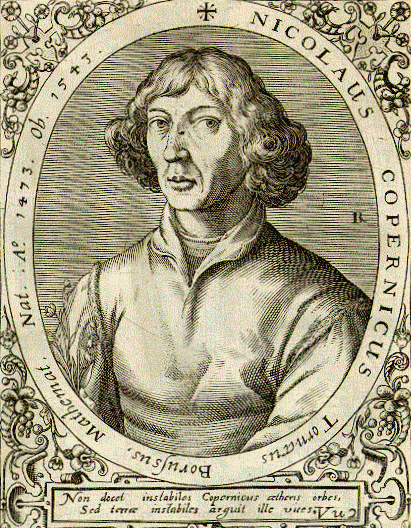
    Copernicus-BoissardReinhold’s book, Prutenicae Tabulae Coelestium Motuum, was speedily done and shows
    the work of master mathematician, appeared in 1551, delayed as it was for a few
    years by war.  It instantly became an
    exceptionally influential book, computationally brilliant and even superior to
    Copernicus, with the Tables2
    replacing those of the master, and which were bettered only by those of
    Kepler’s own Rudolphine Tables3.

    Eramus’ book presented the first astronomical tables based
    on Copernicus’ work, but the work as a whole slipped by the heliocentric
    system, which Erasmus chose to not engage. But he certainly did the necessary
    corrections for De Revolutionibus4,
    further helping  Copernicus slay the
    astronomical monsters of ancient construction.

     
    The Principia is
    another issue…


    Notes:

    1. Owen Gingerich, who wrote the “Erasmus” entry for the DSB, 
    referred to him as the most influential astronomical
    pedagogue of his generation.  Erasmus also published a
    commentary on Georg Peuerbach's Theoricae Novae
    Planetarum
    in 1542 as well as one on the first book of Ptolemy's
    Almagest
    in 1549.

    2.  The Prutenic Tables were named for both
    Copernicus and the man who financed their publication, Erasmus supporter and
    benefactor Duke Albrecht of Prussia
    (whose influence seems to have been initially gained for Erasmus by Philip
    Melanchton).


    3. Johannes Kepler’s Rudolphine Tables(Tabulae Rudolphinae)  were
    published in 1627
    and cosnsited of a star catalog and planetary tables
    based on the extraordinary collection of data and observations of Tycho Brahe.


    4. The entire TRANSLATED work is located here.

    In the preface to De
    revolutionibus
    Copernicus takes on the ancient masters like Ptolemy and
    Aristotle with a steel glove:

     
    “But meanwhile they introduced a good many ideas which
    apparently contradict the first principles of uniform motion. Nor could they
    elicit or deduce from the eccentrics the principal consideration, that is, the
    structure of the universe and the true symmetry of its parts. On the contrary, their experience was just
    like some one taking from various places hands, feet, a head, and other pieces,
    very well depicted, it may be, but not for the representation of a single
    person; since these fragments would not belong to one another at all, a monster
    rather than a man
    would be put together from them. Hence in the process of
    demonstration or “method”, as it is called, those who employed
    eccentrics are found either to have omitted something essential or to have
    admitted something extraneous and wholly irrelevant. This would not have
    happened to them, had they followed sound principles. For if the hypotheses
    assumed by them were not false, everything which follows from their hypotheses
    would be confirmed beyond any doubt. Even though what I am now saying may be
    obscure, it will nevertheless become clearer in the proper place.”


    5. Copernicus also had some pretty strong stuff to say about the great
    early scholar Lactantius:

    “Perhaps there will be babblers who claim to be judges of
    astronomy although completely ignorant of the subject and, badly distorting
    some passage of Scripture to their purpose, will dare to find fault with my
    undertaking and censure it. I disregard them even to the extent of despising their
    criticism as unfounded. For it is not unknown that Lactantius, otherwise an
    illustrious writer but hardly an astronomer, speaks quite childishly about the
    earth’s shape, when he mocks those who declared that the earth has the form of
    a globe. Hence scholars need not be surprised if any such persons will likewise
    ridicule me. Astronomy is written for astronomers.”


    ·Posted by :

    ·in:

  • Blank and Missing Things Thread #55: Missing Motion

    JF Ptak Science Books LLC  Post 832  Blog Bookstore

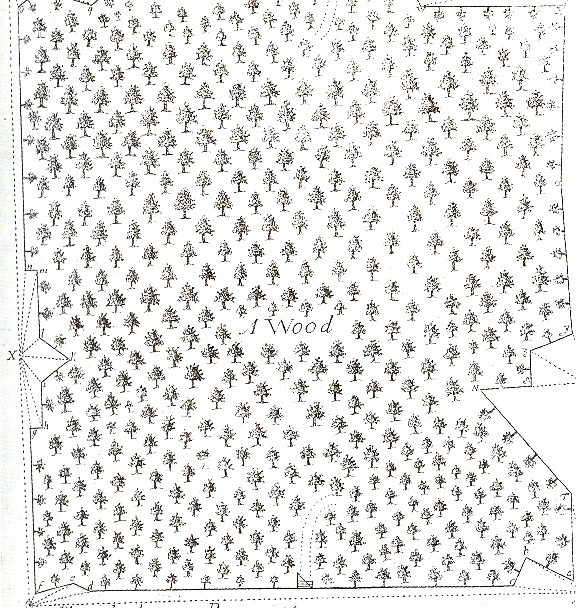
    This lovely and lonely engraving comes from Vincent Wing’s (1643-1726)
     Geodaetes
    practicus
    Redivius1 (The Art of
    Surveying…
    ), a book printed in London
    in 1700.  It is a classic work and much
    used for over a hundred years—but I’m focused solely in this illustration for
    triangulating in the woods.  It is the
    image of a stationary forest, a collection of neat trees devoid of movement and
    motion and mission, a collection of solitaries, missing wind.  I find it remarkable for being an
    illustration that manages to show the missing things that you cannot really
    see. 

     ++ blog ++ nov 14 woods det

    1. The full title of this work:  Geodaetes practicus redivivus, the art of
    surveying: formerly publish’d by Vincent Wing, math., now much augmented and
    improv’d, with an appendix thereunto subjoin’d, shewing the whole art of
    surveying by a new instrument, called the emperial table : performing exactly
    in all respects, and in all cases that can possibly happen in the practical
    part of surveying, the work of the theodolite, circumserentor, semi-circle,
    chard and needle : with the description and use of a new quadrant : to which is
    added by way of supplement, scientia stellarum, containing new and accurate
    tables of the planetary motions, whereby the planets places both in longitude
    and latitude, the places of the fixed stars, with the eclipses of the
    luminaries, are more easily attain’d, than by any yet extant
    / by John Wing

  • Blank and Missing Things Thread #56: William S. Burroughs Self-Portrait

    JF Ptak Science Books   Post 833 William_burroughs_2

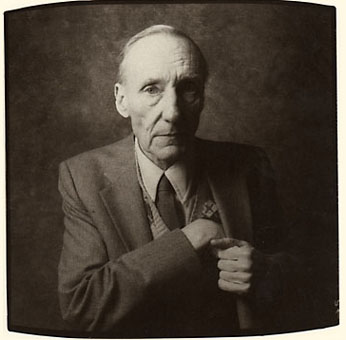
    I think that William Burroughs  is vastly under appreciated as a driving force behind American  mid-20th century dark comedy.  For a lot of  people the thing missing from reading his books and shorter pieces is the laughter.  The few times that I saw him read in the early 1980’s the audience roared—his deep, flat-and-rolling-at-the-same-time delivery pushed this forward, as did the very manipulative lines in his face (which drolly sprang into action at unexpected times, like punctuation marks).  In any event, he was funny throughout, a point perhaps lost to folks considering his work as a serious statement
    on sumpin’ sumpin’. My opinion may very well be a minority, but I see Old Bill as a serious comedian in a dark sweaty Swiftian mold. 

    ++ blog ++ nov 15 burroughs


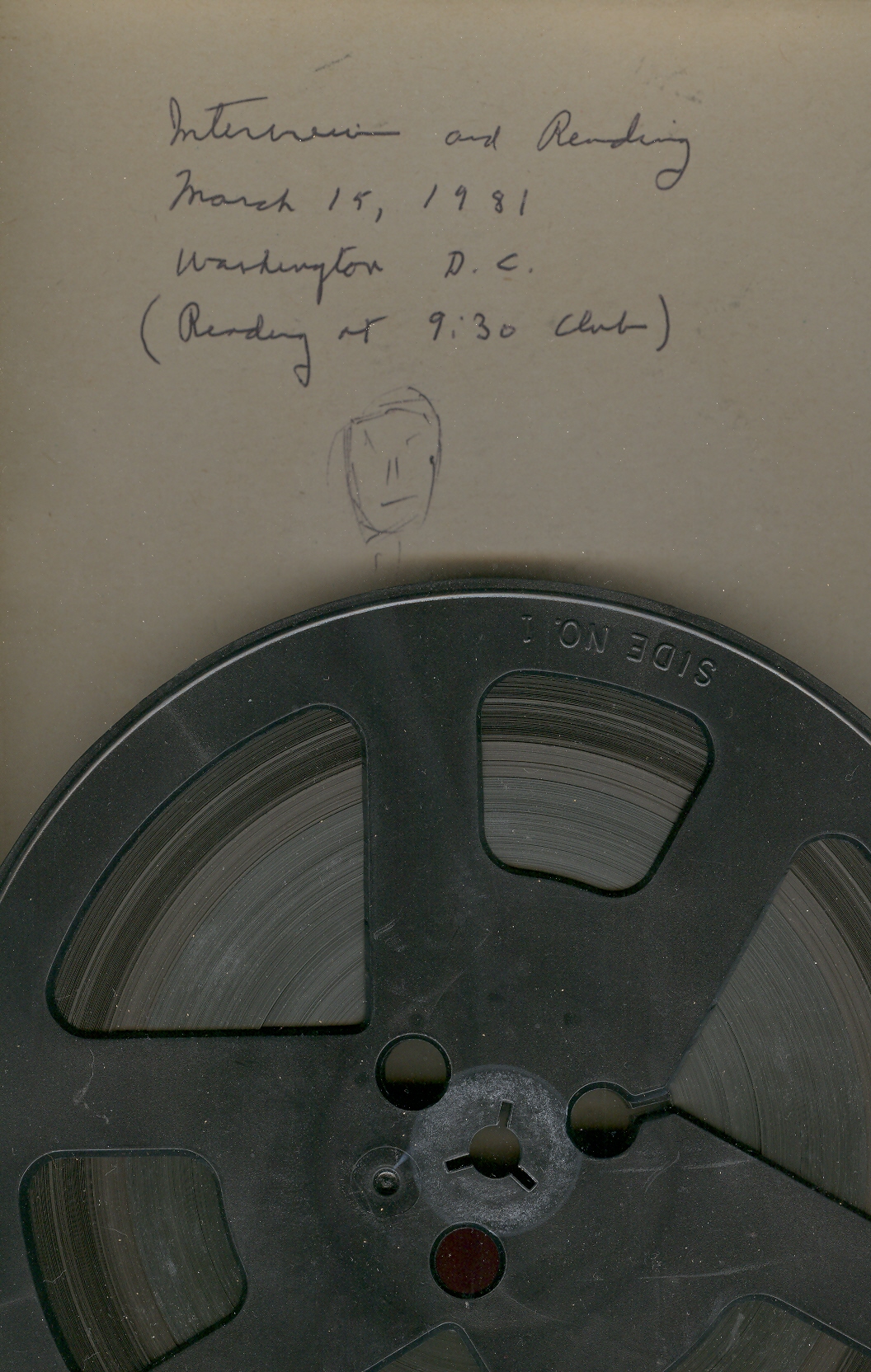
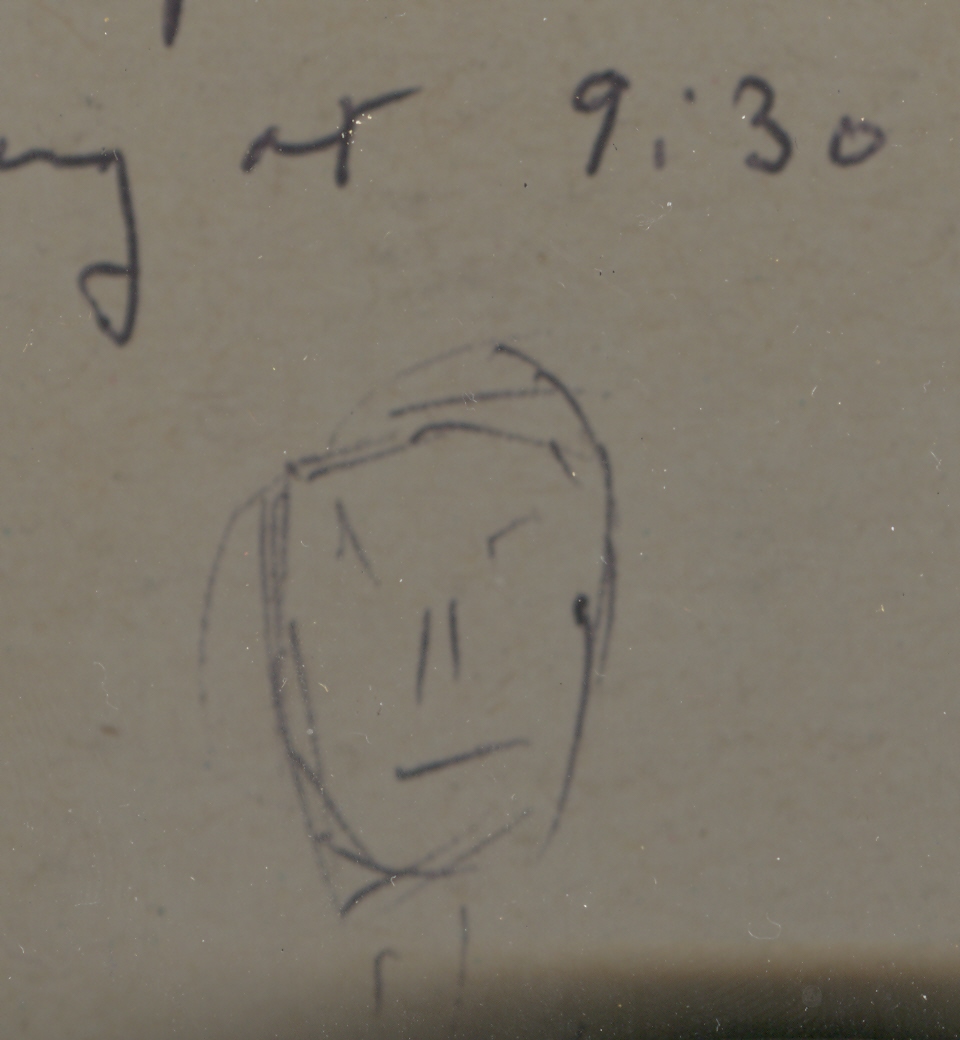
    One of the times that I interviewed him was at the 9:30 Club in DC (in its antique incantation, an interesting venue showcasing unusual performers in a ruined brine of alcohol and urine).  He was not anxious to be talked to after his reading, and I could hardly get the man to move, though he did become a little animated when pursued about man-machine confluence in the not-too-distant future.  At the end of it, I asked—insisted—that he draw a self-portrait, something I had been asking of folks that I was coming into contact with.  Burroughs did not want to do it, saying something like ”no one is interested in what I draw myself to look like”.  But I told him that I was.  And he did it.

    He grumbled and flicked-out this disdainful self portrait, a very tentative and light effort compared to the title that he gave my interview (for my reel-to-reel tape box) just moments earlier. 


     ++ blog ++ nov 15 burroughs det

    I’ve always found his self-portrait to be pretty creepy—but he did have an awkward and condescendingly dark sense of humor about it–the only thing not missing from the self-portrait was its disturbance(s).

  • A Smiling Man at Work in a Smokey Fire, 1788

    JF Ptak Science Books LLC  Post 834 

    ++ blog ++ nov 15 firre man

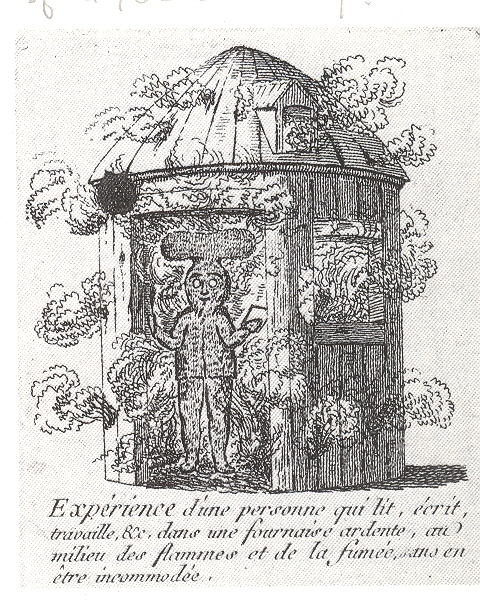
    There’s not much that I can say at this point about C.J.
    Leroux,  the author of the work in which
    this magnificent engraving was  published, Decouverte
    contre les incendies
    …1 Without a pretty good library to hike to Leroux’s
    efforts remain a mystery to me, except for what I can deduce from the
    image.  The shack in the image is burning,
    and the man inside is fine, evidently protected from the fire by a special suit
    made of fire-resistant materials.  It is
    an interesting idea in protecting people from fire—sidestepping the issue of
    making the house more fire resistant by making the people in the house
    resistant to fire.  I suspect that the
    inventor/designer/theorist of such a gown had in mind the sale of millions of
    such things—that way if a fire struck a house in a dense section of Paris the entire
    neighborhood would don their suits and escpae the flames.  The neighborhood might not survive, but the
    people would.  That might not be the
    chief interest of the royals at that time who I am sure would be more
    interested in the physical plant and the real estate than the people crawling
    around inside it.  This display also begs
    the question of manufacturing the house so that some portion of it would be
    fire resistant which would (perhaps) save neighboring dwelling. 

    Be that as it may, it really didn’t matter, as the materials
    for creating such a suit as the test man is wearing didn’t yet exist. Certainly
    nothing existed at the time that would allow someone to read, write and work through
    smoke and flames in a fiery furnace (“fournaise ardente”) all the while
    with  no inconvenience (“en etre incommode”)2. The large mushroom-shaped cap would be a supply of oxygen, I guess; the smile on the face of the suit must betray a secret knowledge as to why the paper and pen are not on fire. 

    It seems to be a nice piece of different
    thinking.

    Notes:

    1.  Full title:  Découverte contre les incendies, les dangers des eaux, de l’air méphytique ou contagieux et de plusieurs autres maux qui affligent l’humanité, avec un supplément contre les dangers des voyages et des chutes. Par C. J. Leroux  Published and printed by the author in 36 pages in Paris, 1788. 

    2. The legend reads: “ Experience d’une personne qui lit, ecrit,  travaille, &c. dans une fournaise ardente, au  milieu des flames et de la fume, ans en  etre incommode.”

  • The Data Mine: the French Census of 1911 and Storing Numbers on Paper

    JF Ptak Science Books  Post 835 

    Today’s post on the tabulating office of the French 1911 Census seems quite natural following yesterday’s of the reading-and-writing (French) fireproof man…

     ++ blog ++ nov 16 french census 3 001

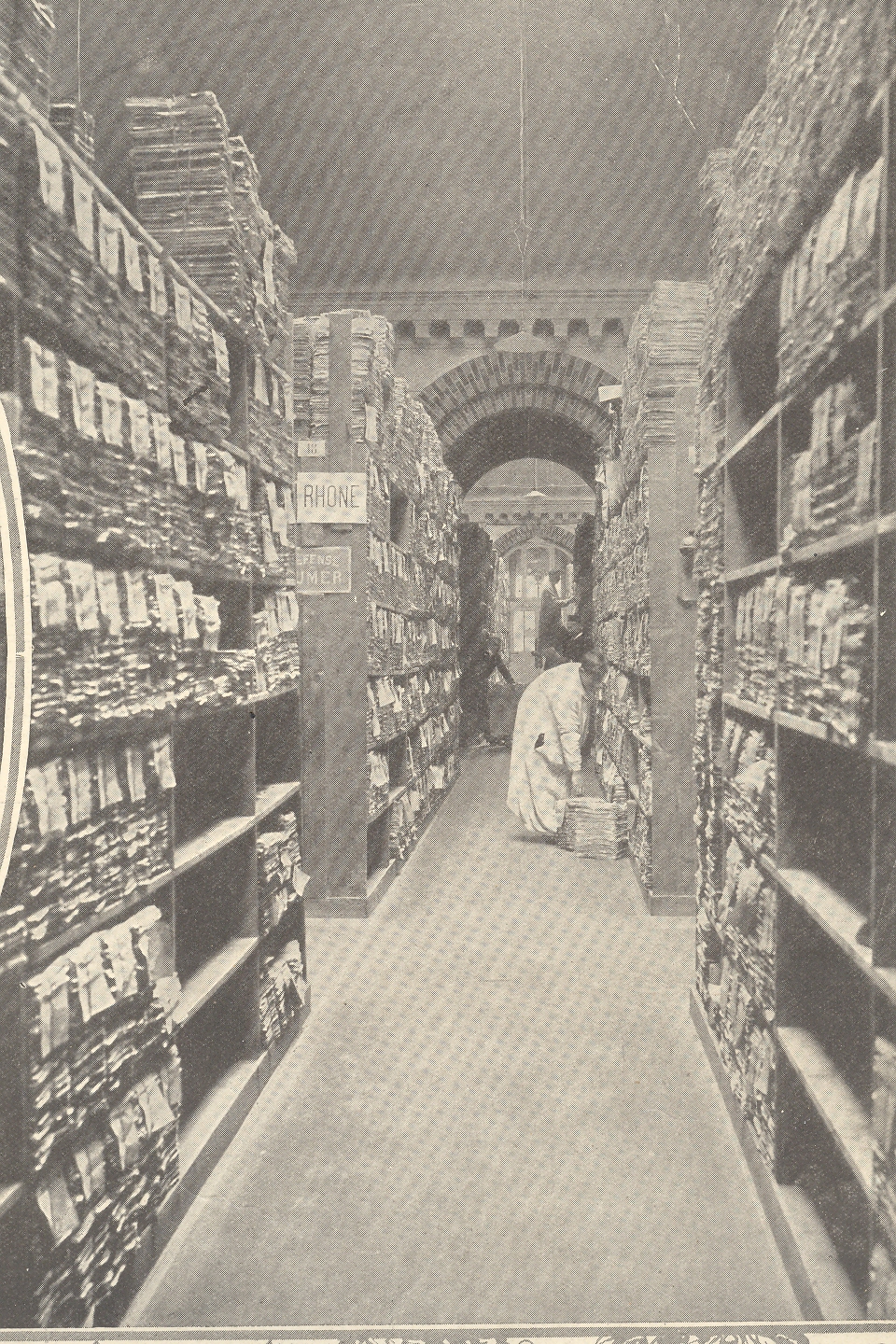
    Like many other countries, the French were certainly not playing to the technological audience in conducting their census of 1911, the physical, tabulating part of it looking much as it did in the 1880’s.  Granted, the United States was dragged somewhat into the new high-tech age of tabulating for its 1890 census, but it was absolutely and clearly shown that the Herman Hollerith machines and methods were vastly superior to those previous used, giving the government extraordinary new insights into the way in which the country functioned—a Hubble Telescope-like impact for those interested in more and more-manipulable data.   


    ++ blog ++ nov 16 french census 3

    What interests me in these photos are the endless stacks of paper, and what I imagine was the quiet of the job of the paper-stack-classifier, all of whom seem to be heavily dressed…I guess that you couldn’t keep a dry heat around exposed paper like that for fear of (a) well, possible fire and (b) drying the documents out and making them fragile and unusable.   

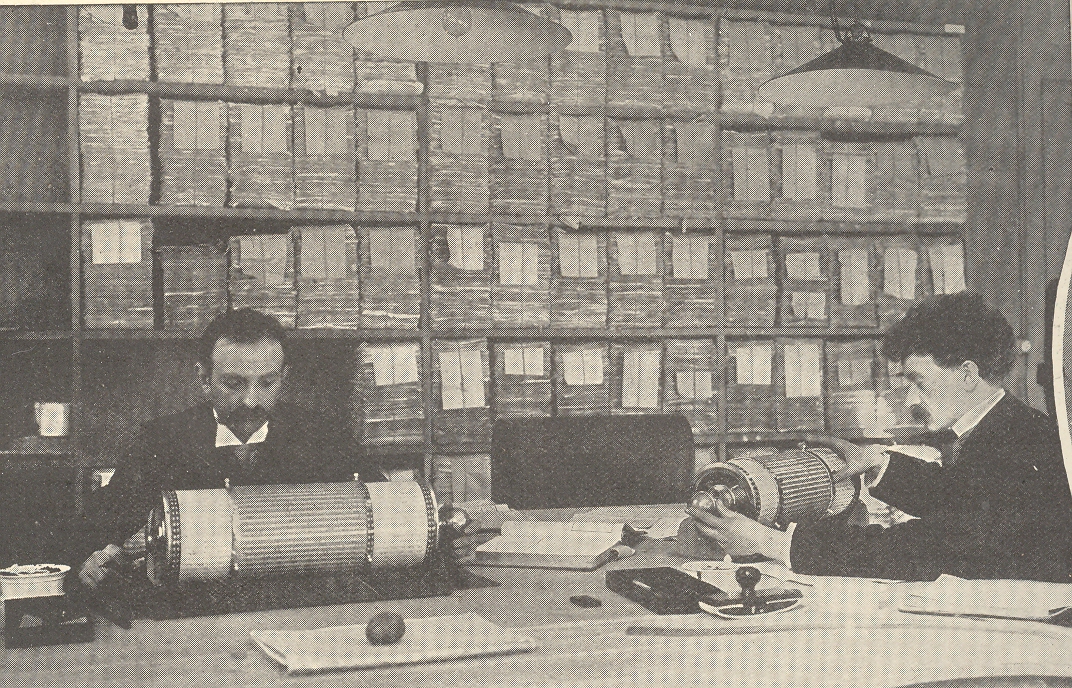
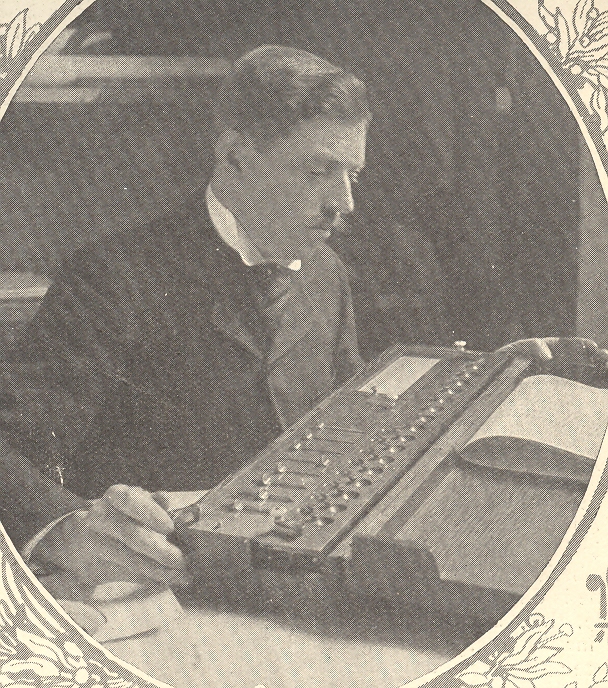
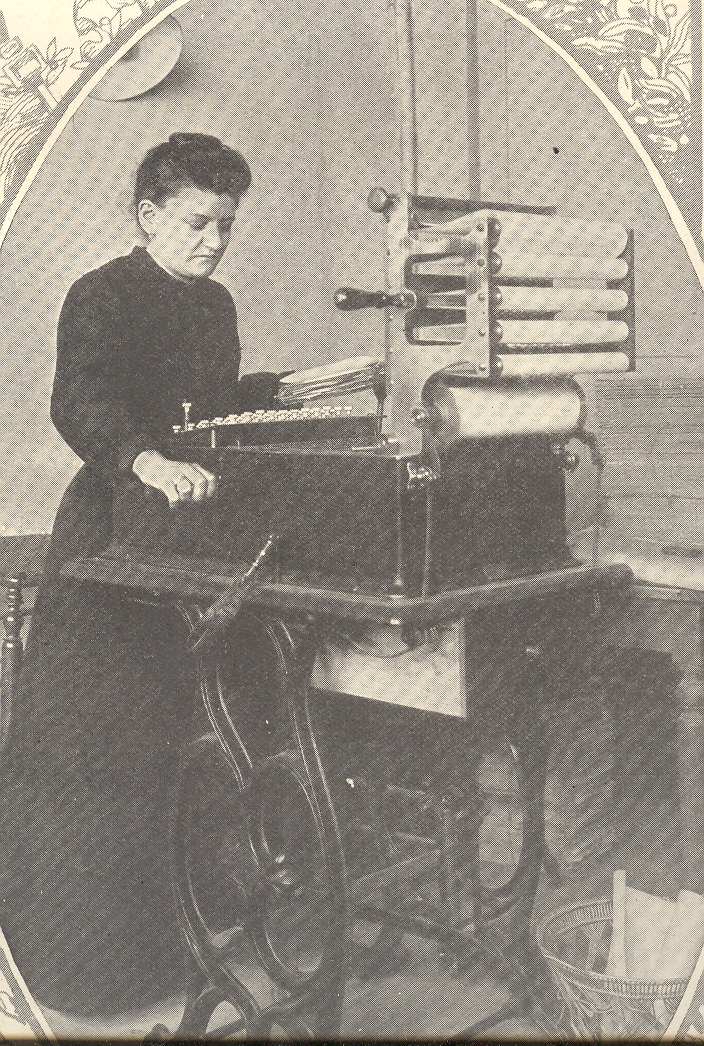
    The image below shows two men using the Thacher Calculating Instrument, a large, cylindrical slide rule1.     

    ++ blog ++ nov 16 french census 1


    This man is using an arithmometer, invented  by Charles Xavier Thomas de Colmar in 1820.  It was employed, as we can clearly see, well into the 20th century even though it had been far superseded.   

    ++ blog ++ nov 16 french census 4


    The U.S. government, on the other hand, wasn’t so much taken by the astronomical range of new statistics that flowed from the Hollerith machines as it was the astronomical bill for their use.  The 1880 census had cost about $6 million and took 9 years to tabulate; the 1890 census using the Hollerith machines cost $10 million and took seven years.  The main focus of many in government was the cost differential—not the incredible amounts of new controllable information.  The rent of the Hollerith machines was only $750,000 for the conduct of the entire census, so the differential must’ve been in the extra utility costs (for electricity, for example, which was used for the first time to run the tabulators) and for the small army of statisticians and data entry people.  Be that as it may, the government was not amused, particularly when Hollerith figured that he had actually saved the government $5 million.    The two parties left each other grumbling, though the roar of the trickle down from the Hollerith success drowned it out.  The tabulating system was quickly exported, and large private concerns in the U.S. saw a savior in the system that would soon rescue them from the sea of paper in which they were beginning to drown.   The Hollerith company did very, very well for itself, and soon merged with three other companies (in 1911) to ease the burden of success.  The resulting company was called the Computing-Tabulating-Research Company (CTR), which after a short while became the International Business Machine Corporation (IBM).  


    ++ blog ++ nov 16 french census 2

    Image source:  The Illustrated London News, 11 March 1911.  

     Notes:

    1.The following description is from the wonderful SlideRuleMuseumsite;

    “Thacher’s Calculating Instrument – Patented in 1881 by Edwin Thacher. Originally made by W.F. Stanley, in London, but, by 1897, Keuffel & Esser had taken over production. an 1884 instruction book notes, “The original rule in use is 12 inches long, with radii of II and 5 1/2 inches, the divisions of which are cut by hand, copying from a machine divided plate. In the present instrument the radii are 60 and 30 feet, the divisions of which are printed directly from machine divided plates. Those plates contain over 33,000 divisions, calculated to seven places of decimals from Babbage’s tables by using a common multiplier, every line being subjected to correction for error of screw and temperature variations, so that possibly every line center is within .0001 inch of its true place.” The instrument consists of a cylindrical slide, which admits of both rotary and longitudinal movement within an open metallic framework of 20 equidistant triangular bars. The bars are connected to rings at their ends which admit rotation within standards attached to the base. Upon the slide are wrapped two complete logarithmic scales, each of which is divided into 40 parts of length equal to half that of the slide. The parts follow each other in regular order around the cylinder, and the figures and divisions which constitute any part of the right are repeated on the left, one line in advance. By the rotary and longitudinal movement of the slide any of its divisions may be brought opposite to or in contact with any division on the fixed scales. The divisions on the upper lines are transferred to the slide by means of a pointer fitting over the bars, which is also convenient for retaining the position of any division on either line while the slide is being revolved into the required position. Near the commencement of each scale on the slide is a heavy black mark designed to catch the eye.”

    ·Posted by :

    ·in:

    —
  • Candidates for “Volume of Forgotten Lore”, Poe’s un-titled Books from “The Raven”

    JF Ptak Science Books LLC  Post 836  Blog Bookstore

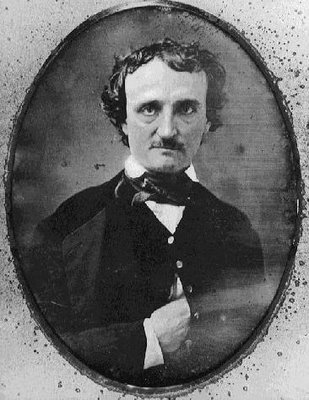
    Poe I was paging through the literary criticism and review volume
    of my Collected Works of Edgar Allan Poe
    and came to an unassociated wondering about what those “curious volumes of  forgotten lore” from “The Raven” might’ve
    been.  First let me state that Poe was a
    critical eviscerator, writing in advanced-smart 
    hyper-bitch mode, capable of crushing anyone.  It was here, doing book reviews and general
    literary bric-a-brac commentary that he made his first real way into national
    consciousness (working for Graham’s
    and Southern Literary Messenger and others).  When he set his mind to it the man could build
    a quick and modest edifice in which to flash-burn an author’s work.  And he made short effort of it, too.  (An example of this rides below.1) He liked people, too, don’t get me wrong; but more often than not he was comparing others to his own very high standards, and most suffered from a lack of O2 in the end.

    According to the little I’ve read about the man, Poe didn’t dip deep into the past for his reading, and wasn’t known for
    keeping a library per se, though he did have books–books which he sold from time to time when
    the money got short and his ambitions high. 

    My first guess for the first book in the “forgotten lore2”
    category of this young student pining away over his lost love was Robert Burton’s
    Anatomy of Melancholy.  Seldom have there been such great and
    difficult-to-read books—and the first and only book of its author—so filled
    with somewhat chance swaths of advanced learning and understanding that have
    long survived the effects of its wrist-snapping weight on its reader.  The book is filled, jam-packed with
    polymathic geegaws that it makes the book both irresistible and forgettable.  But it seems that Mr. Burton was not known—or
    at least not mentioned—by Mr. Poe, so far as I can tell.

    And so I wonder what else might fill this category?  Poe knew his Milton, and the Paradise Lost might fill this description nicely.  But what else? Voltaire? Swift (Tale of a Tub, 1704), or Sam Richardson’s
    Clarissa (1747) or Laurence Sterne’s Tristram Shandy (1759)? 
    Perhaps Poe meant for the volumes to be forgotten and forgettable?  I just don’t know, but I bet some of you
    might have some ideas.

    Notes

    1. a great example of Poe’s criticism is seen in his work on  Hawthorne’s
    Twice-Told Tales (1842):

    “A skilful literary artist has constructed a tale. If wise,
    he has not fashioned his thoughts to accommodate his incidents; but having
    conceived, with deliberate care, a certain unique or single effect to be
    wrought out, he then invents such incidents—he then combines such events as may
    best aid him in establishing this preconceived effect. If his very initial
    sentence tend not to the outbringing of this effect, then he has failed in his
    first step. In the whole composition there should be no word written, of which
    the tendency, direct or indirect, is not to the one pre-established design. And
    by such means, with such care and skill, a picture is at length painted which
    leaves in the mind of him who contemplates it with a kindred art, a sense of
    the fullest satisfaction. The idea of the tale has been presented unblemished,
    because undisturbed; and this is an end unattainable by the novel.”

    2.  Just in case, here it is:

    Once upon a midnight dreary, while I pondered weak and weary,
    Over many a quaint and curious volume of forgotten lore,
    While I nodded, nearly napping, suddenly there came a tapping,
    As of some one gently rapping, rapping at my chamber door.
    `’Tis some visitor,’ I muttered, `tapping at my chamber door –
    Only this, and nothing more.’

  • The Best Dollar the Government Ever Spent? The Migrant Mother, 1936

    JF Ptak Science Books LLC   Post 837  Blog Bookstore 

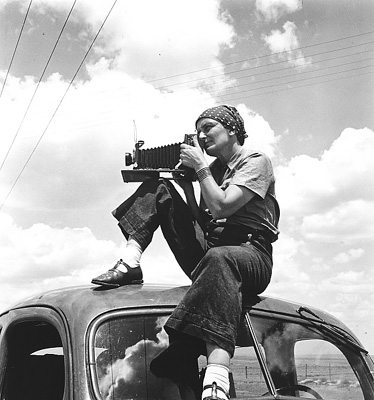
    Lange 5 photos On of the great innovations in a sea of great things accomplished during the Franklin Roosevelt administrations was the formation of the Farm Security Administration, a division of the government established to help farmers through the devastating Dust Bowl and Great Depression.  A subset of the FSA was a photographic unit which was set up to document the progress made by the FSA (and provide, I am sure, for some much-needed good news, a hearts-and-minds campaign).  This division was headed by Roy Emerson Stryker, who wound up hiring a collection of dream-team photographers unlike any ever assembled for a single purpose.  Esther Bubley, Marjory Collins, Mary Post Wolcott, Arthur Rothstein, Walker Evans, Russell Lee, Jack Delano, Gordon Parks, Charlotte Brooks, John Vachon, Carl Mydans, Dorothea Lange and Ben Shahn were sent out all across the country and wound up with the greatest and most beautiful photographic history ever assembled.  There were about 77,000 images made, and I recall reading (somewhere) that the total budget for the Stryker group for the years 1936-19421 was about $100,000, meaning that each completed image cost just over a dollar apiece.  

    Lange--migrant One of the most compelling of all of these images was from a series made by the new-hire Dorothea Lange (1895-1965)  in 1936.  On the tail end of a month-long road trip she was nearing the end of her day when she spotted a hand-lettered sign reading “Pea-Pickers Camp” by the side of the road near Nipomo, California.  She briefly considered stopping but went ahead, and for the next 20 miles of hard road continuously questioned her decision.  Unable to shake her better judgment, she turned around and drove back to the turn-off for the camp.  Lange drove down the dirt road and found a ramshackle assembly of tents, one of which contained an exhausted mother sitting forlornly with her children, sheltered in a tent fashioned to the rear of the woman’s tireless car.  Lange spent only 10 minutes with the woman, making five exposures.  She learned that “the crops had frozen, and the woman and children were living on vegetables scavenged from the fields, and the few birds that the children managed to catch.  The mother could not leave; she had sold the tires from her car”. 

    Her photograph created an American Madonna in her Migrant Mother.

    George P. Elliott, writing in the introduction for the Lange retrospective at the Museum of Modern Art (New York), grasped the essence of the image:

    Dorothea_lange portrait

    “For an artist like Dorothea Lange who does not primarily aim to make photographs that are ends in themselves, the making of a great, perfect, anonymous photograph is a trick of grace, about which she can do little beyond making herself available for that gift of grace”.

    Lange describes her encounter as follows:

    “I saw and approached the hungry and desperate mother, as if drawn by a magnet. I do not remember how I explained my presence or my camera to her, but I do remember she asked me no questions. I made five exposures, working closer and closer from the same direction. I did not ask her name or her history. She told me her age, that she was thirty-two. She said that they had been living on frozen vegetables from the surrounding fields, and birds that the children killed. She had just sold the tires from her car to buy food. There she sat in that lean- to tent with her children huddled around her, and seemed to know that my pictures might help her, and so she helped me. There was a sort of equality about it”. (From: Popular Photography, Feb. 1960).  Lange’s field notes of the images read: “Seven hungry children. Father is native Californian. Destitute in pea pickers’ camp … because of failure of the early pea crop. These people had just sold their tires to buy food.”

    Roy Emerson Stryker, who was in charge of the photography project (History Section) for the FSA said of this image:

    “When Dorothea took that picture, that was the ultimate. She never surpassed it.  To me it was the picture of Farm Security. She has all the suffering of mankind in her, but all the perseverance too.  A restraint and a strange courage”.

     NOTES

    1.  The photographic history unit of the FSA morphed into a propaganda arm for the Office of War Information (OWI) in late 1942.

    2. Florence Owens Thompson (1903-1983)  is the real name of the Migrant Mother.

    3.  The Library of Congress files for the series of photos

  • A Note on Poe, Babbage and Thinking Machines, 1836

    JF Ptak Science Books LLC  Post 838  Blog Bookstore

    This is part of a longer piece I’m doing on Man in the Machine—Early Days of  Man-Machine Singularity

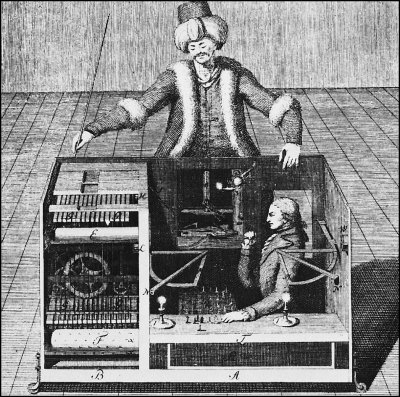
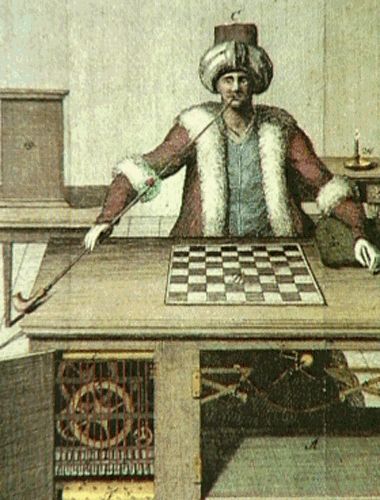
    Continuing from yesterday on Poe’s untitled books in “The Raven”, and making my way backwards through his Collected Works (from his criticism in volume XI to his short essays in volume X), I found an extraordinary piece on computers and a chess-playing machine.  Poe addresses a touring wonder called the Maelzel Chess-Playing Machine, which theoretically was a stand-alone device which thought and played the game, beating all-comers. (The version of the works that I own was published by Harper’s around the turn of the century—they didn’t bother to date their own work or give any references to the origins of Poe’s, which is awful  The essay1 though originally appeared as Edgar Allan Poe, “Maelzel’s Chess-Player” in the  Southern Literary Messenger, April 1836, 2:318-326.)  
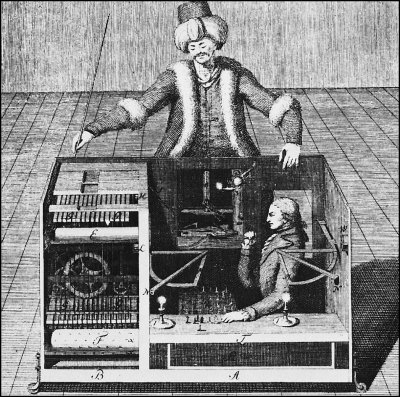
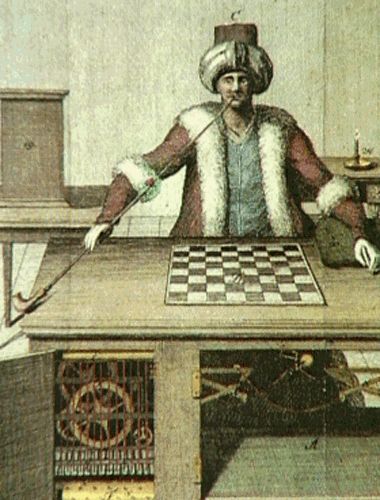
    Kempelen The machine was actually in its 65th year or so on tour, starting out life with Baron Kempelen, the original inventor of the device in 1769.   Maelzel was a shuckster who happened to be one of the machine’s final owners–touring with it in America in the 1830’s–before the thing burned to bits in 1854.

    But before he deals with the innards of the automaton, Poe writes on its history, and touches on some very deep understanding of the Babbage Difference Engine, “computers”, and thinking machines.  This is especially interesting because the Babbage machines hadn’t yet been given wide public conversation—that would come in 1843 with Babbage’s somewhat unlikely bulldog, Lady Ada Lovelace, who published an account of his work in Taylor’s Scientific Memoirs.  Poe’s work predates this by seven years, though
    Kempelen4 Lovelace’s commentary is far more robust, more mathematical, and longer and deeper2. Beautiful, even. (For example: “We may say most aptly that the Analytical Engine weaves algebraical patterns just as the Jacquard-loom weaves flowers and leaves.”)

     Poe states the difference between Babbage’s machine and a thinking machine.  First up, his paragraph on Babbage’s engine, rearranged for easier consumption:

    (1)   “Arithmetical or algebraical calculations are, from their very nature, fixed and determinate.

    (2)   Certain data being given, certain results necessarily and inevitably follow.

    (3)   These results have dependence upon nothing, and are influenced by nothing but the data originally given.

    (4)   And the question to be solved proceeds, or should proceed, to its final determination, by a succession of unerring steps liable to no change, and subject to no modification.”

     The thinking machine (chess-player) occurs later in the same paragraph:

    (1)   “But from the first move in the game of chess no especial second move follows of necessity. In the algebraical question, as it proceeds towards solution, the certainty of its operations remains altogether unimpaired. The second step having been a consequence of the data, the third step is equally a consequence of the second, the fourth of the third, the fifth of the fourth, and so on, and not possibly otherwise, to the end.

    (2)   But in proportion to the progress made in a game of chess, is the uncertainty of each ensuing move. A few moves having been made, no step is certain.

    (3)   Different spectators of the game would advise different moves. All is then dependent upon the variable judgment of the players.

    (4)   Now even granting (what should not be granted) that the movements of the Automaton Chess-Player were in themselves determinate, they would be necessarily interrupted and disarranged by the indeterminate will of his antagonist.

    (5)   There is then no analogy whatever between the operations of the Chess-Player, and those of the calculating machine of Mr. Babbage…”

    [The full quote is below as well as the link for the entire piece.]

    This is an interesting and fundamental understanding of the differences between a calculating device and a computer capable of iterative deduction.  I think also that both he and Lady Lovelace thought of the Babbage machine in terms of an added, extra intelligence for the human brain.

    After dealing with the machine’s history, and after looking at other explanations on how the thing could work, Poe delivers his conclusion:  that the machine wasn’t a machine after all, and that it could not function in this way unless it was being guided by a human inside the machine, which in fact, of course, it was.  Even after displaying the internal clockworks of the device, whoever it was exhibiting the machine would open and close the three doors covering the machine’s inner workings would do so in such a way that a small person could scoot back and forth to avoid detection, all of the exhibition being done at a safe distance  After that, the confederate would follow the game on his own board after hearing the moves announced by the showman, and then move the arm of the automaton via levers and such to produce his move, the taking of pieces done by Maelzel. (How this went undetected for so long is a sacred mystery.  It would seem as though someone at some point would’ve seen a faint light of a candle coming form inside the box, or smoke, or something.) The machine was originally designed for a brilliant Polish cavalryman who lost both legs in combat and was not above this deception.  Poe’s unraveling of the story and display of reasoning and getting to this conclusion is a pretty powerful display.

    It is interesting to note here that, without going all-academic about it, it seems to me that Babbage’s work on the computer passed without mention in the experiences of the earliest computer pioneers of the 1930’s-1950’s.  At least I don’t think I’ve ever seen mention of Babbage in any way, at least through the construction of UNIVAC II.  And so we have an instance of someone being recognized as the founding father of something without actually exerting any influence on anyone else working in that that field’s early future.  This is not the case with another person who actually did have an influence on those who followed him but has never received full public recognition for his efforts—that would be Vannevar Bush and his MEMEX as the precursor to the internet.  I’ve never looked for Poe’s name in conjunction with modern computing history (outside of cryptology), though I have a sneaking suspicion that if Babbage wasn’t there then neither would Poe.

    NOTES

    1. The paragraph in its entirety:

    But if these machines were ingenious, what shall we think of the calculating machine of Mr. Babbage? What shall we think of an engine of wood and metal which can not only compute astronomical and navigation tables to any given extent, but render the exactitude of its operations mathematically certain through its power of correcting its possible errors? What shall we think of a machine which can not only accomplish all this, but actually print off its elaborate results, when obtained, without the slightest intervention of the intellect of man? It will, perhaps, be said, in reply, that a machine such as we have described is altogether above comparison with the Chess-Player of Maelzel. By no means — it is altogether beneath it — that is to say provided we assume (what should never for a moment be assumed) that the Chess-Player is a pure machine, and performs its operations without any immediate human agency. Arithmetical or algebraical calculations are, from their very nature, fixed and determinate. Certain data being given, certain results necessarily and inevitably follow. These results have dependence upon nothing, and are influenced by nothing but the data originally given. And the question to be solved proceeds, or should proceed, to its final determination, by a succession of unerring steps liable to no change, and subject to no modification. This being the case, we can without difficulty conceive the possibility of so arranging a piece of mechanism, that upon starting it in accordance with the data of the question to be solved, it should continue its movements regularly, progressively, and undeviatingly towards the required solution, since these movements, however complex, are never imagined to be otherwise than finite and determinate. But the case is widely different with the Chess-Player. With him there is no determinate progression. No one move in chess necessarily follows upon any one other. From no particular disposition of the men at one period of a game can we predicate their disposition at a different period. Let us place the first move in a game of chess, in juxtaposition with the data of an algebraical question, and their great difference will be immediately perceived. From the latter — from the data — the second step of the question, dependent thereupon, inevitably follows. It is modeled by the data. It must be thus and not otherwise. But from the first move in the game of chess no especial second move follows of necessity. In the algebraical question, as it proceeds towards solution, the certainty of its operations remains altogether unimpaired. The second step having been a consequence of the data, the third step is equally a consequence of the second, the fourth of the third, the fifth of the fourth, and so on, and not possibly otherwise, to the end. But in proportion to the progress made in a game of chess, is the uncertainty of each ensuing move. A few moves having been made, no step is certain. Different spectators of the game would advise different moves. All is then dependent upon the variable judgment of the players. Now even granting (what should not be granted) that the movements of the Automaton Chess-Player were in themselves determinate, they would be necessarily interrupted and disarranged by the indeterminate will of his antagonist. There is then no analogy whatever between the operations of the Chess-Player, and those of the calculating machine of Mr. Babbage, and if we choose to call the former a pure machine we must be prepared to admit that it is, beyond all comparison, the most wonderful of the inventions of mankind. Its original projector, however, Baron Kempelen, had no scruple in declaring it to be a “very ordinary piece of mechanism — a bagatelle whose effects appeared so marvellous only from the boldness of the conception, and the fortunate choice of the methods adopted for promoting the illusion.” But it is needless to dwell upon this point. It is quite certain that the operations of the Automaton are regulated by mind, and by nothing else. Indeed this matter is susceptible of a mathematical demonstration, a priori. The only question then is of the manner in which human agency is brought to bear. Before entering upon this subject it would be as well to give a brief history and description of the Chess-Player for the benefit of such of our readers as may never have had an opportunity of witnessing Mr. Maelzel’s exhibition

     –The Maelzel essay:

    –And here as well. 

    2) Ada Lovelace writing on the computer “program” from her extensive “Notes” section in her translation of Menabrea’s work on Babbage, appearing in Scientific Memoirs, Selections from The Transactions of Foreign Academies and Learned Societies and from Foreign Journals, edited by Richard Taylor, F.S.A.,Vol III London: 1843, Article XXIX. “Sketch of the Analytical Engine invented by Charles Babbage Esq.”

    “The distinctive characteristic of the Analytical Engine, and that which has rendered it possible to endow mechanism with such extensive faculties as bid fair to make this engine the executive right-hand of abstract algebra, is the introduction into it of the principle which Jacquard devised for regulating, by means of punched cards, the most complicated patterns in the fabrication of brocaded stuffs. It is in this that the distinction between the two engines lies. Nothing of the sort exists in the Difference Engine. We may say most aptly that the Analytical Engine weaves algebraical patterns just as the Jacquard-loom weaves flowers and leaves.”
  • Early Ennui in Art–a Peek at the Illustrated History of Boredom

    JF Ptak Science Books LLC  Post 839  Blog Bookstore

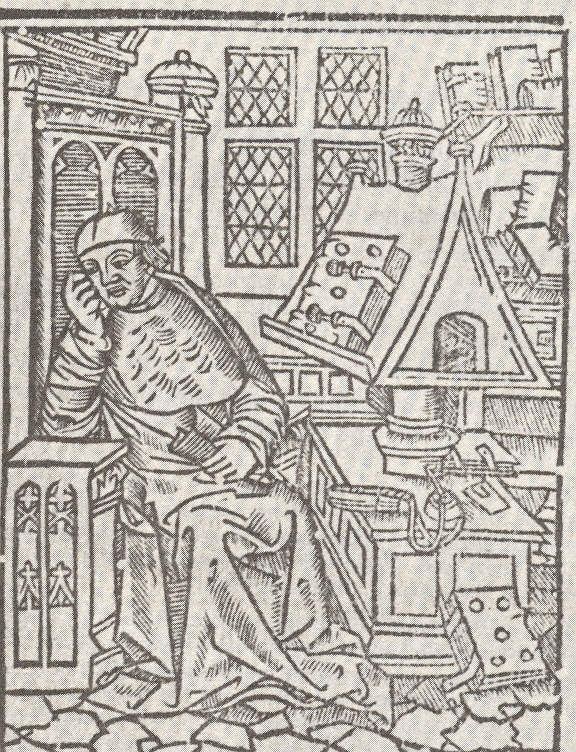
    0 ebay nov 18 ennui What struck me about this print–instantly–was the emotion of our languid reader: ennui.  Ennui is a very uncommon emotion in early prints, at least for my experience.  As a matter of fact only .75% of all published prints exhibited “ennui” as its “reigning and ruling emotion”. Of course that’s an imaginary statisitc–after all, made-up and imaginary statistics (yes, there is a difference) are much more reliable to their subjects than are real statistics, which  can offer problems in envisioning a particular reality.  But ennui really is uncommon, and this man is wrapped in nothing but.

    0 ebay nov 18 ennui 001

    Perhaps we don’t see ennui, or boredom, earlier on in art (and
    in literature for that matter) because the free time for feeling these emotions
    hadn’t yet been invented.  So to speak.  Boredom is a luxury affordable by the few.  Certainly this reader, seated near his Jacobian
    bookcase with several large books in a comfortable setting, could certainly afford
    the idea of free time and thus the added fabulousness of boredom.  And so it is that we see him enjoying his shroud,
    here.  


    The woodcut comes from a famous and early work on family medicine,
    hygiene really, Healthe, for all manner of
    syckenesses and diseases…
    by Andrew Borde, and printed in 1557.  

    A history of boredom might well be in order…

  • The Truth Behind Cuckoo’s Nests–Ken Kesey

    JF Ptak Science Books LLC  Post 840

    This post nominally belongs in the Blank and Empty Things thread, but barely. 

    Robert Burton’s Frontispiece

    Many years ago a friend at PEN/Faulkner let me impersonate
    an usher at a Ken Kesey evening so that I could be the last person to see the
    man before he disappeared into the night. 
    He was lovely and charming and entertained the evening, winding up
    signing books at the end.  What I wanted
    from the man was to hear him recite the nursery rhyme that formed the title of
    his first book, One Flew Over the
    Cuckoo’s Nest
    .  He wrote it in 1962,
    an odd book coming from an odd man—Kesey had been in academia on the high-end
    at Stanford, buddying up with Larry McMurtry and Robert Stone and getting
    instruction from Stegner and Cowley; he became something different, a figure
    with literary studs while bouncing between the beats and the rad ‘60’s.  Anyway I read the book when I was young and
    liked it a lot, and still do.

    So I approached the tired Kesey and made my request.  He was amused that I only wanted to hear him
    recite something rather than sign a book—honestly I just wanted to take the
    memory with me into the future.  And as a
    matter of fact, I had/have a nice first edition of the thing but didn’t have it
    that day, forgetting it at home, or not thinking to take it with me.  Just before leaving for the event, I stopped
    at Olsson’s Books in Georgetown
    and bought a paperback copy of OFOTCN, sticking it in my back pocket just in
    case.

    So.  Kesey was amused,
    and asked if I’d like a copy of his new kid’s book, Little Tricker the Squirrel…. (published 1991), from which he had
    just done a very animated reading.  He
    pulled a copy out of his sack, opened a gold magic marker, and signed the book IN
    GIANT LETTERS  to my very-soon-to-be-wife
    Patti Digh, “Dear Patti, sometimes ink can be a great potion” (alluding to his
    classic book, Sometimes a Great Notion).  Fabulous.  Kesey then started to talk about the fairy
    tale and cuckoos and what a nasty habit they had of laying their eyes in other
    birds’ nest to have their young be “raised by strangers in a strange land”.  He recited the version he had heard from his
    grandmother.

    0 ebay nov 19 kesey

     I finally brought out my paperback copy of his book, and he
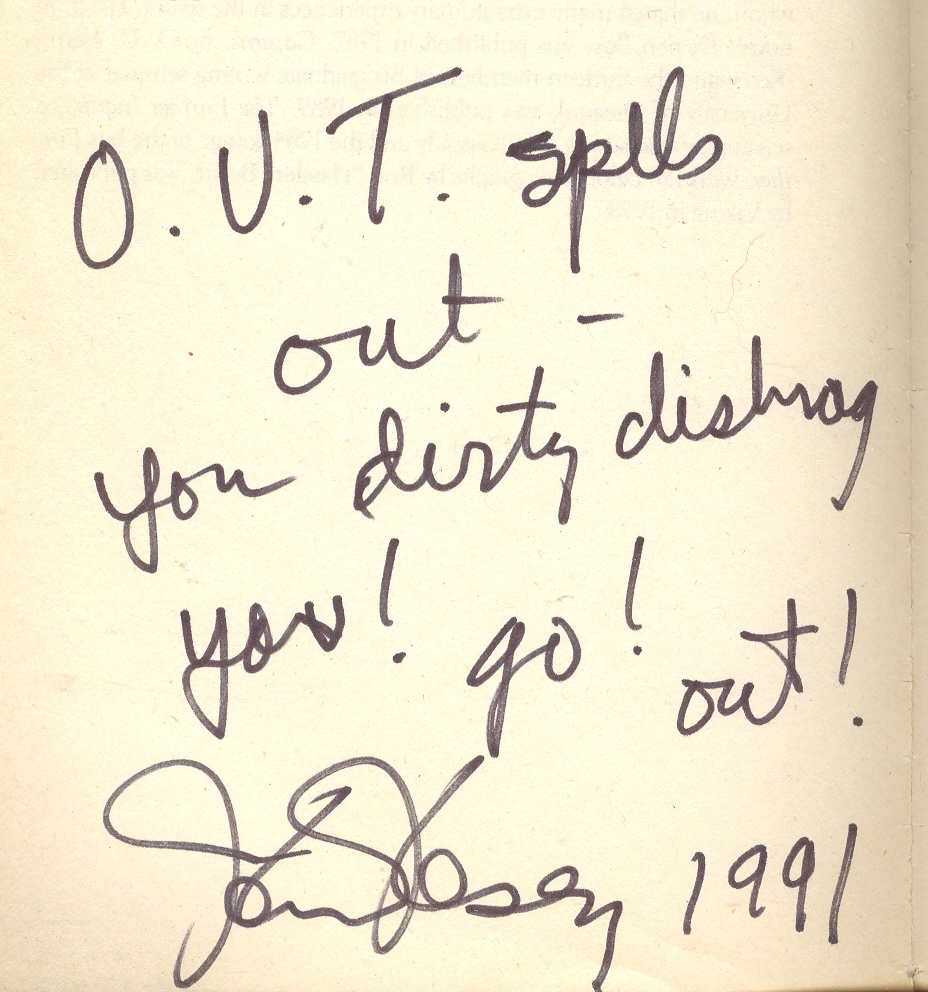
    signed it with the final flourish from his version of the old poem.  The man was very gracious.     


    Another version goes like this:


    “Tingle, Tingle, Tangle Toes
    She’s a good fisherman
    Catches hens, puts’em inna pens
    Wier blier, limber lock
    Three geese inna flock
    One flew east, One flew west,
    One flew over the cuckoo’s nest
    O-U-T spells out
    Goose swoops down and plucks you out.”

Recent Posts

Archives

Categories