JF Ptak Science Books LLC Post 853 Blog Bookstore
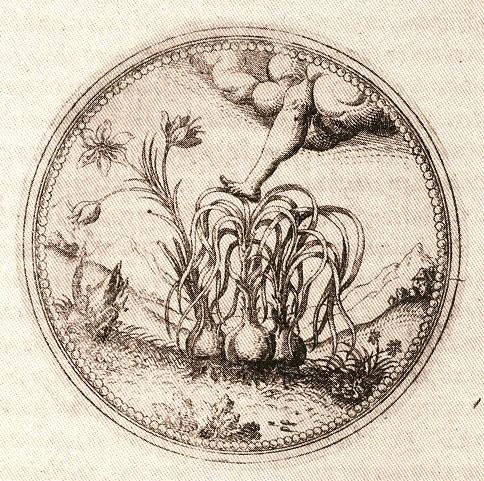
I am going to indecently
add to my “foot of god” series with this metal engraving from the accomplished
Joachim Camerarius1’ Symbolorum et
Emblematum…(published in four volumes at
freely admit, but I’m afraid that I’m stopped at this foot-from-the-sky
image.
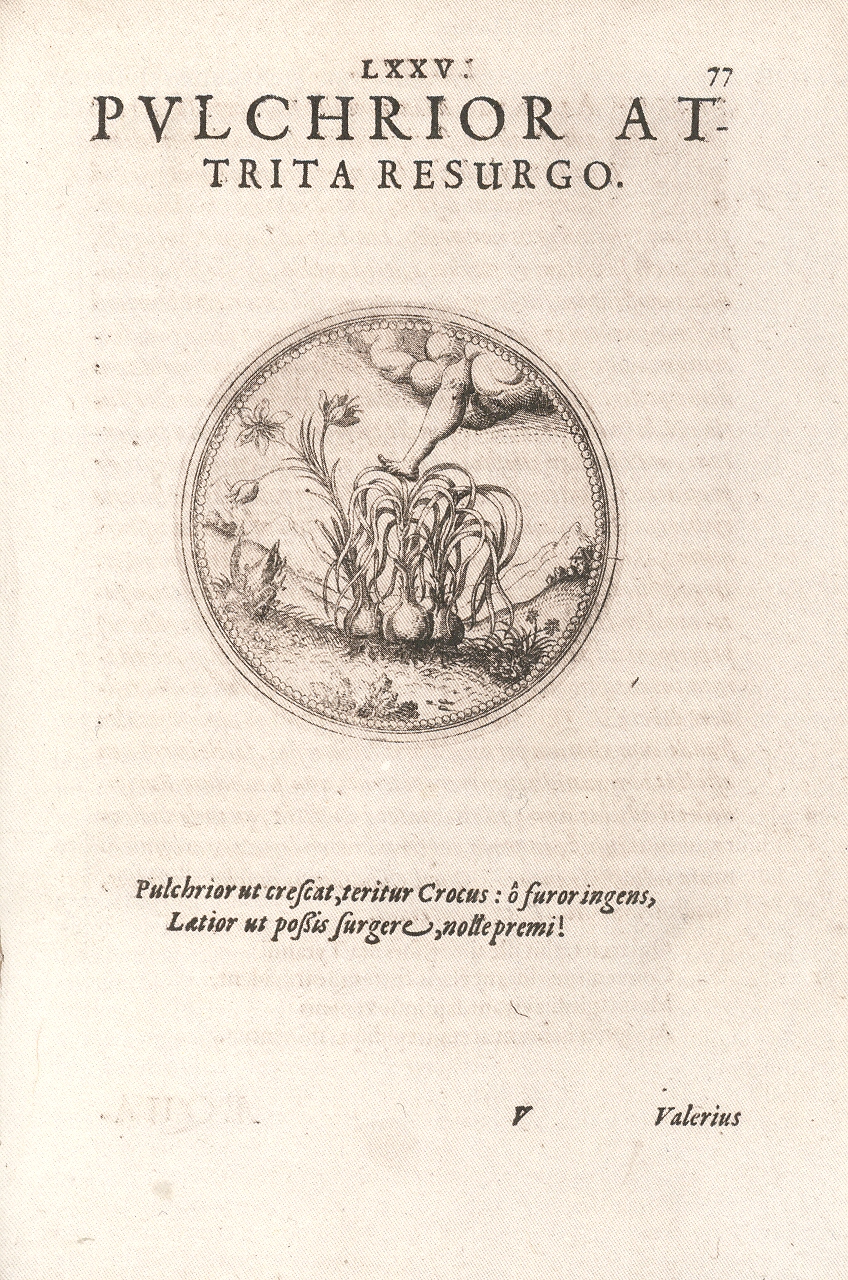
The engravings, executed
by Hans Sibmacher, were among the first executed in metal, and the book itself
was the first of its kind to present botanical emblems. (The other three
volumes contained emblems for animals of land-sea-air.) They are splendid and
concise, and filled with soft detail.
And still I’m left with the foot.
The legend is mostly a
mystery and doesn’t help me with the foot—it says something about beauty and
growth and madness and reward—and the saffron crocus. This plant has been a commodity for
thousands of years, used for therapeutics and dyeing and spice. It takes quite a lot of these plants to
produce a gram of powder—about 150. 60,000 plants are necessary to produce a
pound of saffron, which is getting to be quite pricey. Given this, saffron was very often imitated
and counterfeited—a crime taken quite seriously in many places, and perhaps
none more so in Bavaria where (in 1444) a conviction meant death.
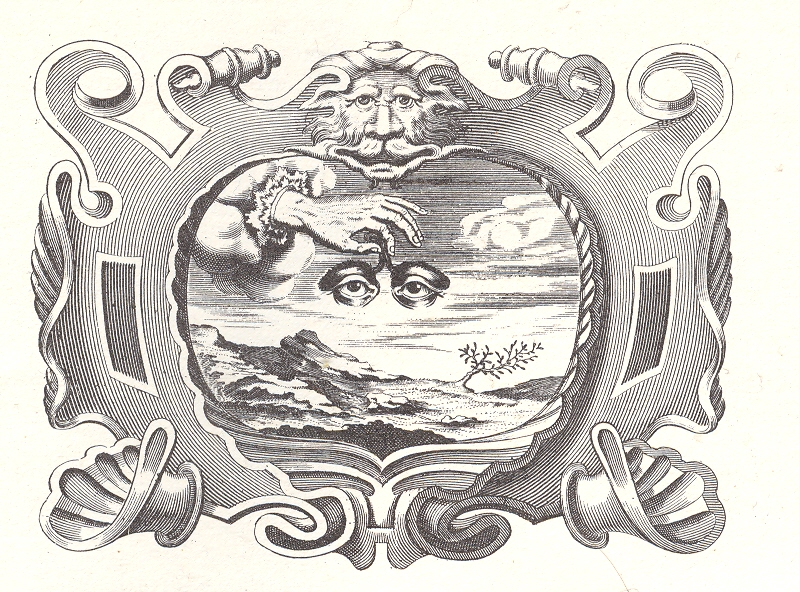
And as long as we’re
talking about odd antiquarian images the sky, I’d like to point out the work by
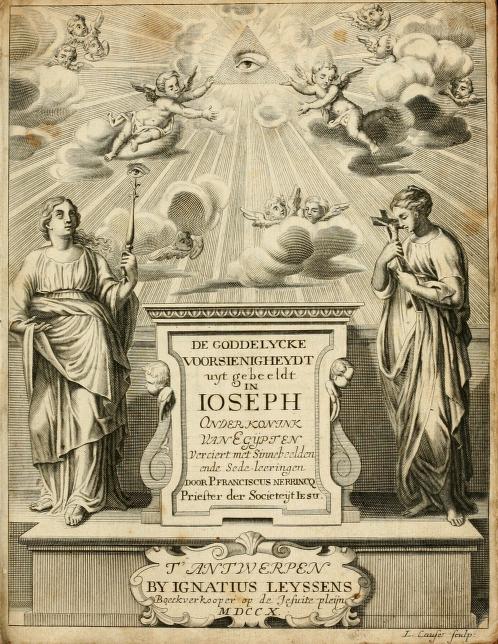
the Jesuit Franciscus Nerrincq (1638-1712), De goddelycke voorsienigheydt2, in which there
are several odd eyes that burn their way through the atmosphere. Eyes/eye of the creator occur frequently in
religious presentations and emblems, but not so very often as hands holding a
pair of eyes. I know all of this is very
heavy stuff in the history of Christian iconography and the progression of
emblemata, but I’d rather deal with the images out of context here and have
them stand on their own without interpretation.
NOTES
1.From the Encyclopedia Britannica, 11th
edition, volume 5: JOACHIM CAMERARIUS (1534-1598), German botanist and physician, son of the
classical scholar of the same name, was born at Nuremberg on the 6th of November 1534. After finishing his studies in Germany he visited Italy, where he graduated as doctor of medicine. On his return he was invited to reside
at the courts of several princes, but preferred to settle in his native town of
wrote a Hortus Medicus (1588) and several other works. He died at
October 1598.
2. De goddelycke voorsienigheydt uytgebeeldt in Joseph
onder-coninck van Egypten : verciert met sinne-beelden ende sede-leeringen. The entire book can be seen here.
The
of
collection is extensive and easy to navigate—there is drop-down box for
available titles, and once selected, the book comes up with biblio info on the
right and a drop-down of thumbnails for the entire book at left. It is a joy to navigate.