JF Ptak Science Books LLC Post 849 Blog Bookstore
“Building
skyscrapers is the nearest peace-time equivalent of war. In fact, the analogy
is startling, even to the occasional grim reality of a building accident where
maimed bodies, and even death, remind us that we are fighting a war of
construction against the forces of nature.” -Col. William A. Starrett, Skyscrapers and the Men Who Build
Them (1928)
Indeed! I wonder if Starrett (whose book, or at least
its cover, is beautifully designed and a roaring bore to read) had this
proposed building (below) in mind—if so, we could’ve skipped right past WWII
and declared WWIII.
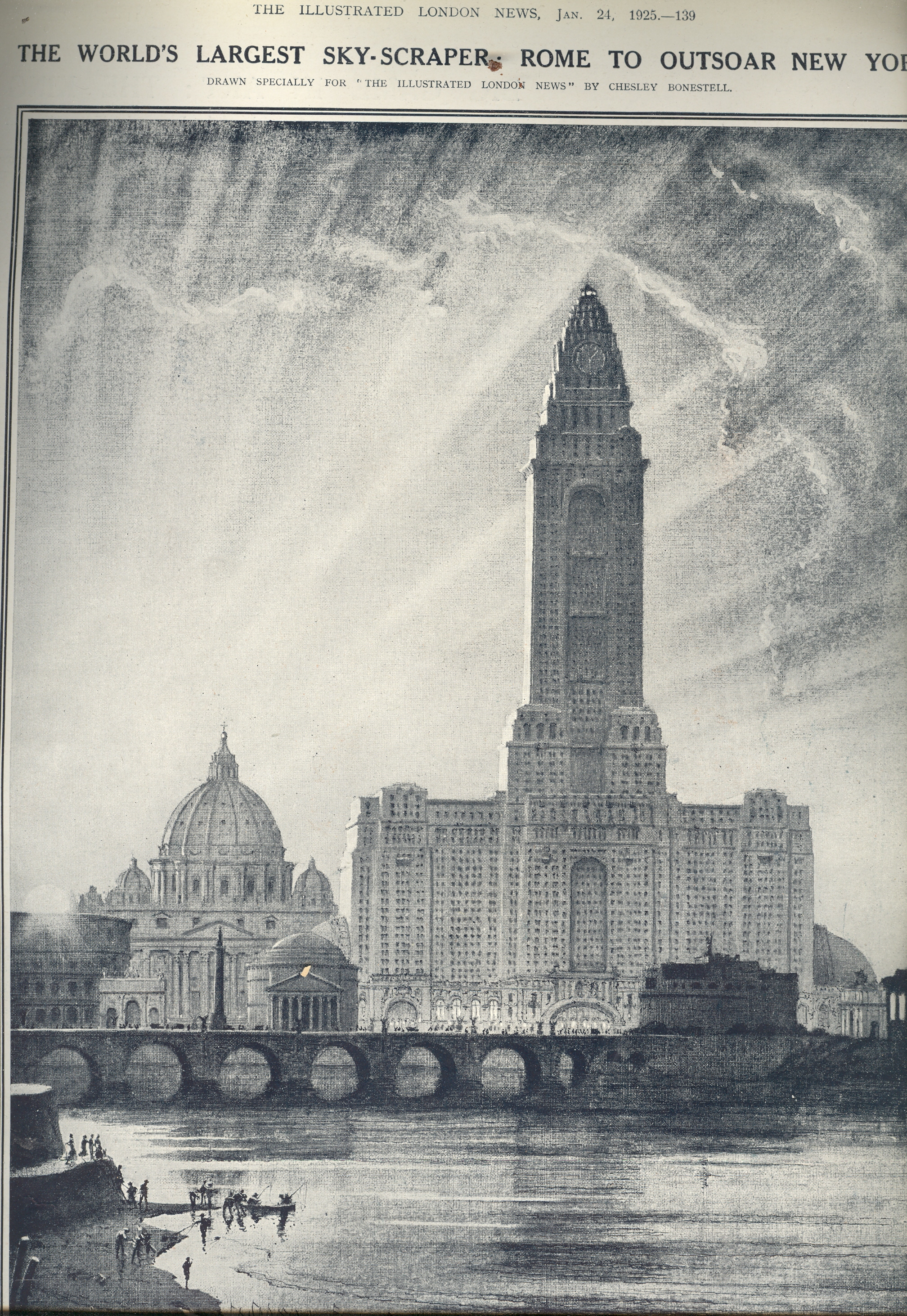
It’s a good thing
that the Roman skyline isn’t punctured here and there by skyscrapers—especially
those that would’ve been built during the Fascist era. Take, for example, this planned 1100-foot
monster, proposed in 1925, in the third year of Mussolini’s government. This is an idealized cityscape of course,
created to show height comparisons with famous buildings, but this thing
(looking very much like
created a hole in the sky and thrown a suffocating, shadowing presence all over
the city. Granted it isn’t as monstrous
as many of the international style buildings could’ve been had they been a fifth
of a mile high–that work was left to the cobbled hand of Philip Johnson in
America—but it is still horrible enough all on its own. More horrible to think that it could’ve
swallowed whole the seven biggest buildings in
wonders of the ancient world stacked one on top of the other.
It is curious to
note that this spaceship-like building was drawn for The Illustrated London News (24 January 1925) by Chesley Bonestell
(1888-1986), an artist and designer, and known as “the Father of Space Art”. The best thing that this building could’ve
done was to light its afterburners and take off.