JF Ptak Science Books LLC Post 846 Blog Bookstore
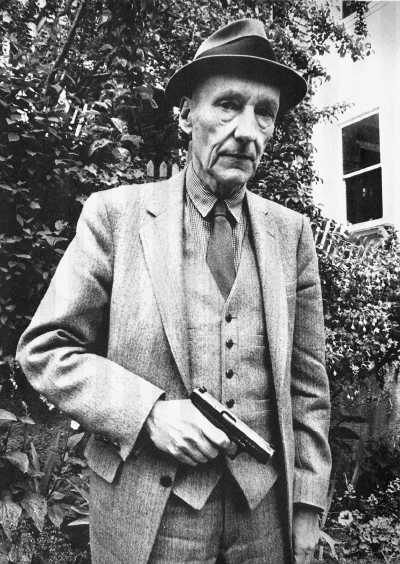 William Burroughs—one of
great 20th century humorists (closer to Bierce/Mencken than
Thurber/Woollcott, like Twain with a rainbow coalition of nasty addictions and outré
social habits)—wrote this cookbook article of drug addiction in the British Journal of Addiction in
1956. Considering it is only twenty-two
pages long, it is an Encyclopedia Brit-burroughanica for its quick
contents.
“Letter from a Master Addict to Dangerous Drugs” is crisp
and concise, a clinical horror story of addiction and cure. I say “and cure” because of the low trials
Burroughs went through in some of the ten attempts/cures he experienced to
clean himself up. (Burroughs had already
been using narcotics for twenty years by 1956.
By a mixture of good genetics and miracles Burroughs (1914-1997) made it to his 83rd year.) Burroughs describes one of the treatments, the “prolonged sleep” cure, (excerpted below),
in singular terms, revealing a particularly gruesome adventure into lost
health:
“Prolonged Sleep.–The theory sounds good. You go to sleep
and wake up cured. Industrial doses of chloral hydrate, barbiturates,
thorazine, only produced a nightmare state of semi-consciousness. Withdrawal of
sedation, after 5 days, occasioned a severe shock. Symptoms of acute morphine
deprivatio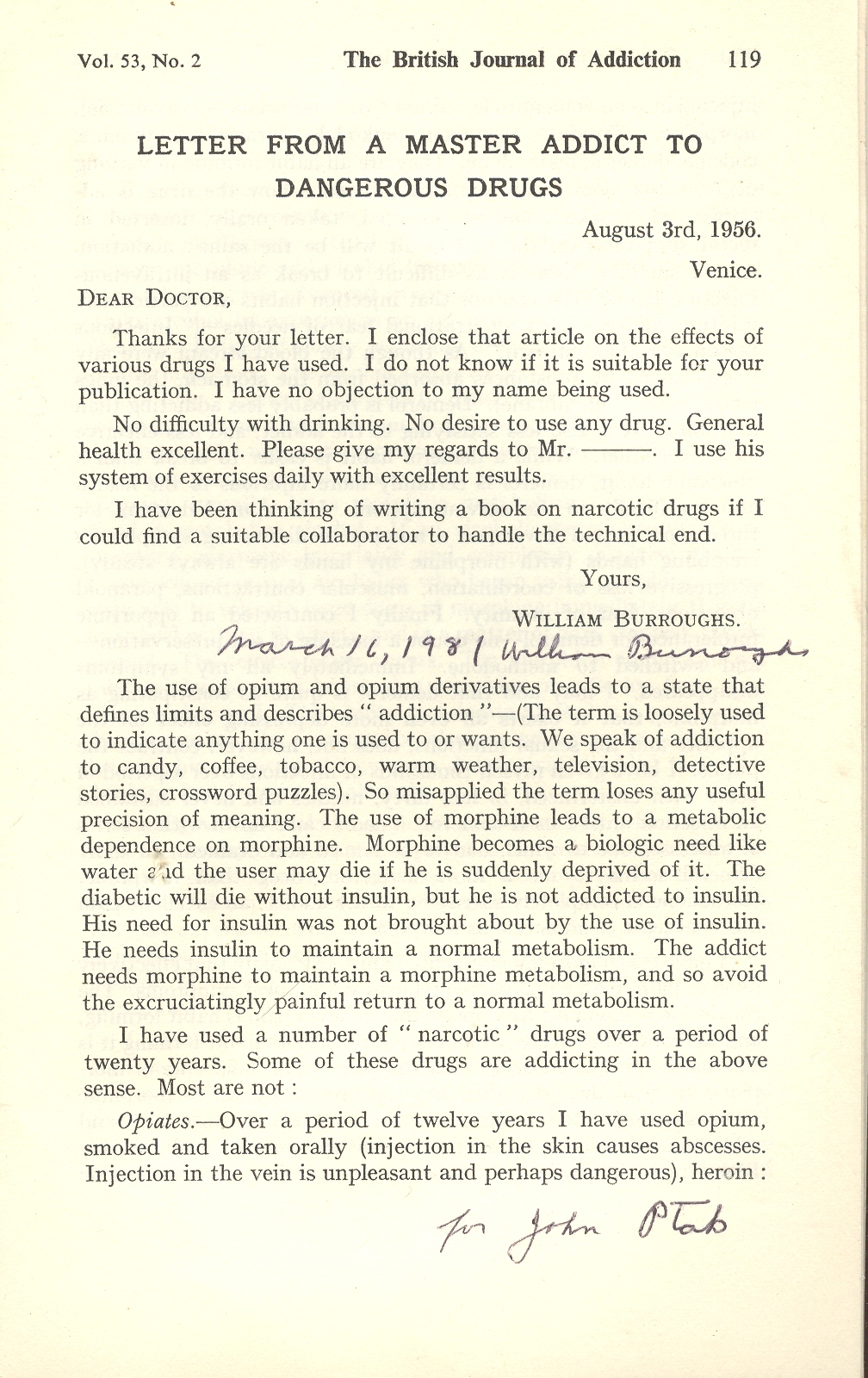 n supervened. The end result was a combined syndrome of unparalleled
horror. No cure I ever took was as painful as this allegedly painless method.
The cycle of sleep and wakefulness is always deeply disturbed during withdrawal.
To further disturb it with massive sedation seems contraindicated to say the
least. Withdrawal of morphine is sufficiently traumatic without adding to it
withdrawal of barbiturates. After two weeks in the hospital (five days
sedation, ten days “rest”) I was still so weak that I fainted when I
tried to walk up a slight incline. I consider prolonged sleep the worst
possible method of treating withdrawal.”
relief, then this cure didn’t offer any, and certainly must rank high in the Bad Ideas Department of Caustic Non-Cures.