A Daily History of Holes, Dots, Lines, Science, History, Math, Physics, Art, the Unintentional Absurd, Architecture, Maps, Data Visualization, Blank and Missing Things, and so on. |1.6 million words, 7500 images, 4.9 million hits| Press & appearances in The Times, Le Figaro, Mensa, The Economist, The Guardian, Discovery News, Slate, Le Monde, Sci American Blogs, Le Pont, and many other places… 5000+ total posts since 2008.

  • Advanced Sci-Fi Dirigible Notion, 1909

    JF Ptak Science Books LLC  Post 854

    ++ Nov 28 dirigible

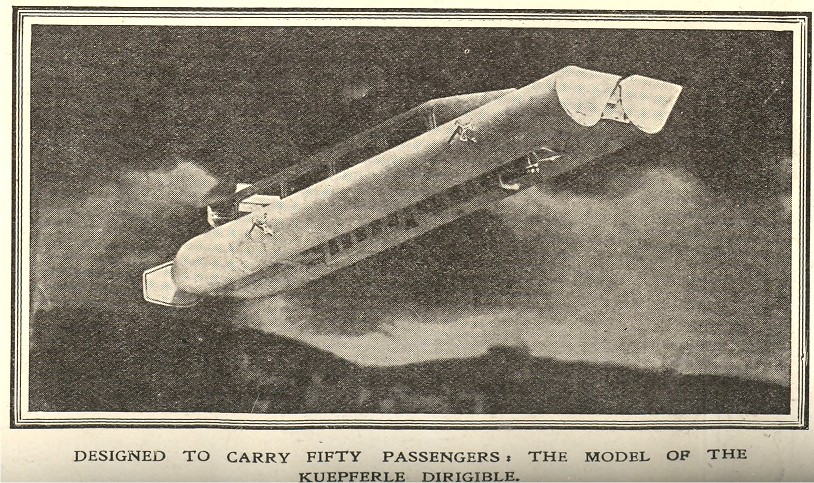
    Just a short post this evening on what looks to be an amazing futuristic vision of he dirigible, found lurking in the “science Jottings” page of the 14 August 1909 issue of The Illustrated London News. (This section has provided more than its fair share of entertainment, a consistent pleasurama of sciency bits all confined to a single page.)  The airship was noted as being designed by “Kuepferle”, unfortunately  without a first name, who was associated somehow with “authorities at Frankfurt”.  The ship was to be a fantastic 100 metres long, and was set to hold fifty passengers (with, I guess, a crew of 25?)  The structure on the the top of the aircraft was a screen to prevent the sun from heating the helium elements too much, which, somehow, were to be turned into a parachute in the case of a disaster.  The unnamed artist made his drawings from a model, while the “dirigible proper would be available before very long”. 

    ++ Nov 28 dirigible 001 

    ZR1couv

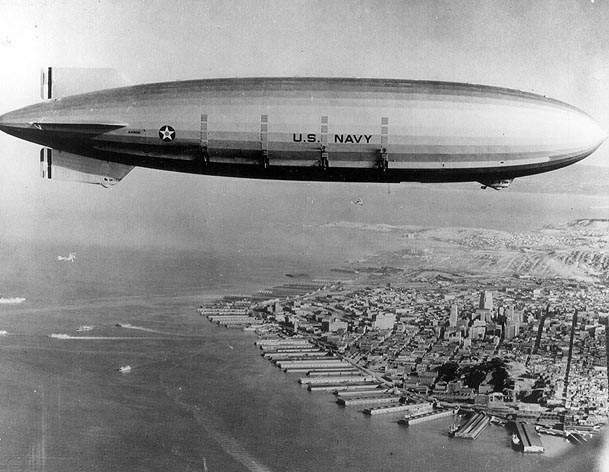
    The magnificent possible length for the airship–100 metres–was huge for 1909, but was eclipsed (in relatively short order) by the American Akron, a 1931 monster which came in at over 240 metres.  Still, the Kuepferle machine had a rich sci-fi design with a big Buck Rogers feel, a lovely thing.

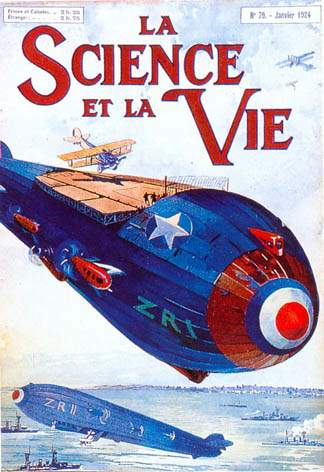
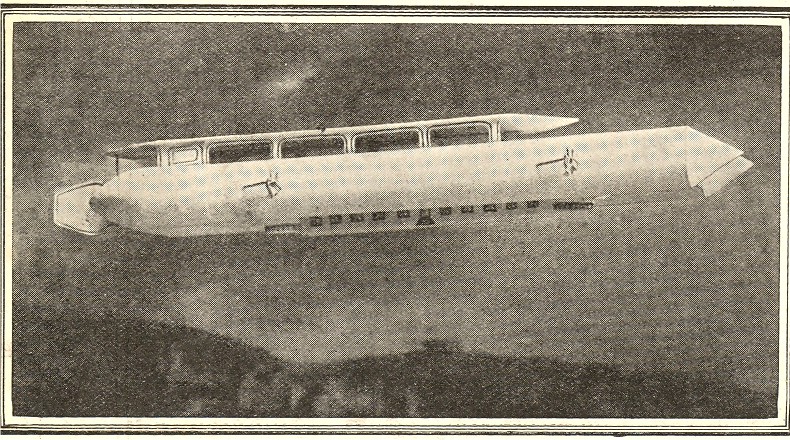
     It was certainly far prettier than this flying aircraft carrier decorating the cover of La Science et la Vie for January 1924.  I’m not sure what the efficacy was for this idea, this enormous beast catering to one airplane at a time…but it all sure looked pretty in blue. 

    The real thing, the Akron, below:

    Akron

  • Roadtown, Linear Cities, and Living in a Line: Edgar Chambless and Michael Graves

    JF Ptak Science Books  Post 855 


    I wonder what our human world would be like if we had evolved living in horizontal linear cities?  

    ++ Nov 29 roadtown chambless 1

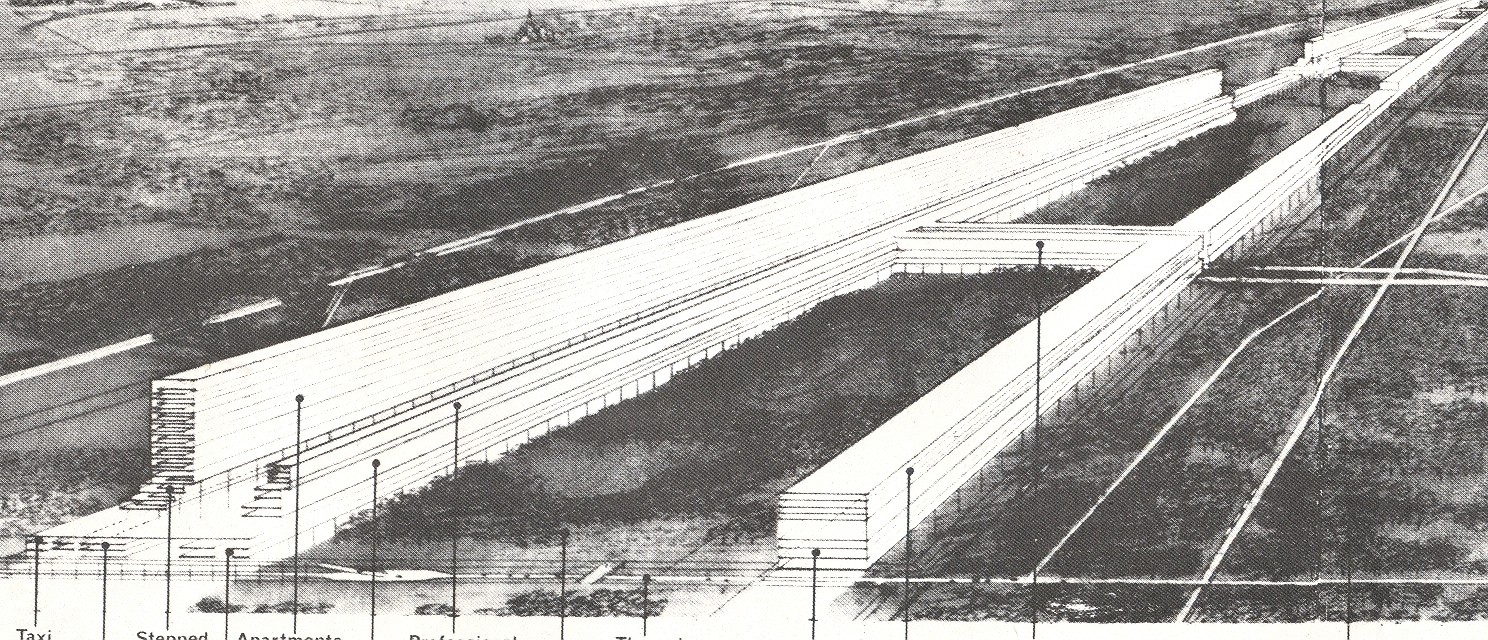
    The idea had never occurred to me before seeing the work of Edgar Chambless, whose Roadtown (the entire 172pp of the 1910 work located here) projected the idea of super long linear road-cities.  Actually it was the illustrations that attracted me more than Chambless’ pamphlet, though I’m surprised to admit, there’s some interesting bits and pieces in that exceptionally odd work of city/future planning. 

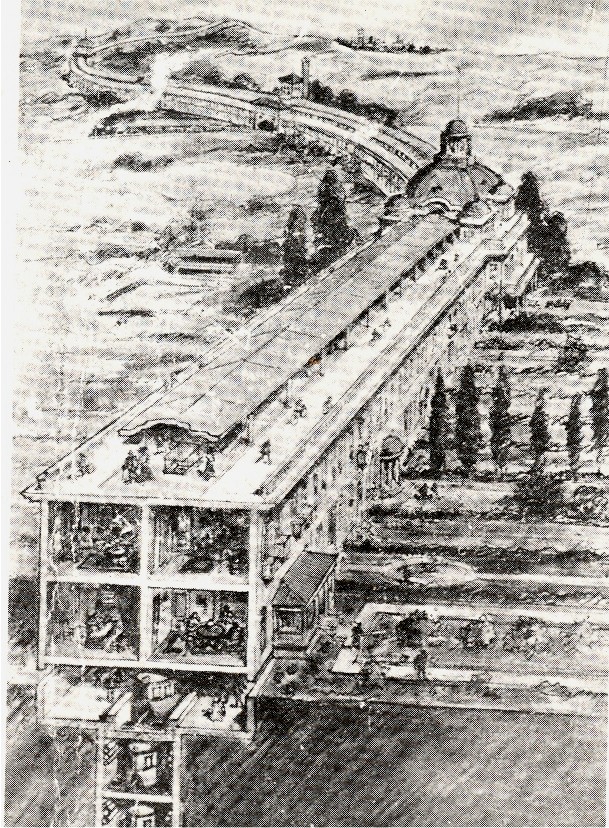
    Michael Graves also proposed a linear city [aerial perspective below] to form a contiguous, living corridor between New Brunswick and Trenton, and alluded to the development of “consequent new patterns of life” though doesn’t say what they might be.  

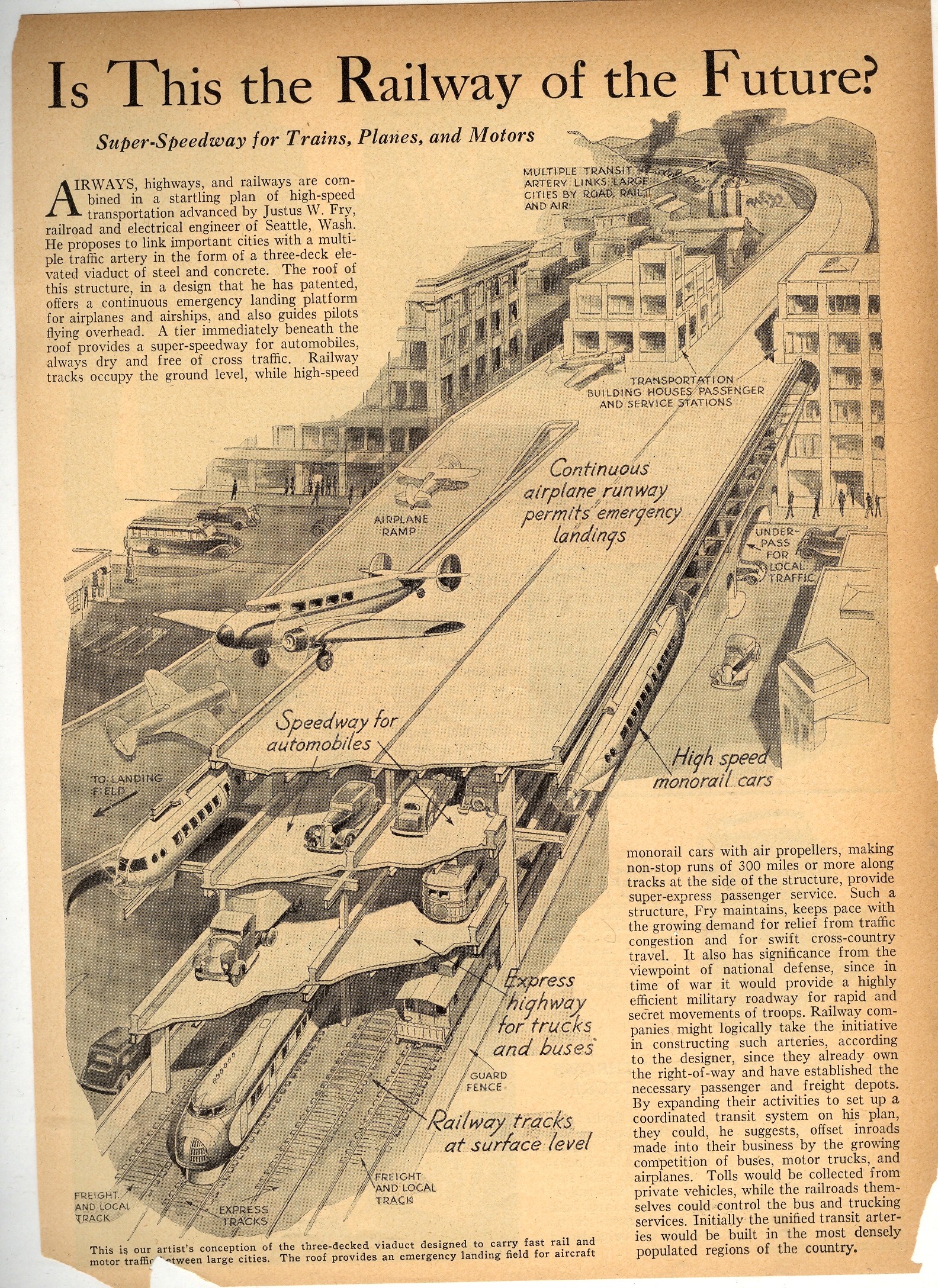
    And certainly there have been many plans for incorporating, engulfing, transportation systems into the very fabric of a city (as seen in the “Is This the Railway of the Future” image that ran in Popular Science in 1932), though the idea of combining transportation and the city itself into a linear creation is far more uncommon. 

    ++ Nov 29 roadtown graves


    But getting back to this living-in-a-line part:  according to some rough napkin-logic, I figure that in order to house 300 million Americans in one long structure, it would take something like a building 400′ wide, 12 storeys high and 3000 miles long (not including infrastructure and so on) to allow 400 square feet of living space for every person.  Oddly enough I randomly chose an individual unit of 400x800x120 feet to work with, which is within just a percent of two of the total volume of the Empire State Building (bizarre!), meaning that it would take about 20,000 Empire State Buildings placed end-to-end to perform the housing of every American in this straight J.G. Ballard-like world. 

    Now Chambless offered an architectural-something  much less complex1 than this notion I just imagined, though his philosophy of life and living in such a city was developed well enough to get the interest and attention of major movers and shakers (including Tom Edison).  There was evidently quite a buzz about Roadtown though that’s all that ever happened–buzz and no sting, meeting after meeting, happy attendees, then off to another meeting with apparently nothing to show for it all in the end, an interesting idea that took a decade or two to die. 


    ++ Nov 29 roadtown underground

    Notes:

    Edgar Chambless and Michael Graves images from the wonderful book, Unbuilt America, by Alison Sky and Michele Stone. (Sky and Stone–very close to sky above/mud below.)

    1. (From The People’s Almanac, 1981):  “In cross section, Roadtown would, beginning at the top, consist of: (1) a roof promenade–a glassed-in sun parlor in winter, shaded walk in summer, with bicycling and skating paths and towers housing schools, nurseries, recreation facilities, stores, and power plants; (2) a two-story, above-ground house, with a workroom at street level, a living area above it, and utility lines (electric wires and gas and water pipes) enclosed in a runway beneath the house; and (3) three below-ground levels of railroad lines for expresses and locals, to carry both passengers and freight”

  • Return to Land Ships–Really Big, Really Bad Ideas: the 1,500 Ton Truck

    JF Ptak Science Books LLC  Post 856

    Ship--kinski

    Nothing
    quite gives me the rumbles as seeing pictures of Great
    Heavy Land Things on the move.  The NASA launch crawler is one of the biggest,
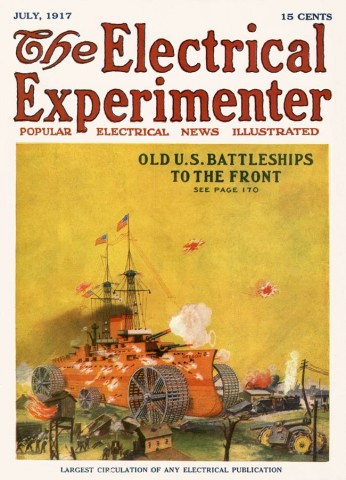
    though it doesn’t come close to this impossible LandClad pictured in Brett
    Holman’s excellent AirMinded blog:  the
    terrestrially-motorized and tankified version Dreadnought of obsolete ironclad (and I guess
    pre-Dreadnought) battleships.  I doubt
    that there would be more things more fearful than seeing something like this
    coming over the rise, Martian tripod death machines notwithstanding. The
    ironclad/pre-dreadnought would certainly have some problems moving around on
    the land, considering the huge power sources needed to move them while they
    were floating in water.  The giant tank also
    looks pretty pervious, all things considered, and (among many other things)
    looks as though it probably wouldn’t do so well in rainy weather—it looks like
    it would generate its own Operation Barbarossa
    mud wherever it went.  My guess too is
    that if got stuck, it was, well, stuck.Ship--teheuntatpec  

    The
    pursuit of sea-land machines has always had a huge ‘wow” factor, if for no
    other reason than it was just out-of-place and big.   I’ve written earlier here on
    Elmer
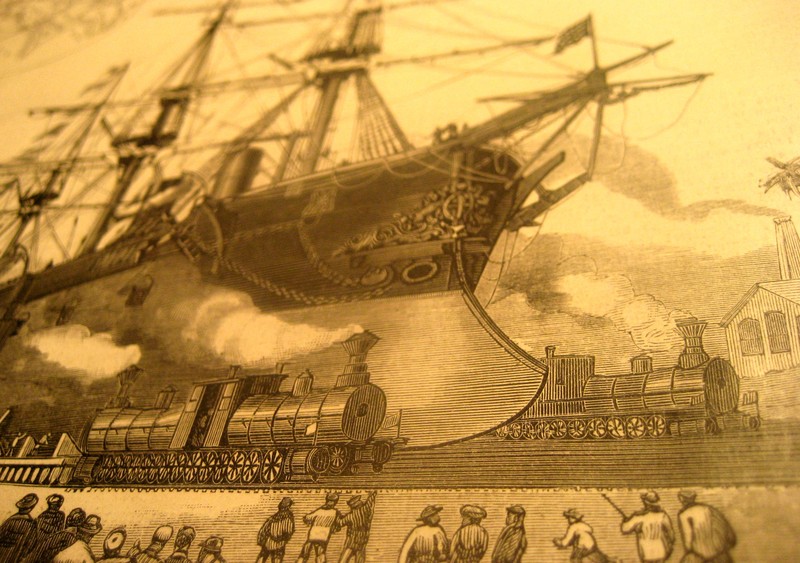
    Cotherell and James Eads proposal to build a combination railroad ship canal
    across the Tehuantepec isthmus in Nicaragua, hauling ships up and out of the
    water and transporting them across land on six railroad tracks pulled by juggernaught
    teams of locomotives.  In the
    fiction-made-fact world, Werner Herzog hauled a real steamship up and over a mountain for
    the filming of his quixotic Fitzcaraldo,
    which was simply a fabulous thing to see. (The film is a glory as is the film made on the making of the film.)


    Truck

    Getting
    back to Holman’s landship—I remembered something similar to this, and actually
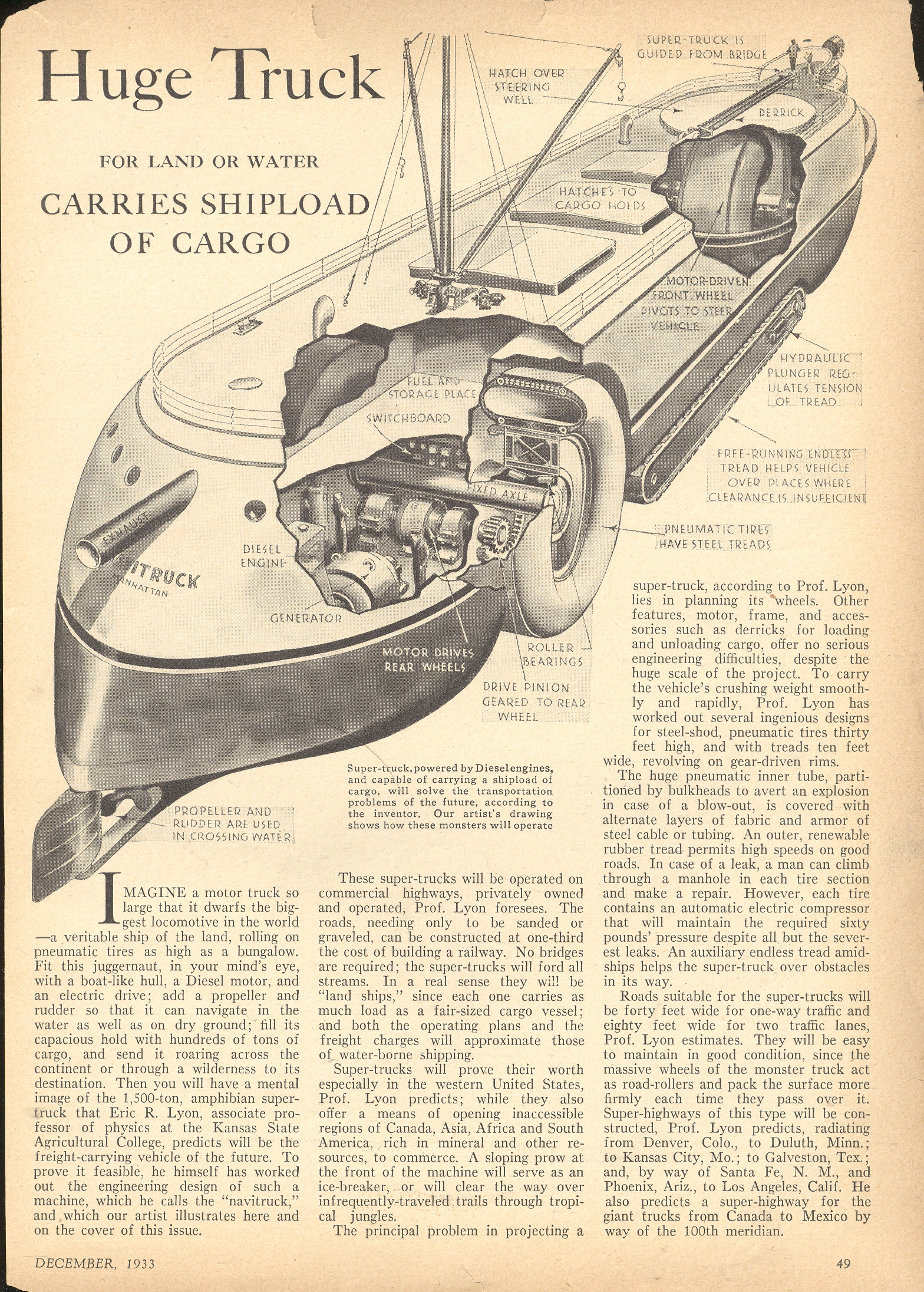
    found a picture of it right here in my bizarre-archive.  Popular
    Science
    (December 1933) published this account of professor Eric R. Lyon’s1
    conception of the Diesel-powered “Navitruck” (its name looking like quite
    something different and not so pretty at the thing’s stern), a 1,500-ton
    amphibious truck with (what Lyon states to be ) 30’-tall (and 10’-wide) tires. Given
    this I approximate the monster would be 40’ wide and 100+’ long, and I guess at
    least 35’ tall.  A flattening tire on
    land would be a problem; I guess a blowout would be catastrophic. 

    Did I
    mention that this thing could float?

    Anyway
    Prof. Lyon envisioned a veritable Western ribbon of these things radiating from
    Denver to Duluth,
    to Kansas City (MO) and Galveston, and to Phoenix and on to Los
    Angeles
    .  Special
    gravel roads would be built for his trucks (cutting down on construction costs
    for more permanent roadways), and in the case of no roads, Lyon saw that the
    bow of his ship could both cut through impenetrable South American jungles as
    well as break ice in frozen Arctic waters. 
    Somehow the roads are seen as being 40’ wide for single lane traffic,
    and 80’ for double lanes, which doesn’t leave much room for error.

    There are
    some real mammoth trucks rumbling around
    mining operations, the Caterpillar 797e and Terex trucks, being two of the world’s
    biggest.  They are 22’ and 24’ high and
    300 and 280 ton machines, respectively, and although they begin to approximate
    the brutishness of the Lyon machine, it would still take five (or ten) of these
    beasts to fill the shoes of the “Navitruck”.   Also, a big point which isn’t addressed with the Lyon’s machine is fuel.  The thing would have to have something like a 10,000-gallon fuel tank–which means the fuel alone would weigh 60 or 80 tons–to avoid having fuel stations spread like flies along the landship byways.  Fuel consumption wouldn’t be measured by the gallons/mile with something as monumentally heavy as this–it would be measured by the gallons/minute.  Since the Caterpillar 797e drinks about a gallon a minute with a modern efficient engine, I’ll make the wild iterative guess that the Navitruck would gulp 20/gallons a minute (?!), which would be a very hard rate of pumping at the gas station this afternoon.  That means that this trucks would be filling-up twice a day after getting 225 miles/tank.  At 15 cents a gallon (in 1933) that would make a $3,000 fill-up, which means it would cost about six thousand 1933 dollars to make it from Denver to L.A. Provided it didn’t break down.  [The wheels were on a fixed axle.  Yikes.] The average salary in 1933 was a little more than half the cost of this fill-up, or about $72,000 in 2009 dollars.  On the other hand, if these things hauled 3 million pounds the fuel costs for moving each pound would be about 2 (2009) cents. Or maybe not.  (All of this scratch-pad reasoning might be wrong, but not horribly so, I don’t think.)

    There were definitely more convenient and already-exiting ways of hauling freight at this time, and the system had  a much more robust delivery system and reach.  That system was called “railroads”.

    All in
    all, I’ve come to the conclusion that ship should stay in the water.

    Note:

    1.  Professor Lyons (Kansas State
    University
    physics
    department), was no stranger to big ideas, appearing frequently in popular magazines
    like this and the Electrical Experimenter,
    among others.  


    ·Posted by :

    ·in:

    —
  • Anatomical Reminders of Passing Time

    JF Ptak Science Books LLC  Post 860 

    + dec 2 skull hole  

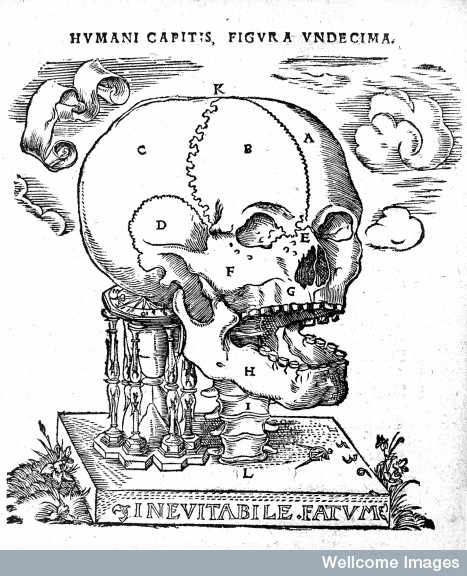
    I have been
    paying attention recently to anatomical figures studying other anatomical
    figures (a post soon to come).  But in
    the midst of this came this great woodcut reminding us all of our impending and
    ever-looming end of days, and found in Johann Dryander’s (1500–1560) fabulous pre-Vesalian
    anatomy (or pre-1543)
    Anatomiae, hoc est, corporis humani dissectionis pars prior…(published in Marburg by Eucharius Cervicornus in 1537).  One of the reasons for the book’s great importance
    was that it was about the first anatomy to focus and specialize on one part of
    the body, and it was also one of the first few where the anatomist worked on
    his own dissections. 

    You’d
    think that seeing anatomies and dissected bits of body would quickly remind the
    reader of the grave, but this was not quite enough for Dryander’s artist, who
    though to add the depleted hourglass to prop up the gap-mouthed skull—just in
    case you weren’t already paying attention to obvious symbolism. 

    Note:  image from the Wellcome Institute website which also has many other images from the book, including successive images of the dissection of the head. 

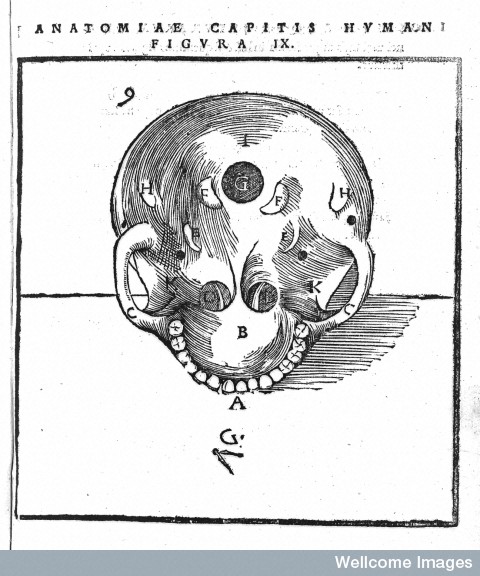
    Oh, here’s another, just an unusual perspective of the skull, seen from the bottom up.

    + dec 2 skull bottom

  • The Hidden Beauties of Barrels, Pig Bristles and Forgotten Escalators

    JF Ptak Science Books LLC   Post 776    Blog Bookstore

    I wonder what is was like to be a traveling salesman hauling
    around hundred-pound barrels of pig bristles?

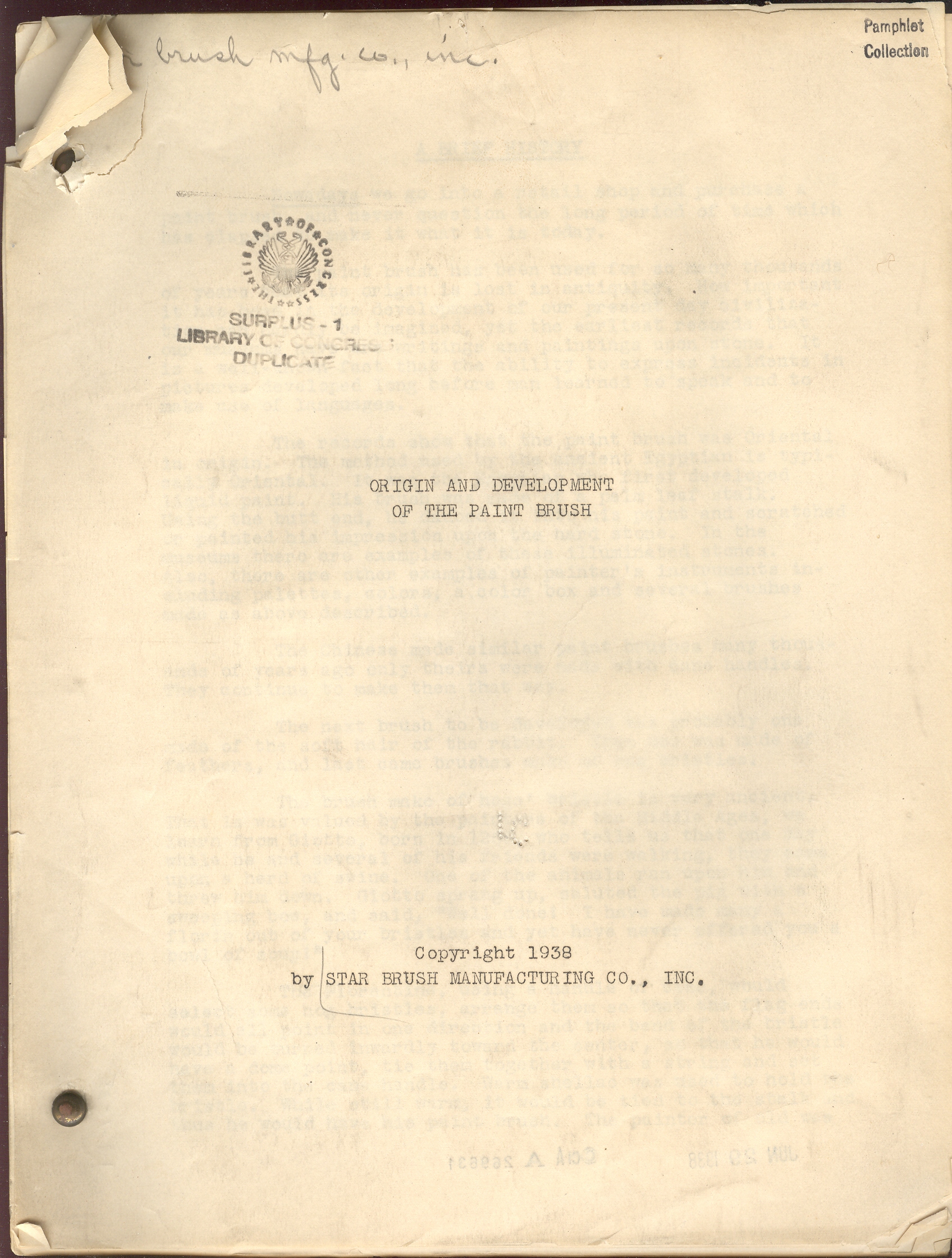
    + simplicity paintbrush

    We don’t really find out the answer to that question in Origin and Development of the Paint Brush (1938),
    but that remarkable, far from the maddening crowd question does present itself in
    the text.  And that is why I love
    pamphlets like these.

    Spending my professional life with the book, and being a
    reader, I’ve come into contact with and have been exposed to a good, solid, Big  Number of books, a Big Book of Big Numbers of
    books.  And so when the unusual creeps in
    or is stumbled upon, they shine like little novas in my book-sky.  And the ones that shine with their own
    special light are the titles come in three favorite flavors:  the Sublime Mundane, Outsider Logic, and
    Fantastic
    (and Impossible).  Today’s
    selection are from the first category, and exhibit titles and texts that look
    like non-luminous and uni-dimensional but turn out to be anything but mundane.

    + simplicity escalators

    Earlier in this blog I’ve written on pamphlets entitled Flagpole Painting, School Safety Pioneers, Fortunes to be Made with Frogs, Where are the Dead?, How to Repair a Zipper, Mud’s Romantic Story, Soap in Everyday Life, The Fine Art of Squeezing, Salt Salesman’s Manual, Know Your Groceries, The Book of Envelope Facts (and others),
    and they’ve all shown a terrific inner quality that is completely hidden by
    their so-sleepy and yet strangely-compelling titles.  Like the paint brush history pamphlet.  Here are a few other new examples:

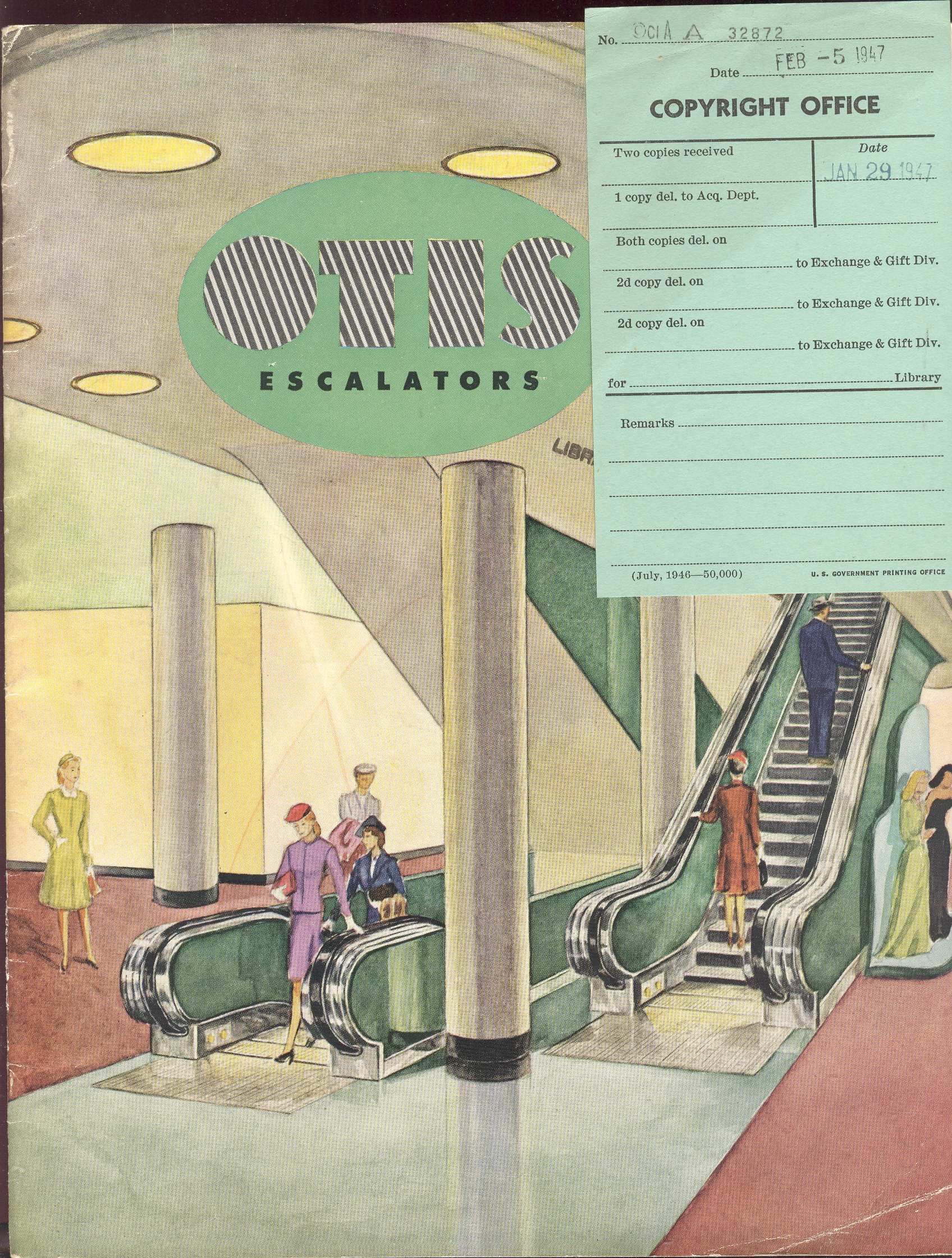
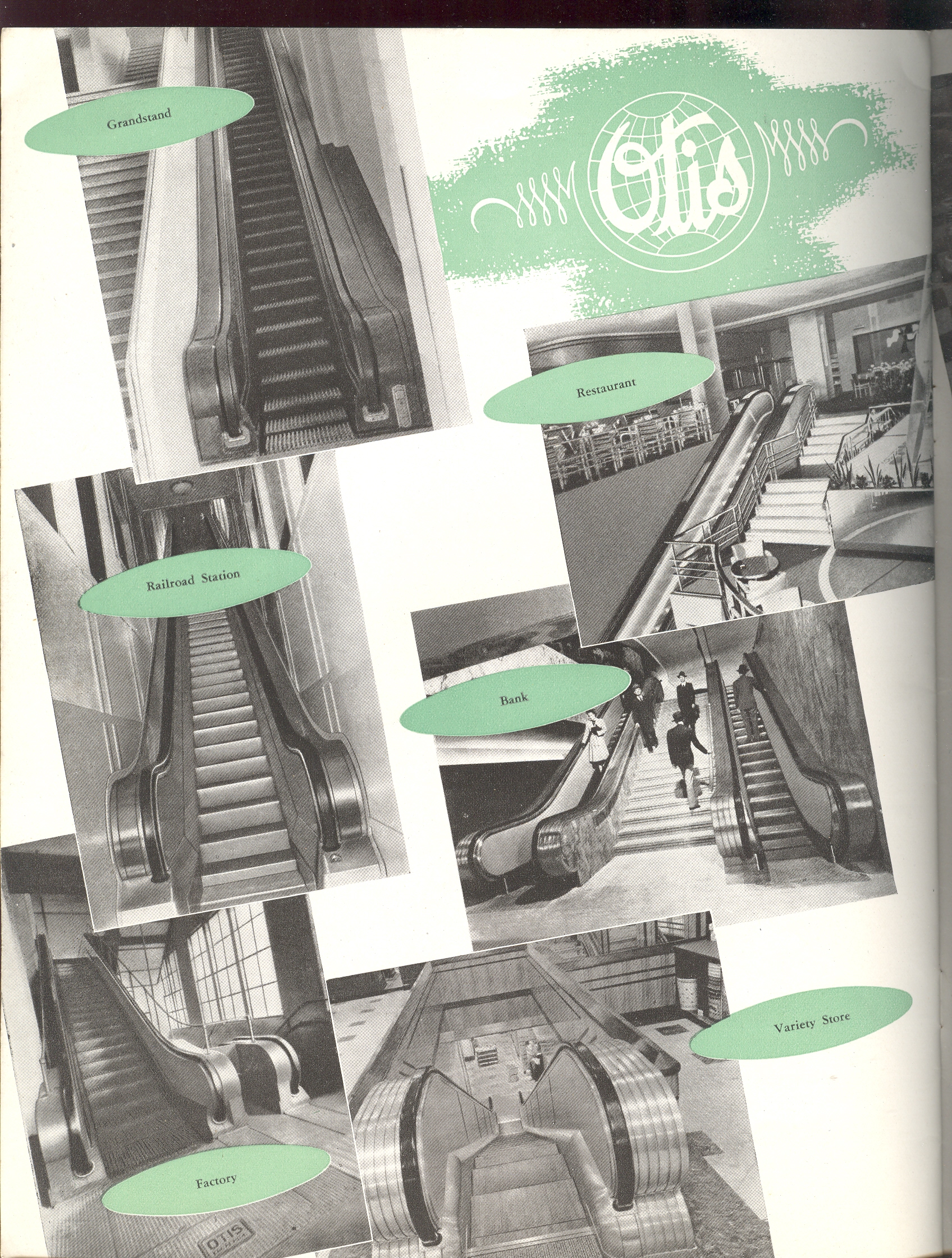
    The Otis Elevator
    pamphlet (1947) is efficiently designed beneath its semi-bizarre cover,
    floating in odd typeface, completely lifeless design, mannequin humans, and
    washed-out pastels.  The Chinese coloring
    book style of its covers hides a superior content, complete with schematics and
    beautifully supplied with photos of elevators long-since removed from sight and
    memory.  + simplicity escalators back 002


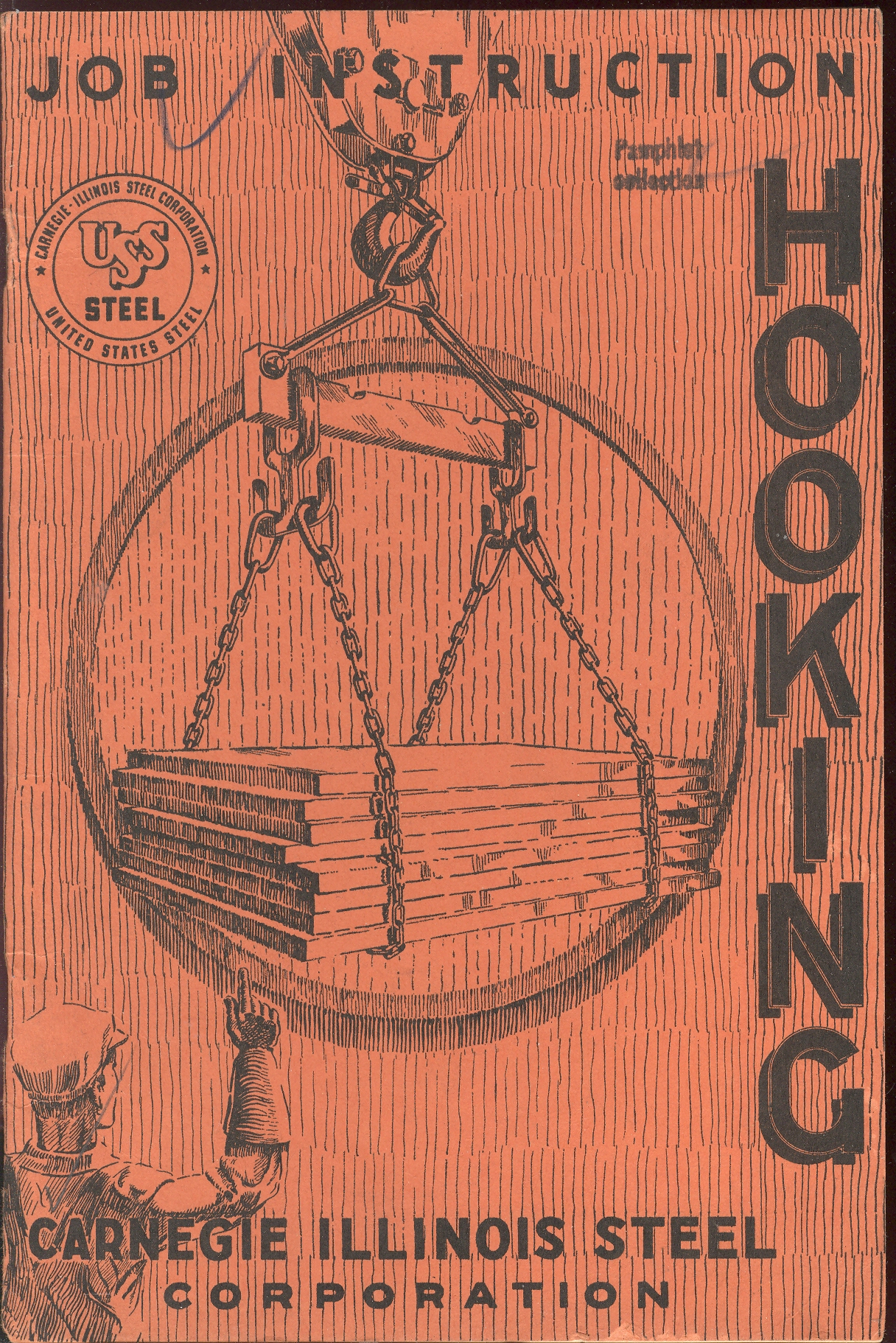
    The Hooking pamphlet is not about its obvious contemporary
    counterpart, but is a luminous, luxurious introduction and stylizer to the
    science of hooking large objects to cranes via giant hooks and chains, and especially
    about how to keep yourself from being 
    crushed by tons of steel not hooked properly. 

    + simplicity hooking

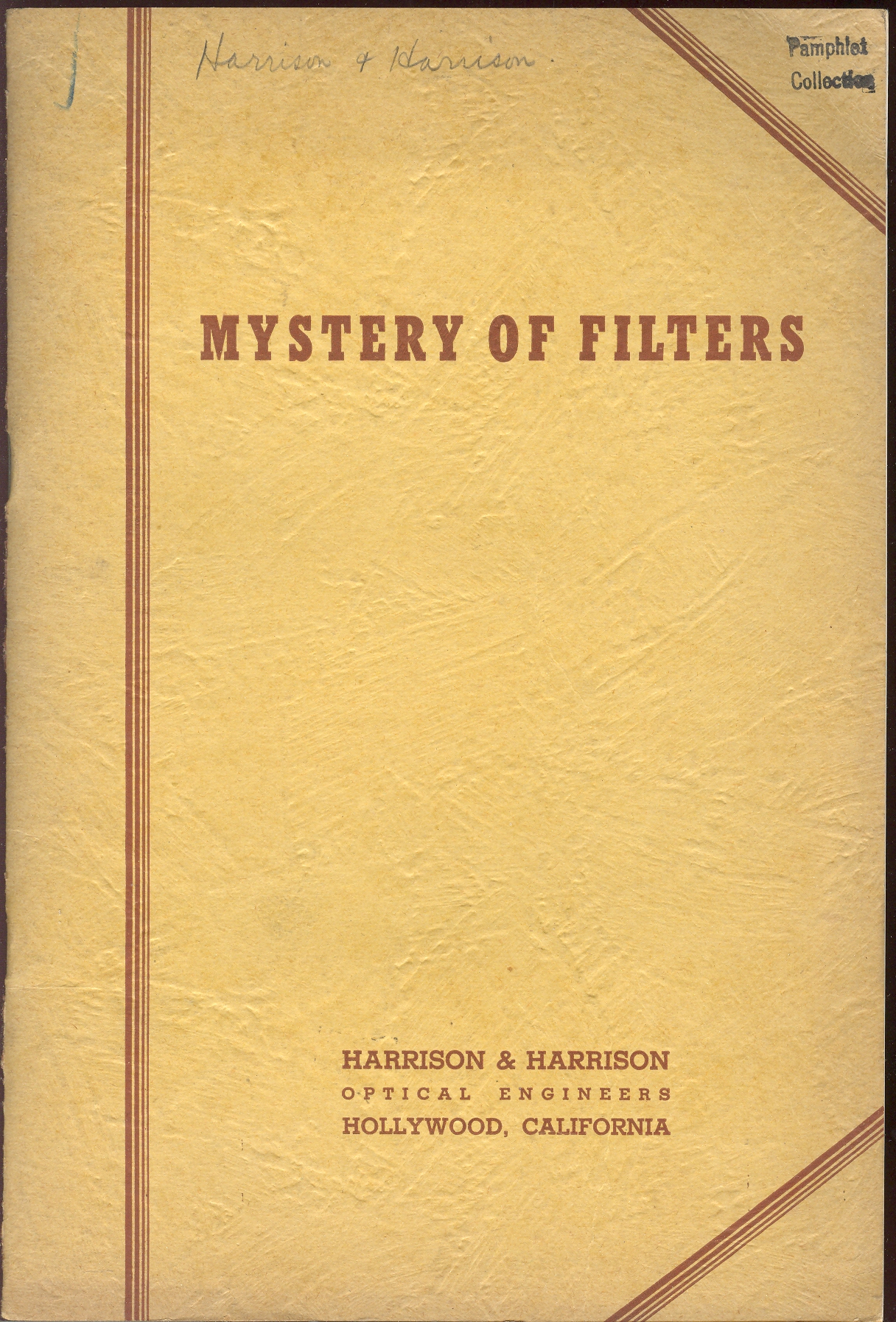
    The Mystery of Filters
    charm is wholly in its title and cover design, its text describing nothing
    but camera filters.  It is still a cool
    cover, nonetheless.

    + simplicity filters

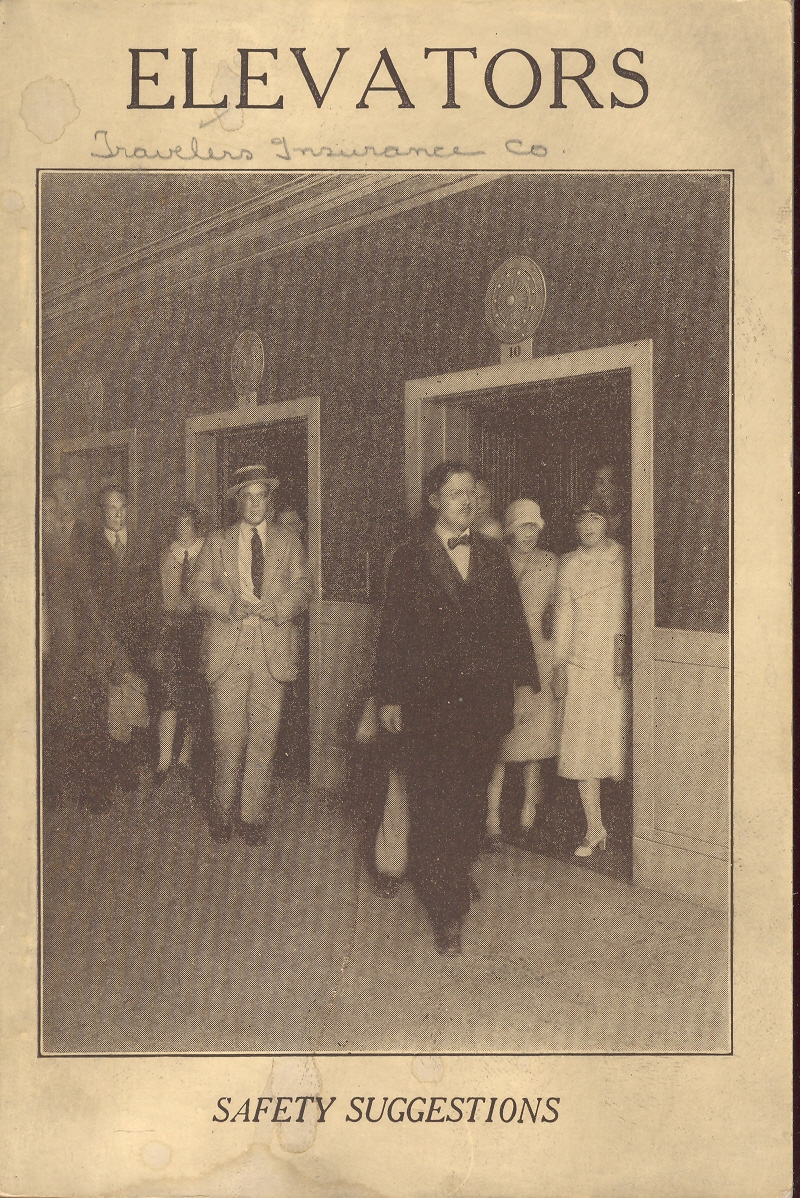
    Elevators,
    published by Travelers’ Insurance Company, tried to protect themselves a little
    further by ensuring safe practices of elevator operation, mostly in industrial
    settings.  This was published in 1926 and
    was already in its seventh printing from its inception in 1913 when the
    elevator was just in its second decade of popular, relatively widespread usage.
    The haven’t-given-this-cover-design-a-moment’s-thought hides a thorough (and
    bland) treatment of elevator safety; too bad, the cover photosnap-art promises
    something more.  Its not there, except
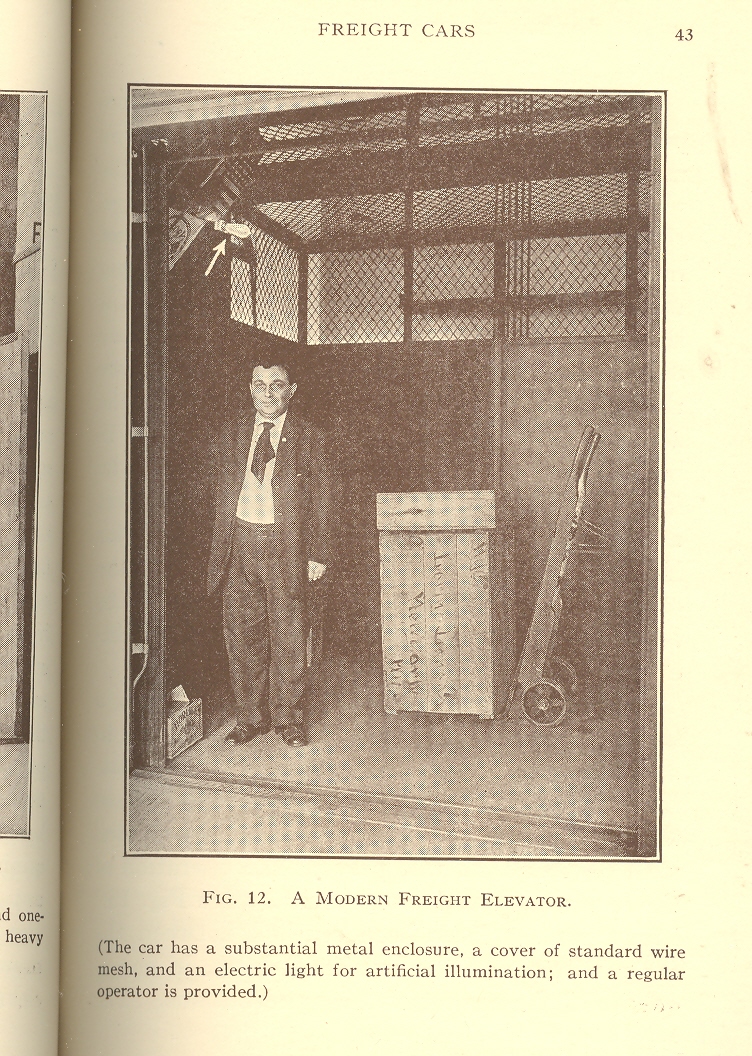
    for this beautiful photo of an industrial elevator op with a tie.

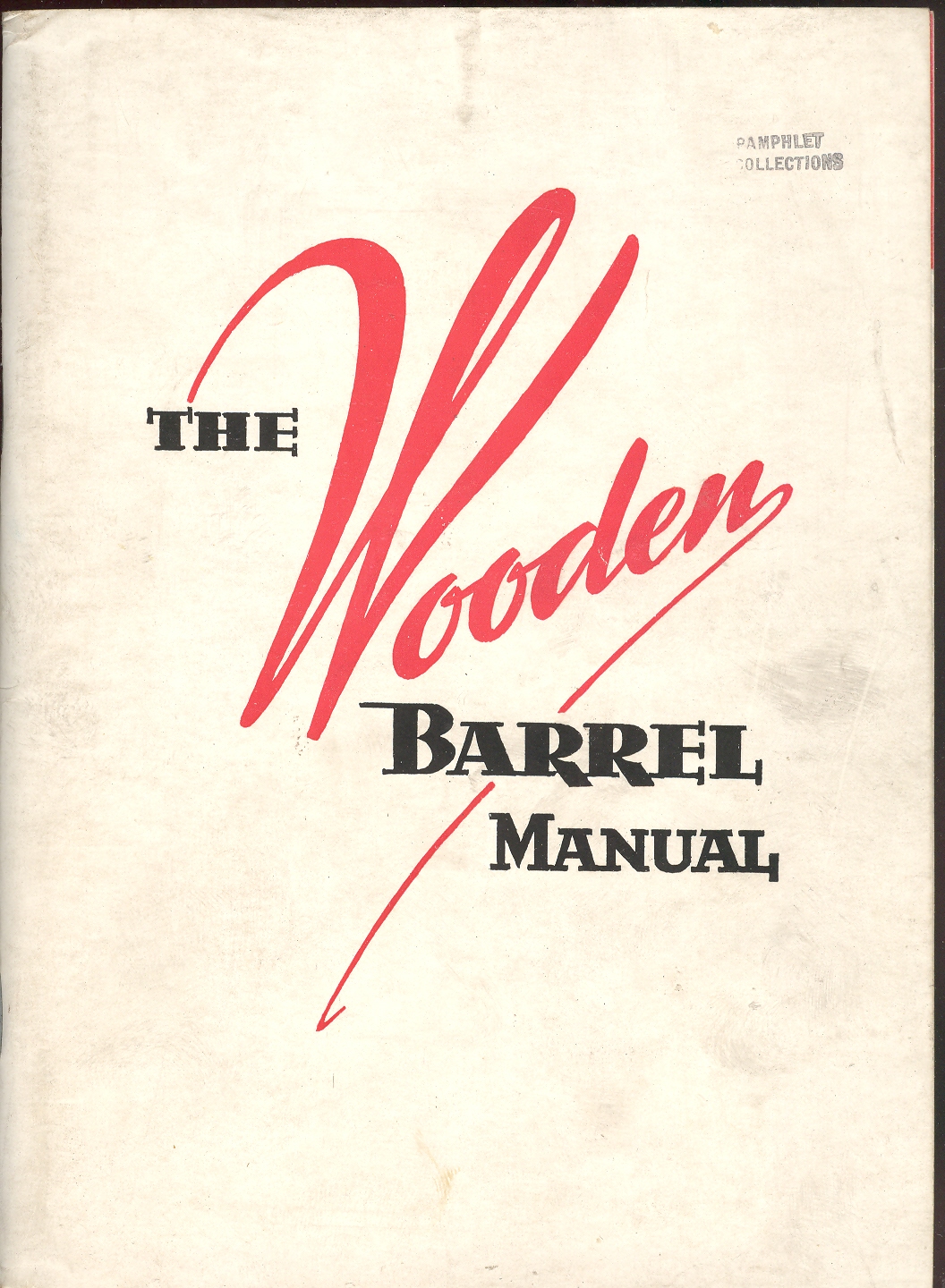
    + simplicity elevatorsAnd coming back to wood barrels that are not necessarily
    filled with pig (or wild boar) bristles but with something else less advanced
    comes this manual on making wood barrels. 
    Everything is there, everything you’d need to make a barrel (and a good
    one at that), and I admire this sort of fantastic dedication to what is
    essentially (to our modern mind) mundane—except that it is as dry
    as well-cured barrel wood.  But I admire
    it still,  as I do the Elevator pamphlet,
    because, well, they’re done right. + simplicity elevators interior tie

    + simplicity wooden barrels

  • Subjugation of Women 1938: “They DO as they are Told”

    JF Ptak Science Books   Post 777   Blog Bookstore

    The modern/antiquarian and very long history of the subjugation,
    control and disenfranchisement of women slips not so silently into the present
    here in the USA; elsewhere around the world this idea isn’t so “antiquarian” at
    all and this presence is heavier still. 
    The morality of the capacity that restricts access to education, and
    voting, and access to work, and equal rights in the control of a family, seems
    slow in catching up to modernity. 

    + chatterbox

    This concept
    of control struck home again while looking through a selection of CBS documents
    on the state of radio in 1938. They seemed benign though ruthless in what they
    were trying to accomplish: a simple objective and complex way of reaching it—the
    sale of advertising on the radio.  Looking
    for comparisons between radio and the rest of the information-control market, I
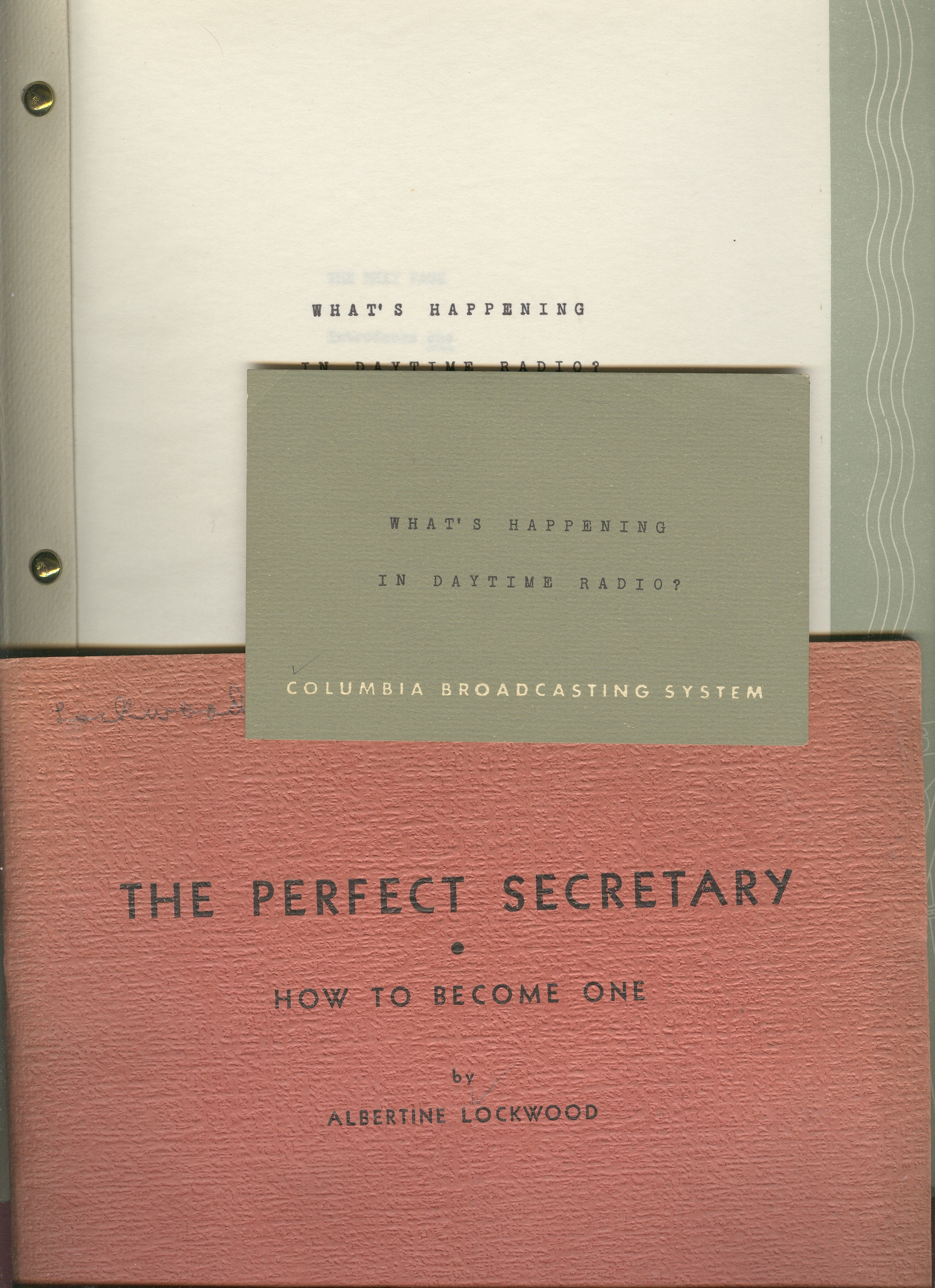
    came upon thin volume entitled What’s
    Happening in Daytime Radio?
    , which for the most part was taking an historic
    early stab at directing advertising at the women who were evidently
    relentlessly following the soft romantic exploits of some of the fifty or so “soaps”
    that were broadcast in 1938. (These very mild romantic adventures were called
    so because of the soaps and detergents that sponsored and advertised on these
    shows, directed of course at the target female audience.)  The opening section started “The Women (God
    Bless ‘em)”, wound its way through every manner of inferiority-inducing female
    imagery: “the women, god bless ‘em, are not always chatterboxes.  They do like to listen. And listen
    carefully.  They do what they’re told…by
    radio.”  It is still shocking though, in
    an odd way, not at all surprising, to see this sort of copy printed at the
    highest levels, and taking place within the lifetime of my still
    extraordinarily full-of-life mother.


    In this same pile was another bleak remembrancer of the
    still-alive past, The Perfect Secretary,
    a bleak messenger from 1938.  In addition
    to the de facto class and sexual
    regulation of the structure of the business world and the woman’s
    hardly-existent role in its formulation,  we are introduced to the concept the most
    basic mechanisms and elements of the control of a subjugated group.  The pamphlet attempted to conform the
    personality and character of the woman to her job as secretary.   The
    unannounced writer states that “it would be a mistake to overlook the
    importance of the personality of a secretary. 
    What makes personality? Manners and dress produce personality.”  He then moves on to specify the fat middle of
    the correct mode of dress, reminding the secretary or secretary-to-be that it
    was not only the “slovenly, unkempt” girl who lacked personality, but also the
    overdressed girl was well “who adopted the undignified style of costume”.  But correct dress and coifed hair wasn’t
    enough: “with poise there is no personality”. (“An attractively dressed girl
    without poise is unfortunate.”)  “Conspicuously
    colored nail polish is not becoming to a secretary in the better offices.”  “Flippant and unreliable manners bury the
    finest personalities.” And lastly, “it is one of the first duties of a
    secretary in an office to be ever conscious of avoiding body odors”.  There are another 34 pages of correctnesses
    that follow, to painful to specify. 
    These attempts at control at the most basic level of a person’s identity
    were “normal” for their time, and a remarkable testament to advances (thus far)
    in equalizing the world of men and women.


    “When we consider the positive evil caused to the
    disqualified half of the human race by their disqualification — first in the
    loss of the most inspiriting and elevating kind of personal enjoyment, and next
    in the weariness, disappointment, and profound dissatisfaction with life, which
    are so often the substitute for it; one feels that among all the lessons which
    men require for carrying on the struggle against the inevitable imperfections
    of their lot on earth, there is no lesson which they more need, than not to add
    to the evils which nature inflicts, by their jealous and prejudiced
    restrictions on one another. Their vain fears only substitute other and worse
    evils for those which they are idly apprehensive of: while every restraint on
    the freedom of conduct of any of their human fellow-creatures (otherwise than
    by making them responsible for any evil actually caused by it), dries up pro
    tanto the principal fountain of human happiness, and leaves the species less
    rich, to an inappreciable degree, in all that makes life valuable to the
    individual human being.”
      John Stuart
    Mill, The Subjugation of Women, 1869

    ·Posted by :

    ·in:

  • The Library of One Book

    JF Ptak Science Books  Post 778  Blog Bookstore

    + card factory det

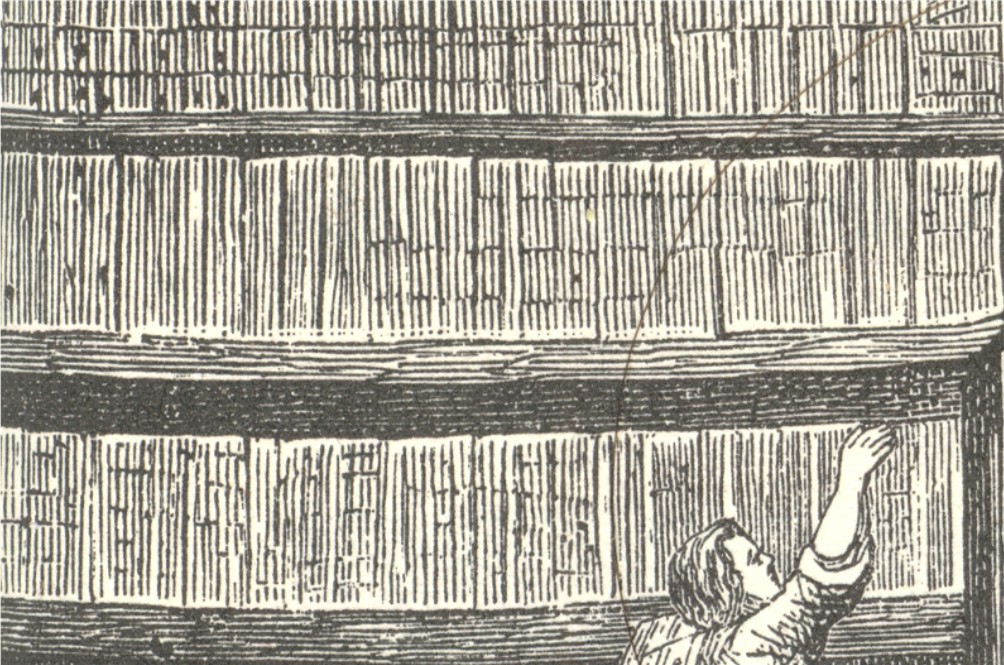
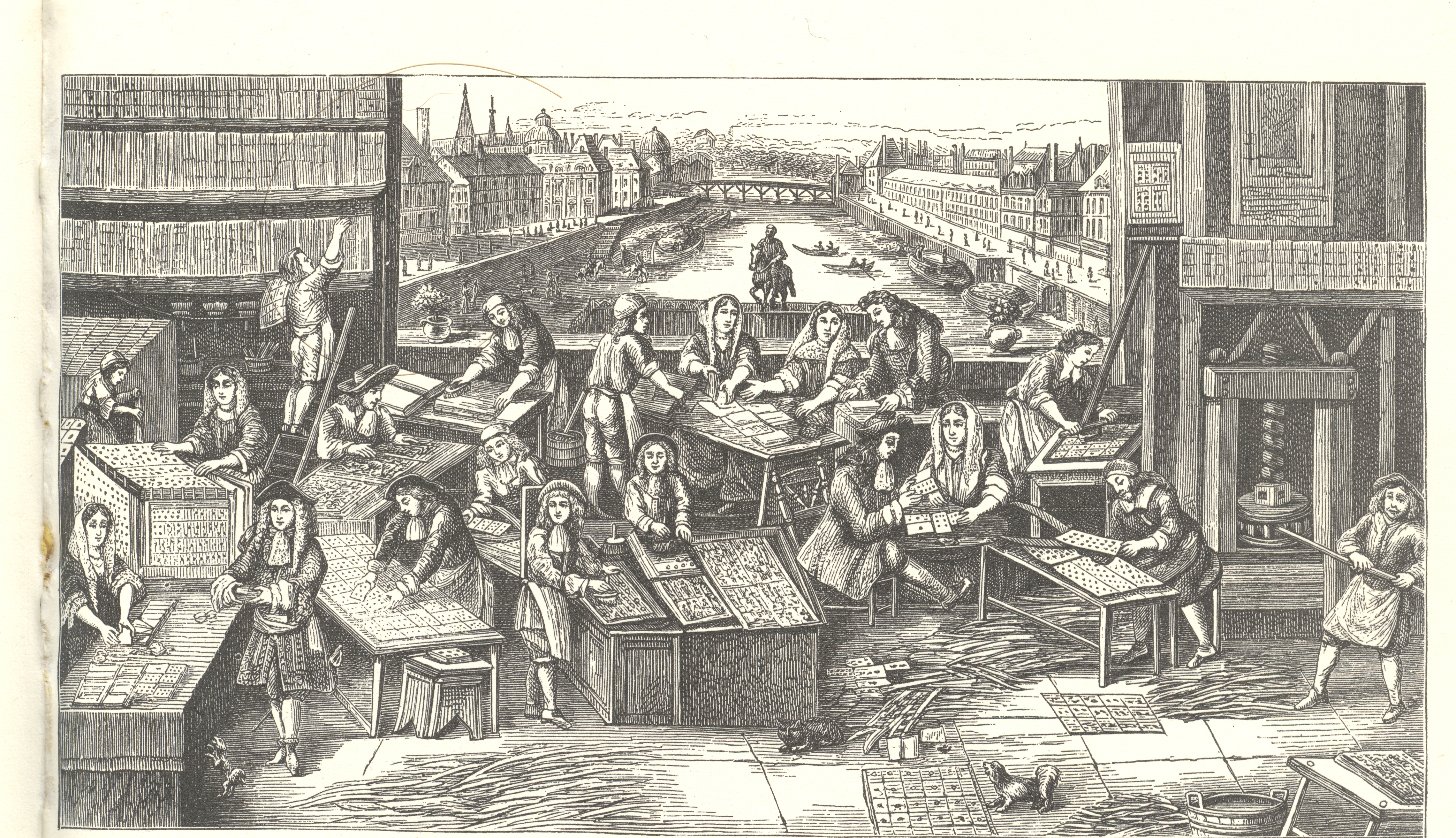
    Is this an image of a  librarian carefully reaching for a carefully
    placed book, carefully arranged in a carefully-odd Borgesian-style library
    housing only books of the same height and thickness?  Or is this a librarian in a Library of the
    Same Book, housing thousands of copies of copies of the same book, climbing the
    ladder to make sure that he had a copy of just the copy that was requested (“a
    copy held at least 5 feet from the ground, near a side window though not
    touching a vertical piece of wood”)? 

    + card factory

    Neither.  These are
    shelves filled with nothing but uncut sheets of playing cards, housed for the
    playing card factory somewhere in Paris (?) “during the reign of Louis XIV”.  Playing cards, which were introduced to
    Europe via Marco Polo from China
    or traders coming from the Middle East or etc., are much older in Europe than one would think, I think, and by the time
    this print was made, playing cards were already quite popular there for two
    centuries. 


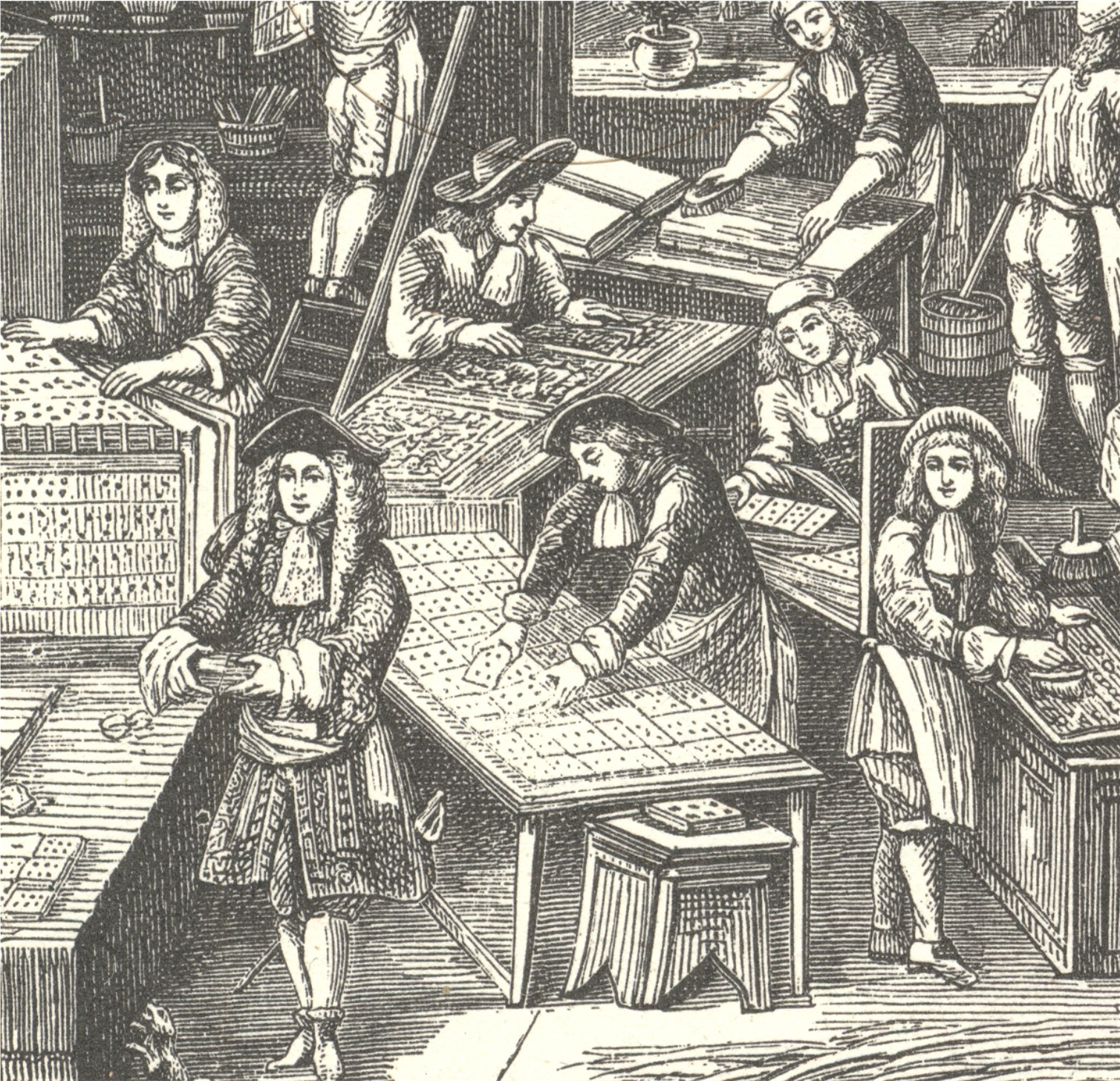
    I can’t identify all of the activities of all of the twelve
    tables of card preparation here, though some seem pretty obvious:  the trimmer working near the pressman, the
    sorters and assemblers of decks of cards at the lower left corner, the paper
    preparer (?) just to the right of the man on the ladder, the pair of men
    preparing the type trays at middle-bottom, and that’s about it.  I’m not sure what everyone else was
    doing.  I’m not even so sure what’s going
    on with the sheets of cards on the bookshelves, the target of this post—it can’t
    be for drying purposes, as the sheets are too close together…perhaps it is just
    for storage of different sheets of cards for different decks.  

    In any event I’m right or I’m wrong on this guess, about the same odds as being dealt “nothing” in a game of five-card poker (almost 1:1 odds), but that’s fine:  I just like the composition of the print.

    + card factory det 2


    ·Posted by :

    ·in:

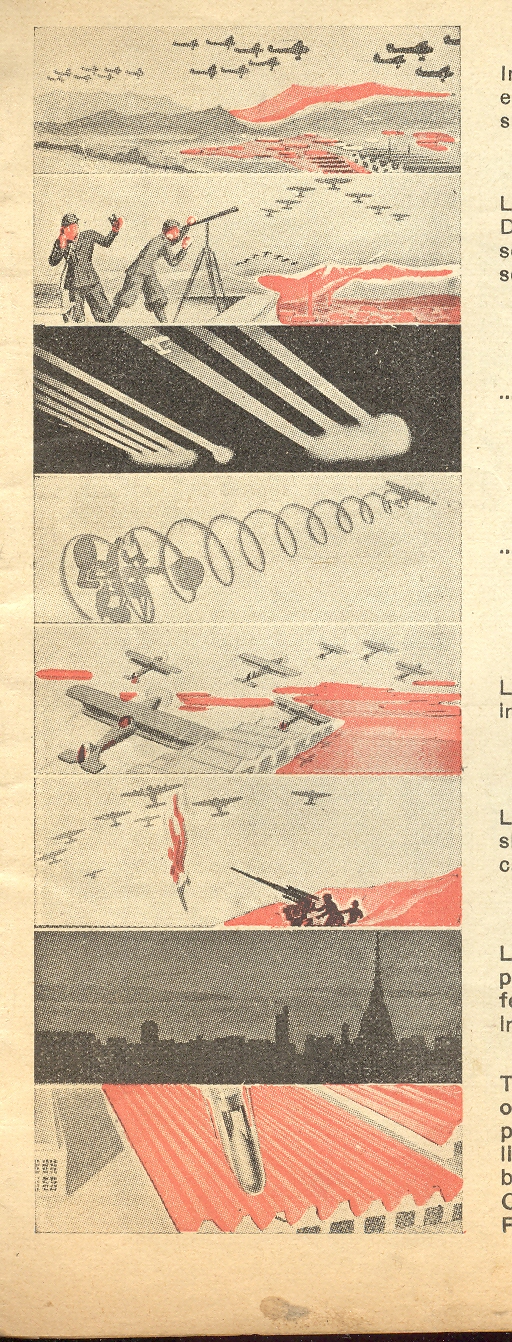
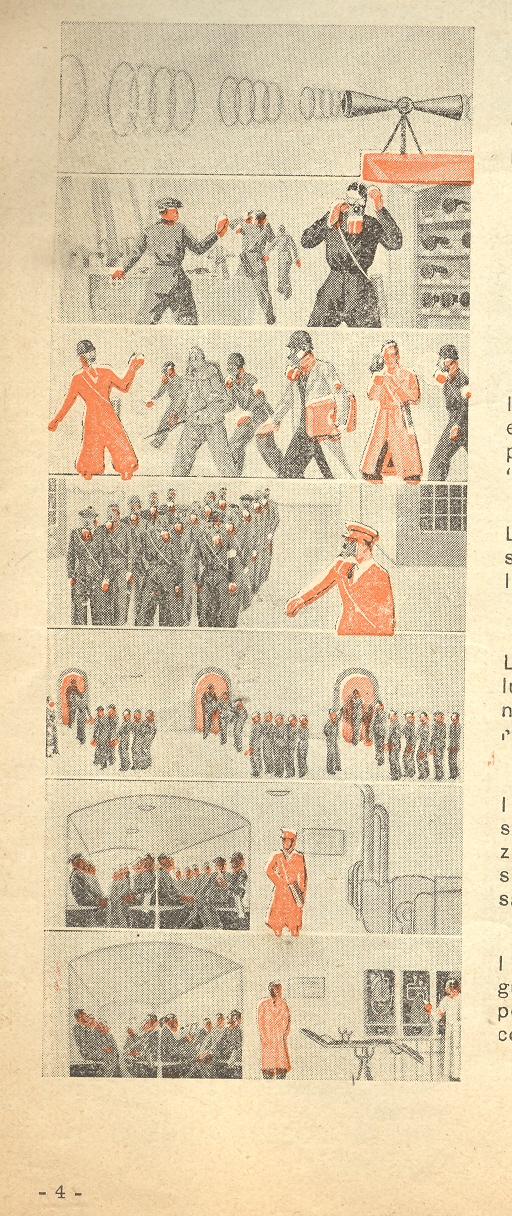
  • Virtual Filmstrip of Italian Defenses Against Bombing and Gas, 1944

    JF Ptak Science Books LLC  Post 779  Blog Bookstore

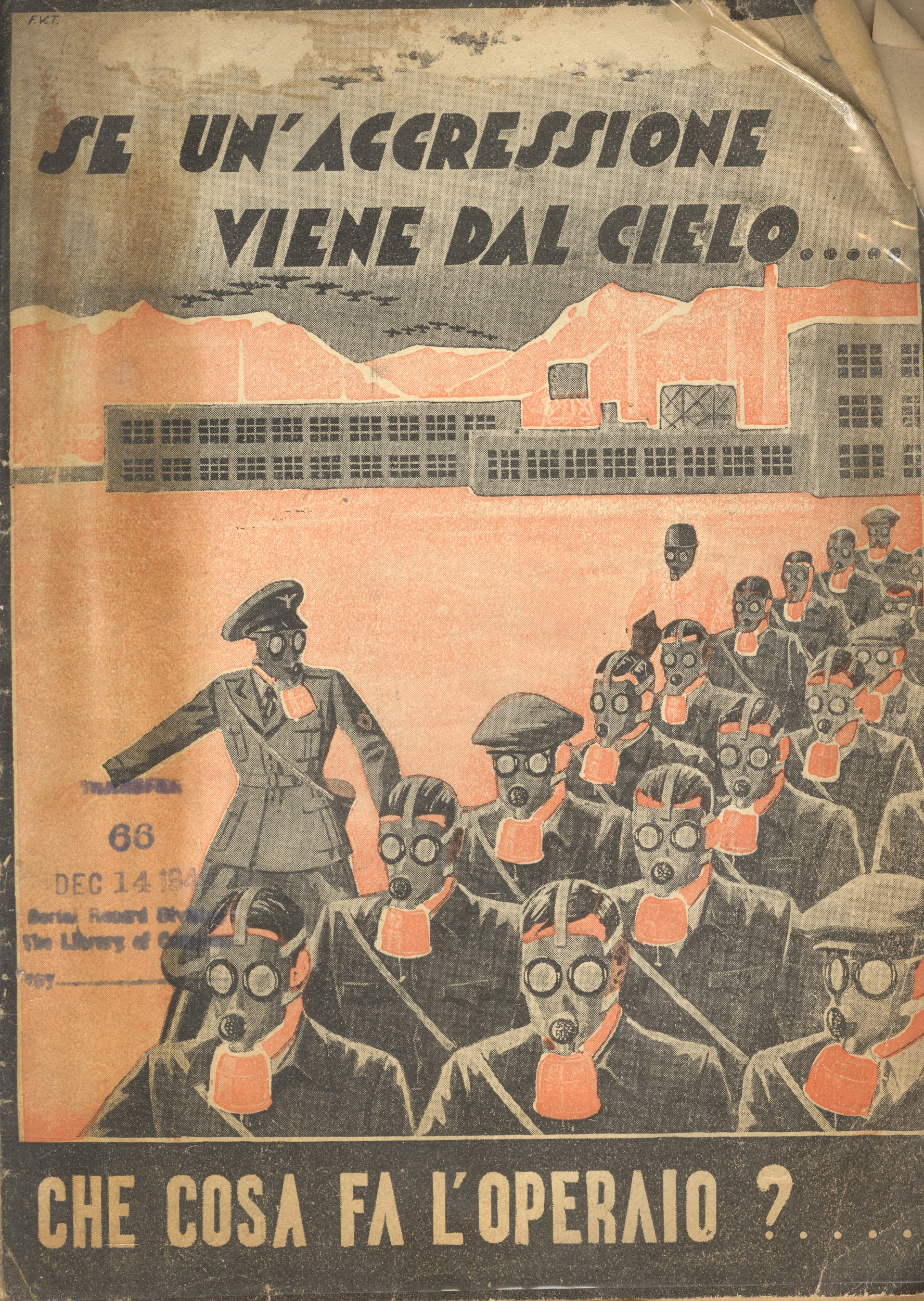
    In my collection of WWII propaganda and civil defense pamphlets I found this extraordinary Italian publication, Se un’Accressione viene dal Cielo…che Cosa fa l’Operaio (1944, which translates loosely as “When the Aggression/Bombing Comes from the Sky, What Happens to the Workers?”).  As we can see from the cover illustration, the (Italian) workers are being guided/marched from their factory by their Nazi overseer, dressed for a gas attack, just as the attacking planes were coming overhead.  Inside we find a briefly-worded, explicit guide for the factory worker, and target of Allied attack, about what to do when the bombs started to fall.
    + italian bombing cvr

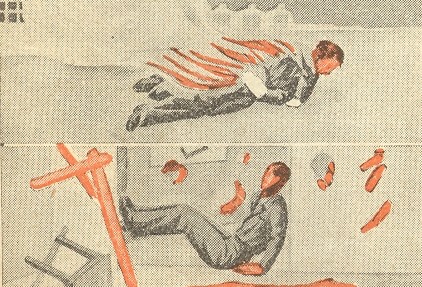
    The 104 illustrations, taken one after the other, form a sort of filmstrip, and could well function as a guide for those who couldn’t read.  I also find them unsettling for their composition, color , size (very small, each section being about 1/2 inch x 1 1/4 inches), proportion…just about everything about them sits badly with me.  

    Here’s an example, taken from the middle or so of the presentation:

    + italian bombing 6 detail 

    Here’s the full selection of the images (all of which are clickable for a fuller view):

    + italian bombing 1 + italian bombing 2 

    The rest of the presentation follows in “extended reading”:

    ·Posted by :

    ·in:

  • The Worst Job of the 19th Century? Tongue-Pullers, Nipple-Pinchers & Anal Tobacco Blowers Try to Revive the Dead.

    JF Ptak Science Books LLC  Post 781   Blog Bookstore
     

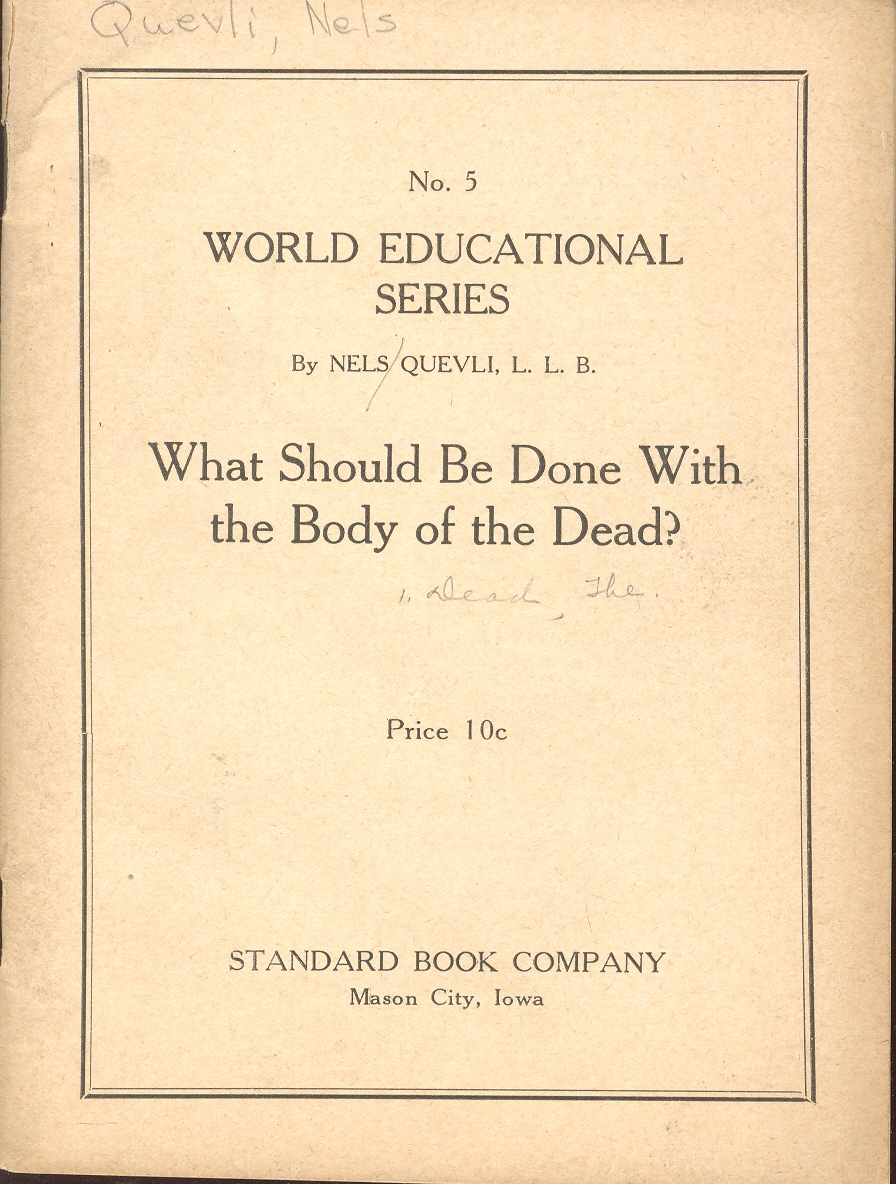
    + buried alive Nels Quevli, the Mason City, Iowa author of  the oddly-titled What Should be Done with the Bodies of the Dead (1936), does indeed have a point that rises above his oddly-titled, laugh-imminent pamphlet..  It is a little laborious getting there, and the 71-year old ex-pharmacist and “science writer” with “fifty years” of studying death really could’ve used a little editing in his 47-page exegesis, but a five-minute scan gets you past the grueling set-up to what the man is really worried about:  being buried alive. 

    This is a great and grand old issue in the history of medicine, and it turns out that what Mr. Quevli was asking for was old-fashion simple: this was to put the newly “dead” into a Dead House1 for three days or more at 85 degrees to wait and see if the body began to putrefy, purification being (in 1936) still about the only infallible indicator that death had occurred (scaling beyond the family of  mortises (morti ?) including pallor, livor, algor and finally rigor).  The body was still being tended to some degree while in the death house, though nothing is said of water; and after three days or so without hydration a person is going to be in very rough shape anyway particularly if they were traumatized to begin with.  But this solution for Quevli was much better than the alternative of being sent to autopsy while alive or being buried while still shallowly breathing. 

    The determination of the occurrence of death was a major medical feature of the 19th century, the French in particular waging a fight for how this to be so.  Briefly put, for centuries even before Pliny death was described as the absence of an audible heart—the crux of the sentence being the word “audible”, so that the end of life was dependent upon being a physician’s/person’s capacity to hear the heart beating.  This might be very problematic if the person listening for that heartbeat had faulty hearing from defect or age, as the listener would place his/her ear on the chest of the patient to determine if the heart was functioning or not.  The stethoscope wasn’t invented until 1816 by Rene Laennec–who produced a monaural device much like a primitive hearing horn made of solid wood—which was a vast improvement over no stethoscope at all, by again was very crude compared to early 20th century devices.  It was much more preferred by most doctors (though there were contingents who distrusted the instrument and wouldn’t use it and still others who thought it an insult to their person insinuating defective hearing capacity) compared to the ancient hairy-ear-on-chest method.  It was also, in a small way, a kind of auditory x-ray. 

    It was also more elegant than other methods, the following examples referenced from Jan Bondeson’s delightful Buried Alive, the Terrifying History of Our Most Primal Fear (Norton, 2001):

    –Christian Friedrich Nasse’s Thanatometer was a long thermometer  that was inserted into the stomach, supposedly measuring a core body temperature that would determine if life was possible (and published in 1841);

    –The (Englishman’s) Barnett scalding death cure, which recommended burning the skin of the arm to see if it blistered (no blister/no life);

    –the German Middeldorph invented a heart flag, a needle device that would be thrust into the heart, which if functioning would trigger something or other that would cause a flag to be released at the top of the needle (a very Victorian and visual one, this);

    –Christian August Struwe’s interesting Lebenspruefer (1805) was an electrical device that delivered a dual shock to the eye and lip, the logic here being that if the person was still alive that there would be a resulting twitch;

    –the nameless tobacco enema, which blew smoke…(delivered in the beginning by breath through a tube and improved later to replacing the lips with a bellows, this secondary improvement by Antoine Louis2 and furthered by Dr. P.J.B. Previnaire’s much more powerful anal tobacco furnace.  [Now there’s three words I’ve never strung together before].)

    –Leon Collongues believed that he could hear the capillary functions of a possibly-dead person’s fingers if placed in his ear;

    –Jules Antoine Josat3 invented a nipple-pincher (“pince-mamelon”) life-rejuvenation device, operating on the assumption that a deeply sedated person could not resist a strong pinch of the nipple and would have to wake up if alive.

    Perhaps the most spectacularly extension of the nipple-pincher was the tongue-pulling idea of Dr. J.-V. Laborde4 (1830-1903), a research physician with wide credentials, who reasoned that a continued regimen of advanced and strenuous pulling of a patient’s tongue would over time bring them back to life if alive.  This is what leads us to the point of this post:  Laborde established a mortuary, and in this mortuary, where the dead were waiting to die, he employed a man whose job it was to pull the tongues of these bodies.  In the misty picture of all of this that is painted in my mind’s eye, the fellow working his way from body to body pulling their tongues with a heavy pincer seems far worse than nipple squeezing or even being an anal smoke blower, though to choose between the three in a twisted Purgatorial mandate would be hard to so.  Although the nipple pincher wasn’t replaced by anything mechanical, the smoke blower was (by a powerful bellows), and so was our friend the tongue puller, who after complaining of the boredom of his task was pushed aside by an electrical device.  I am loathe to report that I cannot find a picture of the machine. 

    Notes:


    1.  This was not an uncommon practice.  for example Munich and Frankfurt had their Leichenhaus in which the dead were allowed to putrefy, as did Vienna its Zentralfriedhof.

    2. Antoine Louis.  From the Bondeson book, page 156: “Antoine Louis had also proposed another method of testing life, or at least stimulating the vital spark in the apparently dead person: with a powerful bellows, he administered an enema of tobacco smoke. One of the pipes of this remarkable apparatus was thrust into the anus of the apparently dead person; the other was connected, by way of a powerful bellows, to a large furnace full of tobacco (reference 5). Such enemas of tobacco smoke were thought to be very beneficial and were used to try to revive not only people presumed dead but also drowned or unconscious individuals. In 1784, the Belgian physician P.J.B. Previnaire was given a prize by the Academy of Sciences in Brussels for a book on apparent death, which described and depicted an improved bellows for enemas of tobacco smoke, which he called Der Doppelblaser (reference 6). These enemas were regularly used well into the nineteenth century, particularly in Holland; modern science has discerned no physiological rationale for their use, except the pain and indignity of having a blunt instrument violently thrust up one’s rear passage must have had some restorative effect (reference 7).”


    3. Josat.  From Weird Universe.net I found the following, quoting Death and Sudden Death, by Paul Brouardel and F.L. Benham:

    “Josat invented a pair of forceps with claws, with which he proposed to pinch the nipples of persons whose death has to be ascertained. Josat obtained the first prize of the Academy, but Briquet, repeating the same tests on the hysterical subjects under his care, proved that they did not react under Josat’s forceps any more than the dead.”

    4. M. Laborde won a 2500 franc prize for his innovation in 1894 (as reported by the Revue scientifique.  He sounded like an interesting man:  according to the British Medical Journal (in reporting his death 25 April1903) upon his own death in that year Laborde: “as a freethinker had a civil ceremony; as an hygienist was cremated; as a member of the Societe Mutuelle d’Autopsie willed his body to be dissected; as an anthropologist willed his brain to be preserved at the Anthropological Museum…”

    Some of Laborde’s works include    Le traitement physiologique de la Mort. And Les tractions rythmées de la langue, moyen rationnel … de ranimer la fonction respiratoire et la vie … Avec … dessins, etc   And:  La traitement physiologique de la mort (Paris , 1894) And: La signe automatique de la mort reelle (Paris, 1900). And  “Les Tractions Rhythmees de la Langue”, VIII, pp. 76 ff, ed. 2, Paris, 1897, and VIII, 2d part, pp. 406-510. And commented upon in some number, for example:  Le Traitement physiologique de la mort par les tractions rythmées de la langue. Le tracteur lingual automatique Laborde, by Alix Hache.
     

    ·Posted by :

    ·in:

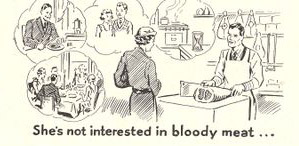
  • Selling to “Simple” Women, 1939: “She’s Not Interested in Bloody Meat”

    Post 882 (revised; part of the History of Women Series; also see Women Meat Pioneers.)

    Women--bloody meat
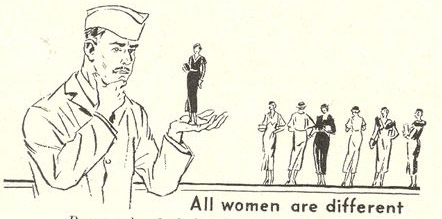
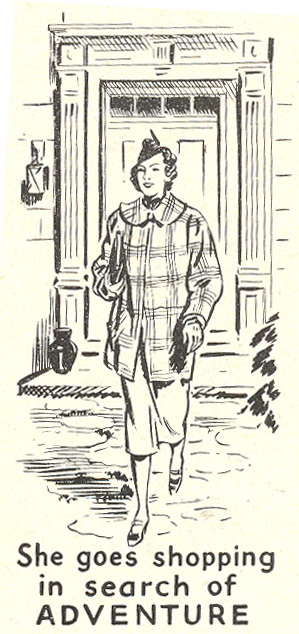
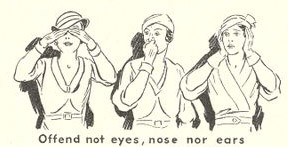
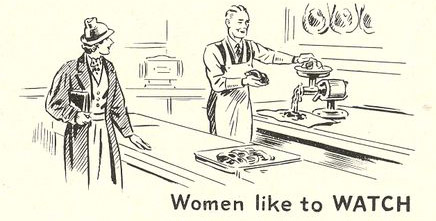
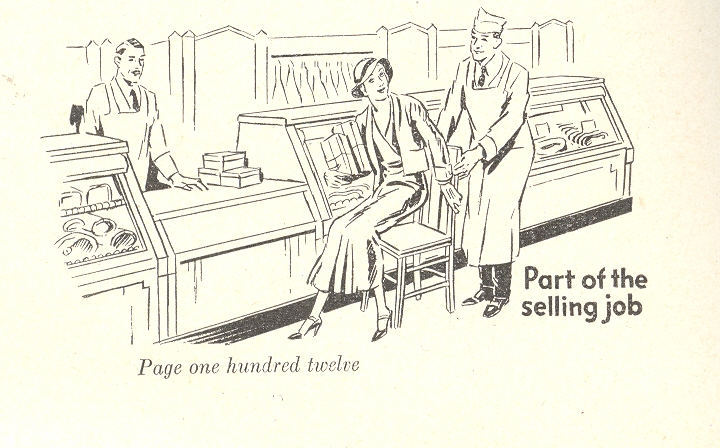
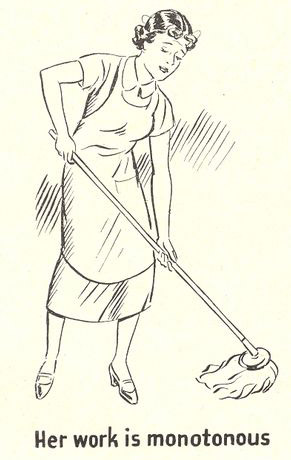
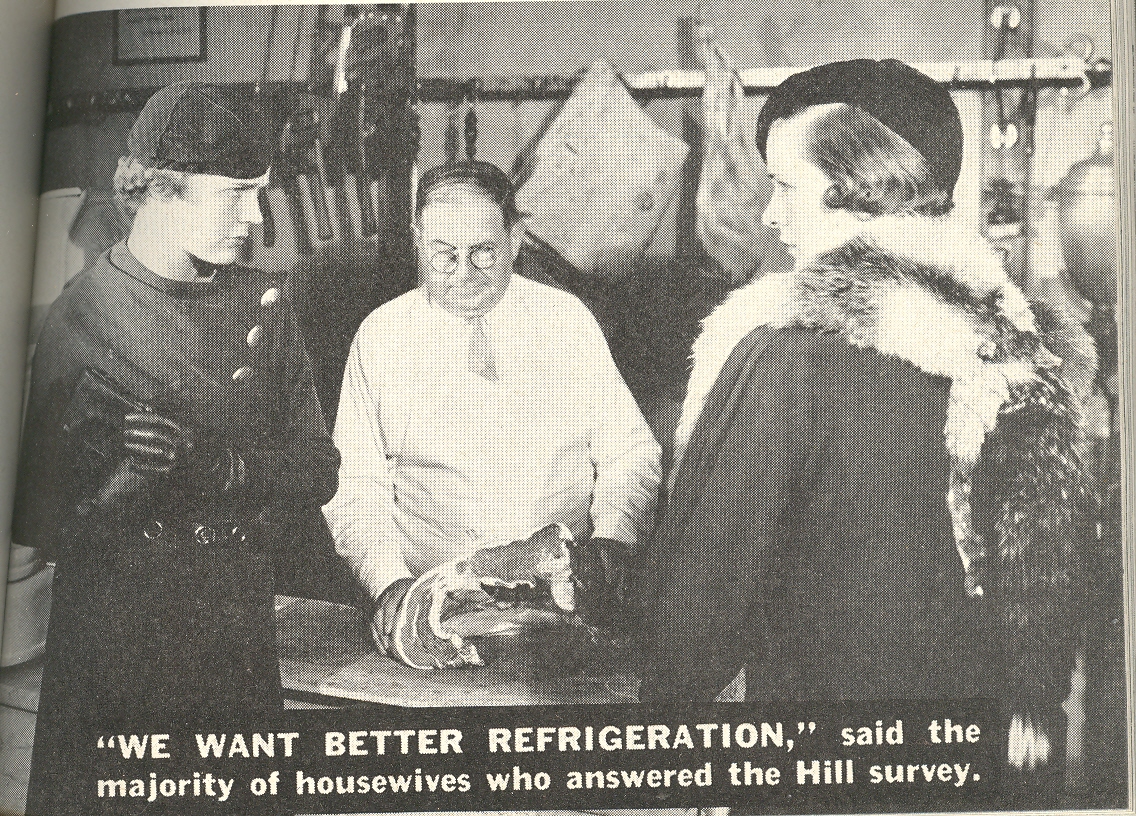
    These sales-happy customer relations images from a  modern food merchandising catalog (Modern Merchandising, 1939) come at an interesting time in the history of eating—or lesser yet, the history of buying food.   The pamphlet addresses the growing idea of the super market, a notion still new in the minds of consumers —it seemed as large to the consumer familiar with the 1920’s concept of a market as it seems tiny to the megamarket people of the present.The illustrations–all quite small, margin-inhabiting affairs, space killers, no bigger than 1×2 inches–are there to help the grocer deal with women customers and better understand “them”. 
     

    Women--all different 

    Women--shopping


    I’ll address the interesting merchandising changes here in another post—right now I’d like to focus on the marginal drawings in the bottom corners of the text.  They may be small and offhanded–generally they are less than two square inches–but the messages they delivered, marginalia or not, were very strong.  Over and over again these bits demand the sub-class of women, emphasizing their trivial, ephemeral interests—bits of Nothing reinforcing large bits of Something.  

    Women--offend not eyes

    The messages beneath the images, collectively: “women judge meat by appearance:; “there a little bit of the monkey in all of us…we like to see and handle”; “offend not eyes , nose nor ears”; “part of the selling job”; “women like to WATCH”; “her work is monotonous”; “she goes shopping in search of adventure”; “she’s not interested in bloody meat”. They present cascading reactions: they’re somewhat funny to my eyes, and then uncomfortable, and outrageous, and then simply sad that their solemn pronouncements on the status of women would be so acceptable, their as-yet unidentified sexism and bitter “racism”a non-sequitur.

    Women--like to watch
    .

    + women monkey 


    + women sitting down 


    Women--her work


    + women want more refrig

  • The Story of the Story of ________: Fertilizer, Sponges and Etc.

    JF Ptak Science Books LLC   Post 785   Blog Bookstore

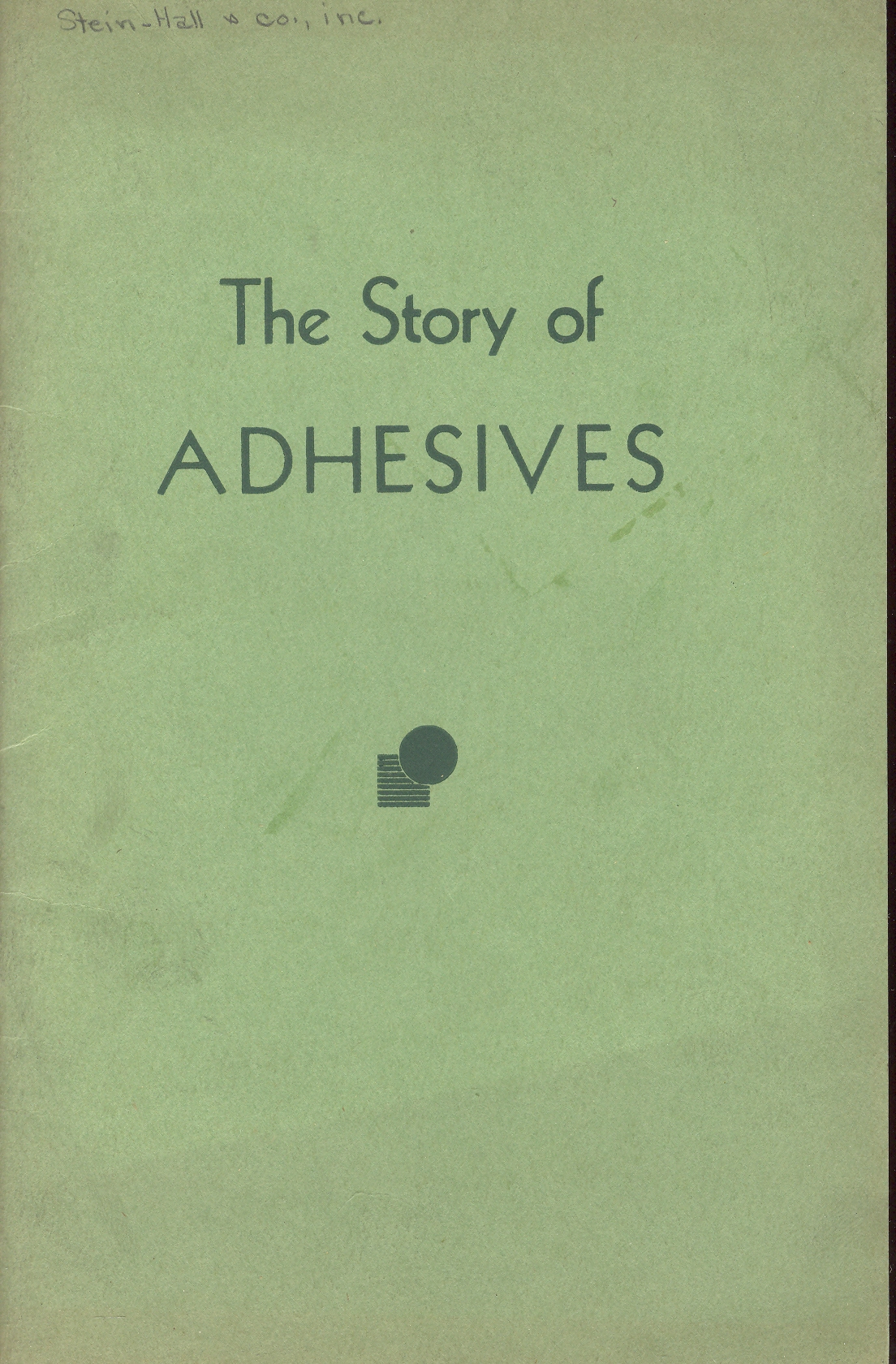
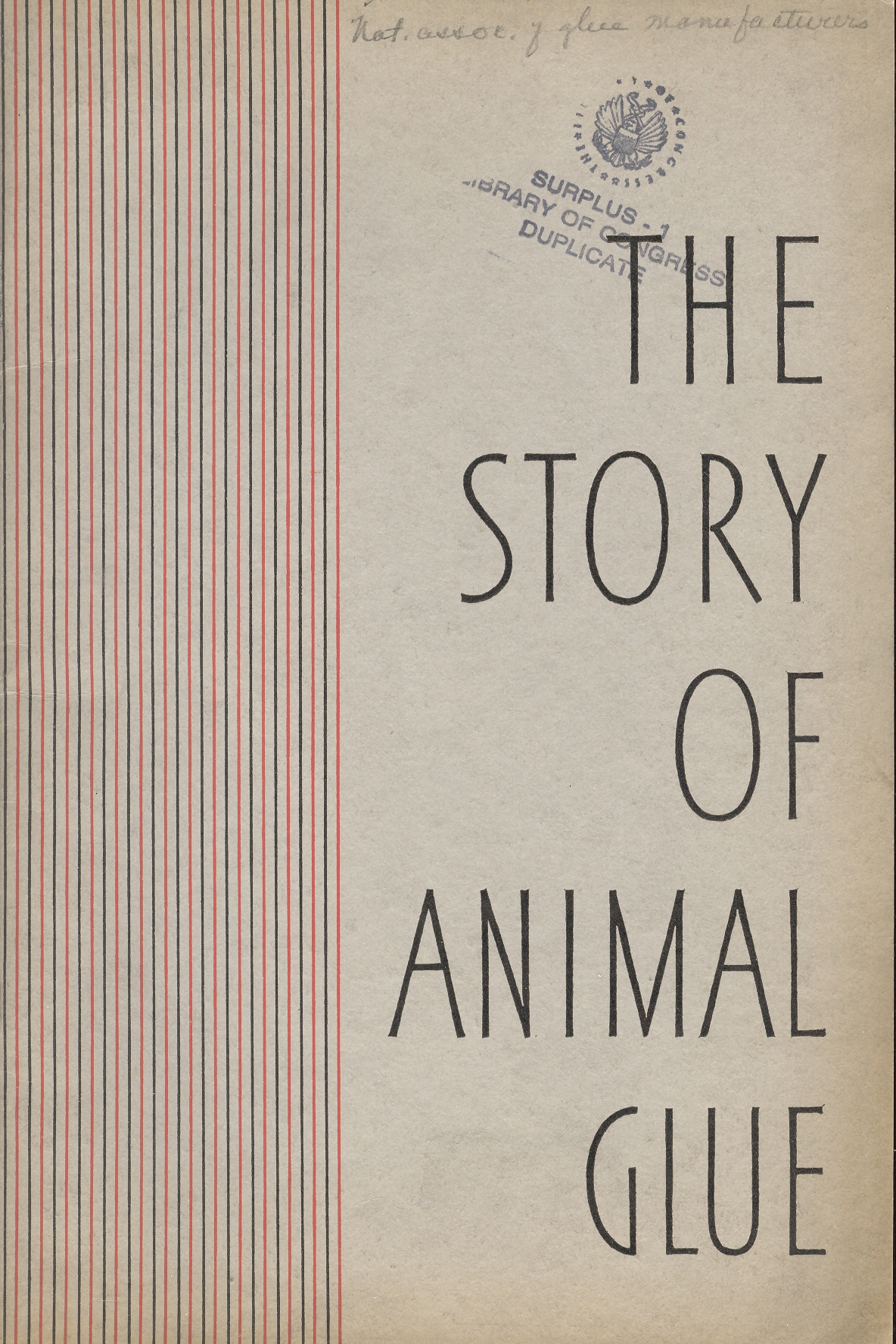
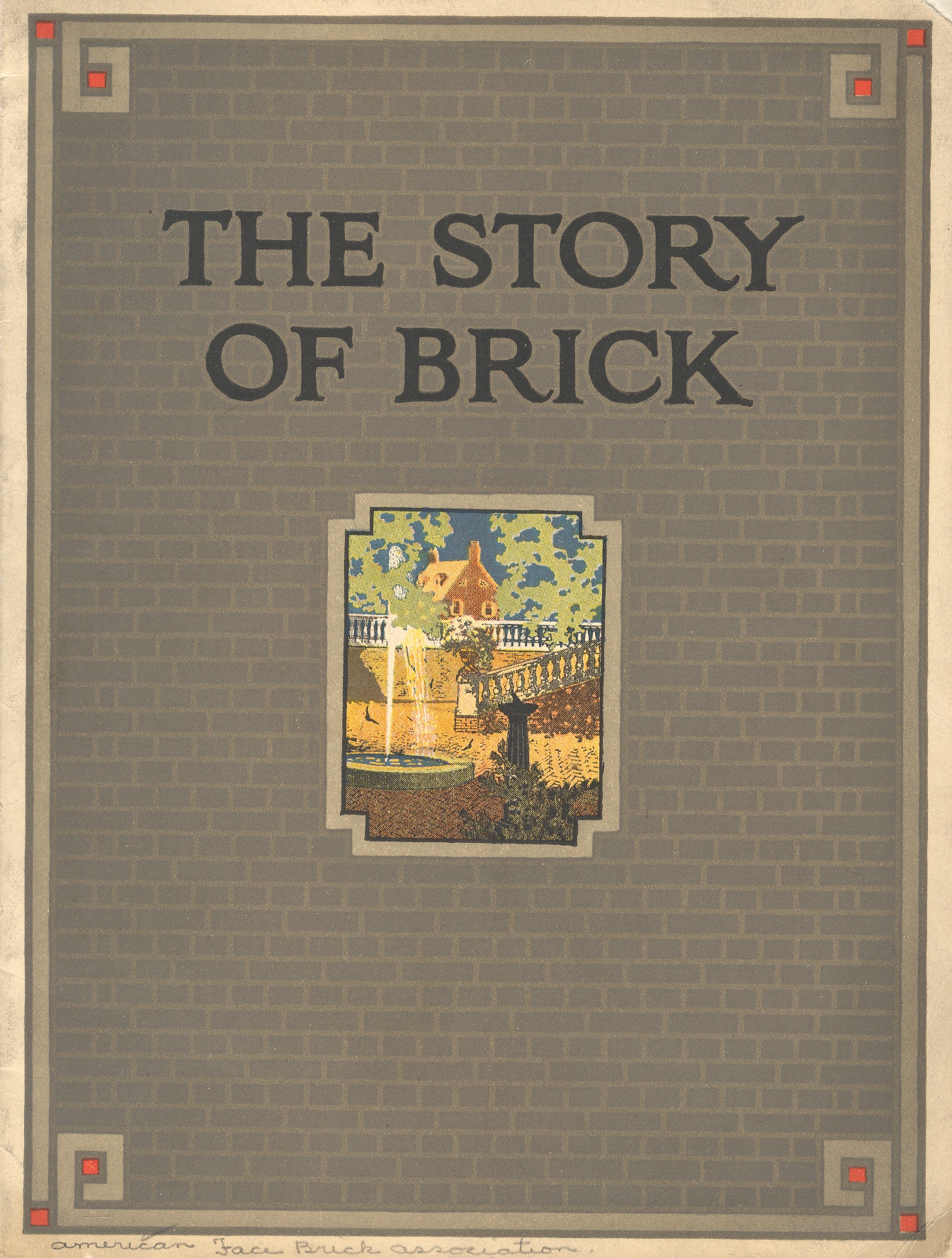
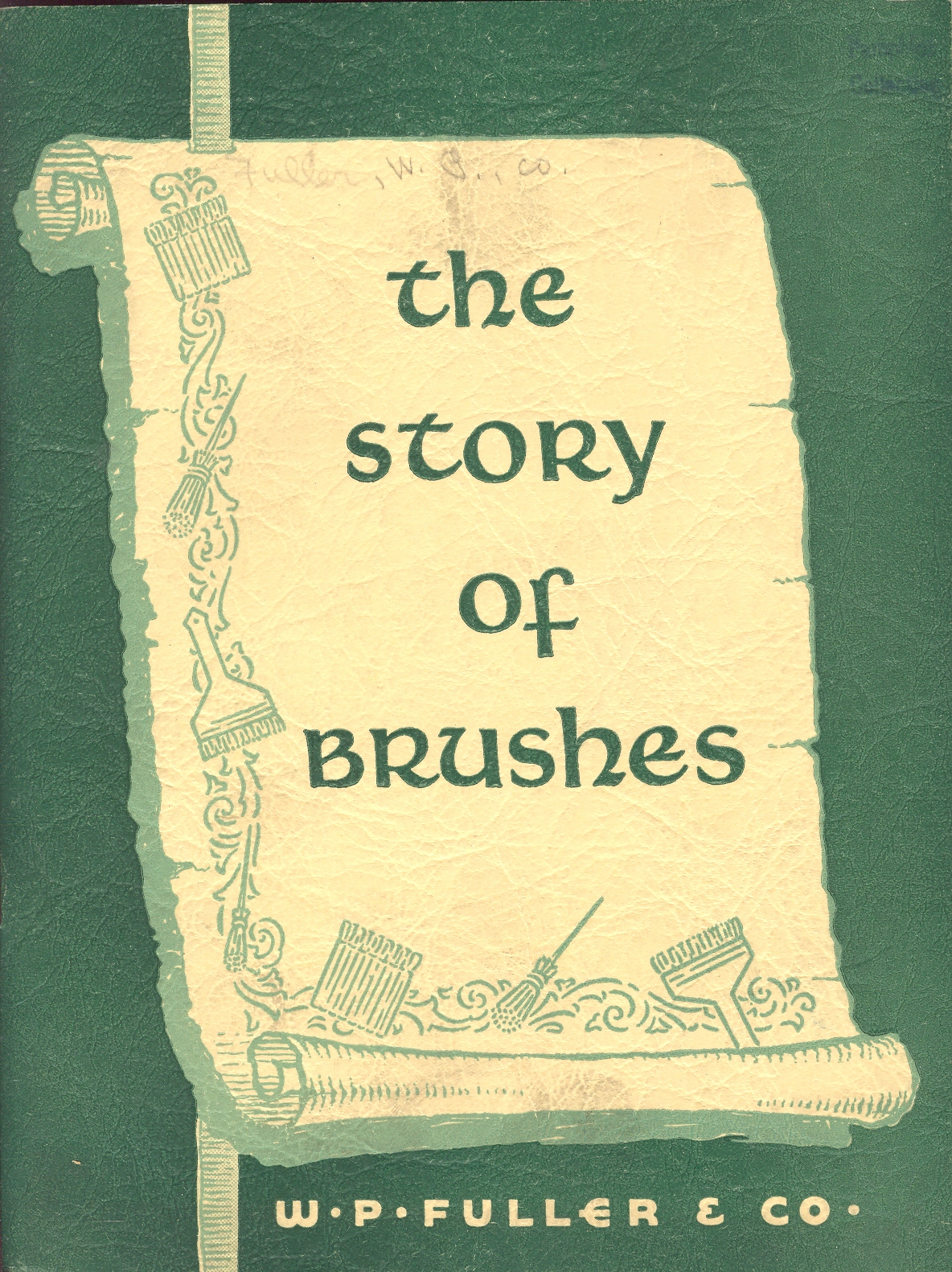
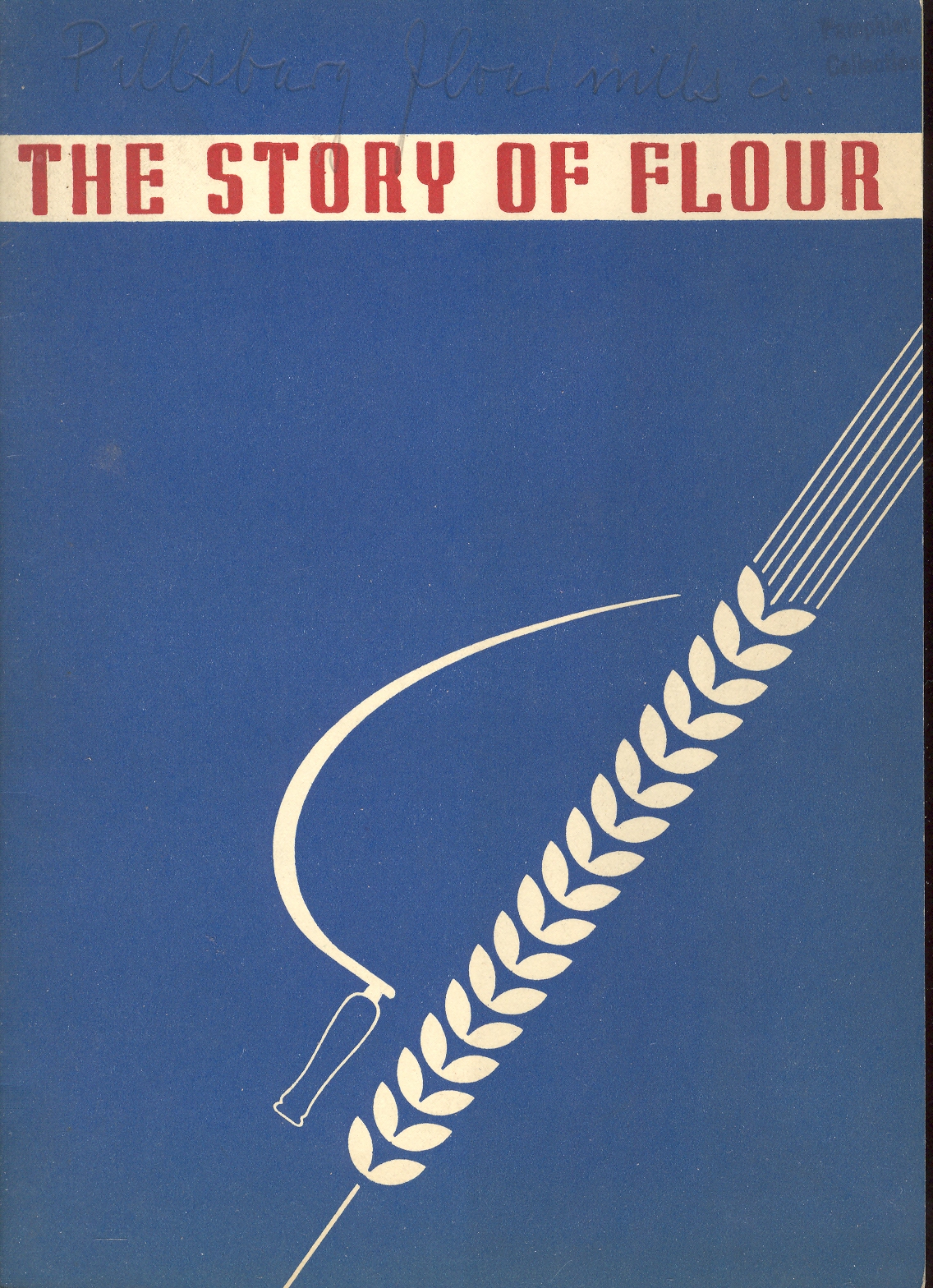
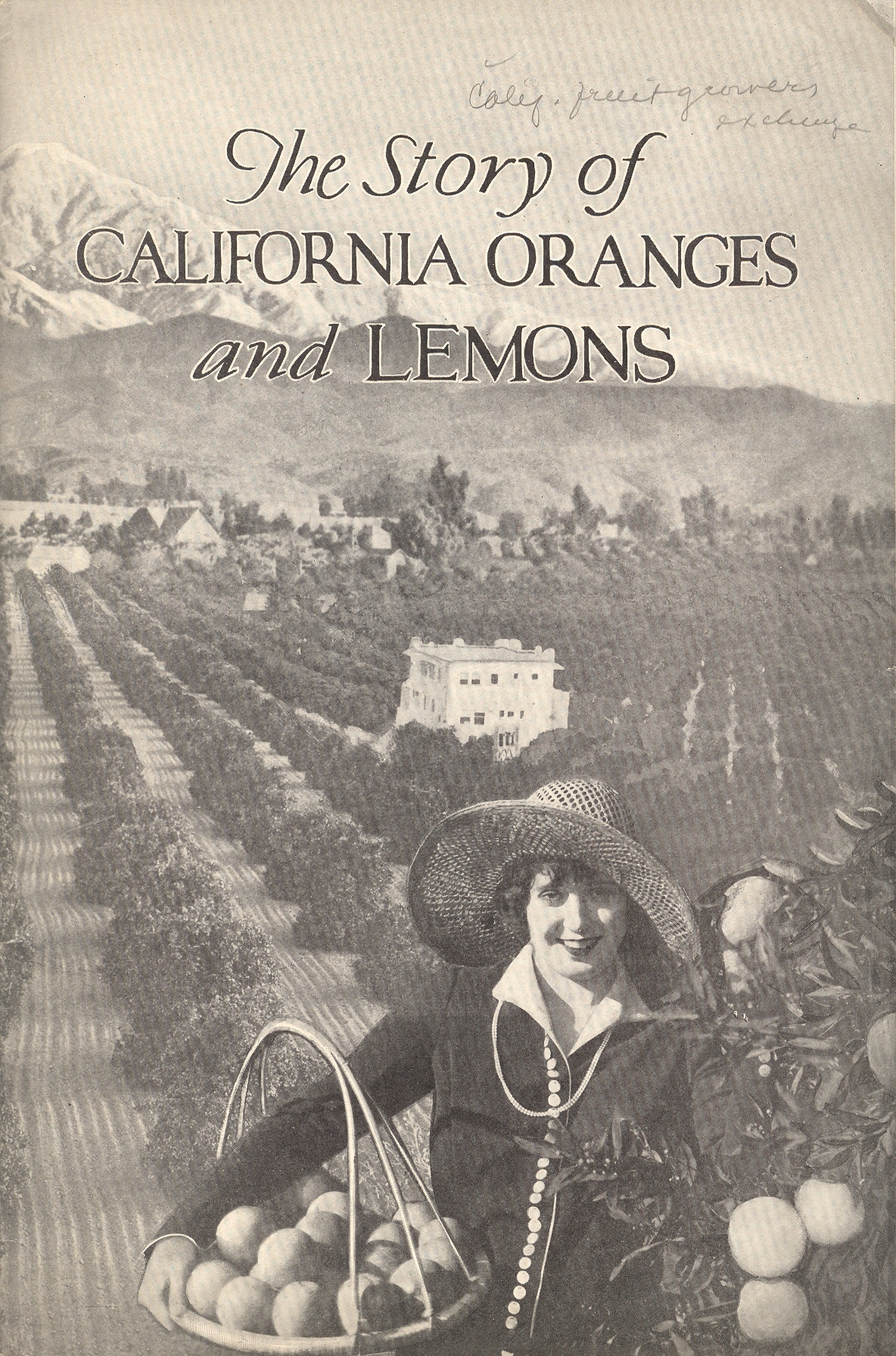
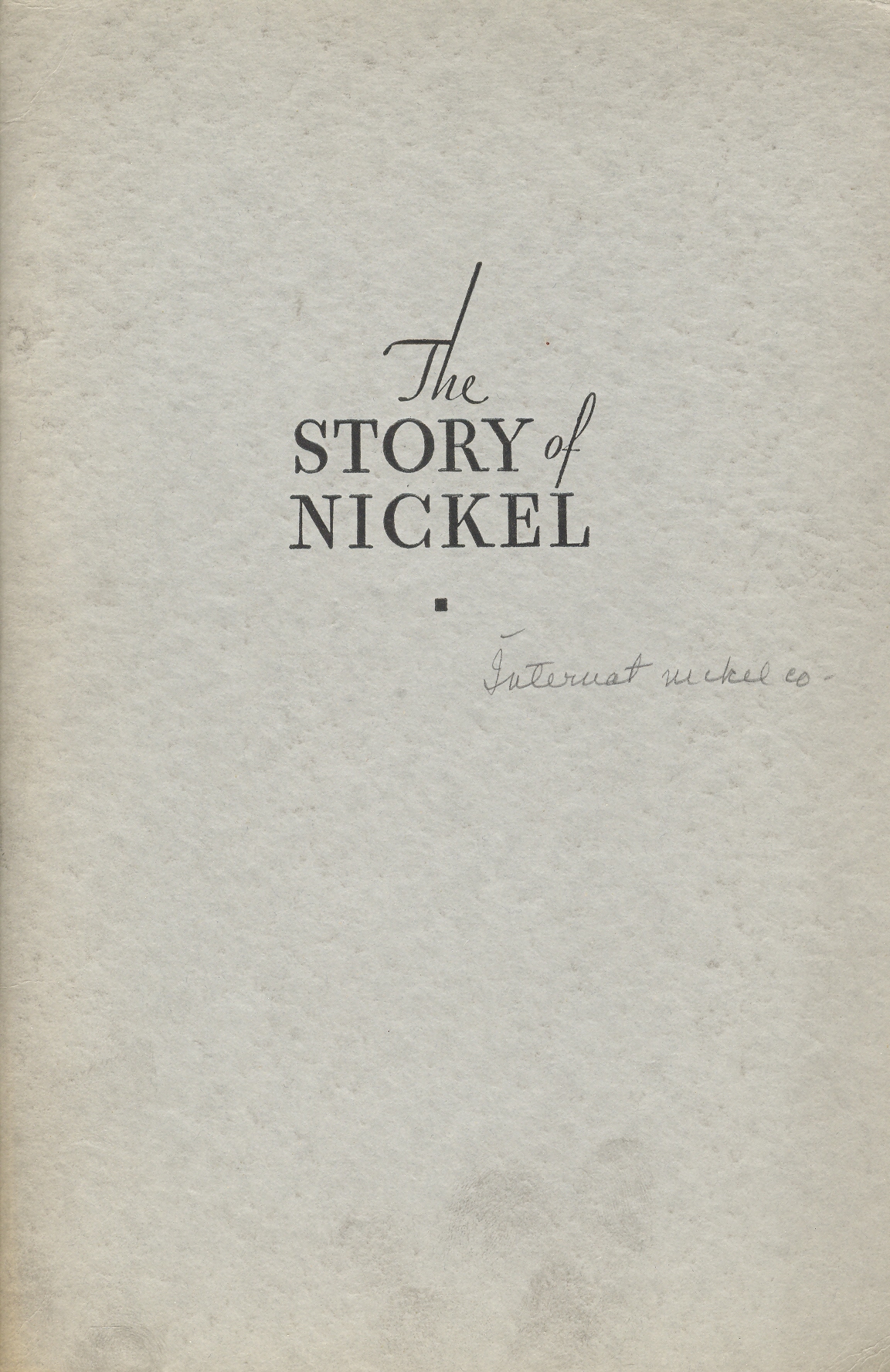
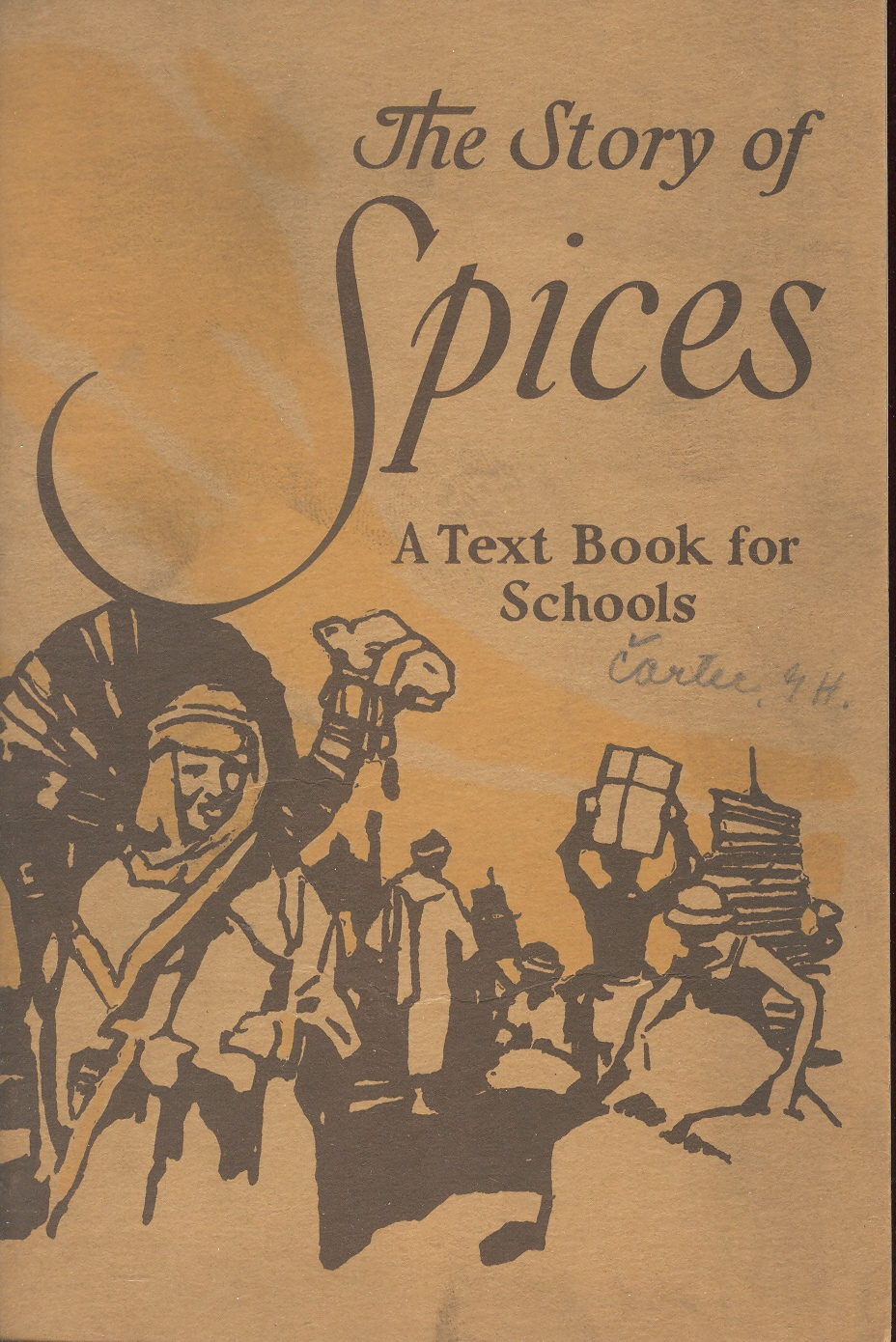
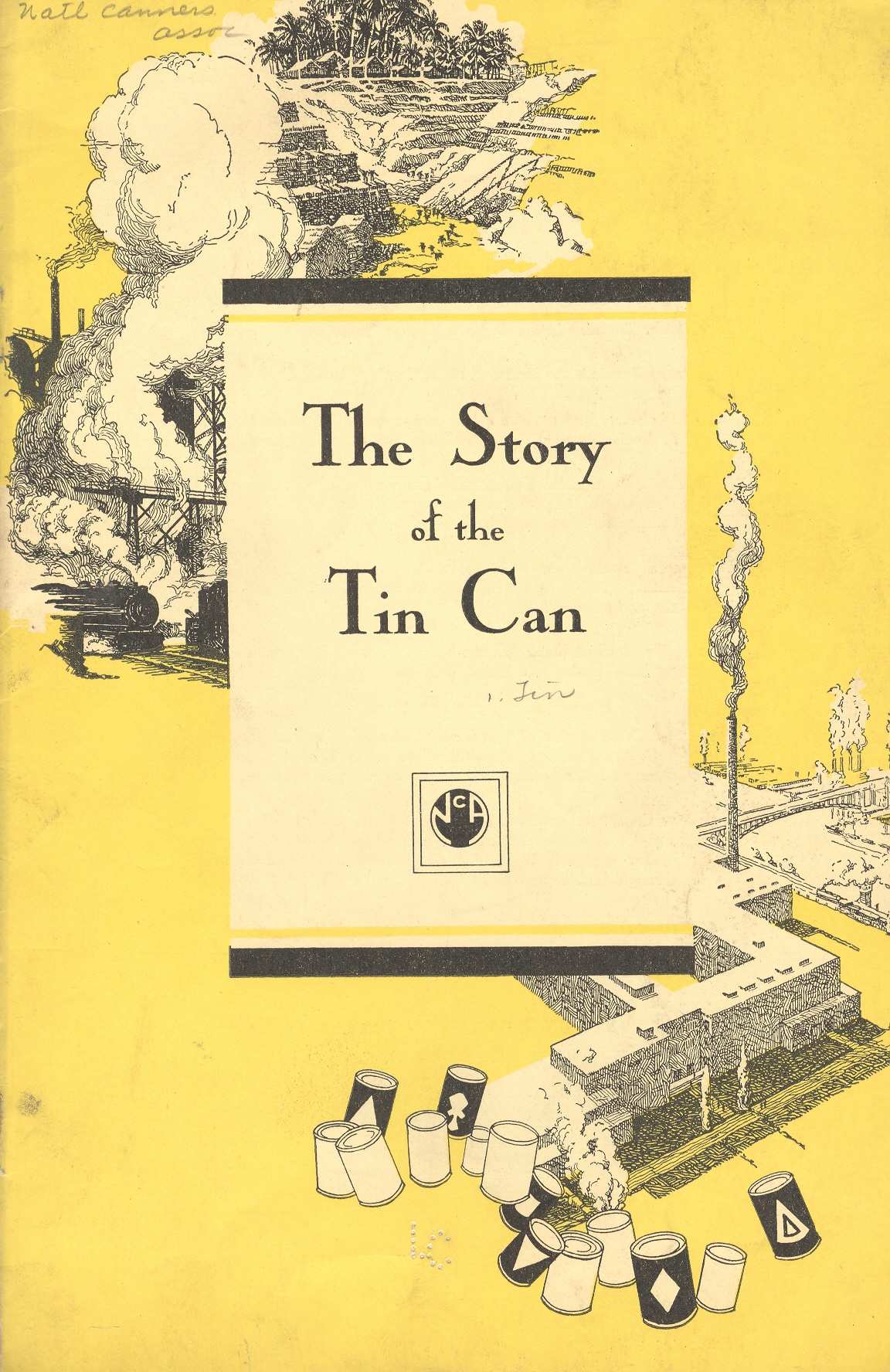
    + story fertiliz  A very small part of a large collection that I purchased of the Library of Congress some years ago (the “Pamphlet Collection”, about 90,000 odd, interesting and almost entirely unrelated in their categorization items) was re-connected by me into a subclass of sweet/odd minor history.  The titles needed to start something like The Story of _____, have an interesting cover illustration, and have the subject material be not-common.

    I discovered that it was easier and more interesting to arrange this ephemeral material according to categories that would make the items interesting in a group, where the whole was greater and more interesting than the sum of its parts.  And so a popular and slightly terrible Sponges, a Swell Story springs to life as a Duchampian illustration, far more interesting than it could possibly be as a solemn and bad history of sponges told in 32 cramped pages.  + story adhesives

    Some other iconoclastic categories in this vein includes pamphlets whose covers have only a printed  “!” or “?” on them,  with the sub-category of mercilessly bizarre and entertaining printed titles with exclamations or questions (like “Better than Dead?” and “Fury!  Money!”). 

    And so I share a few of these The Story of pamphlets–there’s really not too much to say about them beyond offering up their cover images, so I’ll let it go at that.  

    + story anim glu 

    + story baggage 

    + story banana 

    + story brick

    + story brushes

    + story flour

    + story lemons 

    + story nickel 

    + story spice 

    + story sponge 

    + story tin can      

Recent Posts

Archives

Categories