JF Ptak Science Books Post 777 Blog Bookstore
control and disenfranchisement of women slips not so silently into the present
here in the USA; elsewhere around the world this idea isn’t so “antiquarian” at
all and this presence is heavier still.
The morality of the capacity that restricts access to education, and
voting, and access to work, and equal rights in the control of a family, seems
slow in catching up to modernity.
This concept
of control struck home again while looking through a selection of CBS documents
on the state of radio in 1938. They seemed benign though ruthless in what they
were trying to accomplish: a simple objective and complex way of reaching it—the
sale of advertising on the radio. Looking
for comparisons between radio and the rest of the information-control market, I
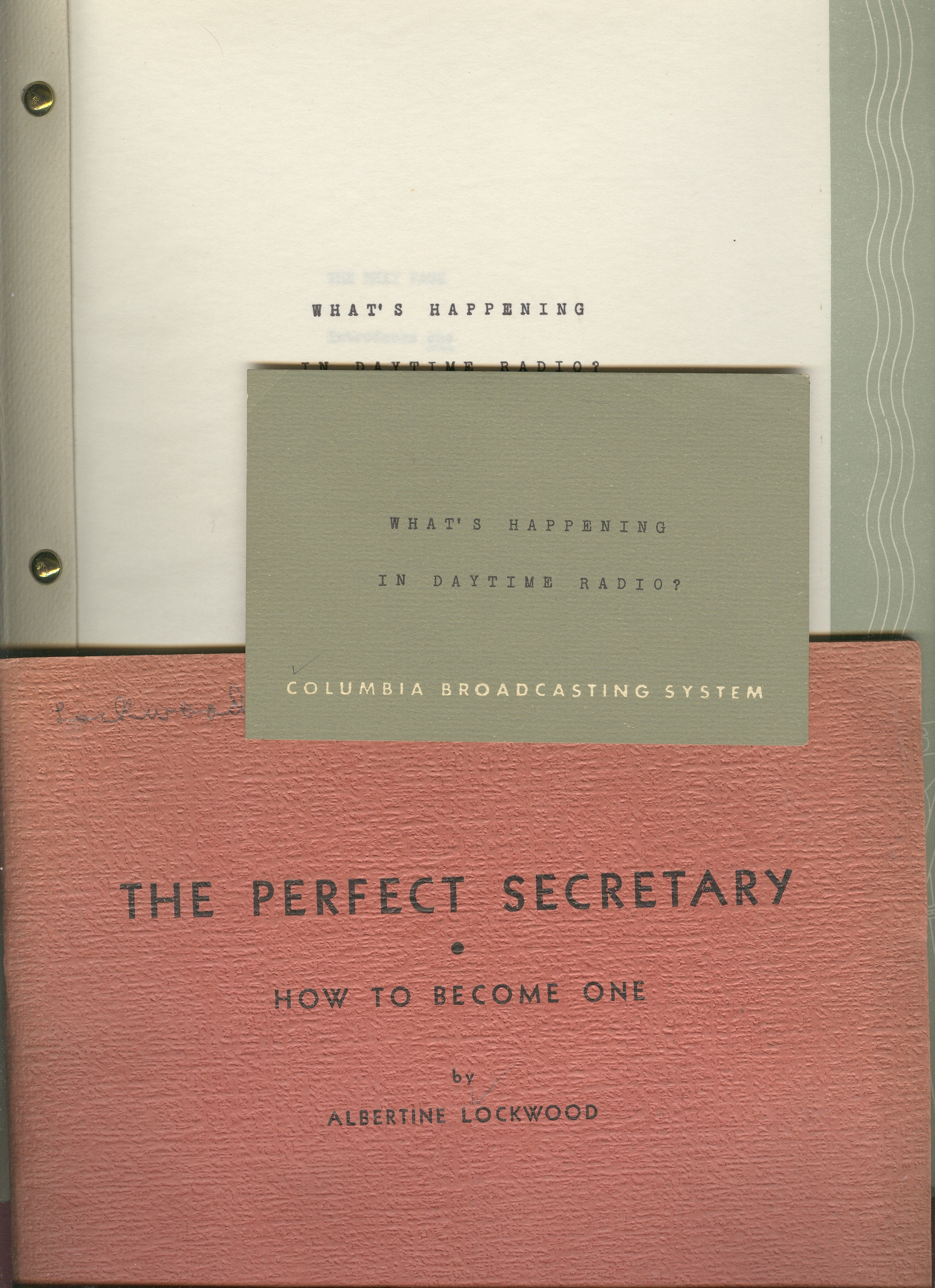
came upon thin volume entitled What’s
Happening in Daytime Radio?, which for the most part was taking an historic
early stab at directing advertising at the women who were evidently
relentlessly following the soft romantic exploits of some of the fifty or so “soaps”
that were broadcast in 1938. (These very mild romantic adventures were called
so because of the soaps and detergents that sponsored and advertised on these
shows, directed of course at the target female audience.) The opening section started “The Women (God
Bless ‘em)”, wound its way through every manner of inferiority-inducing female
imagery: “the women, god bless ‘em, are not always chatterboxes. They do like to listen. And listen
carefully. They do what they’re told…by
radio.” It is still shocking though, in
an odd way, not at all surprising, to see this sort of copy printed at the
highest levels, and taking place within the lifetime of my still
extraordinarily full-of-life mother.
In this same pile was another bleak remembrancer of the
still-alive past, The Perfect Secretary,
a bleak messenger from 1938. In addition
to the de facto class and sexual
regulation of the structure of the business world and the woman’s
hardly-existent role in its formulation, we are introduced to the concept the most
basic mechanisms and elements of the control of a subjugated group. The pamphlet attempted to conform the
personality and character of the woman to her job as secretary. The
unannounced writer states that “it would be a mistake to overlook the
importance of the personality of a secretary.
What makes personality? Manners and dress produce personality.” He then moves on to specify the fat middle of
the correct mode of dress, reminding the secretary or secretary-to-be that it
was not only the “slovenly, unkempt” girl who lacked personality, but also the
overdressed girl was well “who adopted the undignified style of costume”. But correct dress and coifed hair wasn’t
enough: “with poise there is no personality”. (“An attractively dressed girl
without poise is unfortunate.”) “Conspicuously
colored nail polish is not becoming to a secretary in the better offices.” “Flippant and unreliable manners bury the
finest personalities.” And lastly, “it is one of the first duties of a
secretary in an office to be ever conscious of avoiding body odors”. There are another 34 pages of correctnesses
that follow, to painful to specify.
These attempts at control at the most basic level of a person’s identity
were “normal” for their time, and a remarkable testament to advances (thus far)
in equalizing the world of men and women.
disqualified half of the human race by their disqualification — first in the
loss of the most inspiriting and elevating kind of personal enjoyment, and next
in the weariness, disappointment, and profound dissatisfaction with life, which
are so often the substitute for it; one feels that among all the lessons which
men require for carrying on the struggle against the inevitable imperfections
of their lot on earth, there is no lesson which they more need, than not to add
to the evils which nature inflicts, by their jealous and prejudiced
restrictions on one another. Their vain fears only substitute other and worse
evils for those which they are idly apprehensive of: while every restraint on
the freedom of conduct of any of their human fellow-creatures (otherwise than
by making them responsible for any evil actually caused by it), dries up pro
tanto the principal fountain of human happiness, and leaves the species less
rich, to an inappreciable degree, in all that makes life valuable to the
individual human being.” John Stuart
Mill, The Subjugation of Women, 1869