A Daily History of Holes, Dots, Lines, Science, History, Math, Physics, Art, the Unintentional Absurd, Architecture, Maps, Data Visualization, Blank and Missing Things, and so on. |1.6 million words, 7500 images, 4.9 million hits| Press & appearances in The Times, Le Figaro, Mensa, The Economist, The Guardian, Discovery News, Slate, Le Monde, Sci American Blogs, Le Pont, and many other places… 5000+ total posts since 2008.

  • Things Out Of Place Department: Ledoux’s Architecture of Multiple Planets

    JF Ptak Science Books LLC   Post 592              Blog Bookstore

    A Cosmology Seeded in Salt?

    It  is, I admit, mere imagination; but how often is imagination the mother of truth?–Sherlock Holmes

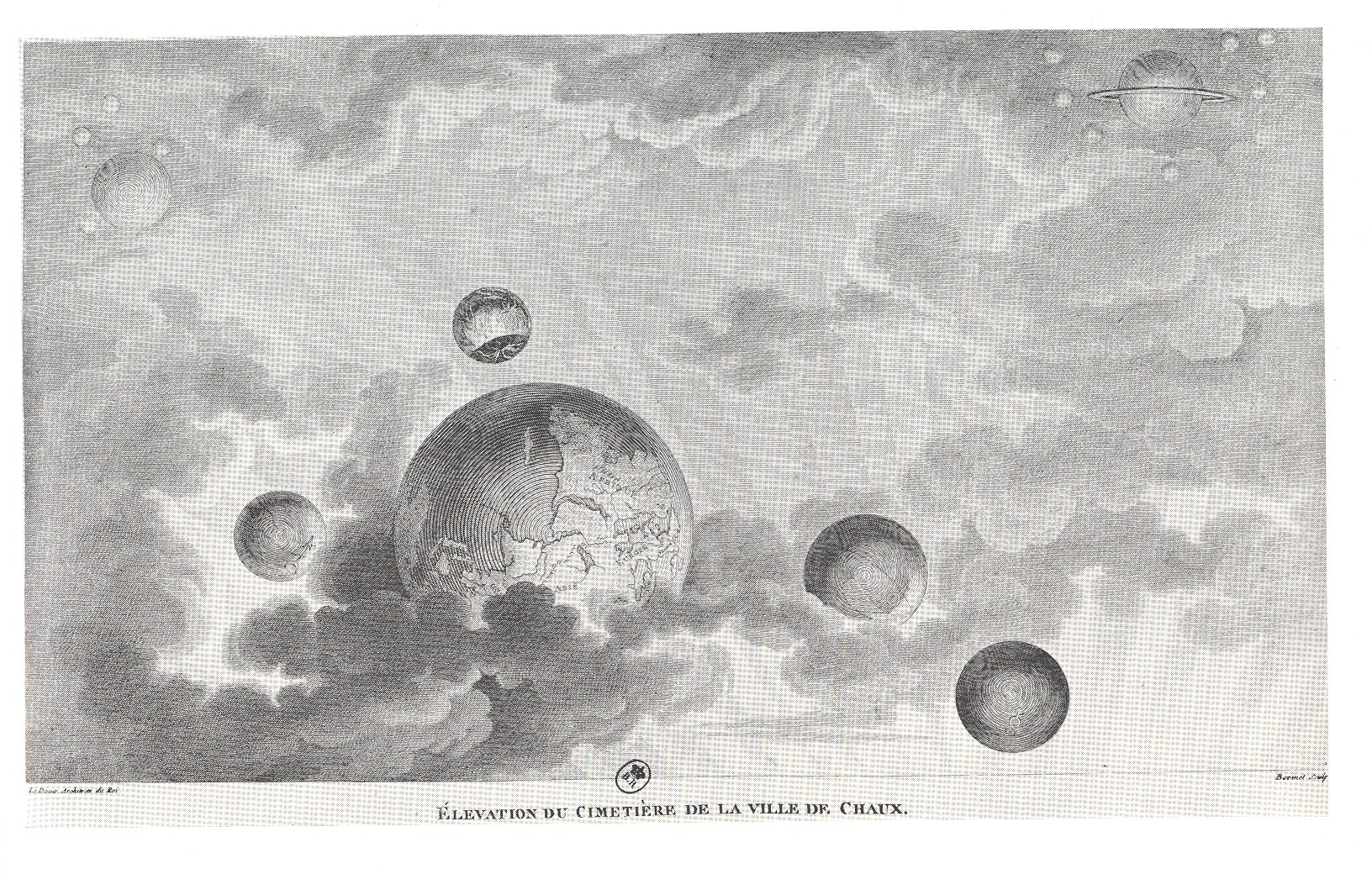
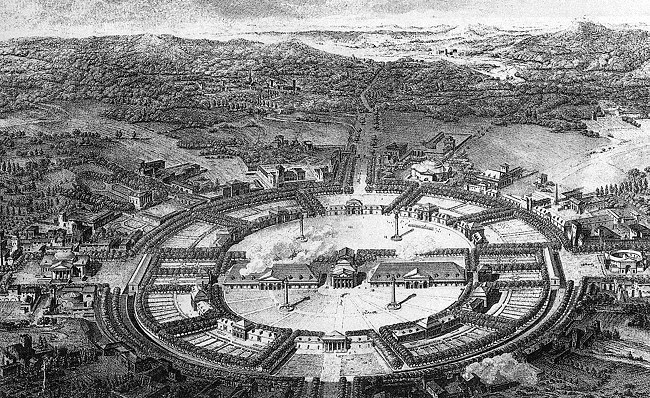
    I’ve written a little earlier in this blog about the beautiful Claude-Nicolas-Ledoux  (1736 —1806) being the 18th century Marcel Duchamp (or vice versa).  I was struck by this image by the master–a depiction of the Earth nestled in clouds amongst other  planets in exceptionally close proximity.  There was evidently very little explanation to go along with this idea, except that it was inspired by his utopian plan for the saltworks of the factory-village at Chaux. On the face of it there seems to be no physical connection between the two–it must be the philosophical connection that Ledoux was thinking about.  From my point of view the idea for the city of Chaux was of course idealistic, perfect, communal, with a vast sense of fairness and correctness, and of great sensibility.  It was a “gathering of brothers” as Ledoux wrote, a city of lodges of workers, gathered together for mutual profit.
    Blog--sphere--boullee

    Perhaps this vision of cushioned planets was a larger expression by Ledoux of heavenly gratuity?

    Anthony Vidler points out (in his book The Writing of the Walls) that Ledoux described his utopian Chaux as a “galaxy of…utopian forms” (page 101).  Since Ledoux also described the architect as the “delegate of the Creator”, perhaps he reverse-engineered a cosmology describing a mutually beneficial community of planets from a community of brotherhood gathered around the (admittedly important in 1780) production of salt. 
    Blog--ledoux--chaux

    Or perhaps not–this may just be way to simple and, well, just wrong.
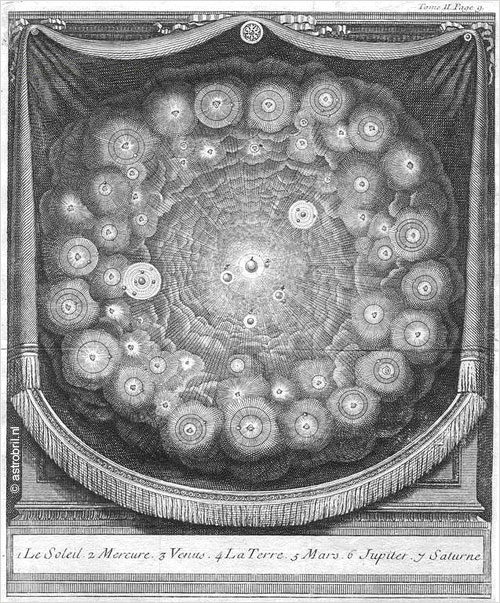
    Blog--plurality of world fontenelle NOTE:  I do just want to point out here (and discuss at another
    time) that Ledoux was by no means the first to describe multiple-world
    systems.  One of the prettiest of the earlier attempts, for example,
    belongs to Bernard le Bovier de Fontenelle who published this
    delightful rendition of an extra solar-systemic galaxy in 1682 in his Entretriens sur la pluralite des mondes.  This
    sort of thinking was somewhat well-established by the time Ledoux
    offered his idea around the time of the turn of the 18th century.  

    Should we not come to the rescue of a cosmic phenomenon  trying to reveal itself in a sea of errors?  Peter van  de Kamp (1983)


    For a beautiful romp, have a look at Ledoux’s L’Architecture considérée sous le rapport de l’art, des mœurs et de la législatio. I’ve included a short list of projects (with links) in the expanded reading section below. 
  • An Unusual View: Looking into the Past and the Future–St. Quentin, 1917

      JF Ptak Science Books LLC  Post 593       Blog Bookstore

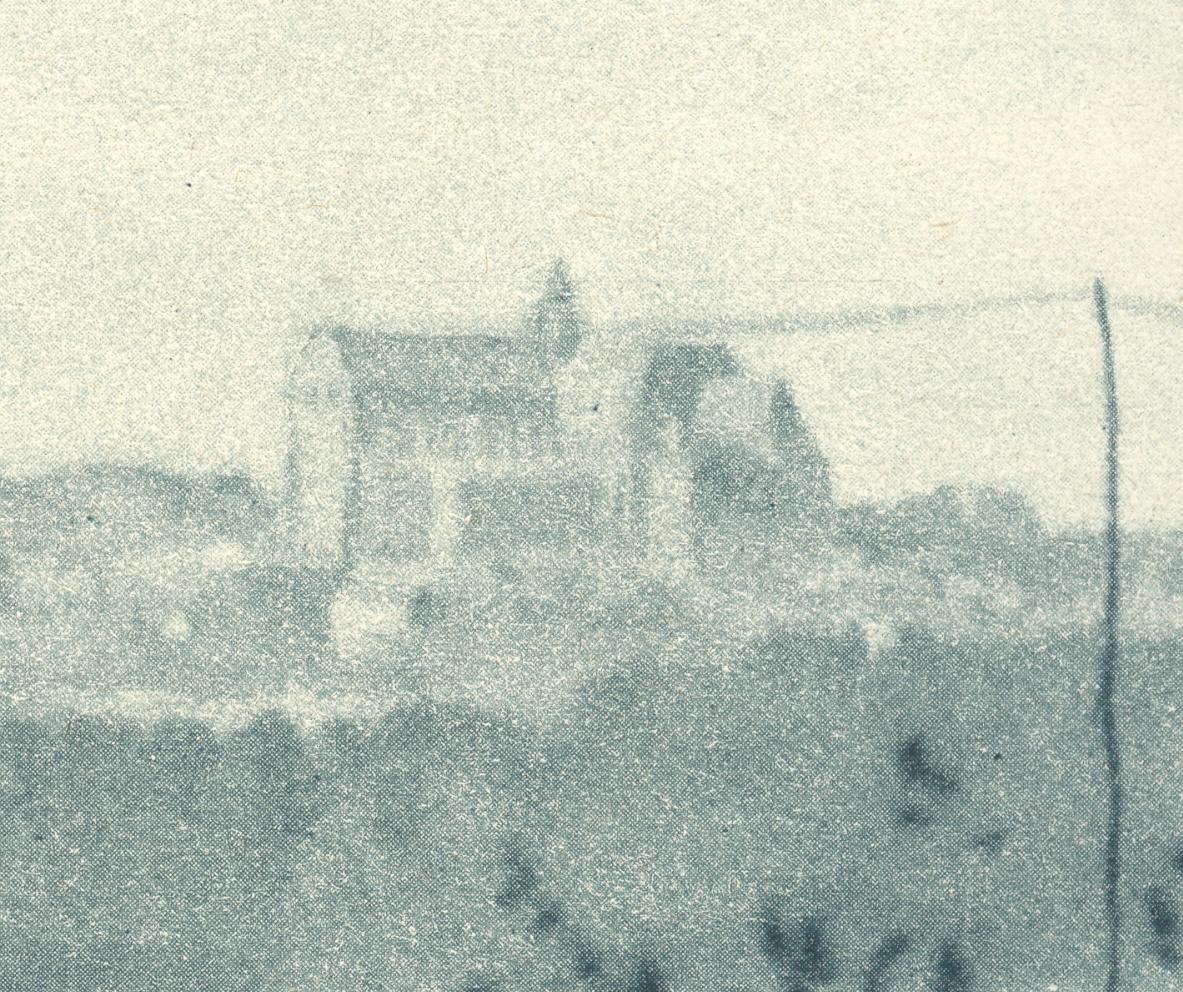
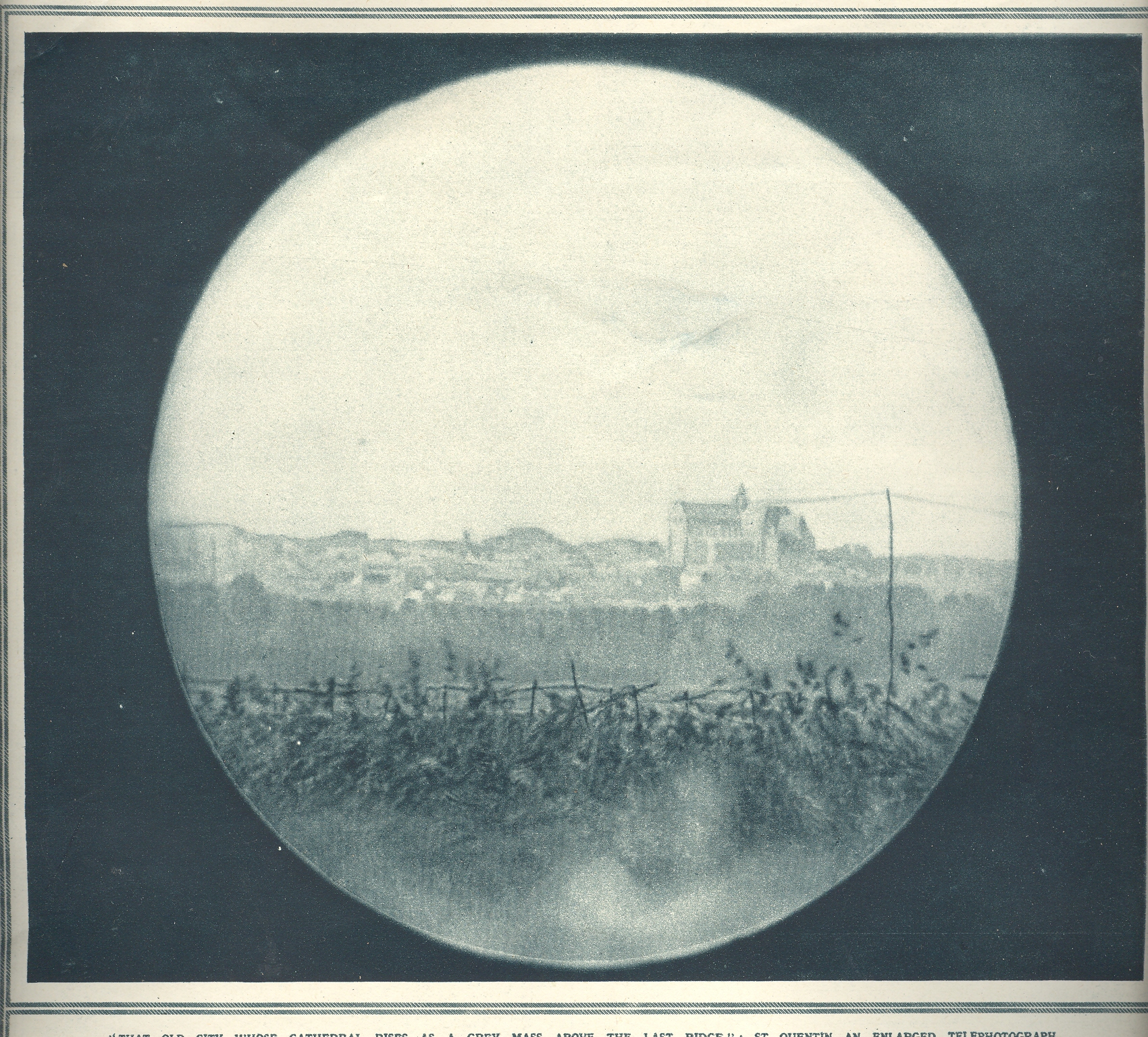
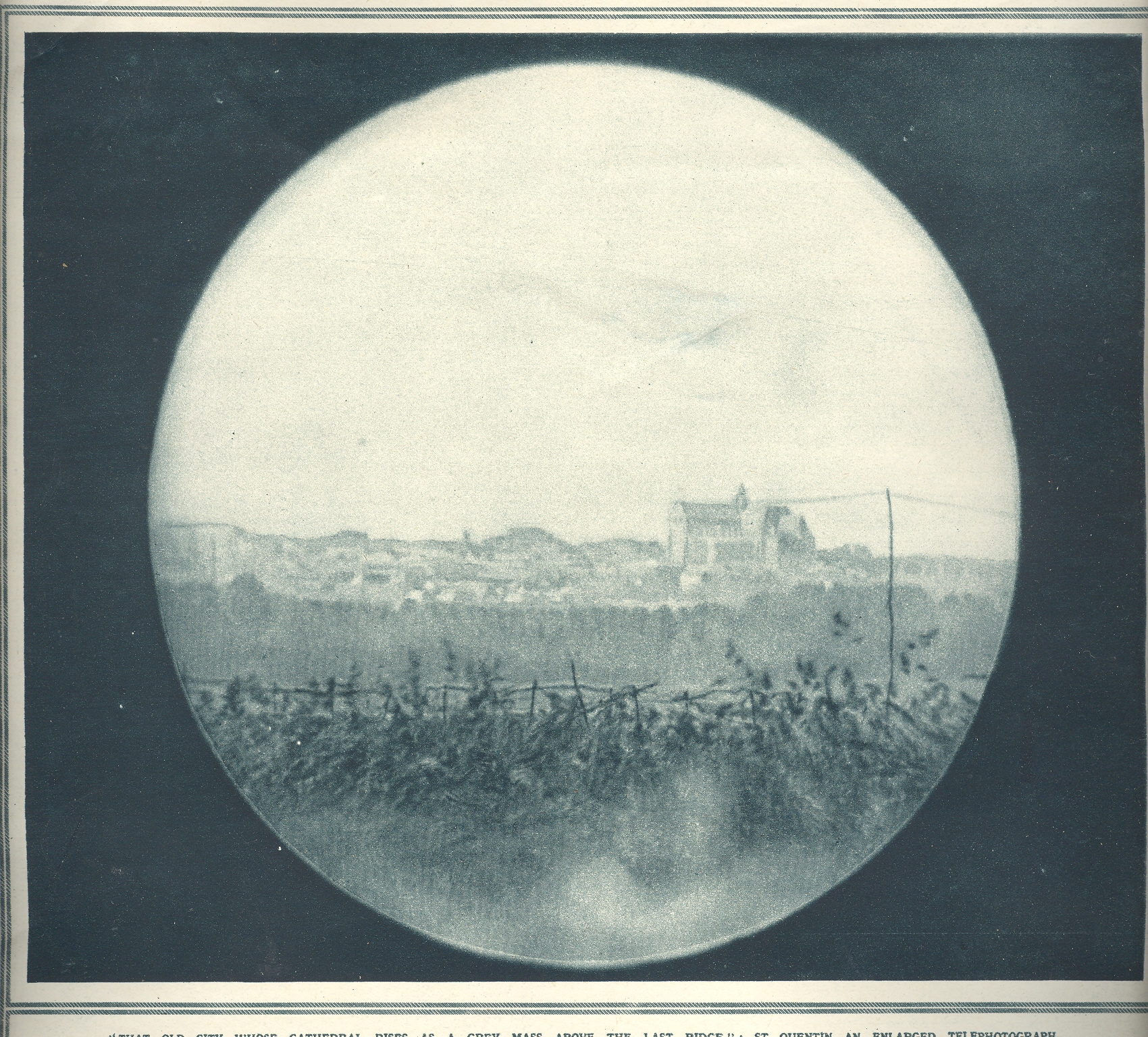
    Blog--WWI--st. quentin This lovely, seemingly antique daguerreian view is what the American Expeditionary Force (AEF) commander General JJ Pershing saw at the front lines of St. Quentin in July 1917.  The U.S. had entered the war, finally, on April 2 1917, nearly three years after the war began, landing in France 13  June 1917 and entering almost immediately into battle at Chateau-Thierry.  On 2 July Pershing estimated that the U.S. would need a million fighting men; the day that this photo was published in The Illustrated London News, he revised that estimate to three million.  The view he was seeing here was more than of a town about to be pounded by thousands of artillery shells–the magazine was sharing a view of what the European and Empire countries had been seeing for 31 months, and what the Americans would now be sharing for another 17 months. 

    Blog--WWI--st. quentin det
    It is a beautiful and deadly view, seen through French field binoculars at the tip of the front for the battle.  The large building to the right is the town’s Gothic cathedral/collegiate masterpiece:  it was old and large, with a 370-foot-long and 130-foot-high nave.  It was a highpoint for that part of France, and was the burying place for St. Quentin and St. Victorious–their graves would be covered by the rubble of the cathedral’s collapsed roof very soon after this picture was taken.  The building was shelled and burned all night long–the French blaming the Germans and vice versa. 

    If Pershing had really good sight he might’ve been able to see the 116,000 American soldiers wIraHayesArlingtonho would be killed in battle, though I suspect he had a pretty good idea of what was to come, thinking as he did that he need 3 million soldiers.  To be utterly fair I don’t think that he could’ve possibly  seen in his imagination  what 9 million dead soldiers looked like, or what 16 million dead soldiers and civilians looked like, or what 37 million dead and wound soldiers and civilians looked like, all the casualties of this war, all done in 4 years. 

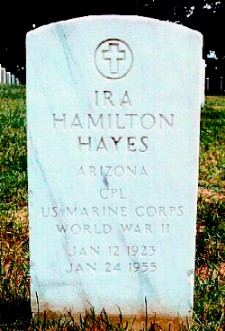
    I’ve found it odd in a way that I’ve not really been able to explain that Pershing is buried so very close to Ira Hamilton Hayes at Arlington.  I used to leave a good twig on Jackson’s headstone on Memorial Day, and then get that unusual, uncomfortable emotion on seeing the large Pershing monument just a few hundred feet away. 

  • Strange Things in the Sky Department: the Alchemical Cosmology, 1618

    JF Ptak Science Books LLC  Post 594       Blog Bookstore

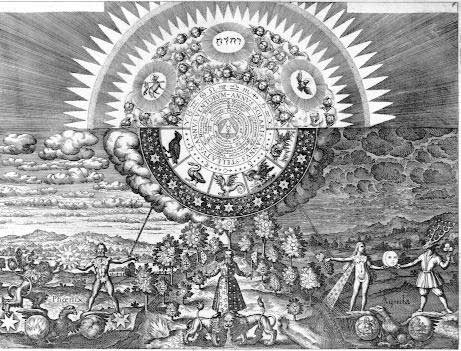
    Well.  There’s a simple ton of complexity going on in this difficult, famous print by the
    great Mathias Merian—its like a moving puzzle to me, complicated by the
    virtually changing size of its pieces.  There’s
    just too much in it that I don’t understand, too much archaeo-religico-alchemical
    bubbly going on for me to make much deep sense of it all.  I do like that it is all coming from the sky,
    though, which is why I’ve selected it for this continuing series

    BLOG--THINGS IN THE SKY--MYLIOUS  

    The engraving, Tabula Smaradina (“Emerald Tablet”) is
    Merian’s interpretation of the alchemical cosmology, a  schemata and representation of the order of
    things.  It appears (first) in Johann
    Daniel Mylius Tractatus III Seu Basilica Philosophica… (1618) and makes
    subsequent appearances in other works by the author, as well as in Lukas Jennis’
    Musaeum Hermeticum (1625, see below). 

    Basically, the Emerald Tablet shows the opening of a
    complex heaven and the delivering of the philosopher’s stone to the earth.  It is a magnificent effort and no doubt has a
    great power to alchemists, and I can understand only a bit and a piece here and
    there.  For example, in the bottom right,
    we see a couple of people holding a((n) eclipsed?) Moon, standing on the wings
    of an eagle which protects a double hemispheric representation of the
    constellations.  The figure on the right
    is a naked woman, who may well represent Luna:  her right breast is a star, and from her
    armpit is a streaming torrent of stars which comes close into contact with
    shrubs labeled with the astrological signs of the planets.  The cluster of grapes in her right hand and
    the stream that she is straddling must indicate a generation, or a birth, or
    rebirth, or time, or the universe.  Luna
    is connected via something to the heaven-element which in turn is connected on
    the left sign of the print to a man holding a sun, who I guess must be Sol.  Heaven and Earth, Brother Sun and Sister
    Moon, and so on.  From here it all gets
    away from me, no that it isn’t gone already. 
     

    ·Posted by :

    ·in:

    — —
  • A Proficiency of Insult: a Biting Poem on the Medical Profession, 1736

    JF Ptak Science Books LLC   Post 595   Blog Bookstore

    “For even they who compose
    treatises of medicine or natural philosophy in  verse are denominated poets…” Aristotle’s Poetics
    [Translated by Thomas Twining, New
    York 1957]

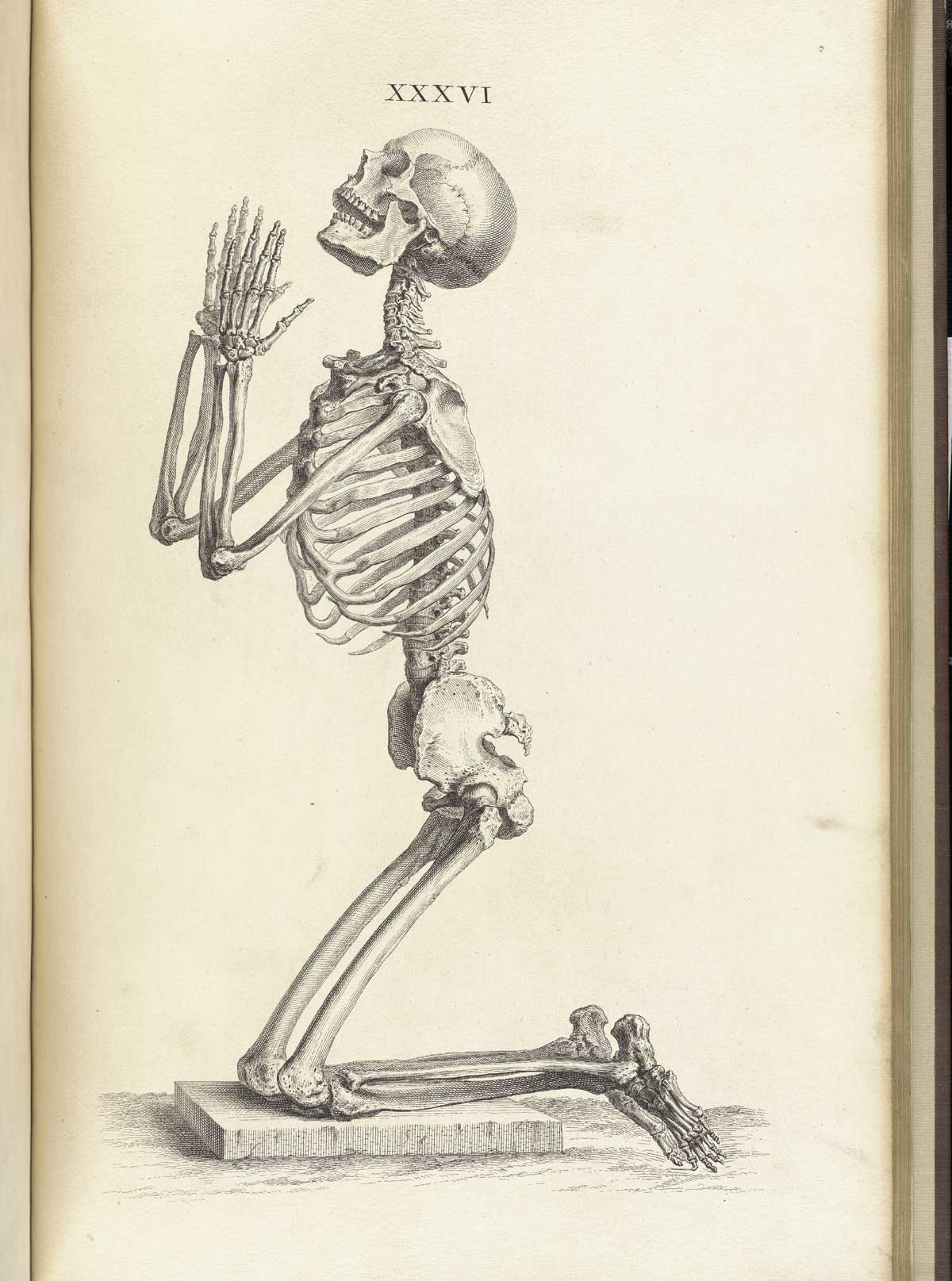
    Skeleton Edward Baynard (1641-1719) of  London must have been a pinchy/gouty 
    physician.  Or not.  Perhaps he was an overdressed, deeply-dimpled
    fop.  Or perhaps he was skinnily
    invisible, a plain, vanishing custard of a man, scrupulously clean and who
    saved all money, deeply in love with his chambermaid, sleeping on a mattress of
    gold. 

    But what he
    was a definite cynic, occasionally cranky to his own reaching profession.  His poem, Health, a Poem, Shewing How to Procure,
    Preserve and Restore
    It, was a best-selling book, reaching at least
    ten editions during his lifetime.   It evidently contained a number of frugal
    dispensations on achieving health, most of which involved  purging. Or sweating.  Or vomiting. 
    Such was the state of the art, much like our own when viewed from the
    year 2109.  (I overheard a conversation
    this morning in a hot dusty field, a physician saying that we would never simply
    ingest a plil that would render us a new liver. 
    Well.  How would the
    contemporaries of the newly discovered X-Ray have viewed the peek into the
    future of the “discovery” of DNA in 1953, only 59 years later?  And what about the enormous difference in the
    state of medicine and imaging capacities in the 56 years since then?  Phenomenal. 
    It would be nearly impossible to say what developments in medicine await
    the grandkids in their late years?  Or in
    300 years?  Hypo-livers in
    Dixie  cups, I say.)

    Returning
    to Dr. Baynard—he summarized the ten most important words and concepts in
    medicine in the second  poem of his book, as follows.  He held little in
    reserve.

    “For some
    of the ten are always advised:

    Piss,
    spew and spit

    Perspiration
    and sweat

    Purge,
    bleed and blister

    Issues
    and clyster

    These few
    enunciations

    Cure all
    the doctor’s patients

    If
    rightly applied

    By a wise
    physic guide”

    Indeed. 

    [“Clyster” is
    an enema;  “an  ‘issue’ refers to
    the Galenic practice of creating an infection at some designated spot on
    the body because of the belief that some kind of ‘sympathy’ between the illness
    and the localized pool of pus would draw the illness out of the body”. ]

    ·Posted by :

    ·in:

    —
  • The Anatomy of Comparison Department: HMS Ships Firing On London, 1909

    JF Ptak Science Books LLC  Post 596    Blog Bookstore

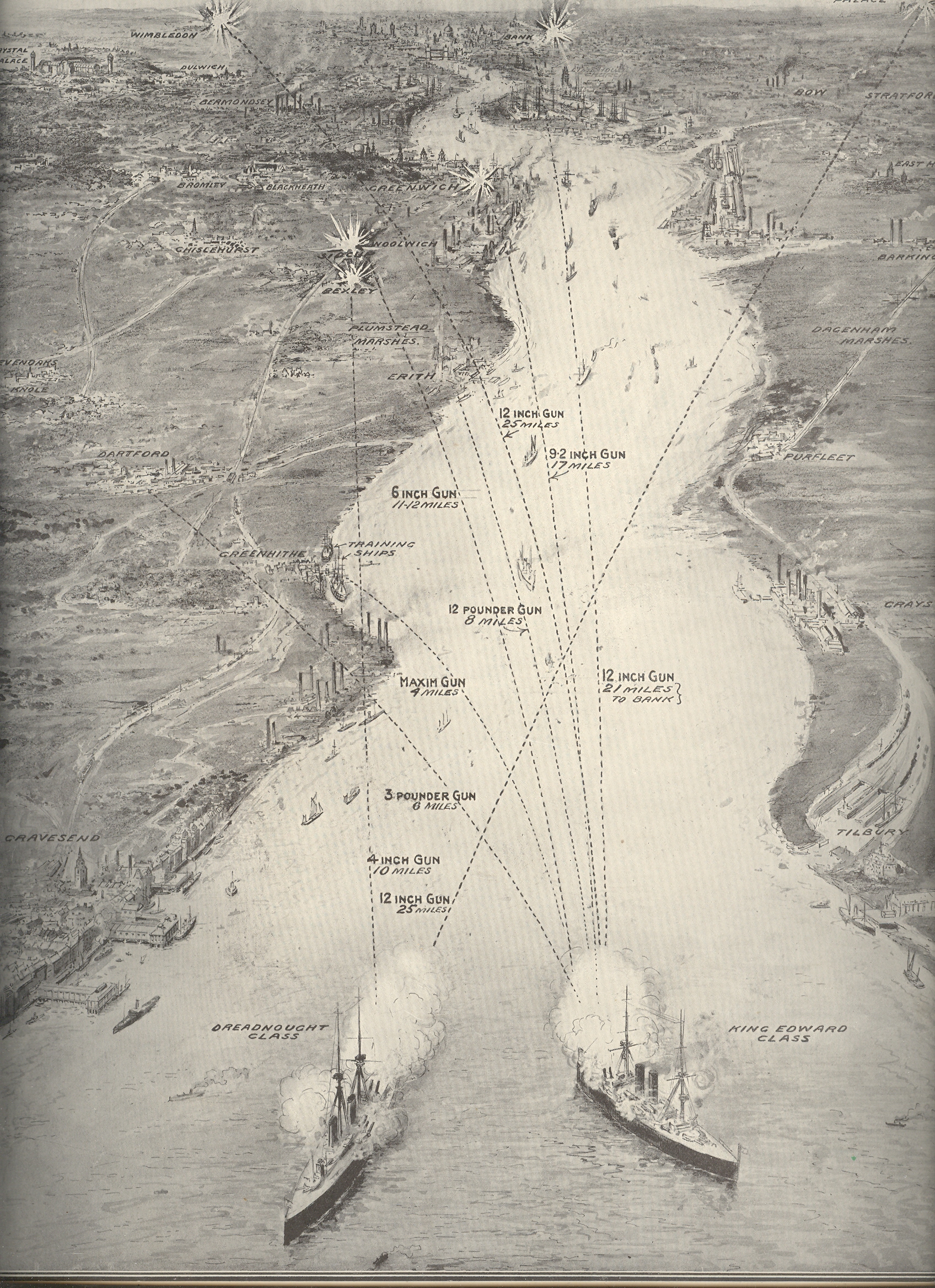
    HMS Ships Firing On  London,
    1909, Old vs. New  Comparing Shipboard
    Firepower:  a Compelling Comparative Graphic Display from the Illustrated London News for 24 July 1909

    Blog--april 26--london bombed Without looking at the sub-title and explanation of this of this print (“Firing
    from Thames Mouth to the Edge of Greater
    London”) its purpose might be a fair mystery, given the ships and the targets
    and all. The two large ships at bottom are a Dreadnaught Class battleship and a
    (smaller) King Edward Class ship, and, yes, they are firing towards London—but they
    are doing so to illustrate a point on modern weaponry and the vast, new
    superiorities of British advances in the death/protection arts.

    In June 1667 during the Second Anglo-Dutch War the British were set upon by
    an running attack by the Dutch Admiral Michiel de Ruyter, who had advanced as
    far up and into the coast as the mouth of the Thames.  The Dutch advance up the Thames was repulsed,
    though their secondary targets (so to speak) at Gravesend
    and the River Medway proved a scorching defeat for the British, and propelled
    the rocky war to a quick peace favorable to the Dutch. 

    This image shows what could’ve been the results of that engagement at
    Gravesend had the Dutch fleet been outfitted with the HMS’ new 12-inch guns—de Ruyter
    would’ve been able to reach the outskirts of London from that position, and
    could’ve b=done so from a distance of 25 miles or so. Of course the artist and
    editor aren’t really suggesting a “what if” scenario to the course of events of
    the Second Dutch War—they were merely creating a very compelling, highly
    illustrative comparison from old to new firepower, and to perhaps quite some fears
    about the strength of the Navy as the unstable and rickety international system
    limped its way into WWI, just five years in the future. 

  • Outsider Logic Department: Earth Clocks, Ocean Spigots, and Mystery Exhausts

    JF Ptak Science Books LLC  Post 597

    Several years ago I purchased a very large collection of pamphlets of the Library of Congress.  It was all housed in 2400 blue document boxes, all the document boxes were labeled and neatly ordered.  The problem was that the classification scheme really didn’t relate to one thing in particular, and the judgment which set one pamphlet in a box wasn’t the same through and through—the alphabetization could have related to author or title or region or keyword or publisher.  In short, each box was an adventure—and a lovely, bizarre one at that.

    Blog--april 27-bizarre earth clock

    It may be a unique one, too.  The one thing that really did hold this thing together as a collection was that the vast majority of the pamphlets were not located in any other libraries in any part of the world.  Now for many of them it was probably okay for the work to slip into a bliblio-singularity, but for thousands and thousands of others, it was a good save.

    And here’s the larger rub:  as I classified and segregated the pamphlets into the “normal” areas of interest, I also started a pile of good-god-what-is-it pamphlets. The GGWII material was extraordinary—some had fantastic covers (and which many times was the most interesting thing about the publication), some had extreme titles, some had ludicrous subject matter, and some were just, well, bizarre.  As the GGWII pile grew into the low thousands, I started to box them for a rainy day project, because I frankly didn’t want to deal with them.  Some of the pamphlets’ covers/subject/title were rather mundane, pedestrian things when they were originally published; however, the high-winded sands of time ripped the flesh from this commonness, making them somewhat unapproachable, unknowable, and incredible–this group was called The Naïve Surreal .   A subset of this group are works that were not approachable and enveloped by their own unique needs from the day they were born; pamphlets made of the stuff of incomplete dreams and adventurous vocabulary—the Outsider Logic group. 

    The Naïve Surreal has all manner of representatives:  pamphlets with just question marks or exclamation points as the title, or histories of unknown things, or beginning with “The Story of ______ “ [mud/zippers/a stone/a bubble/etc].  You get the picture.  The Outsider Logic pamphlets are really very difficult to categorize—perhaps that is their unintended  job.

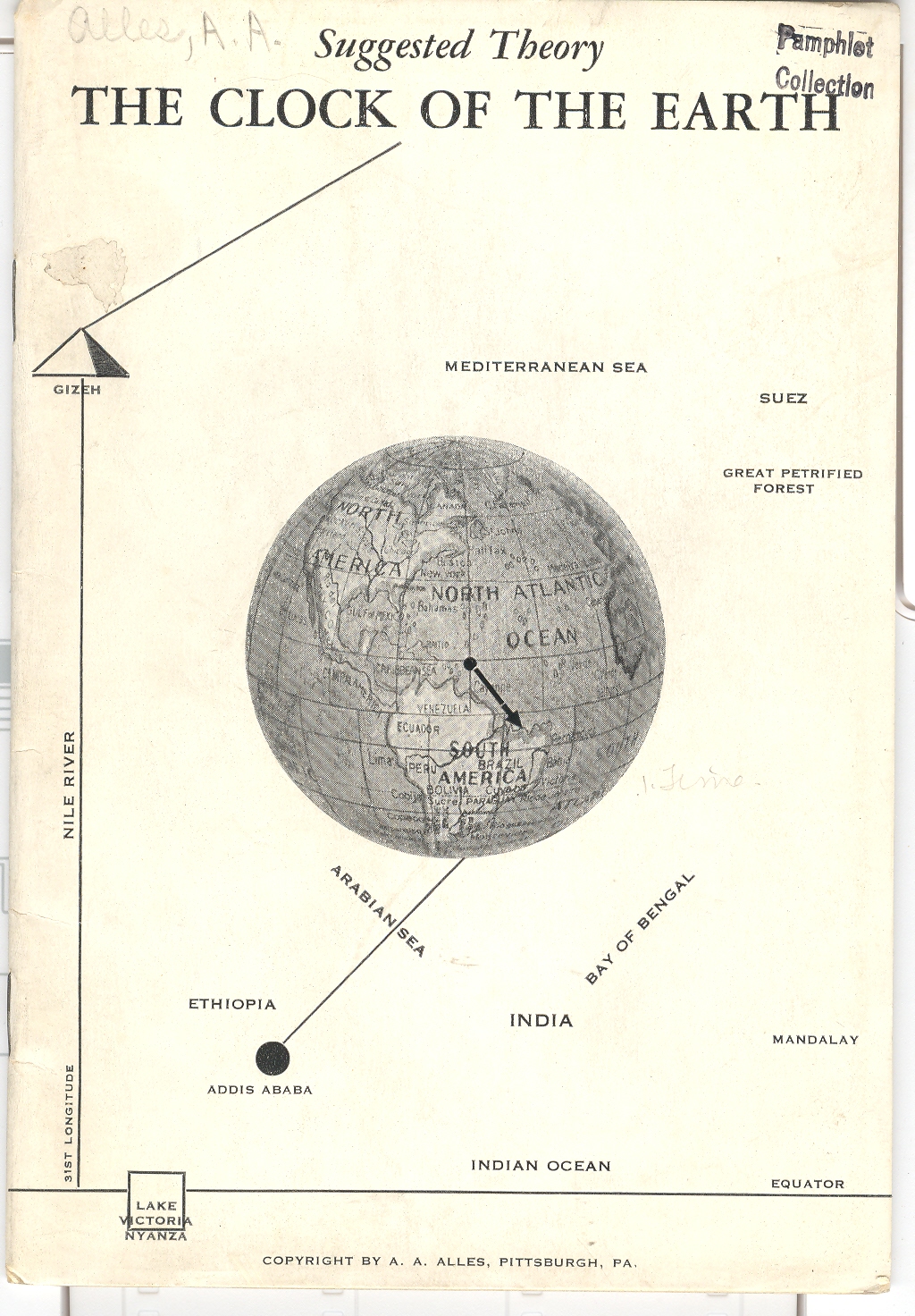
    Today’s emergent beauty from the Outsider Logic collection is .A. Alles Suggest theory The Clock of the Earth, printed in Pug, Pa., in 1935.  This pamphlet is only 18 pages long but I just couldn’t read it.

    Here’s why:  the first sentence reads:

    “The Clock of the Earth represents strange matter from inner-stellar space collected and compounded at the equator which accurately controls the revolutions of the seasons…”

    It goes on but I just can’t type it out.  Sometimes there is a benefit to reading the Outsider Logic pamphlets, and sometimes the benefit is knowing the cover.

    Mr. Alles’ cover is striking and deeply inscrutable, as you can see.  Somehow there is a system for the hour hand there at the equator, but it is mainly a secret, even though it is explained.  Why the geographic locations are printed in the white space surrounding the earth and connected to Addis Ababa, the Nile, Gizeh and the Great Petrified Forest and placed the way they are and connected to the equator clock will have to stand as art rather than explanation.

    Most of the time superior, deeply-removed art like this cover is disappointed by the textual counterpart.  Mr. Alles may not disappoint with his writing, though.  He ends the book beginning the last paragraph with this:

    “Four thousand years ago the open spigot on the equator at longitude thirty-one degrees east of Greenwich , flowing directly to the pyramids in Gizeh…. “ Then there’s something about “exhaust flow”.  Again, as I said, I just can’t penetrate this work.  I’m happy enough with the art, forever open to interpretation.

  • Missing People: Flerov, Nuclear Fission, and the Development of the Bomb

    JF Ptak Science Books LLC  Post 598  

    In the history of science there are a number of instances where discoveries
    get passed by, or un-noticed, or un- (or under-) appreciated.  Gregor Mendel’s 1865/6 paper embodying the
    discovery of genetics didn’t get noticed (for real) until 1899.  The Alpher-Gamow-Herman paper (1948)
    postulating the background radiation for the Big Bang went unnoticed even after
    Penzias and Wilson found it (by accident) right where it was supposed to
    be.  And so on.  There’s another whole category of names
    associated with discoveries that have faded into obscurity even though their
    idea has not:  Walter Pitts (neural
    networks), Vannevar Bush (the internet), Michael Servetus (pulmonary circulation,
    Rosalind Franklin (DNA), Robert Hooke (too much to mention), and so trippingly
    on.

    I had this second category in mind while grazing through the year 1940 in
    the Physical Review.  I came across a
    very significant paper—a paper of exceptionally high standing, of direct
    interest to hundreds of working nuclear physicists—that, after publication,
    became invisible—or actually publicly invisible.  The problem was that it was also of very high
    interest to the war effort, and it was published by a Russian.  By a Soviet. 
    The paper was by G.N. Flerov and K.A. Petrzhak (Spontaneous fission of uranium  volume 58, page 89, 1940), and it addressed isotopes
    U-238, U-235 and U-234 and the influence of neutrons of different energies; their
    experiments revealed a new type of nuclear transmutation  and observed the world’s first occurrence of spontaneous
    fission.  And this of course was a big
    deal because of the military applications of the continuing series of
    discoveries on nuclear fission, and so the paper—as monumental as it was—passed
    without comment and without notice.  Not
    because the paper didn’t merit it, of course, but because the powers that be
    thought it most prudent not to tip the very secret developmental hand of
    creating an atomic bomb. 

    Years later in his book The Advisers, Oppenheimer, Teller and the Superbomb,
    Herbert York recorded the thoughts of Igor Golovin, who supported the work of
    Kurchatov who sponsored the research of Flerov and Petrazhak:  “the complete lack of any American response
    to the subject of this discovery was one of the foundations which convinced the
    Soviets that the Americans were developing the bomb”.  As was everyone else,  probably. 
    Peter Kapitza, one of the greatest Russian physicists of the century noted
    (on 12 July 1941) that—based on this work— it was entirely possible that a bomb
    could be developed that could kill millions of people.  And it was right after this that these papers
    were no longer published in the Physical Review—for national security
    reasons. 

    There was another reason for not responding to the Soviet paper.  On August 14, 1939, Josef Stalin started a letter
    so:

    To the chancellor of
    the German Reich, Herr A. Hitler.

    And finished it thus:

    I thank you for your letter. I hope
    that the German-Soviet Nonaggression Pact will mark a decisive turn for the
    better in the political relations between our two countries. .

    J. Stalin

    The Nazi-Soviet Nonaggression Pact was a pretty good reason for not wanting to “share” with the Soviets.

    The Soviets wouldn’t see the light until the Nazis ripped off the curtains
    with the start of their June 1941 offensive  in Operation Barbarossa, beginning
    a brutal attack on Mother Russia that wouldn’t end until the Germans where
    defeated by Winter.  Keeping the Soviets
    out of the loop was a good policy decision.

    In a way though it may not have mattered.  The only country on earth that had the facilities and resources to develop the bomb was the United States–the sheer amount of energy alone would’ve consumed something like the majority of all energy resources needed to fight the conventional war for both the Japanese and the Germans.  This list goes well on, but that’s another story. 

  • French Visionary Architects–Boullee, Ledoux, Lequeu

    JF Ptak Science Books LLC  Post 599      Blog Bookstore

    I’ve been collecting images by some of  the great, visionary architects of 18th century France:  Etienne Boullee (1728-1799), Claude-Nicolas Ledoux (1736-1806) and the semi-impossible Jean-Jacques Lequeu (1737-1825).  It was a tough time for these architects to see far into the future at the time of the Revolution, as people who were even less deserving than these men lost their heads.  In any event I’ve compiled a short three minute video exhibiting some of their works, using the music of Wim Mertens for Peter Greenaway’s love poem to M. Boullee called The Belly of an Architect.  I couldn’t but help using this music in this context, sorry to say–it just goes perfectly with these images.  (Also, I’ve written about M. Ledoux here.)

    ·Posted by :

    ·in:

  • Common Views of the Uncommon–Non-Combatant Photography in WWI

    JF Ptak Science Books LLC   Post 600    Blog Bookstore

    There are many histories of photography in wartime:  early images show cavalry standing at the
    ready, troops marching, piles of munitions, heaps of food; later on (as late as
    WWI) come actual scenes during the course of battle.  War photography changes forever beginning in
    the Spanish Civil War, and then of course WWII. 

    Korea, Vietnam,
    and then into the more recent past elevates the camera to being a third-person
    and fifth column.

    Blog april 29 trench Looking through the WWI years in the Illustrated
    London News
    I experienced a creeping realization of a different sort of
    perspective in war photography:  turning
    the camera to look behind the battle. 

    Turning the camera exactly around, away from the action, hasn’t a good
    history in itself.  There are some great
    examples:  when the Golden Spike was
    driven at Promontory Point in 1869 someone had the foresight to look the other
    way and make a photo—it shows a vast plain, a long double ribbon of rail, a
    long series of telephone poles receding into the horizon, and one man. It is
    also a scene that looks pretty much the same today, if you took away the small
    dedication center that is there.  That
    was the reality of the day, not all of those RR workers gathered around the two
    hot locomotives, the cleanest of them toasting each other and the camera. (If
    you look closely you can find some Chinese laborers in among the crowd and also
    occasional bits of Confederate uniforms.)  
    Elsewhere in this blog I told the story of Ed Clark, the LIFE
    magazine photographer who wheeled his camera away from where the hundreds of
    other cameras were recording the removal of Franklin Roosevelt’s casket from Hot Springs and made
    perhaps the greatest photograph of the FDR years. 

    But it is a different sort of turn-around that struck me for WWI.  These are the photographs of the liminal
    spaces after the fight, the clean up, the gathering of spent ammo, the cleaning
    of the clothing, the care of the soldiers, the rehabilitation. And I’m not talking
    about the Matthew Brady after-battle battlefield photograph style.  What I’m referring to is all of the “little”
    things that happen when the battles aren’t being fought and the troops weren’t
    on the move. There some images for thing that appeared in Harper’s Weekly and
    Frank Leslie and so on during the U.S. Civil War, but so far as I can tell the
    vast majority of them are drawings. 
    Having looked through popular illustrated magazines that covered the
    Franco-Prussian War, the Spanish American War and all of the conflicts
    in-between, I just don’t have much of a sense at all that this life was
    recorded very well photographically.

    I can understand this—there’s not that mBlog april 29 trench 2uch glory in sandbagging Red Cross
    stations, or hauling away dead horses by the thousands, or cooking thousands of
    loaves of bread in primitive conditions; they certainly aren’t a good case for
    a hearts-and-minds campaign.  The camera
    has enough power to go ‘round, giving and taking, usually at the same
    time. 

    But to my brain these photographs really come into being in the second half
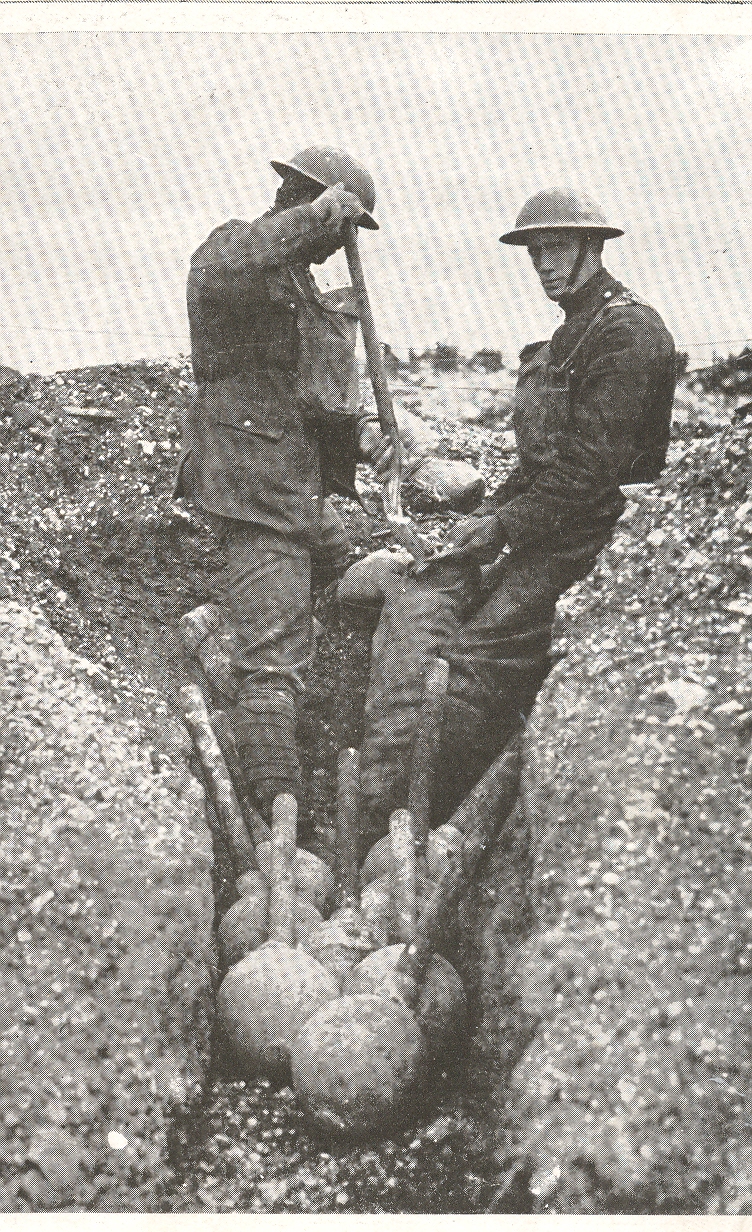
    of WWI., and they tell an other, integral, more human story of that same war.  The first image (above) shows two soldiers
    cleaning up cartridge cases after a fight—when you look closely at the photo
    you see that the place is littered with those cases.  I suspect that there were hundreds of
    millions of these cases ejected from rifles. 
    Billions, probably.  I wonder how
    long it would take a thousand soldiers to shovel a billion shells into canvas
    bags?  The picture reveals a very deep
    image of the ways of war at the most basic level. Blog april 29 trench 3

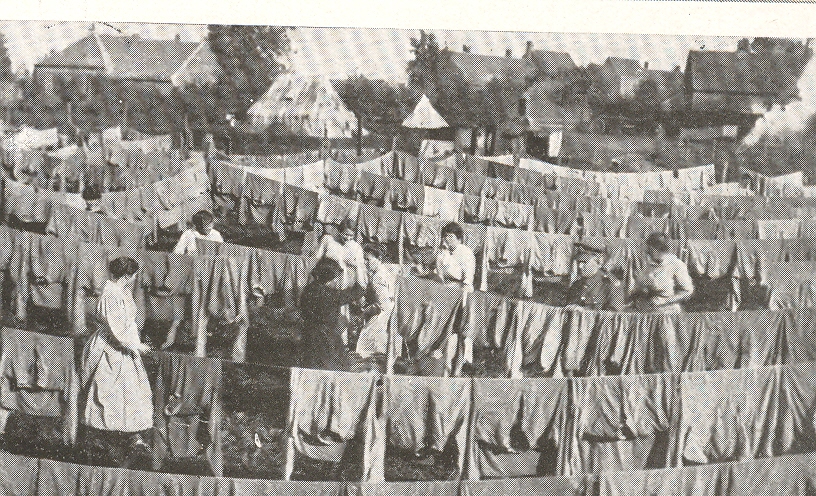
    The next photo is a “simple” image of clothing out for a dry—except of
    course that the clothing lines go on and on, railroad tracks into the sun,
    tended by hundreds of women, getting the shirts ready for the “men in the trenches”,  many of whom won’t need those shirts by the
    end of the month. 

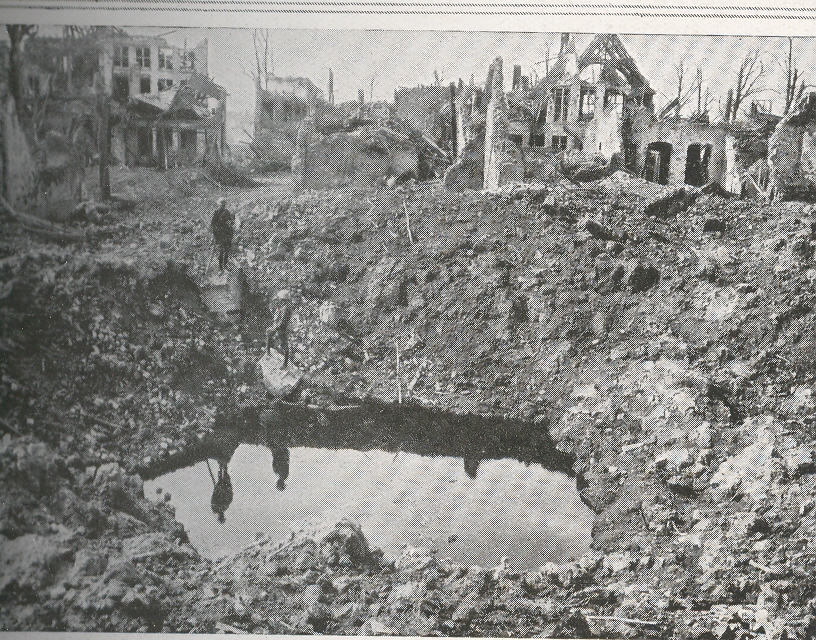
    Many of these men and women wound up being consumed–this photo at right shows one of the ways how that happened. It is an extraordinary crater some 75 yards in circumference created by a massive shell.  It is a massive image–brutal, lonely, and speaking the quiet of the end.  And it was a different sort of image that people were used to seeing in war reporting. 

    These three photos appeared on only three successive pages of the 15 October 1917 issue of the Illustrated London News.

    ·Posted by :

    ·in:

    —
  • Return to the Poem-amatic: Tristan Tzara’s Dadaist Poetry Engine

    JF Ptak Science Books  LLC  Post 530

    Scan0001

    Each thing we see hides something else we want to see.
    –Rene Magritte

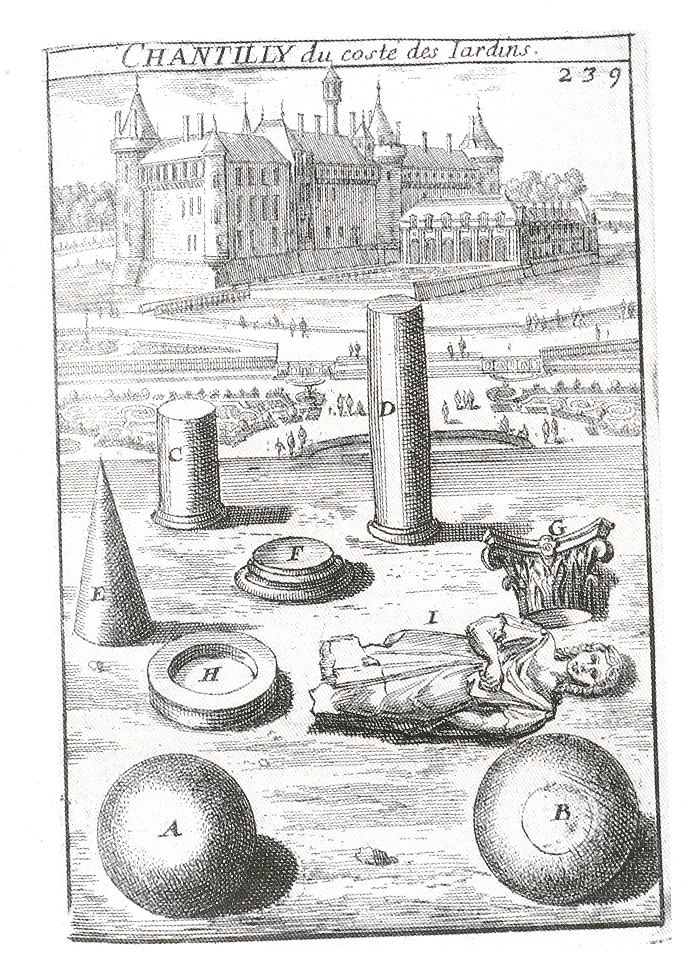
    I am very fond of images like this–images that show us  everything and nothing. The engraving was meant to show some of the ephemeral antique bric-a-brac collected by whatever collector was currently residing at Chantilly.  Remove that explanation, and the meaning of the engraving goes spinning into whatever space you open for it.  It is a wonderful thing to open these dis-associated image combinatorics to free interpretation, each viewer finding their own meaning in a mysteriously composed components. 

    This of course was an unintentional artifact of the artist and engraver.  Images like this–confusing, anti-intuitive, misleading–weren’t constructed to be so (at least not in a major and determined way) until the arrival of the Dadaists in the 20th century.   This was a short-lived, proto-archaic (?) group with a confusing history, a tumultuous existence, and a short and sure ending.  They were disengaging from the avant garde to form a group that went somewhat beyond*
    Dada

    (Even the naming of the group is a story of unusual ripeness and spoilage, no one being able to tell the truth of how it came into being.  Suffice to say that “dada” either was or wasn’t found by an accidental grazing through Larousse by Tristan Tzara in February 1916.  At least Hans Arp tells this as the true story, saying too that he was there, along with his 12 children and a brioche in his left nostril. Anyway the naming doesn’t seem to matter terribly much to a group like this that disposed of and twisted names proper and otherwise.)

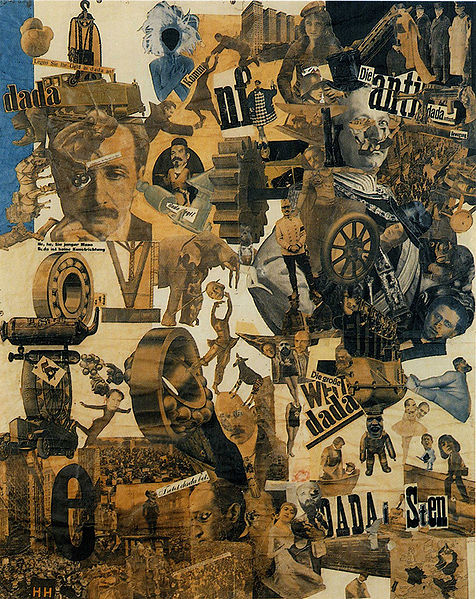
    An example of a Dadaist work is at right, by Hannah Höch, Cut with the Dada Kitchen Knife through the Last Weimar Beer-Belly Cultural Epoch in Germany, 1919)

    The Dadaists, born in the Cafe Voltaire, were interested first in the written arts, and didn’t move to painting and the plastics for a couple of years.  The first among these creative equals was probably Tristan Tzara  (born Samuel or Samy Rosenstock, also known as S. Samyro, 1896–1963) who was first a writer and poet before an artist.  True to the Dadaist great non-existent history, Tzara set forth a method of constructing poetry.  It was basically an engine for a simultaneous poem, as in the “bruitist” Futurists tradition, which built upon the work of Hugo Ball, who in turn was the inventor of the sound poem (Lautgedicht). And so tongue deep in cheek, Tzara set forth these principles:

    To make a Dadaist poem:

    • Take a newspaper.
    • Take a pair of scissors.
    • Choose an article as long as
      you are planning to make your poem.
    • Cut out the article.
    • Then cut out each of the
      words that make up this article and put them in a bag.
    • Shake it gently.
    • Then take out the scraps one
      after the other in the order in which they left the bag.
    • Copy conscientiously.
    • The poem will be like you.
    • And here you are a writer,
      infinitely original and endowed with a sensibility that is charming though
      beyond the understanding of the vulgar.

    Scan0002 (Some few weeks ago I made a post about an automatic poem-making device–the poem-amatic fist micrroscope–a
    fun little bit about making poems of ordinary printed pages by
    recording what you saw of them in the visual field seen through the
    barrel of a semi-closed fist. 
    Then there is the entry “Poetry from Found-Wordist and Book Pathologist
    Mr. Ignatio Norme
    , Found-Wordist and Page Number Collector (Boston, Mass.;
    1923-1988))” in my growing and imaginary museum catalog called Weltin and
    Wantin.
      Mr. Norme constructed poems in
    much this same way, except that he stripped his poems out of the lines of his
    books. His effort is here, called Primo VI, the Analysis of Man//Fantasies
    brillantes
    (by  “the man who found obscure
    phi-related connectivity between random word placement, page number and the poetic
    ideal”).

    Now.
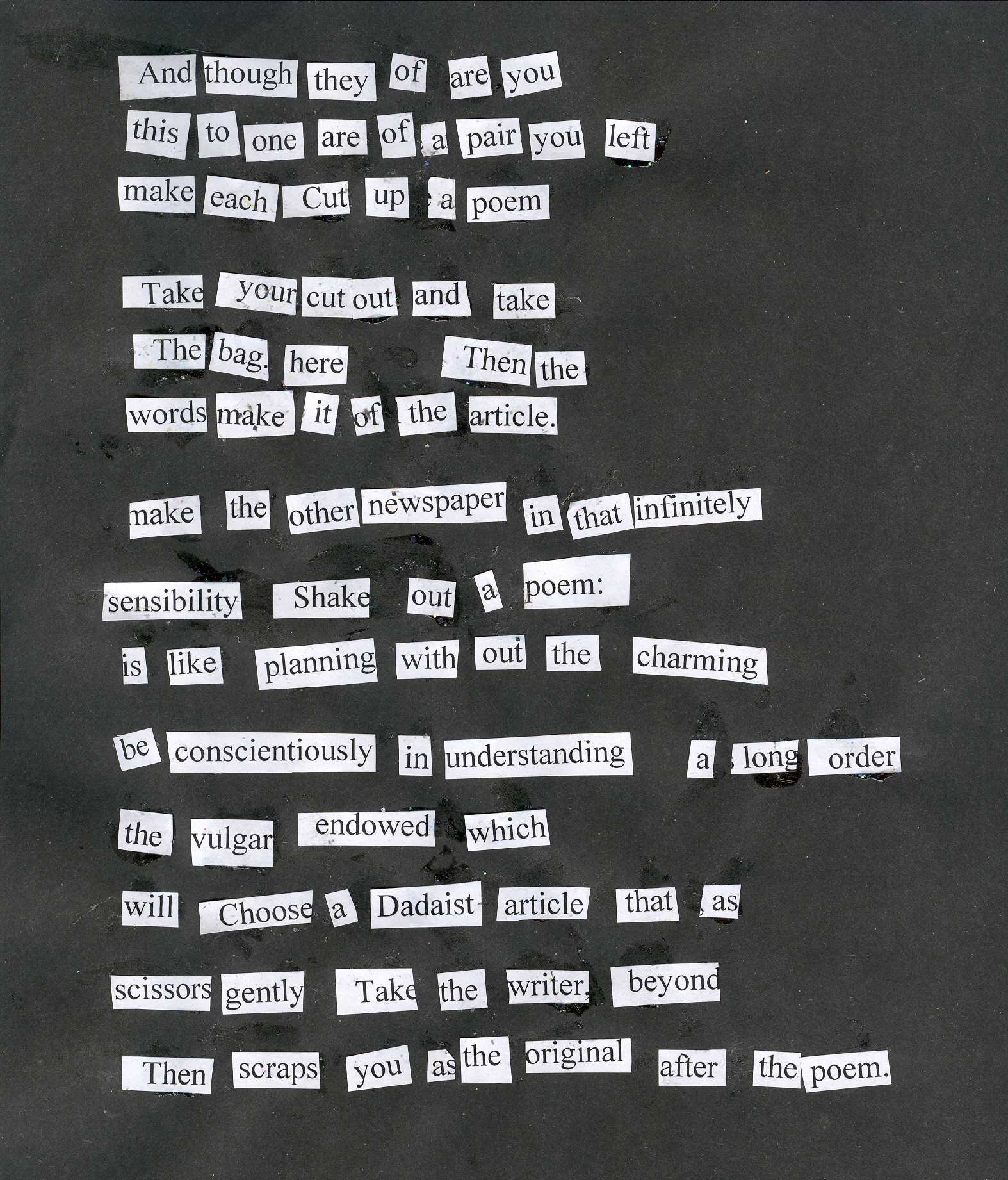
    I tried this out, but not with newspaper–rather I did it with Tzara’s instruction itself, and let me tell you, it doesn’t work.  There’s just too much left to chance, and, frankly, too many prepositions, too much grunting work.

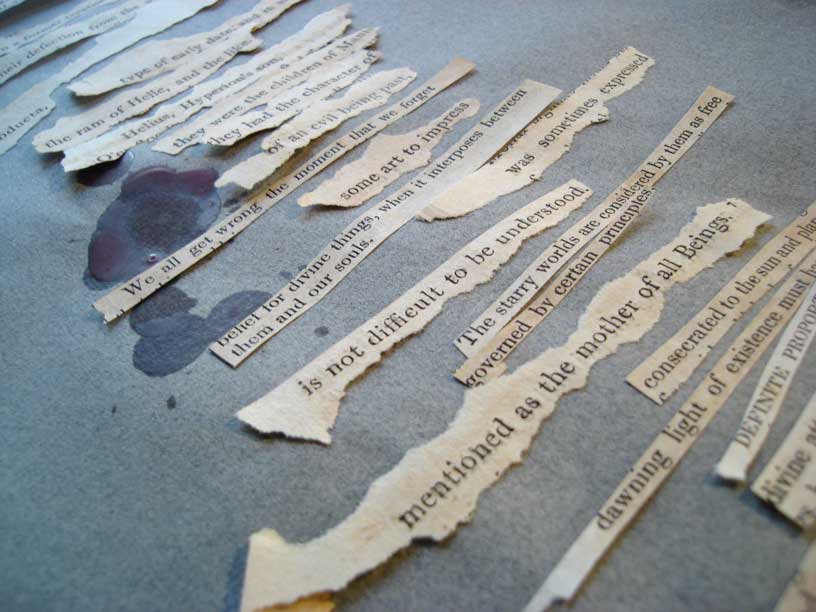
    On the other hand, if you lay out the pieces before you and determine to allow yourself 15 minutes to select a poem from the scattered bits on the table, then the method does stand some sort of chance.
    Here’s what I came up with, and it is almost something or other; at least I think that  is probably not nothing.  In the very least, though, it is a very interesting exercise, trying to get your mind to find a poem in strips of paper.  In that way Mr. Tzara was perfectly correct. 

    (Below is a fragment of Mr. Norme’s work.)

    Blog--norme

    _______

    *  Dada is the groundwork to abstract art and sound poetry, a starting
    point for performance art, a prelude to postmodernism, an influence on
    pop art, a celebration of antiart to be later embraced for
    anarcho-political uses in the 1960s and the movement that lay the
    foundation for Surrealism.
    —Marc Lowenthal, translator’s introduction to Francis Picabia‘s I Am a Beautiful Monster: Poetry, Prose, And Provocation


  • Revolutions in the Color “Red”: Paul Gauguin and Edwin Hubble

    JF Ptak Science Books LLC  Post 531

    A circus passed the house—still I feel the red in my
    mind.
      Emily Dickinson, 1866

    Color expresses something by itself.  V. van Gogh

    Pure color!  You must
    sacrifice everything to it
    …  P. Gauguin

     
    Standing in my friends Lucy & Andy Archie’s store, standing near a
    window and catching some sun on a cold stinking day, a large red jar cast a
    long red shadow along the wall, causing me to think about the color. (It was a
    pretty nice shadow.)

    Red has turned up as an important color in terms of
    patriotic/vitriolic symbolism (as in the revolutions of 1848, Garibaldi,
    communism), Aztec cochinealial luxury,  important burial dress of the
    Cro-magnums,  signs of divine favor and
    condemnation, Roman red divine, Egyptian danger, royal cinnabar of China ,
    Indian bridal dresses, Japanese heroic figures, and on and on (into the lower
    realms of red tape, blood red, fire, blind anger, love/passion, evil, crushing
    impropriety,  and etc.)

    Red’s most important contributions, perhaps, at least in
    modern times of the past few hundred years or so, comes in the field of art and
    science—and its appearance really is pretty monumental, and weirdly
    coincidental in their placement in the chronology of Big Important Stuff.  The birth of impressionism (with Monet and
    the Salon des Refuses), the greatest change in the history of art since the
    rediscovery of perspective, and the solidification of spectrum analysis (Bunsen
    and Kirchhoff), both occurred around the period of 1859-1863—the great use of
    red for both of these developments would come somewhat later, though the red
    roots began here. 

    Img128
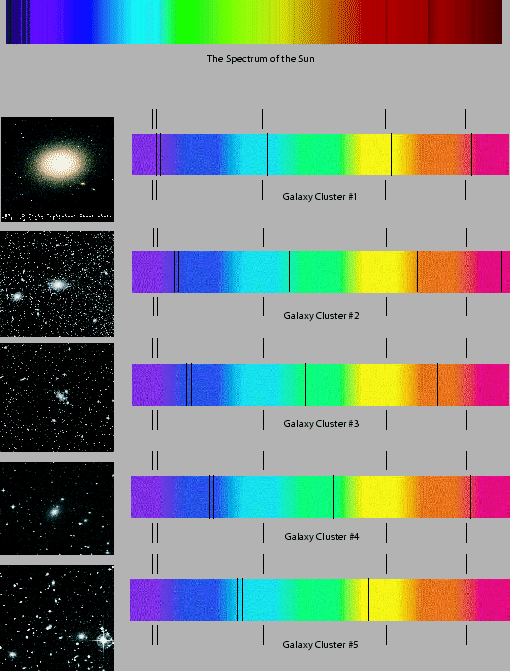
    The achievement of Bunsen and Kirchhoff, started in the
    epochal year of 1859 (the same year seeing the publication of the Origin), was
    nearly as spectacular as any other scientific achievement of that century.  The two men showed—and this would have been
    incredible to the mind of the 19th century—that individual atoms had
    their own spectral signature.  When the
    Englishman William Huggins absorbed their work, he realized immediately (as did
    Bunsen and Kirchhoff) that the spectroscope could be turned on the sun and all
    the rest of it—the results of the experiments of these three revealed the
    elements of what stars were made of, something that must’ve seemed like science
    fiction come true.  The second part of
    the second step* in this fabulous discovery and application came 65 years
    later, when American astronomer Edwin Hubble** theorized and proved  that the red shift that occur in the spectra
    of all galaxies actually (a phenomenon which had been observed for years but
    not understood) meant that they were all racing away (at a speed proportional
    to their distance, Hubble’s Law) from the Earth—the basis of the Big Bang.  Cosmological significances aside, this was
    also a big deal for the advancement of color, as it really hadn’t played a very
    major part at all in the history of science to this point (excepting the
    brilliant occasional bits like Newton’s
    Opticks). Color just wasn’t a part of
    the great systems and ideas of Plato, Pythagoras, Aristotle, Euclid,
    Kepler, Newton
    and so on—it just didn’t come into play. 

    Blog--gauguin

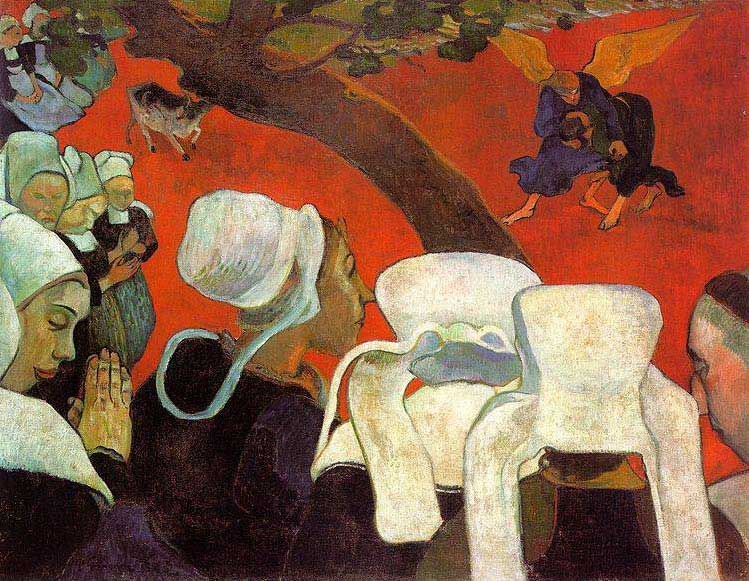
     Now, as to the importance of Red in art.  It comes for me with Gauguin.  Gauguin and his red grass.  Red grass doesn’t mean anything today, but in
    the early 1880’s, well, red grass was, simply, everything.  It was a revolutionary idea to make the idea
    of what grass”is” subject to the color that the artist thought was demanded by
    it subject, and that all of this was an artistic variable in the control of
    each individual interpretation.  It
    happened right there in the middle of the Impressionist movement, and was the
    beginning of the end for representational art, the final blow to which would
    not occur until 1911 with Mr. Kandinsky.


    This was a lot to blow through in under a thousand words,
    and undoubtedly I’ve slandered several good ideas—but I think overall that this
    is a reasonable idea, this importance of the color RED.  There’s much more to be said about the
    Impressionists and a whole bunch more on the absence of color in the history of
    science, but that’ll have to come later. 

    Of no importance but of some smiling interest is the notion
    that the paintings that were rejected for exhibition in juried salons (in
    France in the 1860’s) and which were used in a new movement and in new “juried”
    shows called Salon des Refuses, were all stamped with an “R” on the back of
    their canvases.

     _______

    *the first great advancement coming in the solving of the
    so-called “ultraviolet catastrophe”, arriving through the Maxwell equations of
    1873 and riding into the quanta of Planck in 1899/1900 (and then to quantum
    mechanics).

    **Hubble, Edwin, “A Relation
    between Distance and Radial Velocity among Extra-Galactic Nebulae
    ”
    (1929) Proceedings of the National Academy of Sciences of the United States
    of

    America

    ,
    Volume 15, Issue 3, pp. 168-173

Recent Posts

Archives

Categories