JF Ptak Science Books LLC Post 593 Blog Bookstore
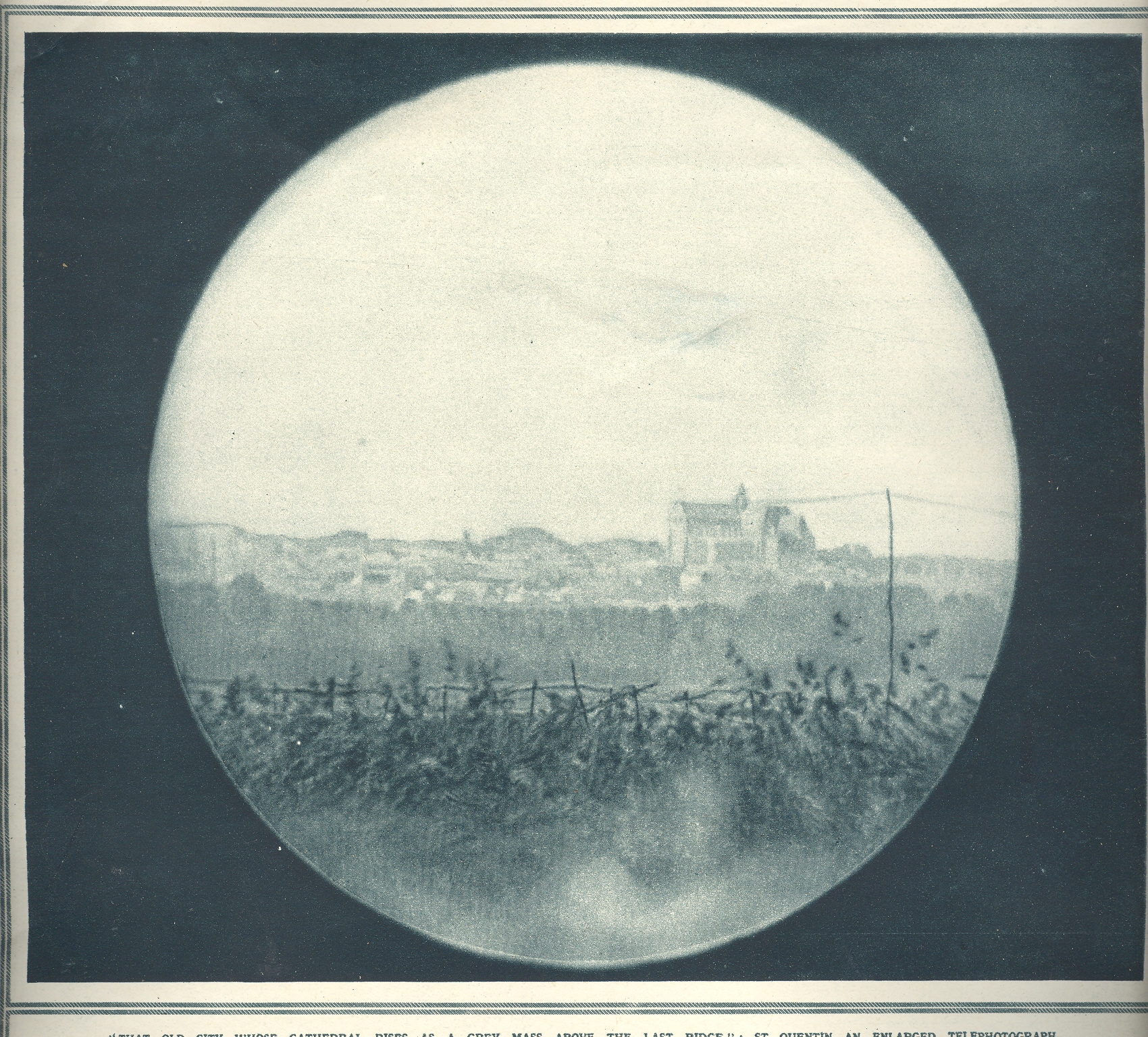 This lovely, seemingly antique daguerreian view is what the American Expeditionary Force (AEF) commander General JJ Pershing saw at the front lines of St. Quentin in July 1917. The U.S. had entered the war, finally, on April 2 1917, nearly three years after the war began, landing in France 13 June 1917 and entering almost immediately into battle at Chateau-Thierry. On 2 July Pershing estimated that the U.S. would need a million fighting men; the day that this photo was published in The Illustrated London News, he revised that estimate to three million. The view he was seeing here was more than of a town about to be pounded by thousands of artillery shells–the magazine was sharing a view of what the European and Empire countries had been seeing for 31 months, and what the Americans would now be sharing for another 17 months.
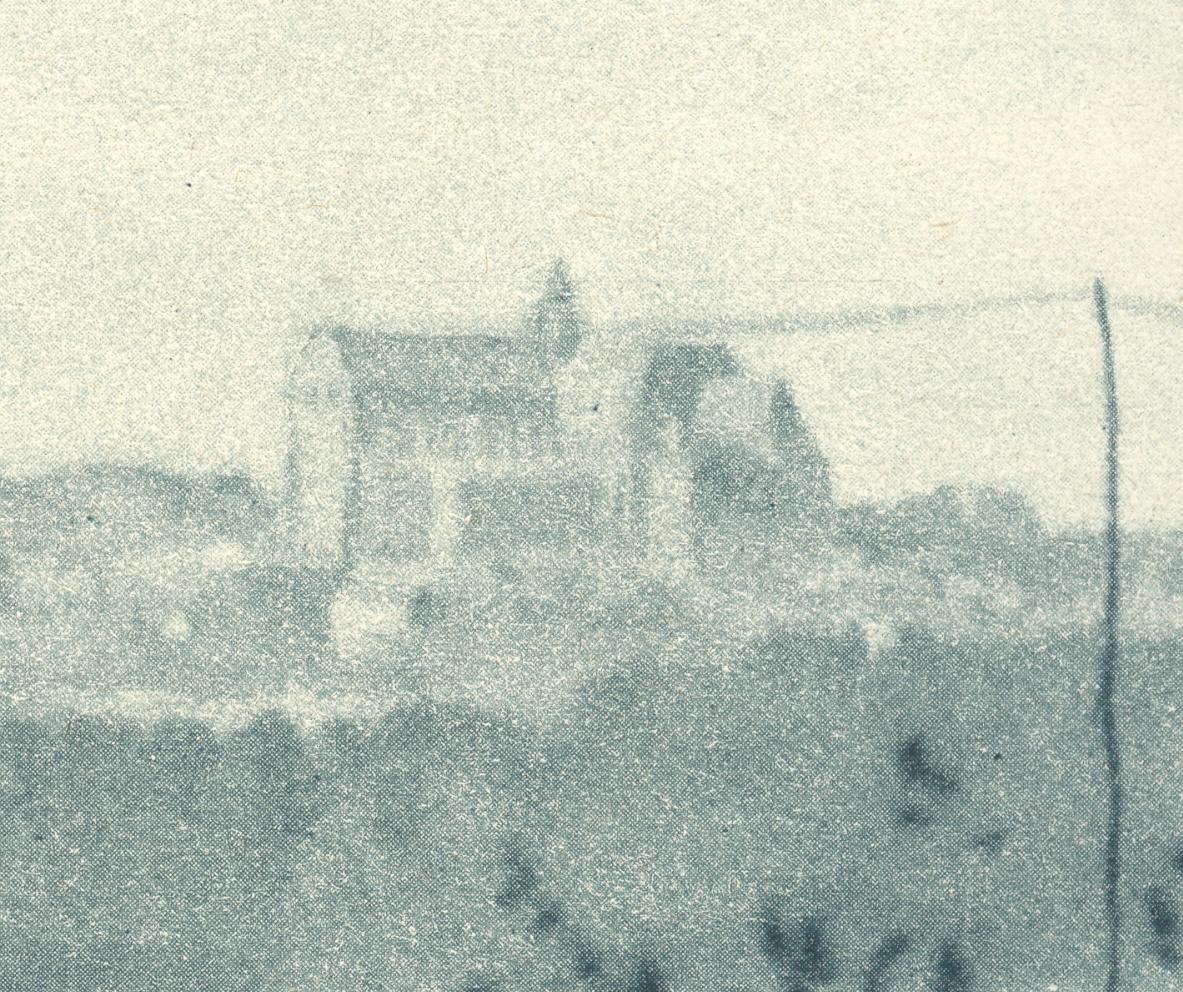
It is a beautiful and deadly view, seen through French field binoculars at the tip of the front for the battle. The large building to the right is the town’s Gothic cathedral/collegiate masterpiece: it was old and large, with a 370-foot-long and 130-foot-high nave. It was a highpoint for that part of France, and was the burying place for St. Quentin and St. Victorious–their graves would be covered by the rubble of the cathedral’s collapsed roof very soon after this picture was taken. The building was shelled and burned all night long–the French blaming the Germans and vice versa.
If Pershing had really good sight he might’ve been able to see the 116,000 American soldiers w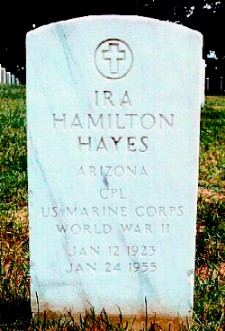 ho would be killed in battle, though I suspect he had a pretty good idea of what was to come, thinking as he did that he need 3 million soldiers. To be utterly fair I don’t think that he could’ve possibly seen in his imagination what 9 million dead soldiers looked like, or what 16 million dead soldiers and civilians looked like, or what 37 million dead and wound soldiers and civilians looked like, all the casualties of this war, all done in 4 years.
I’ve found it odd in a way that I’ve not really been able to explain that Pershing is buried so very close to Ira Hamilton Hayes at Arlington. I used to leave a good twig on Jackson’s headstone on Memorial Day, and then get that unusual, uncomfortable emotion on seeing the large Pershing monument just a few hundred feet away.