A Daily History of Holes, Dots, Lines, Science, History, Math, Physics, Art, the Unintentional Absurd, Architecture, Maps, Data Visualization, Blank and Missing Things, and so on. |1.6 million words, 7500 images, 4.9 million hits| Press & appearances in The Times, Le Figaro, Mensa, The Economist, The Guardian, Discovery News, Slate, Le Monde, Sci American Blogs, Le Pont, and many other places… 5000+ total posts since 2008.

  • Sacred Mountains Series: Tai Shan, China.

    JF Ptak Science Books LLC  Post 659

    The Chou dynasty Shu-ching (“the History Classic”, “the Book of History”, “the
    Book of Documents”) is one of the world’s oldest historical documents, relating
    vernacular, religious and legendary drama of China.  According to this sixth century BCE history,
    the the legendary Chinese third milenium BCE ruler, Shun (2255-2206 BCE),
    would pilgrimage* every five years to the points marking the extent of is
    realm, stopping and extolling virtue and leaving gifts at the peaks of five
    mountains at these five points.  The one mountain
    of these five that was named was Tai Shan, which remains the principal of what
    is called “the five sacred mountains**”, and which is still after thousands of
    years a point of veneration and pilgrimage. 

    Blog--june 22--tai shan 001

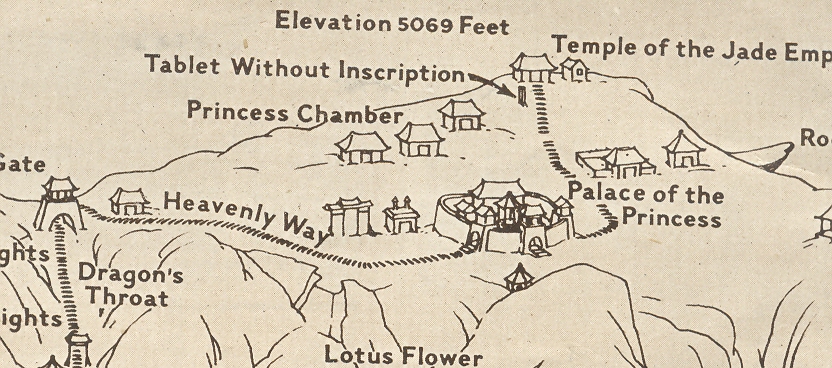
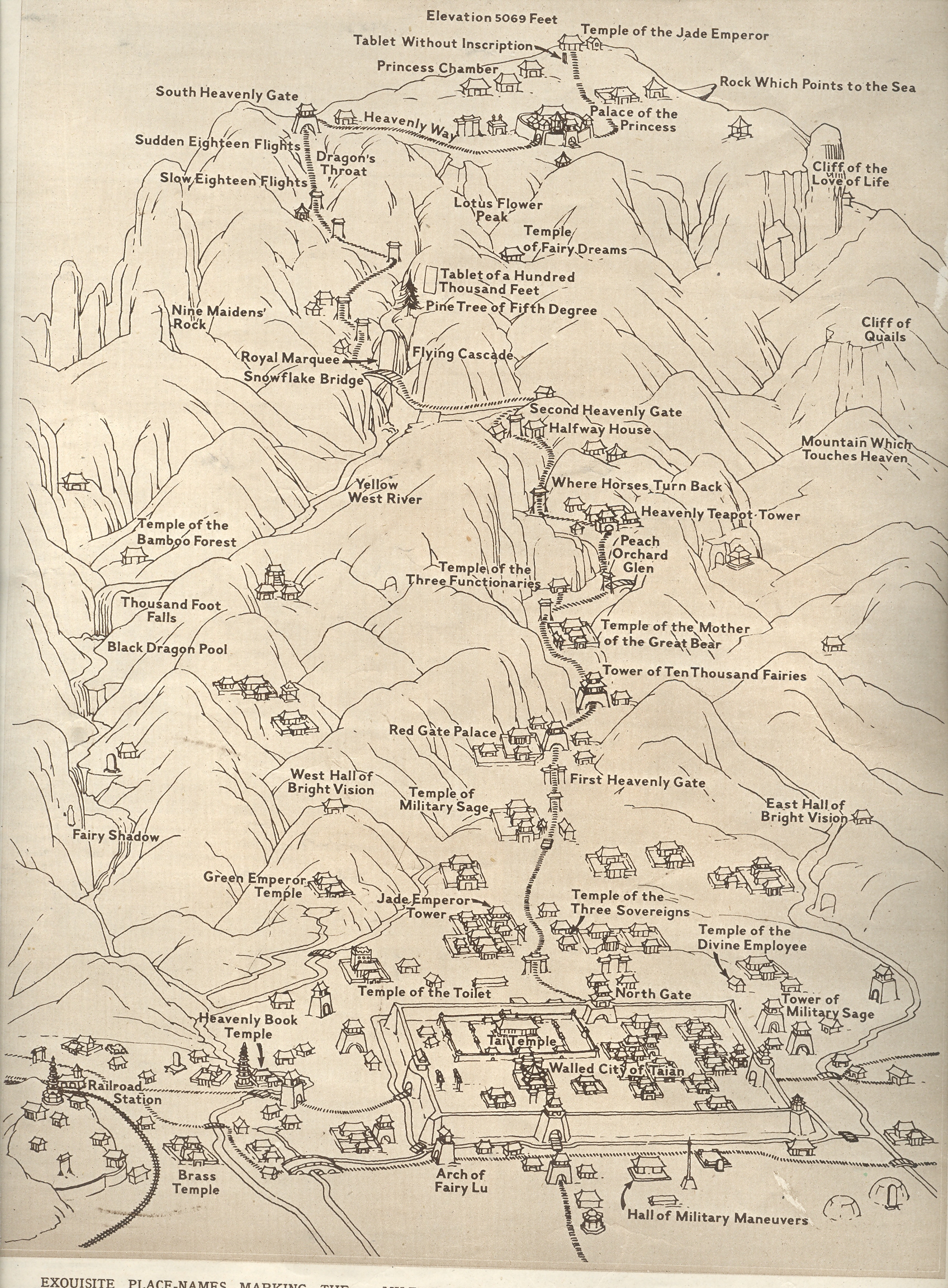
    The map of the pilgrim’s paths in this mountain was published in The
    Illustrated London News
    for 20
    October 1945.  It is a nicely
    designed skeleton map of the mountain, scaled down to reveal temples and
    principal interests, and done in such as 
    way as to look a bit naïve. 

    There’s too much not-known history here for me to make much of a comment
    on this map.  One item that did catch my
    interest though is found near the peak, the “tablet without Inscription”.  It is evidently a massive monolith put in
    place around 110 AC.  It has but one work
    incised in it:  the ideogram for “Lord”.

    Blog--june 22--tai shan 002

    *pilgrimage – ch’ ao-shan chin-hsiang – means ‘paying one’s respect
    to a mountain’

    **The  five sacred mountains include:

    • Tai Shan, Taoist mountain of the east, Shandong province, 1545 meters.

    • Heng Shan Bei, Taoist mountain of the north, Shanxi province, 2017 meters.

    • Hua Shan, Taoist mountain of the west, Shanxi province, 1997 meters.

    • Heng Shan Nan, Taoist mountain of the south, Hunan province, 1290 meters.

    • Song Shan, Taoist mountain of the center, Henan province, 1494 meters.

    Blog--june 22--tai shan 3
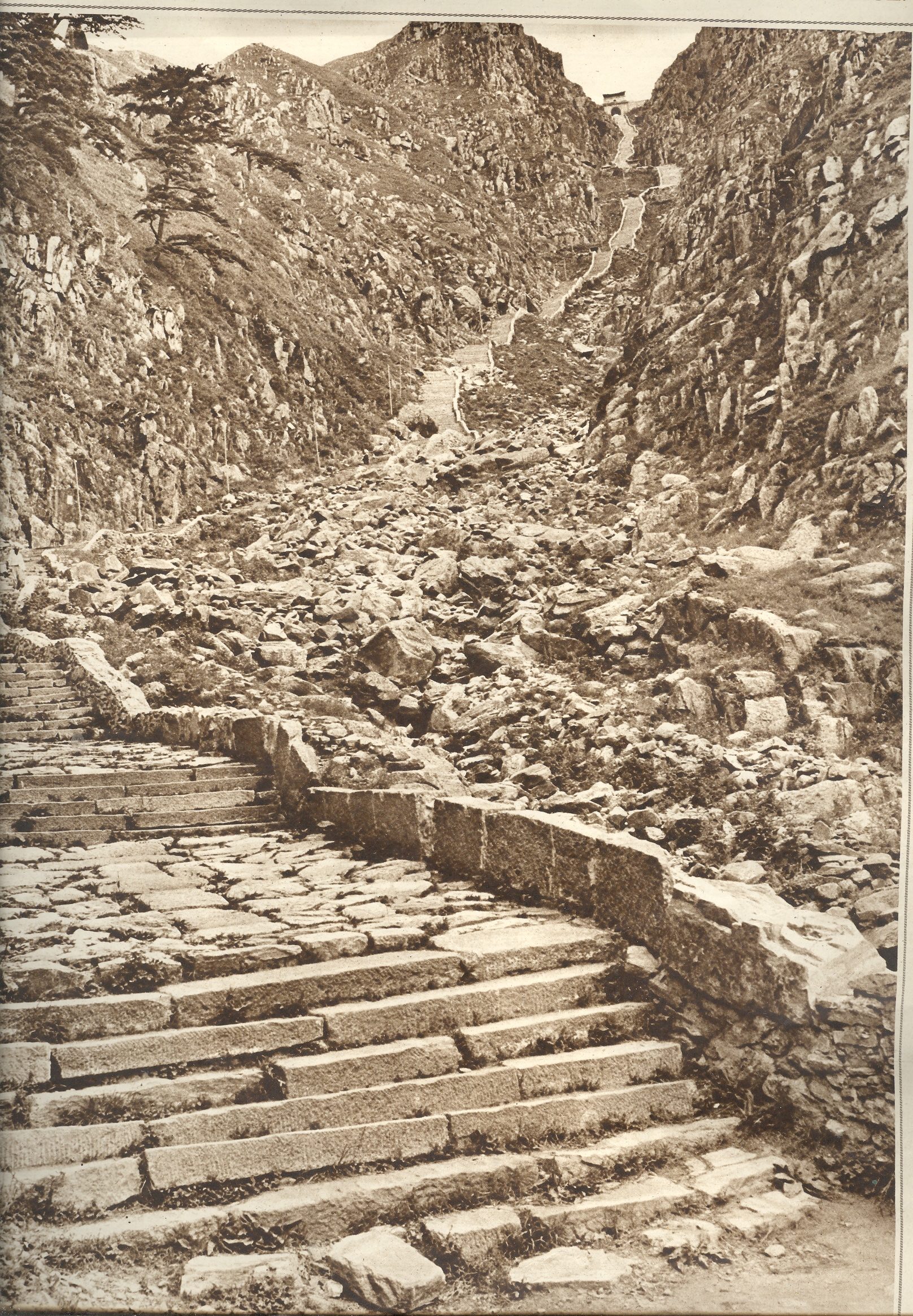
    This interesting image was made by none other than Gilbert Grosvenor (1945), the chair of the National Geographic.  These stairs–1000 of them–lead to the South Heavenly Gate near the summit.  At the time, these were still one of the world’s longest stairways.

  • Odd Images Department: Submerged, Miniature, 19th Century People

    JF Ptak Science Books LLC  Post 660

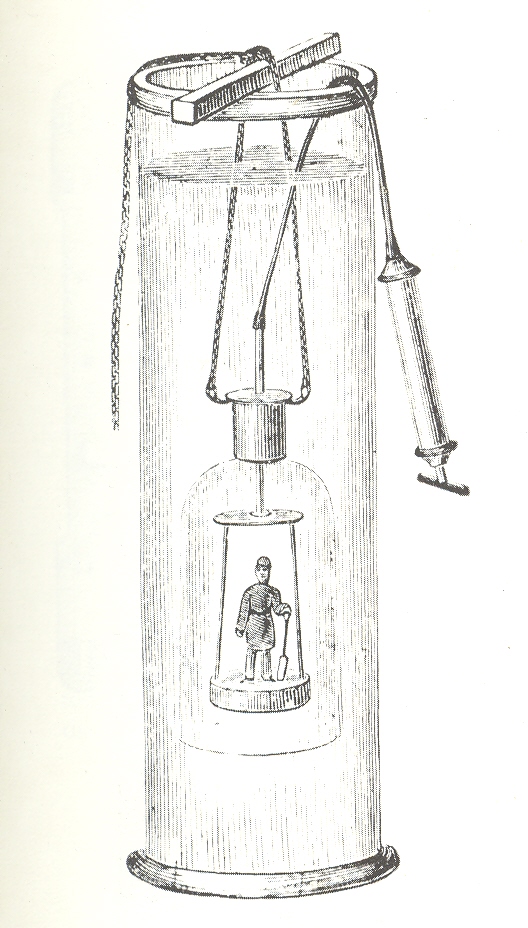
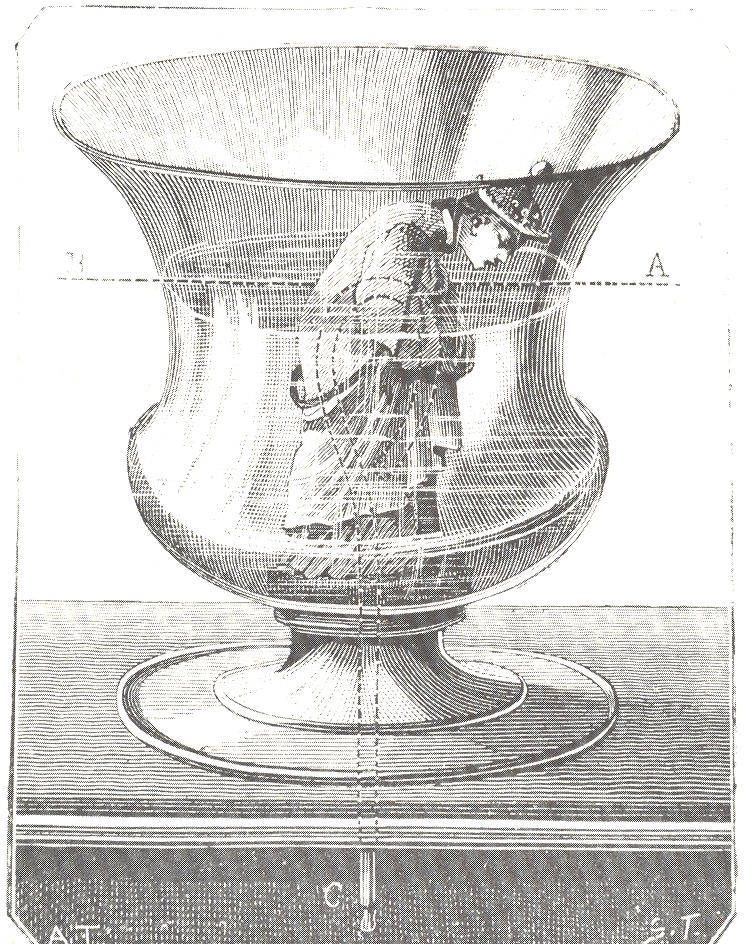
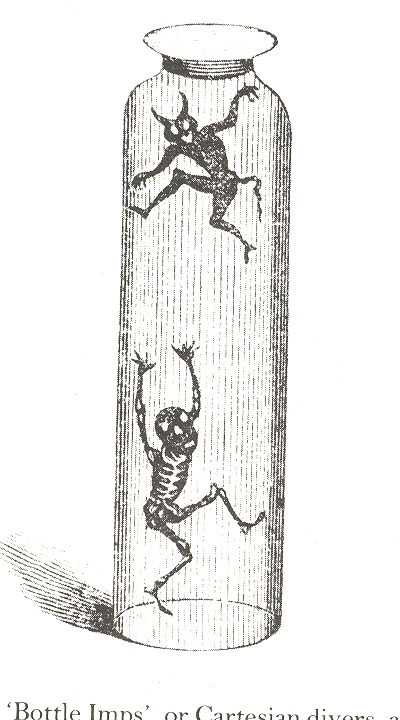
    Blog--june 22--people in glasses diver Oh, all right–these aren’t really miniature people–they just look like it. (And I’ll be interested to see how people come to this post via Google!)  What these images display are physical science laboratory demonstration tools and toys. (People have been swimming in fomalin and formaldehyde for a long time, hundreds of years–but I’m not dealing with the biological preparations today, I’m only after found, out-of-context oddness.)

    This first image, lovely and odd as it seems, is a simple demonstration device showing how a diving bell operates and was manufactured around 1910.  This would’ve been used in a classroom for a three dimensional learning tool , a standard approach to help elucidate phyical principles.  Classrooms would’ve had cabinets stuffed with these sorts of instruments–if the school had any money–and were in vogue for hundreds of years.  In this case we see the worker with his shovel being lowered into water, encased in a glass dome, with a line attached top a syringe which delivers oxygen.  (The image is from the catalog of John J. Griffin & Sons, Scientific Handicraft… London, 1910.)

    Blog--june 22--people in glasses tantalus The second image is a pretty high-end cup of tantalus–a vessel that cannot be filled because of pressure and siphoning and an exit port. It is named for the Greek bad boy Tantalus, who was the son of Zeus and Plouto, and by whose various misdeeds was cast away in Tartarus, the lowest strata of Hades in a place reserved for evildoing evildoers.  Tantalus lived a life of theft and flippant care:  for example, he was the one whom invited to dine with the gods, stole their ambrosia and gave it to the people.  In another example we see Tantalus offering his son to the gods by preparing him, thinnly dicing the boy, and chopping that, serving him to the gods for luncheon–not everyone was fooled, and no one was amused.  Part of his trials in the Underworld gives us the term “tantalzing”:  desire without fulfillment. His position in the afterlife, such as it was, was not pretty: Tantalus was to stand in perpetual hunger in a stream beneath fruiting trees; the water though would prevent him from reaching anything to eat, every time, and forever. . Every time he grew thirsty, the water level would lower itself, and he couldn’t reach anything to drink.  Pretty bad stuff to do for eternity.  This cup was called a Tantalus Cup because it would siphon itself off (through a tube in the bottom of the glass) so that the glass would always only get about half-way filled.  Why a “Chinese-like” figure was chosen for Tantalus, I don’t know. 

    Blog--june 22--people in glasses imps Lastly is a Jar of Sinking  Imps–I’ve seen this before with Mother/Father figures, regular humans–but this device contains non-humans.  This image comes from Aryton Paris, Philosophy in Sport (1853), and was a scientific toy demonstrating what happens to air-filled items immersed in water (and where they are nearly the same specific gravity as water), when pressure is applied to a rubber bladder on top of the filled jar.  The pressure from the weight applied to the rubber bladder causes the air in the imps to compress; and when the air is compressed, the imps sink to the bottom.  Not exactly hours of fun, unless there was nothing else around,  though I must confess I’ve seen my daughters have long periods of uninterrupted fun with slimmest of found objects….

  • Graphical Display of Quantitative Data: Anti-Submarine Warfare, 1973

    JF Ptak Science Books LLC  Post 661

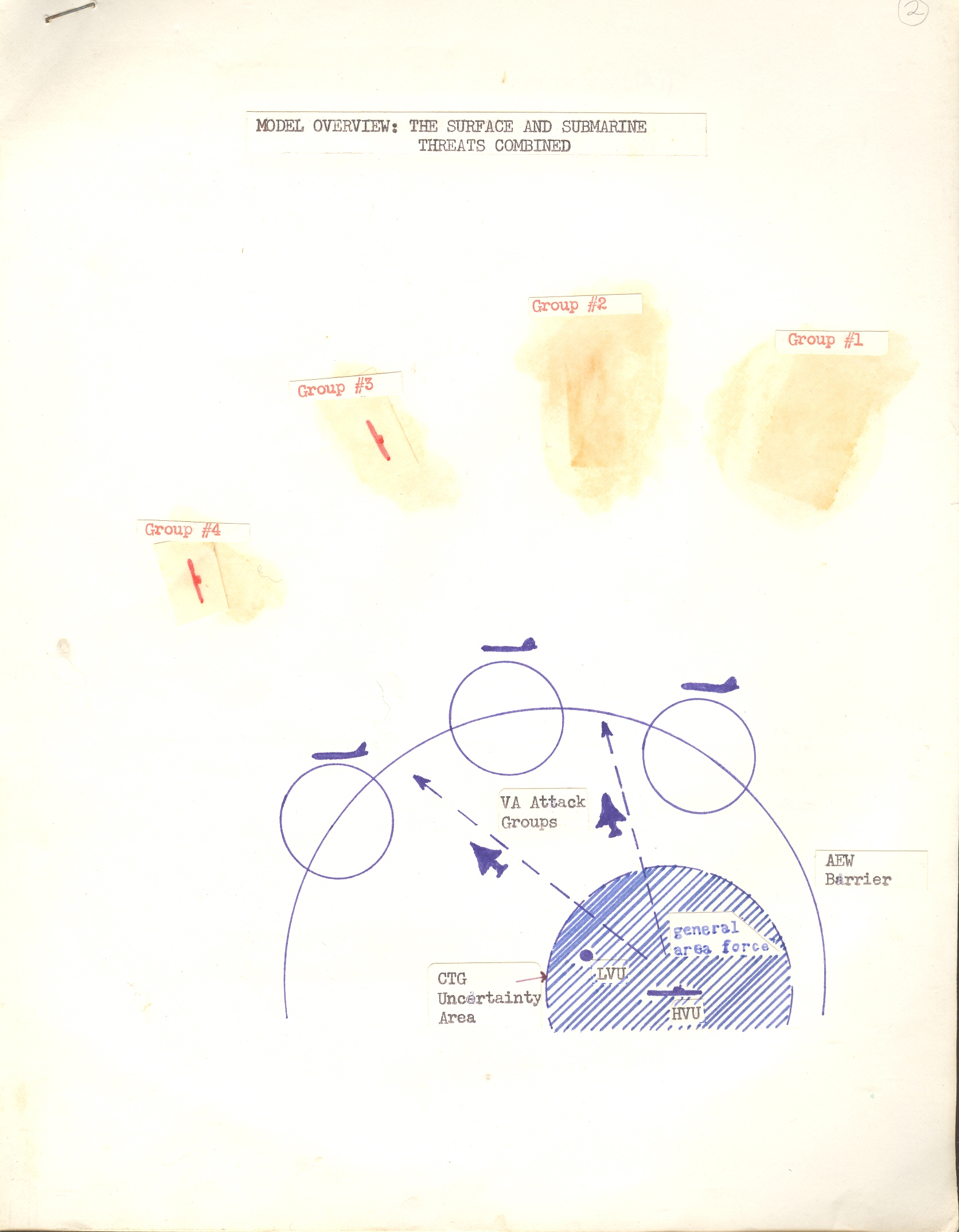
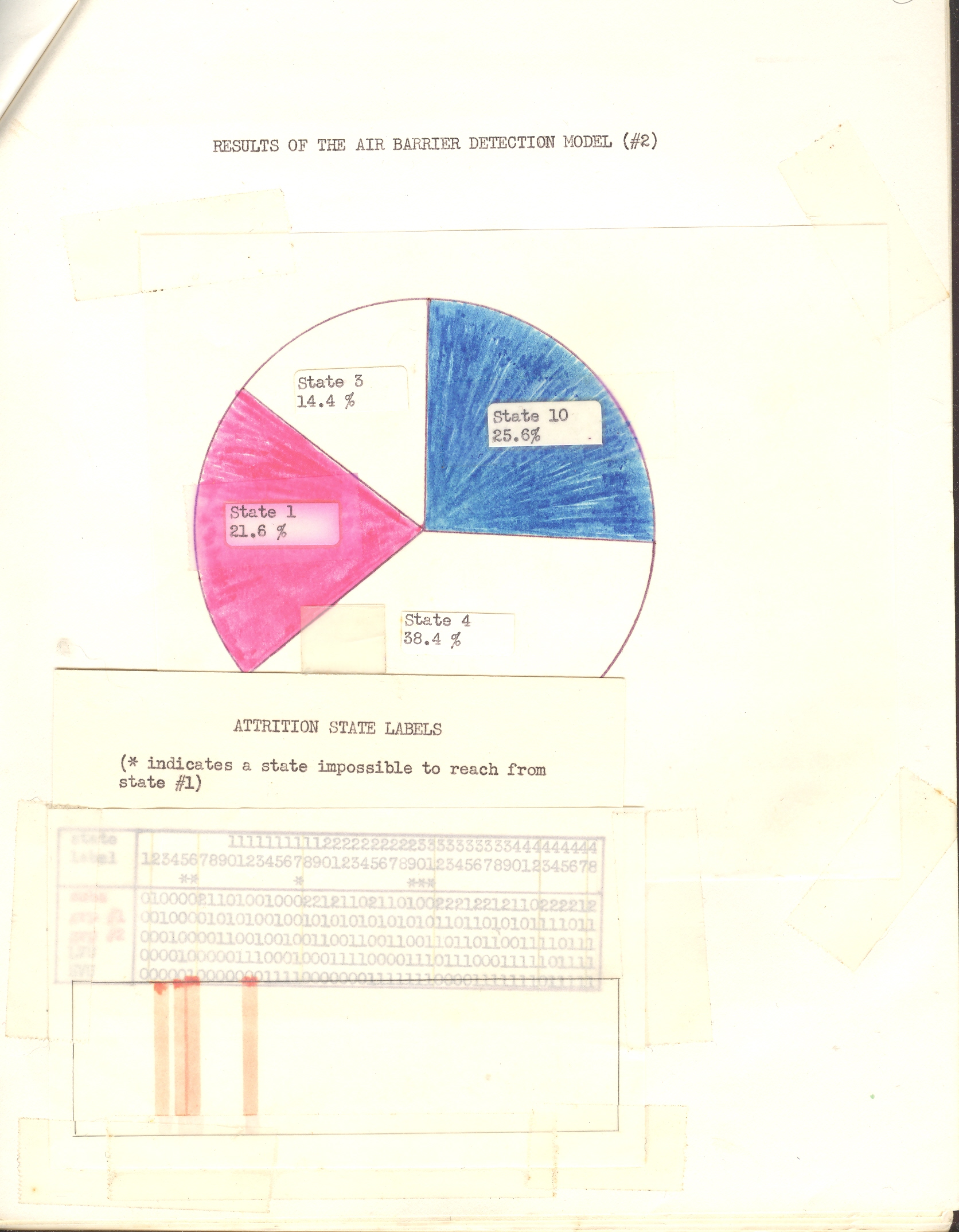
    These original sheets were, it seems, prepared for an illustrated (1973) talk on a statistical model for the detection of anti-submarine warfare threats—unfortunately I’m at a loss to distinguish much of importance here, though I’m sure that someone who is the least bit familiar with defense modeling and simulation would instantly and easily interpret theserelatively simple images.  I’m presenting them here because they are to me an example of excellent presentation, design and logic—a fine symbol for the presentation of graphical information in a pre-PowerPoint past.

    Blog--june 23 luster 1


    The work is that of [redacted], an analyst who seems to have worked in the 1960’s and 1970’s for the thinktank John D. Kettelle Corp of Alexandria, Virginia, a defense contracting firm.  (I’ve included titles  and abstracts of some of his published works in the “continued reading” section, below.)


    Blog--june 23 luster 3  

    These seem to comprise something like author/speaker’s notes for overhead illustrations for a presentation on a computerized system for the receipt and processing (and summarizing?) of tactical intelligence data on the enemy’s intent on locating and destroying submarines.

    What strikes me is the number of cut-outs and paste-ups and such that are part of each slide–every data point, and virtually every notation on each page has been pasted in.  There’s much more to this but these certainly give you a decent idea of the analyst/statistician/programmer/engineer bent over his desk doing surgery on his data. 


  • Deathly Equality: Liberty & Lung Cancer, Cigarettes and Women’s Rights, 1929

    JF Ptak Science Books LLC  Post 662

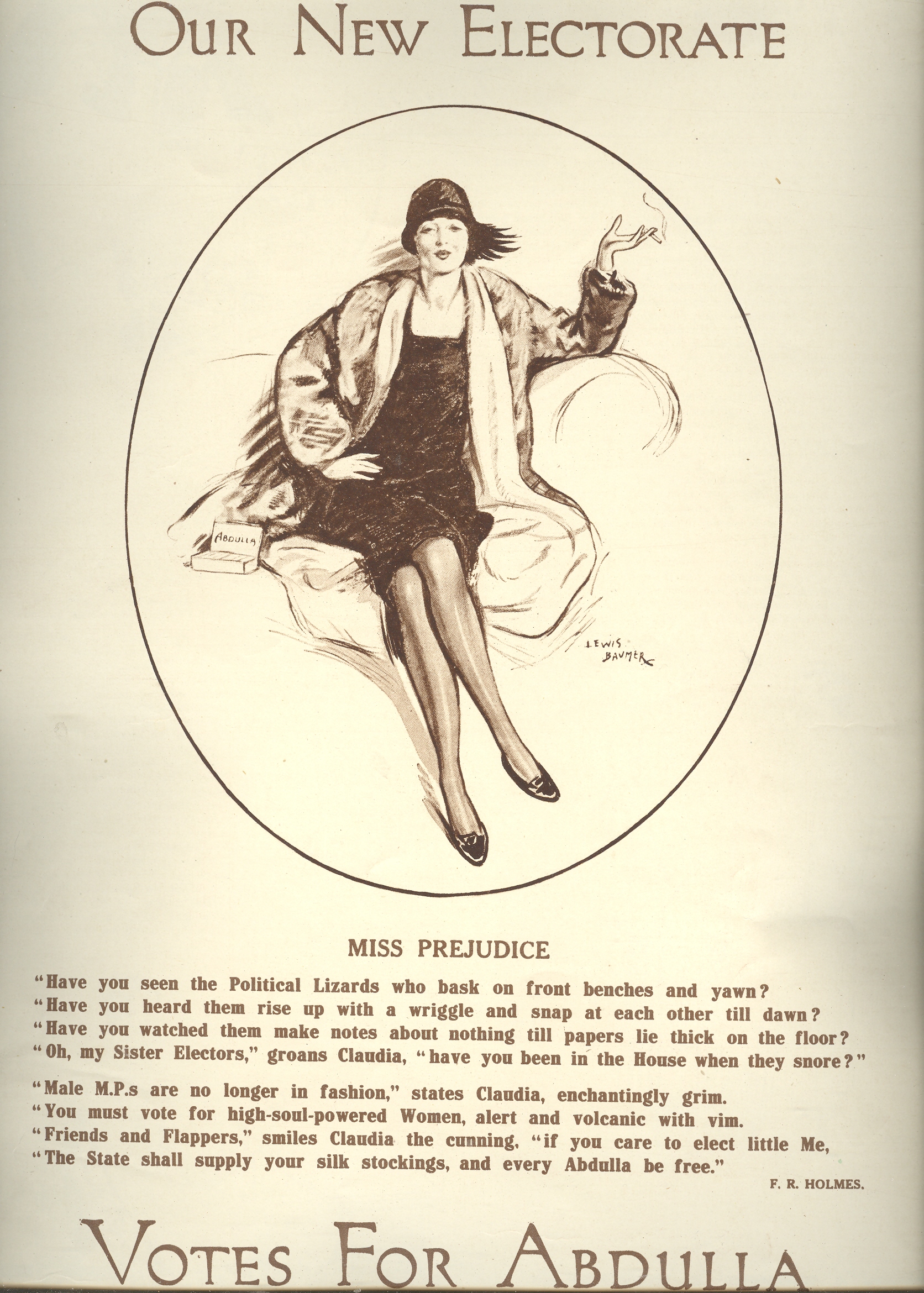
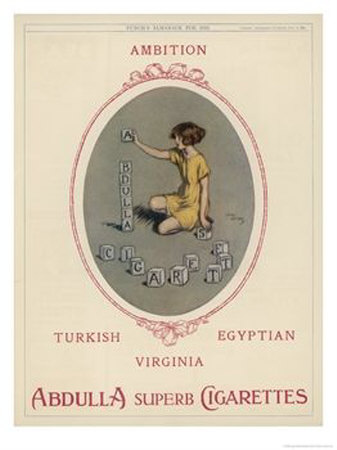
    Blog--june 23 electorate Abdullah Cigarettes has a twisted reliance with the recognition
    of the social equality of women and making money.  Mostly it was making money.  Someone there at Abdullah corporate figured out
    that there was an easy way of increasing their sales without spending huge
    amounts of money on market development—open their market interests to
    women.  And in the case pictured here,
    from The Illustrated London News of 1929, the Abdullah people were making a
    direct appeal to the literal empowerment of women via the national right to
    vote.  This came a little post facto, as
    women were given (?) the right in 1918*, though it seems that there were no ads
    reaching out to women in GB until 1926/7, voting rights or not. 


    There was very good money to be made with cigarettes, which were/are
    basically the non-kosher hot dogs (or worse) of the tobacco industry, the
    tobacco equivalent of the utilization of the pig’s squeal, the remnant of other
    products that was filled with profit.  For
    the overwhelming part of the history of tobacco smoking by the Western world,
    the tobacco that was gathered and stuffed into a paper roll and smoked was the
    lowest form of utilizing the product, the vice of the poor. This degraded
    spectacle was soon morphed into an enormous social advantage and gigantic
    economic opportunity for the producers.

    It wasn’t just Abdullah, of course; nor was Abdullah the
    first on the scene:  that “honor” belongs
    to Helmar Cigarettes, which in 1919 posted an advertisement for a  pack of its cigs buried in a sea of female
    faces. The tobacco companies didn’t embrace the notion of the growing
    recognition of women, but did follow it, taking advantage of the new and
    growing rights and their new marketability and giving everyone free access to
    the same deadly diseases.  Exploitation
    of the emergence of the new social power was the key to making money for those
    companies. 


    In the U.S.,
    Marlboro started mild ads directed at women in 1926, tempting its gentle
    readers with ad copy like this: “Has smoking any more to do with a woman’s
    morals than has the color of her hair? Marlboros now ride in so many
    limousines, attend so many bridge parties, and repose in so many
    handbags.” George Washington Hill followed this lead but was more bold,
    pushing Lucky Strikes right to the forefront (in 1927) of the menace.


    All of this worked very well:  tobacco revenues in the U.S. went from
    $12  million in 1926 to $40 million in
    1930, this based largely on the new female marketization, tempting women’s new
    economic and political power with the power of the cigarette, dressed in the
    fashion of subverting the power structure, just like flapper’s dress, bobbed
    hair and slacks. 


    Blog--june 23--abdulla kidAbdullah also blurred the age barrier for smokers by pushing
    their product with images of what seem to be ‘tweens, a move that expands the
    concept of nastiness. (It should be remembered that the baseball player Honus
    Wagner demanded that his picture be removed from the baseball cards distributed
    with Sweet Caporel cigarettes because he thought the tobacco company was trying
    to corrupt the young with it—the result was that his card is among the rarest
    and most expensive of all baseball cards.) I don’t think that there’s much room
    for negotiation in this image—it plainly is directed at the young.  But of course it was all a nasty business,
    top to bottom—even the American Medical Association got into the act, publishing
    their first cigarette ad in their journals in 1933—a practice that would last
    to 1952.  The cancer connections were
    there, but the lobby by the concerned national interests of the tobacco
    companies were fierce, and the first warning labels about the cigarette/cancer connection
    didn’t appear on packages of cigarettes until Surgeon General Jesse Steinfeld’s
    tenure in 1970.** (Fat and heart diseases kills more, but so do hospitals.  Lee Iococa fought seatbelts in his cars for
    years, and on and on into the night goes this song.)


    I wonder why there hasn’t been more recognition of the
    earlier history of lung cancer—particularly since it really doesn’t seem to
    exist in the 19th century and before.  The disease only starts to show up in the
    1920’s, after men had been smoking cigarettes for 20 years or so.  The epidemic of lung cancer rose with the
    consumption of cigarette–it is of particular forensic interest to look at lung
    cancer rates among men and women from 1950-1980.  These stats are a surprise to no one, the
    rate of cancer among women spiking in the 1950-1980 era, when their habits were
    mature from long use of the liberating agent. 
     Cigarettes was just one of many
    ways in which women expressed their modernism—but is almost certainly the
    deadliest. 

     *American women would get the vote two years later, in 1920;
    that follows the New Zealand
    lead, which granted women the right to vote in 1893.  Ah how many times the Kiwis beat the rest of
    the world to the punch for the correct political behavior!  On the other hand, women in Mexico got the vote in 1948; in Kuwait,
    they waited a little longer, until 2005. 


    ·Posted by :

    ·in:

    —
  • Sound Machines and Acoustic Memory: Ephemeral Sound Landscapes

    JF Ptak Science Books LLC  663

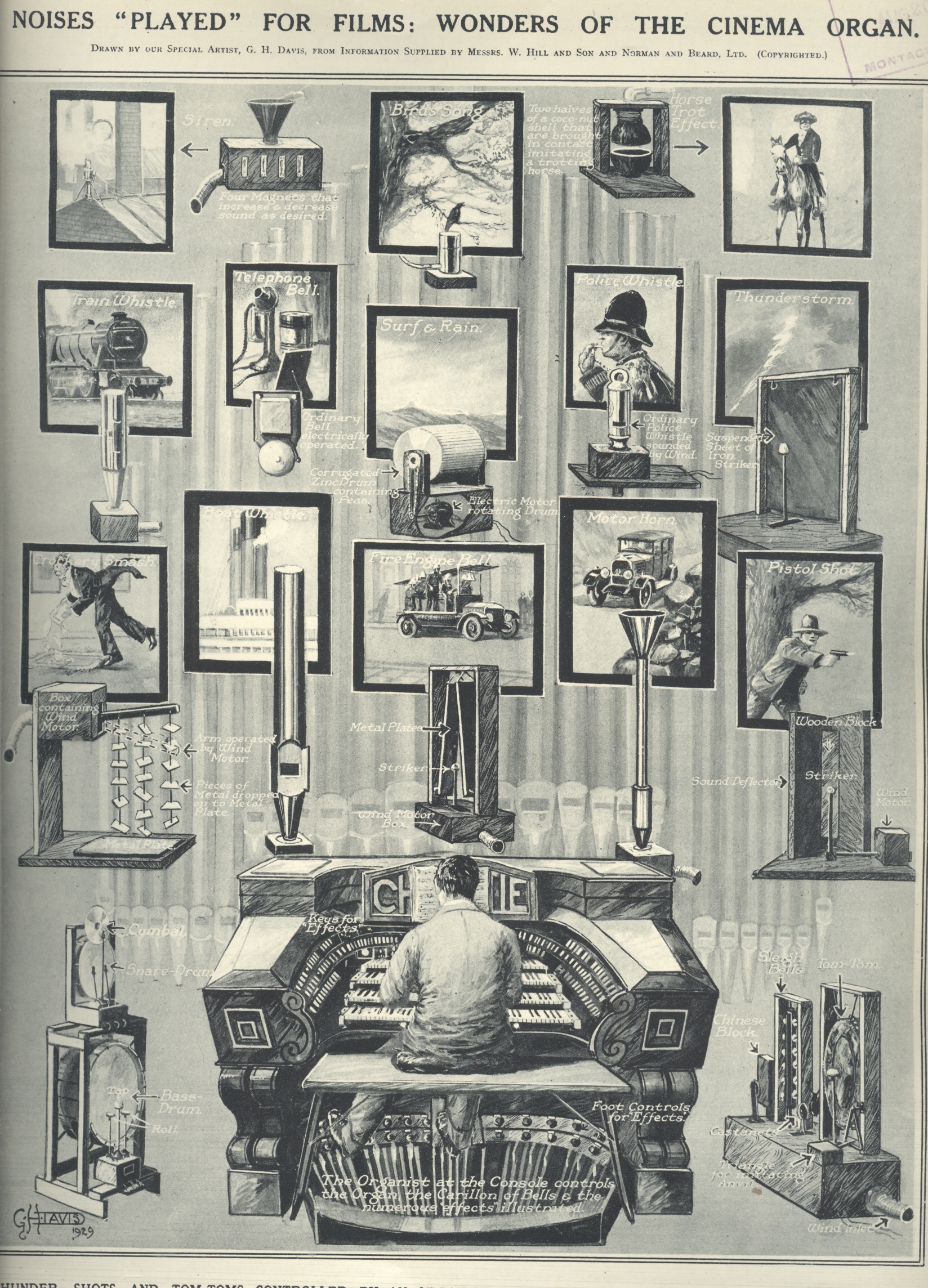
    Blog==june 25 sound machine Making solid the concrete part of musique concrete has
    never looked quite so orderly as in this image, found in the wonderful The
    Illustrated London News
    for 10 August 1929, and depicting a device that would provide “sound effects” for silent motion pictures. 
    The electroacoustic organ was constructed at the very tail end of the
    Silent Film Era, with simultaneous sound-on-film just having been invented (in
    1925), and popular films just starting to be made  employing it. 
    The control over the range of incidental, everyday and forgotten sounds
    seems to be extraordinary, and extraordinarily presented on that fantastic
    organ, providing an acoustic landscape against which move-goers could watch
    their film. 

    It seems like a lot of technology to bring to bear to
    enhance silent pictures with the sound of wind or the clopping of a horse’s
    hooves.  But not so, really—accompaniment
    to silent films was usually and simply musical, with the occasional actors
    employed to speak lines ere and there. 
    The introduction of incidental sound was something new—and it was almost
    immediately something old with the introduction of the talkies,  like a new dimension of achromatic
    experience.Blog==june 25, klee

    What would be very interesting would be to hear a library of
    such effects from so long ago, with noises produced by the stuff that has
    slipped into the past and, sometimes, right out of memory.  The sound of the milkman’s bottles; the
    clatter of the ticker tape; a standard gauge locomotive slowing

    down; the
    iceman’s truck; the P.A. system at Griffith’s
    Field. Sometimes long un-reproduced sounds like these produce visual memories as well (as with the Paul Klee here at right, a painting called “Ancient Sound”, 1925.) There are hudreds of thousands of recordings done in the field as part of ethnomusical or anthropological research, but what I’m talking about is found ephemeral sound. 

    Antiquarian sound is interesting, whether it is the actual early recordings
    of events or objects long passed, or recording made recently of antique objects
    making their modern antiquarian sounds.  Found
    sound is good too—the ordinary, forgotten stuff that blends into the acoustic
    fabric of the day, undifferentiated because of heir common nature.  There are a number of interesting Sound Zoos/Sound
    Museums available online, one being the wonderful London
    Sound Survey
    http://www.soundsurvey.org.uk/index.php/survey/
    (found by benefit of Metafilter) –an excellent and deep site that allows you to
    browse for sounds by era. The Sounds of New York provides a similar service at http://www.soundsofnewyork.com/.

    There is also the very interesting Documentary Sound site, which is an index
    and pointer for other sites. http://wlt4.home.mindspring.com/adventures/documentary.htm
    For example, the owner of the site lists the following fantastic-sounding title
    from the documentary sound releases by Smithsonian’s Folkways series:  Voices of the Sky: Propellers and Jets (1957)  Sounds of the American Southwest (1954)
    Sounds of Animals (1954); Sounds of the Annual International Sports
    Car Grand Prix of Watkins Glen, N.Y.
    (1956); Cable Car Soundscapes
    (1982) F-6129; Here at the Water’s Edge: A Voyage in Sound-NY Harbor
    Documentary
    (1962) F-6161; Sound Effects, Vol. 1: City Sounds
    recorded by Tony Schwartz (1958) F-6170; The Sounds of London (1961)
    F-5901 ; Documentary Sounds (1962) F-618 ; Speech after the Removal
    of the Larynx
    (1964) F-6134; Sounds of Insects (1960) F-6178; Ionosphere
    (High Altitude Sounds)
    (1955) C-501 ; Sounds of the Junk Yard (1964)
    F-6143; Sounds of Medicine (1955) F-6127; Sounds of the Office
    (1964) F-6142; Sounds and Ultra-Sounds of the Bottle-Nose Dolphin (1973)
    F-6132; Sounds of Sea Animals (1955) F-6125; Sounds of the Sea, Vol.
    1
    (1952) F-6121; The Voice of the Sea (1954) C-5011; Sounds of a
    South African Homestead
    (1956) F-6151; Voices of the Storm (1957-58)
    C-1077; The Sounds of Camp: A Documentary Study of a Children’s Camp
    (1959) F-6105; Sounds of a Tropical Rain Forest in America (1952) F-6120;
    The Complete In Fidelytie: Sounds Natural and Un-Natural (1956) C-1044; Sound
    Patterns (Natural, Musical, Human)
    (1953) F-6130.

    A darker, disturbing and tough place
    to visit is
    http://soundportraits.org/on-air/execution_tapes/,
    which houses execution tapes and recording of the last statements of condemned
    men. The tapes are from the mid-1980’s, and have a very grainy, ethereal quality to them–interviews take place with the condemned men in their cells, making their last public statements; there are also recordings of the actions in the command center as the execution area is readied, and also, lastky, in the death chamber itself, when the final designations are read to the condemned.  (There is no actual recording of the death sequence.)

    ·Posted by :

    ·in:

  • The Future-is-Now: Air Travel for the Curious, 1932

    JF Ptak Science Books LLC  Post 664

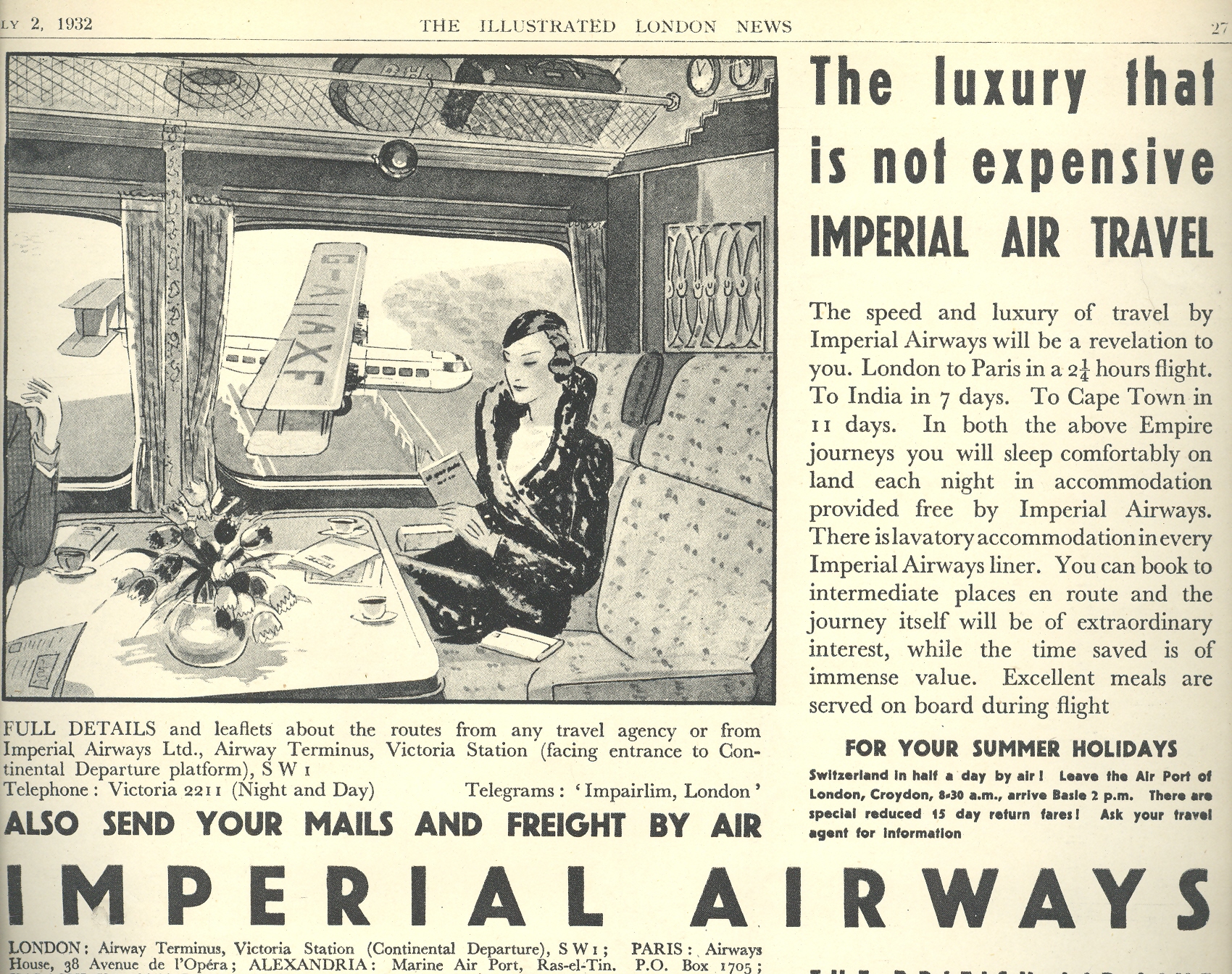
    Blog==june 25 imperial airways I really quite like this image—it has a quality to it that
    looks like a futuristic view of air travel, but it was in fact a
    the-future-is-now image. Imperial Airways offered luxurious accommodation for
    their passengers in the long flights to India (7 days) and Cape Town (11 days). Passengers had a pretty sustained exposure to relative luxury with
    in flight, and landed every evening, the passengers shuttled off to hotels for
    a good night’s sleep.   The passengers in this illustration are enjoying
    a pot of tea at what look like a full-sized table, while through the very large
    viewing window we see another Imperial Airways aircraft passing by *very*
    closely. 


    This advertisement appears in the 2 July 1932 issue of The
    Illustrated London News
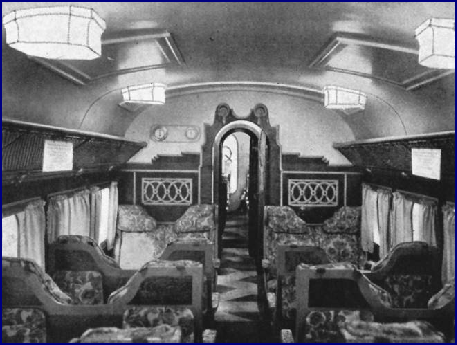
    , posted less Blog==june 25-interior than a year after the company started
    offering the London- Cape Town route.   The
    airline flew Handley Page H.P. 42s with four engines
    for these flights—there were eight of these aircraft used for these flights
    over the year, each posting over one million miles.  All without a single injury to a single
    passenger. 


    ·Posted by :

    ·in:

  • The “Is This Really Necessary?” Department: Fish Throwing Machine, 1932

    JF Ptak Science Books LLC  Post 665

    Blog==june 25 ifish Our necessities are few but our wants are endless.
    Josh Billings

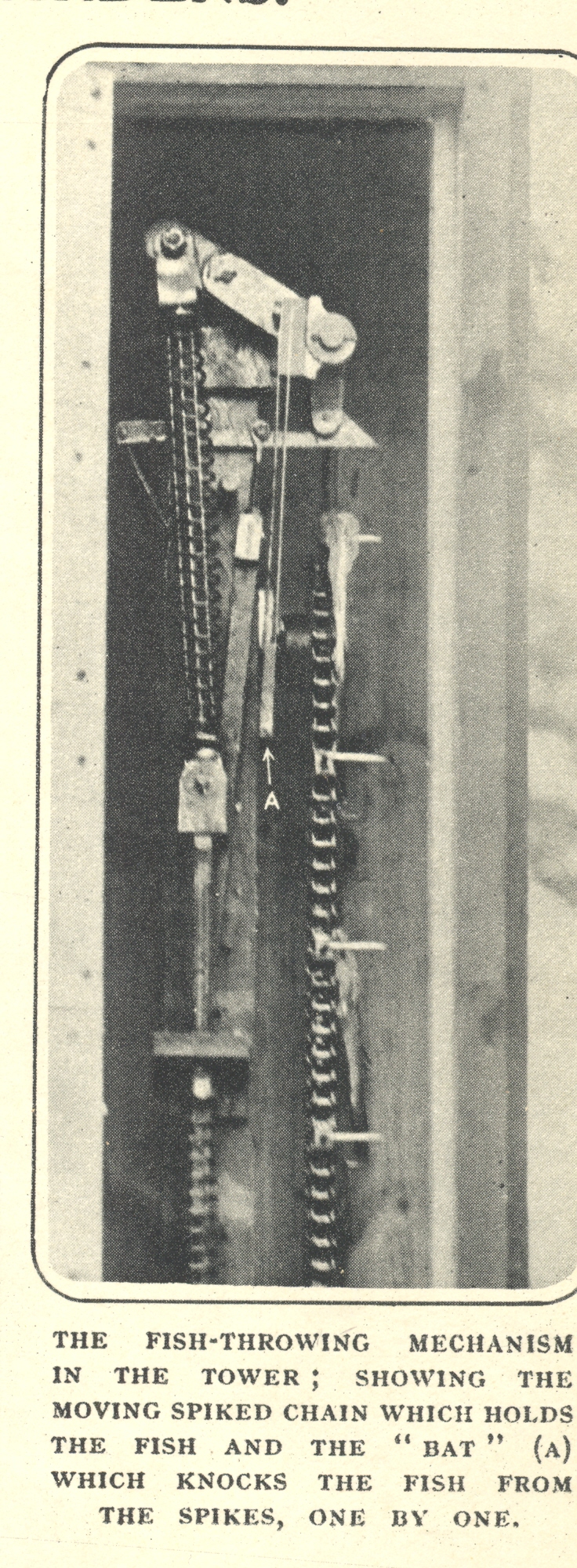
    “Necessity” is a fickle word and and even more elusive emotion, especially when discussing that quality in others.  But there are some things that look, well, just completely unnecessary; so very unnecessary that they are just plain wrong.  Hard to identify, difficult to codify–but everyone knows it when they see it.Blog==june 25 ifish 001

    Such is the case of this fish-throwing machine installed at the London Zoological Gardens.  The wooden tower seems to be 12 feet high or so, with a fish launched from its uppermost window once a zoo patron deposited their sixpence, eager to mechanically feed a sea lion.   Patrons to the zoo at Regents Park who were eager to see the sea lions fed had to arrive at slimly-appointed time; now, with the fish thrower, they could see the sea lions fed at any time, and do it themselves if they were so inclined.  I don’t know exactly what happened to these beats, but constant feeding would’ve have gone all that well.  

    And yes, you got three fish for sixpence.

    Source:  The Illustrated London News, 17  September 1932.

    ·Posted by :

    ·in:

  • First and Early Impressions: Hitler, Mass Production and the Use of the Long View

    JF Ptak Science Books LLC  Post 666

    Harold, like the rest of us, had many impressions which saved him the trouble of distinct ideas  George Eliot.

    A novel is balanced between a few true impressions and the multitude of false ones that make up most of what we call life.
    Saul Bellow

    First (and other early) impressions get made once, for the very first time, and then re-invented, re-examined every time after that, especially as the first impressions start to age and get forgotten, slipping around the windsock of time.  But every so often these antique first impressions come back onto the playing field, and it is remarkable, really, what lessons can be learned of them. 

    A review of a very early biography of Adolph Hitler appeared in the pages of The Illustrated London News for 27 August 1932—this was the year before Hitler assumed formal control of the government and nine years after he began his rise to power.  The book was Hitler, by Emil Lengyel, published by Routledge in 1932; it is the subject of a very sharp-eyed review by “C.K.A” in the pages of the ILN. It was also reviewed so to speak by the Nazi leadership, which ordered that Lengyel (1898-1985) be picked up and disappeared at any early opportunity for being an enemy of the state.  Some of the interesting bits that the reviewer pulled from the Lengyel book include the following—I’ve included several here because of his particular and early insight):

    “There are no limits, however, fantastic, to which this fanaticism will not go; though what the Jews have done to Germany to deserve this frantic vendetta remains obscure.

    “It is almost incredible to Englishmen that this barbaric mania (Jew hating) should be erected to the position of a fundamental political tenet…”

    “Some of the Party principle are Olympic in their sweep and scope.  Thus:” “offenders against the interests of the community, usurers, profiteers, etc., are to be punished with death…” Much virtue in your ‘etc.”!

    “Behind all stand the emotional political impulses—repudiation of war-debts, hatred of France, hostility to the League of Nations, fanatical exaltations of race,…All this was to be expected…it is not too much to say that by the Treaty of Versailles the allies brought the Nazi movement upon themselves. The marvel is that it has been so long postponed.”

    “What Hitler’s flag stands for he has never revealed beyond irresponsible generalizations and decrepit platitudes…”

    “(On Lengyel’s Hitler):  He is a vox et praterea nihil—a shallow, paltry, neurotic person, with no constructive ability, a woodly intelligence, and little to comment except glibness and passionate prejudice. This is difficult to believe but by no means impossible.”

    “It may well be…that Hitler the man is as empty as his absurd Swastika”.
    Blog==june 26--1st impression

    The Yellow Spot, The Extermination of the Jews in Germany (1936) was the earliest printed document on the coming of the Nazi Holocaust, the earliest
    catalog on the mistreatment and systematic dehumanization of the Jews, and the
    earliest book to associate “extermination” with Nazis and the Jewish people. (The “yellow spot” part coming from the early history of racially marking Jews–it appeared first it seems in the 11th century in Islamic lands and then used periodically around Europe and the middle east for hundreds of years afterwards.  Using the Star/Shield of David seems  be a 20th century invention.)  It was also one of the earliest books on Hitler and what he represented.  (My friend Andy Moursund has published a very
    compelling poster on the early books regarding Hitler and Nazism and can be
    seen here.)  Another sort of first
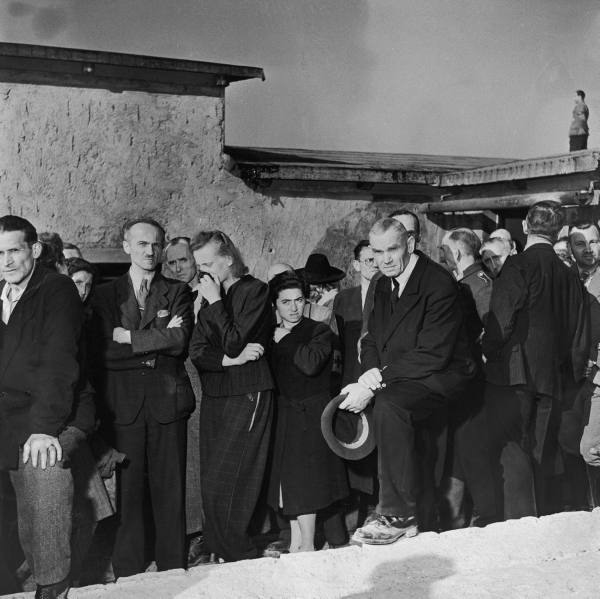
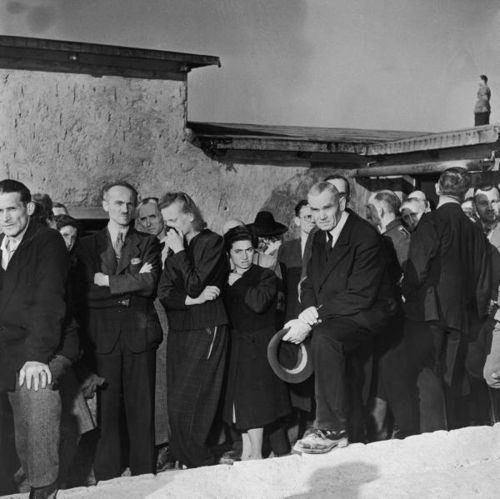
    impression that makes it mark is a series of pictures by the great Margaret
    Bourke-White (who seems to have been everywhere from the Depression to the
    Korean War and wrote and photographed what she saw brilliantly) made at the
    Buchenwald Deathcamp just after liberation. 
    She did make photographs of the horrors of the place, but she also turned
    the camera around to record the faces of the locals who were forced to tour
    and view the camp in their communal midst. You can see very clearly in the
    faces of these people—for whom Blog==june 28 chaplinthe camp could not have been a mystery unless it was internalized so—how much they wanted to not see what they were looking at.

     

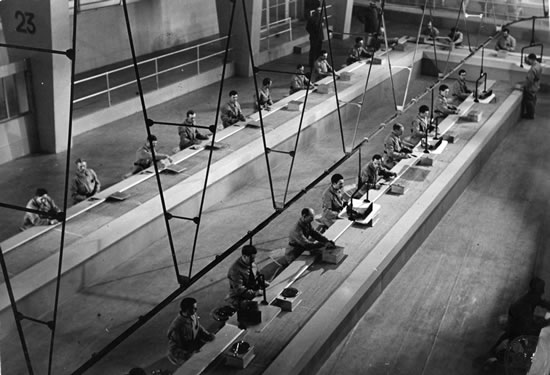
     And speaking of Hitler, Henry Ford’s contribution to the
    ethos of the American standardization and robotization of the workforce—the industrial
    production line—was well portrayed in the first cinematic appreciations of the
    idea.  (Writers had long since made
    observations on the evils of industry and society, going back at least as far
    as Charles Dickens—but its representation in the most democratic medium of the
    first half of the last century–the movies–received it first treatments in two strong
    impressions in the 1930’s.  The film that
    comes quickest to mind is Charlie Chaplin’s still-brilliant and
    still-applicable Modern Times (1936,
    though originally named The Masses)—a
    dire film (in one place dissolving sheep entering a slaughterhouse with a scene
    of workers entering a factory) that offered no solution to the factory.  Aldous Huxley wrote about the sickness of
    production in his Brave New World (1932)
    which is even scarier in its own right—though the scary image of the future
    delivered with the dark humor of Chaplin is tough to surpass—if for no other
    reason than it winds up discussing the “principle of mass production applied to
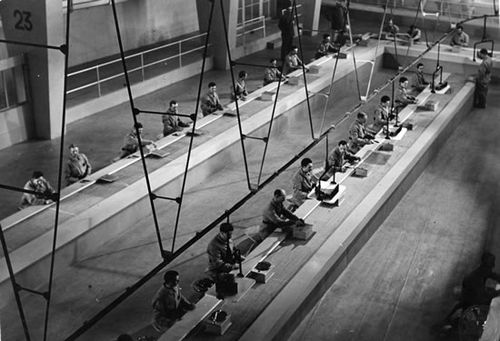
    biology”.  But earlier still is the
    little-seen film by Rene Clair (1931) A
    nous la libertie
    (Give Us Liberty/Freedom),
    which presents the mass production system as a thin metaphor for a prison labor
    system.  (Upton Sinclair said that the
    Ford assembly plants should be presented in “Museums of Unnatural History”.)
    Blog==jine 28 clair This really is an endless and mammoth subject as what I’m
    talking about is a history of perception, and all I’ve done here really is to
    draw a few things together that I have within reach.  It seems an interesting pursuit, following the
    threads of thought regarding early impressions of major (and minor) events, and
    one could easily construct a large Borgesian encyclopedia of them.  Check under “C”, for cable, for example:  the physicist Jacques Babinet thought it
    impractical and far too expensive to construct a communication line under the Atlantic ocean (as did many others, seeing the starts and
    fits of the various cable companies that were begun to try to capitalize the
    operation.  The cable business barely had
    a heartbeat, at times, in the mid-century even. 
    And speaking of heartbeats, William Harvey withstood blistering attacks
    on his correct statements on the circulation of the blood (costing him nearly
    all the patients in his practice). 
    Though at least Harvey
    lived to see a brighter day:  Michel
    Servetus, on the other hand, didn’t, and was burned at the stake for his heresies,
    one of which was the centering of the circulation of the blood in the heart
    rather than the brain.  The list goes on
    and on:  Semmelweis was killed but did
    wind up ion an asylum; Galileo didn’t wind up in an asylum but did wind up
    imprisoned; Copernicus wound up in neither place, escaping possible clerical
    criticisms by dying just as his revolutionary work was published.  Phillippe Lebon’s ideas for illumination by
    gas were seen as ridiculous, as were the revolutionary ideas of Edward Jenner
    and Luigi Galvani.  Einstein’s 1905 ideas
    weren’t happily received in France
    for a decade, and David Hilbert’s impressions of mathematics in the middle of
    the third decade of the 20th century was that it was “done”.  (Actually the young Einstein was also
    cautioned about going into physics because that field was seen as pretty much “completed”.)
      There was of course the other side of
    the impressions coin to all that I’ve mentioned above—for example, the resistance
    to Copernicus was not actually  as
    fearful as we think of it today, most thinking people were ready for it and
    were relieved with his 1543 publication.  The idea of looking at first impressions may actually have some utility in seeing how we view new things in our contemporary culture–or at least it would give us the sense of wideness and of the future, and to be at least circumspect about newness. 

    *A note on the production technology using interchangeable parts–this idea really did have its seat in  American industry. Colt’s “system of manufacturing” (c. 1851), Charles Tomlinson’s
    1853 Rudimentary Treatise on the Construction of Locks, rifle manufacturing at
    the Springfield Armory in the early 1850’s,  Eli Whitney and the cotton gin, Singer Sewing
    Machines,  (ca. 1865) phonograph machines
    produced on conveyors by Thomas Edison, and so on, till you get to Ford’s own
    Highland Park Factory around 1913.  All are indicators of this sort of conveyor belt, standardized parts, interchangeable units that marks this brand of manufacture. For an early, interesting reading see Charles Fitch’s “Report
    on the Manufacture of Interchangeable Mechanism” (1881)  as part of one of the reports of the massive
    overall report of the Tenth U.S. Census,
    and also  “The Rise of the Mechanical Ideal”
    in the Magazine of American History
    (1884)
  • Dadaist Images in 19th Century Prints: William Rimmer’s Artistic Anatomy, 1877

    JF Ptak Science Books LLC  Post 667

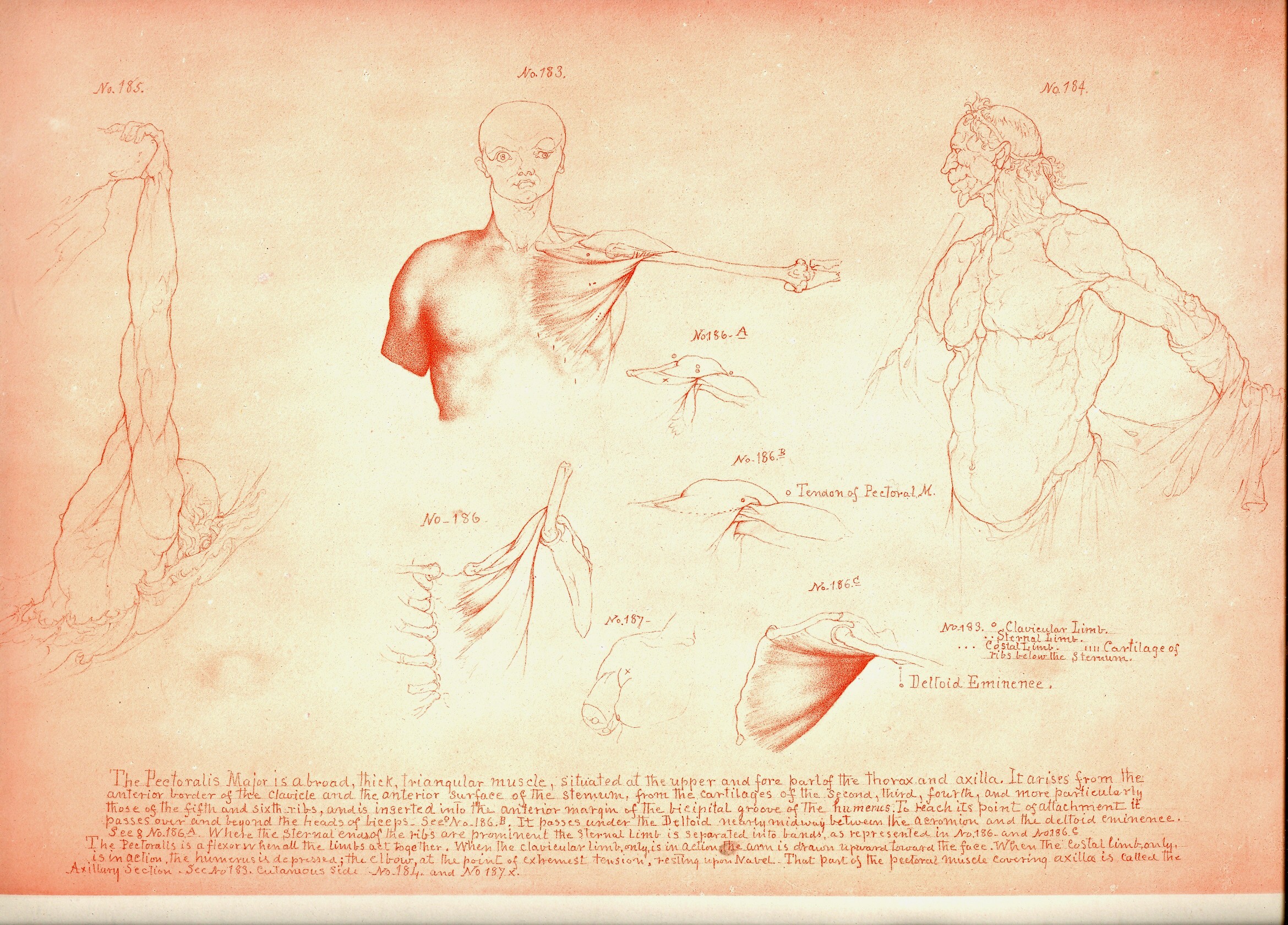
    Blog==June 29--rimmer pecs det Looking at old prints sometimes reveals more
    than just their own history, simple or not: 
    there are, from time to time, subtle bits of otherness that creeps into
    the image, if you allow yourself the time to see it.  And sometimes looking at images of the past
    reveal a little of the future, or the possibility of the future.
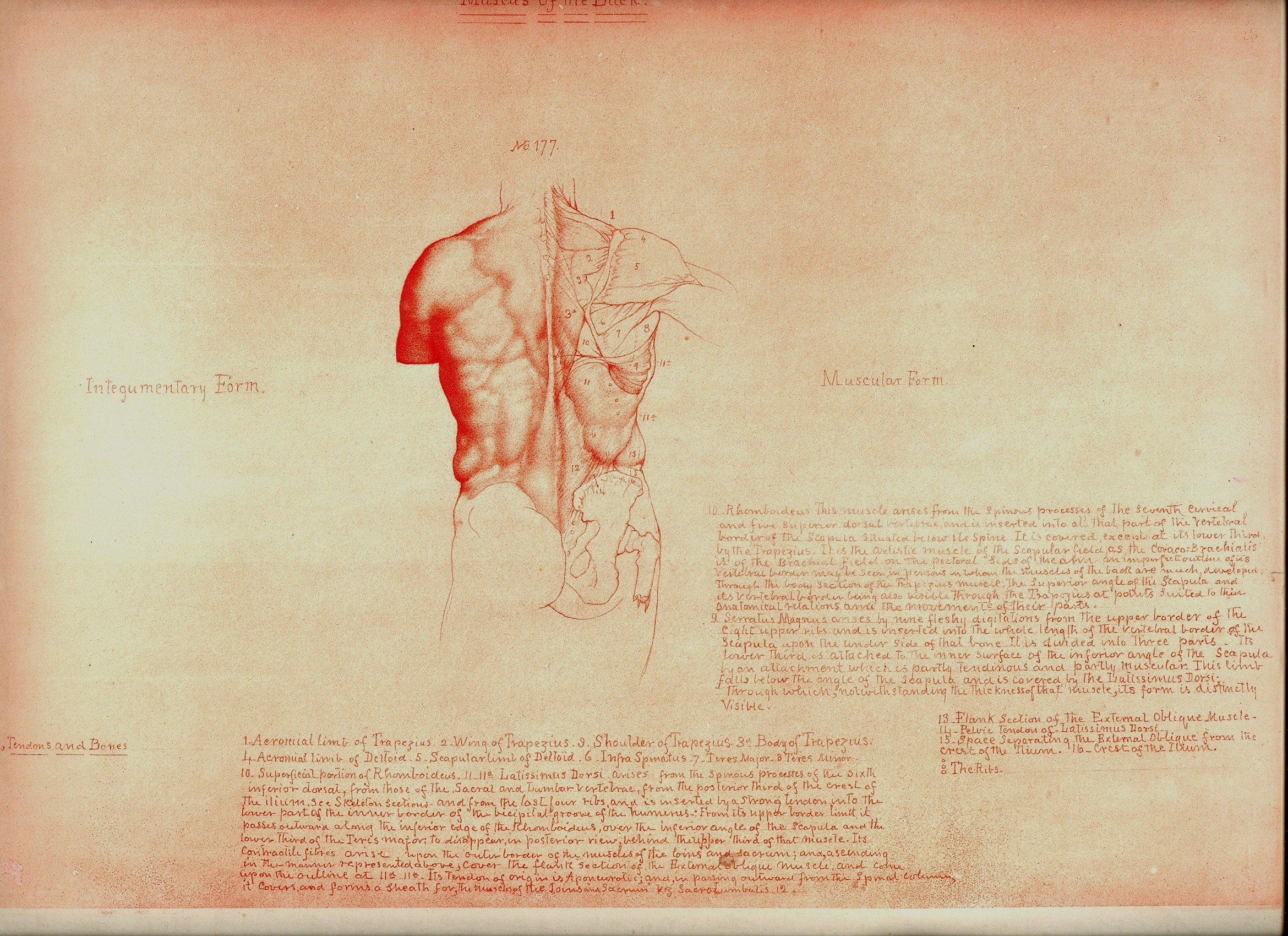
    Blog==June 29--rimmer pecsBlog==June 29--rimmer backdet

    I wrote a little about this in the odd
    art/color textbooks of the pre-Kandinskian Emily Vanderpoel , about whose color
    theory I still understand not at all, though the images that she produced as
    illustrations to these bizarre theories are stunning, pre-modernist, and unintentional
    creations.

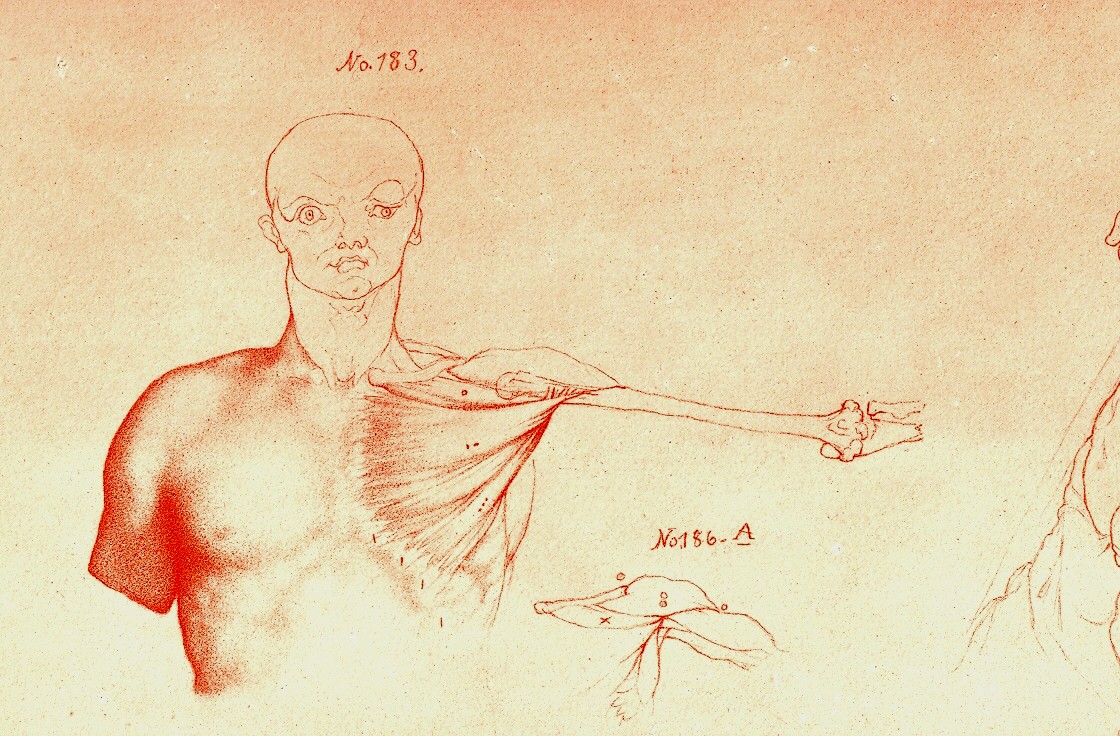
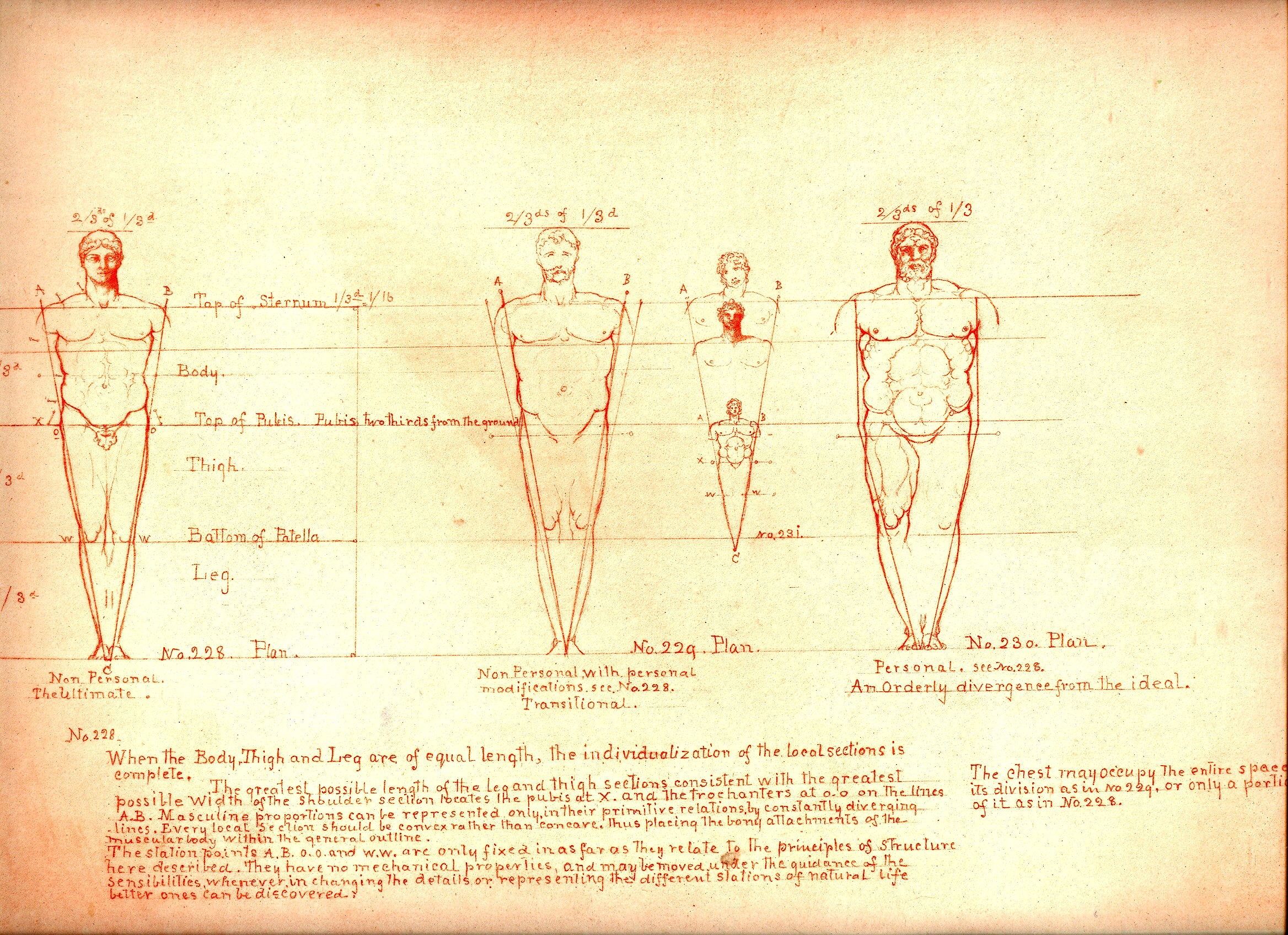
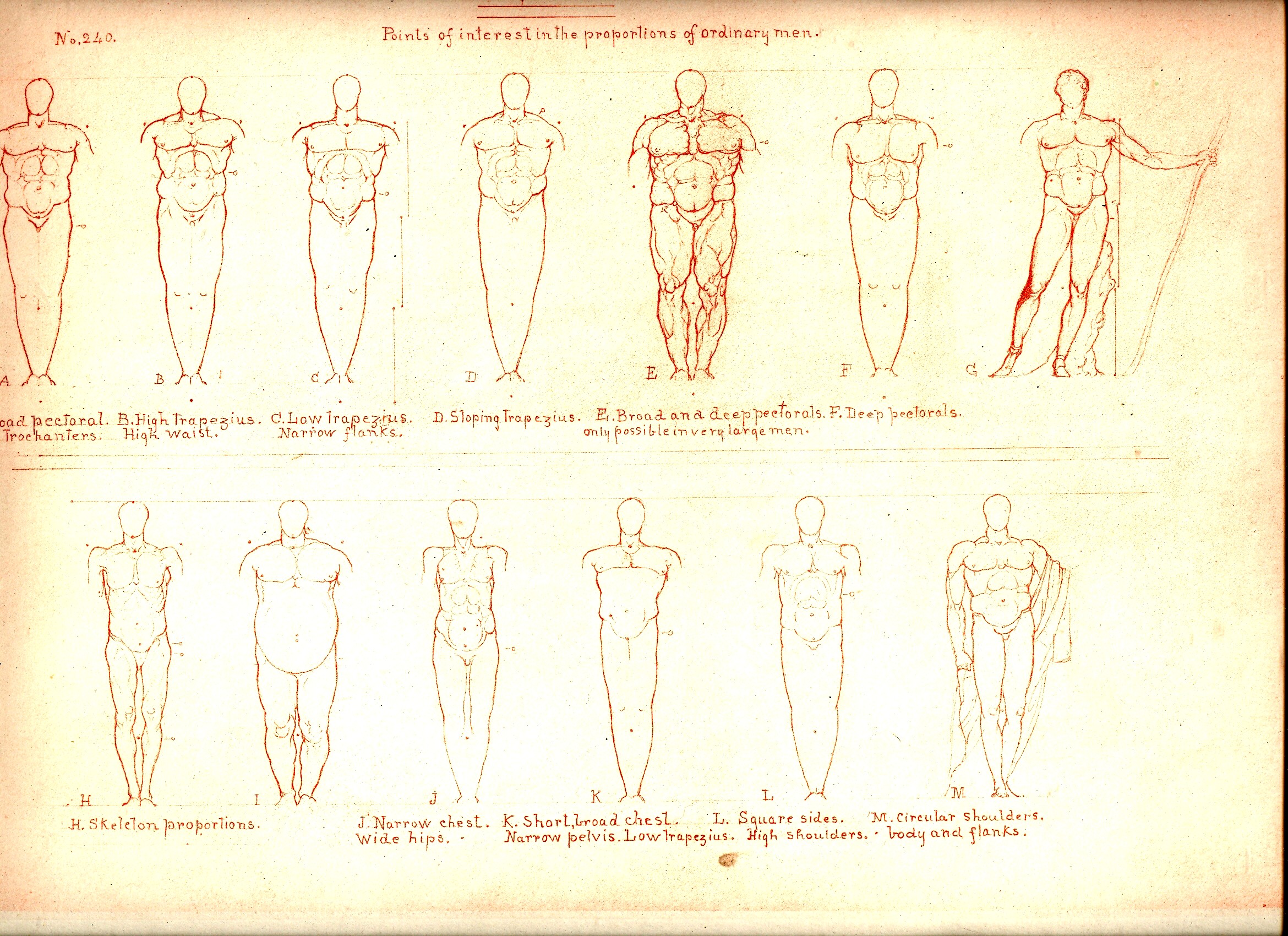
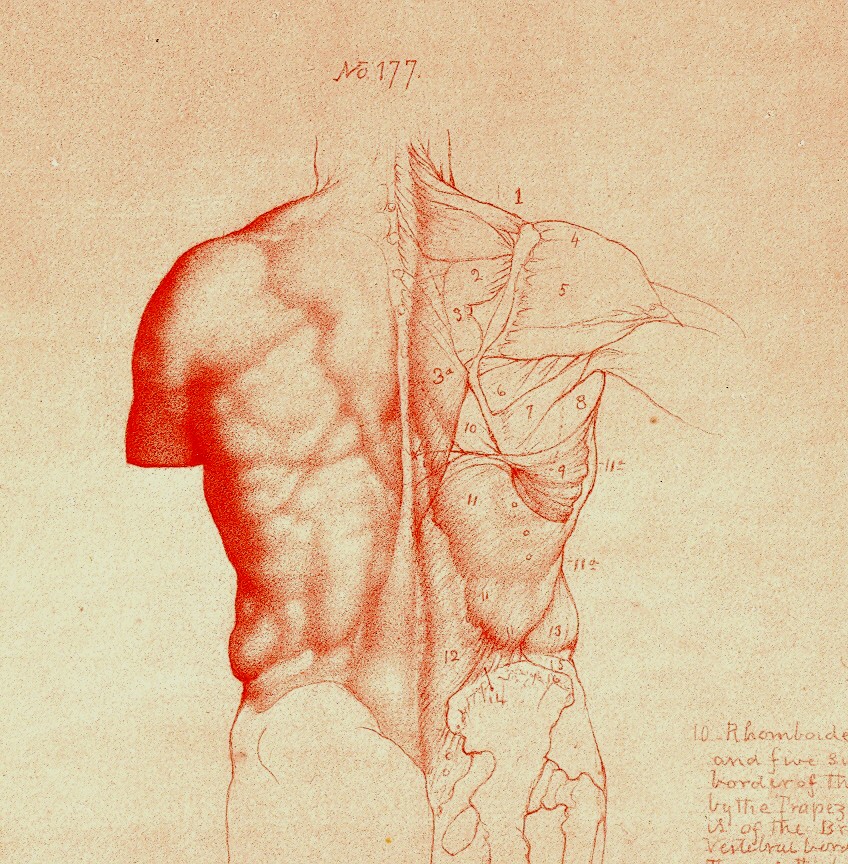
    William Rimmer’s (1816-1879) Art Anatomy (1877 and subsequent
    printings) is another such adventure. 
    Rimmer was a very accomplished artist, and was also a fine
    anatomist.  He was very concerned and
    interested in what happens to the skin, forced into action by all of the stuff
    underneath it.  He pursued the movement
    of muscle, and bone, and the interplay of the two, and produced a wonderful
    exponent of artistic anatomy. 

     And inside
    of these images is something else, sometimes. 
    There is an undoubted Leonardoesque quality to many of his drawings, the
    figures appearing with deft lines and interesting shadings, many times

    Blog==June 29--rimmer back

    surrounded by the author’s notes and explanations  But there’s also something else—some of the
    images are just, well, a little bizarre given the time in which they were
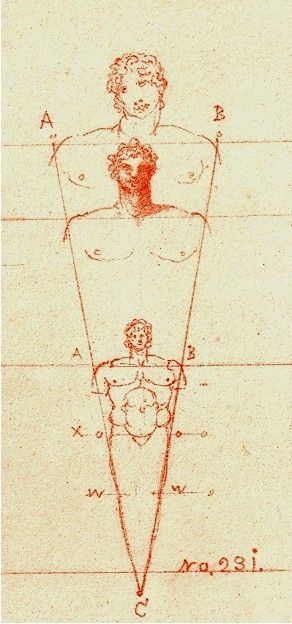
    executed.  Some of the details are
    positively modernist, begging to be identified as a 1920’/1930’s creation, or
    Dadaist, or something—just not 19th century.  I’ve included some further examples below

    Blog==June 29--rimmer little man .

    Blog==June 29--rimmer muscle

  • Missing Images in Art: Depictions of Art by Children

    JF Ptak Science Books LLC  Post 668

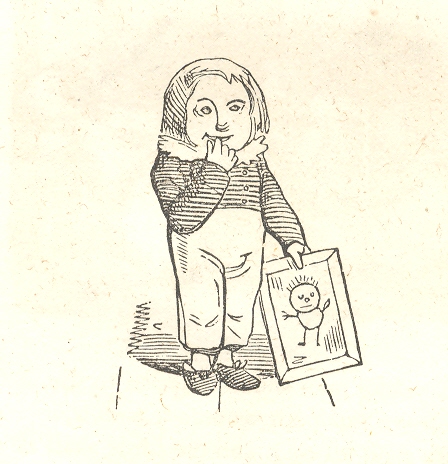
    Blog==June 29-nurses I think that I can safely say that artwork by children does not make very many appearances in Western art prior to the 20th century.  Nor do the originals–considering the ephemeral nature of the effort at art by children, their work just don’t seem to survive.  Some of that reason–particularly in America–was the scarcity of materials for kids to produce art with: paper was not inexpensive, and neither brushes and paints.  Crayons, invented for chubby and reachy fingers, were not invented for the mass market until 1903.  (Crayola sold eight crayons in a box for a nickel.  The colors?  Black, brown, blue, red, purple, orange, yellow, and green.)   Then of course the artwork would have to be saved, somehow, for generations.  As much as it would be fascinating to find artwork done at age 4 by your great-great grandparents, it would have to survive the cleansing tendencies of four generations of clean-up.  End result:  there’s just not that much antiquarian chldrens’ art floating around.

    It also doesn’t appear as art in artwork.  It is possible to find numerous examples of kids’ scratches in stone and such in ancient graffiti, but it doesn’t appear as elements of fine artwork, or, for Blog==June 29-nurses detthat matter, in book illustration. 

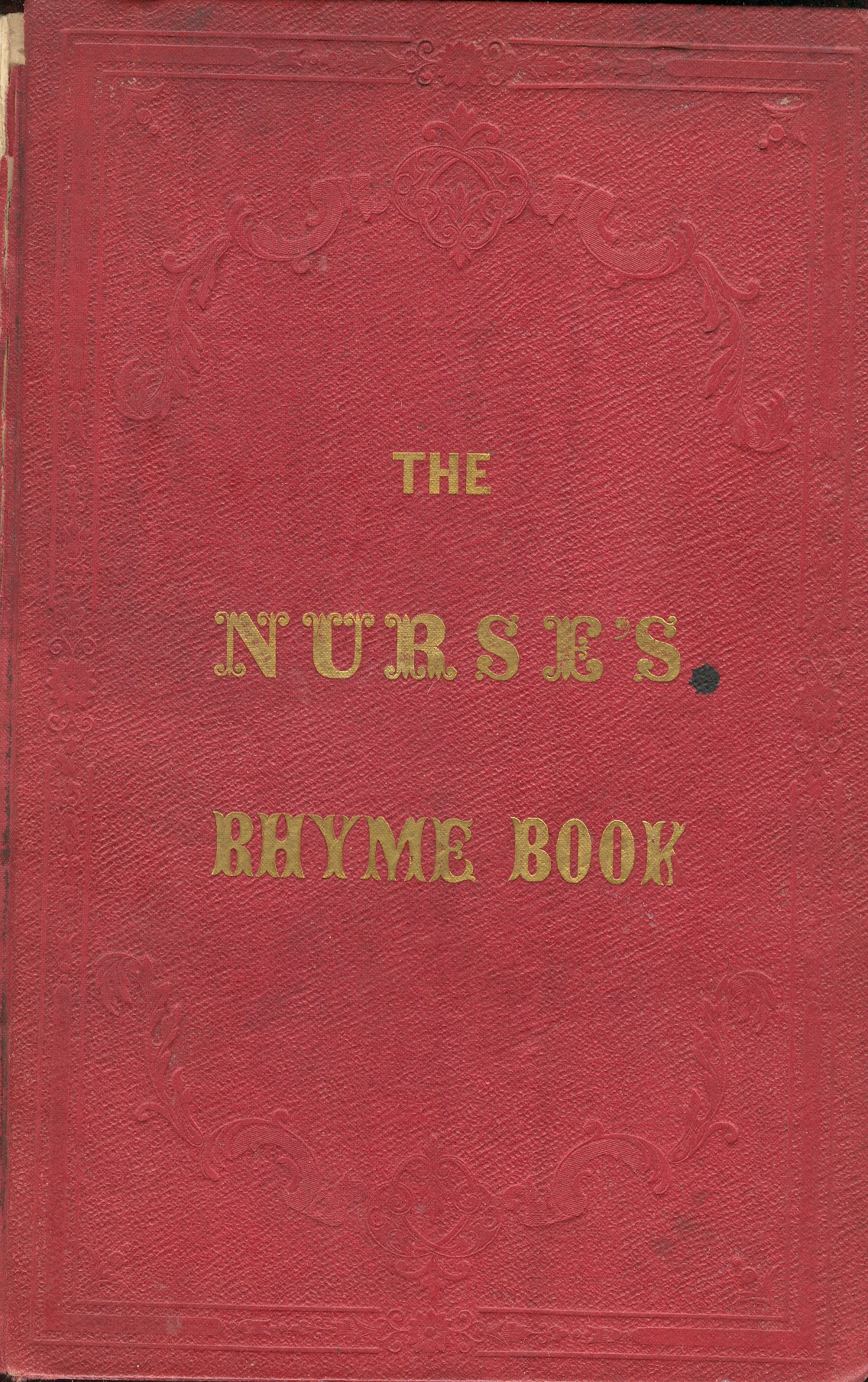
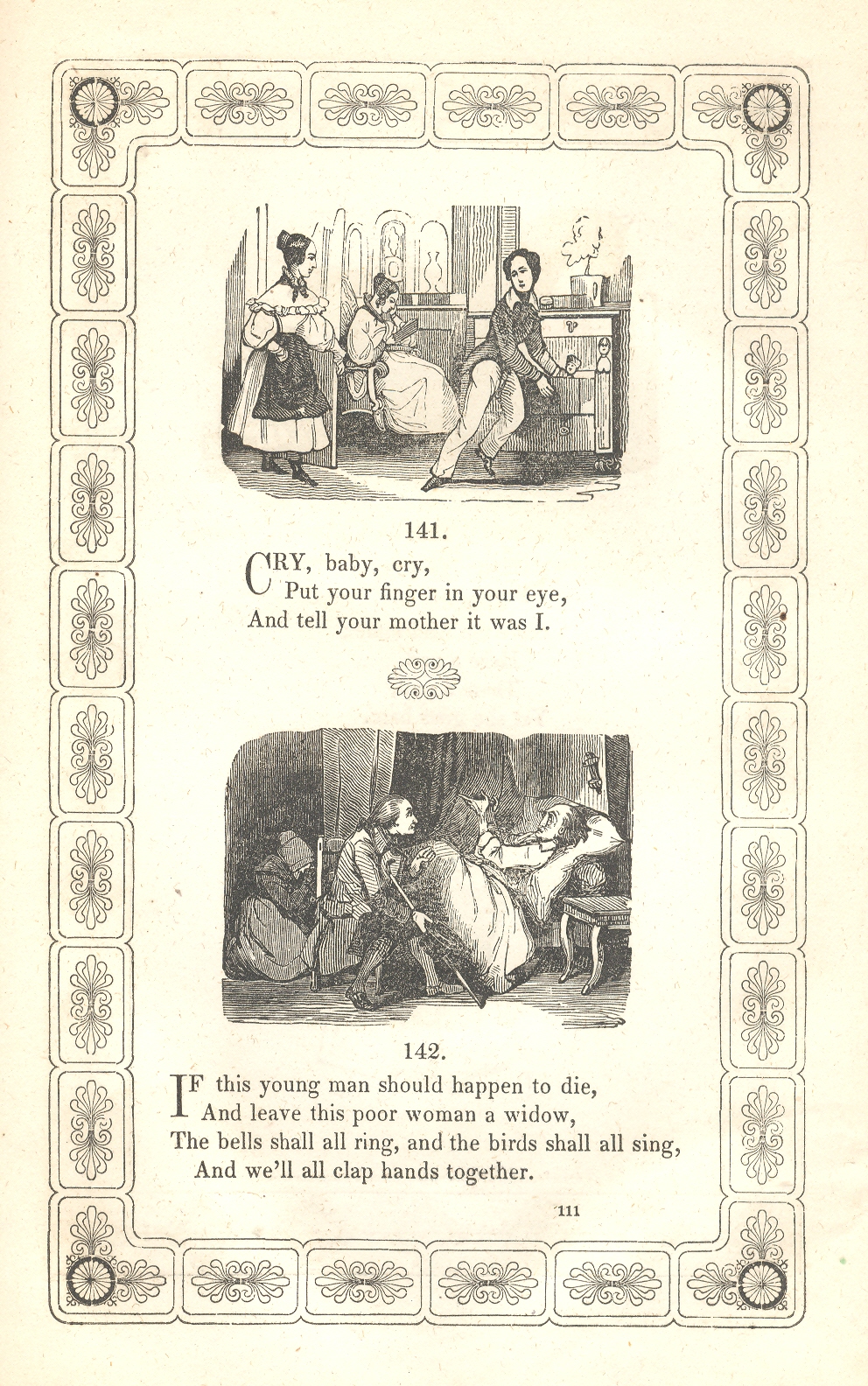
    There is an example however in Thomas Truman’s The Nurse’s Rhyme Book, a New Collection of Nursery Rhymes, published in Philadelphia in 1847.  The book is filled with unusual illustrations and fantastic ornamental borders, all used in support of some odd, scary, mean and occasionally pretty mid-century posies meant as night-time entertainment for the young ones.  Our prize is found on the very last page, the final slug of an illustration to a more-finely illustrated book: a coy, small boy, holding an example of his art, seemingly drawn on a framed slate. He looks happy, pleased, proud to me–on the one hand he is interested in sharing his achievement and on the other is really too shy to share, an emotion I’ve seen from time to time with my girls. As a matter of semi-fact, this is a rare emotion to see displayed in art, the too-shy-to-share routine saved more for fluttery self-conscious Victorian grown-ups more so than for children.. 

    Believe me, after having dealt with books and prints as an antiquarian for almost 30 years, and also having a collection of sorts of antiquarian childrens’ arts, pictures like this just don’t surface very often at all.  Over the years I’ve made some annoying phone calls and emails to librarians at art galleries (especially at the National Gallery in DC where I was a pester) explaining my interest and trying to find out if this struck any bit of memory in their brains–I never once had a positive answer. (I expected at some poin tthat someone would say, “Oh yes, of course–there’s a census of that that Mr. Kemp of Yale did in 1977. Or something, some sort of memory for this kind of image.) This is hardly an academic pursuit, but my occasionally ritualistic clawing seems to bear out that these things are just not available.

    And why this interest?  There is a simple, inherent sweetness in all of this, full of life and hope; something that crosses the generations, looking pretty much as though the emotion in the art was produced yesterday, if not for some of the content. . And that is another charm–like giving a small child a camera to photograph what they see (as in the case of my daughters Emma and Tessie) and see the remarkable results of their 40-inch tall version of my adult world.  The insights can be remarkable–not only do we see things from a new physical angle, but also the things of interest, the center of attention in the picture, the stuff that has aroused their interest and curiosity enough to take a picture of, can be incredible and totally unexpected.  That is perhaps the greatest interest for me in looking at children’s artwork:  it has the continued potential to be slam-brake innovative and filled with the unexpected insight; and it is just not a”normal”view of the world. And in a way the art can hold a key to your own antique memory of childhood; every picture has a possibility for the recovery of your own forgotten insight. 

    Blog==June 29-nurses full pg

  • Crowds Series: Berlin Expectations. Zeppelin 1909 vs. Springsteen 1988

    JF Ptak Science Books LLC  Post 601   Blog Bookstore

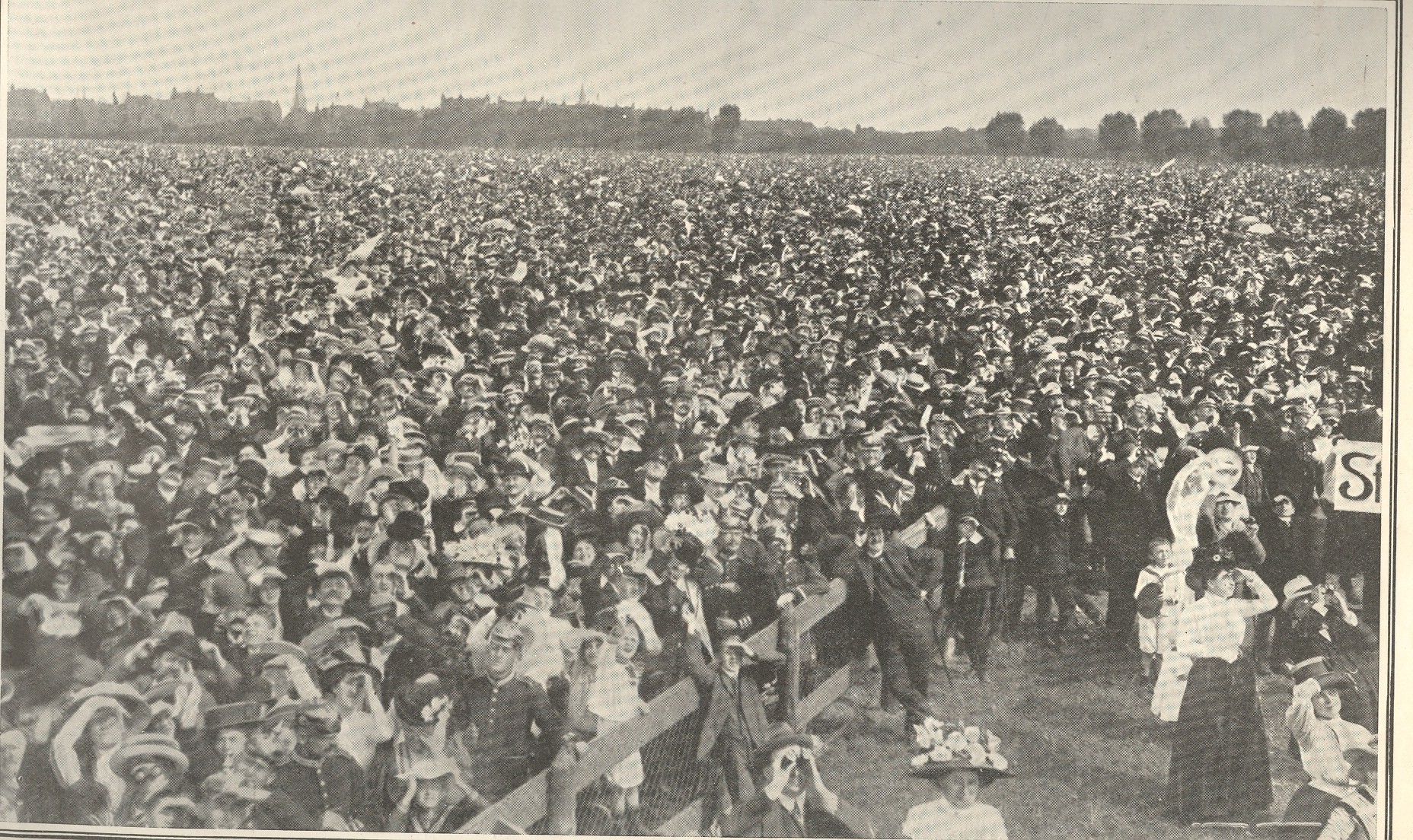
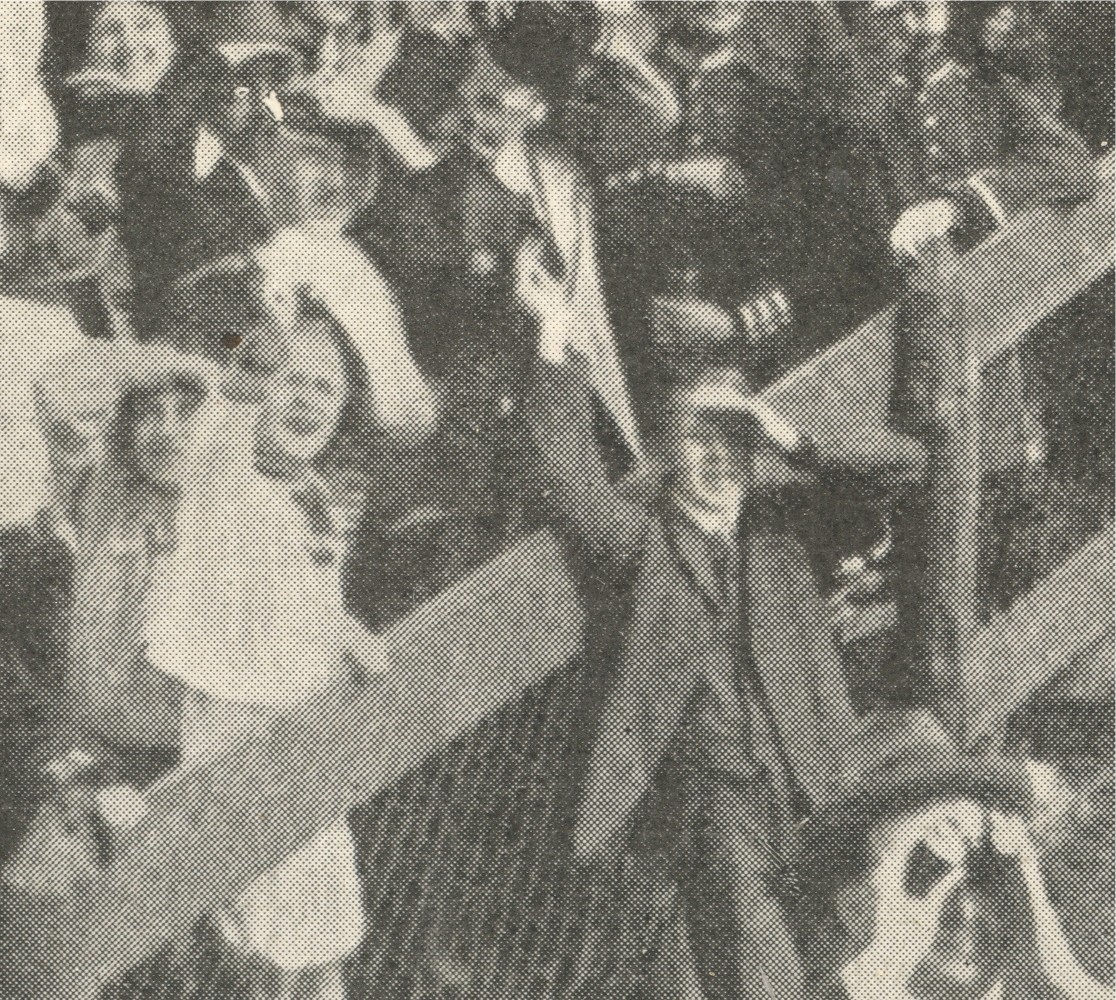
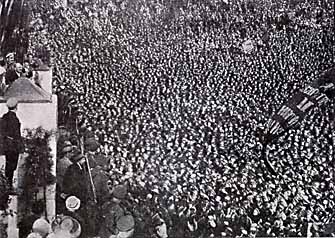
    This image emerged from the pages of The Illustrated London News for 14 September 1909 and shows “nearly the entire city of Berlin” coming out for the arrival of the Zeppelin III.  And, as you can see (click into the image for a larger view) there are at the very least hundreds of thousands of people present. And most of them seem to be waving–it must’ve been extraordinary.  I’ve done a little detail work for the larger image, concentrating on the guy in the front foreground with the binoculars–I love the kid to his upper left waving a handkerchief, filled with every expectation. 

    Blog-may 1--looking3

    Blog-may 1--looking2


    Perhaps a similar sized crowd (some estimates putting the number at a million) showed up to listen to Bruce Springsteen perform in East Berlin in 1988.  I have no idea what the East German government was thinking when they allowed him to perform.  Listening to hundreds of thousands of people singing along to “Born in the USA” is monumental and very emotional–the video stays like that the whole way through, but the crowd really seems to find its voice at 2:52.   Both scenes are pretty ecstatic, all those people seeing something that they’d never seen before…  I guess it woul dbe possible for someone to have been in both crowds in their lives–a little tottering, and watching at the fringes of a brittle-bone-cracking crowd, but certainly possible. (And definitely possible for certain enhanced crowds in that same city in the 1930’s, but I won’t go there.)  Somehow I’ve got a connection going between the kid in the 1909 scene and the kid in the Springsteen video at 5:02

    ·Posted by :

    ·in:

Recent Posts

Archives

Categories