JF Ptak Science Books LLC Post 659
The Chou dynasty Shu-ching (“the History Classic”, “the Book of History”, “the
Book of Documents”) is one of the world’s oldest historical documents, relating
vernacular, religious and legendary drama of China
the the legendary Chinese third milenium BCE ruler, Shun (2255-2206 BCE),
would pilgrimage* every five years to the points marking the extent of is
realm, stopping and extolling virtue and leaving gifts at the peaks of five
mountains at these five points. The one mountain
of these five that was named was Tai Shan, which remains the principal of what
is called “the five sacred mountains**”, and which is still after thousands of
years a point of veneration and pilgrimage.
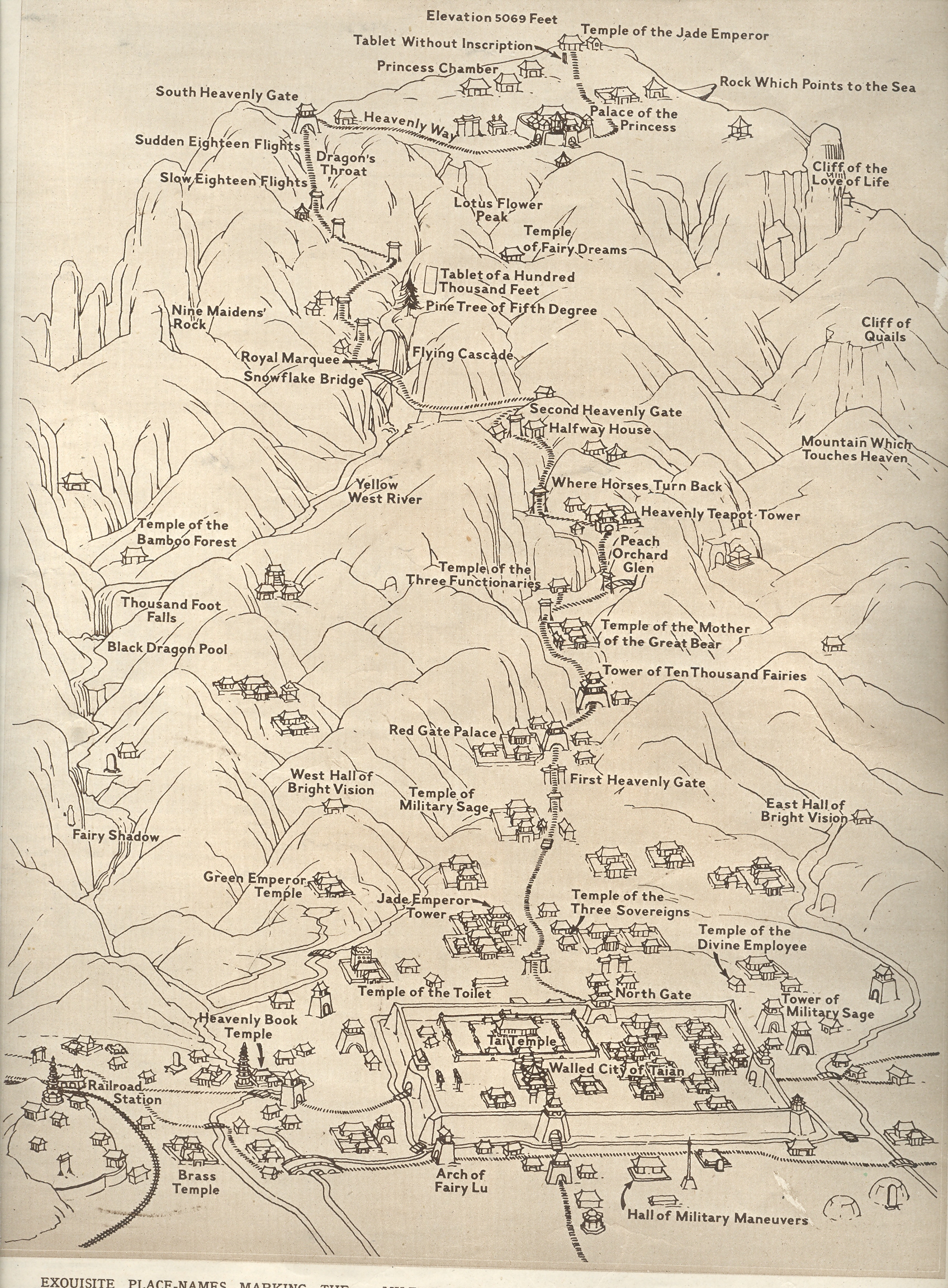
The map of the pilgrim’s paths in this mountain was published in The
Illustrated London News for 20
October 1945
designed skeleton map of the mountain, scaled down to reveal temples and
principal interests, and done in such as
way as to look a bit naïve.
There’s too much not-known history here for me to make much of a comment
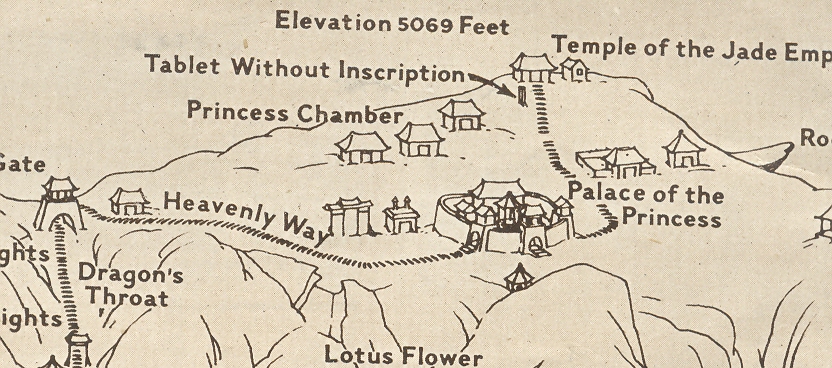
on this map. One item that did catch my
interest though is found near the peak, the “tablet without Inscription”. It is evidently a massive monolith put in
place around 110 AC. It has but one work
incised in it: the ideogram for “Lord”.
*pilgrimage – ch’ ao-shan chin-hsiang – means ‘paying one’s respect
to a mountain’
**The five sacred mountains include:
-
Tai Shan, Taoist mountain of the east, Shandong
-
Heng Shan Bei, Taoist mountain of the north, Shanxi
-
Hua Shan, Taoist mountain of the west, Shanxi
-
Heng Shan Nan, Taoist mountain of the south, Hunan
-
Song Shan, Taoist mountain of the center, Henan
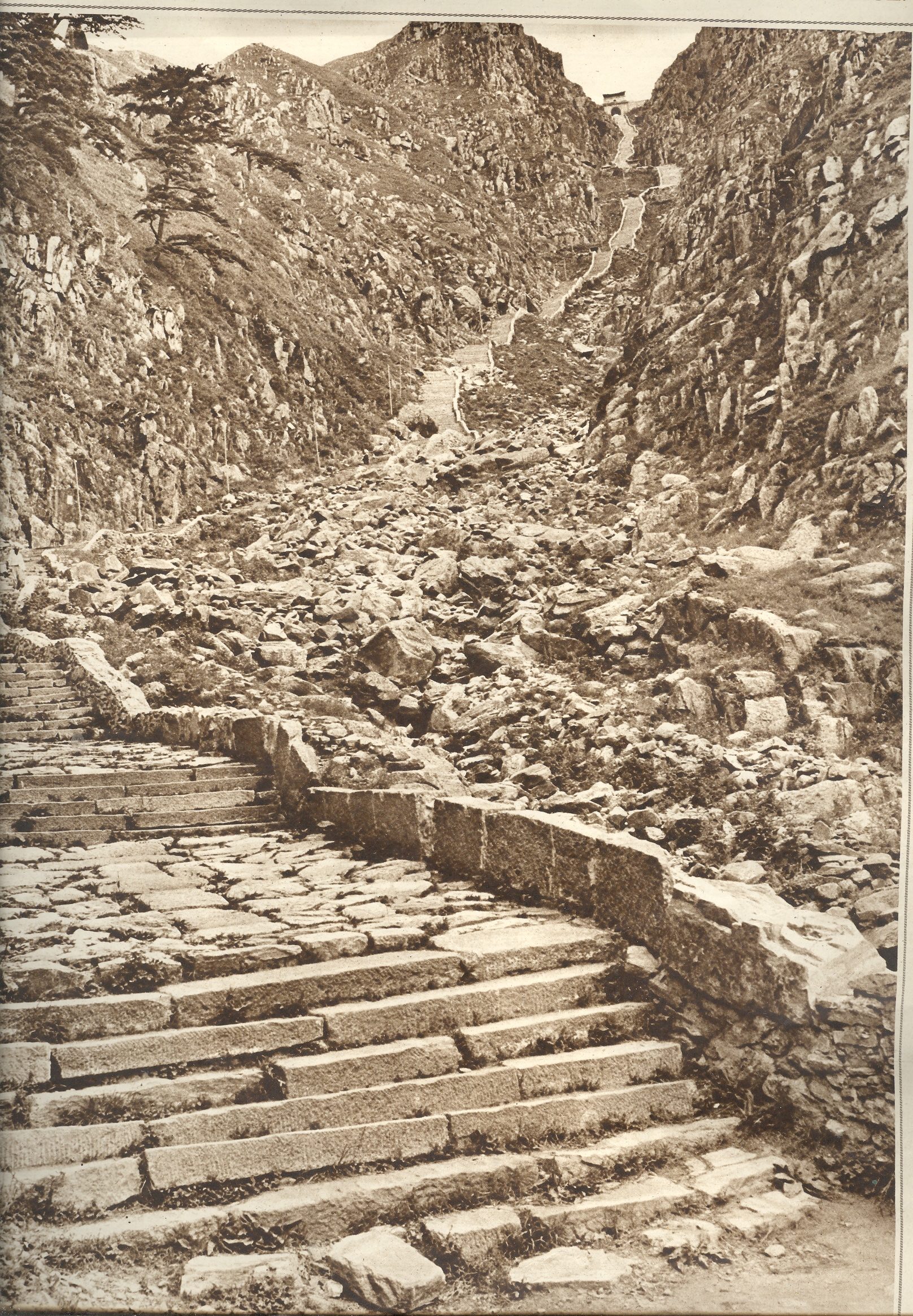
This interesting image was made by none other than Gilbert Grosvenor (1945), the chair of the National Geographic. These stairs–1000 of them–lead to the South Heavenly Gate near the summit. At the time, these were still one of the world’s longest stairways.