A Daily History of Holes, Dots, Lines, Science, History, Math, Physics, Art, the Unintentional Absurd, Architecture, Maps, Data Visualization, Blank and Missing Things, and so on. |1.6 million words, 7500 images, 4.9 million hits| Press & appearances in The Times, Le Figaro, Mensa, The Economist, The Guardian, Discovery News, Slate, Le Monde, Sci American Blogs, Le Pont, and many other places… 5000+ total posts since 2008.

  • Alpabetical Doomsday Introduction: Welcome to the End of the World

    JF Ptak Science Books LLC  Post 678  Blog Bookstore

    Here’s a very abbreviated overview to a vast literature of the end of times/apocalypse/technocaust/end of the world themes.  This is just a short working list, really, and includes only short stories or novels.  In many cases there is just one example (where there could be hundreds).  There are no movies or television shows listed, though I think that they must be enormously outnumered (and the scale of orders of magniutue) by the print media. 

    Apoc

    Alien
    Invasion:  The War of the
    Worlds
    1898, H. G. Wells; The Moon Men 1926, Edgar Rice Burroughs; The Puppet Masters,
    1951, Robert A. Heinlein

    Botanical endgame virus destroying all plant life:
    The Death of Grass by John Christopher  On the opposite end is  1962 novel Hothouse by Brian Aldiss
    where the plants take over everything.

    Climate Change: The Drowned World by J.G. Ballard
    1962.  Conversely Ballard wrote the novel The Drought  in 1964 about all of the water on earth
    drying up.

    Crystallization (!):  this one sounds
    painful:  The Crystal World
    by J.G. Ballard
    1966. Everyone and everything begins to form into crystals.

    The Drought by J.G. Ballard
    A super drought evaporates all water on earth.

    Dying Sun:  The World in Winter
    by John Christopher 1962

    Earthquakes: A Wrinkle in the Skin, John Christopher, 1965

    Environemntalism and Rush’s dream-come-true: The Bridge
    by D. Keith Mano (1973)
    envirofascists exterminate humans to save the world.

    Extraterrestrial Threat:  When Worlds Collide by Philip Wylie,
    1933

    Flood: Flood by Stephen Baxter
    (2008) gigantic underground oceans seep to the surface and inundate the world.

    Human general
    malaise, dystopia, ennui:
    Arthur C. Clarke‘s
    Childhood’s End
    ; City
    (1952) by Clifford D. Simak; Friday  by Robert A. Heinlein;. Galápagos by Kurt Vonnegut.;
    Planet of the Apes by Pierre Boulle;l
    H. G. Wells‘
    The Time Machine

    Human Wars:  After London 1885 Richard
    Jeffries; Ape and Essence 1948 Aldous  Huxley ;
    Do Androids Dream of Electric Sheep?
    1968 Philip K Dick,.; The Last Man
    1826 Mary SHeley.

    Ice Water catastrophe: Cat’s Cradle
    by Kurt Vonnegut,
    1964:  Time of the Great Freeze
    by Robert Silverberg , 1964 and in 1969 The Ice Schooner by Michael Moorcock

    Insect extermination: Charles Pellegrino’s Dust, 1998.  The ecosystem collapses after bugs disappear.

    Infertility caused by nuke power plant
    meltdown:  1946 Mr. Adam
    by Pat Frank
    Also the infertility endgame in Greybeard by Brian Aldiss,
    1964.

    Meteor: Survival 2000 1991, James McPhee;  Titan
    1997, Stephen Baxter; The Day of the Triffids 1951.

    Monsters: Skeletons,
    (1992) by Al Sarrantonio.  The Earth is
    ravaged by a raised-from-the-dead society of super monsters comprising all
    animals that ever lived, ever, but in super-skeleton form. Yikes!

    Nature’s Death: Nature’s End by Whitley Strieber and James Kunetka. (1986)

    Nuclear-bomb-induced-methane-fueled superhurricanes. Mother of Storms by John Barnes
    – 1995

    Nuclear weapons: 
    too, too many to reckon with here. 
    Ray Bradbury famously ends the world at the same instant via an exchange
    in Fahrenheit 451, for example. Mordecai Roshwald‘s
    Level 7,
    Nevil Shute‘s
    On the Beach and Pat Frank‘s
    Alas, Babylon,

    Overpopulation and mass famine:  Anthony Burgess’ The Wanting Seed 1962. Also
    1966 novel Make Room! Make Room! by Harry Harrison
    (made into Soylent Green). The Handmaid’s Tale, by Margaret Atwood,
    tale of developing underpopulation caused by infertility caused by
    pollution. 

    Petroleum-eating microbes: Ill Wind (novel) by Kevin J. Anderson
    and Doug Beason
    1995.

    Plagues:  The White Plague
    1982 Frank Herbert; The Scarlet Plague 1912 Jack London; Oryx and Crake
    2003 Margaret Atwood; The Children of Men 1992 P.D. James

    Pollution Children of Morrow
    by  H. M. Hoover.

    Religious: Book of Revelation, the Book of Daniel,
    the short story The Nine Billion Names of God by Arthur C. Clarke (1953), and on and on.

    Robot Revenge/Overlords: Erewhon‘s
    section The Book of Machines (1872);
    The Machine Stops 1909,by E. M. Forster
    ; The Mind Machine (1919)
    by Michael Williams;  R.U.R. (play, 1921), by Karel Čapek,
    The Metal Giants
    (1926), by Edmond Hamilton ; Automata
    (1926 short story) by S. Fowler Wright

    Snow: The Snow by Adam Roberts
    (2004) everyone buried under lots and lots of building snows.

    Space-based: Aftermath
    by Charles Sheffield, 2004, supernova
    causes cataclysmic climate change. 

    Space-based (civilization
    collapse): Against the Fall of Night by Arthur C. Clarke
    ;Gene Roddenberry‘s Andromeda ;The City and the Stars by Arthur C. Clarke
    ; The Dragon Masters, by Jack Vance

    Volcanic eruption: The Purple Cloud
    by M.P. Shiel,
    1901.

    Windstorms: The Wind from Nowhere by J.G. Ballard,
    1961.
    ·Posted by :

    ·in:

  • Creating in the Last Moment of Life: Archimedes

    JF Ptak Science Books


    ==blog==july 8==arch 2
    The Death of Archimedes images (at NYU, here)
    “…with his blood he confused the lines of his art”
    On the death of Archimedes, in Valerius Maximus

     
    [The excellent website dedicated at Drexel is the source of all of the quotes below]
     
    I’ve had this image in the back of my head for quite some time now–the image of the great Archimedes having his head cleaved in two by an attacking Roman soldier during the Battle of Syracuse

      Seldom do we see a maxim so vividly depicted as with these lines from Valerius Maximus:  Archimedes trying to hold a thought in his head while a roman soldier comes tugging at him, Archimedes pushing the soldier away to protect the geometrical work that he was scribbling in the sand, and then having his head full of thoughts spilled onto the drawing he was trying to protect.  What we see in the detail is almost exactly (or on the verge of being exactly) from the Valerius quote fragment  “…with his blood he confused the lines of his art”:  Archimedes has spoiled his geometry in the moment before his cleaved head releases the control of his muscles.  It is a nasty image, the pissed-off Roman soldier—who theoretically was just looking for spoils in the looted city of Syracuse—having had enough of the three-second hesitation by the old man and reacts badly, beheading him the hard way.

    ==blog==july 8==arch I include the following few quotes from classic sources relating this final scene:


    “But as Archimedes was drawing diagrams with mind and eyes fixed on the ground, a soldier who had broken into the house in quest of loot with sword drawn over his head asked him who he was. Too much absorbed in tracking down his objective, Archimedes could not give his name but said, protecting the dust with his hands, “I beg you, don’t disturb this,” and was slaughtered as neglectful of the victor’s command; with his blood he confused the lines of his art.” Valerius Maximus (c. 20 BC-c. AD 50 ), Memorable Doings and Sayings, Book VIII.7.ext. 7

    “Many brutalities were committed in hot blood and the greed of gain, and it is on record that Archimedes, while intent upon figures which he had traced in the dust, and regardless of the hideous uproar of an army let loose to ravage and despoil a captured city, was killed by a soldier who did not know who he was.” Livy (59 BC-AD 17 ), History of Rome from its Foundation, Book XXV.31

    “a Roman soldier, running upon him with a drawn sword, offered to kill him; and that Archimedes, looking back, earnestly besought him to hold his hand a little while, that he might not leave what he was then at work upon inconclusive and imperfect; but the soldier, nothing moved by his entreaty, instantly killed him.” Plutarch (AD 45-120), Parallel Lives: Marcellus

    “a Roman came up and began to drag him away to take him prisoner. But he, being wholly intent at the time on the diagram, and not perceiving who was tugging at him, said to the man: “Stand away, fellow, from my diagram.” John Tzetzes (circa twelfth century AD), Book of Histories (Chiliades), Book II, Lines 136-149 

    “He was constructing some figure or other, and hearing that the enemy were at hand, exclaimed: “Let them come at my head, but not at my line!” John Zonaras (circa twelfth century AD), Epitome ton Istorion, 9, 5

    “The death of Archimedes by the hands of a Roman soldier is symbolical of a world-change of the first magnitude: the Greeks, with their love of abstract science, were superseded in the leadership of the European world by the practical Romans”. Alfred North Whitehead (1861-1947), An Introduction to Mathematics

    “. . . he was a callous, obdurate, conceited midshipman, intent on his own discoveries, and caring as little for what went on about him, terrestrially, as Archimedes at the taking of Syracuse.”  Charles Dickens (1812-1870), Dombey and Son, Chapter 19, (1846-48) 

    ·Posted by :

    ·in:

  • Vision: Looking Straight Up, Down, Across and Through–1525-1905

    JF Ptak Science Books LLC  Post 679  Blog Bookstore

    “Vision:  a device that belongs to those who have it. Far-reaching and fore-shortened, it is something that works best when used closely, loosely, finely and not at all. A gift-and-a-half and a half-a-bother.”  
    The imagined Devil’s Dictionary of Ambrose Bierce

    [See also my post Perspectives: Inside Looking Out, Outside Looking In]

     
     There is a BLOG==july 9--perspective Downsmall series of posts on this blog that deal with the perspective of lookinBLOG==july 9--perspective upg at things straight-on:  straight up, straight down, straight across.  As it turns out, in my many years of looking at prints and images, view that look directly up and down are pretty uncommon.  Some of the earliest straight-on images actually offered a new vision to people who were so long accustomed to not looking at things in this way.

    BLOG==july 9--perspective Down

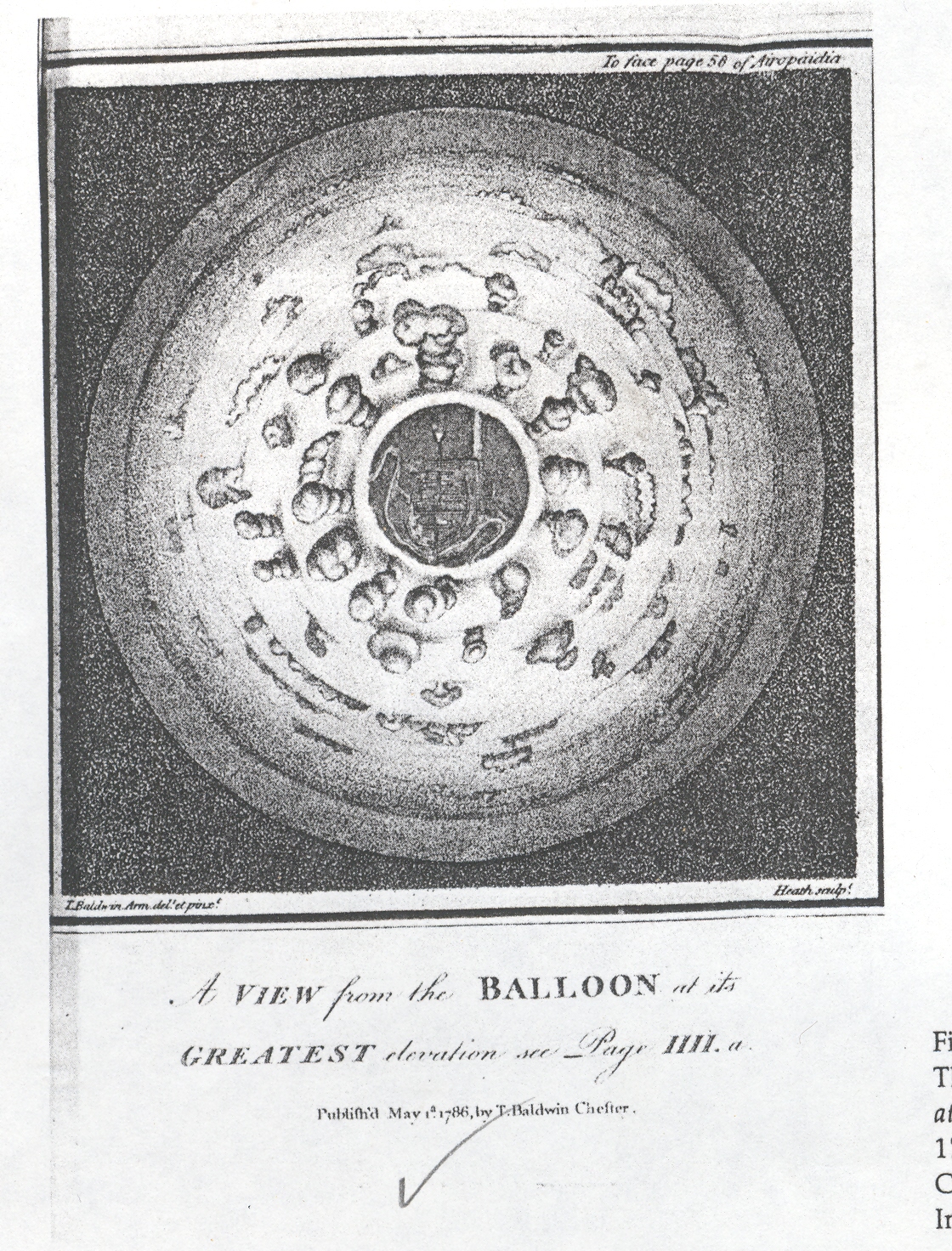
    And for a long time it was just not possible, not really, to look straight down at something from a height, or at least until the invention of flight at the hands of the Montgolfier brothers in 1783.  This first image offers a view looking straight down from a balloon through a bank of clouds and onto a town, and was drawn and published in 1786.  It must have been shocking to see this for the first time in that year, the image so unexpected and mostly not imaginable.  One of the other aspects here is that the viewer is looking obliquely down from the tops of clouds, the first time that this was ever done—so far as I can determine—with a scientific vantage point. 

    BLOG==july 9--perspective up

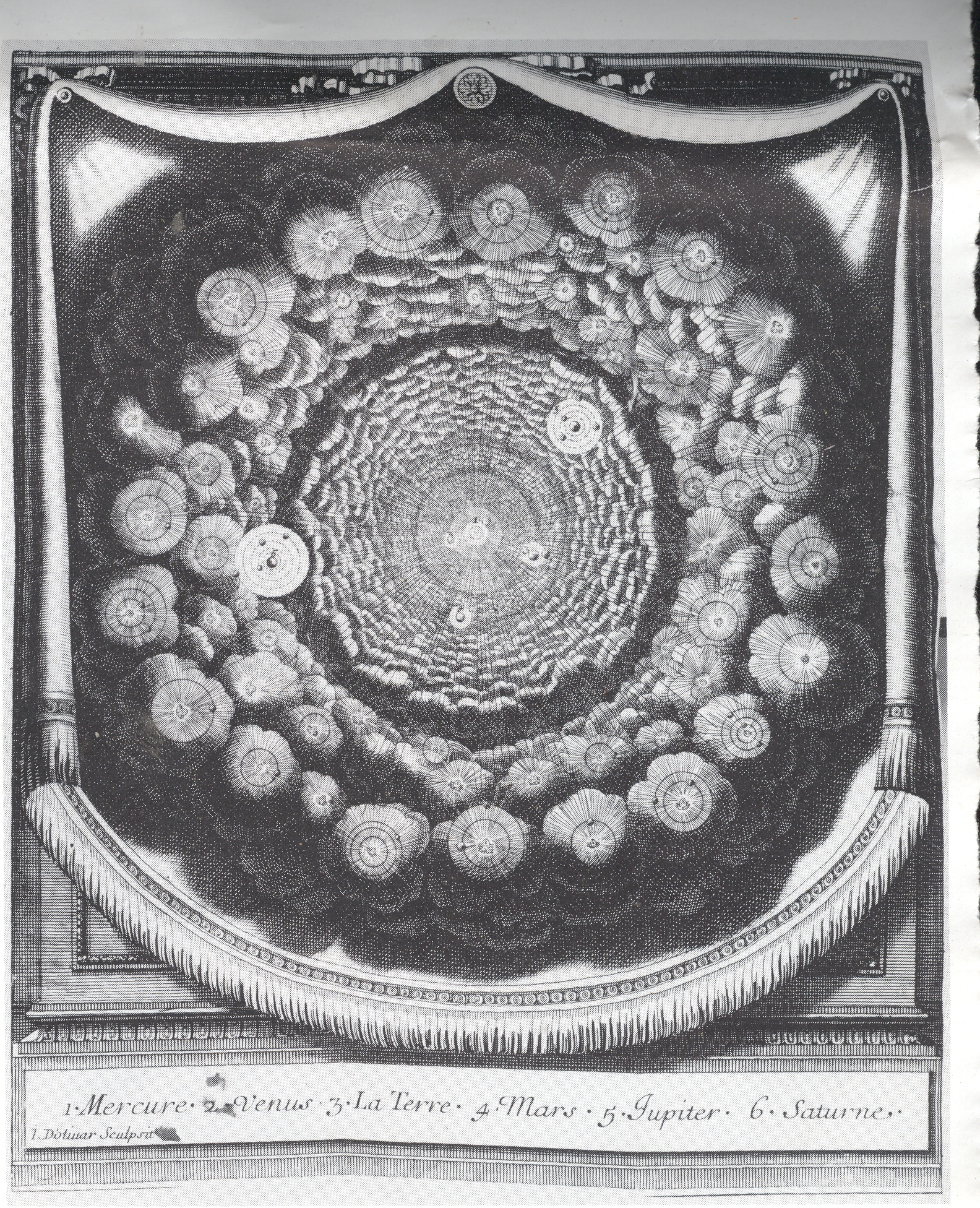
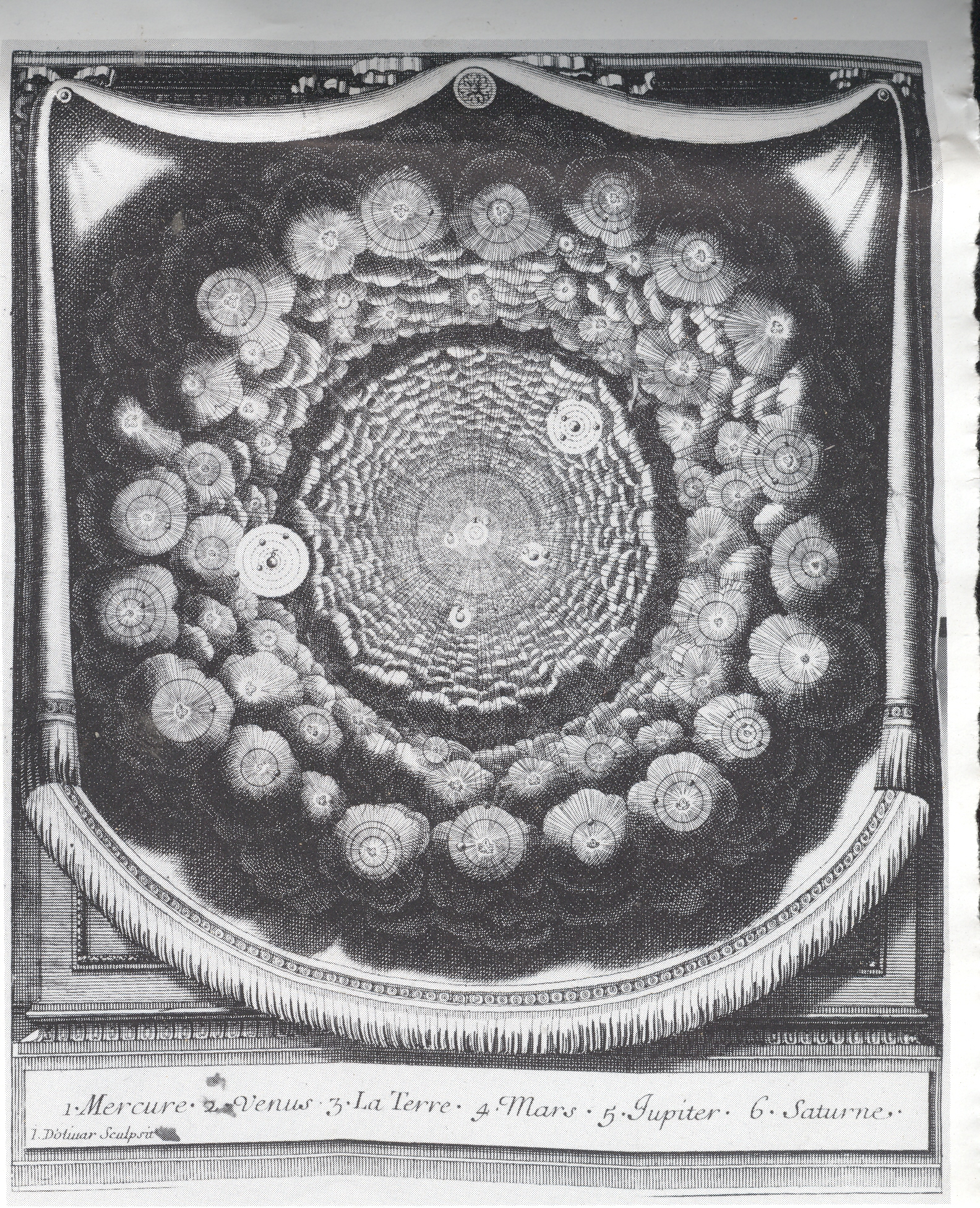
    The seeming complement to this image is from Entretiens sur la Pluralitie de Mondes (Conversations on the Plurality of Worlds), written by the great French philosophe Bernard le Bouvier de Fontenelle in 1686 (just a year before publication of perhaps the greatest work in the history of science, Newton’s Principia Mathematica). The Plurality was a best-seller by the best-selling Fontenelle. An excellent attempt by a rather restricted writer to engage the population-at-large, writing a high-pop book on what was basically the history of astronomy and cosmology of the preceding century. Copernicus was a major feature of his imaginary conversations with a muse as he wandered through a metaphorical garden of questions, with the observations of Galileo and Cassini also very prominently featured. But what interests me here is the great similarity between the two, the view from the balloon looking down, and the Fontenelle, looking up.  (Or what would pass for “up” in space.)  Except that the cloud-y looking things in Fonetenelle aren’t clouds at all, but solar systems.  This was a radical, church-pounding idea at the tiem, displacing the unique centrality of the human condition, offering the possibilities of other lives on other solar systems and other planets

    BLOG==july 9--perspective across . 

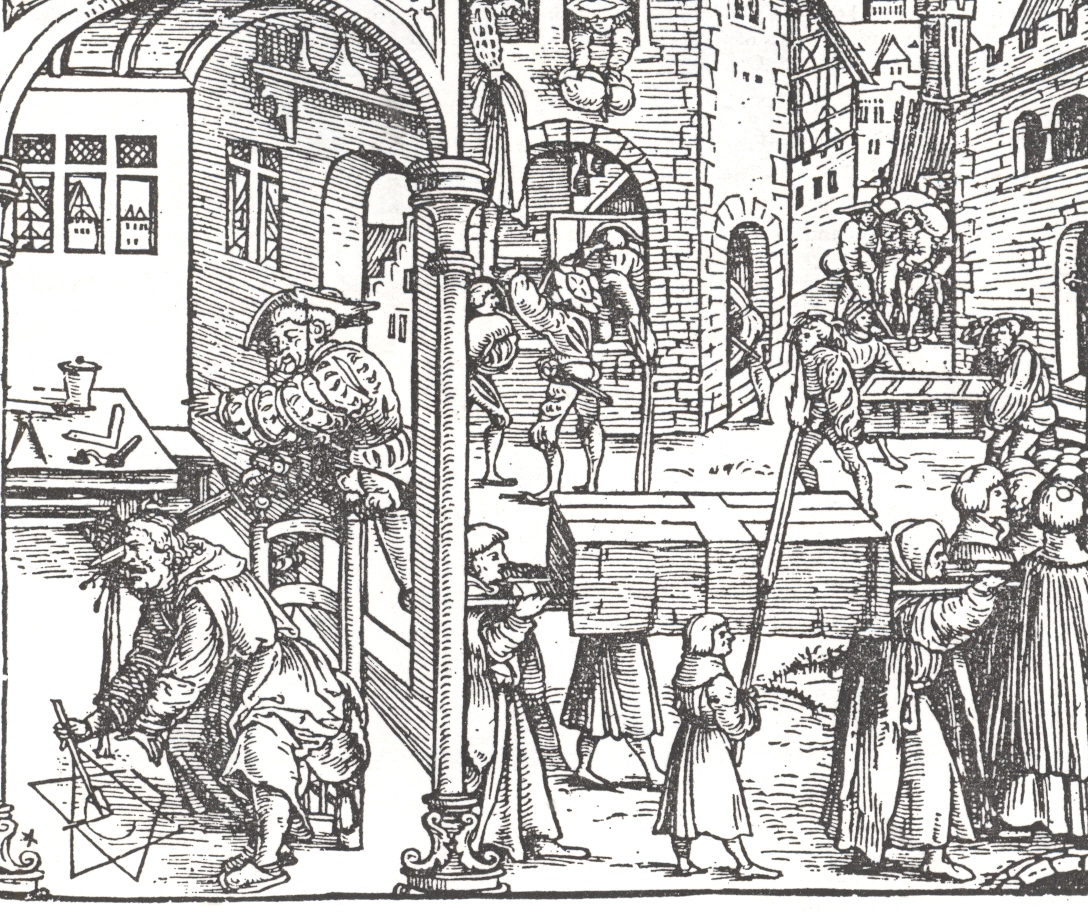
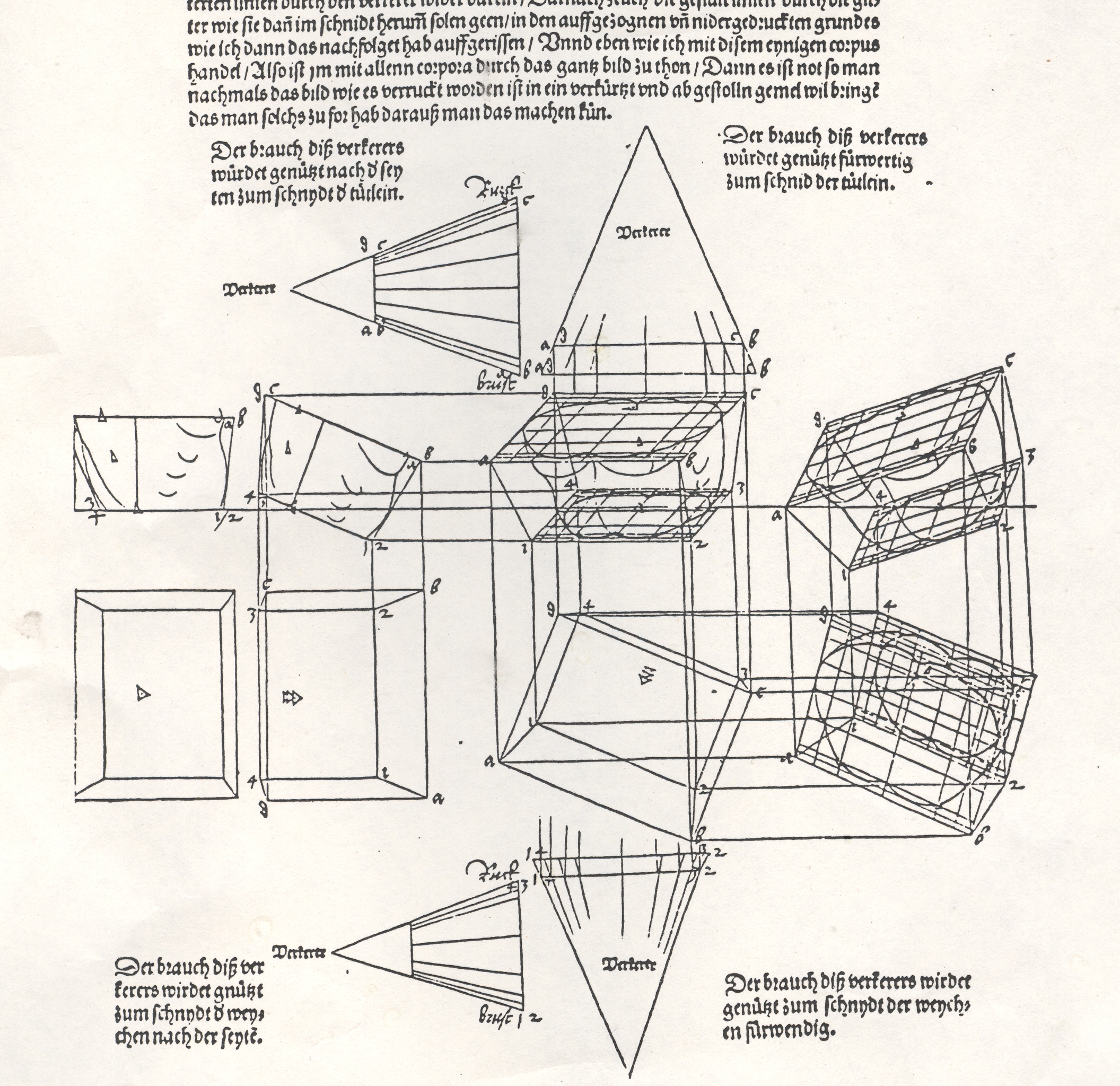
    Albrecht Durer’s (1471-1528) drawing of a geometrical man was an amazing–startling, even–object to the early 16th century consciousness. His Underwysung der Messung (“Treatise on Measuring”) written about 500 years ago (in 1525) set the stage for this next work–it is here that we find some of the most recognizable of Durer’s illustrations of the instruments that he employed to do his perspective work:   his …Symmetria partium…humanorum corporum (1537) was a masterpiece, and a key piece of revolutionary visionary thinking.  Durer–so far as I can tell–created an orthographically rotating human figures in three-dimensional trapezoids, creating incredibly human-like non-human forms.  Supra-human, perhaps; mechanized, calculated, structural. His use of stereometry, the science of measuring volume, was adapted to this study of human form and the relationship between that and movement.

    By doing this one could rotate the figures, pinch them, stretch them, and the proportions would remain exactly the same.

    They were in a sense a CAT scan.  And in this way the person in 1525, seeing this for the first time, would be experiencing something like the sensation of seeing an X-Ray for the first time in 1895 or a magnified flea in 1626.  It was a spectacular effort an a major key to understanding movement, and anatomy, and of course map making.

    This was a new way of thinking about the body, challenging the god-grace and ubiquitous church-inspired revelation of the body and how it worked.  This was not a necessarily easy time in which to picture humans in such a scientific way.  (In 1553 the physician and theological scholar Michael Severtus would be burned at the stake by John Calvin for his views on the Trinity, Nicean Creed and other related things, though his undeniably revolutionary idea of cardiopulmonary circulation was in itself a direct challenge to church teachings).

    Durer’s innovation accommodated empirical observation and allowed for proportional change.  Its importance in relational drawing, anatomical and  technical, cannot be understated, which I think trumped it as a subversive agent to orthodoxy.

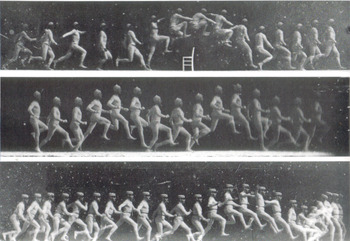
    Blog--july 9--marey Fast forwarding a bit there are the images of arrested time by Etienne Marey (who was a technoid and physician) and  who was able to capture motion of all sorts–he was able to develop a picture so to speak of the movement of blood in the body via his instrument to calculate blood pressure, and he also created a shotgun-style camera that made the world’s first high-speed photographs of movement.  And so it cane to pass that in the late 1870’s and early 1880’s people were instantly able to see what a horse looked like when it galloped or what the body did *exactly* when jumping over a chair.  When you couple this with fourth-dimension material one wonders why it took several more decades to bump into these images in the art world of the earliest part of the twentieth century.

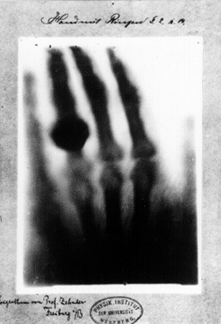
    Blog--july 9--roentgen In 1895 50-year-old Wilhelm Conrad Röntgen’s ephochal discovery was announced (“Ueber eine neue Art von Strahlen”. “On a New Type of Ray”), built upon the work of J. Plucker (1801-1868), J. W. Hittorf (1824-1914), C. F. Varley (1828-1883), E. Goldstein (1850-1931), Sir William Crookes (1832-1919), H. Hertz (1857-1894) and the horribly odious Phil Lenard (1862-1947 and who didn’t die soon enough). The experiment revealed as much to humans as did the experiments and inventions of Hooke and Leeuwenhoek on the invisible worlds revealed by their microscopes. Bertha, Roentgen’s wife, sat for 15 minutes while her husband passed his rays through her hand; she ran from the room once she saw the results, revealing her very bones and no doubt a strong sense of the fragility of life, and the strong presence of death.  Many had the a similar reaction to the Kandinsky’s shapes and Malevich’s white circles and red rectangles and Ibsen’s drama and Einstein’s dancing dust and the rogue syncopation of jazz—these newnesses were threatening to all of the established ways of looking at physics, and art, and theatre, and listening to jazz.  It was a new perspective which challenged the firmly established vision of these things, upsetting the nature of comfort and acceptance.    It is probably a very natural reaction to try and protect established memory—but memory is made all of the time, and so should be relatively flexible…at least it is mechanically healthier to allow a little bending than to be rigid and brittle. 

  • Lost-topia: Looking for the Birthplace of Recorded Country Music

    JF Ptak Science Books LLC  Post 682  Blog Bookstore

    Looking for 412 State Street, Bristol, Tennessee.

    A History of Blank, Empty & Missing Things, #50 

    Bristol JP 2 chairs

    Driving through Forks of Ivy, topping Sam’s Gap, crossing the Nolichucky, passing through Unicoi County and into the Watauga watershed, I found myself in Bristol, Tennessee, in the north-east part of the state at corner of southwest Virginia.  Bristol is actually on the state line, with half of the city in Tennessee and the other half in Virginia. The dividing line is the main thoroughfare, State Street, a tight avenue lined with early-ish building that hint of the age of the place, but not nearly so.  This used to be frontierland, the area surrounding being largely found in the 1750-1775 or so, at a time when the Blue Ridge and the Southern stretches of the Appalachians were the Far Western frontier.

    I was after a different sort of frontier adventure on State Street today—a musical one.  State Street was the home of the “recording studio” for the renowned “Bristol Sessions”, which is recognized far and wide as the veritable Big Bang of country music. 

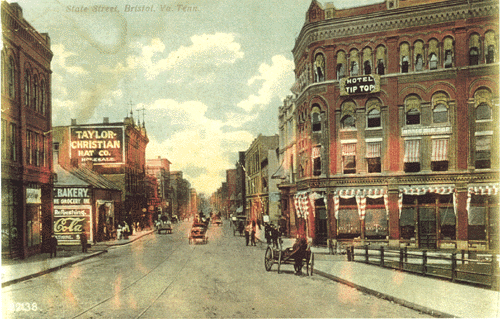
    Ralph Peer (of Okeh Records fame), an entrepreneur/musical spelunker, came to Bristol in July1927 looking for local music played by its hidden talent. There was a large interest in original American music—gospel and blues–from the far reaches of the country at this time, and Peer sought those genres in addition to secular music tat fit neither category–that would be “country music”.  He was alerted to the area by his friend, the musician Ernest Stoneman (of an equally musically-rich area in Galax, Virginia), guided by the assertion that the Bristol/Johnson City/Kingsport area was a magnet for the musical talent of the region.  He set up a temporary recording studio, renting the top two floors of the Taylor-Christian Hat Company (seen in the postcard image below, just beyond the Tip Top Hotel) at 412 State Street.  Statestreetcirca1900 The initial react to his advertisement was underwhelming, but when an article appeared in the local newspaper in the second week of his two-week stay touting the $3600 that Stoneman received in royalties in 1926 for his recorded music, the floodgates opened, and suddenly Peer was completely booked.

    The recordings that Peer made at 412 State Street were spectacular.  Among those who showed up was the young Jimmie Rodgers. And Uncle Eck Dunford and Ernest & Hannah Stoneman. And A.P., Sara and (Mother) Maybelle Carter, who recorded their oh-dear-god-beautiful “Single Girl, Married Girl” (and “Bury Me Under the Weeping Willow”, “Little Log Cabin By the Sea”, “The Storms are on the Ocean”, “The Wandering Boy”) there on the second floor. 

    There were 19 performers who recorded 76 songs in an altogether singular moment.

    Carter-family

    And so, being near  Bristol today I went looking for 412 State Street.  I must say that it looks as though Bristol was prosperous at some pre-WWII point in the past, the city looking like it needed a scrubbing, with lots of store-front vacancies on its most famous street.  Also there seemed to be no 400 block.  Having the postcard image of where the hat factory was, I started comparing the buildings on the 500 block to those in the picture, and I had half-convinced myself that the city must’ve changed the numbering system for the street to accommodate what my brain was telling me was the missing building.  The match looked pretty good, except for the number of windows. 

    There were only a few businesses open that I could see, and I popped into one—a music store, its open door allowing the loud rock music from the inside, out—and asked the young woman where the Bristol sessions building was.

    She instantly looked sad.  “Come with me, I’ll show you” she said, as we walked out to the sidewalk.  It was not a good feeling.  She looked north on the street, towards the open area of State Street that seemed to have been urban blighted, and I tried to get her to look south, to where I hoped the building was. 

    Bristol JP recording studio place

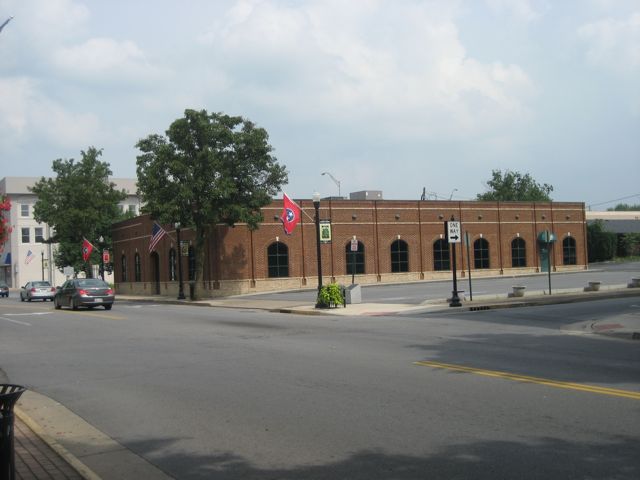
    “No, no, I’m sorry to say.  She pointed north, to a bad 1970’s brick single-story building about 20 0feet away.  “That’s it.  Or that’s where it used to be.  Actually that’s the second building that got built on the site.  The one that replaced Taylor-Christian got torn down too.”

    She had told the story before, a lot of times.  I think that she watched my eyes closely as I tried to focus on the foul building—maybe she saw my eyes get smaller and smaller, trying to size the three story hat factory down to this speckly brick thing.  She had to have seen the disappointment, and then the wincing reaction to the building that replaced the iconic structure.  I wondered to the woman if it was hard for her to break the news to the folks that came to finds the building.  “Used to” she said, “but now I’m used to it”. 

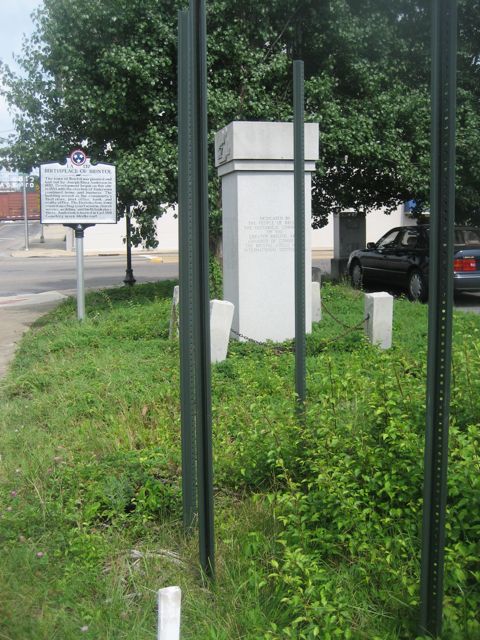
    Bristol JP monument It’s a sad end.  Especially when I found the little monument erected by the Oddfellows nearby, commemorating the Sessions.  It sits on a funny little piece of land, badly overgrown.  For some reason there’s a half-dozen sign-less traffic sign utility poles haphazardly placed bizarrely next to it. There’s a parking lot ten feet away.  It looks hot and unwanted, like a small graveyard scooped out of its pleasantness and surrounded by traffic (like the Fitzgeralds up in Maryland).

    As I drove out and away from the city, I took a few pictures of buildings that were probably once happy and visited. I should point out that once Peer was done, so too was the recording business.  The fact that this music was recorded and brought out to the world from Bristol left no real shadow on the Bristol JP Peer Stcity, until recently. 

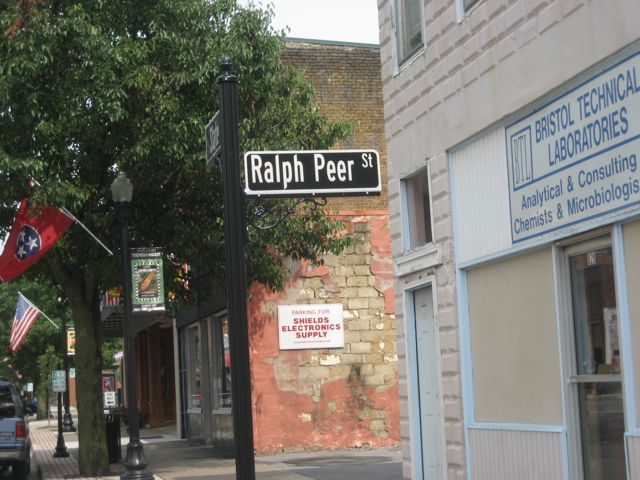
    Fitting, unfortunately, tightly with the end of 412 State Street is the street named for Mr. Peer.  It has a lovely, old-timey street sign (off State), but the street itself, well… This is just not right.

     Bristol JP Peer St2

    I was shocked by the unbearable beauty of this little business:

    Bristol JP Dentures

    One of the three movie theatres in a two-block span:

    Bristol JP theatre2  

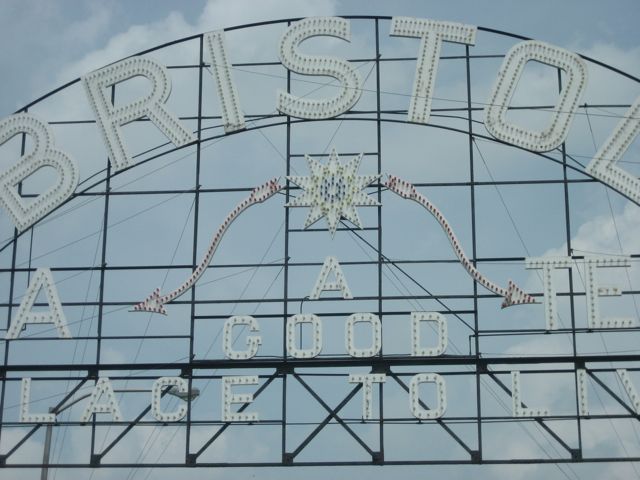
    Bristol JP sign close up

    Bristol JP tires  

  • Dots in Revolutions of Modern Art: Seurat & Kandinsky

    JF Ptak Science Books LLC  Post 683  Blog Bookstore

    Part of the History of Dots series

    It is interesting to think of the importance of dots in the first revolutionary changes in 500 years in the history of art.  Honestly, there wasn’t anything epochal that happened between the re-discovery of perspective (ca. 1330-1400) and the arrival of Impressionism (and just afterwards of non-representational art) in the 1872/3/4-1915 period.  

    Suerat Dots aren’t brought to bear formally in the revolutionary movement until the early 1880’s.  Impressionism for all intents and purposes is formed with the Societe Anonyme in 1872 (whose members included Monet, Pissarro, Degas, Sisley, Morisot and eleven others), and perhaps more realistically in 1874 when the Societe exhibited its first salon.  (The first show held at the Nadar Studio in Paris in April 1874; a tiny, one month long affair, compared to mammoth exhibitions like the Universal Exposition in Paris in 1867.) 

    It was Georges Seurat who brought the whole world to the dot experience with his artisitc method of Pointilism, in particular with his magnificent Un dimanche après-midi à l’Île de la Grande Jatte, an enormous work given its composition—dots.  The dots replaced the brushstroke, and their placement in relation to their color was an absolutely brilliant innovation, establishing a perfect result for the viewer when examining the work as a whole.  (It may well be that the French chemist an designer Michel Chevreul made this discovery a few decades earlier, noticing the effect and changes in color depending on placement and—in his case, with fabric—color in the dyes for his material.)

    Wassily Kandinsky (1866-1944), the discoverer of nothingness in art and the introduction of the first BLOG==july 13=kamd non-representational paintings in art history (1913) used his fair share of dots in his exploration of the previously invisible.  One good example is his 9 Points in Ascendance (1918), which is nothing but black dots, an impossible composition just two decades prior to its creation. 

    In the middle of this appeared the half-tone illustration, the great liberator of photographic illustration in popular publication.  Invented in the late 1870’s by Stephen Henry Horgan and used in the Illustrated London News for the first time in 1881, it made the publication of accurate images much feasible and economical.  No longer were readers dependent on the accuracies of artists interpreting photographs or photographed scenes—the photographs themselves were now publishable at little cost and in high quality, vastly increasing the veracity of published reports dependent upon images.  This was revolutionary in its own way, democratizing the sharing of images and icons.

    And so in just thirty years the lowly dot availed itself of some of the most spectacular achievements in modernism.  Of course we can say the same of the line, but this is, after all, a history of dots. 

    ·Posted by :

    ·in:

    — —
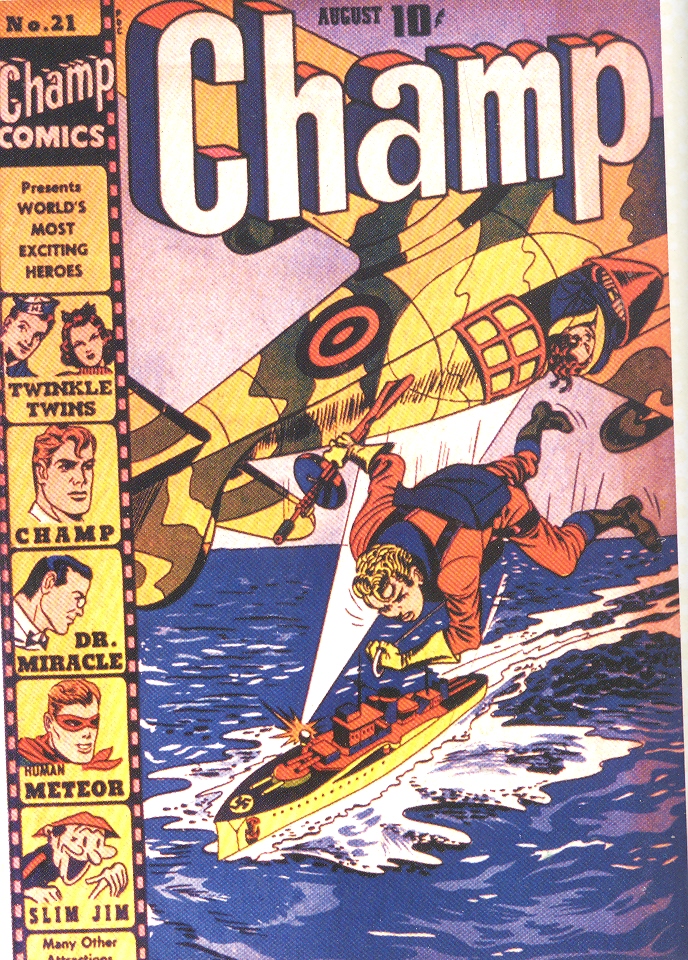
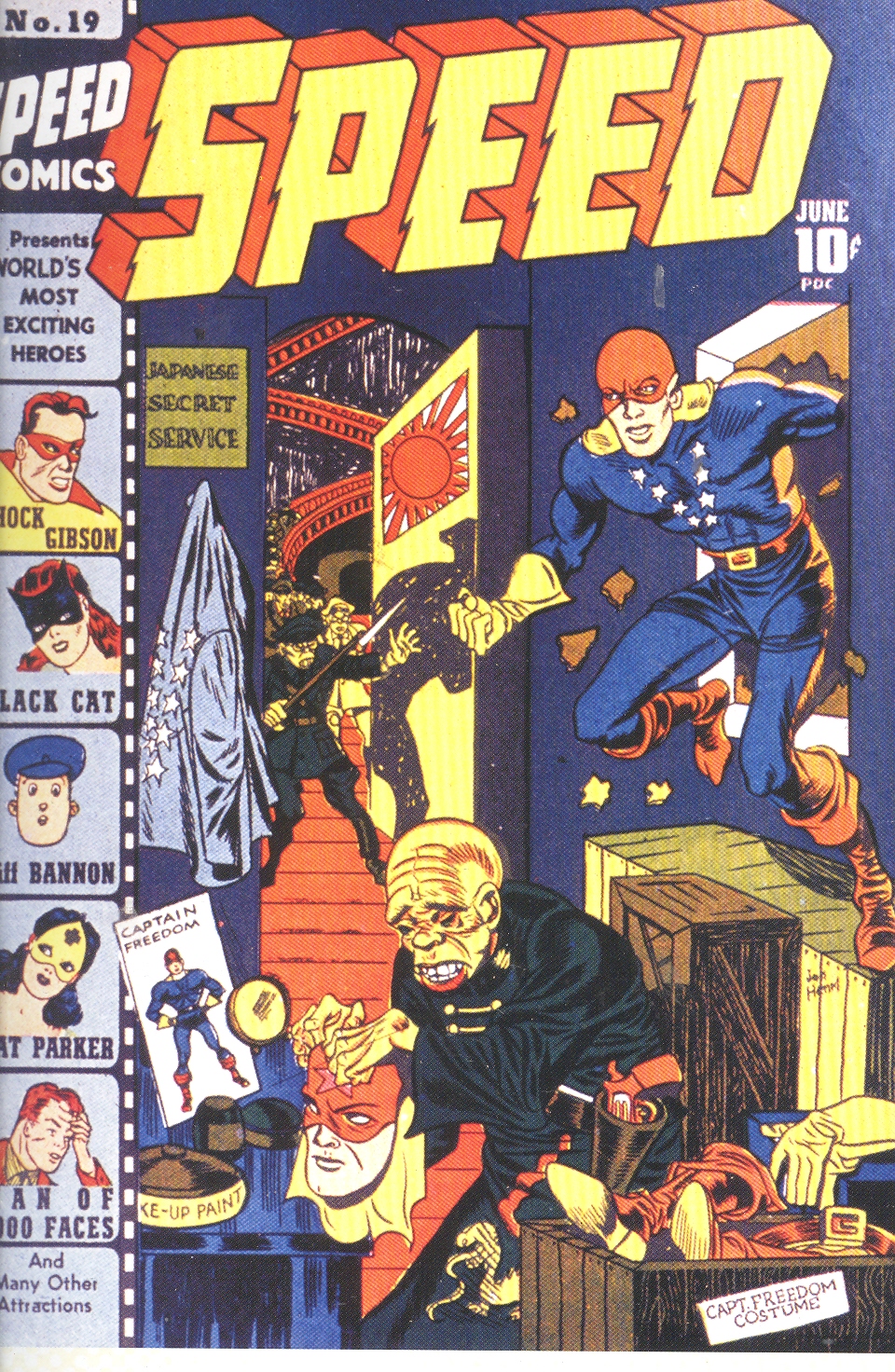
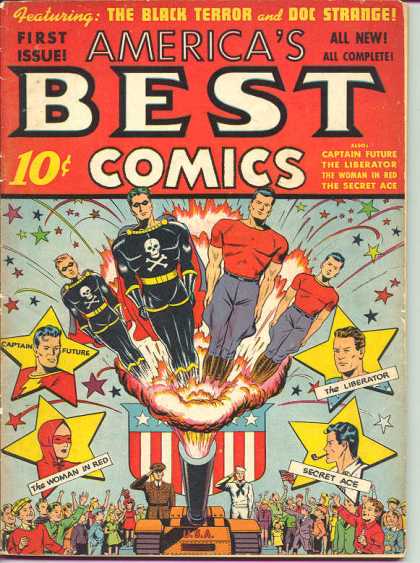
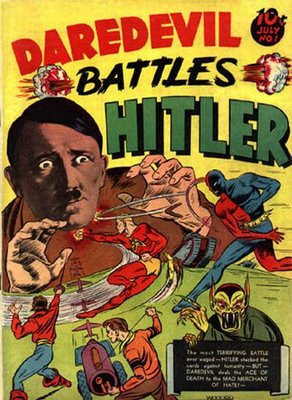
  • Captain Marvel vs Germany and Japan: American Comic Books 1941-1945.

    JF Ptak Science Books LLC  Post 684 Blog Bookstore

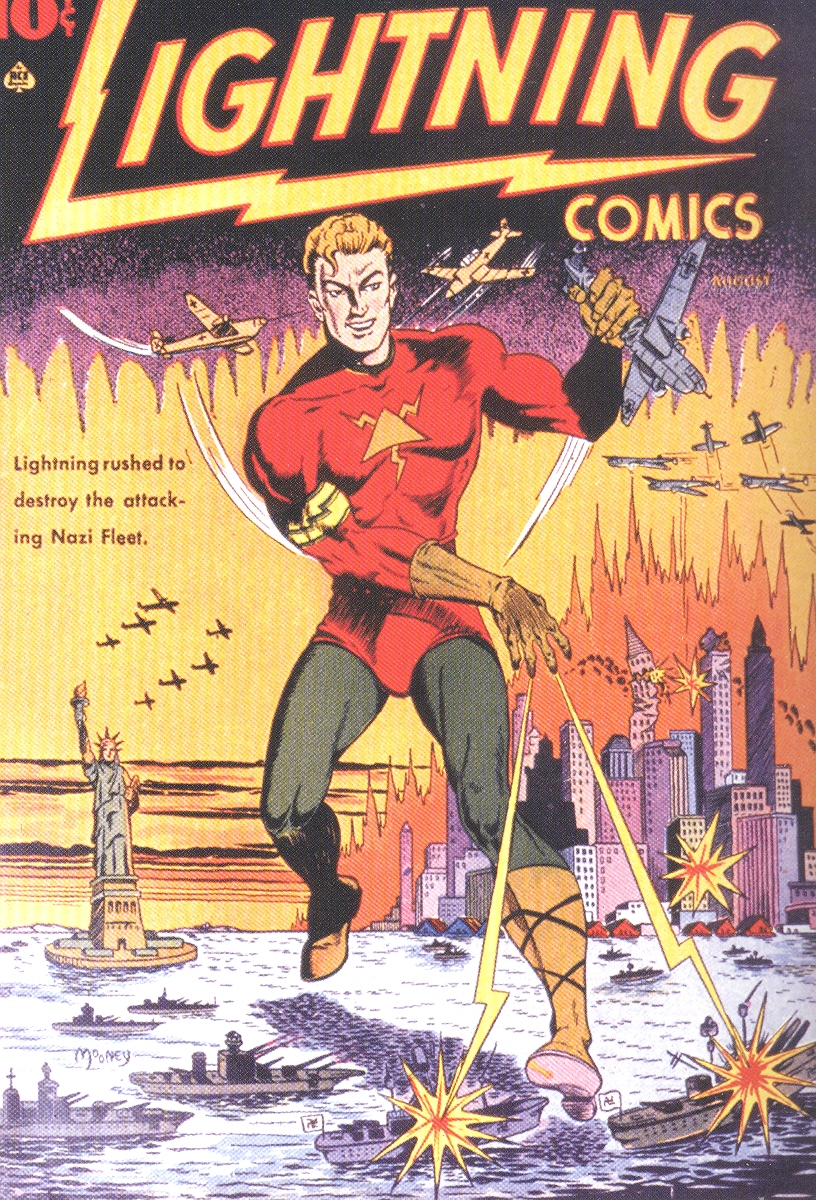
    Comics lightning
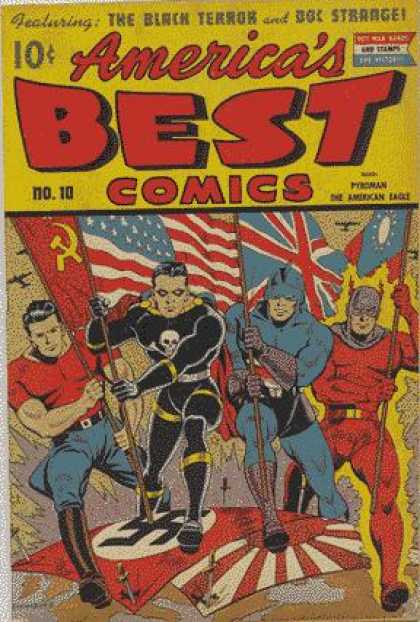
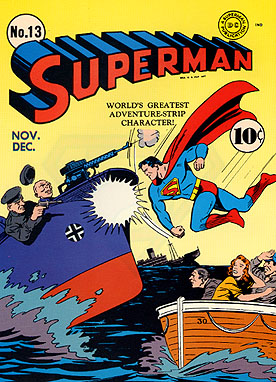
    The popular culture of WWII was–and continues to be–enormous, beyond that military interest in the Civil War, or so it seems. There were literally hundreds of World War II movies (among the Allies, here in the U.S., the U.K., Canada, The Soviet Union), tens of thousands of books, millions of articles and newspaper accounts–trillions and trillions (and perhaps an order or orders (?) of magnitude more)  of words (professionally)  spoken and written. In all of this I believe I’ve never considered the popular medium directed at children or very casual readers:  wartime comic books.  That’s why, I’m guessing, these American comic book covers registered as such a surprise with me–not only for their very graphic cover design (which seem to tell about the entire story with a single glance) but for their great numbers.  No doubt the great empowered heroes in these pages–who were single handedly defeating Japan and Germany–helped quiet many a child’s nerves back there in 1941-1945, and unsweattied many a night-time pillow.  The comics (all of which below were published during the American years of the war) have a calming effect even today.

    It was during the early part of the European War  (1939 and late 1941) that saw the introduction  of some of the great standard comic book heroes:   Batman and Robin, Wonder Woman, The Flash, Green Lantern, the Atom, Hawkman, Aquaman, Human Torch, the Sub-Mariner,  Captain America, and of course the most popular of them all at the time, Captain Marvel.  Superman, the soon-to-be crowned king, appeared just a little earlier, in 1938.  It seems that many myths were created in response to large forces pressing against a people, and I guess that these comic book heroes are no different.

    I have no idea offhand about this sort of publication appearing in the other countries at war. 

    Comics americas Best

    Comic superman

    Comics champ


    Comics speed comics 2Comics americas best

    Comics daredevil hitler

    ·Posted by :

    ·in:

  • Trinity + 64 Years: the Explosion of the World’s First Atomic Bomb, Alamogordo, New Mexico, 1945

    JF Ptak Science Books LLC  Post 686  Blog Bookstore

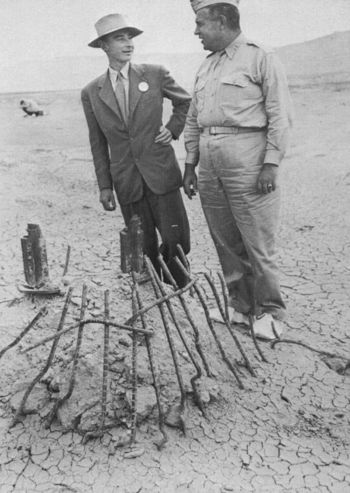
    Today is the 64th anniversary of the explosion of the first atomic bomb in the pre-dawn New Mexico desert. I’ve made a number of posts about that event, as well as the decision to use the bomb along with its consequences and subsequent control.  Mostly the posts can be found here.  I’ve reposted parts of the beginnings of two of those posts relating to 16 July below.  [That’s Oppenheimer and Groves standing at the remnants of the base of the tower that held the suspended weapon on 16 July, everything pretty much gone.]

    Oppenheimer_groves_090945 Trinity at 63: the Explosion of the First Atomic Bomb, 16 July 1945

    Now we are all sons of bitches—Kenneth Bainbridge, Trinity
    Director.

    There were many profound thoughts in many profound heads there in the
    desert, at the reaches of the Jornarda del Muerto (“The Dead
    Man’s Walk”, a formerly nearly-impenetrable stretch of desert in  the
    Llano Estacado) at the Trinity Test Site, Alamogordo, New Mexico, on
    16 July 1945 for the successful testing of the first atomic bomb.  Robert
    Oppenheimer famously cited the Gita (“Now I am Become Death, the Destroyer of
    Worlds…”): Enrico Fermi was so busy with his little and excruciatingly
    wonderful experiment with strips of paper calculating the effect of the blast
    (he reckoned a very-close 10,000 tons) that he didn’t actually hear the
    explosion; Edward Teller thought Tellerian thoughts, and so on.  Actually
    the observation points (like S-10000 and Campania Hill)were crowded with big
    brains:  in addition to Oppenheimer, Teller and Fermi were people like
    Hans Bethe, James Chadwick (whose discovery of the neutron sort of started the
    whole thing), Richard Feynman, George Kistiakowsky, Phil Morrison, Robert
    Serber, Vannevar Bush, James Conant, and many others.  The were all
    thinking pretty big things (except for the occasional if-you-can-believe-it
    stuff like that which maybe came from Feynman’s mouth, which was “hot
    dog!”).  I think that Bainbridge’s statement was the best, and truest,
    summation of the morning’s activities…

    [Continue reading via link above]


    The Decision to Use the Bomb:  Trinity +1

    July 17, 1945 (Trinity +1 or Hiroshima -20), the day after the Trinity test
    of the first atomic weapon, was the first day in which very concerted, very
    real discussions ensued about what to do with the bomb and where to us
    it.  Actually the discussions were mostly on the “where” than on the
    “whether”.  (As it turns out part of a minor segment of the “whether” part
    was Leo Szilard’s petition
    to President Truman not to use the bomb and which was signed by 155
    Manhattan Project scientists, and which had reached its final version on this
    day.)

    The truth of the matter was that it was a very complex issue, an easily
    misunderstood tapestry of circumstance and consequence. The major issue of
    course was that the Japanese would not surrender, and that there would be
    “fanatical resistance” once the invasion of the Japanese islands had
    begun.    The battle of Okinawa had just been fought—it was a
    horrible confrontation taking 12,5000 American lives and more than 1000,000
    Japanese , demonstrating that even in impossible circumstances that the
    Japanese simply would not surrender (unconditionally).   This is just
    one instance—there are many others, not the least of which was t he recent
    firebombing of Tokyo,
    taking 150,000 lives.  Air strikes in general seemed to not make a
    difference in the will of Japan to fight—as was demonstrated again and again in
    the British and American bombing of Germany—as was further demonstrated in
    General Curtis LeMay’s and General Hap Arnold’s  60-city attack in the
    May-August span.  The thought was that if there was an invasion that it
    could well cost the U.S.
    1000,000+ casualties and would be completely…

    [Continue reading via link above]

  • Unusual-Classic Design: Carto-graph of Aachen, Germany, 1932

    JF Ptak Science Books LLC    Post 687    Blog Bookstore

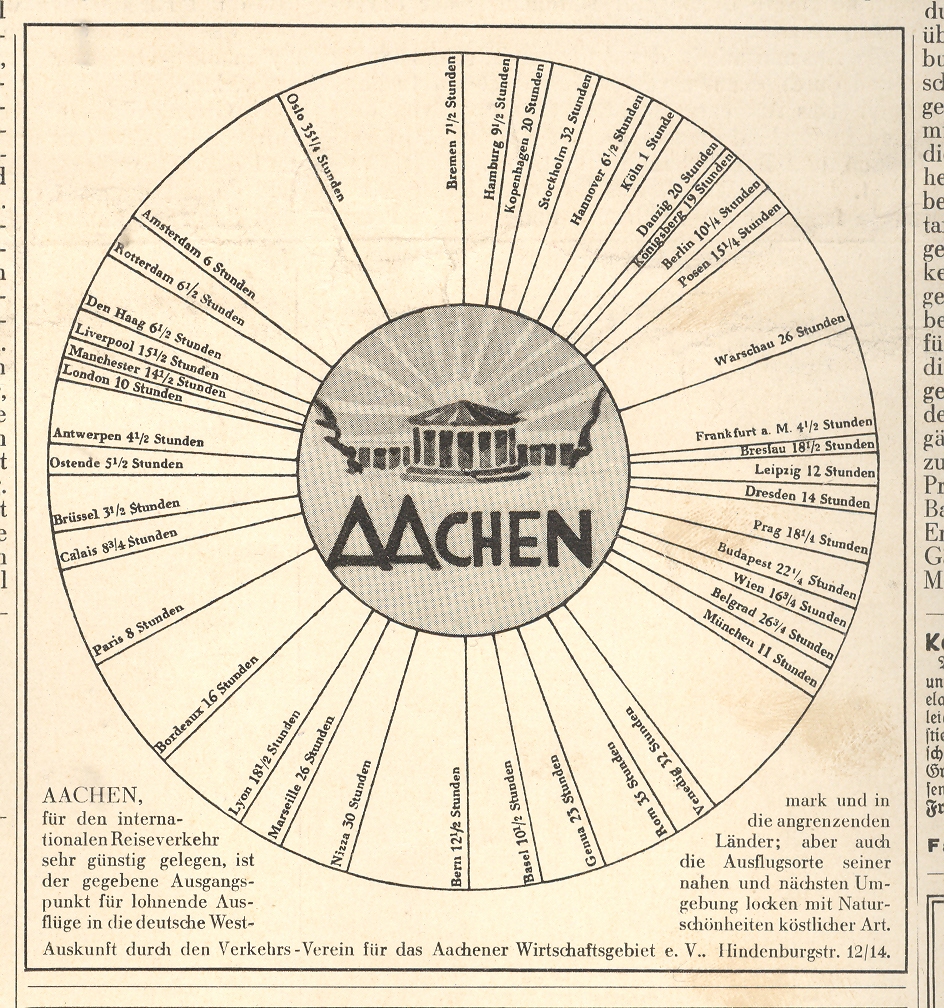
    ==Blog July 16==aachen

    This graphi-map isn’t so odd or unusual, and the data it presents isn’t deep or wide or complex,  but the image is still very compelling–its simplicity and design the basis for its eye-catching quality.  It takes up about a sixth of the
    next-to-the-last advertising page in the 1 April 1932 Illustrierte Zeitung (Leipzig), and it does,
    really, “pop”.  It is a very simple presentation
    establishing the centrality of Aachen,
    and that’s about it—simple.  And it
    works.  I’ve seen a number of other “all roads lead to” type of maps like this, but I’m a little stumped on locating them this moment. One of these,  a glorious world map of the port city of Wilmington, North Carolina, showing lines of transportation between it and the rest of the world, featuring the only-named-city Wilmington smack in the middle of the map Wilming-Center-of-the-World map.  (I think I can gurrantee that this is the only time WIlmington appears so on a world map.) 

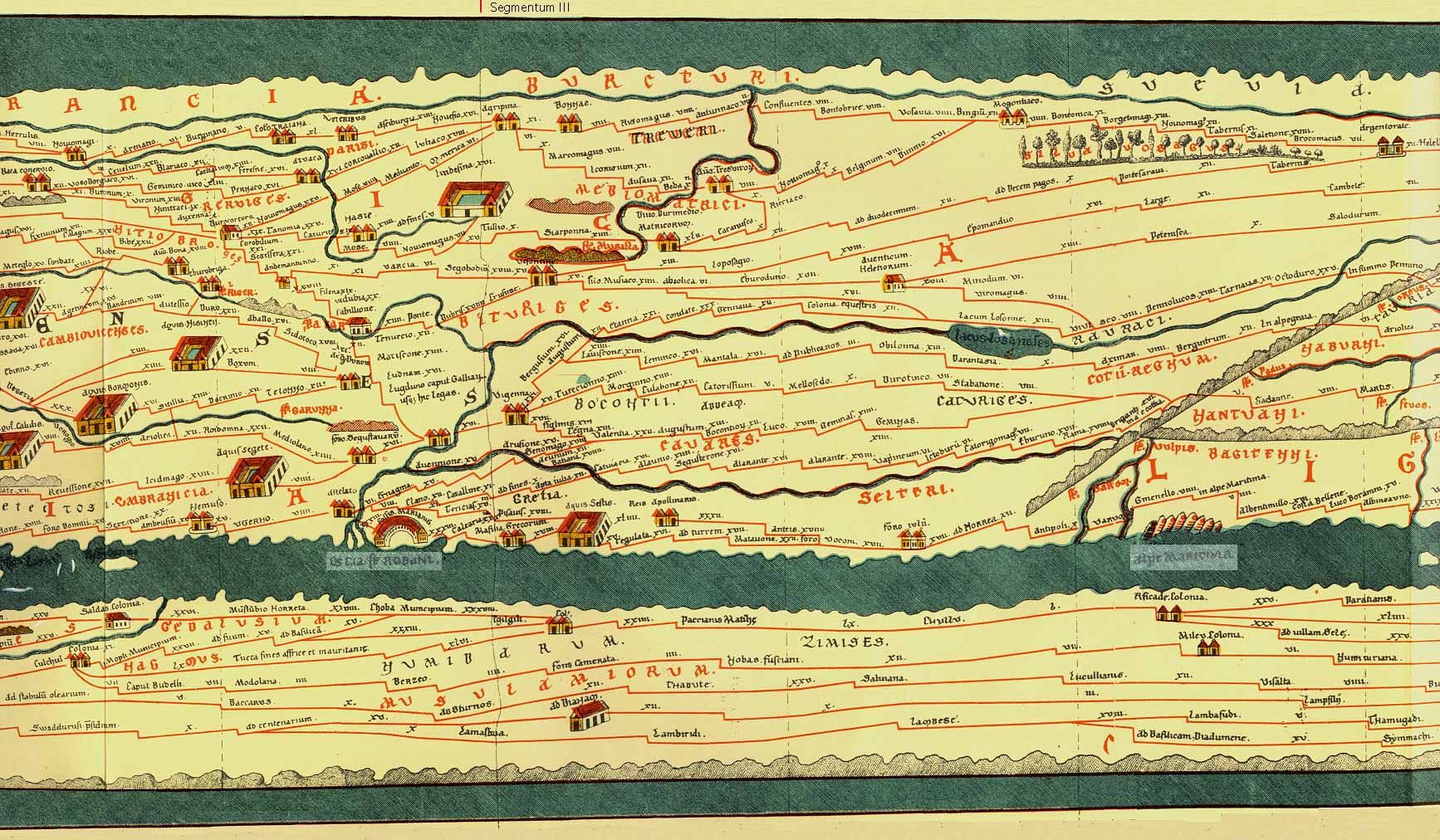
    Peutinger


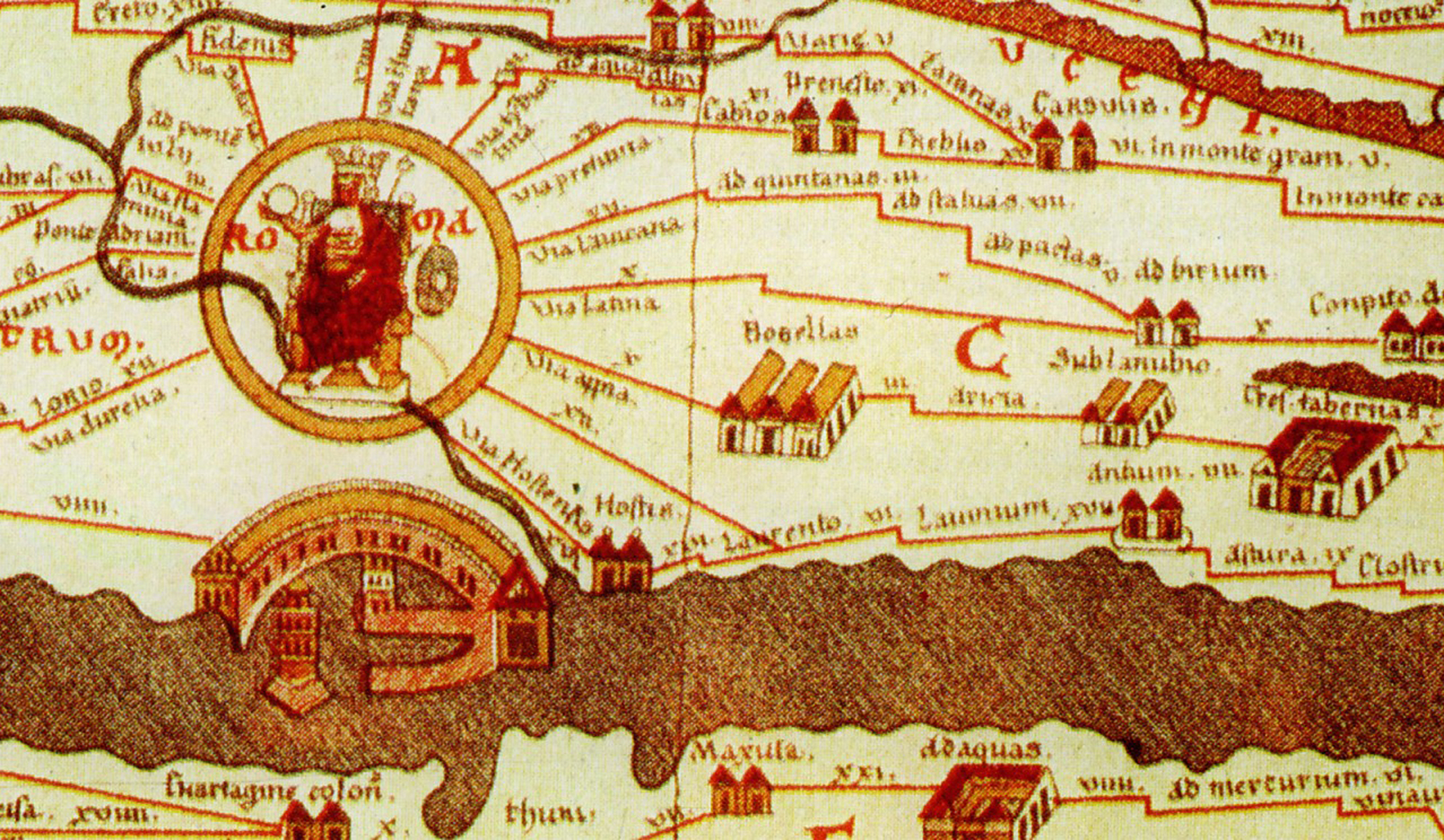
    Another example–more fantastic, much older, and far more important–is the Tabula Peutingaria, a 16th century low-Renaissance copy of a third century ACE Roman map of the known world.   Now this is a map:  it was a spectacular achievement, a road map for the Roman legions to get back and forth in the shortest amount of time, an index for the Italian Autobahn.  The map covers the world from Britain and all the way east to India (which was really India, China and all the rest).  And of course, we all know where all of the roads lead to. 

    Peutinger Table Rome & Portus


  • Cross Sections of a Mine Disaster at Wigan

    JF Ptak Science Books LLC  Post 688  Blog Bookstore

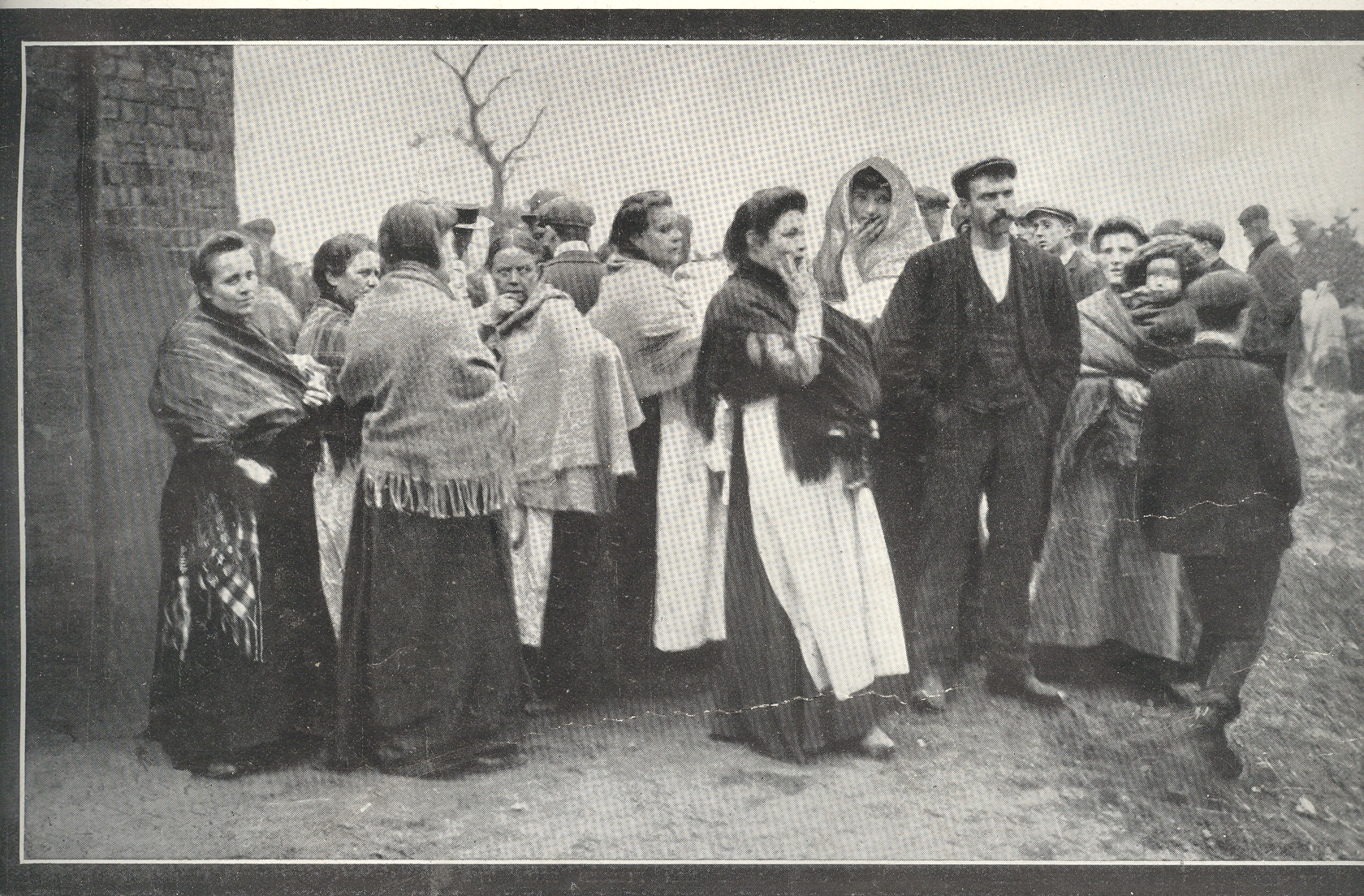
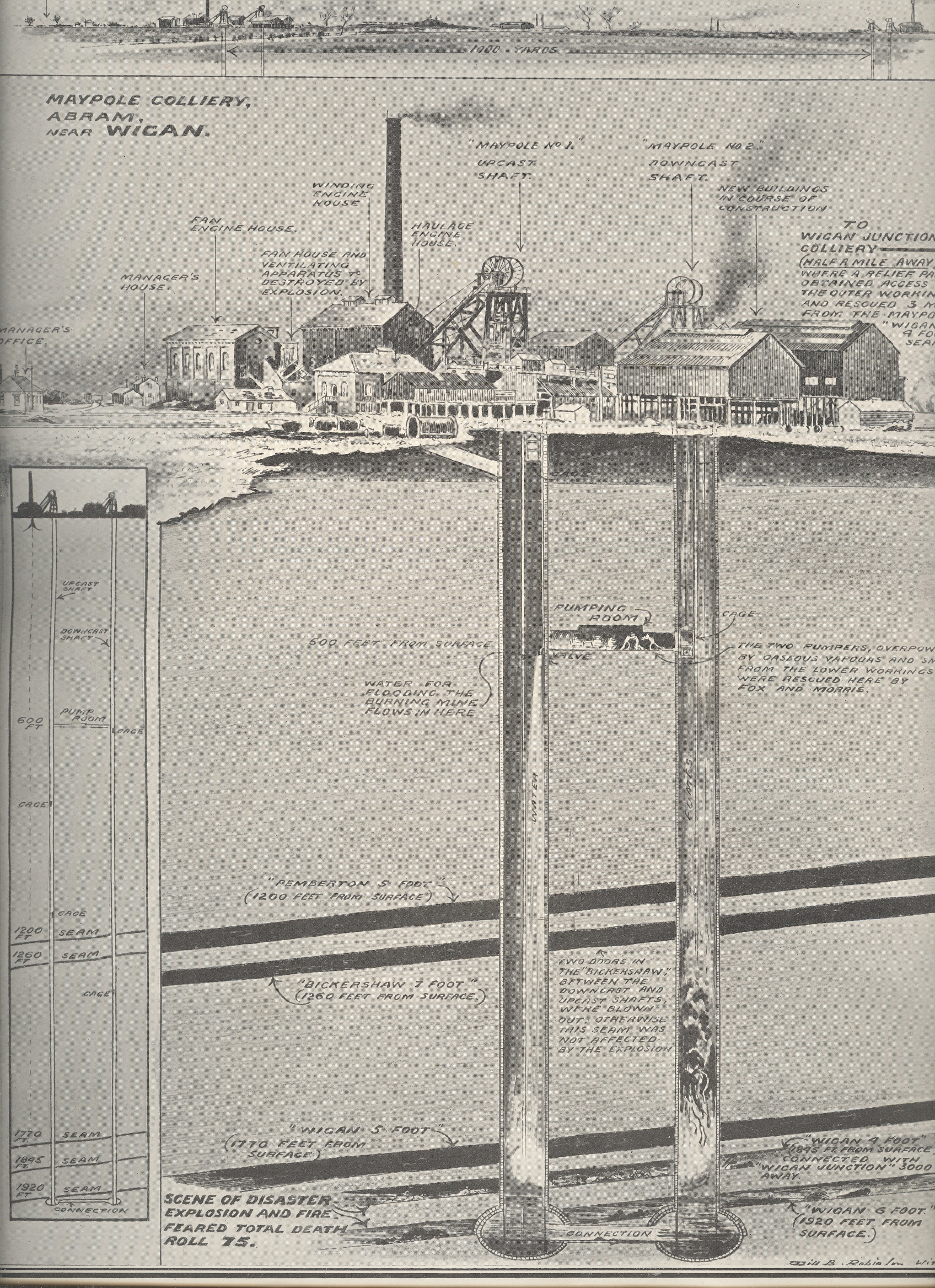
    A few minutes after five in the afternoon on 24 August 1908, a terrific fire engulfed parts of the Cannell Mine of the Maypole Pit (of Pearson and Knowles Coal and Iron Company) just outside (famous1) Wigan at Abram. It would claim the lives of 72 miners in a wicked, horrific way.    Part of the scene at the mine was covered by the great British weekly magazine The Illustrated London News (28 August 1908), and, though of course largely sympathetic, the article mentioned very little about the heroic attempts to save the lives of the trapped miners.  Perhaps the scene was just too gruesome, though not==Blog July 17==mine women so for the Liverpool Mercury (22 August 1908), which reported the situation with more full detail, with less of an eye, perhaps, to ensuring that the mine could re-open, which may have been part of the reason for the ILN’s less detailed storyline.

    I say this even though the ILN‘s story included some heart-rending images, including this (1890’s) Stieglitz-like photograph of miners’ wives waiting for word on the fate of their men.

    The Mercury painted a pretty bad image:
     
    “The explosion destroyed the ventilation drift and blew the cage, rope and other accessories away. It was officially stated that 75 men were down the pit at the time of the explosion, three were rescued alive, William DORAN, SMITH and DRAPER, thus there were 72 men in the mine immediately after the catastrophe.”

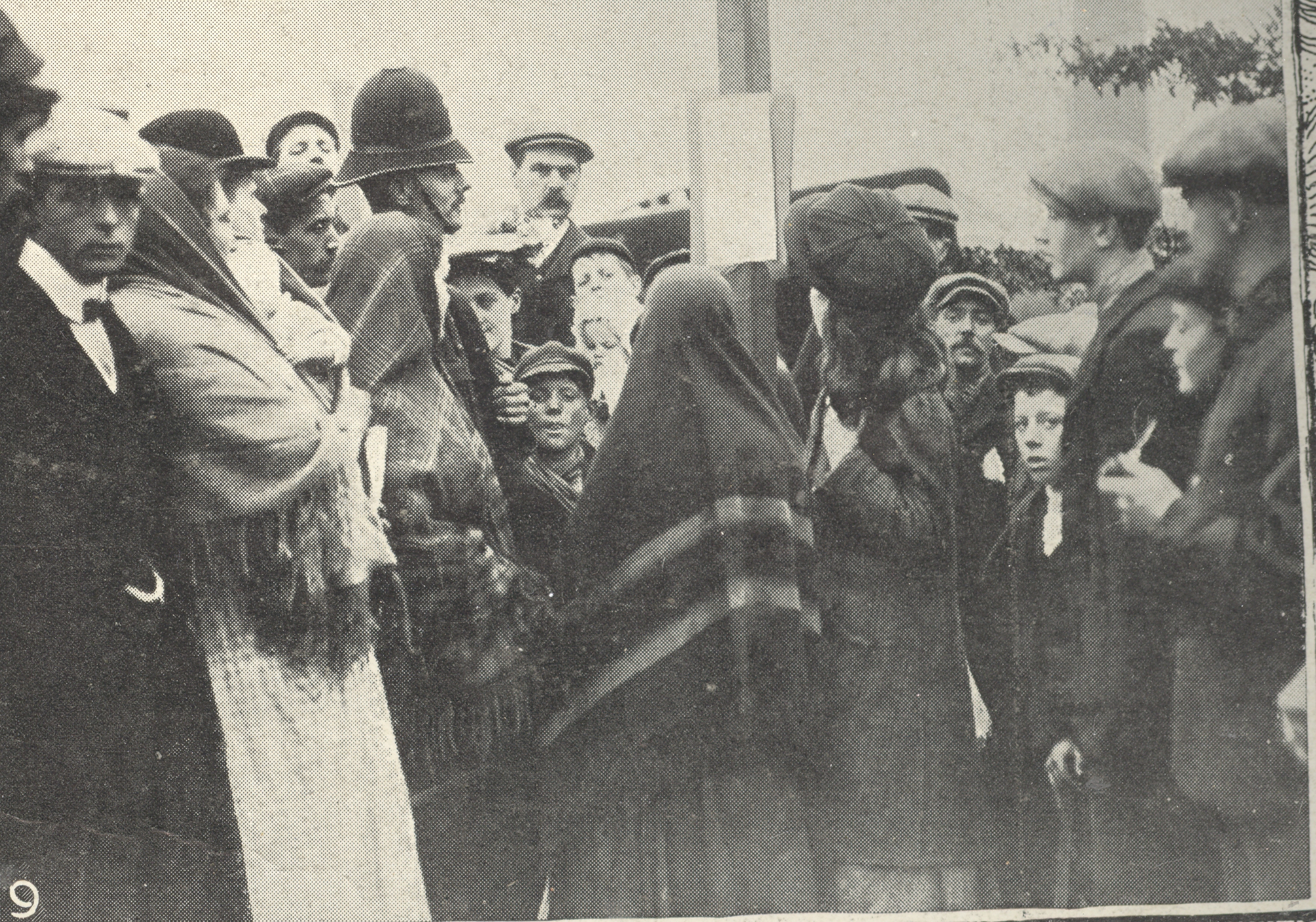
    “Men, Women and children in a seething mass waited in sorrow at the pit mouth for those, who but, an hour before had left their homes. Rescue parties were organized without delay equipped with rescue apparatus from the new rescue station at Atherton.”

    “When the rescue parties entered the mine they found it filled with gaseous fumes. Those who witnessed the awful debacle, stricken with terror at the spectacle, and their first impulse was to rush wildly in all directions, it was as if the end of the world had come.”

    ==Blog July 17==mine reading

    Evidently the rescue parties worked to 10 o’clock in the evening, reaching some 2500’ down into the mine before they were stopped by lethal gas.  Three men were found alive; 72 were found dead. 

    ==Blog July 17==mine fire xsec

    1) Wigan is a town in Great Manchester; Wigan Pier, as in the great George Orwell work The Road to Wigan Pier (about the living and working conditions of the living and working poor).

    ·Posted by :

    ·in:

  • Blank & Empty Things #50: Empty German Soldiers, 1908

    JF Ptak Science Books LLC   Post 689  Blog Bookstore

    This post–image only, really–is part of a series in this blog relating to the empty, and the blank, and the missing. 
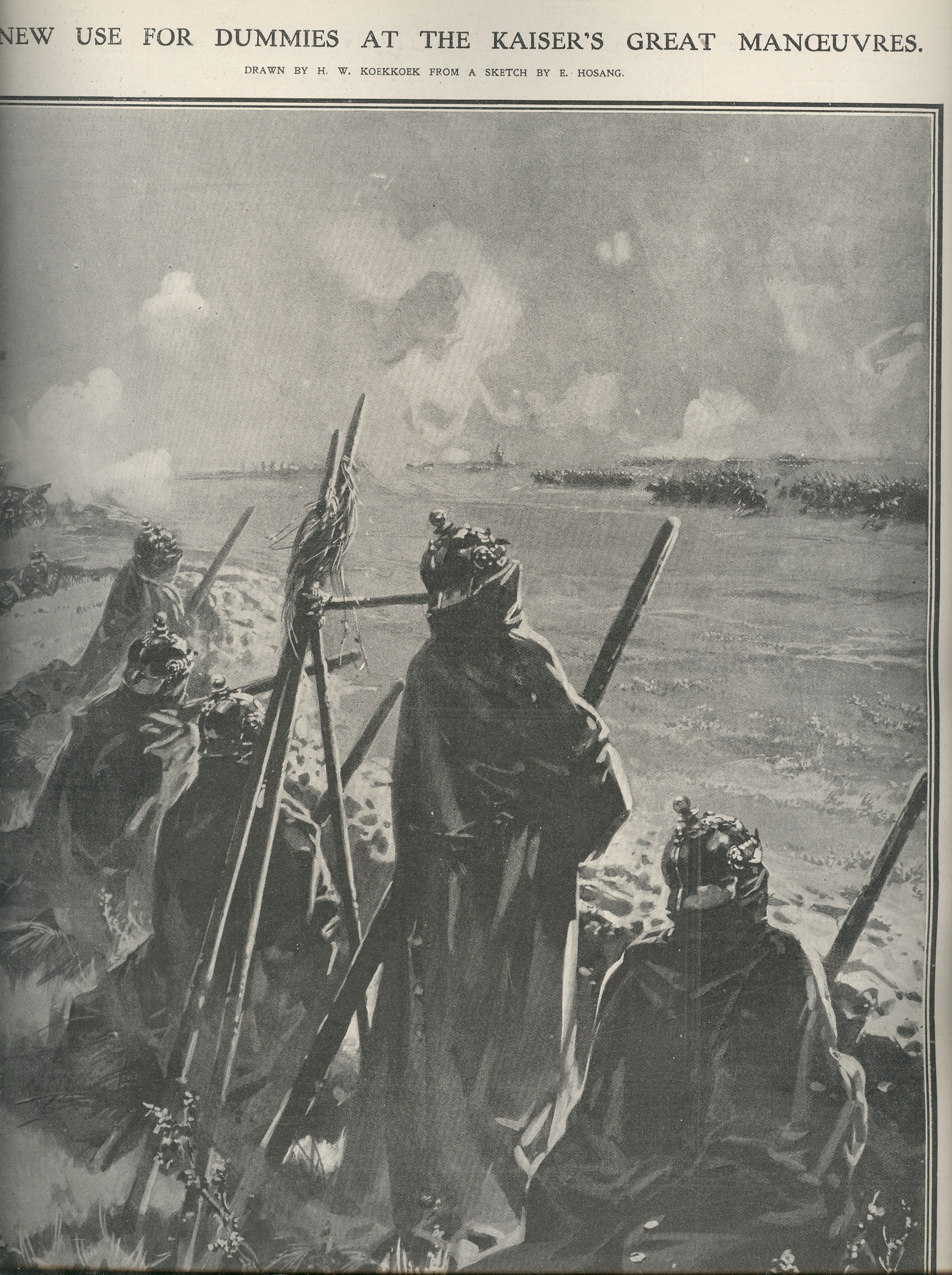
    “Bogus Supports for Artillery in the Great German Manoeuvers in Alsace” reads the subtitle of this odd drawing that appeared in the Illustrated London News for 1908.  “A New Use for Dummies at the Kaiser’s Great Manoeuvers” reads the title, describing a practice action by the German army on the fields of a famous battleground of the Franco-Prussian War (1870-1871).  The empty soldiers were made to support the artillery:  realistic, uniform-clad straw figures made to accept the bullets of the attacking practice force. Dead soldiers being killed in mock battle by living ones whose own fates would be sorely tempted in six year’s time.==Blog July 17==empty solder

  • An Unkindness of Ravens; a Murder of Crows. Naming Things.

    JF Ptak Science Books LLC  Post 690  Blog Bookstore

    Names given the collectives or gatherings or units of animals are useful and
    informative, and occasionally fabulous and bizarre.  It seems to me that such characterizations could
    be made with people as well,  Why should
    humans have such a uniform label for collective employment members (a “group”
    of lawyers, a “gathering” of architects, and so on) when animals have such a
    rich vocabulary to draw from?  Admitedly,
    animals don’t go out and get lawyers when they feel maligned by a broadly
    advanced descriptor, so there’s little chance that more appropriate upfittings
    could be applied to different job classifications.  Unless of course you consider the “managed
    corporate associate monetary inventorialist” (cashier) as an example—but that
    is not what I’m talking about. 

    In the animal world, for example, a group of gorillas is a simple “band”,
    chicks a “clutch”, and quail a “covey”, which is simple enough.  The names get more adventurous as things
    progress in the food chain:  hippos are a
    “bloat”, a word which seems to identify a characteristic of the animal,
    especially when they’re half-submerged, watching the sun move across the sky
    with their eyes just above the waterline.. 
    Ferrets are a “business”, semi-inscrutable in their nervous activity. Hyenas
    are a “cackle”, hawks are a “boil” and finches are a “charm”.

    A group of rhinos are beautifully referred to as a “crash”, and squirrels
    are poetically announced as a “scurry”

    Perhaps the second greatest of all of these names is that for a gathering of
    crows, called a “murder”.  It is probably
    the crow which, among all animals, may be the only one “smart” enough to commit
    the crime—it is an undoubtedly intelligent animal, with a brain-to-body mass
    ratio third to that of humans (behind apes) and have been shown to work in
    concert with one another toward a common end, and have also used tools in the
    pursuit of food.  They have also been
    depicted for thousands of years in mythology and story as intelligent, crafty
    creatures.  My choice for the most
    fabulously-named:  an “unkindness” of
    ravens.   These birds enjoy a similar
    heritage to the crow, but have a greater literary heritage.  Unkindness and Poe seem to go together quite
    nicely. 

    A leap of leopards, a gulp of cormorants, a romp of otters, a parliament of
    owls.  An ostentation of peacocks, a
    prickle of porcupines, a stand of flamingoes, a pride of lions, a wake of buzzards,
    a tower of giraffes: all seem to fit quite nicely. 

    What would the human equivalent be?   A “grotesque” or a “provident” of attorneys,  a “shushing” or “shepherding” of librarians, a “scribble” or “release” of writers, an “envy” or “relief” of actors?  I think it needs to be Latin and deep for the politicians.  Very deep. 

    (A directory of names follows in the continued reading section)

    ·Posted by :

    ·in:

Recent Posts

Archives

Categories