JF Ptak Science Books LLC Post 678 Blog Bookstore
Here’s a very abbreviated overview to a vast literature of the end of times/apocalypse/technocaust/end of the world themes. This is just a short working list, really, and includes only short stories or novels. In many cases there is just one example (where there could be hundreds). There are no movies or television shows listed, though I think that they must be enormously outnumered (and the scale of orders of magniutue) by the print media. 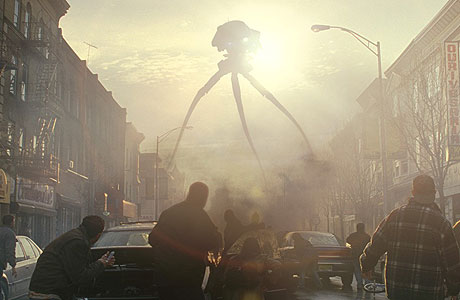
Alien
Invasion: The War of the
Worlds 1898, H. G. Wells; The Moon Men 1926, Edgar Rice Burroughs; The Puppet Masters,
1951, Robert A. Heinlein
Botanical endgame virus destroying all plant life:
The Death of Grass by John Christopher On the opposite end is 1962 novel Hothouse by Brian Aldiss
where the plants take over everything.
Climate Change: The Drowned World by J.G. Ballard
1962. Conversely Ballard wrote the novel The Drought in 1964 about all of the water on earth
drying up.
Crystallization (!): this one sounds
painful: The Crystal World
by J.G. Ballard
1966. Everyone and everything begins to form into crystals.
The Drought by J.G. Ballard
A super drought evaporates all water on earth.
Dying Sun: The World in Winter
by John Christopher 1962
Earthquakes: A Wrinkle in the Skin, John Christopher, 1965
Environemntalism and Rush’s dream-come-true: The Bridge
by D. Keith Mano (1973)
envirofascists exterminate humans to save the world.
Extraterrestrial Threat: When Worlds Collide by Philip Wylie,
1933
Flood: Flood by Stephen Baxter
(2008) gigantic underground oceans seep to the surface and inundate the world.
Human general
malaise, dystopia, ennui: Arthur C. Clarke‘s
Childhood’s End ; City
(1952) by Clifford D. Simak; Friday by Robert A. Heinlein;. Galápagos by Kurt Vonnegut.;
Planet of the Apes by Pierre Boulle;l
H. G. Wells‘
The Time Machine
Human Wars: After London 1885 Richard
Jeffries; Ape and Essence 1948 Aldous Huxley ;
Do Androids Dream of Electric Sheep?
1968 Philip K Dick,.; The Last Man
1826 Mary SHeley.
Ice Water catastrophe: Cat’s Cradle
by Kurt Vonnegut,
1964: Time of the Great Freeze
by Robert Silverberg , 1964 and in 1969 The Ice Schooner by Michael Moorcock
Insect extermination: Charles Pellegrino’s Dust, 1998. The ecosystem collapses after bugs disappear.
Infertility caused by nuke power plant
meltdown: 1946 Mr. Adam
by Pat Frank
Also the infertility endgame in Greybeard by Brian Aldiss,
1964.
Meteor: Survival 2000 1991, James McPhee; Titan
1997, Stephen Baxter; The Day of the Triffids 1951.
Monsters: Skeletons,
(1992) by Al Sarrantonio. The Earth is
ravaged by a raised-from-the-dead society of super monsters comprising all
animals that ever lived, ever, but in super-skeleton form. Yikes!
Nature’s Death: Nature’s End by Whitley Strieber and James Kunetka. (1986)
Nuclear-bomb-induced-methane-fueled superhurricanes. Mother of Storms by John Barnes
– 1995
Nuclear weapons:
too, too many to reckon with here.
Ray Bradbury famously ends the world at the same instant via an exchange
in Fahrenheit 451, for example. Mordecai Roshwald‘s
Level 7,
Nevil Shute‘s
On the Beach and Pat Frank‘s
Alas, Babylon,
Overpopulation and mass famine: Anthony Burgess’ The Wanting Seed 1962. Also
1966 novel Make Room! Make Room! by Harry Harrison
(made into Soylent Green). The Handmaid’s Tale, by Margaret Atwood,
tale of developing underpopulation caused by infertility caused by
pollution.
Petroleum-eating microbes: Ill Wind (novel) by Kevin J. Anderson
and Doug Beason
1995.
Plagues: The White Plague
1982 Frank Herbert; The Scarlet Plague 1912 Jack London; Oryx and Crake
2003 Margaret Atwood; The Children of Men 1992 P.D. James
Pollution Children of Morrow
by H. M. Hoover.
Religious: Book of Revelation, the Book of Daniel,
the short story The Nine Billion Names of God by Arthur C. Clarke (1953), and on and on.
Robot Revenge/Overlords: Erewhon‘s
section The Book of Machines (1872);
The Machine Stops 1909,by E. M. Forster
; The Mind Machine (1919)
by Michael Williams; R.U.R. (play, 1921), by Karel Čapek,
The Metal Giants
(1926), by Edmond Hamilton ; Automata
(1926 short story) by S. Fowler Wright
Snow: The Snow by Adam Roberts
(2004) everyone buried under lots and lots of building snows.
Space-based: Aftermath
by Charles Sheffield, 2004, supernova
causes cataclysmic climate change.
Space-based (civilization
collapse): Against the Fall of Night by Arthur C. Clarke
;Gene Roddenberry‘s Andromeda ;The City and the Stars by Arthur C. Clarke
; The Dragon Masters, by Jack Vance
Volcanic eruption: The Purple Cloud
by M.P. Shiel,
1901.
Windstorms: The Wind from Nowhere by J.G. Ballard,
1961.