JF Ptak Science Books LLC Post 676 Blog Bookstore
This is a continuation of a series of posts relating to the development of the atomic bomb.
Park Avenue. 1600 Pennsylvania Avenue.
10 Downing. 112 Mercer. Institute for
Advanced Studies. The Cavendish Lab. All pretty good addresses.
I have a hard time though coming up with a single best address that
beats POB 1663, Santa Fe, New Mexico.
For the sheer breadth of those represented by this simple location, I
just can’t think of anything more specific or more inclusive.
Oppenheimer lived there.
So did Fermi. And Feynman. And Teller. And Bohr. And thousands of
others.
Post Office Box
1663, Santa Fe
something very important—at the time, it was so important that the place that
it was hiding didn’t even have a real name, just a moniker: Site Y.
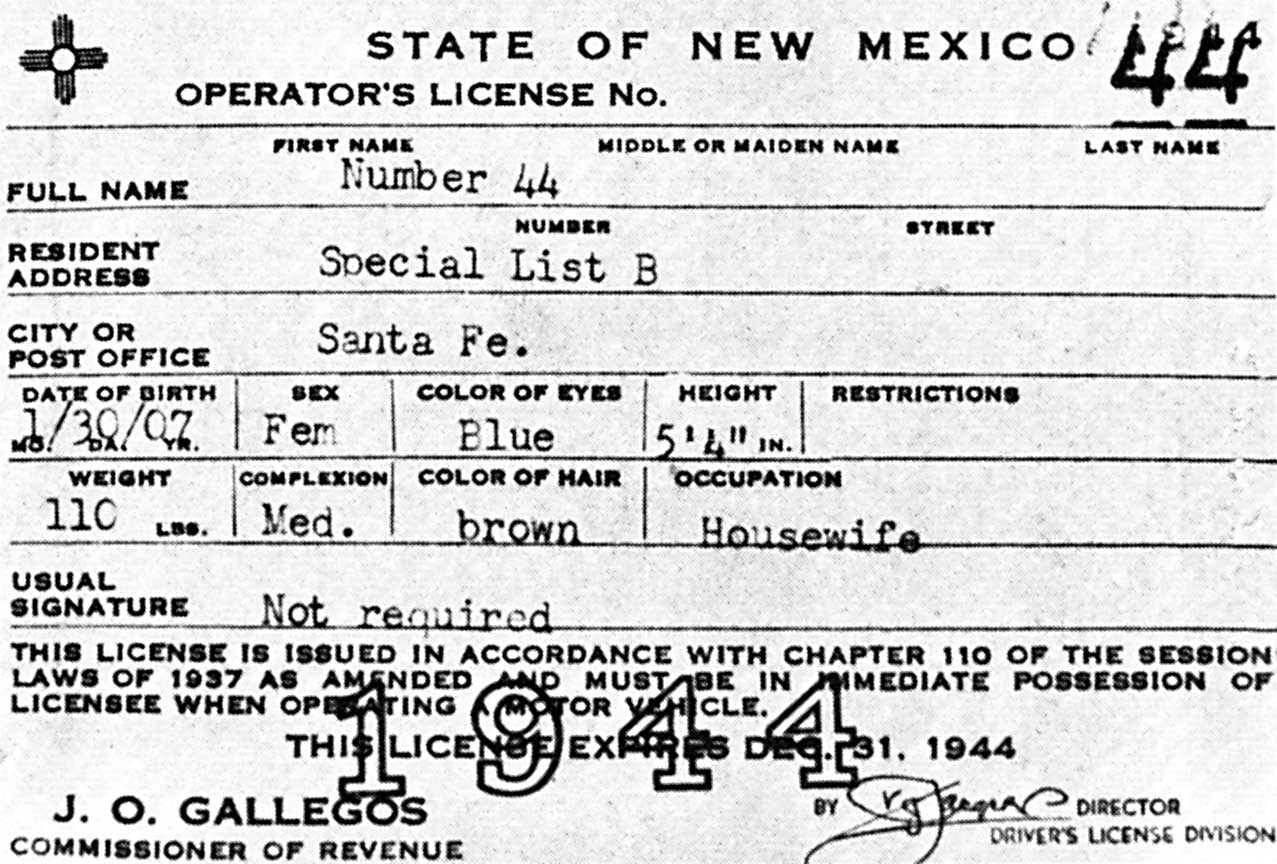
 Many of the people who lived there didn’t have the use of
their real names outside of Site Y.
Driver’s licenses were issued with numbers, and people paid taxes
according to code numbers and weren’t allowed to vote. They were as invisible as their address, or
as invisible as thousands of people could be in 1942. Being a place filled with mostly quite-young men
and women, there were natural tendencies followed leading to a spike in birth
rates, responded to famously by the facility’s chief to direct that actions be
taken to stem the flow. Or perhaps not*. A radio station popped up featuring
live performers, everyone identified by given name only. And to confound things
further it was nestled within the range of the Blood of Christ (the Sangre de
Christo) Mountains, all the while working with matter that was literally
hotter than hell. That was plutonium, and the “hot” was radioactivity.
Site Y (begun in June 1942) was of course the location of Los Alamos
Project, a gigantic, secret project that actually stayed secret, which was
remarkable given the wide swath and numbers of people involved and the
relatively simple security. But it was really important stuff (as Richard
Feynman would say),
and there was a life-and-death war on, a fight to the finish1, a death
struggle, so the importance of security—given the staggering consequences of
its breach—was paramount.2.
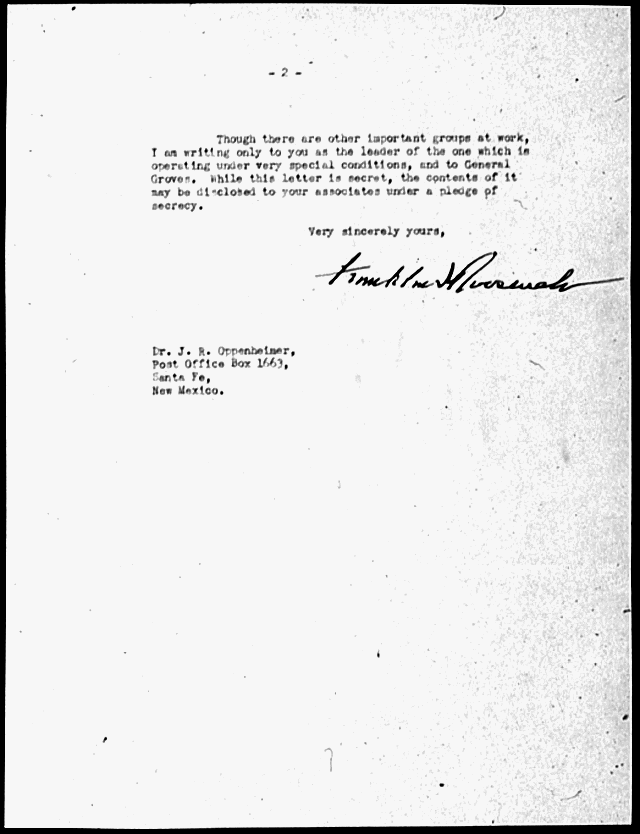
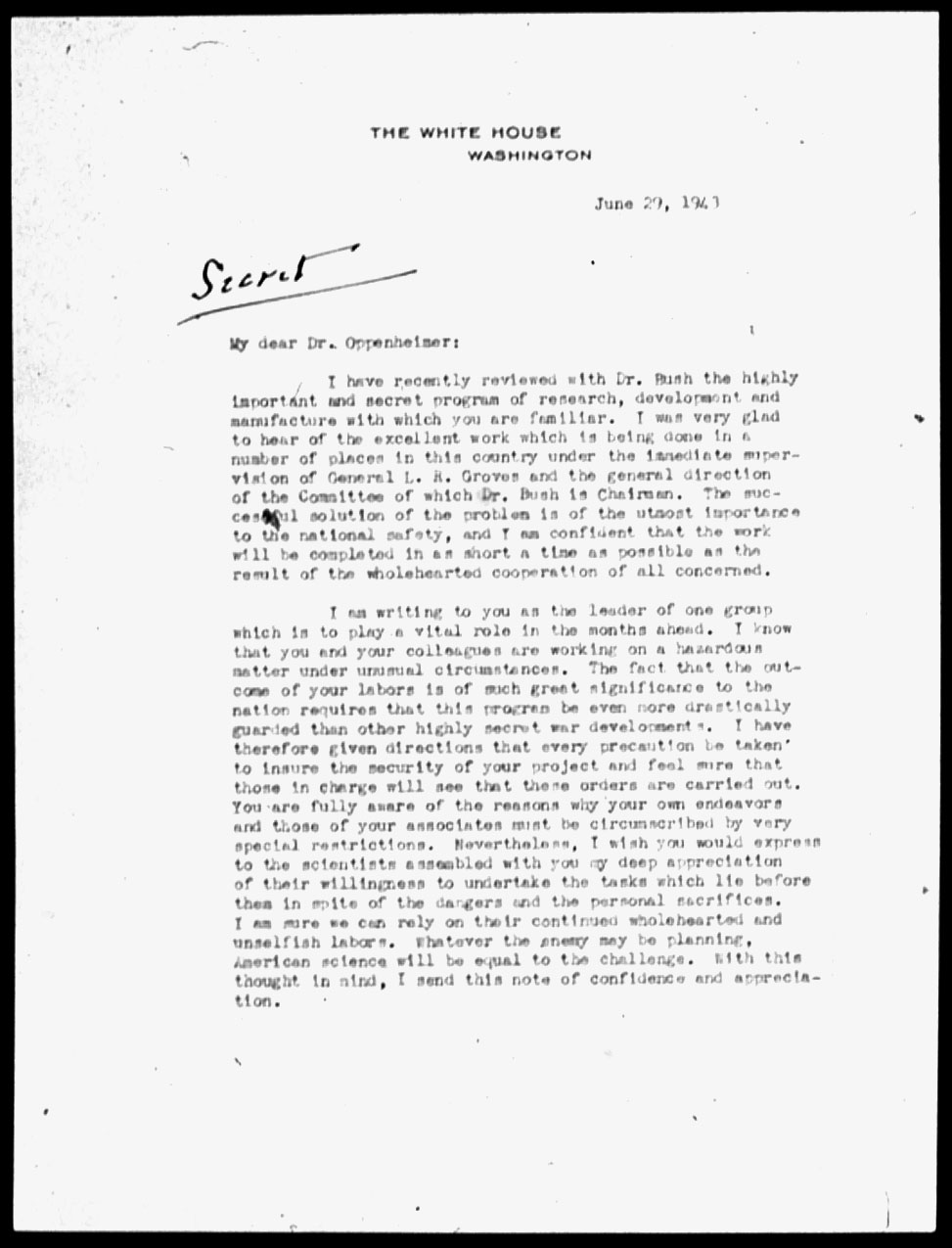
This letter of congratulation and support was written by
President Franklin Roosevelt to J. Robert Oppenheimer, and sent to The Address
of POB 1663. It is an odd letter full of
sleight, though it is obvious that Roosevelt
knows exactly what is going on, and is just not acknowledging the elephant in
the room. And that “room” was at Oppenheimer
& Co., Santa Fe
Box1663
then or (perhaps) since. That’s a lot to
cram into one post office box.
______
1. By the way, in describing this item from their collection the
Library of Congress website understates WWII in a way that I don’t think I had
ever seen before:
“In the midst of World War II when the United States
conflict with Germany
toward the completion of the Manhattan
Project..” A “major conflict”? I should say so, though “major conflict
just doesn’t quite cover it, doesn’t nearly come close to describing what kind
of “conflict” was going on. Odd. A very odd description.
2. Given the vast, extraordinary amount of the resources
consumed by this effort, I don’t think that the atomic bomb could’ve been
produced by any other country at this time—I think that, materially speaking,
it was an impossibility.
*The fact was though that the place did seem to be a
baby-maker, surpassing national averages, with roughly a fifth of all the married
women on the base being pregnant in 1944.
See John Hunner’s Inventing Los
Alamos for an interesting discussion of the baby topic. Babies and bombs and radioactive hell-mush in the foothills of the Sangre de Christo.