A Daily History of Holes, Dots, Lines, Science, History, Math, Physics, Art, the Unintentional Absurd, Architecture, Maps, Data Visualization, Blank and Missing Things, and so on. |1.6 million words, 7500 images, 4.9 million hits| Press & appearances in The Times, Le Figaro, Mensa, The Economist, The Guardian, Discovery News, Slate, Le Monde, Sci American Blogs, Le Pont, and many other places… 5000+ total posts since 2008.

  • Episodes in the History of Dropping Things–Baby Bombs, Bomb Babies and Dropping Women on Manhattan

    JF Ptak Science Books   Post 1670

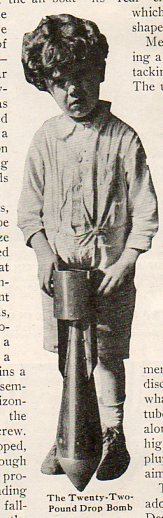
    Dropping things036In the history of dropping things–as distinguished from simple falling things–it must be said I think that this is the easiest of all human activities ever invented, and people have been trying to improve on this creation ever since.  After all, almost anyone can do it and–if you include pushing things over a ledge so that they might fall–most complex life forms can do it, too. 

    Of course there have been intellectual and technological adaptations, particularly when you include throwing and shooting things so that the objects have been charged with a “created height” so that they will be dropped in the designated location.  Cannons have been particular benefit to this aspect of advanced dropping.  And then of course there are the “Galileos” of dropping–like Galileo–and Jonas Moore and David Letterman and of course Seinfeld’s Kramer, and to a lesser extent there’s also every other person from the Boston area who represent hundreds of millions of people who drop a letter from somewhere in their spoken vocabulary.  There are people who drop their accents altogether, and of course politicians who drop the truth, and the tantilizers who drop suggestions, and paid-for pharmaceutical consultants who drop the untoward test results and their accountants who drop a zero when necessary.

    [Image source:  June, 1936, Popular Mechanics.]

    People drop options, they drop in and out and off, pennies and dimes, lawsuits and dumplings, coverage and names and the f-bomb.  They also drop dead and bombs, the last two being closely related, though more people “drop dead” when bombed because they are killed. 

    Bombs seem to be the biggest of all dropped things, especially bombs dropped by airplanes, and especially those bombs dropped on collections of people, which are called cities.

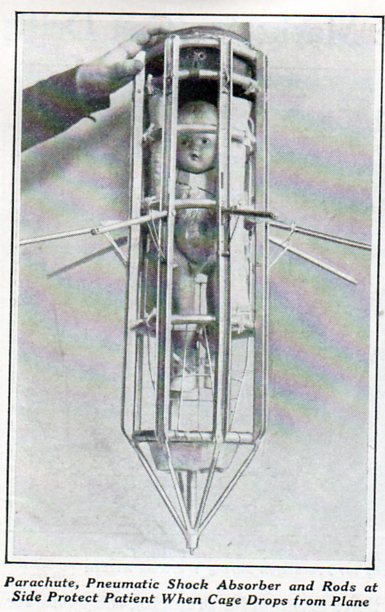
    Perhaps one of the strangest things to be dropped, though, is the following, found in  the September 1935 issue of Popular Mechanics

    Dropping things 2038This was a model of sorts for a critical-care-parachute-gurneystretcher, or something, for when a crew member of a U.S. Army Air Force aircraft was injured and needed care, though the article doesn’t specify where the person would be dropped. Overall it seems not the height of workable ideas, and suffered no doubt from its model using a baby doll, which just looks altogether wrong. 

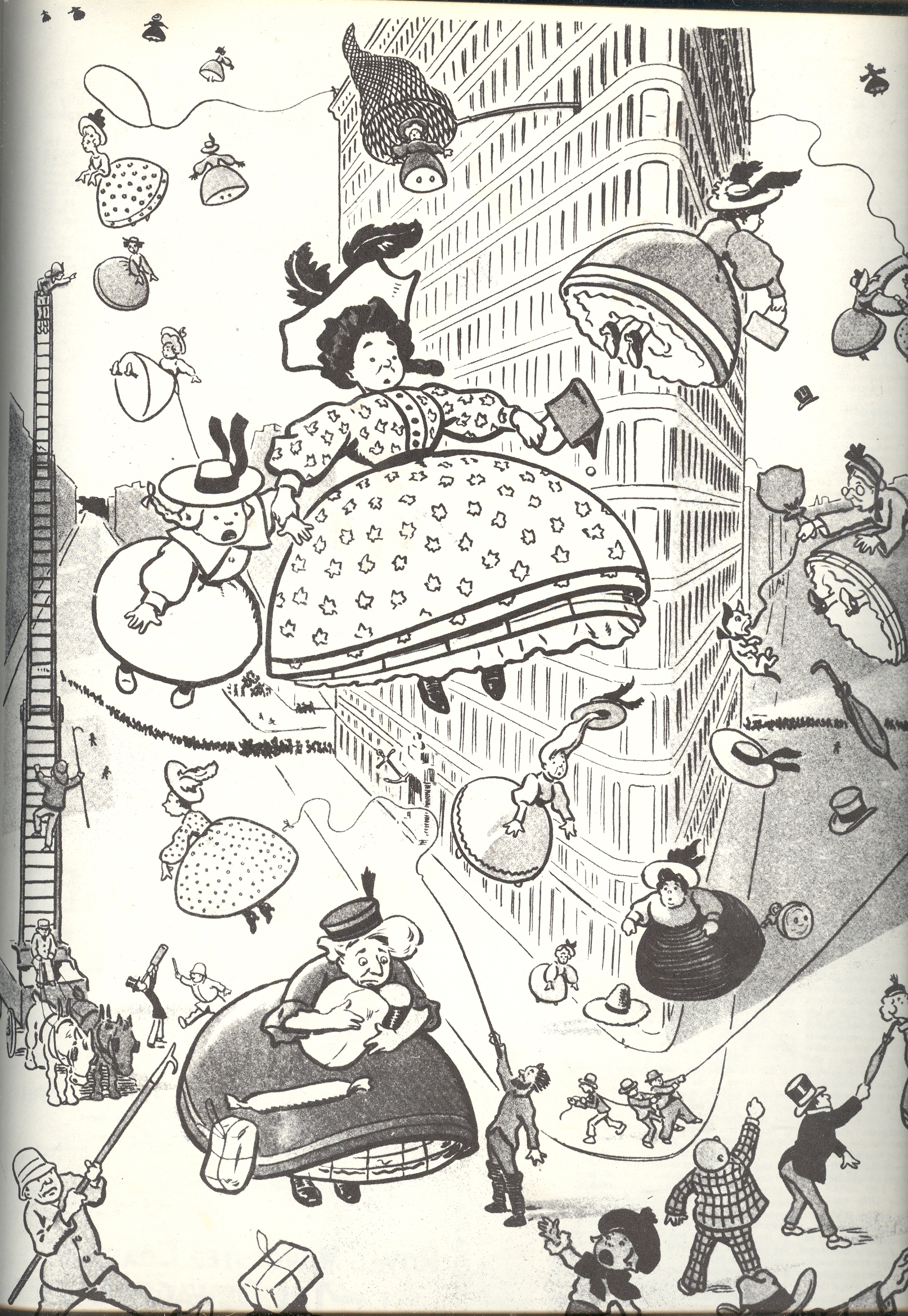
    And the last part of this episode is another strange bit:  dropping women on Manhattan. The  image comes from 1904 and–when taken out of context–it seems as though Manhattan is in for the worst of it, with a view in front of the Flat Iron Building of an aerial bombardment of women.  This is probably one of the few bad things that weren’t done with/at women, and would actually significantly predate the first use of explosives being dropped from aircraft.  Unfortunately the original, intended image was a poke at  crinoline  and featured women being blown up into the air rather than the other way around, though I like my interpretation better.

    5-women


  • A Source of Great Blackness: Virgil in 1537.

    JF Ptak Science Books    Post 1671

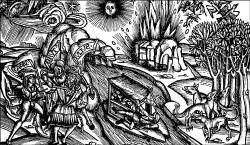
    Black--virgil043
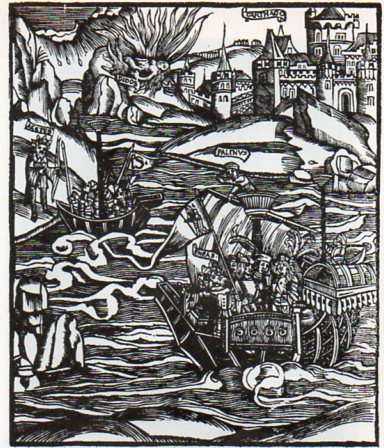
    Wood engravings and woodcuts making use of broad, deep areas of black have long been a favorite of mine.  Finding pools of deep, continuous black–especially when the dark-inked places well outweigh the untouched white spaces on a piece of paper–have been a source of intrigue, and it just doesn’t seem to happen all that often in prints made say before 1650.  And I’m not talking about darkish or heavily shaded areas, here:  I mean black.

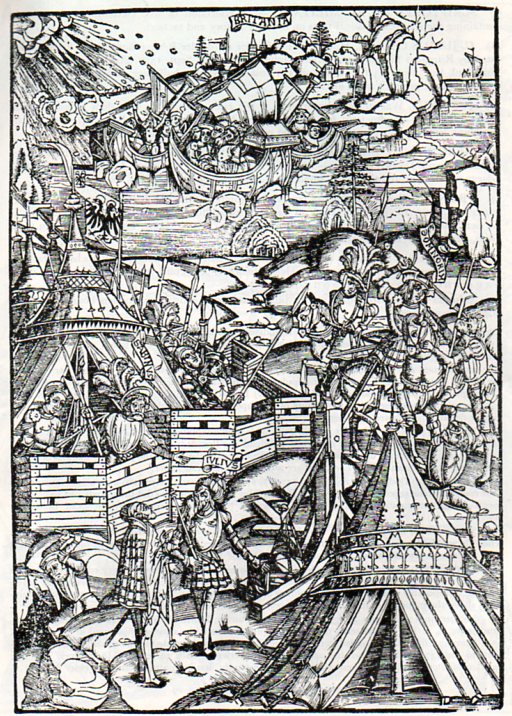
    Compare this to another, gorgeous image from about the same period, (Julius Casear) Historien vom Gallier und der Romer..., published in Mainz in 1530:

    Black--caesar 1530044

    The artist here while providing a very beautiful and complex image doesn’t really attempt the great deep blacks of the Virgil–admittedly this process doesn’t work everywhere  and for everything, not by any means, but I do like pointing out the true-black images as I find them.

    The first image–one of 104 large woodcuts–appeared in Publius Virgilis  Maro, Opera accuratissime castigata, a very large (folio) work that was published in Venice in Jnuary, 1537. This is of course Virgil, and the work contains the Eclogues (or Bucolics), the Georgics, and the Aeneid–unfortunately, I cannot find any other illustrations from this massive effort of 1537 but that pictured here.

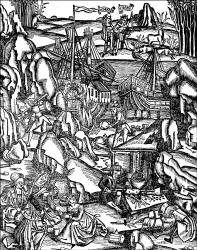
    There are though  images from the Sebastian Brandt version of the Virgil Opera online with nearly the same images and by the same artist (“The Master of Gruninger”) but earlier (1502) and from what I can determine perhaps not with the same deep black urgency as the 1537 edition (seen above).  For example, here is an image for the Aeneis, Liber Quintus, Plate 104:

    And another fromn the Aeneis:

    Image sources (for the two images above) are from Spriti of the Ages, here

    It seems to me that day-time images like the 1537 Virgil do not get quite this black but rarely, and that the only times things seem to get blacker is with silhouettes. 


    ·Posted by :

    ·in:

  • Medieval Chair-Shoveling and a Few Later-Day Shovelers of Note

    JF Ptak Science Books  Post 1672


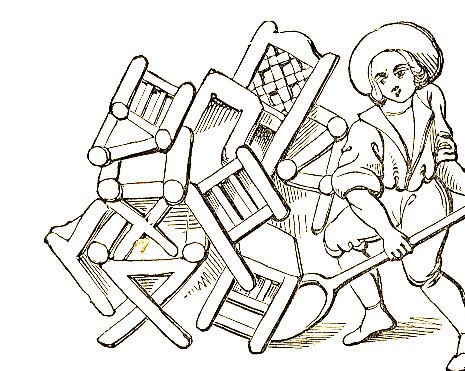
    + chair shovel

    Seeing this extraordinary woodcut of a sculpted feature on the Medieval section of the beautiful town hall of Brussels reminded me of famous shoveling, in general.  To begin with, though, I can’t fathom the meaning of this sculpture, shoveling chairs.  Perhaps it is a metaphor for the leaders not recognizing relaxation?  Or the (presumed) fact that there was no seating inside for the people doing business there?  Or that you were expected to seek your business and not loiter at town hall?  I really don’t know.  But images of other shovelers did pop into my mind. 

    The most instant shoveling comes from the song Big Rock Candy Mountain (which I’ve written about earlier here) and the very simple plea from a down-but-not-out man for not having to work with “short handled shovels1”.

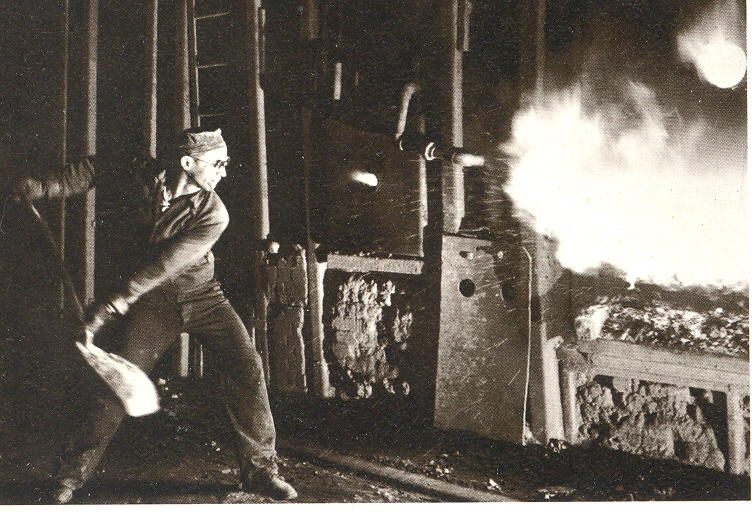
    Next in mind was Frederick Winslow Taylor, who was seen as an iconic leader in establishing human motion studies for efficient factory

    + chair shovelsteel shovel

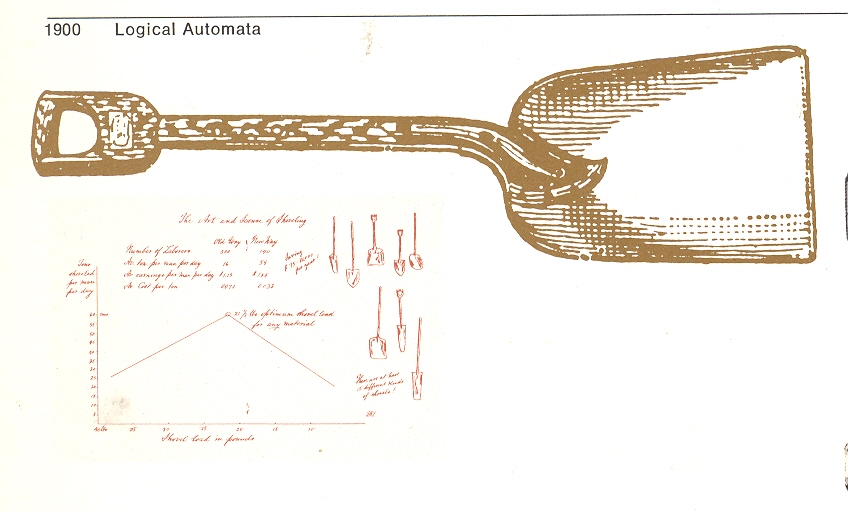
    (and etc.) operations in early 20th century America.  He did very detailed motion studies of people working—say, in this case of a man shoveling coal into a furnace at Bethlehem Steel in 1907—to determine that best sort of arrangement/placement of tools and supplies.  It was very influential work, for sure, and Taylor, who loaned his name to the movement of this sort of effective watchmanship, (“Taylorism” and “Taylorization” and also “scientific management”) and took a huge step forward in establishing efficient factory and business operations and also automatizing the human working cogs in the workplace.  According to the wonderful Eames’ brothers book, A Computer Perspectives (1973), “Taylor established the scientific fact that…a first-class shoveler will do his largest day’s work when he had a shovel load of 21 1/2 pounds.  Then as a matter of common sense…it was necessary to furnish each worker with a shovel which woul dhold exactly 21 1/2 pounds of the particular material which he was called upont to shovel” (page 52).  This, by the way, is also a short handled shovel.+ chair shovelsteel shovel daig

    I then thought about the Seven Dwarfs from Snow White (incidentally Tom Waits covers the “Hi Ho, Hi Ho” song like no one ever did or will) but they all carried picks, not a shovel (so far as I can see) among them. 

    There are undoubtedly many great shovelers—they’re just not people I know about.  I can imagine that Casey Jones must’ve had help to feed his locomotive’s fires; the gold rushes around the world produced some very wealthy shovelers whose numbers were titanicly dwarfed by those who shoveled and lost; soldiers have shoveled themselves into the earth for protection for at least 170 years (actually I don’t know when before the U.S. Civil War that soldiers found protection in their own burrows); and so on, but I just don’t know anyone by name.  And so my rumination ends—I did say that it was wispy.

  • A Heavy, Round, Wooden 17th Century Interweb–Two, Actually.

    JF Ptak Science Books    Quick Post

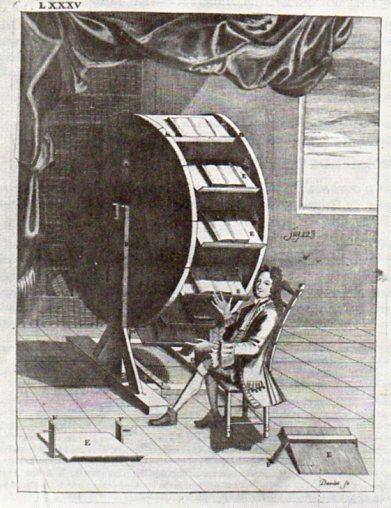
    booksnbuildings: kunstwissenschaftlerin:   ook wheel illustration in Agostini Ramelli’s Le diverse et artificiose machine del Capitano Agostino Ramelli (Paris, 1588). 

    Since there was no controllable source of electricity in the 17th century, there would need to be an alternative to delivering multiple sources of data to a seated recipient or researcher.  In these two instances, this issue was solved with wood–big wood.  And as we can see, the reader could choose from 12 different data sources–books–while not having to rise from the chair. 

    [Image source:  Agostino Ramelli, Schutzkammer Mechanischer Kunste, Leipzig, Georg Liger, 1620–a tall, thick book with 195 full page illustrations like this for all manner of invention and convenience.]

    Interweb 18th c045

    [Image sourceNicolas Grollier de Serviere, Recueil d’Ouvrages Curieux de Mathematique et de Mechanique...printed in Lyon by David Forey in 1719–another good-sized book with 85 full-page (Copperplate) engravings.]

    It also seems to me that there could be some doubling up on the placement of the books, allowing 24 of them to be displayed; there might also be something that could be done with a sliding shelf so that those two could be doubled, allowing 48 books to travel ’round at a time. This would be a huge boon to the reader here in  1620 and 1719, if that’s the way you were measuring “boons”.  It would be nice to have all of those sources open and available and neat, but one longish table would be good enough for that.  and certainly more furniture would be available to people contemplating having one of these monsters built for them because in almost all cases only the wealthy of the religious orders could possibly own 12 or 24 or 48 books at this point in history, so space would not have been a problem, necessarily. 

    The one thing that this interweb had going for it over the existing version–all of the sources used were vetted.

  • Ten Celestial Punishments for Impatience, 1630

    JF Ptak Science Books      Post 1674

    (Thanks to Bibliodyssey for finding this image–you can find the great Bibliodyssey site here.)

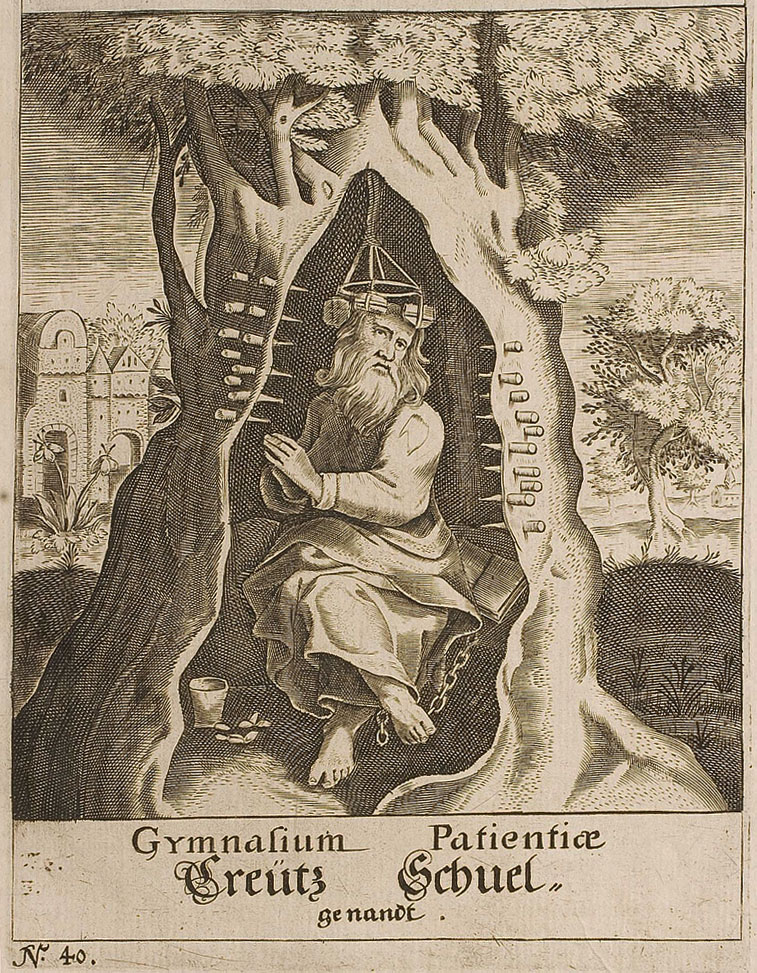
    Killing tree DETAIL


    And the full image:

    Killing tree

    And the source: Jeremiah Drexel, Gymnasium Penitentiae, 1630, and translated in 1640 as The School of Patience (the full text here) and the pdf of the Latin original here.)

    In the introduction to his work Drexel writes:

    “Dame Patience stands in place most eminent,
    Teaching her youths a doubJe document.
    That learn they must to form a passive right
    This pateint life, or else in future night
    That Paradise no plurail hath since sport
    and ease take pains at last in Pluto’s court”

     
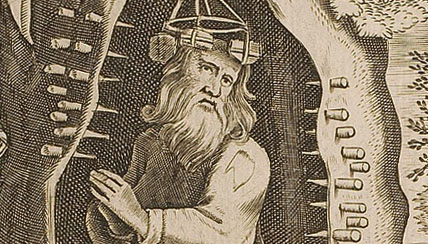
    And should the teachings of Dame Patience not be heeded, even on Earth the impatient should suffer from at least these ten forms of torment:

    Whatsoever form of punisment, whatsoever kind of affliction or exercise in this world we affect, may be comprised and comprehended  in this tenfold order. For God hath in this his School of Patience  these following torments:

    (1) Rods;  (2) Arrows ; (3) Firebrands; (4) Garlands of straw; (5) Cudgels; (6) Snares and Chains; (7) Knotty clubs; (8)  Long clones; (9) Scouges or whips; (10) Sacks and bags.

  • Art of Labor–Ralph Fasanella

    JF Ptak Science Books    Quick Post

    Ralph Fasanella (1914-1997) was a self-taught artist who included minute details in his large canvases in which he re-created New York City, vast scenes of industry and celebration, and in general anything having a lot of people in it. He was if not in fact then at least in his head a Wobbly, a left-of-left deeply-pro-union socially-consciousness commentator, the son of a button-hole making mother and an ice-seller father. Ralph was a machinist and gas station owner, and in there somewhere in mid-life he became a painter.  I like his work quite a bit.

    This (above) is one of his most well-known works, and it portrays the famous IWW strike in Lawrence, Massachusetts in 1912, (see the Great Strike.), also commonly known then as now as the Bread and Roses Strike.  What differentiated this strike from others was the very large involvement of women, minorities and immigrants.  Old Ralph wore his leftie heart on his sleave.
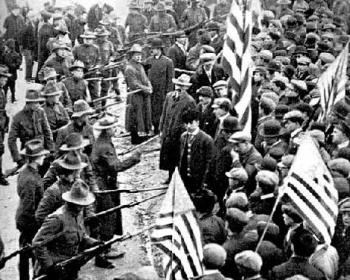
    Here’s some photos of the real thing:

    Strikers face off with militia in Lawrence
     As usual the strike was about more humane working conditions, more light, better air, fewer hours, decent livable wages.  When the main employer in its town influences the flow of 85% of all of the town’s income, it is difficult for people to resist demands from that business which might not be reasonable.  

    Up20


    Lawrence strike meeting, New York

    [Photo shows group of men gathered outdoors, probably in New York City, to hear about the textile strike in Lawrence, MA. (Source: Flickr Commons project, 2008)]

    Guarding approach to mills, Lawrence, Mass.

    [Photo shows the Lawrence textile strike of 1912, also known as the “Bread and Roses” strike.  Source:  Library of Congress.]

    And from the introduction to the Report on Strike of Textile Workers in Lawrence, Mass., (U.S. Bureau of Labor, 1912) we read:

    "In Lawrence, Mass., fully one-half of the population 14 years of 
    age or over is employed in the woolen and worsted mills and cotton mills, and approximately 60,000 (including employees and members of their families) of the 85,892 people living in Lawrence are directly dependent upon earnings in these textile mills." "The textile strike in Lawrence and the conditions which followed were not primarily due to any condition peculiar to Lawrence. The general conditions of the industry in Lawrence are more or less typical of the textile industry in all of the large distinctly textile towns, and the strike in Lawrence and the conditions attending it might just as easily have occurred in any other of these towns."

    In short, a standard bit.
    Here are some other examples of Fasanella's work:

    ·Posted by :

    ·in:

    —
  • The Beautiful Lunarium: Black Walls/White Stars, 1516

    JF Ptak Science Books   Quick Post

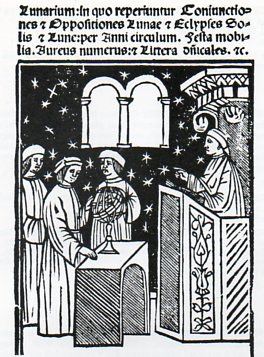
    The following are some beautiful images from a rather popular ephemerides by Bernardus de Granollachs, printed between 1484 and 1515.  The slender (16-page) work, Lunarium: In quo Coniunctiones & oppositiones Lunae… was published first in Spanish in 1484 and was then picked up and reprinted in a number of other languages over the next few decades.

    The image most interesting to me comes from the Rome edition of 1516, simply because of the magnificent black wallsemblazoned with stars (which occurs on the title page):

    Lunarium 1516052

    The image did remind me very slightly of another gorgeous thing which I wrote about earlier in this blog (here):

    Red sky

    Some other variations in the Granollachs can be seen below:


    ·Posted by :

    ·in:

    —
  • Comparative Displays of the Heights of Things: Centennial Tower, 1876

    JF Ptak Science Books    Post 1675

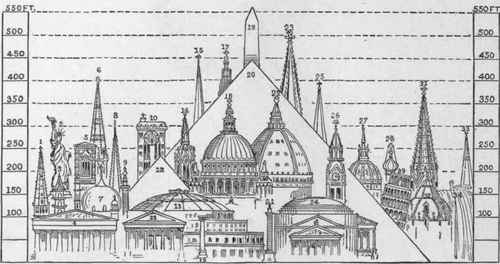
    The 1876 U.S. Centennial Exposition (formally called the “International Exhibition of Arts, Manufactures, and products of the Soil and Mines) in Philadelphia was a grand and fabulous showing of all things American, celebrating the hundreth anniversary of the signing of the Declaration of Independence.  One of the crowning objects of the fair was to be the never-built 300-metre tall Centenniel Tower, pictured here in the 24 January 1874 issue of Scientific American.  The structure appeared in relief against the background of other tall things built by humans, show in a relatively new fashion for displaying quantitative data comparisons in the same scale.

    http://upload.wikimedia.org/wikipedia/commons/9/93/The_Centennial_Tower_Philadelphia_1876.jpeg

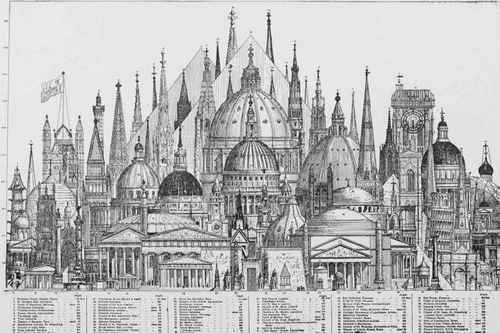
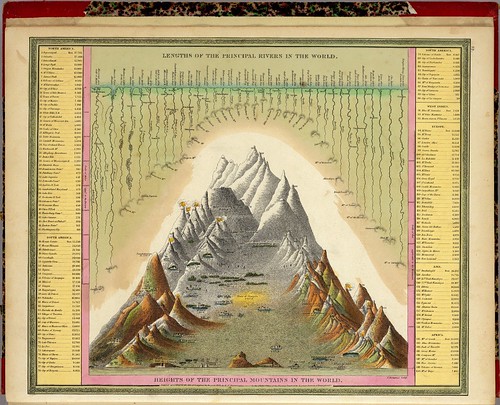
     The practice of showing, say, the comparative heights of mountains and lengths of rivers by loading up all of the samples on one piece of paper for the ease of recognition was begun in the 18th century, but only rare; it began with some fits and starts in the 1820’s again and then much more widely around mid-century, and seeming to peak at the end of the century before going somewhat dormant for the next few decades or so.

    Another nice example of comparative heights of buildings:

    COMPARATIVE HEIGHTS OF SOME OF THE PRINCIPAL BUILDINGS OF THE WORLD


    And this as well:

    Comparative Diagram Showing Highest Buildings And  396

    [Source with key to the images found here, at Chestofbooks.com]

    The excellent Bibliodyssey blog contributed a good healthy post on the subject of comparative heights of mountains map (here) with many fine examples of the art.  Its a curious thing to me that the  business of using same-scale comparisons in architecture is relatively new, coming (I think) as an invention of Etienne Durand in the 1840’s.)

    Here is one such example:

    Heights Of The Principal Mountains In The World (Mitchell) 1846

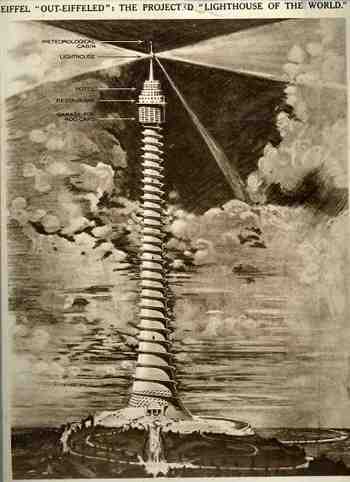
    But getting back to the tower itself and it unbuiltedness, here’s another example of an unbuilt tower–taller and bigger than the Centennial–which was proposed by Eugene Freyssinet (and which I wrote about earlier in this blog here):

    Big_archout_eiffeled140


    Another in what is a long line of unbuilt towers would be this contribution by Vinnie Ream Hoxie (ca. 1874-6)  which was his response to the finishing of the not-completed Washington Monument.  Congressional sympathies towards spending money to complete the Washington Monument dried up to nothingness in 1856, just eight years after construction on the monument was begun.  The consequence was that the monument was only a nubbin for several decades, standing about a third complete–it was Hoxie’s idea no doubt to provide a sort of quick-and-dirty approach to finishing the project.  Of course this looked like exactly what it was, and the idea died its own lonely death, thank goodness. 

    http://www.nationalbuildingmuseum.net/Large%20Images/unbuilt/4._Washington_Monument_Sheet_2_web.jpg

    It had little appeal, at least to me.  It is somewhat reminiscent of the exhibition of the completed forearm of the American Statue of Liberty, which as it turns out was also exhibited at Phildelphia in 1876, years before the completion of the rest of the statue.  Short and stubby.


    File:Collossal hand and torch. Bartholdi's statue of "Liberty.", from Robert N. Dennis collection of stereoscopic views.jpg

    There are many other entries in the history of unbuilt towers, but their day will have to wait (for this blog, anyway).

  • On the Royal Hating of the Evil and Devil-Stink of Tobacco–King James I, 1604

    JF Ptak Science Books    Post 1676

    ”[Smoking is] a custom loathsome to the eye, hateful to the nose, harmful to the brain, dangerous to the lungs, and in the black stinking fume thereof, nearest resembling the horrible Stygian smoke of the pit that is bottomless.”–King James I, in “Counter Blaste To Tobacco”:, published 1604

    James I hated tobacco.  He hated every aspect of it, particularly since some smokers favored the stuff because of its purported medicinal and curing qualities–but for James it all led to vile stink, Devil worship and deep sin.  He just simply hated the whole idea–that and the person who introduced the notion and practice to James’ fair island, who was Sir Walter Raleigh.  And what did Raleigh get out of that deal?  Well, he certainly over the course of tars-filled time introduced the possiblity of grim, cancerous death to a billion practicers and had a miserable pipe tobacco named for him.  And he also was beheaded.  I can’t help but think that the smoking business had something to do with pulling James’ head into pulling Raleigh’s head off. (Well, it was actually “chopped” off, his bodyk buried and his head treated and stuffed and kept by his wife for the next 29 years.  In his prison cell in the Black Tower, Raleigh left a small container of tobacco, with the sentiment Comes meus fuit illo miserrimo tempo (It was my companion at that most miserable time) engraved upon its lid.)

    And so James wrote this piece in 1604, a thin 32-page evisceraton of tobacco and tobacco-users.  It is an antiquarian rush to righteous vindication, and it in no small measure helped James’ cause that he was right on a lot of his viciously-placed claims.

     
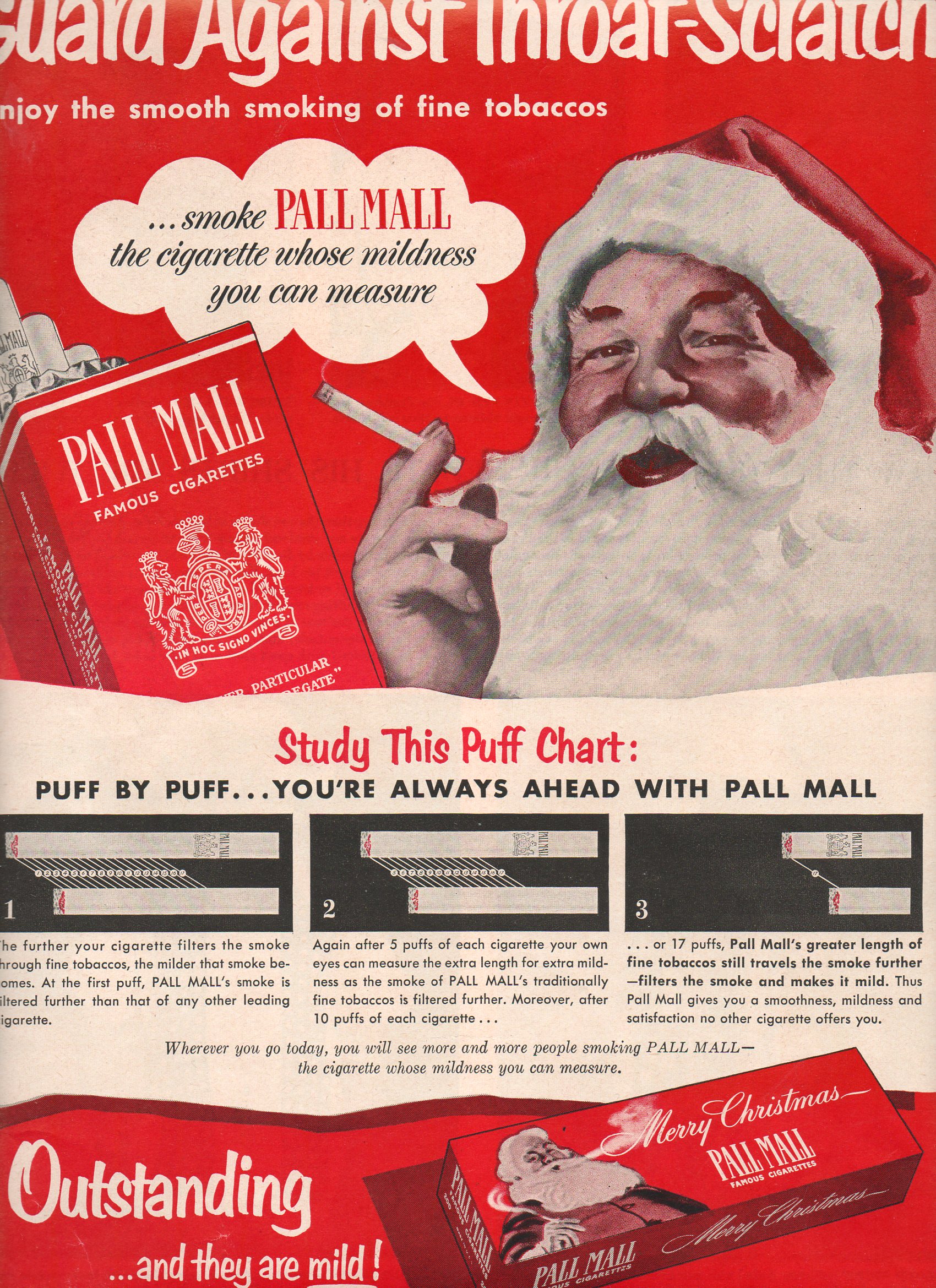
    Christmas Santa ciggies367

    The sins and vanities of the filthy use of tobacco were many but evidently described in three layers, like a good cake, though he does make a good case for the habit’s vileness.  Tobacco is mainly a sin of guilt and selfishness, of drunkness which is one of the great malfactors of all bad things, and of course the greatest sin of all in that it would impede the protection of the King and the realm.  James makes the case for tobacco use being an indolent, sick-making, vile producer of impotence and uncaring, driving all manner of sin that would lead to personal downfall and to the general “mollicie and delicacie of the wrath of overthrow” of kingdoms.

    First are you not guiltie of sinnefull and shamefull lust? (for lust may bee as well in any of the senses as in feeling) that although you bee troubled with no disease, but in perfect health, yet can you neither be merry at an Ordinarie, nor lasciuious in the Stewes…

    Secondly it is, as you vse or rather abuse it, a branche of the sinne of drunkennesse, which is the roote of all sinnes: for as the onely delight that drunkards take in wine is in the strength of the taste, and the force of the fume thereof that mounts vp to the braine: for no drunkards loue any weake, or sweete drinke: so are not those (I meane the strong heate and the fume), the onely qualities that make Tobacco so delectable to all the louers of it? …

    Thirdly, is it not the greatest sinne of all, that you the people of all sortes of this Kingdome, who are created and ordeined by God to bestowe both your persons and goods for the maintenance both of the honour and safetie of your King and Commonwealth, should disable yourselves in both?

    Christmas RR366
    The King also attacks the attractive and bogus medicinal properties of tobacco, and he takes care to list some of its precious capacities, from ridding people of the gout (instantly), to wakening the brain, to pox-curing, and even having the ability to cast out devils. Of course this belief was sustained as semi-fact for hundreds of years now, eventually worming its way into the all vast pockets of the Middle Class via print and other media as advertisements with doctors, dentists, nurses, pilots, sports figures, politicians (most famously perhaps being R. Reagan), and of course Santa Claus extolling various curative properties of cigarettes.  In the 20th century there was also the strong influence of Sexerettes–the possibility of sexiness curled around languid figures selling cigarettes to the young and old alike.


  • Tech-Quiz What is It? Can You Identify What Made this Patent Mega-Famous?

    JF Ptak Science Books    Quick Post

    I would not have made the intuitive leap to what this “game apparatus” would become from the simple reading of the opening two paragraphs of the patent description for it by its creator, J. Brunot:

    “This invention relates to apparatus for playing board games and more particularly to apparatus designed to facilitate scoring procedures in connection with the playing of such games. In many board games playing pieces are placed on certain contiguous or successive areas marked out on the board and the placing of the playing piece on certain predetermined areas results in an adjustment of the score of a player either by adding a bonus to the score or subtracting a penalty therefrom.”

    “Usually the predetermined areas which result in adjustment of the score are marked in a characteristic way in order to show how the score is to be adjusted.  However when a playing piece is placed on one of the predetermined areas it covers this marking and it has been found that frequently the playing piece has subsequently to be lifted in order to discover how the score should be adjusted. The object of the present invention is to provide board game apparatus in which the occasions for such subsequent lifting of a playing piece are eliminated or substantially reduced…”

    [Patent 2,752,158 GAME APPARATUS James Brunet and Helen Brunot Newtown Conn Application October 28 1954 Serial No 465,222 priority application Great Britain June 11 H54 5 Claims Cl 273 135]

    The patent drawing offers a much better visual clue, but it still really doesn’t bear a great witness to what the apparatus would become:


    And the story on the answer to what this is can be found at the SCRABBLE Association history section.

  • On the Cost-Effectiveness of Killing: Poison Gas (1921) and Atomic Bombs (1945)

    JF Ptak Science Books   Post 1678
    Chemical warfare

    Atomic bomb eco detil

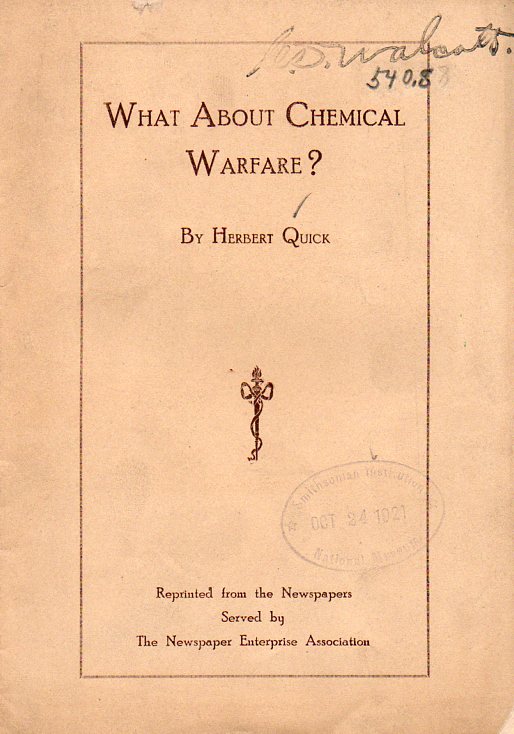
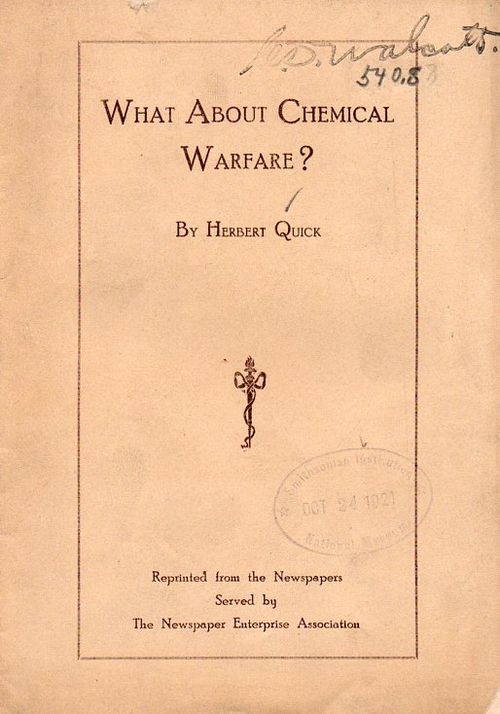
    Herbert Quick did a fair amount of thinking about the military use of poison gas, and it winds up, in the final analysis, thinking that it was tolerable.  What About Chemical Warfare? (published by the Newspaper Enterprises Association in 1921) is certainly a possible title for a Duck-and-Cover A-Bomb or You and Your Hormones kind-of-film–it has that certain stripe to it, bearing the certainty of wrongness that becomes more visible with each passing month.  (The pamphlet is available for purchase from our blog bookstore, here.)  But Mr. Quick took the slow boat around his issue, thinking about it a little long and out loud, before coming to his final conclusion in the chapter titled “Gas Warfare Cheapest and Most Effective Arm of Defense”.

    {See here for my post on Willis R. Whitney’s letter/proposal for establishing the American chemical warfare capacity, 1917.]

    He points out the enormous impact in the war effort that relatively small chemical corps played in WWI–something on the order of hundreths of one percent of all serving soldiers were employed in the combined chemical corps, saying “how small a body to produce such great results!” Which is true, assuming that by “great” he meant ‘widespread’, though it is unclear exactly what he was talking about.

    Mr. Quick (born in the first year of the American Civil War and dead four years after the publication of this pamphlet, writing evidently from the cushion of old age) does make a case for poison gas being not so inhuman as presented by most civilized people, pointing out both its high quick-death rate and survivability/recovery rates, which seems to be giving/taking at the same time. No matter:  “But woe to the army or nation that does not keep up with the times.  The Angel of Death will breathe in their faces” he writes. 

    The author alsoAir raid885 warns that though Germany was “stripped” of her war-making capacities, he thought it was not so of the industries necessary to produce poison gas. He points out that Germany can produce these munitions in secret, and that if any “militaristic nation conquers the world in the future”, it will be through the use of the poison gas it developed in secret. 
    Defense was also important:  “in the absence of efficient defense worked out beforehand, our great cities might be wiped out with gas bombs dropped from aircraft”.  Mr. Quick believes that protecting cities is possible, writing simply “preparation will prevent such a crisis”.  Indeed.  Unfortunately no ideas about this defensive posture were forthcoming, though he did bring himself around to writing about gas as a defensive tool.  Against looters. And rioters. And snipers.  “Gas puts the sniper in the power of his enemy” Quick writes, using the Marine action in Vera Cruz, Mexico, as a good example of where gas (“gas grenades”) would have come in handy.

    The bottom line is of course the bottom line, practically stating that poison gas as a weapon was indisputably more cost-conscious than anything else, by far, each dollar spent on chemical warfare being worth “from three to five hundred for the army”.  Poison gas services Quick says should be pursued, because “gas warfare cannot be stopped until all war is stopped”.

    Gas warfare “gives the educated, intelligent nations the advantages over the people of lower civilizations”.

    “When both sides are prepared it is much less inhumane than war with bullets and high explosives; but it means horrible annihilation to the army which is unprepared.”

    It is an interesting exercise to replace “poison gas” with other types of weapons, just to see how it reads.

    Mr. Quick was up and down in his treatment of poison gas and war, though almost entirely down.  One thing he didn’t see, that no one saw, really, was the use of a particular gas that was used to destroy millions of people, and which was developed quite in the open in Germany for many years, used for killing rats.  The Nazis simply used it instead on people.  No one saw Zyklon-B coming, and no one could have, even when they did.

    See also my post here on Hermann Goering and Zyklon-B.

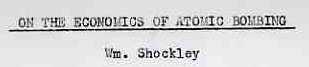
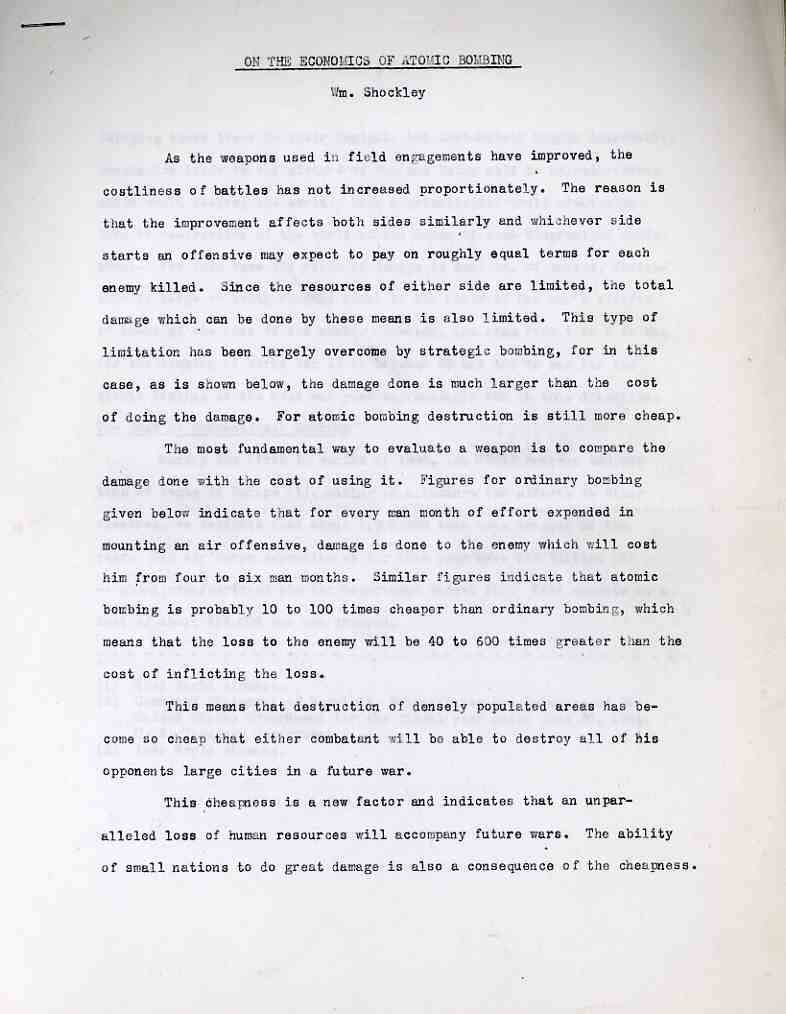
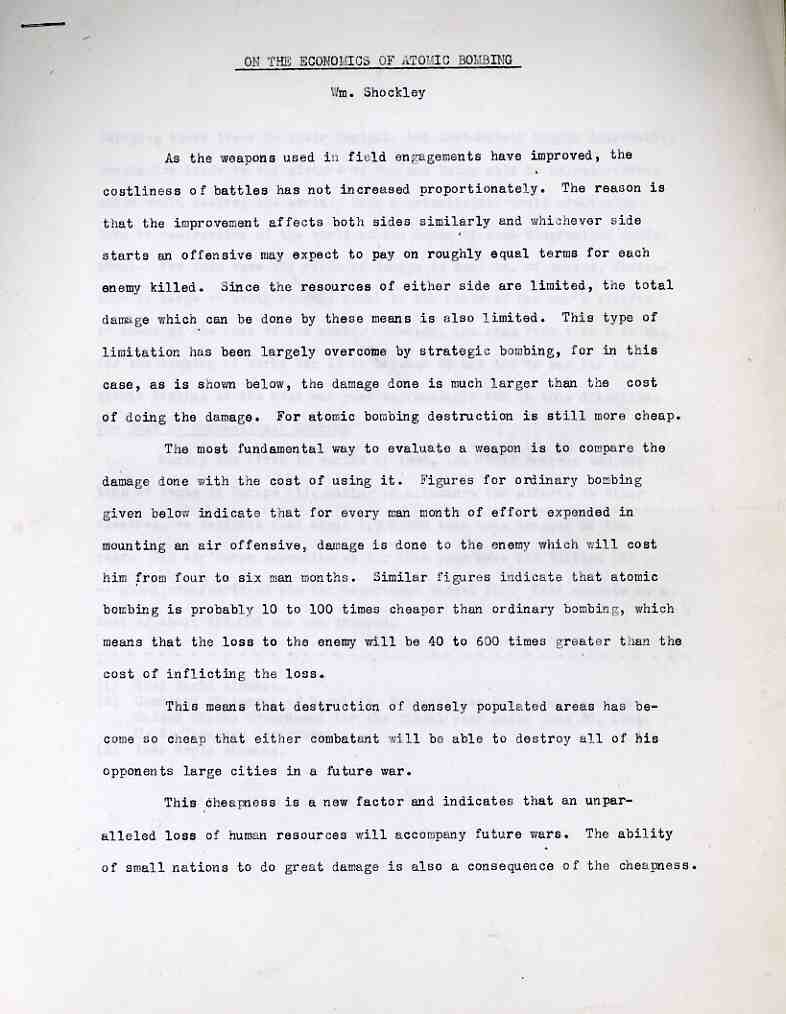
    William Shockley–a future Nobelist and probable weak member of a Nobel-team that invented the transistor and which included John Bardeen and Walter Brattain, or I should say rather a team of Walter Brattain and John Bardeen including William Shockley–sent forth a memo on the mathematics of destruction and the use of the atomic bomb.  He was part of a largish team working on what to do with the new technology once the bomb had been used and the war won.  (I’ve written more on this paper here.)
    Shockley atomic


    This paper was written towards the end of 1945 and is on five pages and runs about 1500 words, and is an extension of work he had already been doing for Henry Stimson with Quincy Wright on evaluating the combinations of casualties that would lead the Japanese to surrender.  He begins this paper with a logical statement of the issue of the economics of conventional and atomic bombing, ending with the sentence “For atomic bombing destruction is still more cheap”.  What Shockley is getting to is the overall cost of the amount of destruction caused per square mile, and the conclusion that he draws over these five pages is the destruction caused by the atomic bomb is 1/100th the cost of conventional bombing per square mile destroyed (“atomic bombing is probably 10 to 100 times cheaper than ordinary bombing”).

    Shockley also recognizes that the problem in the near future will be the increasing cheapness of producing atomic (and greater) weapons, and their developing accessibility to small nations.  “This cheapness is a new factor and indicates that an unparalleled loss of human resources will accompany future wars.  The ability of small nations to do great damage is also a consequence of the cheapness.”  He writes further that taking this thinking to its “logical conclusion”, that at some point in the future a single individual will be able to use this new technology to destroy the world.  The main point though that he was making in this line of thinking was the dispersion and proliferation of the new technology–that an arms race would occur, and that it would be dangerous, and that it could be very very bad.  Shockley has of course nothing to say about any of that or the implications of his finds as that was not his charge. 

    After figuring that the cost of destruction by the atomic bomb was about $600,000 per square mile (compared to $6,500,000 per square mile for conventional bombing), Shockley concludes that “since the atomic bomb art is in its infancy, we may well expect future economies of a factor of 10 in cost per square mile destroyed…”
Recent Posts

Archives

Categories