A Daily History of Holes, Dots, Lines, Science, History, Math, Physics, Art, the Unintentional Absurd, Architecture, Maps, Data Visualization, Blank and Missing Things, and so on. |1.6 million words, 7500 images, 4.9 million hits| Press & appearances in The Times, Le Figaro, Mensa, The Economist, The Guardian, Discovery News, Slate, Le Monde, Sci American Blogs, Le Pont, and many other places… 5000+ total posts since 2008.

  • What Poe Said about Dickens, 1841

    JF Ptak Science Books  Post 2120

    “Mr. Bulwer, through art, has almost created a genius. Mr.
    Dickens, through genius, has perfected a standard from which Art itself
    will derive its essence, in rules.”–
    E.A. Poe on Charles Dickens, 1841.


    Poe[Image source:  National Park Service]

    Edgar Allan Poe
    was a brilliant and insightful and more-than-occasionally a vicious/wicked surgeon as literary critic–in his collected works there is one entire volume dedicated to those works, and it is well worth a read.

    Poe reviewed Master Humphrey’s Clock and The Old Curiosity Shop for the May 1841 issue of Graham’s Magazine–that’s because they were written and published serially at about the same time, both ending in late 1841, and written by a man who was seemingly several brilliant writers at the same time. (fFor all that he wrote, he must have been several people, because he managed to do it all in a life-span of 58 years1.)
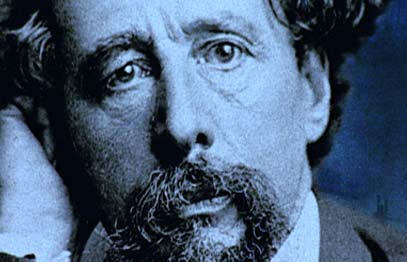
    Dickens
    He says
    something of Dickens that is pretty remarkable. To be sure he was not always this glowing, and not necessarily supportive, and was a razor-sharp critic when the need arose–that need seemingly being most of the time)–but this is what he had to say on Dickens, and it reads quite true to me:

    “The Art of Mr. Dickens, although elaborate and great, seems only a
    happy modification of Nature. In this respect he differs remarkably from
    the author [Edward Bulwer Lytton] of Night and Morning [1841]. The latter, by excessive care and by
    patient reflection, aided by much rhetorical knowledge, and general
    information, has arrived at the capability of producing books which be
    mistaken by ninety-nine readers out of a hundred for the genuine
    inspirations of genius. The former, by the promptings of .the truest
    genius itself, has been brought to compose, and evidently without
    effort, works which have effected a long-sought consummation- which have
    rendered him the idol of the people, while defying and enchanting the
    critics. Mr. Bulwer, through art, has almost created a genius. Mr.
    Dickens, through genius, has perfected a standard from which Art itself
    will derive its essence, in rules.”


    ·Posted by :

    ·in:

  • History of Blank, Missing and Empty Things, Part 66: Hope

    JF Ptak Science Books  Post 2121  Part of the series, a History of Blank, Empty and Missing Things

     
    Follow Me on Pinterest

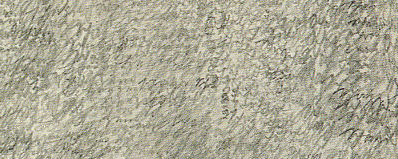
    Outsider Hauck DETAILThis is a detail from an image of great hope lost.  Here’s the full picture, one of many, of hundreds like it:

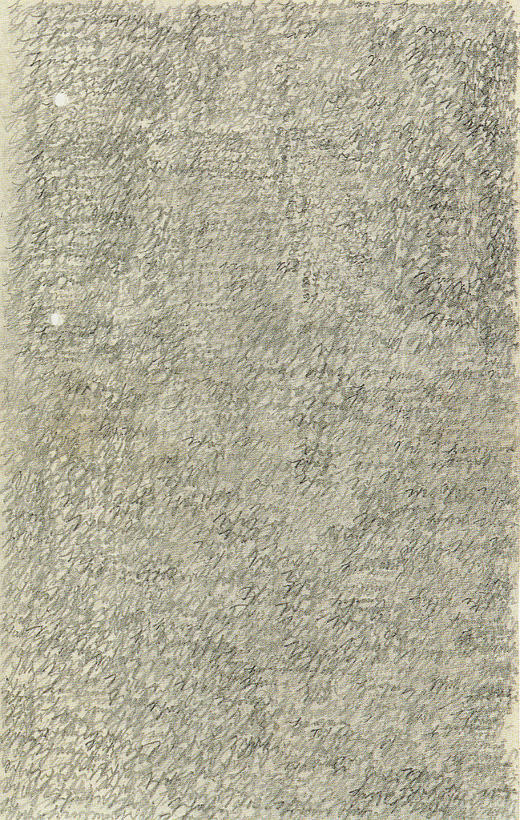
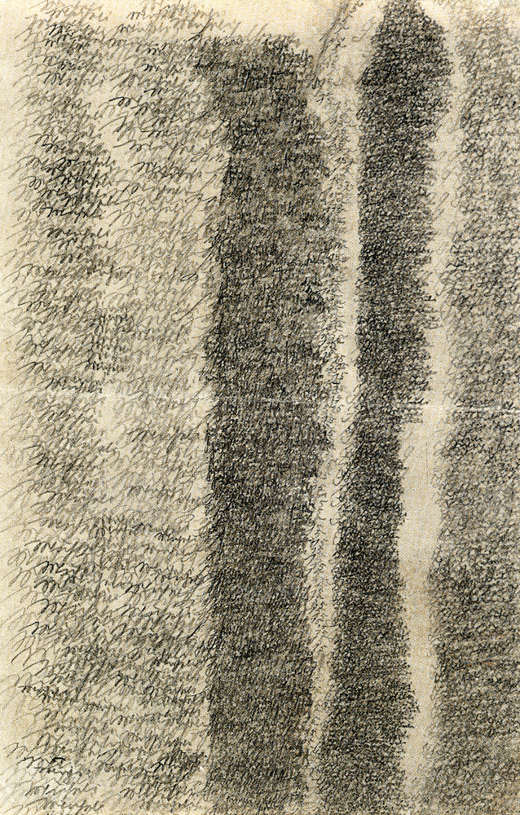
    Outsider HauckThis is a letter from a woman named Emma Hauck, a “pateint”, a committed person, in an asylum for the “fatally” insane, a schizophrenic, an incurable who simply wanted to go home. She was not insane enough to know where she was, not insane enough to not want to get out, not insane enough to know that she was in desperate straights, not insane enough to try to get some help.  Emma Hauck wrote letters to her husband, Mark.  Mostly, the letters were composed of single words (like “kommen, kommen”, “come/come” and “Herzensschatzi komm” or “sweetheart/come”) written concisely and tightly, over and over again, layers of kommen/kommen, so many that there is a geology of letters, though there is no geologist.

    Outsider hauck 2
    The images appear in the book and collection of psychiatrist and art historian Hans Prinzhorn (1886-1933), in his Bildnerei der Geisteskranken: ein Beitrag zur Psychologie und Psychopathologie der Gestaltung1, which was published in Berlin in 1922.  Prinzhorn was among the first in his profession to study the art of the insane, and to use it in diagnosis.  In the meantime, over dozens of years, he accummulated a collection of thousands of works of art (many coming when he was an assistant to Karl Wilmanns at the psychiatric hospital of the University of Heidelberg), most of which are housed today in the Sammlung Prnzhorn (UniversitätsKlinikum Heidelberg, here).

    The Emma Hauck images are astounding, and deeply private, communicating hope and despair in an illegible performance.  Letters sent in hope to her husband to come and save her; letters which were never sent. 

  • Tree Wagons and Rolling Land Thunder–Early, Interesting Vehicles

    JF Ptak Science Books Post 2122   
    Follow Me on Pinterest

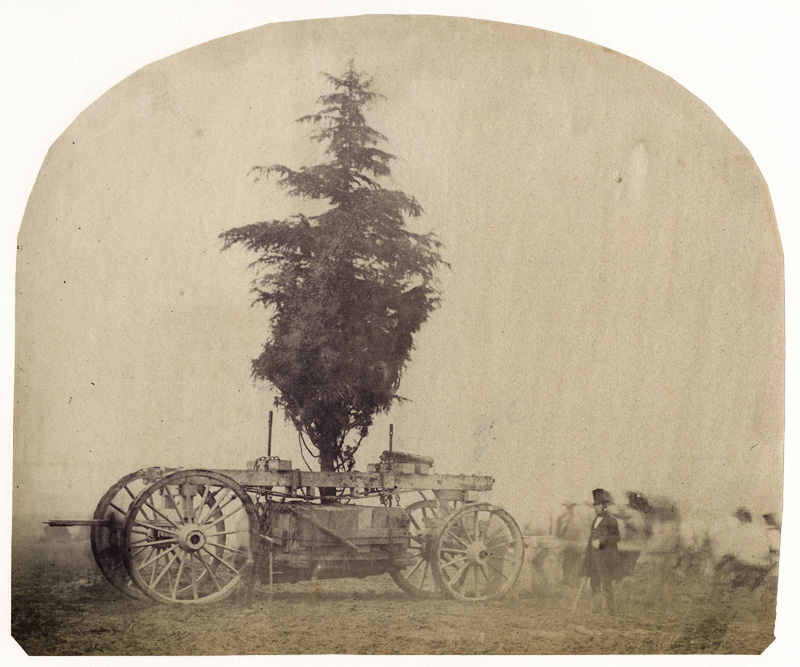
    I imagine that tree wagons had been around for quite some time by the time this Daguerreotype was made ca. 1860–the very unusual aspect of this is that it must be a very very early photograph of the process.  And, actually, it is probably rare among images in general to see the transportation of a mature tree–frankly I think it is a very mature tree in spite of its height (is this the slow-growing American Hemlock?), mainly because the trunk seems to be as thick as the observer at right.  The tree and roots look to be suspended in a wooden container, and the wheels look thick and tall (at least 5′ and probably more)–it no doubt was a very heavy load, and it would be interesting to know what was going to pull it along that open field. 

    Transporting-a-Tree-on-a-WagonImage: http://www.retronaut.com/2013/04/moving-a-tree-on-a-wagon/

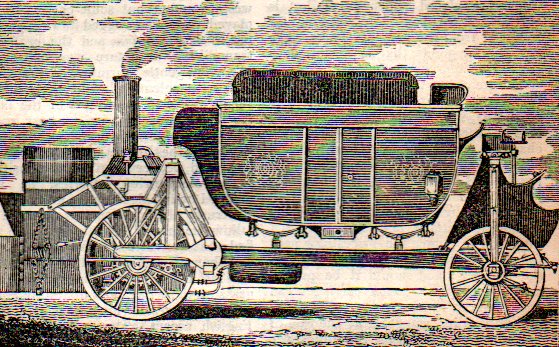
    The tree wagon was animal-powered–the rolling thunder land car was powered by steam. 

    Steam engine Griffith263

    ·Posted by :

    ·in:

  • Propagandizing Germany’s Disarmament, 1932

    JF Ptak Science Books   Post 2123   
    Follow Me on Pinterest

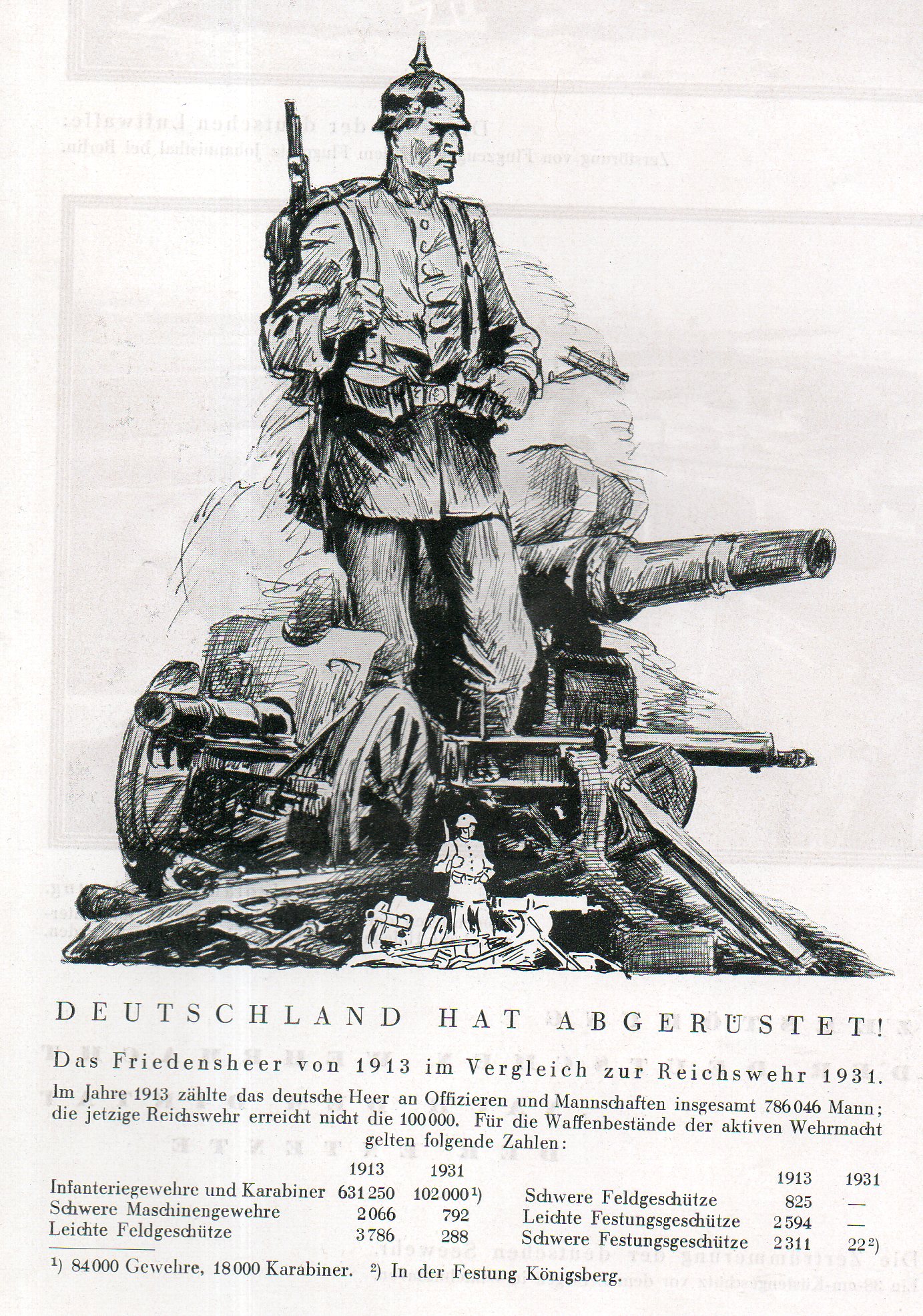
    This image comes relatively early in the history of the German rearmament and the subsequent march to WWII.  These infographics come from the Illustrirte Zeitung (Leipzig) in March 1932 and depict the various low levels to which the German military had reached. Germany’s military situation was dictated by the terms of the Treaty of Versailles some six months after the Armistice was signed, the terms of which were decided over months and for which Germany was not an invited member to the negotiations. In any event, the protocols of the treaty were fairly strict (some felt not strict enough, while others like J.M. Keynes felt the economic restrictions and concessions were too harsh), and so far as the military was concerned the army, navy, and air force were all severely limited in size and development.

    The 1919 treaty began to unravel in earnest by 1932, at which time Germany–reeling still from the Depression and from the economic hardships and concession placed on it by the treaty, suffering large unemployment and with a disastrous economy–by June of that year had decided to ignore the military restrictions of Versailles and sought to rearm.  By July Germany withdrew from the nearly half-trillion-dollar (in 2013 American dollars) concessions agreement, and started to accumulate funds for a vast new military restructuring program. In a year Hitler was chancellor, and the Nazi Party made huge gains in the Reichstag.  And the war was in motion.

    Few people in Germany would have to be reminded that the military was in dire straights, but these infographics hammered the point home in a very stark visual manner. 

    Propaganda Germany 1931113(“Germany is Disarmed!” shows the difference in man- and fire-power between 1913 anbd 1932)

  • Ear Trumpets for the Eyes

    JF Ptak Science Books   Quick Post 
     
    Follow Me on Pinterest


    Phenakistiscope

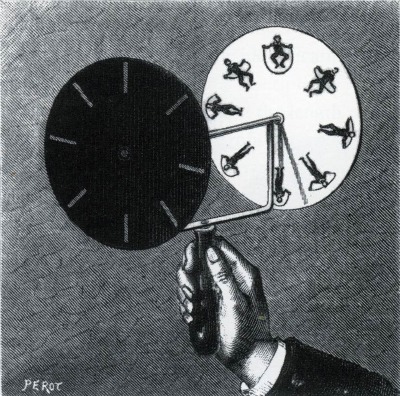
    This is a very quiet image of a major device in the history of the animated/moving picture:  Joseph Plateau’s phenakistoscope, a device which was based on the persistence of vision principle that would allow th emind to believe it was witnessing a continuous (though segregated) motion.  

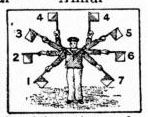
    Oddly enough, this device brings to mind this ulatra-stable depiction of motion:

    Phenak2Which is a detail from this lovely illustration [Source: found by Eric Edelman, collage artist, in Funk & Wagnall’s Dicitonary, 1920]:

    Phenak
    Notes:

    1. “On 10 December 1830, Michael Faraday(1791-1867)
    gives a lecture at the Royal Institution. The publication appears
    in February 1831: “On a peculiar Class of Optical Illusions”. Continuing
    on what Peter Mark Roget (1779 – 1869) had published in the Philosophical
    Transactions, he describes two parallel discs, revolving on the
    same a
    xis, in opposite directions, each having 16 cogs. When viewed
    in a mirror a stationary image is seen. He does not refer to Plateau’s
    work, done before 1831 and which had been published in the Correspondance
    mathémathique et physique. Later Faraday writes that the
    honour is due to Plateau.”–source, here.
    s
    in –February 1831: “On a peculiar Class of Optical Illusions”. Faraday writes that the
    honour is due to Plateau.

    ·Posted by :

    ·in:

  • The Long and the Longer of It: a Fabulous Engraving of Trajan’s Column

    JF Ptak Science Books   Quick Post 

    Follow Me on Pinterest 

     I have a hard time resisting long and detailed engravings, and the great sculptural victory column with the enormous numbers of bas relief depicted by Giovanni Piranesi (“Trofeo o sia magnifica colonna … ove si veggono scolpite le due
    guerre daciche fatte da Trajano, inalzata nel mezzo del gran foro …” and printed in 1770) certainly takes a stellar position. It is of course a depiction of the epic victories of Roman Emperor Trajan’s campaigns against the Dacians (101-102 and 105-106 ACE), and is located at Trjan’s Forum, north of the Roman Forum.  The story of Trajan’s efforts on the 100′-high column (125′ with pedestal) wraps itself around 23 times, rendering a 625′-long storyline of defeat for the Dacians.

    It is a beautiful thing, even if Sixtus V (the Sixtus who came after Sixtus IV who commissioned the Sistine Chapel, or the chapel dedicated to the Sixtus popes) placed that statue of St. Peter on the top of it. 

    Here’s a fantastic site that interprets and presents all of the 500+ sculptures on the column: http://www.stoa.org/trajan/

    Trajan column

    ·Posted by :

    ·in:

  • Some Famous Military Pigeons

    JF Ptak Science Books  Post 2124 

    Follow Me on Pinterest


    Several years ago I purchased part of an archive of David Katcher, who was the founding editor of the journal Physics Today.
    Before that, several years before that, in 1945, David Katcher was Lt.
    Katcher, serving as a correspondent/writer in the public relations
    office of the U.S. Army Headquarters of the Western Pacific (GHQ
    USAFPAC). There’s a 6-inch stack of paper here with what seems to be his
    (and associated) mimeographed offprints of the daily grind of running
    the PR department of the Army in the Philippines, which, taken as a
    whole, is pretty interesting, showing the concerns and trials of the
    Army in reestablishing the government and infrastructure of the
    country.  Some of the individual reports/publications are stand-alone,
    straight-up fabulously interesting things, and so far as I can
    determine, have not been published anywhere else.  These two examples
    are both related to the subduing of the last remnants of the Japanese
    Army still fighting in the dense nether lands of northern Luzon, the
    Philippines, fighting after the surrender had been made (14 August 1945)
    and  signed (formally, on the USS Missouri, 2 September) , fighting after the war had ended.

    And in all of this comes this unexpected item, dated 1 October 1945, from “Headquarters. United States Army Forces Western Pacific, Public Relations Office, APO 707, General Release 56–Manila” and which–in the midst of the end of the war and the dropping of two atomic weapons–concerns a brave and battle-distinguished and heroic pigeon, “Blackie Halligan”. 

    “Blackie carried a number of messages to this location, one of which was
    extremely important because it gave the location of some 300 Japanese
    troops. He carried out this message despite being badly wounded. Word of
    his accomplishment reached General Patch, Commander of the American
    Division, who made a special trip to the loft where he decorated
    Blackie. Later, Blackie saw action at other islands in the Pacific.”–CECOM Historical Site, U.S. Army, source.

    Sometimes, in the midst of great loss in the throes of great victory, in the balance of stories great and true and tried, the small story of sacrifice may be the perfect antidote for large needs. 

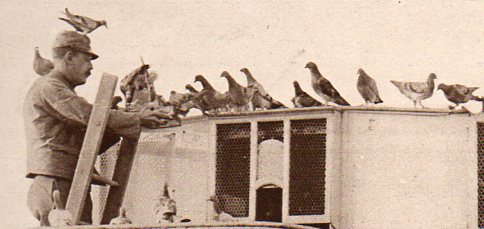
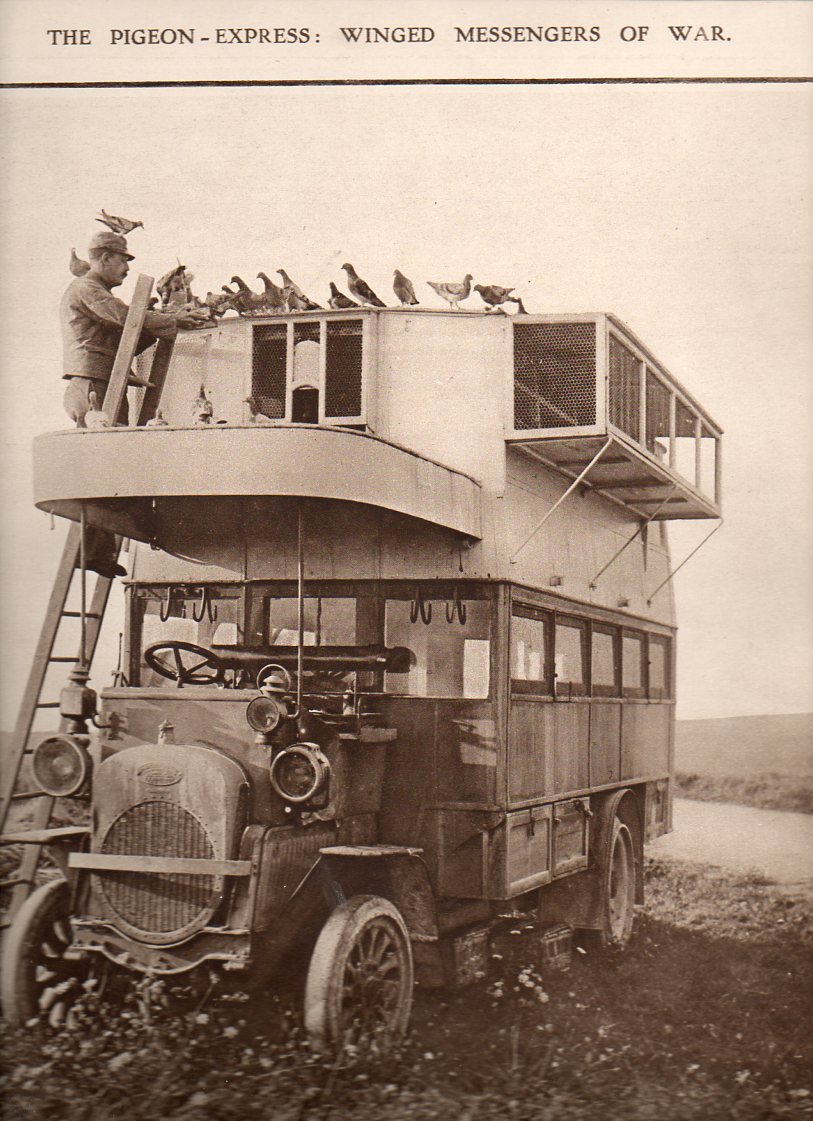
    There is of course a long history to the pigeon in war, and frankly I was surprised to find this story in 1945. Most of the famous pigeons of war come from the First World War:(the image below coming from The Illustrated London News for 2 October 1915):

    WWI--e---pigeon truck det644

    WWI--e---pigeon truck643

    ·Posted by :

    ·in:

    —
  • An Interesting Three-Part Perspective, 1560

    JF Ptak Science Books  Quick Post 

    Follow Me on Pinterest


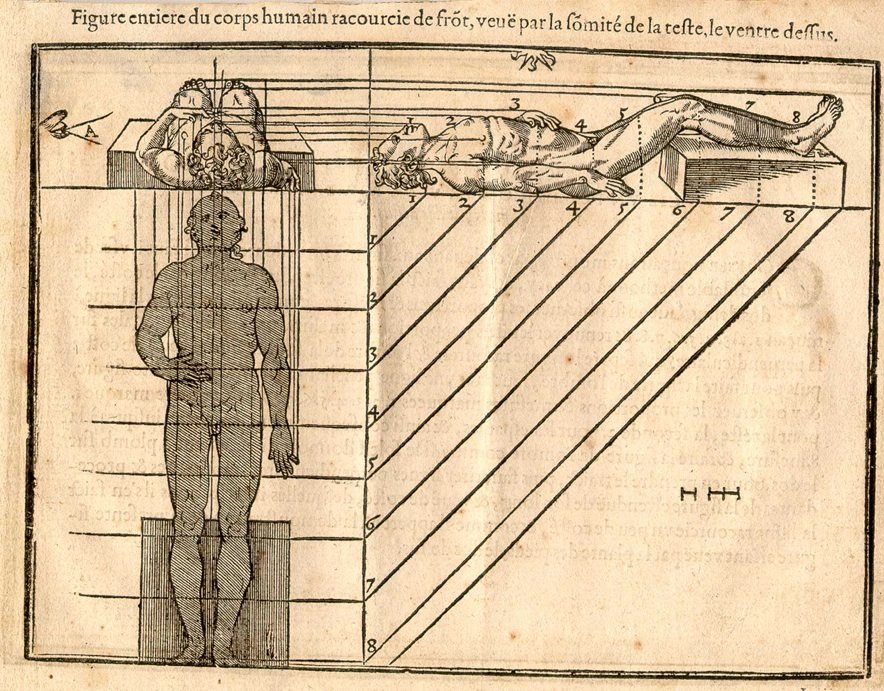
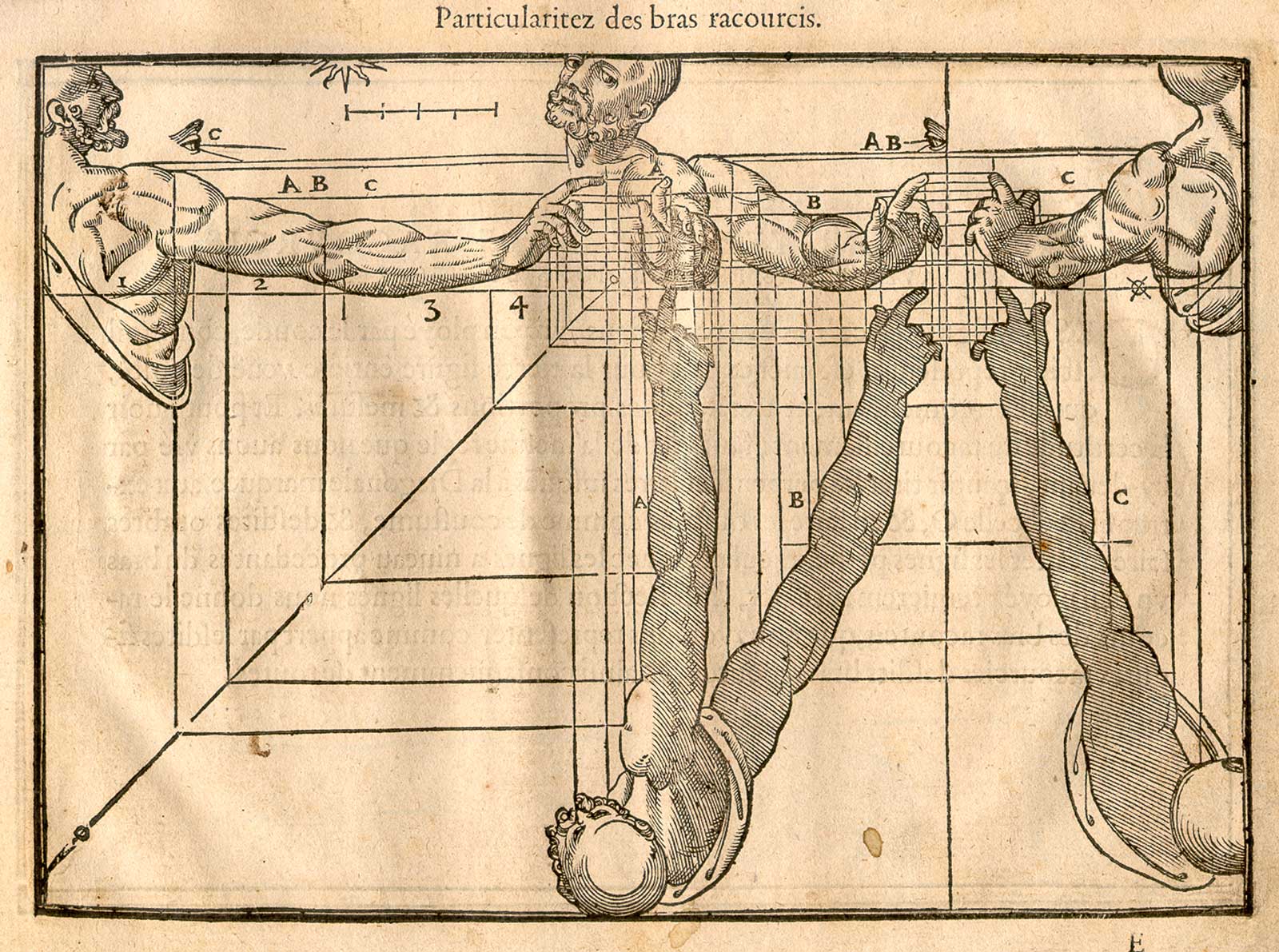
    I’m not sure if I’ve ever seen a 16th century human perspective drawing showing the body in plan and elevation and cross-section.  Jehan cousin the younger (1522-1595, in France), the son of Jean Cousin the Elder (1490-1560), a painter and sculptor, produced such an image in his Livre de Perspective, which was published in 1560. Well, the image definitely was published in 1560, though the artist may have been father and it may have been son–they worked closely together, and the Younger was taught at great length by the Elder, so much so that their work became indistinguishable. Nevertheless, the images I think are quite extraordinary, as we see below: 


    And so by Andreas Mantegna, a classic example:

    The following images come from the 1608 edition of the Cousin Perspective. a number of which are fairly unusual (all from the Library of Congress site, here):
    Cousin_p16

    ·Posted by :

    ·in:

    — —
  • Imaginary Aircraft of Massive Oddness

    JF Ptak Science Books  Quick Post
    Follow Me on Pinterest

    These Air Wonder Stories magazine covers are just absolutely delightful–full of abolute hope and belief in the possibilities of what the future might bring i the forms o fair travel.  THe first shows an enormous jet-powered craft that is breaking through a waterspout, seemingly undisturbed. 

    Air Wonder Stories, Dec. 1929

    ·Posted by :

    ·in:

  • Title from BizarroLand–a Daily Dose from Dr. Odd

    JF Ptak Science Books   Quick Post   Daily Dose from Dr. Odd  series
    Follow Me on Pinterest

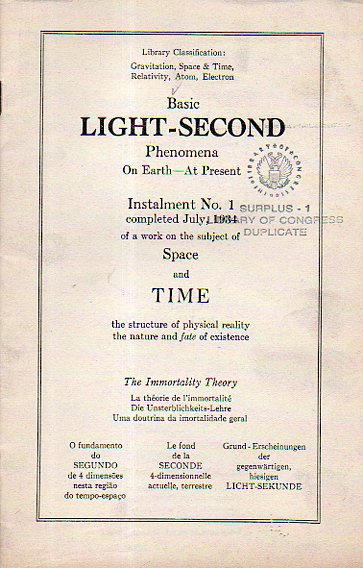
    In my heaping pamphlet collection there is a sub-collection of works
    with impossible, outsider-y, and stubbornly semi-confused titles that
    simply cannot be ignored–I mean the titles can’t be ignored, though most of the time their texts beg to be. 

    Some of the titles change from cover to title page; some titles are non-existent and replaced by simple exclamations.

    In this case, and the first instance that I can recall, there is a “Library Classification” at top-center of the cover, leading to other information about the book just before we get to the title, which seems nearly secondary, and which is followed by other non-title information right there on the cover. There is all manner of info there, a cover with a very busy pace–data galore for what should be a mostly blank space, except the author’s name. 

    Book titles  Bizarro land737

  • The Trained Neutrality of Killing

    JF Ptak Science Books   Quick Post

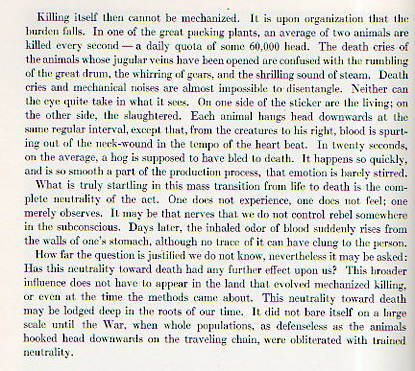
    Siegried Giedion wrote a terrific book called Mechanization Takes Command (and beautifully subtitled ...a contribution to anonymous history) in which he (sweepingly) looks at how mechanization took over from hand production in the life of social and technical world. 

    The book was published by Oxford University Press in 1948, and given that year, Giedion has something very interesting to say about killing.

    After investigating “The Mechanization of Death: Meat” and how over hundreds of years the hammer-to-the-head and skinning that transforms an “animal” into “:meat” turned from human to mechanical hands, he decided that “what is truly startling in this mass transition from life to death is the complete neutrality of the act”.  The animal=meat act and the mechanization of killing removes the “human” element of the act, and that “one does not experience, one does not feel; one merely observes” a killing that is not somehow dying.  He reckons that this experience may in general have made us more capable of desperate act of killing that do no longer seem so desperate. 

    It is a remarkable and early insight into the meat industry from an uncommon and unexpected source.

    Giedion738[Source:  Siegfried Giedion, Mechanization Takes Command, Oxford University Press, 1948, p.246.]

    ·Posted by :

    ·in:

    — —

Recent Posts

Archives

Categories