A Daily History of Holes, Dots, Lines, Science, History, Math, Physics, Art, the Unintentional Absurd, Architecture, Maps, Data Visualization, Blank and Missing Things, and so on. |1.6 million words, 7500 images, 4.9 million hits| Press & appearances in The Times, Le Figaro, Mensa, The Economist, The Guardian, Discovery News, Slate, Le Monde, Sci American Blogs, Le Pont, and many other places… 5000+ total posts since 2008.

  • Civil War Maps by the Great Mapmaker of the Confederacy, Jed Hotchkiss

    JF Ptak Science Books  Quick Post

    I was searching for the “Make Me a Map of the Valley” map, the Stonewall-Jackson-directive map, that was made to devastating effect by the Confederacy’s leading cartographer, Jedediah Hotchkiss.[More on Hotchkiss here from the Encyclopedia of Virginia.] I saw this on display at the Library of Congress years ago–it is an enormous thing, about 22 square feet and more than 7 feet long (or tall, as it was displayed vertically then), filled with minutiae and just a splendid map of great detail put to extreme use by General Jackson (and Lee, and others).   The LC has the Hotchkiss Collection, their “jewel in the crown” of the Civil War maps there, and there is a great amount of it on display on the LC website.  The Big One, though, is not there in full.  I copied a few of some of the maps most interesting to me, and at the bottom is a link to the other 120 or so maps online by Hotchkiss.  
    Hotchkiss sketchbook cover copy

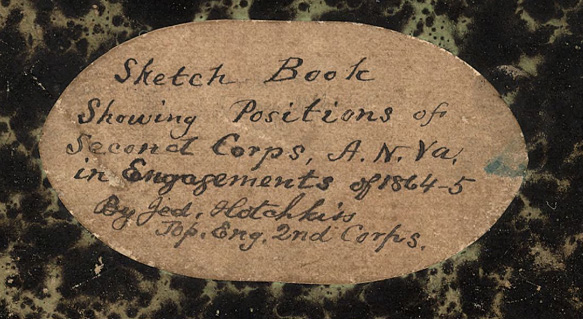
    [Above:  title for one of Hotchkiss’ workbooks, Sketch book of Jed. Hotchkiss, Capt. & Top. Eng., Hd. Qrs., 2nd Corps, Army of N. Virginia : [Virginia], “Shows general maps of northwestern Virginia and parts of
    Montgomery County, Maryland, with some showing roads, troop movements,
    and the names of some residents…”

    “The Hotchkiss Map Collection contains cartographic items made
    by Major Jedediah Hotchkiss (1828-1899), a topographic engineer in the
    Confederate Army. Hotchkiss made detailed battle maps primarily of the
    Shenandoah Valley, some of which were used by the Generals Robert E. Lee
    and Thomas J. “Stonewall” Jackson for their combat planning and
    strategy. Several of the maps have annotations of various military
    officers, demonstrating their importance in the military campaigns…”–from the LC site.  A good, long essay on the collection by Clara LeGear appears elsewhere on the LC site, here.

    All maps are expandable after being opened.

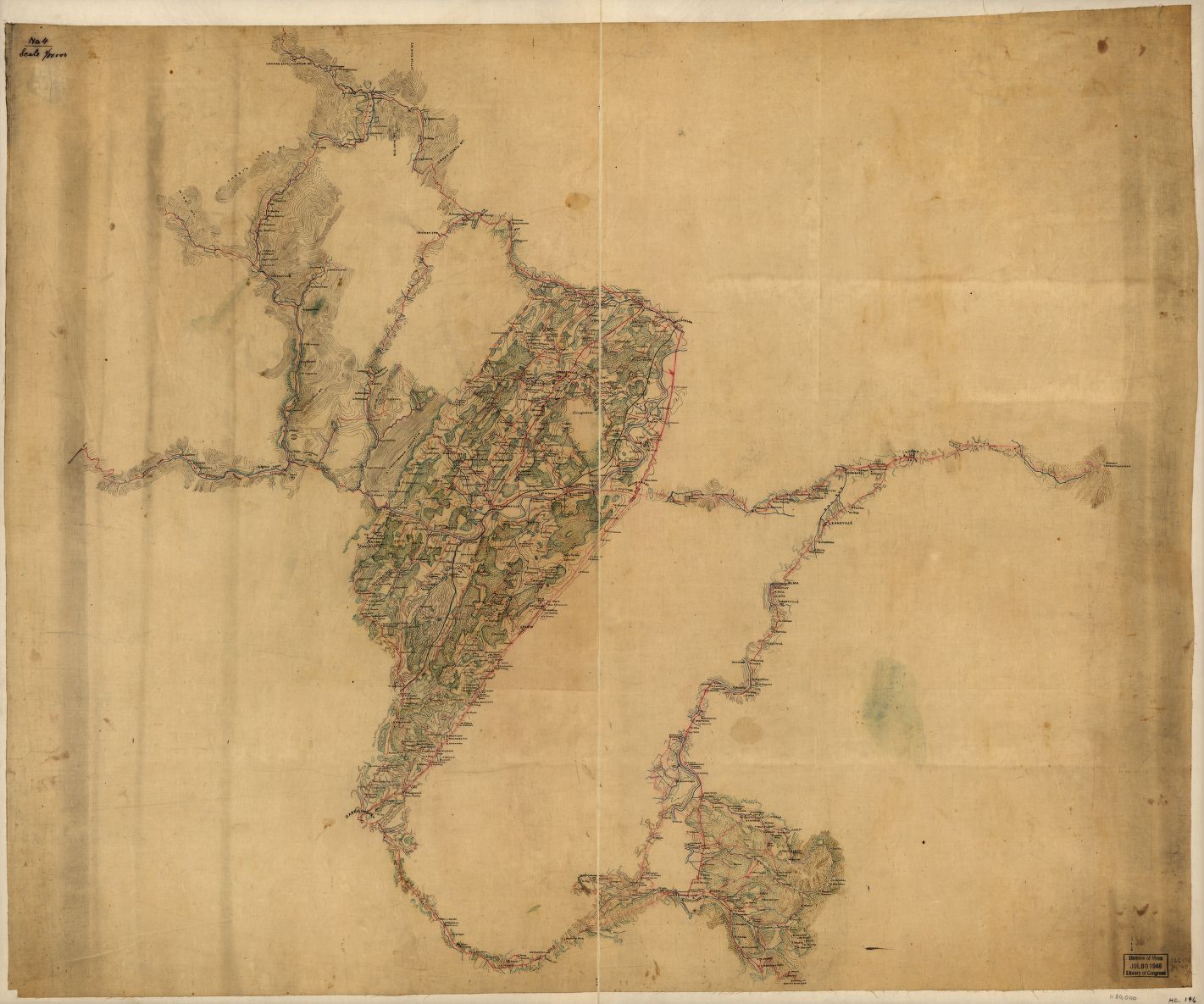
    Map of the Shenandoah Valley from Harrisonburg to Mt. Jackson, with
    topographical detail along the principal roads from Thornton’s Gap to
    Swift Run Gap and along several valley roads in northwestern Virginia:
    Hotchkiss mt jackson

  • Strange Things in the Sky Department: Tall Ships Flying

    JF Ptak Science Books   Quick Post  Strange Thing in the Sky series
    Follow Me on Pinterest


    Source: Encyclopedia Britannica via Google Books
    I love Tall Ships, but perhaps never so much as when they are flying–real or imagined. 

  • Old Word of the Day–Abcedarian

    Abcedarian n.s. [from the names of a, b, c, the three first letters of the alphabet.] He that teaches or learns the alphabet, or first rudiments of literature.
    Samuel-Johnson-37037-1-402 det
    This word is used by Wood in his Athenae Oxonienses, where mentioning Farnaby the critic, he relates, that, in some part of his life, he was reduced to follow the trade of an abecedarian by his misfortunes.

    –Johnson, Samuel. “Abecedarian.” A Dictionary of the English Language: A Digital Edition of the 1755 Classic by Samuel Johnson. Edited by Brandi Besalke. http://johnsonsdictionaryonline.com/?p=296.

    ·Posted by :

    ·in:

  • Affairs of the Heart: Blood & Clouds, 1664

    JF Ptak Science Books  Post 2025 

    Follow Me on Pinterest 

    0 blog feb 6 circle541

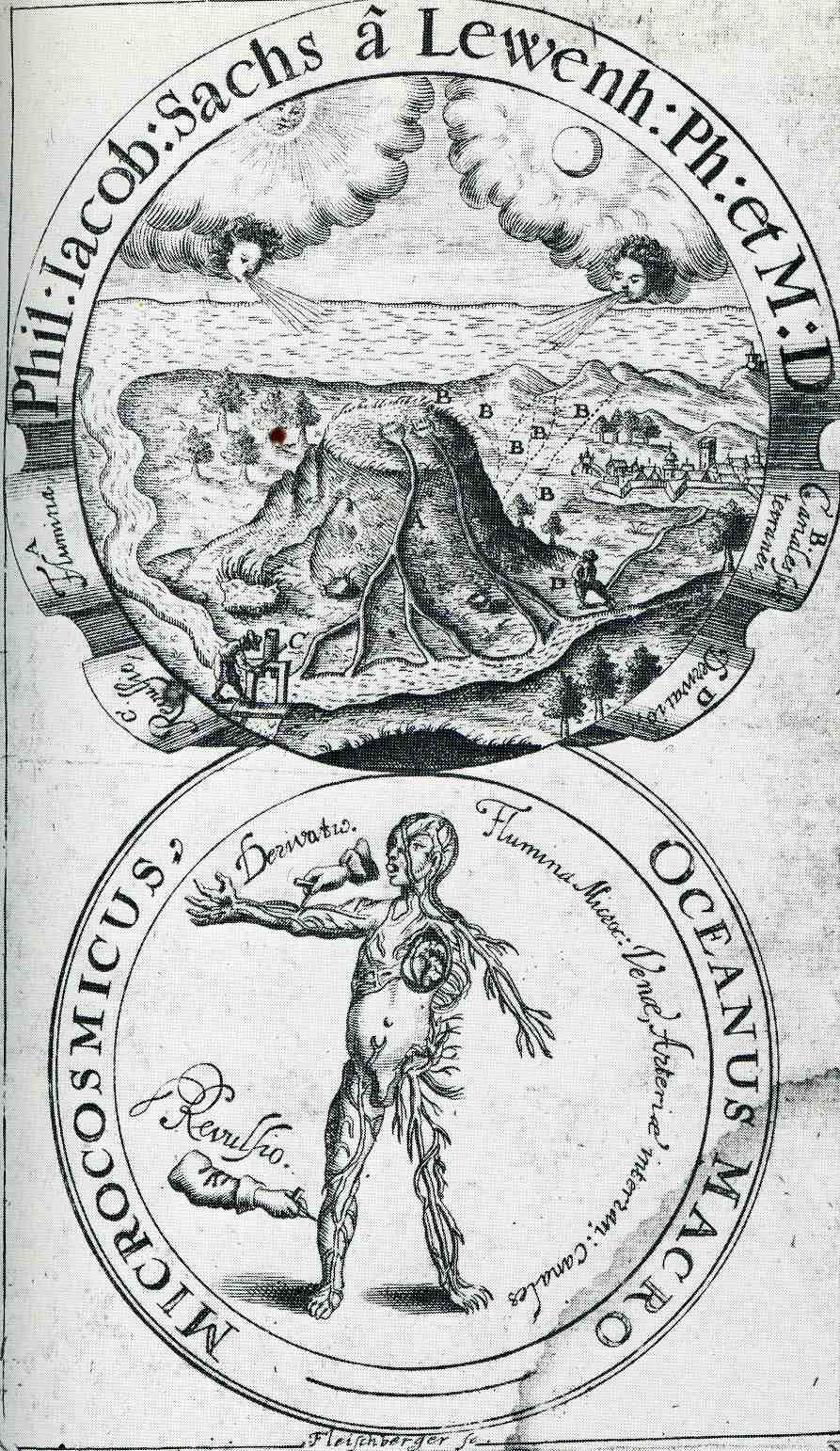
    In 1664 Philipp Jakob Sachs (Sache de Lewenbheimb) wrote an influential book on the circulation of the blood.  It was the advanced work of a learned man, a naturalist and physician who was also the editor of the Ephemerides Academiae naturae curiosorum, which was the first journal in the field of natural history and medicine and one of the founders of the Academia Naturae Curiosorum (Leopoldina).  His work came 40 years after the great work by William Harvey, who published Exercitatio Anatomica de Motu Cordis et Sanguinis in Animalibus in 1628, a work in which he essentially brought the idea of circulation of the blood into the modern age, building on earlier ideas of Michael Servetus, whose 1561 work on circulation (and his religious ideas) brought him to be executed by flames. 

    For centuries the pulse was
    a vaguely understood thing reaching back into the murky medical past as far
    back as Galen.  The association of course
    was with the heart, and the association of the heart was as the great
    controlling center of all function and control of the human body—a theory that reached
    far forward into the 16th century.

    Servetus (physician, cartographer, theologian, writer and
    general all-adept Humanist of a high order) was in trouble with the church for
    many reasons, not the least of which was trying to dislodge the theory of the
    heart as sacred and the seat of wisdom. 
    But he did establish that the heart was an organ, which didn’t sit well
    with very many people, least of all the Calvinist court in Vienna
    which found him guilty on many anti-Humanist grounds, including his
    anti-Trinitarian Christology, which made him a reviled figure to Catholics and
    Protestants.  He was tried and found to
    be dangerously heretical, and sent to the flames.

    Harvey
    withstood blistering attacks on his correct statements on the circulation of
    the blood (costing him nearly all the patients in his practice), though he at least
    lived to see a brighter day:  Servetus, on the other hand, didn’t, and was
    burned at the stake for his heresies, one of which his attack on the spiritual
    heart.

    In any event, the frontispiece to Sachs’ work is an interesting allegorical composition showing a connection between the place of the very prominently featured heart in the circulation of the blood, and the water cycle, and the cosmos of creation (the breath of life coming from the winds of the Sun and the Moon).   

     0 blog feb 6 circle542

    Notes:  (Sachse de Lewenheimb, Philipp Jakob Sachs, 1627-1672 , Oceanus macro-microcosmicus, seu Dissertatio epistolica analogo motu aquarum ex et ad Oceanum, sanguinis ex et ad cor… 1664, with full text via Google books here).

    ·Posted by :

    ·in:

  • The Expandable Waistcoat & Blank Book Patents of A. Einstein & S. Clemens

    JF Ptak Science Books   Quick Post  
    Follow Me on Pinterest 

    Albert Einstein was many things–including a designer of clothing, and a patented one at that. He applied for and was granted a patent in 1936 (not an unbusy period in which he must’ve been noodling this thought around in his head, that blouse thing along with gravitational lensing, that pesky quantum mechanics, and the EPR paradox and all that) for an expanding waistcoat. 

    Well.  Einstein had his hand in other patents, including a rather famous one regarding a refrigerator with no moving parts (along with the great Leo Szilard, the “Einstein-Szilard electromagnetic pump), as well as part interest in gyroscompasses and a hearing aid, and better yet a “light intensity self-adjusting camera” with an “electric eye”.  And the “ornamental blouse”. I suspect that it was all in fun, except that once the thinking had been done, it was thought to take it to the next logical step. 

    ·Posted by :

    ·in:

    —
  • The Tall in the Short of It–the Giants of Microworlds & the Microscope

    JF Ptak Science Books  Post 2127 

    Follow Me on Pinterest

    I’ve posted a number of bits in this blog about stupendously large and enormously small things, but it is infrequent to find the story of something made exceptionally large in a reduced world.  Perhaps it is normal fare in the science fiction world, but I found the not-obvious but still-obvious making of a giant in microland to be, well, less than obvious.  

    There have been countless stories told of shrinking people, or the discovery of vastly small communities living withing a larger host community, and so on, like the following:

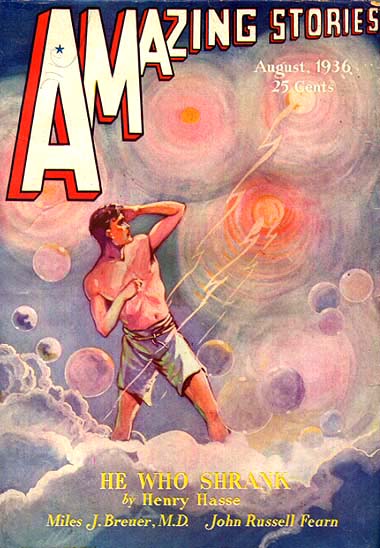
    http://static.flickr.com/67/202348136_833ca3249d_o.jpg

    This is a story by Henry Hasse and it involves a great scientist and the his elixir called “Shrinx” which after it has been injected into his assistant shrinks the man immeasurably, so science-fictionally small, that he has passed through the microscomos and “subuniverses” to the point where he emerges on a primitive place called Earth.  The assistant has traveled from a planet in a solar system revolving around a sun in a solar system in a galaxy in a universe to something small, something sub-atomic, landing in an electron holding within it its own universe. 

    that’s small. 

    And then there is this piece of magnificent ne plus ultra, where we remain in the microworld but where there are also micro-giants.

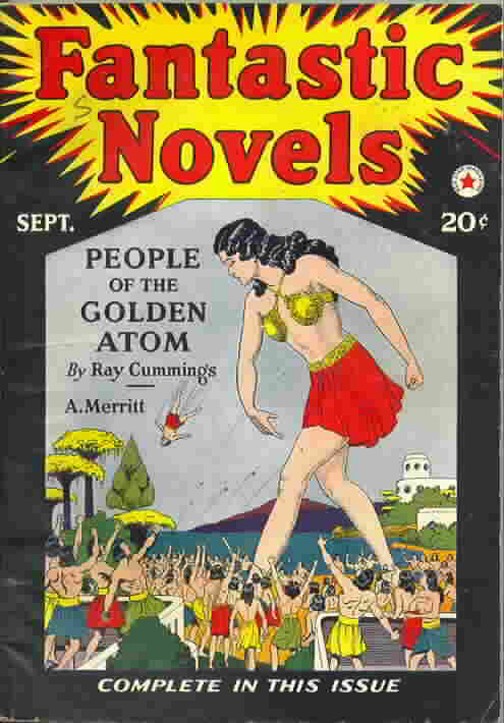
    The cover
    of Fantastic Novels (1921?) seems to tell a straightforward story, but as it turns out the giant is giant but one living within a world in an atom of a gold wedding ring.

    Man throwing

    Author
    Ray Cummings (1887-1957) found a nice writing niche for himself in his
    fictional discovery of a drug that could make people as small as atoms
    and then, once inside the microworld, could be made as immense as
    micro-mountains.  The Girl in the Golden Atom was one of a five-part trilogy(?)1 and
    so far as I can tell, Cummings used the hell out of his original idea. 
    The prose reads like it is punctuated with invisible periods every
    fifth word–evidently Cummings was so very busy writing 750
    books and short stories that it  left him little time to edit or, maybe,
    think.

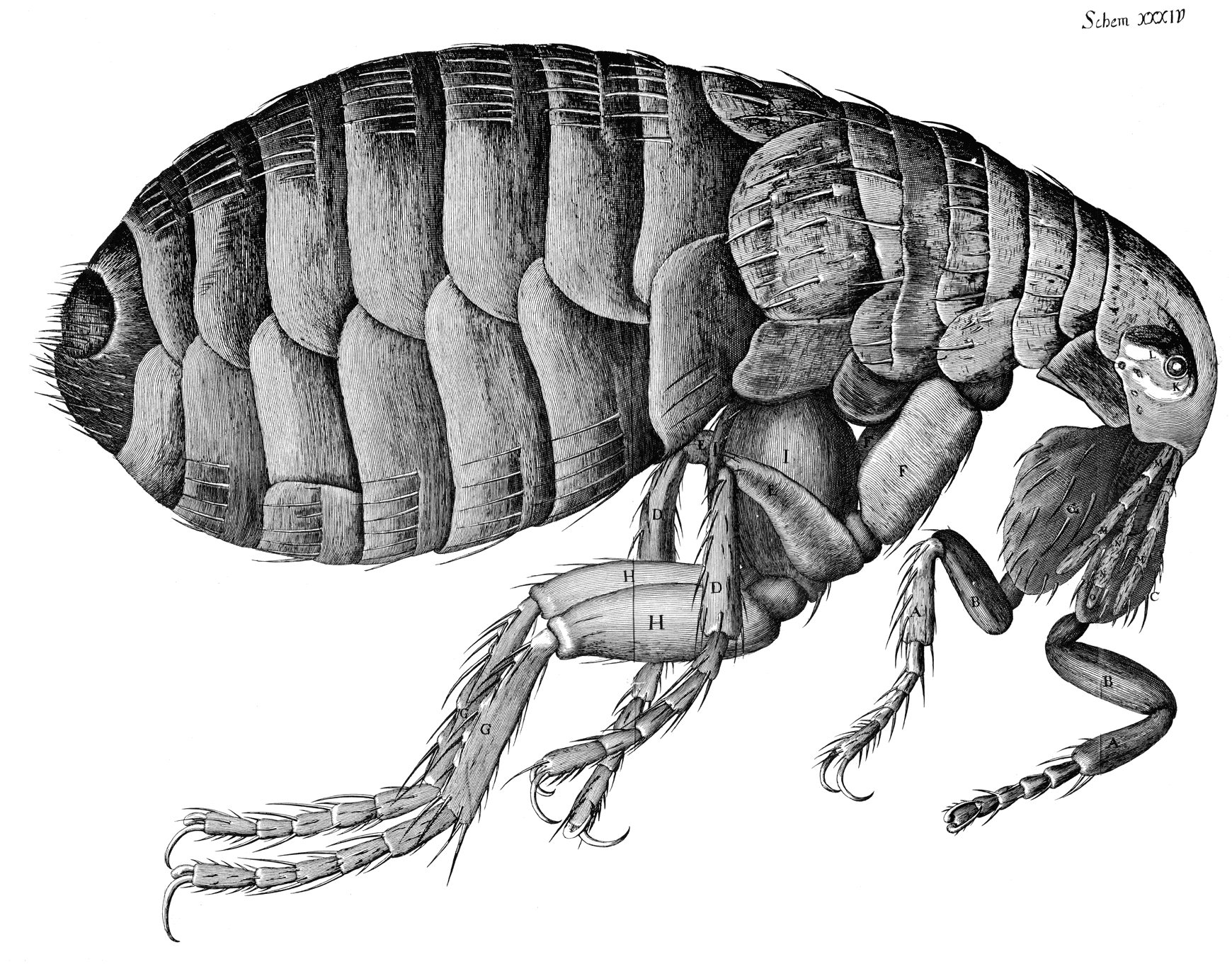
    It was a very nice surprise for me. That said, I can only imagine the giddiness and suspension of (dis-)belief when the mass market readership of Robert Hooke’s Micrographia got a look for the first time on what the small creepy crawlies that lived around them looked like under magnification.  Suddenly the blots and blotches took on real–and sometimes terrifying–forms.  These were basically unseen during their long interactions with human beings, until, suddenly, Mr., Hooke made his investigations and put a face on the unseen microworld and shared it with the General Public. 

    “It is my hope, as well as belief, that
    these my
    Labours will be no more comparable to the Productions of
    many other
    Natural Philosophers, who are now every where busie about greater
    things; then my
    little Objects are to be compar’d to the greater and
    more beautiful
    Works of Nature, A Flea, a Mite, a Gnat, to an Horse, an
    Elephant, or a Lyon”
    said Mr. Hooke
    at the end of his 28-page preface to Micrographia in 1665.

    https://historyofideasblog.com/a/6a00d83542d51e69e20120a5ec29c4970c-pi

    [Mr. Hooke’s drawing of his flea, in full and unexpected glory, with as much detail and armor as anything that had ever been imagined–only this thing was real, and common, and lived on you.]

    It may have been a similar shock to those seeing these images for the first time as it was for people to see Galileo’s images of the Moon, or to read him announcing that the perfect sky of Creation was actually not so, and that his telescope revealed ten-fold the number of stars that people could see with only their eyes, and which faith alone could not elaborate. 

    Yes, the incredible shrinking giant woman was a surprise but not on this order, not by a stretch–though it seems to be the world of science rather than scifi that has delivered the most shocking stories of the big and the small. 

  • Atlas of Dead Ideas. Q: When is Israel Not So? A: When it is Great Britain (1929)

    JF Ptak Science Books   Quick Post   Daily Dose from Dr. Odd 
    Follow Me on Pinterest

    Anglo-saxon739There was a Bible-studying group headquartered in Haverhill, Massachusetts whose inspiration/idea  interpreting the true nature of what was “Israel” according to bits and pieces in the Old Testament, and which found something to be radically different from what was seen to be  the case.  The pamphlet documents that the place we think of as Israel is not really so, and that the country best fitted to these OT statements was actually Great Britain.  There are many reasons for this and they get mistily presented in the pamphlet Restoration of Kingdom Administration the Anglo Saxon Responsibility (published by the Anglo-Saxon Federation of America in 1929), but it is rather too much and tedious and tiresome to get into the milky details, except to say that Israel as was currently recognized could not be so unless they adopt the Christian faith.  And so on. 

    The address of the organization put it on Merrimack Street in Haverhill, a block away from the river–the four story building now has it middle floor obscured by some teal 1950’s architectralolypse facing, and the bottom floor is now a dollar store (with redundant signs) with a sandwich board out front (captured by the Google car) reading “Design Perfume on Sale Beauty Supply”.  I’m sure the store is necessary and fills a need, but it is a long way and many years from redefining the concept of Israel. 

  • Ecclesiasticism and the History of the Future

    JF Ptak Science Books   Post 2128  
    Follow Me on Pinterest

    FUTURE JIM POWERS
    There are different types of mystery as any quick look at Medieval legacies will tell you.  Some are mysterious mysteries never meant to be understood outside of obliqueness given their allegorically ambiguity, and some are just, well, different, but answerable. 

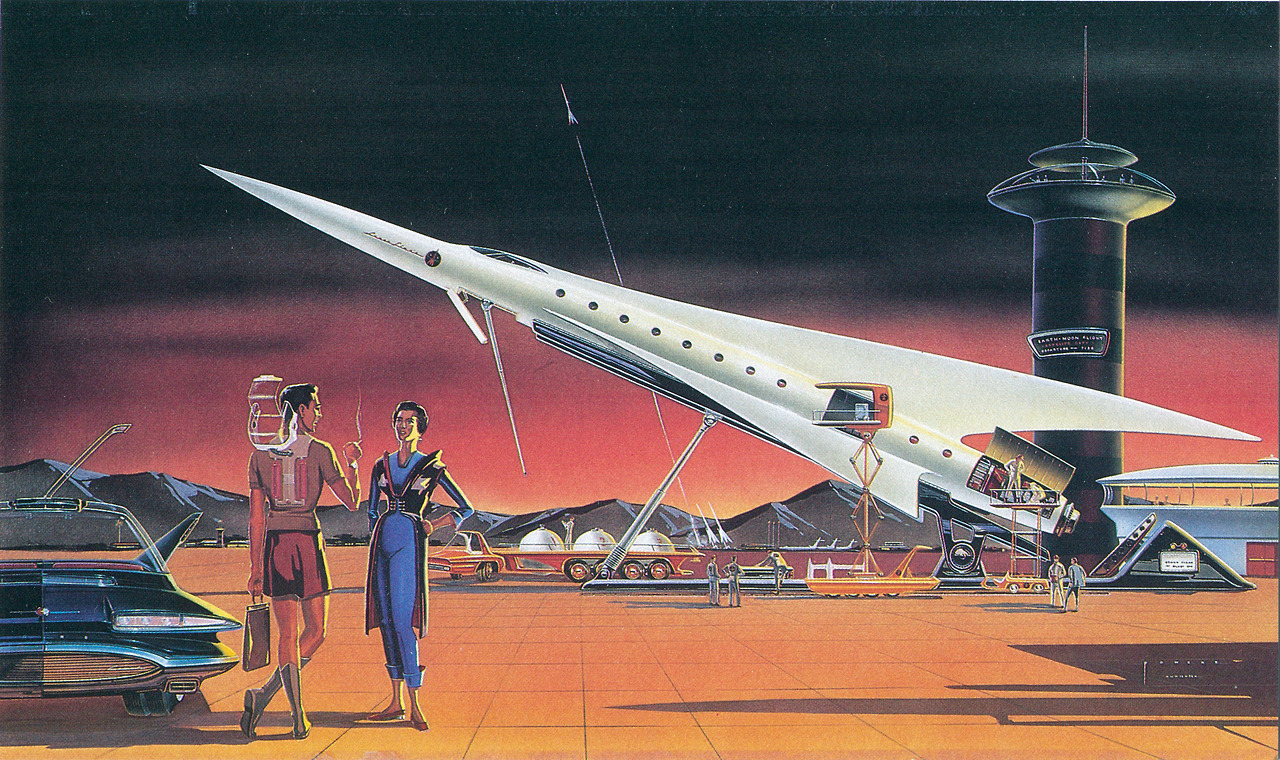
    The history of the future lends itself a little to the Ecclesiastical (or first) sort of mystery as just described–sometimes, anyway.  Sometimes looking at an imagined future drawn years ago for a period of time that has already passed may lend itself to some fair-game comedy.  But getting things “right” as a futurist/illustrator may be quite beyond the point, as with the example above, drawn by Jim Powers.

    Being furiously correct was not the point Powers was trying to achieve.  TO me he was drawing to a certain deep sight, presenting an allegory of possibility, trying to excite some interest in speculation in someone by elements of what he was drawing, not in the overall image.

    In the alphabet of ‘RAMAS, perhaps the most famous of them all is futurama, which (real or imagined) is part of the continuum of motoramas version of raceoram’s spaceorama.  It was in this envelope of futurama that Jim Powers worked his mysteries in a series of images for Life in the Year 2000, laboring away at insight in the mid-1950’s.  Surely he could0 not have believed in these rocket-stuffed ultra-streamlined mega-finned interplanetary autos would come into being in five decades, but I’m pretty sure that he believed that somewhere in the details of his work were useful bits/ideas for someone else.  Surely he did not think that the overall vision was more significant than the sum of all of his very interesting parts. 

  • The Electric Titan Robot Tank Monster, 1916

    JF Ptak Science Books  Quick Post

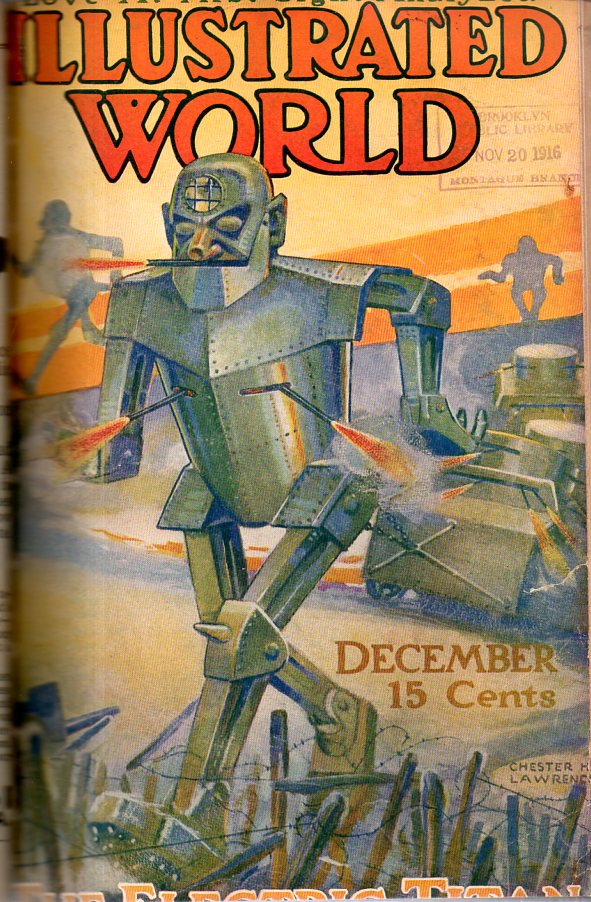
    “The Electric Engineer”, by Herbert C. Crocker, was an article in the December 1916 issue of Illustrated World, and featured this extraordinary idea:

    Robot tank627
    “This mechanical marvel may furnish the warring armies of Europe with a new engine of destruction”, page 504.

    “King Grey”, the creation of Vern Pieper of Alton, Illinois, turns out not to be an extraordinary giant as depicted in the cover art, but a giant on the humanish scale, topping out at nine feet tall and 750 pounds, “a marvel of steel plates, knuckles and cog wheels”, that would have its own guns and haul a small armored cart. It looks quite a bit like a more-famous British steampunk version of this idea from mid-century.

    Robot tank626

  • The Illuminated Artifical Hand-Held Hand Directional for Cars, 1916

    JF Ptak Science Books   Daily Dose from Dr. Odd

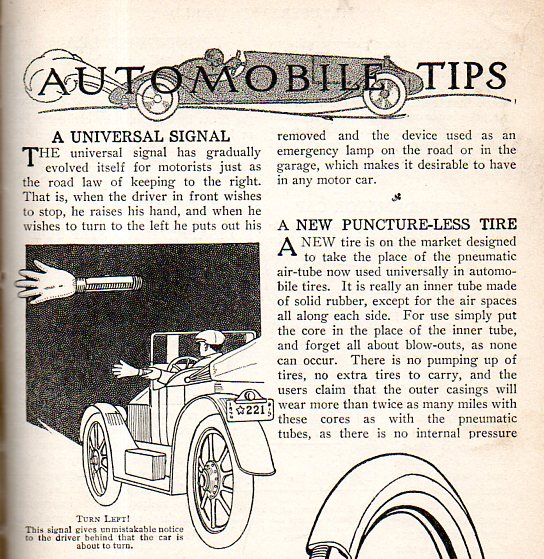
    In general I’m not in favor of left turns for autos in cities of a size where traffic congestion is an issue.  It seems that from a main thoroughfare that three rights should make a left, easy congestion in the center of a busy street, eliminating lines of cars waiting behind a left-turning car waiting for a break in oncoming traffic, and so on.  This semi-crackpot notion was just sparked after seeing this As Seen on TV-style pre-televsion promotional for an artificial hand for a left-turning hand-directional 1916 automobile.  The hand is actually illuminated, which would have made it more effective than a stark hand in the night.  It seems that they were just about <this close> to figuring our a less mechanical-anthropomorphic and more elegant solution than the illuminated artificial hand-held hand.

    Left turn629[Source: Illustrated World, 1916, page 257.]

  • Definitions of “Multiverse”

    JF Ptak Science Books   Quick Post

    I just wanted to include a few more definitions of “multiverse” after having just read “Parallel Worlds (If human history turns on the tilt of the multiverse, can we still trust our ideas of achievement, progress and morality?)” by Andrew Crumey on Aeon.  It’s a very good article. 

    Multiverse via the Oxford English Dictionary

     a. The universe considered as lacking order or a single ruling and guiding power.

    1895   W. James in Internat. Jrnl. Ethics 6 10  
    Visible nature is all plasticity and indifference, a multiverse, as one might call it, and not a universe.
    1899   F. W. O. Ward Eng. Roses iv. 433  
    Within, without, nowhere and everywhere; Now bedrock of the mighty
    Multiverse, And then the thinnest wreath of thinnest cloud Inpalpable.
    1904   Daily News 11 Oct. 3  
    [Reporting Sir Oliver Lodge] The only possible alternative was to
    regard the universe as a result of random chance and capricious
    disorder, not a cosmos or universe at all, but rather a ‘multiverse’.
    1957   Times Lit. Suppl. 11 Oct. 602/1  
    It is precisely Mr Powys’s ever-present contact with the vital, or
    spiritual, principles within the universe which enables him to
    explore..the deeper problems of that comparatively small section of the
    universe—or as he would say multiverse—which constitutes man.

    ·Posted by :

    ·in:

Recent Posts

Archives

Categories