A Daily History of Holes, Dots, Lines, Science, History, Math, Physics, Art, the Unintentional Absurd, Architecture, Maps, Data Visualization, Blank and Missing Things, and so on. |1.6 million words, 7500 images, 4.9 million hits| Press & appearances in The Times, Le Figaro, Mensa, The Economist, The Guardian, Discovery News, Slate, Le Monde, Sci American Blogs, Le Pont, and many other places… 5000+ total posts since 2008.

  • Futurology: a 1916 Report on the 1950 Death of American Cities

    Airplane city630JF Ptak Science Books  Post 2098   History of the Future series  

     
    Follow Me on Pinterest

    “If a city can be unmade, it will not stay so.”

    That’s the hopeful outcome in the opening paragraph of this urbano-centric tale.

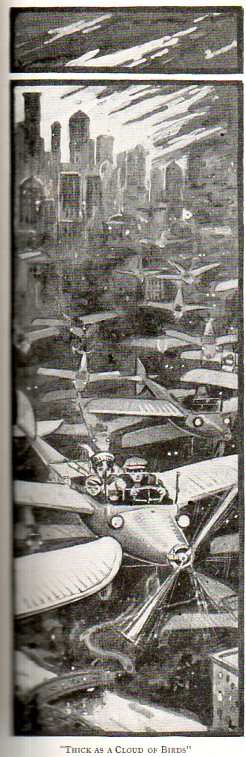
    In the piece of speculative fiction, “The Man who Unmade Cities” by George Holmes (found in Illustrated World, May 1916), a Mr. John Watterson becomes the ultra-Ford of aviation.  Watterson introduces massive reform in airplane design and production such that the new machines are available to, well, everyone–instead of selling thousands of the new planes, millions are sold.

    The story begins with Watterson in childhood, developing his flying interests and, by 1950, andhe becomes a world-beater, and destroyer of cities.  The plane allows people to fly off, leaving the cities in swarms, and “within three years the motorcar was on its way to oblivion”.

    The revolutionary planes were “flimsy-looking”, “dwarfish contraptions”, “spindle-shanked”, and so light “that a man could carry it” and “sold for a song of one’s own singing”, and were collapsable, carry-able, and capable of reaching speeds of 70mph.

    And at the outset of this triumph “the great city was killed; John Watterson was triumphant”.

    But the article, reporting from somewhere in the near-future, reported that the city would return, benefiting from the need for closer stores, and the want for a walk, and the plummeting prices of evacuated city spaces–people were drawn back into the city in much the same way they were drawn out to the suburbs.
    Airplane city631

  • Unusual Jobs Department: Gum Scrapers of 1916

    JF Ptak Science Books   Quick Post

    In the long term, there are no unusual jobs– it is only the labeling of the action that makes it “unusual”, especially when it comes to something like a paid occupation, and that the “payment” part is supporting someone’s life.  (Some jobs are harder than others, and then there are jobs harder than almost all others, and then there are the jobs that may be the hardest–and that is a completely different story from being “odd”. See this old post “The Worst Job of the 19th Century? Tongue-Pullers, Nipple-Pinchers & Anal Tobacco Blowers Try to Revive the Dead”, here.)

    I remember  thinking this precise thought about oddness when walking through the airport in Helsinki somewhere in the past and seeing an old woman on her hands and knees scrubbing away at the tile of the large concourse with a small brush.  It was “odd” for a moment, and then not so. She was diligently working at her job, and her job just happened to be on her hands and knees. (And in my opinion that is really the only way to clean a floor–the walking around with a mop or fancy hardwood cleaning machine just won’t do.)

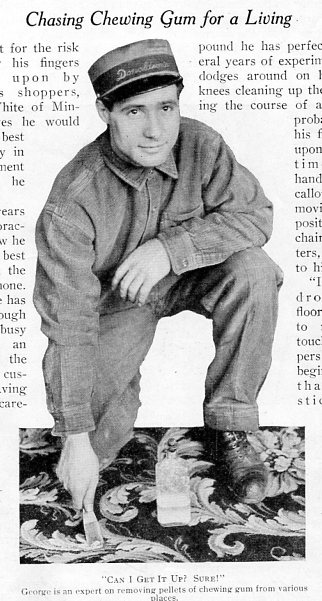
    Which brings me to this article on Minneapolis’ George White, who was a professional bubble gum scaper. “White chases the trodden sticky pellets [“quids’] from morning to night” says the writer of Illustrated World‘s “Little Oddities of Life” columnist in their August 1916 issue. 

    Gum647

    Mr. White took his job seriously, devising his own solutions to loosen the gum, and his own brush. 

    And of course he wore a cap. 

    Just because someone is a scraper doesn’t make them a scrapper–not that there’s anything wrong with that, either.

    ·Posted by :

    ·in:

  • A Note on Sharp Turns

    JF Ptak Science Books   Quick Post

    THere is just something very offputting about sharp turns made by unusual things in unnatural settings, a sort of unwanted geometry applied to unneccesary objects found in cringing and chaffing places. 

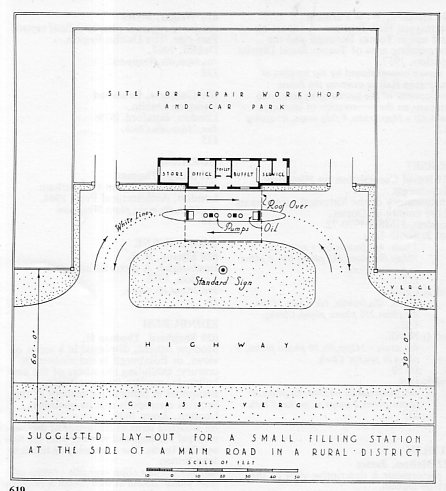
    For example–this image of a ship steaming in for a roudn of reapirs as though it was coming into a first-decade strip mall seems to have a frightful sesnse of wrongness to it.  Not to mention that it seems a little impossible for the ship to have made those four turns to get in/out of the “car park”. 

    Devon657[Source: W.H. THomspon, Devon. A Survey of its Coast, Moors, and Rivers with some Suggestions for their Preservation, London, 1922.]

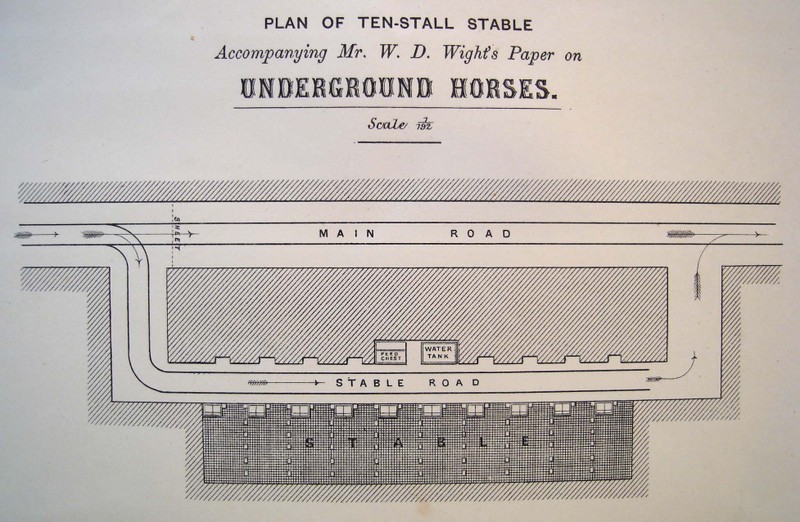
    This reminds me very much of an earlier sharp turn found in an 1875 engineer’s drawing (“Plan of
    Ten-Stall Stable….for W.D. Wight’s paper on Underground Horses”)–and
    yes indeed these were horses kept underground, used for hauling the
    heavier wagons (on tracks) of whatever, brought out to these larger
    chambers by men doing the same work with lighter loads in smaller areas.  (There’s more on this in an earlier post on this blog, here.)

    Underground horsdes
    Obviously there is nothing but everything else in the very wide world of the history of sharp turns–these two just happened to come together fo rme, and looked very similar in their own ways. 


    ·Posted by :

    ·in:

  • The Grand Luxe of Candy Stores

    JF Ptak Science Books  Quick Post

    1blogsept_23_candy_cvr649

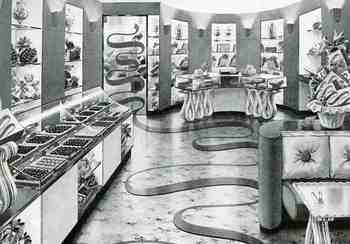
    Well now–this is a candy shop

    It is positively dripping with evil,  its luscious display  in a soft pre-chewed-like environment, as in a chocolate dream in someone else’s head.  (Chocolate dreams are good to have, just ask poor old dead Hans Sloane, the man whose chocolate-based fortune and bequest formed the basis of the British Museum.)  The ribbon design in the floor continuing up the wall just past the display is an invitation to getting totally lost in sugarly beauty, a swirling trail to a confectionary Ravena.

    1blogsept_23_candy_cvr648

    All of these images come from the pamphlet published by the Associated Retail Confectioners of the United States:  Meet the Foods Candy is Made Of, made to accompany their annual meeting of 1946 at the Drake Hotel in Chicago.  (There must’ve been an awful lot of these folks to book the Drake.)  The cover does seem somewhat on the desperate side, trying to convince anyone who would have a look that candy–since it is made of all that good looking stuff–was indeed FOOD (“no wonder candy is so good to eat!”)

    1blogsept_23_candy_cvr647

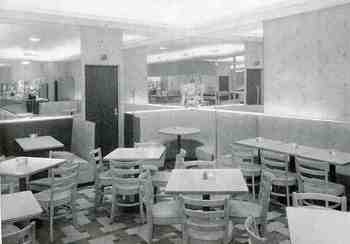
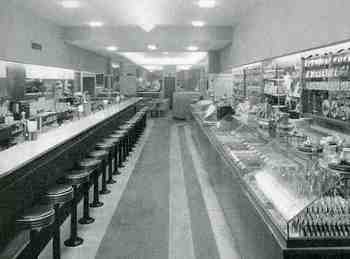
    The next image is the “Table Service” area of Wieda’s Incoporated, (a fine, large candy store in Patterson, New Jersey) , “located in the rear”, where I guess the serious stuff is done, when you needed a table to consume your goodies with a wholesome cup o’ Joe.

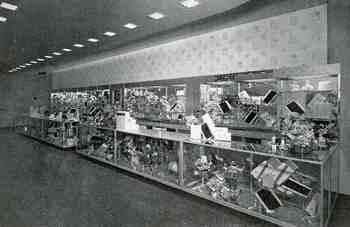
    The third image is again from Wieda’s–perhaps a little bit of payoff to Mr. Wieda for his (presidential) service to the association.  The black and white image does absolutely nothing to address it fabulously colored interior, with its lemon yellow ceiling, with the upper walls and curtains a burnt orange and the lower walls “a soft light green”, all surrounding a terrazzo floor of maroon and gray.  The woodwork was all walnut, and the mirrors were “tinted flesh color, which is more flattering to the customer than the usual untinted mirror”.  Oh my.

    1blogsept_23_candy_cvr646

    There was all sorts of information-sharing in the conference, evidently:  the best way to package and display candies, convincing mothers that candy was “food” after all and good for the kids, packaging candy so that it appealed to children, wrapping candy around other small gifts and trinkets, luring the customer into the candy store with more elaborate displays to pull you deeper inside, and so on.  There was allot of thinking going on here about sweets, which seems pretty inconsequential until you think about the fortunes made by Hans Sloane and the Wrigleys and Mars, especially with the later too, what with the gum company being purchased by the Mars family for billions of dollars–which is a lot of money for gum, which of course is hardly a candy.

    In any event these stores are just gorgeous, and gorgeous in a way that their gorgeousness can never again be achieved–and I’m not sure why.  Maybe its because I’m not wearing one of those fabulous double-worsted suits that Bogey used to wear, not that he’d be found in one of these places.

    1blogsept_23_candy644

    ·Posted by :

    ·in:

  • Empire of Earth

    JF Ptak Science Books  Post 2099  
    Follow Me on Pinterest

    Part of the series on the History of Blank, Empty and Missing Things.

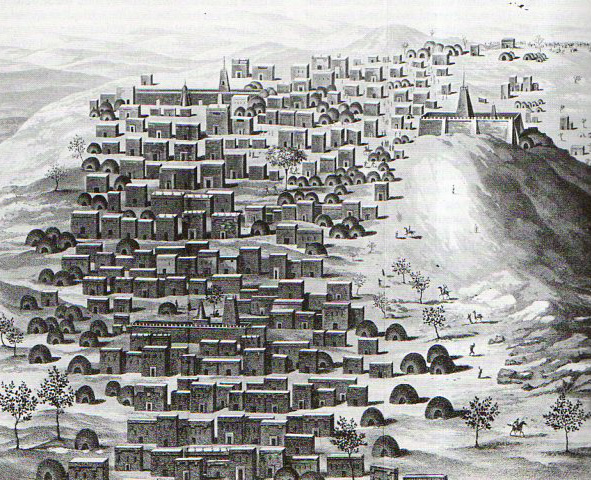
    Timbuktu, “a mass of ill-looking houses built of earth”–Caillie, 1830, volume 2, page 45

    Architecture indigernous669
    Of the many legends of the hypnotizing idea of the city of Timbuktu none illuminated the place as a city of earthen structures.  It was long a center of trade, located on the outskirts of the Sahara and just north of the Niger, with settlement in modern times reaching back to the 12th century, though there were settlements pre-dating this period by centuries. In any event, it was an unreachable place for the Western mind even though in Africa it was a hub of activity for trade in salt, gold, ivory, and slaves–and scholarship.  There’s a reason for people nowadays referring to distant/far-removed/inaccessible places as “Timbuktu”–and that’s because before the 19th century, it really was vastly inaccessible. And so the rumors of vast wealth and mystery wove their way into whatever little fabric of truth existed for the place. 

    Europeans were enormously desirous of real information about Timbuktu–the French government offered 10,000 francs to the first explorer to see the place, and live.  That person turned out ot be Rene Caillie, an exploring son of a baker, who made his way there after much adventure in 1828, and published his saga two years later.1 His report was not one of the expected golden mystery, but of a long-established town of antiquity and earthen hurts. 

    The image above comes from his 1830 work, and is remarkable–it is beautiful, and evidently accurate, if not very dramatic or fulfilling of floating expectations. It was truthful.  And unexpected. 

    • Caillié, René (1830), Travels through Central Africa to Timbuctoo; and across the Great Desert, to Morocco, performed in the years 1824-1828 (2 Vols), London: Colburn & Bentley. Google books: Volume 1, Volume 2.
    • Caillié, René (1830), Journal d’un voyage à
      Temboctou et à Jenné, dans l’Afrique centrale … pendant les années
      1824, 1825, 1826, 1827, 1828 … Avec une carte itinéraire, et des
      remarques géographiques, par M. Jomard. (3 Vols)
      , Paris: Imprimerie Royale. Gallica: Volume 1, Volume 2, Volume 3. Google books: Volume 1, Volume 2, Volume 3.
  • The Closeness of Mining–Above-Ground

    JF Ptak Science Books   Post 2100

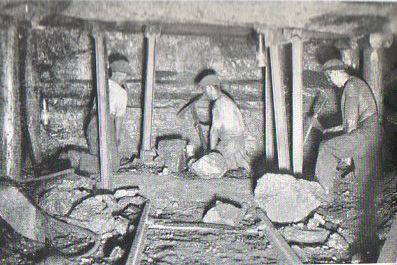
    There is no doubt that Mining672the working life of the miner was and is a very dangerous, incredibly demanding job.  Written descriptions and engraved and photographed and film images all will very quickly and profoundly depict the very demanding physical, psychological and medical demands that are made on the miner.  (Perhaps one of the most demanding accounts of the life of the miner is told by George Orwell in his The Road to Wigan Pier, which I quote from in an earlier post to this blog, here; see also an associated post on Welsh mining boys, also drawing on Mr. Orwell, here.)

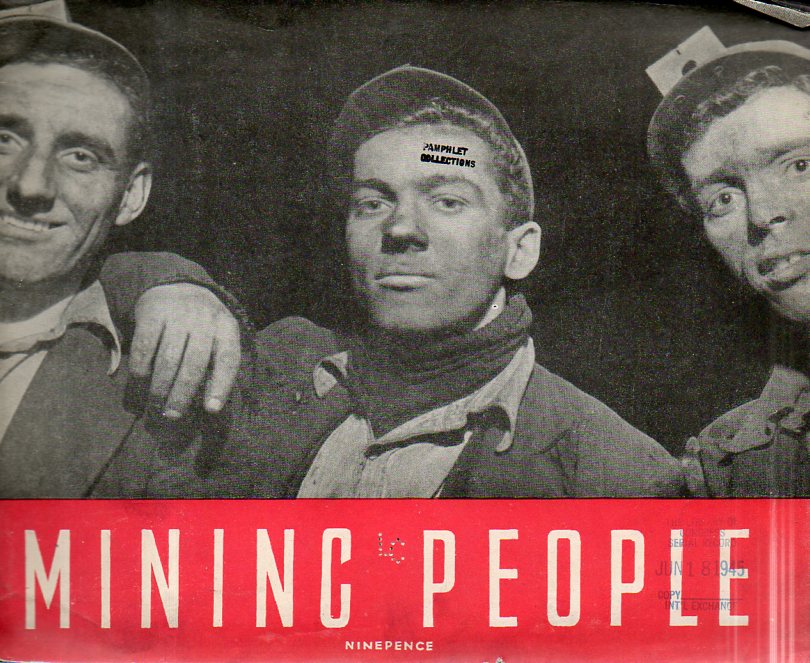
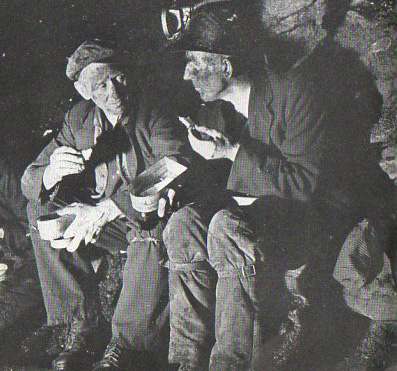
    Even in a sympathetic publication like Mining People–published by the Miners’ Welfare Commission in 1945–the idea of crushing proximity and indomitable closeness is present in almost every image, including those that have nothing to do with actually being underground.

    There are a few images of miners at work, like so:

    Mining673
    And so:

    Mining674

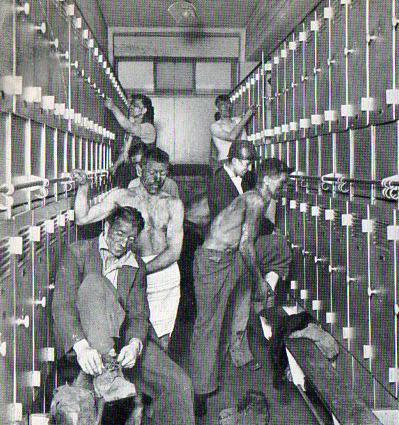
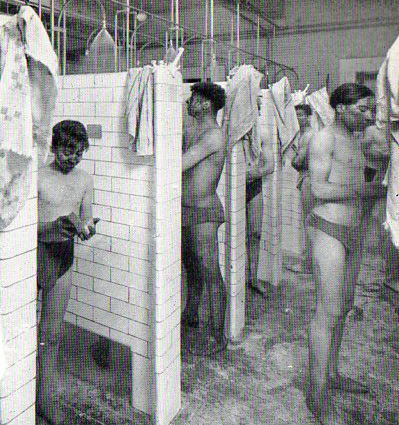
    These would hardly have been investigative-style photos as the pamphlet was trying to sell certain ideas of the mining union for self-care and preservation, so I am guessing that the photos would be no more than “average”.  The odd bits come from the photos of miners out-of-the-mines, because there is no mistaking the extreme closeness of these men to one another in places where that didn’t necessarily have to be the case.  The locker room, for example, looks compact and tight, and unnecessarily so–I mean, why have men be compressed together in a changing room after having just spent 10 hours underground in tight and bunched quarters? 

    Mining676Since this was basically a trade publication extolling good works with union dues money, perhaps this locker room is an improvement–still, there are two sets of lockers that are about five feet apart, with two benches that seem to be no more than six inches wide.

    After sending men down into the mines to work all day it seems that the least that could be done would be to allow a wide enough space to allow for people to sit moderately comfortably.  The six-inch bench really bothers me.

    Mining677
    Perhaps these showers were luxurious by those provided by other mines–perhaps other mines didn’t even have showers for the miners.  But again it seems to me another very cramped scene (and this one with the lead figure being a young boy).

    AS I said, perhaps these after-work images were scene of comparative luxury.  The degrees of cramped closeness though are inescapable. 

  • Finding Normal, USA

    JF Ptak Science Books   Post 2101

    Normal
    As a part of my semi-developing History of Normalcy, I decided to see if I could find a place in this country that was “normal”–and indeed, I found one.  Several–quite a few, actually, Normal and Normals and Normalcies, enough for everyone.

    Here’s one–Normal, Illinois.  (Population, 40,000, 1990), in Normal Township.  There’s also Normal Township, in North Dakota. And one in Alabama.

    And the town of Normal (Kentucky) and Normal (Tennessee), Normal Hill and Normal Landing (Louisiana), Normal Park (Nebraska), Normal Square (Pennsylvania), and Normalville (Pennsylvania).

    Normal may or may not be a desirable thing; if it was a model thing, there is also a place called Model (in Colorado). On the other hand although there are a number of “normals”, there are no places called Average, or Mean, or Natural, or Regular, or Typcial. 

    Outside of the normals, perhaps on the more combative end of normal, there are places identified called Troublesome (Colorado), Truthville (New York, Washington County), and Halfway (Georgia, Lumpkin County); there is no place called hell, though there is a Heaven(er) (Kansas). 

    Oh–and there is a Standard City, Illinois.


  • Wake Up and Sleep! Riding Ether Waves to Bigger Brains, 1938

    JF Ptak Science Books   Daily Dose from Dr. Odd

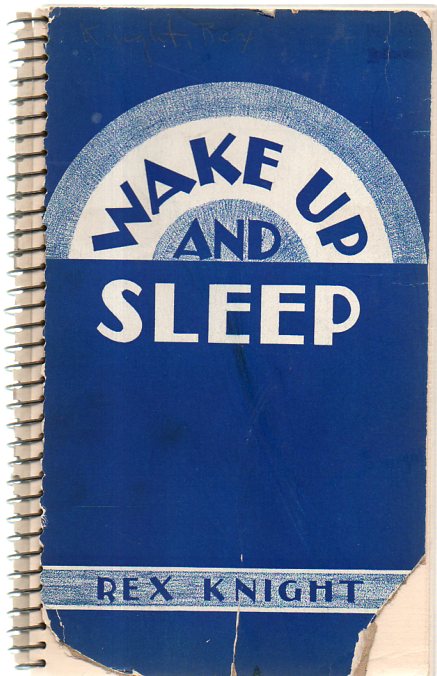
    Wake up and sleep679

    Q: What is the one sure thing that is very impressive about this publication by Mr. Rex Knight?

    A:  The 35-ring wire binding on a six-inch tall publication. There’s not much to recommend itself to recommendation and memory. 

    Wake up and sleep681
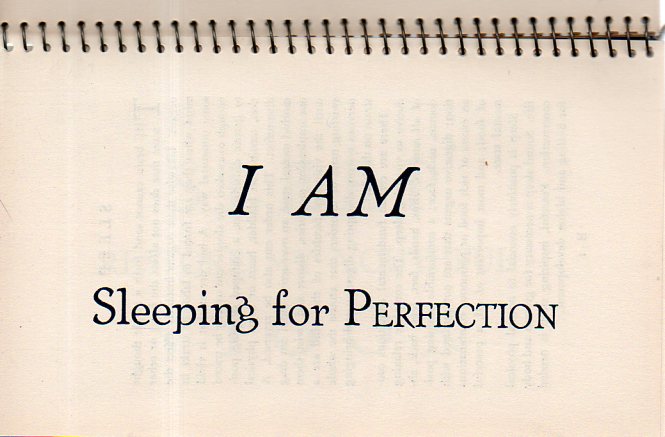
    [Perfection had better hurry up and get here given my own fast-short-sleep habits]

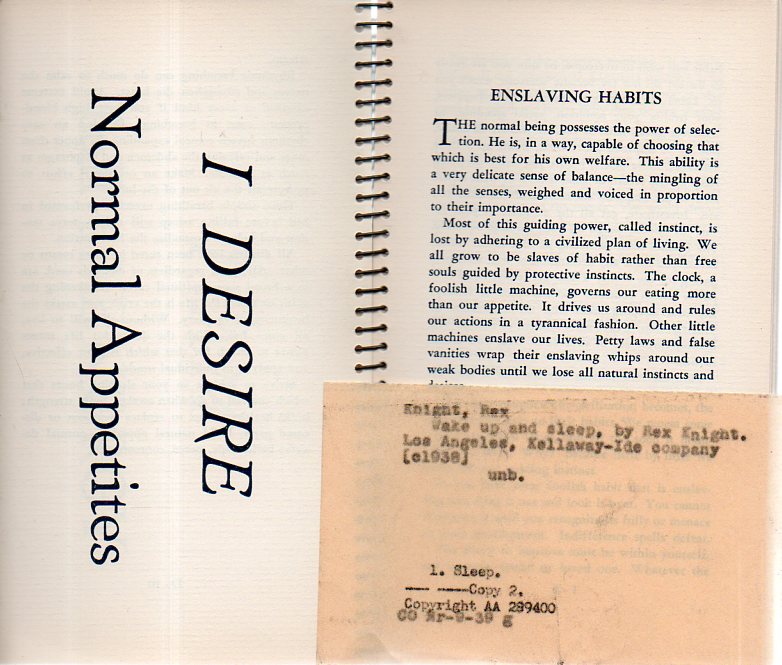
    Mr. Knight had some ideas about sleep and well-being and achieving various states of normalcy and perfection, most of which had to do with waking up during hte night and staring at one of the many full-page neuro-demands which evidently were in direct confrontation with whatever it was in your head that was keeping you from success and strength and wealth and inspiration and self, combating “enslaving habits” and “lesser habits” by telling the brain what to do with the mind.  Or something along those lines.

    Wake up and sleep680
    In any event, Mr. Knight tried something out and used a lot of wire to bind the really rather nice paper his effort was printed on, so Wake Up and Sleep had at least that going for it.  Aside from that, his suggestions seem more disruptive and potentially rheumy-eyed more than anything else, waking you through the night to hand deliver messages to your sleeping and semi-enslaved brain to find its own appropriate “wave” to enrich your life.  “The prize idea that you seek is in the air all around you”, he writes.  “Ether waves, mental waves, cosmic or whatever you choose to call them, are everywhere.  All you are trying to do is to get tuned in on the right wave”. 

    “Expect more and more of sleep” says Mr. Knight–at least that is one remedy that would sound good to almost everyone. 

    It is interesting to note that “Rex Knight” is very close to being “Rx Night”.  And “King of the Night”.

    Lastly, according to WorldCat, there is only one copy located in libraries worldwide–that at NYPL.  My copy was from the copyright office/collection at the Library of Congress when it came to me in a Very Large Grouping (called with little imagination “The Pamphlet Collection”) many years ago.  It never was a hit for the libraries.


  • Some Great First Lines in Literature

    JF Ptak Science Books   Quick Post

    • I put these together a while ago, and then didn’t do anything else with them.  I’m not sure what I was up to, so I’m posting what I have, simply because it is a niuce read.   A Tale of Two Cities is still a stellar entrance.

    All
    children, except one, grow up. Peter Pan

    In
    an old house in Paris that was covered with vines lived twelve little
    girls in two straight lines. Madeline/Bemelmans

    The
    Mole had been working very hard all the morning, spring-cleaning his
    little home.Wind in Willows/Grahame

    In
    the great green room, there was a telephone and a red
    balloon.Goodnight Moon/MW Brown

    Alice
    was beginning to get very tired of sitting by her sister on the bank,
    and of having nothing to do: once or twice she had peeped into the
    book her sister was reading, but it had no pictures or conversations
    in it, “and what is the use of a book,” thought Alice
    “without pictures or conversation?” Alice in Wonderland


    ·Posted by :

    ·in:

  • Hidden Scenes of The Last Supper within The Last Supper

    JF Ptak Science Books    A catalog entry for the Museum of Imaginary and Impossible Things

    The History of Miniature and Sub-miniature
    Recurring Last Supper Images in the Images of the Last Supper

                                           The Scrote Collection

    Barent Scrote (1835-1940) , founder and
    self-scion of the TumLand Cattle Company of Bnillings, Montana, began
    collecting images of The Last Supper following his
    near-death-near-starving experience in the great Mountain Freeze of
    1883. Finding the images “calming” and “filled with food”
    and “complete with knives” Scrote managed to accumulate 610
    paintings of what many consider and believe to be a sacred scene. The paintings were of varying talents and articulated non-artist
    copiests, but they were all, indeed, old.

    Following the killing
    winter of 1886 Scrote lost most of his cattle and changed his
    interests to sheep, also changing his collecting habits from The Last
    Supper
    to Implements of Eating Used in the Last Supper.“My
    narrow interests narrowed, and the entire scene became less
    interesting, so I focused on the table, until the table itself became
    boring…that’s when I became interested in the utensils” (this from
    the unpublished memoirs of Barent Scrote at the American History
    Center of the University of Montana, Billings).

    The extraordinary
    development within the subcategorization was Scrote’s enormous
    discovery of separate, single, miniature, stand-alone duplicating
    images of The Last Supper found within the very painting of The Last
    Supper
    . Scrote discovered the dual images of the great event while
    microscopically surveying the roughly one acre of table-tops that are
    represented in his Last Supper Collection. Though most of the
    images were extremely difficult to recognize, some were bafflingly
    obvious but unrecognized. On display in the museum is  one of Mr.
    Scrote’s most prized possessions, the
    Horror
    of the Obvious Duplicating Last Supper

    engraved by Boot Day in Amsterdam in 1724. “It is magnificent to
    see the secondary Supper in its obviated presence and invisible
    glory, having stood the test of standing time, being unrecognized as
    a duplicating Last Supper for 350 years. It is a triumphant feeling,
    sometimes, to make a discovery in the obvious”.

    Mr. Scrote wrote sparingly
    and convincingly of his discovery and observations, including, for
    example:

    • “Dual Nature of
      Miniature Last Suppers with the Last Supper (Major)”, in Horn n’
      Rip Magazine, a Magazine for Readers
      , vol 2/1, pp 1-3, Helena,
      Montana, September 1890.
    • “The Case of Missing
      Table Ware in Dual Mini Images of the Last Supper…SOLVED”, in
      Wrting and Writing, vol 2/2, pp 23-24, Billings, Montana,
      August 1891.
    • “Microscopiscal
      Semiworlds of Newly Discovered Third Dual Mini Last Suppers in the
      Works of Herrn Pieter Doeshc of Vleland, the Netherlands”, in “My
      Own Writing
      ”, Silver City, New Mexico, vol 1/1, pp 1-2.
  • Found-Word Bibliopathology Poetry

    JF Ptak Science Books   A catalog entry for the Museum of Imaginary and Impossible Things

    Poetry from Found-Wordist and Book Pathologist Mr. Ignatio Norme

    [This description appears on pages 67-69  of the guide to the G.R. “Joe” Gebors Museum of the Imaginary and the Impossible.* The physical location of the collection is just south of Savannah on Tybee Island, Georgia.] 

    • Catalogue #156.2  Received by Museum:  19 September 2006.  Originator:  Mr. Ignatio Norme [b. Boston, Mass, 1923; d. Hyannis, 25 January 1988.]

    Short Description: 

    Ignatio Norme, Found-Wordist and Page Number Collector (Boston, Mass.; 1923-1988)

    The man who found obscure phi-related connectivity between random word placement, page number and the poetic ideal.

      0-blog-nov-20--norme-cvr


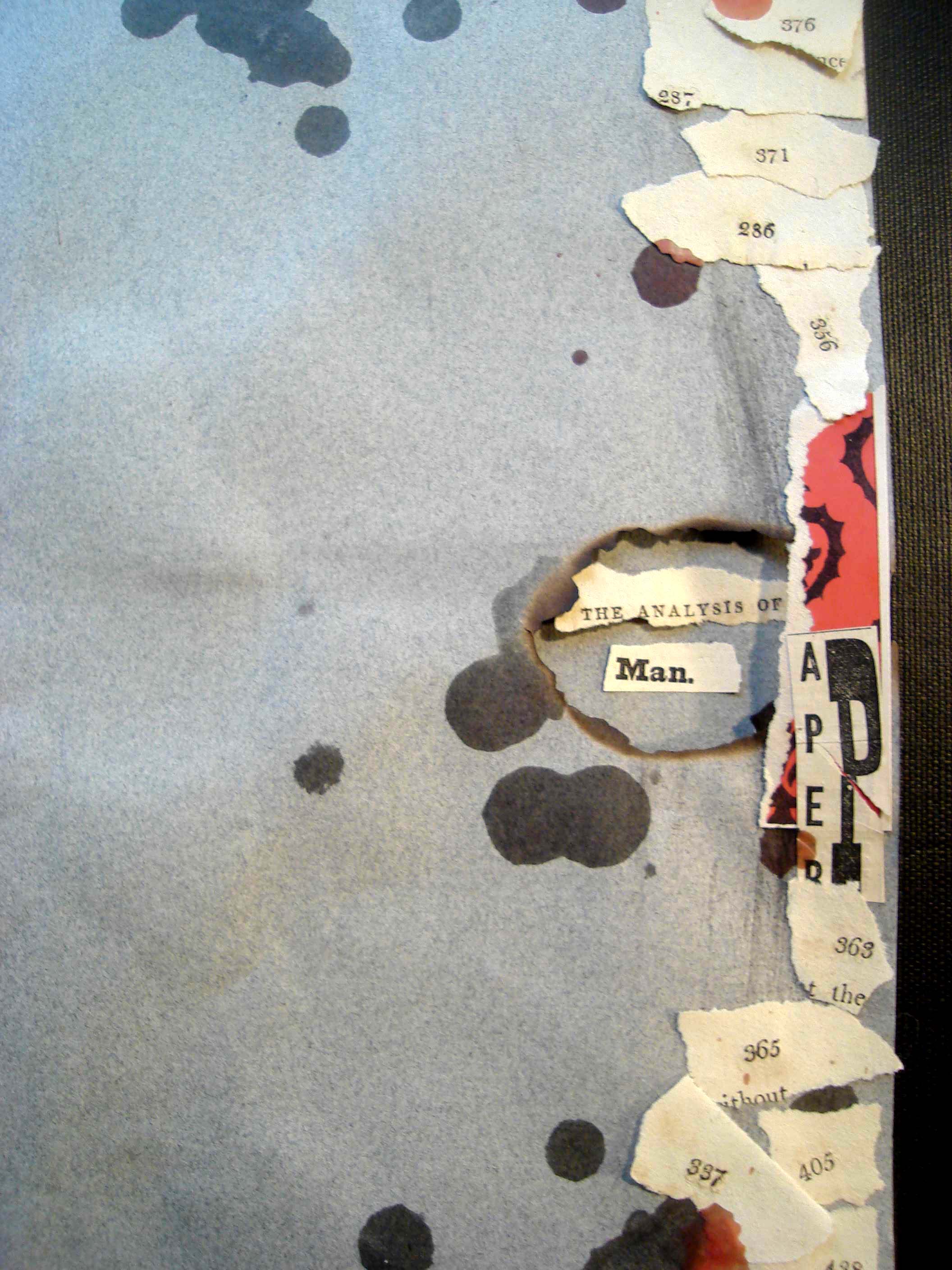
    Mr. Norme’s work first came to the attention of the literati in 1952 when Dallas Headman of Case Western described it as “a unique approach to approaching uniqueness”; this would be the only phrase ever used to evaluate Norme’s efforts in every review from 1922 to 1975, when his work stopped being noticed.  In a spectacularly prolific career Mr. Norme produced some 8,000 poems, most of which were produced on broadside sheets of paper or on large pieces of wood.  The combination of the materials of production and the many tens of  thousands of books led to Mr. Norme’s house being an internal castle, letting in neither visitor nor light, a friendly singularity for his pursuit.  As his utilities and taxes were paid decades in advance, Mr. Norme’s death, and the discovery of his corpse, was not discovered until 2005, seventeen years after his passing.


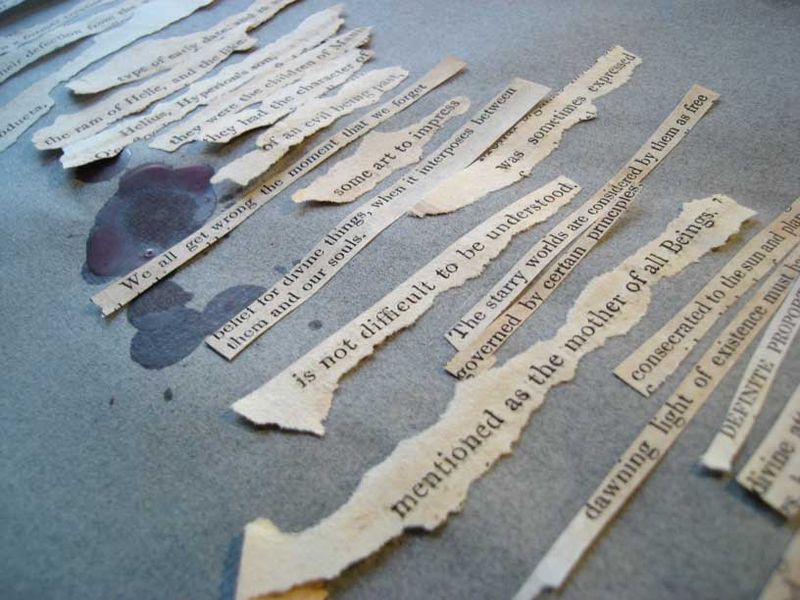
    According to his unpaginated journals, Mr. Norme’s pattern of poetic creativity and discovery involved removing all page numbers from the book he was reading and then choose a number of the “poem lugs” at random.  He would then reverse the number, go to that page of the book, and then add the page number and go to that line of the book, and tear out the number of words as indicated by the page numbers ending numeral.  The bits would then be assembled, and the page numbers glued to the walls of his house.  (We estimate that there were some 60 million page numbers glued to all surfaces of Mr. Morme’s home.  The house itself has been purchased by the Museum of American Art, a full room of which will be on display in that museum’s Outsider Art collection in the Henry Darger wing.)


    Weltin--norme 

    Mr. Norme found poetry everywhere he found it, seeing in the simplest verb the most compound noun; even when the poetry seemed not to find an external logical sensate, the internal phi-correlated word relations played in the mind behind all phases of knowledge, an unheard neuro-music that encapsulated the idea of unknown “correctness” in the vision of the poem.

Recent Posts

Archives

Categories