JF Ptak Science Books Post 2099

Part of the series on the History of Blank, Empty and Missing Things.
Timbuktu, “a mass of ill-looking houses built of earth”–Caillie, 1830, volume 2, page 45
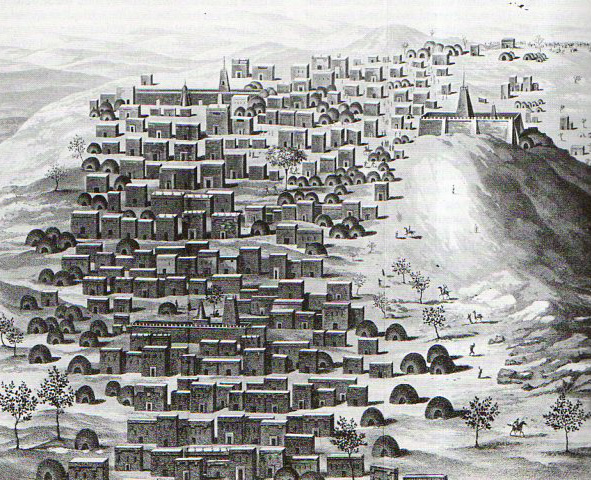
Of the many legends of the hypnotizing idea of the city of Timbuktu none illuminated the place as a city of earthen structures. It was long a center of trade, located on the outskirts of the Sahara and just north of the Niger, with settlement in modern times reaching back to the 12th century, though there were settlements pre-dating this period by centuries. In any event, it was an unreachable place for the Western mind even though in Africa it was a hub of activity for trade in salt, gold, ivory, and slaves–and scholarship. There’s a reason for people nowadays referring to distant/far-removed/inaccessible places as “Timbuktu”–and that’s because before the 19th century, it really was vastly inaccessible. And so the rumors of vast wealth and mystery wove their way into whatever little fabric of truth existed for the place.
Europeans were enormously desirous of real information about Timbuktu–the French government offered 10,000 francs to the first explorer to see the place, and live. That person turned out ot be Rene Caillie, an exploring son of a baker, who made his way there after much adventure in 1828, and published his saga two years later.1 His report was not one of the expected golden mystery, but of a long-established town of antiquity and earthen hurts.
The image above comes from his 1830 work, and is remarkable–it is beautiful, and evidently accurate, if not very dramatic or fulfilling of floating expectations. It was truthful. And unexpected.
- Caillié, René (1830), Travels through Central Africa to Timbuctoo; and across the Great Desert, to Morocco, performed in the years 1824-1828 (2 Vols), London: Colburn & Bentley. Google books: Volume 1, Volume 2.
- Caillié, René (1830), Journal d’un voyage à
Temboctou et à Jenné, dans l’Afrique centrale … pendant les années
1824, 1825, 1826, 1827, 1828 … Avec une carte itinéraire, et des
remarques géographiques, par M. Jomard. (3 Vols), Paris: Imprimerie Royale. Gallica: Volume 1, Volume 2, Volume 3. Google books: Volume 1, Volume 2, Volume 3.