JF Ptak Science Books Post 2128 
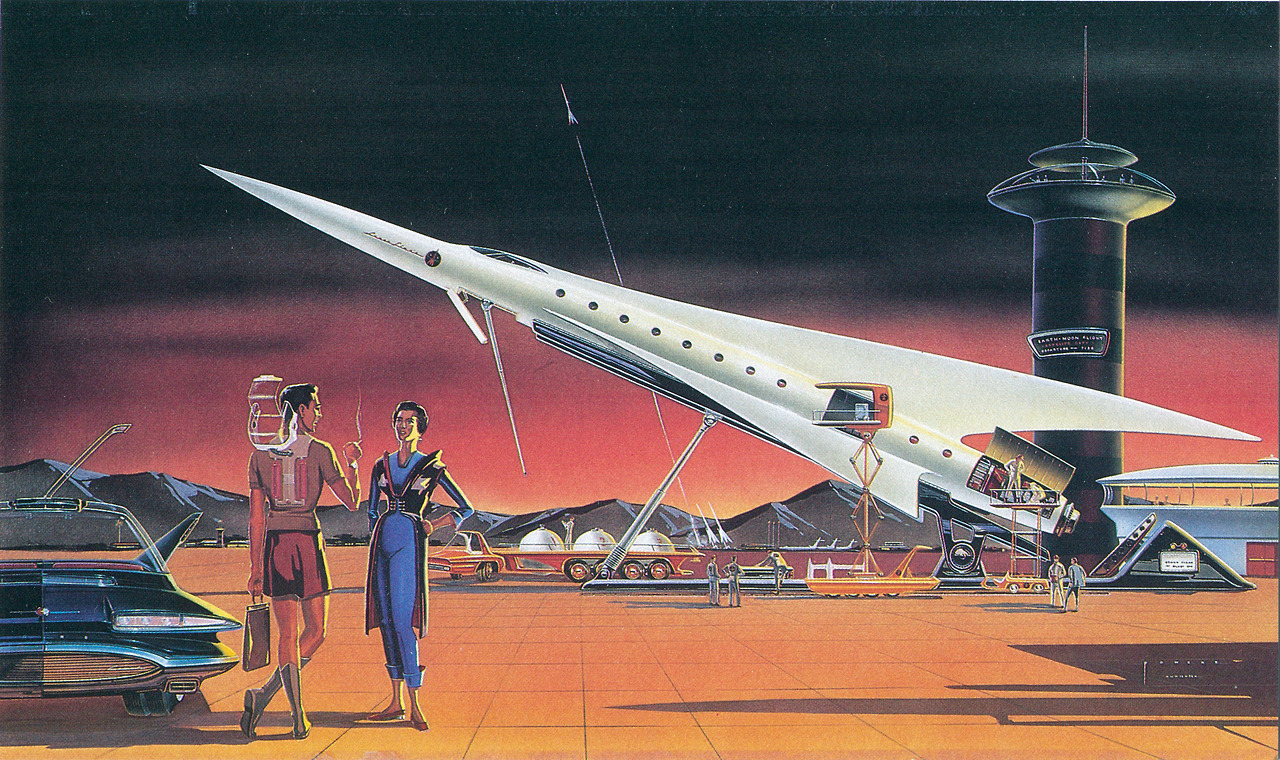
There are different types of mystery as any quick look at Medieval legacies will tell you. Some are mysterious mysteries never meant to be understood outside of obliqueness given their allegorically ambiguity, and some are just, well, different, but answerable.
The history of the future lends itself a little to the Ecclesiastical (or first) sort of mystery as just described–sometimes, anyway. Sometimes looking at an imagined future drawn years ago for a period of time that has already passed may lend itself to some fair-game comedy. But getting things “right” as a futurist/illustrator may be quite beyond the point, as with the example above, drawn by Jim Powers.
Being furiously correct was not the point Powers was trying to achieve. TO me he was drawing to a certain deep sight, presenting an allegory of possibility, trying to excite some interest in speculation in someone by elements of what he was drawing, not in the overall image.
In the alphabet of ‘RAMAS, perhaps the most famous of them all is futurama, which (real or imagined) is part of the continuum of motoramas version of raceoram’s spaceorama. It was in this envelope of futurama that Jim Powers worked his mysteries in a series of images for Life in the Year 2000, laboring away at insight in the mid-1950’s. Surely he could0 not have believed in these rocket-stuffed ultra-streamlined mega-finned interplanetary autos would come into being in five decades, but I’m pretty sure that he believed that somewhere in the details of his work were useful bits/ideas for someone else. Surely he did not think that the overall vision was more significant than the sum of all of his very interesting parts.