JF Ptak Science Books Post 2121 Part of the series, a History of Blank, Empty and Missing Things

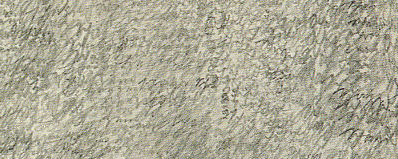 This is a detail from an image of great hope lost. Here’s the full picture, one of many, of hundreds like it:
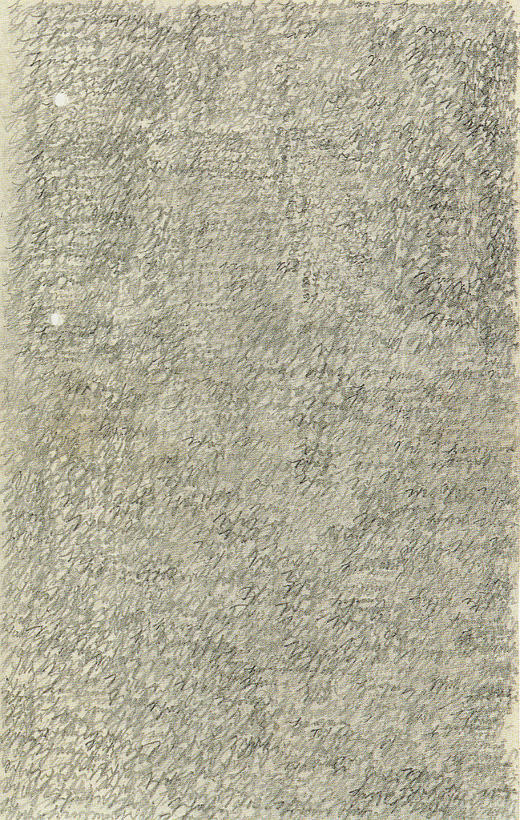 This is a letter from a woman named Emma Hauck, a “pateint”, a committed person, in an asylum for the “fatally” insane, a schizophrenic, an incurable who simply wanted to go home. She was not insane enough to know where she was, not insane enough to not want to get out, not insane enough to know that she was in desperate straights, not insane enough to try to get some help. Emma Hauck wrote letters to her husband, Mark. Mostly, the letters were composed of single words (like “kommen, kommen”, “come/come” and “Herzensschatzi komm” or “sweetheart/come”) written concisely and tightly, over and over again, layers of kommen/kommen, so many that there is a geology of letters, though there is no geologist.
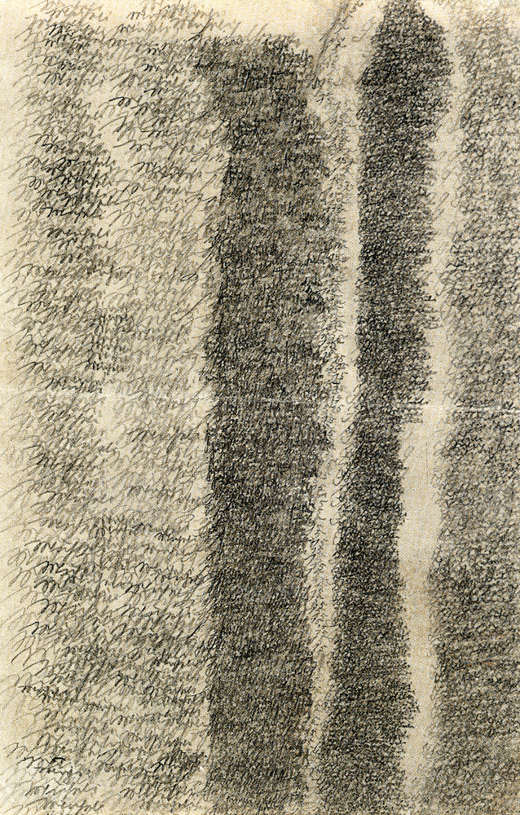
The images appear in the book and collection of psychiatrist and art historian Hans Prinzhorn (1886-1933), in his Bildnerei der Geisteskranken: ein Beitrag zur Psychologie und Psychopathologie der Gestaltung1, which was published in Berlin in 1922. Prinzhorn was among the first in his profession to study the art of the insane, and to use it in diagnosis. In the meantime, over dozens of years, he accummulated a collection of thousands of works of art (many coming when he was an assistant to Karl Wilmanns at the psychiatric hospital of the University of Heidelberg), most of which are housed today in the Sammlung Prnzhorn (UniversitätsKlinikum Heidelberg, here).
The Emma Hauck images are astounding, and deeply private, communicating hope and despair in an illegible performance. Letters sent in hope to her husband to come and save her; letters which were never sent.
- Source: Heidelberger historische Bestande And also, Letters of Note blog