A Daily History of Holes, Dots, Lines, Science, History, Math, Physics, Art, the Unintentional Absurd, Architecture, Maps, Data Visualization, Blank and Missing Things, and so on. |1.6 million words, 7500 images, 4.9 million hits| Press & appearances in The Times, Le Figaro, Mensa, The Economist, The Guardian, Discovery News, Slate, Le Monde, Sci American Blogs, Le Pont, and many other places… 5000+ total posts since 2008.

  • Capt Quantrell and his Murderous Raiders Defeated by Flowers, 1863

    JF Ptak Science Books   Quick Post
    Quantrell070

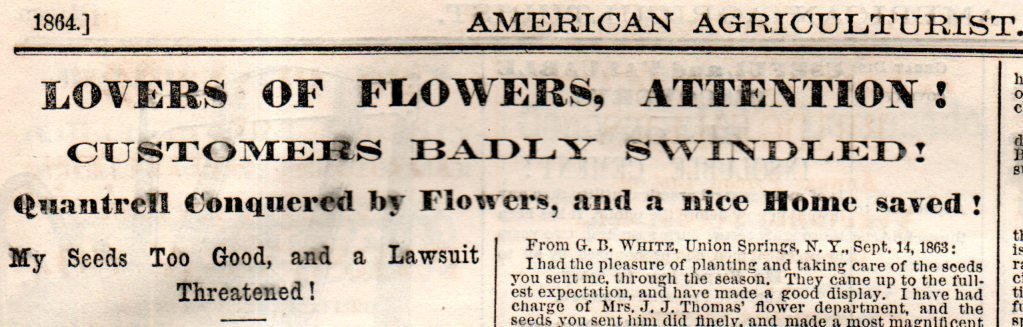
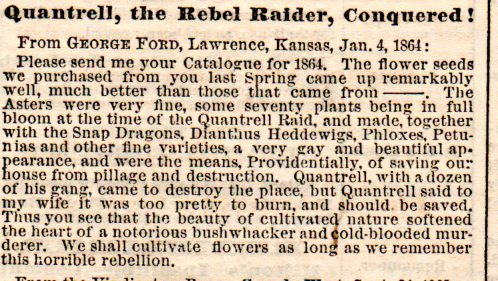
    I found this unusual heading in a half-page ad in March 1864 issue of American Agriculturalist for the Farm, Garden, and Homestead–as it can well be imagined it stopped me pretty quickly, if for no other reason than to make certain that the heading was correct.  And it was.  The seed manufacturer, James Vick (from Rochester NY) in the midst and throes of other oddness reprinted a letter from a correspondent named George Ford, who was writing from Lawrence, Kansas, about his experience in that town in 1863, and Quantrell, and (maybe bu tmaybe not) Vick’s flowers.  
    Quantrell071

    Capt William Clarke Quantrell–a sociopath who led a group of avengers and bushwhackers and various sorts of murderers and guerrillas in service of the Confederacy–was in Lawrence in 1863 committing acts of vengeance and murder against its citizens.  Mr. Ford expressed his admiration for Vick’s seeds and how lovely they were, and that they were responsible for saving his house from destruction by Quantrell.  It is  a remarkable thing to include in ad advert for flower seeds, closing in on the end of the war–it is also the only mention of the war for this issue and one of the few acknowledgements of it in this entire year.  

    Quantrell eventually pissed almost all of his men off, winding up with a dozen die-hards, and then in Kentucky and dead in June 1865, ironically and mortally wounded in a Union ambush.

    ·Posted by :

    ·in:

  • Gutenberg at the Remains of the Day

    JF Ptak Science Books   Quick Post

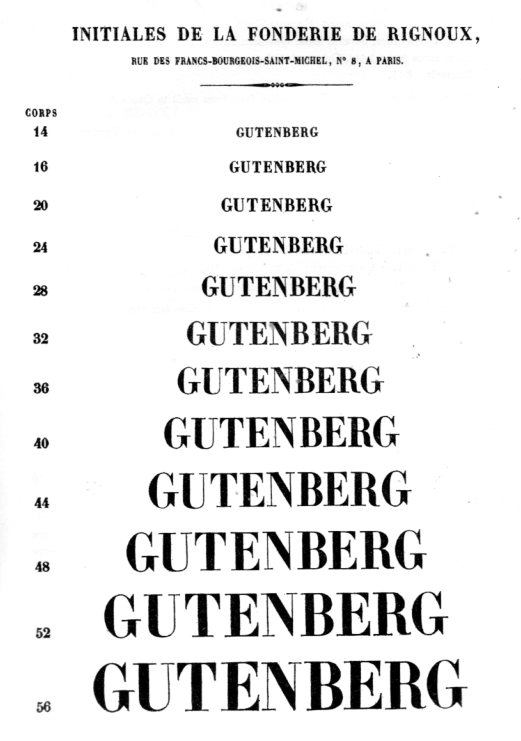
    Johannes Gutenberg just couldn’t last long enough to enjoy his vision.  His venture–or at least his end of it–went bust after his business partner filed for teh return of his investment, and Gutenberg, not having the cash and with proceeds from the sale of his bible being slower than expected (and so on), was forced to pay off the debt with his business.  He certainly got a lot of things right, and his vision was sound and accurate, but his financial planning was just not there.  He need some more money-room, as the introduction of movable type printing did not take off as quickly as he would have liked.  (THis is true even though it was widely recognized as a major achievement–it was just somewhat slow in taking footholds elsewhere.)  Plus, the Gutenberg Bible was an expensive thing, equal to the yearly wages of a skilled mason–had he invested more effort (and paper) into publishing more popular titles, he may have been much better off, and wouldn’t in the end wind up losing most everything, and broke.  

    Gutenberg078[Source: Gustave Silbermann, Album typographique, Strassbourg, 1840]

    He is hardly alone in the history of science and technology innovators/discoverers/inventors who thought that they could manage the business-end of their scientific/tech expertise.  Edison, Ford, Tesla, De Forest, Farnsworth–and I suspect an alphabet of other famous examples–all thought that hey could handle the transaltion of their discovery into the marketplace, but they couldn’t. (Edison and Ford had many more successes than failures, but they had a number of interesting/bizarre bad calls as well.)  

    Anyway, Gutenberg to me is a different case because he got almost everything correct, except for timing the money.  

    ·Posted by :

    ·in:

  • The Future of the Library, 1883–or, Paradise without Heaven

    JF Ptak Science Books   Quick Post
    Bush memex
    [Image: work station for Vannevar Bush’s visionary Memex machine, the grandfather of the intertubeweba nd hypertext. Source: http://etec.ctlt.ubc.ca/510wiki/Hypertext]

    Many have considered books and paradise and the ways to a great library and the correct books to read (and not read).  Seneca was convinced of the efficacy of book on a shelf and their being much like a family, and Erasmus and others believing in books as libraries within themselves but without walls, and of course Borges and the infinity of books exceeding the size of the universe, perhaps having him come to the conclusion that hi sheaven would be a book.  Thee are jusst a few examples of many–very few of all o fthese writers looked into the future at the book and the library.  There was Kurt Lasswitz’s 1901 novel The Universal Library (a source of inspiration for Borges’ later work, The Library of Babel which was written in 1941); there was H.G. Wells’ The Idea of a Permanent World Encyclopaedia and then the great Memex idea by the grandfather of the internet, Vannevar Bush, in As We May Think  which was published in The Atlantic in 1945. And of course Ray Bradbury’s Fahrenheit 451 and  Libraries of the Future by J.C.R. Licklider (1965) are also standouts.  Perhaps though the tandout in the practical and possible vision of teh future library was painted by Charles Cutter in 1883.

  • Beautiful Scientific Illustration Silhouettes (1931)

    JF Ptak Science Books  Quick Post

    Science silhouettes080

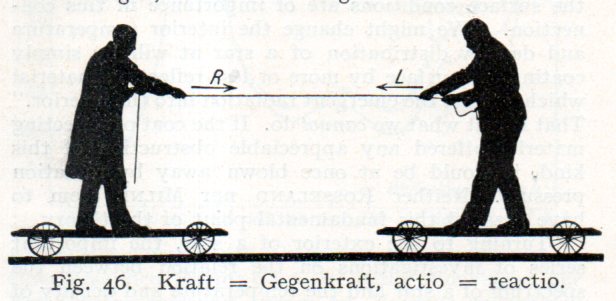
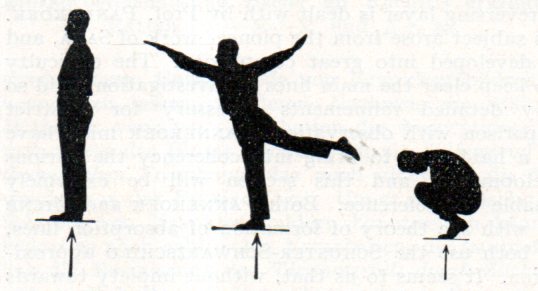
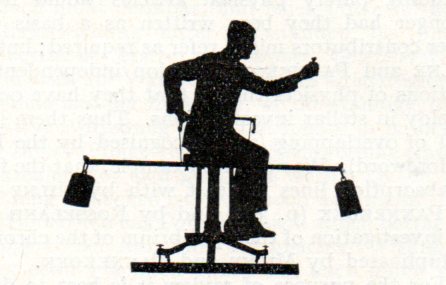
    In my experience of paying attention to unusual found-art found in unusual places, I have paid particular attention to found-art in the sciences that have full lives out-of-context of their text. [See the series  Unintentional Absurdist.] And so while reading through an issue of Die Naturwissenschaften (1931)  for an article by Herman Weyl (“Geometrie und Physik”) I found in its closing pages a review by Arnold Berliner of R.W. Pohl’s Einfuhrung in die Physik–complete with these three fantastic silhouette illustrations.  They’re simply beautiful things, exceptionally designed, simplistic but detailed and dramatic and way beyond what was necessary to illustrate the intended physical principle. It is a nice and unexpected artistic find.  

    Science silhouettes081

    Science silhouettes082

    ·Posted by :

    ·in:

  • Finding a Common Face in 1506

    JF Ptak Science Books   Quick Post

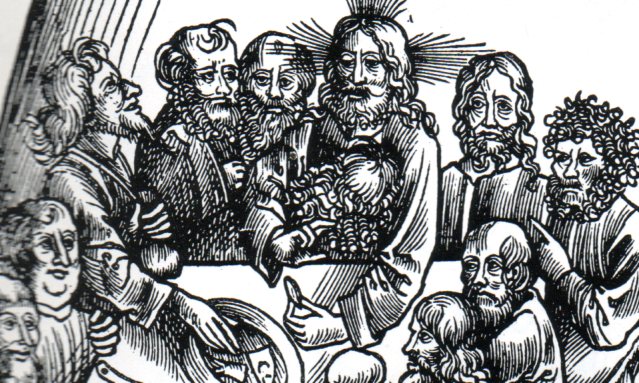
    The “thing” about Urs Graf’s art, for me, is the utter humanness of many of his figures–many of them, even the significant characters in his works, have a certain unexpected everyday quality to them, a common touch, right down to unruly Homer Simpson hairs on bald men, disciples or not.  

    Urs graf073

    This is a detail from Graf’s (1485-1527/9) Passionis Christi... which was printed in 1506, the date of which makes Graf’s achievement even more remarkable.  

    From Grove Art Online: Urs Graf  (b Solothurn, c. 1485; d ?Basle, 1527–9).

    “Swiss draughtsman, goldsmith, die-cutter, engraver, woodcut and stained-glass designer,painter and glass painter. He was the most original and gifted artist of the early Renaissance in German-speaking Switzerland. His highly imaginative drawings, created as independent works of art, are works of exceptional quality, vitality, expressiveness and often humour. For northern European art, Graf played an important role in the liberation of drawing from its traditionally subsidiary status as preparatory study for works of art in other media.”

    Here’s the full version of the print, showing the Last Supper and Christ washing the feet of the Disciples:

    ·Posted by :

    ·in:

    —
  • A Navajo Artist as a Reverse Outsider? (1889)

    JF Ptak Science Books   Post 2177

    Indian out083

    At first I though that this pamphlet was going to led us into a way-of-thinking, or sensibility, about aboriginal non-technical people thinking and relating mechanical and technical ideas.  I also thought it might relate in some way to the absence of the advanced Chinese civilization in the 17-19th centuries (for example) of drawing technical ideas in a standardized fashion, in perspective, which I thought was so well done in the West and which helped lead to the great scientific and industrial revolutions to come.  

    It relates to neither, but it does in a way tell us the story of an American Indian  artist from the 1880’s responding to outside influences in the Navajo world.    

    The paper is “A Navajo Artist and his Notions of Mechanical Drawing” by R.W. Shufeldt (1850-1934), which was published in the Annual Reports of the Smithsonian Institution for 1886 in 1889, and it tells the story of a remarkable artist who seems to have rendered great tech details from scant experience and deep memory. (Shufeldt, an Army surgeon ornithologist, and osteologist and some sort of highly questionable ethnologist, published this just before he was relseased from his Smithsonian duties for disgraceful behavior.  He abandoned wives, was an Indian graverobber, and other unsavory things, even while being the curator of the U.S. Amry Medical Museum.  He lost much of his vaguely-tempered appeal for what he regarded as “savage races” over the next decades, publishing The Negro, Menace to American Civilization in 1907 and America’s Greatest Problem, the Negro, in 1915. This in effect sums him up, and makes hm an early American version of Alfred Rosenberg-light, or at the very possibly least, a published racist of high order.1)

    The paper–coming right at the end of the Plains Wars and just a few years before the Massacre of Wounded Knee–treats it subject with great distance and superiority. The artist’s name is “Choh”, the son of Esta-yeshi, who was the older sister of “one of the best-known sub-chiefs of the Navajo Indians”, Mariano, who lived in “crudely constructed habitations” on the hillsides near Fort Wingate.  (The Fort was established near Gallup, New Mexico, in the early 1860’s to help control the Navajos to its north; from 1873-1886 it was used in actions to its south in the Apache Wars. At about the time the author of this pamphlet visited the Fort Douglas MacArthur was taking his first breaths.) 

    Choh’s face was disfigured by an incident when an infant, though as a young man of 22 or 23 in 1886 “he (was) by no means a stupid clown we would take him to be”.  


    ·Posted by :

    ·in:

  • Maps of Human Hair Streams (1902)

    JF Ptak Science Books     Daily Dose from Dr. Odd

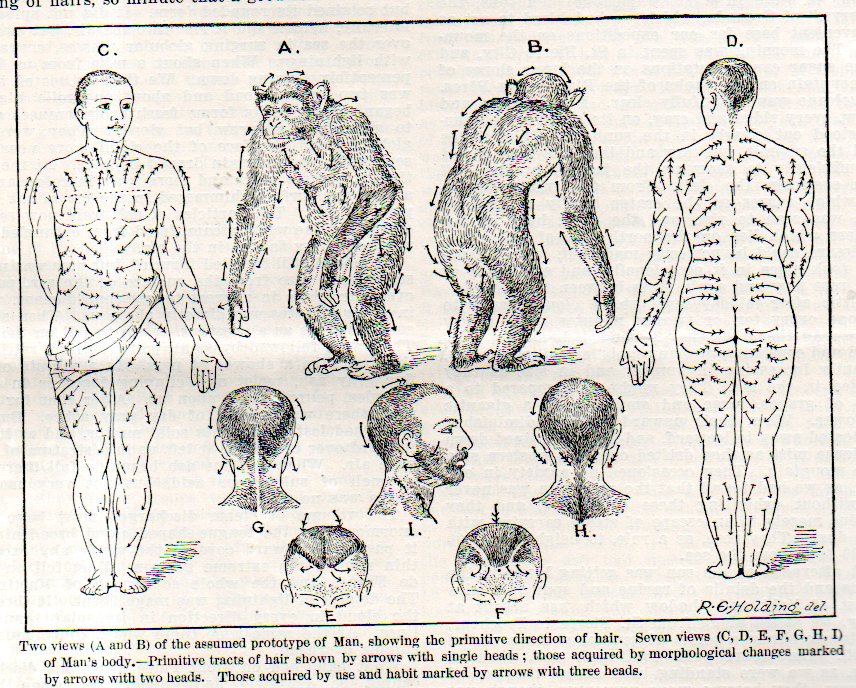
    There is something exceptional about the exceptional.  In this case, the category is maps, and in this instance the map that takes us away, far away, from the expected or standard is one showing the flow of human hair streams.  (It fits very nicely with other exceptional maps found on this site, like Maps of the Cosmos of Moles–just browse the “maps” section in the archives.)  

    Hair map contract087

     This unlikely title is the creation of Dr. Walter Kidd (Fellow of the Zoological Society, London) and his attempt to reconcile the the influences of gravity, inheritance, genetics, Weismannianism, and other assorted biological bits via his study of hair growth patterns.  The article appears in the (many) pages of the Scientific American Supplement for 13 September 1902, on page 22, 328. (Yes, the Supplement was paginated consecutively over dozens of years of publications, a cumbersome manner of ordering an 8-foot stack of paper over dozens of volumes.)  In any event, this was an article to simply explain some of Kidd’s ideas and the chart that would appear in a more lengthy treatise of 153pp published in the next year by Adam Black.  Contemporary views of Kidd’s book were not very supportive of his work.  I should add that I was attracted to this article solely for the possibility that this may well be the first map of directional hair growth. (I think the idea is pretty interesting, but I’m just not in the mood for it presently.)

    Hair map contract086

     Some of the other posts on this blog dealing with unusual hairiana include the following:

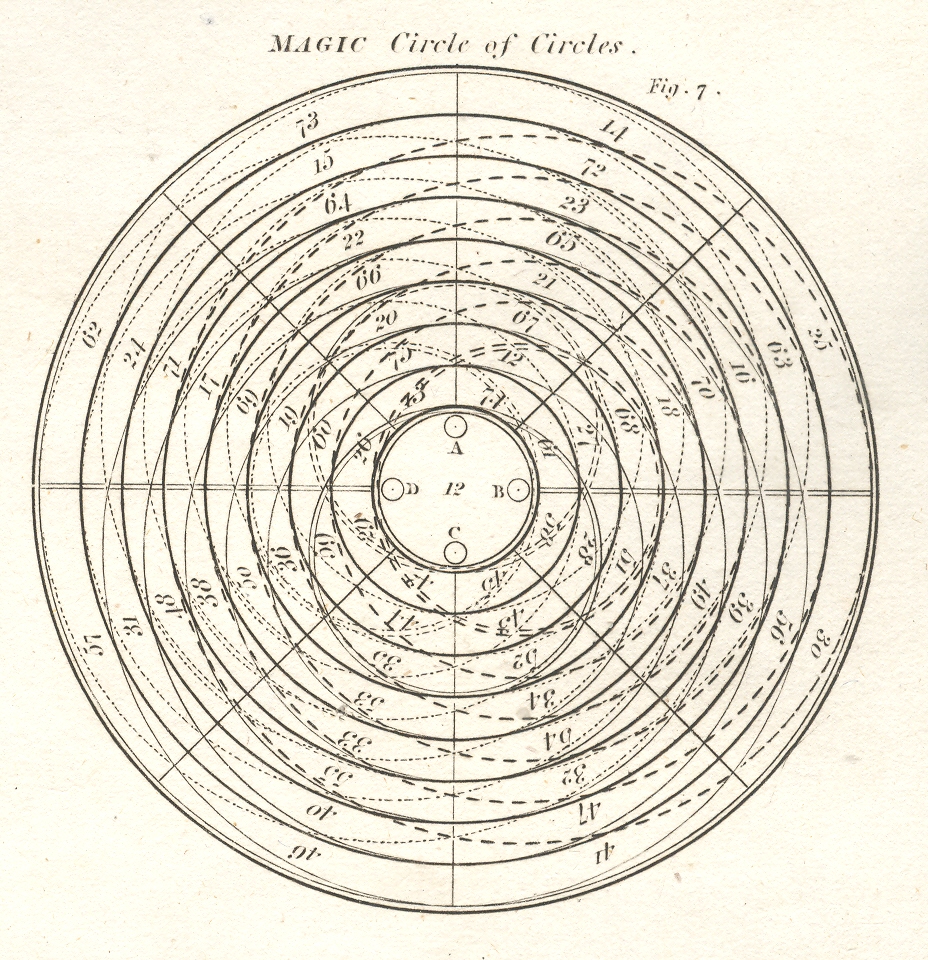
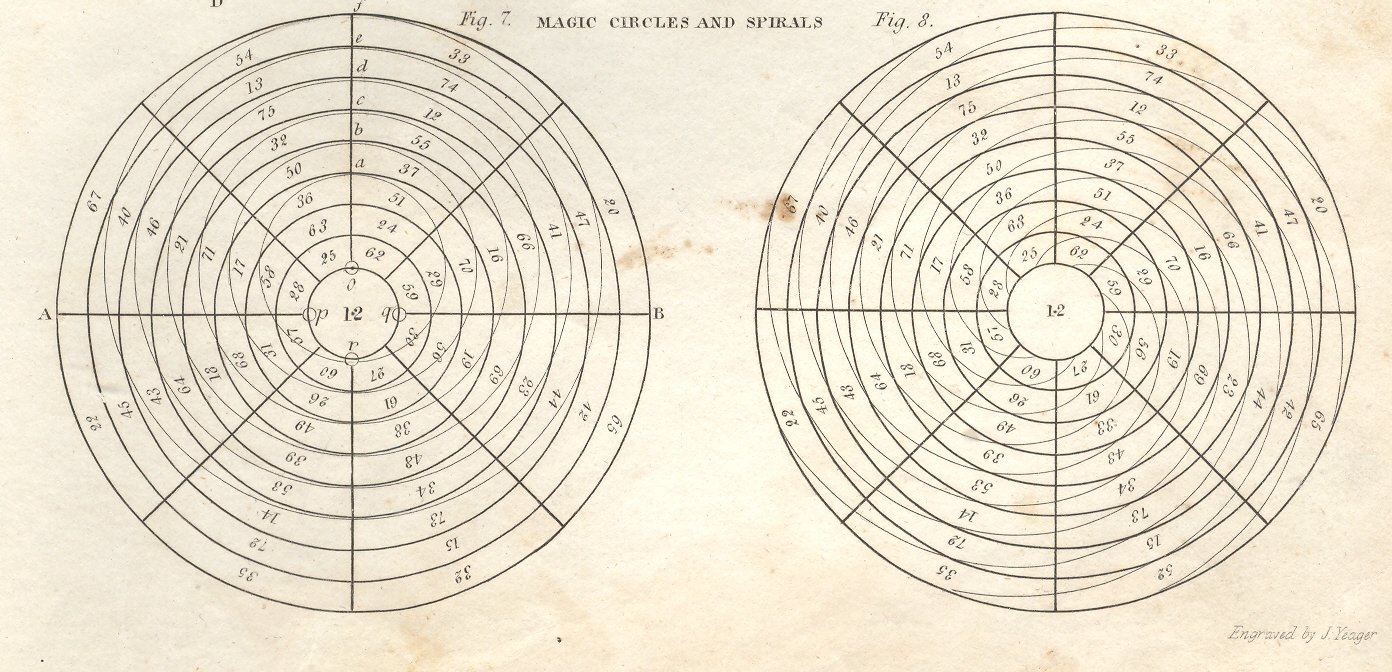
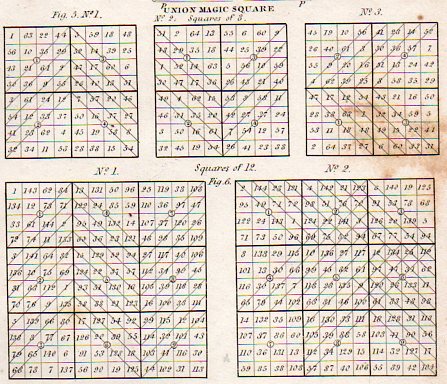
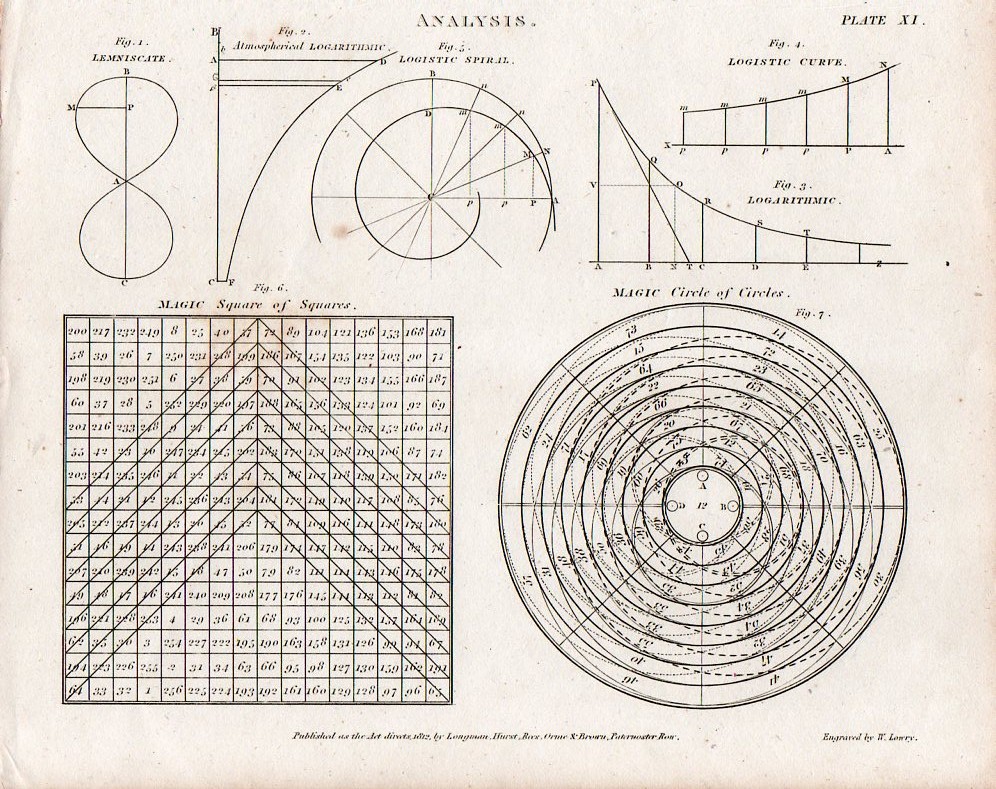
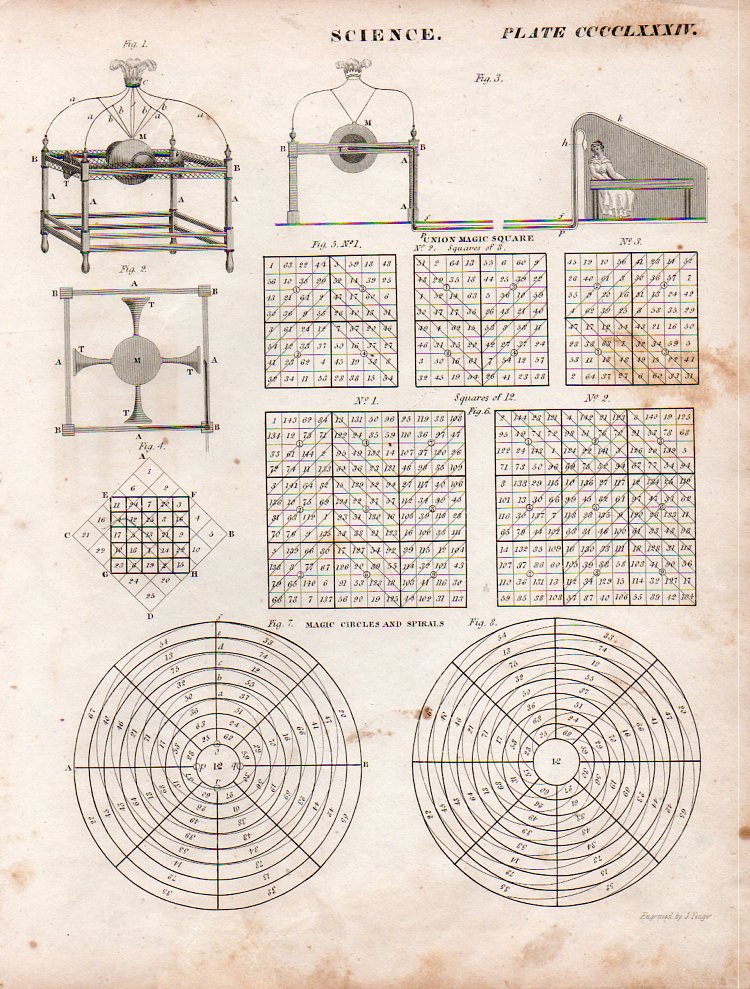
  • Math Magic: Magic Squares, Magic Circle of Circles, Magic Spirals

    JF Ptak Science Books

    [Associated posts: The Mother of all Renaissance Logical Graphs, The Knight’s Tour, Porphyry and Boethius and Census Art and the Display of Quantitative Data, 1860.]

    Magic square and circles det sq881
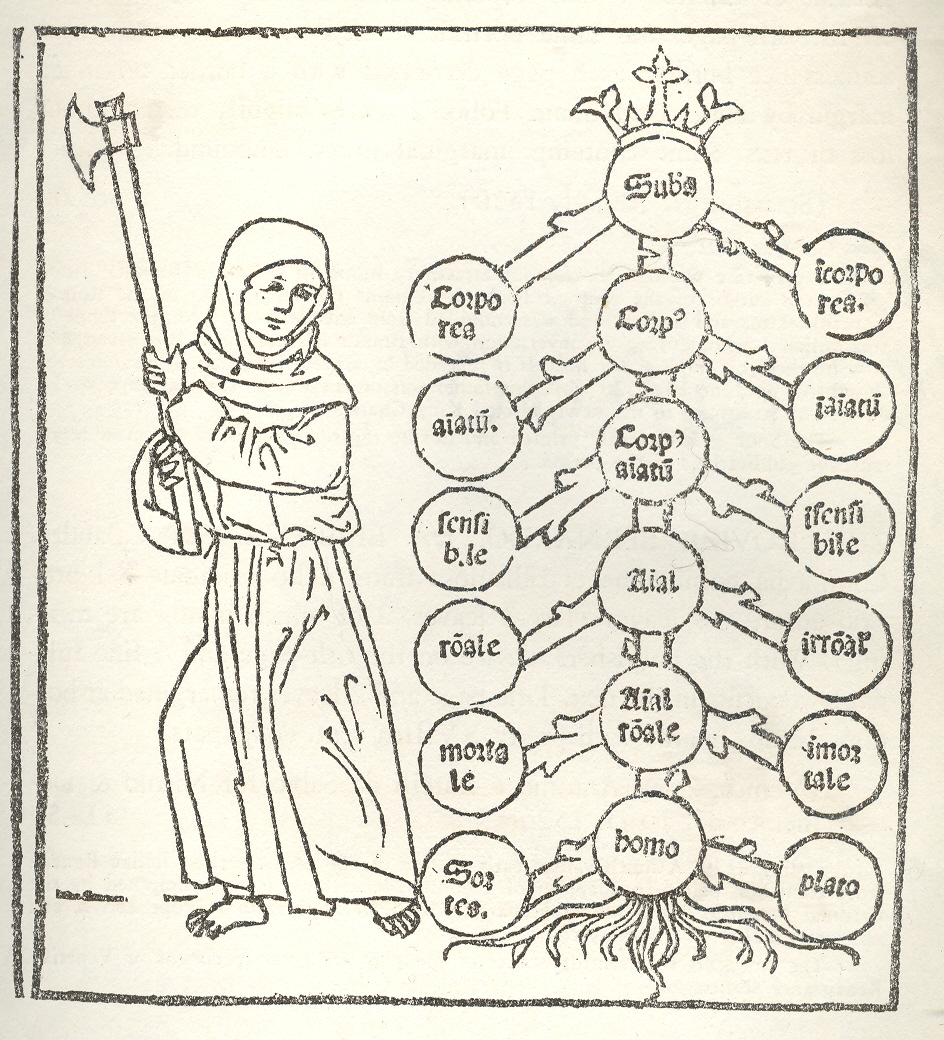
    Well now:  I don’t know what the provocation or inducement is here to hurtle this axe-swinging monk to attack Porphyry’s Tree1, though it would be interesting in a forensic sort of way to know what the tree’s section might reveal. The “tree” was a diagrammatic creation of a 3rd century Syrian mathematician/logician/philosopher named Porphyry who– much taken with Aristotle (and with the Categories in particular)– developed a systematic approach to the organization of thought in diagrammatic form.1--logic tree

    What’s inside a tree of logic and memory?  Is there a  xylem-y/phloem-y stuff besides a three-dimensional representation of the structure of organizational thinking?  Or is the 2-dimensional rip a fatal blow to other dimensions, and like Eddington’s Turtles, it’s a simple slice of Flatland all the way down?  

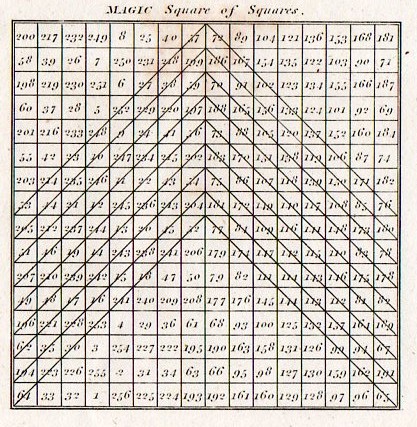
    Perhaps Porphyry’s tree rings would look like this, a magic circle or spiral, which would make some sense, and would bring to bear an associated use of turtles—or tortoises, I should say.  It turns out that perhaps the very first use of the magic circle, rolling back its origins through the Islamic world to India and to Persia and then to Japan,  and then finally to China where, in about 2000 BCE, the magic square appears in an image with the Emperor Yu,  inscribed on the back of a tortoise.

    1--logic tree magic circle 

    1--logic tree magic cricles

    [Magic circle source:  Abraham Rees Encyclopedic Dictionary , printed 1805-1815. The originals are available from our blog bookstore.]

    Magic squarezz and circles det883

    Magic square and circles880
    Magic squarezz and circles882

    Notes:

    1.This image appears in the rareDestructio sive eradicatio totius arboris Porphirii : magni philosophi ac sacrae theologiae doctoris eximii Augustini Anchonitani ordinis fratrum Heremitarum Sancti Augustini, cũ quadã decretali eiusde, published in 1503.

    ·Posted by :

    ·in:

  • Bizarriana Logica: Japanese Nazis Stole the Lindbergh Baby (1944)

    Lindbergh kidnapping116JF Ptak Science Books             Daily Dose from Dr. Odd

    America was obsessed with the Lindbergh Baby for years after the case was decided and the kindapper executed. Decided or not, the crime captivated many, and people continued to debate the case; and as time progressed, the conspiracy theories regarding the kidnapping seemed to reach out to explanations further and deeper into the Deep and Far.  

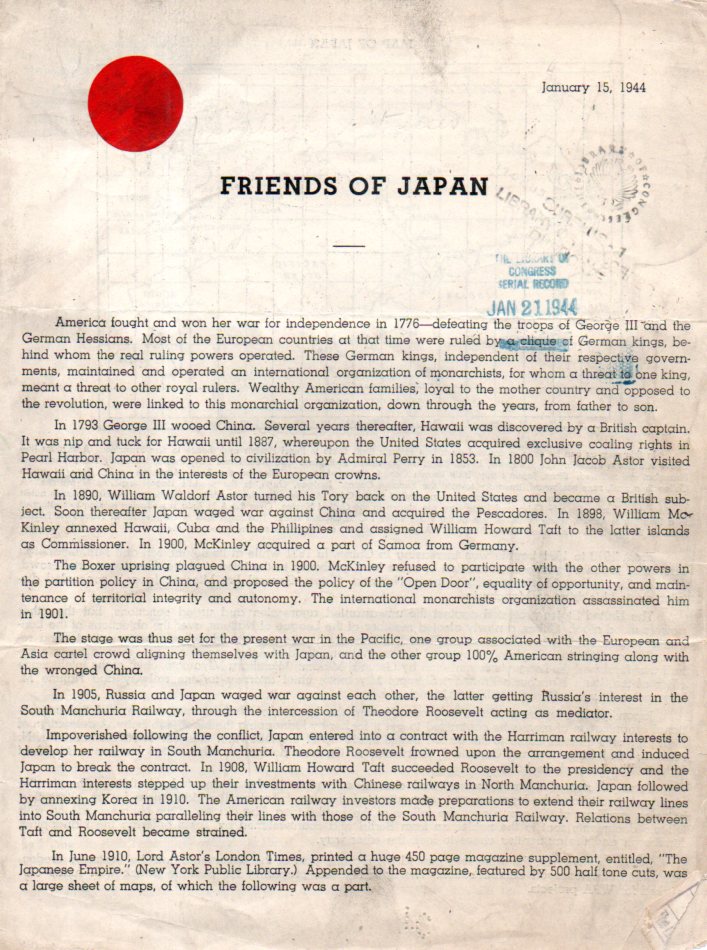
    This four-page pamphlet, published in 1944 by “The Lindbergh Witnesses”, a conspiracy group evidently stationed on hapless Staten Island, pushes the barriers a little further, contending that the Japanese Empire and the German Nazis and a secret church and even the Republicans orchestrated the crime.  

    The “friends” of Japan turn out to be co-conspirators in the case to what becomes the “barbarian Japs” and their Berlin counterparts.  This was easy stuff to believe, I guess, what with the world at war, even when most of their evidence seems to be exceptionally flimsy and invisible.  

    ·Posted by :

    ·in:

  • Mental Arithmetic by Sound, Imaginary Symbols, and Smell–1894

    JF Ptak Science Books   Quick Post

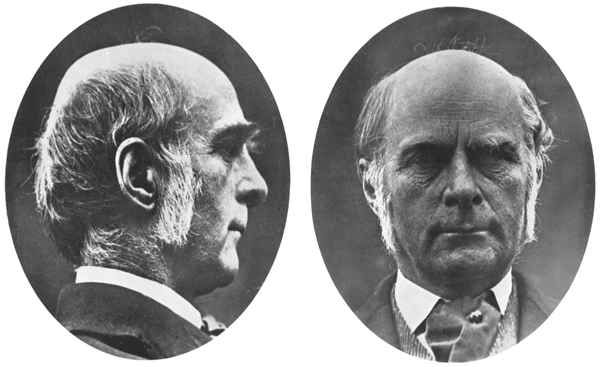
    Crusing through some issues of Nature down in the studio–this is the current  long-lived Nature, though mine are from 1869-1949, so not-so modern–I was working my way through a few issues before all hell breaks loose with the Roentgen publications in late 1895, and found this very interesting article by Francis Galton.  Now Galton was a very interesting man with very advanced interests in many different fields, though he does have some unfortunate bits to his personality and eugenic-based beliefs, so he is an extremely accomplished if not a problematic man. Actually one of my earliest posts on this blog (more than 2,500 posts ago–yes there are only 2147 numbered posts but there are also something like 500 unnumbered “quick posts” as well) was relating another occasion of thumbing my way through another Nature volume, and finding Sir Francis again, though in this one he wrote what may be among the earliest papers on synesthesia (“Visualized Numerals”, 1880, appearing here, with full text). 

    The present Galton (in 15 November 1894) is his review of work done by Alfred Binet, “Psychology of Mental Arithmeticians and Blindfold Chess-Players”, who looked at the extraordinary abilities of  “two groups of remarkable men”, one of which possessed fantastic mental calculating abilities, and the other with the capacity of playing multiple games of chess while blindfolded.  A closer look at the first group revealed two men who relied on quite different benefits: one having a great ability to calculate according to “imagined sounds” and another who “relied on…imagined sounds”, both endowed with considerable numerical abilities as well as memories. 

    Galton reviews a number of calculators and then remarks on experiments he performed on himself, trying to “visualize” a calculating process via olfactory means.   The rest of the story of this fascinating article can be found here.  (Also see–from Galton.org–a bibliography of his journal articles works in psychology.)

    • This is somewhat off the mark, but it may be interesting–given Galton’s olfactory/math experiment–to have a quick look at an earlier post on this blog regarding the first photograph of a smell, here.

    I should say that Galton wrote more for Nature than any other journal, some 115 contributions from 1870-1910.

    See also this take on the Galton from J.M. Stoddart’s The New Science Review, 1894/5:

    ·Posted by :

    ·in:

    —
  • The Archaeology of Comfort, 1945

    JF Ptak Science Books  Post 2148

    Architect--50,000 womenb759

    Architect--50,000 women758 Let’s Plan a  “Peacetime” Home was published in 1945 by a home gas heating company to try to answer and capitalize on a severe housing shortage being accentuated by returning WWII vets–I’m not sure why “Peacetime” is placed in quotation marks in the cover copy; perhaps it was just sloppy editing.  But the planning was real, and the ideas were sort of fresh for the time, including a number of new and innovative ideas regarding heating/heat retention and cooling services.  It is a slick, bright, shining publication filled with simple luxuries for the middle class–roomy kitchens, playrooms in the basement, extra bathrooms, storage for baby carriages in the garage, and other pieces of happiness that were still relatively new to the Depression-recovering working folks of the United States.

    Architect--50,000 womenb760

    I can see a lot of interest in the archaeology of comfort in the many plans and pictures in this brochure, but that’s not why I’m presenting it here today.  There’s more than a heavy helping of bulbous Bauhaus design, and lots of small rooms surrounding large big main rooms with enormous windows.  But the thing that seems to bookend all of this development are women-in-aprons.  There are men sitting and leaning around plans, smoking pipes, sleeves rolled up, and looking very earnest; at their elbow or across the table is the woman, usually in an apron, looking on in appreciation.

    [This item may be purchased at our blog bookstore.]

    ·Posted by :

    ·in:

Recent Posts

Archives

Categories