A Daily History of Holes, Dots, Lines, Science, History, Math, Physics, Art, the Unintentional Absurd, Architecture, Maps, Data Visualization, Blank and Missing Things, and so on. |1.6 million words, 7500 images, 4.9 million hits| Press & appearances in The Times, Le Figaro, Mensa, The Economist, The Guardian, Discovery News, Slate, Le Monde, Sci American Blogs, Le Pont, and many other places… 5000+ total posts since 2008.

  • History of Dots Series: Dots of 1947

    JF Ptak Science Books   Post 1027

    {Another in the History of Dots series.]

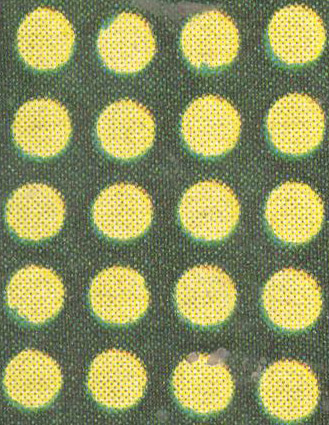
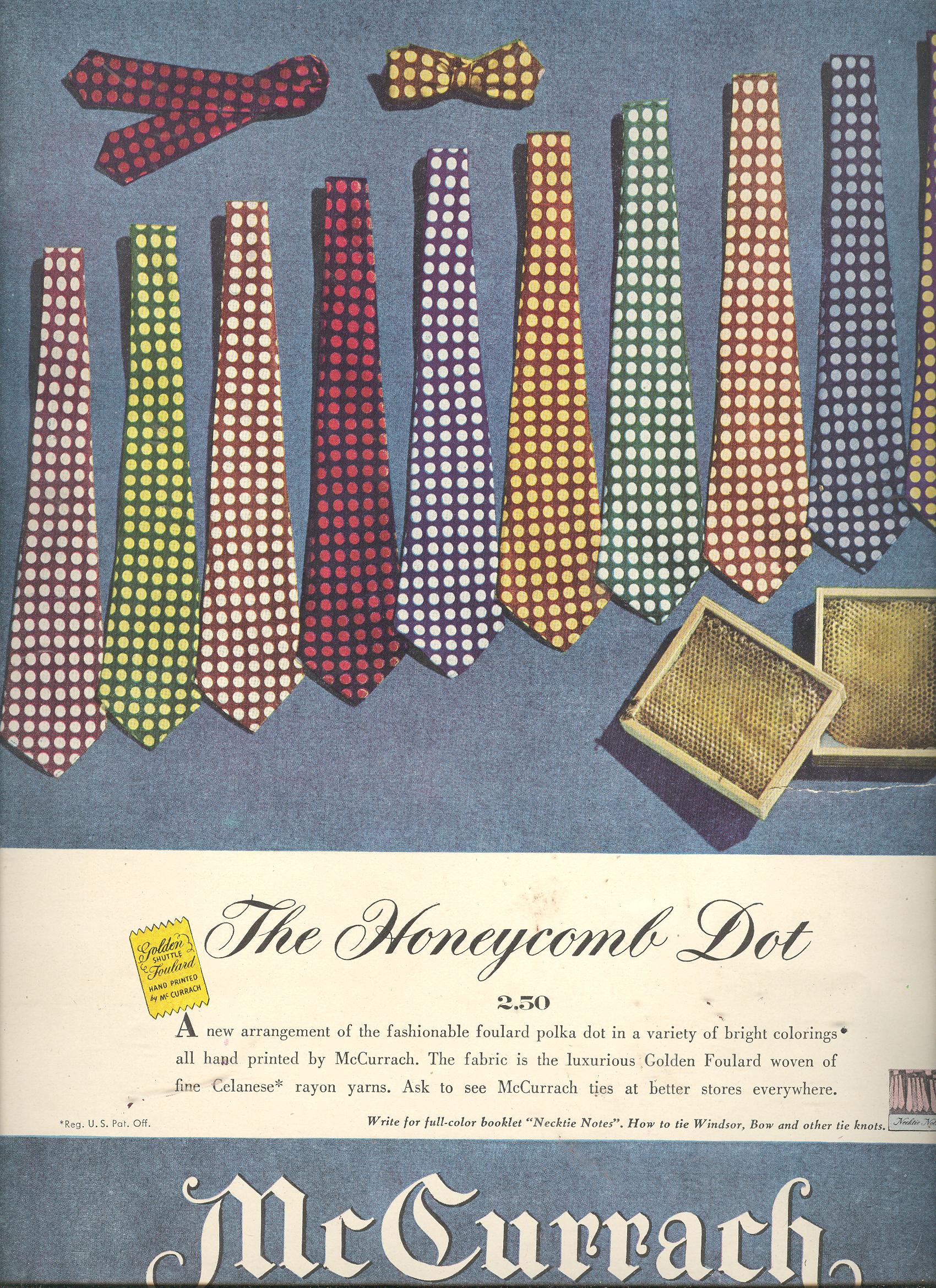
    The molecular chemistry of dots of 1947 is a beautiful thing, worthy of a powers-of-ten episode, though I can only do a gigantically scaled down version of it (a powers-of-two maybe) given pixelation and its dot-defeating and necessary tendency to relieve roundness and introduce squares everywhere. 

    1--may 13 tie dots det 1 

    1--may 13 tie dots det 2

    1--may 13 tie dots det 3

    1--may 13 tie dots det

    1--may 13 tie dots

  • History of Dots: Television, 1947

    JF Ptak Science Books    Post 1028

    Television is composed of dots–or at least for the greatest part of its history it was. I wonder if we measured the amount of televised images entering the eye/eyes of everyone around the world this year if that total numbers of hours is multiples of all television watched by everyone everywhere for the 1928-1995 period?  My gut wonders if it is orders (?) of magnitude more as there are more people, more television, more programming, more everything, everywhere, at any time.  And when you throw in hulu and tvshack and so on, doubt grows that the history of television to 1995 could hold its own against whatever it is people are seeing today. 

    1--may 13 tie dots tv schedule

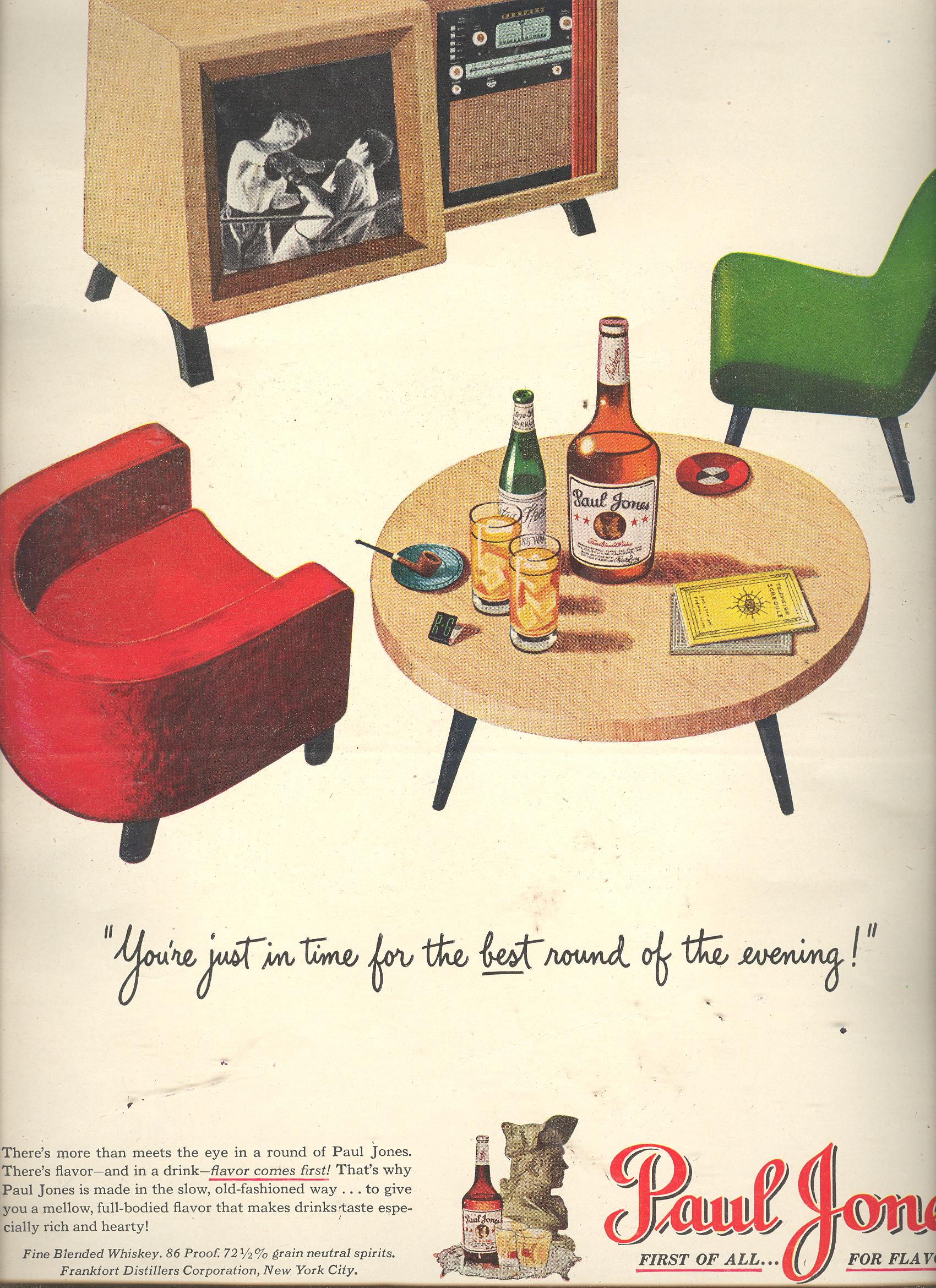
    This comes from seeing this ad (below, from which these details are pulled) for Paul Jones whiskey in a 1947 issue of LIFE magazine.  Big, 15″ screen for the fights on a Friday night, the built-in radio with its 12″ speaker ready to go, a pipe and matches (and no tobacco) at hand, and of course a very over-sized bottle of Paul Jones whiskey:  if we kept a constant perspective that bottle I reckon would’ve been about two feet tall, accompanied by foot-tall glasses.  

    1--may 13 tie dots tv det good

    Television was still in its formative period so far as mass acceptance and affordability goes–there were still only 14,000 sets in the U.S. in 1947. Today there are something like 250,000,000 sets in this country, or about 8 for every 10 people.  Worldwide the figures are pretty different:  on a  list of 209 countries for televisions per capita (where the U.S. is third) only the top 24 have tvs for every other person (the U.K. with 504/1000 is number 24) while countries with tvs for every third person comes in at #53 (Czech republic).  Jamaica, listed at #100, has 168/1000 per capita, which means tv distribution for the rest of the 109 countries on this list gets pretty scratchy–no doubt because a television would represent a sizable chunk of a family’s gross income for the year. Actually,  about 50 countries on that list have a population that survives on One Dollar a day–which doesn’t leave much for Sony and whoever might advertise on the set that these people can’t buy.  (Fox I understand is even now figuring a plan for a programming-over-food venue as a means to domination in a new post-Colonial world–Cuba won over, finally, with reruns of “Dallas”, making the population revolutionary over the stuff that J.R. Ewing has that they don’t but want..)

    The televised world is the thin veneer of the existing world that isn’t.  Anyway, here’s the start of it, all in beautiful black and white dots, selling a bad whiskey.

    1--may 13 tie dots tv

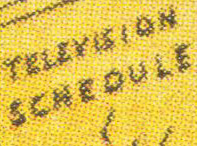
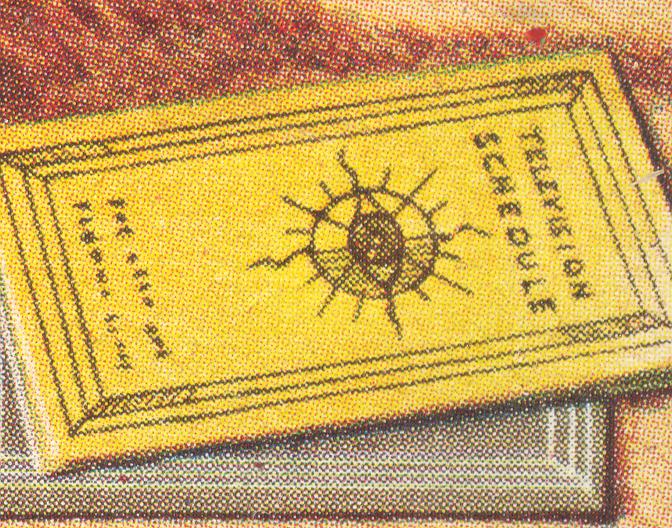
    The “Television Schedule”  is there, with an odd eye-on-compass logo that is barely visible before magnification. 

    ·Posted by :

    ·in:

  • History of Dots Series: Missing the Beginning of the Stars as Dots

    JF Ptak Science Books     Post 1029

    Dots--hyginus

    [History of Dots series]

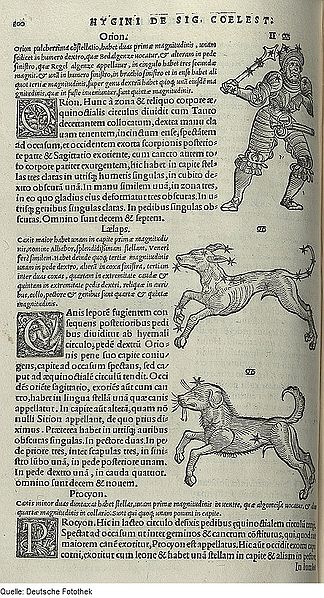
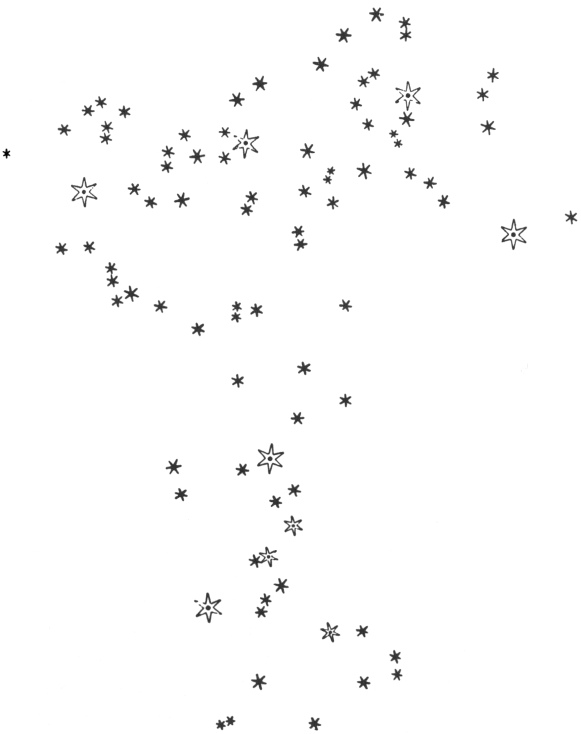
    I was wondering when it was that stars began to appear as dots in celestial atlases or astronomical works–dots rather than starry stars, decorated spheres with crusty circular fire rings about them.
    I felt that at some near point in the history of astronomy that t he conventional antiquarian way of representing a star would fall away with magnification, or clarity, just as has been the opposite case with the magnification of simple dots to reveal complex structures, say with the amplification of the flea eye…even a graphite pencil’s period at the end of a sentence on a piece of paper will turn itself from a dot into something as complex as the coastline of England (given enough magnification).
    Dots--siderus The first star atlas published in 1482 after the work of the first century astronomer and philosopher Hyginius1 contains maps of the constellations composed of such beautiful light-encrusted bits.  There wouldn’t be another work like this one, strangely, for another 75  years. Alessandro Piccolomini’s2 work of 1559 (which would be the first true star atlas), and again we see the familiar representation.  I thought that this would change with the invention of the telescope, so I checked out Galileo’s3 beautiful account (pictured at left) of his discoveries in the Sidereus–again the same complicated, sawblade stars. 
    Dots--hevelius
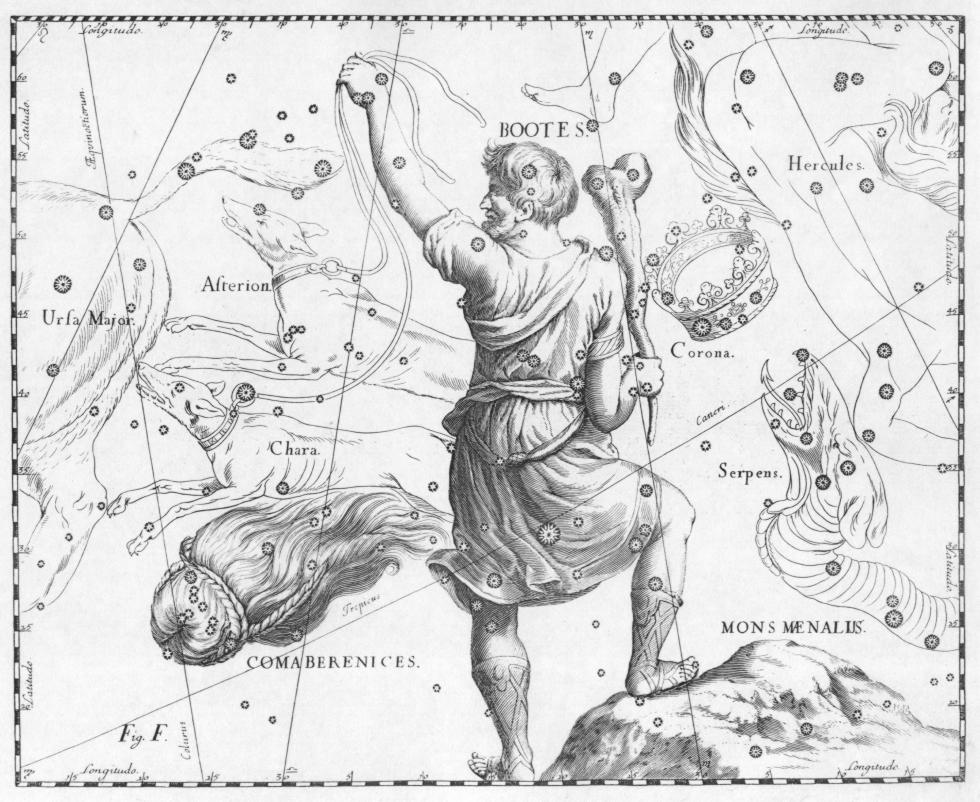
    This has not been a very scientific search thus far, only checking handy notes and images that I’ve made.  But the same result has been true for the star images in Bayer4, Cellarius5, Hevelius6(at right), Coronelli7, Flamseed8,  Doppelmayr9 and Bode10. Even William Herschel’s fabulous map of the galaxy is a collection of these pointed stars.  I think that I’ve just missed what is normally seen by regular folks as a conventional reassignment of star images to something more “modern”–and if that’s the case it has simply passed me by. (It seems though that among all of these that Hevelius comes closest–he inverts the familiar star pattern to the interior of a sphere.)  And I continue to miss it.  I’ve worked my incomplete survey now pretty close to the end of the 18th century, and I simply do not have a close answer..If anyone out there does have it, please let me know.  
    Notes:
    1. Hyginius Mythographus (fl. 1st century A.D.). Poeticon astronomicon. Edited by Jacobus Sentinus and Johannes Lucilius Santritter. Venice: Erhard Ratdolt, 14th October 1482. The first star atlas per se, standing alone in its field for a century.
    2. Piccolomini, Alessandro.  De la Sfera del Mondo.  1559                               
    3.  Galilei, Galilei  Sidereus Nuncius (known in English as Starry Messenger), published 1610
    4.  Bayer, Johann.  (1572 – March 7, 1625) Uranometria 1603, which was the first atlas to cover the entire celestial sphere.
    5. Cellarius, Andreas  (c. 1596 – 1665): Harmonia Macrocosmica (1660, 1661, 1708).
    6. Hevelius, Johannes (1611 – 1687): Firmamentum Sobiescianum, sive Uranographia (1690).
    7. Coronelli, Vincenzo (1650 – 1718):
    8. Flamsteed, John (1646 – 1719): Atlas Coelestis (1729, 1753).
    9. Doppelmayr, John Gabriel (1677 – 1750): Atlas Coelestis (1742).
    10. Bode, Johann Elert (1747 – 1826): Vorstellung der Gestirne auf XXXIV Tafeln (1782).

  • History of Lines: Circles, Vortices or Tree Rings?

    JF Ptak Science Books   Post 1030Descartesunivab

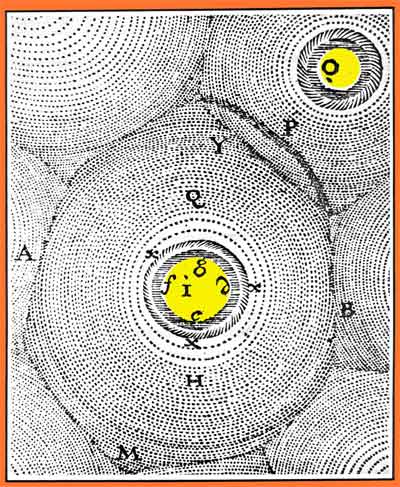
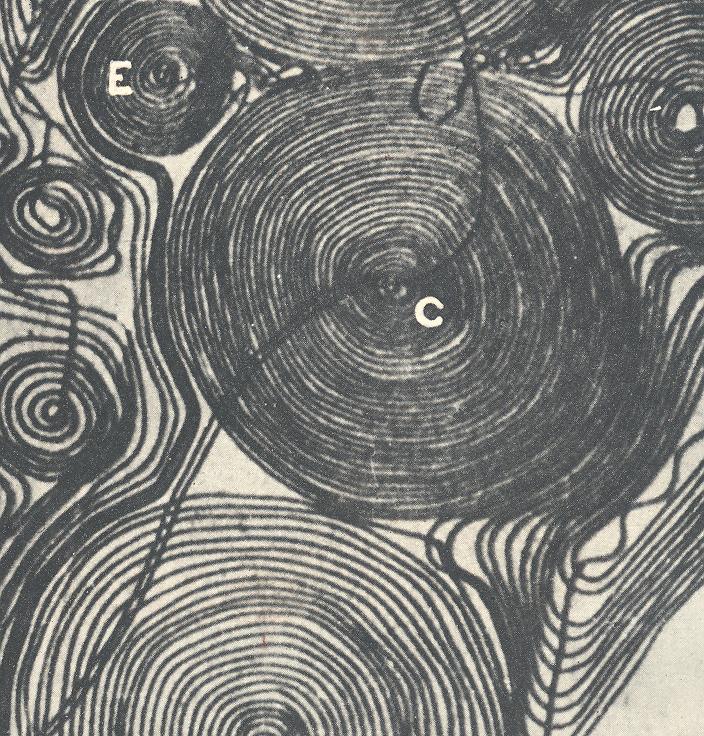
    I thought at first that the detail of the photograph below looked liked Cartesian vortices, as seen in one of these engravings from his (Rene Descarte) Principes de la
    Philosophie
    (1644, basically a treatise on planetary motions).
    :

    1--may 14 circles det

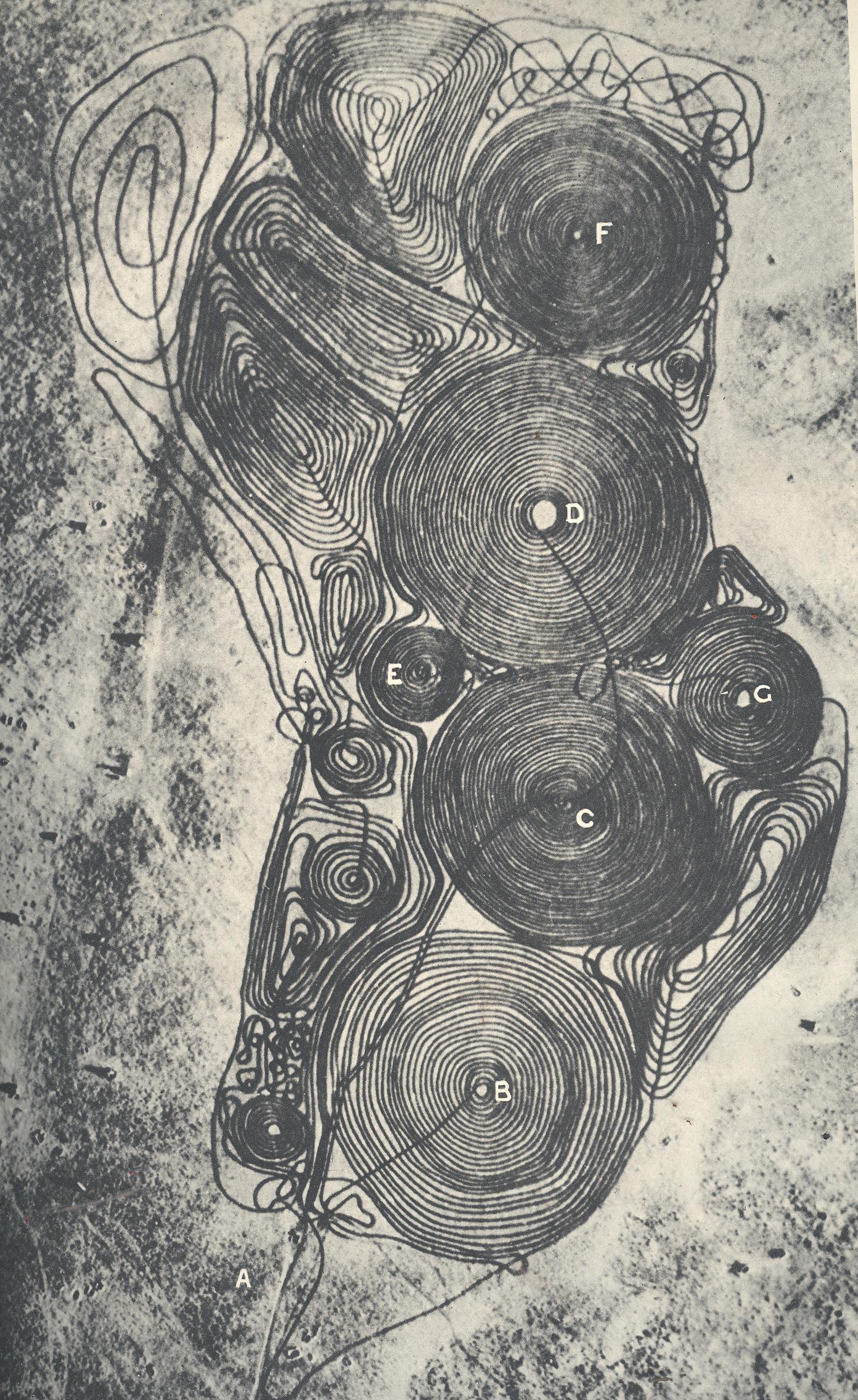
    Well, no, of course, these are not vortex representations writ large in the
    desert of Tunisia by Nazi German plows. They come close, though.  We’re
    looking at a photograph of what is supposed to be an airfield which has
    been beautifully plowed under by German sappers, done so to prevent the
    airfields being used by British forces subsequent to its abandonment by
    retreating German forces.  Looking more closely at the photos though I’m
    not sure what this really is–it just doesn’t look quite right.   On
    the other hand I don’t see offhand what might be gained if this was
    simply a retouched photo used for propaganda

    1--may 14 circles 

    Source:  Illustrated London News, 6 Feb 1943.

  • Raising Greatness: James Hutton’s Deep View of Time, 1795

    JF Ptak Science Books   Post 1032

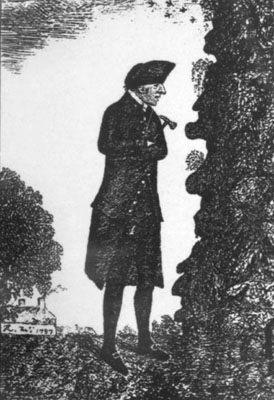
    I think that I’d like to start a series here on significant works in the history of ideas that were originally highly problematic or not accessible due to writing style or place of publication or misplaced appearance or, well, simply bad timing.   The storyline would be one of these great works whose significance suffered as a result of one or more of these issues, and then which was raised above its suffered complications to a place of higher (or more popular) esteem, allowing it to get to a place where the work could generate the new set of ideas that it was intended to help create in the first place. The first of these stories belongs to James Hutton and his revolutionary idea of deep time.  James_hutton
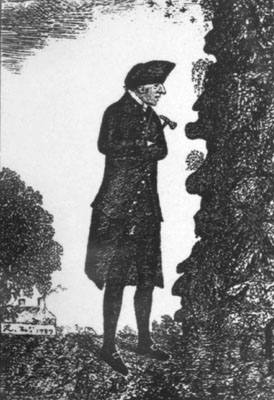
    Seeing more deeply into scientific time than anyone else in history, seeing the entirety of Earth’s history explained  in the sloping  red sandstone at Siccar Point (above the vertical greywacke), James Hutton worked through his theory of the earth in two stout volumes (The Theory of the Earth, with Proofs and Illustrations... in 1795), wrapping up geological evidence with a dogged, comma-ridden and usually-unwieldy prose. He had in fact written a much more elegant paper presenting the main thrust of his theory in outline in 17851, though this paper received a much more limited distribution.  In the long term it really didn’t matter, though, how pretty his writing was–but in the short term, it did.  He made the case for the vastness of time in an elegant way, even without the prospect of being able to know the age of the rocks he was looking at.  The processes of sedimentation, transportation and weathering of solids,  vertical elevation of the Earth’s surface in response to natural causes, and so on, were just not known to him; no matter, as Hutton trusted his theoretical inspiration to tell him that the 6,000-year old earth history clock on the wall was telling a tenth of a tenth of a tenth of a tenth (and on) of the larger, truer story of the age of the earth.  He knew that there were many orders of magnitude of age involved in the telling of the story–he just didn’t know how many. 

    He ended his great work bowing to the enormity of the sight of time:

    “Here are three distinct successive periods of existence, and each of these is, in our measurement of time, a thing of infinite duration. …
    The result, therefore, of this physical inquiry is, that we find no vestige of a beginning, no prospect of an end.”
                   
    Hutton’s work is inestimably important, Archibald Geike (the great 19th century geologist) commenting that it is impossible to praise the work too highly.  But then there was the problem of the density and just flat-out difficulty in reading Hutton’s writing, which restricted the book’s message to a dedicated academic class. Hutton did find his champion in James Playfair, who would strengthen Hutton’s work with new data and who would also help along the troubled Huttonian prose.  Playfair’s work is in of itself2 an important contribution to the history of geology and also of course evolution. His Illustrations of the Huttonian Theory of the Earth (1802), popularized and made the Huttonian work far more acceptable to a larger audience, and as the DNB says “presenting Hutton’s momentous theory in a clear and palatable form (which Hutton himself had failed to do), and in adding materially to the geological knowledge of the time”.

    It was Playfair’s treatment of Hutton that found its way into the mix of genius of Charles Lyell, whose own Principles of Geology3 found its way onto the Beagle and which were voraciously studied by Charles Darwin4 and then put to further use.
               
    Notes

    1. “Theory of the Earth; or an investigation of the laws observable in the composition, dissolution, and restoration of land upon the Globe”, presented in two parts, in Transactions of the Royal Society of Edinburgh, vol. 1, Part 2, pp. 209-304.  An earlier, related pamphlet was written and privately published for a very restricted and private distribution in 1785:   Abstract of a dissertation read in the Royal Society of Edinburgh, upon the seventh of March, and fourth of April, MDCCLXXXV, Concerning the System of the Earth, Its Duration, and Stability. Edinburgh. 30pp.   

    Eventually the book would wind up in a final form as An Investigation of the Principles of Knowledge and of the Progress of Reason, from Sense to Science and Philosophy in 2,138 pages, causing Playfair to remark that “The great size of the book, and the obscurity which may justly be objected to many parts of it, have probably prevented it from being received as it deserves”.
       
    This paper privately printed 1785 paper stated:
    “The solid parts of the present land appear in general, to have been composed of the productions of the sea, and of other materials similar to those now found upon the shores. Hence we find reason to conclude:
    1st, That the land on which we rest is not simple and original, but that it is a composition, and had been formed by the operation of second causes.
    2nd, That before the present land was made, there had subsisted a world composed of sea and land, in which were tides and currents, with such operations at the bottom of the sea as now take place. And,
    Lastly, That while the present land was forming at the bottom of the ocean, the former land maintained plants and animals; at least the sea was than inhabited by animals, in a similar manner as it is at present.
    Hence we are led to conclude, that the greater part of our land, if not the whole had been produced by operations natural to this globe; but that in order to make this land a permanent body, resisting the operations of the waters, two things had been required;
    1st, The consolidation of masses formed by collections of loose or incoherent materials;
    2ndly, The elevation of those consolidated masses from the bottom of the sea, the place where they were collected, to the stations in which they now remain above the level of the ocean.”

    2. Returning again to Geike, who  remarked (1905): “How different would geological literature be to-day if men had tried to think and write like Playfair!”

    3.  The Principles was an enormously influential book, and went through six editions in the first 11 years of its printing (1830-1840), seeing 12 editions during the author’s lifetime (the last edition corrected and added to by Lyell appearing just after the author’s death in 1875). 

    4.  Darwin had volume 1 when he shipped off, receiving volume 2 en route.  A quick look online reveals that there is no mention of Playfair or Hutton in either the Voyages or Origin.; Lyell is noted 14 times in the Voyages and 30 times in the 6th edition of the Origin.

  • Thomas Hogg, a Curious Man with 700 Varieties of Carnations, 1820

    JF Ptak Science Books   Post 1033

    Garden I just came upon this work1 on gardening and the carnation, by Thomas Hogg, printed in London in 1820.  It was evidently a pre-eminent book of its type for its time, Mr. Hogg occupying a high place in the gardening and flowering world of early 19th century England. (He found some high favorites at court who no doubt were able to help him pursue his vast interest, as we can see by the thesauro-laudatory words in his dedication page2.  I should add quickly that this is by no means an over-the-top dedication–although decorated with high praises, the dedication is not a Liberacesque celebration as some dedications have been, and would rank somewhere in the lower-middle in the ranks of glowing thanks.)

    What is more interesting to me though was the following mention that I found of Hogg in a contemporary British culture book:
                                               
    “Mr. Hogg, was master of an Academy at Paddington, Middlesex, he is now a florist at the same place, where he has a collection of Carnations and Primroses, perhaps the finest in the world. He is celebrated for his successful culture of them. He has more than seven hundred varieties of all prices from two to sixty shillings.”       

     700 varieties of carnations–of anything–is impressive.  I wonder ho wit was that Mr. Hogg was able to amass such an incredible storehouse of carnations? Hogg himself seems quiet on the issue, taking a modest exit with a quote from Shakespeare: “ I have neither the Scholar’s melancholy, which is emulation; nor the Musician’s, which is fantastical; nor the Courtier’s, which is proud; nor the Soldier’s, which is ambition; nor the Lawyer’s, which is politic; nor the Lady’s, which is nice; nor the Lover’s, which is all these.” He does make the point and an unusual argument  that it is his the will of the creator of the universe that humans appreciate, respect and grow flowers:   

    “As the hand of an all-beneficent Creator Has been graciously pleased to strew and decorate the earth with flowers, to gratify the sight by their beauty, and to refresh the sense of smelling by their fragrance, as we proceed from stage to stage along the rugged road of life; and as nothing which he has formed for the benefit of man was ever; designed by him to; perish or exist in vain, it is our duty to receive these pleasing productions of Him, among others, with all thankfulness, and to render them subservient to the purposes of health, pleasure, and amusement; for such no doubt he first bestowed them. In fact, the cultivation of flowers has in all parts, as well as in all ages of the world, engaged more or less the care and attention of a great part of mankind; for the same Being that created them, created in man also a wish and an inclination to cultivate and take charge of them…”   

    I guess that if the Creator was going to make people do something, gardening wouldn’t be a bad thing at all.  Mr. Hogg and his floral religiosity is a mystery to me, but I must respect a man who somehow created such an evidently splendid collection.  

    Notes:                                   

    ·Posted by :

    ·in:

  • The Edenless World: the First (Metal) Woman Robot, Maria of Metropolis, 1927?

    JF Ptak Science Books   Post 1034

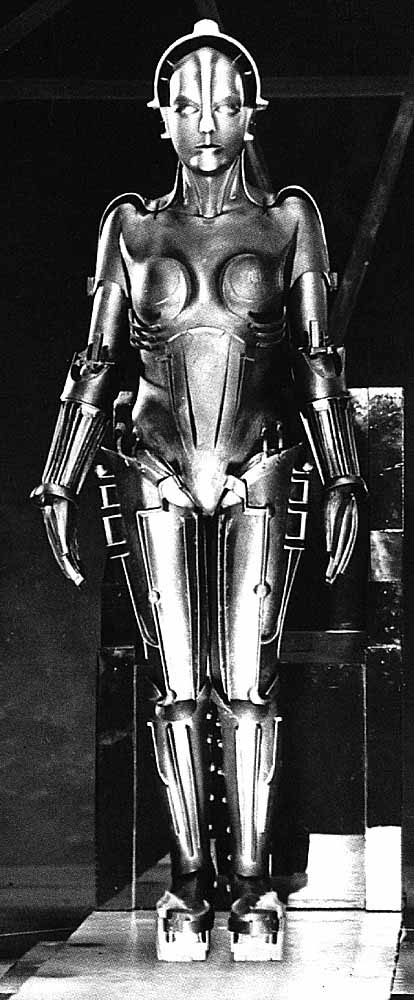
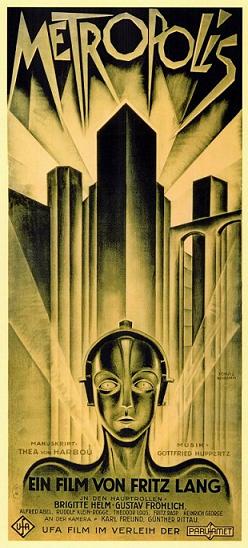
    No doubt that minds were sent reeling by Fritz Lang’s vision of the near-future (the year 2000) in his 1927 science fiction classic, Metropolis.  Life and work were one for the vast mass of humans, the drudgery of a cog-like existence in a vast underground machinery set to run a lifeless topside mother-of-all-cities was pressed and punched into the hearts and minds of the viewers.
    Maria-large
    The creation of a female robot in this movie is one of the earliest that I know of, surprising as there were male robot-like creations going back fairly deeply into the 19th century.  Perhaps the creation of female robots was verbotten because of the possibilities for unacceptable sexual fantasies in the high- and post-Victorian world, struggling under the weight of many and multiply-applied inhibitions.

    Or perhaps it came too close to some part of the truth of women as captives of their society, with unequal protection of the law, scant political representation, belligerent educational policies, and subjugated sexual vessels,  a comparative cog in the male machinery  pushing the world around. The disposable nature of the woman worker had already been manifestly and callously displayed in tens of thousands of instances.  In cases like the Triangle Waistcoat Factory disaster–in which women were treated no better than their machines, costing the lives of hundreds in a devastating fire–or in the replacement of Rosie the Riveter (as soon as the job-hunting soldiers returned from WWII), and on and on towards the horizon, it has been demonstrated to generations of women that they are inferior bits of apparatus.

    Metropolisposter

    The first use of the word “robot” occurred in the science fiction novel/play  R.U.R (by Karel Capek) just seven years earlier than Lang’s film; perhaps this in combination with the Expressionist and semi-decadent Berlin Weimar culture and overall indulgences of the 1920’s helped create  the possibility of the Eden-less woman-as-robot. Granted the robot’s name wasn’t “Eve”, though it does have the name of the Christian mother of mothers, the seat of early hyper worship, and more popular than Jesus’ name for centuries:  “Maria”.


    ·Posted by :

    ·in:

  • Archaeology of Concentration: Patti Digh’s Childhood Pencils

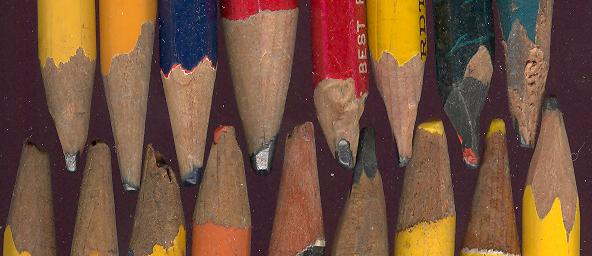
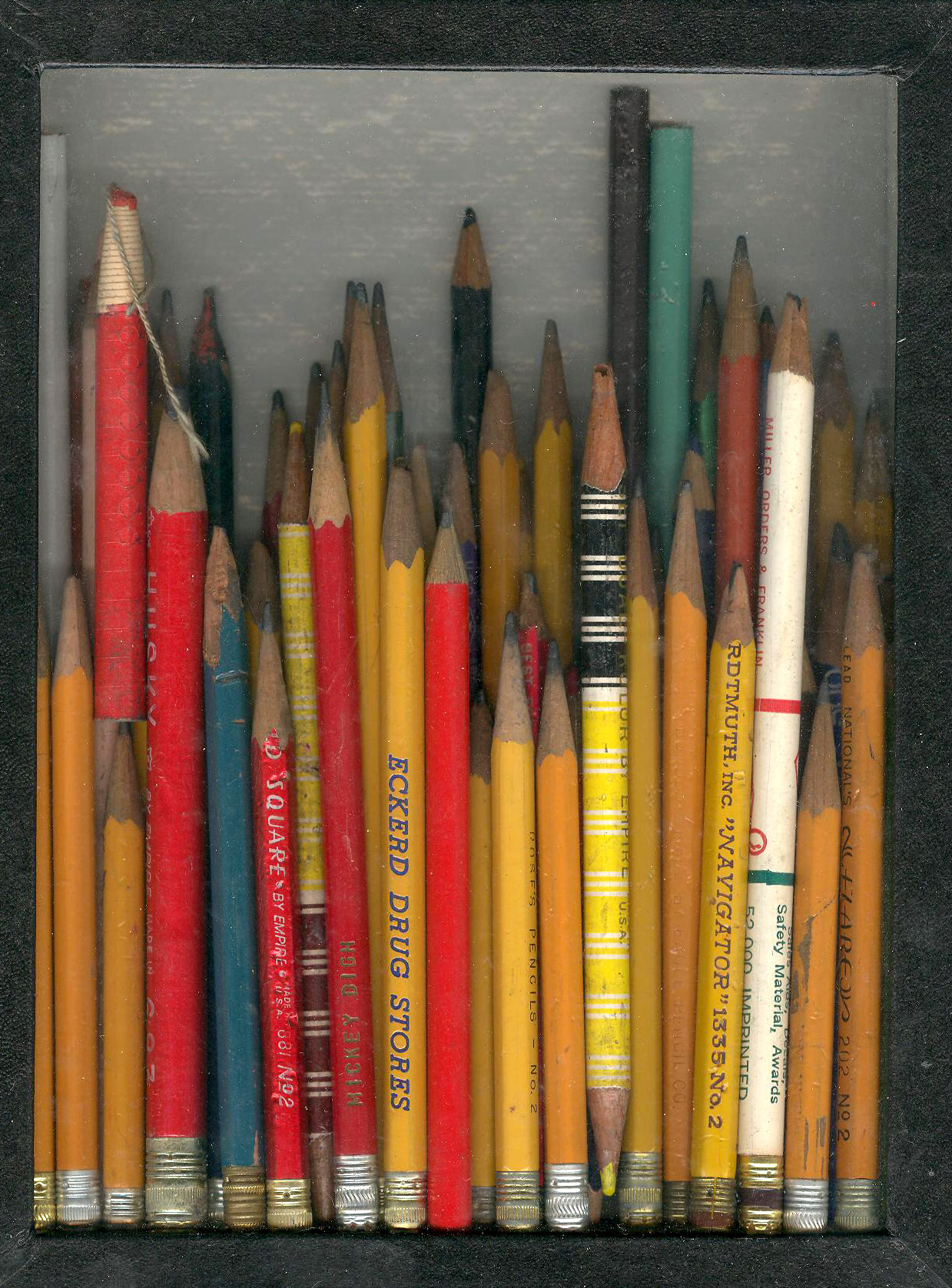
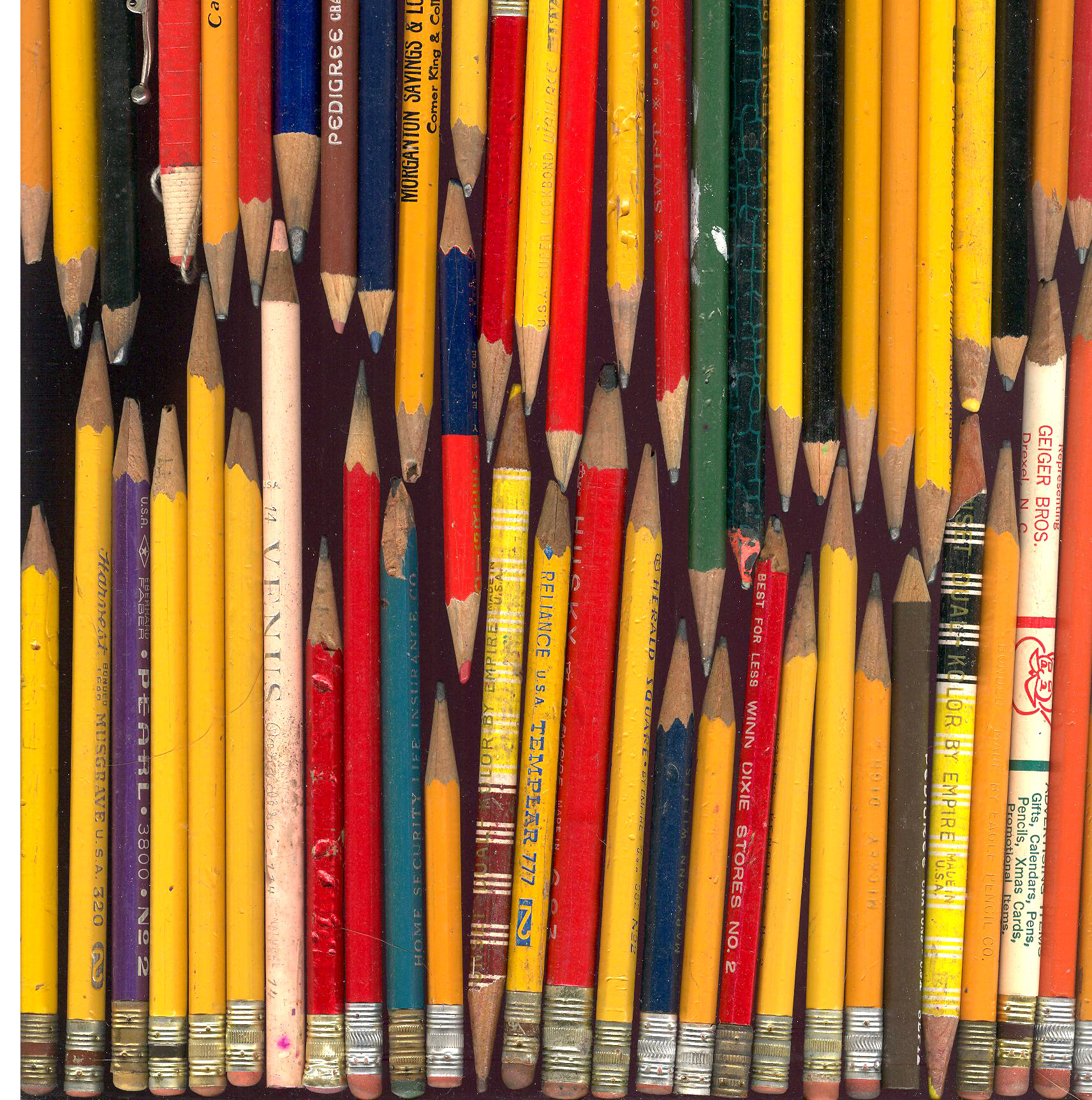
    My wife Patti Digh is an artist, and though she has great musical and painterly talents the greatest expression of her creative sensibilities is through words. And so I think that it is extraordinary that her childhood pencils have somehow made it here, into their future.  They are beautiful monuments to childhood creativity, their bite marks, gouges, scratches and just general wear and tear are testaments to Patti busily producing something from her mind, committing it to paper, back there in her deep past when she was only a couple of thousand days old.

    Patti--childhood Pencils points

    Patti--childhood Pencils
    Patti--childhood Pencils 2 det
    Patti--childhood Pencils corrections 

    A detail of Patti’s crayons, which I have written about elsewhere on this blog:

    Patti crayons 2

    Patti and I have saved virtually every bit of our daughters’ artworks–the really interesting stuff has been collected in one place, and then there’s the boxes of other artwork that they’ll have to deal with in their future. 

    And yes a Patti pencil box has also survived.

    ·Posted by :

    ·in:

  • The Message is the Medium–Children and Bombs, London, 1943

    JF Ptak Science Books  Post 1035

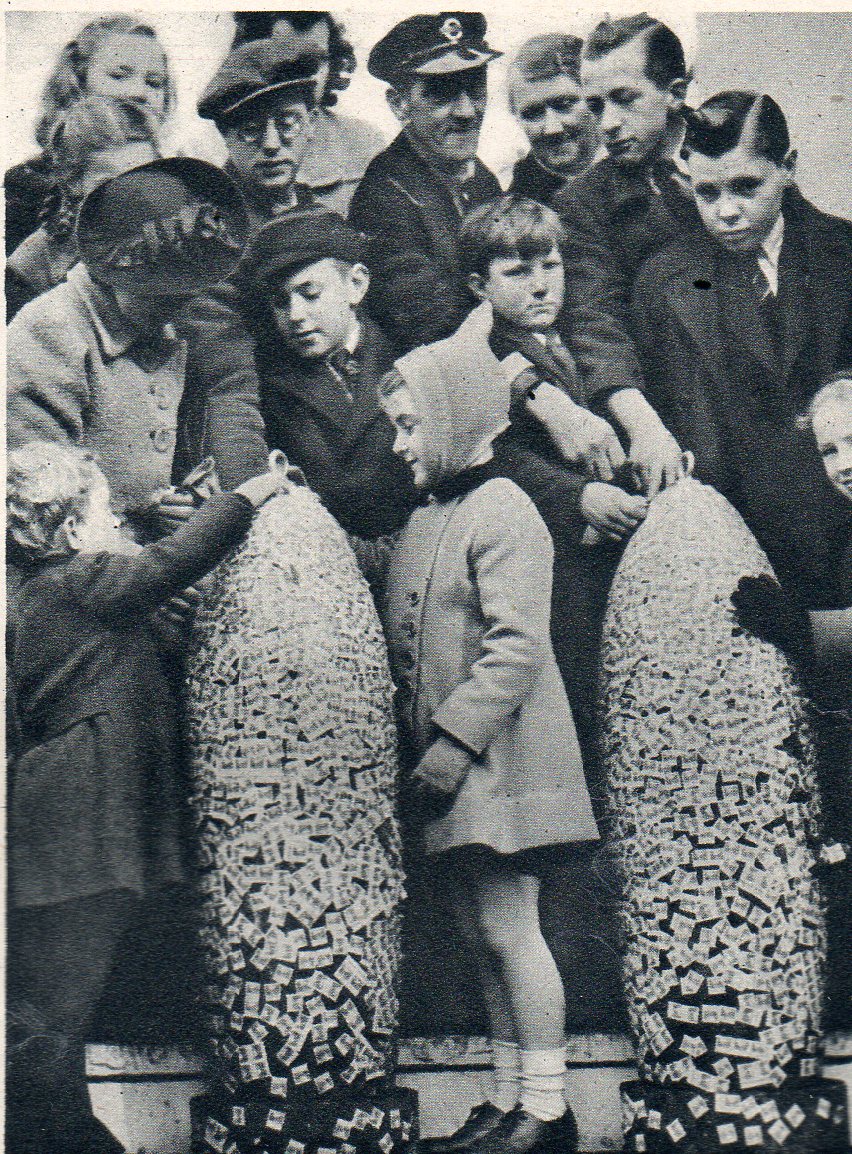
    I have no doubt that the history of decorating “bombs” reaches far back into dim history–decorating launched explosives I guess must be as old as the medium itself, though I’ve gotta say that the earliest photographs of decorated bombs goes back only to WWI.  In “reading” the Illustrated London News for the WWII years I found this image of children in Trafalgar Square fixing savings stamps to 500-pound bomb shells, part of a significant mile-long parade and will-to-win display–the “Wings for Victory” campaign– illustrating the Empire’s aeronautical might hat took place in London on 8 March 1943 and published a week later in the ILN.

    Children bomb003
    The “Wings for Victory” campaign targeted raising 150 million pounds; by this point more than 50 millions had been raised via monies being placed in War Bonds, Savings Bonds, Saving Certificates and Defense Bonds. My guess is that you’d get a sticker saying that you had invested x-pounds–these were the stickers placed on the bombs by the kids, I think. 

    It was pointed out in the accompanying text that the bombs would “at the end of the week…be dropped on Germany”.

  • The Message is the Medium, 2: Land Mines, Palestine, 1943

    JF Ptak Science Books LLC  Post 1036

    [An extension of the History of Holes series–things that are put into holes.]

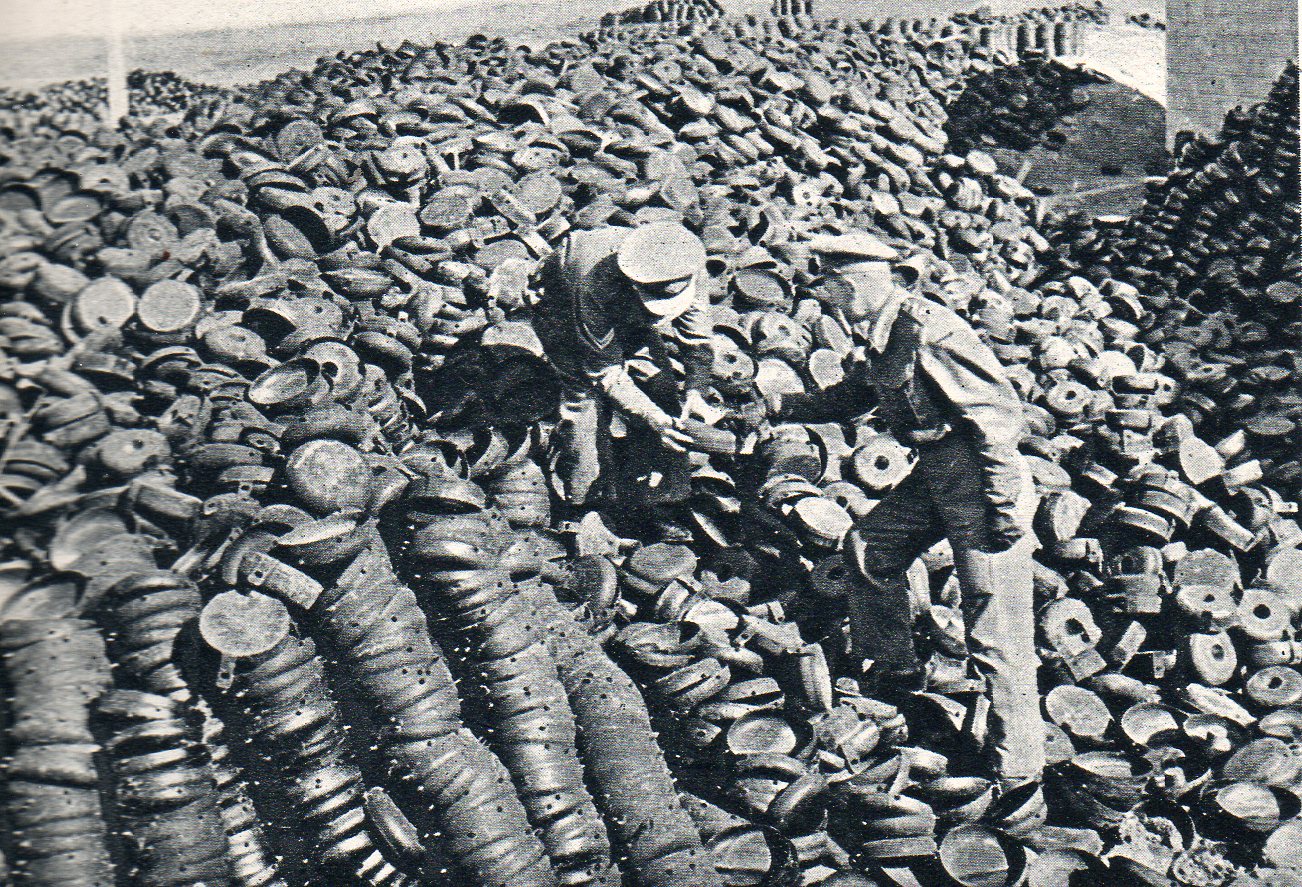
    Continuing a stroll through the Illustrated London News for 1943 I came across a series of photos of Britain’s “dependencies and friends” helping out in the war effort. This one is particularly remarkable and shows a vast

    Land mines004

    pile of yet-to-be-filled land mine canisters being serviced and readied for action in Palestine.  Its hard to imagine this sort of a scene, and this is only a part of the canister dump.  I reckon there to be easily 20,000 land mines just in what we can see, which represents about 1/1000th of all of the land mines used during the war. It also represents about 1/10,000th of all of the land mines that are in the ground right now around the world–in other words, this pile but 10,000,000 square feet worth. A pile like that could cover the square footage of the Empire State Building four times. 

    Emily Dickinson said that the brain was “the weight of god” (“wider than the sky” etc.)–if that’s so, what are these things the weight of?

  • Imprisoned and Force-Fed Suffragists, 1910

    JF Ptak Science Books   Post 1037 

    {This is part of our History of Women series)

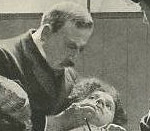
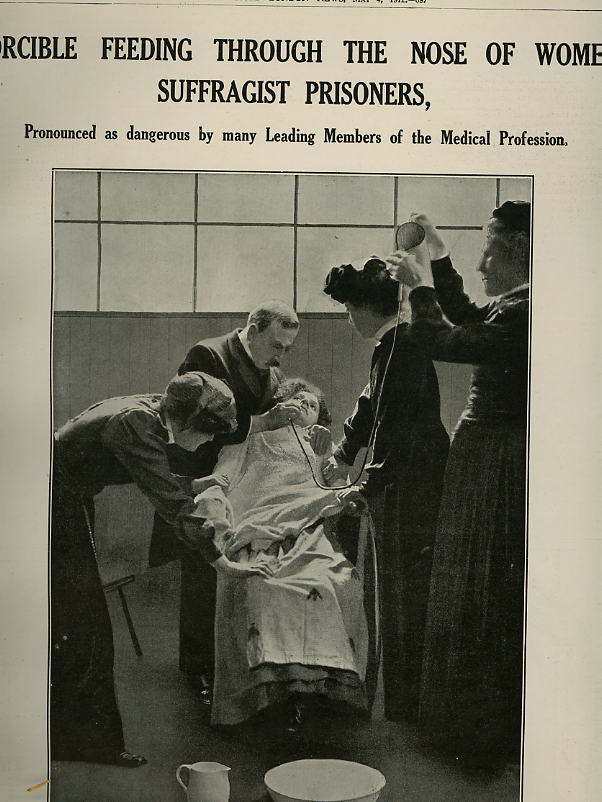
    In January 1910 the Illustrated London News (perhaps sympathetically) reviewed the case of the forced feeding of a leading female suffragist–very forced, very forcible, feeding-tube-up-the-nose-and-into-the-stomachDetail face forcible, the work of a grappling prison doctor and assistants.  The full-page illustration was entitled:

    “Forcible Feeding Through the
    Nose of Women Suffragist Prisoners”

    and then pointing out:

     “Pronounced as dangerous by many
    Leading Members of the Medical Profession…”

    It is the story of medical indulgence and state insistence of not recognizing any displays of independence while imprisoned–feeding a woman against her will, a 
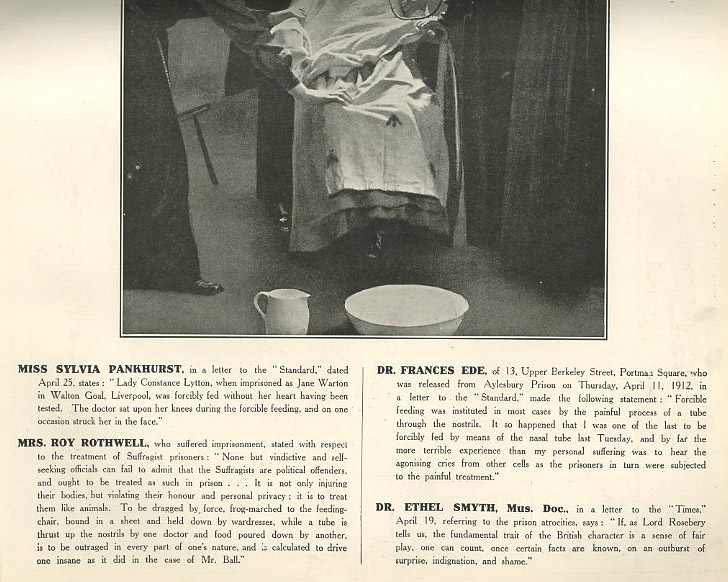
    woman prisoner at the hands of what sounds to be cruel warders and an insistent doctor. The woman in question was Lady Contance Lytton (b. 1869, imprisoned in disguise as “Jane Warton”) in Walton Goal, 


    File0505

      
    File0507

    Liverpool. She was arrested and placed there for minor offenses to the civil code while protesting for the rights of women to vote in England. She carried her struggle further in jail, doing about the only thing she had left to do while she was put away–make herself into a political statement by refusing to eat or ingest  liquids.  Walton Goal would have none of it, and resisting the entreaties of professionals, decided to feed the woman themselves at whatever cost.  The doctor who administered the fluid
    evidently sat on her knees and slapped her until the Lytton’s resistance
    failed. My guess is that the white cloth covering her in the photo is not for drips and drops, but was used to cover restraints–I hardly think that the two female attendants would’ve been able to hold down Lady Lytton’s arms by themselves, especially in that posed posture. There are three other accounts of women being bound, restrained,
    held by wardresses, and in general being badly treated.  (There is a
    continuation of the story of Lytton, below.)

    The vote did not come until 1918 with the Representation of the People Act, which in June 1917 passed the House of Commons and which went through the House of Lords in February of the next year, granting full enfranchisement to all women (over the age of thirty. This is about two years before American women were given the right to vote–on August 26, 1920–and 25  years after women won the vote in New Zealand, which again was first on the scene like it has been so many times). Lady Lytton would do badly in prison after this, suffering a heart attack and then a stoke by 1911, and never really recovered–she was half-paralyzed , was hardly robust, and wound up in her grave in 1923, aged 54.

    The Story of Lady Constance Lytton:

    “I was visited by the Senior Medical
    Officer, who asked me how long I had been without food.  I said I had
    eaten a buttered scone and a banana on Friday about
    midnight.  He said, “Oh, then,
    this is the fourth day; that is too long, I must feed you at once.”

    “He urged me
    to take food voluntarily.  I told him that was absolutely out of the
    question, that when our legislators ceased to resist letting women vote then I
    should cease to resist taking food in prison.

    “Two of the
    guards took hold of my arms, one held my head and one my feet.  The doctor
    leaned on my knees as he stooped over my chest to get at my mouth.   I
    shut my mouth and clenched my teeth.  He seemed annoyed at my resistance
    and he broke into a temper as he plied my teeth with the steel implement. 
    He dug his instrument down and it pressed fearfully on the gums.  The pain
    of it was intense and at last I must have given way for he got the gag between
    my teeth, when he proceeded to turn it much more than necessary until my jaws
    were fastened wide apart, far more than they would go naturally.

    “Then he put
    down my throat a tube which seemed to me much too wide and was something like
    four feet in length.  The irritation of the tube was excessive.  I
    choked the moment it touched my throat until it had got down.   Then the
    food was poured in quickly; it made me vomit a few seconds after it was down
    and the action of my sickness made my body and legs double up, but the guards
    instantly pressed back my head and the doctor leaned on my knees.  The
    horror of it was more than I can describe.  I was sick over the doctor and
    the guards …

    “When the
    doctor had gone out of the cell, I lay quite helpless.   The guards were
    kind and knelt round to comfort me, but there was nothing to be done.  I
    had been sick over my hair, all over the wall near my bed, and my clothes
    seemed saturated with it, but the guards told me they could not give me a change
    that night as the office was shut.

    “Before long
    I heard the sounds of the forced feeding in the next cell to mine.  It was
    almost more than I could bear, it was Elsie Howey.  When the ghastly
    process was over and all quiet, I tapped on the wall and called out at the top
    of my voice, which wasn’t much just then, “No surrender,” and
    there came her reply, “No surrender.”

    — above taken from “Eyewitness to History” by
    John Carey, 1987,
    Avon Books,
    page 423


    ·Posted by :

    ·in:

    —

Recent Posts

Archives

Categories